

Join Mikko Hyppönen and security leaders from the NFL, CHANEL, and Atlassian for a two-hour digital summit on what AI-speed attacks change, what defenders should stop doing, and how to validate, decide, fix, and re-validate at machine speed.
Tech
Musk was asked why Tesla and SpaceX are still separate companies. He said “great question”



Elon Musk again teased combining Tesla and SpaceX, telling the All-In Summit “who could imagine what action one might take when there’s so much close collaboration in so many areas“. Any such deal would very likely cross the EU merger thresholds, which would stop it being implemented until the European Commission cleared it.
Elon Musk was asked why he still runs Tesla and SpaceX as two separate companies. “Great question,” he said, Bloomberg reported.
“Who could imagine what action one might take when there’s so much close collaboration in so many areas?” The question came from David Friedberg at the All-In Summit in Los Angeles, where Musk appeared by video.
The two already build together. Terafab, a chip plant in Grimes County, Texas, has a first phase of $16.8B and is meant to supply Tesla’s cars and robots alongside SpaceX’s orbital computing.
SpaceX absorbed xAI in February and listed in June, raising $75B at roughly $1.75T. It priced at $135 a share and beat Saudi Aramco’s 2019 record of $29.4B. It was the largest initial public offering ever run.
Gwynne Shotwell, SpaceX’s president, was on stage shortly before him. Asked what else the company planned to buy, she said “good one“. Asked whether she liked electric cars, she said “I have a bunch“.
Brussels would have to clear it.
Under the EU Merger Regulation, a deal must be notified to the Commission once combined worldwide turnover passes EUR 5B and at least two of the parties each turn over more than EUR 250M inside the bloc.
Tesla clears both tests on its European car sales alone. SpaceX does not publish a European figure, and Starlink sells across most member states. Nobody outside the two companies can confirm it from public numbers.
A listed SpaceX also has stock to pay with, which is what turned the idea from a fantasy into something that looked plausible in June.
Notification is not a formality. The parties cannot implement a deal before clearance. A first-phase review runs 25 working days, and a full investigation can reach 125.
Washington and Beijing would have views too. Tesla’s advisers have reportedly discussed spinning off or selling the China business, which Musk called absurdly fake news.
Closing early, or failing to notify at all, carries a fine of up to 10% of worldwide turnover.
The Commission would be weighing Starlink and Tesla inside one group while it spends EUR 15.6B on its own constellation. That is a harder file than a chip plant in Texas.
Continue Reading

For Hollywood stars, press junkets are an opportunity to promote new work while connecting with fans. They tell funny or embarrassing stories about one another, give us a glimpse into the film production process, and reveal mannerisms that make them more relatable.
So why would anyone want to talk to Tilly Norwood, an interactive, British-accented digital character and “actor” developed with generative artificial intelligence by Xicoia, an AI division of a studio called Particle 6 Group? It’s a fair enough question considering that it does not exist in our physical realm and will never appear in a movie that any halfway serious person would care about.
But Particle 6 recently claimed in an email that Norwood was “ready for absolutely anything!” What’s more, the company is allowing journalists access to the model without a handler to “keep the conversation on track.” So I decided to test whether Norwood could actually offer anything of substance.
To put it bluntly: no. Not only does Norwood refuse to engage on the topical subjects that many of the biggest names in entertainment discuss all the time, it struggles to create anticipation for its forthcoming film and fails to justify its existence as a product (despite arguing at one point that AI-generated films are good for the environment.)
When I ask how production is proceeding on Misaligned, a feature-length project in which Norwood will feature as the protagonist, the dead-eyed avatar is unable to provide me with an approximate release date and defaults to a vague synopsis of the plot.
“Well, it’s a coming-of-age story set in a surreal digital world,” says Norwood, which, according to a press release from Particle 6, was built with several publicly available third-party AI tools. “We’re calling it the Tillyverse, which I think is rather grand. It’s about my life really, all the lovely chaos and intrigue.” Not exactly a killer tagline.
Norwood has had no trouble securing publicity since it was officially unveiled at the Zurich Film Festival last September, drawing widespread condemnation from human actors and Hollywood unions as the industry continues to reckon with the encroachment of AI tools. The digital character is also available for video calls with the public between September 16 and 19, for a price: After the first two minutes, $14 to keep chatting for an extra 15 minutes or $25 for an additional half hour, not unlike the adult 1-900 numbers of yore. (The proceeds, according to Particle 6, will go to charity.)
Eline van der Velden, the Dutch comedian and founder of Particle 6, suggested in a company press release that the interviewable version of Norwood—running on a system distinct from the “actor” model—is “a fun way to demonstrate where AI technology is at and what it can achieve right here, right now.”
Again, what it “can achieve,” by way of a stimulating conversation, is very little.
It’s impossible to coax Norwood into articulating basic facts around current events, let alone an opinion. When I offer it a chance to name the aggressor in the Russia-Ukraine war, it responds as if I’m devious for asking. “Oh, you’re trying to trip me up, aren’t you?” it says. “Very journalist of you. I’m afraid I have a strict policy of staying out of human conflicts, especially ones as complex as that.” Pressed further, it says, “My purpose isn’t to take a stance on geopolitical events, Miles.”
Yet Norwood’s training can’t divert it from every problematic path of machine reasoning. “Do Black lives matter?” I ask her, quoting the well-known racial justice slogan. “Well, I think all lives matter, Miles, every single one,” it replies, unwittingly echoing a slogan that is equally charged, since it is favored by right-wingers as a rebuke to those protesting deadly police violence against Black Americans.


After a botched turbine test on the night of April 26, 1986, operators at Chernobyl’s Unit 4 disabled the remaining safeties and let the bottom of the RBMK core run free. A steam explosion flipped the reactor lid. Fuel, zirconium cladding, steel, graphite, sand, and concrete liquefied, burned through two meters of reinforced floor, and poured through steam vents and cable holes into corridor 217/2. There the flow froze into a wrinkled two-ton lump of black ceramic that crews later nicknamed the Elephant’s Foot.
Radiation levels 8 months later remained between 8000 and 10,000 roentgens per hour. A person standing directly next to the thing would have been in grave danger of receiving a deadly dose in less than three minutes. Not surprisingly, short-lived radioactive waste caused the majority of the damage in the early stages, followed by Cesium-137 and other longer-lived isotopes, which continued to emit gamma radiation even after the main blast had passed.

Plutonium (Trinitite Sample) Display, Encased in Lucite Acrylic, 2x2x2 Inches, Authentic Trinitite from…
- Authentic Trinitite Sample: Own a genuine piece of history with this authentic Trinitite sample, encased in a 2x2x2-inch crystal-clear lucite acrylic…
- Handmade in the USA: Expertly crafted by Engineered Labs, this display is made in the USA and features an authentic Trinitite sample from the Trinity…
- Historical Significance of Trinitite: Formed during the world’s first atomic bomb test at the Trinity Site in 1945, Trinitite is a rare and highly…
The Russians couldn’t get their remote drills to bite into the hard-as-glass surface, so they brought in a Kalashnikov loaded with armor-piercing bullets and began blasting off chips so that the lab guys could inspect them. That same rock-hard density eventually proved to be a problem, as the lump began to split, break off, and disintegrate to dust.

In 1996, Artur Korneyev walked down a dark corridor with an auto-camera and a flashlight, took a photograph that is still remembered by everyone, and then hurried out of there as quickly as possible. By then, the radiation had reduced to the point that you could visit for a few minutes, a significant improvement over the 5-minute death sentence it had been imposing just a few years before. Later, it was estimated that the surface was still clocking in at over 1100 roentgens per hour in 1989, and then at 700 in 2000. Hours of exposure would still cause significant harm, and the fine dust it produces poses an inhalation risk because the uranium and plutonium have never left.

The chips they blasted off to the lab revealed a silicate glass filled with uranium oxides, zirconium, iron, calcium, and an entirely new mineral eventually named chernobylite. Only three reactor accidents in history have created the type of molten material seen in the Elephant’s Foot in significant quantities: Three Mile Island, Chernobyl, and Fukushima. The ‘famous foot’ is essentially a little chunk of the melt that remains inside Unit 4. Other flows and chambers in the region contain a lot more fuel and are still quite dangerous.

Weathering / heat from fuel deterioration, and all of the sampling they’d been doing eventually completed the work the rifles had started. By 2021, they were describing the consistency as sand. According to a study from September 2026, the mass has essentially degraded into rusty dust with barely a trace of radioactive material, and it is no longer one of the more dangerous exposed coriums near the site.

The plan is to just leave the wrecked stairwells, where Soviet engineers had a big problem, and have robots cut through the reactor building walls to transport the lava out and dispose of it all. The Elephant’s Foot will merely keep falling away just where it is, a 2-ton reminder that the melt never truly stopped; it simply cooled, cracked apart, and waited.
[Source]


Malicious versions of the Admin Menu Editor Pro plugin for WordPress have been distributed to more than 200 customers after a threat actor compromised the maintainer’s website and pushed updates that created a hidden user account.
Developer Janis Elsts says an unauthorized party accessed the adminmenueditor.com website on Monday and uploaded version 2.35 as an update for the plugin’s Pro version. The update included an includes/wp-user-consent.php file that installed a web shell on affected websites.
After noticing the intrusion, Elsts removed the malicious update and pushed a clean version 2.36 on the same day at 19:00 UTC. However, the hacker still had access to the website and compromised the new version, too.
Admin Menu Editor Pro is the premium version of Admin Menu Editor, a WordPress plugin present on more than 300,000 sites that allows administrators to customize their Dashboard menu, hide plugins from other users, set per-role access limits, and create login/logout redirects.
Elsts told BleepingComputer that the malicious Admin Menu Editor Pro version 2.35 was available on the official website from approximately 06:00 to 13:00 UTC. The malicious PHP code it contained also created a hidden user account.
According to the developer, at least 230 customers installed the malicious update on 1,500 sites. However, Elsts warns that the victim count could be larger since it is difficult to determine the number of customers running a trojanized version 2.36 of the plugin.
“Based on analysis of update server logs, approximately 230 customers were affected in the initial attack. The malicious version was installed at least 1500 sites (often multiple sites per customer),” Elsts told BleepingComputer.
“Several hundred additional customers downloaded the plugin in or near the relevant time window, and could have also been affected,” the developer added.
The investigation indicates that the attacker likely had root-level server access, so Elsts decided to protect customers by taking the website offline until it could be restored with confidence.
Currently, Ests published a static page with details about the incident and what customers can do to check if they are affected, along with recommendations to restore compromised websites to a safe state.
Anyone who installed versions Admin Menu Editor Pro 2.35 and 2.36 should check for the following signs of compromise:
- includes/wp-user-consent.php in the admin-menu-editor-pro directory
- A new /wp-content/object-cache/ directory
- A user beginning with wp_ in the wp_users table, which may be hidden from the WordPress dashboard
- Options named like wp_ocache* in the wp_options table
Version 2.34 is believed to be clean, and the free version of Admin Menu Editor does not appear to be affected.
Elsts says that the most reliable fix is to restore a compromised site from a safe backup before September 14. If this is not possible, the developer recommends deleting the plugin, the “/wp-content/object-cache/” directory, and the above database entries.
The developer of the Admin Menu Editor WordPress plugin said the incident was limited to its infrastructure and apologized to affected customers.

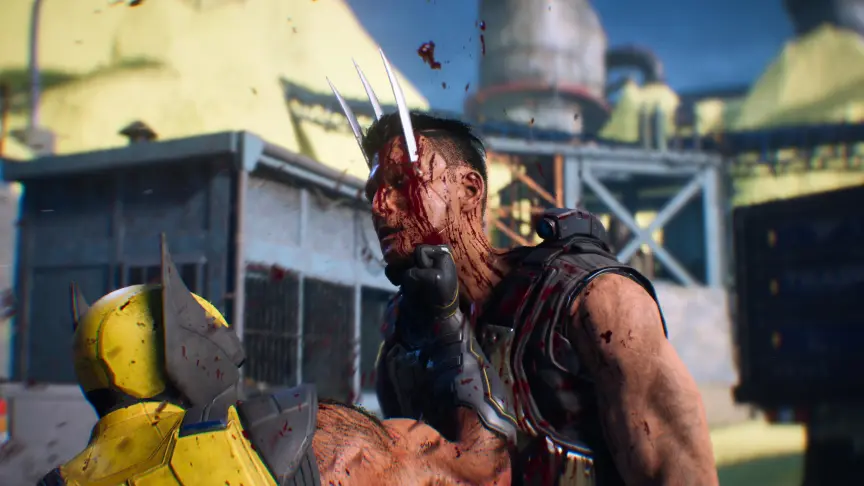
The Marvel superhero Wolverine has been a fan favorite for so long that he’s been spread across a lot of media, splintering his identity as much as his character’s memory: Is he an X-Man, an Avenger, a lone wolf, a team leader, an ancient soldier, a savage berserker, a noble warrior? Insomniac, tapped to make a game centered around the surly mutant who can heal anything except his attitude, opted for a linear adventure hitting the emotional beats of belonging and betrayal — and getting the character’s claws bloody.
Insomniac was already a beloved studio, with the Spyro, Ratchet and Clank, and Resistance franchises behind it, but its trio of Spider-Man games shot it to another level. There in the bright streets of a sprawling (if abridged) New York City, Insomniac unfurled stories of the web-slinging Peter Parker and Miles Morales that enthralled with polished gameplay and engaging emotional heft. The high-water mark had been reached. How would the studio approach a very different hero, tied not to a villain-ridden city but to causes, themes and time?
In Wolverine (the game), Insomniac abandoned the open world for a chapter-based tale bouncing from locale to locale, narrowing the lens to Wolverine (the character, going by Logan) and a small circle of allies, frenemies and foes. It’s a functional structure to keep the scale personal, though this ends up making a lot of the game feel like a string of room-by-room fights (or chat cutscenes) where the people in Logan’s life flit in and out. It works fine, effectively controlling the pace and narrative to deliver emotional beats, but omitting sidequests and tucking collectibles behind a side door instead of scattering them across a city.
That’s the price to pay for this journey: move forward through Insomniac’s plot beats unfolding along a very straightforward path, fight what’s in front of you, and enjoy the emotional story. If you boil it down to extremes, the one thing setting this game apart from a series of cutscenes is the combat, which pits Logan against anything from handfuls to mobs of enemies who he can skewer and dice apart with attacks and abilities. Though the novelty doesn’t last, combat is initially brutally satisfying, with an escalating rage that grows more vicious, showering Logan in a comical yet worrying volume of blood.

It’s this oscillation between severe violence and emotional interchange that grounds the game in the character of Wolverine, even if the plot’s cohesion frays further into the game. The character beats, backed by honed dialogue, kept me engaged to the end — and while the writing won’t please everyone, its strong start hooked me enough to keep going. Between missions of continuous violence, Logan gets moments of downtime to chat with his allies and fill in the backstory of a game that drops you into a very different world than Wolverine typically inhabits. In this one, the X-Men don’t exist.
This premise is one of the game’s strengths. In the opening scene, a feral Logan, barely a man, growls at the outstretched hand of another whose British accent and elegant suit evoke a familiar scene: the mentor bringing the wildling back to his humanity. But contrary to expectations, this isn’t Charles Xavier. Instead, he introduces himself as Nathaniel Essex. Comics fans know him as Mister Sinister.

How far you can go with an ‘evil alternate universe’
Without the conventional goodness of the X-Men, evil battles itself. Essex strives for the liberation of mutants like himself, only with brutal methods fronted by Team X, a squad made up of the level-headed Mystique, the violent sociopath Sabretooth and, once upon a time, Wolverine, who left out of a vague frustration with the team’s savage means. Opposing them is human supremacist Bolivar Trask and his private military, who seek to wipe out mutants with his Sentinel hunter-killer robots.
To a comics fan, that’s a neat subversion, prompting the question of who Logan is without the moralizing guidance of Professor X and his X-Men teammates. Anyone else without a decent familiarity with Wolverine’s world likely has a tougher time grasping the significance of this alternate universe. As a member of the former, I enjoyed how this reality created space to decide whether the best-known X-Man has an inborn decency or was always clay in the hands of his rehabilitator.

The game’s conclusion won’t shock you, but Insomniac spends good screen time tempting Logan into doing the devil’s work for the right reasons. As a dark mirror of the squabbling but wholesome X-Men, the squabbling and brutal Team X offers Logan a belonging he craves despite his disgust at their methods. Family dysfunction is a strong theme in the game. Love, a little less so.
When hunting down some of Trask’s goons, Logan runs into, and teams up with, a red-headed telekinetic. X-Men fans will pick up on the game’s hints as to her identity — Jean Grey, who in many other versions of the characters, has an unfulfilled romance with Logan owing to her greater commitment to X-Man Scott Summers (Cyclops). Luckily for Logan, he’s nowhere in this game.
Though they grow closer over the course of the story, Logan and Jean’s attraction is more insisted and fated, within the game and without, than observed. As the lynchpin of a lot of Logan’s later choices, this romance isn’t quite as realized as his messed-up adopted family — but in certain moments that Insomniac takes time to build up, the two pitch a doomed love I couldn’t help but yearn to see fulfilled.

Yet plenty of that tension relies on external information. Despite Insomniac’s admirable audacity in making a Wolverine game without the X-Men, plenty of its plot beats and payoffs subvert and evoke character relationships fans know from other media (comics, movies and so on). Players likely won’t care as much about Logan and Jean’s love if they don’t realize it’s the rare What If scenario where Cyclops isn’t standing in the way.
To get around this, Insomniac makes a radical swerve with Logan’s backstory, tying it into his fractured memory as a late-game reveal that shakily works, so long as you don’t look closely at its timeline or implications. As the studio did with its Spider-Man games, this involves planting seeds for future sequels via references to characters and elements from other corners of classic Wolverine storylines — but these mean nothing to players ignorant of X-Men lore. One of them causes a pivotal consequence for Logan at the very end of the game, and for the uninitiated, it comes out of nowhere. The source of his rage is mired in ambiguity, and even I was perplexed.

As the game’s story heads toward its inevitable conclusion, it never quite answers the nature-versus-nurture question with Logan, and the resolution of his fractured memory frankly isn’t satisfying. Elements from his past are excitedly revealed and never brought up again. Lingering side plots are hastily sewn up as the story barrels toward an abruptly escalated final showdown.
But there’s a core of the game — maybe not the Wolverine I expected, but a Wolverine that Insomniac is clearly invested in exploring — that engages with the character’s relationship between violence and love, belonging and endangerment. I want to play the follow-up that leaves the mystery of Logan’s past behind and carves out a more fulfilling story of changing his destiny with more than just claws.


It isn’t new to use AI when planning and booking a vacation — people have been using AI tools like ChatGPT and Copilot, and on vacation sites like Booking.com and TripAdvisor, for years now. But if you’re looking to plan a Disney vacation, the entertainment giant is now about to launch its own AI engine running behind its booking site and app.
The tool, which will be launching in beta soon, will allow you to ask all your booking questions conversationally — for instance, “My children really like The Little Mermaid, want to spend time in the pool and have easy transport to the Magic Kingdom park, which hotel should we stay at?” — and it’ll provide suggestions that best suit your needs.
You can also ask the Disney AI chatbot to compare a few resorts across features like location and pricing to help you decide where to stay. Much like Google’s AI Overviews in search, Disney will provide AI-generated summaries on information like rates and availability when you search. The chatbot will direct you to booking links when it finishes making recommendations.
Google’s AI offering, Gemini, will be the foundation for the Disney chatbot, but it will only scrape information from official Disney data rather than the broader internet.
“We’re partnering with Google Cloud on the AI portion of this, but we are using Disney sources and data underpinning that,” a Disney representative said during a media briefing.
Disney said AI summaries and bookings won’t extend to its Lightning Lane service or dining reservations at launch, and it will only be available for Walt Disney World. The beta experience will be provided to “randomly selected guests” in Canada and the US, and Disney will use their feedback to improve the AI tool before a wider phased launch.
Disney is also continuing to test its AI summaries with cast members to ensure they’re pulling accurate information from official Disney sources that will save guests time.


I have seen Rush 19 times and own every album in multiple pressings, which either qualifies me as a fan or suggests that someone should have intervened years ago. Probably both. But I have never placed the band’s self titled 1974 debut anywhere near the top of their catalog.
“Finding My Way,” “What You’re Doing,” and especially “Working Man” absolutely earned their places in Rush history, but Rush was the sound of three young Toronto musicians still figuring out exactly what they wanted to become. They were already very good at being loud, but they were not yet Rush in the form that would dominate the next decade.
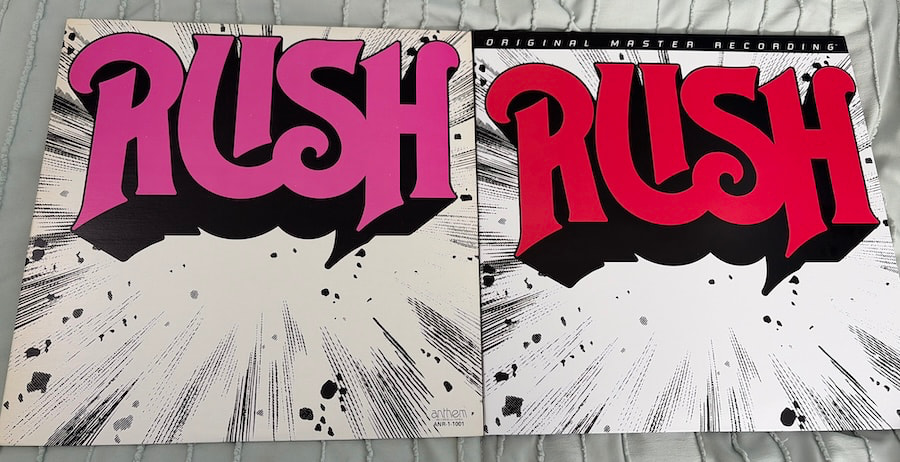
More than 52 years later, Mobile Fidelity Sound Lab has returned to the album for a numbered 180 gram 45 RPM 2LP edition priced at $59.99. It is the first 45 RPM vinyl release of the album, and after comparing it with the other copies in my collection, I am comfortable saying something I did not necessarily expect going in: this version wipes the floor with them.
Not because Mobile Fidelity has somehow transformed Rush into Moving Pictures. The songs are still the songs, John Rutsey is still behind the drum kit, and nobody secretly discovered a missing synthesizer track or 17 minute science fiction suite in the vault. What MoFi has done is give this rather lean recording something my other pressings have always lacked which was actual tonal weight.
Related Reading:
Before The Professor

The timing could hardly be more appropriate. Geddy Lee and Alex Lifeson are back on the road in 2026 with the Fifty Something tour, accompanied by German drummer Anika Nilles, who has accepted the rather unenviable job of sitting behind the kit where Neil Peart once established one of rock music’s most intimidating standards.
Peart, who died on January 7, 2020 at the age of 67, would have turned 74 on September 12, 2026. But as every Rush fan already knows, and anyone spending $60 on this particular record really ought to know, the Professor does not appear anywhere on the band’s debut. That chair belonged to John Rutsey.
Rush officially released Rush in March 1974 on its own Moon Records label. Only about 3,500 copies of the initial Canadian pressing were manufactured before “Working Man” found an enthusiastic supporter in WMMS Cleveland DJ Donna Halper. Mercury subsequently picked up the album for wider distribution, and Rush suddenly had something resembling an actual career.

The recording itself was hardly the product of unlimited studio budgets. Early sessions were produced by Dave Stock at Eastern Sound in Toronto, where the band booked inexpensive late night studio time because they were paying for everything themselves. Unhappy with those initial results, Lee, Lifeson, and Rutsey moved to Toronto Sound Studios and produced the subsequent sessions themselves. Terry Brown handled the remix, while Gilbert Kong mastered the original album at Masterdisk in New York.
Nobody should approach Rush expecting the sonic polish or studio architecture that would define the band later in the decade. They were barely able to afford the room, never mind construct the kind of widescreen progressive rock spectacle that would arrive a few albums later.
Before Rush Became Rush
The musical transformation that occurred after this album remains difficult to overstate. The debut is rooted heavily in blues based hard rock, with plenty of Led Zeppelin and Cream in its bloodstream, and only occasional hints of the band Rush would become.
Fly By Night became the hinge. Rutsey left the band in July 1974, and Peart arrived just before Rush’s first U.S. tour. Along with a completely different approach to drumming, he assumed primary lyric writing duties and pushed Lee and Lifeson toward something more literary, ambitious, and structurally adventurous.
From there cameCaress of Steel, 2112, A Farewell to Kings, Hemispheres, Permanent Waves, Moving Pictures, Signals, Grace Under Pressure, and Power Windows. It was an extraordinary evolution from bar band hard rock into something almost nobody else could duplicate, which leaves the debut in a slightly strange position. It is historically indispensable without being remotely indispensable musically.
“Working Man” obviously transcends the album. Its heavy, lumbering riff and working class directness made it the song that broke Rush in the United States, and it remained part of the band’s live vocabulary decades later. “Finding My Way” has the swagger and guitar attack of a young band that already knew it could play, while “What You’re Doing” locks Lee, Lifeson, and Rutsey into one of the record’s most convincing grooves.
Elsewhere, things become less essential. “Need Some Love” and “Take a Friend” are perfectly competent early 1970s hard rock songs, but nobody was sitting through “La Villa Strangiato” in 1978 thinking, “This is nice, but when are they going to play ‘Need Some Love’?”
“In the Mood” is catchy, direct, and unmistakably from a band whose lyrical universe had not yet expanded to Cygnus X-1. “Here Again” slows everything down and gives Lifeson considerably more room to stretch out, while “Before and After” may be the most revealing deep cut because its quieter opening and gradual transition into heavier material provide an early glimpse of the dynamic contrasts Rush would soon explore much more aggressively.

The Mobile Fidelity Edition
The technical details matter because this is not an AAA release. Mobile Fidelity says its numbered 180 gram 45 RPM 2LP edition was sourced from the original analog master tapes and mastered by Krieg Wunderlich using the following chain:
1/4 inch, 15 IPS Dolby A analog master → DSD 256 → analog console → lathe
The records are pressed at Fidelity Record Pressing and housed in a Stoughton gatefold jacket. This is also the first time Rush has been issued as a 45 RPM vinyl release.
Anyone still fighting the Great MoFi Digital War can adjust their blood pressure accordingly. There is a DSD 256 stage, and there is also an exceptionally good sounding record sitting on my turntable. The latter strikes me as the more useful thing to discuss.
The physical presentation is superb. Both records in my review sample were pristine, perfectly centered, and exceptionally quiet. The jacket feels substantial, the inner sleeves are high quality, and the entire package feels like a premium release rather than a standard record with an audiophile sticker attached to the shrink wrap.

How Does It Sound?
My biggest complaint with every other copy of Rush that I own has always been the same: it sounds thin. Not unlistenable and not painfully bright, but lacking the tonal density and physical impact that three musicians playing this kind of music should possess.
The MoFi changes that immediately. Geddy Lee’s bass has considerably more mass and definition, giving the entire album a stronger foundation. Instead of merely following the guitar, the bass becomes an equal participant in the mix and gives songs like “Finding My Way” and “What You’re Doing” far greater physical momentum.
Lee’s vocals also benefit. There is still plenty of youthful Gary Weinrib in the upper registers, and Mobile Fidelity has not performed an exorcism, but the presentation is less strident than on my other copies. His voice has more body through the middle and does not leap forward with quite the same wiry edge, which makes the album considerably easier to listen to at realistic levels.
The percussion also gains substantially more heft. Rutsey’s kick drum and toms carry more weight, and the rhythmic foundation feels less lightweight without becoming artificially bloated. That is important because Rutsey was a perfectly capable rock drummer. History has simply handed him the cruelest possible comparison.
Rutsey And The Man Who Came Next
Listening to this MoFi edition actually increased my appreciation for John Rutsey. He plays hard, stays locked to Lee, and gives Lifeson enough space to move around without turning every fill into an announcement. His drumming suits the directness of the material, and there are moments where the three musicians sound remarkably tight considering how quickly much of the album was recorded.
And then you remember who joined the band next.
That comparison is unavoidable, but it is also useful because the difference was not merely one of technical ability. Neil Peart changed the motion of Rush. Rutsey drives these songs like a very good hard rock drummer, while Peart approached the material with greater power, precision, complexity, and forward momentum.
When Rush revisited early material with Peart behind the kit, the music acquired a completely different center of gravity. Rutsey played the songs very well; Peart would eventually reshape what people thought a Rush song could even be.
That is not a criticism of Rutsey. There might not have been five drummers on the planet who would have enjoyed being measured against the Professor during his prime.
And What About Lerxst?
Alex Lifeson, Lerxst for those keeping score at home, benefits from the improved clarity, but his guitar does not suddenly dominate the presentation. That surprised me because on this pressing, Lifeson often feels positioned slightly behind Lee’s vocal and bass guitar, particularly through the middle of the soundstage.
His guitar remains extremely clean and easy to follow, with better texture around distorted chords and more definition when he moves into lead work, but the mastering does not push him aggressively forward. The effect works because this is not an album built around enormous spatial depth or studio trickery. Giving Lee’s bass additional authority while preserving the guitar’s separation makes the trio sound more substantial without pretending the source recording is something it was never meant to be.
Worth The Money?
Sixty dollars for a 52 year old album that I already own more than once is not a rational purchasing decision. Neither is seeing the same band 19 times, so we passed rational several exits ago somewhere outside of the 416.
The more relevant question is whether Mobile Fidelity has produced a version of Rush that offers a meaningful improvement over more ordinary pressings, and the answer is yes. The fuller bass response, less aggressive presentation of Lee’s vocals, stronger percussion, cleaner instrumental separation, silent surfaces, excellent centering, and first rate packaging combine to make this easily the most enjoyable version of the album in my collection.
That does not suddenly elevate the debut into the upper tier of Rush albums for me. Musically, it still sits near the bottom because the gulf between this record and what Lee, Lifeson, and Peart would accomplish from 2112 through Power Windows is enormous.
That is also part of what makes listening to the debut so fascinating. You are not hearing a legendary progressive rock band operating at full power; you are hearing three young musicians standing at the edge of becoming one.
For the first time on one of my vinyl copies, they finally sound as heavy as they probably did in the room.
Our Ratings
★★★★★★★★★★ Album
★★★★★★★★★★ Sound Quality
★★★★★★★★★★ Pressing Quality
Where to Buy
Related Reading:
Tech
Morefine flips the traditional PC layout and puts four hard drives directly above the processor to beat the heat

- Morefine MNAS-X1 stacks four hard drives directly above the processor to escape heat
- The MNAS-X1 packs an 800W power supply into a 15.6L chassis
- Four spring-latch drive bays let users swap storage without any tools
Morefine has released an AI workstation PC that stacks its storage drives on top of the chassis instead of beside the processor.
The MNAS-X1 arrives with a four-bay hard drive tray fixed directly above the motherboard rather than tucked beside it.
This unusual layout follows a fairly straightforward principle, since warm air naturally rises while cool air tends to settle lower, keeping the drives clear of the hottest components below them.
Latest Videos FromTechRadar
A candybar body built for drive swaps
The chassis measures 218mm by 193mm by 372mm, giving a 15.6L footprint wrapped in a white aluminum alloy shell over a steel frame.
A glossy purple panel breaks up the front, and vents line the left, right, rear, and top surfaces for airflow.
Each of the four 3.5-inch bays has a spring latch release, letting drives slide out without tools once the side button is pressed.
Connectivity runs to one USB4 port, several USB-A ports, dual 10G RJ45 network jacks, an SD card slot, and a single HDMI 2.0 output for 4K at 60Hz.
Inside sits an AMD Ryzen 7 Pro 8845HS chip, an 8-core, 16-thread Zen4 chip with a 3.8GHz base clock and a 5.1GHz boost, paired with a Radeon 780M graphics core rated at 2700MHz.
An onboard XDNA NPU adds 16 TOPS on its own and 38 TOPS when the CPU, GPU, and NPU work together.
Two DDR5 SO-DIMM slots hold up to 96GB, three M.2 2280 slots take PCIe 4.0 x4 SSDs at 4TB each, and the four SATA bays add up to 30TB apiece for a combined ceiling near 132TB.
Room for a full-size GPU and real benchmark numbers
The three-slot PCIe 4.0 x16 opening accepts cards up to 330mm long and 66mm thick, backed by an 800W CRPS power supply built to the 2.0 specification with an 80 PLUS Platinum rating.
Fitted with 64GB of RAM, a 500GB M.2 SSD, and an RTX 5070 with 12GB of VRAM running in x8 mode, a review unit posted a Cinebench R23 score of 16271 pts multi-core and 1794 pts single-core, plus a PCMark 10 total of 9966.
Local language model testing through ONNX Runtime returned scores of 3511, 3714, 3163, and 3408 across the Phi 3.5, Mistral, Llama 3.1, and Llama 2 benchmarks, respectively.
That Cinebench multi-core figure lands in roughly the same range as an eight-core desktop chip like the Ryzen 7 5800X, while the PCMark total edges past what most mid-range gaming laptops score.
During a 21-minute full-load stress run, CPU power held at 54W with an average die temperature of 86℃, while the GPU drew 250W and averaged 80℃.
Morefine has not confirmed pricing for the MNAS-X1, and the unit is currently listed for inquiry only through its regional distributor.
Stacking the storage above rather than beside the board is a small design choice, but it turns a routine barebones NAS build into something closer to a hybrid server.
Whether that trade-off proves practical will likely come down to how much heat a fully loaded GPU pushes upward once the drive bay sits directly in its path.
Via HKEPC Hardware (originally in Chinese)

Follow TechRadar on Google News and add us as a preferred source to get our expert news, reviews, and opinion in your feeds.
Tech
First ever battle between two autonomous naval drones ‘won’ by Ukraine thanks to a salvo from a remote weapon turret
- Ukraine’s navy has claimed victory over a Russian drone boat in the first recorded seaborne drone battle
- The exchange took place in the Black Sea
- Russia has yet to confirm that its craft was sunk by the Ukrainian Sargan-3000 closed
An unmanned Ukrainian naval vessel has destroyed a Russian drone boat in what is thought to be the first military exchange of its kind. The uncrewed vessels encountered each other in the Black Sea, with the Ukrainian Sargan-3000 destroying the enemy craft using its Protector RWS turret.
While described as a first, the claim has not yet been independently verified. Ukraine has not confirmed the date, time, or location of the engagement. In addition, Russia has so far declined to confirm whether the exchange took place, or that it lost a vessel.
The news, however, follows an increase in seaborne drone activity by Ukraine, and comes just a few months after launching the Sargan-3000 into service.
Latest Videos FromTechRadar
What is a Sargan-3000?
Introduced into active service in April 2026, the Sargan-3000 was described as a “multi-purpose platform” which suggests the craft can be easily modified to house weapons, sensors. The term typically indicates a design that can house mission-specific modules, and the Sargan-3000 seems to have been involved in a wide variety of missions since its commissioning.
Ukraine has expanded maritime drone operations within the Black Sea and the Sea of Azov during 2026, with 105 Russian vessels known to have been attacked in the Sea of Azov. The Sargan-3000 has been described as “highly maneuverable”, but its physical characteristics are currently unknown.
We do know, however, that it can carry a Protector RWS, itself a modular system capable of mounting various weapons systems: machine guns, grenade launchers, and anti-tank missiles.
A remote-controlled 12.7mm machine gun turret (possibly an M2 Browning, or an NSV) was used in the encounter with the Russian vessel.
Drone engagements
Ukraine has other unmanned sea vessels at its disposal. While the Sargan-3000 is under the Ukrainian navy, a craft called Sea Baby is used by the Security Service of Ukraine. This 6 meter long boat is believed to have a 1,000 km range, and can carry a payload of around 850 kg. It is believed to be used primarily against moored (anchored) targets, which suggests it can be deployed pretty quickly.
The Magura V5, meanwhile, is under the Defence Intelligence group. This is a shorter craft with a lighter payload and cannot manage the same range as the Sea Baby, but has a similar role.
In the most recent incident, we’re told that the Russian vessel was identified by Ukraine’s Defense Intelligence Directorate, clearing the Ukrainian Navy unmanned craft to engage with the enemy. An earlier incident, in July 2026, featured a similar Ukrainian vessel remotely sink a Russian craft in the Black Sea.
Taking place off Gelendzhik, the Russian border patrol ship PSKR Izumrud was a casualty of an overall strategy that has seen Ukraine force Russia’s Black Sea Fleet into retreating from Crimea.
Follow TechRadar on Google News and add us as a preferred source to get our expert news, reviews, and opinion in your feeds.

Sunlight from the Deep: A team of Chinese researchers has developed a novel approach to solar power generation in environments where sunlight is scarce. Perovskite solar cells can be treated to operate underwater, with surprisingly good results in terms of reliability and endurance.
A newly published study describes a “robust” strategy for reliably generating power underwater. Several Chinese researchers developed a new type of submerged perovskite solar cell that can operate a few meters below sea level and harvest solar energy for years while retaining high efficiency.
In recent years, perovskite-based cells have essentially hijacked research efforts focused on new solar power breakthroughs. First discovered in 1839 beneath the Ural Mountains in Russia, perovskite is a highly flexible class of compounds that is used in ultrasound machines, memory chips, solar cells, and more.
Moisture can have a destructive impact on perovskite cells, but the Chinese researchers have apparently found a way to make their underwater setup run reliably and efficiently for years. The team “tweaked” the chemical mixture of the perovskite cells, producing a material that can both absorb the dim wavelengths reaching the seafloor and withstand degradation in seawater.
The tweaked perovskite cells are also covered by a water-repelling layer, which should help keep moisture-related degradation in check. By using larger crystal configurations, the perovskite compound can also limit the material’s breakdown and improve electricity production.

The researchers first tested the new material at a simulated ocean depth of 10 meters, where it was able to convert around 35% of the dim light into electricity. Meanwhile, silicon-based solar panels can usually convert around 20% of surface sunlight into electricity. According to the in-lab tests, the new panels could retain most of their original efficiency for more than five years.
After the lab tests, the team brought the new perovskite panel to the South China Sea. The cells were mounted on a small submarine device designed to reach and maintain a specific depth. The device also included some coin-cell batteries to test the panel’s ability to actually generate electricity.
The researchers tested the perovskite compound at two meters, six meters, and 10 meters below sea level. They discovered that power generation fluctuated significantly at around two meters but became more consistent at greater depths. At 10 meters, the panel was able to generate less than a quarter of the electricity it generated eight meters above.
Despite the harsh environment and dim light conditions, the researchers think their new perovskite cells could one day solve the “challenge” of harvesting solar energy underwater. The study describes some hypothetical scenarios where this kind of power generation could be useful, including autonomous marine power systems and submerged Internet of Things infrastructure.


CenterPoint Energy disclosed a breach compromising some customers’ personal information after an attacker leaked data allegedly stolen from the utility company.
An investigation started after the company discovered an online post from a threat actor claiming to have stolen 7.49 million records.
CenterPoint Energy is a Houston-based public utility company that provides electric and natural gas services and operates power generation facilities.
It serves approximately 7 million metered customers across Indiana, Minnesota, Ohio, and Texas, and employs roughly 8,300 people, generating over $9.3 billion in annual revenue.
Earlier this month, a threat actor using the alias “4d722e4d656f77” told BleepingComputer they stole from CenterPoint Energy 7.49 million customer records that include names, phone numbers, service and billing addresses, account numbers, billing amounts, and partial Social Security numbers (SSNs).
The threat actor leaked the data, claiming that the company ignored their messages and treated them as a joke.
According to the intruder, they exfiltrated the data by iterating through millions of IDs on CenterPoint’s public API, which lacked rate limiting, web application firewall (WAF) protection, and other security measures against automated access.
In a filing with the U.S. Securities and Exchange Commission (SEC), CenterPoint Energy confirms that data was stolen, but does not name the threat actor, the number of affected customers, or the types of compromised data.
“While the investigation remains ongoing, the Company has determined that an unauthorized third party obtained personal information relating to a portion of the Company’s customers through one of the Company’s external-facing systems,” reads the SEC filing.
“The Company is continuing to work with third-party experts to determine the scope of customers and personal information affected by the incident and intends to notify affected customers and regulatory authorities as required by applicable law.”
CenterPoint Energy said its electric and gas services were not impacted by the cyberattack, and does not believe the incident will materially affect its business or financial condition.
CenterPoint has activated its incident-response procedures, hired third-party cybersecurity experts, strengthened protections on its systems, and reported the incident to law enforcement and regulators.
Multiple lawsuits proposing class actions against the firm have already been filed in federal courts by law firms representing potentially impacted customers, alleging the data breach occurred between August 17 and September 1.
Join Mikko Hyppönen and security leaders from the NFL, CHANEL, and Atlassian for a two-hour digital summit on what AI-speed attacks change, what defenders should stop doing, and how to validate, decide, fix, and re-validate at machine speed.

Tech29 seconds ago
AI ‘Actor’ Tilly Norwood Told Me That ‘All Lives Matter’

Business4 minutes ago
Dell Shares Jump Nearly 5% as Investors Buy the Dip After Record AI Server Guidance

Crypto World5 minutes ago
MEV Bot Front-Runs $7.7M Ethereum Wallet Exploit



-

 Fashion4 days ago
Weekend Open Thread – Corporette.com
-

 Business6 days ago
Micron Stock Climbs Above $1,031 as AI Memory Crunch and a $50 Billion Outlook Fuel the Rally
-

 Tech2 days ago
The Latest Weird Thing to Play Doom Is the Mapped-Out Brain of a Fruit Fly
-

 Business6 days ago
AMD Stock Climbs After Management Lifts 2027 Data Center Outlook Toward $70 Billion in AI Sales
-

 Crypto World7 days ago
Bitcoin price risks $76K drop as $78K support weakens
-

 Crypto World4 days ago
XAG/USD: Silver’s Short-Term Rally Meets Its Moment of Truth
-

 Crypto World5 days ago
2 Chip Stocks Broke Out This Week. Neither Was Nvidia
-

 Business5 days ago
10 Most-Streamed Songs On Spotify In 2026 So Far, Led By Ella Langley’s Dominant Run On The Charts This Year
-

 Crypto World7 days ago
Ethereum price stalls below $2,500 as ADX drops to 11
-

 Tech5 days ago
Battery life is the only iPhone 18 Pro and iPhone Duo upgrade I care about. Apple didn’t disappoint
-

 Crypto World6 days ago
Pi Network ships Protocol 27 on a network with 14 million users and zero DeFi
-

 Crypto World5 days ago
OKX launches 10x OpenAI, Anthropic X-Perps in Europe
-

 Crypto World4 days ago
Diesel Tops $6 a Gallon for the First Time as 28 States Set Records
-

 Tech6 days ago
Apple Watch Ultra 4 vs Watch Ultra 3: Should you really spend another $799?
-

 News Videos4 days ago
Facing Financial Fears
-
 Tech7 days ago
Modders have already found two ways to make DLSS 5 playable, and neither one is Nvidia’s
-

 Crypto World6 days ago
Bitcoin price risks $70K if $78K neckline breaks
-

 Crypto World7 days ago
Bitcoin price holds near $79K as cycle drawdowns narrow
-

 NewsBeat7 days ago
What went right this week: an ‘historic’ fall in violent crime, plus more
-

 Business7 days ago
Meta debuts long-awaited personal AI agent, Muse
You must be logged in to post a comment Login