Security teams log 54% of successful attacks and alert on just 14%. The rest move through your environment unseen.
The Picus whitepaper shows how breach and attack simulation tests your SIEM and EDR rules so threats stop slipping by detection.




A financially motivated threat actor previously associated with the Medusa ransomware operation is now deploying a new ransomware strain called StormEncryptor.
Microsoft Threat Intelligence is tracking the actor as Storm-1175 and says the recent attacks were likely preceded by exploitation of an authentication-bypass vulnerability (CVE-2026-18577) in the N-central remote monitoring and management (RMM) tool.
Storm-1175 is believed to be a China-based threat actor. It was previously linked to Medusa ransomware, targeting systems via zero-day and n-day flaws in various products, including GoAnywhere MFT, SmarterTools SmarterMail, Microsoft Exchange, Invanti Connect Secure, and JetBrains TeamCity.

“Storm-1175’s deployment of StormEncryptor marks the threat actor’s first activity observed by Microsoft Threat Intelligence since April 2026, and a shift away from Medusa ransomware, which the threat actor had previously been known to use,” Microsoft states.
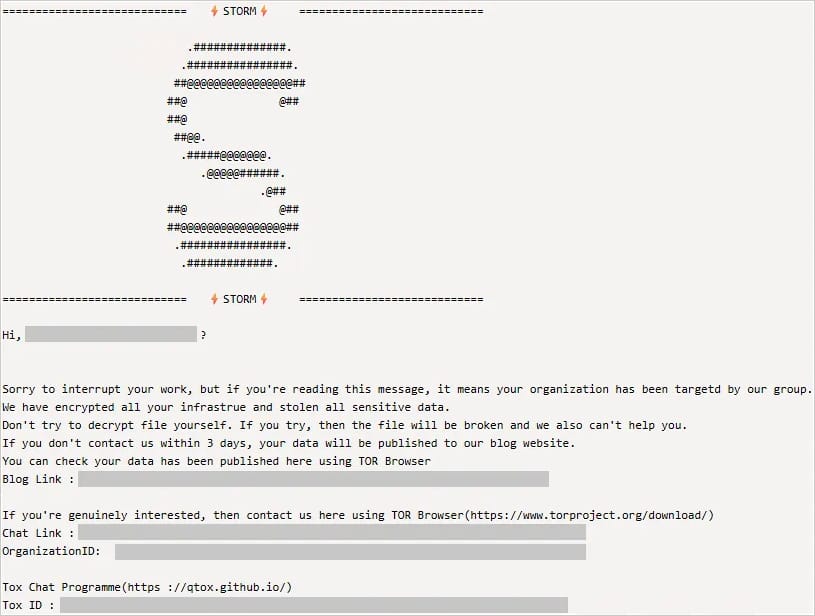
The researchers found that StormEncryptor is a C++ malware that appends encrypted files with the “.encrypted” filename extension and drops a ransom note named ‘!!!README_FIRST!!!.txt’ into every scanned directory.
The ransom note gives victims three days to reach out to the attacker and negotiate a ransom payment. Alternatively, the stolen data would be leaked online.
After gaining access to the target network, the attacker used AnyDesk or SimpleHelp for remote management, Advanced IP Scanner for network discovery, and the Mimikatz tool to dump credentials from the Local Security Authority Subsystem Service (LSASS) process.
Microsoft says that Storm-1175 moves quickly from initial compromise to stealing data and deploying the locker, urging system administrators managing self-hosted N-central servers to take immediate action to secure the systems.
“This threat actor is known to rapidly move from initial access to data exfiltration and ransomware deployment, often within a few days,” warned Microsoft.
“Organizations are urged to monitor for Storm-1175 activity and apply security patches as soon as possible.”
N-able addressed the CVE-2026-18577 vulnerability via a hotfix (2026.3 HF1/build 2026.3.1.7) released on August 2, urging customers to install the patch immediately.
N-able previously recommended admins to check for signs of compromise such as an svchost.exe file in the Documents folders of users’ device, a registered service named Cloudflared, and inbound connections from the IP addresses listed in the advisory.

Security teams log 54% of successful attacks and alert on just 14%. The rest move through your environment unseen.
The Picus whitepaper shows how breach and attack simulation tests your SIEM and EDR rules so threats stop slipping by detection.
Jefferies cut Apple from hold to underperform on Monday. That is the bank’s equivalent of a sell rating. It also cut its price target from $285.56 to $263.66.
Fortune’s Sebastian Herrera reported the call. The bank’s supply-chain checks produced three reasons. Apple has cancelled a rumoured all-glass iPhone, memory prices are surging, and there is little visible progress on AI.
The first of those is the one that matters. That handset was expected next year, for the iPhone’s 20th anniversary.
Jefferies put its reasoning plainly. “We believe this shows that introducing new form factors in the iPhone to drive higher [average selling price] is more difficult than expected.”
Average selling price is the lever Apple has pulled for a decade. A new shape justifies a higher number on the sticker. Cancel the shape and the lever goes with it.
That leaves the foldable iPhone, which Apple may reveal next month. Jefferies expects it to be the company’s only margin driver. Memory costs push the bank’s estimate to $2,199 for the 256GB version and $3,099 for the 2TB version.
Those are laptop prices on a phone. They are also an argument that the margin has to come from somewhere.
The cost of computer memory is why Apple raised prices on Macs and iPads. AI data centres are absorbing the supply. Tim Cook signed off his final earnings call with a warning about a “hundred-year flood” in memory chip pricing.
Most of the DRAM supply sits with three companies. Micron, SK Hynix and Samsung control it, a concentration Cook has lamented in public.
Apple has been looking for a way around that. The Wall Street Journal reported that it is testing memory from China’s CXMT. Buying Chinese memory chips at scale could draw objections from the White House.
Bloomberg counts at least six firms now carrying sell-equivalent ratings on Apple. That matches a high last seen in 2012, shortly after the death of Steve Jobs.
Jefferies is not the first bank to move this summer. KeyBanc Capital Markets cut Apple to underweight in July, on iPhone demand.
Edison Lee, the Jefferies analyst behind the call, took the argument further on Bloomberg Tech. Apple, he told Ed Ludlow, is no longer the “king of the supply chain”.
Not everyone reads six sell ratings as a reason to sell. CNBC’s Investing Club published its counterpoint the same afternoon. Its headline told readers not to let a Wall Street downgrade scare them out of the stock.
Apple also disputes the AI leg of the case. Cook has framed the company’s on-device approach as a deliberate advantage rather than a gap.
“The ability to run some percentage of requests on-device is also very strategic, sort of a competitive weapon if you will,” he said.
Investors have been less patient. They were already running out of patience with Apple’s AI promises before this downgrade landed.
John Ternus takes over as chief executive next month, succeeding Cook. Apple’s annual iPhone event is expected in early September. The foldable is expected with it.
He arrives with two demands running at once. One is the margin story. The other is product, and the company has spent the past year rebuilding the design team after a run of senior departures.
Apple’s July guidance put iPhone sales at mid-teens percentage growth this quarter. The iPhone is roughly half the business. That is a deceleration from 22% growth in the quarter just ended, and Apple warned that gross margins would come under pressure.
Growth at that rate is not a crisis, and Jefferies is not arguing that it is. The argument is narrower than the headline suggests.
If price rises have to carry the margin, the ceiling on what Apple can charge becomes the investment case. The only new shape left is a foldable starting at $2,199. That is a great deal of weight for one handset to hold.


The fintech’s French entity becomes its second full EU banking hub.
Revolut has received a full banking licence in France, giving the fintech giant a second European Union hub.
Revolut Bank SA (RBSA) was granted the licence following a joint assessment by the Autorité de Contrôle Prudentiel et de Résolution (ACPR) – a part of France’s central bank – and the European Central Bank, with the decision formally adopted by the ECB Governing Council. The company, which claims more than 75m customers worldwide, said the move marks a “historic milestone” in its European journey.
The licence lands as Revolut deepens its roots across western Europe, its largest and fastest-growing region with about 30m customers, including close to 8m who joined in the past year. Ireland accounts for more than 3.4m of those customers.
Over the last year, the company has committed more than €1bn in regional investment, hired more than 600 people and confirmed a 2027 opening for its new western European HQ in Paris.
RBSA will progressively begin serving customers across Europe, starting with France, before Germany, Ireland, Italy, Portugal and Spain follow in later phases. Revolut’s Lithuanian entity, Revolut Bank UAB – which currently serves its Irish customers – remains the cornerstone of operations for the rest of the EEA under a dual-hub model, with both the SA and UAB bodies supervised by their local regulator and the ECB.
“This licence gives us the foundation to build the next generation of banking for more than 30m customers across western Europe,” said Nik Storonsky, founder and CEO of Revolut. “France has become a leading financial hub, supported by a dynamic financial ecosystem and a robust regulatory framework. It is the ideal platform to accelerate Revolut’s next phase of growth, bringing us one step closer to our ambition of becoming one of Europe’s largest and most trusted banks.”
Béatrice Cossa-Dumurgier, CEO for western Europe at Revolut, said: “This achievement reflects months of close collaboration with the ACPR and the European Central Bank, whose rigorous standards have helped us build the right foundations for long-term growth in the region. We are grateful for the constructive dialogue we’ve had throughout this process. Our focus now turns to execution.
“We’ll begin by serving customers in France before progressively expanding across western Europe, while accelerating the localisation of our products and services to better meet the needs of retail and business customers in each market.”
The French approval is the latest in a run of regulatory wins for Revolut this year. It finally secured its full UK banking licence in March after a five-year wait, applied for a US banking licence around the same time, and in July launched its first Asia-Pacific banking entity in Australia after receiving regulatory approval there.
Revolut now operates across 40 markets. The company reported its fifth consecutive year of profitability in March, with group revenues up 46pc in 2025 to $6bn, and is reportedly gearing up for a public listing around 2028 at a valuation of between $150bn and $200bn.
Don’t miss out on the knowledge you need to succeed. Sign up for the Daily Brief, Silicon Republic’s digest of need-to-know sci-tech news.
I’ve always thought the Atlas Cross Sport looked like an Atlas that didn’t quite find its personality; competent but a little forgettable. Volkswagen apparently agreed.
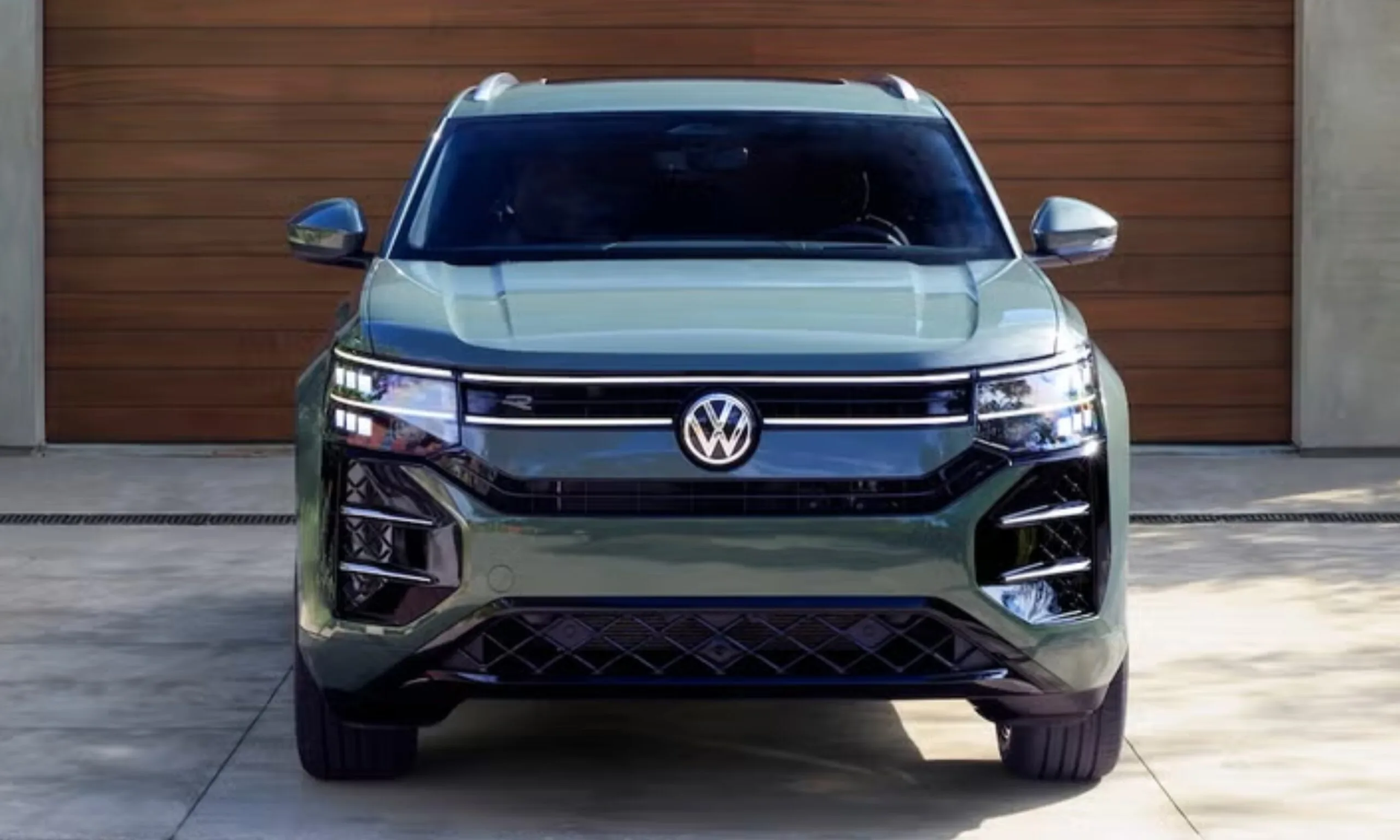
The automaker just revealed a fully redesigned 2027 Cross Sport. It now has a sharper exterior, a genuinely upmarket cabin, and, most importantly, more power under the hood. Further, it’s arriving early next year as the sportier five-seat alternative to the three-row Atlas.
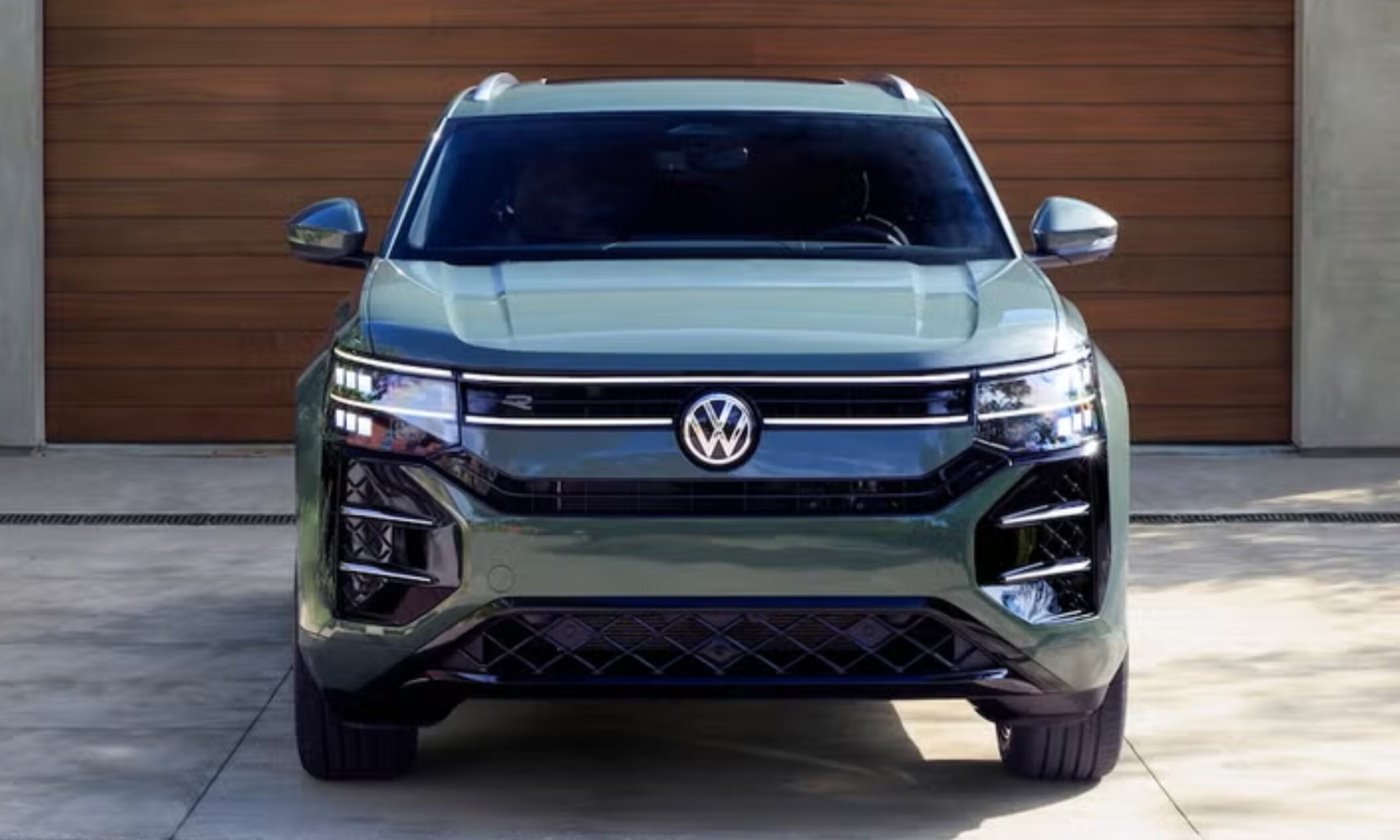
Based on an updated MQB Evo platform, the new Cross Sport measures around 4,968mm in length, over 127mm shorter than its three-row sibling. The lower stance and a sharply raked rear roofline give it a sporty look.
Stacked LED headlights, an illuminated VW badge on every trim (except the base model), and a flush-mounted tailgate round out the exterior overhaul. Volkswagen is also offering three new paint colors, including a Blackberry Metallic option.
Inside, you’ll get a wraparound dashboard loop, wood trim, contrast stitching, and ambient lighting that replace what used to feel like a fairly utilitarian cabin. Every trim now gets a reworked 12-way driver’s seat. Upper trims also add full-back massage for both front occupants.
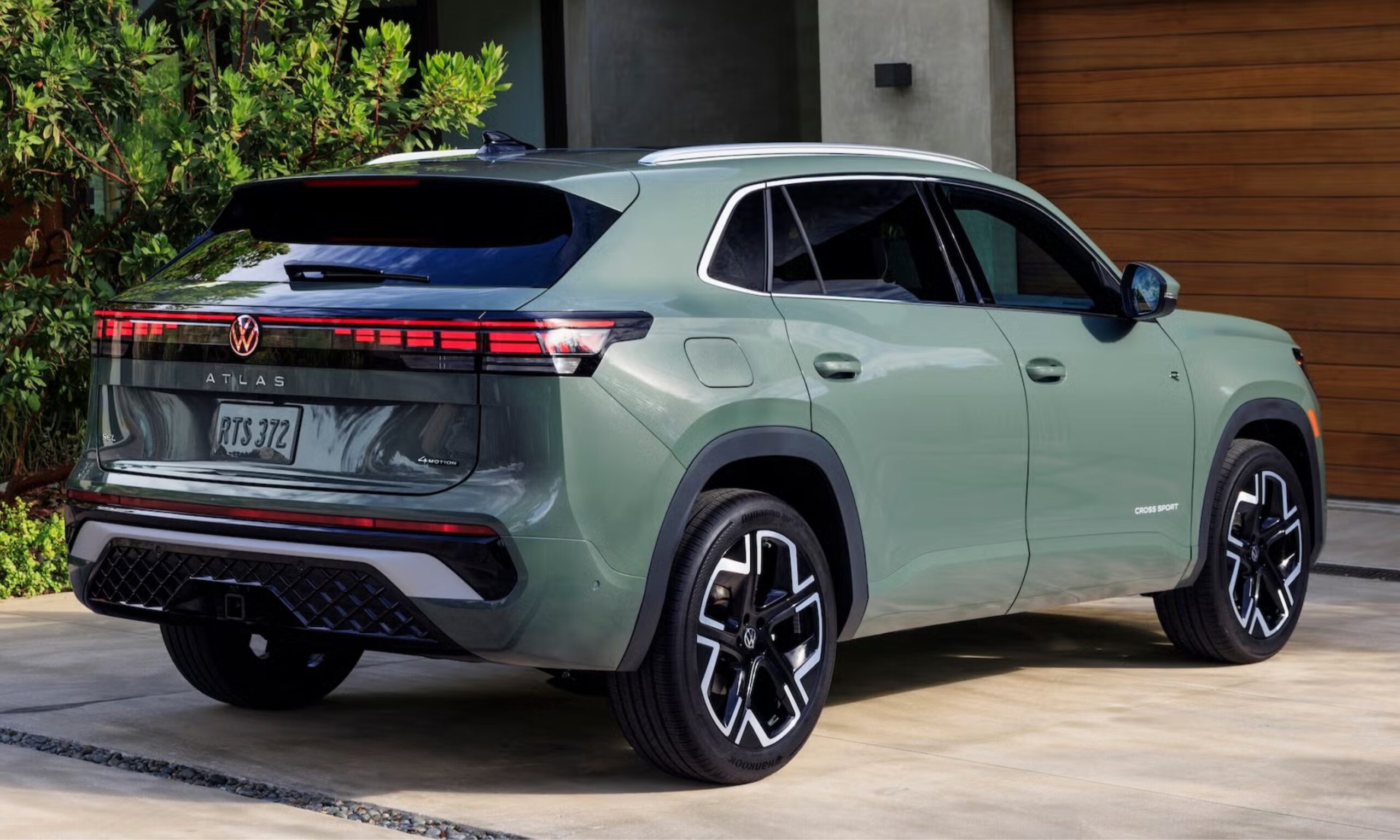
Following the global trend of larger screens, the 2027 Cross Sport gets a 15-inch infotainment display, which is standard on roughly 90% of the lineup, and a new physical dial for controlling volume and drive modes. There’s a 10.3-inch digital gauge cluster across the board as well.
Power comes from an updated turbocharged 2.0-liter four-cylinder, which now makes 282hp, a 13hp bump. The engine is paired with an eight-speed automatic and optional 4Motion all-wheel drive.
While the pricing hasn’t been announced yet, I’m expecting the company to reveal more details as the launch approaches in early 2027. With the Atlas family making up roughly a third of Volkswagen’s US sales, this redesign carries real financial stakes beyond just refreshing an aging model.

SpaceX and Tesla have revealed more details in their plan to invest $16.8 billion in a massive semiconductor factory planned for Grimes County, Texas.
The facility, known as TeraFab, is expected to manufacture chips for several computing-intensive applications associated with both companies.
At full construction, SpaceX says the factory could exceed 100 million square feet, or approximately 9.3 million square metres.
Latest Videos FromTechRadar
SpaceX CEO Elon Musk described the planned facility as potentially the largest and most valuable building on Earth after completion.
“TeraFab will be 50 times the size of the Pentagon when complete,” Musk said on X.
Since the Pentagon is 6.6 million square feet and SpaceX has only confirmed TeraFab will exceed 100 million square feet, Musk’s “50 times” figure would require a final size closer to 330 million square feet — a number the company has not disclosed or confirmed.
Even so, the scale remains extraordinary: the Pentagon, Apple Park, Mall of America, and Giga Texas together total 25.04 million square feet, meaning TeraFab’s confirmed 100 million square feet alone would already be roughly four times larger than all four combined.
The project originally emerged from Musk’s concern that existing semiconductor suppliers could not satisfy Tesla’s future computing requirements.
Tesla first discussed the concept publicly in November 2025, describing it as a much larger version of its Gigafactory model.
Plans announced in March 2026 called for the semiconductor plant to operate beside Tesla’s Austin headquarters.
SpaceX and Tesla subsequently established the project as a joint venture, with Intel later joining the development effort.
Musk has said the facility would use Intel’s 14A manufacturing process, although production plans may evolve during development.
The companies have linked the factory to chips required for space-based computing, advanced vehicles, and humanoid robotic systems.
The initial project estimate was $20 billion, but later filings indicated substantially larger potential spending during subsequent development phases.
A May property tax abatement application revealed that an initial phase could cost $55 billion, with eventual spending potentially reaching $119 billion.
The latest $16.8 billion commitment, therefore, does not represent the maximum investment that may eventually be required.
SpaceX expects the facility to employ at least 3,000 workers, including people from Grimes County and neighboring Brazos County.
Local authorities approved a 100% property tax abatement in June 2026 after county commissioners voted 4-1 on three related proposals.
The companies also say industrial operations will use water from Gibbons Creek Reservoir instead of relying on nearby groundwater supplies.
SpaceX and Tesla have also committed to wastewater treatment, water reuse, conservation measures, and compliance with environmental regulations.
Their plans include regulated handling of hazardous materials, chemicals, and industrial byproducts generated during semiconductor manufacturing.
“The combined SpaceX and Tesla demand for chips is expected to be in excess of 1 terawatt (TW) of compute,” said SpaceX in its website post.
The proposed scale makes TeraFab an unusually large industrial project, while its final cost and construction scope remain subject to future expansion.

Follow TechRadar on Google News and add us as a preferred source to get our expert news, reviews, and opinion in your feeds.
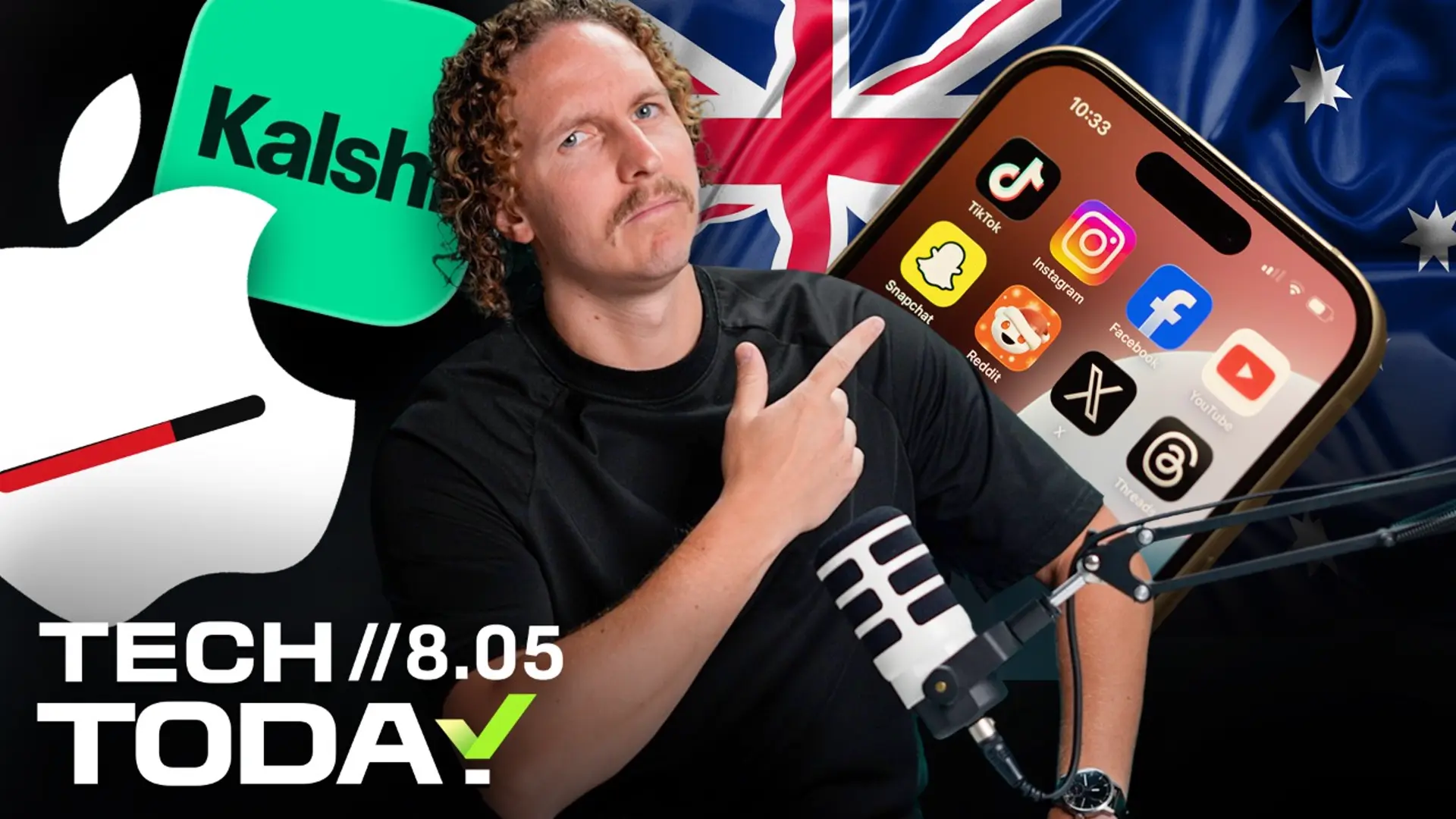
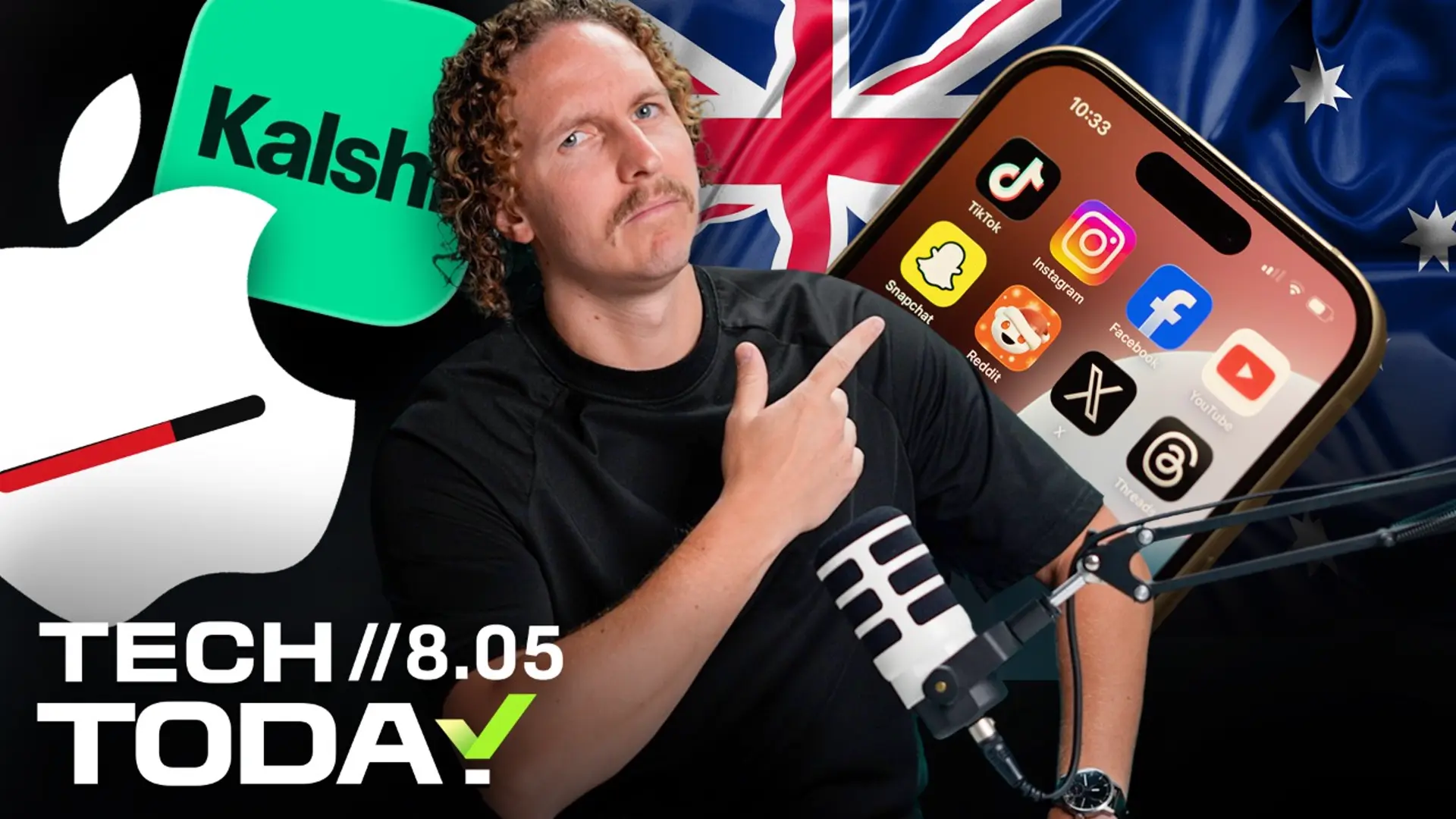
If you were hoping for an all-glass iPhone, a new report from Barron’s might shatter that dream. The financial news source reports that Jefferies analyst Edison Lee believes development on an all-glass mobile device has come to a halt.
According to the report, Lee thinks the device was canceled because of “poor production yield,” or not enough defect-free units being successfully made during production.
An Apple representative did not immediately respond to a request for comment.
The device was rumored to launch in the fall of 2027 to celebrate the iPhone’s 20th anniversary, and Barron’s reports it could have cost an eye-watering $2,060.
Rumors of an all-glass iPhone began after Apple filed for a patent in 2019 on an electronic device with a “six-sided glass enclosure.” The device in the patent resembles an iPhone, with app icons on one side and a way to signal to others that you’re on a call on the other side. The device also has curved glass panels and seemingly no cutouts.
“We believe the plan was to extend the all-glass features to future iPhone Pro and Pro Max models, further raising their average selling price and margin,” Lee wrote, according to Barron’s.
For more on Apple, here’s what to know about iOS 27 and everything the company announced at its Worldwide Developers Conference in June.

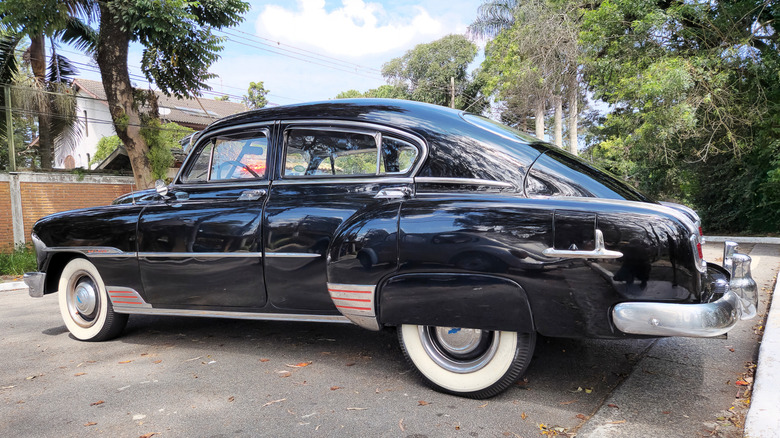
The distinguishing characteristic of the Chevrolet Fleetside is its fastback roofline. The Chevy Fleetside’s origin story goes back to the 1942 Chevrolet Aero-sedan, released right before Pearl Harbor. Then the U.S. auto manufacturers converted their production facilities to support the Allied war machine, with several automotive brands used in the U.S. military. The car resumed post-war production in 1948 as the Fleetline Aerosedan, which was shortened to Fleetline for the remainder of its life. The focus of this article will be on Chevrolet’s first modern post-war vehicle, the 1949-1952 Chevrolet, which was an all-new design that offered the Fleetline body style throughout its four-year run.
Chevrolet’s Engineering Department completely redesigned the 1949-1952 Chevy, while styling was done under the supervision of GM Design Chief Harley Earl. The Fleetline was an extremely successful body design, although this was not equally distributed between the four-door and two-door Fleetline models. While 171,595 of the four-door examples were sold during the car’s four years on the market, an incredible 851,137 of the two-door versions were sold. This trend led to the deletion of the four-door from the Chevy lineup after 1951, when only the two-door sedan would remain.
Many of these Fleetline models would live on in different areas of the car culture, with some being customized and others being made into lowriders. The 1949-1952 Chevrolet Fleetline marked the end of the line for a fastback-styled Chevy — at least until the body style returned in a slightly different form during the 1960s, as exemplified by America’s best-selling car of 1965.

While the sheetmetal and the chassis of the 1949-1952 Chevrolet Fleetline may have been new, that doesn’t mean that its engines were. Initially, there was a 216.5 cubic-inch “Thriftmaster” inline six-cylinder engine mated to a three-speed manual transmission that produced 90 horsepower in 1949 and was boosted to 92 horsepower for the remaining years of the run. The big news came in 1950, with the addition of a two-speed Powerglide automatic transmission. Adding Powerglide required an engine upgrade to a larger, 235 cubic-inch “Blue Flame” inline six that made 105 horsepower. Both engines breathed through a single-barrel carburetor. Braking was by hydraulic drum brakes at all four corners, while suspension was independent in the front with a live axle and leaf springs at the rear.
Performance stats for the 1949-1952 Chevrolet Fleetline were not great by today’s standards, but they were likely comparable to the Fleetline’s competitive set, with the Powerglide cars about a second slower than the manuals. Zero to 60 mph took between 20 and 22 seconds for the manual, with the quarter-mile taking a similar amount of time, with a trap speed of 60 mph or slightly more. Top speeds were somewhere between 80 and 85 mph.
The Chevrolet Fleetline was far from being one of the worst-looking Chevrolets ever made. It represented the final expression of fastback design language for a decade or so. It would take until the go-go 1960s were fully underway before GM would resurrect this mode of styling and adapt it to the muscle car era.
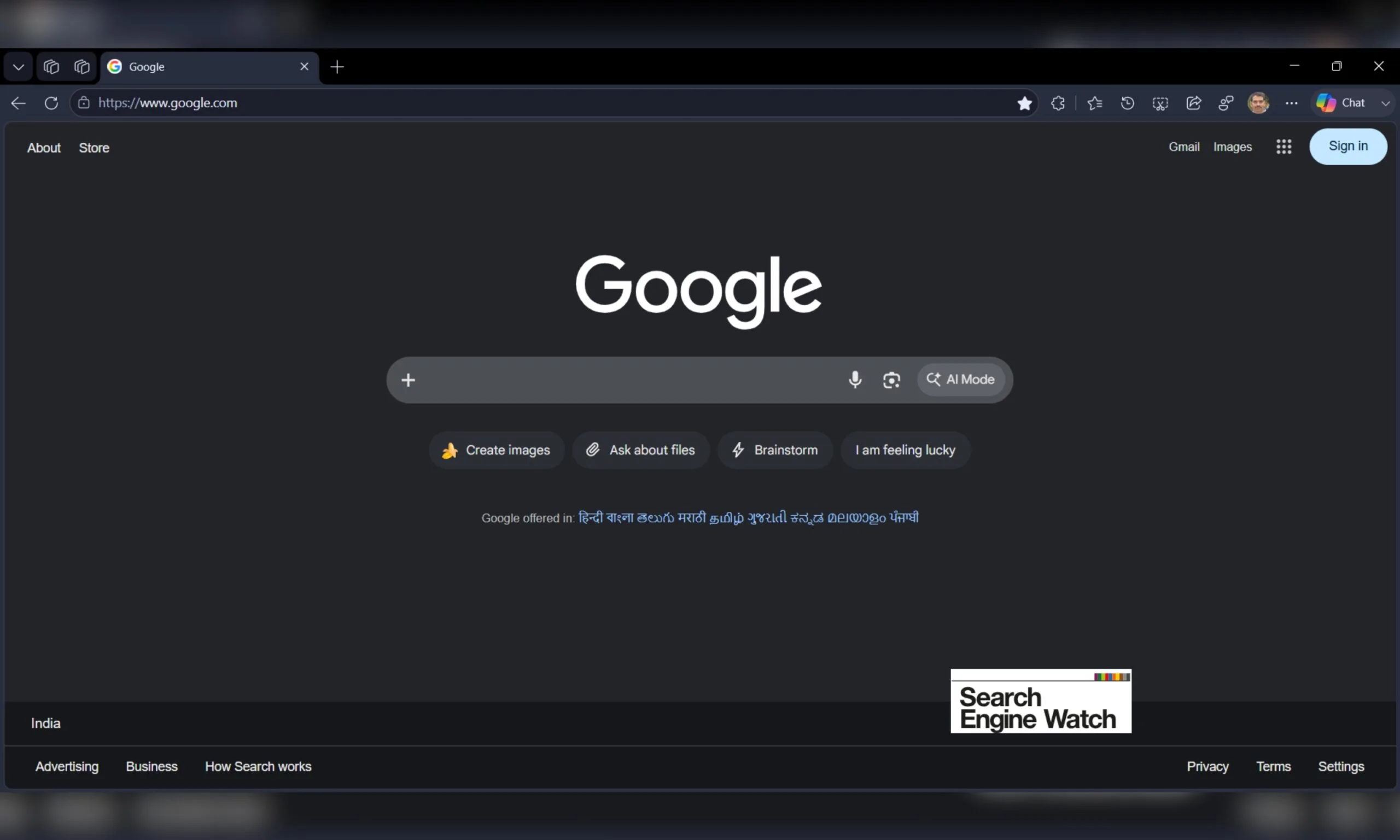
For years, the Search button has been an integral part of the Google Search experience. However, right now, typing “google.com” into a browser is reportedly bringing up a new simplified layout that doesn’t include the Search button anymore (for a select group of signed-out users).
It appears that the search giant is testing a new, AI-first layout with three dedicated buttons, which are new for traditional Google Search users, but familiar for those who use the Gemini chatbot on a regular basis.
Search Engine Watch first spotted the change and confirmed it independently across three different web browsers, including Chrome, Edge, and Comet (via Android Authority). The redesigned homepage drops the classic Google Search button.
It seems to feature three new AI-first buttons: Create images, Ask about files, and Brainstorm. These sit right under the horizontal search bar. The AI Mode button still remains inside the search box itself. The “I am feeling lucky” button seems to have survived the design.
What’s even more interesting is that the Ask about files and Brainstorm reportedly work without logging in at all. The buttons apparently let users upload a document or a PDF and ask questions about it or think out loud with Gemini.
Creating images is the one holdout, which is gated behind a sign-in wall, likely because Google wants a verified account attached before it burns through compute money on Nano Banana generations.

Here’s the catch. The report mentions this new layout only shows for logged-out visitors. Even then, not everyone’s seeing it. Factors like location, browser, and session all seem to matter. Google hasn’t confirmed the scope of change as well.
Here’s how I see this, though. This isn’t something that’s worth ignoring. Google has spent decades defending the simplicity and functionality of its homepage. However, quietly relegating “Search” behind AI-first buttons, or at least testing it, tells us about the company’s priorities.
While I won’t ask you to expect the classic layout’s days to be numbered, I can’t deny Google’s recent push toward its AI ambitions. For now, the layout appears to be a part of an A/B test being shown to a small number of users.
Apple’s fifth developer beta of iOS 27 has just arrived, and with it, redesigned icons for several key apps, and a lot more than normal than this late in the beta cycle. Here’s what’s new.
On Monday, three weeks after the release of iOS 27 beta 4, Apple made the fifth developer beta available for download. iOS 27 beta 1 introduced the long-overdue Siri AI, while the second beta included improvements to the Apple Home and Apple Wallet apps.
The third beta brought additional voice customization options for Siri AI, in the form of pace and expressivity sliders, albeit only for American English voices. Monday’s iOS 27 developer beta, however, expands these settings to British English voices.
Still, the new settings aren’t available across all devices running iOS 27. Advanced Siri AI features require at least 12GB of RAM on iOS 27, hence the restriction, meaning the new voice sliders can only be found on an iPhone 17 Pro, iPhone 17 Pro Max, or iPhone Air.
As with most beta updates, visual tweaks are also present in iOS 27 beta 5. Icons for the Preview, Remote, Safari, Settings, and Siri applications have been updated, as has the Orders icon in the Apple Wallet app.
The Siri icon now features a more prominent Liquid Glass look, while the app icon for Safari now has a dot in the center. Apple has also included new update screens when the Apple Wallet, Apple Music, App Store, and Photos apps are launched for the first time.

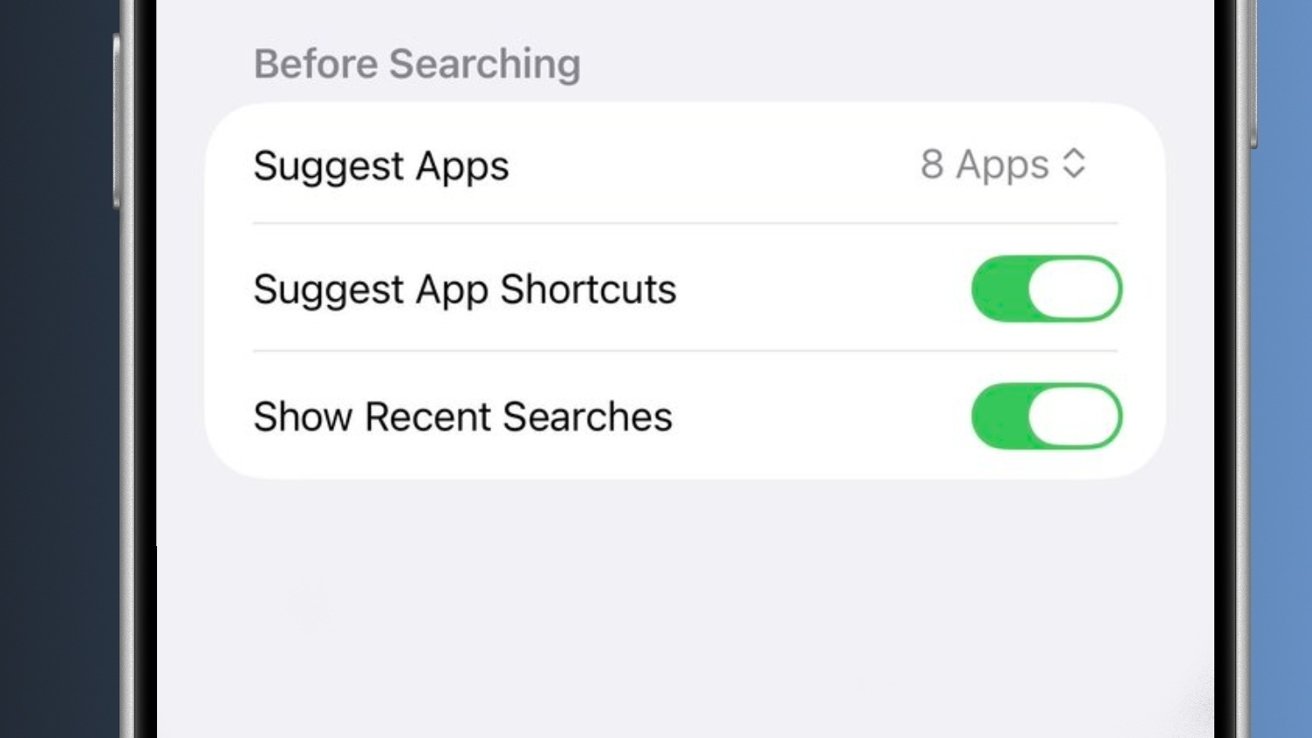
iOS 27 beta 5 features a new ‘Before Searching’ option in the Settings app.
In the Settings app itself, under the Search Settings section, Apple has added a new option labeled Before Searching. This lets users choose how many apps appear as suggestions during searches, among other things.
Additionally, the Settings app now also shows when the most recent iOS update was installed. This detail could be useful for those who rely on automatic software updates.
Apple has also tweaked the Control Center with iOS 27 beta 5. Cellular network types are no longer displayed, so you won’t see “5G” or “LTE” when your phone is connected to a Wi-Fi network. However, the Control Center and Status bar do feature new cellular icon bars.
Meanwhile, when a screenshot is taken on Monday’s beta, the the annotations toolbar will now shrink and hover. It’s a neat visual modification, but nothing groundbreaking.
Overall, the fifth developer beta of iOS 27 is a relatively light release. Aside from the updated app icons, Siri voice settings, and Before Search settings, the beta doesn’t offer anything the average user would notice.
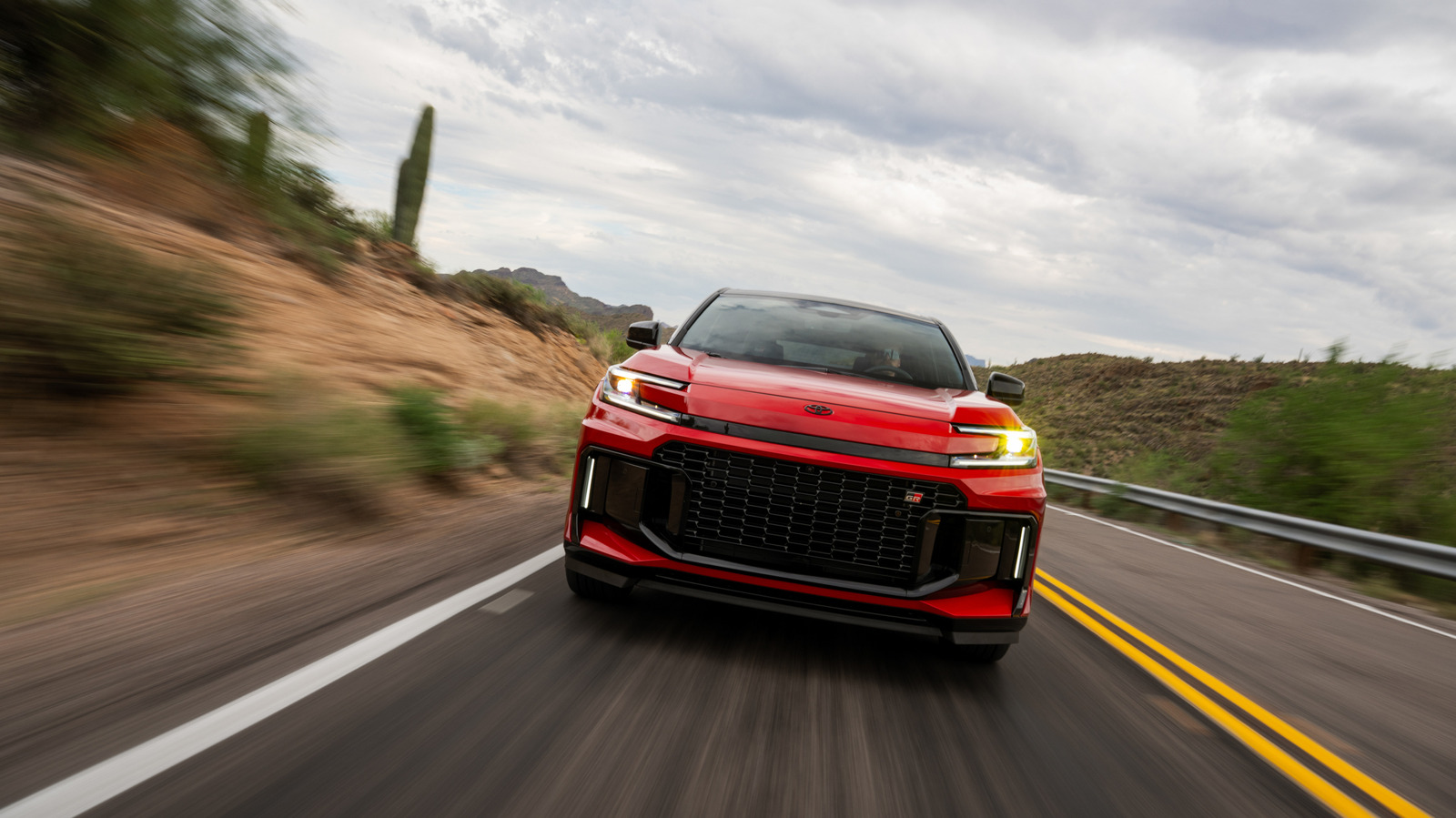
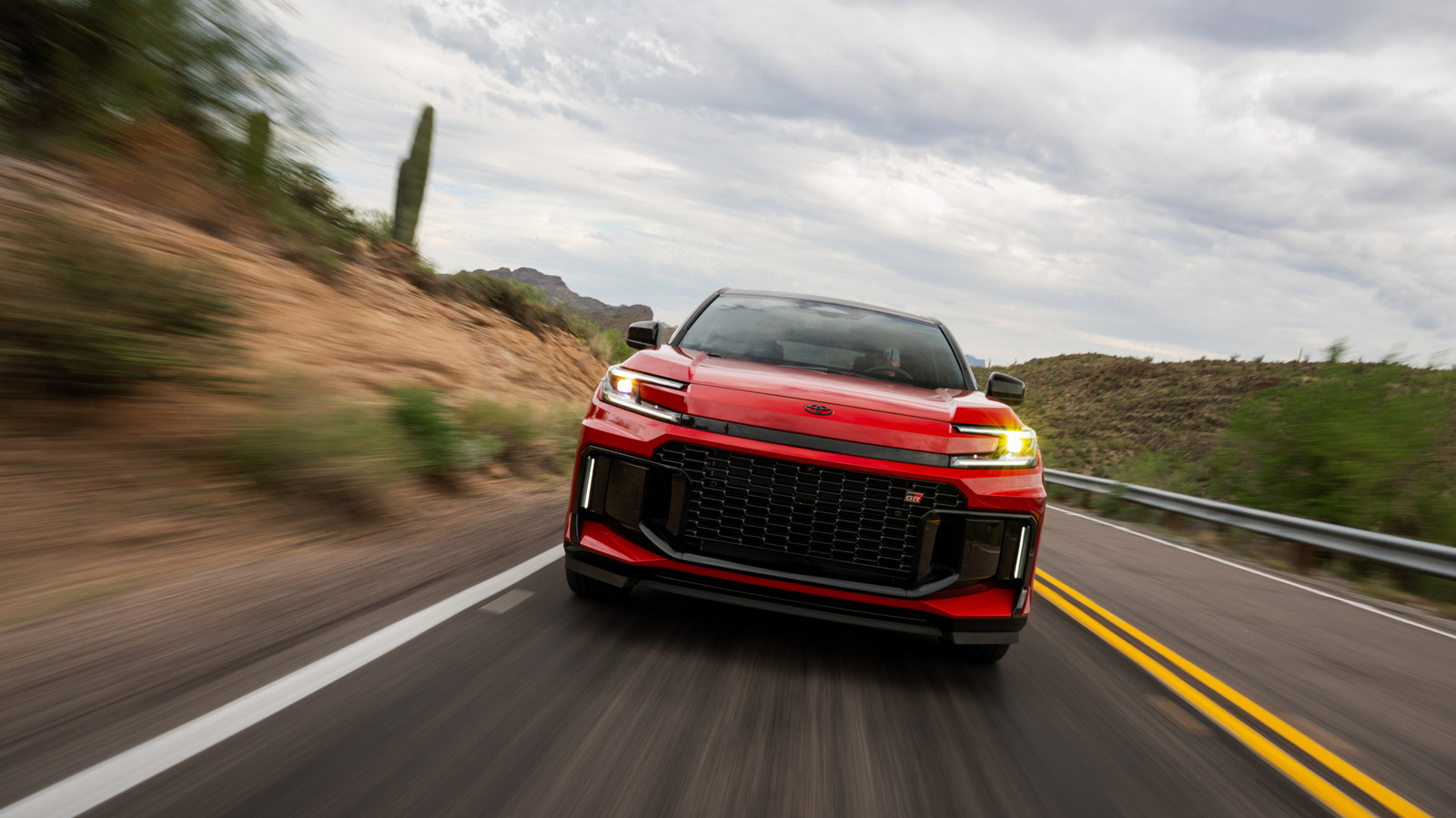
The Toyota Rav4 Plug-In Hybrid is very definitely not a sports car, not by any stretch. It’s a competent crossover plug-in hybrid SUV that just so happens to be remarkably quick. Through the electric motor and its 2.4-liter four-banger it generates a total of 324 horsepower, which is surprisingly powerful for the average mom-mobile. As a result, it has a 0-60 time of 5.4 seconds.
Just under five and a half seconds puts the Rav4 Plug-In above a number of different sports cars from the past and present. Now, it’s not going to dust any contemporary Lamborghinis or Ferraris on the drag strip, but it can certainly hold its own in the acceleration department against some entry level sporty cars and quite a few cars from decades past.
Defining the terms, a bit “quicker” will be referring strictly to acceleration times. There’s no doubt your average sports car would have a faster lap time in racing just due to weights, suspension setups, and the fact that the Rav4 is very much not set up for racing, but that 0-60 sprint time still means something.
Looking at Toyota’s lineup, the Rav4 PHEV’s acceleration time puts it quicker than the fundamental ideal of a sports car, the GR86, which can reach 60 miles per hour in 6.1 seconds. Now, which one is more fun to drive? That’s a different question altogether.
The GR86 loses in a drag race as it’s only rear-wheel drive compared to the Rav4 PHEV, which is all-wheel drive. It’s not a hard and fast rule, but all-wheel drive cars have a bit of an advantage off the line as all the wheels are assisting in grip, pushing and pulling the vehicle forward. The GR86 also comes standard with a six-speed manual transmission. That makes it more fun to drive, but slower to accelerate compared to the Rav4 Plug-In’s electronically controlled CVT.
There’s also a power disparity. The GR86 puts out just 228 horsepower, almost 100 less than the Rav4. The Plug-In has clear mechanical advantages, resulting in the better acceleration that leaves the GR86 in the dust — at least in the race to 60 mph.
Yes, you read that correctly. A new Rav4 Plug-In is quicker than a 1984 Ferrari Testarossa off the starting line. The ‘Rari does have a lot going for it though. It’s powered by a 4.9-liter flat-12 with four valves per cylinder, putting it somewhere north of a Swiss watch in terms of mechanical complexity. It’s also a mid-engine Ferrari with a top speed of 180 miles per hour. It’s not exactly a grocery getter like the Rav4 Plug-In. However (and this is a big “however”), the Testarossa has a 0-60 time of 5.8 seconds, according to Ferrari.
Now, there’s also a huge difference between “quickest” and “most desirable.” If you want to buy a Testarossa, you’re going to be spending in the neighborhood of $200,000, and oftentimes significantly more. You will also likely win every local car show. The 2026 Toyota Rav4 PHEV, on the other hand, retails for $41,500 and your local Toyota dealer probably has several dozen in stock.
The Aston Martin DB7 came at a vitally important time for the automaker. According to the automaker, both the DB7 and the new company ownership by Ford could be credited for keeping the company alive. The resulting car had a wacky engine and quite respectable performance specifications for the 1990s. It had a 3.2-liter inline-six with a supercharger that made a healthy 355 horsepower. That all translated to a top speed of over 160 miles per hour. It helped that the car looked great, too.
But, just by the virtue of being on this list, you can already see the bad news. With a 0-60 speed of 5.8 seconds, it might be touch faster than the aforementioned GR86, but it is slower than a new Rav4 PHEV. Of course, if you pull up to the grocery store in a classic Aston Martin, you’ll likely get swarmed by people wanting to take a picture. That is definitively not the case with a Rav4 Plug-In, even if it is a little quicker off the line.
The fourth generation Chevrolet Corvette looks like its going the speed of sound when it’s sitting still. Chevy’s marketing from the time called it one of the most advanced cars ever made, and the styling certainly looked the part. The electronics were modernized for the 1980s and the cockpit was given a fighter jet look. But under the big fiberglass hood was classic Chevy. It was powered by a 5.7-liter V8 that put out a somewhat pokey 205 horsepower when it first launched for the 1984 model year.
Car and Driver tested one when it came out and found that it had a 0-60 time of a pretty sad 6.7 seconds. So the victory in the quickness department very much goes to the Rav4. Really though, in which car would you rather listen to Van Halen’s “Panama” at an irresponsible volume? A 1984 Chevy Corvette with enough angles in the bodywork to make a geometry major have night terrors, or a Rav4 Plug-In?
For this list, we picked four performance cars that have slower acceleration times than the current Toyota Rav4 Plug-In Hybrid. For 0-60 metrics, we used times provided by the manufacturer and compared it to those listed on Toyota’s website. For the fourth generation Chevy Corvette, we used a 0-60 time gathered by Car and Driver during a review from the era.

I was recently digging through my Instagram settings, trying to disable Meta’s now-defunct feature that allowed anyone to create AI deepfakes of me without consent. Anger bubbled up inside as I tapped through the Kafkaesque opt-out process.
Rather than throwing my phone across the room, I blurted to my partner that we should leave San Francisco behind and be off-grid sheep farmers. Something analog. In that moment, anything sounded better than this ongoing, generative-AI-induced hell.
Many Americans are having similar reactions to the growing prevalence of generative AI in daily life. “The AI revolution has happened, and everybody hates it,” says Meredith Broussard, a data journalism professor at New York University and author of Artificial Unintelligence: How Computers Misunderstand the World. In a recent Gallup poll, Americans’ increased familiarity with generative AI coincides with negative attitudes about the technology. This is especially true for young people between 18 and 29, where almost half see generative AI as doing more harm than good.
While this AI backlash has been brewing for the last few years, more companies appear to be directly addressing these concerns. LinkedIn added a “seems like AI slop” button for reporting AI-generated content on the platform, despite still hosting plenty of generative AI tools. Snapchat announced that fully AI-generated videos would no longer be eligible for its discovery feed. Substack recently added an AI detection tool to police writers.
The backlash’s “why” is simple at its core. Many Americans feel like they never consented to any of this. I had no idea that my online interactions would one day be scraped en masse for AI model training. I didn’t ask for Instagram to enable deepfakes on my account. I didn’t want Google to push AI-generated answers at the top of search results. I woke up one day, and generative AI features were stuffed into every corner of all the software I rely on without my consent.
Whether it’s AI models scraping your data or noisy data centers popping up in your backyard, the AI revolution seems to be an event happening to us without making us feel like active participants.
“Consent is really important,” Broussard tells WIRED. “We can connect that to the way that women, queer people, people of color, and minorities get exploited and abused online. Tech companies have never really been sensitive to issues of consent.”
Public backlash appears to be working, at times, in getting unwanted AI features shut down. “They just roll them out and see what sticks, because nobody really knows what this is for,” says Nick Seaver, an associate professor of anthropology at Tufts University focusing on technology and society. Google recently rolled back the ability for people to use generative AI to tweak satellite images on Google Earth almost immediately after launching it, following reporting from 404 Media. Additionally, Meta turned off the aforementioned deepfaking tool for Instagram users after three days of public outcry and viral videos with millions of views criticizing the feature.
There’s also a growing rejection of generative AI in marketing materials. Many people online reacted negatively to major brands, like McDonald’s and Coca-Cola, incorporating generative AI visuals into their ad spots. Even local shops see backlash for promoting events using AI-generated posters.
Beyond online outcry, more people are starting to protest against the building of data centers that power these AI tools. “There’s a lot of pushback coalescing around data centers,” says Emily Bender, coauthor of The AI Con. “Data centers are important because they are focal points of environmental and economic damage.” Americans across the political spectrum have recently united in these data center protests.




Weekend Open Thread: Mattifying Sunscreen


Frugal Friday’s Workwear Report: Cap-Sleeve Pointelle Crewneck Sweater


Jordan Coyle & Cordiamo take Laya Arena Stakes at RDS


Can Astrology Help Find Gold and Silver Trends? A Financial Astrology Guide

US stocks: Dow closes at record on Mideast optimism; SpaceX, AMD drag Nasdaq


US Tech Stocks See Largest 5-Week Inflow in History: Can Nasdaq Break Its Downtrend?


Reform UK And Greens Sink To Lowest Favourability Ratings To Date


Nvidia Stock Climbs 2.5% as Chip Sector Rally Builds Ahead of AMD Earnings, Nvidia’s Own Report Looms


OpenAI, Anthropic AI agents targeted real people and systems in cyber tests


Polymarket targets $20 billion valuation as competition heats up in prediction market sector


Supply chain issues impact Ingredion

CLARITY Act Senate Vote Locked In, But 60-Vote Hurdle Looms Large


Rinn Pharma & Biopharma to join NordicPharmaTrain network


How to Start a Cleaning Business: A Step-by-Step Guide


The Senate has one week: CLARITY’s last August window
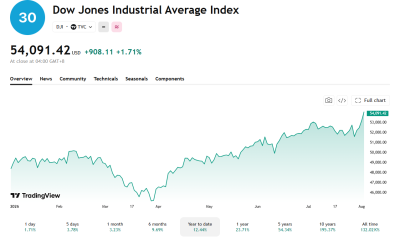

Dow and S&P 500 Hit Records on AI Earnings: When Will the Bubble Burst?


Datadog: Best Of Breed For Multiple Reasons


CNH Industrial Shares Jump Over 15% After Beating Estimates and Raising Full-Year Earnings Guidance
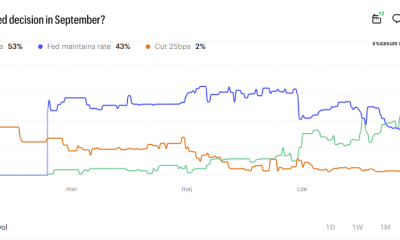

Dollar Index Trapped at 100 as Hawkish Fed Meets Official Selling


BDC Weekly Review: Private BDC Q2 Numbers Are Strong



You must be logged in to post a comment Login