
Tech
No discs, more problems: What Sony’s all-digital PlayStation means for gamers and the industry



Sony announced on Wednesday morning that it plans to phase out physical media for future PlayStation games, which is a massive market disruption for an already reeling games industry. It ends trade-ins and lending, raises the overall price of entry for the PlayStation ecosystem, and turns your shelf full of games into licenses that can potentially disappear.
The news came via a post on the official PlayStation blog by senior communications director Sid Shuman. As of January 2028, all games for PlayStation platforms will only be available in digital formats, such as direct downloads.
“This is a natural direction for Sony Interactive Entertainment to adapt to consumer trends as the general preference for digital media significantly outpaces physical discs,” Shuman writes. “This transition will enable us to align more closely with how most of our community prefers to access and play games today.”
Analysts have expected an announcement like this for some time. As per Circana senior director Mat Piscatella, physical media sales in gaming have been on a steady downward turn since their peak in 2009, hitting an all-time low in 2025. In fact, several companies have sprung up since then that treat physical games as an exclusive collectible, such as Limited Run, Lost in Cult, and Videogames New York.
It’s not hard to see why Sony would make this move. We’re approaching the point that would usually mark the end of the PlayStation 5’s life cycle. Were it not for the ongoing component shortage, we’d likely have heard more about the PlayStation 6 by now. An all-digital PS6 theoretically uses fewer parts and the games are cheaper to publish, which lowers the per-unit cost for Sony as it develops the new hardware.
However, Sony’s decision to sunset physical media in a year-and-a-half is faster than most analysts’ craziest predictions, most of whom figured it’d take at least another decade to fully phase discs out. Even at its lowest point, per Circana’s math, physical media in video games represents $1.9 billion in consumer sales. That’s not insignificant.
Sony’s competitors have yet to react in any significant way. Microsoft’s next-generation Xbox, currently known under the codename Project Helix, is rumored to be an all-digital system, and Microsoft has famously been trying to get out of the physical media business since at least 2013.
That year, Microsoft announced at E3 that the Xbox One would have significant measures in place to keep players from reselling their physical games, which led to widespread outcry online. The next day, Sony’s president went onstage and proclaimed the PS4 would do none of that — which gave it a big head of steam going into a console generation Sony went on to win.
Thirteen years later, Sony is making Microsoft’s old bet.
The irony is that Sony itself underscored one of the biggest issues with ditching physical media last Sunday. On June 26, Sony sent a number of users in the United Kingdom an email to notify them that due to the end of a license agreement, 551 shows and movies that were previously available on the PlayStation Network would be removed from the service. Consumers who’d previously thought they’d made a purchase were suddenly informed that it had actually been a multi-year rental.
That’s the central problem of the streaming era for end users: you only have anything in your digital library for as long as the library’s owner decides you do. An all-digital future means you own nothing. At best, you have limited viewership rights that can be revoked at short notice.
Most worryingly, however, the shift to an all-digital future effectively raises the cost of entry to the console market, at a point when the price of gaming is already rising. If there are no physical discs for the PlayStation 6, then you can’t swap discs with a buddy or defray a purchase by trading an old game back to a store.
This is a relatively sudden disruption to the console market, and through it, to the games industry as a whole. It’s likely to have a series of knock-on effects for the next few years, and sets an early tone for the upcoming 10th generation of console hardware.
While it’s still possible that consumer outcry could get Sony to reverse course here, or offer some intermediary solution like USB disc drives, the end of physical gaming media has analysts and players alike asking a lot of tough questions about costs, preservation, and consumer convenience. The games industry is changing faster than expected in 2026, and is likely to be nearly unrecognizable by this time next year.


A top seller that’s priced at a 30-day low, Amazon’s M4 Pro Mac mini deal is both on sale and available to ship in 1-2 days.
With increased demand for headless machines to run AI agents, Apple’s M4 Pro Mac mini has been sold out for much of the year. But Amazon has the M4 Pro configuration with 24GB of memory and 512GB of storage back in stock, and it’s $30 off, bringing the price down to $1,569.99.
Buy M4 Pro Mac mini for $1,569.99
Priced at a 30-day low, it appears stock is limited as Amazon states the compact desktop is available to ship in 1-2 days with delivery dates the first week of August to many locations. This puts Amazon’s delivery window a full month ahead of Apple’s, which is Sept. 8-15 at press time.
For the latest pricing and availability, check out our Mac mini Price Guide.


OFFBEAT
Tom Evslin on Bill Gates, the birth of Exchange, and dragging Ma Bell onto the web
Tom Evslin drove the WorldNet project at AT&T and helped develop what became Microsoft Exchange and Outlook. He was at Microsoft when the company was still working out what to do about this newfangled internet thing.
Evslin describes himself as one of Microsoft’s “internet radicals” in the early 1990s, when the company was developing Exchange Server to fend off the threat from Lotus Notes.
“Bill Gates was willing to put lots of effort and money into Exchange because he was very afraid of Lotus Notes,” Evslin says. “He felt that Lotus Notes could become a platform the way that Windows was, which would be an enormous threat to Microsoft. And so he saw Exchange as a Notes killer.”
Evslin saw Exchange differently “because I was an email guy.” He and Microsoft’s other “internet radicals” wanted the upcoming products delayed until they had been made relevant to the internet. Gates disagreed.
“Bill said, with some truth, that we were probably behind schedule anyway, always looking for an excuse to be late. So we go ahead with the next launch of products, including Office, Exchange, and NT, then worry about the internet afterward, which I thought was a mistake.”
Evslin was fascinated by the internet’s potential and disappointed by Gates’ stance. He was responsible for gateways in Exchange, services that connect one mail system to another. Some did things like connecting to CompuServe. Others linked to MCI Mail, one of the first commercial email services in the US, “which I had done a client for,” Evslin says.
“We had one little gateway that we hadn’t put much work into, which was called an SMTP gateway, which connected SMTP mail, which was used on the internet. Which itself wasn’t widely used.”
So, was Gates right? Only briefly. While Microsoft’s corporate clients insisted communication over the internet was “not safe” and “not secure,” Evslin says: “All of a sudden we got a huge number of requests for this SMTP gateway. And when I looked into it, I found that more and more email was going over the internet.”
The official corporate stance might have been one of “nope,” but employees had other ideas. “Their engineers were communicating on the internet, and they never understood that, or didn’t understand that at the time,” Evslin says.
And then there was what would become Outlook. “From the beginning, we wanted the client for Exchange to be able to support graphics, to be able to support fonts, so that you could format an email in the same way that you could format a Word document.
“Where we didn’t go far enough is we still had two separate formatting engines, so the Word and Outlook client never merged as I thought they should have.”
Soon after Gates chose to launch the products before adding deeper internet integration, AT&T invited Evslin “to come and develop their internet strategy.” Back then, Evslin says, AT&T didn’t really have a clear plan for the internet. The company had tinkered with proprietary networks, but Evslin reckoned AT&T should become an ISP. “AT&T always had illusions about being a content provider,” he says.
Evslin also favored all-you-can-eat pricing, which smaller providers had attempted but AT&T had yet to try. “There was a lot of debate internally, people saying ‘you can’t launch a new service in less than seven years.’”
Considering how quickly things were moving – and still are – seven years was a lifetime. “I said, ‘the solution to that is launch it fast and then adapt.’”
WorldNet offered straightforward internet access to customers accustomed to portals, proprietary networks, and some heart-stopping telephone bills. Demand grew so quickly that AT&T had to control sign-ups lest the service earn the “America On Hold” nickname occasionally and unkindly applied to America Online.
With the internet in the ascendant, Evslin became interested in another technology: voice over IP. This, he acknowledges, “was an impossible sale inside AT&T.”
And so, in 1997, Evslin moved on again to found ITXC, a wholesale VoIP carrier. ®
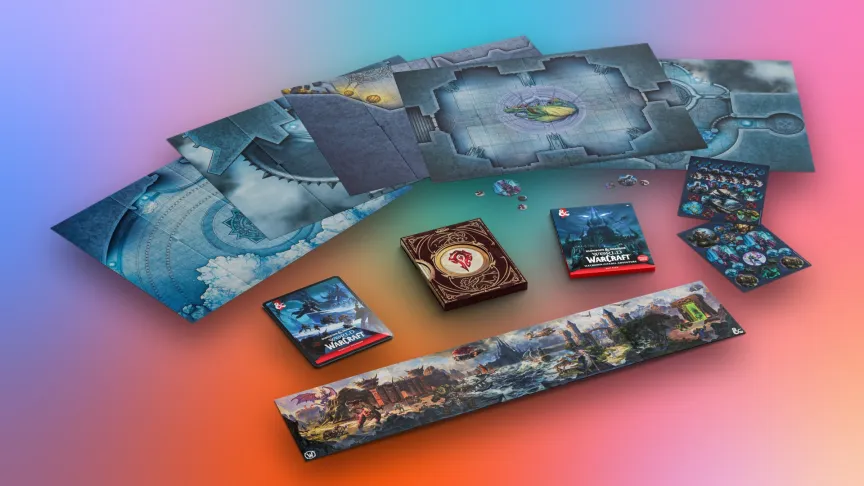
On the first evening of GenCon 2026, in a venerable theater that Wizards of the Coast took over for a weekend’s worth of Dungeons & Dragons activities, the team behind the biggest tabletop roleplaying game in the world revealed its next year of upcoming adventures.
There was plenty of news to look forward to, including the triumphant return of D&D legends to contribute to classic D&D settings like R.A. Salvatore (The Legend of Drizzt), Tracy Hickman and Margaret Weis (Dragonlance) and Luke Gygax (Greyhawk, one of the earliest D&D settings created by his father, Gary Gygax). Among the banquet of table offerings was outreach to other corners of nerd culture — including new sets for World of Warcraft and Star Wars planned for this year and next.
The new series, Universes Beyond, works much like the same-named subset of Magic: The Gathering releases: adapting fan-favorite franchises to the game’s system. In D&D’s case, this means adapting the iconic signature, villains, boss fights and regions for D20 rules. Yes, that means you can fight the Lich King in D&D — that’s the objective of the Warcraft set’s first adventure, plotted out so players can jump in right out of the box.
But the big virtue of Universes Beyond is kicking off custom adventures to explore the corners of these franchises with characters that players can grow at their own pace. With all the information Wizards of the Coast has revealed, CNET’s brain trust of dice-rollers has come together to theorycraft exactly what we want to play first in these exciting new collaborations.
The only problem? The D&D team shared plenty about the World of Warcraft set, which will come out in the fourth quarter of 2026, but shared almost nothing about Star Wars. Still, we let our imaginations run wild for how we’d play to see what happens in Azeroth and a galaxy far, far away.

How CNET would explore the World of Warcraft, one dice roll at a time
The D&D team rolled out a small family of products that will debut with the World of Warcraft set toward the end of the year, including a 265-page sourcebook (along with special and hobby store-exclusive editions), the aforementioned adventure called Icecrown Citadel for character levels 16-20, a map pack for said adventure, miniature packs and a dungeon master’s screen adorned with famous characters from the MMORPG. All of those are available for preorder right now with a full release later this year on Nov. 17.
On stage during the D&D keynote, presenters laid out what the set adds to the broader tabletop RPG. You’ll be able to play virtually any species you can in the online game, including 11 that are wholly new to D&D, such as Dracthyr, Earthen and Pandaren. There are nine subclasses in the sourcebook, six of which are new, like the iconic Death Knight, Demon Hunter and Shadow Priest. There are also stat blocks for the MMORPG’s most famous characters, like Arthas Menethil, Jaina Proudmoore, Anduin Lothar, Thrall and Sylvanas.
Here’s what CNET’s editors would play first:
It’s been over 20 years since I last played World of Warcraft – I reluctantly canceled my subscription when I started college. But as soon as I read D&D’s news, my mind immediately cast back to my time roaming the Barrens of Kalimdor as a troll shaman, braving the frontier for the Horde. Before smartphones and doomscrolling and Twitter and all the modern escapes in your pocket, entering the Dark Portal on World of Warcraft’s login screen was how I left my mundane reality behind.
I never got to a high enough level to participate in a raid, the large-group efforts that bundled 10, 25 or even 40 players together to take on the biggest bosses in the game. From Ragnaros to the Lich King himself, the sourcebook has stat blocks for 30 of these classic World of Warcraft baddies, though they’ve been scaled down so that a D&D-friendly three-to-five-person party can take them on. I’d love to tackle the worst of the worst, explore the seven dungeons in the new sourcebook, and more — undertaking the challenges I missed out on to prevent me bungling my college career.
- David Lumb, Managing Editor

I’ve been WoW-curious for about as long as the game has been around, but I’ve always been a bit too intimidated by the prospect of investing hundreds, if not thousands, of hours into a game when I already feel like I can’t keep up with new releases and my existing library. So World of Warcraft coming to Dungeons & Dragons is exciting because it’s an opportunity for me to interact with the world without tumbling into a seemingly bottomless pit.
I enjoy casting spells and controlling battlefields, so my mind immediately goes to a couple of different builds. If my group wants to go the Alliance route, a Frost Mage Void Elf sounds like a fun time, and fairly straightforward to build with existing D&D Wizard rules. If we’re feeling more Horde, I’d probably check out the new Shadow Priest subclass, maybe as a shifty Vulpera. I’m excited about the high-level Lich King adventure, but I’m hoping the book also gives us options for things like a political intrigue campaign set in the maritime island nation of Kul Tiras, which is the kind of campaign I might brew up if I were in the DM seat.
- Adam Benjamin, Managing Editor
Forecasting fights and the Force in Star Wars D&D
While the D&D team at Wizards of the Coast had a lot to share about the upcoming World of Warcraft set due out later this year, they were tight-lipped about what’s coming with Star Wars. Despite prodding, the team deigned not to reveal anything just yet — not even whether there will be starship flight and combat systems in the game. And no, they didn’t confirm what challenge rating the Death Star will be (we’re betting it’s in the triple digits).
Without even a hint at what’s to come, we speculated on what we want most from exploring the expansive Star Wars universe, one dice roll at a time.
I’ve been playing Star Wars TTRPGs for an entire decade at this point, and having the franchise officially come to D&D is an exciting proposition. It’s going to be interesting to see how they deal with the more technical aspects of space combat, and I’m looking forward to seeing what era of Star Wars they start in.
I like the concept of a Force User droid. Potentially like General Grievous (a biological/droid mix), but as a Wizard-style class. His familiar could be a mouse droid from the Death Star. I’m not sure if “Droid” will be a race in the new campaign, but D&D already has a Warforged race from Eberron, so it doesn’t feel like a big stretch to add them here. Droids are such a large part of the Star Wars Universe and I would enjoy the roleplay challenges they would bring to the table.
- James Bricknell, Managing Editor
We don’t know what we don’t know yet when it comes to Star Wars played through a D&D lens, but the Star Wars universe is more than big enough to speculate on what would be cool to have. My genuine hope is that the rules being built for this little expansion make it relatively easy to play in any era of Star Wars. As much fun as it would be to roleplay through a big battle with Darth Vader or a space dogfight against a Star Destroyer, I’d love to see some of the flexibility from the High Republic era as well. From repair and hacker focused roles like Mekneks to the greater diversity of Force powers of the era, it’s a bigger sandbox to play in.
This doesn’t mean there needs to be a core book for each era of Star Wars, just a set of rules that encourage adaptation. This is something Wizards of the Coast has demonstrated as a core strength since the release of the 2024 rules. The tools for supporting the creativity of players have been well established, but adapting the massive and decidedly not high-fantasy vibes of Star Wars presents some fun challenges. I genuinely can’t wait to play.
- Russell Holly, Content Director

What’s the first thing D&D’s developers will play?
Ahead of the GenCon keynote, I chatted with several game developers from Wizards of the Coast to get the full scope of the World of Warcraft set. From development to new mechanics to how the Universes Beyond sets would play with broader D&D, I plied them with many questions — including what they would do first in their new worlds. While they couldn’t comment on Star Wars, they did have answers for World of Warcraft.
“For me, it’s the Icecrown Citadel adventure,” said Laura Hohman, product architect for D&D. Wrath of the Lich King, World of Warcraft’s second expansion, was what really got her hooked, even though she spent most of the time collecting owls, she admitted with a laugh. But the climactic raid at the end, where players take on the Lich King, holds a special place in memory and nostalgia for her.
“I can’t wait, once this is out there, to play this with my friends [and] recreate those moments again in a new way on tabletop,” Hohman said.
Jeff Turiff, director of product management for D&D Beyond, the online character creator and portal for resources, talked about updates coming to the service as well as to its mobile app version. Fittingly, the self-avowed Horde player is going to “probably start by rolling up some characters.”
“I love character builds. Hop on D&D Beyond, of course, and make some characters to test drive in a setting — maybe in a standard D&D setting would be kind of cool,” Turiff said.

D&D Game Design Director Justice Arman is most excited about the mounts, an iconic element from the MMORPG that enables players to speedily travel (and show off with more exotic beasts of burden).
“I’m from Tennessee originally, so maybe it’s the cowboy in me, but the idea of having a direwolf or gryphon mount is pretty cool,” said Arman.
But as with Hohman, Arman turned to his memories of playing the MMORPG back in the day. It’s less about what race or class he plays, but who he plays tabletop games with, he said.
“Back in undergrad, I had two roommates who were wrestlers and they loved World of Warcraft, and we were playing it so often,” Arman said. “I would love to sit down with them and reconnect.”



A staggering $1,200 discount is available exclusively to AppleInsider readers, delivering the lowest price on record for the M5 Max 16-inch MacBook Pro config.
The exclusive $1,200 discount* brings the cost of Apple’s latest 16-inch MacBook Pro with an M5 Max chip down to $3,199, the lowest price on record, when ordered in Space Black.
Save $1,200 on 16″ MacBook Pro M5 Max
B&H has partnered with AppleInsider to bring you the limited-time discount on the high-end configuration that’s equipped with an 18-core CPU and 32-core GPU. It has 36GB of unified memory and a spacious 2TB SSD as well, making it a well-equipped configuration for content creation, AI tasks, business management, and more.
Along with the exclusive markdown, B&H is tacking on free standard shipping within the contiguous U.S. And if you’re looking to save on tax, the store’s Payboo Card offers an instant sales tax refund for purchases in qualifying states.
Wondering how the deal stacks up against other Apple resellers? You can easily compare prices in our 16-inch MacBook Pro Price Guide. According to the guide, Amazon is selling the exact same model for $800 more, making B&H’s $3,199 price the lowest available.
In our hands-on 16-inch MacBook Pro review, we found the M5 Max chip to be blazing fast, with excellent performance when running AI tasks. Wi-Fi 7 support is also a plus, as is the faster SSD compared with the previous-generation MacBook Pro.
To activate the exclusive discount that’s valid this week only, you must shop through the special pricing links in this post or in our Price Guide from a laptop or desktop computer. The offer cannot be activated through B&H’s mobile app at this time.

Siri AI is coming soon. The redesign of Apple’s voice assistant was first unveiled at Apple’s Worldwide Developer Conference in June. Since then, the buzz has been all about what to expect from the new Siri 2.0.
But Siri AI may cost you, at least if you use it a lot.
Outgoing CEO Tim Cook hinted at a possible upcharge during Apple’s quarterly earnings call on Thursday.
Cook was asked about iOS 27, Apple Intelligence, feedback from the public beta and how Apple is thinking about compute costs and the ability to recover those costs through iCloud Plus. He suggested the possibility of charging for Siri AI as a part of the iCloud Plus application stack.
“We do believe there will be people that want to use it a lot, and so we will have some kind of upgrade possibilities on iCloud Plus,” Cook said.
He added that those ideas are in the early stages and did not discuss a complete plan. Apple’s team is “off-the-charts excited about Siri AI,” he added, saying feedback has been overwhelmingly positive so far.
The earnings call, Cook’s last before John Ternus takes over as CEO, comes weeks after Apple announced price increases for Apple Music and Apple One subscription bundle.
Apple has said the new AI-powered virtual assistant will be available on iOS 27, iPadOS 27, MacOS 27 and VisionOS 27. You can expect Siri AI to have its own app, customization, Visual Intelligence and a new design.
Examples of Siri’s new capabilities include being able to find out about the latest concert, how to get tickets and remind you when it’s time to buy them. Other features include finding information in your messages (e.g. “Call the eye doctor who messaged me”), creating a photo album specifically for a loved one that includes photos of them, and even identifying a place from a picture.

Apple did not immediately respond to a request for comment.



HDMI has emerged as one of the most ubiquitous audio/video standards to ever be adopted in consumer electronics. According to the HDMI Licensing Administrator, Inc. (HDMI LA), almost 14 billion HDMI-enabled devices have shipped since HDMI 1.0 was introduced in 2002. The latest HDMI 2.2 was announced in 2025, and we expect to see HDMI 2.2 devices in 2027. You can find an HDMI port on something as small as a Raspberry Pi single-board computer, or as big as something like Samsung’s The Wall 130″ smart display. Somewhere on that spectrum is graphics cards, which have been incorporating HDMI ports for years.
The first graphics cards that made use of HDMI hit the market in 2006, and have continued to evolve alongside HDMI, as well as other technologies like DisplayPort. Modern graphics cards usually ship with only one HDMI port alongside usually 2 or more DisplayPort ports. As far as why so many graphics cards ship with only one HDMI port is a question many users have pondered, and there isn’t a single answer. The truth is that the decision comes down to equal parts business costs, user needs, and engineering.
In the world of monitors, DisplayPort is king

Graphics cards are built for PCs, and PCs are predominantly going to use monitors. Monitors favor DisplayPort, as the format has become an incredibly robust and PC-centric standard that can carry video, audio, data, and power along a single cable. DisplayPort also enables multi-monitor setups by daisy-chaining monitors with Multi Stream Transport (MST), with only a single cable from the source. DisplayPort is also better equipped to consistently handle higher refresh rates, and also supports VESA Adaptive Sync, which is what variable refresh rate technologies like AMD’s FreeSync are based on. Importantly, Nvidia’s G-Sync is limited to DisplayPort, but G-Sync Compatible will work over HDMI in addition to DisplayPort.
On a graphics card, HDMI is treated more like a compatibility port, ensuring the card can be used across a variety of potential outputs, monitors included. The bandwidth roadmap for DisplayPort has also routinely exceeded that of HDMI, though HDMI 2.2 looks to change that with a top end bandwidth of 96 Gbps –- but HDMI 2.2 ports will come with a catch in the form of certified cables and ports that will likely be expensive and confusing to buy into. DisplayPort 2.1 can already accommodate up to three 4K monitors at 90 Hz or two 4K monitors at 144 Hz without using compression, all while being the more versatile interface.
The slight bandwidth lead HDMI 2.2 enjoys likely won’t make a huge impact, as resolutions beyond 4K have yet to break into the mainstream consumer market. And based on the history of DisplayPort’s roadmap, we can expect the next version to leapfrog HDMI 2.2.
HDMI is expensive to implement

Compared to DisplayPort, HDMI is costly to build into a graphics card. An HDMI port has a higher physical complexity than DisplayPort, and can take up more PCB space –- which is already premium real estate on graphics cards. Depending on the version, HDMI ports can also require additional hardware and board space to meet the electrical and bandwidth requirements. For instance, an HDMI 2.1 port that supports the newer Fixed Rate Link (FRL) encoding will cost more than an HDMI 2.0 port that relies on Transition-minimized differential signaling (TMDS).
GamersNexus covers this in a tour they took of a Taiwan factory that manufactures Intel Arc GPUs for Sparkle. In that video, it is also revealed that HDMI ports cost about $1/port for Sparkle’s Intel Arc GPUs, with most of the cost going to licensing fees. This is because HDMI is not an open standard; HDMI adopters (companies paying to license HDMI) have to pay annual adopter fees and royalties on devices. For something like Sparkle’s Intel A310 Omni View SKU that has 4 HDMI ports, that’s $4 in HDMI costs for a card that’s targeting a $100-$110 price point. Sparkle’s Taiwanese factory produces over 1,000 Intel Arc GPUs per day, so you can see where the math is going. Then there’s mandatory compliance and certification testing according to HDMI’s Compliance Test Specification, which has to be completed by an Authorized Testing Center. HDMI 2.1 –- and eventually HDMI2.2 –- will compound these costs further.
DisplayPort is an open and royalty free standard, which is another huge difference between HDMI and DisplayPort, and manufacturers can implement the ports at no cost. The VESA DisplayPort Compliance Program is also not tied to licensing agreements like HDMI, and is driven by VESA members and the DisplayPort ecosystem.

WIRED is obsessed with what comes next. Through rigorous investigations and game-changing reporting, we tell stories that don’t just reflect the moment—they help create it. When you look back in 10, 20, even 50 years, WIRED will be the publication that led the story of the present, mapped the people, products, and ideas defining it, and explained how those forces forged the future. WIRED: For Future Reference.

Need some help with today’s Mini Crossword? A few of the clues are tricky. Read on for all the answers.
Mini across clues and answers
1A clue: Something you might ask for while staying over at a friend’s house
Answer: WIFI
5A clue: Genre for “Stranger Things”
Answer: SCIFI
7A clue: Unlikely pants to wear to a wedding
Answer: JEANS
8A clue: Octagonal sign word
Answer: STOP
9A clue: Where sows are housed
Answer: STY

Mini down clues and answers
1D clue: Newspaper that covers the stock market, for short
Answer: WSJ
2D clue: Puts a cold pack on
Answer: ICES
3D clue: Official decrees
Answer: FIATS
4D clue: “Otherwise …”
Answer: IFNOT
6D clue: Words before “with my little eye,” in a game
Answer: ISPY

Get CNET’s top-rated VPN for privacy and usability


The Danish TV audio specialist is expanding beyond direct sales, giving American buyers a chance to hear, install, and service its premium systems through authorized dealers. Spending $5,000 or more on a TV audio system you have never actually heard requires confidence, disposable income, and a rather trusting relationship with international freight.
CANVAS HiFi is attempting to make that proposition somewhat less adventurous.
The Danish manufacturer has appointed Playback Distribution as its exclusive U.S. distributor, opening the door to a broader network of specialty audio dealers and custom integrators across the country.
That might not sound as exciting as a new amplifier, larger woofer, or proprietary acronym involving spatial audio, but it could be one of the more important developments for the brand in the United States.
CANVAS is not a $399 soundbar that can be carried out of Costco between the paper towels and frozen dumplings. Its products are large, heavy, configurable audio systems designed to visually integrate with televisions ranging from 55 to 85 inches; and eventually even larger screens with the forthcoming CANVAS L.
For American consumers, the ability to hear one before buying it, confirm that it will work with a specific television, and have somebody else install the thing properly has considerable value.

Related Stories:
What Playback Distribution Brings to CANVAS
Playback Distribution was founded in 2023 by industry veteran Rob Standley and represents a growing collection of premium audio brands, including Advance Paris, Amphion, AudioSolutions, AVID HiFi, Esoteric, PMC, TEAC, Velodyne Acoustics, Vicoustic, and Vienna Acoustics.
That portfolio gives CANVAS access to dealers already selling expensive loudspeakers, electronics, subwoofers, room treatments, and custom-installed home-theater systems.
More importantly, Playback already has the sales, logistics, dealer-support, parts, warranty, and customer-service infrastructure required to support products that are considerably more complicated than their minimalist appearance suggests.
CANVAS combines loudspeakers, amplification, DSP, streaming, room correction, television mounting, and interchangeable furniture-grade front panels in one rather substantial enclosure. When everything works, the result can be visually striking and far less intrusive than a conventional collection of speakers, racks, amplifiers, and cables.
When something does not work, buyers will probably prefer calling a local dealer rather than holding an international video conference while kneeling behind a 77-pound audio system with a flashlight between their teeth.
CANVAS has already sold directly to American customers, with shipping and import costs included in its pricing. The Playback agreement adds something the direct-sales model could not easily provide: local demonstrations, professional installation, and support from somebody who has actually seen the product outside of an Instagram reel.
What Is CANVAS HiFi?
The original CANVAS is an active stereo speaker system built into a structure designed to align visually with a television. Calling it a soundbar is technically convenient but somewhat misleading.
Most soundbars use multiple small drivers packed into a shallow enclosure and rely heavily on digital processing to create the impression of a larger presentation. CANVAS takes a more traditional loudspeaker approach.
The system uses two 6.5-inch SB Acoustics bass and midrange drivers, two 29mm silk-dome tweeters, and two passive radiators inside a 24-liter braced MDF enclosure. Four channels of Class D amplification deliver a combined 250 watts, while a Burr-Brown DAC and Analog Devices DSP handle digital conversion, crossover functions, and signal processing.
CANVAS also uses BACCH 3D crosstalk cancellation to produce a wider and deeper stereo presentation without rear speakers or a conventional Dolby Atmos speaker layout. Room correction can be performed using an iPhone microphone or the company’s optional Zen Microphone.
Connectivity includes HDMI eARC, optical digital, analog audio, Apple AirPlay 2, Google Cast, Spotify Connect, TIDAL Connect, Roon, and DLNA.
Magnetically attached front panels are available in multiple fabric and wood finishes, allowing the system to match different screen sizes and room designs. The television, despite the rather persuasive product photography, is not included.
CANVAS L Is the Larger Prize
The distribution agreement also gives CANVAS a stronger U.S. foundation ahead of the arrival of CANVAS L, which the company unveiled at High End Vienna 2026.
CANVAS L is considerably more ambitious than the original model. It uses custom Scan-Speak midrange and bass drivers, SB Acoustics ring-radiator tweeters, four 8-inch woofers, matching passive radiators, and 1,500 watts of Class D amplification.
It also adds BACCH 3D+, upgraded DSP, room correction, HDMI eARC, analog and digital inputs, and compatibility with televisions ranging from 65 to 115 inches.
A 115-inch television is not something most people install casually on a Tuesday evening after dinner. Products of that size and price need dealers and integrators who understand wall construction, television mounting, cable routing, network configuration, room acoustics, and why drilling into a water pipe tends to end the demonstration rather abruptly.
CANVAS expects the L to reach authorized retailers during the fourth quarter of 2026. European pricing begins at €5,999, while final U.S. pricing and configurations have not yet been announced.

Why This Matters for U.S. Buyers
CANVAS has generated considerable attention at CES, High End Vienna, and other international events. It has also earned multiple eCoustics Best in Show selections.
The problem has been access.
Reading about BACCH processing and Scandinavian industrial design is one thing. Hearing whether the system actually produces a convincing stereo image from beneath a television is another. And it’s something that has left a very positive on members of the press who have been able to try it at home. This sounds nothing like the soundbar systems you’ve tried so far — and for these prices, it needs to be significantly better.
That does not mean a CANVAS display will suddenly appear in every audio showroom from Manhattan to Missoula. Dealers will still have to decide whether local customers are interested in a premium product that occupies the space between an active loudspeaker system, a soundbar, a television mount, and a piece of Danish furniture.
But CANVAS is precisely the kind of product that benefits from being demonstrated in person.
Playback Distribution gives CANVAS a better opportunity to explain that proposition to American consumers—and allows those consumers to decide whether the performance justifies the price before an extremely large crate appears in the driveway.
Pricing & Availability
CANVAS HiFi products are now available in the United States through Playback Distribution’s network of authorized dealers.
Current U.S. pricing begins at approximately $4,999, depending on the size, finish, front-panel material, and configuration.
Final U.S. pricing and availability for CANVAS L will be announced closer to its expected fourth-quarter 2026 launch.
For more information: canvashifi.com
Related Reading:

Apple’s second-generation iPhone Air is beginning to take shape, and if the latest supply chain report is accurate, the company isn’t simply refreshing the hardware. Instead, it appears to be refining the formula that made the first iPhone Air stand out. According to analyst Jeff Pu, the iPhone Air 2, expected to launch in early 2027, will retain its slim profile while introducing a smaller Dynamic Island, an upgraded camera system, and Apple’s next-generation silicon.
Unlike the Pro models, which often chase headline-grabbing camera upgrades or new materials, the Air lineup appears to be evolving through careful iteration. None of the rumored changes are individually revolutionary, but together they suggest Apple is addressing some of the biggest compromises of the original device.
Apple appears to be refining, not reinventing, the Air
According to Pu, the iPhone Air 2 will retain the 6.55-inch display found on its predecessor, but Apple is reportedly reducing the size of the Dynamic Island. While the difference may seem subtle on paper, a smaller cutout would free up more usable screen space and make the display feel cleaner during everyday use.

The camera system could also receive one of the biggest upgrades in the Air lineup so far. Pu claims the phone will feature the existing 48-megapixel main camera alongside a new 48-megapixel ultra-wide sensor, giving the Air a far more versatile imaging setup than the first-generation model. That addition would narrow one of the biggest gaps between Apple’s premium and mainstream iPhones.
Under the hood, Apple is expected to introduce the A20 Pro, reportedly built on TSMC’s 2nm process using Wafer-Level Multi-Chip Module (WMCM) packaging. The technology integrates memory closer to the processor, which could improve both performance and power efficiency without increasing the chip’s physical footprint. The report also points to 12GB of RAM, a titanium frame, and Apple’s next-generation C2 modem, replacing the original Air’s C1X modem.
Small upgrades could make a meaningful difference
On paper, none of these upgrades dramatically change what the iPhone Air represents. That’s arguably the point. The first-generation iPhone Air established itself as Apple’s answer for users who wanted something lighter and thinner than a Pro model without sacrificing flagship performance. If these reports prove accurate, Apple isn’t trying to reinvent that identity. Instead, it’s strengthening it by fixing practical shortcomings that users notice every day, whether that’s gaining a little more screen real estate, improving ultra-wide photography, or squeezing better efficiency from next-generation silicon.

The timeline also fits Apple’s broader roadmap. Pu expects Apple to unveil the iPhone Air 2 alongside the base iPhone 18 during the first quarter of 2027, while the iPhone 18 Pro and Apple’s long-rumored foldable iPhone are expected to arrive several months earlier.
As always, these details remain based on supply chain intelligence rather than official announcements. But if Apple is indeed focusing on refinement over reinvention, the iPhone Air 2 could become a stronger example of something the company often does well: making a familiar product noticeably better through a series of thoughtful, incremental upgrades.

Crypto PAC spending tops $2M in Michigan House race

‘Reacher’ Fans Need To Watch This 2-Part Spy Thriller Exploding on Global Streaming

Athletes who hate their sports: From a Premier League winner who doesn’t watch football to an Ally Pally world champion that isn’t a fan of darts

Renter of Home in Anne Heche Crash Denies Settlement With Son

No Jackpot Winner as $257 Million Prize Rolls Over to $269 Million Monday Draw

Weekend Open Thread: Staud – Corporette.com

Live Gold, Crypto Trading | 27 JULY | #goldtrading #cryptotrading #bitcoin – MANSI

Shocking Financial Stats About the Typical American in 2026 (Income, Debt, Housing & Retirement)

MONEY MOICANO’S CONTENDER CRIMES: SELETIVA DA RINHA DE INSCRITOS
-
 Sports7 days ago
Commonwealth Games boxing: Jadumani Singh seals dominant 5-0 win over Pakistan’s Sumama Rehman to enter quarter-finals | Commonwealth Games News
-

 Business4 days ago
Why Trees Belong on the Risk Register
-

 Fashion2 days ago
Weekend Open Thread: Wit & Wisdom
-

 Tech6 days ago
Intel is reversing course and bringing hyper-threading back to its server chips
-

 Politics2 days ago
Meta enters AI-training agreement with far-right ‘propaganda rag’ Newsmax
-

 Politics6 days ago
Luke Littler dismantles Gerwyn Price to retain title in Blackpool
-

 Crypto World19 hours ago
MicroStrategy Post-Earnings CLARITY Act Push Could Add New Catalyst for Its Stock
-

 Politics5 days ago
The Part of the Electric Transition Nobody Wants to Discuss
-
 Entertainment5 days ago
‘Stargate’ Creator’s New Sci-Fi Series Returns for Season 3 Tomorrow
-

 News Videos7 days ago
BITCOIN JUST ENTERED THIS CRITICAL ZONE…
-

 Business4 days ago
Major shareholder moves on Canyon
-

 Politics7 days ago
Spain sweeps the board at 2026 World Cup with individual awards
-

 News Videos3 days ago
Bitcoin Enters the 3rd Stage of the Bear Market
-

 Crypto World1 day ago
XRP Ledger v3.3.0 brings five institutional features
-

 Crypto World4 days ago
Kraken Enables Retail Access to Jersey Mike’s IPO via Tokenized Shares
-

 Tech5 days ago
New macOS Sequoia & Sonoma security updates for older Macs
-

 News Videos5 days ago
Claude: Build Financial Dashboards in Minutes (2026)
-

 Politics3 days ago
Luke Littler’s dominance sparks GOAT debate
-

 Sports2 days ago
Seema Kaliramna Wins Discus Throw Bronze, Takes India’s CWG Medals Tally To 17
-

 Business4 days ago
Johnson & Johnson agrees to $5.5B settlement over talc cancer claims
You must be logged in to post a comment Login