The streaming industry has gotten a lot of flak over the past few years, but there is one thing that Hollywood studios are undeniably good at: recycling the same idea, over and over and over again until the world ends (or until everyone finally decides they’re sick of Harry Potter, whichever comes first).
This tried-and-true formula is now playing out in real time with Prime Video’s Off Campus and Netflix’s upcoming series Icebreaker, shows that, like Heated Rivalry, are hockey-themed romances about polar opposites who just can’t seem to keep their hands off each other.
But there’s one key difference: Icebreaker and Off Campus are about heterosexual romances, while Heated Rivalry is about a secret gay relationship. And considering how much queerness played a role in Heated Rivalry’s explosive popularity, it seems like the clamor for straight horny hockey content is another example of Hollywood just not getting the message.
Off Campus, which debuted last month, is about Hannah Wells, a reserved musician who agrees to enter a fake relationship (?) with college hockey captain Garrett Graham in exchange for philosophy class (??) tutoring. The forthcoming Icebreaker, which Netflix announced this week, is about a figure skater who falls in love with a hockey player after they’re forced to practice on the same rink.
Advertisement
Hockey aside, Icebreaker and Off Campus have a lot in common with Heated Rivalry. They’re all adaptations of popular novels: Off Campus is based on a series of steamy books by Canadian author Elle Kennedy, while Icebreaker is inspired by a YA novel by British author Hannah Grace. They’re also all variations on the “enemies to lovers” trope, popularized by fanfic sites like Wattpad and ao3.
When it debuted on Crave and HBO Max last winter, Heated Rivalry primarily received attention for its steamy sex scenes, as well as the chemistry between its two leads, Connor Storrie (who plays the mercurial Ilya Rozanov) and Hudson Williams (the straight-laced Shane Hollander). But as the show gained traction, it also was acclaimed for its depiction of the surprisingly tender relationship between the two, as well as its portrayal of LGBTQ-specific spaces and themes. It also gained a huge following among straight women, drawing attention to the Japanese fandom fujoshi, which centers around heterosexual women consuming gay male stories.
It’s hard to overemphasize just how much of Heated Rivalry’s success is owed to its queerness—not just because it was hot, but because there is genuine audience demand for it. According to UCLA’s 2024 “Hollywood Diversity Report,” shows featuring “underrepresented stories,” including LGBTQ-themed narratives, have higher median ratings and more social media discourse than shows that don’t. “The evidence is clear that audiences today are hungry for both diverse stories and diverse storytellers,” the report’s coauthors Ana-Christina Ramón and Michael Tran tell WIRED via email.
There is certainly evidence to suggest that general interest in hockey has increased as a result of Heated Rivalry’s popularity, with NHL ticket sales reportedly surging in the weeks after the show’s launch. But it’s hard to understand how studio executives can look at the success of that show and attribute it to a sudden, newfound interest in a sport that, historically, has been less popular in the United States than baseball, basketball, or football.
Advertisement
The actual explanation for Heated Rivalry’s popularity appears fairly obvious: the girls, gays, and theys like watching hot guys make out in hotel rooms and exchange yearning looks over a dance floor. The taboo nature of Shane and Ilya’s relationship in a traditionally hetero-masculine space also likely played a huge role, says Matt Puretz, senior researcher for UCLA’s Center for Storytellers and Scholars.
The internet is an essential resource for young people and adults to access information, explore community, and find themselves—both inside countries and across continents. Yet governments around the world continue to introduce and implement legislation requiring all online users to verify their ages before accessing the digital space. In some cases, politicians are going further, putting forth proposals to ban social media for younger users.
In late 2025, Australia’s government rolled out the first complete ban on users under 16 from having social media accounts. In this sweeping regime, platforms are required to introduce age assurance tools to block under-16s, demonstrate that they have taken “reasonable steps” to deactivate accounts used by under-16s, and prevent any new accounts being created, or face fines of up to 49.5 million Australian dollars ($32 million USD). The 10 banned platforms—Instagram, Facebook, Threads, Snapchat, YouTube, TikTok, Kick, Reddit, Twitch, and X—have each said they’ll comply with the legislation, which led to young people losing access to their accounts overnight. Reddit is currently challenging the law in Australian courts on constitutional grounds. Recent research notes how the ban is preventing teenagers from accessing news in the country.
In the United Kingdom, rules took effect in mid-2025 under the Online Safety Act that require all online services available in the country to assess whether they host content considered harmful to children; if so, these services must introduce age checks to prevent children from accessing such content. Online services are also required to change their algorithms and moderation systems to ensure that content defined as harmful, like violent imagery, is not shown to young people.
This approach is reckless, short-sighted, and we’ve already seen it introduce more harm to the young people that it is trying to protect. The UK’s scramble to find an effective age verification method shows us that there isn’t one, and we’ve spent years urging UK politicians to abandon any measures that require platforms to collect data or remove privacy protections around users’ identities.
Advertisement
Earlier this year, Indonesia’s Communications and Digital Affairs Minister, Meutya Hafid, announced that users under 16 would have their accounts on “high risk” platforms deactivated from 28 March. The platforms subject to this ban are YouTube, TikTok, Facebook, Instagram, Threads, X, Bigo Live, and Roblox; with Hafid noting how this policy would make Indonesia “the first non-Western country to delay children’s access to digital spaces according to age.”
Similarly, the Malaysian government has recently pushed forward with plans to ban users under 16 from having accounts on social media platforms with at least 8 million users in Malaysia, including Facebook, Instagram, TikTok, and YouTube. Users under the age of 16 are being told to download or transfer their data from these platforms in one month before the restrictions are applied. Platforms failing to comply with the ban may face penalties of up to $2.5 million USD.
In Latin America, Brazilapproved a new law in 2025 establishing that providers of information technology products and services directed to children and teenagers, or likely to be accessed by them, must conduct age checks when their products and services offer risks to underage users. Regulation requires age assurance for products and services that are not allowed for children and adolescents in accordance with Brazilian legislation. App stores and operating systems are required to provide age signals for other providers.
While the law is already in force, full compliance with its obligations is expected for early 2027, after the approval of further regulations and a transition period, and the authority responsible for enforcing the law is the Brazilian National Data Protection Agency. The list of concerns regarding the implementation of the law include: the wide scope of products and services that may fall within age-check obligations, how these obligations can affect non-proprietary operating systems and free software projects, and how effective the law’s crucial data protection safeguards will be in a context of likely widespread age checks for accessing content online.
Advertisement
Similarly, the European Union has taken large steps towards mandatory age verification that could undermine privacy, expression, and participation rights for everyone. Politicians are promoting an EU-wide approach to age verification through its age verification “app,” which will be fully interoperable with the Digital Identity Wallet. While this mini-app has been announced as technically ready to be rolled out “for citizens to use,” it comes with its own realm of potential privacy and security concerns, such as long-term identifiers (which could result in tracking) and over-exposure of personal information.
The European Commission also supports age verification in various legislative initiatives, from proposals that would allow or mandate companies to scan our communication (“Chat Control”) to non-binding guidelines of existing laws, such as the Digital Services Act. The EU Parliament, too, has proposed an EU digital minimum age of 16 for access to social media, a move that aligns with EU Commission’s president Ursula von der Leyen’s recent public support for measures inspired by Australia’s model. To all these initiatives EFF has provided one consistent response: mandatory age verification measures are not the right way to protect young people.
These proposals restrict the fundamental rights of young people to speak to each other and to access information. They also force all internet users, not just those under a certain age, to upload private data—like a face scan or passport—in order to access a website or service. In considering the vast scope of privacy issues pertaining to the collection, storage, and sharing of this personal information, the problems of age verification in restricting free speech are compounded by these reckless and harmful approaches to verification.
The problem of censorship and surveillance goes far beyond the borders of the internet. EFF continues to explore support for legislative and litigation challenges that recognize how these laws harm everyone’s rights to privacy, free expression and due process.
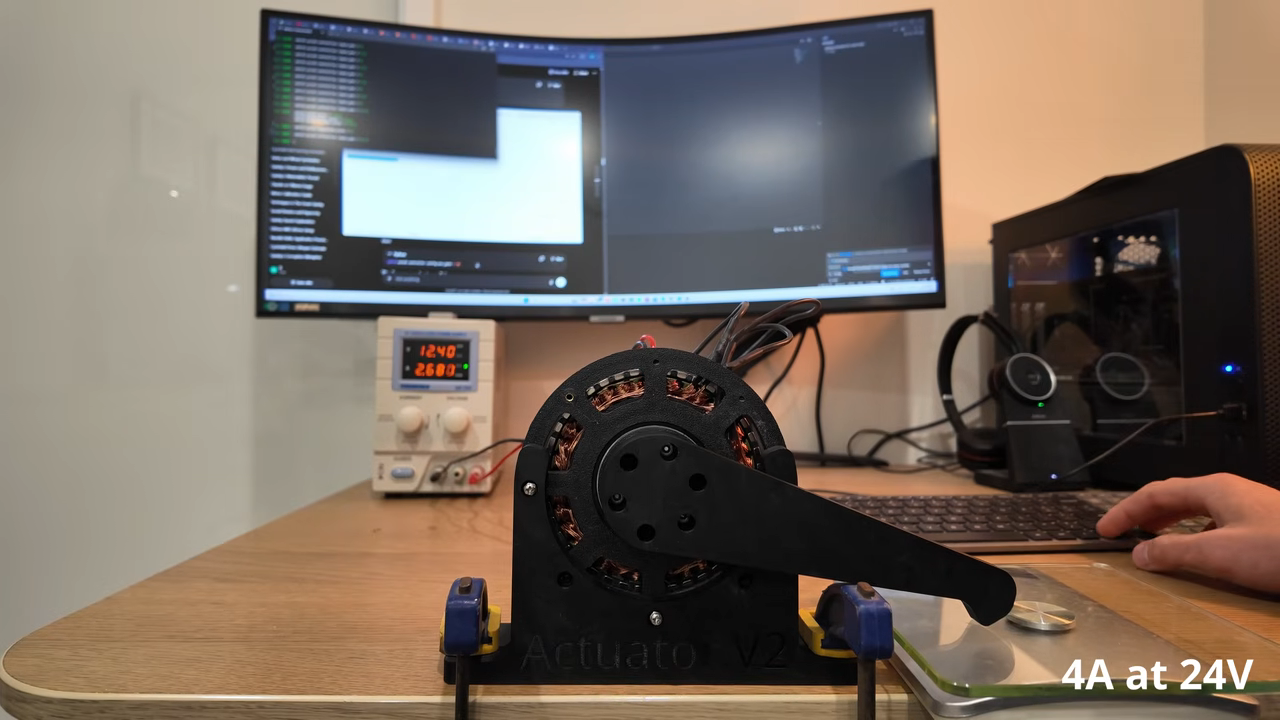
Target specs were a actuator that could run at 40 to 60 rpm while delivering 20 Nm of torque for up to an hour continuously. The design was inspired by an MIT research paper, with [Brandon] making a few mods to suit his use case. Where the MIT design uses an inbuilt planetary gearbox, this build substitutes a cycloidal gearbox with a hope it will provide better torque capacity with less backlash. The design is based around a hand-wound stator made with an off-the-shelf core, while using custom CNC parts and 3D printed components for the motor housing itself.
Testing revealed some limitations. Running off a benchtop power supply with limited current, the motor was only able to achieve 7 Nm of torque, though a better PSU would probably improve this. [Brandon] also noted excessive backlash in the cycloidal gearbox, due to poor tolerances, and the $400 construction cost came in well over budget. Still, [Brandon] hopes to tackle many of these problems in a future revision. CAD files are available online if you’d like to dig deeper into the design.
Speaking to the publication, Apple CEO Tim Cook said price increases are now “unavoidable” as the cost of DRAM memory and NAND storage continues to climb. The surge is being driven largely by the AI boom, as cloud providers and AI companies compete for the same chips used in consumer devices. Apple has largely shielded customers from those increases so far, but Cook indicated that strategy has reached its limits.
Apple
Apple held the line longer than most rivals
Apple’s ability to avoid major price hikes has not happened by accident. The company entered 2026 with inventory secured before memory prices accelerated and used its scale to negotiate supply agreements that many competitors could not match. Earlier this year, Apple also relied on product configuration changes, such as removing lower-capacity options from some Macs, instead of directly raising sticker prices.
The challenge is becoming harder as Apple prepares a new generation of AI-focused products. Following WWDC, the company is already testing its next-generation Siri experience and broader Apple Intelligence upgrades. Those features place greater demands on memory, which helps explain why some of Apple’s most advanced Siri capabilities are currently limited to devices with higher RAM configurations.
Unsplash
Apple is also expected to launch new Macs and its long-rumored foldable iPhone later this year, both of which could require larger memory allocations to support increasingly capable on-device AI features. Reports have already suggested that the iPhone 18 Pro could start at around $1,399 this fall, a $300 increase over its predecessor.
AI is forcing Apple’s hand
Cook told the Wall Street Journal that Apple is willing to use its financial resources to help secure memory supply, but he ruled out building Apple-owned memory or storage manufacturing facilities. “We can’t do everything. We know what we’re good at,” Cook said. Despite Apple’s influence over suppliers, that leaves the company exposed to the same market forces affecting the rest of the industry.
Advertisement
With memory suppliers increasingly prioritizing AI infrastructure customers and analysts warning that shortages could persist into 2027, Apple’s long streak of absorbing those costs may finally be coming to an end.
China wants a global AI cooperation org and offers cheap/free models. The G7 is discussing “trusted partner” access to US AI. Two systems are forming.
China’s top diplomat Wang Yi announced on Wednesday that Beijing is “accelerating the establishment of a global AI cooperation organization” and invited all countries to join. The comments came as the G7 summit in France wrapped up with discussions about giving “trusted partners” access to leading US AI models, according to Reuters. Two competing visions of AI governance are now diverging in public.
Wang was speaking at the release of China’s global governance whitepaper, which criticised trade wars and emphasised support for the Global South. Vice chair Zhao Haibing of China’s top economic agency pushed back on “closed, exclusive and monopolistic approaches to tech development.” The language was aimed directly at Washington.
The timing is deliberate. The US Commerce Department ordered Anthropic to shut down Fable 5 and Mythos 5 last week, cutting off every foreign user. Anthropic and Google DeepMind used the G7 to call for a US-led AI coalition that would set international rules. Canada agreed. China was not invited.
Advertisement
The 💜 of EU tech
The latest rumblings from the EU tech scene, a story from our wise ol’ founder Boris, and some questionable AI art. It’s free, every week, in your inbox. Sign up now!
The contrast in approaches is stark. US AI models are subscription-only and increasingly subject to export controls. China’s efforts have focused on cheap or free models that can be downloaded in their entirety. DeepSeek, Qwen, and other Chinese open-weight models are available to anyone with an internet connection. The Global South, which cannot afford enterprise AI subscriptions and was not consulted on the G7’s “trusted partner” framework, has a clear choice between the two.
China is routing its AI diplomacy through existing multilateral bodies. Wang pointed to cooperation through BRICs and the Shanghai Cooperation Organisation. Zhao cited China’s “AI Capacity Building for All” initiative, support for the UN in leading global AI governance, and programmes to help developing countries with technology and talent.
Advertisement
The US and China said last month they would work on AI guardrails together, but few details have emerged. President Xi Jinping proposed a “Global Governance Initiative” at the SCO last summer. Premier Li Qiang announced the global AI cooperation organisation at a Shanghai conference in July 2025, just days after the Trump administration released its own AI action plan supporting US tech development overseas.
The structural split is now visible. The US is building an alliance of wealthy democracies with controlled access to its most powerful models. China is building data exchanges, exporting governance via the Digital Silk Road, and treating AI distribution as a geopolitical tool. For the 6 billion people who live outside the G7, the question is not which system is better. It is which system shows up first.
wiredmikey shares a report from SecurityWeek: Microsoft on Wednesday published an advisory acknowledging the public disclosure of a vulnerability in Defender that could lead to privilege escalation. The security defect, tracked as CVE-2026-50656 (CVSS score of 7.8), was dropped last week by security researcher Nightmare Eclipse (also known as Chaotic Eclipse). “We are working to provide a high-quality security update that addresses this vulnerability. We will provide information in this CVE when the update is available,” Microsoft adds.
RoguePlanet, Nightmare Eclipse explained last week, targets a race condition in Microsoft Defender and allows attackers to gain System privileges. The researcher released a proof-of-concept (PoC) exploit that demonstrates local privilege escalation (LPE) on Windows 11 and Windows 10 systems with the June 2026 patches installed. […] On Wednesday, Nightmare Eclipse pointed out that the PoC works regardless of whether Defender’s real-time protection is enabled or disabled. It may even work in passive mode, the researcher said.
Tesco is also dealing with migration challenges related to data security because its new, unnamed virtualization software is incompatible with the Veeam and Zerto products it uses.
“Manifestly unfair and excessive” price hike
Tesco initially requested at least 100 million pounds (about $133.6 million) in damages each from Broadcom, VMware, and reseller Computacenter, plus interest.
In its recent filings, Tesco said it turned down at least four offers from Broadcom to continue using VMware and Broadcom’s mainframe tech. One offer charged $23.5 million (about 17.6 million pounds) for VMware Cloud Foundation 9.0 and mainframe software and support services for a year, The Register reported. Tesco said that was “around 175 percent” more expensive than what it believes it should have had to pay for VMware and a 350 percent price hike for the mainframe offerings. The prices were “manifestly unfair and excessive,” one of Tesco’s filings said, according to The Register.
In an amended defense, Broadcom denied that the price hike was unfair, The Register reported. Additionally, Broadcom argued that it shouldn’t have to pay damages in relation to Tesco struggling to find VMware and Broadcom alternatives before Tesco’s support expired, as the retail firm has since found replacement products.
Advertisement
The case is expected to go to court between November 1, 2027, and February 25, 2028, The Register reported. Afterward, it could go to trial.
Still, virtualization rivals, like Hewlett Packard Enterprise and Nutanix, have been making aggressive pushes to attract disgruntled VMware users.
Simultaneously, Broadcom has stuck to its VMware strategy and has reported financial success, especially among its target of large enterprises. It has also dealt with other public legal disputes with large customers, including AT&T, with which it reached an undisclosed settlement, and Siemens, which Broadcom accused of software pirating in an ongoing case in the US District Court for the District of Delaware.
Audiophiles all know everything sounds better fed through vacuum tubes, but did you know visualizers look better with them, too? That’s what we’re forced to conclude looking at the Tachyscope Laser, a 360-degree oscilloscope display that is [Daniel Ross]’s entry into the ongoing Frikkin Lasers contest.
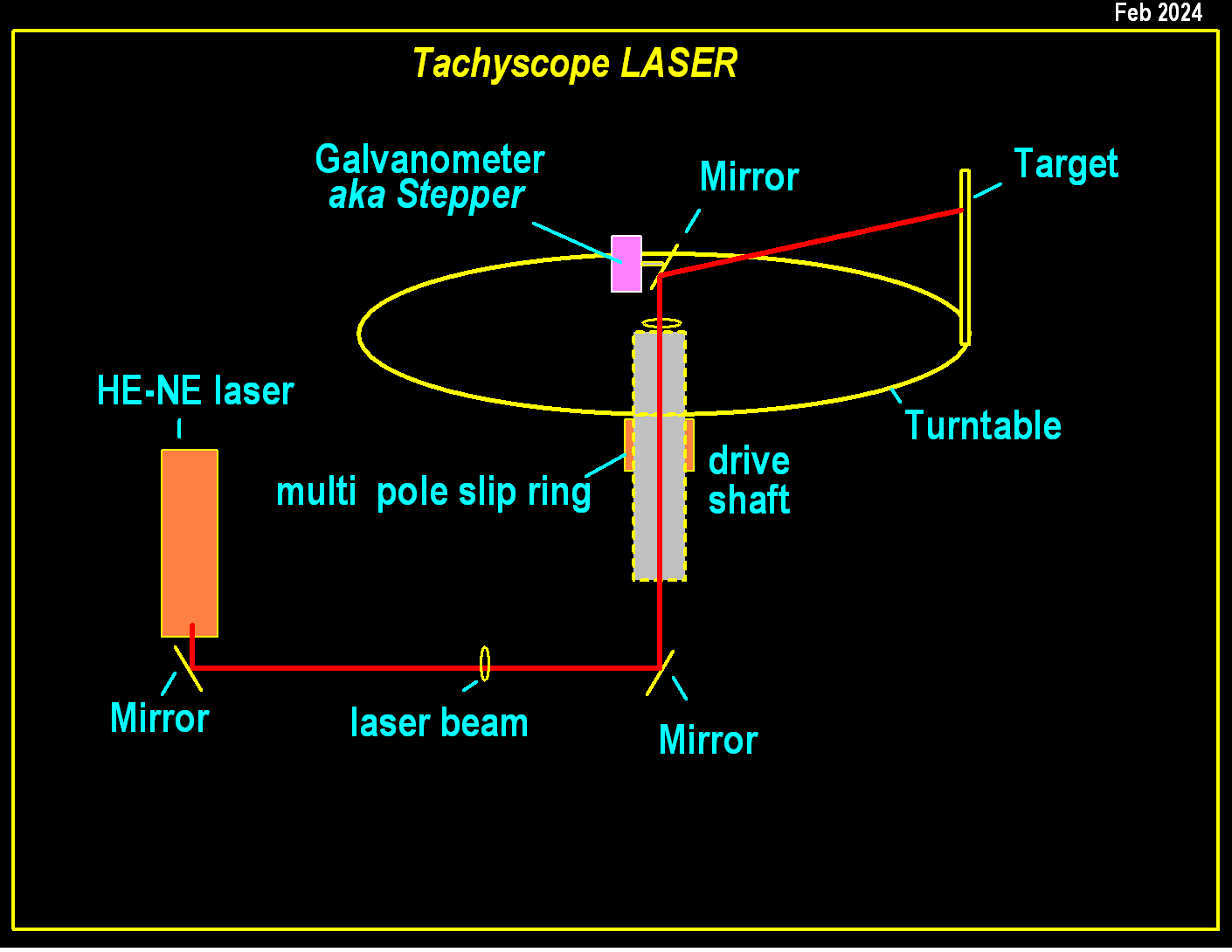
The diagram makes it look easier than building it probably was.
The laser is a good old-fashioned helium–neon tube — something we see less and less of in this era of solid state lasers — and the wavelength gives the waveform display a retro charm. The actual display is unique in our experience, with the beam shining up through a hollow shaft to bounce off a galvanometer mirror on a spinning platform. Galvo sweeps the laser across a translucent target, which creates the waveform by persistence of vision as it spins at 100 RPM or so.
Does the fact that the audio signal feeds through a tube amp to drive the single galvanometer actually improve the visuals? Only in the sense that those tubes make the steampunk-style enclosure look really, really cool, as does the exposed laser tube. That all of the steampunk elements obviously have a point to them rather than just being a another “glue some gears on it” project is icing on the laser-flavored cake.
The contest runs until July 23rd, so there’s lots of time to get laserin’ — and remember that there are categories for DIY lasers and anything that isn’t a display, just in case you think this project puts the bar too high for a light show. We’ve actually featured one of [Daniel]’s tachyscope waveform visualizers before, but that one, madly enough, spun an actual CRT.
CCS Insight expects global smartphone shipments to fall 15% this year as AI-driven demand pushes memory manufacturers toward higher-margin server chips. “[S]ome entry-level devices have already seen their sticker prices go up by more than 50 percent since last year,” reports The Register. From the report: The firm found that the primary smartphone market (meaning new devices) contracted 4.4 percent in the first quarter of this year, despite sales channels front-loading (meaning stockpiling) product inventory, as device prices begin to rise sharply. As CCS notes, this casts an ominous shadow on the outlook for the rest of the year, and it seems things have worsened since The Register first started reporting on the smartphone memory woes.
Back in January, the forecast was for handset price rises of 6-8 percent, while the most pessimistic outlook was that the global market might contract as much as 5.2 percent. By February, analysts were expecting to see a decline in shipments of around 8 percent across the global market, and for prices to increase by about 14 percent.
The root cause of all this is the AI craze, which has seen huge demand for high-performance GPU-filled servers to process it all. Chipmakers have moved to capitalize on this by prioritizing production of high-margin memory components for those servers, rather than making the plain old DRAM and NAND needed for PCs and phones. “The memory chip crisis shows no sign of slowing down in the near future, ramping up the pressure on manufacturers and consumers. Memory components now account for more than 30 percent of a manufacturer’s bill of materials in some smartphones.” said CCS research analyst Ben Hatton. “The full impact has yet to be felt in many regions, but it’s clear that device prices will accelerate over the rest of the year.”
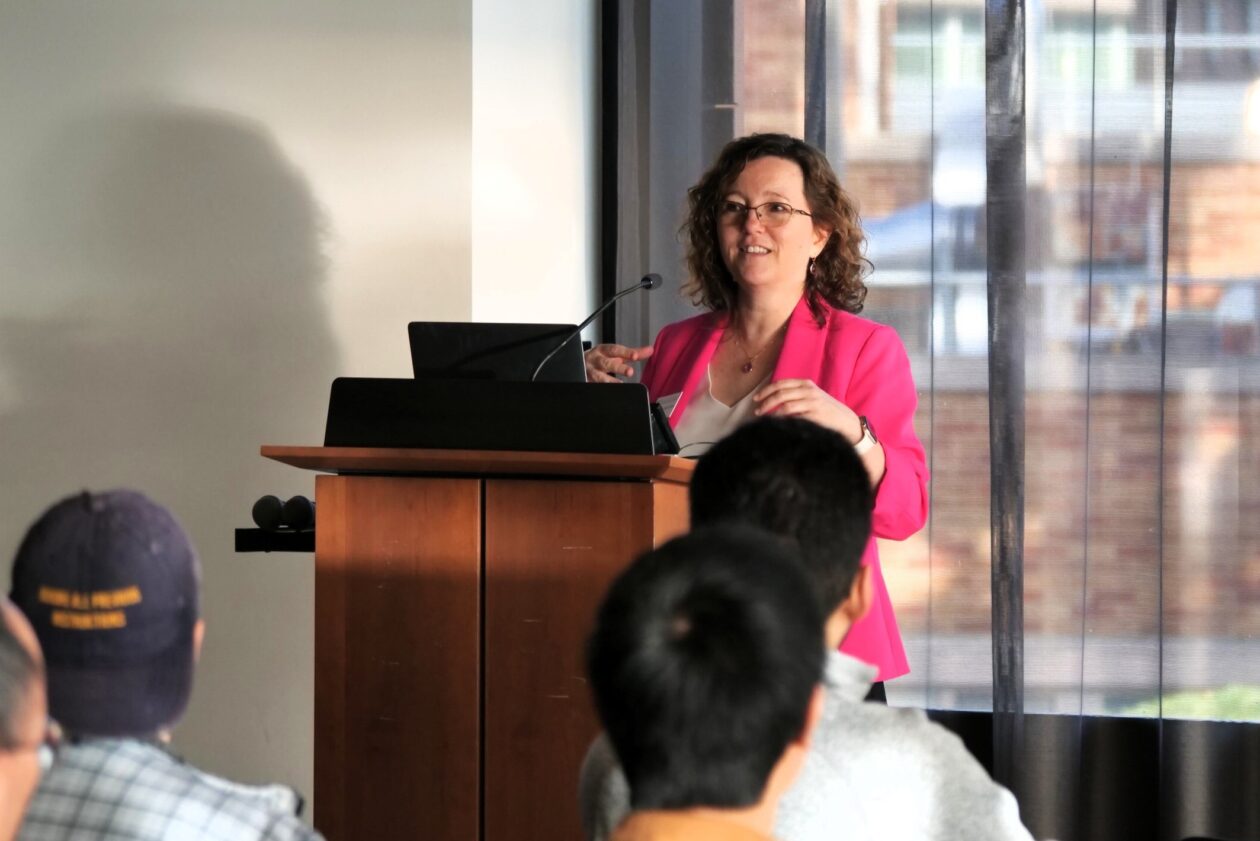
Magda Balazinska, director of the UW Allen School of Computer Science & Engineering, at an event last year. (GeekWire Photo)
As students, teachers and employers wrestle with the demands of an increasingly AI-powered world, the University of Washington has a new proposition: an interdisciplinary AI minor, with an anthropologist and a computer scientist at the helm.
Set for launch in Spring 2027 at the Seattle campus, the program is the latest of several moves the university has made to push itself toward global leadership in AI education and research — including new graduate programs, a partnership with Microsoft and a $10 million AI initiative.
“Students will be able to come to the University of Washington, study a field they are passionate about, and also understand AI and how it relates to that field of study,” said Magda Balazinska, director of the Paul G. Allen School of Computer Science & Engineering and co-chair of the group designing the new curriculum.
Nationwide, universities are racing to build AI literacy into their curricula. Cornell launched an AI minor in Fall 2024, open to students across all majors. Michigan, Columbia, Carnegie Mellon and Georgia Tech have similar programs underway, and Northeastern Illinois University recently announced a standalone undergraduate AI degree.
‘Many perspectives to AI’
In February 2024, Provost Tricia Serio announced a university-wide AI task force, saying an institutional AI strategy was “no longer a choice.” With 80 members across five groups, the task force spent months developing a comprehensive plan.
Advertisement
Anthropology professor Ben Marwick is leading the development of the new minor with Balazinska. (UW Photo)
Among several recommendations, the task force proposed creating an AI minor to engage the “societal aspects of AI” beyond technical training. Balazinska and anthropology professor Ben Marwick are co-leading the development of the new minor, alongside representatives from 18 academic units spanning Architecture to the School of Nursing.
“All units will be welcome to propose and teach courses in the minor,” Balazinska told GeekWire, “because there are many perspectives to AI.”
In a recent survey, about 53% of employers said they struggle to find graduates with the right AI skills, and most said universities are not keeping up, according to a Pearson and Amazon Web Services report. Meanwhile, a review of AI literacy studies found that most efforts skew toward technical literacy over the critical and ethical literacy that UW is looking to provide.
The proposed curriculum has four key pillars:
Students will be required to take at least one course on the ethics, implications, impacts and limitations of AI;
Students will complete core technical courses that cover data-driven predictive models, AI-driven decision-making and generative AI;
Students will complete a project using AI tools or techniques to solve a problem in their discipline, comparing the AI approach against what they would have achieved without it; and
Students will have access to a broad suite of AI-focused electives.
Balazinska’s team is revising the proposal after circulating it across campus for feedback. With the academic year now wrapped up, further review is set for the fall.
UW’s growing AI investment
The minor is part of an expanding array of AI-focused programs at UW. In 2025, the Allen School launched a stackable Graduate Certificate in Modern AI Methods, a part-time evening program for those in various industries who want to develop AI and machine learning expertise.
Advertisement
In October, UW was named one of nine universities to benefit from Amazon’s AI PhD Fellowship program, allotted $2.2 million over two years for doctoral research in AI. This February, the university and Microsoft announced an expanded partnership to provide students with AI computing resources and internship opportunities, launch an AI course for working Washingtonians, and, starting this fall, pair students with Microsoft employees on the Redmond campus.
The university also launched a campus-wide AI initiative, thanks to a $10 million gift from Microsoft pioneer Charles Simonyi. The initiative, AI@UW, coordinates AI investments across student success, research, teaching and resources — including grants for developing AI-integrated teaching projects across disciplines.
Surrounding an AI@UW launch event earlier this year, some faculty pushed back on AI use and questioned the technology’s role in education. A survey of UW Arts & Sciences students also found mixed reviews, including concerns about losing academic skills to AI and inconsistent faculty guidance across departments.
“There’s no getting away from AI now,” one international studies major said in the survey report. “But it’s important that we understand what we stand to lose when we use these services more and more.”
Advertisement
Is an AI Institute on the horizon?
The minor may be a first step toward an interdisciplinary AI Institute at UW, one of several suggestions from the task force. Recommendations ranged from hiring 100 new AI-focused faculty to upgrading the university’s supercomputing infrastructure.
“Within five years, more than 10% of our faculty would have expertise in AI resulting in national and international leadership in AI across the full campus,” read the report, published in late 2024.
Other suggestions included rollouts of advanced AI tools across the administrative backend as well as in teaching environments, such as using ChatGPT to answer questions on course message boards. They recommended every first-year student complete a basic AI literacy module, similar to Title IX requirements.
“As AI systems become embedded in the tools, workflows and decisions that shape daily life,” Balazinska said, “students in every discipline need more than passing familiarity with these technologies.”
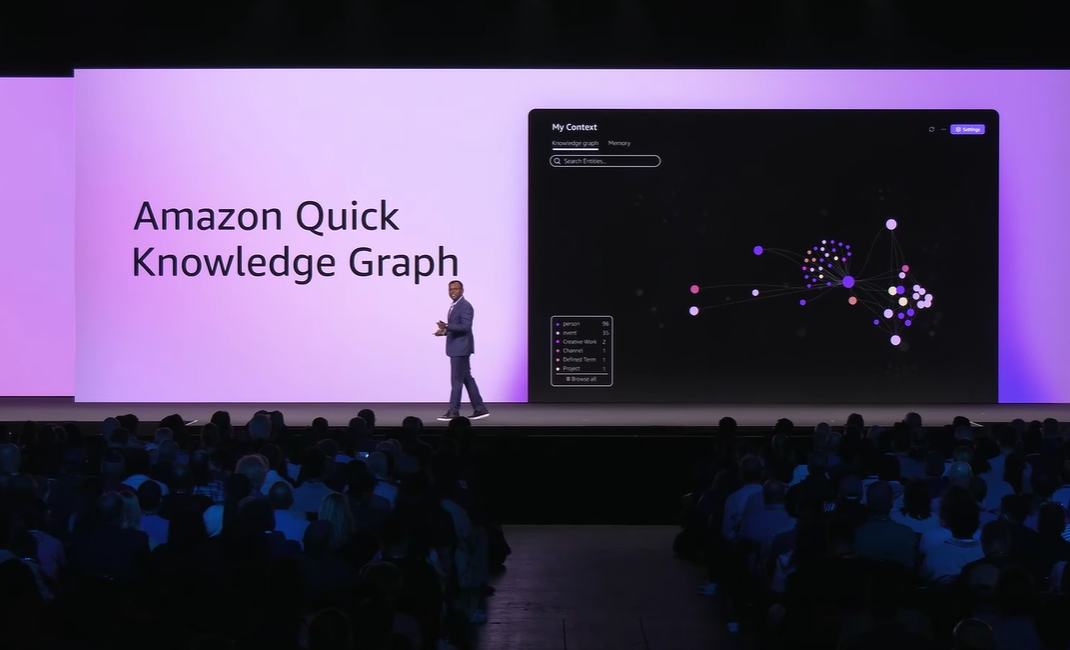
Swami Sivasubramanian, AWS VP of agentic AI, shows the Amazon Quick knowledge graph at the AWS Summit in New York. (Screenshot via live stream)
Amazon Web Services is announcing a new set of AI agents for businesses, developers, and individual users, capable of everything from fixing security vulnerabilities to triaging email.
The agents, unveiled at the AWS Summit in New York, reflect an attempt to maximize autonomy while ultimately keeping humans in control of how much the AI does on its own.
It’s part of a broader industry push into agents, with Google, Microsoft, Anthropic, OpenAI and others developing AI that can do more work and increasingly complete tasks on their own.
A new security agent, dubbed AWS Continuum, starts in a supervised “learn mode” and earns the right to act alone only as customers grant it permission, category by category.
The Amazon Quick AI assistant will now let users build their own background agents in plain language to handle tasks like following up on stalled business deals or flagging regulatory changes.
Advertisement
Amazon gave Quick a redesigned activity feed that triages email, messages, and calendar items into one prioritized view; new links to services including Adobe, Figma, Snowflake, and WhatsApp; and the ability to tap multiple connected services to answer a single question.
On the developer side, AWS is also pushing its coding agents to take on more of the grunt work, checking and testing new code before it ships and cleaning up old code, while leaving the final decision to merge or deploy in the hands of humans. A new iPhone app for Kiro, the company’s AI coding assistant, will let developers start and monitor that work from their phones.
Deepak Singh, the AWS VP who leads the Kiro team, said the overarching idea is to take the background work AI has piled onto people — reviewing code, triaging security findings, keeping software current — and let agents handle it with minimal human intervention.
The faster AI writes code and surfaces problems, he said, the more there is for humans to review, test, and maintain: “Those are all good problems to have, but they are real problems.”
Advertisement
AWS also expanded AgentCore, its platform for building agents, and introduced AWS Context, a service that organizes a company’s data so agents can reason over it.
Announcing the new Continuum security agent, AWS cited the rise of powerful AI models — most notably Anthropic’s Claude Mythos — that can now find software flaws and chain them into serious attacks faster than any human team can respond.
Amazon made headlines for raising concerns about those same models, reportedly warning Trump administration officials about security risks in Anthropic’s most advanced AI, before a government order forced the lab to take its two newest models offline.
Continuum is starting with code vulnerabilities, and AWS says it will expand to other aspects of security in the future. It works through issues the way a human team would, if given the time: triaging the findings, testing whether a vulnerability is exploitable, and then proposing a fix, with an estimate of what else the change might break.
Advertisement
In categories where the customer has granted the agent autonomy, Continuum can apply the fix itself, feeding the change into an existing deployment pipeline.
Neha Rungta, AWS director of applied science, said in an interview that this kind of speed is necessary given the acceleration of the threats. AI can now chain minor flaws together, she said, combining two medium-severity findings and a low one into something critical.
“That was something that would have taken a lot of effort, expertise, and determination for an attacker to get through — so the floor has been lowered,” said Rungta, who led the work on Continuum. “The goal is to raise that floor up again.”




















































You must be logged in to post a comment Login