Nothing is gearing up to launch a new budget phone early next month, and the company recently gave us an early look at its design. While it hasn’t revealed the device’s specifications, a new leak has outlined what the Phone 4b may offer in terms of display, chip, battery, and storage.
Key specifications revealed
According to tipster Yogesh Brar, the Nothing Phone 4b will come in three colors. Nothing has already showcased the device in a blue colorway, but there’s no word yet on what the other colors could be. The leak also points to two storage configurations, 128GB and 256GB, both paired with 8GB of RAM.
The device is said to feature a 6.7-inch AMOLED display with a 120Hz refresh rate, the same as the Phone 4a launched earlier this year. Under the hood, it could pack Qualcomm’s Snapdragon 6 Gen 4 chip, which would position the Phone 4b below the 4a duo in Nothing’s lineup. The phone is also expected to house a 5,400mAh battery.
Camera details remain limited
Brar’s post also points to a 50MP camera, though specifics on the sensor, aperture, and the second camera haven’t surfaced yet. Nothing has not confirmed any of these specs itself. More details are expected to surface in the lead-up to the July 7 reveal.
Advertisement
The Phone 4b’s design was confirmed earlier this week, with Nothing showing off a build that mixes the unibody design of the Phone 4a Pro with the Glyph Bar from the standard Phone 4a. The company has also confirmed that the device will feature a soft, skin-friendly finish and offer enhanced durability.
If accurate, this leak suggests Nothing is keeping the Phone 4b firmly in the mid-range segment while still offering some standout features, like a large battery and a high refresh rate display. Provided the company gets the price right, the device could be one of the most compelling budget options this year.
The 2025 “Uncommon Thinkers” award winners, from left: Anindya Roy, co-founder of Lila Biologics; Kiana Ehsani, co-founder of Vercept; Max Blumen of Tin Can; Jay Graber, CIO of Bluesky; Brian Pinkard, co-founder of Aquagga, and Jeff Thornburg, co-founder of Portal Space Systems; (GeekWire Photo / Kevin Lisota)
It’s time to recognize the Seattle area’s boldest innovators. Nominations are now open for GeekWire’s 2026 Uncommon Thinkers Awards.
Now in its fourth year, and in partnership with Greater Seattle Partners, the program aims to honor inventors, scientists, technologists and entrepreneurs who are transforming industries and driving positive change throughout the world.
Community nominations will be accepted through Sept. 18 at 11 a.m. PT, after which a panel of judges will select honorees. They’ll be celebrated on stage during a VIP reception at the annual GeekWire Gala on Dec. 10.
Honorees are selected based on innovation, creativity and leadership and should have a track record of introducing novel ideas, technologies, or solutions that challenge the status quo. Nominees should also demonstrate a measurable and meaningful impact on their respective fields or industries, contributing to the betterment of society.
On Friday this week the FTC’s open comment period regarding its “Policy Statement Addressing AI Accuracy” will close, which means that a bunch of very smart, very busy people are wasting a ton of time this week writing up comments that will mostly be ignored by the FTC — but still matter for the record. The whole thing is so ridiculous that a former FTC lawyer has sarcastically requested that the FTC publish a quarterly “schedule of values” so AI companies at least know which ideologies they’re required to support to keep Donald Trump happy.
It’s an unconstitutional sham from an FTC whose chairman, Andrew Ferguson, quite openly sees his job as putting his thumb on the scale of speech to favor the MAGA worldview. Ferguson has been doing this since the very start of his tenure and it doesn’t appear to be slowing down now.
He couches his policy and investigatory efforts in the language of legitimate FTC authority, but nobody’s really fooled about what’s going on. Here, when he talks about “objectivity and accuracy” in responses from AI engines, everyone knows what he’s actually doing is crafting a policy that will let the FTC punish AI systems for giving “woke” answers that the MAGA world disagrees with.
The mechanism at work is blatantly obvious: the FTC is taking its Section 5 authority over “unfair and deceptive” practices — generally meant to go after companies engaging in outright fraud or deception to trick consumers — to claim that if an AI’s output is deemed to be too woke or not pro-MAGA enough, then the FTC will accuse the company of being “unfair or deceptive” in its marketing.
Advertisement
The draft policy statement builds its whole case on the idea that users trust what AI tools tell them — which conveniently becomes the hook for worrying that those trusting users might get fed something MAGA world doesn’t like. Thus making it “deceptive.” Yes. Really. In the actual world, the FTC’s Section 5 deception authority requires that a company make a representation that’s actually false, and materially so. Here, the Commission simply asserts — with no evidence at all — what consumers “reasonably expect,” and then appoints itself the judge of whether any given output matches.
As they have marketed their remarkable breakthroughs to the public, AI companies have spent years representing explicitly and implicitly that their systems aim to produce the best output—output that faithfully and accurately achieves users’ stated objectives and the built-in objectives that users expect in the AI system—that is possible within their technological and resource constraints. Because of these representations and the inherent nature of the products and services in question, consumers have a reasonable expectation that AI systems aim to give truthful and accurate outputs. Consumers have no basis to believe that AI systems aim to produce outputs that are distorted by undisclosed ideological objectives.
Nonetheless, an AI company might be tempted to alter or steer the output of its systems contrary to consumers’ reasonable expectations for various reasons, including attempted compliance with a state law, such as Colorado’s recently revised Artificial Intelligence Act. But steering an AI system in this manner may deceive consumers in violation of Section 5 of the FTC Act. That is true even if the deceptive steering is done in an effort to comply with state laws. Of course, a company may be able to avert potential deception by making truthful, non-misleading representations about the aims of its model. But such representations would need to make clear that the AI company is prioritizing objectives different than those consumers requested or would otherwise expect.
This is all a bit of shadow puppetry, where the FTC wraps its “AI outputs should never be too woke” argument in language that pretends to fit a traditional FTC mandate.
But this is all wildly unconstitutional, as even a cursory reading of how the First Amendment works would show. As the Supreme Court recently highlighted in Moody v. NetChoice, internet companies have clear First Amendment protections in their editorial decision making regarding what they choose to show — or not show — users of their services. From that ruling:
Advertisement
…this Court has many times held, in many contexts, that it is no job for government to decide what counts as the right balance of private expression—to “un-bias” what it thinks biased, rather than to leave such judgments to speakers and their audiences. That principle works for social-media platforms as it does for others.
Yet, that’s exactly what this proposed FTC policy is setting up: if AI tools don’t produce properly MAGA-fied outputs, the FTC might go after them, claiming that the outputs are not in line with “consumers’ expectations” (as determined by the MAGA FTC) and thus, “unfair and deceptive.”
And while a “policy statement” from the FTC is not binding law, it’s clearly designed to publicly state what kinds of views will get you investigated by the FTC, in an attempt to create chilling effects that pressure AI companies to pre-censor their bots. This is also why the comment period is basically a formality. Ferguson has no obligation to do anything regarding the comments, as there’s no official rule being promulgated.
And don’t sleep on the FTC’s statement regarding Colorado’s (admittedly questionable) law, which seems to serve no real purpose other than to try to backdoor its way into Trump’s desire to magically block state AI laws, which is something he cannot unilaterally do. Remember, while there have been efforts in Congress to preempt state laws, that has not come to pass. But here the FTC is telling companies, in writing, that complying with an enacted state law creates federal liability exposure, entirely because the FTC policy (not even a full rulemaking) says so.
Last week we had former FTC lawyer Keith Fentonmiller lay out how obviously unconstitutional all of this is. It’s the FTC trying to dictate editorial policies of private companies. The First Amendment does not allow that. Aaron Rieke, another former FTC lawyer, put it even more starkly (and hilariously) in a recent LinkedIn post, designed to look like a letter in response to this open comment period, but which cuts through all the bullshit and says, in effect, “look, if you want us to only push the preferred ideology, can you at least tell us which talking points we should bless, and which we should suppress”:
Advertisement
Dear Commissioners:
I write in enthusiastic support of the proposed policy statement, and with one modest request for clarification.
The statement wisely prohibits steering AI outputs toward undisclosed “ideological objectives” while preserving companies’ freedom to implement “prudent guardrails.” As a consumer who relies daily on these systems — having been assured, deceptively it now seems, that they are “helpful” — I confess I cannot always tell these apart. The distinction appears to reside not in companies’ conduct but in the values they pursue.
I therefore respectfully request that the Commission publish, and update quarterly, a schedule of values, each designated either “Ideology” (deceptive if undisclosed) or “Common Sense” (no disclosure required). The proposed statement offers a promising start — “equity” is evidently Column A, while cybersecurity occupies Column B — but leaves substantial compliance uncertainty regarding, e.g., deference to law enforcement, patriotism, and politeness.
Absent a complete schedule, companies must simply guess which viewpoints the government currently disfavors and speak at their peril. I assume the Commission has already concluded that a federal schedule of approved and disapproved values raises no First Amendment concerns. Publishing the schedule would helpfully memorialize that conclusion.
Advertisement
Such a schedule would also generate efficiencies for future administrations, who would need only swap the column headers.
Thank you for your leadership in ensuring that American AI remains free from government influence over its viewpoints, as determined by the government.
Respectfully submitted,
A Consumer, Acting Reasonably in the Circumstances
Advertisement
While sarcastic, it makes the point better than any of the earnest comments will. An FTC that can punish AI tools for failing to parrot the administration’s ideological preferences is an FTC acting as a censor, and we’d all be a lot better off coming out and saying so, rather than pretending there’s some legitimate intent or purpose behind this effort.
Ferguson’s FTC has been focused almost exclusively on abusing the power of the Commission (remember, Donald Trump fired the Democratic Commissioners and has made zero effort to replace them despite the law requiring two commissioners from the minority party) to win culture war arguments and punish those deemed insufficiently loyal. The new policy and comment period is just more of the same. It’s entirely about Trump & Ferguson setting the sloppy groundwork for them to whine and complain about AI tools accurately calling bullshit on MAGA propaganda as being “unfair and deceptive.”
None of this should be happening. It’s an attack on the First Amendment so obvious that the FTC isn’t even bothering to disguise it well. But, because of the political world we live in today, everyone has to pretend to take it seriously, to pretend that the FTC will read their comments carefully, weigh the pros and cons of various approaches on this policy, and come out with some final policy that people should take seriously.
The FTC has no business investigating the editorial judgments of companies, and its facade about consumer expectations and deceptive practices is a joke. People and organizations ought to still submit comments, if only to establish opposition to this farce on the record. But what a waste of time and brainpower from people who have approximately a thousand more productive things to do.
The United States has moved to block new imports of foreign-made robots and power inverters. Officials fear a hostile power could spy through them, or switch them off from afar. The order never says China. It does not need to.
The Federal Communications Commission added two categories to its Covered List on Tuesday, as first reported by CNBC. One is “advanced robotic devices,” meaning mobile robots such as humanoids and quadrupeds. The other is connected power inverters, the boxes that connect solar panels, batteries and data-centre gear to the grid.
Landing on the Covered List is a hard commercial block. Equipment on it cannot get FCC authorisation. Almost every electronic device needs that clearance before it can reach the US market. It is the same lever the agency pulled on DJI drones and Huawei network kit.
The word the ban avoids
Read the FCC document and one thing stands out. It restricts foreign-produced robots and inverters “regardless of the nationality of origin.” The politics point at Beijing. The text points at everyone.
Advertisement
The gap is deliberate. The framing lets Washington name China as the threat. The wording pushes every manufacturer toward the same choice: build in America, or clear a security review. An administration official told CNBC the aim was to protect the US AI buildout and drive firms to reshore. “Economic security is national security,” the official said.
The 💜 of EU tech
The latest rumblings from the EU tech scene, a story from our wise ol’ founder Boris, and some questionable AI art. It’s free, every week, in your inbox. Sign up now!
There is a door out. A maker can apply for “Conditional Approval” and keep selling if it clears the check. The Department of War handles robots; Homeland Security handles inverters. In principle any manufacturer can walk through it, Chinese firms included. In practice it puts the Pentagon in charge of vetting which robots reach American shelves.
Advertisement
Why robots and inverters, together
The pairing looks odd until you read the security case. Both devices are networked, and both answer to signals from far away.
Grid inverters phone home for monitoring and firmware updates. The interagency determination warns that the same channel could let a foreign firm “turn off the inverters or use them to collect and exfiltrate data.” More solar and battery capacity on the grid means more remote-controllable boxes.
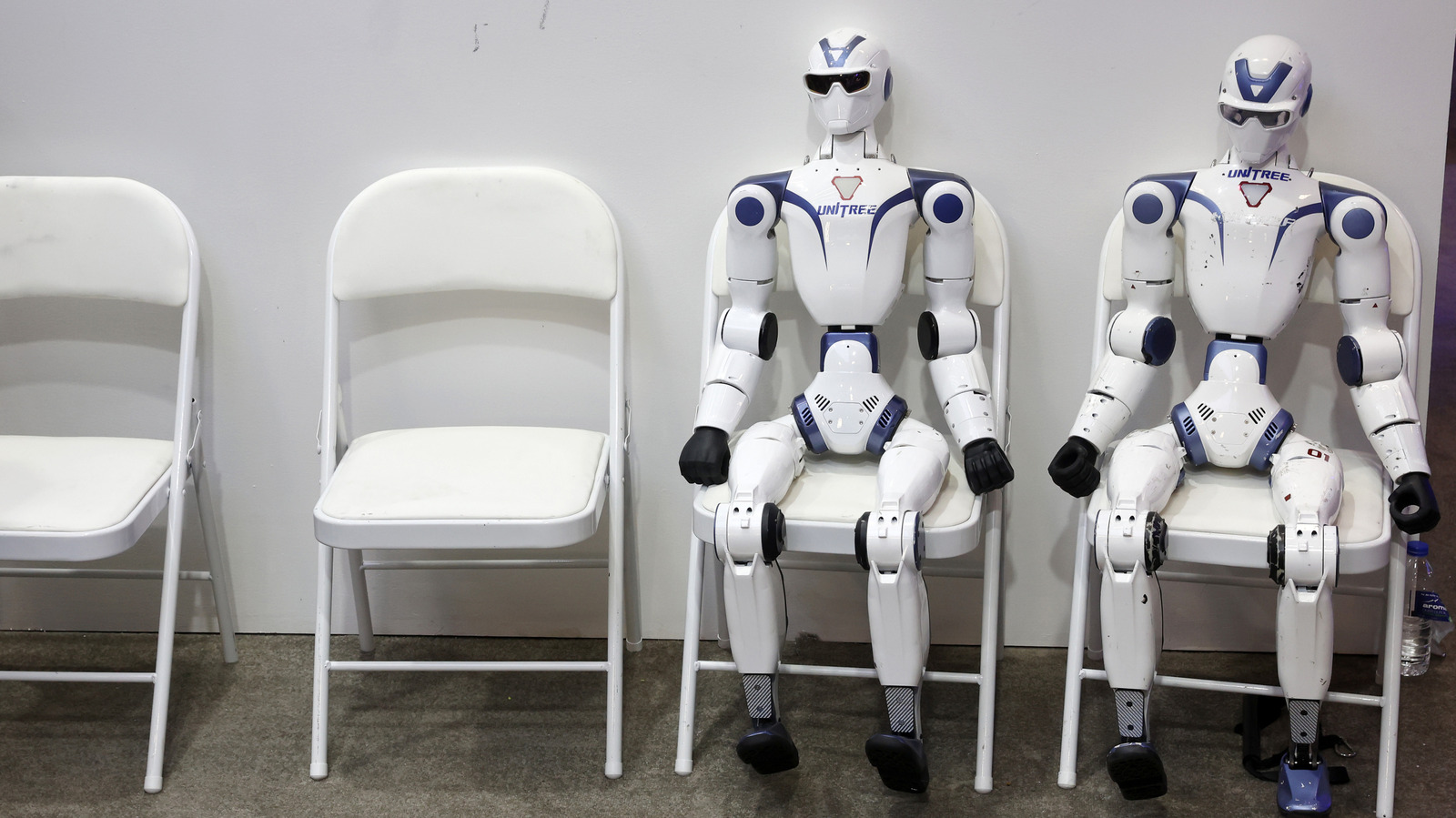
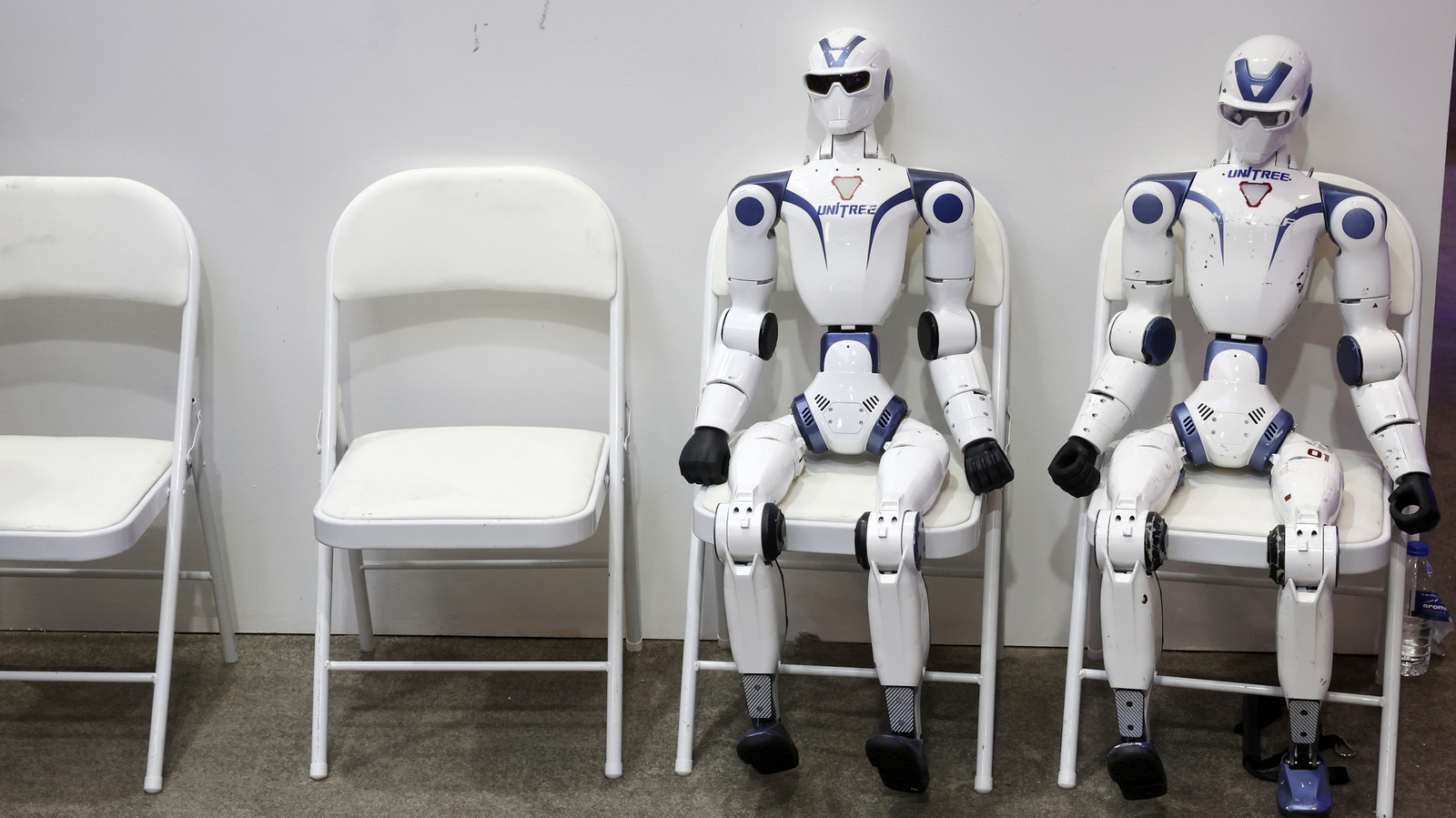
Robots carry the same risk on legs. The robot determination warns that networked machines “collect data that could be leveraged by malign actors to surveil Americans,” or let an attacker “remotely commandeer the robots.” Unitree is the emblem of the category. The Chinese firm’s humanoids and quadrupeds have gone from lab demos to a pending public listing, and the Pentagon has already flagged the company.
What it actually changes
Less than the headlines suggest, at least at first. The block hits only new device models seeking authorisation. It does not touch robots or inverters already bought, models already approved, or anything the federal government buys and uses.
Advertisement
So this is an import gate, not a recall. Its bite grows over time, as newer models are the ones frozen out while older approved ones stay on sale. The FCC used the same staged approach on drones and consumer routers. CISA now tells companies to screen suppliers against the list.
The harder question is whether the US can fill the gap. China dominates both supply chains. The same rare-earth and battery chokeholds that complicated the drone ban apply here. Blocking imports is quick. Building a domestic industry to replace them is slow, and so is hardening a grid whose weak points attackers are already probing.
For now, Washington has drawn the line where it is easiest: at the border, on the next generation of machines. Whether the factories follow is the test that matters. A listing will not settle it.
The entry-level iPad, for example, used to be a fantastic bang-for-the-buck tablet with prices from AU$599, but is now bordering on the premium side of things at AU$749 for the base 128GB model. That’s a 25% increase, which will sting for some households.
We sadly haven’t had the opportunity to test this budget Samsung tablet for ourselves, but we trust our colleagues over at Android Central who rate it 4 out of 5 stars, calling it out as Samsung’s best cheap tablet at present.
Despite some cost-cutting elements, like a lower-powered chipset compared to Samsung’s S-series Tabs, you still get smooth performance and 7 years of software support from the South Korean tech giant.
Compromises are few. It has an 11-inch 90Hz TFT LCD screen with a 1,920 x 1600 resolution, a 3.5mm headphone jack, expandable storage via microSD with support for up to 2TB cards, four speakers and two cameras (8MP rear, 5MP front).
Powered by a MediaTek Dimensity 7300 chipset — which is an upgrade from the Tab A9+ (there is no A10), the A11+ handles light gaming and multitasking well, even if you have multiple tabs open in a web browser alongside other apps (like note-taking, for example).
Advertisement
The tablet also supports Samsung’s DeX desktop mode that’s usually reserved for the brand’s premium S-series smartphones, making it a decent laptop replacement, but note it will not handle hardcore productivity.
The few compromises that have been made come in the form of the 7,040mAh battery that will not last more than a full day with average use. The 25W ‘fast charging’ isn’t particularly fast either, while the TFT LCD screen isn’t the brightest at a peak of 480 nits. There’s also no S Pen support here but, then again, that’s hardly a complaint at this very affordable price point.
The extended software support, moreover, means you’ve got something you may not need to upgrade for a while yet and having higher storage means there’s less pressure on the battery, which means the Tab A11+ will go the distance. Like we said, brilliant bang for buck.
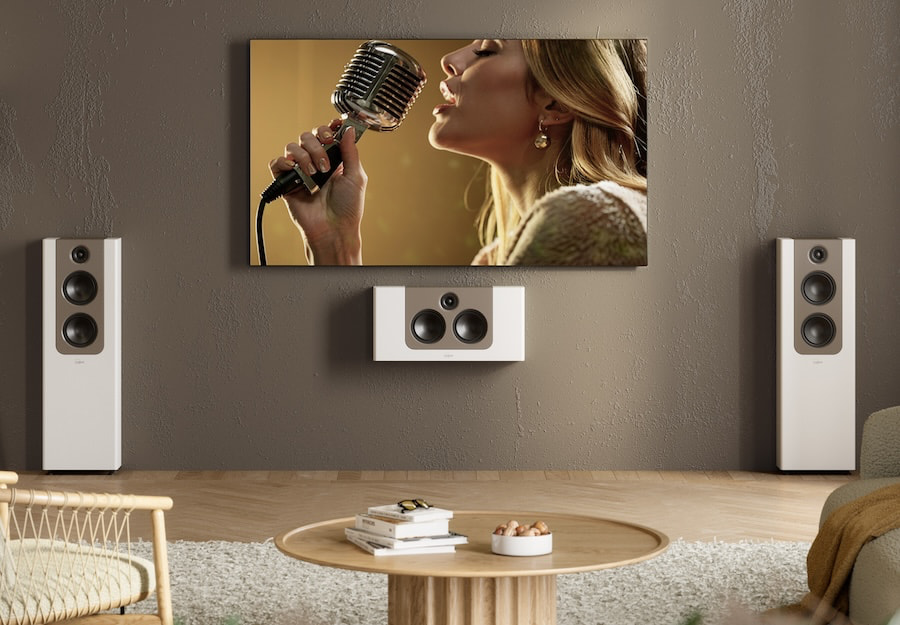
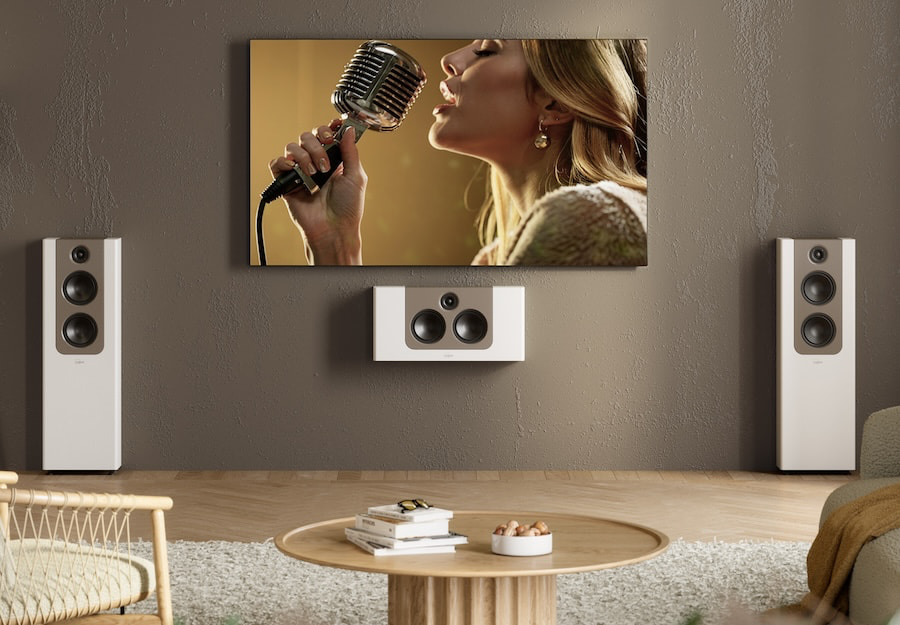
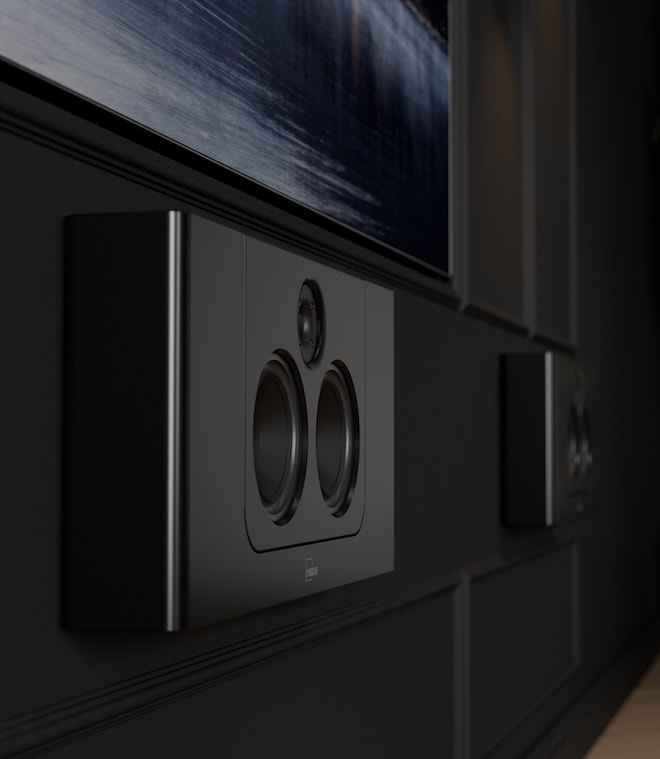
At $2,999 each, the Lyngdorf Audio LCR-2 is a shallow passive on-wall speaker that can handle left, center, right, or surround duties while giving FR-2 owners a properly matched route into multichannel home theater. A three-speaker front stage costs $8,997 before amplification or subwoofers, so this is not Danish flat-pack territory, but its 4.33-inch depth and claimed 117dB peak output make it an appealing option for serious systems that still have to share space with an actual living room.
More Than a Matching Center Channel
The LCR-2 was created to complete the company’s FR-2 loudspeaker system, but Lyngdorf has wisely avoided limiting it to center-channel duty.
LCR stands for Left, Center and Right, and the new speaker can be used beneath a television, as part of a three-speaker front array, or for surround channels. Using identical speakers across the front can improve tonal consistency as voices, music and effects move across the screen. There is less chance of the center channel sounding like it was borrowed from another system because somebody ran out of cabinet space.
Lyngdorf Audio LCR-2 with FR-2 floorstanding speakers in white with mocca.
The LCR-2 uses the same two 6.5-inch aluminum-cone midrange and woofer drivers found in the FR-2, along with a 1.1-inch fabric soft-dome tweeter. That shared driver architecture should make it easier to build a coherent system around a pair of FR-2 loudspeakers without introducing a center channel with a completely different dispersion pattern or tonal balance.
Advertisement
There is one important difference. The FR-2 uses a downward-firing bass-reflex port and reaches a claimed 45Hz, while the smaller LCR-2 employs a sealed enclosure and is rated down to 80Hz. Translation: the LCR-2 was designed to hand the bottom octaves to a subwoofer, and Lyngdorf is not pretending otherwise.
Designed to Work Against the Wall
Many conventional loudspeakers are designed with the expectation that owners will pull them away from room boundaries. That is perfectly reasonable in a dedicated listening room and somewhat less realistic in a family room where people also expect to walk around without colliding with the front speakers.
Lyngdorf takes the opposite approach. The LCR-2 is specifically tuned for wall placement, with its drivers positioned close to the surface behind it. The closed, internally braced MDF cabinet measures 26 inches wide, 12.6 inches tall and only 4.33 inches deep, with a supplied wall mount. It weighs 23.8 pounds, so this is still a proper loudspeaker and not an acoustic picture frame with an ambitious press release.
The two aluminum-cone midrange and woofer drivers use 35mm voice coils, vented magnets and vented die-cast aluminum baskets. Lyngdorf positions the drivers and tweeter close together to create a more controlled sound beam and improve integration through the crossover region. The crossover point is set at 1.7kHz.
Advertisement
Lyngdorf rates sensitivity at 92dB, maximum output at 117dB peak at one meter and power handling at 250 watts IEC. Nominal impedance is 4 ohms, with a minimum of 3.7 ohms. That sensitivity should help the speaker achieve substantial output without absurd amounts of power, but the impedance suggests pairing it with an AVR or power amplifier that is comfortable driving 4-ohm loudspeakers.
Passive Means Passive
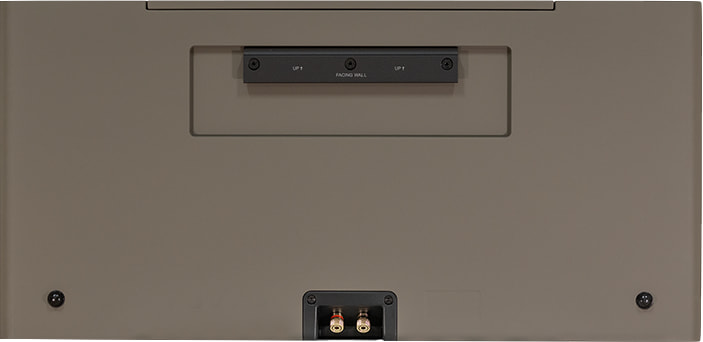
The LCR-2 has gold-plated binding posts and requires external amplification.
There is no HDMI eARC input, wireless connection, streaming platform or built-in RoomPerfect processing. Lyngdorf is known for digital amplification and room correction, but none of that lives inside the speaker. RoomPerfect would need to come from a compatible Lyngdorf processor or amplifier elsewhere in the system.
Advertisement. Scroll to continue reading.
That will disappoint anyone hoping to mount three speakers, connect the television and declare victory before dinner. It will make considerably more sense to buyers already considering a premium AVR, multichannel processor or separate power amplifier.
Advertisement
For its Audio Advice Live demonstration, Lyngdorf will use three LCR-2 loudspeakers across the front with D-60 surrounds, D-5 height channels, REL subwoofers, an MP-60 2.1 processor and MXA-8400 eight-channel amplifier. In other words, the company is presenting the LCR-2 as part of a genuine high-output theater system, not as an expensive replacement for the speakers inside your television.
Designed for Rooms That Do Not Look Like Screening Rooms
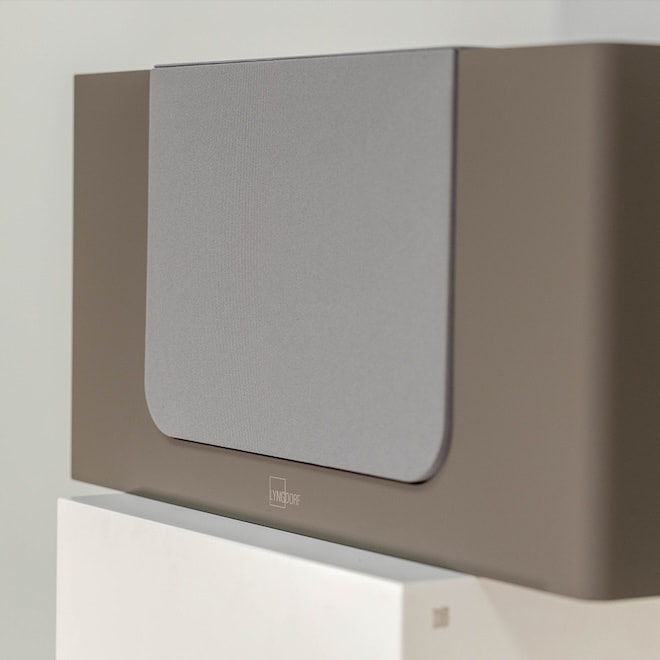
Lyngdorf LCR-2 (mocca) with light gray grille
Lyngdorf offers the LCR-2 in six enclosure and front-baffle combinations: white with white, black with black, mocca with mocca, white with black, white with mocca, and black with mocca.
Optional exchangeable fabric covers are available in light gray and midnight gray using material from Danish textile supplier Gabriel. The cabinet has rounded edges and a front baffle that flows into the upper surface rather than looking like a rectangular MDF box bolted to the wall. Each LCR-2 is manufactured at Lyngdorf Audio in Denmark.
None of that changes how the speaker sounds, but this category lives or dies on integration. People willing to spend almost $9,000 on three passive speakers may also prefer that the front wall not resemble the commercial cinema at a regional shopping mall.
Lyngdorf LCR-2 Specifications
Price: $2,999 each
Design: Passive 2-way on-wall loudspeaker
Applications: Left, center, right, or surround channel
Tweeter: 1.1-inch (28mm) fabric soft dome
Midrange and woofers: Two 6.5-inch (180mm) aluminum-cone drivers
Enclosure: Sealed, internally braced MDF
Frequency response: 80Hz to 20kHz (-3dB)
Sensitivity: 92dB at 2.83V/1m
Maximum output: 117dB peak at 1 meter
Power handling: 250 watts (IEC)
Nominal impedance: 4 ohms (3.7 ohms minimum)
Crossover point: 1.7kHz
Connections: Gold-plated binding posts
Dimensions: 66.5 x 32 x 11 cm (26 x 12.6 x 4.33 inches)
Weight: 10.8 kg / 23.8 lbs
Mounting: Supplied wall bracket
What Makes the LCR-2 Different?
The LCR-2 is not the least expensive, shallowest or deepest-reaching on-wall loudspeaker in the category.
Its advantage is the combination of high sensitivity, dual 6.5-inch drivers, substantial claimed output, shallow wall-specific construction and direct compatibility with the FR-2. It can become a matching center channel for an existing stereo pair or serve as the foundation of an entire on-wall theater system.
Advertisement
The six finish combinations also provide more visual flexibility than the usual black-or-white decision. Apparently Denmark has discovered that home theater speakers can be engineered for a wall without being forced to dress like office equipment.
Competitors?
DALI RUBIKORE ON-WALL
DALI RUBIKORE On-Wall Speaker
The $2,500 DALI RUBIKORE ON-WALL is the closest competitor in national origin. It is also manufactured in Denmark and can serve as a left, center or right speaker.
RUBIKORE features a 6.5-inch Clarity Cone driver with a hybrid tweeter module, combining a 29mm soft dome with a planar element. The tweeter can be rotated, allowing the cabinet to operate in portrait or landscape orientation. It is rated from 59Hz to 34kHz, with 88.5dB sensitivity and maximum output of 108dB.
The DALI plays considerably deeper and offers greater placement flexibility. Although RUBIKORE On-Wall is smaller overall, its cabinet depth is over 1-inch thicker. Meanwhile, the Lyngdorf claims 9dB more maximum output, and both brands offer compatible floorstanding models for additional speaker pairings.
PSB PWM3
PSB Imagine T65 Loudspeakers with PWM3 Soundbar
The $2,599 PSB PWM3 is less expensive and even shallower at 3.5 inches with its grille installed. It uses seven drivers: four 4-inch carbon-fiber woofers, two 3-inch carbon-fiber midrange drivers and a 1-inch titanium-dome tweeter.
Advertisement. Scroll to continue reading.
Advertisement
The PWM3 can be mounted vertically or horizontally and used for every channel in a five-channel or seven-channel on-wall system. Its frequency response is rated from 60Hz to 35kHz, with an 8-ohm nominal impedance and 86dB anechoic sensitivity.
PSB provides greater orientation flexibility, a friendlier load for many AVRs and a lower price. The Lyngdorf counters with larger woofers, higher sensitivity, a more compact overall width.
Focal On-Wall 302
Focal On-wall 302
The $1,749 Focal On Wall 302 is the value option in this group, although “value” becomes an interesting word once the invoice passes four figures per speaker.
Made in France, it uses four 4-inch Flax midbass drivers and a 1-inch aluminum-magnesium inverted-dome tweeter. The cabinet is only 3.56 inches deep and can be positioned vertically or horizontally. Focal rates it from 50Hz to 28kHz, with 91dB sensitivity and recommended amplifier power of 40 to 180 watts.
The Focal costs considerably less, extends deeper and offers flexible mounting, but its 49-inch length makes it a much larger visual object. The Lyngdorf is almost half as wide, uses larger midrange and woofer drivers and offers a claimed peak-output specification aimed at more demanding theater installations.
Advertisement
Who Is It For?
The LCR-2 makes the most sense for:
Lyngdorf FR-2 owners adding a center or surround channels
Premium multipurpose media rooms where floor space is limited
Home theaters using acoustically visible on-wall speakers
Buyers who want identical speakers across the front soundstage
Systems built around capable external amplification and one or more subwoofers
Interior-conscious installations that need more than black or white cabinets
Who Should Avoid It?
The LCR-2 is harder to justify for anyone building a value-focused theater or expecting full-range performance without a subwoofer.
It is also not an all-in-one or wireless product. Buyers looking for HDMI, amplification, streaming or wireless surround operation should look elsewhere because the LCR-2 supplies none of them.
Renters may also want to consider the installation requirements before attaching 23.8 pounds of Danish loudspeaker to a wall their security deposit technically still belongs to.
Lyngdorf LCR-2
The Bottom Line
The Lyngdorf LCR-2 fills an obvious gap in the company’s lineup. The FR-2 finally has a matching center and surround option, while custom installers gain a compact speaker that can be repeated across an entire front wall.
Its 80Hz lower limit means a subwoofer is not optional in a home theater system, and the $2,999 price makes a complete LCR array an $8,997 proposition before the processor, amplification and bass system arrive.
Advertisement
That is expensive, but the LCR-2 offers something more focused than another oversized center speaker balanced on furniture. It is designed for the wall, matches Lyngdorf’s existing loudspeakers, produces substantial output and looks like somebody considered the room before drawing the cabinet.
Advertisement. Scroll to continue reading.
In high-end home theater, that last part remains surprisingly uncommon.
Price & Availability
The Lyngdorf Audio LCR-2 will retail for $2,999 each and is scheduled to begin shipping in the United States in August 2026.
Advertisement
It will make its North American public debut at Audio Advice Live in Raleigh, North Carolina, from August 7 through August 9, 2026.
eBay has reached a settlement with a pair of journalists who sued the company after its employees subjected them to a campaign of cyberstalking and harassment. This case may have fallen off your radar, so let’s recap the whole horrifying saga. Massachusetts-based David and Ida Steiner run a newsletter and website called EcommerceBytes. In 2019, articles about eBay written by Mrs. Steiner apparently drew the ire of then-CEO Devin Wenig. According to evidence from prosecutors, Wenig told his communications chief to “take her down,” which he continues to assert referred to a common PR takedown, while the comms exec told eBay’s former security team lead to do “whatever it takes” to silence her.
Security employees of the shopping company then engaged in a campaign of harassment and cyberstalking aimed at silencing the pair. eBay workers threatened both of the Steiners online and with material sent to their home. The threats included live cockroaches, a bloody pig mask, a funeral wreath and a book on surviving the loss of a spouse. Seven eBay security employees were charged and pled guilty in a case brought in 2020, but the executives who allegedly instigated the campaign against the couple did not face punishment at that time.
Today’s settlement will see the Steiners receive compensation of $46.15 million from eBay, $2 million from Wenig, $500,000 from former eBay executive Wendy Jones and $50,000 from former eBay executive Steve Wymer. In addition, eBay will commit $6 million in charitable contributions to various nonprofit organizations and Wenig will give $1 million in Ina Steiner’s name to a charity that supports First Amendment rights.
“This case was always about more than obtaining financial recovery,” said Christopher Murphy of Scalli Murphy Law, which represented the Steiners.” From the beginning, our clients wanted to uncover the truth, protect journalists and publishers, hold those responsible accountable, deter future corporate misconduct, and help ensure others would never have to endure what they experienced.”
Advertisement
“As we have long stated, what the Steiners were subjected to by former eBay employees in 2019 was wrong, reprehensible and should never have happened,” eBay said in its statement today. “The 2019 conduct is not representative of eBay’s culture or thousands of employees around the world today. Since these events occurred, new leaders have joined the company and eBay has strengthened its policies, procedures, controls and training consistent with the company’s ongoing commitment to uphold high standards of conduct and ethics.”
In a statement provided to Engadget, Wenig said:
No one should ever have been subjected to what the Steiners endured in 2019, and I’m saddened by it, especially because it occurred during my time as CEO of eBay. The harassment was deliberately done in secret and without my knowledge, as established by an independent law firm review, a federal probe, and the sworn testimony of the security employee convicted as the ‘ringleader.’ This behavior is antithetical to everything I stand for and believe in.
The Steiners’ right to publish content was always protected by the First Amendment, and protection of the press and the right to free speech are causes I have long supported and defended. I’m pleased that a meaningful portion of my settlement will go directly to a non-profit committed to protecting freedom of the press.
Update, July 28, 7:25PM ET: This article was edited after publish to include comment from former eBay CEO Devin Wenig.
The US is banning humanoids and other advanced robots made outside of the United States, the FCC announced, saying that “advanced robotics devices” pose a national security threat. Foreign-made power inverters have also been deemed a security risk.
A press release from the FCC cited unnamed national security agencies. “In their determinations, national security agencies referenced, among other things, unacceptable risks, including that these devices could create supply chain vulnerabilities that could disrupt U.S.economic and national security and could create a cybersecurity risk that threatened American critical infrastructure,” it said.
As with an earlier ban on routers manufactured outside of the United States, the government justified the bans as being in line with White House’s 2025 national security strategy, which calls for re-shoring industrial production “with a focus on the critical and emerging technology sectors.” Unlike the more strict router ban, the robot and power inverter bans use the “Buy American” statute to judge where a device is made, which typically allows for some foreign parts in a US-manufactured product.
The FCC cites quadrupeds and humanoid robots as the kind of “advanced” devices covered under the ban, though there will be carveouts for those used by the the Department of War and Department of Homeland Security. “As our dependence grows on advanced robotic devices for critical infrastructure protection, manufacturing, and US military dominance, it is vital that we have a secure domestic supply chain and industrial base for advanced robots,” the FCC writes. “The networked capabilities of advanced robotic systems create extensive vulnerabilities and vectors for attacks that can manipulate the data and physical operation of the advanced robotic system. Relying on foreign-produced advanced robotic devices presents unacceptable supply chain and cybersecurity vulnerabilities.”
Advertisement
The agency uses similar reasoning in its ban on power inverters, which specifically covers devices that convert current and also have Wi-Fi, cellular or bluetooth connectivity. “Any unanticipated manipulation or disruption of the supply of power inverters or of the inverters themselves would likely compromise the United States’ electricity supply and by extension threaten the economic prosperity and national security of the United States,” the FCC says. But, as with the ban on routers earlier this year, banning all foreign-made power inverters might prove to be difficult, at least in the short term. The broad wording of the FCC’s power inverter definition would seemingly include any backup batteries with an AC outlet and companion app, though these aren’t specifically named and may be exempted.
The FCC cites a Department of Energy assessment that notes that many of the components of inverters “are almost entirely produced [outside the US]” and that without moving production of those components to the US, it will be “challenging” to reduce the associated security risks. As with robots, companies can apply for conditional approval to continue selling their devices in the US.
Runlayer, a startup that offers a secure Model Context Protocol gateway — a standard for letting AI models and agents securely pull in outside data and tools — has filed a lawsuit against HR software startup Rippling, according to the complaint seen by TechCrunch.
The lawsuit is a cautionary tale for anyone selling AI infrastructure to enterprise customers, especially to other tech companies, that increasingly have the engineering muscle to just build the thing themselves.
In the suit, Runlayer describes an extensive product trial conducted by Rippling as a prospective customer, during which the MCP startup shared everything from its product roadmap to its actual source code. The parties signed a mutual non-disclosure agreement and Rippling signed a product trial agreement with a clause that forbade it from copying Runlayer’s intellectual property or making derivative works, which is standard boilerplate in enterprise software trials.
Runlayer says in the complaint that Rippling’s evaluation involved “nearly a year of intensive engineering collaboration.” But in the end, the two could not agree on a price, so Runlayer ended the product trial.
Advertisement
Shortly after that, Runlayer alleges that a “Rippling insider” texted Runlayer founder and CEO Andrew Berman to inform him of “a project internally to build essentially a clone o[f] Runlayer … it’s almost a 1 to 1 copy of Runlayer.”
Runlayer claims in the suit that Rippling’s product must have been based on the startup’s intellectual property and therefore constitutes trade secret misappropriation, unfair competition, and breach of contract.
Rippling has confirmed to TechCrunch that it is indeed launching its own MCP gateway, though a spokesperson denies Runlayer’s allegations about misusing its IP.
“Runlayer’s panicked effort to avoid competition by fabricating claims is not an effective way to deal with its business failures. Rippling is launching a superior product for connecting AI tools to business data using only our proprietary information — we have every reason to win in this market,” a Rippling spokesperson tells TechCrunch.
Advertisement
Runlayer has retained white-shoe law firm Sullivan & Cromwell. That doesn’t mean Runlayer will, or even should, win this suit, but the same way a marquee VC lends a startup some credibility, a marquee law firm lends a lawsuit some credibility, at least optically.
The more interesting part about this suit is really the inside peek it provides at the trials and tribulations of selling complex AI infrastructure into the enterprise, particularly to other tech companies. Enterprise sales notoriously take a long time to close, often because they hinge on this kind of deep, hands-on trial.
MCP gateways in particular are getting crowded. Anthropic launched MCP as an open source protocol in November 2024. It’s now one of the basic building blocks of AI interoperability, giving models and agents a secure way to access external data sources and services. MCP gateway products add control, security, and other features, especially for managing agents, and the field has grown considerably more competitive since Runlayer launched its product in the middle of last year and raised a total of $42 million, including from Khosla Ventures and Felicis.
Even after an intense trial, an enterprise may simply opt to build the tool in-house. Both sides are stuck between a rock and a hard place.
Advertisement
When you purchase through links in our articles, we may earn a small commission. This doesn’t affect our editorial independence.
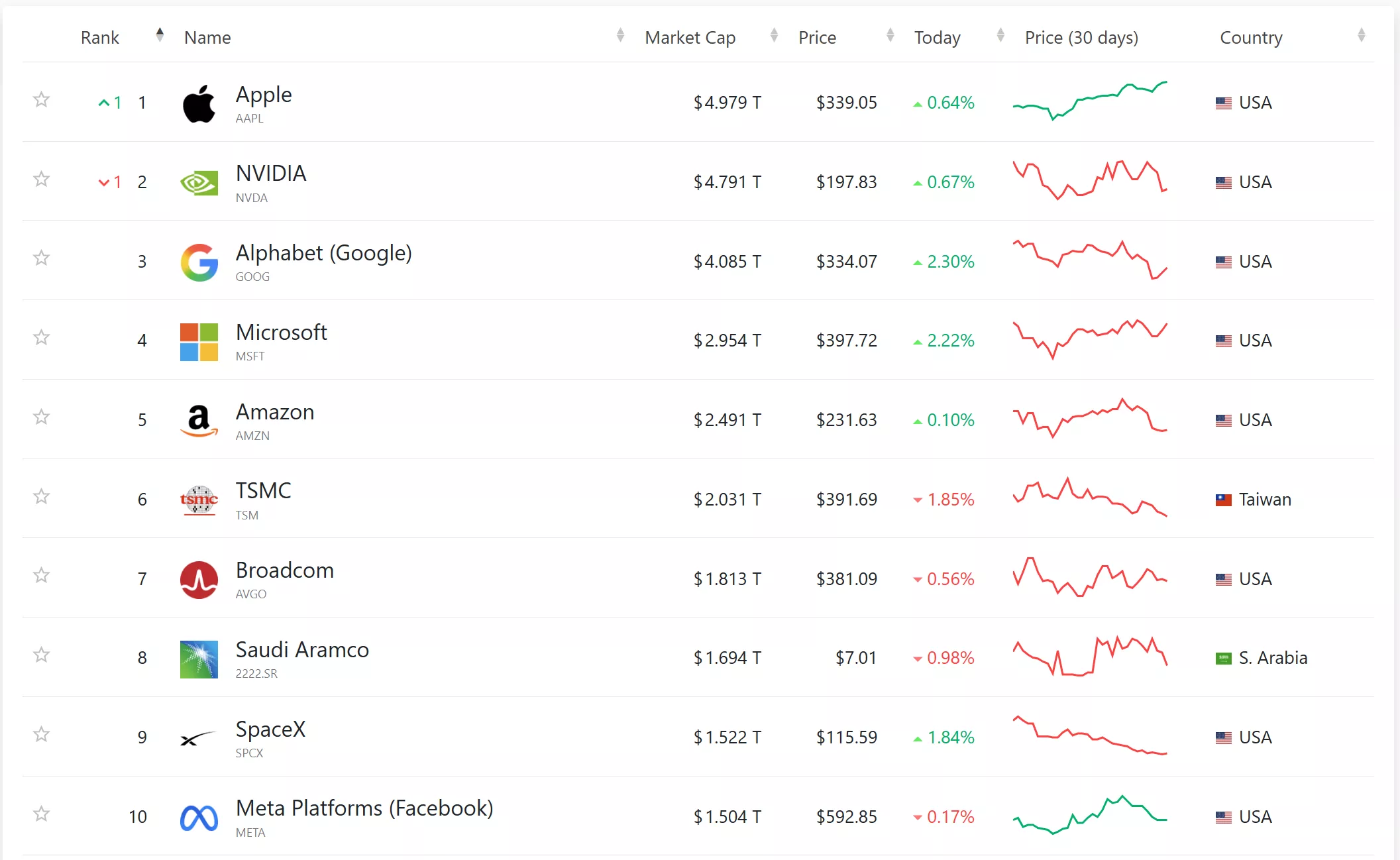
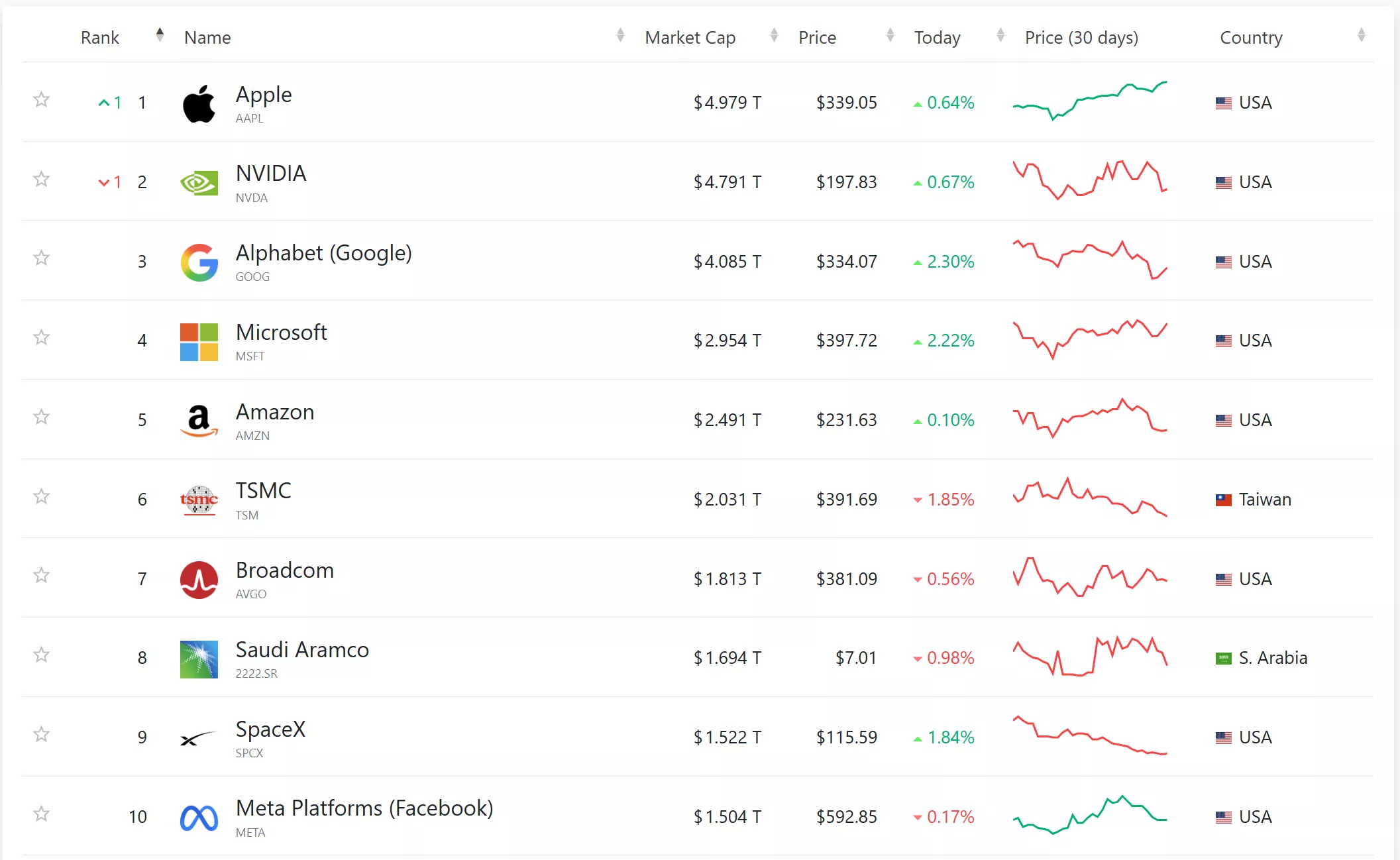
King of the (Stock) World: After ceding its Wall Street crown to Nvidia, Apple has reclaimed the title of the world’s most valuable public company, and the shift says as much about the mood on Wall Street as it does about Apple itself. Investors are growing wary of the AI infrastructure race that’s driven tech valuations for years, and they’re rewarding the one Big Tech giant that largely sat it out.
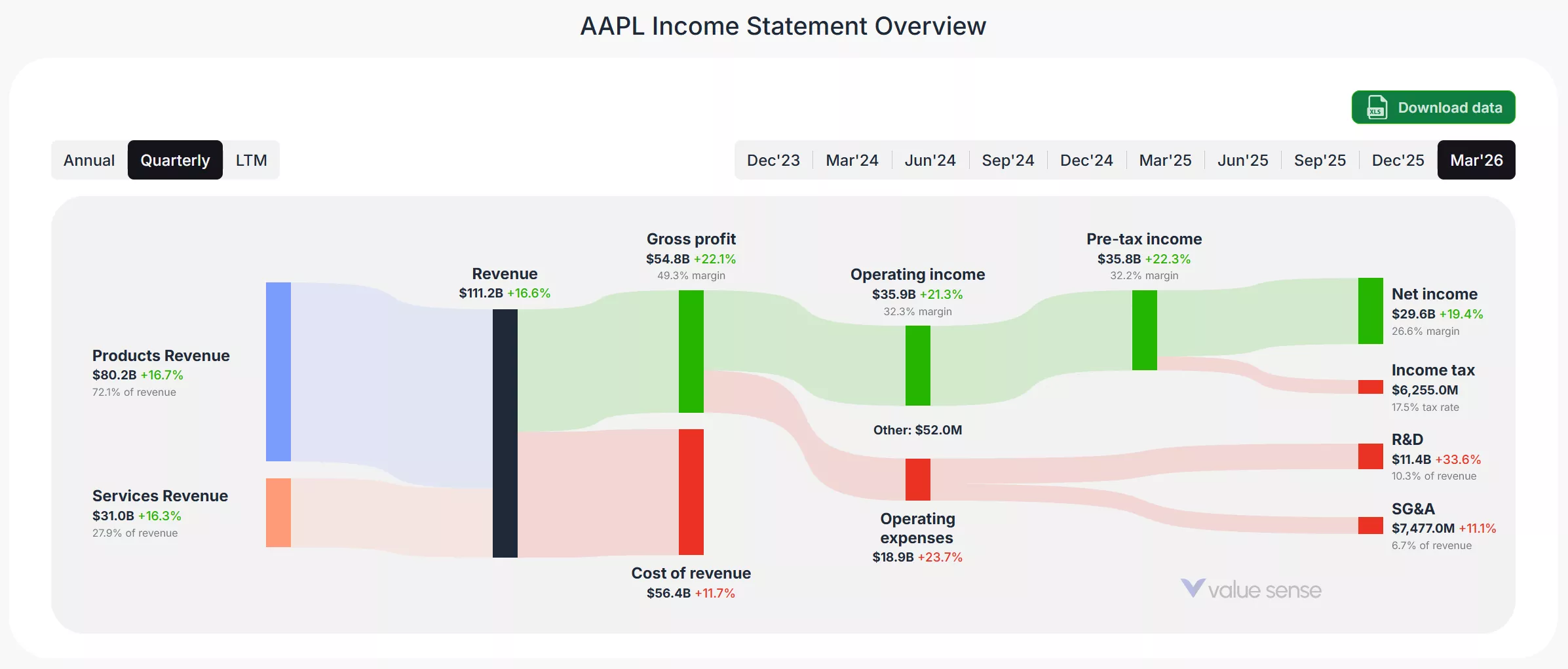
The timing adds extra stakes, too. Tim Cook is preparing to step down soon, and the incoming CEO is expected to preserve the same approach to market and financial management that defined Cook’s tenure, the very discipline investors now appear to be betting on.
Apple’s stock rose 1% this week to push its market cap to roughly $4.9 trillion, while Nvidia’s shares fell 5%, dropping the chipmaker to about $4.8 trillion. Chip stocks have been especially volatile lately, which is one reason a “traditional” IT company like Apple looks better positioned to ride out the turbulence.
Nvidia became the first company in the world to cross a $5 trillion market cap in 2025, fueled by surging interest in AI tools and infrastructure that heavily depend on its hardware and software. The company’s valuation has grown more than tenfold as Nvidia supplied the GPUs needed to train and run today’s most complex AI models. Other Big Tech players followed suit, pouring billions into ever-larger AI data center buildouts, most of them running on Nvidia’s GPUs.
Apple has approached the “AI revolution” a little differently. The company that once adapted DARPA’s CALO project to build Siri spent years developing its own custom large language models, but after apparently falling behind other AI pioneers, it opted to lean on Google’s services and AI models for the next generation of Siri AI.
In somewhat of a turn of events, analyst Daniel Newman says investors are turning back to Apple because they see it as a safe harbor from the broader AI hangover.
As AI-focused stocks look increasingly volatile, Newman noted that owning Apple still feels “almost like owning an index.”
Advertisement
Apple CEO Tim Cook is expected to step down soon, handing the reins to senior VP of hardware engineering John Ternus. Cook led Apple for 15 years, and Ternus is reportedly set to carry on his former boss’s approach to major financial decisions, including AI infrastructure spending.
Craig Federighi, Apple’s senior VP of software engineering who oversees development of the company’s operating systems, echoed that sentiment in June. The exec said AI is meant to serve people, not the other way around.
Going digital doesn’t mean giving up the option of physical games down the line, since Sony sells a detachable disc drive separately for £99.99 that clips straight onto this exact model whenever you decide you want one.
Advertisement
That flexibility extends to storage too, with the console now shipping as standard with a full 1TB SSD rather than the odd 825GB drive found in the original release, leaving roughly 800GB of usable space once the system software takes its share.
Connectivity has quietly improved as well, with two USB-C ports built into the front of the console instead of the single one found on the original model, handy for anyone charging a pair of DualSense pads or a PSVR2 headset overnight.
All of that speed is put to work by the DualSense controller itself, whose adaptive triggers and haptic feedback turned something as simple as Astro’s Playroom into a demonstration of what next-generation gaming was supposed to feel like.
Advertisement
Our expert reviewer Chris Smithput the PS5 through months of testing and concluded that it remains this generation’s console king, thanks to its combination of raw power, a refined interface and the best library of exclusive games around.
That combination of raw power and polish is exactly what makes a fully specced 1TB PS5 Digital Edition at £429.99 one of the more sensible entry points into this generation right now, particularly for anyone happy to stream and download rather than collect physical discs.
The option to add that detachable disc drive later means this deal doesn’t lock you into a digital-only future, making it just as sensible for someone who wants to wait and see before committing properly to physical media.






















































You must be logged in to post a comment Login