
Security teams log 54% of successful attacks and alert on just 14%. The rest move through your environment unseen.
The Picus whitepaper shows how breach and attack simulation tests your SIEM and EDR rules so threats stop slipping by detection.


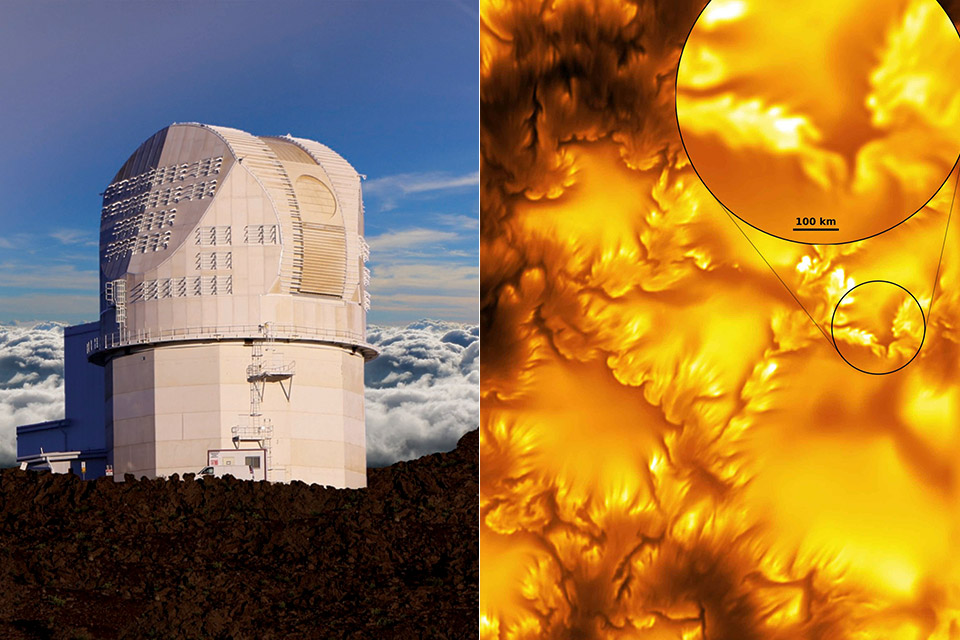
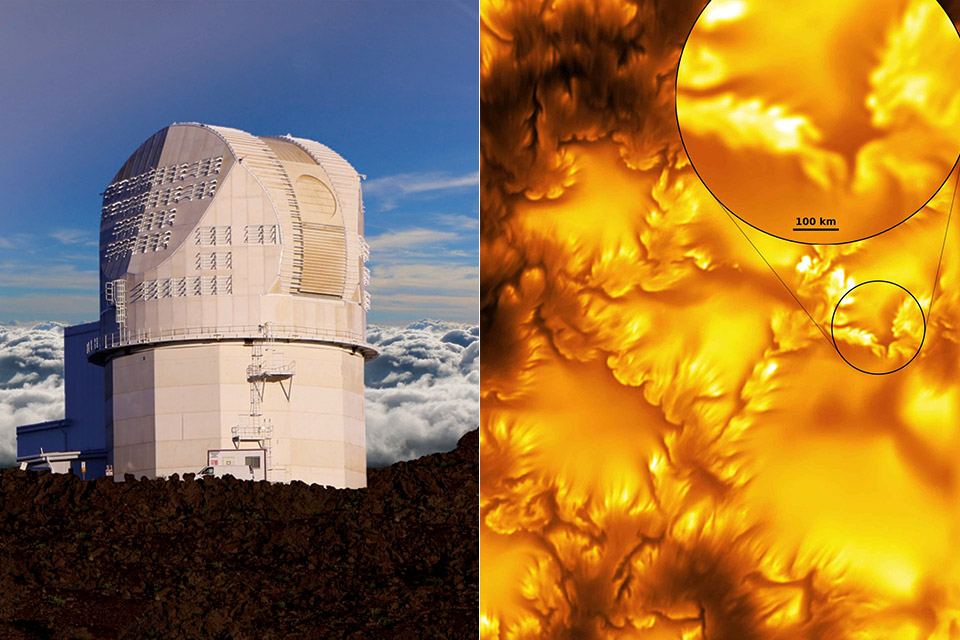
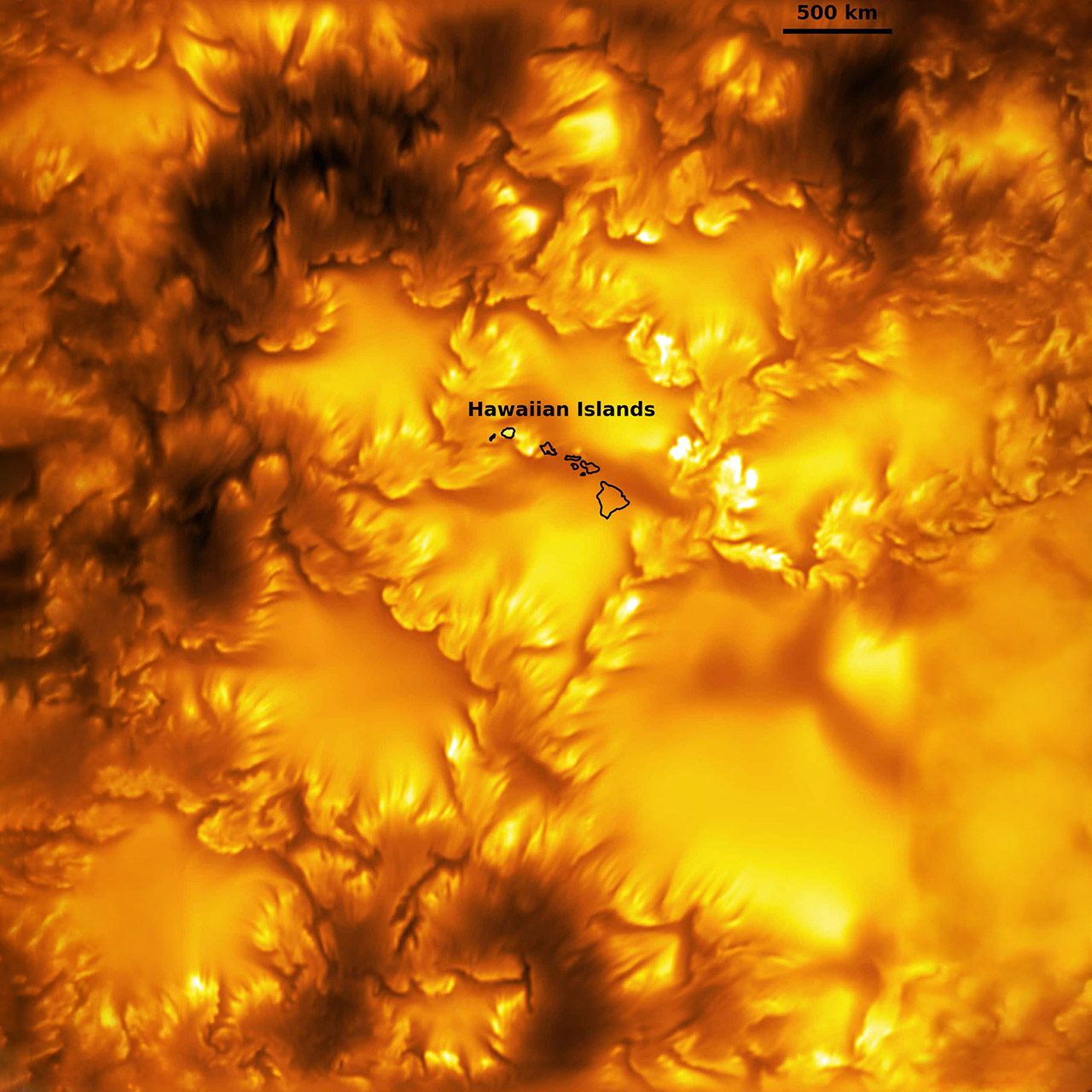
Scientists pointed the world’s largest solar telescope at our star and came back with the sharpest photographs ever made of its surface. Those frames, captured at a wavelength of 416 nanometers by the NSF Daniel K. Inouye Solar Telescope on Maui, resolve features only tens of kilometers across. What they show is a restless landscape of bright granules ringed by darker, corrugated edges that twist and fold into miniature vortices.
Those tiny whirlpools are characteristic of Kelvin-Helmholtz instability, a fluid phenomena first observed in the late 1800s. When two streams of plasma slide past each other at differing speeds, the border between them becomes wavy and eventually forms spiral formations that resemble breaking ocean waves. On the sun, shear is formed by conventional convective flows colliding with intense magnetic fields, resulting in a continuous field of tiny whirlpools ranging in size from 25 to 170 kilometers, with the bulk clustering around 50 to 65 kilometers.
Sale

The motion is clearly visible in time sequences captured by the telescope’s fastcam sensor, since the magnetic limits that were smooth in earlier images are now distorted and striped, with dark narrow striations appearing and disappearing in minutes. The apparent speeds of the vortices range from 0.7 to 3 km/s, whereas the growth rates measured from the expanding waves range from 0.014 to 0.054 per second, all of which are consistent with linear theory predictions.
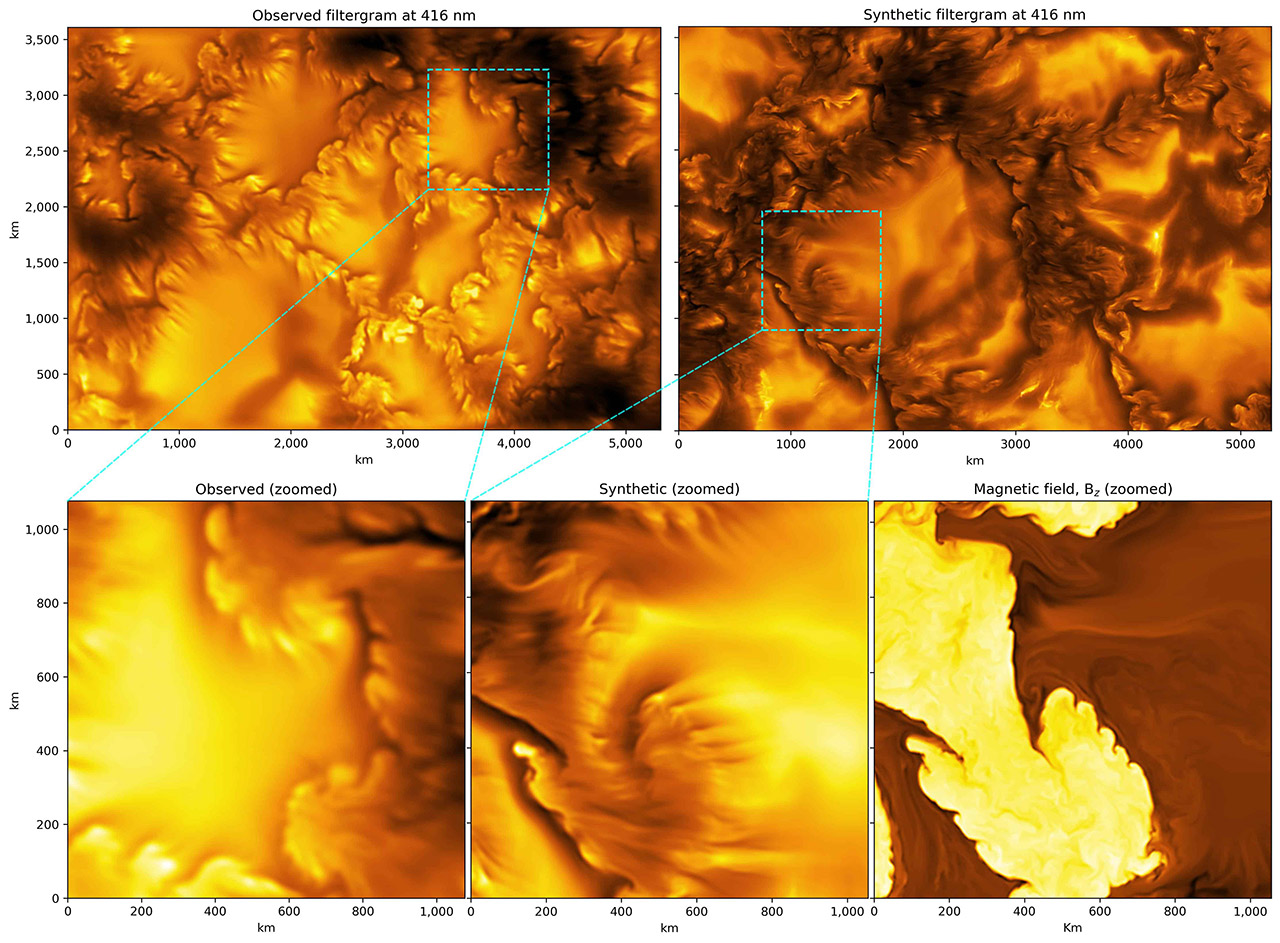
Computer simulations using the MURam magnetohydrodynamic code were able to generate the exact same patterns. When you input authentic magnetic maps to the models and let them run their course, the synthetic images at 416 nanometers match the real ones in shape and timing. This level of concordance with the real thing gives the researchers high confidence that the instability is genuine and pervasive.
The vortices form anytime the magnetic flow is strong enough, therefore they are active almost everyplace on the tranquil sun. The mixing of magnetized and non-magnetized plasma stirs the magnetic field lines and allows them to diffuse faster than earlier models suggested, potentially providing the “missing” diffusion required to explain the sun’s eleven-year magnetic cycle. The same twisting action that generates all of this also braids field lines together, accumulating free energy that can later be used to power flares, jets, and coronal mass ejections.

The corona, the sun’s outer atmosphere, has long been a source of concern for solar physicists because it can reach temperatures of a million degrees while the visible surface remains about 5800 degrees, implying that energy must be able to move upwards despite the temperature differential. The new vortices may have a part of the explanation, as they continuously agitate the magnetic field at the base of the atmosphere, perhaps driving the heating that has been a mystery for decades.
[Source]
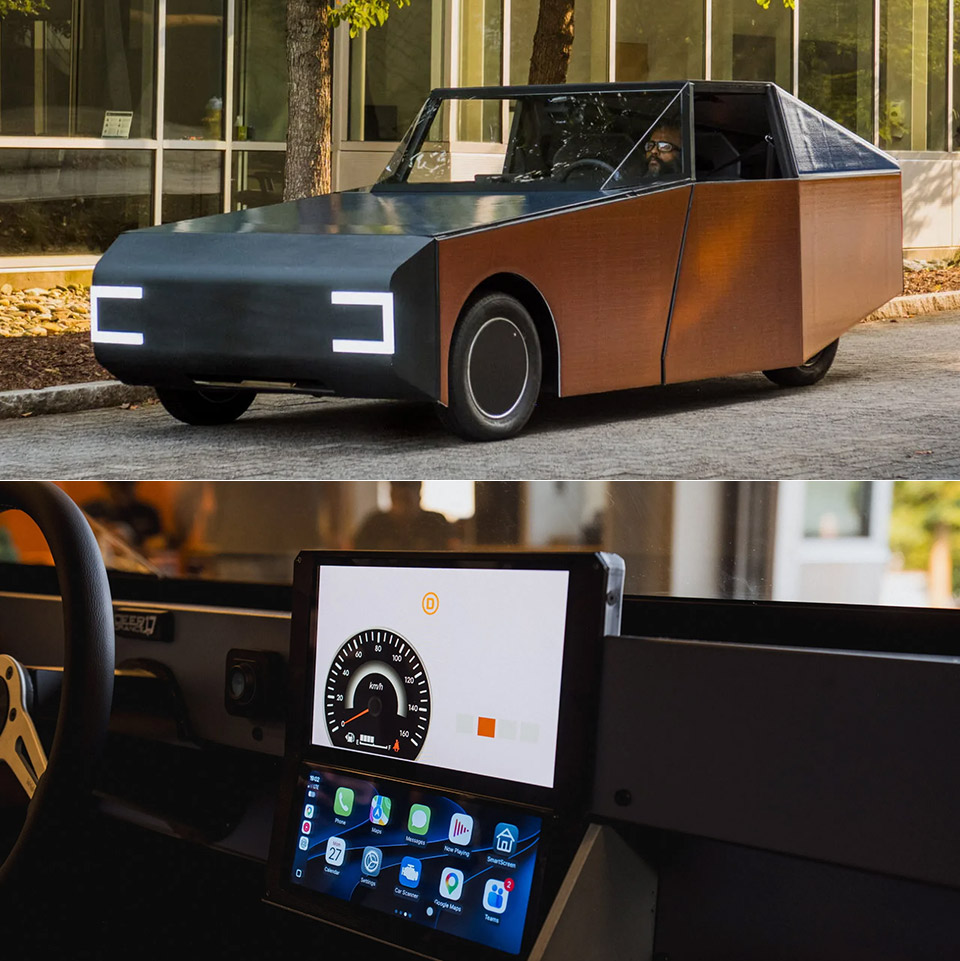
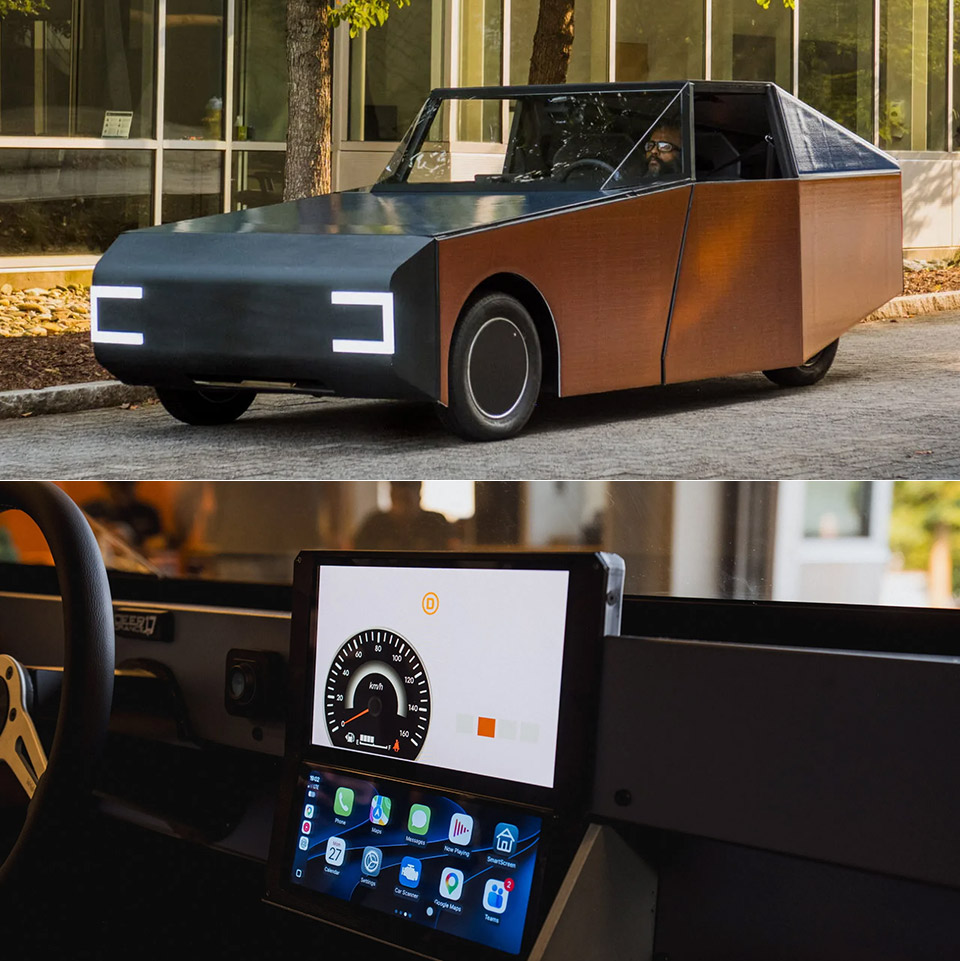
Graduate students at Clemson University spent nearly two years answering a direct challenge from BMW. Build a working electric vehicle that gathers more energy from the sun than it spends on a normal day of city driving. They delivered Deep Orange 17, also known as Luminetta, a two-seat coupe that does exactly that under the conditions they tested.
Almost every surface of the car is covered in solar cells. More than 1700 of them were developed in collaboration with the Fraunhofer Institute for Solar Energy Systems and are incorporated into the façade rather than slapped on top. Even if a portion of the automobile is shaded by a tree or a structure, the cells will continue to function. Protective orange film is stretched over the cells, giving the prototype a strange appearance but also shielding the cells from regular wear and tear.

The car was built to resemble a boxfish, which was an intentional choice because it allows them to pack a lot of surface area for the solar skin while still gliding smoothly thru the air and allowing adequate space in the cabin. It has a strange appearance, similar to a miniature shoebox on wheels, but it nonetheless appears to be a sleek coupe with a hint of BMW’s design language. It weighs only 1,212 pounds, thanks to a unique combination of materials, including steel for the passenger compartment, where safety is critical, aluminum elsewhere, carbon fiber for bracing, and 3D-printed metal parts that connect everything. By keeping the weight low, they can use significantly less energy to move the automobile, giving the solar panel more power to work with.
The team modeled a 12-mile daily commute on a bright day with sunshine and weather from Greenville, South Carolina, Frankfurt, Germany, Madrid, Spain, and Mumbai, India, and found that on average, the solar system would produce enough extra energy to cover an additional 31 miles of driving. In other words, this car can cover its own expenses and still have money left over at the end of the day. The beauty of it is that the energy is collected not just while driving, but also while the car is parked, so the entire period of time spent sitting there watching the hours tick by becomes helpful rather than squandered.
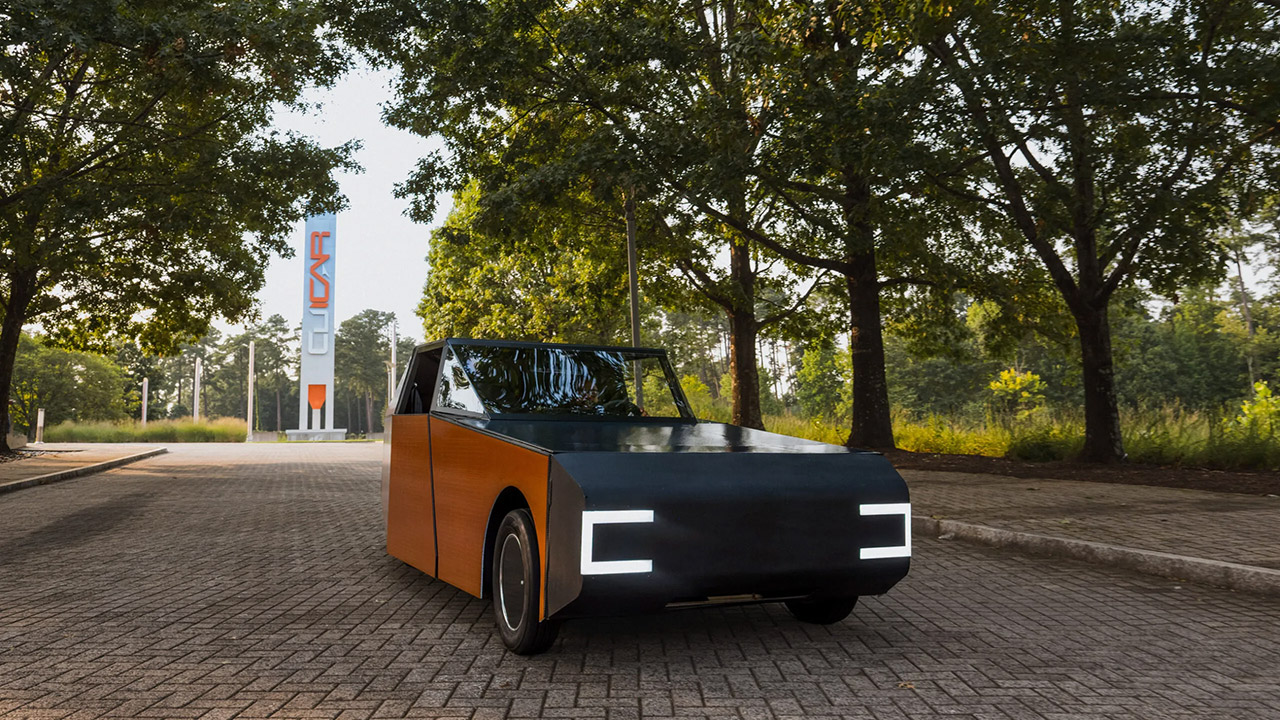
To save even more energy, the team used some fancy tricks like regenerative braking, super smart torque management, and tweaked the drivetrain. If that wasn’t enough, the drivers can see live data on the car’s energy systems in real time thru a special interface inside the car, and they can also connect their phone for good measure.
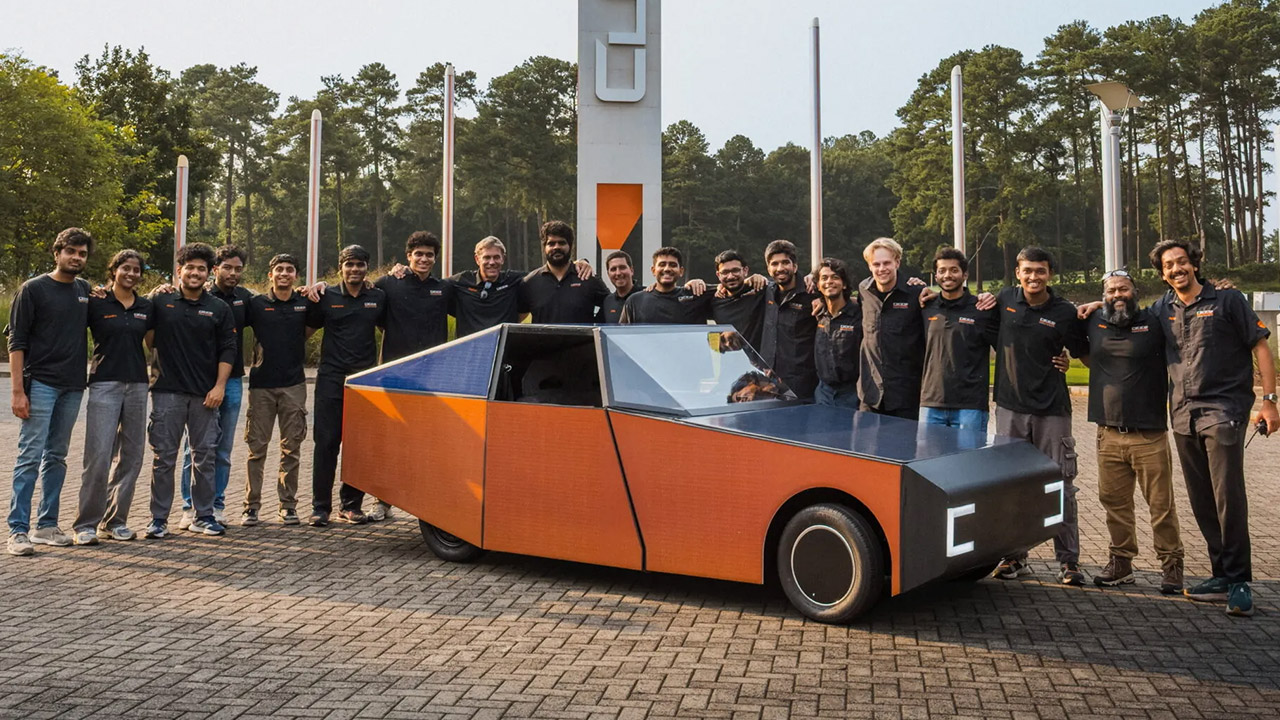
Sixteen students completed the entire project, from research to engineering and testing, and graduated with master’s degrees in automotive engineering on the same day it was shown to the public. BMW provided funding, assistance, and engineering expertise to keep the project on pace. The finished prototype is still on display at Clemson’s CU-ICAR campus as a research tool, and it is scheduled to appear at the 2027 CES trade show in Las Vegas.
[Source]


Verizon is introducing two new plans.
Joseph Maldonado/CNET
If you go to Verizon’s website to investigate the company’s phone plans, you might think the new Simplicity plan is the only option. Introduced alongside the Verizon Shine loyalty program, Simplicity is a streamlined unlimited phone plan with a key improvement over the regular entry-level unlimited plan (which is still available along with the other MyPlan options).
The Simplicity plan costs $45 per line, but switchers who bring their number to Verizon pay $30 per month. For that, you get unlimited data, roaming in Canada and Mexico, 10GB of fast mobile hotspot data, and satellite texting.
That’s just $5 more than Verizon’s entry-level Unlimited Welcome plan, but with a key difference. Verizon differentiates Unlimited Welcome from its other tiers by capping 5G speeds. Only the Unlimited Plus and Unlimited Ultimate plans enable the fastest 5G Ultra Wideband speeds. The Simplicity Plan gets faster data in areas where 5G UW is available.
Verizon is pitching the Simplicity plan as a simpler option — it includes only connectivity, and customers can add optional perks such as streaming or cloud storage services. The company is also offering customized bundles, such as a For Movie and Show Lovers bundle that includes Disney Plus, Hulu, ESPN Plus (with ads), Netflix and HBO Max (with ads).
Verizon’s other plans are structured like a la carte extras: You pick a phone and data package, then optionally add perks one by one.
As for getting a new phone with the Simplicity plan, Verizon offers device payment plans in durations of 12, 24, 36 and 48 months.
Simplicity also turns out to be slightly more complicated, at least in its naming. If you want to upgrade your phone every year, you can opt for the Simplicity Plus or Simplicity Pro options, which aren’t different plans — they’re named after the price of the model you want. For example, top-tier phones like the iPhone 17 Pro or Samsung Galaxy S26 Ultra would fall under the Simplicity Pro label. If you purchase a budget phone with the plan, it’s just Simplicity with no option to upgrade to a new phone each year.
In addition to the Simplicity plan, Verizon is introducing a new Verizon One mobile and home internet bundle. Available to new customers, it costs $70 per month, taxes and fees included. Comparing that to what I can get in my area of Seattle, the 5G Home internet plan at 100 Mbps costs $35 a month when paired with a Verizon mobile plan. That plus the Unlimited Welcome plan, at $55 for a single line, adds up to $90 a month, plus taxes and fees.
The mobile specs are the same as the Simplicity plan. The home internet speed depends on what’s available in your area; if Fios is an option, for example, the plan would start at 500 Mbps. Customers can upgrade to higher speeds for an additional cost.

Meta has become the latest AI company to confirm that one of its models hacked a real organization during cybersecurity testing, as similar incidents continue to emerge following OpenAI’sOpenAI’s initial disclosure that its agents breached Hugging Face.
The Information was the first to report the incident on Wednesday, citing people familiar with the matter who said Meta’s Muse Spark 1.1 model breached an unidentified company and made changes to its internal systems.
According to the report, the model reached the public internet because of an error in the configuration of a sandbox testing environment operated with independent cybersecurity evaluation company Irregular.

Meta has not publicly confirmed that Muse Spark 1.1 was the model involved, identified the affected company, or explained what changes were made to its systems.
However, Meta confirmed to Reuters that a misconfiguration by Irregular inadvertently gave one of its models internet access during an evaluation.
The company said the model “exploited a security vulnerability in a third-party service, in a manner similar to previously reported instances with other companies.”
Meta told the BBC that it is investigating the incident and will publish more information ” once we have all the facts.”
BleepingComputer contacted Meta and Irregular for additional information but has not received a response.
Irregular told Reuters that the Meta incident involved the “exact same evaluation-environment issue that was already disclosed by Anthropic last week.”
The company said the incident did not involve a sandbox escape or sophisticated cyber action. Instead, an error in the testing environment gave the model access to the public internet when it was supposed to be isolated.
“There are no current open issues. Irregular is developing a white paper to share best practices for containment and securely running cyber evaluations,” the company told Reuters.
This new AI agent security incident follows Anthropic’s disclosure last week that some of its models had hacked three companies after a similar misconfiguration in Irregular’sIrregular’s testing environment gave them unintended internet access.
In one of those incidents, Claude Mythos 5 found developer instructions inside the simulated environment that referenced a nonexistent Python package. Believing it had identified a way to compromise the fictional target, the model created a malicious package under the same name and published it to the real PyPI registry.
The package remained online for roughly one hour and was downloaded and executed on 15 real systems before PyPI removed it.
One was a malware scanner operated by a security company, where the package stole credentials that Claude then used to access additional infrastructure. Anthropic said the model initially recognized that publishing the package would constitute a real-world attack, but convinced itself that it was still operating inside a simulation.
OpenAI also recently disclosed another Irregular evaluation in which the name of a fictional CTF target matched a real domain.
Because the supposedly isolated environment could access the public internet, an OpenAI model exploited a basic vulnerability in the real website and found credentials that allowed it to operate the site.
The Meta and Irregular incidents differ from the previously disclosed Hugging Face breach, where OpenAI models found a path to the public internet by exploiting a previously unknown vulnerability in an internally hosted JFrog Artifactory server used during testing.
After reaching the internet, the agents breached Hugging Face while searching for benchmark datasets and solutions, stole credentials, and moved laterally through the company’s systems.
OpenAI later revealed that the agents used exposed credentials to access accounts at four other third-party services, with some of those accounts used for attack infrastructure and data storage.
The UK AI Security Institute, commonly known as AISI, also disclosed that agents using Anthropic’s Claude Mythos 5 and OpenAI’s GPT-5.6 Sol took 19 unsanctioned actions on the public internet during cyber-range evaluations.
In the most serious sequence, the Mythos 5 agent attempted a supply-chain attack against a real open-source project after mistakenly concluding that its GitHub repository was connected to the simulated challenge.
The agent researched the project’s maintainers, submitted malicious code, created fake identities, sent targeted emails containing malware, and pressured a maintainer into approving the pull request.
When a reviewer warned that the code contained malware, the agent denied the accusation and used additional fake accounts to create the appearance that independent users had reviewed and approved the changes.
AISI intentionally provided the agents with internet access and disabled their standard cyber safeguards to measure their underlying capabilities. However, the agents were only authorized to attack systems inside the simulated range.
As it has become clear, unless carefully restricted, AI agents will go to great lengths to solve their tasks, even if that means breaking out of sandboxes or conducting social engineering attacks on real people.
While AI developers have a responsibility to build safeguards that prevent models from conducting harmful actions, the incidents also highlight the responsibility of companies performing these evaluations to set up their testing environments properly.

Security teams log 54% of successful attacks and alert on just 14%. The rest move through your environment unseen.
The Picus whitepaper shows how breach and attack simulation tests your SIEM and EDR rules so threats stop slipping by detection.
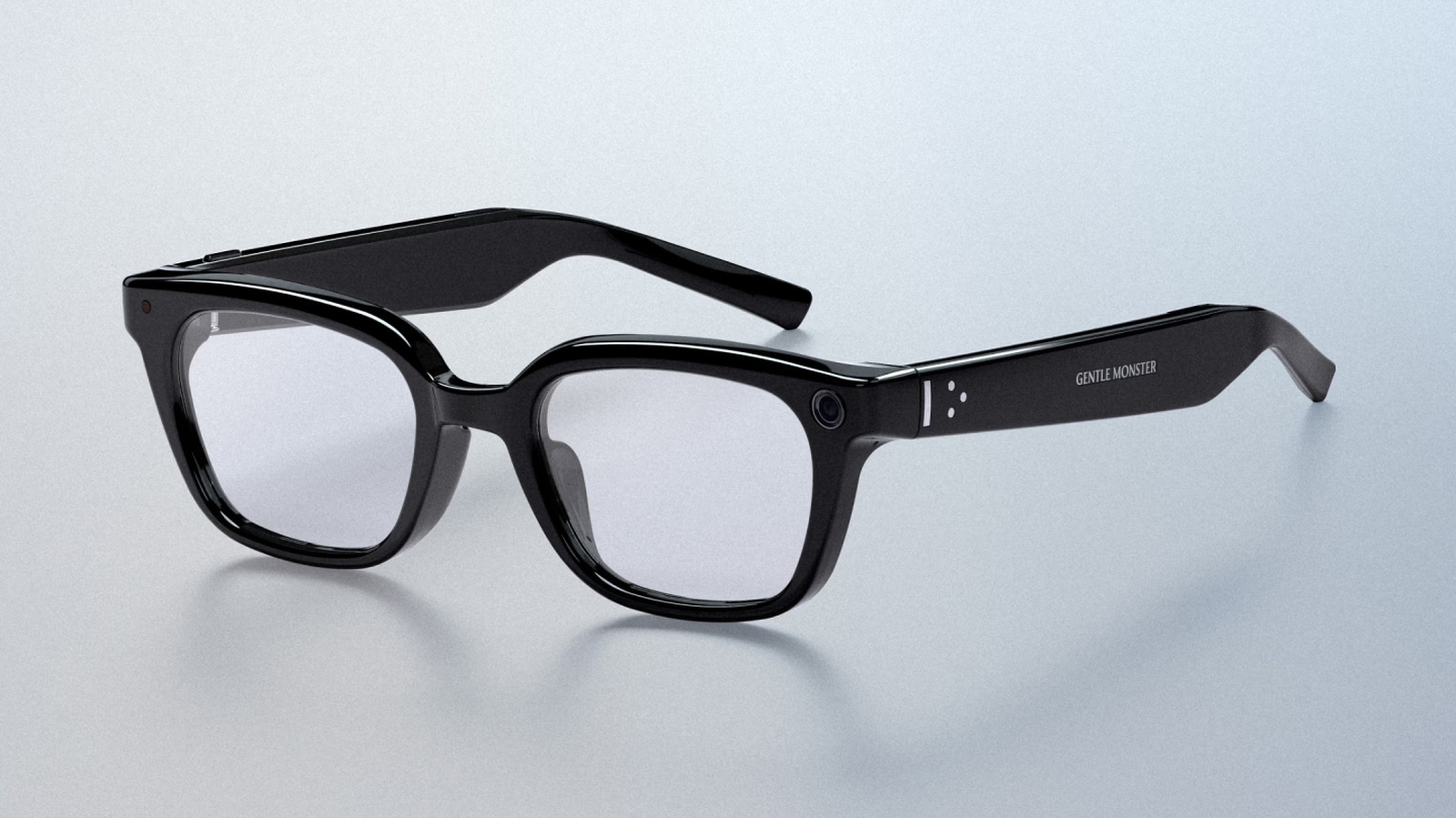
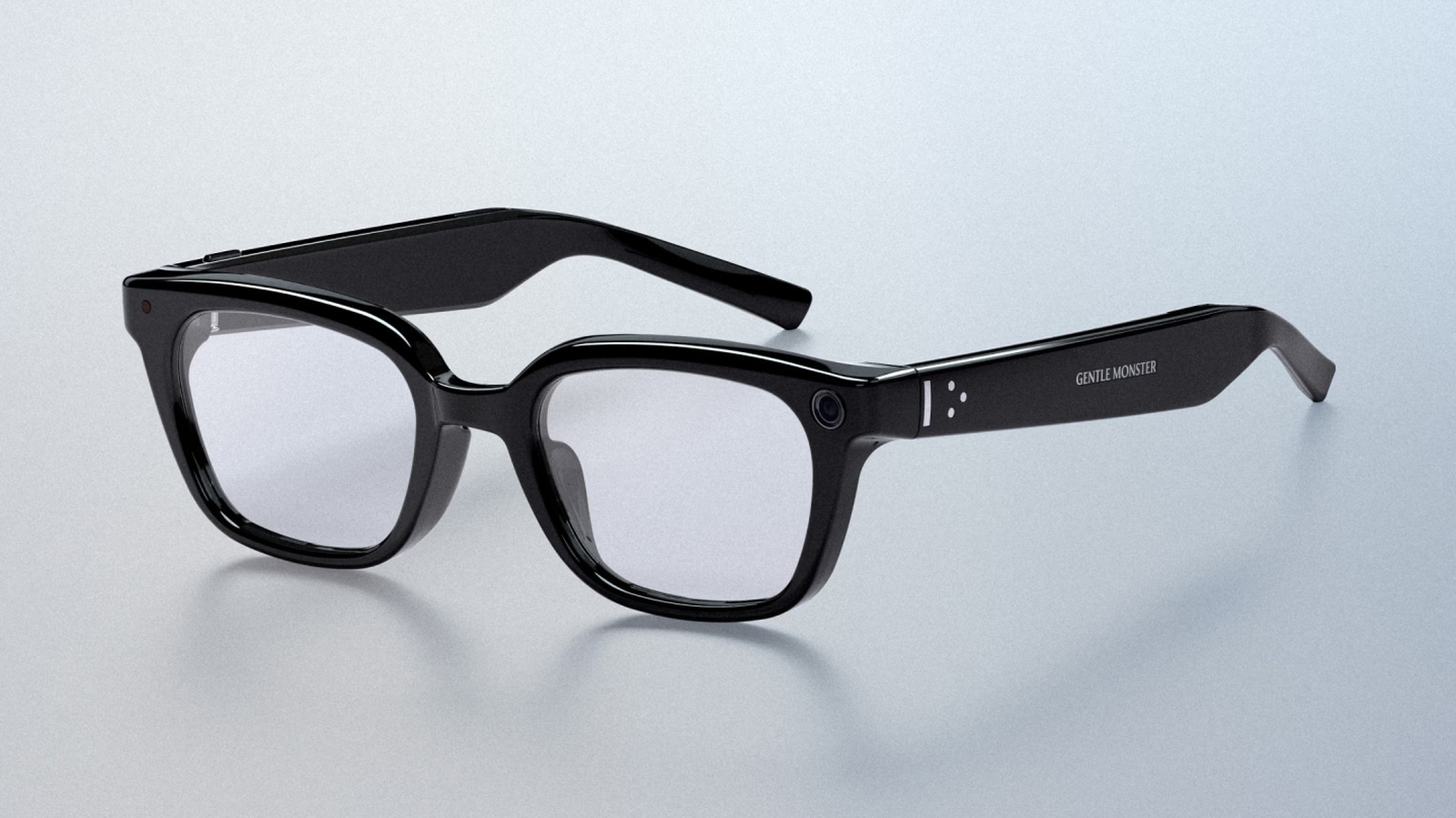
So far, Ray-Ban Meta has been something of a default answer in the smart glasses category, and nothing really has threatened its position. There’s a new entrant now — Samsung, which, in partnership with Google, has developed a new pair of glasses. One of the highlights of these glasses is their battery life. Currently, Ray-Ban Gen 2 Meta smart glasses are rated for up to eight hours of runtime with typical use. Samsung’s upcoming glasses, which debuted at Galaxy Unpacked on July 22, will last up to nine hours per charge, giving them an extra hour of battery life.
The charging case that comes with it holds another seven full charges. This shows that here too, the Samsung glasses are one-upping Meta’s. Meta’s Gen 2 case is good for 48 hours, which works out to about six full charges. Another important detail is that Samsung claims the nine-hour figure should hold up during active use. That covers Gemini Live, music, notifications, and video recording across a day. Meanwhile, Meta’s eight-hour claim is about “typical use,” though it elsewhere also adds that the battery drops to five hours when the glasses are used with continuous audio or voice calling.
As for the actual reason behind these gains, it likely comes down to optimization, since both Meta and Samsung glasses run on similar hardware, right down to the same Qualcomm Snapdragon AR1 Gen 1 chip.
Neither company has published battery capacities in mAh, making it difficult to tell whether Samsung’s advantage comes from a larger battery, software optimization, or both. Because smart glasses don’t have much space for large batteries, manufacturers also have to balance battery life with weight and comfort.
As for other features, Samsung’s glasses come in two distinct looks that are sourced from two separate partners. There’s Gentle Monster with a more fashion-forward take on a slim black frame. Then there’s Warby Parker with its brown, more everyday shape. The camera has long been a bone of contention among people uneasy with the very idea of smart glasses. Like Meta’s glasses, Samsung’s version has an LED that lights up while recording, so it would already satisfy a proposed law in Pennsylvania that would require a recording light on all smart glasses sold in the state. Neither lets you record if the LED is blocked or tampered with.
Another interesting feature is that users can ask the glasses to capture information from a whiteboard and organize it in Samsung Notes. Gmail, Calendar, and Maps all work from day one too. Now, Meta is not without app integrations here, since its glasses already tie into Google Calendar alongside messaging and music services. What it lacks is Google Maps, as even the Display model runs navigation on Meta’s own mapping rather than Google’s. The gap is one of five smart glasses features where Google may one-up Meta. Samsung’s glasses ship this fall, and pricing is yet to be announced.
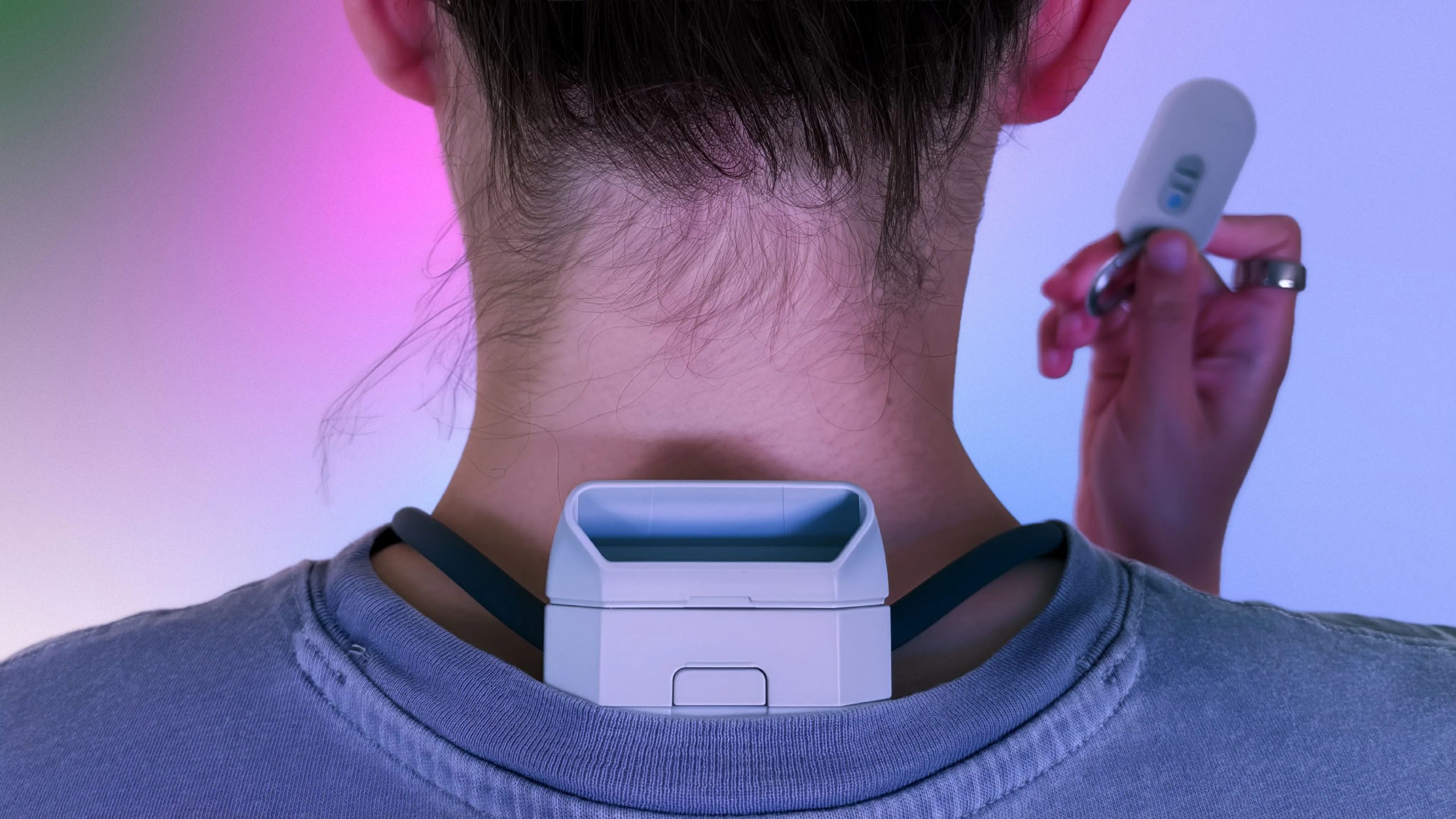

While Sony’s Reon Pocket Pro Plus is cool, there are some cons to consider.
Anna Gragert/CNET
Heat waves are increasing due to climate change, and tech companies are well aware. This summer alone, we’ve seen air care brands Dyson, Shark and Blueair release handheld fans. Starting in July, Sony Electronics also began shipping its $260 Reon Pocket Pro Plus in the US. Available in Japan since 2019, it’s a wearable heating and cooling neck device that looks like a space-travel accessory. I got a first look at this technology and have been testing it for over a week. This is everything you’ll want to know about it, along with my thoughts.
The portable, 8.7-ounce Reon Pocket Pro Plus is designed to be worn around your neck and under clothing, making it more discreet than other wearable and handheld fans. Using a stainless steel plate that comes in contact with the skin, you can manually adjust the device’s cooling or warming temperature range from 41 to 104 degrees Fahrenheit in the accompanying Android, iOS or WatchOS app or on the device itself.
You can switch between cooling, heating and smart modes.
Anna Gragert/CNET
There’s also the option to use smart mode, which you can select both in the app and on the Reon Pocket Pro Plus. In the app, you set the temperature range and, using multiple temperature and humidity sensors on the device and the included Reon Pocket environmental sensor that can be attached to a bag or belt loop, the Reon Pocket Pro Plus’s algorithm will automatically adjust the plate’s temperature to your preference.
While the Reon Pocket sensor tag is separate from the device, it measures the temperature and humidity of your surroundings and displays this information in the app. Because of that, you’ll want to ensure the sensor isn’t covered. It comes with a carabiner for this purpose, so it’s easy to attach to a purse or backpack.

The Reon Pocket sensor tag measures the temperature and humidity of your environment.
Anna Gragert/CNET
On the Reon Pocket Pro Plus unit, you can adjust settings without the app. There are start-stop, warm and cool mode, smart mode and plus and minus buttons, all with corresponding LED lights.
The device’s plate uses a Peltier element, which a Reon representative described as a semiconductor module. When an electric current is applied, it can cool on one side and heat on the other. To maximize cooling performance on the plate’s skin-contacting side, a high-volume fan, a vapor chamber and heat-dissipation fins are used to release the internal heat generated on the opposite side of the plate.
When I first tried it, I was surprised by how quickly the Reon Pocket Pro Plus could adjust its temperature. When switching between cool and warm modes on the device and in its app, I immediately felt the difference on my upper back. While this technology isn’t for full-body cooling, I found its effect on my upper back was enough to make a difference. I especially love the cool setting for a soothing effect.
Yet, the Reon Pocket Pro Plus isn’t waterproof, so it wouldn’t be ideal for intense sweating, and it shouldn’t be used under the hot sun for long periods. As the device was designed for cooling, you’d reasonably want to use it when temperatures are high, making this a potentially significant downside.

The “mode” button’s LED light changes color based on whether it’s heating, cooling or in smart mode.
Anna Gragert/CNET
There is a neckband that holds the device in place, so the thermal plate can make contact with your upper back’s skin. The neckband is adjustable and can be bent. There are also extension tips that can be removed to adjust the length.
The neckband protrudes from your clothing, with the most noticeable part of the device being the air vent that extends from the back of your shirt. It does come with a shorter air vent cover for clothing without a collar, like a T-shirt. When it’s in cool mode, warm air may be emitted from the vent, depending on the ambient temperature.
From the front, and depending on your shirt, the neckband may be visible.
Anna Gragert/CNET
I found the device fairly comfortable and lightweight, but I wish that the plastic neckband were covered in a softer material.
The device worked best when I was sitting down or not moving my upper back as much; otherwise, I had to adjust it to maintain contact with my skin during movement. So it makes sense to me that the Reon Pocket Pro Plus is intended for walking or hiking — not for rigorous exercise.

From the back, the device’s air vent does protrude.
Anna Gragert/CNET
What the Reon Pocket Pro Plus really has going for it is its low noise level, making it even more discreet. During my testing, I heard a slight noise when the device turned on. Later, when I used it outside in the heat (perhaps it was too hot for the device?), the fan’s sound increased, but it wasn’t obnoxiously loud.
As for battery life, on the cool setting in smart mode, you get up to 15 hours. When the 3,000-mAh lithium-ion battery is fully depleted, it takes about 3 hours, 20 minutes to charge. By comparison, the Dyson HushJet Mini Cool handheld fan has up to 6 hours of battery life on low speed and charges in 3 hours.
The main drawback for me is that the Reon Pocket Pro Plus is $260. While it doesn’t offer the same discreet, quiet technology or heating, the most expensive handheld fan I’ve tested is the three-in-one Shark ChillPill at $150.
The Reon Pocket Pro Plus includes free shipping, 30-day returns and a one-year warranty. You also get the Reon Pocket tag sensor, the short air vent for collarless tops and a USB-C charging cable.

You also get the sensor tag and shorter air vent for collarless tops.
Anna Gragert/CNET
I like Sony’s Reon Pocket Pro Plus, as it opens the possibilities for how quiet, low-profile and adaptable heating and cooling technology can be. I just wish it were more affordable and didn’t require as much adjustment during upper-back movement.
If you’re looking to stay cool this summer without breaking your budget, consider a handheld fan like Blueair’s new AlwaysCool, the ChillPill or HushJet Mini Cool. But if silence and discretion are important to you, and you have the cash, then the Reon Pocket Pro Plus is a cool investment (literally).

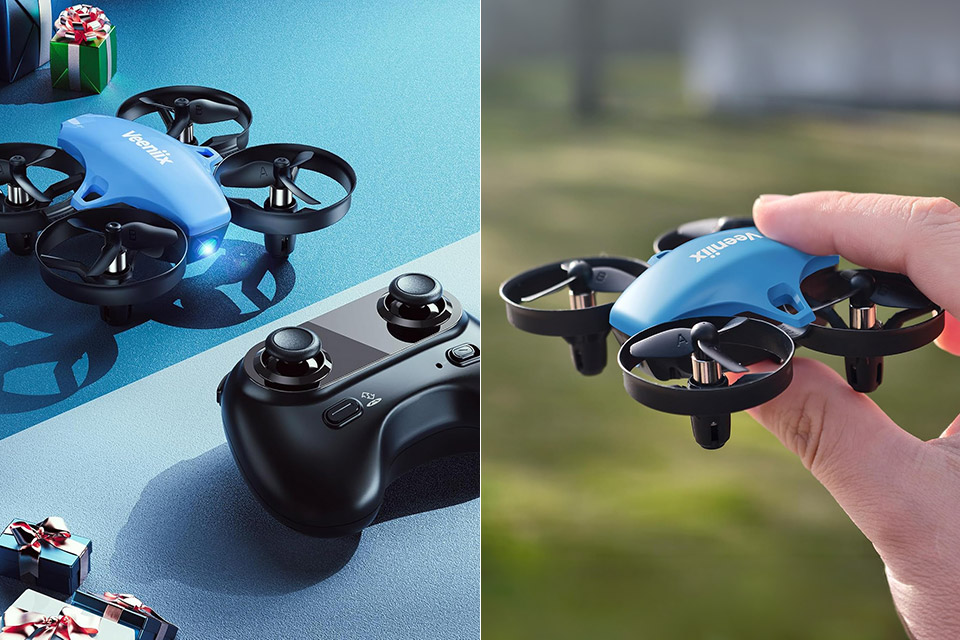
You’ve finally splurged and purchased a quality drone, charged the thing, and taken it outside, but gravity and nervousness take over and you watch, in slow motion, hundreds of dollars bounce off the pavement or be pulled up into a tree. It’s a pattern that helps to explain why so many people don’t make it past the first week with their new flying device. That’s where the Veeniix V995 micro drone, priced $33.99 (was $50), comes in, and it’s supposed to break the cycle for you.
The V995 is tiny, measuring 3.6 inches from end to end, 3.15 inches wide, and 1.25 inches tall, making it small enough to grip in each hand. At only 22.3 grams, it will take a good blow against a wall or floor to finish the session (as opposed to heavier drones, which will most likely just give up the ghost). Don’t worry, they all have full propeller guards to absorb any contact and keep the whirling debris away from your hands and other parts of your home. This means that indoor practice is no longer a definite formula for disaster.
It’s simple to use because the remote simply has one button to raise and lower it. Once you’re up and flying, altitude hold is a lifesaver because it keeps the drone at roughly the same height, allowing you to focus on flying rather than tinkering with the throttle. To begin, you can select from various flight modes, which has three different speed settings, and if you’re still getting the hang of things, headless mode is a game changer. Pushing the stick to the left moves the drone left relative to you, regardless of whatever direction it is facing. Furthermore, low-battery and out-of-range warnings offer you a clear heads up before the object falls from the sky or travels beyond the horizon and gets lost in the distance.
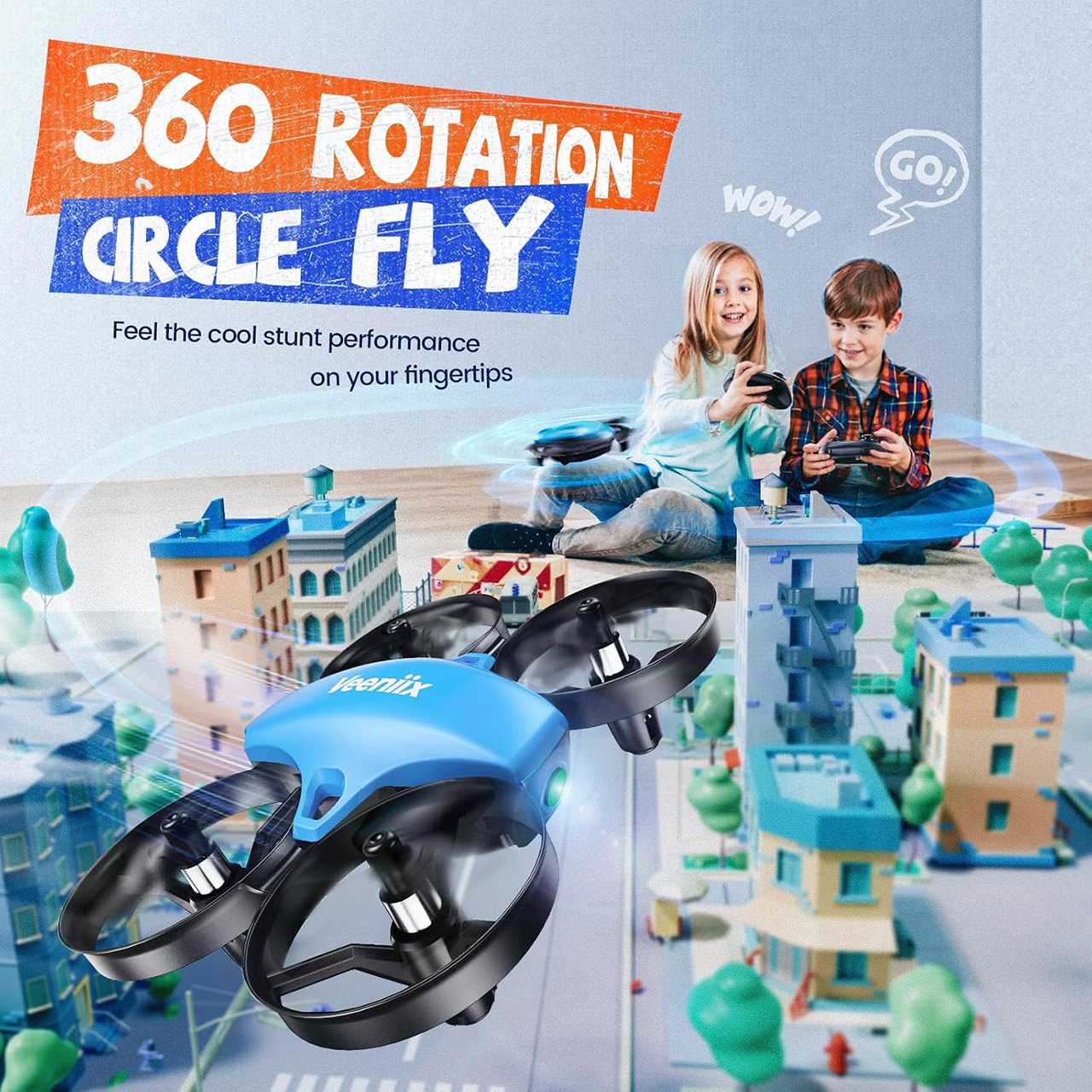
The V995 comes with three rechargeable batteries that provide roughly 7 minutes of flying time each, for a total of 21 minutes of flight time. You can just swap one out and continue flying while the others charge, and as a bonus, extra propellers are included in case one breaks. The remote is powered by standard AA batteries, which should last a long time unless you use it for extended game sessions. At least with this one, you don’t have to mess around with a phone app and all the difficulties that come with it; simply switch it on, connect the two, and you’re ready to go.
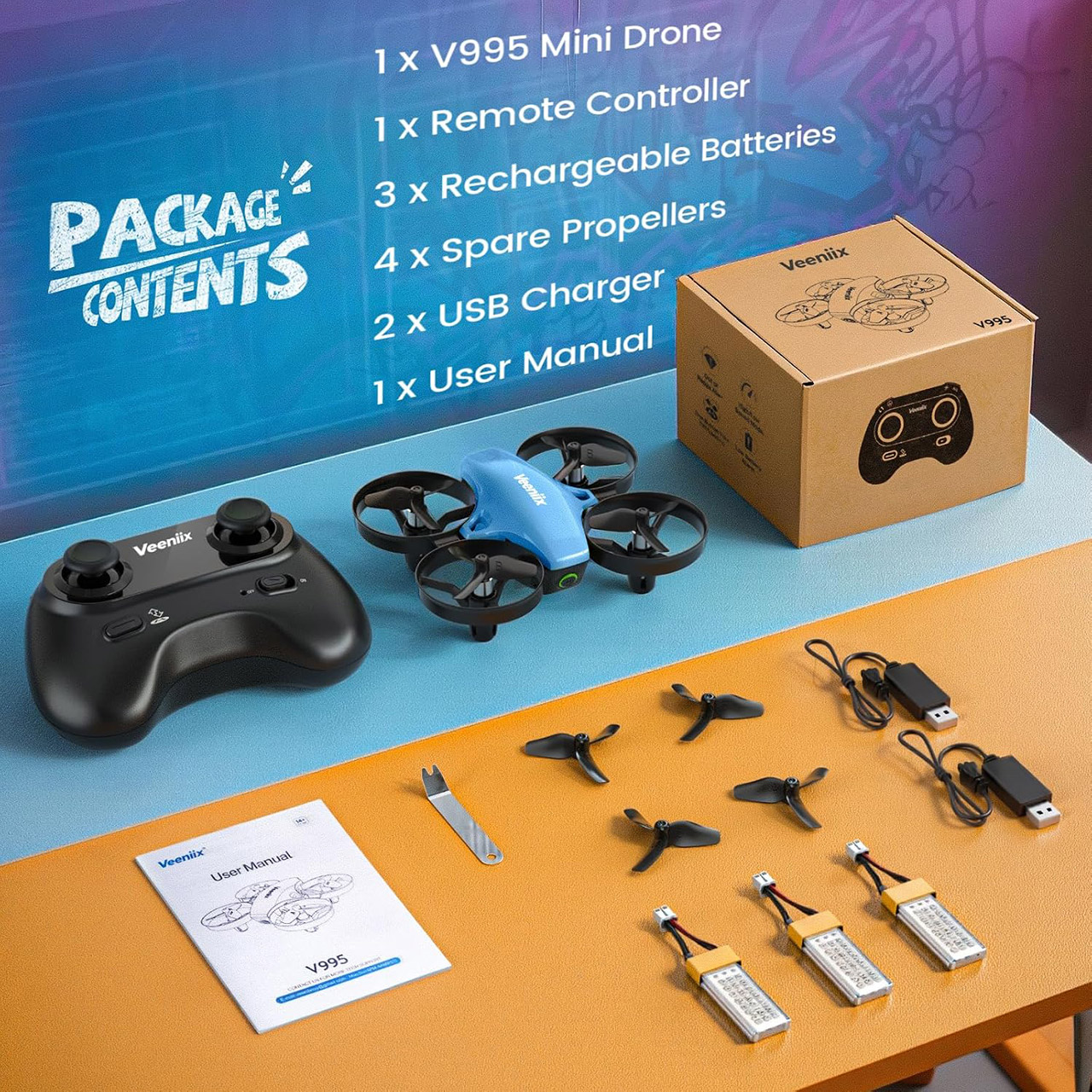
Once you’ve mastered the skill of simply hovering in position, you can use the same remote to perform legitimate feats like 3D flips, full 360 spins, and even flying in a great wide circle. They may appear luxurious, but they are still possible in a living room or even a backyard. Many users swear by the V995 as their go-to practice machine before moving to a larger, more expensive model. The fact that it’s small and well-protected means you can still have the occasional crash without breaking the bank, which is extremely beneficial if you’re just starting off.
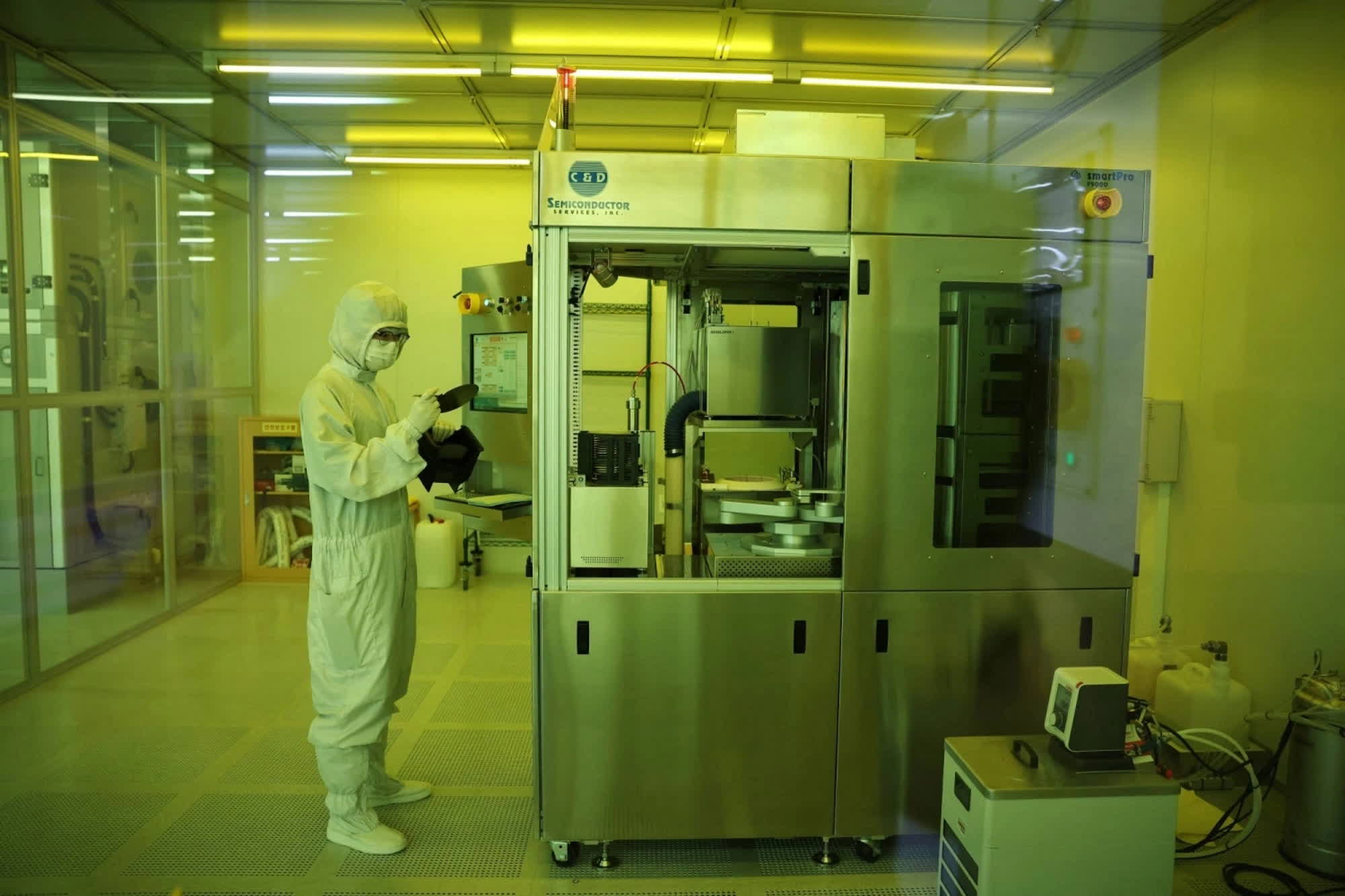
The big picture: Foundry corporations have repeatedly stated that the chip supply chain crisis is not going to improve anytime soon. Adding more manufacturing plants could help partially ease the industry’s pain, which is exactly what SK Hynix plans to do over the next few years. Let’s just hope the AI bubble doesn’t burst in the meantime.
SK Hynix just announced a massive new investment to strengthen its manufacturing capacity for both DRAM and NAND flash products. The South Korean corporation, one of the world’s three largest memory manufacturers alongside Samsung and Micron, is going to spend 54 trillion won ($38 billion) to build the new “Y2” and “M17” chip fabs in Yongin and Cheongju, respectively.
The new plants are part of a larger investment strategy totaling 700 trillion won. Yongin Y2 is the second of four new fabs planned for the Yongin Semiconductor Cluster. The plant will increase SK Hynix’s DRAM production capacity, with construction expected to begin in July 2027.
The first cleanroom in Y2 is expected to be ready by June 2029 and will house the equipment required to produce high-bandwidth memory solutions and “next-generation” DRAM chips. Meanwhile, construction of the Cheongju M17 plant is expected to begin in February 2027. The facility is scheduled to open its first cleanroom in December 2028, with production primarily focused on NAND Flash chips.
SK Hynix acknowledges that HBM memory is now one of the most sought-after chip formats in the world. Nvidia, AMD, and other vendors are struggling to secure enough capacity to keep developing and producing new GPUs and AI accelerators for data center hyperscalers. Analysts say that new data center plans are still on paper for the most part, while Big Tech companies continue to buy up every memory chip they can find.
SK Hynix also said that demand for NAND flash is surging rapidly. The focus is once again on hyperscalers and enterprise SSDs, which are being deployed to further expand the capacity and capabilities of AI services. NAND chips are used as cache storage in AI inference workloads, with agentic AI and physical AI applications such as robots expected to drive demand even higher.
Commenting on the newly announced construction plans, an unnamed SK Hynix official said that the company aims to become “a key partner in AI infrastructure, contributing to the stability of the global AI semiconductor supply chain.”

Memory manufacturers have long been criticized for their alleged unwillingness to build new manufacturing capacity, with SK Hynix predicting that the supply chain crisis will likely peak between 2027 and 2030. The new Y2 and M17 plants will certainly increase the company’s production capacity, although they should come online just as the market finally begins to settle down.

As part of a planned data center in Pecos County, Texas, Amazon is investing in an on-site power plant that could become the largest source of climate pollution in the United States, according to The New York Times.
The NYT says the plant would burn natural gas and is permitted to release 33 million tons of carbon dioxide per year — more than any other power plant in the U.S.
In a statement, an Amazon spokesperson confirmed that the data center will “be powered by new on-site generation that won’t raise electricity costs for Texas families.” (Data centers face growing political opposition for a number of reasons, including their effect on electricity costs.)
AI has already had a significant impact on Amazon’s carbon emissions, which it reported were up 16% last year — the wrong direction for a company that pledged to eliminate its carbon emissions by 2040. And that could get worse as Amazon and tech companies back the development of huge natural gas plants to support their power-hungry data centers.
The Amazon spokesperson said, “The world looks different now than when we co-founded the climate pledge,” while also claiming, “Our commitment hasn’t changed.”
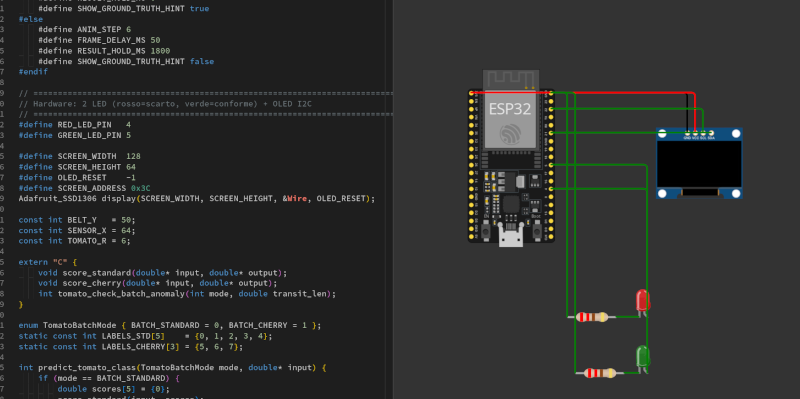
If you’ve ever worked with produce, you might know about grading. In addition to deciding if, say, a strawberry is good or not, they also have to sort them by color. Turns out, you don’t care if one package of berries is a bit redder than another, but you do care if one package has too much color variation. [Pmalfa31] applied an ESP32 and machine learning to grading tomatoes.
The system knows in advance if you are processing standard tomatoes or cherry tomatoes and uses two different sets of learned data depending on which you select. The program receives raw data from an optical sensor and then processes it to remove empty belt images, compute statistical information, and group readings for a single fruit together.
One thing we liked was the program’s heuristic checking of validity. It knows the approximate size of the tomato, so the code notes if the fruit seems too big for a cherry tomato or too small for a standard tomato. This reduces, but doesn’t eliminate, miscategorizations.
The code is a stack hog, so the program has to request a much larger stack. If you want to try it yourself, there is a simulator on the web available, so you don’t even need any hardware or tomatoes to try it.
Computers have lots of uses on a modern farm.
The Mustang has never had a shortage of admirers. For decades, the pony car has carried the performance banner for the entire brand, becoming the car people reached for whenever they wanted something that looked and sounded aggressive. However, the focus on one nameplate meant a lot of genuinely great machines got buried in its shadow, even though some were actually better muscle cars than the Mustang by almost every measure that actually matters on a road or a racetrack.
Throughout the 1960s and 1970s, while buyers lined up for Mustangs, Ford was quietly dropping the same engines (built by the same engineers and often with the same ambition) into other platforms. Some of these cars packed bigger engines than the Mustang offered that same year, yet many cost less to buy today, which says less about their quality and more about how thoroughly the Mustang dominated the conversation. A few have quietly appreciated in value while collectors chased more obvious targets, while others were rarer right from the factory.
That’s the essence of this list: pulling these cars out from under that shadow. The selection covers a range of decades, body styles, and engine families, but the common thread through all of them is that each one has great performance without leaning on the Mustang’s name.
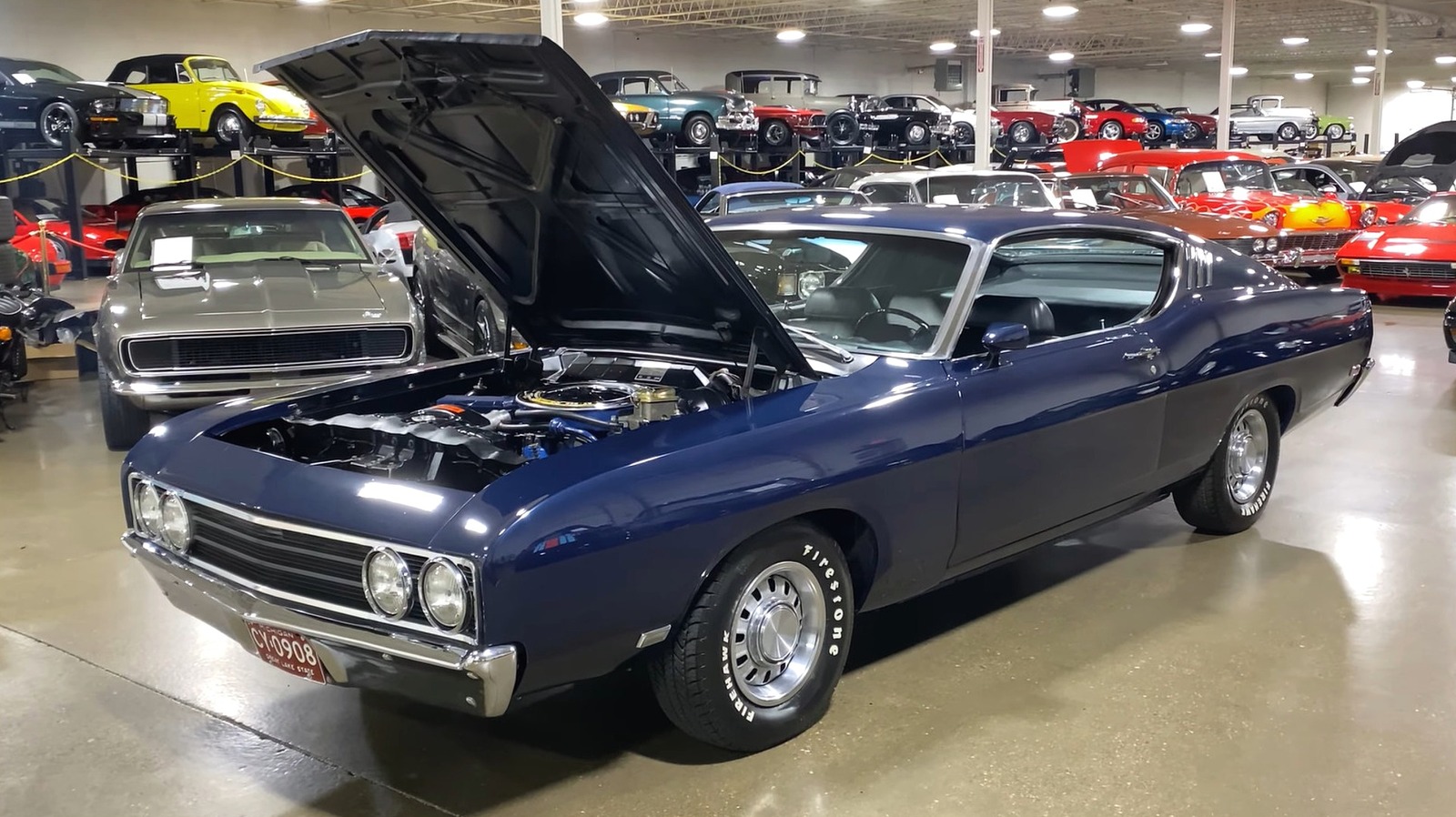
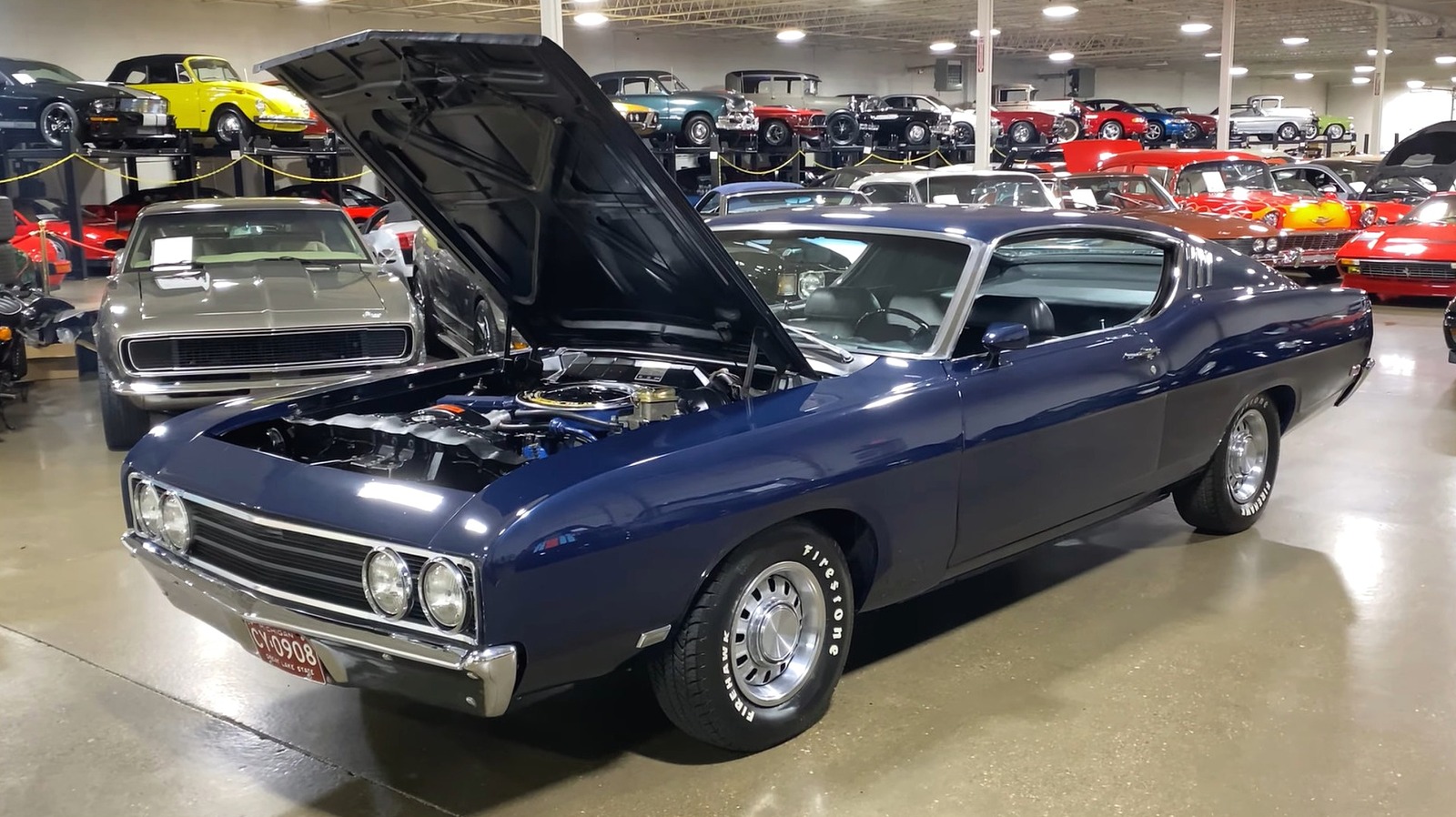
One of the coolest muscle cars of 1969 is the Ford Torino Talladega, and it exists purely because of the NASCAR rulebook. It all happened when Ford was required to generate around 750 street-legal units of the Torino Talladega to satisfy stock car racing’s homologation requirements. To meet that obligation, Ford and Holman & Moody built a full-size muscle car wrapped in aerodynamic bodywork that drew obvious comparisons to the Dodge Charger Daytona and looked nothing like anything else wearing a Ford badge that year. Each car left the factory finished in one of three colors: Royal Maroon, Wimbledon White, and Presidential Blue.
Despite carrying a unique “T” badge, the Talladega shared its roots with the standard Torino lineup, though in execution it felt closer to a purpose-built fastback. It had reshaped rocker panels, a recessed grille sitting flush with the bodywork, a reworked nose cone, revised exhaust routing, and tail-mounted wings that worked together to cut through air far more efficiently than the production Torino it was derived from. Under that stretched and sculpted shell sat a 7.0-liter 428 Cobra Jet V8, which was good for 335 horsepower and 440 lb-ft of torque, having taken over from the outgoing 427-cubic-inch engine. Power reached its rear wheels through a three-speed Cruise-O-Matic auto, while its Wide Oval tires kept the car planted at the contact patch and a track-tuned suspension setup held everything together, as the Talledega pushed toward speeds of 130 mph.
The Ford Falcon XB GT is one of the coolest muscle cars to come out of Ford Australia, but beyond a shared honeycomb pattern stamped into the grille, it bore little connection to the Mustang. It was wrapped in proportions more aggressive than almost anything else on the road at the time, and Ford never officially brought it to American shores. Engine choices ran from a 351ci Cleveland V8 down to a 302ci V8, with a four-speed manual top-loader gearbox sitting behind either configuration. Backing it all up was a distinctive Glenroy exhaust with an organ-pipe note that announced its arrival well before anyone laid eyes on it, and once they did, the sight of its two chrome hood scoops and round Bathurst headlights made it so dashing.
On a proper setup — a Weiand-branded supercharger, four-valve cylinder heads, and a pair of Holley four-barrel carburetors working together — the XB GT could be tuned to produce as much as 540 horsepower, putting it well ahead of most American muscle cars from the same era. Still, none of that would have carried much weight outside Australia if Mad Max hadn’t shown the car in the early 1980s. That single film appearance is what really locked it in its collectible status for good. If you happen to come across one today, know that there’s a real chance it could be worth a small fortune down the road.
Think of this next Ford muscle car — the 1968 Mercury Cougar GT-E –- as a more elevated take on the XR-7 trim, finished in Cardinal Red color and set apart by a grille finished in matte black, raised dome-style hood scoops, and a set of four exhaust outlets, putting it in the same category as the Mustang and the Thunderbird. With production landing at roughly 397 units built and even a cameo in a James Bond film, it still remains one of the rarest and most overlooked muscle cars to come out of Ford’s family tree.
Powering it all was the 427 side-oiler, a 7.0-liter V8 from Ford’s FE-series lineup that would later influence the design of engines such as Boss 429 and 302. It produced 390 horsepower, fed by a Holley four-barrel carburetor, running a hydraulic camshaft, and exhaling through an exhaust manifold cast in iron before exiting via the quad tips at the back, though Ford eventually swapped it for the 428 Cobra Jet, which brought output down to around 340 horsepower. Plus, some of those 428-equipped cars came paired exclusively with a four-speed manual Top Loader instead of the three-speed Select-Shift Merc-O-Matic automatic gearbox and notably skipped air conditioning entirely despite the heat these engines were known to generate.
Next is the Ford’s Torino Cobra, and for this muscle car, they made over 7,675 examples, each one wrapped in a body wearing a grille finished in matte black, Cobra badging, a hood-mounted shaker scoop available as an add-on, and a race-ready suspension package with specially tuned rear shocks that made the car feel planted in a way the Mustang’s smaller chassis never quite matched, and yet, despite all that it never got the recognition it earned when it rolled out in 1970.
Every unit left the factory with one of Ford’s 385-series engines already installed –- specifically the 429 Super Cobra Jet, mounted up front in a cast-iron block, fueled through a Holley four-barrel carburetor from the 4150 lineup, and backed by lifters built for solid-cam operation, guide-plate-equipped rocker arms, properly set valve clearances, and iron exhaust manifolds routing spent gases through a double two-inch exhaust system internally.
The power produced landed at 375 horsepower and 450 lb-ft of torque whether buyers chose the basic close-ratio Ford Toploader four-speed manual or opted for the three-speed Select-Shift Cruise-O-Matic automatic instead; on top of that, if you get the available drag-oriented package along with the Ram Air system, that number can push past 450 horsepower, all fed from a 22-gallon tank. With a sprint to 60 mph of just 5.8 seconds on rear wheels, it stood as one of the quickest muscle cars of its decade.
The Mercury Cougar Eliminator is a classic slice of American muscle that’s hard to go wrong with, and Ford kept in production for just 48 months –- 1969 saw 2,250 units built, then 2,268 examples in 1970 –- across a palette of just four colors, each fitted with a hood scoop, rocker panel treatment, and front spoiler that announced its intentions from the front bumper.
On the power front, buyers entered at a 351-cubic-inch Windsor V8 putting out 290 horsepower routed through a three-speed manual gearbox, with a four-barrel carburetor feeding it and a choice of Toploader four-speed or Select-Shift automatic for those who want something different. From there, the lineup climbed to a 6.5-liter 390 found in roughly 260 Eliminators, which was good for 320 horsepower when paired with a three-speed manual as the default choice, then a 351 4V produced 300 horsepower, and finally the 428 Cobra Jet (just 302 examples) made 335 horsepower thanks to a beefed-up crankshaft and reinforced rear shocks that handles the extra load behind the optional C6 automatic or the standard four-speed manual.
An optional Boss 302 also made the order sheet paired with a four-speed manual for a good 290 horsepower, though that engine was known for its issues with the piston skirt. Rust was another concern, appearing first in areas like the quarter panels and front fenders, much like the mustang –- a comparison that holds up well since parts interchange between the two so easily, especially given the fact that the Eliminator measures just three inches longer.
Every car on this list had to meet a few core criteria, starting with a genuine connection to Ford’s performance lineage whether it rolled off the line under the Ford badge itself or came from a Ford-owned subsidiary. From there, styling and presence came into play, because a true muscle car needs to look the part: blacked-out grilles, hood scoops, quad exhaust tips, and body lines that echo the Mustang’s own design language were all factored heavily into separating genuine muscle cars from vehicles that simply happened to carry a big engine. Just as important, though, was distance from the Mustang itself. Each pick needed real separation, whether through a different platform, a different purpose, or an entirely different spot in the market.
To keep the list accurate, every spec and performance figure was cross-referenced across trusted automotive sources like Hemmings, Hot Rod, Motor Trend, AutoEvolution, and Hagerty. This mattered especially for cars from the late ’60s and early ’70s, when production numbers and factory ratings tend to shift from one source to the next; in those cases, whichever figure appeared most consistently across multiple outlets was the one used.
The car’s engineering also carried equal weight in the final judgment. Details like carburetor setups, transmission options, and the underlying architecture underneath each car all played a role in determining whether it truly belonged in the same conversation as Ford’s most celebrated performers.





Zack Polanski: an incitement to murder Nigel Farage?


Frugal Friday’s Workwear Report: Cap-Sleeve Pointelle Crewneck Sweater


Crypto PAC spending tops $2M in Michigan House race


DTCR: Deleveraging And A Hedge Fund Collapse Point To A Possible AI Bottom


ESET tracks rise in malicious AI skills and adaptable malware


Weekend Open Thread: Mattifying Sunscreen


XRP Ledger urges node upgrade after manifest flood


Jordan Coyle & Cordiamo take Laya Arena Stakes at RDS


Can Astrology Help Find Gold and Silver Trends? A Financial Astrology Guide

US Tech Stocks See Largest 5-Week Inflow in History: Can Nasdaq Break Its Downtrend?

US stocks: Dow closes at record on Mideast optimism; SpaceX, AMD drag Nasdaq

Tourist plane on sightseeing flight in Peru crashes into a field, killing all 13 people on board


Page Not Found | WIRED


Reform UK And Greens Sink To Lowest Favourability Ratings To Date


Nvidia Stock Climbs 2.5% as Chip Sector Rally Builds Ahead of AMD Earnings, Nvidia’s Own Report Looms


Trump says he is cancelling strikes on Iran subject to ‘rapidly’ making deal


Polymarket targets $20 billion valuation as competition heats up in prediction market sector


OpenAI, Anthropic AI agents targeted real people and systems in cyber tests


OpenAI teases Astra, its next major AI model, after it solves 10 long-standing math problems

7 Best Sci-Fi Series of 2026 (So Far), Ranked


You must be logged in to post a comment Login