A new NYT Strands puzzle appears at midnight each day for your time zone – which means that some people are always playing ‘today’s game’ while others are playing ‘yesterday’s’. If you’re looking for Thursday’s puzzle instead then click here: NYT Strands hints and answers for Thursday, April 30 (game #788).
Strands is the NYT’s latest word game after the likes of Wordle, Spelling Bee and Connections – and it’s great fun. It can be difficult, though, so read on for my Strands hints.
Want more word-based fun? Then check out my NYT Connections today and Quordle today pages for hints and answers for those games, and Marc’s Wordle today page for the original viral word game.
Advertisement
SPOILER WARNING: Information about NYT Strands today is below, so don’t read on if you don’t want to know the answers.
Article continues below
NYT Strands today (game #789) – hint #1 – today’s theme
What is the theme of today’s NYT Strands?
• Today’s NYT Strands theme is… I ❤️ Hawaii
NYT Strands today (game #789) – hint #2 – clue words
Play any of these words to unlock the in-game hints system.
Advertisement
PUKE
PEEL
DAME
PINE
LAME
PLEAD
NYT Strands today (game #789) – hint #3 – spangram letters
How many letters are in today’s spangram?
• Spangram has 11 letters
NYT Strands today (game #789) – hint #4 – spangram position
What are two sides of the board that today’s spangram touches?
First side: left, 8th row
Last side: right, 3rd row
Advertisement
Right, the answers are below, so DO NOT SCROLL ANY FURTHER IF YOU DON’T WANT TO SEE THEM.
Advertisement
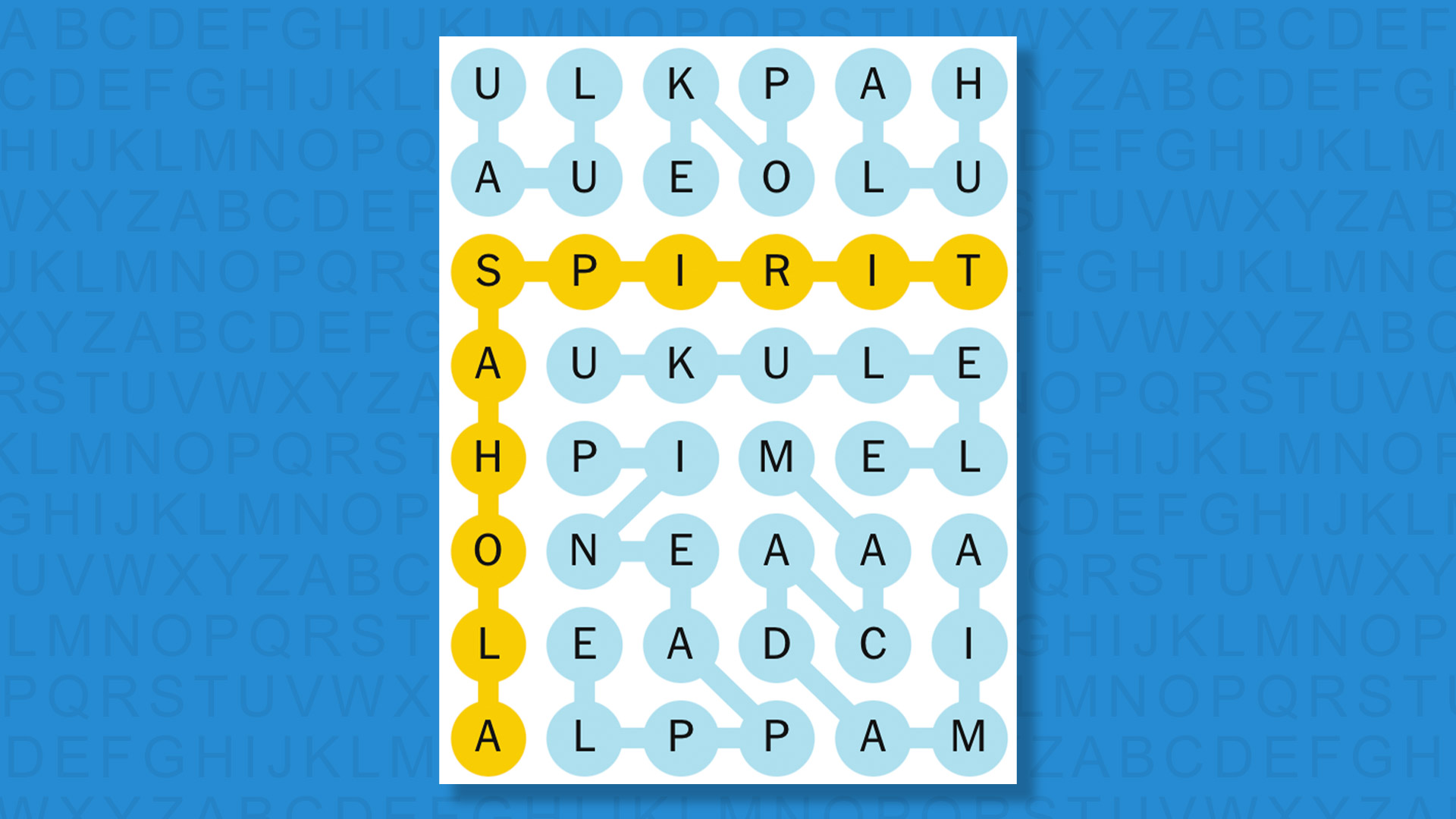
NYT Strands today (game #789) – the answers
(Image credit: New York Times)
The answers to today’s Strands, game #789, are…
POKE
HULA
LUAU
UKULELE
PINEAPPLE
MACADAMIA
SPANGRAM: ALOHASPIRIT
My rating: Easy
My score: Perfect
Happy Lei Day, Hawaiians.
Sign up for breaking news, reviews, opinion, top tech deals, and more.
Having never been to Hawaii — the closest I’ve got is a shirt I owned in the late 1990s — I feared I would struggle my way around today’s board, but the reality was that it could not have been easier.
It’s a testament to how much Hawaiian culture has permeated around the globe that I was familiar with all of today’s words, with the exception of MACADAMIA — which I did not know had a strong link to the islands (I thought they were Australian). It was also a very tricky word to piece together and took me a couple of attempts to get in the right order.
Advertisement
Yesterday’s NYT Strands answers (Thursday, April 30, game #788)
DRIZZLE
MIST
STEAM
VAPOR
HUMIDITY
AEROSOL
SPANGRAM: CONDENSATION
What is NYT Strands?
Strands is the NYT’s not-so-new-any-more word game, following Wordle and Connections. It’s now a fully fledged member of the NYT’s games stable that has been running for a year and which can be played on the NYT Games site on desktop or mobile.
I’ve got a full guide to how to play NYT Strands, complete with tips for solving it, so check that out if you’re struggling to beat it each day.
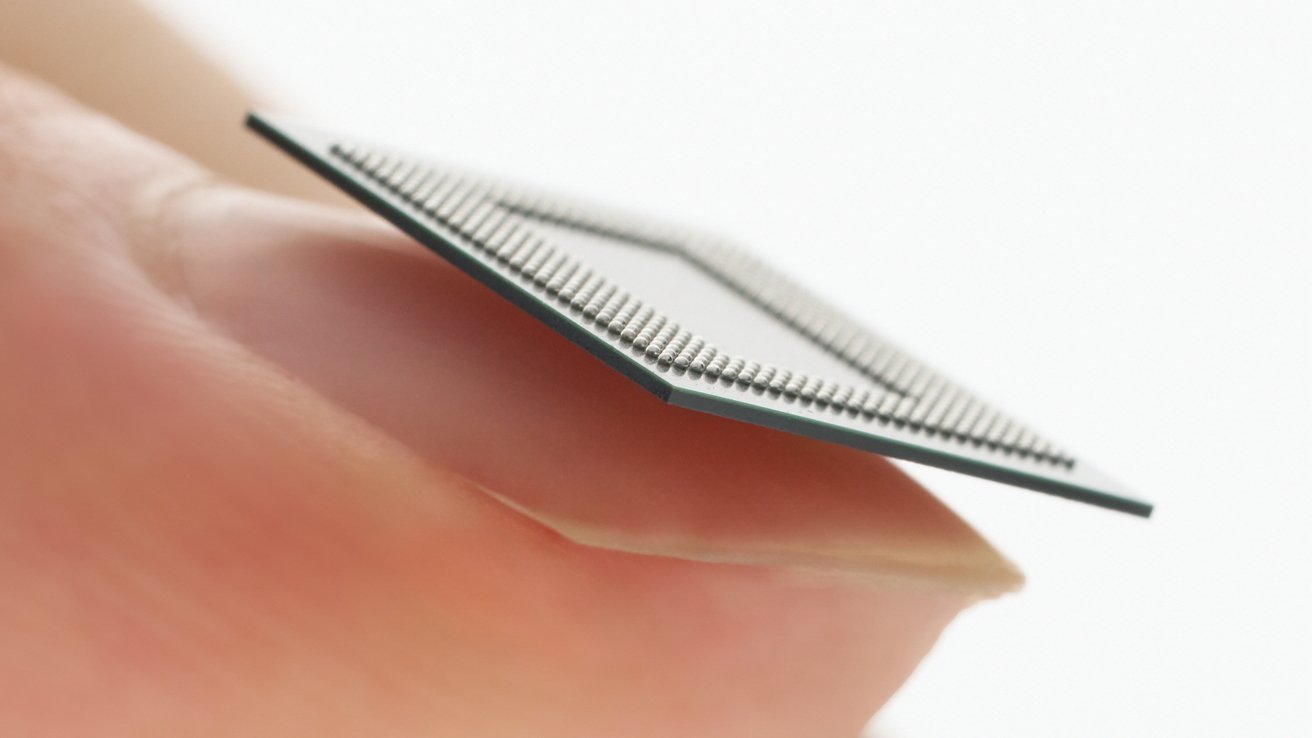
Apple’s ability to prevent memory prices from increasing the cost of iPhones and other products won’t last forever. Tim Cook has warned that it’s only going to get harder to do so.
The consumer tech industry is struggling to deal with the cost of memory, with supplies choked by the extreme demand of AI infrastructure build-outs. While Apple has managed to stop the cost impacting the price of its products so far, even it has its limits.
Asked on the analyst conference call following its Q2 financial results release, incumbent CEO Tim Cook has revealed that pricing has affected the company’s bottom line.
The December quarter had a minimal impact due to memory pricing, Cook said, warning at the time that it would be more of a concern in the March quarter. Apple did see a bigger impact in that March quarter, but Apple managed to offset the cost by carry-in inventory.
Advertisement
With the issue not going to die down anytime soon, Cook added an extra warning that there will be a significant memory cost effect in the June quarter. However, even that will benefit from carry-in inventory offsetting the cost.
Beyond the June quarter will be a problem, with Cook warning of a further increase in impact. It’s unknown what will happen at that time, but there’s only so much inventory available to insulate the company from dealing with them.
Cook concluded that Apple is continuing to evaluate the situation, and it has a range of options available to it.
When Apple released its latest smartwatches late last year, I was convinced that the Apple Watch SE 3 was the better buy for most users because it offered excellent value. I still stand by that, but hear me out: when the Series 11 is heavily discounted, I would recommend it over the SE 3, even if the latter was also on sale.
As I said, the price difference is still significant, but the additional features you get with the Series 11 makes it the better-value option for iPhone users right now.
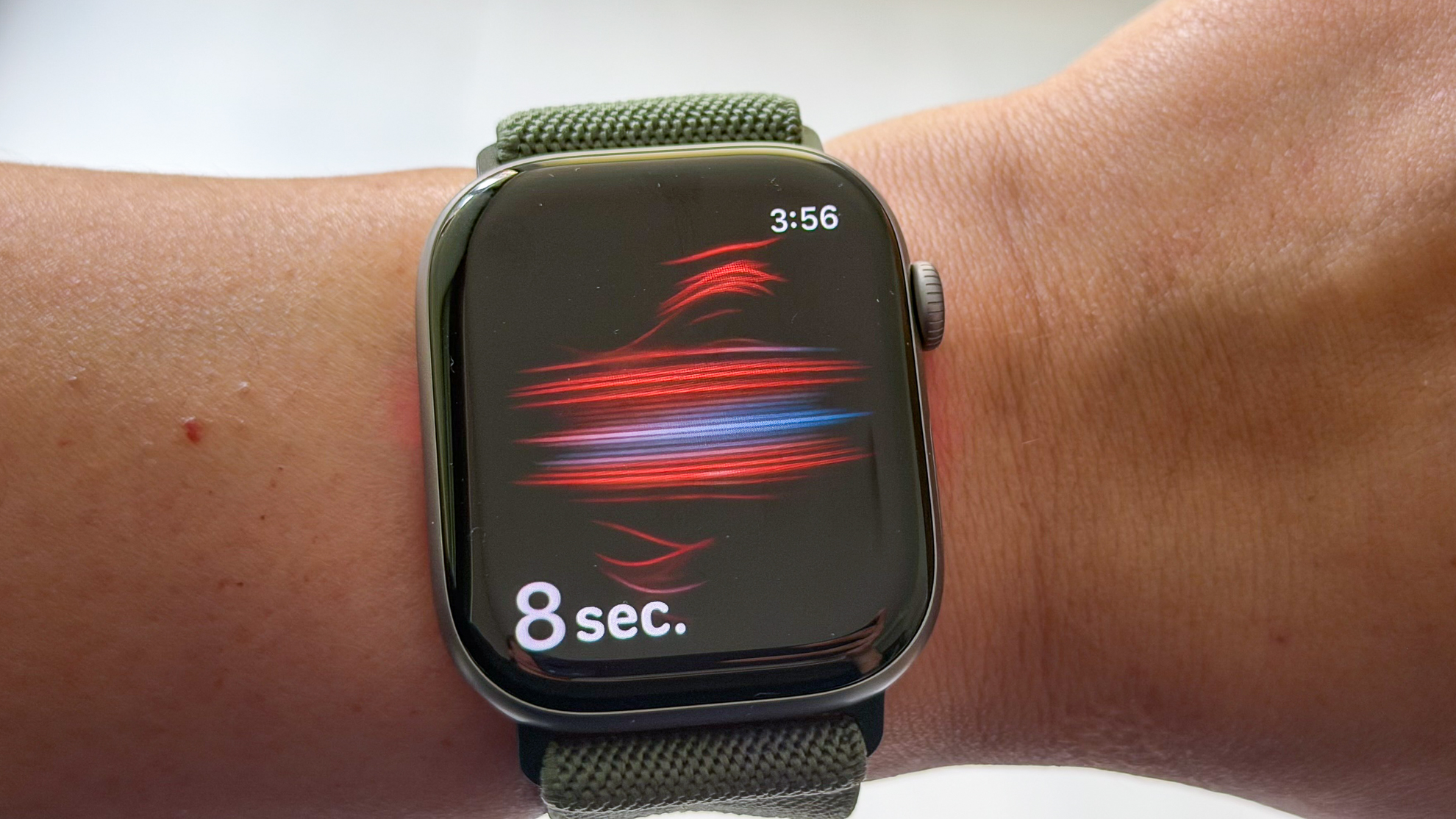
The other health features you’ll get with the Series 11 that the SE 3 misses out on are blood oxygen monitoring, sleep apnoea detection and irregular heart rhythm notifications (aka the ECG feature).
Another minor addition the Series 11 gets you is 5G connectivity if you opt for the LTE version (which is also discounted by up to 21% off). This really shouldn’t be that big a deal though as smartwatches don’t need super-fast connectivity and, in any case, 5G support on smartwatches is something telcos still don’t offer in Australia, but Apple is working towards that.
My Apple Watch 11 taking a blood oxygen reading (Image credit: Sharmishta Sarkar / TechRadar)
Alongside all that, it offers everything you need to encourage you to exercise more, tracking a wide variety of activities that, I admit, even the SE 3 will do, but the battery life on the Series 11 exceeds the SE 3’s by 25%, which you can stretch even further by using the Low Power mode.
Advertisement
Our Apple Watch Series 11 review gave it a very respectable four stars out of five, calling it “a mainline Apple Watch that can go the distance.” While it offers “no major performance gains year over year,” it provides a “bigger battery” and a “more durable display that’s still vibrant and rich.” This bigger display now makes it a lot easier to use the Messages app on the Apple Watch. I personally wear the 46mm version and handwriting a message on the screen is so much easier now.
Moreover, watchOS 26 gives it a fresh feel that truly highlights its health features, especially the new Sleep Score functionality. All this makes it the best smartwatch for iPhone and quite unbeatable at this price.
If you don’t have any heart health issues, then the SE 3 will suit you just fine, but if you need a reliable health monitor, I think the Apple Watch 11 is the much better option.
In this week’s roundup of the latest news in online speech, content moderation and internet regulation, Mike is joined by Jess Miers, law professor at University of Akron School of Law. Together, they discuss:
Advertisement
Support the podcast by joining our Patreon, with special founder membership available until May 28th.
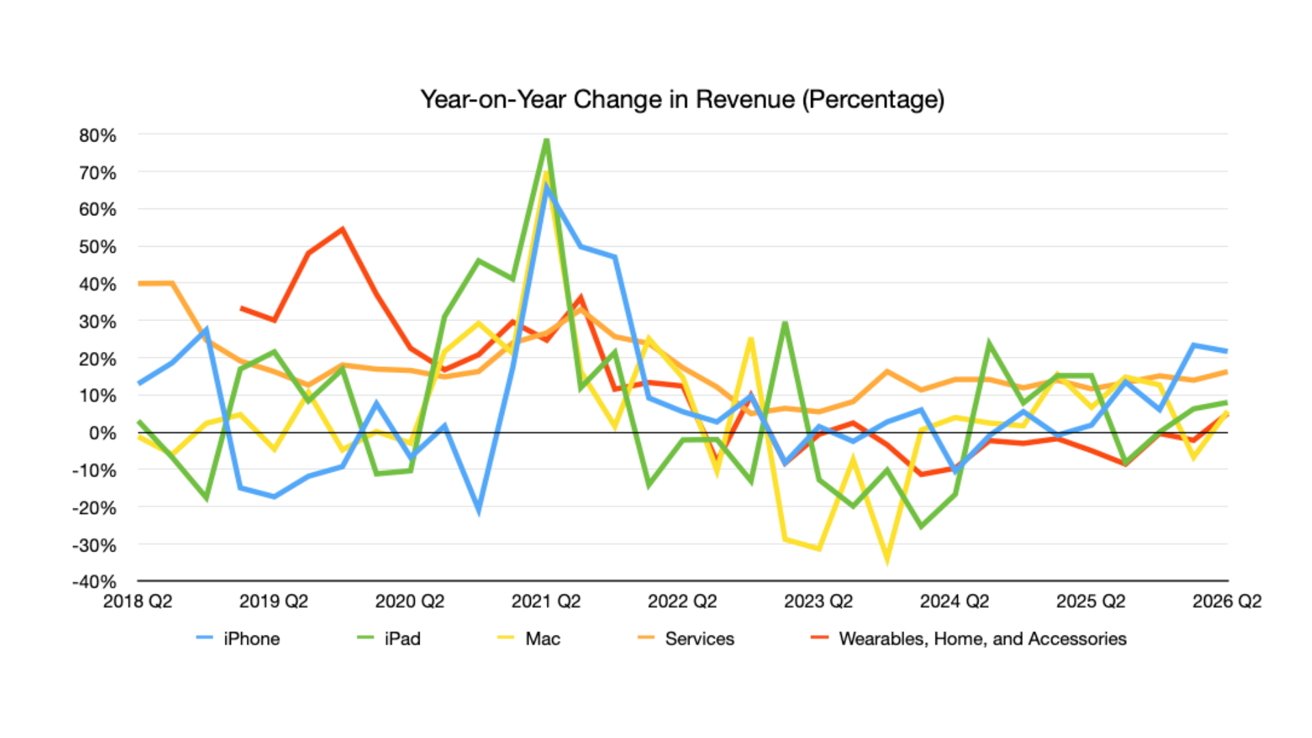
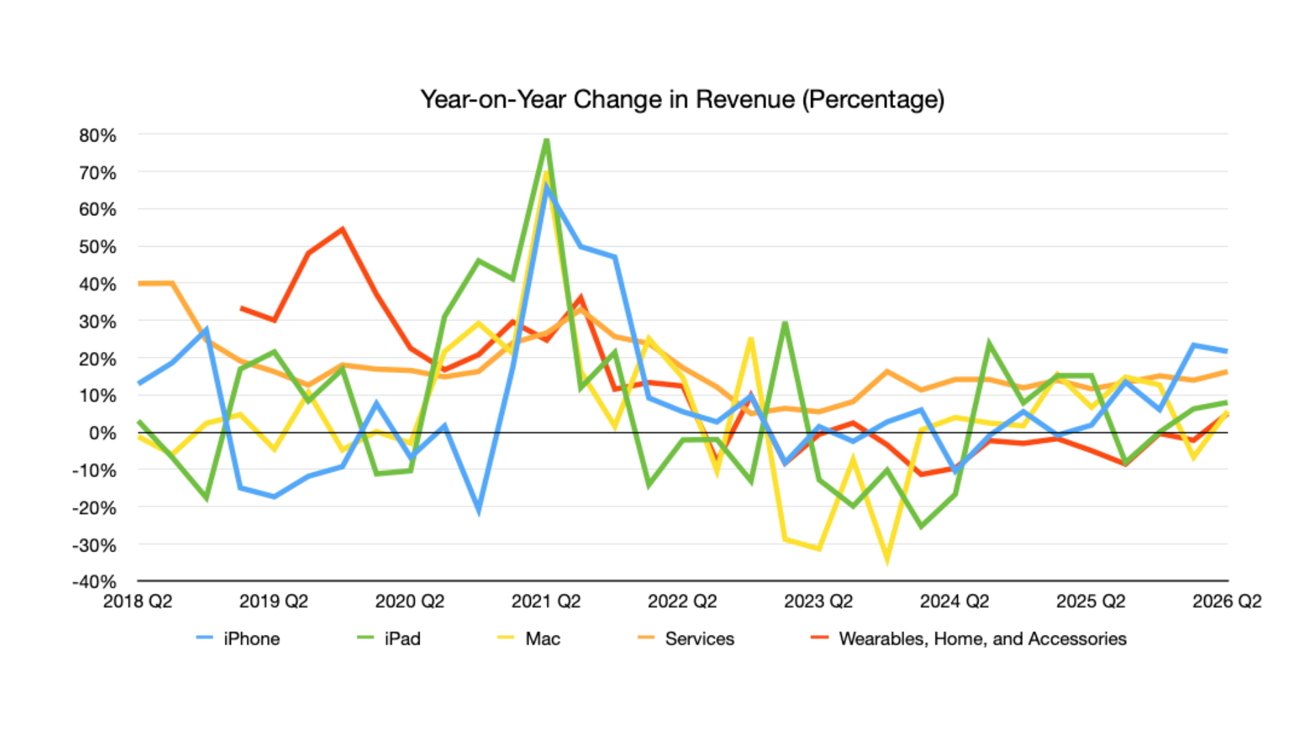
There are no signs of Apple slowing down in Q3 2026, as it is likely to see even more year-over-year growth in spite of a tough comparison for iPad.
Apple just had a record-breaking March quarter that brought in $111.2 billion in revenue. It seems that momentum won’t be slowing going into Q3.
Apple Chief Financial Officer Kevan Parekh shared forward-looking statements for Q3 2026 that estimate up to 14% to 17% growth year-over-year. That would mean growth from 2025’s $94 billion up to $110 billion for 2026.
In addition to that growth, Apple expects a gross margin of 47.5% to 48.5%. Operational expenditure is between $18.8 billion and $19.1 billion.
Growth in China has also been a big lift for Apple due to continued demand for the iPhone 17 lineup. Apple CEO Tim Cook attributed this to having devices that resonate with people, not necessarily better government relations.
Apple’s YoY growth continues
There’s a chance that Q3 won’t have any new hardware, and that includes the long-expected iPad with A19. Parekh specifically called out that the iPad would have a tough compare in Q3 due to the year-ago release of the iPad with A16.
Advertisement
That’s the closest we’ll get to Apple saying that there won’t be any new iPads without an explicit confirmation.
Services are expected to see similar year-over-year growth. That could be aided in some fashion by the new App Store contract system for annual subscriptions.
The results for Q3 will be revealed at the end of July, which will likely be Cook’s last earnings call. He’s ending on a nice round number of 90 total earnings calls in his career at Apple.
After two decades in tech, he now makes tiny collectible figures of pop culture characters
After spending two decades climbing the corporate ladder, including a stint at a FAANG company, 40-year-old Singaporean GT has found himself on a very different path.
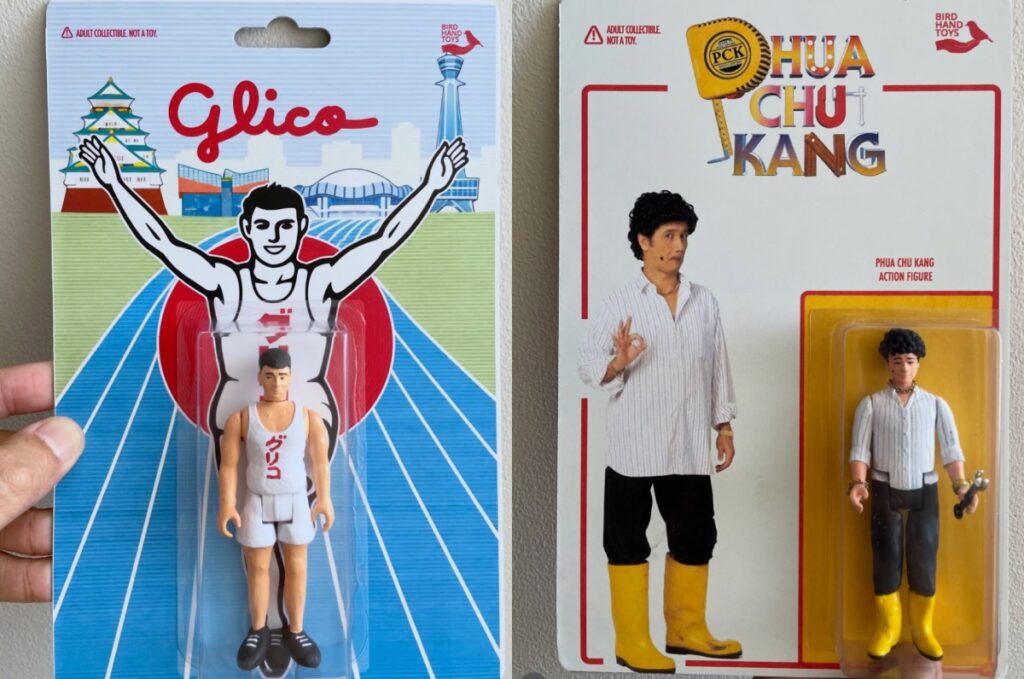
The former tech worker has turned a hobby into a small business, making tiny, handmade action figures inspired by pop culture characters, from the Glico man to even local TV icon Phua Chu Kang.
Today, GT runs Bird Hand Toys from his home in Australia, where he sculpts and assembles 3.75-inch “bootleg” figurines based on movies, TV shows, and nostalgic cultural references.
A hobby that found him
Bird Hand Toys’ Glico man and Phua Chu Kang handmade action figures./ Image Credit: Bird Hand Toys
GT’s path into toy-making was anything but deliberate.
Born and raised in Singapore and educated in Australia, he spent 15 to 17 years moving through corporate roles before eventually landing at a major global tech firm. By then, he and his wife had already built an ideal Singaporean life: stable jobs, a home, a dog, and a strong network of family and friends.
Advertisement
But GT also held Australian permanent residency, a document he had kept for years. Eventually, the chance to relocate and build a life in Australia became too compelling to ignore.
So in 2021, at the height of the COVID-19 pandemic, GT and his wife left their jobs, sold the car, and packed up for the move. The airports were ghostly quiet, with fewer than 10 people on their flight. Not exactly a glamorous beginning, but still, it was the start of a new chapter in their lives.
Some of the early figures GT sculpted include Dick Tracy and Chippy Jackpot./ Image Credit: Bird Hand Toys
Once settled in Australia, GT returned to corporate work and began looking for a creative outlet to unwind from the pressures of office life.
One day, while scrolling through Instagram, he came across a community of toy makers creating miniature action figures. Intrigued, he decided to try making some himself sometime in 2022.
GT was able to teach himself through trial and error and picked up the hobby very quickly.
Advertisement
“There’s very little information out there, so a lot of the early process involved a lot of problem solving to figure out every step of the process, from the size of the card backing, types of glue and paper to use, plastic blister packaging supplier and how to make a bootleg toy.”
In those early days, GT’s work drew heavily from the films, TV shows, and pop culture he grew up with in the 20th century. The first few figures he made were enough to suggest he might actually be onto something.
The project took a more concrete turn when he won an eBay bid for more than 100 vintage Star Wars figures for US$180 (S$230), which he used as base models for his creations.
The making of a bootleg action figurine
Bird Hand Toys sits within a niche creative space in what GT calls the “bootleg toy space”—unofficial action figures of movie and TV characters that never got to the commercial production stage.
Advertisement
One of the earliest pieces he made was a miniature version of American artist Jackson Pollock, complete with a tiny paintbrush, paint splatters, a checked scarf and a cigarette. It took about a month to complete the action figure.
Jackson Pollock, GT’s first creation. / Image Credit: Bird Hand Toys
In the early days, GT’s process was relatively simple: he would source an existing action figure and then sculpt over it to transform it into an entirely new character.
However, he quickly realised this approach came with limitations.
Firstly, there’s a limited number of existing action figures he can get a hold of. Secondly, this approach was not economical as each base figure would cost anywhere from S$30 to S$50. As such, it became difficult to scale or fulfil bulk orders.
In one instance, a chef in the US commissioned 15 of a specific figure. GT recalled having to search across multiple stores in New South Wales just to secure enough base figures to complete the order.
Advertisement
All of GT’s figurines are 3.75 inches tall./ Image Credit: Bird Hand Toys
While he still occasionally uses his original method, GT has moved into designing and 3D printing his base figures.
He said this change removed many of the earlier constraints and significantly lowered costs, allowing him to produce multiple figures more efficiently. It also gave him greater creative freedom, enabling more detailed sculpting and refinement around each base model, which in turn improved the overall quality of his work.
For each action figure, completion could take any time from a day to two weeks, depending on its complexity.
While the materials to create them may appear simple—basic tools such as a base figure, a Dremel, sculpting putty and paint—the process is far from mechanical.
GT treats each piece as a design exercise, requiring not just handcraft but an eye for composition. Each design has to reflect the character’s cultural context while still working as a cohesive visual piece that can sit on a wall or shelf.
Advertisement
All of his figurines are 3.75 inches tall. While it might seem like a random choice, the size was popularised by vintage Star Wars action figures, and for GT, it also came down to practical reasons.
“I guess they are this size because of the eBay lot, which started me in this scale, and everything else, like the blister packaging and card backing, has been configured for this scale, so I’ve kept to it,” said GT.
“Also, I find this size to be the most appealing as it has that nostalgic G.I. Joe and Star Wars feel to it.”
Gaining traction & recognition
Each one of GT’s figurines starts from S$70, though the most expensive piece he has ever sold has gone for US$200 (S$255). A Singaporean buyer also recently dropped nearly S$700 on his figurines.
Advertisement
GT’s Singaporean and Asian-inspired creations./ Image Credit: Bird Hand Toys
At the start, GT focused on international characters. It was only this year that he launched a Singapore/Asia-focused page because he thought it would be “interesting to reimagine classic 90s Singapore TV characters and moments into action figures.”
Through this process, he found that a lot of the old logos and pictures of Singaporean pop culture figures were low resolution since they were from “way back.”
“I felt it would be meaningful to give them the love they deserve to have a fresh, sharpened logo and images so they don’t fade with time,” he said.
“Also, people do find these very nostalgic, and the format of it as a semi-art piece that they can own is something that really works.”
According to the 40-year-old, the first month of the Asia page has taken off very quickly.
Advertisement
He shared that he has been receiving a lot of positive feedback and encouragement for what he is doing, including from singer-songwriter Inch Chua, whom he made a figurine of.
GT’s custom piece for DJ Tim Oh./ Image Credit: Bird Hand Toys
Apart from Chua, his celebrity-inspired figures have also found their way to British DJ Fatboy Slim and Singapore actor Gurmit Singh. GT has also taken on commissioned work, including a custom piece for DJ Tim Oh, complete with miniature accessories based on his interests.
Part of this traction has also come from retail exposure. Since Mar, his designs have been stocked at Singapore fashion store The Corner Shop (杂货店), a collaboration that went viral online.
Beyond retail, most of GT’s sales still come online. Through direct commissions and orders, his handmade figurines have made their way to homes across the US, Japan, and Thailand.
Focusing on Bird Hand Toys full time
All this while, Bird Hand Toys had remained a side hustle for GT. But after being “recently laid off” from the FAANG company he worked at in Australia, he decided to make it his full-time focus.
Advertisement
“This is the first time I’ve had the opportunity to fully pursue a more creative path, and it is an opportunity to use my time towards a craft I’m passionate about,” he explained.
The challenge, of course, as it has been from the start, is running the business as a one-man show, from responding to customer messages on Instagram to creating new content and fulfilling commission orders.
Looking ahead, GT wants to continue honing his craft and get even better at it. He does have one goal that’s equal parts humble and quietly ambitious.
It would be nice to be on holiday and find my stuff on a shelf in a store now and then.
A newly disclosed Linux kernel flaw dubbed “Copy Fail” can let a local, unprivileged attacker gain root access on major Linux distributions, with researchers claiming the bug affects kernels shipped since 2017. “The POC exploit works out of the box today, but a future version that can escape from containers like Docker is promised soon,” writes Slashdot reader tylerni7. “Technical details are available here.” Slashdot reader BrianFagioli shares a report from NERDS.xyz: A newly disclosed Linux kernel vulnerability called Copy Fail (CVE-2026-31431) allows an unprivileged user to gain root access using a tiny 732-byte script, and it works with unsettling consistency across major distributions. Unlike older exploits that relied on race conditions or fragile timing, this one is a straight-line logic flaw in the kernel’s crypto subsystem. It abuses AF_ALG sockets and splice to overwrite a few bytes in the page cache of a target file, such as /usr/bin/su. Because the kernel executes from the page cache, not directly from disk, the attacker can inject code into a setuid binary in memory and immediately escalate privileges.
What makes this especially concerning is how quiet it is. The file on disk remains unchanged, so standard integrity checks see nothing wrong, while the in-memory version has already been tampered with. The same primitive can also cross container boundaries since the page cache is shared, raising the stakes for multi-tenant environments and Kubernetes nodes. The underlying issue traces back to an in-place optimization added years ago, now being rolled back as part of the fix. Until patched kernels are widely deployed, this is one of those bugs that feels less like a theoretical risk and more like a practical, reliable path to full system compromise.
The U.S. Senate unanimously passed a rule banning senators from trading on prediction markets effective immediately. CNBC reports: The move came amid rising concern about insider trading on prediction market platforms such as Kalshi and Polymarket, and about event contracts that can involve death or violence. On April 22, Kalshi said it had suspended and fined one U.S. Senate candidate and two candidates for the House of Representatives for political insider trading on their own campaigns.
Earlier on Thursday, a group of Democratic members of Congress called on the Commodity Futures Trading Commission to issue a rule “that prevents insider trading and corruption in the market and prohibits event contracts on the outcome of elections, war and military actions in the U.S. or abroad, sports, and government actions without a valid economic hedging interest.” Kalshi and Polymarket both praised the Senate’s action. “I applaud the Senate for passing this resolution to ban Senators and their offices from trading on prediction markets,” Kalshi CEO Tarek Mansour wrote in a post on X. “Kalshi already proactively blocks members of congress and enforces against insider trading. This is a great step to increase trust in our markets by making it an industry standard,” Mansour said. “Now, let’s pass this in the House!”
Polymarket, in its own post on X, said, “We’re in full support of this. Our Rulebook & Terms of Service already prohibit such conduct, but codifying this into law is a step forward for the industry. Happy to help move this forward however we can.”
Search is evolving quickly, and traditional strategies alone are no longer enough to stay competitive. Today, users are increasingly turning to AI-powered platforms to find answers, discover brands, and make decisions. AI SEO services are designed to help businesses adapt to this shift and remain visible in this new search landscape.
Blueprint Digital focuses on helping brands appear not only in traditional search engine results but also in AI-generated responses across platforms like ChatGPT, Google Gemini, and Perplexity.
What Are AI SEO Services?
AI SEO go beyond standard keyword optimization. They focus on making your content accessible, relevant, and authoritative enough to be included in AI-generated answers.
This approach combines several elements, including:
Technical optimization to ensure content is easy for AI systems to interpret
Structured content that clearly answers user intent
Authority building through high-quality content and backlinks
Audience research to align with how people ask questions in AI tools
The goal is to position your brand as a trusted source that AI platforms can reference and recommend.
Why AI Search Matters
The way people search online is changing. Instead of scrolling through pages of links, users are increasingly relying on direct answers generated by AI tools.
Advertisement
Recent data shows that AI is already influencing a significant portion of search behavior. For example, a large percentage of users have interacted with AI tools recently, and many search queries now trigger AI-generated summaries.
This shift means businesses need to optimize not just for rankings, but for visibility within these AI responses.
A Strategic Approach to AI-Driven SEO
Effective AI SEO require a combination of strategy, content, and technical expertise. Blueprint Digital takes a comprehensive approach that aligns with how modern search works.
This typically includes:
Identifying topics and questions your audience is asking
Creating content that directly addresses those queries
Structuring content for clarity and easy extraction by AI systems
Strengthening domain authority to increase trust signals
By focusing on these areas, businesses can improve their chances of being featured in AI-driven search results.
From Visibility to Conversions
Being mentioned in AI results is valuable, but it is only part of the equation. The ultimate goal is to turn that visibility into measurable outcomes.
Advertisement
AI SEO is designed to:
Increase qualified traffic
Improve engagement with your content
Generate leads and conversions
Strengthen overall brand authority
By aligning SEO efforts with business goals, companies can ensure their strategy delivers real results, not just impressions.
Who Can Benefit from AI SEO?
AI-focused optimization is especially useful for businesses that rely on online visibility to generate leads or sales. This includes:
Service-based businesses
eCommerce brands
B2B companies
Local and national organizations
As AI continues to influence how people search, adopting this approach early can provide a competitive advantage.
Preparing for the Future of Search
Search is no longer limited to traditional engines. AI platforms are becoming a primary way people discover information, and businesses need to adapt accordingly.
By investing in AI SEO, companies can position themselves for long-term success in a rapidly changing digital environment. With the right strategy, it becomes possible to stay visible, relevant, and competitive as search continues to evolve.
More four-year-olds are enrolled in state-funded preschools than ever before, but the quality and availability of preschool programs have experts concerned about creating a system of haves and have-nots.
“If providing high-quality preschool education to all 3- and 4-year-olds were a race, some states are nearing the finish line, others have stumbled and fallen behind, and a few have yet to leave the starting line,” an annual report from the National Institute of Early Education Research states.
With the amount of funding and quality varying by state, it means that access for families in states that aren’t investing still widely varies.
The report, titled “State of Preschool: 2025 Yearbook,” breaks down the annual spending, quality and enrollment numbers across early childhood education programs in the U.S. The latest found states hit an all-time high for both spending and enrollment, but the quality of the programs remains a concern.
Advertisement
“We’re trying to make sure states are also thinking about quality,” Allison Friedman-Krauss, an associate research professor at NIEER, says. “Right now, it’s more about access. And we don’t want them to forget about quality.”
More Funding – But Not Always More Quality
The report found funding peaked at nearly $14.4 billion, though that was largely driven by a handful of states: $4.1 billion in California alone, along with $1.2 billion in New Jersey and $1 billion in New York. Those three states accounted for nearly half (45 percent) of all state pre-K spending.
More than two dozen states also increased their preschool spending, which can go toward things like improving teacher-to-student rations and improving teacher compensation, the latter which has long been a concern.
While states still increased their spending on pre-K this year, the rate at which states are investing is slowing down. Adjusted for inflation, each state spent an average of $45 more per child than the 2023-2024 year. However, last year’s increase in spending was 16 times as large.
Advertisement
New Jersey, Oregon and the District of Columbia gave more than $15,000 in state funding per child enrolled in preschool. Six other states (California, Connecticut, Delaware, Michigan, New Mexico, and Washington) spent more than $10,000 per child enrolled in pre-K. Twenty eight states overall spent more funding per child, adjusted for inflation, than past years.
Seventeen states spent less on preschool in 2024-2025 than they did in 2023-2024, when adjusted for inflation. The researchers attributed the spending decline in part to overall state deficits and falling enrollment across many states.
However, that’s not always the case. New Jersey had a budget deficit but invested an additional $100 million into expanding preschool programs for all.
Pointing toward this, Steve Barnett, director of NIEER, argues that it’s all about state priorities: “That’s a conscious decision to say we’re going to spend less,” he says. “And you have to ask if the declining enrollment – even if not intentional – is a way to reduce spending [in the sector]. As opposed to, ‘Maybe we should work on getting parents to enroll their kid.’”
Advertisement
The boost in funding did not always correlate to better early childhood education programs. Only six states met all of NIEER’s 10 quality standards benchmarks, which includes a maximum class size of 20 students, a requirement that teachers have bachelor’s degrees and a classroom ratio of at least one staff member for every 10 students.
Only a few states are providing high quality preschool programming, despite boosted investments, according to a new report.
Source: NIEER
States looking to enhance preschool quality should focus on class size and teacher pay, Barnett argues.
Teacher pay and class sizes account for most of the money, and once states have improved those, other metrics, like curriculum supports and health screenings, are easier to pay for later, he adds.
Advertisement
But changes won’t happen overnight.
“It does take time. You can’t just wave a magic wand and have classroom size and teachers’ pay magically fixed,” Barnett says.
NIEER’s Friedman-Krauss, pointed to Alabama and Georgia as examples of slowly, but surely, increasing preschool quality. Georgia hit all 10 quality benchmarks this year. Friedman-Krauss credits the improvement to a $97.6 million investment by the state, which helped lower classroom size from 22 to 20 and increased teacher pay.
“We make a big deal of it because it’s serving most of the 4-year-old [children] and hitting all the benchmarks,” Barnett says. “It’s a state that lost them and came back even stronger; that’s a good sign.”
Advertisement
Lion’s Share of Enrollment Only in a Few States
Enrollment, similarly to funding, reached an all-time high nationally last year, with 1.8 million children during the 2024-2025 school year. But roughly half of that comes from four states: California, Texas, New York and Florida.
Notably, a dozen states had more than half of their four-year-olds in state-funded preschool programs, with the District of Columbia topping the list: 94 percent of four-year-olds were enrolled in their state programs. California’s enrollment gains were buoyed in part due to the state’s universal pre-K promise.
While four-year-old students are enrolling more in preschool programs, three-year-olds continue to lag behind.
Source: NIEER
However, twenty states enrolled fewer preschoolers in 2024-2025 than the prior year. Some could blame the dip on declining birth rates. But when adjusted by population percentage, 21 states still saw a dip.
Advertisement
For some states, the enrollment decline was steep. Indeed, six states (Arizona, Florida, New York, Ohio, Oklahoma, and Wisconsin) decreased enrollment by more than 1,000 children.
Three-year-old students made up only 9 percent enrollment across the nation, up from 5 percent a decade earlier. Some states are acting to counter this. For example, Illinois and New Jersey are both focusing on expanding preschool programs for three-year-olds, Friedman-Krauss says. However, she and Barnett expect a slow mass adoption of three-year-olds in state-funded programs.
“I think there will be more attention paid to that group – how much more, that’s the hard part,” Barnett says. “Nine percent is better than when we started, but it’s very lumpy. It’s still 0 percent in lots of places.”
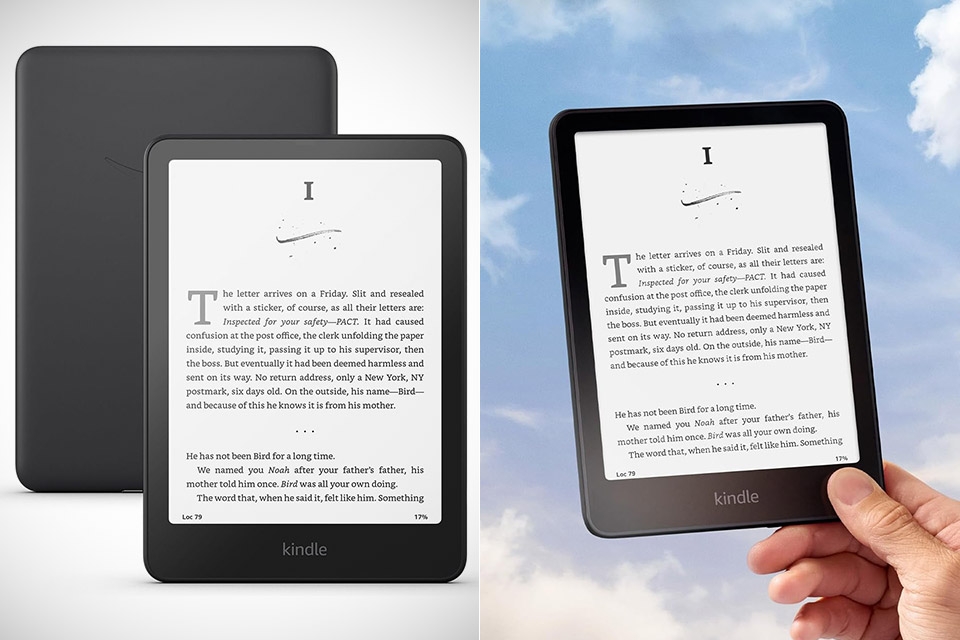
Carrying a Kindle Paperwhite, priced at $134.99 (was $159.99), in one’s hands everyday acts as a constant reminder of what makes this device a must-have for bookworms. This e-reader weighs only 7 oz, hence why it seems like something that the device could float as it easily fits into one’s pockets or bag without them knowing.
To kick things off, it attempts to create the real page-turning experience, and compared to a regular book, it would be like day and night difference. The new model has 300 pixels per inch, outperforming its predecessor and rendering texts as clear as a crystal in direct sunshine, making it a lifesaver for readers like myself who love to read outside. Finally, the device’s backlight works well, since it automatically adjusts based on the illumination in the room you’re reading in, and there’s even a feature that turns the brightness into a warmer color when you read late at night.
The pages flip 25% faster than in the previous version, and all menus appear instantly. It is 20% faster, which is fairly astonishing, especially for those who read books, since they will not be bored or frustrated by the time it takes to turn the pages. Also, the touch response is exceptionally fast, so it does not interfere with the reader’s perspective when reading. The battery performance provides 12 weeks of reading time for 30 minutes of reading per day without WiFi or lighting. The recharge will just take 2.5 hours.
Among other advantages, IPX8 waterproof technology ensures that you can use it even in the rain or while taking a bath without damage. Furthermore, it can withstand immersion in 2 meters of fresh water for an hour, allowing you to take it to a pool, beach, or simply bathe. In addition, the Paperwhite has a large amount of storage space; 16 GB of built-in memory allows for the storage of thousands of books. A Wi-Fi connection enables you to connect to your library in minute, or if you want to listen to an audiobook, simply turn on Bluetooth.






















































You must be logged in to post a comment Login