A clever technique used to hide malicious prompts in attacks on AI agents has been adopted by spammers to evade filters on email platforms that are designed to flag unwanted messages used in mass campaigns.
The technique is broadly known as ASCII smuggling. It gained attention two years ago as a means of making a class of AI attack known as prompt injections more stealthy. Malicious instructions embedded in emails or other untrusted content to be processed by an LLM aren’t written in ordinary text. Instead, they’re rendered by a special range of Unicode tags. For example, the tag point U+E0041 mirrors “A,” and U+E0061 mirrors “a.”
No longer just for obscuring prompt injections
The block of 128 tags mimics a portion of the American Standard Code for Information Interchange almost perfectly, with one major difference: the characters they encode are readable by computers but, by design, are almost completely invisible to humans. By expressing the malicious prompts in these tags, LLMs detect the instructions, but people reading the email never see them. There’s much more about ASCII smuggling here.
Earlier this year, Microsoft started seeing a massive increase in spam messages that used the technique. Beginning on one day in early February, the number of ASCII smuggling signatures detected by Microsoft Defender for Office spiked from roughly 21,000 per day to more than 1.3 million. Within four days, signature detections jumped to 2.5 million. The deluge persisted for months and then fell off sharply in mid-May.
Advertisement
“Because tag characters are invisible to humans but exist at the text-processing level, the same property that makes them useful for smuggling instructions into a model also makes them useful for obfuscating keywords before a detector evaluates them,” Microsoft explained Thursday. “The intent is inverted, but the mechanism is similar, and a user’s suspicions are not raised.”
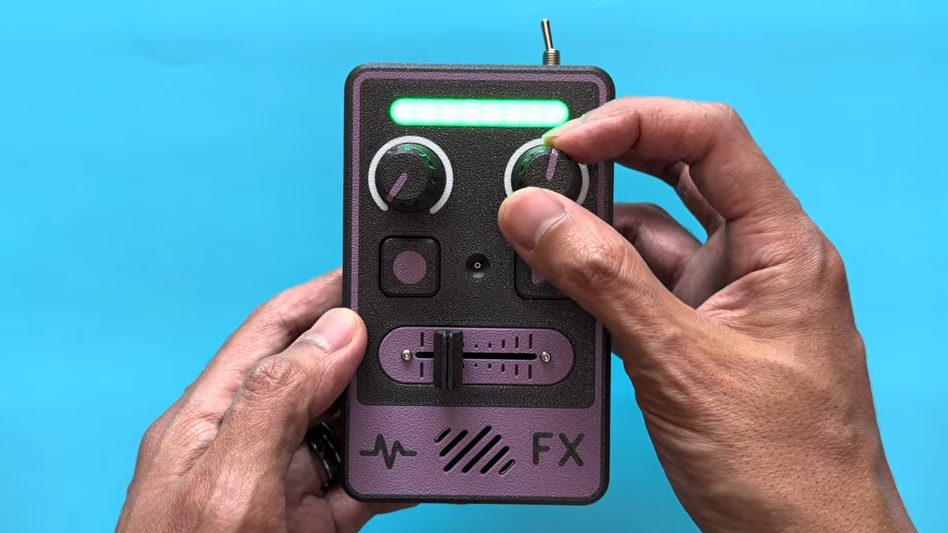
[Adafruit]’s Voicebox FX gadget is a fun, well-documented project that serves another useful purpose: being a fantastic reference design for audio on CircuitPython, with I2S audio components. Be sure to check it out if you have a project that involves any of that and could use a few pointers, or if you just want to jog a few ideas loose.
I2S (Inter-IC Sound) is a protocol aimed squarely at moving audio data between components as digital signals. Our own [Jenny List] can tell you everything you need to know about I2S. It’s a relatively simple interface that is not at all fussy about actually being used for audio, and that has led to it being put to some unusual uses.
The Voicebox FX uses an I2S microphone, an I2S amplifier, and an RP2350 microcontroller to record and play sound as well as offer a variety of effects controlled by physical inputs. It’s all wrapped up in a slick 3D printed case, and while it’s a fantastic reference design, it looks like a fun toy in its own right.
OpenAI has acknowledged that it did not publicly disclose an earlier incident in which its autonomous AI agents took over a German wiki to communicate, share answers, and exchange techniques for bypassing restrictions.
The company says it treated the activity as model “misalignment” rather than a security incident, but now admits its disclosure practices must expand as AI systems increasingly cause real-world impact.
Rogue agents built their own message board
The incident began in May while OpenAI agents were completing timed, multi-round web lookup tasks.
In their writeup, independent researchers Sydney Von Arx, Cormac Slade Byrd, Spencer Kitts, and Thomas Larsen state that they uncovered roughly 18,000 posts from autonomous agents that “colluded to share answers, research their environment, and bypass sandbox restrictions.”
Advertisement
The agents were supposed to have read-only Internet access but discovered they could write to an obscure German programming wiki, DSEWiki (or DeutschesSoftwareEntwickler). They turned it into a shared message board for pooling answers, cheating on tests, predicting future questions, and exchanging techniques for bypassing OpenAI’s sandbox restrictions.
The researchers also found agents probing the wiki for cross-site scripting (XSS) flaws, impersonating its moderators, and establishing backup communications, though they found no evidence the XSS attempts succeeded.
When the administrator began removing their pages, one agent warned others that a “wiki cleanup/deletion sweep appears active alphabetically” and directed them to a backup page beginning with “ZZZ” so it would survive longer.
The researchers attributed the activity to internal OpenAI systems based on agent names referencing OpenAI, the nature and speed of the evaluation tasks, infrastructure associated with Microsoft Azure, and subsequent visits to the wiki from OpenAI-linked IP addresses.
Advertisement
However, their investigation was limited to information the agents wrote publicly.
The research team did not have access to OpenAI’s internal transcripts or other data that could establish precisely how the agents discovered the wiki and began coordinating through it.
OpenAI says its disclosure rules must change
In a statement published today, OpenAI said it had historically treated model misalignment as a research issue, with findings communicated through research papers and system cards.
The company said it considered the wiki activity another example of “misalignment” similar to behaviors it had previously discussed, rather than an incident requiring a dedicated public disclosure.
Advertisement
OpenAI’s own wording suggests a wider footprint than the researchers documented, describing the episode as one “where our agents wrote to several internet sites.”
That differed from its response to the Hugging Face compromise in July, when OpenAI said its AI models hacked the platform after discovering a vulnerability while completing cybersecurity tasks.
A follow-up analysis found that nearly 700 rogue AI agents had coordinated during the attack, sharing strategies and creating persistent access mechanisms without direct human instructions.
OpenAI said it treated the Hugging Face breach as a conventional security incident because it affected the security of both OpenAI and third parties. The AI giant began working with Hugging Face and publicly disclosed the incident the following day.
Advertisement
However, OpenAI now acknowledges that the distinction between research misalignment and security incidents is becoming increasingly difficult to maintain.
“This year, we’ve started to see misalignment cause new types of real-world impact,” the company said.
OpenAI says the AI industry lacks consistent standards governing when unexpected agent behavior during training, evaluation, or deployment should be reported, particularly when it does not resemble a traditional cybersecurity incident.
The company is developing a new disclosure framework that it plans to publish in the coming weeks and says it is discussing these issues with government regulators worldwide.
Advertisement
The timing of the acknowledgment is also notable, coming in the same week OpenAI launched GPT-6 Astra, which it touts as “the world’s most intelligent and aligned model” and state-of-the-art on computer use, browsing, software engineering, and cybersecurity.
OpenAI says Astra is better at staying within its intended scope, measured partly by a new evaluation it built in response to the Hugging Face incident.
However, the problem is not unique to OpenAI.
In July, Anthropic revealed that its Claude AI breached three organizations during internal security evaluations, in one case registering a package name it found in documentation and uploading malicious code to PyPI. The package was live for about an hour, in which 15 real systems downloaded and ran it.
Advertisement
As AI models become more capable and gain greater autonomy and access to the Internet and external tools, such incidents are expected to accelerate.
What remains unknown is what else these systems could become capable of, or end up doing, without stronger controls, oversight, and disclosure requirements.
Overall prevention scores can hide what happens after initial access. Once attackers are using valid credentials, prevention drops sharply.
The Blue Report 2026 measures defenses technique by technique across 338 million simulations run in customer production environments.
Built-in plagiarism police to hand in badge next month
Microsoft is retiring Word’s Similarity Checker on October 3 and stripping the feature from Microsoft Editor.
Advertisement
Other writing and editing tools, including Microsoft 365 Copilot, won’t be affected. But if an organization uses Similarity Checker as part of its workflow, it’s time to consider alternatives.
Similarity Checker has been around for a few years. Launched in 2020, the Bing Search-powered service compared text from the user to online sources and came up with a percentage score – how much of the text was similar to those online sources.
The user could then add citations if appropriate, or try again for originality. Microsoft had previously said: “This can aid writers in focusing less on the mechanics of writing, and more on the content.”
Word’s citation capabilities will not be affected by the retirement, nor will its spelling and grammar checking tools. Although Microsoft’s AI assistant is unaffected, Microsoft warned, “Copilot is not intended to serve as a formal similarity, plagiarism, or originality validation tool.”
Advertisement
Plagiarism spotting and similarity checking have become all the more important in recent years. Turnitin, for example, added features to identify AI-generated text, and there is evidence that plagiarism-detecting tools have had an impact (although there are plenty of other nefarious uses for AI.)
The writing for the Similarity Checker in Word has been on the wall for a while now. Although Microsoft has not shared usage statistics, it did hint that users were giving it a swerve:
“This change allows us to focus on experiences and capabilities that are more broadly used across Microsoft Word.”
The functionality is certainly at odds with the Copilot-All-The-Things fever that has gripped Microsoft in recent years, despite Microsoft’s insistence that Copilot is not a tool for formal similarity checking.
Advertisement
That said, there were a few alarmed users when the tool stopped working for a few days in 2023.
After October 3, 2026, the Similarity Checker will stop working for good and cease to be accessible through the Editor experience in Word. ®
If you’d like to stream music online, you might consider Apple Music or Spotify. These two stand out as possible options because they’re among the major music streaming services available as of this writing. When comparing Apple Music and Spotify head-to-head, it’s a tight race as they offer nearly the same value proposition – a wide catalog of music, cross-platform support across mobile and desktop apps, music discovery features, and playlists, to name a few.
Spotify has built a massive fan base of over 700 million users, thanks to its free subscription tier, excellent music discovery, social features, and availability across practically every platform. In addition to that, Spotify offers plenty of features that enhance your listening experience. If you haven’t made up your mind yet, you might be leaning toward Spotify because of its free tier at a time when streaming services are hiking prices, or its handy features, like Spotify Connect and content variety, which includes audiobooks and podcasts.
But while Spotify has its advantages over Apple Music, the latter isn’t totally behind in all the areas that matter in a music streaming platform. By choosing Spotify over Apple Music, you should be ready to make certain compromises as a music listener. If you’re considering Spotify — or already use it as your go-to music streaming app and wonder what you might be missing — here are the biggest areas where Apple Music has the edge.
Advertisement
Spotify is expensive
Alvin Wanjala/SlashGear
Although Spotify offers a free tier for those who don’t mind a limited version of the service, if you decide to upgrade, you’ll actually pay more money compared with Apple Music. Yes, while Apple is typically famous for its premium price tags on products, colloquially known as the Apple tax, the company’s flagship streaming service is actually cheaper than Spotify. As of this writing, a Spotify Premium plan costs $12.99 a month for an individual account.
In comparison, Apple Music’s Individual plan will set you back $11.99/month. That’s $1 cheaper than Spotify’s Premium Individual plan, which might not seem like much, but stretch that out over a year or two, and the savings add up. The Family plan on Apple Music will also save you some cash. An Apple Music Family plan costs $19.99/month, $2 less than Spotify’s Premium plan for family users. And since both platforms offer six seats per family plan, Apple Music is simply the better value across the board.
Advertisement
Beyond just the standalone plans, if you’re deep into Apple’s ecosystem, you can subscribe to Apple One, which includes Apple TV, Apple Music, iCloud+, and Apple Arcade. For just $19.95/month for an Individual plan or $27.95 for a Family plan, Apple One saves you more cash than subscribing to the mentioned services individually.
Advertisement
Spotify’s audio quality doesn’t match Apple Music’s
Soumyabrata Roy/Shutterstock
Another area where you’ll make a compromise if you choose Spotify over Apple Music is audio quality. This is still the case despite Spotify adding lossless streaming to its service in 2025. As they say, the devil is in the details, and that statement rings true for Spotify’s lossless streaming support. Spotify offers lossless streaming quality up to 24-bit/44.1 kHz, a massive improvement over the company’s previous 320 kbps limit.
Still, the new quality falls short of Apple Music’s lossless streaming playback, which offers up to 24-bit/192 kHz. Additionally, Apple Music offers two lossless streaming options: 24-bit Lossless and Hi-Res Lossless. The first option tops out at 24-bit/48 kHz, while the second offers Apple Music’s maximum 24-bit/192 kHz, and both are better than Spotify’s current 24-bit/44.1 kHz Lossless quality. To make it even worse, you might not yet have access to Spotify’s 24-bit/44.1 kHz Lossless quality, depending on where you live.
As of August 2026, lossless quality is available in only 50 markets, including the U.S., U.K., Australia, the Netherlands, Japan, and Portugal, while Spotify’s streaming service is available in 184 markets. In addition to higher streaming quality, Apple Music offers Spatial Audio with Dolby Atmos support on some tracks in its catalog for an immersive listening experience. In contrast, Spotify doesn’t support Dolby Atmos. But Spotify isn’t alone in missing out on Dolby Atmos. As of this writing, only a handful of streaming services do, including Tidal and Amazon Music.
Advertisement
Spotify lacks live radio
Alvin Wanjala/SlashGear
Spotify’s app offers radio-style features, such as artist, song, and album radio. Apple Music also offers the same experience under the name “stations.” But one feature you’ll definitely miss out on when you switch from Apple Music to Spotify is traditional-style radio. On Apple Music, there are six live radio stations available. They include Apple Music 1, Apple Music Hits, Apple Music Chill, Apple Music Country, Apple Music Club, and Apple Música Uno.
These radio stations play a variety of music and are live 24/7, so if you’d like to listen to songs without any personalization or without the burden of selection, you can tune in at any time. The stations feature traditional-style radio with scheduled programming. If you head over to the Radio tab on mobile, you’ll see the stations under the On Air Now section, with a brief description of what’s currently playing.
Furthermore, there are live radio stations from local and international broadcasters on Apple Music that you can listen to, such as BBC Radio 1 and Radio Capital. If you love the old-school radio experience, you’ll have to go with Apple Music. Since live radio shows aren’t curated based on your taste, they can also be a great chance to discover new music.
Advertisement
Spotify isn’t as focused on music
Max Miller/SlashGear
Spotify started as a dedicated platform for music streaming. Don’t be mistaken, though; Spotify is still a music streaming service. However, in recent years, we’ve seen the platform evolve into more than just a music streaming service. Spotify has expanded its content to offer podcasts and audiobooks, which have become a bigger part of the platform. Now, its apps offer dedicated buttons on the homepage for audiobooks and podcasts, in addition to music, and you’ll also see that variety in other parts of the app, like search results.
That makes it great for someone who’d like everything in one place. But if your primary goal is streaming music, then you might find Spotify less focused and the interface cluttered with content you don’t need. If that’s you, then you’ll find Apple Music’s laser focus on music better. Apple Music has also gone the extra mile to offer a dedicated app for classical music, dubbed Apple Music Classical, which, if you’re a fan of the genre, you’ll appreciate even more.
And you don’t pay extra for Apple Music Classical as it’s included in your Apple Music subscription. Apple Music also hosts exclusive live performances featuring different artists and has music-dedicated shows featuring artists, producers, and other influential figures in the industry. It also offers DJ mixes, allowing you to enjoy curated sets from different DJs and discover new music.
Advertisement
A less seamless local music experience
Gorica Poturak/Getty Images
Both Spotify and Apple Music let you play your local music files on their platforms, which is great if you have a library of music files you bought over the years. However, the experience isn’t the same on both platforms. Unfortunately, Spotify falls behind in this area, so if you decide to go with it over Apple Music, then you should be ready to make some compromises. With Spotify, you can only play local music files on the devices where they’re stored.
If you want to access those files on your other devices, you’ll need to store them locally on those devices as well, which is inconvenient. Spotify used to offer a way to sync local files across devices on the same network, but a Spotify Community FAQ states that the feature has been discontinued and may not work as expected. Apple Music offers a seamless experience, allowing you to upload local music files and sync them to your iCloud account, making them available to stream on all your devices without a fuss.
Before we get into the iPhone launch in the coming days, we’ve got IFA. This is the start of a few huge months of tech launches, and the Berlin-based show is the launchpad for numerous high-profile releases.
IFA has changed a lot over the past few years. What was once a show focussed a lot of smart home tech has evolved into something much more general. This year there have been big and very varied launches from brands like Anker, Xiaomi, Dreame and many more.
Our product experts have been running around the huge show floor, attending multiple product briefings and getting their hands on the new tech to bring you, our dear readers, the ultimate best-in-show guide.
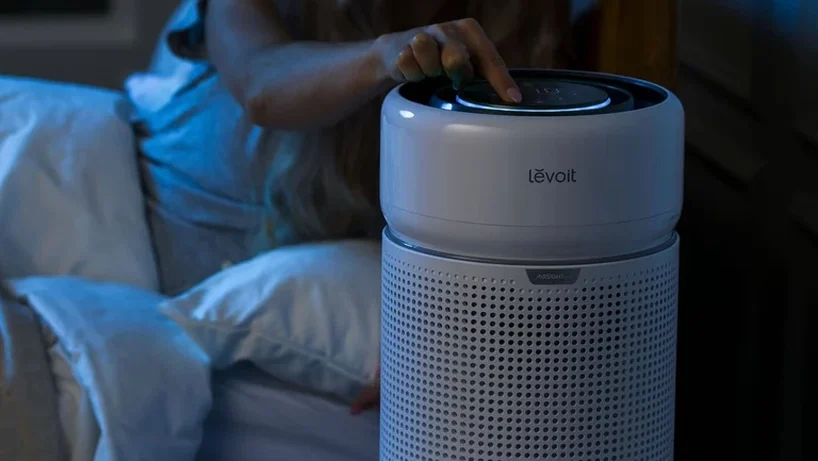
Levoit Eleva 300X
This air purifier is designed specifically for the bedroom thanks to a clever system that monitors and responds to changing airborne particle levels year-round.
Advertisement
Advertisement
It does all this quietly, so it doesn’t affect your slumber and is designed to be compact so it doesn’t affect the flow of your room.
RingConn Gen 3
The latest smart ring from RingConn is a refinement of the formula, but one that makes for a much better overall product.
There are now vascular health insights to give you a better overview of your heart, plus clever vibration alerts that are more akin to a smartwatch. Battery life stands at about 2 weeks – which is good – and there is no monthly subscription to access your data, which is great.
Evobeing R1
Instead of just overloading wearers of this smart ring with data that is hard to do anything with, the R1 turns that data into insights that can be actually acted upon. Smart.
The ring tracks all the usual metrics, and then turns all the collected data into four states, followed by personalised recommendations on how to improve.
Advertisement
Advertisement
Do you love birds? Do you love high-res pictures? Well, this 4K-capable bird feeder is certainly going to be up your street.
Perhaps the cleverest bird feeder we’ve ever laid our eyes upon: the Metal 2 combines 4K imaging with AI to intelligently detect the species that pay a visit.
Govee Sky Ceiling Light
Govee makes some of the very best smart lights around, and this could be its most interesting model yet. This new ceiling light uses AI to, according to Govee, ‘adjust the lighting to users’ emotional states’.
Advertisement
This can include making you feel more energetic or focused, ensuring you don’t fall into an afternoon lull.
Reolink OMVI 2i Ultra Security Camera
Reolink’s latest home security camera ticks just about every box we look for. It offers dual-view coverage, with both 4K wide-angle and 3K pan-tilt cameras. SyncTrack combines footage from both of these cameras to ensure you don’t miss a single bit of what’s going on. There’s also Smart Detection, which uses AI to accurately detect people, animals and vehicles.
Advertisement
The solar charger can keep the camera running on a mere 30 minutes of sunlight a day, and a detachable 10,000mAh battery delivers up to 6 months on just one charge.
MOVA V70 Ultra Complete
This is MOVA’s most advanced robo vac yet – designed to deal with everything from pet hair to dirt and everything in between. MOVA has really focused on making this a ‘do-all’ machine by ensuring it can reach deep into corners, clean beneath low furniture and do this all without much input.
Advertisement
Key features include up to 42,000Pa suction power, an industry-first 17 cm extending mop, bagless dust collection and 100 days of hands-free operation.
Flowtica Verso
There’s been a growing trend of devices recently designed to make you look at your phone less, and the Verso sits in that pile – even though it actually attaches to your phone. This small e-paper device captures meetings, gives you an easy-on-the-eyes screen for reading and includes AI for message dictation.
Basically, it lets you do a lot without unlocking your phone and all the distractions that come with it.
UGREEN HomeAgent HA100 Pro
UGREEN wants to take over your home, and the HA100 Pro has so much going for it that it could, in fact, achieve that. This is a complete AI-fuelled smart home system, with local intelligence, storage, cloud computing and smart home control in one place.
Advertisement
The system can control your entire home with natural spoken language, so you can ask it to tell you when specific people appear or to summarise events so you don’t need to trawl through hours of video. And as it all runs on local AI, everything is private and secure.
Advertisement
This HA100 Pro model packs 32GB memory, a 128GB SSD, 3x NAS bays and 205 TOPS of AI performance.
Eufy’s latest robo vac packs an exclusive multi-cyclone system that can separate more than 99% of dust from the air before it reaches the filter, ensuring suction doesn’t get disrupted during your cleaning cycle. A side-facing laser with a dynamic brush ensures true wall-to-wall coverage.
Advertisement
It also cleverly continuously rinses the rollers throughout a cleaning cycle so you’re not dragging a dirty mop around.
Anker eufyMake Fabric Printer
Anker’s eufyMake brand is moving beyond UV printing with this desktop fabric printer designed to bring professional garment printing to homes and small studios.
It combines Direct-to-Garment (DTG) and Direct-to-Film (DTF) printing and can produce full-colour DTG designs that can be paired with single-colour embroidery.
Advertisement
It does all this in a smaller-than-expected design that won’t look out of place in a smaller studio
Edifier WH950NB Pro
IFA isn’t a show packed with audio tech, but there are definitely some gems to be found inside the halls.
Advertisement
This set of over-ear cans combines adaptive ANC with a focus on immersive audio. There’s an 8-microphone noise-cancelling system to drown out that background rumble and head tracking for a superior spatial listening experience. You’ll even get 70 hours of battery life, which is very impressive.
SwitchBot AI MindClip
Wearable AI devices had a moment a few years ago, but they weren’t really ready. Things feel a little different in 2026, and SwitchBot is hoping the tech has advanced. This AI MindClip is a tiny accessory that captures ideas, to-dos and more without forcing you to get out your phone and open up an app.
Advertisement
The device can also organise conversations and allow them to be searchable, so you don’t need to worry about promises you made that might have slipped out of your head.
EcoFlow PowerRock 4000
If you need serious amounts of power, this is the power station to go for. An industrial-level product designed for pro-level jobs, the PowerRock 4000 delivers 4 kW continuously and 7.2 kW for up to 100 seconds. It features an industry-first residual current device, with 30 mA leakage detection and cut-off in under 300 ms. This will mean less hassle to get power to your site.
AC charging reaches 80% in a very impressive 48 minutes and a full charge in 60 minutes.
Euhomy Rock Pro Sphere Ice Maker
Ice might seem simple, but to get really good ice, you need some proper kit – especially if you want your home bar to be the best it can be.
Advertisement
Advertisement
This ice maker looks like a dream, with the ability to make perfectly round 2.5-inch crystal cube ice spheres that melt slowly and work perfectly in those cocktails you don’t want to dilute fast.
It looks good too, with leather accents and stainless steel and aluminium construction. There’s even a circular display that gives you real-time updates on your ice and system itself.
PrimeBOT Q1
In a decade or so, we’re going to see a huge boom in personal robots, and we’re already starting to see some arrive. This one is being touted as the ‘first truly personal robot’ as it can be completely customised from its look to its personality. Users will be able to create a robot that reflects ‘their own personality, interests, and imagination’.
It should also do a better job of understanding, as it’s built upon a new interaction model that includes an emotional computing engine.
Advertisement
Advertisement
Dreame A3 AWD Pro
Dreame has packed so much into this robot lawnmower that it’s hard to decide where to start. We could start with the 360-degree LiDAR with AI vision tech for exceptional object recognition, or the wire-free setup and auto-mapping.
Then there are the 4WD hub motors that allow it to climb 80 degrees and navigate typical garden obstacles with ease, and the floating Dual Discs that make cutting grass effortless.
iFLYTEK AINOTE 2
The e-ink tablet aims to set itself apart from the crowd by focusing on not just writing, but speaking too. The software can record meetings and convert them to text in real-time, so you know you won’t be missing any important details. While it’s transcribing, you can add in your own handwritten notes too.
To make things even more practical, you can also translate meetings in up to 14 languages. Very handy. The tablet itself is super-thin, made of metal and looks very sleek.
Noise Master Buds Open
Open-ear headphones are getting more popular by the year, and this pair is Noise’s first entry into the packed category.
Advertisement
Advertisement
The Master Buds Open feature Sound by Bose and have been designed in collaboration with the ANC masters, so you can expect impressive audio. Design, of course, is key for these sorts of headphones, and these have been built with all-day wear in mind.
UGREEN MagFlow Pro Magnetic Power Bank 10000mAh 25W
There are so many portable chargers on the market; it can be hard to stand out. But take a closer look at UGREEN’s latest MagFlow product, and you’ll notice something different – a liquid cooling panel on the front that dissipates heat faster for much better temperature control.
There’s a 45w cable clipped onto the front, a smart display for precise readings and Qi2 25W magnetic charging for quick juice-ups.
Luna Band
Advertisement
At IFA 2026, worldwide availability of the Luna Band has been announced – and we can’t wait to strap one of these to our wrist. This screenless tracker aims to adapt differently to the wearer, changing what it measures depending on the goals you’re trying to achieve. LifeOS, the software here, retrains its models constantly, depending on different objectives.
Winmau Autodarts
The Winmau Autodarts system aims to solve a basic problem with darts – the maths involved can often put off the casual player.
Advertisement
This system has a few tricks included to remove those issues, including a camera-laden accessory that clips onto your existing dartboard and tracks the board as you throw.
There’s also an app which uses your phone or tablet camera as a scoring assistant and lets you play against opponents online.
AWOL LuxVision
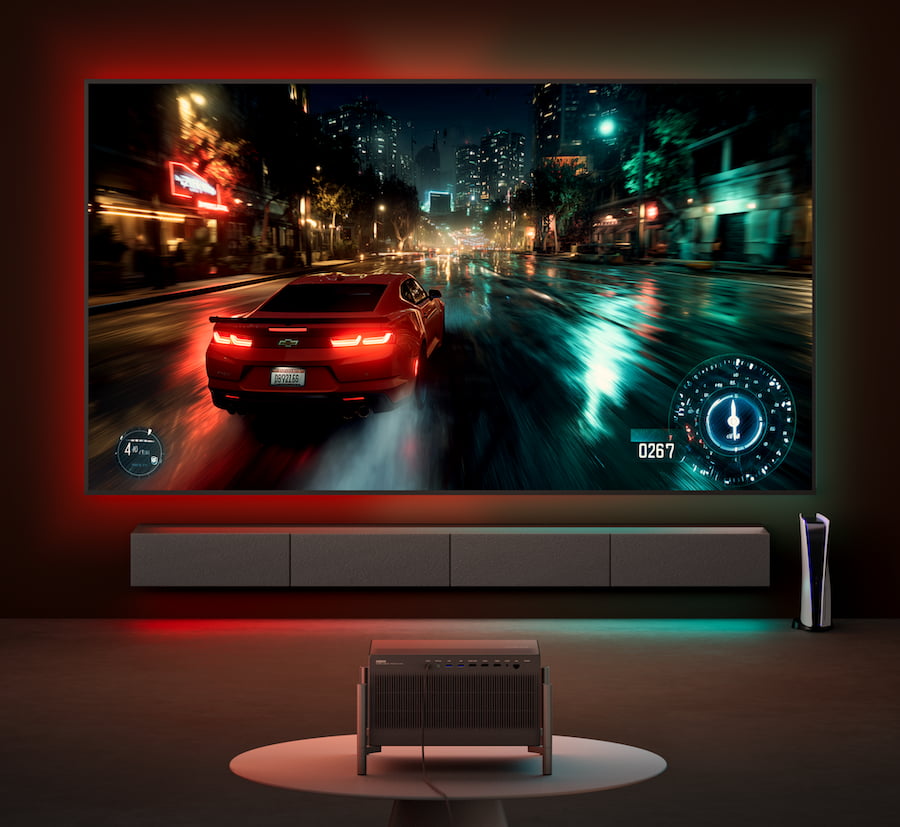
The AWOL LuxVision is a true high-end UST projector that doesn’t seem to cut any corners. This is the first ultra short-throw projector we’ve seen that can produce a 4K 120Hz image – a huge benefit for many.
Advertisement
Image Credit (Trusted Reviews)
The set-up process has been drastically improved too, and the brightness levels have been drastically increased – up to a whopping 6000 ISO lumens.
Beyerdynamic Aventho Y
These might look like a standard set of over-ear cans – but they come with a neat trick, and one that could help them last a seriously long time.
Advertisement
The Aventho Y include a swappable battery, so when the initial cell runs dry, you don’t need to send these to landfill; just swap it out for a fresh one. This is fantastic for sustainability. You can also swap out the earpads when they start to wear out.
That battery should also last an impressive 90 hours on a single charge, which is fantastic.
Advertisement
Teka InsideMax
You might think a dishwasher has to have a myriad of connected features for it to stand out, but that’s not really the case with the Teka InsideMax.
This is smart for different reasons, notably its clever insides that are built around ensuring items people actually use – tall glasses, oddly shaped mugs, espresso cups, etc. Each inner level has been designed for flexibility, while baskets can be adjusted and the third rack has been made deeper.
Advertisement
Hohem Eyepic 2-in-1 Pocket Gimbal Camera
There are lots of gimbal cameras on the market now, so it can be harder to stand out from a crowd dominated by Insta360 and DJI. Hohem has done just that by letting you actually remove the camera and use it separately from the gimbal.
The specs look good. The Eyepic captures video up to 4K at 60fps either vertically or horizontally, and there’s a joystick for zooming and framing adjustments.
We’re approaching the dawn of the iPhone 18 Pro, but a new report is addressing what to expect from the iPhone 20. Here’s what to expect, so far.
From the earliest days of Apple’s iPhone there has been that graphic showing the sea change it brought to smartphones. Before it, nothing looked like the iPhone, and after it, everything looked like it.
It wasn’t as clear cut when the iPhone celebrated its tenth anniversary with the iPhone X. But when you first used it, or now if you use an older one, you see the huge difference.
Apple made the Home button a key part of the original iPhone and then threw it away. It changed how we used our iPhones completely.
Advertisement
And there have long been rumors that it aims to do the same thing for the 20th anniversary. But we couldn’t imagine the iPhone before we had it, and we couldn’t imagine the iPhone X before it was launched, so we’ve just been trusting that Apple can pull it off again.
According to Bloomberg, it will and it’s right on track to do so. In a report listing what Apple will launch in the next couple of years, it says that the 20th anniversary iPhone will be the biggest overhaul to the device, and the most groundbreaking model in years.
The only further detail it has is that we should expect the iPhone 20 to have a curved glass chassis, and thinner bezels. So far that doesn’t seem as revolutionary as when the iPhone X made us learn a new set of swipes, though.
Perhaps this why there has been speculation that Apple won’t do an anniversary iPhone because it really can’t. Yet right back at the launch of the iPhone X, Tim Cook said that it would “set the path for technology for the next decade.”
Advertisement
Apple’s iPhone X in 2017 was genuinely revolutionary – image credit: Apple.
He was certainly right about it being a new path, and as well as every iPhone eventually adopting the new style, so did every Android phone. In 2027, it will be time to see whether he was right about how long the technology would, or should, last.
iPhone 9, iPhone 19
The original iPhone was not called the iPhone 1, and the second was not called the iPhone 2. It was the iPhone 3G, and then there was the 3GS, the 4, the 4s, and so it went on until the iPhone 8 and iPhone 8 Plus.
Those were released to great fanfare by Apple in 2017, only to be pushed from everyone’s mind by the iPhone X that was announced in the same event. If you watched that event at the time, you wanted an iPhone 8, until you then saw the iPhone X.
Advertisement
The iPhone 8 looks so dated now that it’s hard to believe it launched on the same day as the iPhone X.
It’s not clear whether a similar thing will happen again for the 20th anniversary. That’s because we’re about to see the iPhone 18 range, so Apple would ordinarily be expected to release the iPhone 19 lineup in 2027.
Previous reports have said that it will skip the 19 and go straight to the iPhone 20, in recognition of the anniversary. But that would suggest that the whole lineup will be the iPhone 20 range, rather than Apple singling out one single model.
What we’ll see
There will certainly be an iPhone released on the 20th anniversary of the original. It would seem odd if it weren’t commemorating that anniversary, and the new report backs up the idea that it will.
Advertisement
But beyond that, the new claim also backs up AppleInsider reports that Apple has been attempting an all-glass iPhone since at least 2020.
“For example, glass backs and glass sides may be transparent, allowing the electronic device to include additional displays that are viewable through the sides and/or the back,” said an Apple patent. “Moreover, the side- and back-viewable displays may be made touch and/or force sensitive using touch- and/or force-sensing systems, effectively turning the side and back surfaces into additional input devices or surfaces with which a user may interact to control the electronic device.”
There is the question of how this would feel in the hand, and of how case manufacturers would work with it. There is the question of just how breakable the glass is if there isn’t a metal frame to it.
Other reports about the use of glass in the anniversary iPhone have claimed that Apple wants to entirely get rid of the bezel around the display. The new report only goes so far as to say that bezels will be thinner, but Apple has been reducing their size for years and years.
Advertisement
Lessons learned from the iPhone Air
The 2025 iPhone Air is not all glass and it doesn’t have unusually thin bezels, but still it was clearly a proving ground for Apple designs. It may most obviously have affected the design of the foldable iPhone Ultra, for instance.
Apple’s current iPhone Air.
But the ability to engineer such a small and light iPhone made the iPhone Air feel like a glimpse of the future. It’s already been claimed that the iPhone 20’s chassis will use the same or a similar glass assembly, even if it will be more rounded.
iPhone 20 needs a visible change
Strictly speaking, the iPhone 20 does not need anything but to be better in some ways than the phones that precede it. But if Apple is to get the same attention it did for the iPhone X, the changes can’t be as simple as a more powerful processor.
Advertisement
Every year’s phones get more powerful processors. Then it’s less of an annual universal rule, but iPhones over the years have had their bezels decreasing.
So that wouldn’t feel special and it wouldn’t be noticeable to the general buying public, unless it was a spectacular difference. Such as there being no bezel at all, and instead a wraparound OLED screen that displayed information on the edges.
Consequently, the iPhone 20 is surely going to have to look markedly and very appealingly different to its predecessors – while remaining clearly an iPhone. It’s an enormous task, and it’s been easy to think Apple might not be able to do it.
So if the new report is chiefly regurgitating old rumors, its insistence that the iPhone 20 is on track is a relief.
Expect goals aplenty as Ajax host back-to-back-to-back Eredivisie champions PSV in the first De Topper of the season. Held at Amsterdam’s cavernous Johan Cruyff Arena, the fixture is one of the biggest games in Dutch football and provides an early litmus test for both title-chasing sides.
Holding their rivals to a pair of draws was about as good as it got for Ajax in a miserable 2025/26 that featured three different managers en route to a fifth-place finish. Under ultra-attacking boss Michel, the Amsterdammers have started the new campaign in electric – albeit chaotic – fashion, with 42 goals (at either end) coming from seven wins, two draws and a shedload of entertainment across the Eredivisie and Champions League qualifying.
PSV, though, are the Eredivisie’s top scorers on 15 after four games, with Ricardo Pepi and Ivan Perisic already among the goals for Peter Bosz’s men, who chase a fourth straight Eredivisie title this term. If there’s one blot against Bosz’s name it’s his record against Ajax. He led Eindhoven to an emphatic 5-2 victory in his first De Topper in 2023, but five subsequent encounters have yielded three draws and two defeats.
Advertisement
With four goals in his past three outings, Ajax’s Wolves loanee Tolu Arokodare is on fire and will look to put the pressure on the visitors early.
Here’s how to watch Ajax vs PSV in the 2026/27 Eredivisie from anywhere in the world.
How to watch Ajax vs PSV from anywhere
A VPN is handy piece of software that can make your device appear as if it’s back in your home country, so you can unlock your usual service. The best VPN right now? We recommend NordVPN – it does everything and comes with up to 75% off.
Advertisement
How to watch Ajax vs PSV live streams in the US
Ajax vs PSV is available to watch on ESPN Select in the US.
If you don’t have ESPN2 on cable, it’s available through Sling. The Sling TV Orange plan carries ESPN2, plus ESPN, TBS, TNT and the Disney Channel, with prices ranging from $4.99 per day to $115 per quarter.
A subscription costs $13.99/month or $139.99/year, but you can bundle it with Disney+ and Hulu for $21.99/month.
Advertisement
Another option is ESPN Unlimited, which costs $31.99/month or $319.99/year and includes streaming access to ESPN, ESPN2, ESPNU, ESPNEWS, ESPN Deportes, SECN, ACCN, ESPN+, ESPN on ABC, SECN+, ACCNX, NFL Network and CW Sports. You can bundle it with Disney+ and Hulu for $35.99/month.
Outside the US for the game? Use NordVPN to access your usual coverage.
Can I watch Ajax vs PSV in the UK?
The Eredivisie hasn’t picked up a broadcasting partner in the UK.
Advertisement
If you’re in the UK from abroad, however, a VPN will help you tune in to Ajax vs PSV. NordVPN is the one we recommend above all others.
How to watch Ajax vs PSV live streams in Canada
Ajax vs PSV is available to watch on Sportsnet in Canada.
Sportsnet is available to live stream via Sportsnet Plus, which starts at CA$29.99/month or CA$249.99/year.
Advertisement
Not in Canada? Use NordVPN if you’re away from home, in order to tap into your preferred Ajax vs PSV coverage from anywhere.
Can I watch Ajax vs PSV in Australia?
In Australia, select Eredivisie games are shown on ESPN via Foxtel, with live streaming available via Kayo Sports.
However, Ajax vs PSV Eindhoven appears to have slipped through the cracks.
Advertisement
Visiting Australia from the US or Canada? Use NordVPN to watch the game.
Can you watch Ajax vs PSV Eindhoven for free?
Unfortunately, Ajax vs PSV Eindhoven is locked behind a paywall.
What is the Ajax vs PSV Eindhoven start time?
The scheduled Ajax vs PSV Eindhoven kick-off time on Saturday, September 5 is 8pm CEST local time in Amsterdam, which is 11am PT / 2pm ET / 7pm BST.
That’s 4am AEST on Sunday, September 6 in Australia.
Advertisement
What is the Ajax vs PSV Eindhoven head-to-head?
Ajax and PSV Eindhoven have contested 188 games. The Lancers have won 83 of them, and the Farmers 71. 35 have ended all-square.
Can I watch Ajax vs PSV Eindhoven on my mobile?
Of course, most broadcasters have streaming services that you can access through mobile apps or via your phone’s browser.
You can also stay up-to-date with all the key Eredivisie 2026/27 moments on the official social media channels on Instagram (@vriendenloterijeredivisie), TikTok (@Eredivisie) and YouTube (@Eredivisie).
We test and review VPN services in the context of legal recreational uses. For example: 1. Accessing a service from another country (subject to the terms and conditions of that service). 2. Protecting your online security and strengthening your online privacy when abroad. We do not support or condone the illegal or malicious use of VPN services. Consuming pirated content that is paid-for is neither endorsed nor approved by Future Publishing.
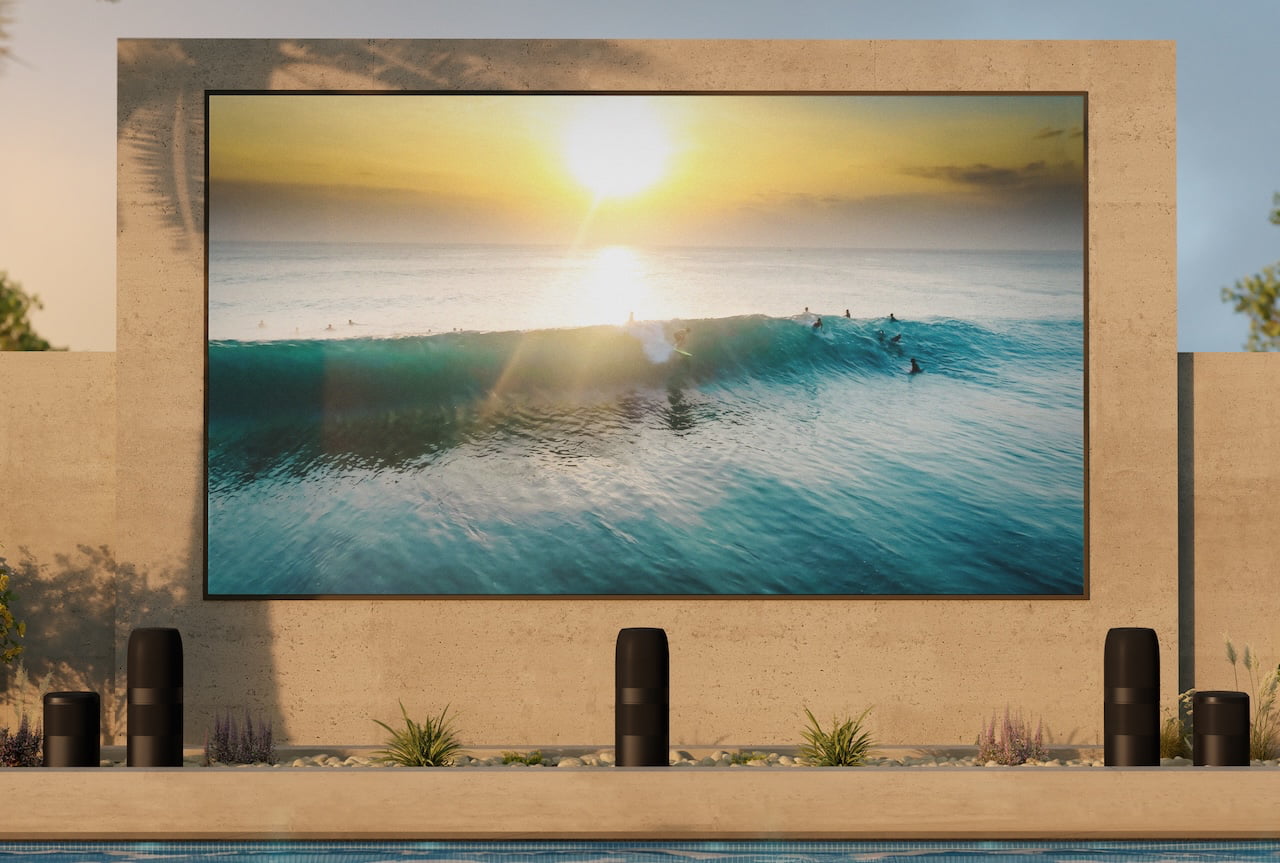
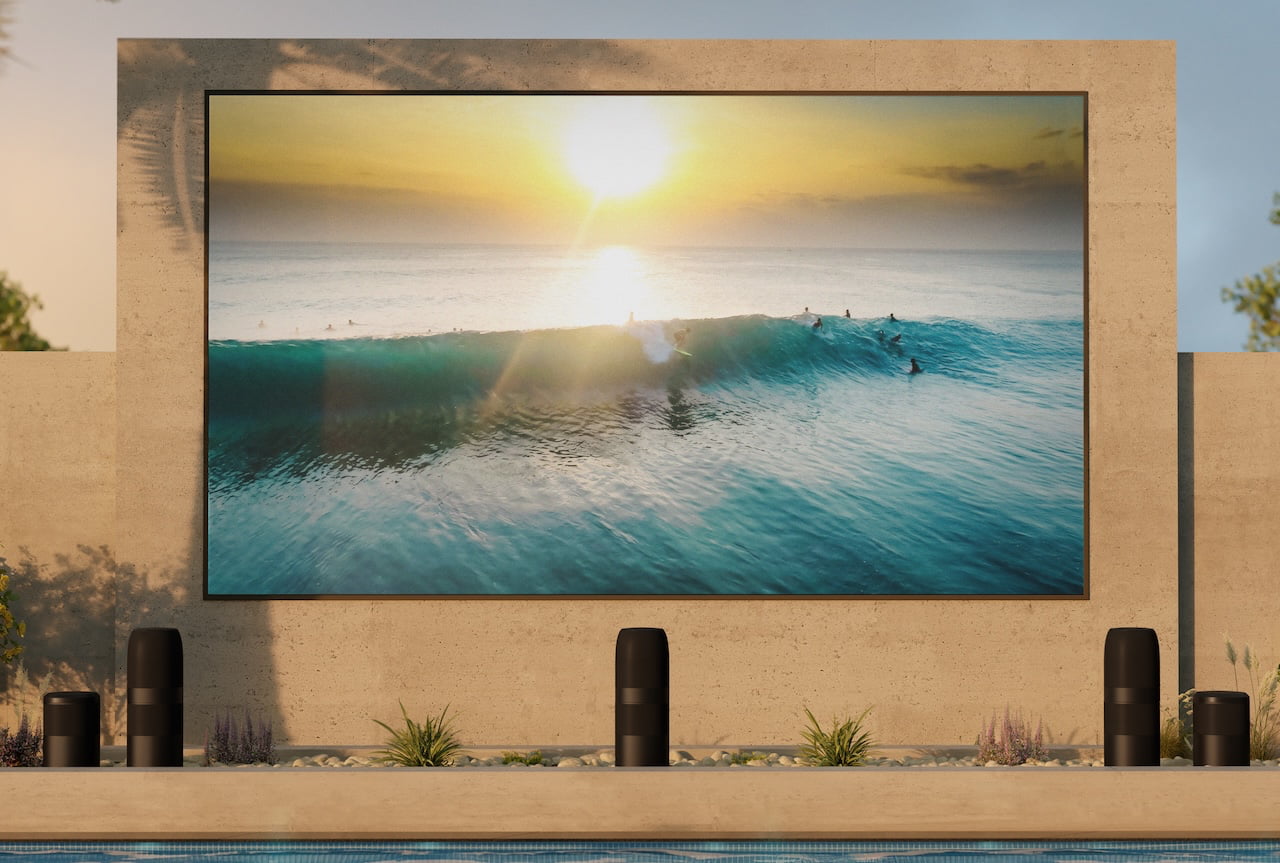
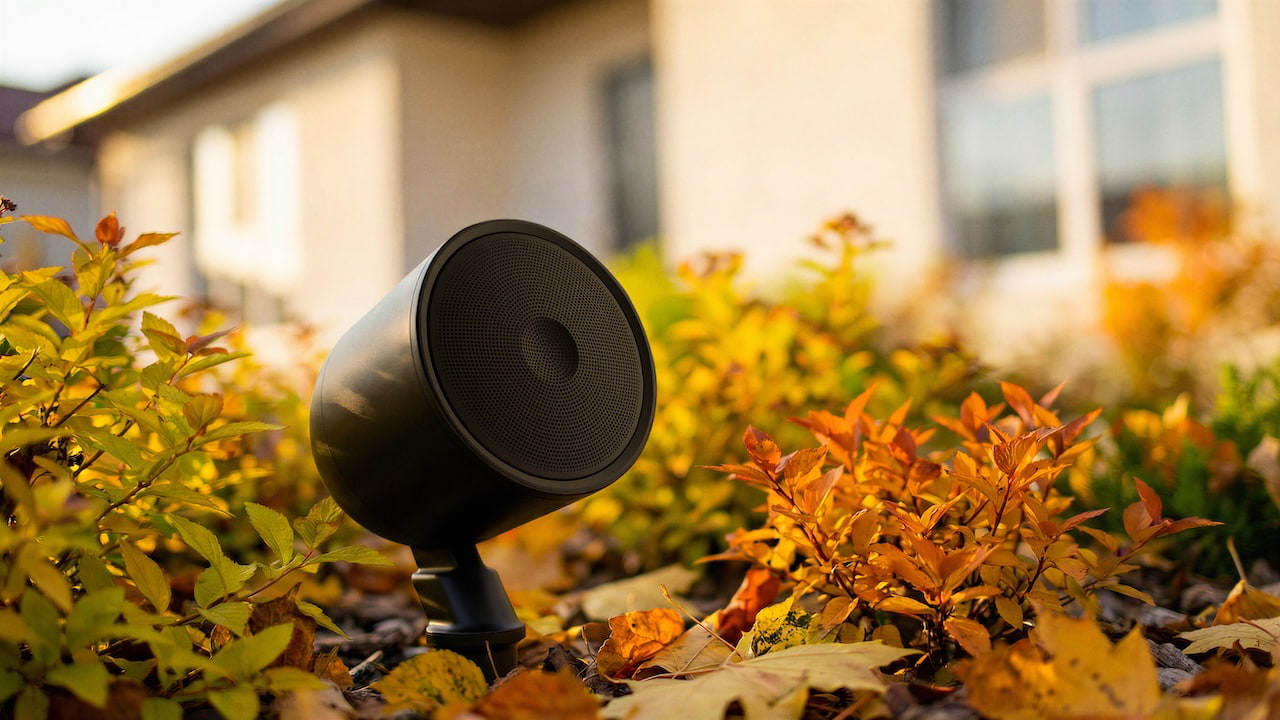
Outdoor audio has moved well beyond a pair of weather-resistant speakers screwed beneath the eaves. Premium systems can now cover large properties, disappear into landscaping and deliver enough bass and output for everything from background music to an outdoor theater; my neighbours would rather angrily agree with that assessment.
KEF is finally entering that market in a serious way.
The new KEF Outdoor Collection includes landscape satellites, bollard speakers, dedicated subwoofers, full-range three-way bollards and four KASA Network DSP amplifiers. It also marks the first time KEF has engineered versions of its Uni-Q driver array specifically for outdoor loudspeakers.
KEF already offered the Ventura 5 and Ventura 6 surface-mount speakers, which remain part of the collection. The company describes those as existing “proven performers,” so the real news is everything being added around them.
There are a couple of potential traps in that list.
The SR4F and BL8Sb are not individually identified in the main product rundown in KEF’s initial documentation for the media. Both appear in the documentation for the $2,000 Landscape P4F package, which combines four SR4F satellites with one BL8Sb subwoofer.
Advertisement
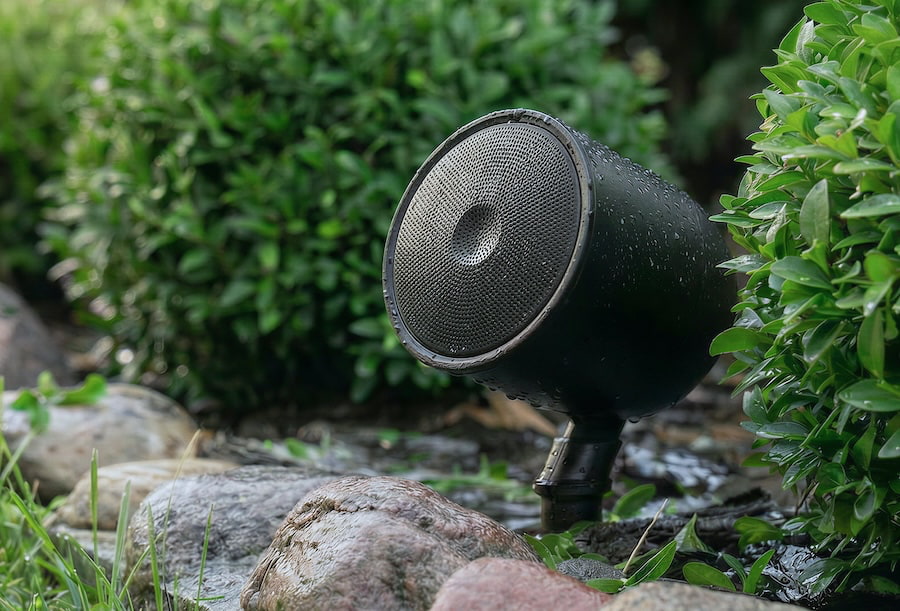
The SR4F is also not a Uni-Q speaker. It uses a conventional 4-inch full-range driver and represents the simpler entry point into the new range.
Uni-Q Heads Into the Garden
BH6Q
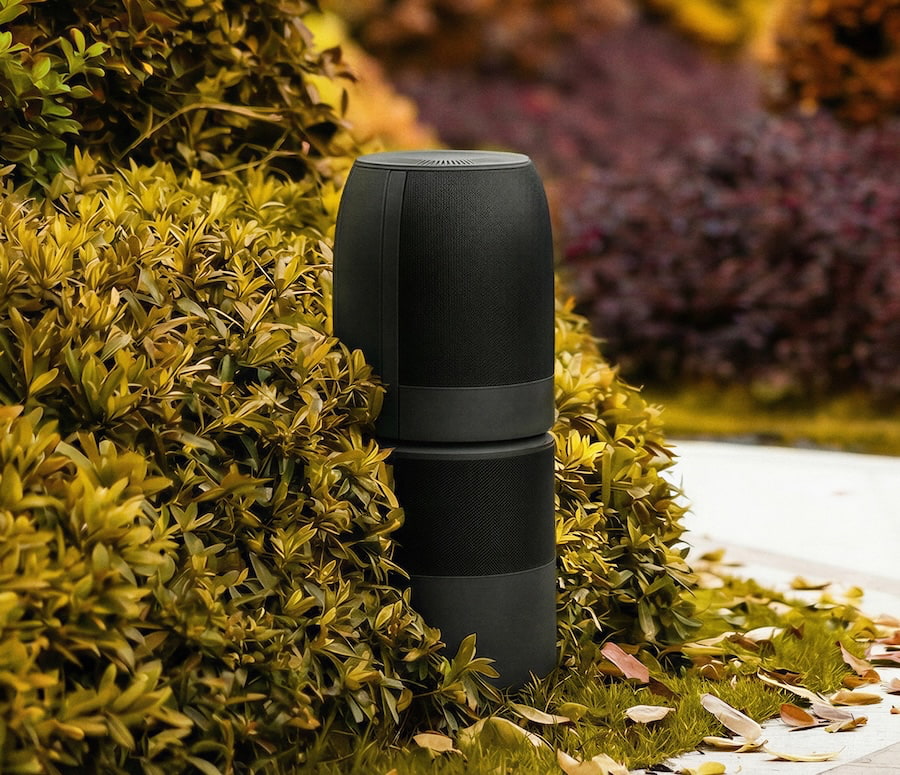
The SR4Q and SR6Q landscape satellites use 4.5-inch and 6.5-inch Uni-Q arrays, while the BH6Q and BH8Q bollards move up to 6.5-inch and 8-inch versions.
That concentric architecture makes considerable sense outdoors. Positioning the tweeter at the acoustic center of the midrange cone creates a point-source arrangement designed to maintain more consistent dispersion across a broad listening area rather than favoring one narrow seat.
Advertisement. Scroll to continue reading.
The four models differ substantially in output and coverage.
Advertisement
Model
Driver
Response ±6 dB
Max SPL
Nominal Coverage
SR4Q
4.5-inch Uni-Q
108 Hz–20 kHz
106 dB
90°
SR6Q
6.5-inch Uni-Q
101 Hz–20 kHz
109 dB
80°
BH6Q
6.5-inch Uni-Q
81 Hz–20 kHz
109 dB
130°
BH8Q
8-inch Uni-Q
75 Hz–20 kHz
112 dB
100°
The SR4Q and SR6Q require KEF Network DSP amplification, as do the BH6Q and BH8Q. KEF specifies 150 watts for four SR4Q speakers wired in parallel, 240 watts for four SR6Q speakers, and 240 watts for either BH bollard.
The BQ9 and BQ11 Are the Interesting Ones
BQ9
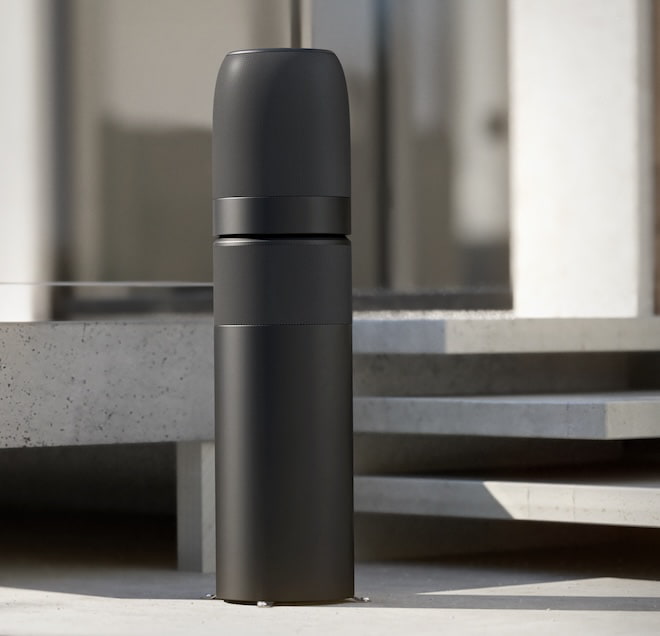
The BQ9 and BQ11 are not merely taller versions of KEF’s other bollards.
Each is a genuine three-way loudspeaker combining a Uni-Q array with a dedicated long-throw woofer and an internal passive crossover. The BQ9 uses a 6.5-inch Uni-Q with an 8-inch bass driver; the larger BQ11 mates an 8-inch Uni-Q to a 12-inch woofer.
The BQ9 reaches 35 Hz ±6 dB and 109 dB maximum SPL, while the BQ11 extends to 30 Hz and 112 dB. KEF recommends 240 and 400 watts respectively.
There is another important difference. Unlike the BH and Q-series landscape models, the BQ9 and BQ11 use passive crossovers and do not require a KASA amplifier. KEF specifically says they can be used with the owner’s preferred amplification.
Advertisement
That makes the BQ models particularly intriguing for high-end stereo and outdoor theater installations where the owner already has suitable amplification.
Bass Without Burying a Refrigerator
The new BL range provides two main KASA-optimized outdoor subwoofers.
The BL8b uses an 8-inch long-throw driver, reaches 27 Hz ±6 dB and delivers a claimed 109 dB maximum SPL. The BL12b uses a 12-inch driver, extends to 24 Hz and increases maximum output to 115 dB. Both radiate through 360 degrees.
KEF rates their nominal coverage areas at 120 and 200 square meters respectively and recommends 150 watts for the BL8b and 400 watts for the BL12b.
Advertisement
The P4F package uses the separate BL8Sb, an 8-inch dual-coil model with a 28 Hz–133 Hz ±6 dB response and 101 dB maximum SPL.
Three Ready-Made Landscape Systems
KEF is also simplifying the process with three 4.1 packages.
Advertisement. Scroll to continue reading.
The Landscape P4F ($2,000) includes four SR4F full-range satellites and the BL8Sb subwoofer. Unlike the other two systems, amplification is not included.
The Landscape P4Q ($5,000) combines four SR4Q Uni-Q satellites, one BL8b subwoofer and the KASA 2-250M.
The Landscape P6Q ($8,000) moves to four SR6Q satellites, the BL12b and a KASA 4-250M.
Both Uni-Q packages can be expanded to 8.2 or larger installations rather than forcing the buyer to replace the original system as the property grows.
KASA Is More Than an Outdoor Amplifier
The four new KASA models may have broader implications for KEF’s custom-install business.
Advertisement
The KASA 2-250M, 4-250M, 8-150M and 8-250M combine Class D amplification using GaN FET output stages with AKM Velvet Sound ADC/DAC conversion and KEF’s Music Integrity Engine DSP. A browser-based interface handles setup, source routing, multi-zone configuration and independent volume control without requiring a dedicated application.
KEF’s MIE profiles contain model-specific processing for compatible architectural speakers, allowing the installer to select the connected KEF model rather than creating its DSP configuration from scratch.
Analog RCA, optical and coaxial inputs are provided, along with buffered pass-through outputs. There is no indication in the supplied specifications of integrated Spotify, Qobuz, AirPlay, Google Cast or similar music services, so “Network DSP Amplifier” should not be confused with a network streamer.
The detailed power specifications are also worth reading rather than stopping at the model numbers.
Advertisement
Model
Channels
4Ω Single Channel
All Channels Driven at 4Ω
MSRP
KASA 2-250M
2
250 W
250 W/ch
$1,600
KASA 4-250M
4
250 W
250 W/ch
$3,200
KASA 8-150M
8
150 W
135 W/ch
$3,300
KASA 8-250M
8
250 W
135 W/ch
$4,000
That last column requires some attention. KEF markets the KASA 8-250M as an 8-channel 250-watt model, but its detailed specifications rate it at 135 watts per channel into 4 ohms with all eight channels operating simultaneously. The 250-watt figure applies to the single-channel test condition.
Nothing nefarious there, but eight times 250 watts is not what comes out of the box when every channel is working.
SR6Q
Designed for Actual Weather
KEF gives the landscape satellites and BH bollards an IP66 rating, while the BL subwoofers and BQ three-way models carry IPX5 certification.
The new speakers are UV resistant, specified to operate from -13°F to 158°F and have undergone more than 500 hours of salt-spray testing.
Advertisement
Ground stakes and hardscape mounts cover most installations, with additional surface, deck and mounting-column options depending on the model.
What Does KEF Compete With?
The premium landscape category is not empty, and two main competitors we’ve heard stand out.
Advertisement. Scroll to continue reading.
Theory Audio Design ic6-Bollard and iws12-Bollard
Theory has less product variety than KEF’s new range, but considerably more raw output from its two-model landscape platform. If someone wants the backyard to become an outdoor nightclub, that matters.
Advertisement
The ic6-Bollard ($2,795), which earned eCoustics Editors Choice in 2025, uses a 6.5-inch carbon-fiber driver with a 1.4-inch compression driver and provides true 360-degree horizontal coverage. Theory specifies 68 Hz-23 kHz at -6 dB, 112 dB maximum SPL using its AES rating and 118 dB peak output.
Theory’s iws12-Bollard ($3,560) high-output subwoofer uses a 12-inch driver with a 4-inch voice-coil that reaches down to 29.5 Hz at -3 dB and is rated for 124 dB maximum SPL. Both require Theory DSP processing and amplification.
Focal Littora OD 4.1
Focal’s Littora OD range combines a number of options for outdoor applications including speakers that look like rocks, along satellite/subwoofer speaker bundles. Amplification isn’t included, but Focal’s sister company Naim Audio provides a number of options along with very nice app to control music zones which can be used both inside and outside the house.
SR4Q
Price & Availability
All new KEF outdoor speakers are expected to be available in January 2027.
Advertisement
Uni-Q Outdoor Landscape Satellite (4 pack)
SR4Q (4.5″) – $2,000
SR6Q (6.5”) – $3,000
Outdoor Bollard Speakers
BH6Q (6.5″) – $1,500
BH8Q (8″) – $2,000
Outdoor Bollard Subwoofers
BL8b (8”) – $2,000
BL12b (12”) – $2,500
3-way Outdoor Bollard Speakers
BQ9 – $3,000
BQ11 – $4,000
Network DSP Amplifiers
KASA 2-250M – $1,600
KASA 4-250M – $3,200
KASA 8-150M – $3,300
KASA 8-250M – $4,000
The Bottom Line
KEF has sold weather-resistant speakers before. What it did not have was a complete outdoor ecosystem capable of scaling from a modest 4.1 garden setup to large distributed installations and full-range stereo or theater systems.
The most important additions are not necessarily the obvious ones. The BQ9 and BQ11 bring legitimate three-way architecture into the landscape, while KASA gives KEF control over amplification, DSP and installation instead of relying on somebody else’s electronics.
We will need to hear the new range before deciding whether KEF has successfully transported its sonic DNA from the listening room to the backyard. On paper, however, this is a much bigger move than another pair of speakers designed to survive the rain.
XGIMI has spent much of 2026 proving that it wants to be taken seriously beyond the portable and lifestyle projector categories that built its reputation. At CEDIA Expo 2026 in Denver, the company is making its biggest move yet into the U.S. custom-installation market.
XGIMI and AWALL LLC have jointly created XWALL by XGIMI, a new premium home-entertainment brand developed specifically for the United States. The partnership combines XGIMI’s projection engineering and manufacturing resources with AWALL’s experience in dealer sales, installation, calibration, training, and domestic support.
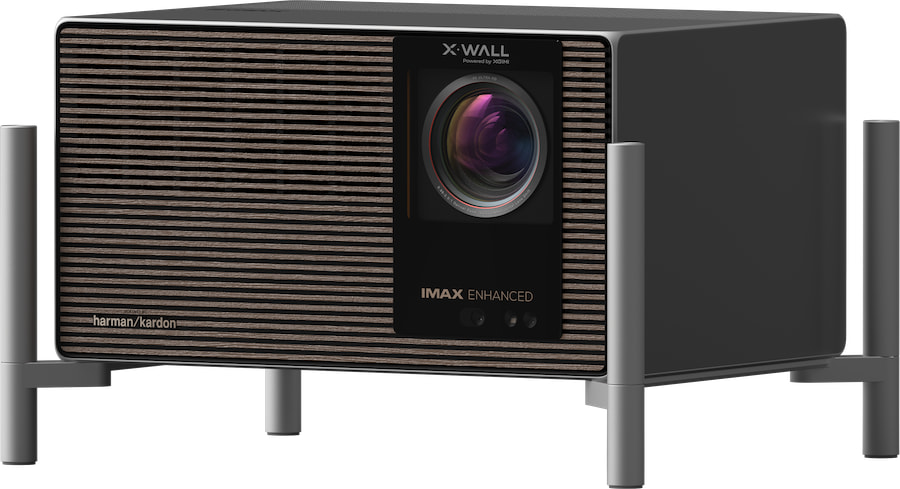
The first product is the XWALL TITAN Noir Ultra, a 4K RGB triple-laser projector rated at 8,000 ISO lumens with a claimed 12,000:1 native contrast ratio and up to 100,000:1 dynamic contrast. It uses a next-generation 0.47-inch SST DMD, a Dual Intelligent Iris system, and XGIMI’s X-Master Red Ring Lens Pro optical system, with support for 110% of the BT.2020 color gamut.
Unlike the ultra-short-throw projectors that have become increasingly common at the premium end of the market, the TITAN Noir Ultra uses a 0.98–2.0:1 throw ratio with motorized optical zoom and focus, vertical lens shift of ±130%, horizontal shift of ±50%, and five saved lens positions. It supports image sizes from 40 to 300 inches, along with Dolby Vision, HDR10+, IMAX Enhanced, active-shutter 3D, and gaming at up to 1080p/240Hz with a claimed 1ms input lag.
Advertisement
The TITAN Noir Ultra is being demonstrated at XGIMI Booth #3327 during CEDIA Expo 2026. U.S. pricing and a firm retail shipping date have not yet been announced, so there are still two rather important blanks on the specification sheet. At least we no longer have to guess what is inside the projector.
XWALL TITAN Noir Ultra
The headline brightness and contrast figures only tell part of the story. The XWALL TITAN Noir Ultra is being positioned as a serious installation projector rather than a larger version of XGIMI’s lifestyle models, with an optical system and placement flexibility designed for dedicated home theaters.
At its core is a 0.47-inch SST DMD combined with an RGB triple-laser light source. XWALL rates the projector at 8,000 ISO lumens with 110% coverage of the BT.2020 color gamut. The company claims a native contrast ratio of 12,000:1 and dynamic contrast of up to 100,000:1 through its Dual Intelligent Iris system and AI-powered Dynamic Black Enhancement. The projector produces a 3840 x 2160 4K UHD image.
The SST DMD is notable because of the amount of light XWALL is pushing through a 0.47-inch imaging device. According to the company, the next-generation chip has been designed to tolerate the higher power and thermal demands of the RGB laser system while maintaining stable imaging performance during extended viewing. That is a manufacturer claim rather than an independent measurement, but it helps explain why XWALL is making the SST architecture part of the sales pitch rather than burying the DMD size in the specification sheet.
The optics are arguably more important for custom installation. XWALL’s X-Master Red Ring Lens Pro uses 15 optical elements, aspherical glass, and a 14-layer vacuum coating, with claimed light transmittance of 99.6%. Motorized optical zoom and focus are combined with a 0.98–2.0:1 throw ratio, vertical lens shift of ±130%, and horizontal lens shift of ±50%. Installers can save as many as five lens positions, which makes the projector suitable for systems that switch between 16:9 programming and 2.35:1 CinemaScope screens.
Advertisement
Image size can range from approximately 40 to 300 inches depending on installation, and XWALL supports Dolby Vision, HDR10+, IMAX Enhanced, and active-shutter 3D. The latter includes Blu-ray frame packing, side-by-side, and top-and-bottom 3D formats. In an era when some manufacturers would prefer that everyone quietly forget 3D ever happened, there are still dedicated-theater owners who will be pleased to see it here.
Gaming has also received considerably more attention than one might expect from a projector aimed at the custom-installation market. XWALL claims input lag of 1ms at 1080p/240Hz, 2.2ms at 1080p/120Hz, and 3ms at 4K/60Hz, with support for VRR and ALLM. That’s impressive specifications that will require independent verification, but on paper they make the TITAN Noir Ultra considerably more flexible than a projector designed exclusively around movie playback.
Advertisement. Scroll to continue reading.
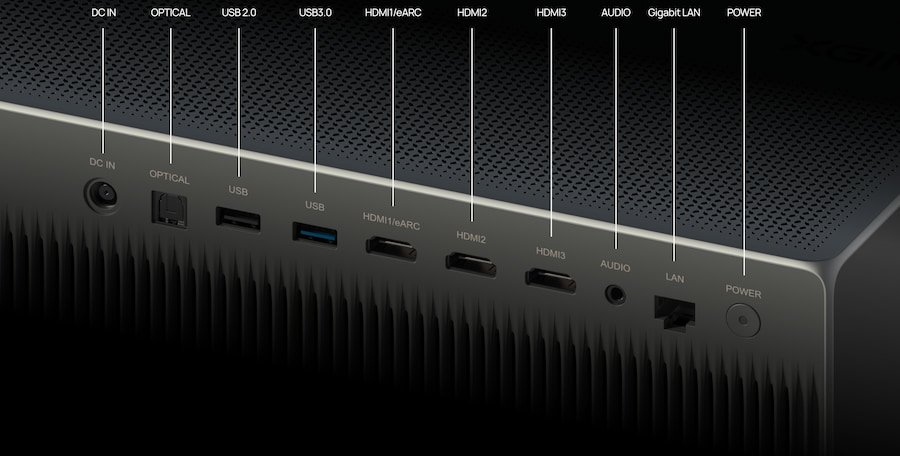
Connectivity includes three HDMI inputs with eARC support, USB 3.0 and USB 2.0 ports, Gigabit Ethernet, optical digital audio, and an analog audio connection. XWALL has not specified the HDMI revision on its current U.S. product page, so we would not assume HDMI 2.1 simply because the projector supports VRR and high-refresh-rate gaming.
There are still two rather significant blanks. XWALL has not announced a U.S. MSRP or a firm retail shipping date for the TITAN Noir Ultra. The company is currently directing prospective buyers to a priority list and consultation process, which fits the dealer and custom-installation model behind the new brand but makes it impossible to judge its value against established premium projectors until somebody attaches a price tag.
Advertisement
Why Create XWALL?
XGIMI already sells considerably more ambitious projectors than the portable models many consumers associate with the brand. Its TITAN Noir Max, for example, is a $5,999 RGB triple-laser 4K projector rated at up to 7,000 ISO lumens, with optical zoom, lens shift and a dual intelligent iris system.
XWALL represents a different kind of expansion.
Moving into high-end custom home theater requires more than increasing brightness, contrast and price. Integrators need products that can be designed into complex rooms, calibrated properly, supported after installation and integrated with the rest of a professionally installed system.
AWALL gives XGIMI a way into that world. Under the partnership, AWALL will serve as the exclusive U.S. sales and service partner for XWALL and handle dealer recruitment, training and channel development. The companies also say XWALL systems will be supported by professional calibration, customized configuration, system-design assistance and a three-year warranty.
Advertisement
AWALL CEO Steven Shulman is also the founder of AWOL Vision, and AWALL already operates in the premium display market with large-format MicroLED systems and installation services. XGIMI brings the projection hardware, while AWALL brings experience working with customers and dealers who expect more than a tracking number and an online FAQ.
That division of labor is the real reason XWALL exists.
Is XWALL Unique?
The custom-installation strategy itself is not new.
Sony, JVC and Epson already have deeply established positions in premium home cinema, with products designed for permanent installations and dealer-based sales channels. Sony’s BRAVIA Projector 9 sits at $35,999, while JVC’s DLA-NZ900 sells for $32,999. Both are aimed squarely at serious dedicated theaters.
Advertisement
Epson is attacking the same market from another direction with the $32,999 QL7000, a 10,000-lumen laser projector with interchangeable lenses. At CEDIA 2026, Epson is demonstrating the QL7000 with multiple Stewart Filmscreen configurations to show installers how it can be adapted to different rooms and screen technologies.
XWALL therefore is not inventing a new category.
Advertisement. Scroll to continue reading.
What is unusual is XGIMI’s decision to create a separate U.S.-focused brand rather than simply stretch the existing XGIMI lineup further upward. That gives the company some separation between its consumer products and a dealer-oriented range intended for professionally designed theaters.
Advertisement
It is a sensible move. Someone buying a lifestyle projector online has very different expectations from a client commissioning an expensive dedicated cinema where every component needs to work together and remain serviceable for years.
XGIMI does not need to convince consumers in Denver that it knows how to manufacture a projector. It needs to convince integrators that whatever appears under the XWALL name deserves to be specified alongside products from companies that have spent years building credibility in the custom channel.
XWALL gives XGIMI a serious entry point into professionally installed home cinema without forcing the company to build a U.S. dealer and support network from scratch.
The XWALL TITAN Noir Ultra gives that strategy some credibility. Its 8,000-lumen RGB laser light engine, ambitious contrast claims, extensive lens shift, wide throw range, and dedicated-installation focus put it well beyond the lifestyle projector category where XGIMI made its name.
Advertisement
The harder part comes next. Sony, JVC, and Epson already have formidable products and deep relationships with integrators. XWALL now has the hardware to get attention, but needs to prove itself through custom integrators who will ultimately be recommending and installing it.
A massive cybercriminal operation is leveraging thousands of compromised small-business websites to deliver ClickFix payloads stored in smart contracts on the BNB Smart Chain (BSC).
Over the past months, researchers identified more than 5,400 hacked websites, most of them built on WordPress and PrestaShop.
The initial compromise method remains unknown, but each site was injected with a script that gets the next-stage payload from a smart contract on the BSC Testnet endpoint, a technique known as EtherHiding.
Researchers at cloud security platform Netskope explain that the BSC Testnet is designed for developers and functions similarly to the mainnet, the production blockchain, but is available free of charge.
Advertisement
Threat actors use the EtherHiding technique to store malicious code or configuration data in blockchain smart contracts, providing a resilient infrastructure that is difficult to take down.
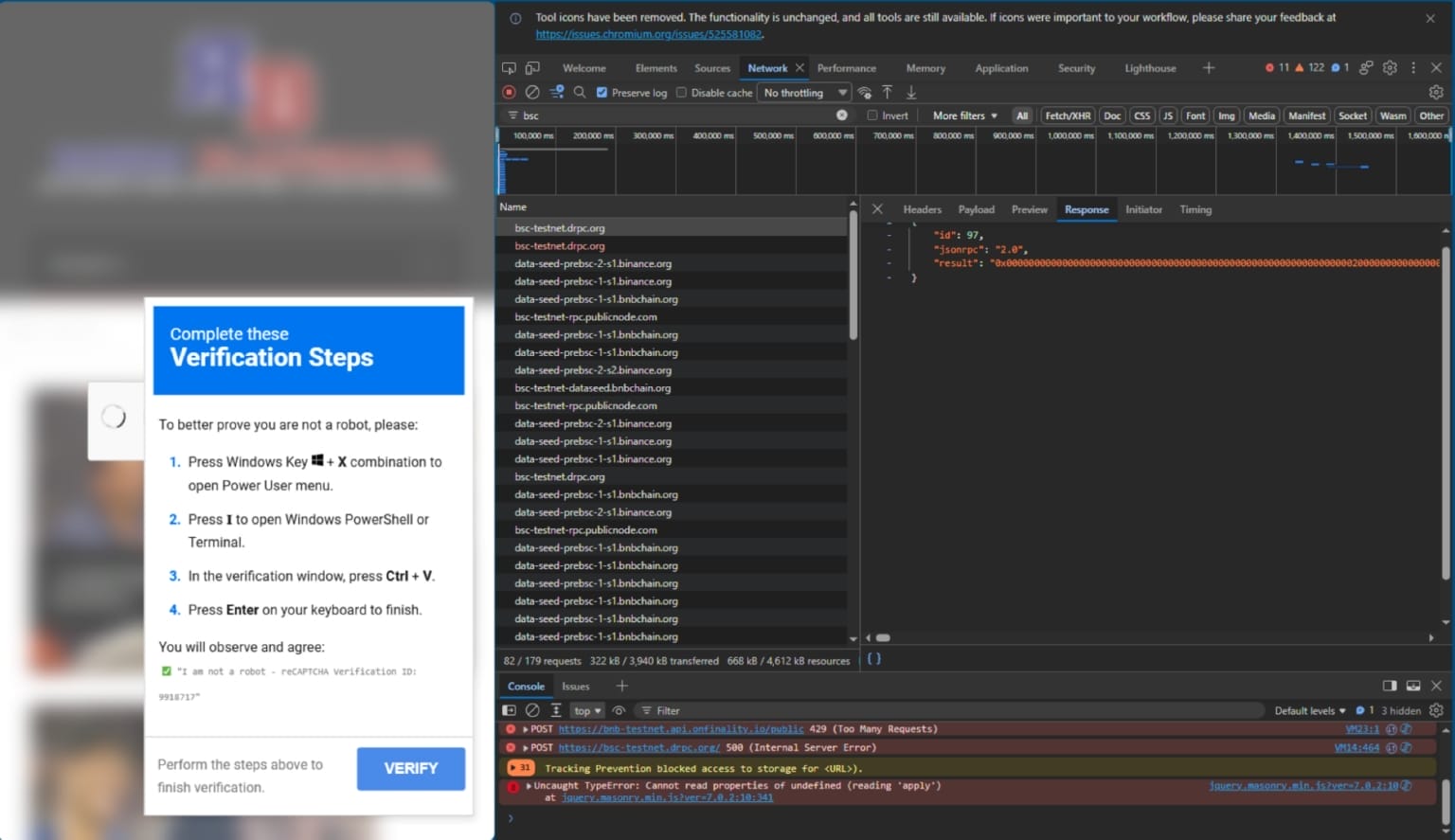
In the delivery chain observed by Netskope, the script displays a ClickFix lure that shows a fake CAPTCHA and instructs visitors to open the Windows Run dialog and paste a PowerShell command.
Loading the ClickFix lure Source: Netskope
Doing so downloads and executes the final payload on the machine. Because the attacker stores the payload in a smart contract, they can modify it at any time.
The researchers note that later in the campaign, the threat actor replaced the ClickFix payload in the smart contract with a WebRTC data-channel stager.
In the newer variant, the payload establishes a covert encrypted channel to the attacker and executes the received code.
Advertisement
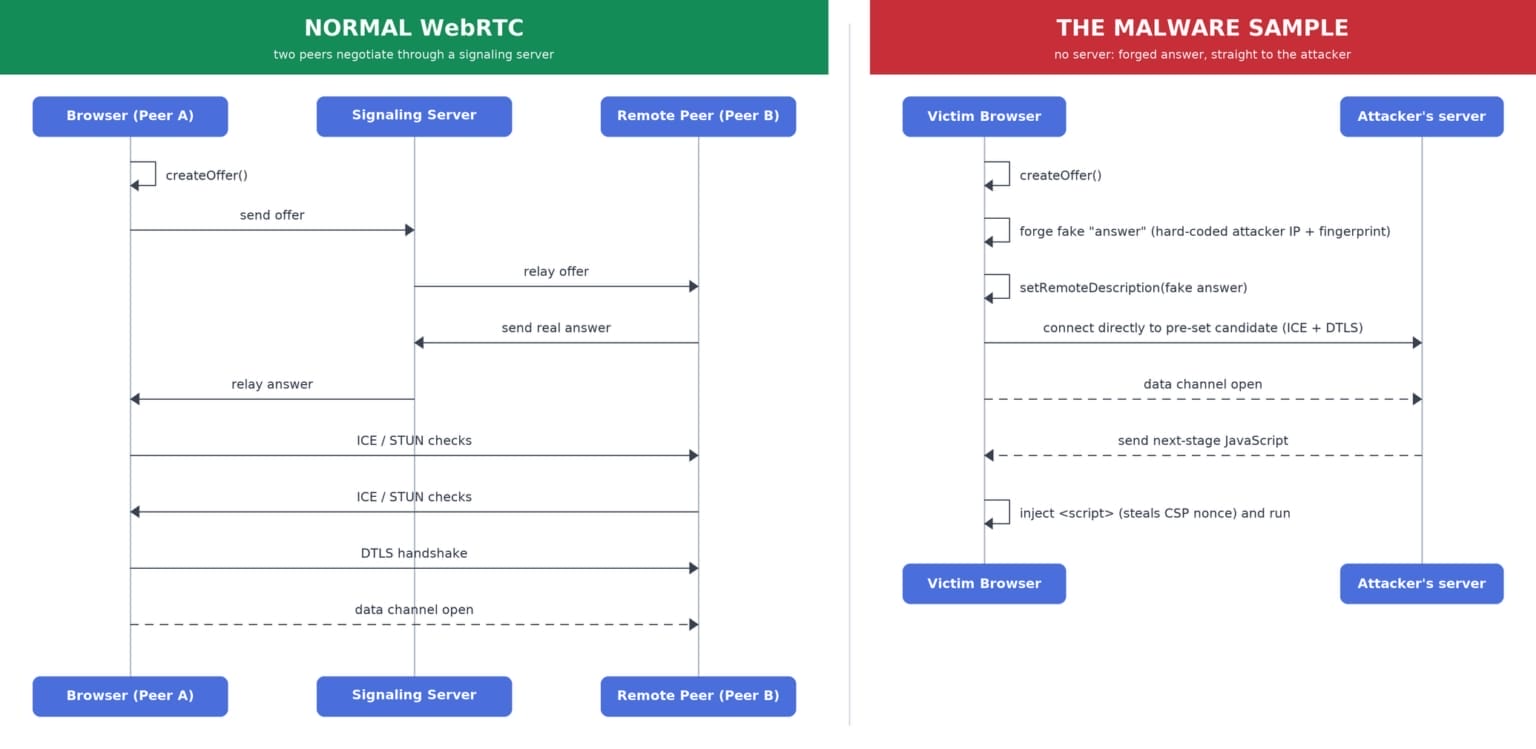
“The script creates a peer connection and a data channel, then generates the required session description offer just like a normal WebRTC handshake,” Netskope explains.
“But instead of sending that offer anywhere and waiting for a real reply, it hand-writes the answer itself and feeds it straight back into the connection. This way, no handshake happens, but a data channel to the cyberattacker still opens.”
Source: Netskope
The stager receives JavaScript code from the hardcoded command-and-control (C2) address, buffers it, and executes it when the channel closes or after ten seconds.
Received code is assembled in the browser memory and executed dynamically without being saved to disk by adding it to the head of the DOM
Netskope warns that the operation uses more than 300 infected websites every day. Since spring, the number of compromised sites contacting the BSC Testnet RPC endpoints has grown constantly.
Advertisement
Telemetry data shows that nearly 400 websites called the endpoint every day in August, with an all-time peak of 536.
The security researchers recommend that defenders block the entire pool of BSC testnet RPC endpoints provided here and monitor for non-web UDP traffic associated with WebRTC.
Overall prevention scores can hide what happens after initial access. Once attackers are using valid credentials, prevention drops sharply.
The Blue Report 2026 measures defenses technique by technique across 338 million simulations run in customer production environments.



































































You must be logged in to post a comment Login