

How powerful is AI? Enough that Anthropic, a leading AI company, announced earlier this month that its latest AI model, Claude Mythos Preview, would be available only to a limited number of businesses due to security concerns — at least for now.
Tech
One of Shark’s best cordless vacs in now 32% cheaper

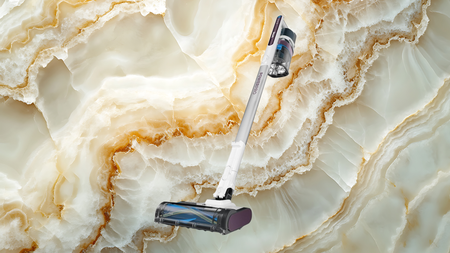
If you have pets, long hair in the household, or simply a mix of carpets and hard floors, a single vacuum that handles all of it without constant adjustment is worth paying attention to.
The Shark PowerPro is built for exactly that situation, and Amazon has cut it from £249 to £169, saving you £80 and bringing it down to one of its lowest prices yet.
One of the best cordless vacs in now much cheaper
If you have pets or mixed flooring, the Shark PowerPro handles it all, and at £169, it is well worth considering.

FloorDetect technology sits at the heart of what makes it practical, automatically sensing whether you are on carpet or hard floors and adjusting the brush-roll speed accordingly, so you never have to think about which mode you are in.
Anti Hair Wrap technology removes hair from the brush-roll as you clean rather than letting it tangle and build up, which is the kind of feature that makes a genuine difference over weeks and months of regular use.
The Anti-Allergen Complete Seal works alongside the HEPA filter to capture and trap dust and allergens inside the machine rather than redistributing them into the air, making it a more considered choice for allergy sufferers in the household.

Up to 50 minutes of runtime on a single charge gives you enough capacity to work through a full clean without stopping to recharge partway through, and the XL dust cup means fewer trips to the bin during that time.
When the floorhead is no longer what you need, the Shark PowerPro detaches into a handheld vacuum for tackling upholstery, car interiors, and hard-to-reach areas, with the included crevice tool and upholstery tool extending that reach even further.
Weighing 3.45kg and rated number one in Amazon’s stick vacuums category, this is a genuinely versatile cordless cleaner that covers most households’ needs in a single machine, and at £169 the 32% discount makes it a compelling buy for anyone who has been deliberating.
For a broader look at what else is available at this price point and beyond, our best cordless vacuum cleaners guide runs through the top-rated models you should consider before buying.
SQUIRREL_PLAYLIST_10148964
Continue Reading

A group of third grade students gather around a board game on a Wednesday afternoon in a Charleston classroom, grabbing game pieces, discussing potential moves and reading out playing cards. The games are not Monopoly, Sorry, or any others of yore – they’re focused on identifying, and boosting, students’ strengths and weaknesses.
It’s part of a shift in school districts’ gifted and talented programs. While many programs focused on a small group of high achieving students, instructors across the nation are now focusing more on inclusion, using data to help them zero in on students’ talents, a method that has the potential of capturing more students for advanced instruction.
For Vanessa Hill, the gifted education coordinator for Amphitheater Public School District in Tucson, Arizona, focusing on strengths and weaknesses helps to solve what she sees as a universal problem with gifted identification.
“Something I’ve been thinking deeply about that tends to be a universal problem is that gifted identification does not match the metrics of your district,” says Vanessa Hill, the gifted education coordinator for Amphitheater Public School District in Tucson, Arizona. “I’m constantly thinking of that, so our demographics can get closer. This new tactic is about exposure to critical thinking and reasoning – what does that look like, how to reason through a problem?”
Re-assessing the methods and ultimately changing the definition of “gifted” comes as some question the value of standardized tests and a push-and-pull to diversify programs.
The Shift In Gifted and Talented
The gifted and talented programs run the gamut of names and acronyms depending on the district, including advanced learning program, TAG (talented and gifted), LEAP (Learning Enrichment Alternative Program) or REACH (Realizing Excellence through Academic and Creative Help), among others.
Regardless of the name, the program has undergone several major shifts over the last few decades. Schools previously often only selectively tested students, often at the behest of involved parents or by a teacher recommendation. That brought a large amount of inequity in the programs, with many moving to a universal screening practice. Some states, including Washington and Missouri, made it a state mandate to test all students while in elementary school. The screening practice itself evolved from an IQ test to aptitude and ability tests, though how accurate those are is up for debate.
“Society is really unequal along socioeconomic and racial and ethnic lines, and these tests are just reflecting that,” says Scott Peters, director of research consulting at NWEA, a nonprofit education assessment organization. “You can change tests all day long, but at the end of the day, you can’t give some kids three years of $40,000-a-year preschool and also wonder why this kid that’s never been to school until first grade doesn’t do as well.”
Often, schools’ gifted and talented programs do not represent their overall school population and instead skew heavily toward white and Asian students. Zohran Mamdani, the widely-watched mayor of New York City, made it part of his platform to phase out gifted and talented programs because of the inequity.
“Ultimately, my administration would aim to make sure that every child receives a high-quality early education that nurtures their curiosity and learning,” he said in a 2025 statement to the New York Times.
There is no silver bullet test that accounts for inequality and a child’s upbringing, although Peters said when factors such as income, race and other equity gaps are controlled in tests, most inequities disappear.
“This isn’t a factor of, ‘Oh, there are students of color scoring high, but they’re still not getting in,’” he says. “It’s that there’s not enough students of color scoring high because of that larger societal inequality issue.”
Because of the often-skewed gifted and talented population, schools are shifting toward “talent development” with all students, versus focusing on strengthening some students’ already solid skills.
“Because of the baggage of the past, we’re moving toward a new perspective where we’re identifying the strengths of students — whether academic, social or emotional — versus people for a program,” says Kristen Seward, clinical professor in gifted, talented and creative studies at Purdue University. “And I think this twist in how we approach education as gifted researchers is going to benefit everybody.”
Using Data for ‘Talent Development’
Developing talent for gifted programs, much like the name itself, varies depending on the district. Seward says many teachers have enriched curriculums, which enhance things like vocabulary, science and social studies — topics that have been put on the back burner over the years in favor of standardized testing. Teachers are trained to spot students’ strengths and respond to those, which in turn, helps with students’ weaknesses.
For example, if a student has a strong vocabulary but struggles in math, the teacher might focus on math vocabulary during math class to put the lesson on a level the child understands.

Photo credit/Vanessa Hill
“I don’t want it to turn into a thing where the teacher is the gate, and if they don’t open the gate, then the students don’t get identified – which has been a problem,” Seward says. “We have to train teachers to be talent scouts, presenting the enriched curriculum. Hopefully it’s not something additional, but something they’d naturally do in their role.”
Elizabeth McLaurin Uptegrove, now the assistant academic director in Charleston County School District, created a “strength or stretch” system that involves the games the students played in the aforementioned classroom. When Uptegrove first arrived in Charleston’s school district, South Carolina used to require all second grade students be tested for the gifted and talented program. But after that year, selection changed to a nomination system.
“Which sounds elitist, and it is,” she says, adding white, affluent children were three times more likely to be in the programs.
She pushed for universal testing again for all fourth grade students, which yielded three times as many students identified as gifted, jumping from 40 fourth graders to 150 across the district. Several schools across the country have adopted similar strength-or-stretch systems.
But Uptegrove’s efforts go beyond identifying candidates for gifted programs through teacher observation: her game-based system uses data. With the aptitude test, there are verbal, quantitative and nonverbal subsections. The tests indicate if a child is low or high achieving in those areas. Then the children are placed in groups with those of similar abilities to play games that can enhance those skills.

Photo credit/Elizabeth McLaurin Uptegrove
“Typically a teacher is not very well-equipped to come up with activities or lessons that can actually reach their level of thinking ability and games do that really quickly, in a way that’s not as boring for children as a typical worksheet,” Uptegrove says. “That’s where the magic of the games comes in. We’re making rigorous, hard thinking almost irresistible so students are willing to do the activity for longer.”
Hill, the Arizona-based education coordinator, initially implemented Uptegrove’s game strategy across third grade classrooms in five schools: three Title 1 schools and two non-Title 1. She says the schools that have the strength or stretch program in place have higher passing rates of “proficient” or “highly proficient” scores than those who do not.
“To me, it’s the difference between being a passive learner and active learner; by being able to engage in the games, it’s more active learning,” Hill says. “You raise the exposure to critical thinking and are taught to apply those skills to any situation, whether it’s on an achievement test or on the playground with a friend.”
The Future of the Program
Both researchers and teachers acknowledge the “talent development” approach to gifted and talented programs is far from perfect. It is often costly, whether it is buying the games, instilling teacher training or taking out time from testing. Hill pointed to four schools within her district that are closing this year because of financial constraints.
“Ordering the games is no small cost; I feel so blessed it’s that level of importance that we will find the funds,” she says. “As far as critical thinking games, yes that was missing. It is a hole we were filling. I think that while the core curriculum is doing its best, it can oftentimes be a bit surface level.”
Uptegrove agrees, saying she believes the talent development method is becoming more popular, but “there’s a long way to go in belief and funding for it.”
Peters, who has long studied the best educational methods and practices, believes the shift in gifted and talented is a good step. But he has concerns about the larger moves needed for lasting impact.
“It’s easy to have a 30-minute gifted program; it’s hard to have a second through eighth grade math development pipeline involving everyone in the school,” he says. “And advanced learning isn’t enough of a priority for most schools.”

Claude Mythos Preview was designed for general use, Anthropic says, but during testing, the company found it extremely effective at identifying vulnerabilities in the security systems of all types of software, creating potentially massive security concerns.
So far, Anthropic is sharing the Mythos Preview model with a handful of major tech companies and banks through a program called Project Glasswing, intended to give them an opportunity to shore up any existing security vulnerabilities and get ahead of potential hacking attempts that the model could identify.
To get a better sense of what Claude Mythos Preview represents and the potential threat it brings to online security, Today, Explained co-host Sean Rameswaram spoke with Hayden Field, senior AI reporter at The Verge.
Below is an excerpt of their conversation, edited for length and clarity. You can hear the full episode wherever you get podcasts — including Apple Podcasts, Pandora, and Spotify.
Mythos is [Anthropic’s] newest AI model that they designed to be a general-purpose AI model like any other. But what they realized when they were working on it was that it had these special skills that they didn’t really anticipate. It was really good at cybersecurity. It found high-stakes vulnerabilities in virtually every operating system.
That’s pretty bad if you are using that as a hacker. And to have a blueprint for a list of every big gap and insecurity and vulnerability on all these really, really high-profile systems, you’re going to be having a list of everything you could do to take those systems down or exploit data.
They realized that they better not release this to the general public because it could fall into the wrong hands. And they instead handpicked a select few organizations that are responsible for critical infrastructure to release it to so they could plug those gaps in their systems instead.
You’ve heard of many of the companies that currently have and are using Claude Mythos: Nvidia, JP Morgan Chase, Google, apparently a few dozen more that build or maintain critical software infrastructure. How does it actually work?
Since they built it as a general-purpose model, it probably works like any other model in that you’re using it and prompting it to flag all the vulnerabilities in your system.
Maybe you’re Google Chrome, and you’re looking for specific, niche parts of the browser that you think may have some vulnerabilities. You’re basically prompting the model to flag all these really high-profile gaps to you and your security, and then you’re taking that and plugging it up on your own.
A hacker would actually use it in the same way. If it fell into the wrong hands, they’d be like, “Yeah, tell me all the vulnerabilities here.” And then they’re going to take it off the platform and use that for something nefarious. So it’s basically about who is prompting the system and what their motives are.
It’s as easy as saying, “Hey, Claude, tell me how this banking system might be vulnerable.” And then Claude thinks about it for a minute, and it spits out a bunch of answers.
And do we know that the Googles and Nvidias of the world are actually using this technology?
Yes. Part of the reason that Anthropic released this is they wanted these organizations to report back on exactly how Mythos worked and what it did to plug up the vulnerabilities and the gaps in their system. It’s an information-sharing thing.
They’re letting these companies use it to test out how well it does to plug up all these high-profile gaps, and then they have to report back to Anthropic about how it worked.
How is Anthropic choosing who to share this technology with?
I actually asked them that. They’re essentially looking for cyber defenders or companies that a lot of people depend on, and that downstream it would be a huge issue if they got hacked in any way, shape, or form.
JP Morgan Chase is a great example. Anthropic has also offered this technology to the government.
Do Anthropic’s competitors have similar tools? Are they presumably working on similar tools?
OpenAI is apparently working on a similar tool. Anthropic itself has said this isn’t something that they deem they’ll be in the lead on for too long. They think labs anywhere in the world may release this technology in the next three months, six months, 12 months.
It seems like, sometime in the next 12 months, this is going to be out there. And so that’s why they wanted to release Mythos now, so that companies and banks could get ahead of all the hacks that may be coming down the line, when similar types of technology are released to the general public, maybe months from now.
If this is so dangerous and there’s so many potential risks, is anyone having a conversation about just not releasing tools like this and just sort of shutting it down, keeping it internal?
That is a really great question. I’m so glad you asked, because not enough people ask whether an AI system should actually be released or used for certain things. Right now, we’re seeing a lot of one-size-fits-all, throw-it-at-everything type of integration. And a lot of times AI is not the answer for things.
With this, though, people tend to agree that it is something that’s needed right now. AI is already out there helping cyberattackers really step up their attacks. And we’ve been seeing that intensify over the past year. People seem to agree that you need AI to fight AI cyberattacks, essentially.
It’s kind of like medieval fortresses, where you’re adding extra stones and building up the walls at the fortress higher because a war is coming. That’s the sense I get when I talk to these experts about this. They know it’s coming. It’s just, ‘Try to shore up your defenses now so that you’re best prepared.’

Business laptops are a niche that suits only a few, but if there were one laptop you could do every single job with, it’s the ExpertBook Ultra. This laptop debuts Intel’s Panther Lake processors in India, and they pack serious performance not only in the CPU but also in the graphics department, with the Taiwanese laptop maker claiming GPU performance similar to the RTX 4050 on the ExpertBook Ultra, which weighs less than 1kg. Here’s everything you need to know about it.
Flagship All Around

Asus is pitching the ExpertBook Ultra as its most premium business laptop yet, and it’s easy to see why. It features an ultra-light design starting at just 0.99 kg and is built using magnesium-aluminum alloy. We took the Ultra for a spin at the launch event, and it looked beautiful. The finish shimmers in sunlight, making the whole experience even more premium.
Open the lid, and you’re greeted by a beautiful 3K Tandem OLED display that nails the colors and delivers deep blacks. But that’s not actually the highlight. The highlight is the 1400-nit peak brightness in HDR mode, which keeps the display legible even in direct sunlight. The nano coating also keeps the panel smudge-free.
Under the hood lie Intel’s latest Core Ultra Series 3 processors, along with an integrated AI engine (NPU) to handle on-device AI workloads. While we are yet to test the performance of the ExpertBook Ultra, Asus’s demos have set expectations very high, as their benchmarks show the laptop topping the charts among other laptops. The processor can be coupled with up to 64GB of LPDDR5X RAM and 2TB of M.2 2280 NVMe PCIe 5.0 SSD.
Graphics are handled by the Intel Arc B390, which Asus says offers performance comparable to the RTX 4050. The company also ran a series of benchmarks comparing the two in a variety of games. The ExpertBook Ultra is run by a 70WHrs battery with a claimed all-day battery life of up to 26 hours.
ExpertBook P Series Gets an Upgrade

Alongside the Ultra, ASUS has expanded its ExpertBook P series with new models like the P3 and P5, targeting a wider range of business users.
These laptops will deliver scalable performance and AI capabilities for professionals and small- to medium-sized businesses. ASUS says the goal is to provide flexibility across configurations while maintaining strong performance and reliability.
Pricing & Availability
The ASUS ExpertBook Ultra is now available for pre-order on Flipkart, starting at ₹2,39,990. Pre-order offers include extended warranty, accidental damage protection, bank discounts, and bundled subscriptions. Meanwhile, the ExpertBook P3 starts at ₹94,990, while the P5 is expected to launch soon with a starting price of ₹2,14,990

Its expansion comes despite reporting losses here in 2024
Chinese coffee brand Luckin Coffee has been in Singapore for only three years, but it has established a strong foothold in the city-state. It expanded by 30 stores over the past year, bringing its total number of outlets here to 81.
This is despite offering its coffee at heavily discounted prices and reporting losses amounting to RMB¥47 million (S$8.8 million) in Singapore in 2024, all the more notable in the context of Singapore’s notoriously tough F&B landscape.
What, then, goes into the Chinese brand’s playbook for expanding in such a challenging market?
A scale few café operators can match

Luckin’s pricing power comes from a scale few café operators can match.
With over 30,000 stores globally—more than Starbucks—the company benefits from massive purchasing volumes that significantly reduce its cost per cup, enabling retail prices as low as S$4, and even promotional offers such as S$0.99 coffee for first-time users.
In 2024, Luckin Coffee signed its largest procurement deal in the brand’s history—a five-year agreement to purchase 240,000 tonnes of Brazilian coffee beans starting in 2025, valued at RMB¥10 billion (S$1.87 billion).
CEO Guo Jinyi has also claimed that the company accounted for 40% of China’s total coffee bean imports and 60% of Brazilian coffee bean imports into China in 2024. At this level of purchasing power, Luckin is likely able to secure significantly lower costs compared to most café operators.
Cost efficiencies also extend beyond coffee beans.
In 2025, low-value consumables such as packaging materials and straws cost the company just RMB¥210 million (S$39 million) across its entire 30,000 store network. This translates to roughly S$1,307.64 per store per year, or about S$3.58 per store per day.

Since 2021, Luckin has also reduced costs by cutting reliance on third-party suppliers and building more of its own production capabilities.
It has opened in-house intelligent roasting plants in Fujian and Jiangsu, which have an annual roasting capacity exceeding 45,000 tonnes.
In Aug 2024, Luckin also broke ground on an Innovation and Production Centre in Qingdao with a total investment of approximately RMB¥3 billion and an expected annual roasting capacity of 55,000 tonnes.
According to its 2025 annual report, another roasting facility is under construction in Fujian. Once all four are operational, total roasting capacity will far exceed the 155,000 tonnes per year target.
This vertical integration allows Luckin to control more of its supply chain in-house, reduce intermediary costs, and ultimately lower overall production expenses across its store network.
An operating model that keeps costs lean

Ever struggled to find a seat at a Luckin Coffee outlet? That’s by design. Most Luckin stores are intentionally small to keep operating costs low.
Around 99% of its outlets are compact pick-up stores of 20–60 sqm, with limited or no seating. These stores are strategically located in office buildings, commercial districts, residential neighbourhoods, and university campuses, allowing the brand to expand rapidly while keeping rental and renovation costs low.
In fact, store pre-opening expenses accounted for just 0.2% of total operating expenses in 2025.
In Singapore, this format provides a clear advantage: smaller units mean cheaper leases compared to full-format cafés, which is especially crucial in a market where retail rents are notoriously high.

Beyond its physical footprint, Luckin’s digitalised operating model also enables a leaner cost structure. The company operates on an app-first system where customers order and pay entirely through its own platform.
This reduces reliance on cashier staff, lowers the risk of order errors, and allows for highly targeted in-app promotions and personalised marketing to users.
Besides its own app, Luckin Coffee is also available on third-party delivery platforms. According to its 2025 annual report, delivery orders doubled from 17.1% of total orders in 2024 to 34.7% in 2025 across its whole network, which shows that Luckin is extending its reach beyond its physical store footprint.
Expansion doesn’t cost as much as it looks
Even with lower set-up costs, opening 30 stores in Singapore within a single year might seem aggressive. However, it’s not as capital-intensive as it might appear for the coffee giant under its operating model.
In Singapore, many outlets are run with franchise partners. These partners pay upfront fees and take on much of the setup and operating costs themselves. This means each new store is not fully funded by Luckin, helping the brand scale more quickly with less direct capital outlay.
At the same time, any remaining losses in overseas markets are effectively absorbed by its much larger China business.
In financial year 2024, Luckin’s Singapore operations reported losses amounting to RMB¥47 million (S$8.8 million).
However, this is small in the context of the group.
In 2024, Luckin generated over RMB 34.5 billion (S$6.4 billion) in revenue overall, alongside approximately RMB¥3.5–3.9 billion (S$653-S$728 million) in operating profit driven primarily by its China business. Against that scale, Singapore’s losses are effectively marginal.
Singapore is not a profit centre for the group, but part of a longer-term international expansion strategy.
Standing out in Singapore’s competitive coffee scene

From America’s Starbucks to China’s Cotti Coffee, and even local coffee houses, the competition for market share amongst coffee brands in Singapore is nothing short of steep, as Singaporeans have so many options to choose from.
So what makes one choose Luckin over other specialty coffee shops and those at our local coffee shops?
While Luckin’s coffee doesn’t start from RMB 10 (S$1.87) per cup as it does in China, at S$4.80 for an Americano, it is still cheaper than many other café operators, including Starbucks, where prices start at around S$6.30.
This also does not account for the personalised discounts Luckin offers to users who order through its mobile app.
Luckin CEO Guo shared why Singapore was specifically chosen as the next big market for Luckin:
Singapore serves as a critical testing ground for building our brand, refining our operational systems, and understanding overseas business models.
The city-state serves as Luckin’s launchpad into Southeast Asian countries, where it shared that it will adopt a franchise model.
While individual 2025 figures for Luckin’s Singapore operations are not available and are grouped with those of Malaysia and the United States after further expansion, the coffee giant shows no signs of slowing down.
In China, the journey from loss-making in 2020 to an explosive market leader took Luckin roughly five years. In Singapore, a city-state of six million people with a coffee shop on nearly every corner, the competition is steep.
But for Luckin, the steep competition is precisely the point—if the model works here, it can work anywhere in Southeast Asia.
- Read other articles we’ve written on Singaporean businesses here.
Featured Image Credit: Sentosa/ Tatler Asia

For creative and marketing teams, a simple cloud storage solution often falls short. These teams need to sift through large numbers of files to find what they’re looking for. The problem is getting worse: AI is accelerating content generation, meaning more media files than ever, which makes the task even trickier.
A New York-based startup called Shade is building a cloud storage platform designed for agencies, sports media teams, consumer brands, real estate companies, and podcasters to store and search their media files easily.
The company announced Wednesday that it closed $14 million in a funding round led by Khosla Ventures, Construct Capital, and Bling Capital in March. The nearly four-year-old startup has raised $20 million in total, with General Catalyst, SignalFire, and Contrary also on its cap table.
Shade was founded by CEO Brandon Fan and CTO Emerson Dove in 2024. The two had been friends since high school. They decided to build something together after growing frustrated with existing tools like Dropbox when it came to searching for files.
“We built it out of our frustration as creatives – [where we were contending with] stacks and stacks of hard drives and issues where we were using Dropbox drive frame and all of the tools under the sun…it was time to build one single source of truth,” Fan said.

He sees Shade as occupying an interesting niche as a creative file storage system around which companies can build workflows.
“As you make more content, you need to be thinking more about the workflows around the content. I like to say it’s similar to CRMs 20 years ago, when we were thinking about how to organize all the information that we had around our contacts and in all of our companies,” he said.
Techcrunch event
San Francisco, CA
|
October 13-15, 2026
Shade points to two distinguishing features. First, it offers natural language search powered by auto-tagging. The startup said that this search doesn’t just surface a particular video — it identifies the exact moment in the video where a scene matching the search query occurs. For instance, users can search for “a person holding a laptop in snow,” and the system will surface all matching clips with timestamps.

The tool also automatically transcribes videos for easier search. Users can search based on meaning, transcripts, and facial recognition for labeled individuals.
Second, Shade uses a “streamable” file system that lets you mount your cloud storage to your local filesystem and start working with a file almost immediately, without waiting for it to fully download first. Users can also pin files to access them even in low-bandwidth conditions. Typically, with a storage system like Google Drive or Dropbox, you have to wait for a large file to download before editing it. Shade’s streamable system lets you get started right away.
Beyond storage and search, Shade makes it easy for teams to collaborate — with the ability to leave feedback tied to a video at a specific timestamp. They can also attach files in comments to give direction. Shade lets teams create multiple links for the same assets with varying permissions, and teams can set access-based roles.
For final deliveries to clients, teams can create branded file collections with password protection and expiry dates.

For small teams, Shade offers a $20 per seat, per month plan that includes unlimited drives, unlimited AI indexing, and 500GB of active storage per seat. The plan supports up to 15 seats per workspace and up to 150 guests for collaboration.
Shade isn’t alone in this space. Startups like Poly and Memories.ai are also working on AI-powered file storage and search for large numbers of files.
Keith Rabois, managing director at Khosla Ventures, said that while AI has accelerated content creation, managing those creations remains messy.
“Most companies are layering search on top of existing storage. Shade rebuilt the stack from first principles, spanning streaming, indexing, and collaboration in one system. That architectural approach is harder, but it is why the product actually works, not just as a bolt-on feature,” Rabois said over email.
He added that while search is the starting point, Shade could become a key tool for automating sharing and versioning.
In the coming months, Shade plans to improve its search across different file types, including images, videos, and documents. The startup is also building a no-code platform — meaning one that requires no programming knowledge — to let creative teams create automated workflows based on files in the system.
“We’re essentially building the Lego blocks that allow you to [operate] any type of business, you have that ability to apply shade to your workflow, whether that is, today, just creative teams, [or] in the future, research and investment teams,” Fan said.
When you purchase through links in our articles, we may earn a small commission. This doesn’t affect our editorial independence.
Tech
Millions of forgotten FTP servers are still running quietly across the internet decades after being enabled by default settings

- FTP still runs widely due to forgotten default configurations
- Millions of servers expose FTP without active administrative awareness
- Encryption inconsistencies leave many FTP connections completely unprotected online
The File Transfer Protocol (FTP) is one of the oldest methods for moving files over the internet, designed during an era when online security was not a primary concern.
According to Censys, it still runs on almost 6 million servers primarily because it was activated by default within hosting panels and subsequently forgotten, rather than being maintained through deliberate administrative choice.
Due to its persistent and often unnoticed operations, security experts now question whether this 55-year-old protocol should be used at all.
Article continues below
FTP continues to persist in modern infrastructure
“If FTP is showing up in your asset inventory, the first question isn’t how to harden it, it’s whether it should be running at all. Use a more secure alternative,” Censys warns.
A considerable portion of the FTP exposure problem originates from control panel ecosystems that enable the protocol by default during initial server provisioning.
This means the service often remains active through unattended configuration rather than through any affirmative choice made by the administrator.
Another major issue is that many FTP servers are not deliberately installed as a primary service.
They often come bundled with hosting platforms and control panels, where they are enabled automatically during setup.
Over time, they remain active without regular review, making it difficult for organizations to know exactly how many FTP services they are running.
This creates quiet risks that can remain unnoticed for long periods within ordinary operations.
It also reflects a broader infrastructure pattern where convenience-driven services continue operating long after their original necessity has faded.
That persistence often leaves administrators uncertain about what still matters, what can be removed, and what has simply been forgotten.
FTP’s handling of passwords and other sensitive data during transmission is a major concern.
In some setups, FTP can still send login details in plain text, which means they could be intercepted if someone is watching network traffic.
Although some servers now support encryption, many still fail to use it or are misconfigured for secure connections.
This inconsistency exists because support varies across software packages and depends heavily on installation choices made early on.
As a result, organizations often face fragmented environments where some traffic is protected, while other connections remain exposed in clear text.
Security researchers also note that FTP daemons behave differently, with some treating encryption as optional and others requiring overlooked administrative steps.
In practice, this leads to inconsistent protection across the internet, depending on how each server was originally configured.

Follow TechRadar on Google News and add us as a preferred source to get our expert news, reviews, and opinion in your feeds.

Heat damage is the quiet enemy of healthy hair, and most dryers on the market will keep making that problem quietly worse with every single morning use.
That concern is exactly what the Dyson Supersonic was built to address, and with Amazon currently selling it for £218 rather than its usual £329.99, there is over £110 off to take advantage of.
Amazon has chopped 34% off the luxury Dyson Supersonic
The Dyson Supersonic is the sort of purchase that tends to pay for itself over time, and £218 price is the lowest it has been in a while.

That engineering starts with the V9 digital motor, which spins at up to 110,000rpm to generate a high-pressure jet of controlled air that dries hair quickly without ever needing to rely on extreme heat.
What makes that possible is the intelligent heat control system, which measures air temperature over 40 times per second and adjusts it continuously, so your hair never gets more heat than it actually needs.
The result is a dryer that genuinely protects natural shine rather than stripping it away, which is a meaningful distinction if you colour-treat your hair or already deal with dryness and breakage.
Dyson Supersonic has also three speed settings and four heat settings, including a cold shot, give you precise control over the finish whether you want a smooth blowout, added volume, or a more textured result.
The three included attachments extend that versatility further: the concentrator focuses airflow for a sleek, directed finish, the Gentle Air attachment dials down intensity for finer or more delicate hair, and the Flyaway Tool uses the Coanda effect to lift stray hairs and smooth them flat.
That last attachment is the one that genuinely separates the Dyson Supersonic from cheaper alternatives, delivering the kind of polished, salon-quality finish that would otherwise require a separate styling tool on top.
This edition comes in Prussian Blue and Rich Copper with an aluminium build, and the package is backed by a two-year limited warranty for peace of mind.
The Dyson Supersonic is the sort of purchase that tends to pay for itself over time, and at £218 the upfront cost is the lowest it has been in a while, making this a compelling moment for anyone who has been holding off.
SQUIRREL_PLAYLIST_10148964

An anonymous reader quotes a report from the Guardian: Nearly half of children in the United States are breathing dangerous levels of air pollution, according to a new report, as experts warned Donald Trump’s expansive rollback of protections will make the situation worse. The 27th annual air quality report from the American Lung Association (ALA) released on Wednesday evaluates pollution across the country by grading levels of ground-level ozone — also known as smog — as well as year-round and short-term spikes in particle pollution, commonly referred to as soot. The report analyzed quality-assured data collected between 2022 and 2024. It found that 33.5 million children in the US — 46% of those under 18 — live in areas that received a failing grade for at least one measure of air pollution. The report also found that 7 million children, or 10% of all children in the US, live in communities that failed all three measures.
The report further found that communities of color are disproportionately exposed to unhealthy air. As a result, they are more likely to live with one or more chronic health conditions that make them more vulnerable to pollution, including asthma, diabetes, and heart disease. Although people of color make up 42.1% of the US population, they represent 54.2% of those living in counties with at least one failing grade, the report noted. It also found that a person of color is 2.42 times more likely than a white person to live in a community that fails all three pollution measures. Smog remains the most widespread pollutant affecting Americans’ health. Between 2022 and 2024, 38% of the US population — approximately 129.1 million people — were exposed to ozone levels that put their health at risk. This marks the highest number recorded in the ALA’s report in six years, and a 3.9 million increase from the previous year.
Several factors contributed to these unhealthy pollution levels, including extreme heat, drought and wildfires which have exposed a growing share of the population to harmful ozone, the report said. The regions most affected by high ozone levels include south-western states from California to Texas, as well as much of the midwest. This is mainly driven by smoke from Canada’s 2023 wildfires crossing into the US, along with high temperatures and weather patterns that favored ozone formation in 2023 and 2024 — particularly in southern states. More broadly, the report found that climate change is intensifying ozone pollution by boosting precursor emissions and creating atmospheric conditions such as higher temperatures and lower wind speeds that allow pollutants to build up and ozone to form. Another growing source of pollution: datacenters. The report notes how they rely on regional electricity grids where fossil fuels like methane gas and coal still account for a large portion of generation. Many datacenters also use dozens of large diesel-powered backup generators, which emit carcinogenic particulate matter.
“Children’s lungs are still developing,” said Will Barrett, assistant vice-president of the ALA’s Nationwide Clean Air Policy. “For their body size, they’re breathing more air. And also, kids play outdoors, they’re more active, they’re breathing in more outdoor air […]. So, air pollution exposure in children can contribute to long-term developmental harm to their lungs, new cases of asthma, increased risks of respiratory illness and other health considerations later in life.”


On the first full test run, success was the order of the day as that amphibious car rolled down the bank, splashed into the water, and simply continued trucking. The foam blocks kept it afloat, and the back motor gradually slipped into place, propelling it across the lake. Minutes passed, and before you knew it, the animal had reached the far shore and climbed back out by itself. The project’s inventor, RCLifeOn, has a reputation for transforming common parts into some interesting creations.
This time, he began with a simple metal car frame stripped of its roof and any excess dead weight. The goal from the beginning was to build a single machine that could handle both pavement and open water without the need for a trailer or separate boat. The foam blocks supplied lift. Stacked and molded around the frame, they provided enough buoyancy to hold a good three hundred kilograms. Plywood plates fastened the foam to the metal, and some glass fiber cloth offered some more strength at the joints; nevertheless, the first time he attempted it, the fabric split some of the foam; a quick coat of paint sealed the surface against water and filth.
Sale

MAXSHOT Electric Scooter for Adults, 8.5/10/14″ Tires, 19/22Mph, 350W/500W Motor, 21-28 Miles Range…
- 🛴 POWERFUL MOTOR & LONG BATTERY LIFE: Equipped with a 350W brushless motor, this electric scooter reaches speeds of up to 16 MPH for a smooth and…
- 🛴8.5” SOLID TIRES: Featuring 8.5-inch honeycomb solid tires, this electric scooter ensures superior durability and shock absorption without the…
- 🛴DOUBLE BRAKING & LIGHTING SYSTEM: Designed for all-day safety, this scooter comes with ultra-bright LED headlights illuminating up to 15 meters…

Four hub motors nestled inside the tires provided the land some power. They provided him four-wheel drive that was reversible and controlled by electronic speed controllers, as well as a decent amount of torque for grass and dirt. A twist throttle on the handlebar controlled acceleration, while the rider sat comfortably in the center for balance on both surfaces. In contrast, water mode required a slightly different technique. He cobbled together an old e-foil motor with the propeller installed at the back, giving it some thrust when lowered into the water. Some aluminum extrusions made a sliding gantry that carried the entire motor assembly up and down on rollers with a little help from a Ryobi drill, whose clutch allowed him to lift or drop the motor smoothly without getting all those gears mixed up. One direction spun it down, while the other quickly lifted it off the ground. A few pieces of wood and 3D printed brackets held everything together, and the base plate was made of 8mm plywood.

Steering on the water was just a matter of catching the flow with a couple of pieces of plywood near the prop and nudging the nose one way or another. The body would lean slightly in the tighter turns. The same throttle grip functioned in both modes, and he fueled the land and water motors with their own battery packs and controllers.

When it came to routing, electronics required a lot of careful preparation because you had to make sure your LiPo batteries, heavy-duty speed controllers, and a servo tester all worked together without any cables getting pinched and no water damage seeping in. Then there’s the puzzle of keeping all your cables tidy, as your moving gantry is always changing about, causing a mess, so some strong cable management skills are required. Finally, the testing verified that everything worked. On land, the vehicle handled similarly to a solid four-wheel drive cart. In the water, it floated perfectly on the surface and glided along at a reasonable speed, enough to span a substantial amount of lake in a matter of minutes. Transitioning from road to water was seamless: simply drive in, turn off the engine, and go. Even when floating, the low ground clearance protects the hub motors, while the foam on the tires keeps them mostly out of the water.

Range estimates place it at roughly fifty kilometers (thirty-one miles) on roads and three on water, but only with the current battery configuration. The good news is that the entire system is made up of parts that can be easily found at any old hardware shop, from the frame to the drill mechanism and everything in between. The constructor ensured that every connection is easily serviced with only a simple set of equipment.

Cocaine pollution can affect the behavior of fish—altering, for example, the way Atlantic salmon move through their environment, prompting them to swim farther and disperse over a wider area.
So finds a recent study by a research team coordinated by Griffith University, the Swedish University of Agricultural Sciences, the Zoological Society of London, and the Max Planck Institute of Animal Behavior and published in the journal Current Biology. The findings provide the first evidence that the effects of cocaine contamination on fish behavior occur not only under laboratory conditions but also in the wild, where animals are exposed to much more complex environmental conditions.
Cocaine and its metabolites have been detected with increasing frequency in rivers and lakes around the world, entering waterways primarily through wastewater treatment systems. Although previous research has shown that cocaine pollution can affect animal behavior, this evidence was limited to laboratory conditions. A 2024 study by the Oswaldo Cruz Institute in Brazil showed that even sharks are exposed to cocaine, but little is known about its effects on animals in the wild.
To understand more about it, the authors of the new study surgically implanted small devices that slowly released chemicals into 105 juvenile Atlantic salmon in Lake Vättern in Sweden. They were then divided into three groups: a control group, which was not exposed to substances; a group exposed to cocaine; and a group exposed to benzoylecgonine, the main metabolite of cocaine that is commonly detected in wastewater. The researchers also attached small tags to the fish so they could monitor their movements over a two-month period. From subsequent analyses, the team found that, compared with the control group, fish exposed to benzoylecgonine swam up to 1.9 times farther, dispersing at the end of the experiment about 20 miles from the release point.
“The location of the fish determines what they eat, what eats them, and how populations are structured,” said coauthor Marcus Michelangeli. “If pollution is altering these patterns, it has the potential to affect ecosystems in ways we are only now beginning to understand.”
In addition to showing how cocaine pollution has changed the way salmon use space in a natural ecosystem, the new study found that the most pronounced effect was observed not so much in the group exposed to cocaine itself, but in that exposed to its metabolite. This result has implications for monitoring, since the metabolites are often more common in waterways and current risk assessments generally focus on the main compound, potentially neglecting important biological effects.
“The idea that cocaine might have effects on fish might seem surprising, but the reality is that wildlife is already exposed to a wide range of human-made drugs on a daily basis,” said Michelangeli. The researchers’ next step will be to be able to determine how widespread these effects are, identify which species are most at risk, and test whether alterations in behavior translate into changes in survival and reproduction.
This story originally appeared on WIRED Italia and has been translated from Spanish.

Politics56 seconds ago
Politics Home | Experiments in Parliament

Sports2 minutes ago
Loera’s breakthrough win tees up 2026 Denise’s Joy Stakes option at Scone
Tech3 minutes ago
Districts Relying More on Data to Identify Gifted Students

NewsBeat4 weeks ago
Manchester United reach agreement with Casemiro over contract clause amid transfer speculation

NewsBeat3 weeks ago
Steven Gerrard disagrees with Gary Neville over ‘shock’ Chelsea and Arsenal claim | Football

Politics2 weeks ago
US brings back mandatory military draft registration


-

 Sports6 days ago
NWFL Suspends Two Players Over Post-Match Clash in Ado-Ekiti
-

 Fashion6 days ago
Weekend Open Thread: Theodora Dress
-

 Politics5 days ago
Palestine barred from entering Canada for FIFA Congress
-
Entertainment3 days ago
NBA Analyst Charles Barkley Chimes in on Ice Spice McDonald’s Fiasco
-

 Business4 days ago
Powerball Result April 18, 2026: No Jackpot Winner in Powerball Draw: $75 Million Rolls Over
-

 Tech4 days ago
Auto Enthusiast Scores Running Tesla Model 3 for Two Grand and Turns It Into Bare-Bones Go-Kart
-

 Politics4 days ago
Zack Polanski demands ‘council homes not luxury flats for foreign investors’
-

 Crypto World5 days ago
Russia Pushes Bill to Criminalize Unregistered Crypto Services
-

 Politics2 days ago
Gary Stevenson delivers timely reminder to register to vote as deadline TODAY
-

 Politics14 hours ago
Disabled people challenge government SEND proposals over segregation concerns
-

 Politics13 hours ago
Making troops accountable for war crimes threatens US alliance, ex-SAS colonel warns
-

 Business22 hours ago
Rolls-Royce Voted UK’s Most Iconic Trade Mark as IPO Register Hits 150
-
 Business6 days ago
Creo Medical agree sale of its manufacturing operation
-

 Crypto World5 days ago
Russia Introduces Bill To Criminalize Unregistered Crypto Services
-

 Politics15 hours ago
Starmer handler McSweeney to be dragged from shadows by Foreign Affairs Committee
-

 Politics14 hours ago
Zack Polanski responds to home secretary’s taser threat
-
Politics15 hours ago
Wings Over Scotland | How To Get Away With Crimes
-
 Crypto World4 days ago
Kelp DAO rsETH Bridge Hack Drains $292M as DeFi Losses Top $600M in Two Weeks
-

 Politics12 hours ago
‘Iran is still a nuclear threat’
-

 Business7 days ago
Cheaper Doritos and Lays helps PepsiCo win back struggling snackers
You must be logged in to post a comment Login