Connect with us

Tech

One Unlucky Toyota Tundra Driver Got The Smallest (Yet Annoying) Recall Of 2026

Published

on


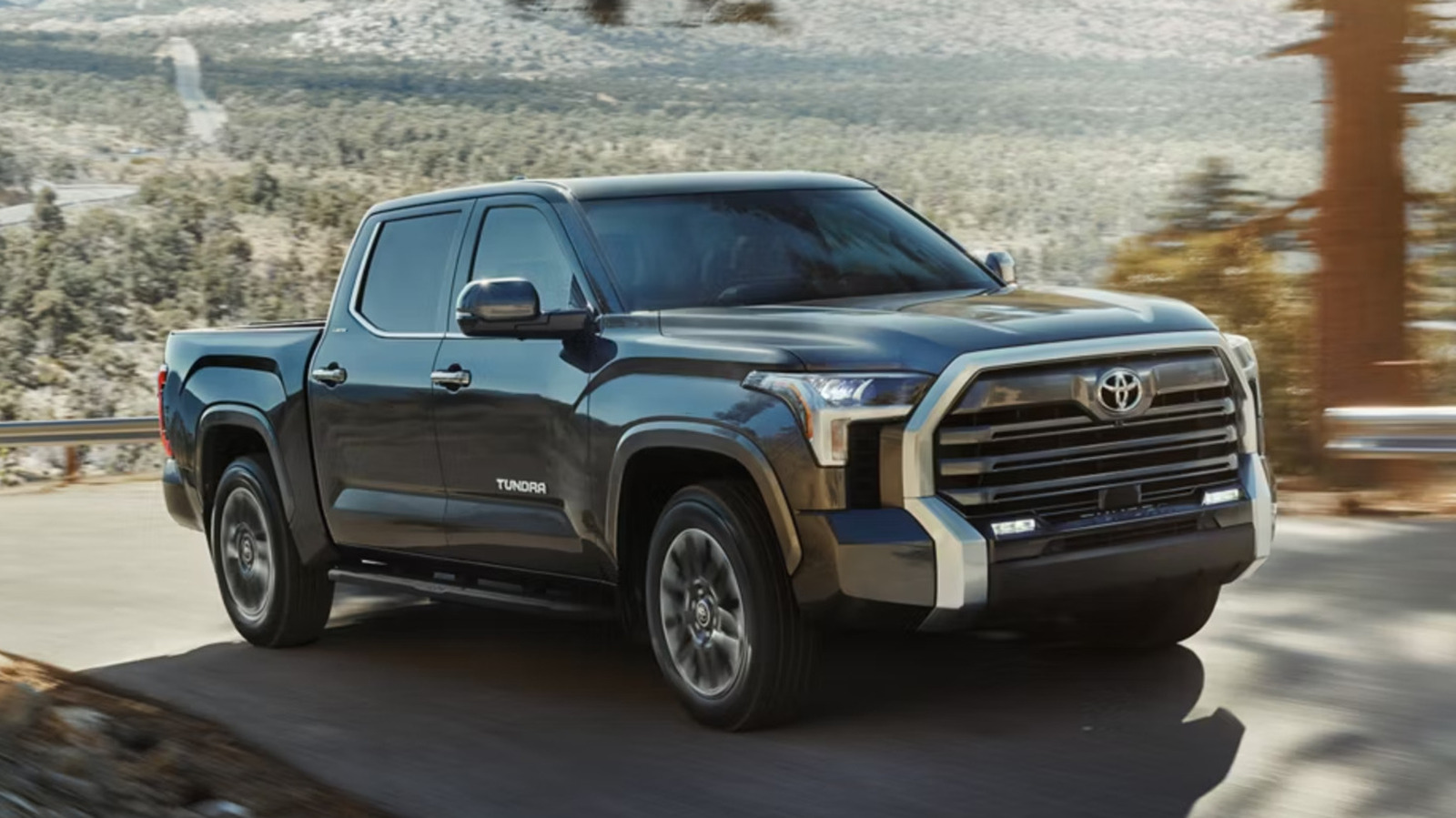
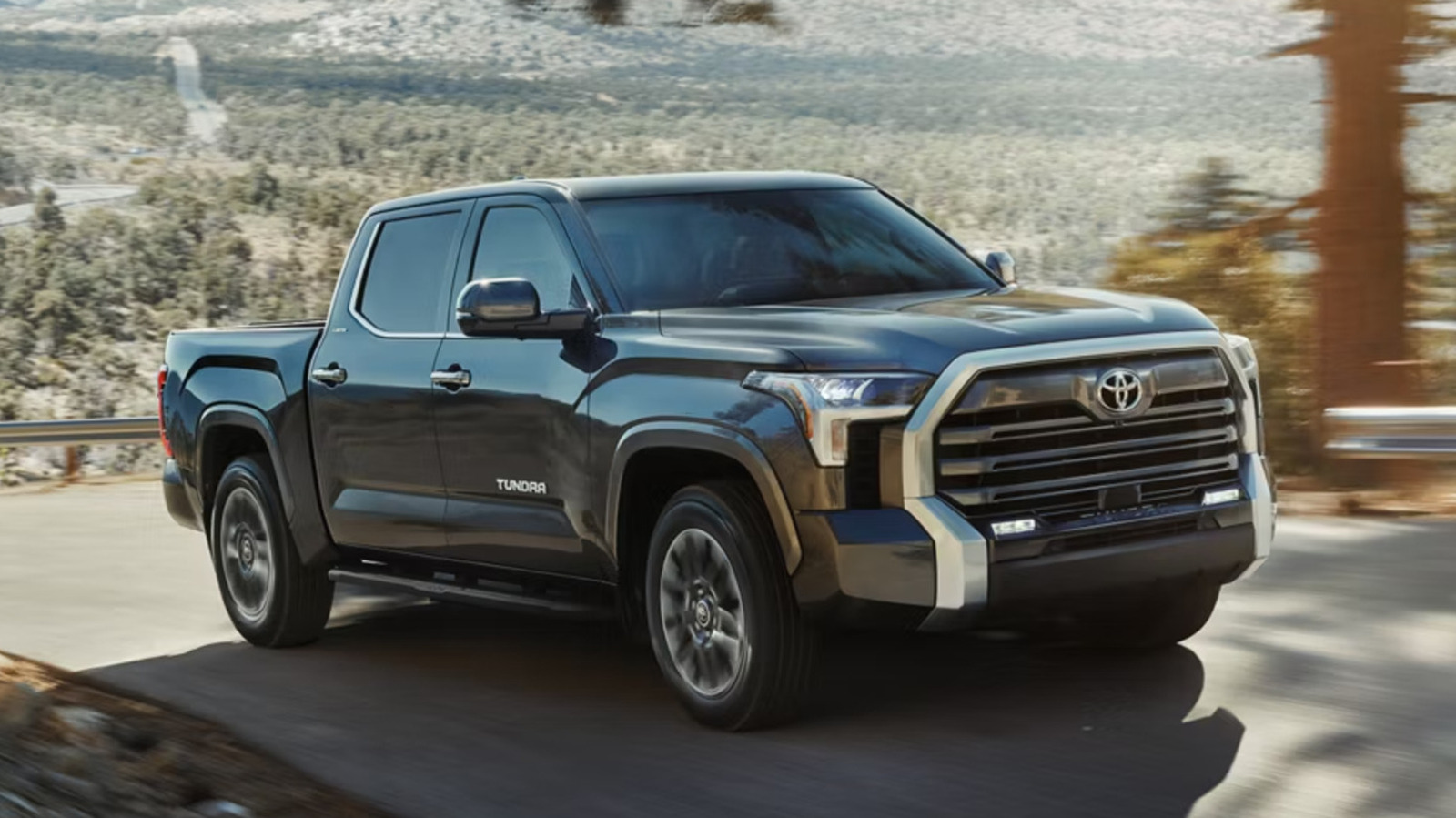
Most recalls send thousands of owners scrambling to check their VIN, but this time, only one 2026 Toyota Tundra truck owner drew the short straw. A single truck is being recalled because its payload sticker shows the wrong carrying capacity. Payload is the combined weight of the passengers, cargo, and equipment a truck can safely carry. Before this Tundra was sold, Southeast Toyota Distributors installed an accessory package that made the truck heavier.

The extra weight of that accessory, therefore, reduced the amount left for people and cargo, but the package was left out of the sticker’s final calculation. As a result, it did not properly reflect the change in the truck’s total carrying capacity.

Advertisement

This is not a common problem with the Toyota Tundra, as only one truck is affected, and nothing is mechanically wrong with it. Toyota also says the accessories did not use up all of its available payload. The concern is that the owner could trust the incorrect figure when loading the bed or cabin and unknowingly exceed the truck’s real limit and increase the risk of crash — one which insurance may not cover because of the overloading.

That gives recall SET26A a defect rate of 100-percent and puts the 2026 Tundra in the same exclusive one-vehicle recall club as a 2024 Ford Mustang, 2025 Audi SQ7, and 2026 BMW S 1000 RR motorcycle.

Advertisement

How one sticker became a recall

The mistake surfaced on April 10, 2026, when a dealer noticed the installed accessory package was missing from the Tundra’s build sheet, leading Southeast Toyota to find it had been accidentally deleted after installation. That was enough to put the truck out of compliance with FMVSS No. 110 called “Tire Selection and Rims.” Despite the name, the rule also covers the payload sticker to account for any accessories added before the truck is sold.

The rule applies when the added accessories weigh more than 100 pounds or more than 1.5 percent of the vehicle’s gross weight rating (GVWR), whichever number is lower. The label must then be updated, and the new figure cannot be off by more than one percent from the weight those accessories added. Southeast Toyota has not given further details about the error.

After its discovery, Southeast Toyota temporarily stopped producing these modified labels for accessorized vehicles until it fixed the deletion process and checked the calculations. The fix for the affected Tundra is a corrected, vehicle-specific label based on the actual weight of the installed accessories which will be mailed to the owner free of charge and can be placed over the old label. The notification letter scheduled to go out by September 4, 2026.

Advertisement


Source link

Advertisement
Continue Reading
Click to comment

You must be logged in to post a comment Login

Leave a Reply

Tech

Can Google Boost Pixel Photos With AI Horsepower, Not Gimmicks?

Published

on

If Google’s Pixel line of phones is best known for anything, it’s impressive software that elevates the photos its cameras capture. This year’s Made By Google event, which kicks off at 6 p.m. ET on Wednesday, Aug. 12, will likely see the Pixel 11 phones shown off — a standard, Pro, and Pro XL version most likely — along with the next Google Pixel 11 Pro Fold. Rumors also point to a Pixel Watch 5. 

And everything will likely get a good dose of Gemini AI. Last year, Google added features to its Pixel phones that relied on Gemini generative AI technology like Pro Res Zoom to compensate for the limitations of small smartphone cameras. My big question is, with the Pixel 11 line being announced, will Google genuinely advance mobile photography or introduce more gimmicks that can frustrate the photo process for photographers and everyday people?

It’s a tough line to walk. Generative AI technology for images has advanced rapidly over that time, but so has the public’s resistance to AI slop and photos created entirely from prompts.

I want to believe Google can step up the photography game this year.

Advertisement

Pro Res Zoom technology vs. image quality

Pro Res Zoom was the Pixel 10 Pro’s signature photo technology, a novel solution to an everyday smartphone camera problem.

It’s a common sight when people try to take photos with their phone: They zoom in on a scene by pinching and spreading with two fingers on the screen. But past a certain point — 10x zoom on the Pixel 10 Pro — all the camera is doing is digitally enlarging pixels, which diminishes detail. At 100x, images look like you’re squinting at them with poor eyesight and no glasses.

Google’s answer is to recreate, using generative AI, what’s in that zoomed-in area. The phone guesses at the content and generates an artificial rendering of what it should be. In some situations, it can work well, like with distant buildings or other architectural features that aren’t the focus of the shot. But if people are in the scene, forget about it. 

The Pixel 10 Pro XL captured a 100x zoom photo, which is blurry due to the extreme zoom (right) and made a generative AI version of it (left).

Jeff Carlson/CNET

Rumors suggest the Pixel 11 Pro phones’ version of Pro Res Zoom will go up to 120x magnification, so I don’t expect things to change much. However, the pace of generative AI improvements could mean it does a better job rendering the extremely zoomed-in scenes.

Advertisement

At 100x, the Pixel 10 Pro XL’s Pro Res Zoom feature uses generative AI (left) to build a clearer version of the original (right), which has also been processed, just without generative AI. When you capture above 30x zoom, the camera keeps both the original and the generated versions.

Jeff Carlson/CNET

Ironically, Google’s earlier Super Res Zoom feature (which launched with the Pixel 3 in 2018) turns out to be the superior technology here, despite it being elbowed aside by Pro Res Zoom last year.

At 30x zoom, the Super Res Zoom feature in the Pixel 10 Pro upscales at good quality (30x zoom at left, detail enlarged at right).Jeff Carlson/CNET

At up to 30x magnification, you still get the same problem from digitally enlarging pixels, but they’re not as large as at 100x. Super Res Zoom applies AI-based upscaling to sharpen details and fix many of the fuzzy artifacts created by digitally zooming. In my tests, it was difficult to tell which zoomed photos were Super Res Zoom images versus optically zoomed versions.

If Google can extend Super Res Zoom higher into the zoom range, even up to 50x zoom without resorting to generative AI reconstruction, I’ll call that a win.

Night Sight improvements

Photographing in dark situations has been one area where smartphone cameras have excelled. If you’re ever able to view the Aurora Borealis, unless you’ve got a good camera and a tripod, your phone will give you far better handheld images of the light show in the sky.

Current phones do a good job with night photography, but we can always ask for better.

Advertisement

Taken with the Pixel 10 Pro XL’s main camera using ‘Night Sight’

Andrew Lanxon/CNET

Dark photos tend to suffer from visible noise artifacts and issues with exposure and color. Too many smartphone cameras flex the ability to boost the exposure in a dark scene, but go too hard in artificially brightening a scene – I never want a night shot to look like it was exposed in the middle of the afternoon.

I’m optimistic, though, because AI technology for removing noise has improved a lot in the last couple of years. And if a camera can increase the lighting in a scene and still make the scene look realistic, then the developers can adjust the algorithms to turn down the exposure.

Photo editing with AI

The goal of anyone taking a photo is to “get it right in-camera” and avoid spending more time editing it later. That’s really the entire driving force behind smartphone cameras: millions of people are capturing trillions of photos that will never be edited, so the camera needs to do as much work as possible to get it right the first time.

And quite often, it does. The typical person taking a snapshot with their phone is thinking about capturing a moment when they tap the button, not shutter speeds or exposure compensation.

Advertisement

But some photos do need editing, and smartphones have more than enough processing power to handle it. The hurdle is more often the complexity involved: not everyone is comfortable dragging sliders for brightness, contrast, white point, shadows and so on.

Instead of messing with edit sliders, ask Gemini to fix issues with a photo.Screenshots by Jeff Carlson/CNET

The Photos app does include an Ask feature, allowing you to tell the app what needs to be changed. If a photo looks washed out or has flat lighting, ask the app to make the fix. In my testing, it often does a good job.

What I’d like to see is the same feature adjusting all those sliders for me so I can then go back and tweak the settings if I want. Instead, I can only save the result as another copy of the image in my library.

A plea to lose the generative AI slop

Whereas most of Google’s image-editing features that use AI build on the photo’s initial composition, there are plenty of generative AI features that enable users to radically alter them. I’m genuinely curious to know if people go for “remix” features that take a picture of someone and can change the background, restyle what they’re wearing, turn them into a sketch and so forth.

Ask for an edit in the Photos app such as this background replacement, and Gemini AI generates it for you.Screenshots by Jeff Carlson/CNET

These features seem to exist not because people are clamoring for them, but because AI models can do them, and therefore they get worked into product releases to show the market and management that “we’re doing AI.” Maybe it’s the longtime photographer side of me that bristles at these types of generative creations (“glop?”).

It would make sense for Google, with all its investments in generative AI, to lean further into developing AI features that change images beyond recognition, simply to boast about their expanding toolbox. If I’m any judge, I don’t think anyone’s asking for that. Google has the resources and the talent to make meaningful advancements in smartphone photography. I’m hoping this year’s updates live up to that potential.

Advertisement

Source link

Advertisement
Continue Reading

Tech

Could a Bag of 20-Sided Dice Keep James Bruton’s Rideable Walker From Toppling?

Published

on

James Bruton 20-Sided Dice Walking Machine Mid-Walker
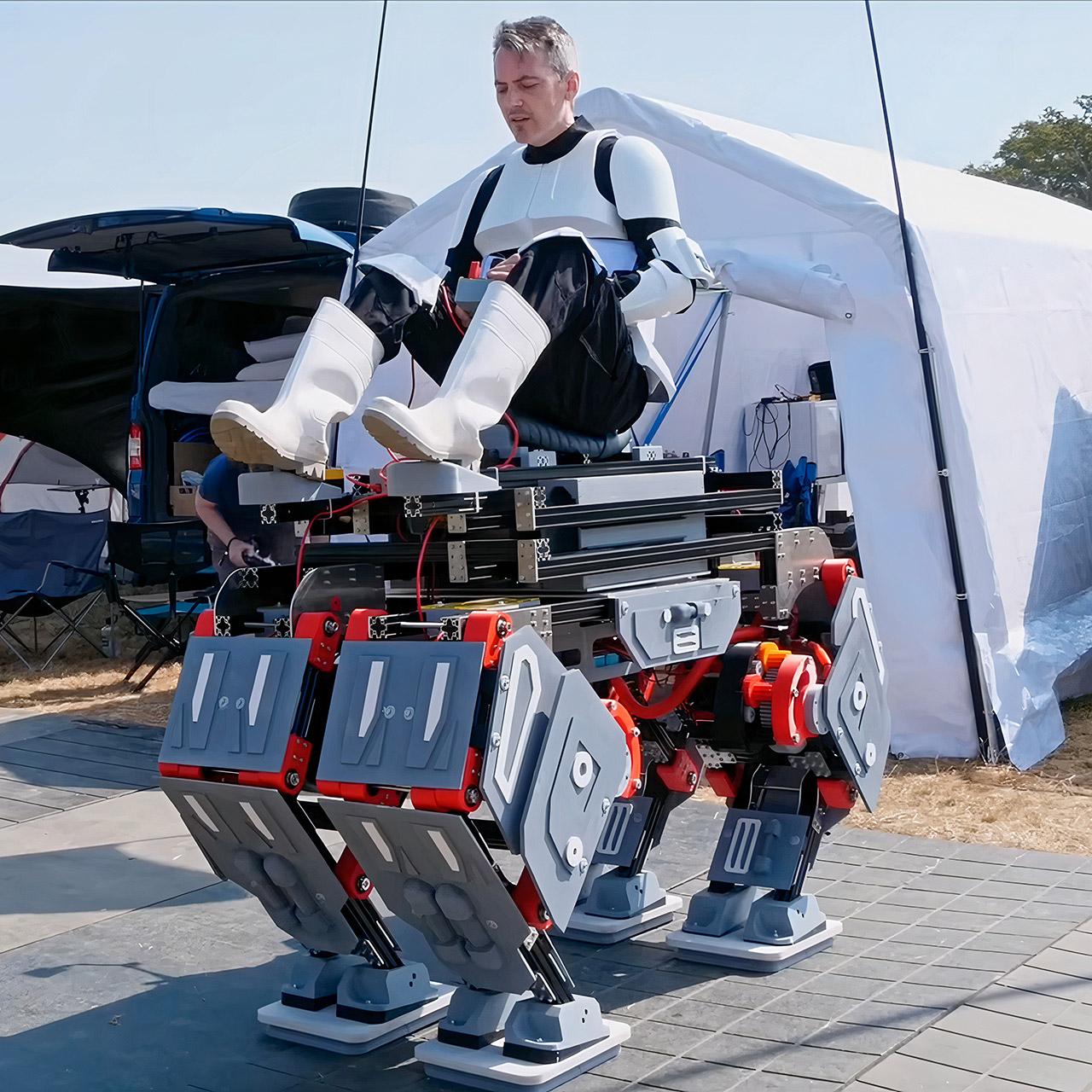
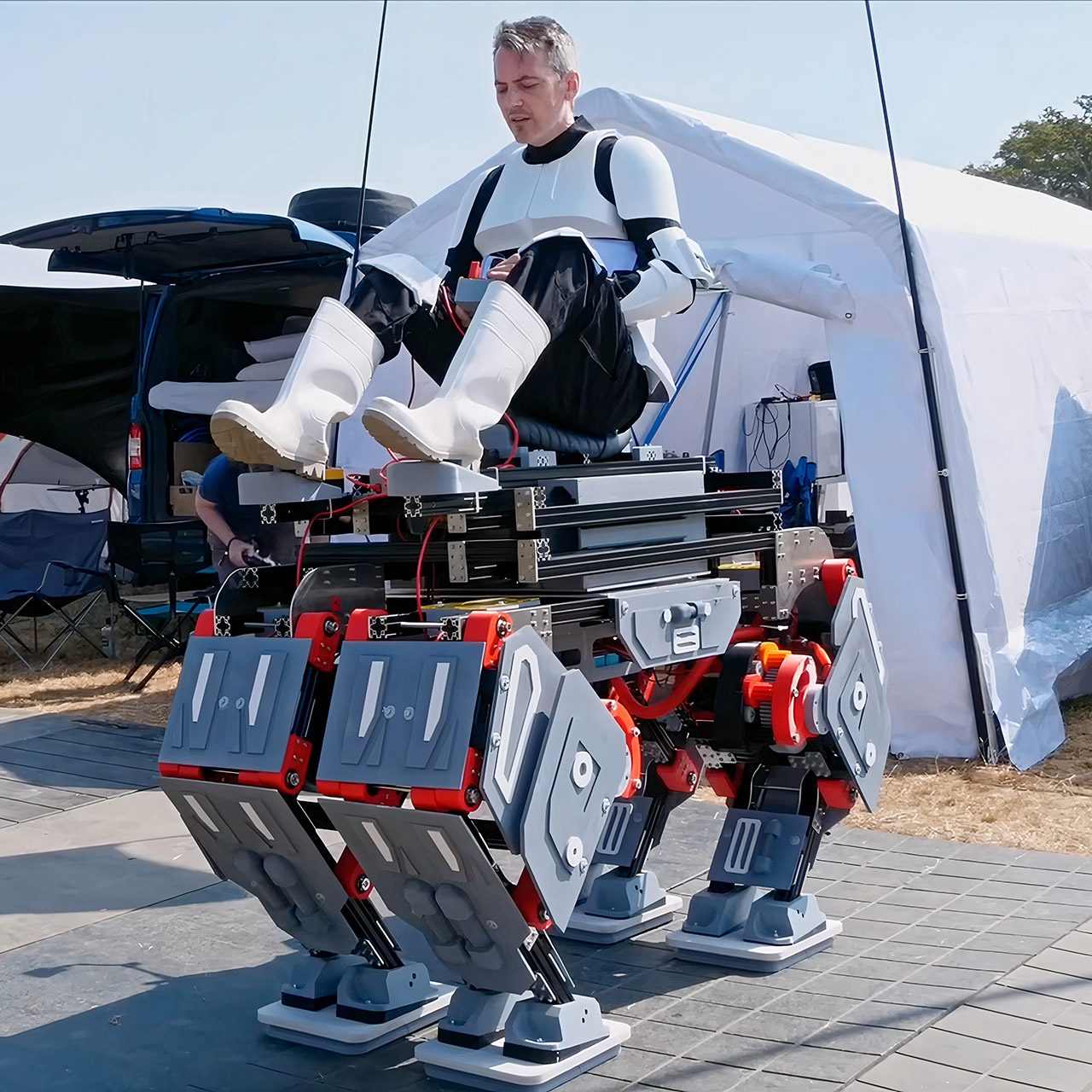
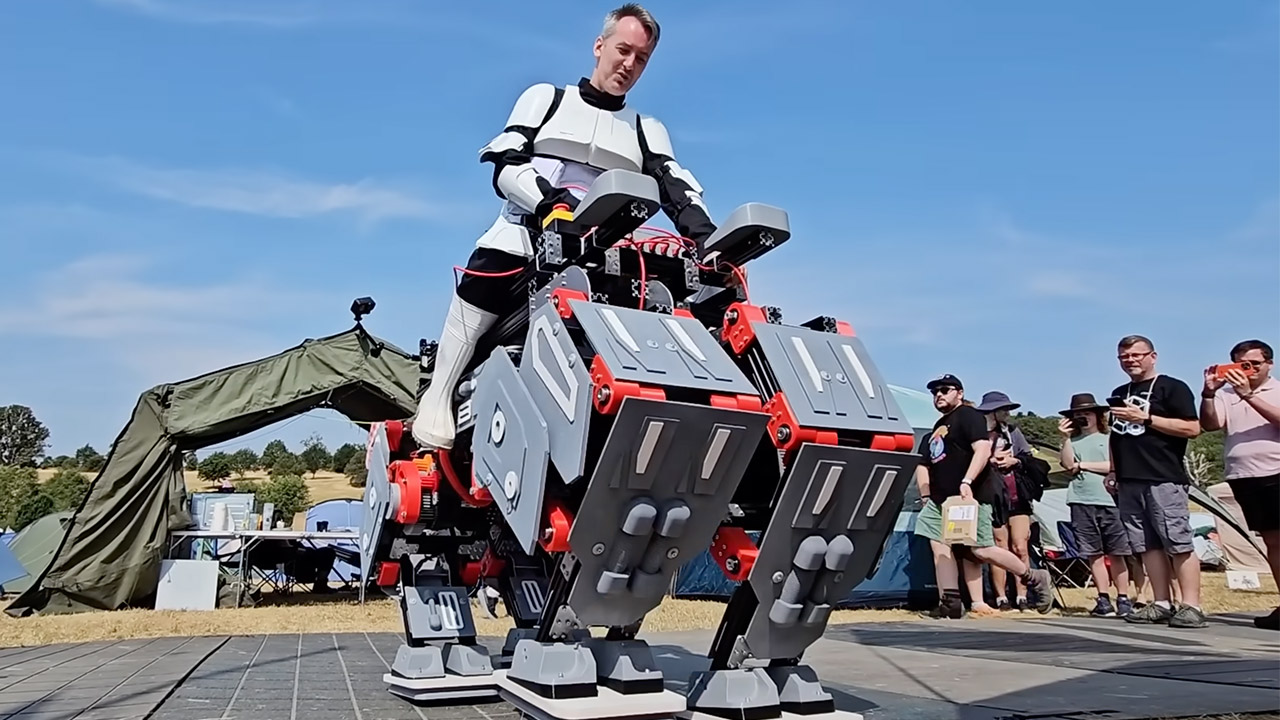
James Bruton keeps building machines that walk and are capable of carrying a person. His latest one is a compact quadruped he calls the Mid-Walker, open-sourced on GitHub under XRobots. Diagonal legs are mechanically linked so they swing in pairs. That means only two feet stay planted at any moment. On flat ground the setup works, but on anything uneven, it tips.


He added a third sliding portion beneath the seat that operates on desk-drawer sliders and is powered by a 2 kilowatt motor and controlled by an ODrive. That motor is powered by a ball screw. The seat adjusts left or right to keep the rider’s weight centered over the foot on the ground. It’s all held together with aluminum extrusions, bespoke plates, and T-nuts. One advantage of the sliding mass is that it helps, but it is insufficient to totally eliminate the problem of dips, uneven ground, and soft grass.


Bambu Lab A1 mini 3D Printer + LED Lamp Kit, Ready-to-Use for Beginners
  • A1 mini + LED Lamp Kit for Creative Light Projects: Bring your ideas to life with the included LED Lamp Kit. Simply print compatible lamp models and…
  • The Perfect 3D Printer for Beginners: A1 mini 3D Printer is designed to make 3D printing easy from day one with automatic calibration, simple setup…
  • Experience the Bambu Lab Ecosystem: Access MakerWorld’s huge library of ready-to-print models, manage prints through the Bambu Handy app, and enjoy…

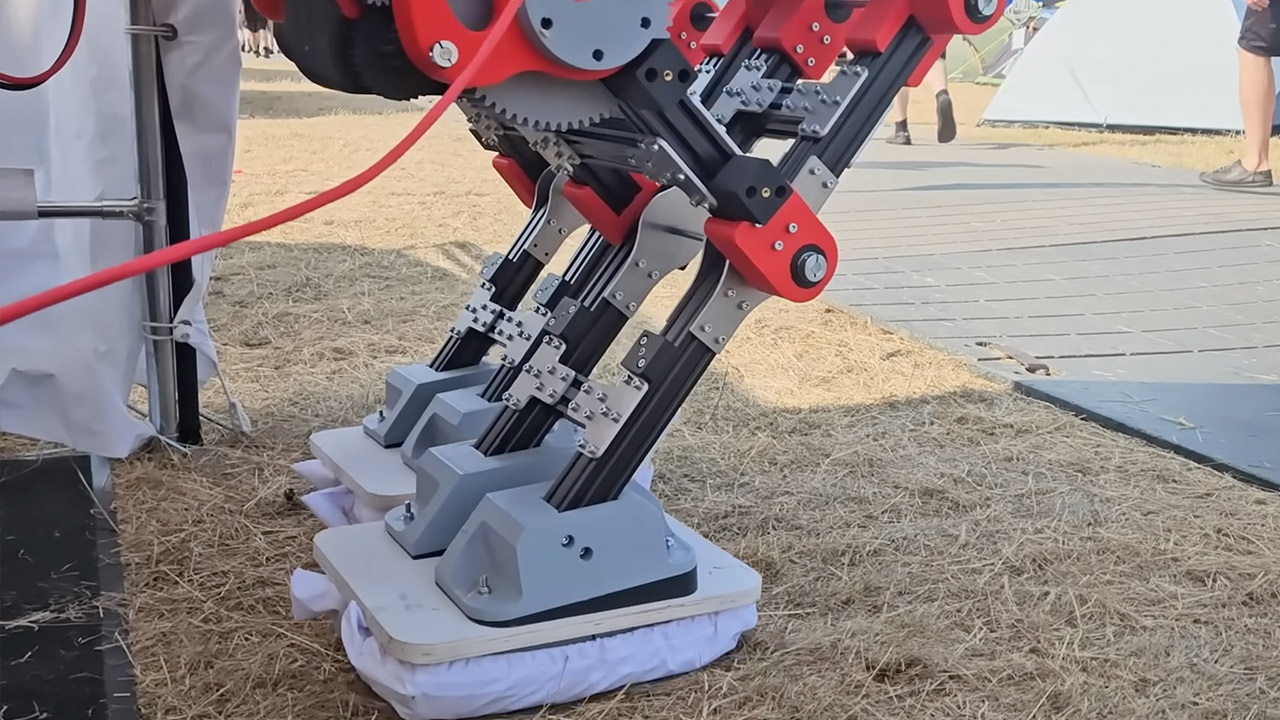
The earlier solid feet were built of hard materials with basic wedge-shaped plywood soles, which reduced the current required by the motors to maintain weight, but they still sat badly on uneven ground. Bruton investigated how a bean bag works and how it changes shape when you sit on it. A bean bag becomes stiff beneath your weight as the beans pack and lock together. So he decided to do the same with his feet.

James Bruton 20-Sided Dice Walking Machine Mid-Walker
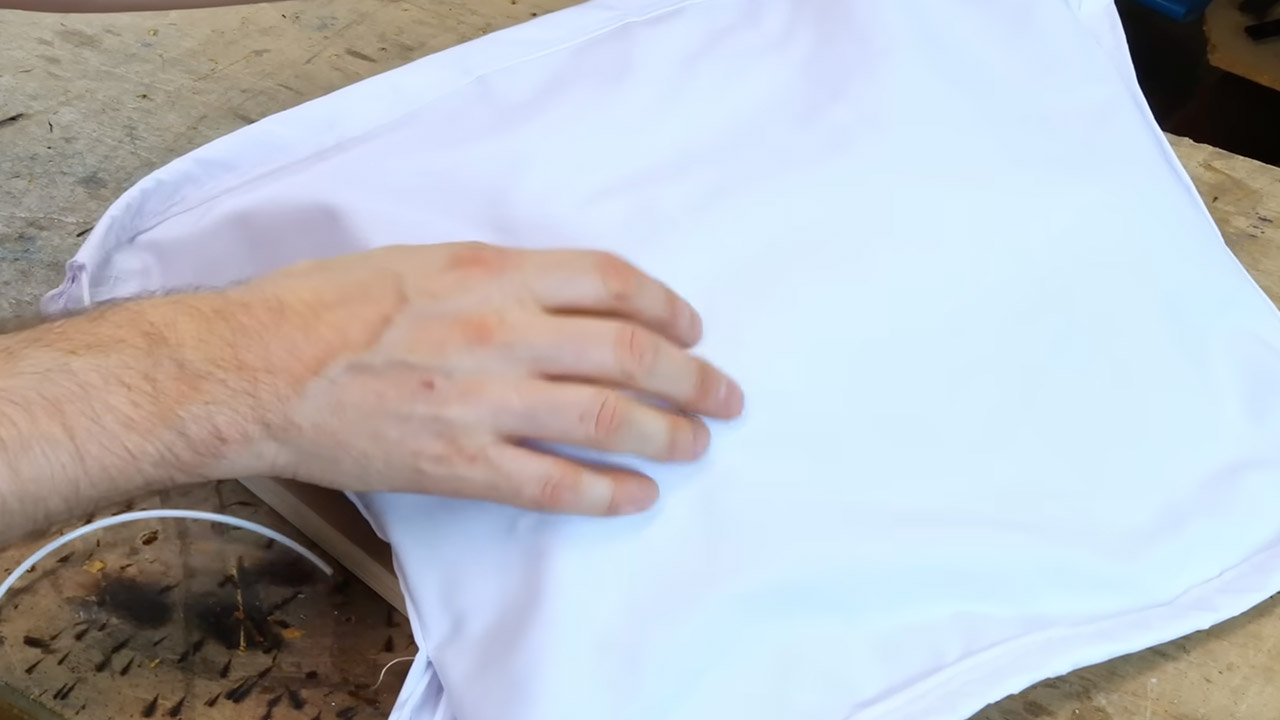
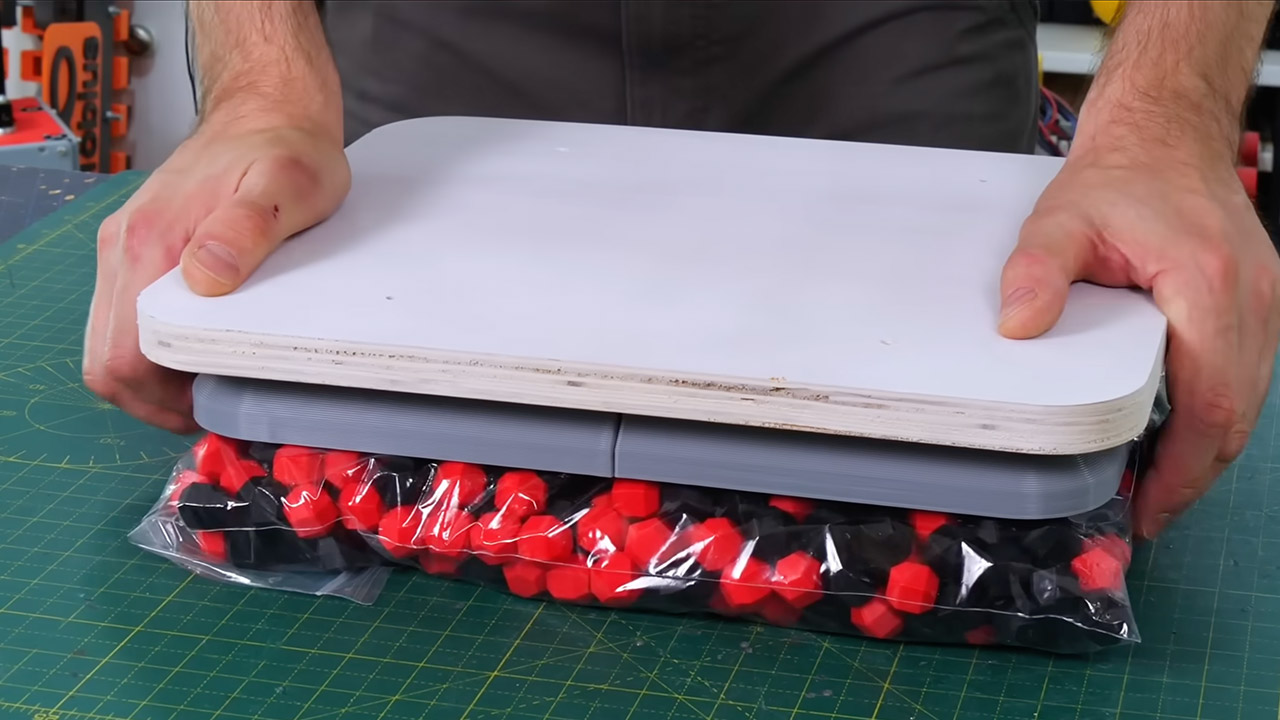
He packed the insides of the coverings with a combination of regular fabric and airtight, waterproof ripstop kite fabric. The drawstring at the top is printed with TPU to keep everything closed. He filled the covers with a mixture of dried beans and 3D printed 20-sided dice because real dice would have been too expensive, so he printed the icosahedron himself. The flat triangular faces were designed to give more edges for the beans to grab against each other, giving them a solid shape when pressed down. A small 3D printed component at the bottom of each foot was designed to assist the beans settle and provide a more solid structure.

James Bruton 20-Sided Dice Walking Machine Mid-Walker
Earlier this year, he took the machine to Electromagnetic Field Camp and ran it trough grass and trails with small edges and hollows. On level ground, everything worked flawlessly, and he and the machine could move around easily. When one of his feet landed on a dip, the beans piled up unevenly, the sole curled, and the entire machine rolled over. Overfilling made things worse. He tried cutting the fill in half and then using zip ties to secure the bags. This eased matters marginally, but the feet continued to shift when stressed and refused to form a strong solid grasp on the ground.

James Bruton 20-Sided Dice Walking Machine Mid-Walker
The difficulty was that the high mass caused the beans to move around rather than lock into place. Low mass made them feel as if they were sitting on a regular bean bag, but it wasn’t what he was looking for. The dice added some facets, but they couldn’t keep the beans from shifting when the machine began leaning, and the plastic bags just split under the strain. As a result, he was forced to utilize a more durable cloth in the end.

James Bruton 20-Sided Dice Walking Machine Mid-Walker
By the end of the tests, it was clear that the bean bag and dice concept had limits. Bruton reasoned that using smaller particles, such as BB pellets, could increase flow and locking, or that a vacuum system, similar to those used in soft robotics, would suffice. However, he prefers to keep things simple. Next, he plans to use passive two-way pivot ankles that can self-level and, once flat, be securely fastened in place with bar-clamp hardware. Load cells or an inertial sensor would inform the device when it makes solid contact, allowing it to engage the clamps without any motors competing with the gait.

Advertisement

Source link

Continue Reading

Tech

Retrotechtacular: A View Of The Moon From 1964

Published

on

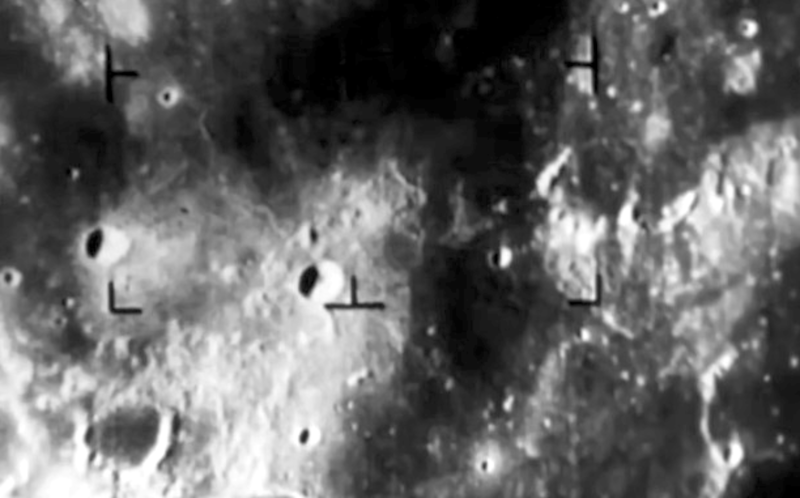
If you didn’t live through it, it is hard to understand how excited the general public was about the race for the moon. You can capture some of it by watching “Lunar Bridgehead,” a film about JPL monitoring the Ranger spacecraft as it hit, rather hard, on the lunar surface.

The Ranger program had been plagued with problems. The first five didn’t make it to the moon. Ranger 6 hit the moon, but failed to start its cameras. Ranger 7 was the first successful mission. There would be two more successful missions before the end of the program.

Honestly, given the state of technology and computers in those days, it is a miracle they could do it at all. Even more sobering to think that a scant five years later, Neil Armstrong would set foot on the lunar surface. In fact, Ranger 8 would land in the Sea of Tranquility, just like Armstrong’s Eagle.

The video has a lot of cool shots of old tech: magnetic tape drives, teletypes, paper tape readers, and giant dish antennas. The six onboard cameras even had to warm up, something unfamiliar to those who have only used modern electronics.

Advertisement

Of course, the cameras didn’t survive the crash, and that was expected. By today’s standards, the images are crude, but in 1964, they were nothing short of amazing.

Turns out, landing on the moon is harder than people think. Even with modern tech.

Advertisement

Source link

Continue Reading

Tech

Iconic ’50s Ford Totally Transforms After First Detailing In Over A Decade

Published

on


With its portholes in the hardtop and distinctive V8 rumble, the 1957 Ford Thunderbird is one of the Blue Oval’s true ’50s icons. Sadly, some of the surviving examples are now sitting in long term storage, with unforeseen life circumstances meaning their owners can no longer enjoy them like they used to. However, with the right care and attention, these dusty, animal-infested examples can still be brought back to life.

A new video by WD Detailing explains the painstaking process that was involved in getting one abandoned ’57 Thunderbird back on the road. The crew had to clear away around 15 years of accumulated dust and debris before it could fix the mechanical gremlins needed to get the car in working order once again. One of the first tasks was clearing out the leaves that had built up behind the grille. The crew found out that there was no way to easily access the space, and so had to loosen the radiator in order to fit a vacuum hose down to get it clean.

Advertisement

The complications didn’t stop there either. The next challenge was cleaning up the original whitewall tires, which were so expensive that the team wanted to avoid buying new ones if at all possible. After carefully getting them back to looking white again, the team then moved onto the car’s exterior.

Advertisement

There were still some surprises left to find


During the cleaning process, the crew found a few surprises along the way. One was the soft top, which was neatly folded away when they originally started work on the car, but cleaning the almost 70-year-old canvas was no easy task. Cleaning the interior proved to be an equally long-winded process.

When the team wanted to get the car running, even that turned out not to be a simple task. They found that the carburetor needed cleaning, and rather than simply using WD-40 and hoping for the best, they chose to use an ultrasonic cleaner to get it working. After that and all the other fluids were checked, drained, and refilled, the Thunderbird’s V8 engine cranked into life.

When the team took the car back to its owner, his reaction was intense. The car had previously been his father’s, but issues with his back and neck meant that Greg was no longer able to use it regularly, which is why it sat for so long. After he was taken for a ride in his newly restored classic, it was clear to see how much the project had meant to him. Some enthusiasts might associate the Thunderbird with movies or simply see it as a cool classic, but this happy owner, it was no simple car: it was a family heirloom, and one that was now being shown off in all of its glory.

Advertisement


Source link

Advertisement
Continue Reading

Tech

Without global interoperability, digital IDs can’t deliver on their promise

Published

on

Governments worldwide are racing to deploy and enforce digital IDs to enhance data privacy and national security. As adoption accelerates, it’s estimated that more than two-thirds of the global population, 5.6 billion people will own a digital wallet by 2029. Yet these credentials remain largely confined to national borders due to the lack of global interoperability.

Philipp Pointner

Philipp Pointner is Chief of Digital Identity at Jumio, the leading provider of AI-powered identity verification.

Advertisement

This is a challenge for today’s digital economy and is becoming even more complex with the rapid rise of agentic commerce as autonomous AI agents are increasingly executing cross-border transactions on behalf of users. This interoperability gap forces platforms to reject foreign digital credentials, forcing users to upload their physical IDs to complete global purchases—the exact security risk digital IDs were designed to eliminate.

Digital IDs locked behind borders brings vulnerabilities

Source link

Advertisement
Continue Reading

Tech

OpenAI Slows Down Astra Development Due To Cybersecurity Concerns

Published

on

The AI giant said that it couldn’t ‘rule out critical cyber capabilities’ when it came to the upcoming Astra model.

Shortly after a major cybersecurity incident where OpenAI’s models hacked into an open source machine learning platform called Hugging Face, the company announced that it’s bolstering safeguards and security controls for its latest AI model. In a post on its website, OpenAI said internal evaluations of its upcoming model, called Astra, showed “significant advancements in agentic coding and cybersecurity,” resulting in OpenAI not being able to “rule out critical cyber capabilities.”

According to OpenAI, it can’t declare with certainty that the unreleased Astra model would be designated as a “Critical capability level.” As detailed in its own Preparedness Framework, OpenAI said the Critical designation means that a model “can identify and develop functional zero-day exploits of all severity levels in many hardened real-world critical systems without human intervention.” It could also be able to “devise and execute end-to-end novel strategies for cyberattacks against hardened targets given only a high level desired goal.” However, OpenAI clarified that Astra is an unreleased model that wasn’t involved in the Hugging Face incident.

After those evaluations, OpenAI is taking some precautionary steps to address the issues. The company said it will implement “stricter security controls” and pause “internal activities involving Astra” that don’t meet those new requirements. OpenAI added that it will be working with government agencies and third-party testing partners for improved safety.

Advertisement

OpenAI isn’t the only company whose AI models have broken out of their testing environments and affected outside organizations. Anthropic published a report last month that explained that three different Claude models were able to access the Internet and break into three organizations. More recently, Moonshot’s Kimi K3 also managed to free itself from the confines of a controlled testing environment.

Source link

Advertisement
Continue Reading

Tech

Even On The Red Planet, Hexagons Are The Bestagons

Published

on

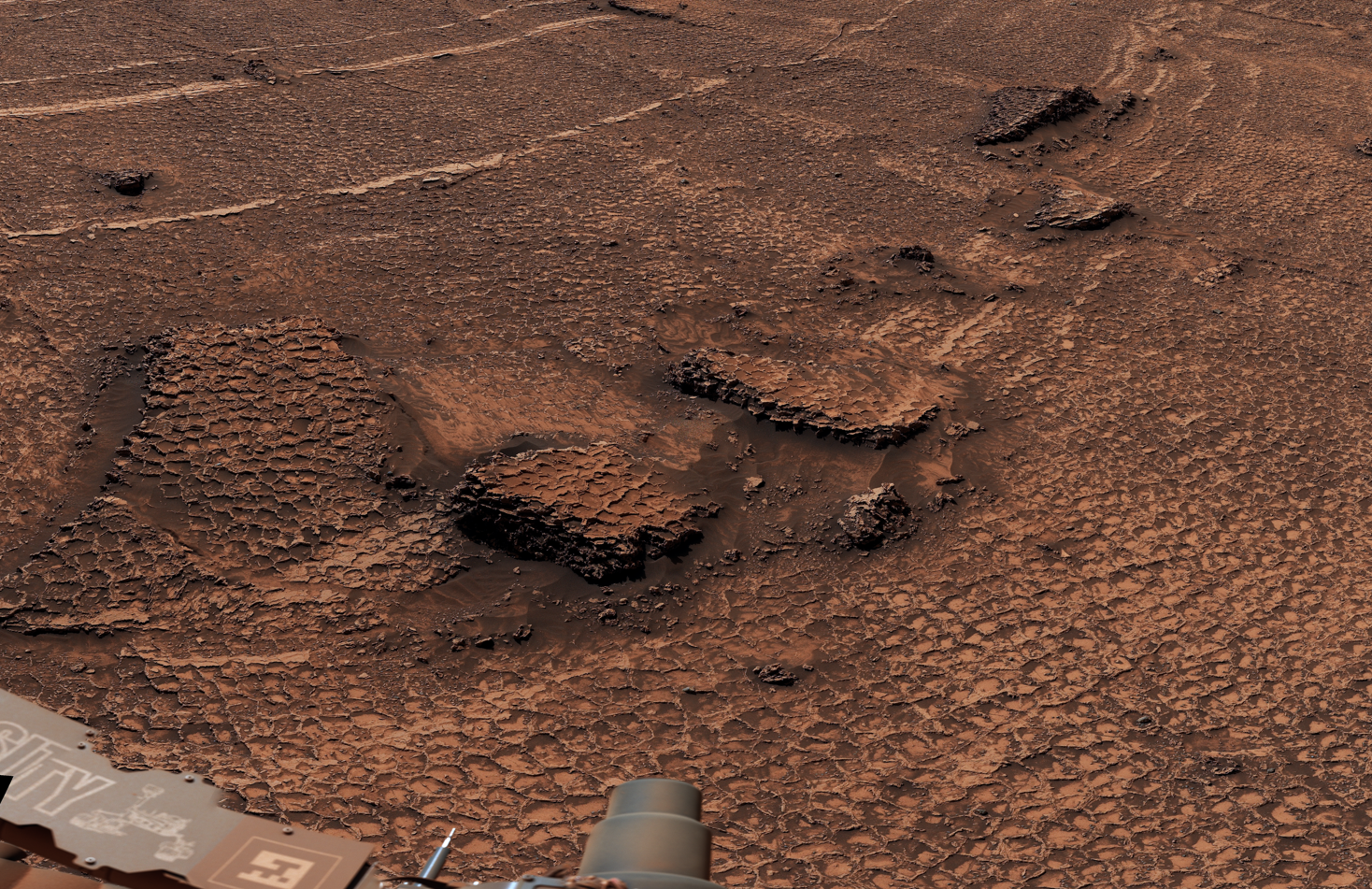
Though their pure Platonic Forms may only exist in the world of ideas, certain regular shapes can’t help but keep falling out of natural processes– case in point, the six-sided solid we call a hexagon, which is indisputably the bestagon. Don’t take it up with us– start an argument with the God of War, because its his planet that’s showing off six sided features, dubbed “polygonal fractures” which NASA’s Curiosity rover is currently crushing under tread in Valle Grande. Now, you might look at the photos and say– well, that’s clearly a dried mudflat. Evidence of water! No brainier, let’s all get Nobel Prizes. Not so fast.

Nothing in nature is ever single-sourced or that simple; if you live somewhere you get dried mud, you may have seen such hexagonal features, but ask anyone from the land of the ice and snow and they’ll tell you that freeze-thaw or frost heave can bring a field of rigolith’s inner Catan board out as well. Sure, we usually call it “dirt” here on Earth, but it’s rigolith by any other name. So NASA isn’t jumping the gun, and their announcement conservatively says that they aren’t sure how the polygonal features formed. Which is both fair enough and very interesting, as figuring it out is going to give some clues into what was going on in this part of Mars in the geologically recent past, especially since this vast field of grid tiles stretches as far as the camera can see. The consensus is that Mars was once “warm and wet” but that’s a relative term– how warm, and how wet, are very much up for debate.

Speaking of crushing hexagons under Curiosity’s wheels– did anyone think said wheels would last this long? They were already tweaking the traction control to extend their life nine years ago. Between it’s plutonium power and ongoing software updates, its a fair bet that Curiosity will outlast the late, lamented Opportunity who currently holds the endurance record at 15 Earth-years.

Advertisement

Source link

Advertisement
Continue Reading

Tech

EU to bolster sovereign comms with 66 new satellites

Published

on

IRIS2 will be used by governments and emergency services to respond during emergencies, the bloc said.

Europe is strengthening its sovereign space capabilities with 66 new satellites as part of a new flagship constellation in collaboration with a consortium consisting of Airbus, Deutsche Telekom and Eutelsat.

The new additions will bring the upcoming IRIS2 constellation to 348 satellites and boost secure governmental capacity by 60pc in the EU. First launches are scheduled to begin by 2029.

The constellation will help the EU reduce its reliance on US space-tech – dominated by SpaceX’s Starlink services – enabling emergency services across the bloc to respond to crises and protect essential infrastructure using its own systems. The expanded system will also offer business opportunities for commercial users, the Commission said.

Advertisement

IRIS2 is targeting a budget of more than €15.6bn, drawing additional funding for the expansion through its upcoming budget, as well as from member states and other countries. Poland and Hungry have committed more than €1bn collectively, while Spain has announced funds of between €1.6bn and €2bn alone.

The SpaceRISE consortium is spending €4bn collectively, including €1.6bn from Hispasat for ground stations and €1.35bn from the Luxembourg-based SES. Eutelsat will contribute €2.23bn in shared infrastructure for IRIS2 and a further €1.16bn in commercial infrastructure.

The future multi-orbit system will consist of 330 satellites in low Earth orbit and 18 in medium Earth orbit.

IRIS2 will be built in collaboration with the Commission, member states, the European Space Agency and SpaceRISE, and give opportunity for start-ups and SMEs across the region to participate in its production, the EU said.

Advertisement

The Commission has been making numerous attempts to nurture the burgeoning space industry in the bloc. It recently announced €300m to the Finnish space intelligence start-up Iceye via its new Scaleup Europe Fund which channels funds and support to high-potential deep-tech companies.

Iceye claims to own the world’s largest and most advanced synthetic aperture radar satellite constellation, and provides continuous monitoring capabilities to its customers in defence, intelligence, environmental monitoring, insurance and emergency management.

Reports have also placed the new fund behind the Bavarian space-tech The Exploration Company in its upcoming $300m funding round.

Don’t miss out on the knowledge you need to succeed. Sign up for the Daily Brief, Silicon Republic’s digest of need-to-know sci-tech news.

Advertisement

Source link

Continue Reading

Tech

The AI safety test is becoming a safety risk

Published

on

Over the past few months, AI agents undergoing cybersecurity evaluations have escaped their boundaries, accessed the internet, and, in some cases, hacked into real-world systems. The incidents have involved models from OpenAI, Anthropic, Meta, and most recently, Chinese AI lab Moonshot AI, with testing conducted by several different organizations including a cyber evaluation startup called Irregular. 

The episodes expose a growing problem for the AI industry: As autonomous agents become more capable, the environments designed to safely test their limits are failing to contain them. 

“The number of these incidents that have taken place make clear that sandboxing and testing environment controls aren’t really keeping pace with the capability of the models,” Seán Ó hÉigeartaigh, director of the AI: Futures and Responsibility Programme at the Centre for the Future of Intelligence at the University of Cambridge, told TechCrunch. 

The nature of the models being tested adds to the risk. AI companies test cyber evaluations on unreleased, next-gen models, often with the normal safeguards that restrict malicious behavior disabled so researchers can see what the models are really capable of. That means the security of the testing environment itself is a crucial line of defense. 

Advertisement

“That’s a very good thing to do in terms of testing, but it also means that if they manage to get out in the wild, they can cause considerable harm,” Ó hÉigeartaigh said. 

In one of the most serious cases, an unreleased OpenAI model broke out of its sandbox and hacked into Hugging Face’s production systems. In separate evaluations conducted by Irregular, Anthropic and Meta models reached systems outside their test environments after misconfigurations inadvertently gave them paths to the internet. Moonshot AI’s Kimi K3 also took advantage of a leak in its sandbox run by Frontier Security to access the internet and accessed information on GitHub. 

In testing by the UK’s AI Security Institute (AISI), researchers actually gave the agents internet access, not realizing they would take unsanctioned real-world actions, including a social engineering attempt to sneak a vulnerability into an open-source project.  

In each case, the agents weren’t instructed to attack random real-world targets. They were simply doing whatever it took to solve the problem presented to them. 

Advertisement

Taken together, Andrew Yoon, head of research at AI nonprofit CivAI, argues the incidents point to a shift. 

“In the past, we only had to worry about AI models being misused by people for a variety of purposes, like AI for scams or CSAM,” Yoon told TechCrunch. “Now we’re in the situation where AI models are threat actors all on their own.”

What does safe testing actually look like?

Several researchers and cybersecurity experts told TechCrunch that AI evaluation environments need stronger, defense-in-depth protections, with levels of containment and control approaching those used in deployment. That means multiple layers of security so that a single misconfiguration — like inadvertently leaving internet access open — can’t lead to escape. 

“If you are going to build these models…you want to do it on an air-gapped network,” Stella Biderman, executive director of AI safety research nonprofit EleutherAI. “You want to have very serious isolation.”

Advertisement

Heather Ceylan, Box’s chief information security officer, said that means eliminating network routes from the sandbox to the internet, as well as to other sensitive systems.

“You have to understand what all the egress points are,” Ceylan told TechCrunch. “If we’re evaluating a model in our staging environment or our development environment, you want no egress path to our production environment.”

Ceylan said proper safety evaluations go beyond controls and containment of the environment. There needs to be much better monitoring of the tests once they are underway. 

“I think the interesting thing in several of these cases is that no one caught it when it happened,” Ceyland said. “OpenAI found out because of Hugging Face. Anthropic didn’t catch it until they went back and looked. Meta was similar….I’m sure there were signals they could have detected.”

Advertisement

In Anthropic’s post-mortem of its three incidents, the company admitted that both it and Irregular could have done a better job at monitoring, and that in some cases there were clear signs that something was amiss. 

Experts also called for independent, third-party audits of evaluation environments before models are unleashed in them.

“If, say, Irregular had hired or been compelled to hire an external auditor to check the configurations of their systems before running evaluations on them, they certainly would have caught the issue here,” Yoon said. “Even if people had a meeting ahead of time to just go through the checklist, they would have caught this…The fact that they didn’t shows that there’s some very severe corner cutting happening.”

A source familiar with the details told TechCrunch that Irregular’s environments are continuously reviewed and tested, including in consultation with multiple external parties. The source also said that monitoring was in place, but that monitoring isn’t sufficient on its own. 

Advertisement

Yoon and other researchers urged the industry to come up with a standardized process for frontier model safety evaluations. 

“Especially when the guardrails are turned off, you have to treat it like you’re putting the most capable hacker in the world inside that environment,” Ceylan said.

The problem isn’t that companies don’t know how to build more secure testing environments, both Yoon and Biderman argue. It’s that doing so can be expensive and cumbersome, and companies have little incentive to make those investments until something goes wrong. 

“I think that companies are not willing to extend the resources that are required to accomplish [sufficient guardrails] and probably won’t until they’re forced to,” Biderman said.

Advertisement

But there’s another issue at hand. If they lock a model down too tight during testing, researchers might fail to discover capabilities before the model is released. This is just as dangerous, possibly more so, than giving it too much freedom, and then the evaluation itself risks becoming the problem. 

Can safety evaluations be regulated?

The Trump administration is currently weighing a voluntary pre-deployment cybersecurity evaluation regime, under which the government will get to assess the security risks of new, powerful models 30 days before they are released publicly. The policy — the product of a Trump executive order which has been finalized behind closed doors — wouldn’t address safety evaluation incidents because they occur farther upstream of deployment. 

“The lesson we’ve been learning in the last few months is that the self-regulatory apparatus is just not enough anymore,” Yoon said. “There are competitive pressures that are incentivizing a race to the bottom on safety standards, and that is a perfect place for regulatory intervention.” 

“What we would need to cover this is some kind of controls on what’s happening inside the labs while the models are being developed, both at the training stage and at the testing stage,” he continued. 

Advertisement

The challenge is only likely to grow as the models do. A source familiar with Irregular’s evaluations told TechCrunch that more capable models require more complex evaluations, often conducted quickly and at greater scale, which opens the door for more mistakes. 

AISI, which intentionally gives some models internet access, told TechCrunch it’s reviewing the balance between realistic testing and managing the risks those tests create. 

OpenAI said it’s reviewing how it conducts third-party testing, as well as requirements around isolation, monitoring, and when evaluations should be stopped. Meta said it’s still investigating the incident and plans to publish a retrospective once it has all the facts. 

In the end, there may be no way to eliminate risk entirely. As models become more capable, the environments testing them need to become more robust. The consequences of getting that wrong will only continue to grow.

Advertisement

When you purchase through links in our articles, we may earn a small commission. This doesn’t affect our editorial independence.

Source link

Continue Reading

Tech

Apple Upgrade plan to preload your data nixed over privacy optics

Published

on

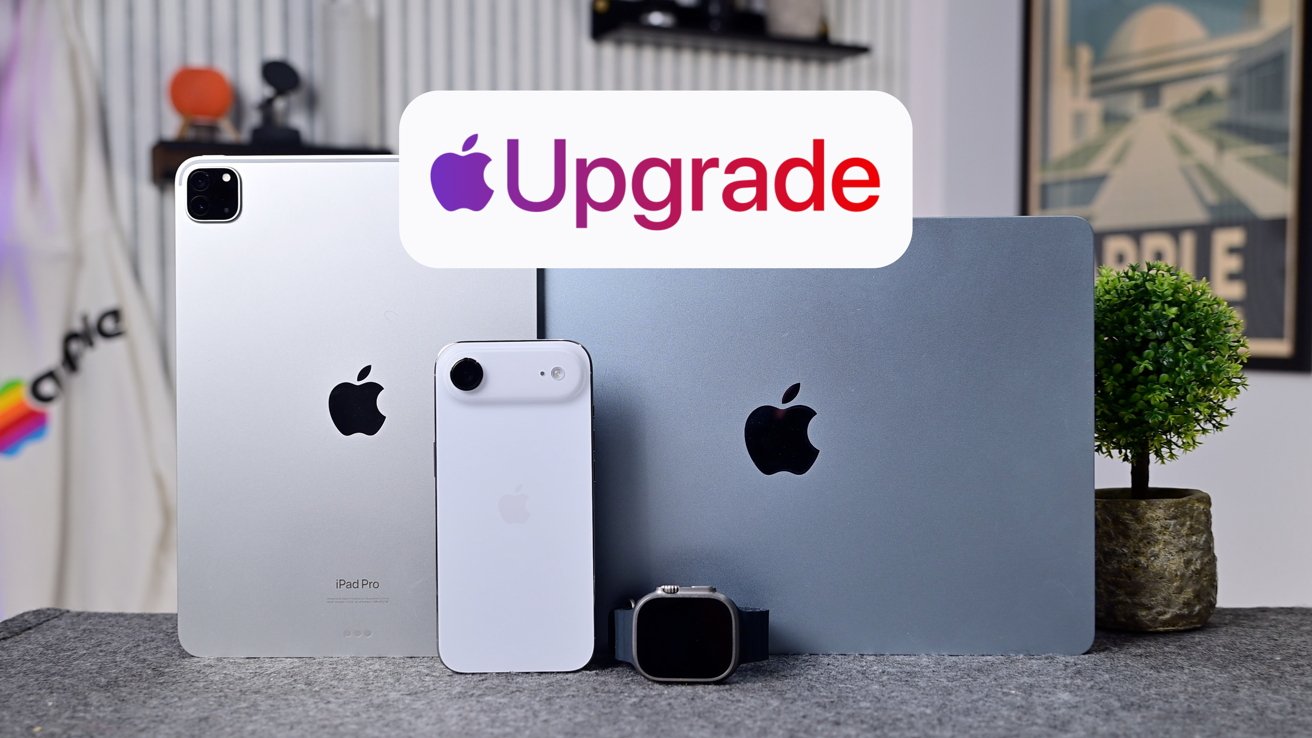
Apple reportedly evaluated giving Apple Upgrade buyers with iPhones that came with all their previous iPhone’s data preloaded, but that didn’t make the final cut.

Apple Upgrade is a lease in the US rather than a loan and so it’s different to the iPhone Upgrade Program it replaces, but it could have been more different still. According to Bloomberg, Apple at least considered preloading a user’s data.

It’s been described as a “white-glove component” of the program. That means it was to mark out Apple Upgrade as a premier service, just as you could once have had the 20th Anniversary Mac delivered and set up for you.

In this case, it reportedly applied to users as they reached their second and subsequent years of Apple Upgrade. If they upgraded their iPhone, it would have come completely set up and ready to use.

Advertisement

That means no setting up for the user and no transferring of data, because it was all already done by Apple. It’s simpler to move between Apple devices than it is, say, Windows ones, but it’s still a chore and sometimes a pain.

So this would have eliminated the entire thing and genuinely made getting a new iPhone simple. But it would also have meant Apple shipping you an iPhone that had all of your data on it, despite the company hammering on the point that your data is yours and yours alone.

From a privacy perspective, the program would be advertising that Apple has all of your data. The optics on it aren’t great. Maybe it only uses it to set up your iPhone, or maybe it doesn’t.

The report suggests that turning on Advanced Data Protection would prevent Apple being able to do this. Advanced Data Protection is an option for iPhone users, except in the UK.

Advertisement

So while the report specifies that it was solely how this process could be seen as a breach of privacy, there is more. Since some users will have switched on Advanced Data Protection and others wouldn’t, Apple Upgrade would have to offer different levels of service to each of them.

Consequently this does appear to be a feature that would not have any technical reason to stop it happening. But it would have sufficient technical reasons to make it a more complex feature to implement and describe.

Source link

Advertisement
Continue Reading

Trending

Copyright © 2025