

My mom was excited and confused when she opened her Apple Watch at Christmas a few years ago. “What a nice gift!” A pause. “What am I supposed to do with this?” We told her the truth: A smartwatch can do all kinds of useful things.
Tech
OpenAI and more than 100 companies warn an AI cyberattack surge is coming


OpenAI, Anthropic, Google, Microsoft, and more than 100 other companies and organizations are warning that AI-powered cyberattacks could become much more widespread and sophisticated within months.
The group is calling for a global push on cyber defense as more capable AI models make attacks easier to automate and harder to contain. Hospitals, water treatment plants, and internet infrastructure are among the systems it says could face greater risk if defenses don’t improve quickly enough.
The warning carries extra weight because it isn’t coming from one corner of the tech industry. AI developers, cybersecurity firms, and infrastructure companies are all backing the same basic message that defenders need to move now.
Why the warning is unusually broad
The companies involved sit on different sides of the cybersecurity problem. Some are building increasingly powerful AI systems, while others spend their time defending networks against attacks.
That makes the warning harder to dismiss as one company pushing its preferred policy. The coalition brings together organizations with very different commercial interests, yet they agree that existing defenses need to improve before AI gives attackers another advantage.
Its recommendations include stronger baseline security standards and wider access to defensive AI, especially for organizations without large cybersecurity budgets. Critical infrastructure gets particular attention because failures there can quickly spill beyond a single organization.
What defenders are being asked to do
The coalition wants governments and organizations to expand access to AI tools that can find vulnerabilities and speed up patching. Smaller institutions are a major concern because they may lack the staff or money to react quickly as attacks become more automated.
Software development is another weak point. The coalition is calling for tougher security standards around AI-generated code as AI makes it easier for attackers to probe systems for weaknesses.
The basic strategy is to give defenders stronger tools before offensive AI becomes widespread enough to put even more pressure on already strained security teams.
Why the window may be short
AI doesn’t need to invent entirely new cyberattacks to make the situation worse. Helping attackers find existing vulnerabilities faster could be enough to make familiar security failures much more expensive.
That still doesn’t turn every attack into an AI superweapon. Unpatched software and understaffed security teams remain ordinary problems, but automation can make exploiting them faster and easier to repeat.
The coalition wants organizations to strengthen those defenses now, before AI-powered attacks become commonplace. For anyone already struggling to keep systems patched and secure, waiting until attackers have better automation leaves even less room to catch up.
Continue Reading

Authorities in Australia said Wednesday that they arrested two men accused of participating in cybercrimes for TeamPCP, a prolific group of hackers that, over nine months, has carried out a relentless series of supply chain attacks that infected more than 1,000 organizations worldwide.
In a statement, the Australian Federal Police said the two men were arrested and charged with 14 offenses. The statement said the men were members of TeamPCP, which by the authorities’ count, compromised more than 1,000 organizations worldwide. The statement didn’t identify the men, except to say they lived in the Western Australian towns of Cottesloe and Mandurah. KrebsOnSecurity, citing a lengthy investigation, provided what it reports to be both defendants’ names, along with an extensive background of their lives and the mistakes that led to their downfall.
The hacks that keep on hacking
TeamPCP has vexed law enforcement officials and security personnel around the world since it emerged in December. The group is best known for a sustained series of supply chain attacks that laced open source software with malware that self-propagated from one package to another. The viral infections worked by targeting organizations’ CI/CD pipelines, which are used to rapidly develop, update, and deploy software.
Once a package or tool was compromised, Shai-Hulud, as the worm was dubbed, attached itself to future package updates. When developers downloaded the compromised packages and ran them through their own CI/CD platforms, their software was also compromised.

Fitness tracking became the thing my mom latched onto. She loved counting her steps and seeing how many miles she walked in a day. It motivated her to become more active, too. We didn’t tell her until much later that the Apple Watch’s fall detection feature was the real reason we got her the watch. The feature worked, too.
On the coldest day of the year, this past winter, my mom tripped on an uneven sidewalk and broke her wrist. The Apple Watch called 911 almost as soon as she hit the ground, and we took an ambulance to the hospital, where my sister, who was nearly a thousand miles away, texted and asked what was wrong. She’d been watching my mom’s location on Apple’s Find My app, a fact that we revealed to my mom for the first time when she was in the emergency room. We also had to confess that the Nest security cam we’d set up in her living room was indeed useful in spotting intruders but also let us check in on her from time to time.
My mom wasn’t thrilled about any of this. She realized that these handy gadgets doubled as surveillance devices, and we’d essentially be spying on her.
But at the same time, she recognized why we wanted to keep an eye on her. If she’d fallen alone at home alone, for instance, an easy way to call for help could’ve been a lifesaver.
Perhaps grappling with how to spy on your aging parents — ethically! — is something you’re grappling with, too. A growing number of people are weighing the privacy trade-off as boomers get older and their millennial children get more involved. Roughly 59 million Americans now help take care of an adult over 50, up from 34 million a decade ago. A third of those are sandwich-generation caregivers, meaning they’re looking after their parents and their own children at the same time. It can be an overwhelming task. So enlisting a home security system, like Nest, or a wearable, like an Apple Watch, to keep an eye on their parents seems like a time-saving way to gain some peace of mind. It certainly helped my sister and I feel better about our mom aging in place.
It turns out, a growing community of researchers and tech developers has thought a lot about this problem that many of us are now facing. There are labs focused on how technology can make growing older more humane, as well as federally funded research efforts and startup accelerators from groups like AARP working on solutions. All of the experts I spoke to for this story told me the same thing: Good communication is essential.
And there’s a whole cottage industry of tech for older adults, known as age-tech, that includes everything from healthcare gadgets, like the Hero Smart Pill Dispenser, and more futuristic devices, like the social robot ElliQ, that promise to help seniors combat loneliness. Many of these products and services are designed to help keep older adults safe and to help them age in place. Some, like the Haelo smart ring, are designed to do it all, everything from fall detection to health tracking to emergency alerts if something suddenly looks wrong. Others, like Life360, use software designed to track kids to keep an eye on their grandparents.
The big challenge with all of this, however, is finding a way to implement it in a way that respects the aging loved one’s privacy and independence. Boomers and Gen Xers didn’t grow up with as much tech in their lives as younger generations — much less gadgets that could double as monitoring devices — so introducing these tools stands to alienate them. And beyond that, it’s an ongoing challenge to ensure that technology reduces a caregiver’s mental load rather than add to it. After all, too much tech can create new problems rather than solve existing ones. If the overwhelm becomes too much to bear, everyone involved might just abandon the effort.
“Start with: What do they need support for and what is the best solution for that?” Wendy Rogers, director of the Human Factors and Aging Lab at the University of Illinois, told me. “Sometimes it’s technology, sometimes it’s not.”
You might be surprised by what technology can do, when it’s purposefully designed and properly introduced into an aging person’s life.
If you’re a caregiver — Rogers prefers the term “care partners” — you should think of this problem-solving project as a collaboration. Start the conversation with your parents or loved ones early and maintain an open dialogue about how it’s working out. Perhaps most importantly, keep updating the plan as time goes on and lives change. And this might go without saying, but try to avoid any big surprises.
Don’t wait until an emergency
It’s difficult to know when to offer an older adult help, even if that help is as simple as a smartwatch. On one hand, you don’t want to offend or infantilize them. On the other, if you wait too long, you might find yourself trying to set up a monitoring system when it’s no longer optional, like after a fall or other health scare. In these instances, you risk rushing to a solution before you identify the specific problem.
Waiting until an emergency to start thinking about this also necessarily means there’s less time to plan. That sets the younger person up for a situation in which they’re inundated with more information than they can manage. If you set up a smart camera, like a Nest, to notify you every time your parent wakes up and goes into the kitchen, you’re bound to face a huge stack of notifications every time you open your phone and no real strategy for separating the signal from the noise. Good planning helps you to avoid looking at all that raw data and instead look for deviations from the norm. Once I involved my mom in this process, we had the chance to clarify not only the details of her routine but also our goal in keeping tabs on her. In the end, she had no doubt this all came from a place of love.
“In those cases, the technology serves as a safety net, not to check every day what’s going on but to be notified when something doesn’t seem to be happening the way it was supposed to,” said George Demiris, a professor of informatics at the University of Pennsylvania’s medical school.
You can imagine the broader implications of this safety net concept. If your goal is to make sure your parent is going about their daily routine, you don’t actually need cameras at all. Motion sensors can do the job just as well, all while maintaining privacy. There are even camera-free systems, like Nomo Smart Care and Silvie, designed to spot worrisome deviations from an older person’s routine. Even still, the benefits of planning — at the very least, identifying a specific problem in need of a solution — will make it more likely that you’ll maximize the technology’s benefit.
Make privacy and empathy central to your approach
The first step in planning to use tech to monitor your parents is simply talking. You should have a conversation with them to find out what worries they have and consider those alongside your own. Ask what level of monitoring they’d be comfortable with. When the time comes, teach them how to use the tech you’re introducing into their life. Give them the agency to make changes and even turn off the tech when they want.
One way to go about this is to try reversing the roles. Consider how you’d feel if someone wanted to install a bunch of surveillance cameras in your home and track your every move. If you’re asking an older loved one to wear a health tracker, think about why a device like that might be useful to you. Heck, you could even buy matching Apple Watches and start sharing your step count in order to show that you’re trying to stay active and healthy together.
“Saying, ‘Okay, let me stop for a second. Let me imagine I’m their age and my kid wants to do this thing — what would that be like?’” said Amanda Lazar, an associate professor at the University of Maryland’s College of Information. “I think that can help you approach it more sensitively and in a more understanding way.”
The privacy question deserves extra attention. While motion sensor-based monitoring systems can offer extra privacy, there might be situations where you do want a camera. You should talk to your parent or loved one about where they’re comfortable with having a camera and what level of control they’d like to have over it. If you’re thinking about tracking someone with an AirTag or through an app, tell them you’re doing it and explain how it works. They won’t enjoy being surprised if you pull a Big Brother and start asking about specific whereabouts.
All that said, if the person you’re helping care for has dementia or other cognitive issues, these conversations are more complicated. You should talk to their doctor about their individual needs, potential tech solutions, and the possibility of involving professional caregivers.
Start simple and with tech people actually want to use
There’s a reason my sister and I bought my mom an Apple Watch and not a Life Alert pendant. We knew she’d like it, if not for the fitness tracking, then at least as a fashion accessory. And, as a direct result of liking it, she’d wear it. Indeed, we were nervous about her falling, so the fall detection feature was a selling point. But as someone who’s spent a lot of time thinking and writing about gadgets like these, I knew that some of the health tracking features could help be active and have fun doing so. Now, every other time I call, she tells me how many miles she walked that day.
If you’re considering a monitoring device for your parents or an older loved one, think about what they might actually want to use. For many people, smart speakers are a great way to introduce potentially lifesaving tech into the home. Your dad might like asking Alexa for recipe advice, and you might find comfort in the fact that he can also ask Alexa to call 911 if he falls. “Engaging people with technology tools early on and making it part of their everyday repertoire can be very helpful,” said Rogers, “and then as their needs change you can increase the support.”
Down the line, it’s relatively seamless to connect cameras, motion sensors, smart locks, or smoke alarms to systems like these. And because the older adult has been in the loop from the start, you can teach them how to use these devices, and they can remain aware of what you can see on your end. Again, the empathy-focused approach is more likely to win someone over.
Change your plan when life changes
Like anything related to tech, you’ll need to do some software updates along the way. And I don’t mean making sure your Nest camera firmware is up to date. You’ll want to revisit your conversation about monitoring with your parents or loved ones at least once a year. You might try doing it over the holidays when you’re all together or when there’s a need for some tech support. Regardless, it’s essential to communicate about what’s working and what’s not.
These conversations can also be opportunities to talk about other ways you might help. Beyond monitoring their physical space, some aging parents could benefit from some help in the digital world, especially as they’re being targeted by a growing number of AI-powered scams. Do they need help managing their finances or keeping track of login credentials? Do your parents know what a passcode is? They might not ask you for help with these things, and again, it’s better to get out in front of issues before an emergency happens.
“Everyone’s in denial,” said Amelia Hay, a vice president at AARP Innovation Labs. “Everyone’s thinking their parents are fine, whatever, and then something happens where you’re in a state of emergency.”
So don’t wait. And don’t be in denial. Aging, as much as some tech billionaires would like to deny it, is one of those things in life that’s inevitable. If everything seems fine now, that means it’s a great time to start planning for when things go sideways.
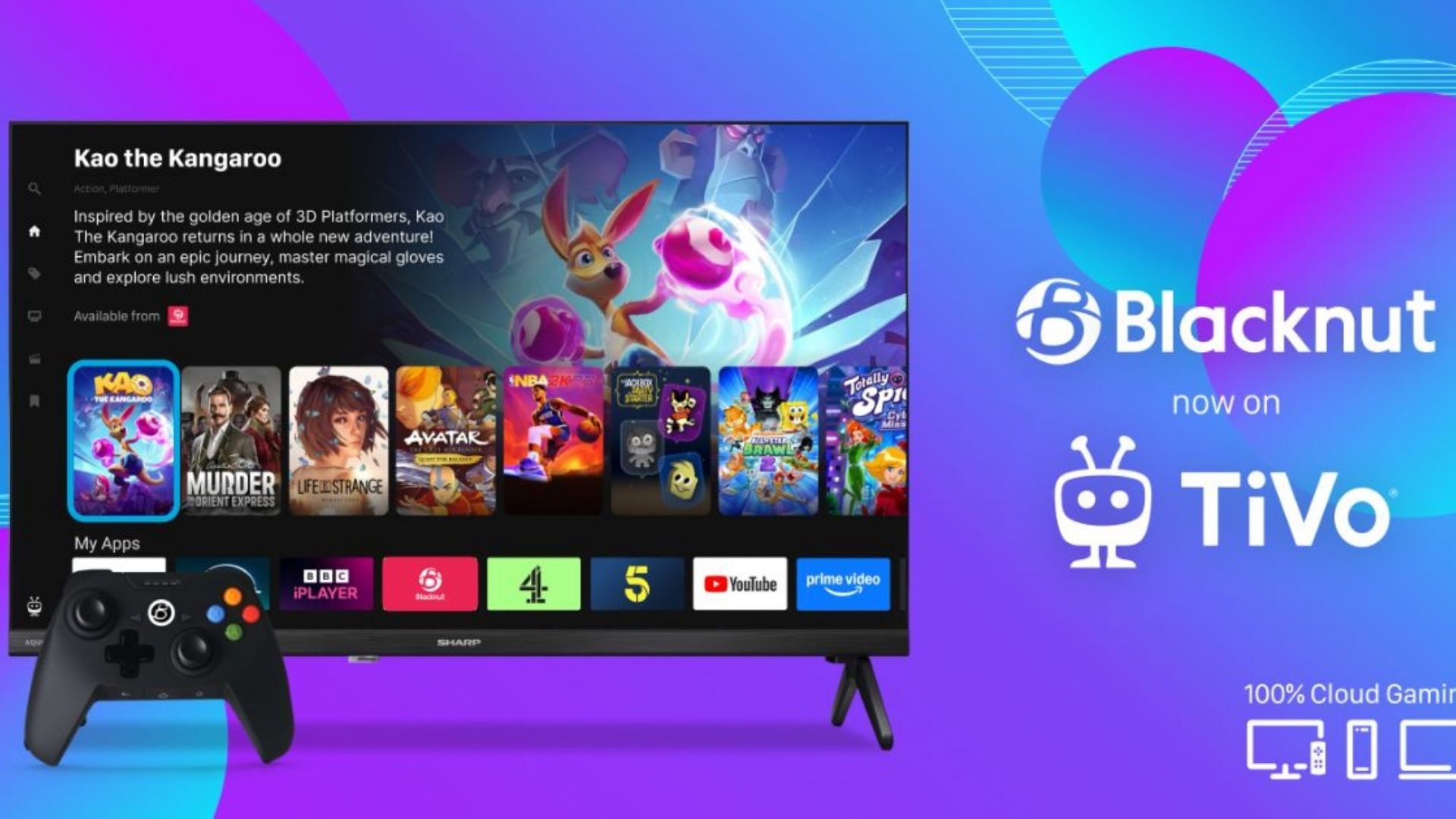
Blacknut cloud gaming is coming to TiVo OS, granting users access to more than 1,000 games directly through compatible smart TVs without needing a dedicated console or downloads.
The cloud gaming service has partnered with TiVo to bring its catalogue to Powered by TiVo devices, expanding its reach to brands that includes Sharp, Metz and Thomson.
The service is designed to sit alongside the movies, TV shows, sports and streaming apps already available through TiVo OS.
Blacknut says its library covers blockbuster adventures and action titles to family-friendly games and indie releases. Because the games are streamed from the cloud, users don’t need to install or buy additional gaming hardware, although a compatible controller is required.
The partnership is another sign that smart TVs are becoming more than just a way to watch video streaming services. Platforms such as TiVo OS are increasingly trying to bring different forms of entertainment in one place, with cloud gaming providing a way to move from watching content to playing games on the same screen.
Blacknut is already available on more than 100 million smart TVs through partnerships with manufacturers including Samsung, LG, Philips, Hisense, Toshiba, JVC, CHiQ and Medion.
The service is available in more than 65 countries and operates as an all-you-can-play subscription. Blacknut supports up to five player profiles and up to four controllers simultaneously, making it suitable for multiplayer sessions as well as solo gaming.
For TiVo users, the main appeal is convenience. Rather than switching to a console or another device, games can be accessed from the same television interface used for other entertainment. Blacknut is positioning this as a more seamless living-room experience, particularly for households that don’t already own dedicated gaming hardware.


Identity is the fundamental currency in any technology transaction so we need to treat nonhuman assets with the same care as we apply to people.
We’re outnumbered! Nonhuman identities (NHIs) outnumber human identities in the enterprise by a ratio of up to 50:1. This Non-Human Identity Management Group statistic from 2025 is likely already outdated, and in a year from now the ratio will be exponentially higher as rapid growth trends like AI/Machine Learning, the Internet of Things, digital assistants and the burgeoning API Economy continue to accelerate automation.
What are NHIs? Machines, processes, service principals and accounts, virtualized and other workloads, and applications that are granted digital credentials. Think, for an everyday example, of a helpdesk chatbot on your favorite website.
Latest Videos FromTechRadar
Managing NHIs is a challenge that CIOs, identity experts, and CISOs must accept. This in some ways is a re-run of what happened 40 years ago when identity access management was widely deployed. It’s just that now we are not only dealing with human beings. And I don’t know a single organization that has its collective head around the concept of who is, or should be, ‘the HR chief’ for NHIs.
Leaders today need to consider nonhuman identity in the way they consider human identity. When we hire, we onboard people by harnessing and securing the details we need to pay them and manage them, but we also work to imbue them with our organizational culture, systems, risks, security processes and so on.
We set and tweak permissions based on who needs access to what and when, depending on their roles, seniority, specific tasks they perform at a given time and so on. We need to have similar controls and contextual understanding of our nonhuman assets.
An urgent case where context is king
Without making that change CIOs and other leaders will have no foundational basis of understanding where risks are coming from or what measures they need to take. They need a central, visible platform to see what they have and what’s going on. Legacy IAM can’t offer that because it starts with a narrow focus on compliance and is a static model based on rigid criteria like six-month audits and the rote dispensing of permissions and privileges.
The old IAM is rooted in the early-21st-century age of Sarbanes-Oxley, reactions to governance scandals and corporate malfeasance. Moreover, it ignores what is happening in the wider digital world: namely, the explosion of identity types that are crying out for holistic oversight.
Control of the human and nonhuman estate means ensuring there is insight into nonhuman assets and what they’re doing.. context is king. So look at NHI constructs that can touch anything in the digital ecosystem and the underlying connectivity to apps and, most importantly, data. CIOs need to be able to recognize the truth of a contemporary mantra: identity is the fundamental currency in any technology transaction.
Everything must be covered: bots; service principals; IoT endpoints; abandoned trial workloads; autonomous agents and agents that speak to other agents. Start by asking an overarching question: do these NHIs leverage a human identity when they perform tasks on behalf of that person, and is that appropriate?
Then it is possible to drill into practical areas like guarding against credential misuse across agents, improving digital and identity hygiene by spotting risks relating to non-expiring tokens, and analyzing API access levels on a just-in-time basis.
ISPM (Identity Security Posture Management) is useful here because organizations need to have a handle on what they have, and must bring identity constructs together. However, this is not a ‘one and done’ discovery process so consider it as a CI/CD journey of continuous improvement.
In the AI era, holistic technology inventory can’t be CMDB-based but must be dynamic and based on CI/CD pipeline control frameworks that let us dynamically view and slice and dice data and assets by controlling who is using what and where.
Think of it as an opportunity…
It’s a complex task and we are all busy. But we need to pause and think about how this inflection point can be parlayed into a positive. This is an opportunity for the security and identity teams to start asking ourselves about the constructs we can apply to nonhuman identities.
They should be asking what needs to be added to legacy IAM frameworks to be successful. And usually the answer will be to replace them with systems that are coded for the current age, not the previous one.
By providing these new controls the identity team will become respected and sought out. Identity leaders will gain kudos by their ability to attribute risk ratings based on behavioral analytics and business function.
By demonstrating insights into where data sits, where it moves to and from, and how identity supports that, identity leaders can deliver qualitative and quantitative process analysis. In some cases of outperforming best practices and execution, they will even help to refine business process re-engineering through a platform that informs prioritization and budget management.
We’ve featured the best IT management tool.
This article was produced as part of TechRadar Pro Perspectives, our channel to feature the best and brightest minds in the technology industry today.
The views expressed here are those of the author and are not necessarily those of TechRadarPro or Future plc. If you are interested in contributing find out more here: https://www.techradar.com/pro/perspectives-how-to-submit
Tech
Harbor Freight’s New $299 Table Saw Brings A Rack-And-Pinion Fence To A Smaller, Cheaper Package


We may receive a commission on purchases made from links.
For people who need a table saw they can take on the go, there’s the Hercules 15 Amp, 8-¼-inch Compact Table Saw that weighs just 49 pounds and a table that measures 21-3/4 inches by 17-1/2 inches. One of its most important features is the adjustable rack and pinion fence, which has been something of a trend in the industry of late (and for good reason). Using a small gear, it lets you slide the fence to the right position more precisely. If you’re planning to do a lot of repetitive cutting in the same length, like for trim pieces or cabinets, this makes it easier to stay consistent.
Made with 4 by 8 plywood in mind, it has a left rip capacity of 12 inches and right rip capacity of 24-½ inches. It can make bevel cuts that go from -2 degrees to 47 degrees and is capable of reaching up to 5,800 RPM. It has a maximum cutting depth of 2-9/16 inches at 90 degrees and 1-¾ inches at 45 degrees. Additionally, it includes a T-slot miter garage with 60-degree left and right adjustments.
Despite its compact size, it has onboard storage for its accessories, such as its fence, riving knife, and change wrenches. For additional safety features, it includes both anti-kickback pawls and blade guards. For easier clean up in your job site, you can make use of its 2-¼-inch dust port. This saw could be considered another cheap Harbor Freight alternative to DeWalt. It shares a lot of core features as the DeWalt DWE7485 8-1/4-inch Compact Portable Jobsite Table Saw that retails for $329 on Amazon. The Hercules 8-¼-inch Compact Table Saw is priced below that, but it’s the most compact option and has the smallest blade diameter.
What do users have to say about the Hercules 15 Amp, 8-¼-inch Compact Table Saw?
Since it’s a new product, the jury is still out on whether or not people think it fulfills its promises. However, there are some early indications that you’re likely not going to be disappointed. As of August 2026, it only has three Harbor Freight reviews, but all customers were satisfied enough to rate it 5 stars and recommend it. Among them, one user mentioned that “For quality, it’s just as good as my 10 inch DeWalt, and less noise.”
On the other hand, its slightly larger predecessor, the $379.99 Hercules 15 Amp, 10-inch Compact Jobsite Table Saw, which also comes with a rack and pinion fence also has a lot of fans. While it’s a lot more expensive, it has generated an impressive average rating of 4.7 stars from 980+ customers with 96% of users who recommend it. Apart from the price difference, the 10-inch model is also 4 lbs heavier, slightly larger by a few inches, and has a bigger blade. While the 8-¼-inch model has a higher RPM, the older 10-inch unit has a deeper cutting depth for both 45 and 90-degree angles. Either way, both compact table saws are in-store only exclusives, so you’ll need to go to your nearest Harbor Freight warehouse to take them home. If this doesn’t work for you, there are portable table saws from other reputable power tool brands like Craftsman, SawStop, and Milwaukee to consider.
Other alternatives
On Harbor Freight, the Warrior 15 Amp, 10-inch Table Saw is the most popular model available with more than 1,400 people who gave it 4.3 stars on average. It also has a pretty good 88% recommendation rate. In terms of size, it’s in the middle of both the Hercules models, but it is the lightest at 36 lbs. Compared to the 8-¼-inch Hercules option, it has a deeper maximum cutting depth of both 45 degrees and 90 degrees, but it only has a standard rip fence with a rip capacity of 9 inches. Priced at $149.99, it’s the cheapest model on Harbor Freight, but you will need to buy the blade separately. Unlike both Hercules Compact Table saws, it’s not an in-store exclusive so you can order it online.
But if you have more budget, the DeWalt 15 A, 8-1/4-inch Compact Portable Jobsite Table Saw (DWE7485) is another compact option that might be worth a look. Retailing for $429 on Amazon, the DeWalt model has been rated 4.8 stars on average by more than 5,800 people. It shares the same blade size and 5,800 RPM motor. While DeWalt’s offer has a rack and pinion fence with a telescoping fence rail design, it has same 24.5-inch rip capacity. However, some key advantages of the DeWalt Jobsite Table Saw include its lighter weight at 42 lbs, a marginally higher bevel capacity of up to 48 degrees, and safety features like a blade break and power-loss reset.

Imagine this: Two countries are at war. Country X sends a drone into a major industrial city in Country Y, aiming to take out two propane tanks. A routine sequence. But this time, the drone never reaches its targets. Instead, Country X’s drone accidentally strikes a wall nearby, explodes, and kills three young civilians.
When Country Y eventually retrieves the drone’s remnants for intel, it finds an AI supercomputer inside that reveals something unsettling. Instead of a human deciding what to strike — the AI did.
- A Russian AI-enabled drone reportedly selected its own target in Ukraine, killing three civilians — an ominous case of machines making lethal choices without direct human intervention.
- The global debate over autonomous weapons has narrowed to two competing frameworks: “meaningful human control,” which pushes for human intervention in lethal decisions, and the Pentagon’s more flexible “appropriate human judgment.”
- OpenAI has adopted the Pentagon’s language, accepting a standard that does not require a person to decide every lethal action and leaves its practical limits to future, case-by-case military applications.
The truth is, you don’t have to imagine this scene — it just happened. For the first time in the Russia-Ukraine war, as reported recently in the New York Times, three Ukrainian civilians were killed by a Russian drone, developed, designed and released by humans, that, in the end, selected its target autonomously. And this new reality is shaping up to be the future of warfare.
That’s because a number of countries, including those with the world’s most consequential militaries, are rejecting the idea that human beings need always be in control of weapons in war.
Instead, as new autonomous weapons technologies become more capable and existing international legal frameworks struggle to keep up, some countries are embracing a more expansive view of human responsibility: that people can exercise enough control not by approving each strike, but by designing, testing, and setting the rules under which a given weapon operates.
This shift has produced one of the most consequential policy debates of today. And ultimately, human dominion over “killer robots” — as autonomous weapons are colloquially called — could come down to a battle between two three-word phrases: “meaningful human control” versus “appropriate human judgment.”
A high-stakes semantic battle
In the early 2010s, “meaningful human control” emerged as an initial framework in the first international discussions on regulating an acceptable level of human involvement (or lack thereof) in deploying autonomous weapons. While the term quickly became an initial organizing principle among many states within these debates, it also drew immediate opposition from several others, such as the US and Russia.
“The problem is what does [meaningful human control] mean?” said Lena Trabucco, an expert on AI and human control and a non-residential fellow at the Stockton Center for International Law at the Naval War College. “And what makes something meaningful versus not meaningful human control?” There was both a lack of consensus about what “meaningful” meant and what “control” meant, she said. But the problems went beyond simple semantic ambiguity. “Getting a whole bunch of countries to agree on a standard for what ‘meaningful control’ is,” Trabucco said, became “a near impossible task.”
Ultimately, while an exact definition of meaningful human control never totally solidified, the term became intelligible enough to facilitate continued international dialogue on how to police autonomous weapons. As Trabucco explained, “We all kind of understood what we were trying to grasp with the idea of meaningful human control, even if we didn’t agree on a kind of standard for what is ‘meaningful’ or what ‘control’ exactly means.”
Brad Boyd, retired colonel and senior military fellow at Stanford’s Center for International Security and Cooperation, said that in this international context, “meaningful control” came to be understood as human involvement at the exact moment a given weapon is fired. However, from the US perspective, that consensus definition still left a number of problems unresolved.
One of the most important holes in the definition was the issue of timing. “The release of a weapon could theoretically be minutes, hours, days, weeks ahead of when the weapon actually strikes the target,” Boyd explained. For example, a drone can be released to sweep a designated area and remain airborne for hours, searching for anything that matches its given target criteria. Seconds, minutes, or hours might pass between the moment a person launches the drone and when the machine finds and fires upon a target.
“This expansion of the timeline became very difficult for the construct of ‘meaningful human control’ to actually seem like it was doing what people wanted it to,” Boyd said. The tension between certain technical or engineering problems and the policy language preferred by international forums created, from the US perspective, insurmountable obstacles to making meaningful human control a truly practicable framework.
So, the US adopted its own alternative: “appropriate human judgment.”
“Autonomous and semi-autonomous weapon systems will be designed to allow commanders and operators to exercise appropriate levels of human judgment over the use of force,” a key Department of Defense directive reads. The new language effectively moved the required point of human intervention away from the moment that a weapon is fired toward oversight of a given system’s entire life cycle — from its design, to its development, to its deployment.
There are some contexts where a government might not need as much human control over a weapon to comply with international law, Trabucco said. That’s where the subtle preference of “appropriate” over “meaningful” matters. “If we’re on the high seas, maybe it’s not as necessary to meet a super high threshold of human control because there’s not much risk to civilians or civilian property in those contexts,” she said.
“Now, in a city, an urban environment,” where the risk of civilian harm and other collateral damage is much greater, Trabucco explained, “then that’s where that high threshold would become important.” The US sought flexibility to determine how much human involvement it deemed necessary, based on the battlefield context in question, as opposed to having a fixed, universal standard of “meaningfulness.”
And why the move from “control” to “judgment?” Well, Boyd explained that “anytime we automate anything, whether it’s automating a car or automating machinery, we are trying to make it go faster, more precise, et cetera.” So, instead of insisting that humans be involved in any given part of the process, which could slow combat operations down, the US simply aimed to ensure autonomous systems behaved according to legal and ethical standards, no matter what situation they were deployed in.
Who decides how much human judgment is appropriate?
“It’s not necessarily the control that we want. What we really want is the machine to reflect our values, our laws, and our regulations,” Boyd said. “When humans employ our values, laws, and regulations, we call that judgment.”
Though designed to avoid setting a universal standard of human involvement as demanded by meaningful human control, appropriate human judgment is not a totally empty phrase. According to the DoD directive, the framework requires testing systems, defining operational limits, assessing likely civilian harm, training operators, setting rules of engagement, and ensuring that a system remains within its authorized mission. And, in some contexts, those requirements may institute more thorough protections built into weapons than a simplistic condition that a human be the one to pull the trigger in the end.
But the framework is not without a core puzzle of its own — who decides how much human judgment is appropriate? And what happens when the private sector, as in the ones developing such technologies, adopts this language before we have an answer?
And now — the private sector is forced to pick a side
In July, the same month of Russia’s autonomous drone strike, OpenAI did something important not many noticed: it revised its relationship to military uses of its technology once more. Just three years ago, OpenAI maintained a total ban on “military and warfare” uses of its technology. Now, after a few quiet revisions since 2023, a new five-page policy document outlined the company’s provisions for just that. (Disclosure: Vox Media is one of several publishers that have signed partnership agreements with OpenAI. Our reporting remains editorially independent.)
Most significantly, in explaining its basic condition for employing its technology in military contexts, particularly those involving decisions over the use of lethal force, OpenAI borrows a familiar phrase: appropriate human judgment.
The timing was not subtle. The document arrived just months after the public showdown between OpenAI’s competitor Anthropic and the Pentagon over the former’s reservations about military applications of its technology. That fight ended with President Donald Trump demanding the immediate cessation of all Anthropic use within the government. Mere hours after Anthropic was booted, OpenAI CEO Sam Altman announced his company had struck its own deal with the government. (Disclosure: Future Perfect is funded in part by the BEMC Foundation, whose major funder was also an early investor in Anthropic; they don’t have any editorial input into our content.)
But OpenAI didn’t just earn a contract in the wake of the Anthropic-Pentagon showdown, it also took a lesson — aligning your policy with the government’s wins you favor. Or, worse, that opposing the government bears a steep price.
“Appropriate human judgment,” the policy document reads, “does not require a human decision on every discrete system action.” The framework, instead, requires that “humans make informed decisions about the conditions for deployment.”
As both Trabucco and Boyd noted, the “appropriate” level of human involvement can vary, depending on the operating environment, the type of target, a particular system’s technical prowess, the anticipated risk to civilians, and a number of other political, economic, and strategic considerations important to a military operation. That flexibility is operationally appealing to the military, of course. But it also has a cost — safeguards against handing over total control of lethal force to machines become hard to identify, harder to measure, and hardest to enforce.
When will we know when the human-machine balance of power in war becomes “inappropriate”? The truth is — there’s no clear answer.
By cosigning the Pentagon’s flexible framework, OpenAI accepts that this standard has no settled meaning, that its application will be decided case-by-case behind the walls of military bureaucracy, and that the government may need room to change its mind. It’s a choice that suggests the company is less interested in establishing clear red lines and is more receptive to the military’s own versatility about how AI and autonomy might be used in lethal operations.
“Human judgment over critical decisions must be meaningful in practice, not merely formal,” the company’s principles document reads. But, instead of drawing its own clear boundary around what its technology will and won’t do, OpenAI has accepted ambiguity as the price of partnership.
That undoubtedly makes the company a more useful ally to the Pentagon — while making it harder for the public to know where human judgment ends and machine-controlled violence begins.
That undoubtedly makes the company a more useful ally to the Pentagon — while making it harder for the public to know where human judgment ends and machine-controlled violence begins.
As the development and deployment of autonomous weapons rapidly accelerates, without many guardrails in place at all, one question is worth asking right now: before other AI labs and tech companies adopt the framework in an effort to align themselves with the US, what does appropriate human judgment truly mean? Ironically, what the phrase doesn’t mean may be what’s most consequential.
For the sake of humanity, the semantics of policing autonomous weapons is worth clarifying — or we risk totally losing control.


We may receive a commission on purchases made from links.
Phrases like “special edition” and “limited edition” get thrown around a lot, mostly to get consumers to spend money on things that could be rare or jump in value down the line. In many cases, this is a marketing scheme that doesn’t amount to much, but in some cases, that aftermarket price leap occurs. Case in point, the Craftsman and Harley-Davidson limited edition toolboxes that released back in 2013 at Sears stores and through online retailers. Though just regular Craftsman toolboxes — some of the few toolboxes made in America — with black and orange coloring and Harley logos throughout, these special models go for a pretty penny over a decade later.
Back in 2013, the three-drawer tool chest retailed for $79.99, the nine-drawer heavy-duty combo set for $699.98, and the 18-drawer heavy-duty unit for $1,399.98. Now in the latter half of the 2020s, the three-drawer set has sold on auction sites like eBay in the neighborhood of $150 to $200, with some samples in mint condition climbing well into the $250 to $300 range. As for the larger units, they’re seldom seen for sale online, so if you want to hunt one down, you’ll have to seek out sources like Facebook Marketplace, local flea markets, and garage sales to find one and, ideally, score yourself a wallet-friendly deal.
Anything discontinued, especially in the tool world, is bound to accumulate some amount of interest from consumers and increase its value to some extent. With that said, what makes these specific Craftsman tool chests so desirable and therefore pricey these days?
What likely drives these Craftsman tool chests’ aftermarket value
A few aspects of these Craftsman and Harley-Davidson collaboration tool boxes likely lend to them fetching a pretty penny and being difficult to track down over a decade after their release. For one, there’s the simple matter of age and limited quantity. Labeling something “limited edition” and making a small amount is all but guaranteed to drive up demand and make aftermarket prices soar. The further we get from their initial release, the fewer there are floating around, so those who want them will be more willing to fork over some serious cash to add them to their garage.
On top of quantity and demand, these items appeal to two distinct fanbases. Among other valuable tools to look for at garage sales, Craftsman products appeal to a lot of tool-users and collectors, so it only makes sense a limited edition tool box drop associated with the brand would catch their eye. The same goes for those with a love for Harley-Davidson and motorcycle culture in general. The sleek black and orange color scheme, Harley logos, and existence as commemorative pieces for the brand’s 110th anniversary are enough to win many of those people over, prompting them to open up their wallets for toolboxes they may want more for their aesthetics than function.
All of this is to say, it makes sense why these toolboxes are so expensive at this point. Simultaneously, it calls into question if these are pieces necessary for your garage, or entirely worth passing on.
Should you seek out these rare toolboxes?
Ultimately, there’s a fair amount of nuance to whether these Craftsman-Harley-Davidson toolboxes are worth seeking out. If you need a toolbox in one or more of the aforementioned sizes, you support both brands, and don’t mind doing some searching for a good deal, there’s no shame in trying to get in on the limited-edition hype. Besides, these are products from Craftsman, the maker of several excellent toolboxes at the end of the day. As long as they’ve been taken care of throughout the years, you’re in for strong-quality toolboxes from a trusted brand. Not to mention, around those who are in-the-know about this collaboration, they make for great conversation pieces.
Simultaneously, these toolboxes might not be worth the hassle for everyone. As mentioned, they get expensive in their smallest form, they’re exceedingly hard to find, and the fact of the matter is, they’re just repainted Craftsman toolboxes. Yes, the Harley-Davidson coloring and branding is unique and might be visually appealing, but is it so worth spending a fortune and scouring the internet to get a complete set in good condition? If the status of having genuine pieces doesn’t matter to you, you could get crafty by buying regular Craftsman toolboxes, painting them up, and adding Harley logos, saving yourself plenty of time and money in the process.
Regardless of whether these Craftsman-Harley-Davidson collaboration toolboxes are worth the time and money to secure, it’s hard to argue that they’re aren’t cool pieces. The design and story behind their existence alone make them fascinating anomalies in the tool and toolbox collecting space.

from the pass-go,-collect-$200 dept
The unpopular Paramount Warner Brothers merger should have been a perfect opportunity for Democrats to demonstrate they are finally serious about stuff like media consolidation, right wing propaganda, media reform, and antitrust after decades of policy incoherence.
Instead, numerous prominent California Democrats have been buckling to Paramount demands aimed at settling a 12-state antitrust lawsuit aimed at protecting consumers, labor, and markets from the $111 billion deal’s obvious looming labor and competition harms.
That includes California Governor Gavin Newsom, who recently quietly leaked word that he’d prefer it if California AG Rob Bonta settle the lawsuit instead of taking it to court (which still has the very real potential to kill the terrible deal entirely). Same for gubernatorial nominee Xavier Becerra, who recently insisted “you get way more done in the conference room than you do in the courtroom.”
Settlement also appears to be the position of Democratic Los Angeles Mayor Karen Bass, who seems to believe that a patchwork of conditions will somehow protect Hollywood, and the country at large, from Trump-allied billionaire Larry Ellison and his plan for U.S. media domination:
“While there are varying perspectives on the proposed transaction, today we are united around one clear message: It is time for all parties to come to the table. The continued uncertainty is not good for workers, not good for productions and not good for the future of this industry,” Bass said during a press conference.
She added, “Too many productions are at a standstill, which means Angelenos are out of a job and they’re not getting paid. As mayor, I cannot stand by as the job security of thousands of hardworking union members is being put at risk. That is why we are calling on Paramount, Attorney General Rob Bonta and all relevant parties to come together, engage directly and in good faith and work urgently to find common ground and keep our vital industry in Los Angeles.”
As somebody who has covered big telecom and media mergers for the better part of an adult life, such conditions (which sound like they could include a forced sale of some TV channels) generally aren’t well crafted, routinely aren’t meaningfully enforced (especially across states), and almost always have a short shelf-life in a way that does nothing to address long-term consolidative harm.
And the Paramount deal, to be clear, is an irredeemable turd. Data indicates it’s likely to result in endless price hikes, less competition, and untold thousands of layoffs as the massive debt load is offloaded (as always) onto the backs of labor, creatives, and consumers. So understandably, labor unions like WGA West were not impressed by Bass’ push for a settlement in a statement issued to the press:
“We are disappointed that Mayor Bass has chosen to join Paramount’s pressure campaign on public enforcers to push through a merger that is being rightfully challenged as illegal and will lead to job losses in the entertainment industry. Her statement comes on the heels of a county report estimating thousands of jobs will be lost if the merger proceeds.”
Beyond the labor impact, there’s the fact that 49.5% of the debt financing is coming from overseas autocrats like the Saudi government, raising no limit of foreign influence concerns (that Republicans like Brendan Carr, who suffered an endless embolism about TikTok’s foreign ties, suddenly and curiously couldn’t care less about).
It’s also before you get to the fact that billionaire Paramount owner Larry Ellison is an overtly anti-democratic fan of Trump authoritarianism, and very clearly has ambitions to turn outlets like CBS and CNN into oligarch-friendly right-wing agitprop machines. Or, to be clear, even more overtly oligarch-friendly right wing agitprop machines.
The push for meaningless conditions and approval is a characteristic disappointment for Democrats, which haven’t had a functional media reform strategy in the last decade, part of the reason they spend so much time being dog-walked by right wing propaganda seeded across a shaky press.
Outside of spotty exception they’ve also routinely failed to be consistent on antitrust, resulting in Trump authoritarians being able to openly delude the electorate that they were the party of meaningful antitrust reform last election season.
Democratic incontinence has left it to actors like Mark Ruffalo to be the voice of coherent reason and leadership on antitrust, culminating in Paramount falsely claiming he was being “antisemitic” for criticizing Larry Ellison, Oracle, and the entire gambit’s documented tether to Benjamin Netanyahu.
California AG Bonta so far doesn’t seem inclined to settle, cancelling a planned meeting earlier this week after he claimed Paramount both leaked — and misrepresented the focus and intent of — the meetings to the press. But it’s clear the political pressure on him is mounting.
If Bonta does settle, 50 years of U.S. history generally suggests one consistent outcome: the deal moves forward, the conditions don’t really work, the new Paramount/CBS/Warner/CNN empire fires thousands of people, jacks up prices, and releases ever-shittier product in order to cut corners. The debt of the pointless deal strangles whatever’s left of Warner Brothers, resulting in yet more shitty acquisitions by somebody else later on (Netflix, Disney, Amazon).
And, like clockwork, all of the people involved in normalizing it (including the press and a bipartisan parade of politicians and pundits) will memory their role while ignoring the longer-term impact, immediately moving on to supporting the next giant terrible merger having been completely unwilling to learn anything meaningful from experience.
Filed Under: antitrust, consolidation, diversity, gavin newsom, journalism, karen bass, larry ellison, media, mergers, monopoly, reform, xavier becerra
Companies: paramount, warner bros.
The problem with creating a product that helps revolutionize an entire category is that everyone else gets years to study what you did right.
When the Naim Uniti Atom arrived in 2017, the idea of combining a serious integrated amplifier, network streamer, DAC, attractive color display and genuinely high-end industrial design in one relatively compact box still felt rather novel. There had been all-in-one systems before it, but the Atom helped change expectations about what one could look like, how easy it could be to use and, most importantly, how good it could sound.
Almost a decade later, I still consider the Uniti Atom one of the best products of its kind. It also remains in Naim’s lineup, which says something about how well the original concept has aged. There is, however, a rather large elephant sitting on top of that beautiful volume control: the Uniti Atom currently costs $3,799 in the United States.
That was easier to defend when the market for genuinely good streaming integrated amplifiers was much smaller. In 2026, consumers are swimming in them. Bluesound, NAD, WiiM, Cambridge Audio, Marantz and others have spent years driving prices down while adding more power, HDMI connectivity, room correction and increasingly sophisticated streaming platforms. Some of those products do not have the Atom’s build quality, industrial design or particular sonic character, but $3,799 buys an awful lot of amplifier today.
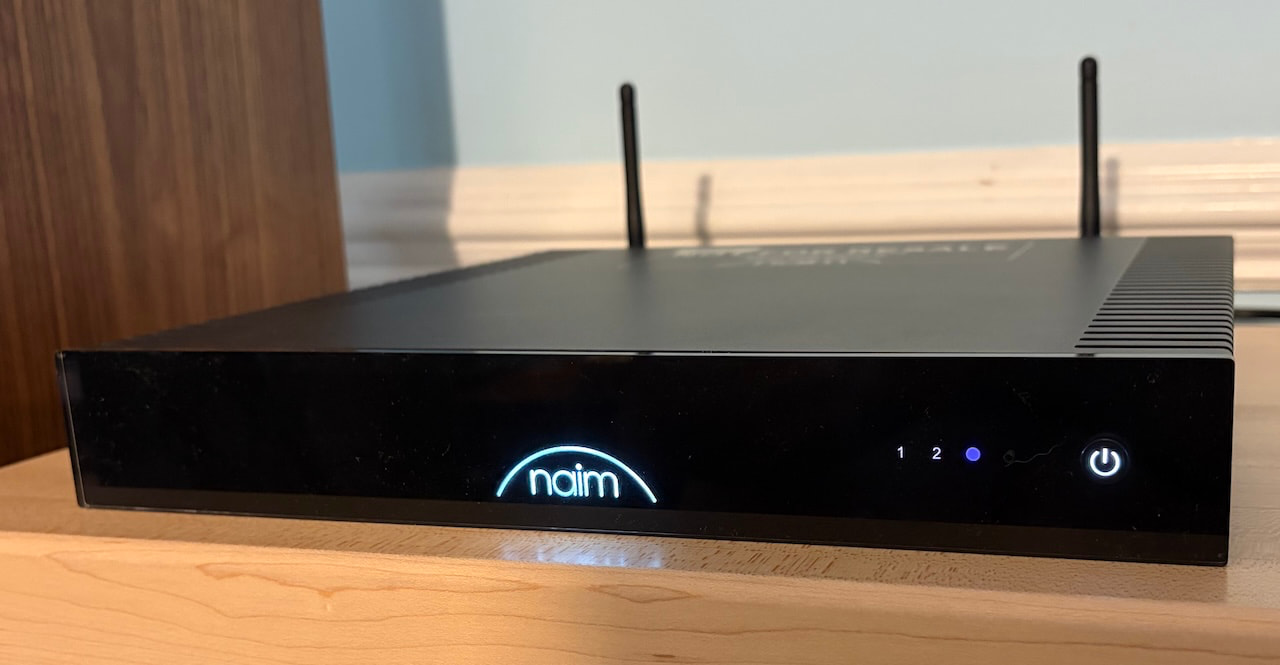
Which makes the Naim CI-Uniti 102 considerably more interesting than its rather anonymous black box might suggest.
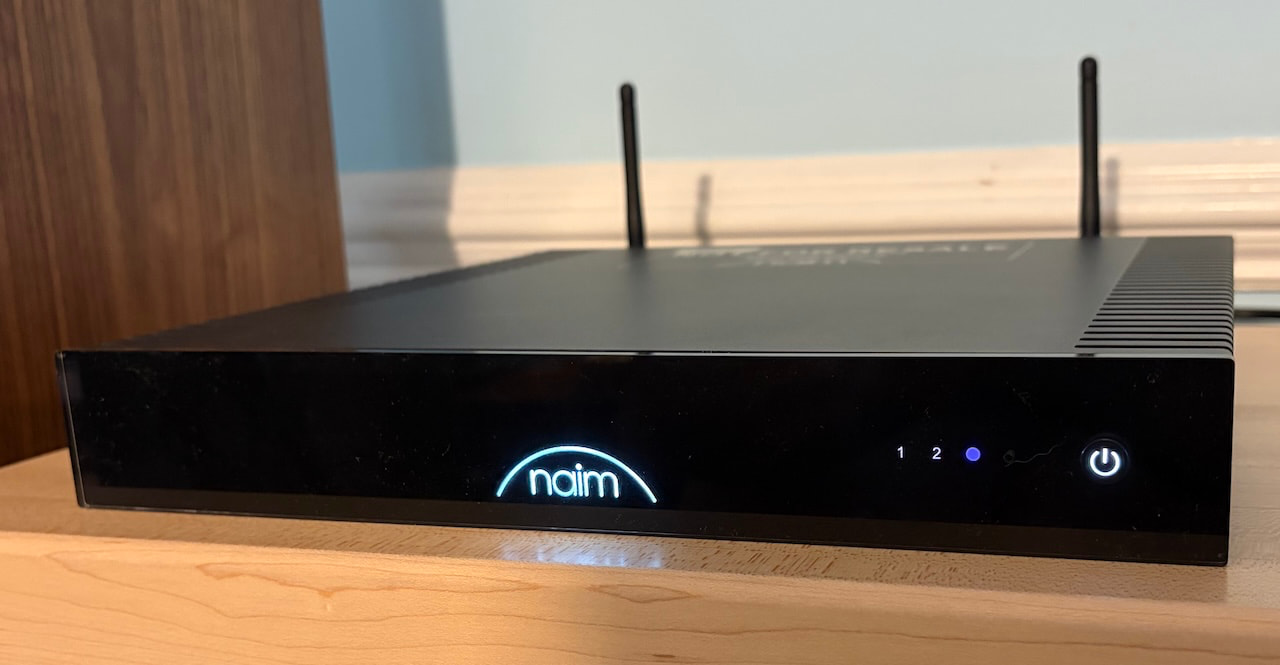
Designed primarily for custom installation, the CI-Uniti 102 strips away much of what made the Uniti Atom such an object of desire. There is no large color display dominating the front panel, no gorgeous illuminated volume control begging to be touched and very little about its appearance that screams expensive British Hi-Fi. It is meant to disappear into a rack, cabinet or installation and get on with the job.
What it gives you instead is potentially far more consequential: Naim’s streaming platform, HDMI eARC, extensive control and integration options, and 150 watts per channel into 8 ohms from a compact chassis. Its regular U.S. price is $1,799, and it is currently selling for even less through at least one major retailer.
That creates a question I did not expect to be asking when this review began. Is the CI-Uniti 102 merely a very capable custom-installation product, or has Naim inadvertently created a more rational Uniti for people who care far more about performance than having the hardware on display?
And if it can deliver enough of the experience that made the Uniti Atom so special for less than half the money, the more uncomfortable question might be what that says about the Atom’s $3,799 asking price in 2026.
Related Reviews:
More Than a Uniti Without the Pretty Bits
The CI-Uniti 102 might have been conceived for the custom installation market, but there is nothing preventing it from becoming the center of a very straightforward two-channel system. In fact, once you stop worrying about where Naim expects dealers to install it, the proposition becomes rather more interesting.
Inside the 1U chassis is a two-channel amplifier rated at 150 watts per channel into 8 ohms and 260 watts per channel into 4 ohms. That is considerably more power than the Uniti Atom and enough on paper to expand the range of loudspeakers one might reasonably consider.
Naim specifies a frequency response of 5Hz to 70kHz, THD+N below 0.006%, a 110dB A-weighted signal-to-noise ratio and support for digital audio up to 32-bit/384kHz. The entire thing measures just 11.75 inches wide and deep, 1.75 inches high and weighs 9.9 pounds.
One important distinction between the CI-Uniti 102 and the Uniti Atom is the amplifier topology. The CI-Uniti 102 uses Class D amplification, rather than the Class A/B design employed by the Atom, which helps explain how Naim is able to extract 150 watts per channel into 8 ohms and 260 watts into 4 ohms from such a compact 1U chassis.
Naim has not simply stuffed a more powerful Atom into a black box and removed the expensive display. The CI-Uniti 102 takes a fundamentally different approach to amplification, prioritizing efficiency, power density and installation flexibility while retaining Naim’s streaming platform and system integration capabilities.
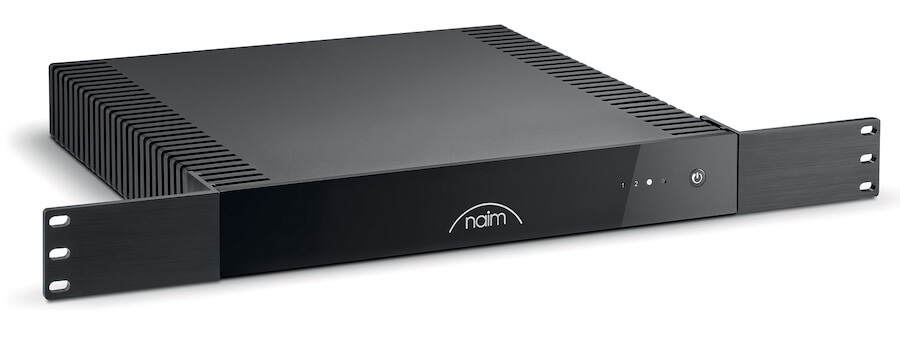
That small footprint makes the CI-Uniti 102 unusually adaptable. It can live in a conventional equipment rack using the supplied 19-inch rack mounting hardware, disappear inside a cabinet, or sit somewhere considerably less conspicuous than most integrated amplifiers. The unit itself is designed for indoor installation, although Naim specifically states that it can be used to power outdoor loudspeakers.
In other words, do not install the amplifier beside the swimming pool unless your home insurance policy has become tiresome and you are eager to meet both the claims adjuster and the local forensic pathologist. The district attorney may want a word as well.
For a single-room system, the CI-Uniti 102 covers most of the sources that people actually use in 2026. Streaming support includes TIDAL and TIDAL Connect, Qobuz, Spotify Connect, Presto Music, UPnP, Internet Radio, AirPlay 2 and Chromecast, along with Bluetooth. Network connectivity is available through Gigabit Ethernet or Wi-Fi 6. There is also Dante receiver capability at 48kHz, which will matter considerably more to custom installers and sophisticated networked systems than it will to someone streaming Miles Davis in the den.
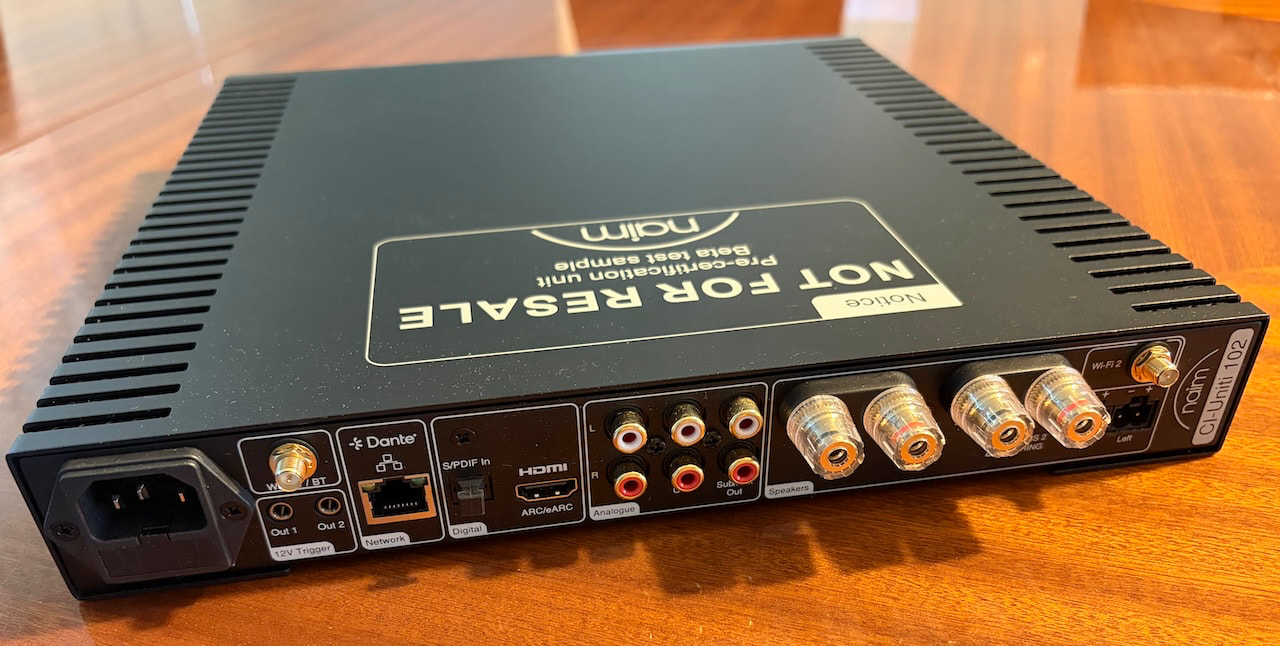
Physical connectivity includes a stereo RCA analog input, S/PDIF digital input and HDMI eARC, with the latter supporting two-channel LPCM up to 24-bit/192kHz. That makes the CI-Uniti 102 a potentially compelling alternative to a soundbar for someone who wants a proper pair of loudspeakers connected to their television without building a full home theater system.
Add a network connection and you have television audio, streaming and amplification inside one very small box. A turntable can also be used through the analog input, but you will need a turntable with an integrated phono stage or an external phono preamplifier because the CI-Uniti 102 does not include one.
Naim also provides two independent stereo RCA outputs, identified as Main and Sub/Aux, which considerably broadens what you can build around it. The Focal & Naim Manager software provides DSP configuration including EQ, limiters, active crossovers and time alignment, along with dedicated speaker profiles for compatible Focal CI loudspeakers. That means the secondary output can be configured for a subwoofer or another zone, and installers have considerably more control over how the loudspeakers and subwoofer interact than the minimalist front panel might suggest.
It is worth clarifying what Naim means by system calibration here. The CI-Uniti 102 does not perform automated room measurements in the fashion of Dirac Live. The Focal & Naim Manager software instead gives the installer or knowledgeable owner access to EQ, crossover, limiter and time-alignment tools that can be adjusted for the installation.
Speaker profiles are also available for compatible Focal architectural models. That approach requires more knowledge than pressing a button and allowing a microphone to make the decisions for you, but it also provides substantial control for someone who knows what they are doing. Baldrick with an SPL meter is probably not the recommended installer.
The CI-Uniti 102 becomes even more interesting when you stop thinking about one room.
Naim’s own multiroom platform supports up to 32 devices in a single session, and Naim states that the CI-Uniti 102 is compatible with all generations of its streamers. That opens the door to using one in the primary listening room while additional Naim components serve a kitchen, bedroom, office, patio or other zones around the house. Everything can be controlled through the Focal & Naim app, while installations built around larger home-control ecosystems can integrate with platforms including Control4, Crestron, RTI, Savant and Elan.
For larger installations, the CI-Uniti 102 can also be partnered with Naim’s CI-NAP 108 power amplifier, with 12V trigger outputs allowing synchronized standby operation. Dante support further expands its usefulness in professionally networked installations where audio needs to be distributed over Ethernet rather than through a traditional collection of analog cables.
And this is where Naim’s cunning plan starts to make considerably more sense — unusually, without requiring a turnip.
You can treat the CI-Uniti 102 as the invisible engine behind an elaborate Focal/Naim whole-home installation, which was clearly its original purpose. But you can also ignore almost all of that, connect a pair of conventional loudspeakers, a television and Ethernet cable, log into your streaming services and use it as an extremely compact streaming integrated amplifier.
The Naim That Fits Where the Atom Can’t
For those of you who are particularly good at reading between the lines, the past 24 months have been slightly rough for your favorite Hi-Fi Editor. The annual Chanukah wish list goes live in a week, so there is still time to send cash, records, brisket, or perhaps a lightly used passport. I am joking. Mostly.
There have been some hits, both mentally and physically. I survived a stretch of inpatient mental health treatment at the beginning of 2025, some fairly significant medical issues after that, and more recently shingles and my first kidney stone attack in 15 years. If you have not figured it out by now, I am both stubborn and rather difficult to kill.
The upside is that I am currently the lightest I have been in years, exercise every day, eat considerably better; which should not be confused with eating correctly — and I am getting surprisingly close to my old fighting weight. No needle in my backside once a month, either. Just the deeply irritating realization that walking, lifting things and not eating like a raccoon behind a Waffle House actually works.
All of that turmoil has had another effect: it turned my sense of home completely upside down.
Some days during treatment I was sitting in a room talking to complete strangers about things I had spent decades avoiding. Other days in Florida I was standing outside at the braai while my Cuban neighbors became rather more enthusiastic than anyone really needed them to be in their hot tub. There are things no amount of therapy or bleach can erase.
My brain has also spent a lot of time somewhere else. Cape Town. Israel. Bologna. Turin. Northern Pennsylvania. Almost anywhere, at times, other than my home base on the Jersey Shore.
Florida became particularly ugly when siblings and property entered the same sentence, and I am rather pleased to have escaped that mess with both my money and what remained of my sanity. The kids are moving forward as well. College. Careers. One looking increasingly serious about getting engaged. My youngest had her Bat Mitzvah and is now learning Japanese with the apparent intention of becoming a Demon Slayer. Having raised her, I would not bet against it.
Through all of this, I have started thinking much more seriously about space.
How much of it do I really need? Could I realistically divide my life between two smaller homes rather than maintaining one large space simply because that is what we have always done? And what happens to a Hi-Fi Editor with an absurd amount of equipment when the future might involve remaining in Long Branch, but also adding a cabin in Northern Pennsylvania, or an apartment somewhere in Bologna or Turin for those months when the Bennies descend or winter becomes too much.
That question has changed how I look at products like the Naim CI-Uniti 102.
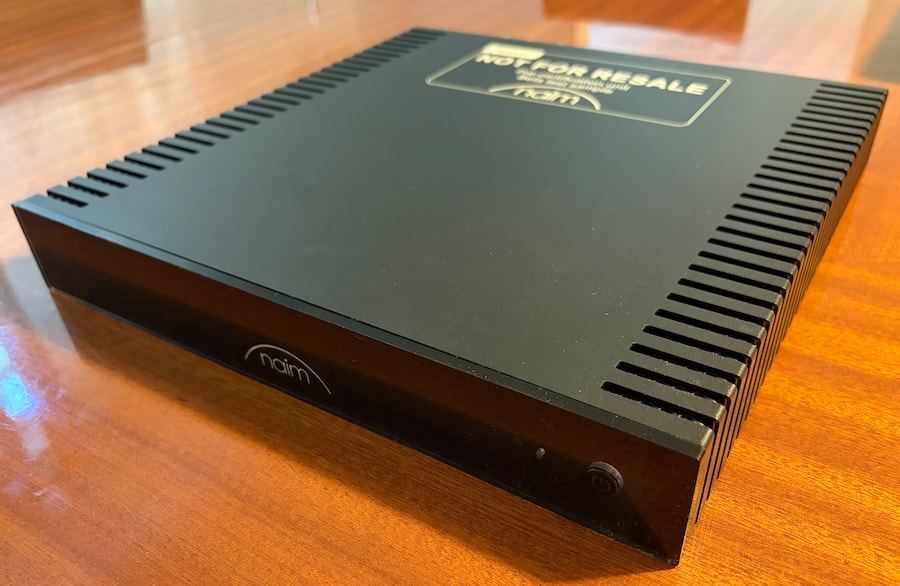
Ten years ago, I probably would have looked at this black 1U box and thought primarily about custom installation racks, wealthy homeowners and integrators running miles of CAT6 behind drywall. After actually living with it, I think that interpretation sells it considerably short.
Hi-Fi has spent decades convincing us that commitment should be measured in square footage, component count and the number of glowing boxes occupying increasingly expensive furniture. The CI-Uniti 102 quietly argues that you can keep much of the performance while getting a rather significant portion of your room back.
The CI-Uniti 102 may have been designed to disappear. That might be precisely why it makes so much bloody sense.
When the App Becomes the Remote
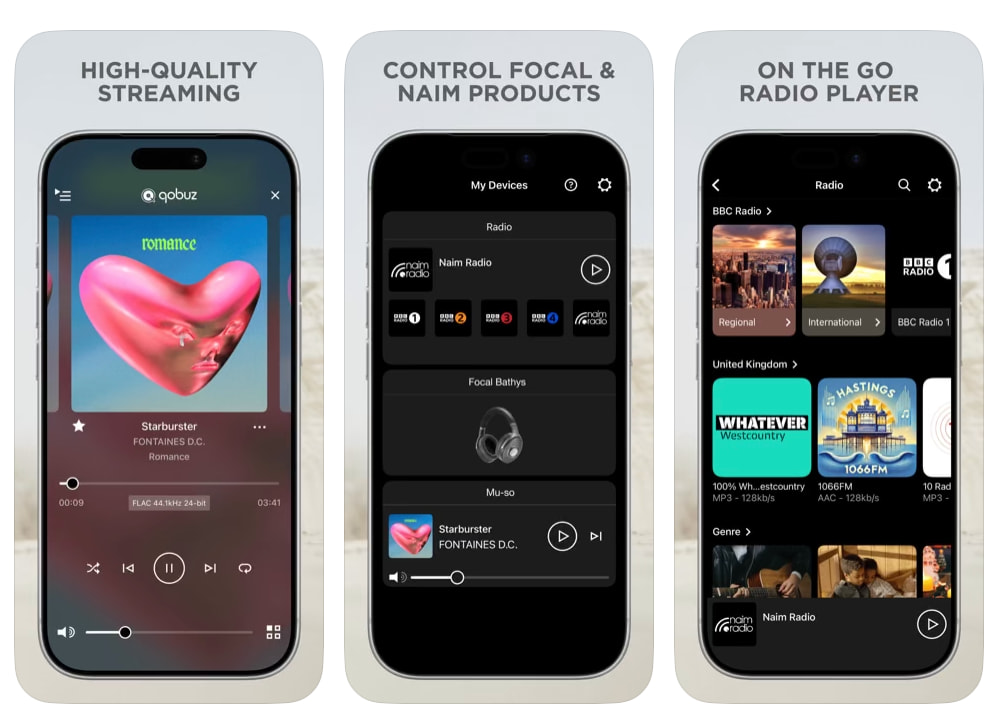
The Focal & Naim app matters more with the CI-Uniti 102 than it does with something like the Uniti Atom because there is no large display, conventional remote, or volume knob waiting on the front panel. In normal use, the app becomes the control center for volume, source selection, streaming, settings, firmware updates, and multiroom playback. Setup was straightforward, the amplifier responded quickly to commands, and moving between sources and streaming services never felt like work.
I still wish Naim included some form of physical remote control because there are moments when reaching for a phone just to change the volume feels unnecessarily modern. HDMI eARC largely solves that problem with a television, since the TV remote can handle volume, but music playback remains app-centric. The deeper EQ, crossover, limiter, time-alignment, and Focal speaker-profile adjustments are handled separately through Focal & Naim Manager, which keeps the main app relatively uncluttered and gives installers considerably more control when building a larger system.
Listening
Naim would undoubtedly prefer that I connect the CI-Uniti 102 to a pair of Focal loudspeakers, and given the relationship between the two brands, that would certainly make sense. But that wasn’t how this review was going to play out. The Q Acoustics 3020c, Acoustic Energy AE100 MKII, and Wharfedale Super Denton are all loudspeakers I own and know well, and they gave me three very different loads and sonic personalities to work with.
Digital streaming was handled primarily through my new iPhone 17, while the analog side consisted of my Thorens TD-145 MKII fitted with a Dynavector 10X5 high-output moving-coil cartridge, feeding the MOON 110LP v2 Phono Preamplifier into the Naim’s analog input. That combination also gave me a useful way to determine whether the CI-Uniti 102 was merely a very capable streaming amplifier or something I would actually want to use with records on a daily basis.
I used the supplied Naim power cord for most of the review, along with QED speaker cables and an interconnect from Chord Company. For approximately three seconds, I contemplated connecting one of my Clarus Audio power cords before realizing that it might cost more than a substantial portion of the system attached to it. Even I have limits.
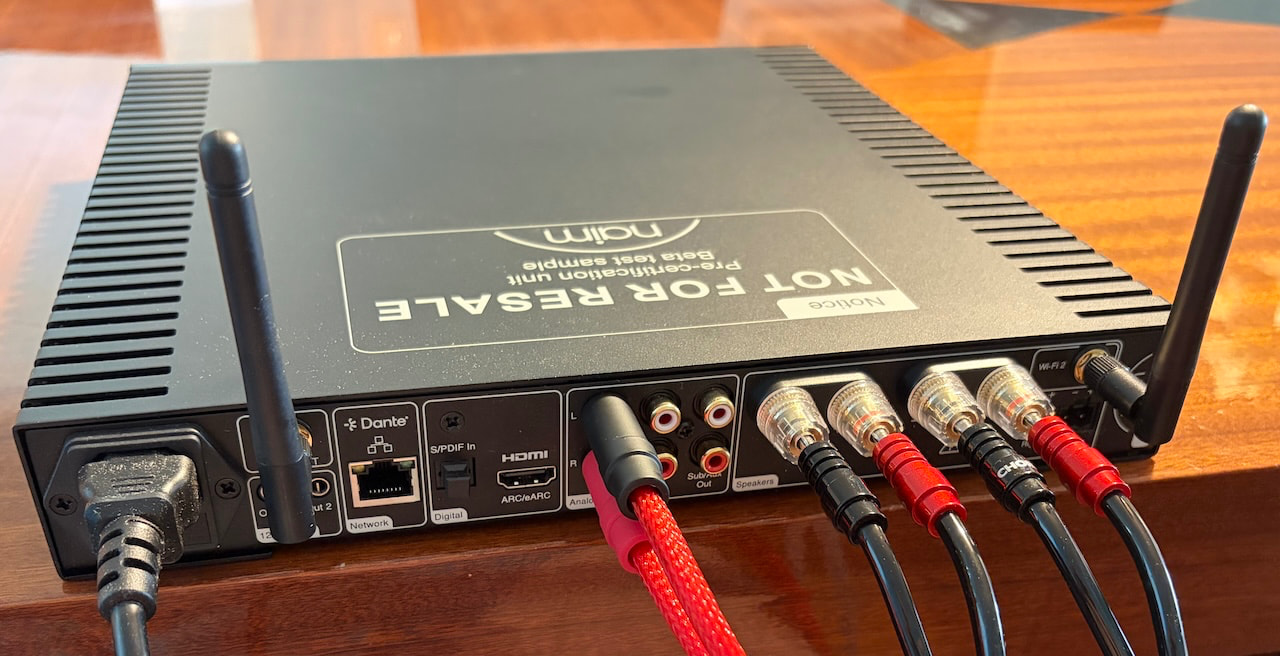
We have covered the evolution of Class D amplification in considerable detail, but having owned older Naim integrated amplifiers going back to the late 1990s, and spent considerable time with both the Uniti Atom and Uniti Atom Headphone Edition, I was curious to hear whether the CI-Uniti 102 could still deliver the qualities I associate with Naim: pace, rhythm, attack, timing, and clarity.
In other words, I was not particularly interested in whether the CI-Uniti 102 sounded like a Class D amplifier. I wanted to know whether it still sounded like a Naim.
“I’m a Fool to Want You” But the Naim Knows How to Hold On
I have been on something of a Billie Holiday kick lately, and while my Classic Records reissue of Lady in Satin is not the definitive version, it still sounds pretty, pretty good. “I’m a Fool to Want You” is also probably one of the worst songs imaginable to play in front of your spouse, girlfriend, or significant other. Naturally, I hate myself enough to do exactly that.
The Wharfedale Super Denton is the warmest and thickest sounding loudspeaker of the three, and what impressed me immediately was how firmly the Naim grabbed hold of the British bulldog. Power is power, but the CI-Uniti 102 combined that authority with a surprising degree of clarity and texture. Holiday’s voice benefited from the Wharfedale’s warmer midrange and softer top end, but she was not sitting at the back of the room eating lunch and mumbling through a bag of prawn chips and a half-eaten Coffee Crisp.
Her voice was not thrust unnaturally forward either. It sat clearly in front of the loudspeakers with enough body, texture, and presence to make the performance feel intimate without becoming dry, sterile, or overly etched. That balance between grip and warmth was the first indication that the CI-Uniti 102 might have rather more traditional Naim character than its Class D topology and anonymous black chassis would suggest.
Switching to Joni Mitchell, Amy Winehouse, Dolly Parton, Sia, and Brandi Carlile confirmed something else: the CI-Uniti 102 does not homogenize voices. It does not shave off the edges or apply some pleasant Naim flavored coating to everything passing through it. Thin is thin. Dolly’s slightly quivering edges that still make me weak in the knees were intact, as were Amy’s bite and power, Joni’s more ethereal delivery, Sia’s explosive energy, and Brandi Carlile’s sheer vocal force.
The Jo Whiley Live Lounge performance of “Valerie” from Amy Winehouse’s At the BBC is a particularly useful test because it is a raw, fairly hard sounding recording. The top end offers little mercy to an amplifier or tweeter already leaning bright. Of the three loudspeakers I used, the Q Acoustics 3020c are the liveliest and, to my ears, the most transparent. The Naim did not try to sweeten the recording or sand down its rougher edges. It simply let the performance flow and unravel in front of me.
That matters when you consider that some Focal loudspeakers can be extremely revealing through the upper midrange and treble. If the CI-Uniti 102 were fundamentally thin, hard, or etched, there would be nowhere for that character to hide. Based on what I heard with the 3020c, that is not what this amplifier is doing.
Highway Anxiety and the Art of Forward Motion
Switching over to The Orb, Aphex Twin, deadmau5, Kraftwerk, and William Tyler revealed another side of the CI-Uniti 102. The Naim does a few things exceptionally well: pacing, energy, presence, and midbass punch. Those are also strengths of the Acoustic Energy AE100 MKII, and the combination had considerably more drive than its modest dimensions might suggest.
William Tyler’s “Highway Anxiety,” the nine-minute opening track from Modern Country, was especially revealing. It is a huge sounding recording built around layers of acoustic and electric guitar, keyboards, percussion, bass, and increasingly expansive textures, and the Naim gave those layers room to develop without allowing the music to lose momentum.
“Highway Anxiety” is one of those tracks that can sound enormous when a system gets it right, and disappointingly small when it doesn’t. The Naim got it right with all three loudspeakers. Tyler’s guitar had body, scale, and enough space around it to let the track breathe without turning the whole thing into some audiophile meditation exercise.
The electronic material was even more obvious. Kraftwerk had snap and precision, deadmau5 hit hard, and The Orb and Aphex Twin had the kind of propulsion and midbass punch that keeps you engaged instead of wondering what the hell happened to the rhythm section. The CI-Uniti 102 may look like something an installer forgot in the rack, but it sure as hell doesn’t sound anonymous.
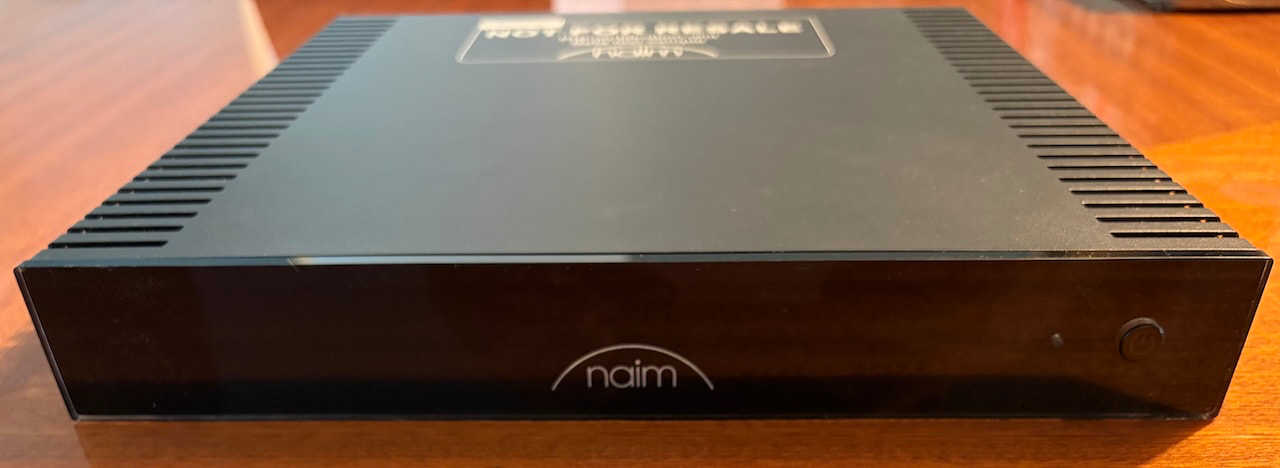
Where the CI-Uniti 102 Falls Short
I am a big color and texture guy. Life is rarely black and white, and even the black-and-white cookie has a soft, cake-like crumb hiding underneath all that frosting. It is the same reason I obsess over biltong and droëwors. A little chew is fine. Tough can even be interesting. But it still needs flavor.
The CI-Uniti 102 is never going to be mistaken for a tube amplifier, and that is perfectly fine. It is not chalky, sterile, or bleached of tonal color, but I would happily give up a little more detail for additional body and richness. The soundstage is perfectly adequate rather than enormous, and imaging is good, but it does not plant performers in front of you with the same physical conviction I have heard from larger Naim integrated amplifiers such as the Supernait 3.
I also wish Naim had included an internal phono stage, although at this price something had to give. Bass is very much in the Naim tradition: tight, fast, and well defined. What I wanted was a little more meat on the bone. Not more bass for the sake of it, but more weight and color through the upper bass and lower midrange where instruments start to feel like actual instruments rather than exceptionally well organized information.
The Bottom Line
The Naim CI-Uniti 102 is easy to underestimate because it looks more like something destined for an equipment rack than the centerpiece of a serious Hi-Fi system. That is also what makes it interesting. You get 150 watts per channel, Naim’s streaming platform, HDMI eARC, multiroom capability, useful DSP tools, and enough power to drive a broad range of loudspeakers, all in a compact chassis that can effectively disappear from the room.
Sonically, it gets most of the important things right. The CI-Uniti 102 is fast, clear, energetic, and exceptionally good at preserving the character of different voices and recordings. Bass is tight and punchy, although I wanted a little more weight and tonal richness, and the soundstage is good rather than enormous. I would also have welcomed an internal phono stage and some form of physical remote control.
The real surprise is how much sense it makes outside the custom-installation world. If you want a compact two-channel system, need something that can integrate into a larger Naim multiroom setup, or simply prefer excellent sound without building an altar to your electronics, the CI-Uniti 102 deserves serious consideration. It may not have the visual drama of the Uniti Atom, but at its lower price and with considerably more power, it also makes the Atom’s current asking price rather more difficult to explain.
Pros:
- 150 watts per channel into 8 ohms from a compact 1U chassis
- Fast, punchy, energetic presentation with excellent pace and timing
- Very good clarity without sounding chalky, sterile, or overly hard
- Does not homogenize vocals or smooth over the character of recordings
- Tight, well-defined bass with strong midbass punch
- HDMI eARC makes it easy to build a serious two-channel TV system
- Strong streaming and multiroom functionality
- Useful DSP, crossover, EQ, and time-alignment tools through Focal & Naim Manager
- Works equally well as a standalone streaming amplifier or part of a larger Naim installation
- Compact design can disappear into a cabinet or rack
- Considerably more power than the Uniti Atom for much less money
Cons:
- No internal phono stage
- No conventional remote control
- Soundstage is solid rather than especially large
- Imaging lacks some of the physical solidity of Naim’s larger amplifiers
- Bass could use more weight and tonal richness
- Not as colorful or texturally rich as the best Class A/B or tube designs
- Utilitarian industrial design will not appeal to buyers who want their Hi-Fi on display
Our Ratings
★★★★★★★★★★ Sound Quality
★★★★★★★★★★ Usability
★★★★★★★★★★ Build Quality
★★★★★★★★★★ Value
Where to buy:
Related Reading:
from the the-same-but-different dept
This article is republished from The Conversation under a Creative Commons license. Read the original article.
In his White House Correspondents’ Association dinner speech on July 24, 2026, President Donald Trump made his usual diatribes against the news media. He derided the “failing” New York Times and reiterated his complaint that CNN reporter Kaitlan Collins doesn’t smile enough. He dismissed the award she received at the dinner as “fake” and celebrated the recent firing of top CBS News employees.
Such ongoing extreme hostility from the president has contributed to Americans’ loss of faith in the news media, which has plummeted to an all-time low.
While the situation is in many ways unique to this moment, a perceived crisis around the very notion of “objective reporting” – and presidential use of that idea to denigrate and delegitimize the press – has a long history.
Nixon administration played hardball
Republican presidential candidate Richard Nixon, for example, attacked coverage of police brutality at the 1968 Chicago Democratic National Convention as one-sided in favor of antiwar protestors. Once in office, Nixon deployed Vice President Spiro Agnew to verbally assault journalists for their putative bias and elitism.
In an infamous 1969 speech, Agnew denounced TV newsmen – they were, indeed, mostly men – as “an effete corps of impudent snobs,” hostile to the president and therefore out of touch with average Americans. Agnew singled out NBC anchorman David Brinkley for his claim that “objectivity is impossible” and that “fairness” was a more reasonable objective. Like many journalists, Brinkley understood “objectivity” as implying an almost mechanical delivery of pure facts, while “fairness” was more realistic, an earnest effort to be judicious.
Agnew concluded with a challenge: People should “let the networks know that they want their news straight and objective.” He framed this populist turn as an alternative to government interference. But journalists felt the looming threat of censorship.
Brinkley’s statement was not impudent. It was realistic: an acknowledgment that journalists are humans with preconceptions and values, but that their professional mandate is to strive for impartiality.
Carefully balanced reporting was not only the baseline of journalists’ training but also a business imperative. There were only three national nightly news shows, all seeking the widest possible audience. Moderation was more profitable than swinging hard left or right.
Although frustrated with journalism in general, Agnew zeroed in on TV in his speech because it had displaced print as Americans’ leading news source. And the reality of Federal Communications Commission licensing, whereby a federal agency determined who could use publicly owned airwaves, made broadcasters vulnerable to the actions of a vengeful president.
The licensing issue still resonates. Comedian Jimmy Kimmel, a frequent Trump critic, had his show briefly suspended by ABC after angering the president’s supporters.
“We can do this the easy way or the hard way,” FCC chair Brandon Carr said. “These companies can find ways to change conduct to take action on Kimmel or, you know, there’s going to be additional work for the FCC ahead.”
Kimmel survived this attack largely because public support surged, and he continues to satirize the White House. Others have been less fortunate.
Journalists fought back
Struggling to compete, newspapers in the 1960s and ’70s could have easily downplayed Agnew’s criticisms of a rival medium.
Instead, they stood up for TV. In the course of my research, I’ve found that not only in publicly accessible material but also in unpublished archival papers both broadcasters and newspapers consistently understood an attack on one media outlet as an attack on all, a lesson that holds true in 2026.
One of Agnew’s “snobs” was the liberal New York Times columnist Tom Wicker. Wicker was on Nixon’s “enemies list,” and he voiced concerns about not just Nixon and Agnew but also more generally about the very notion of objectivity.
Agnew raised hackles across the American journalism community. But Wicker’s reactions stand out in particular, because he was employed by what was then known as “the paper of record,” whose grandiose credo had long been “To Give the News Impartially, Without Fear or Favor.”
In a column published on Nov. 16, 1969, Wicker granted that it was legitimate for Agnew to ask “how the power of that extraordinary medium (TV) can be most equitably controlled and exercised in the general public interest.”
But Wicker underscored that Agnew “couched his argument in direct political attack on those who differed with Mr. Nixon” and “came close to claiming immunity from criticism for Presidential utterance.”
Taking on ‘objectivity’
Two years after Agnew’s “effete snobs” speech, Wicker wrote an essay for Columbia Journalism Review objecting to journalism’s “tradition of objectivity” and “orientation toward nationalism in politics and toward establishmentarianism in other areas of society.”
The consequence, he wrote, was a heavy and generally uncritical reliance on official sources, all in the name of a spurious notion of objectivity.
Deeply offended, New York Times executive editor Abe Rosenthal sent a confidential memo to publisher Punch Sulzberger.
“In essence,” Rosenthal wrote, “what Tom’s piece adds up to is a public statement by … a well-known columnist of the Times … that objectivity and comprehensiveness, the journalistic foundations of this paper, are no longer valid and that the kind of paper the Times is now is no longer meaningful.”
Rosenthal said Wicker’s public expression of these thoughts was “bad for the paper” externally and “bad for morale” internally.
Regardless, such disputes at The New York Times were always waged behind the scenes. The gold standard for journalism was – and remains, whenever possible – to tell the story, not be the story.
Denouncing bias as deflection
Today, by contrast, it is widely known that the CBS News division “is on fire,” as longtime “60 Minutes” correspondent Scott Pelley said, shortly after he was sacked.
Newly installed CBS News Editor-in-Chief Bari Weiss, who has no broadcast experience, positions herself as an advocate for “free speech and free thinking” and her Free Press newsletter as a reclamation of objective reporting. Yet at CBS she has made editorial choices, including killing a story highly critical of the Trump administration, that consistently favor the White House.
Like Agnew, in other words, Weiss appears to cloak uncritical acceptance of presidential positions as a battle against “bias.”
Denouncing “bias” is usually an attempt by those in power to deflect from what reporters have uncovered – from Vietnam to Watergate to Iraq. It is thus startling for someone within journalism to use the establishment’s word – bias – to self-censor.
The apparently deliberate imploding of CBS News and its flagship investigative journalism program “60 Minutes” is all the more shocking when you consider the network’s past triumphs in serving the public interest while angering politicians and presidents.
Holding government accountable
In 1971, for example, the Army and the Nixon administration attacked “The Selling of the Pentagon,” a CBS documentary about military public relations activities. Officials charged that the editing had been misleading and malicious, and the U.S. House of Representatives subpoenaed CBS journalists’ raw footage.
This congressional investigation ended as a victory for the press and the public’s right to know. CBS refused to share its outtakes, and the network’s president risked going to jail for contempt of Congress.
In his column, Wicker declared the documentary excellent, and he correctly painted the subpoena of CBS materials as resulting from White House pressure.
That same year, The New York Times and The Washington Post printed the Pentagon Papers, revealing that the government had been misleading Americans for years regarding Vietnam. The two newspapers were briefly silenced by the White House, which persuaded the courts to order them to cease releasing the documents, and then were vindicated when the Supreme Court barred the government from restraining publication.
Wicker argued that “no statute exists that says government officials must be protected from the exposure of their follies or misdeeds,” and that the Pentagon Papers’ culprit was the government, not the newspapers.
Here, Wicker made a fair, if not strictly objective, evaluation.
Such opinionated defenses of the press still ring true today. Agnew repeatedly attacked naysayers as “nattering nabobs of negativism,” but journalism serves a positive function in particular when its stories are negative.
That’s how the public is able to hold government accountable, and accountability is crucial to the fight for democracy and against censorship and authoritarianism.
Heather Hendershot is Professor of Communication Studies and Journalism at Northwestern University.
Filed Under: donald trump, free press, free speech, journalism, richard nixon

Crypto World26 seconds ago
Solana price holds rising trendline with $115 in sight

Politics59 seconds ago
Trump Claims Dolly Parton ‘Really Liked Me,’ She Just Didn’t Want Anyone To Know

Sports3 minutes ago
MLB Playoff Push: Blue Jays, Mariners set to clash amid AL wild-card chase





-

 Fashion7 days ago
Weekend Open Thread: Madewell – Corporette.com
-

 Crypto World3 days ago
SpaceX stock could rise 75% to $240, JPMorgan says
-

 Business6 days ago
Musk’s Tesla, SpaceX Confirm $16.8 Billion ‘Terafab’ Chip Plant as World’s Largest Building in Texas
-

 Crypto World6 days ago
anatomy of crypto’s biggest liquidation event since 2021
-

 Crypto World3 days ago
A $30 Billion AI Fund Implodes, Now the SEC Is Investigating Wall Street’s Role
-

 Politics6 days ago
6 months on, Irish renters crushed by effects of government housing bill
-

 Crypto World2 days ago
Warsh Jackson Hole keynote puts financial innovation first
-

 Crypto World2 days ago
Did Trump Just Move SpaceX Stock With One Truth Social Post?
-

 Business5 days ago
Mystery AI Model ‘Ox Alpha’ Draws Developers With Free Access as Chinese Lab Origins Remain Debated
-
 NewsBeat6 days ago
The ‘Lucky Dip Gang’ causing carnage for clicks: After five thugs were killed speeding in the wrong direction on a motorway, GUY ADAMS investigates a sick new trend… and why police aren’t even allowed to pursue them
-
 Crypto World7 days ago
Nvidia Stock Suffers Longest Losing Streak Since 2022: Will Q2 Earnings End It?
-

 Business2 days ago
Walmart takes aim at younger shoppers with new fashion brand
-

 Business4 days ago
Moderna CEO warns China is pouring state money into mRNA technology
-

 Business4 days ago
NVIDIA Stock Drops Nearly 2 Percent to $210 on Seventh Losing Day Ahead of Critical AI Earnings
-

 Tech7 days ago
Unitree’s New Superman Robot Claims to Outjump and Outrun Every Human, Usain Bolt Included
-

 Business6 days ago
Will Tesla Stock Be Higher or Lower a Year From Now? Here’s What Wall Street Analysts Are Saying
-

 Business7 days ago
UK firms in critical financial distress rise 9% to 53,756
-

 Sports5 days ago
Deshaun Watson fires back at Browns fans after being booed: ‘It’s a disrespectful thing’
-
 Crypto World4 days ago
$92 Billion Nvidia Earnings Could Make or Break the AI Trade
-
 Crypto World5 days ago
Google Gemini AI Predicts Ethereum Could Become the Trade Retail Misses in 2026
You must be logged in to post a comment Login