Connect with us

Tech

OpenAI sidesteps Nvidia with unusually fast coding model on plate-sized chips

Published

on

But 1,000 tokens per second is actually modest by Cerebras standards. The company has measured 2,100 tokens per second on Llama 3.1 70B and reported 3,000 tokens per second on OpenAI’s own open-weight gpt-oss-120B model, suggesting that Codex-Spark’s comparatively lower speed reflects the overhead of a larger or more complex model.

AI coding agents have had a breakout year, with tools like OpenAI’s Codex and Anthropic’s Claude Code reaching a new level of usefulness for rapidly building prototypes, interfaces, and boilerplate code. OpenAI, Google, and Anthropic have all been racing to ship more capable coding agents, and latency has become what separates the winners; a model that codes faster lets a developer iterate faster.

With fierce competition from Anthropic, OpenAI has been iterating on its Codex line at a rapid rate, releasing GPT-5.2 in December after CEO Sam Altman issued an internal “code red” memo about competitive pressure from Google, then shipping GPT-5.3-Codex just days ago.

Diversifying away from Nvidia

Spark’s deeper hardware story may be more consequential than its benchmark scores. The model runs on Cerebras’ Wafer Scale Engine 3, a chip the size of a dinner plate that Cerebras has built its business around since at least 2022. OpenAI and Cerebras announced their partnership in January, and Codex-Spark is the first product to come out of it.

Advertisement

OpenAI has spent the past year systematically reducing its dependence on Nvidia. The company signed a massive multi-year deal with AMD in October 2025, struck a $38 billion cloud computing agreement with Amazon in November, and has been designing its own custom AI chip for eventual fabrication by TSMC.

Meanwhile, a planned $100 billion infrastructure deal with Nvidia has fizzled so far, though Nvidia has since committed to a $20 billion investment. Reuters reported that OpenAI grew unsatisfied with the speed of some Nvidia chips for inference tasks, which is exactly the kind of workload that OpenAI designed Codex-Spark for.

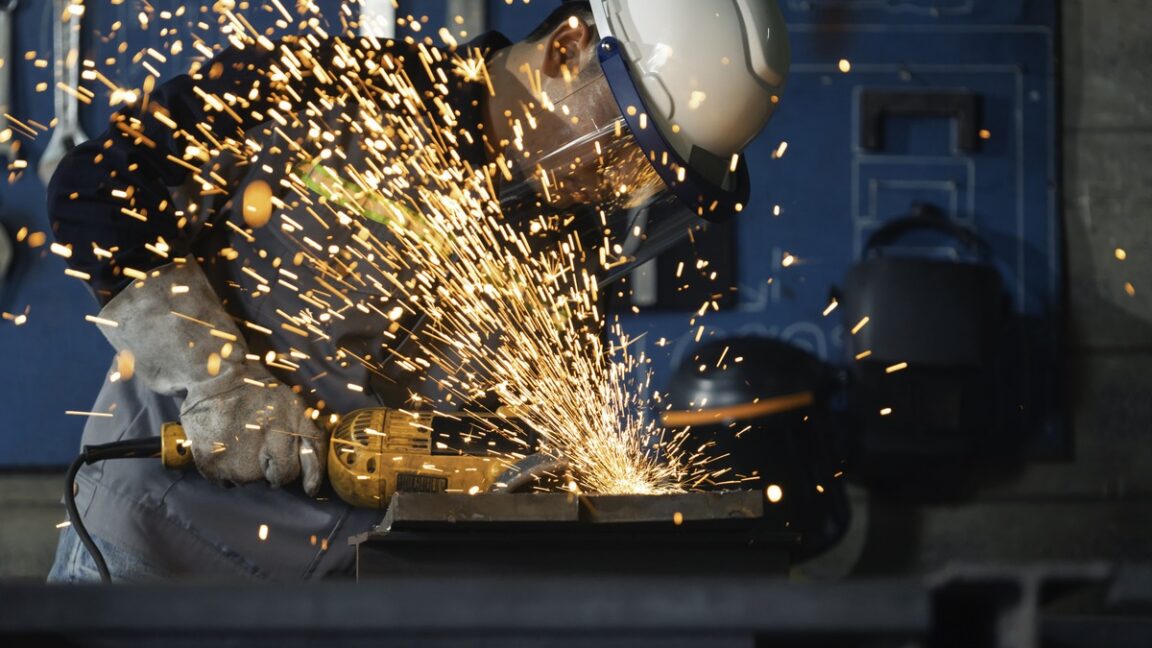
Regardless of which chip is under the hood, speed matters, though it may come at the cost of accuracy. For developers who spend their days inside a code editor waiting for AI suggestions, 1,000 tokens per second may feel less like carefully piloting a jigsaw and more like running a rip saw. Just watch what you’re cutting.

Advertisement

Source link

Continue Reading
Click to comment

Leave a Reply

Your email address will not be published. Required fields are marked *

Tech

CIA Makes New Push To Recruit Chinese Military Officers as Informants

Published

on

An anonymous reader shares a report: Just weeks after a dramatic purge of China’s top general, the CIA is moving to capitalize on any resulting discord with a new public video targeting potential informants in the Chinese military. The U.S. spy agency on Thursday rolled out the video depicting a disillusioned mid-level Chinese military officer, in the latest U.S. step in a campaign to ramp up human intelligence gathering on Washington’s strategic rival.

It follows a similar effort last May that focused on fictional figures within China’s ruling Communist Party that provided detailed Chinese-language instructions on how to securely contact U.S. intelligence. CIA Director John Ratcliffe said in a statement that the agency’s videos had reached many Chinese citizens and that it would continue offering Chinese government officials an “opportunity to work toward a brighter future together.”

Source link

Continue Reading

Tech

‘AI companies shouldn’t leave American ratepayers to pick up the tab’: Anthropic says it will cover electricity price increases caused by its data centers

Published

on


  • President Trump has urged Big Tech to absorb rising energy bills, not consumers
  • Anthropic says it will pay upgrade costs and procure net-new power generation where possible
  • CEO Dario Amodei promises to be a “responsible neighbor” and work with communities and governments

Anthropic has boldly offered to cover electricity price increased caused by its own data centers, with CEO Dario Amodei stating the power of powering its AI models should fall on the company, not consumers.

This, of course, follows a recent request by President Trump for Big Tech companies to “pay their own way”, and not let US citizens face higher electricity bills as a result of their operations.

Source link

Advertisement
Continue Reading

Tech

Sony WF-1000XM6 vs Bose QuietComfort Ultra vs AirPods Pro: Which earbuds are right for you?

Published

on

With the launch of the WF-1000XM6 TWS earbuds, Sony has once again thrown the flagship earbuds competition wide open. The earbuds push audio performance, promise better noise cancellation, and deliver better battery life than ever, but the $330 question is: how do they compare with other flagship offerings?

Sony faces white-hot competition from two well-received heavy-hitters from Bose and Apple. Sony is climbing higher up the price ladder when pitted against the second-gen Bose QuietComfort Ultra and the third-gen AirPods Pro. But do Sony’s legacy and the generation-over-generation upgrades on the WF-100XM6 justify the high asking price? Well, that depends on the additional conveniences you expect from your high-end earbuds, instead of just sheer audio excellence.

Price and availability

Sony’s WF-1000XM6 is available for $329.99 at the company’s official website, Amazon, Best Buy, and other authorized retailers. This is a $30 increase over the WF-1000XM5’s launch price.

Released in September 2025, the Bose QuietComfort Ultra (2nd Gen) maintained the same launch price as its predecessor: $299.00. However, you can currently grab a pair of these earbuds at $249.00 via the company’s website.

Apple’s AirPods Pro 3 debuted in September 2025 at a relatively lower price of $249.00. With some digging, I found them listed at $209.99 on Amazon.

Advertisement

Design

Sony WF-1000XM6s feature a stem-free, bulbous oval pill-shaped design with an all-matte plastic finish and foam eartips that should provide a superior grip and seal. The outer surface of the earbuds registers touch inputs.

The Bose QuietComfort Ultra earbuds are based on the familiar stem-based design (with a relatively flatter and wider stem). They also have a soft silicone loop (wrapped around the earbuds) for a firmer grip on the inner ear walls. The stem also registers touch-sensitive pads for swipes and taps.

Apple’s AirPods Pro 3 retain the classic white stem-based design, but the earbuds are angled inward for a better, more secure fit. The device comes with foam-infused eartips, which, by the way, are available in five sizes (from XXS to L). It features a force- and capacitive-touch sensor for gesture-based controls.

While the Sony and Bose earbuds carry an IPX4 rating for basic sweat resistance, the AirPods flaunt an IP57 rating, offering protection against both dust and water immersion. All the earbuds come with USB-C charging cases and support wireless charging.

The AirPods Pro 3’s earbuds are the lightest at 5.55 grams, followed by Sony’s at 6.2 grams and Bose’s at 7.3 grams. Bose’s charging case is the largest and heaviest at 59.8 grams, compared to Sony’s 47 grams and Apple’s 44 grams.

  • Sony WF-1000XM6: Black, Platinum Silver
  • Bose QuietComfort Ultra: Black, White Smoke, Midnight Violet, Desert Gold, and Deep Plum
  • AirPods Pro 3: White

Audio

The WF-1000XM6 sport 8.4mm dynamic drivers with a redesigned soft edge and a lightweight dome to improve both treble and bass. Sony has equipped them with the QN3e processor (along with the V2 co-processor for 32-bit audio processing). Supported codecs include SBC, AAC, LDAC, and LC3 (LE Audio).

The WF-1000XM6 are the only earbuds in this comparison that provide a 10-band equalizer via the Sound Connect app for a truly customizable output, making them most suitable for audiophiles. Furthermore, the earbuds are certified for Hi-Res Audio Wireless (24-bit / 96 kHz) via the LDAC codec.

The Bose QuietComfort Ultra, on the other hand, come with slightly bigger 9.3 mm dynamic drivers with the company’s CustomTune technology (calibrated audio performance based on your ear’s shape). With a Qualcomm chipset that supports Snapdragon Sound, the earbuds support SBC, AAC, and the aptX Adaptive family of codecs (including aptX Lossless).

Advertisement

When used with compatible devices, the earbuds provide CD-quality or near-CD-quality bitrates via the aptX codecs. Compared to the XM6’s 10-band equalizer, the three-band equalizer on the QuietComfort Ultra is quite a bummer. You get four basic presets: Bass Boost, Bass Reducer, Treble Boost, and Treble Booster.

With custom 10.7mm high-excursion Apple drivers and a new multi-port acoustic architecture, the AirPods Pro 3 deliver noticeably thumpier bass and generate a much wider soundstage compared to the AirPods Pro 2. They feature Apple’s H2 chip and support limited codecs (AAC, SBC, and AAC-ELD for lossless audio with Vision Pro).

The AirPods are popular for their Spatial Audio and head tracking functionality, and the Pro 3 don’t disappoint in that regard. They offer Adaptive EQ, which tunes music to the unique geometry of your ear canal. You still get Headphone Accommodations for fine-tuning the output, but nothing beats a customizable equalizer (good job there, Sony).

Noise cancellation & transparency

Before I get into the nitty-gritty, all three models represent the pinnacle of noise cancellation, allowing you to create a bubble of isolation around you to focus on work, read a book, or be at peace. Most people won’t be able to differentiate between the noise cancellation on the earbuds.  

With the QN3e HD noise-cancelling processor, the V2 chip, and four microphones on each earbud, the WF-1000XM6 claim to offer “the world’s best noise cancelling performance.” While that’s hard to comment on right now, Sony says the earbuds are 25% better than their predecessors at blocking environmental noise.

They also offer the Adaptive NC Optimiser, which automatically tunes the noise cancellation to your fit and environment. Early reviews suggest that the earbuds are noticeably better than their predecessors, but they’re a tad behind Bose’s flagship earbuds, which still seem to have an edge in cutting out low-frequency sounds.

Next up on the list are the QuietComfort Ultra, which do an excellent job of neutralising deep, constant low-frequency sounds (like an airplane’s engine), sudden high-frequency sounds like emergency sirens, and create an intense, vacuum-like effect, as if you’re floating in the middle of the space. The earbuds offer three ANC levels: Quiet (the strongest one), Aware, and Immersion.

Advertisement

Finally, we have the AirPods Pro 3, which claim to offer twice the noise cancellation of the AirPods Pro 2, thanks to the H2 chip and ultra-low noise microphones. They aren’t as isolating as Bose’s earbuds, but instead offer a slightly more natural, airy (compared to a vacuum) version of the vacuum we were talking about earlier.

There’s an Adaptive Audio mode as well, which adjusts the intensity of ANC based on the ambient sound levels. According to SoundGuys, the AirPods offer an average 90% reduction in loudness, followed by the WF-1000XM6s at 88% and the QuietComfort Ultra at 85% (despite being highly regarded as the best ANC earbuds).

You see, all three models are right there at the top, with gaps so minimal that a regular user would spend hours figuring them out. When it comes to audio passthrough, the XM6s feature an Ambient Sound Mode with a customizable ambient noise level, but early reviews remain skeptical about the voices sounding slightly more robotic than they should.

Bose also offers an Aware Mode with ActiveSense technology, but it is the AirPods that are said to offer the most natural passthrough audio via Transparency Mode.

Features

Among the unique features of Sony’s flagship earbuds is 32-bit audio processing, which delivers higher-resolution audio with richer textures and finer details (especially in the background score). The earbuds also support DSEE Extreme, Sony’s proprietary technology that restores the sound quality that is often lost with streaming. You also get native Gemini AI support for talking to Google’s chatbot.

Then there’s a Find Your Equaliser feature in its companion app that plays different sonic signatures to help you figure out your preferred audio profile. The app also lets you switch between ANC and ambient modes based on your location. To ensure clear calls, the earbuds feature a bone conduction sensor, two beam-forming microphones, and AI noise reduction.

Advertisement

The Bose QuietComfort Ultra (2nd Gen) earbuds use TrueSpatial technology to enhance the soundstage and offer a new Cinema Mode for replicating a theater-like sound experience. The ActiveSense feature monitors for sudden sounds and cancels them in real-time.

You also get useful features like SpeechClarity for isolating your voice during calls, Bluetooth Multipoint support for simultaneous connections to two devices, customizable controls, and Google Fast Pair for near-instant connection with compatible devices. The earbuds can also invoke Gemini AI if it is set as your smartphone’s default assistant.

The AirPods Pro 3 stand out in this regard, offering three features, or rather experiences, that no other earbuds do. First, they come with dedicated sensors to measure heart rate during workouts (via the Fitness or Health app). Speaking of workouts, the Workout Buddy provides personalized motivational messages.

The device also offers Live Translation, a feature currently available in limited languages that allows real-time translation directly through the earbuds. Finally, Apple offers clinical-grade hearing aid functionality and automatic Conversation Boost among other hearing health features. There’s a Conversation Awareness feature as well.

Both the WF-1000XM6 and AirPods Pro 3 feature advanced tracking technology. While the former relies on Google’s Find Hub, the latter uses Apple’s Find My network to crowdsource the location of the devices. Apple’s earbuds also include the U2 chip (ultra-wideband) for Precision Finding.

Battery life

With ANC on, the WF-1000XM6 and the AirPods Pro 3 last up to eight hours on a single charge; their charging cases add another 16 hours, bringing the total playback time to 24 hours. They also support fast charging, with a five-minute charge providing up to an hour of listening time.

Advertisement

The QuietComfort Ultra, on the other hand, lasts up to six hours with ANC, and up to 24 hours with the charging case. A 20-minute charge can provide up to two hours of battery life.

Verdict

If sound quality is your top priority, consider the WF-1000XM6. They offer Hi-Res Audio Wireless (LDAC) support, a 10-band equalizer for the most customizable audio experience, 32-bit processing, DSEE Extreme, and an excellent battery life.

If you want deep, immersive ANC that blocks most rumble, you can go with the Bose QuietComfort Ultra (2nd Gen). They offer the most secure fit of all earbuds, support multi-point Bluetooth, provide strong call quality, and offer the company’s signature sound profile.

If you’re an Apple user, the AirPods Pro 3 are the most feature-packed earbuds you can buy. They offer the best Transparency in the group with excellent ANC and double as a health-oriented device with heart-rate tracking and hearing aid features. Of course, you also get the Apple ecosystem perks.

Source link

Advertisement
Continue Reading

Tech

The PS Plus Game Catalog additions for February include Marvel’s Spider-Man 2

Published

on

During its State of Play livestream on Thursday, Sony revealed the first PlayStation Plus Game Catalog addition for February and it’s a doozy. Marvel’s Spider-Man 2 (PS5) will finally websling its way onto the Game Catalog on February 17.

Marvel’s Spider-Man 2 was released in October 2023, and Insomniac’s third Spidey game is the the best of the bunch. You can play as both Peter Parker and his protégé Miles Morales. Each Spidey has his own skill tree and moveset to master.

Traversing New York (with a lot more of it explorable than in previous entries) has never felt better thanks to the addition of the wingsuit, while the set pieces are frequently breathtaking. Marvel’s Spider-Man 2 remains one of the PS5’s flagship games, and with Marvel’s Spider-Man: Remastered and Miles Morales already on the Game Catalog, Extra and Premium subscribers can now play the whole series while they wait for Insomniac’s Wolverine game to arrive later this year.

Sony later revealed the full PS Plus Game Catalog lineup for February on the PlayStation Blog. It includes Neva (PS4 and PS5), a stunning 2D platformer that’s pretty much an interactive fairytale. Engadget’s Jessica Conditt opened her review of the game by saying she had “absolutely nothing negative to say” about it, which is surely about as effusive as a recommendation can get. (A paid expansion that acts as a prequel is on the way next week too.)

Advertisement

The other titles coming to the PS Plus Game Catalog on February 17 are:

  • Test Drive Unlimited Solar Crown (PS5)

  • Season: A Letter to the Future (PS4 and PS5)

  • Monster Hunter Stories 2: Wings of Ruin (PS4)

  • Monster Hunter Stories (PS4)

  • Echoes of the End: Enhanced Edition (PS5)

PS Plus Premium members will have an extra game to play on PS4 and PS5 in the form of Disney Pixar Wall-E. This version was originally released in 2008 for the PlayStation 2.

Looking further ahead, Tekken Dark Resurrection will be available to Premium subscribers in March. Premium members will be able to play the original Time Crisis on their PS5 with gyro controls in May, which sounds fun. Also, Big Walk, a multiplayer game from Untitled Goose Game developer House House, will be available on all three PS Plus tiers when it debuts later this year.

Update February 12, 6:43PM ET: Added the full list of PS Plus Game Catalog titles for February.

Source link

Advertisement
Continue Reading

Tech

Does This Electron Make Me Look Fat? Weighing An Electron

Published

on

[The Signal Path] shows us how to recreate a classic science experiment to measure the weight of an electron. Things are easier for us, because unlike [J. J. Thomson] in 1897, we have ready sources of electrons and measuring equipment. Check it out in the video below.

The main idea is to trap an electron using a magnetic field into a circular path. You can then compute the forces required to keep it in that circle, along with some other equations, and combine them. The result lets you compute the charge to mass ratio using parameters you can either control or measure, like the radius of the circular path and the electric field.

Helmholtz coils create the magnetic field, and a cold cathode tube provides the electrons. Honestly, the equipment looks a bit like something out of an old monster movie.

Advertisement

Of course, the result is the charge to mass ratio, which means to get the mass, you need to know the charge of the electron. Today, you can look that up, but in 1897, no one knew what it was. [Robert Millikan] would conduct another experiment using oil drops about a decade later to determine that number, and then the world could know the mass of a single electron.

The resulting ratio was very close to the accepted value. It would be fun to see someone replicate the oil drop experiment, too. You could spend a lot of time recreating classic science experiments. Some of the experiments are easy with today’s gear.

Advertisement

Source link

Continue Reading

Tech

15,700 new jobs in Singapore over the next five years, with most above S$5,000: EDB

Published

on

Sectors such as services, manufacturing, and R&D to lead the way in job creation

Investment commitments secured in Singapore throughout 2025 are projected to generate 15,700 new jobs as they materialise over the next five years. Significantly, approximately two-thirds of these positions are expected to offer a gross monthly salary exceeding $5,000, the Economic Development Board (EDB) said on Monday (Feb 9).

In a statement released Feb 5, the EDB noted that the 15,700 projected jobs are largely geared toward the professional, manager, executive and technician (PMET) workforce. The sectoral split sees services taking the lead at 40%, followed closely by manufacturing at 37%, and research and development (R&D) and innovation accounting for the remaining 23%.

Addressing the media at the statutory board’s 2025 year-in-review press conference held at its Raffles City Tower office, EDB chairman Png Cheong Boon said the new jobs would open doors for fresh graduates and mid-career hires.

“They will offer meaningful career pathways for our workers, especially those who have the necessary expertise and have done well; they will also offer opportunities to learn new skills and to take on new roles,” he said.

Advertisement

The nation’s fixed asset investment in 2025 reached S$14.2 billion, a modest 5.2% increase from S$13.5 billion in 2024, reflecting continued spending on long-term assets such as facilities, equipment, and machinery.

Whereas total business expenditure, which refers to companies’ incremental operating costs including wages and rent, edged up to S$8.9 billion in 2025 from S$8.4 billion the year before. The majority came from investments in headquarters, professional services and R&D.

Similar to last year, tech companies were the largest contributor to HQ investments, reflecting a strong demand for digital solutions and services in the region, Loy said.

“And we also saw many companies investing in R&D through new centres of excellence, and by locating their product roadmaps and commercialisation functions here in Singapore,” he said.

Advertisement

Despite the higher volume of investments, the 15,700 jobs expected to be created are the lowest in a decade, representing a decline of about 16% from the 18,700 projected in 2024.

EDB managing director Jermaine Loy explained that companies are taking a more cautious approach in their projections amid the uncertain environment.

He added that there are “some structural shifts at play as well, with higher levels of automation and digitalisation across industries”.

The director explained that as industries transform, they are increasingly seeing job roles evolve.

Advertisement

“More than ever, they require strong digital capabilities, and some require new and specialised skillsets,” he said.

Still, Loy said, “the jobs expected to be created are good, high-value roles that will offer meaningful career pathways for Singaporeans”.

Investments poured into manufacturing

Image Credit: IM Imagery via Shutterstock

Electronics and biomedical manufacturing were the leading industries for investment commitments last year, contributing 33% and 30.8%, respectively.

This is a stark contrast with 2024, when electronics investments dominated, accounting for 57% of the total.

EDB reported that of the S$14.2 billion in fixed asset investment commitments for 2025, approximately S$12.1 billion came from manufacturing-related projects.

Advertisement

Loy said this reflects Singapore’s continued strengths as a hub for advanced manufacturing.

“We also saw strong global demand for AI-related activities—chips, servers, server-related products—
and these were all key drivers of investments in the semiconductor industry,” he added.

“At the same time, we also saw biomedical manufacturers investing to meet demand for high-value biopharma and medtech products, and chemical manufacturers investing in specialty chemicals and sustainable materials.”

Additionally, EDB advanced its efforts in growth sectors such as AI, precision medicine, the green and bio-based economy, and next-generation hardware and mobility.

Advertisement

The agency secured new projects in data centre hardware and infrastructure, as well as emerging areas like quantum hardware testing.

In the mobility sector, new projects involving autonomous vehicles and electrification technologies helped create new jobs in automation, software, and hardware development.

According to Loy, the precision medicine sector is emerging as a key growth area for Singapore, driven by rising healthcare demands and wellness trends that are boosting the need for data-driven medical equipment.

China’s rising stake

Image Credit: Ministry of Digital Development and Information

By region, most fixed asset investment commitments originated from Europe, China, and the US.

The US’s share of investment commitments dropped sharply from 55.5% in 2024 to 17.3% in 2025, while China’s share rose from 2.5% to 20.6% over the same period.

Advertisement

For the first time, China surpassed the US in fixed asset investment commitments. In terms of total business expenditure commitments, China now accounts for the largest share at 50.7%, up sharply from 15% in 2024.

“Singapore has always been an open economy. Foreign companies with substantive business activities are welcome to set up here as long as they abide by our laws and regulations,” Png said.

Many Chinese companies are looking to expand internationally in response to slower domestic growth. In recent years, firms headquartered in China across various sectors have been increasing their presence in Singapore, Loy added.

Notable examples include e-commerce and gaming brands such as Bytedance and Mihoyo.

Advertisement

Singapore has a “good track record” of hosting multinational corporations from the US, Europe, Japan, India, China, and other Southeast Asian countries, he added.

“We continue to look towards the US and Europe to be key sources of investment commitments in terms of stock and flow,” he added.

Png noted that MNCs in 2025 generally adopted a “wait-and-see” approach to figure out how to respond to the evolving geopolitical environment.

“This year, business leaders have told us that while they expect volatility and uncertainties to remain, with the global economy remaining fragmented, they are ready to make calculated moves to grow or transform,” he added.

Advertisement

What lies ahead

Image Credit: 2p2play via Shutterstock

Png observed that an increasing number of global businesses are seeking growth opportunities and stronger supply chain resilience by expanding beyond their traditional markets and operating bases.

He added that Southeast Asia offers “brighter growth prospects”, with Singapore “well positioned” to support companies looking to expand into the region.

However, he cautioned that Singapore is now operating in a different context than before and should remain “clear-eyed” about these changes.

Looking ahead, EDB expects continued intense global competition for investments. With structural shifts in the global business landscape, creating jobs will become more challenging.

To create the same number of jobs, EDB will have to bring in even more new projects, Png explained. This implies engaging more companies across more sectors and regions, and of different company sizes and growth stages.

Advertisement

“To remain competitive and secure more investments, we must double down on sectors where Singapore has built-up strong capabilities, established global leadership positions and therefore has a competitive advantage,” he said.

He gave the example of Singapore’s aerospace sector, which has a “global leadership position in aircraft engine component repairs” and is one of the country’s strongest growth sectors.

In its report, EDB highlighted key areas for development, in line with the priorities of the Economic Strategy Review Committee.

One focus is reinforcing Singapore’s leadership in growth sectors such as AI, with the aim of establishing the country as a leading AI hub and a fully AI-empowered economy.

Advertisement

Singapore’s Deputy Prime Minister, Gan Kim Yong, said in a media interview in January that the city-state can no longer take for granted that economic growth will automatically create jobs.

“With automation, AI and productivity, as all of us hope to achieve, there will be higher value-adding industries and business activities. That means with higher value-add per worker, you will not need as many workers,” he said.

EDB stated that it continues to collaborate with companies, training partners, and industry associations to enhance the competitiveness of Singapore’s workforce.

EDB will also explore emerging opportunities to develop new growth engines and focus on identifying, attracting, and anchoring high-growth companies with the potential to become future industry leaders.

Advertisement

“We will also continue our partnerships with companies to train and upskill our local workforce to ensure they have a strong talent pipeline with future-ready skills to fuel future growth,” Png said.

Monday’s EDB data was released ahead of Singapore’s budget, which Prime Minister and Finance Minister Lawrence Wong is scheduled to deliver on Feb 12.

Featured Image Credit: Shadow_of_light/ depositphotos

Advertisement

Source link

Continue Reading

Tech

Want two Google Pixel phones for the price of one? Optus is giving away a Pixel 9a with every Pixel 10 series signup

Published

on

Optus is continuing to add sweeteners to its phone plans, and has followed up on its recent iPhone 17/Apple Watch SE 3 bundle deal with this new offer for Android lovers that nets you a free Google Pixel 9a when you sign up for a Google Pixel 10-series on a plan.

The promo comes hot on the heels of Google’s announcement that the Pixel 9a’s successor, the Pixel 10a, will officially launch on February 18, 2026.

The Pixel 9a is one of our favourite cheap phones (and even made it to our list of best phones overall) that you can buy in Australia, thanks to its great camera, useful AI features and the fact that it has the same processor as the main Pixel 9 lineup (Google’s Tensor G4). Rumours have been suggesting that the upcoming 10a will retain the Tensor G4 chip and most of the Pixel 9a’s specs, although nothing official has yet been confirmed by Google.

If that ends up being true, then the Pixel 10a will ostensibly be a slightly updated version of the 9a, and may be a tough sell if it also retains the Pixel 9a’s AU$849 RRP. That also makes this deal more attractive if you were eyeing the budget handset for someone else or as a secondary device, instead of paying full price on launch for a mostly similar phone.

Advertisement

There is one caveat to this deal – Optus is only handing out the 128GB Obsidian (black) model with the qualifying plans, so if you wanted a different colourway then you’re out of luck. You can, of course, choose the Pixel 10 in whatever colour you’d prefer.

If this sounds like a deal that’s up your alley, be quick as this offer is only set to end on March 22, 2026.

Source link

Advertisement
Continue Reading

Tech

Ring calls off partnership with police surveillance provider Flock Safety

Published

on

Ring has canceled its partnership with Flock Safety, after receiving backlash for running a Super Bowl ad touting its Search Party feature. If you’ll recall, Ring revealed back in October 2025 that it was entering a partnership with the surveillance company, which would make it possible for law enforcement to ask smart doorbell owners for videos captured by their devices. In its announcement, the company said that the “planned Flock Safety integration would require significantly more time and resources than anticipated.” The decision to call off the partnership was mutual, Ring added, and Flock Safety’s integration was never launched. Apparently, no Ring customer footage was ever sent to Flock.

Under the partnership, law enforcement agencies using Flock’s Nova platform or FlockOS would have been able to use Ring’s Community Requests to ask for doorbell videos from users. They would have been asked to specify the location and timeframe of the incident, as well as provide a unique investigation code and the details about what is being investigated. Their requests would then be forwarded to relevant users, who could choose to share footage from their doorbell. Ring said the whole process would have been anonymous and optional.

Ring was known to have shared security cam videos to law enforcement without a court order or the device owner’s consent at least 11 times in the past. In 2024, however, it seemed to have walked back its police-friendly stance and said that it would stop sharing videos with the police without a warrant. This alliance with Flock would have marked a return to police collaboration after the company distanced itself from law enforcement. Flock is known for its automatic license plate readers and for centralizing the information it collects into a database that police can search without a warrant. While law enforcement says the system can help them solve crimes like kidnapping. 404Media reported last year that ICE has been using the database, citing immigration-related reasons.

While Ring’s official reason was that the Flock partnership would need more resources than expected, it’s worth noting that the company recently got flak for its Super Bowl Search Party ad. Ring touted it as a way to find lost dogs by using its cameras’ AI to identify pets running across their field of vision and then pooling feeds together to identify missing pets. While Search Party isn’t new and was announced last year, the ad sparked concerns about surveillance and how the tech could be misused, leading users to disable the feature for their cameras altogether.

Advertisement

Source link

Continue Reading

Tech

5 Clever 3D Printer Projects To Upgrade Your Home Office

Published

on


Working from home can give you a lot of freedom. But, with that freedom, you also need to figure out how to sort out a few more things for yourself — such as setting up your own home office with all the gear you need. Once you’ve sorted out your basic furniture and any essential gadgets you need while working remotely, you might still feel like something’s missing without knowing exactly what it is you’re looking for. Alternatively, you might know what your problem is — messy cables, a lack of storage, not enough desk space — without knowing how to fix it.

That’s where 3D printing comes in. Sites like Printables, Thingiverse, and My Mini Factory are like catalogs for projects to help upgrade your home office. There are loads of different user-made solutions out there designed to improve your workspace, from modular cable management solutions that hide away under your desk to tiny shelves you can perch on top of your monitor for bits and pieces you need to keep close by.

The only problem is that there are so many projects out there to choose from that it’s hard to know where to start, what’s worth doing, and what’s a waste of filament, especially when you factor in any remixes and slight tweaks that have been made to other, existing listings. We’ve found some projects that stand out for their ingenuity, clever designs, and high user ratings.

Advertisement

Underware Cable Management Solution

Working from home can quickly turn from a private paradise into a sea of cables and clutter. At least, it can if you don’t have a robust system for managing your wires, chargers, and cords. This 3D printer project shared by HandsOnKatie offers Underware, a solution for eliminating cable chaos using an organizer that hides all your cables on the underside of your desk, so you won’t have to worry about it creating an eyesore or distracting you during your deep focus time.

Advertisement

What’s neat about this particular cable management system is that it’s designed to be completely modular. This means that you can put it together in different formations to suit your needs and set-up, without having to completely rearrange your desk just to tidy it up properly. Instead, you can fit your system to the layout you already have. And, if you decide your set-up doesn’t work for you, it’s designed to be completely reusable, so you don’t have to worry about creating waste or starting over.

Each part of the Underware is ready to print as-is, so you can pretty much just grab it and go. However, you’re in luck if you want to tweak it, as the system is completely open source. So, with time and skill, you can make alterations or add new parts further down the line.

Advertisement

Incastro Desk Organizer

Finding creative ways of storing and organizing odds and ends is one of the biggest challenges when trying to keep your home office neat and tidy. You might not really have a home for all your pen drives, or you might struggle to know where to put your SD cards without losing track of them. Instead of dumping them all in a drawer or leaving them lying around your desk, it might be time to print your own modular desk organizer.

Davideantonello‘s Incastro project offers a way to store small items on your desk without taking up too much room, courtesy of its high-density design. Perhaps the smartest part of the project is the module designed for organizing external storage, which offers several ports for each individual card or drive to slot safely into. That way, you can keep them out of harm’s way without losing track of them — and, if you label or color-coordinate them accordingly, you won’t need to play guess-the-USB-stick any more.

Something else useful about the Incastro is that its modular design means you can decide exactly which parts you want to print for a custom experience. For example, if you don’t want to print out the phone stand component, you can exclude it from your build entirely. It also means you could easily split up your organization after you’ve printed it if you decide you want a different layout further down the line.

Advertisement

Under-Desk Laptop Holder

Working from home looks different for everyone, but one thing’s for sure: there’s never quite as much space at your desk as you think there is. This is doubly the case if you’re juggling multiple computers, like a desktop and a laptop, or if you regularly need a clear work surface for using other tools or working on paper. Thankfully, much like with your cable management, you can make the most of the underside of your desk for stowing your laptop, MacBook, or a light notebook, if you prefer to work analog.

Advertisement

Printables user Spaceman 3D‘s under-desk laptop holder offers a home for most laptops with just a few brackets and screws. It’s a fairly straightforward project, as it’s easy to print and install. You just need to screw a couple of brackets onto the underside of your desk, or wherever you plan on using it, and it’s good to go. Just be sure to pick the right kind of screws, and check that your desk is sturdy enough to hold your laptop.

The holder doesn’t have to just be for when you aren’t using your laptop, either. You could also use it to play around with your whole desk’s layout to create loads of space for your peripherals and useful USB gadgets. For example, you could use your laptop with the lid closed or in clamshell mode while it’s stashed away in the holder by hooking it up to an external monitor, mouse, and keyboard.

Advertisement

Adjustable Monitor Shelf

If the phrase “out of sight, out of mind” rings true to you, then you might want to consider carving out a space in your home office where you keep all the small things you might need often, like your glasses, security keys, or earplugs. One option for making sure that little space is placed somewhere that you can keep an eye on is a monitor shelf, like this one made by GiskardReventlov.

This neat shelf takes a simple concept and turns it into a creative, practical solution to help keep your desk clutter-free while you’re working from home. The support arm that keeps the shelf in place is adjustable, so it should be easy to fit it to most modern monitors, as well as offering a perforated surface to make sure that air can flow safely around your device for ample cooling. You can either print it in place to streamline things, or you can print the shelf as two separate parts.

Besides being a useful spot for keeping track of easy-to-lose knick-knacks, it also offers clever solutions for laying out your desk so that it specifically suits you. For instance, you could use the shelf to place your webcam at a higher angle or keep a mini fan up there.

Advertisement

Office Keyboard & Device Stand

Generally speaking, keyboard stands aren’t the most out-there gadgets. However, Josh Clos‘ multi-tiered keyboard and device stand is a little different, as it offers spaces for you to stack up multiple devices at once while still keeping them accessible and usable. The stand is designed to sit below raised monitors, offering a tilted space to put a tablet or phone onto, a platform for your keyboard, and a gap for your cables to tuck into.

Advertisement

The stand’s lower shelf offers a clever solution for keeping a second screen nearby, without the need to invest in a second monitor. Admittedly, if you’re using a tablet, then the screen will be much smaller than a second monitor, but it could save you some money if it’s not something that you need all the time. It’s also a useful layout if you need to type up and summarize notes from a notebook.

Although the obvious use for the lower shelf is a phone or tablet, the stand was actually designed to accommodate multiple computers on one desk at the same time. So, if you need to use different devices for different jobs, or want to make room at your desk for your personal PC alongside your work-supplied equipment, this project could be a useful option. Alternatively, you could use the lower shelf as a way of keeping any items you need to grab often close to hand. It has a textured surface, so it should be a reasonable non-stick option for organizing any items small enough to fit on it, like notepads or remote controls.

Advertisement


Source link

Continue Reading

Tech

Q&A: Bellevue’s new mayor wants to move at the speed of innovation in growing AI hub

Published

on

“We want people who work here actually be able to live here,” says Bellevue Mayor Mo Malakoutian, center. (City of Bellevue Photo)

Mo Malakoutian has been mayor of Bellevue, Wash., for about a month. He’d like to take credit for the Seattle Seahawks making it to (and winning) the Super Bowl, the World Cup coming to the region this summer, and all of the sunshine of late — not a bad political posture to assume.

A longtime engineer, academic and tech industry veteran, Malakoutian is executive director of the Consulting and Business Development Center at the University of Washington’s Foster School of Business and an affiliate professor in civil and environmental engineering. He spent eight years at Amazon before leaving last fall as a senior manager in learning and development.

Malakoutian was elected to the Bellevue City Council in 2023 and served as deputy mayor in 2024 and 2025 before his unanimous appointment as mayor on Jan. 9, succeeding Councilmember Lynne Robinson, who served as mayor for six years.

Originally from Iran, Malakoutian spent eight years in construction before coming to the U.S. to get his PhD in structural engineering at the UW.

We caught up to talk about how his tech background informs his leadership style; managing Bellevue’s significant growth as a tech hub; his view of the Eastside vs. Seattle debate; transportation; AI; and more. Our Q&A has been edited for brevity and clarity.

Advertisement

GeekWire: How does your tech background — including eight years at Amazon — inform your approach to governance? Can we expect you to lean on the Amazon leadership principles?

Malakoutian: When I started [at Amazon] in 2017 and you hear all of these leadership principles, you say, ‘My God, what’s going on?’ Then, after two or three years, I caught myself because I was using those in my friend conversations: ‘Please earn my trust. … Are we delivering results?’

We are using that day one mindset [from] Amazon. We wanted to be less bureaucratic where we can and work with my partners on the Council and city staff to have a very safe and functional city that moves, hopefully, at the speed of innovation. Innovation and technology are moving super fast, and we should also be nimble and fast to catch up with what is happening around us.

GW: OpenAI just grabbed more office space in downtown Bellevue. Amazon is a huge presence. Now Elon Musk’s xAI is opening an engineering center. What role do you think city policy should play in balancing this tech growth with quality of life?

Advertisement

Malakoutian: We need to make the city safe, clean, functional and with high quality of life — that’s how we are thinking about growth. We are building housing. We are building transit. We care about whether people will be frustrated in traffic. We want people who work here actually be able to live here — that’s related to our affordable housing strategy. We want to be friends with businesses. We want them as an engine that helps pay for our infrastructure, parks, schools and local improvements. If we don’t do that, we cannot achieve all of our goals.

GW: Why do you think Bellevue is a destination for AI companies, especially relative to Seattle? What is Bellevue doing to recruit companies, if anything, and do you like the  “AI hub” label?

Malakoutian: I do think Bellevue has really leaned into being execution focused. When companies choose us, it’s because they value clarity and consistency. They want a city that works, where permitting is predictable, infrastructure is modern, and the streets are safe. When a CEO is trying to recruit the best talent in the world, things like our schools, safety, and parks aren’t just nice to have — they are the competitive advantage.

Our strategy is built on the fundamentals. Through our Economic Development Plan, we’re turning the city into a living laboratory. Whether it’s our Innovation Forum or the Civic Innovation Challenge, we’re letting startups pilot real solutions. We want companies to choose Bellevue because this is a place where they can actually get things done.

Advertisement

AI is a massive engine for the future, but a label doesn’t mean much if it isn’t grounded in community values. We want an ecosystem where our big employers thrive, but also where our small businesses aren’t left behind. Whether it’s managerial training, better access to capital, or opening up new markets, we’re focused on what our local shops and workers actually need to stay competitive. If we build a platform that is safe, vibrant, and innovative for everyone, the “hub” label will take care of itself.

Bellevue Mayor Mo Malakoutian takes his spot in the center of the City Council at City Hall in Bellevue, Wash., last month. (Marcus Donner Photo)

GW: What’s your take on AI as it applies to city government?

Malakoutian: We want all of our community to be part of this innovation economy. We don’t want anyone to get behind, because if they get behind, they are going to be behind for everything. So we are doing a lot. We are using AI for our permitting — developers are asking us to be faster, to be more reliable. We want to bring everyone along. We should all be very fluent in AI. Being able to use that in your day-to-day life is a must.

GW: Do you have a vision for downtown Bellevue over the next couple of years? Is it residential, experiential, or a premier office destination?

Malakoutian: All of the above. Are you familiar with an area named Wilburton? It’s an area on the east side of downtown. As part of our comprehensive plan, we increased the density of that area, mixed use housing and retail. Then we are connecting Wilburton to downtown Bellevue by a bridge over 405. We call that bridge Grand Connection. The vision is people work there, live there, enjoy restaurants and grocery shopping there, and can walk downtown to go to Amazon offices and all of those AI tech companies that we have. We want to make it a 24/7 Bellevue. We want to have a very vibrant city, keeping people after 5 p.m.

Advertisement

GW: When it comes to the Eastside vs. Seattle debate, do you prefer a regional strategy, or do you have a competitive streak where you want to win for Bellevue?

Malakoutian: A regional strategy. We see the success of what Bellevue is doing, and we are going to continue that. We do take pride in being intentional about our planning, about our public safety, about high quality government services that we have. But of course, many of our issues are regional. Seattle’s success is Bellevue’s success. Homelessness is a regional issue. Transportation is a regional issue. I am all about working together as a whole.

GW: You must be especially excited about the East Link light rail and the coming connection over Lake Washington.

Malakoutian: Absolutely. We are ready to make that connection between Seattle and us. Equity, to me, is really important, to connect people and make people move I think is really important for the economy and for the whole benefit of the community.

Advertisement

The success of Bellevue is that anything that comes to us grows — the new light rail, anything. We plan ahead of the game. How we can make it accessible? How can we do activation? How can we provide the safety that people expect from us? This planning and this thinking that the City of Bellevue has is going to be very helpful, and it has been helpful for us.

GW: What’s your perspective on the debates around the state’s tax structure — capital gains taxes, the millionaire’s tax, etc.?

Malakoutian: Last year, we sent a letter from our city, so that’s what I can talk about. Overall, we were thinking that everything is super expensive, more development is happening, businesses are already paying a lot of taxes. Anything more is not good for our economy. We said that we think the Bellevue economy is the Washington economy. If something is bad for Bellevue, it is bad for Washington.

This year, we hope that the state talks to us. We know if they increase the B&O tax, for example, what kind of unintended disadvantages that can bring for the economy. I know they are dealing with a very challenging shortfall of revenue, and they need to manage that. I’m compassionate to that, but we need to protect our economy. We need to protect our small and large businesses.

Advertisement

Source link

Continue Reading

Trending

Copyright © 2025