
TL;DR
FBI warns Russian hackers are phishing Signal users for backup recovery keys, giving persistent access to message history.



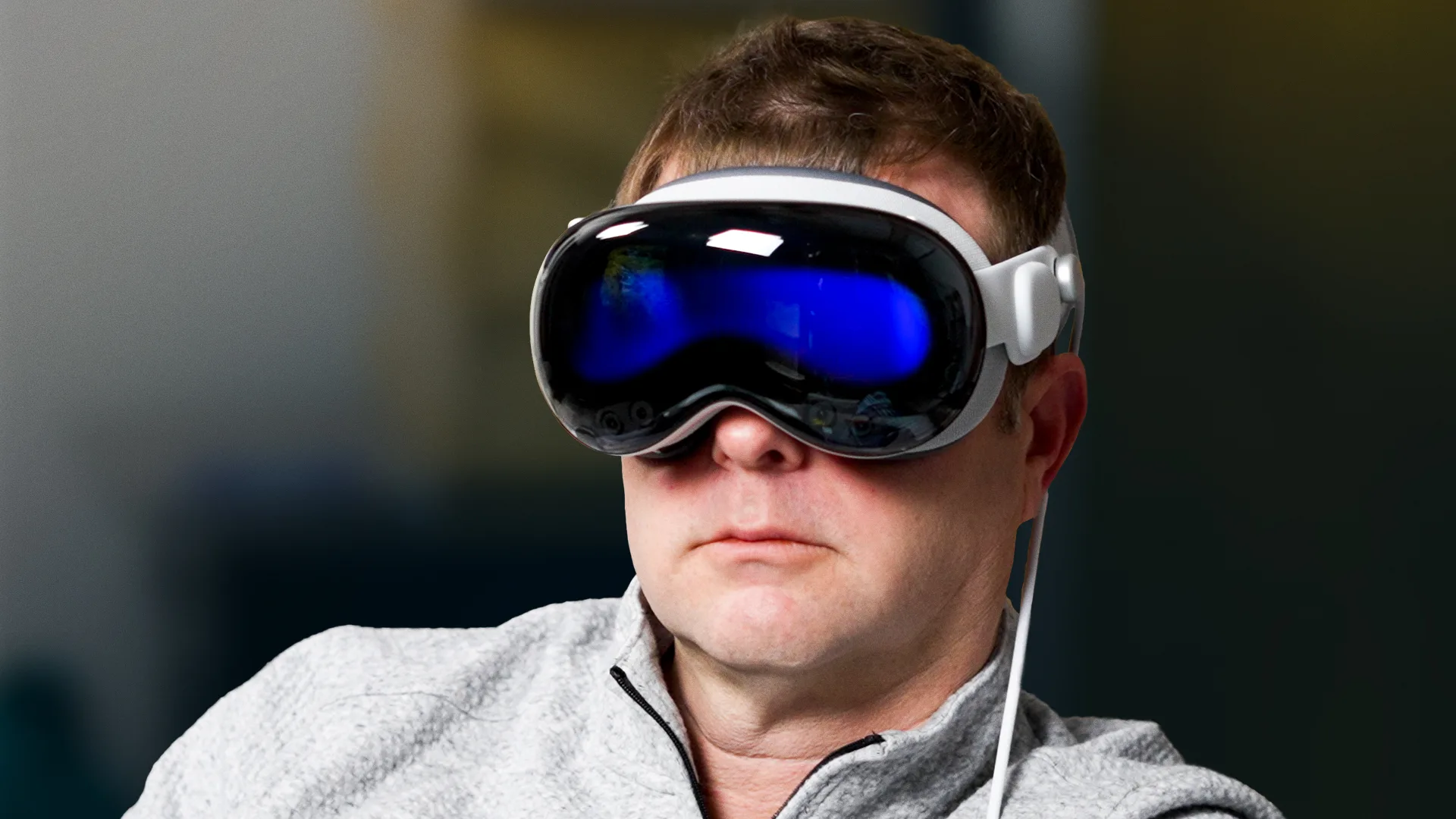
OpenAI’s hardware ambitions just got a major boost, and it could be another clue that the company is preparing to take AI beyond smartphones and laptops. Paul Meade, Apple’s longtime engineering leader behind the Vision Pro headset and its upcoming smart glasses efforts, is leaving Cupertino to join OpenAI’s hardware division.
According to Bloomberg, Meade spent seven years leading hardware engineering for the Vision Pro and also oversaw Apple’s display-free smart glasses project that’s expected to compete with Meta’s Ray-Ban smart glasses. His team was also involved in future augmented reality glasses and several AI-focused wearable projects, making him one of Apple’s most experienced hardware executives in the emerging wearables space.

At OpenAI, Meade will join an increasingly familiar cast of former Apple executives. He’ll work alongside legendary designer Jony Ive, former Apple design chief Evans Hankey, and former iPhone operations executive Tang Tan, all of whom are now helping build OpenAI’s next generation of AI hardware. That team came together after OpenAI acquired Ive’s startup, io, in a deal worth $6.5 billion, signaling that the company is investing heavily in dedicated AI devices rather than treating ChatGPT as just another app.

Neither Apple nor OpenAI has revealed exactly what these devices will look like. However, Bloomberg notes that OpenAI is already working on “several new devices” expected to launch over the next few years, while Apple is simultaneously developing smart glasses, AI-enabled AirPods with cameras, tabletop robots, and other AI-centric hardware of its own.
Let’s be real, Meade’s move doesn’t confirm that OpenAI is building AI glasses, so it’s worth treating the speculation with caution. But hiring the executive who helped lead Apple’s Vision Pro and smart glasses hardware certainly strengthens the theory that OpenAI is assembling the talent needed for wearable AI, especially after bringing Jony Ive and several other former Apple veterans into its hardware team.

The funny thing is that this is starting to feel less like an AI chatbot race and more like a wearables race. Meta already has smart glasses on the market, Apple is reportedly preparing its own, and OpenAI is quietly building an all-star hardware team. Whether that leads to AI glasses, a wearable pendant, or something like an OpenAI ear wearable remains to be seen, but the company’s ambitions clearly extend far beyond ChatGPT on a screen.


It’s going to be a “messy” summer for security folks, especially when it comes to fixing the open source code that underpins their organizations.
That’s according to Dan Lorenc, CEO and co-founder of Chainguard, a software supply-chain security company leading Athena, a newly formed coalition of about two dozen companies that wants to make the process of finding and fixing open source bugs “as easy to consume as possible.”
The members have committed to using AI to prevent attacks on open source software. In addition to Chainguard, other founding member companies include BNY, Cisco, Cloudflare, Corridor, DepthFirst, Docker, JPMorganChase, Kyndryl, LTM, and PwC.
Many of these member companies are also partners with Anthropic’s Project Glasswing and OpenAI Daybreak, which allow them to try out the pair’s most advanced bug-hunting models. The coalition accepts vulnerability findings generated by all frontier models, according to Lorenc.
Athena has already processed more than 20,000 findings and developed over 2,000 patches across 500 open source projects.
In about three weeks, the coalition’s first wave of bug disclosures will begin.
“This is going to be a messy summer for everyone,” Lorenc told The Register in a phone interview.
“I know there’s still a percentage of people who think it’s all fake and marketing,” he said, talking about the newest, most advanced frontier models like Anthropic’s Mythos and OpenAI’s GPT‑5.5‑Cyber.
“The stats and data we’re seeing are so scary – if you just keep running scans on the same libraries and same code, it just keeps finding more [vulnerabilities],” Lorenc said. “We haven’t seen that curve start to bottom out yet.”
Chainguard isn’t part of Glasswing or Daybreak, but many of its customers and partners are.
“Put yourself in the shoes of someone with Glasswing access,” he said. “You get this crazy, new model that can find vulnerabilities everywhere, that no one had seen and you had missed for years with all of your other tooling. You run it on your code, and it finds tons of stuff in your first-party code, the stuff that you’ve written, and you fix all of that.”
After running Mythos Preview on all of your organization’s proprietary code, imagine pointing the model at an application. Most modern apps contain a mixture of code from different sources, mostly third-party. According to Lorenc, 95 percent of the code in any of these codebases is open source.
“When you run [advanced models] at the application level, you find a ton of vulnerabilities in open source code that you can’t fix for yourself the same way you can that first-party code,” Lorenc said. “So then you’re left with: what to do?”
By now, most people are familiar with vulnerability disclosure processes and know they need to report these flaws to open source project maintainers.
“But when the numbers start getting this large, and you’re finding thousands of these [bugs] at a time, and they’re across tons of projects you didn’t even know you were using before you ran this tool, and you don’t even know how to contact the people, you kind of get stuck,” he said.
The only guarantee in the entire disclosure process is that attackers are moving quickly and the time to exploit – that’s the time between a CVE’s public disclosure and first confirmed in-the-wild exploitation – has essentially collapsed.
This may mean that your application is vulnerable to attack even before someone develops a patch. “Then you’re putting yourself at risk – and you were already at risk before you ran these scans, but no one else knew about it,” Lorenc said. “In an unintended way, [AI] has created this pickle for everyone.”
In May, Anthropic said it used Mythos Preview to scan more than 1,000 open-source projects, which also underpin much of its own infrastructure, and found an estimated 6,202 high or critical-severity vulnerabilities in these projects.
“It’s a super awkward, strange world and timeline we are all living in,” Lorenc said. “There’s a ton of pressure because all of the frontier models are getting better, and the open models are getting better, and they’re going to be able to start discovering these at the same time, too. So, that’s what we’re trying to help with: to be that clearinghouse for critical industry.”
Athena coalition members submit vulnerabilities they find in open source code using any frontier model. Sometimes they find these bugs while scanning their own apps. In other cases they discover them after pointing Mythos or GPT‑5.5‑Cyber at a commonly used library, Lorenc said.
The companies submit a full report to Chainguard, which acts as a clearinghouse, deduplicating, correlating, and addressing findings from members in batches across entire libraries, hardening them against classes of vulnerabilities instead of just one bug.
Affected projects are rebuilt as private, hardened versions available to Athena members through Chainguard Libraries before vulnerabilities are publicly disclosed – and hopefully addressed upstream – a month later. For maintainers that can’t make a permanent fix, Athena acts as a “maintainer of last resort,” according to Lorenc.
On Thursday, the Linux Foundation joined the effort and announced Akrites, an industry coalition to defend open source software against AI-enabled threats, by finding and fixing vulnerabilities. Akrites establishes a shared Security Incident Response Team (SIRT) and a standardized Coordinated Vulnerability Disclosure (CVD) process.
Founding companies include Amazon Web Services, Anthropic, Chainguard, Cisco, Citi, Endor Labs, Ericsson, Google, IBM, JPMorganChase, Microsoft and GitHub, Nvidia, OpenAI, RapidFort, Red Hat, Rust Foundation, Sonatype, Vodafone, and Zscaler.
“As AI finds more vulnerabilities, the industry will rush to patch them. Without coordination, those fixes will fragment across different patches and forks, and maintainers who are already overwhelmed, unreachable, or haven’t touched a project in years,” Lorenc said, adding that Akrites provides a coordinated way to fix flaws upstream before criminals exploit them.
Plus having a dedicated SIRT gives maintainers a single partner – and disclosure -to work with on remediation instead of a hundred uncoordinated reports.
“Now the work is making sure there’s always someone on the other end to catch them,” Lorenc said. ®

FBI warns Russian hackers are phishing Signal users for backup recovery keys, giving persistent access to message history.
The FBI and CISA have warned that Russian intelligence hackers are now targeting Signal users’ backup recovery keys, an escalation of a phishing campaign that has already compromised thousands of accounts worldwide. The updated advisory, published Thursday, says that handing over the key once gives attackers the ability to restore an account’s backup, read its entire private and group message history, and take over the account.
The key keeps working even after the victim changes phones. If a target creates a new account on the same phone number, the old recovery key can still be used to access future backups, the advisory warns. The only fix is to generate a new key in Signal’s settings, which invalidates the old one for future downloads but cannot recover anything the attacker has already pulled.
The advisory, designated PSA I-062626-PSA, adds two public tracking names the FBI’s March notice did not include: UNC5792 and UNC4221. The bureau ties the activity to multiple Russian Intelligence Services groups, including FSB officers embedded with the FSB Border Guards and others working for the Russian military. The campaign targets both Signal and WhatsApp, though the recovery key tactic is specific to Signal.

The 💜 of EU tech
The latest rumblings from the EU tech scene, a story from our wise ol’ founder Boris, and some questionable AI art. It’s free, every week, in your inbox. Sign up now!
The targets are individuals the FBI describes as being of “high intelligence value,” including current and former US and international government officials, military personnel, political figures, journalists, and officials in Ukraine. The March advisory said the broader campaign had already compromised thousands of accounts worldwide.
The phishing messages pose as Signal support. Earlier waves asked for SMS verification codes and account PINs, or used doctored “group invite” links that silently linked an attacker’s device to the victim’s account. The updated version walks targets through turning on Signal backups, opening the recovery key screen, and pasting the key into the chat.
The FBI published two sample messages used in the campaign. One is disguised as a mandatory two-factor authentication rollout, and the other poses as an urgent “data recovery” fix for messages supposedly at risk of being lost. Both are social engineering attacks that exploit trust in a platform’s own interface rather than technical vulnerabilities.
The agencies are clear that none of these techniques break Signal’s encryption or the app itself. The attackers compromise individual accounts through social engineering, then walk in through a legitimate feature. It is a pattern that has become increasingly common across security products, where the weakest link is the person holding the device, not the cryptography protecting the data.
Alongside the advisory, the State Department’s Rewards for Justice programme is offering up to $10 million for information on UNC5792. The activity overlaps with earlier warnings from Dutch intelligence agencies AIVD and MIVD, Germany’s BfV and BSI, and France’s ANSSI. Google’s Threat Intelligence Group first documented UNC5792 abusing Signal’s linked-device feature in early 2025 and later observed the same tradecraft targeting WhatsApp and Telegram.
The campaign is a reminder that end-to-end encryption protects messages in transit but cannot protect users who are persuaded to hand over the keys themselves. Anyone who receives a message inside Signal asking for a recovery key, verification code, or PIN should treat it as hostile, regardless of how convincing the sender appears. Signal does not message users inside the app to request credentials.

There’s a deadly, record-breaking heat wave spreading east across Europe, reports the Washington Post — and it’s even worse than a dire earlier forecast:
The forecast was recorded in 2014 as part of a campaign coordinated by the World Meteorological Organization (WMO) that invited about 60 presenters worldwide to imagine a weather report from the year 2050. In one clip, Ãvelyne Dhéliat from French television network TF1 presented a hypothetical scenario of high temperatures 36 years into the future — during a heat wave in a warmer climate in 2050… One of the maps that Dhéliat shared was lit up in shades of orange, filled with temperature predictions of 40 degrees Celsius (104 degrees Fahrenheit), reaching as high as 43 degrees Celsius (109.4 degrees Fahrenheit).
But it turns out, it didn’t take 36 years for those imagined temperatures to be reached — and even exceeded. The heat on Wednesday alone, when the temperature soared as high as 112.3 degrees Fahrenheit (44.3 degrees Celsius), exceeded the 2050 projections in 19 out of 34 locations across mainland France — far sooner than some may have expected. Some places surpassed those hypothetical future temperatures by more than 20 degrees Fahrenheit. It’s part of a dramatic shift in heat wave frequency across the country. Half of the heat waves observed since 1947 have occurred since 2010. “By 2100, heat waves could last up to two months continuously,” the country’s weather agency, Météo-France, said this week.
It was hotter in France on Wednesday than in Las Vegas and Phoenix and just two degrees Fahrenheit shy of what was observed in Death Valley, California. An estimated less than one percent of the planet was hotter than France’s hottest place… [T]he heat dome, which will linger into early next week, is only part of the story. This type of extreme heat is becoming more common as the planet warms, especially in Europe.
Climate scientist Robert Rohde said in a post explaining the heat wave’s causes that France and Western Europe should expect many more heat waves like this over the coming decades. “This isn’t a fluke, but simply part of the new normal,” he said.
Thanks to Slashdot reader fjo3 for sharing the news.

The recently released Valve Steam Machine is somewhat awkward in that it uses a custom, non-standard PCB and non-standard power supply. This fact apparently has irked some people who decided that it makes perfect sense to try and cram a Mini-ITX board, Small Form Factor (SFF) PSU and full-sized discrete GPU into an enclosure of the same size. Cue the SFF Mini-ITX Steam Machine Case project by [3DCatt] over at Printables.
This is apparently a project done in cooperation with AMD’s [Jacob Terkelsen], who showed off the 3D printed case stuffed full with the aforementioned parts, which includes a GeForce RTX 5060 GPU. Of note is that the Valve Steam Machine uses a different cooling configuration as it has both the CPU and GPU on the same PCB. These share the same massive heatsink, as can be seen in e.g. the [Gamers Nexus] teardown video.
For this angular imitation machine it would have been nice to use a blower-style GPU, to exhaust the hot air rather than dump it all into the case. This is also an issue that was raised by [Jacob], with more ventilation added to mitigate the issue. What the overall performance will be compared to regular compact Mini-ITX cases remains to be seen, but if you really want to live the Steam Machine life and have some parts kicking around along with a 3D printer, it might be worth a shot.
Every year, the U.S. sees about 100,000 thunderstorms across the country. They occur in every state and can happen day or night. Most common during the warmer months, thunderstorms require three ingredients: moisture, unstable air, and a source of lift. According to the National Weather Service, only about 10% of storms in the U.S. are considered severe, but that doesn’t make them harmless — they have the potential to wreak havoc on your electronics.
We know how to protect ourselves in the event of a severe storm: stay inside, away from windows, and avoid electrical equipment. You should also take steps to protect expensive or susceptible electronics. Even if lightning only strikes nearby and doesn’t hit your home, it can send a surge of electricity that may destroy anything that’s plugged in.
According to the National Centers for Environmental Information, the damage caused by storms added up to over $46 billion in the U.S. in 2024. Filing an insurance claim for storm-related damage is something many homeowners hope to avoid, which is why unplugging certain devices is a good idea. Here are five things you should unplug before a storm hits your neighborhood, including TVs, computers, and AC units.
We know, we know, this one may be a pain if you have cords hidden behind an entertainment center or even your wall. But your television and gaming systems likely represent a hefty investment. A power surge caused by lightning might not only fry electronics, but it may also void any manufacturer’s warranties that protect these products.
According to CNET, the average American expects to spend $1,177 on a new TV, so it’s likely one of the most expensive electronics in your home. Consoles aren’t cheap, either: A new Switch 2 currently costs $449.99 (and that price is going up by $50 in the fall), and a PS5 retails for at least $599.
When a thunderstorm is on the horizon, turn off your TVs and gaming systems and unplug them from the wall. If you want to make things a bit easier on yourself, you can invest in a power strip with surge protection, but most experts recommend that you unplug that power strip as well. If you’re not home to unplug your system, that surge protector may provide protection, and if you are home, it’s easier to unplug one thing than every device separately.
Your boss may think you’re just dreaming up an excuse to take a break from work, but if you have a desktop PC at home, you should turn it off during a storm. If your boss gives you a hard time about prioritizing your safety during a thunderstorm, remind them that the CDC recommends that you do not touch anything connected to an electrical outlet during a storm, including computers! Laptop users are out of luck — it’s safe to keep using it as long as it’s not plugged into the wall.
To protect your desktop computer, shut down and then unplug all components, including the tower, monitor, keyboard, mouse, modem, router, and printer. If all items are plugged into a power strip, simply unplug the power strip from the wall. Your computer is susceptible to any power surges, even from an indirect strike, and while the damage may be repairable, it’s likely to be pricey. In the case of a power surge, items with delicate circuitry are most at risk, including the motherboard, and replacing the motherboard often carries other costs, such as a new power supply or processor.
Your toaster or blender may be the last thing on your mind when severe weather strikes, but even small appliances contain complex electric components that may not survive a lightning strike or power surge. Major kitchen appliances like your refrigerator and stove can remain plugged in. You certainly don’t want your food to spoil, but if you’re evacuating due to a weather event, you should unplug larger appliances except the refrigerator until you get home.
When the thunder starts to boom, unplug smaller appliances like toasters, coffee makers, mixers, air fryers, and even microwaves. A power surge may affect the digital displays and internal circuitry. In fact, experts recommend that you unplug some small appliances when they’re not in use, including toasters and coffee makers, to reduce the risk of fire. You may be more worried about expensive electronics like your television, but small appliances don’t have the built-in protection that larger appliances boast, and are more vulnerable.
While it’s easy to take modern conveniences for granted, the rapid integration of technology has almost entirely rewritten how we live. Most of us carry tiny computers in our pockets, wear smart devices on our wrists, use GPS when we drive somewhere unfamiliar, and meet virtually with people who may live thousands of miles away.
Technology has also changed how we live in our homes. Doorbell cameras allow us to see who’s knocking without leaving our living room, and smart thermostats automatically adjust the temperature to keep us comfortable. Robot vacuums can do housework while we’re away, and voice-controlled systems allow us to easily check the weather. Even if you only have one or two smart devices, you should consider unplugging them during a storm. Devices that are connected to cable, internet, and even satellite systems are especially vulnerable, as power surges can pour through those pathways.
You may not be able to unplug your doorbell camera, but you can protect any smart hubs like Amazon Alexa, smart plugs, and your streaming devices. Even if the devices are turned off, they’re often still drawing some power, and a lightning strike could be disastrous.
Many of us have some form of air conditioning in our homes, whether it’s central AC or a few window units. It’s probably the last thing you want to do when a thunderstorm hits on a hot, muggy summer evening, but experts agree that both types of systems should be shut off during a storm.
Turn off your central air conditioning during a thunderstorm. In the event that lightning strikes your home, it can cause a power surge that could significantly damage the system. If it’s the compressor that gets damaged, replacing it might be almost as expensive as simply installing a new one in its place.
Debris can also damage the exterior portion of your unit and block airflow, causing additional damage to other areas of the system, while a power surge potentially causes heat spikes that melt plugs and components like control panels. Prevent all this by simply turning off the system at your thermostat.
If you have a window unit, you can leave it plugged in if it’s difficult to unplug, but you should turn it off. Window unit lightning strikes don’t happen often, so the biggest threat is a power surge that could damage the unit.


In an age when everyone seems to have their phone out at every imaginable event, Sky Yang still envisions a need for real photographers to capture the moment.
Yang is the founder of SnapMatePhoto, a Seattle-based digital marketplace connecting customers with photographers for graduation portraits, weddings, maternity shoots, and more.
An amateur photographer himself, Yang created his idea while a senior at the University of Washington. Friends kept asking him to take their graduation photos, and even offered to pay him for his services. He realized there were limited resources online for people to easily find an affordable photographer.
“A lot of people couldn’t afford a professional photographer, but I think they still deserve a nice graduation photo — because that’s an important moment in their life,” Yang said.
Yang started building the website while still at UW, initially focused on connecting students with student photographers looking to build their portfolios. The startup got into the UW’s Buerk Center for Entrepreneurship accelerator program.

Yang, who is originally from China and majored in economics with a minor in business, has since graduated and now works in logistics operations at Amazon. SnapMatePhoto launched last October and now lists more than 120 photographers in the Seattle area.
Photographers on the platform list their specialties, portfolio images, and rates — ranging from $35 to $700 — and customers can browse and book directly through the site. SnapMatePhoto handles payments through Stripe, charging roughly 15% from photographers and 11% from clients.
Yang sees the rise of AI-generated imagery as validation for his business, not a threat. He said he briefly experimented with AI-generated videos to promote SnapMatePhoto early on, but pulled them down within a couple of weeks after backlash from both photographers and customers, who called it AI slop.
“The real image, the real human connection is only going to be more and more important in this AI age,” Yang said.
The company is bootstrapped, with Yang raising a small amount from friends. Revenue has grown quickly — from roughly $3,500 in its first month to nearly $7,500 in May. Yang said the company is reinvesting heavily in marketing and advertising and is not yet profitable.
Yang mentions competitors in the space including Snappr and Flytographer, as well as Airbnb. The short-term property rental platform offers a photographer marketplace under its varied services, which Yang sees as another validation for what he’s building.
SnapMatePhoto operates with a small team — Yang, one developer, one designer, and a handful of UW interns focused on photographer acquisition and influencer outreach. Mentors with the Buerk Center accelerator advised Yang to focus on Seattle before expanding too soon, but he does have his eye on California.
For now, Yang is leaning into the grind of building a startup while working long days at Amazon, but he says the hard work genuinely makes him happy.
“Yesterday I was reviewing a photographer’s work for a wedding, and I see all the moments from the beginning to the end — the whole ceremony just brought me a lot of joy,” he said.
AI AND ML
Please state the nature of the medical emergency
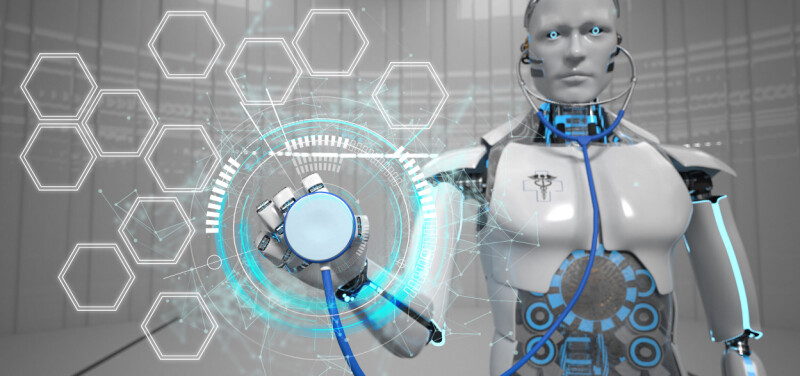
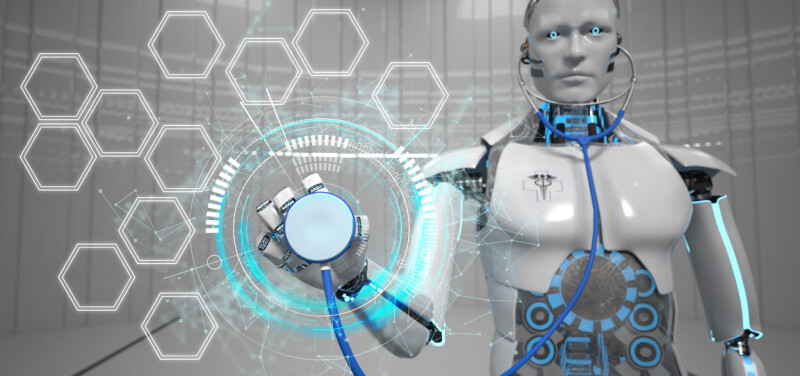
NASA researchers are testing an AI clinical decision support system to help astronauts diagnose and treat medical symptoms during deep-space missions.
The Crew Medical Officer Digital Assistant (CMO-DA) is powered by a Red Hat-backed open source tool called RamaLama, designed to simplify how developers run, pull, and serve AI models. While it’s no Star Trek-esque Emergency Medical Hologram (EMH) quite yet, it could be a boon to ailing astros far from home.
Earlier this year, NASA decided to bring Crew-11 back from the International Space Station (ISS) early because of a medical concern. As missions venture further afield – to the Moon, Mars, and beyond – an early return may no longer be practical, while communication delays can rule out real-time consultation with doctors on Earth.
Red Hat says that CMO-DA started life as a proof of concept before moving from a cloud-dependent model to a fully disconnected edge deployment. It currently runs on a terrestrial twin of the HPE Spaceborne Computer aboard the ISS.
Inference is multimodal. “RamaLama provides the engine to run both large language models (LLMs) for complex medical reasoning and Vision Language Models (VLMs) for image-based symptom analysis,” Red Hat stated. “This allows the CMO-DA to process both text and visual data without needing a massive infrastructure footprint.”
CMO-DA runs locally on the device, which means responses do not depend on a connection to Earth.
That said, the system has yet to leave Earth. Testing on the Spaceborne twin allows the system to be refined before any potential deployment to the ISS. “Once validated on Earth, the CMO-DA will be demonstrated to NASA leadership so that they can evaluate its further use,” Red Hat said.
HPE’s Spaceborne project is on its third iteration aboard the ISS. Built from off-the-shelf components, the system is based on HPE Edgeline and Proliant servers and is more than capable of machine learning and AI workloads.
In the future, the team plans to integrate Red Hat Enterprise Linux AI for the next iteration of the CMO-DA.
Sadly, there appears to be no chance of a virtual Robert Picardo turning up to dispense medical advice to stricken astronauts. ®

People in Europe will soon lose access to Studio Canal movies they paid for on the PlayStation Store.

Sony has notified customers in a handful of European countries that they’ll soon lose access to some movies that they’ve purchased through the PlayStation Store due to the upcoming expiration of a licensing deal with Studio Canal. If you bought any of the movies on the list in affected regions, which includes hundreds of titles, “it will be removed from your video library” on September 1, according to the warning. It’s yet another frustrating reminder that paying for a digital product doesn’t actually equate ownership — when licenses expire or servers are shut down, your purchased content might go right with them.
The PlayStation Store posted the notice about the termination of Studio Canal movies on several regional pages, including those for UK, French, Italian and Spanish customers. Don’t get your hopes up for a refund, either. The notice doesn’t mention anything of the sort. The expiration date is still a few months away, though, so there’s still a chance things could change. The PlayStation Store was set to pull Discovery shows a few years back due to licensing issues, but it ultimately worked out a new licensing agreement so it could reverse course on their planned removal.

Dive into Godot – a rising star in the game engine world – with the 2026 Complete Godot Stack Development Bundle. You’ll learn to create platformers, RPGs, strategy games, FPS games, and more as you master this free and open-source engine with easily expandable systems. Plus, you’ll also explore techniques for game design and game asset creation – giving you the ultimate techniques to customize your projects. It’s on sale for $25.

Note: The Techdirt Deals Store is powered and curated by StackCommerce. A portion of all sales from Techdirt Deals helps support Techdirt. The products featured do not reflect endorsements by our editorial team.
Filed Under: daily deal

Looking for the most recent Connections answers? Click here for today’s Connections hints, as well as our daily answers and hints for The New York Times Mini Crossword, Wordle, Connections: Sports Edition and Strands puzzles.
Today’s NYT Connections puzzle is a fun mix of categories. Horse people and board-game players, you both get a category. Read on for clues and today’s Connections answers.
The Times has a Connections Bot, like the one for Wordle. Go there after you play to receive a numeric score and to have the program analyze your answers. Players who are registered with the Times Games section can now nerd out by following their progress, including the number of puzzles completed, win rate, number of times they nabbed a perfect score and their win streak.
Read more: Hints, Tips and Strategies to Help You Win at NYT Connections Every Time
Here are four hints for the groupings in today’s Connections puzzle, ranked from the easiest yellow group to the tough (and sometimes bizarre) purple group.
Yellow group hint: Do not pass Go.
Green group hint: Think Vogue.
Blue group hint: Straight lines.
Purple group hint: Neigh!
Yellow group: Monopoly squares.
Green group: Components of a fashion show.
Blue group: Commonly striped things.
Purple group: Ending in horse gaits.
Read more: Wordle Cheat Sheet: Here Are the Most Popular Letters Used in English Words
The completed NYT Connections puzzle for June 27, 2026.
The theme is Monopoly squares. The four answers are Boardwalk, Income Tax, Short Line and Water Works.
The theme is components of a fashion show. The four answers are catwalk, collection, designer and model.
The theme is commonly striped things. The four answers are barber pole, billiard ball, credit card and crosswalk.
The theme is ending in horse gaits. The four answers are decanter (canter), envelope (lope), firewalk (walk) and foxtrot (trot).
We’ve made a note of some of the toughest Connections puzzles so far. Maybe they’ll help you see patterns in future puzzles.
#5: Included “things you can set,” such as mood, record, table and volleyball.
#4: Included “one in a dozen,” such as egg, juror, month and rose.
#3: Included “streets on screen,” such as Elm, Fear, Jump and Sesame.
#2: Included “power ___” such as nap, plant, Ranger and trip.
#1: Included “things that can run,” such as candidate, faucet, mascara and nose.



Two goals and an assist by sheer aura: Cristiano Ronaldo just entered the World Cup chat


Microsoft accidentally kills epic Outlook email threads


Weekend Open Thread: Staud – Corporette.com


The House | Manchesterism won’t survive the painful trade-offs unless it gets citizens on board


Potential 2028er World Cup attendee leaderboard


Asia stock markets slide as tech shares slump


A Look At A Gaggle Of Transputer Boards
Bitcoin (BTC) Dips Below $62K, Ethereum (ETH) Plunges 6% Daily: Market Watch


Securitize Wraps Roubini's SEC-Registered ETF as Dubai VARA Digital Security

Dell (DELL) Shares Tumble Over 5% Following Analyst Downgrade to Hold
Entergy settles forward sale agreements, raises $672 million in cash proceeds


FIH Pro League: India defeat Pakistan 7-1, register biggest win of campaign | Other Sports News


Kraken's xStocks Opens Bending Spoons IPO Registration to EEA Retail


RTX holders must register wallets before token distribution begins

Hyperliquid Named on Singapore MAS Investor Alert Register


India vs Bangladesh LIVE Score, Women’s T20 World Cup: Bangladesh Opt To Bat; India Enter ‘Do-Or-Die’ Stage As Semi-Final Race Heats Up

Signal’s Meredith Whittaker says AI chatbots ‘are not your friends’ and calls Copilot agents a backdoor
The DATA Foundation Launches to Tackle AI’s Multi-Billion Dollar Training Data Bottleneck


Strategy (MSTR) has a 10-month cash runway for dividends, but retail investors are losing faith

AAVE price tests 9-month trendline after 17% rebound as breakout hopes build


You must be logged in to post a comment Login