



Connect with us
DAPA Banner
DAPA Coin
DAPA
COIN PAYMENT ASSET
PRIVACY · BLOCKDAG · HOMOMORPHIC ENCRYPTION · RUST
ElGamal Encrypted MINE DAPA
🚫 GENESIS SOLD OUT
DAPAPAY COMING

Tech

Today’s NYT Connections Hints, Answers for June 27 #1112

Published

on

Looking for the most recent Connections answers? Click here for today’s Connections hints, as well as our daily answers and hints for The New York Times Mini Crossword, Wordle, Connections: Sports Edition and Strands puzzles.


Today’s NYT Connections puzzle is a fun mix of categories. Horse people and board-game players, you both get a category. Read on for clues and today’s Connections answers.

The Times has a Connections Bot, like the one for Wordle. Go there after you play to receive a numeric score and to have the program analyze your answers. Players who are registered with the Times Games section can now nerd out by following their progress, including the number of puzzles completed, win rate, number of times they nabbed a perfect score and their win streak.

Advertisement

Read more: Hints, Tips and Strategies to Help You Win at NYT Connections Every Time

Hints for today’s Connections groups

Here are four hints for the groupings in today’s Connections puzzle, ranked from the easiest yellow group to the tough (and sometimes bizarre) purple group.

Yellow group hint: Do not pass Go.

Advertisement

Green group hint: Think Vogue.

Blue group hint: Straight lines.

Purple group hint: Neigh!

Answers for today’s Connections groups

Yellow group: Monopoly squares.

Advertisement

Green group: Components of a fashion show.

Blue group: Commonly striped things.

Purple group: Ending in horse gaits.

Read more: Wordle Cheat Sheet: Here Are the Most Popular Letters Used in English Words

Advertisement

What are today’s Connections answers?

completed NYT Connections puzzle for June 27, 2026

The completed NYT Connections puzzle for June 27, 2026.

NYT/Screenshot by CNET

The yellow words in today’s Connections

The theme is Monopoly squares. The four answers are Boardwalk, Income Tax, Short Line and Water Works.

The green words in today’s Connections

The theme is components of a fashion show. The four answers are catwalk, collection, designer and model.

Advertisement

The blue words in today’s Connections

The theme is commonly striped things. The four answers are barber pole, billiard ball, credit card and crosswalk.

The purple words in today’s Connections

The theme is ending in horse gaits. The four answers are decanter (canter), envelope (lope), firewalk (walk) and foxtrot (trot).

Toughest Connections puzzles

We’ve made a note of some of the toughest Connections puzzles so far. Maybe they’ll help you see patterns in future puzzles.

#5: Included “things you can set,” such as mood, record, table and volleyball.

Advertisement

#4: Included “one in a dozen,” such as egg, juror, month and rose.

#3: Included “streets on screen,” such as Elm, Fear, Jump and Sesame.

#2: Included “power ___” such as nap, plant, Ranger and trip.

#1: Included “things that can run,” such as candidate, faucet, mascara and nose.

Advertisement

Source link

Continue Reading
Click to comment

You must be logged in to post a comment Login

Leave a Reply

Tech

Samsung finally switched to silicon-carbon battery on Galaxy Z Fold 8. What’s so special about it?

Published

on

Samsung has finally joined the silicon-carbon battery race with its latest batch of premium foldables packing the new battery tech. But details for this change were rather hard to spot on the spec sheets. The company has confirmed during media briefings that the Galaxy Z Fold 8 Ultra, Galaxy Z Fold 8, and Galaxy Z Flip 8 all use silicon-carbon batteries.

Even then, the resulting capacities are hardly record-breaking. The Fold 8 Ultra carries a 5,000mAh battery, the regular Fold 8 gets 4,800mAh, and the Flip 8 has 4,300mAh. Rivals from Honor and Motorola have already crossed the 6,000mAh mark. But the figures only tell part of the story.

What is a silicon-carbon battery?

Silicon-carbon batteries remain a form of lithium-ion battery. The key change happens inside the anode, one of the electrodes responsible for storing and releasing lithium ions during charging and discharging. Conventional lithium-ion batteries predominantly use graphite in the anode. Silicon can hold considerably more lithium than graphite by weight, giving battery makers a route toward higher energy density.

Higher density creates two useful options for phone manufacturers. They can fit more battery capacity into the same physical space, or retain a familiar capacity while making the battery thinner and lighter. Foldables stand to benefit considerably from either approach. Every millimeter recovered from the battery can be used to improve thickness, weight, or even endurance.

However, pure silicon creates its own engineering problems. It expands dramatically as it absorbs lithium during charging, then contracts as the battery discharges. Repeated expansion can crack the material, damage internal connections, and accelerate battery degradation. This is why silicon-carbon designs combine silicon with carbon-based material to better control that expansion.

Advertisement

How it helped the Galaxy Z Fold 8 Ultra

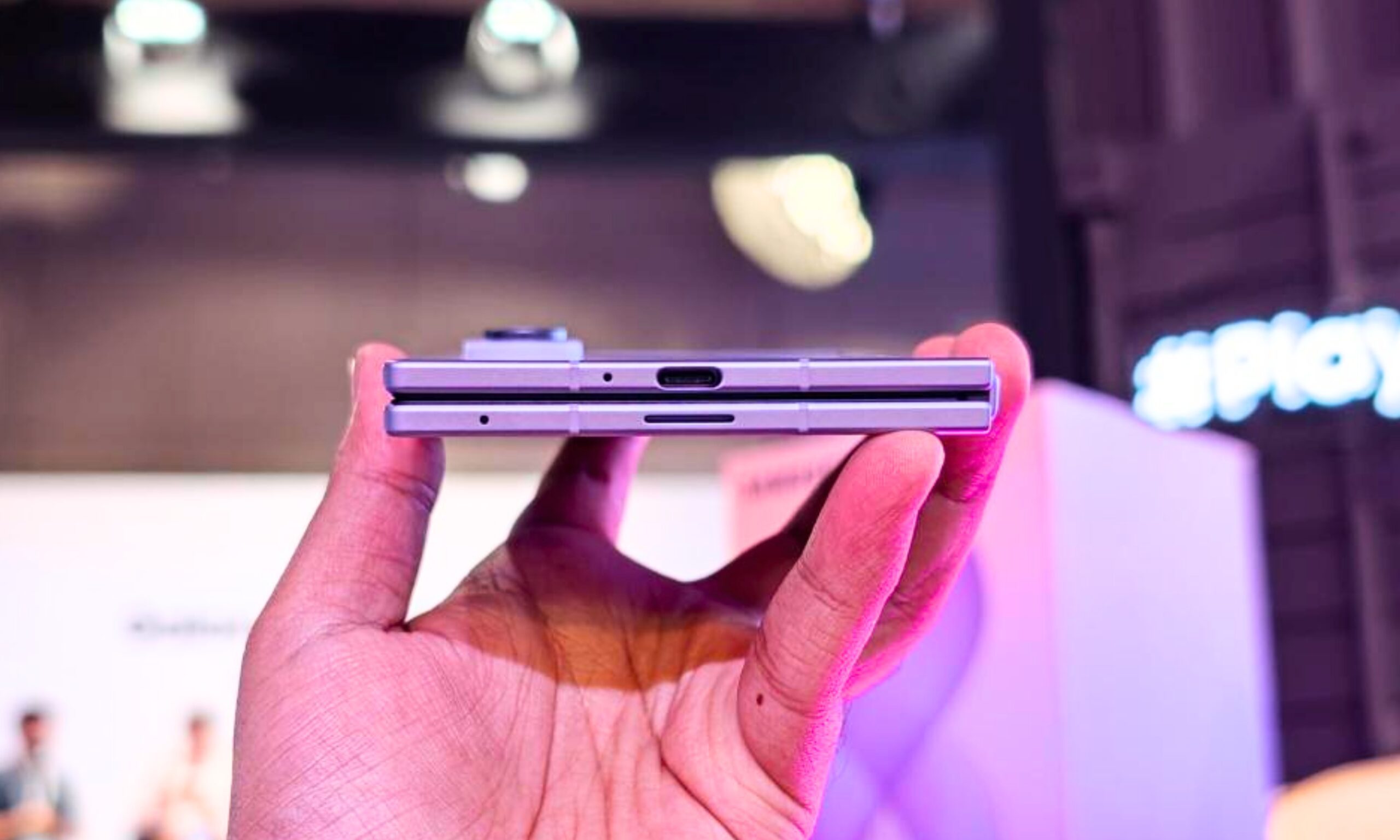
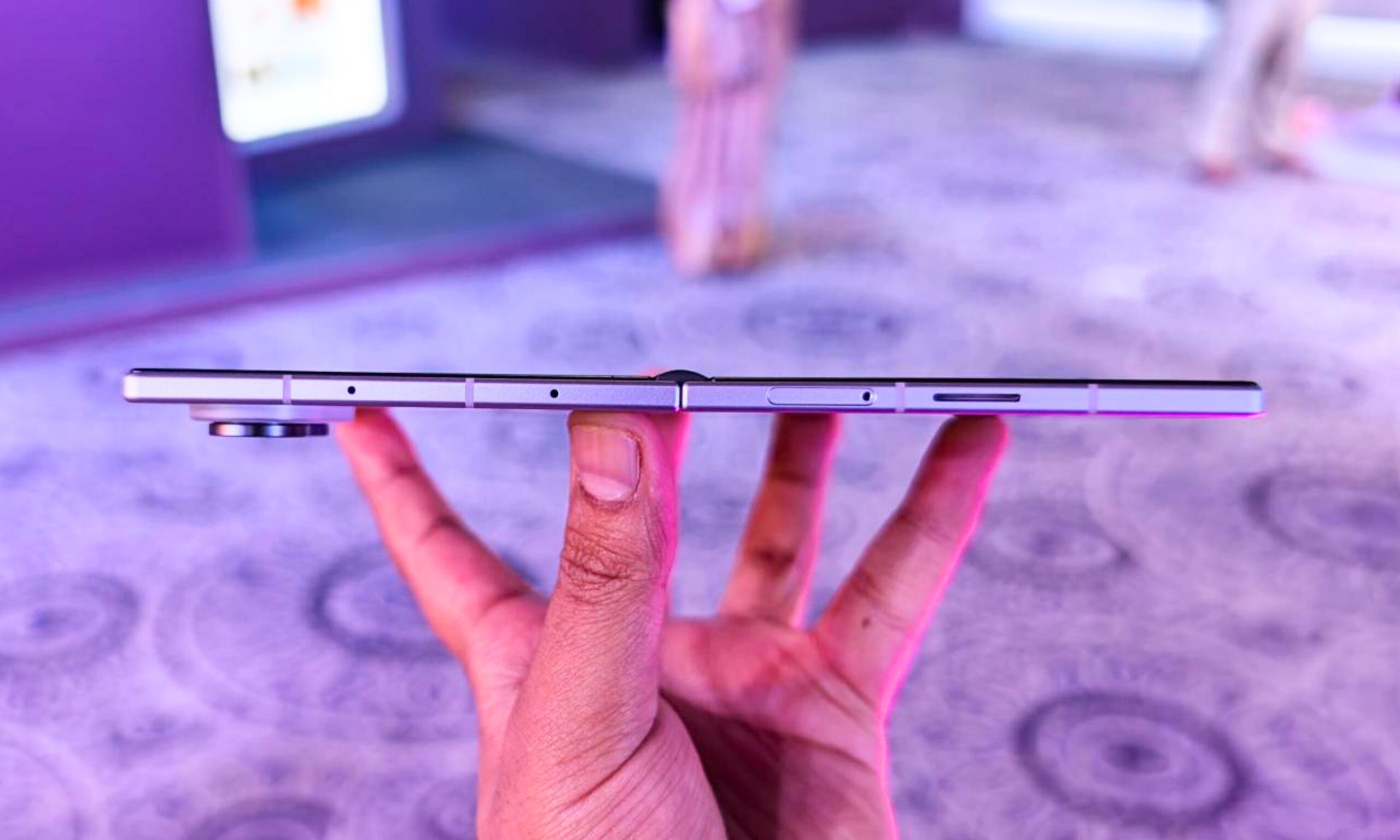
The best example of how this tech helped Samsung is with the Z Fold 8 Ultra. Its 5,000mAh battery is 600mAh larger than the 4,400mAh cell in the Galaxy Z Fold 7. That works out to an increase of almost 14%. Samsung made that jump while trimming the unfolded thickness from 4.2mm to 4.1mm. Both generations weigh 215 grams. The company also claims up to 27 hours of video playback, compared with 24 hours on the Fold 7.

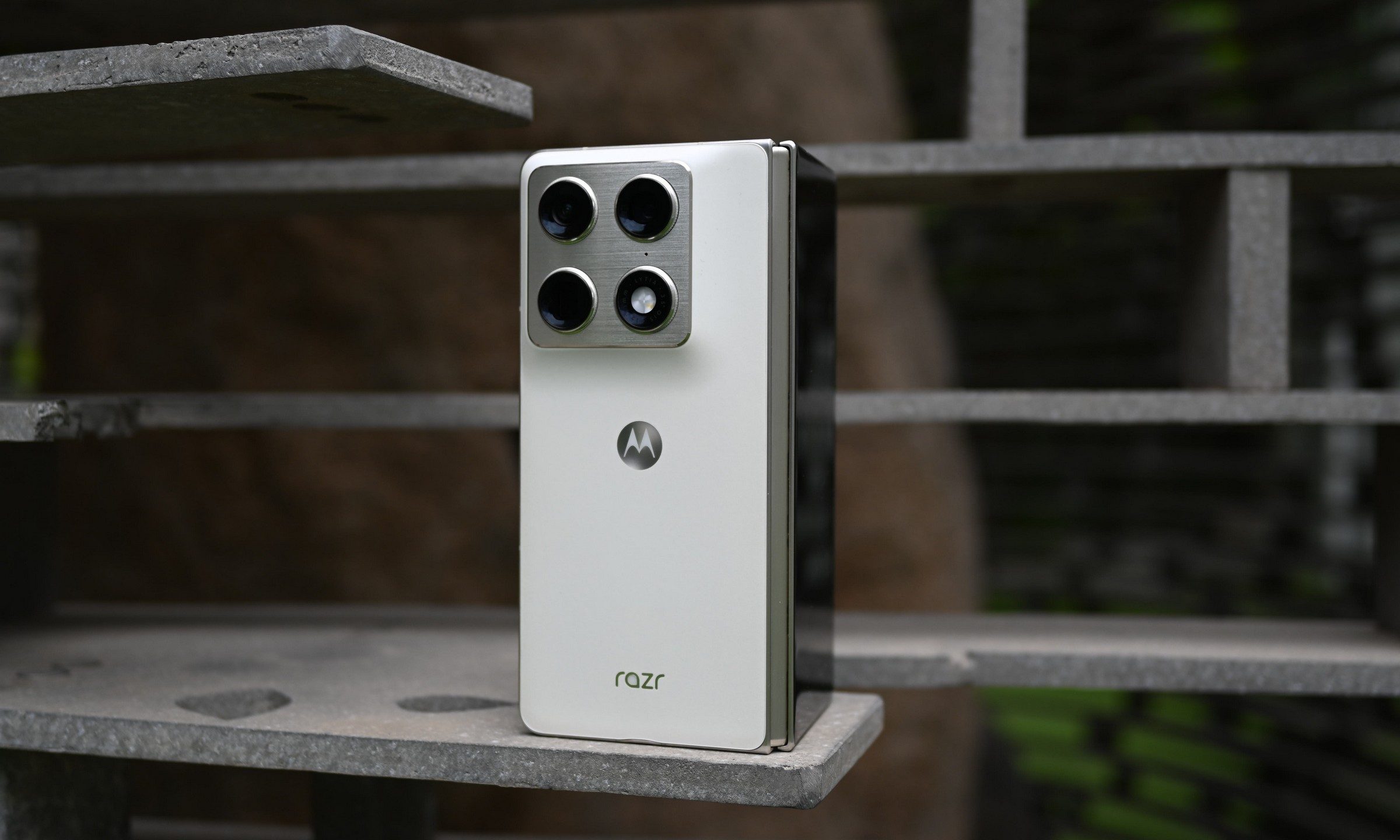
An extra 600mAh may sound modest beside the giant cells now appearing in Chinese foldables. The global Honor Magic V6 has a 6,660mAh silicon-carbon battery inside a body measuring 4mm when unfolded. Meanwhile, Motorola’s Razr Fold uses a 6,000mAh silicon-carbon battery while measuring 4.6mm unfolded. It also supports 80W wired and 50W wireless fast charging, giving it a considerable advantage over Samsung on paper.

So when you pit it against the other foldables out there, the Z Fold 8 Ultra looks rather conservative. It would be easy to dismiss Samsung over this, but the official briefings gave us a better insight into the company’s priorities. Samsung emphasized performance, longevity, and safety. The company also said users should expect battery health consistent with previous Galaxy products. Samsung appears to be limiting silicon content or using a more conservative cell design until it has greater confidence in long-term behavior.

Similar to Apple, Galaxy devices are looking to refine the experience and improve user experience with new models rather than introducing big spec numbers. There’s an argument to be made for both sides of this, but considering the past incidents, Samsung’s cautious approach isn’t surprising.

This is only Samsung’s first step

Samsung has arrived late to silicon-carbon batteries. Other brands have already used to technology to push phone batteries beyond capacities that once looked unrealistic. The first Galaxy attempt may not be hitting headline-grabbing figures, but the direction is clear.

Future Galaxy phones could adopt higher silicon percentages and larger capacities. The technology could eventually reach conventional Galaxy S devices too, where it might enable thicker battery reserves or slimmer designs. For now, silicon-carbon has helped Samsung make its newest foldables thinner without leaving battery capacity behind. We are now getting the best-built foldables ever, and after years of 4,400mAh Galaxy Folds, I’ll take the small but deliberate step.

Advertisement

Source link

Continue Reading

Tech

Sony’s Decision To Ditch Discs Was Practically Inevitable, Data Shows

Published

on

An anonymous reader quotes a report from Ars Technica: Many gamers have been lamenting Sony’s recently announced decision to halt sales of physical game discs in 2028. However, new data revealed by Circana analyst Mat Piscatella highlights how years of stark economic trends helped lead Sony to that decision. In a social media thread Thursday morning, Piscatella shared insights into Circana’s tracking data on physical game sales in the U.S. dating back to 2003. A graph of those trends shows physical sales peaking in the 12 months ending June 2009, when 297 million units were sold across the US. Those physical unit sales have been on a steady downward trajectory since then, leading to just 37 million physical units selling in the U.S. in the last 12 months.

The newly revealed data follows on an earlier post from Piscatella highlighting that only seven PlayStation games had sold over 100,000 physical units so far in 2026. Today, Piscatella followed up on that stat with a graph showing how this baseline used to be common; 100 PlayStation games sold at least 100,000 physical units in 2008. The ceiling for physical PlayStation game sales isn’t all that impressive these days either; Piscatella shared that the top-selling physical PlayStation game has only sold a paltry 275,000 units in the U.S. so far this year.

There are some small signs of hope for the physical game market, if you squint. Piscatella noted that aggregate spending on physical video games in the U.S. was actually up 4 percent year-to-date, compared to the year before. But that small increase is a mere blip following 16 straight years of sizable declines in physical game spending in the US, reducing a peak of $11.5 billion in physical spending in 2009 to a mere $1.6 billion for the 12 months ending in May. And Piscatella attributed the recent growth in physical spending to “the Switch 2 and physical sales growth on Nintendo platforms,” while other platforms (such as PlayStation) were still seeing “percentage drops from the teens to the mid 30s” in that spending.

Source link

Advertisement
Continue Reading

Tech

Adata boss: Samsung and Micron expansions won’t prevent a decade-long DRAM shortage; AI bubble unlikely before 2030

Published

on


  • Adata chief predicts memory shortages could persist throughout the next decade
  • Chen says AI demand still exceeds most industry expectations worldwide
  • DDR5 prices climbed another 7% during July despite earlier market optimism

Chen Li-bai, chairman of memory chip manufacturer ADATA, has dismissed growing market speculation about an imminent collapse in AI-related investment.

Speaking after TSMC’s stock price plummeted following its recent earnings call, Chen argued that discussions about an AI bubble remain premature at this stage.

Source link

Advertisement
Continue Reading

Tech

Instagram Is Now Banning Users Who Make Creepy Content With Meta Glasses

Published

on

“We don’t want people to be surreptitiously taking videos of other people.”

Meta has started banning Instagram users that use the company’s glasses to secretly record people to make content, according to a report by Business Insider. Meta owns Instagram, so this feels like an admission of something everybody already knows: a whole lot of creeps have begun using Meta Glasses to record people without their consent.

“If you’re posting content that is taking advantage of people and harassing them, like a lot of these pickup line kinds of videos that we’ve heard of and seen, then we’re going to take the content down,” Instagram head Adam Mosseri recently said in a social media post. “We don’t want people to be surreptitiously taking videos of other people and harassing them and then posting them on our platform.”

Advertisement

Regular Instagram users will likely have run into some of this stuff. Much of it involves arrogant content creators doing pranks on service workers, all while secretly filming everything with Meta Glasses or a similar product. Many of these “pranks” verge on harassment.

Other videos involve men filming their interactions with women in public. The women typically don’t know they are being filmed, which has given Meta’s specs unfortunate nicknames like “pervert glasses” and “predator glasses.” That is not great for branding and the continued success of the products.

We don’t know just how many videos have been removed under the new policy. Business Insider has noted that a pair of high-profile accounts that regularly film women in public without consent have been deactivated. The company also confirmed to the publication that those accounts were banned specifically for posting harassment content filmed with its glasses. 

This isn’t the only move Meta has made to try to stem the tide of creepy behavior enabled by smart glasses. The company recently added software that disables the camera entirely if the LED light that indicates recording has been tampered with. People have been hiding this light with tape, film or by drilling holes.

Advertisement

This led to the creation of a cottage industry of people willing to “jailbreak” smart glasses so users can film without that pesky light going off. Meta’s recent software fix hasn’t been live long enough for us to get a sense if it made any kind of a dent in unsavory behavior.

However, it’s worth noting that the LED light isn’t exactly a spotlight. It’s easy to miss, even when turned on. This is especially true while recording outside in natural light. Still, it’s good Meta is doing something about a problem that the company had a major hand in creating.

Advertisement

Source link

Continue Reading

Tech

Kilkenny’s Entegro to create 100 new jobs with Acel Energy acquisition

Published

on

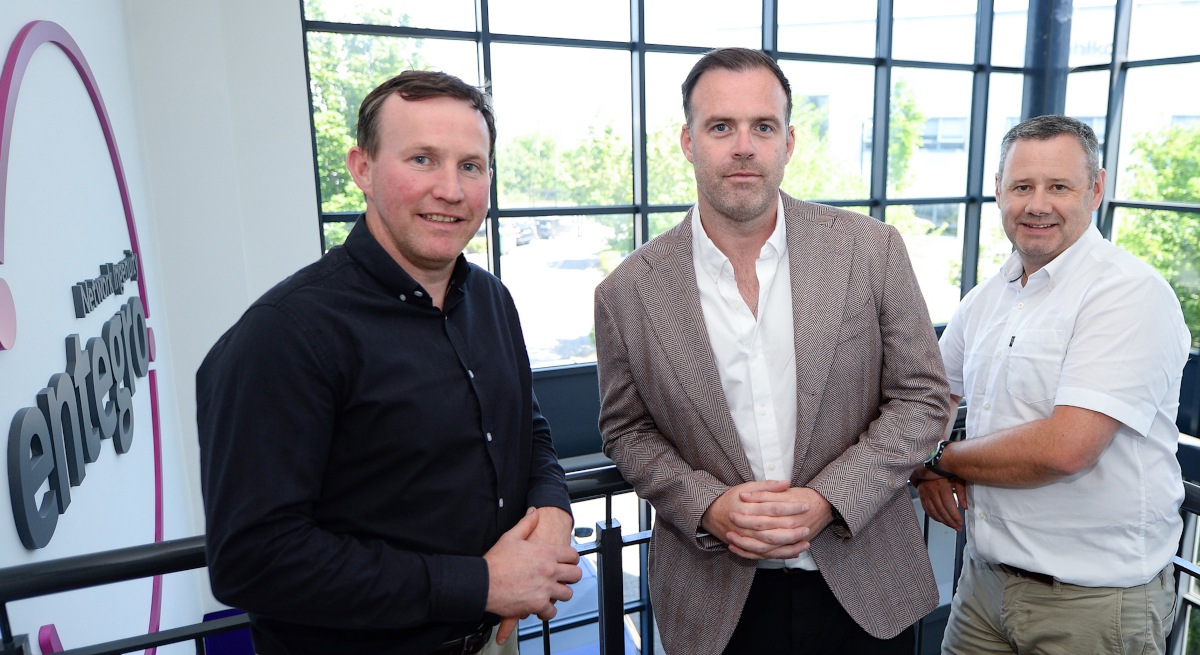
Entegro is extending its expertise in fibre telecommunications and network infrastructure by moving into the renewable energy sector.

Entegro, a Kilkenny-based engineering group, has announced the acquisition of renewable energy specialist Acel Energy, a solar energy company headquartered in Monaghan. 

In acquiring Acel Energy, Entegro aims to further its expertise in the designing, building and operation of critical fibre telecommunications and network infrastructure. The move will involve the formation of a new entity – Entegro Energy – and there are also plans to grow its workforce from 200 employees to roughly 300. 

Entegro said its acquisition also builds on an established partnership with high- and medium-voltage engineering specialist Nahanagan Electrical.

Advertisement

According to Entegro, the new deal will align complementary capabilities under a single roof, furthering expertise in the delivery of renewables generation, battery storage and high-voltage infrastructure solutions domestically and internationally. 

Established in Kilkenny in 2019, Entegro, which is part of the Kyntus Group, has a presence in Ireland, the UK and the US, and delivers services from design and engineering through construction, commissioning and operation, with business units spanning fibre and telecommunications, transformation services and energy.

Commenting on the announcement, John Rooney, the group CEO for Entegro, said, “The board and I welcome the Acel team to the Entegro group. This is another milestone for Entegro as we continue to build a multi-utility business across telecoms, power and infrastructure to meet the demands of Ireland and beyond. 

“Entegro has always sat at the heart of critical infrastructure, so moving into energy is a natural next step rather than a departure. 

Advertisement

“Bringing Acel and Nahanagan together gives us the ability to design, commission and run energy systems end to end, from an Irish base and with a trusted team that keeps growing. That is the future we want to help build and to build well.”

Barry Sherry, the managing director at Acel Energy, added, “Declan McDonald and I built Acel on engineering-led renewable generation and storage, and joining Entegro lets us do that at a scale we could not reach alone.”

Don’t miss out on the knowledge you need to succeed. Sign up for the Daily Brief, Silicon Republic’s digest of need-to-know sci-tech news.

Advertisement

Source link

Continue Reading

Tech

Runway launches AI model router as generative media gets crowded

Published

on

Runway no longer wants to be just another AI model company. It wants to become the infrastructure layer for generative media.

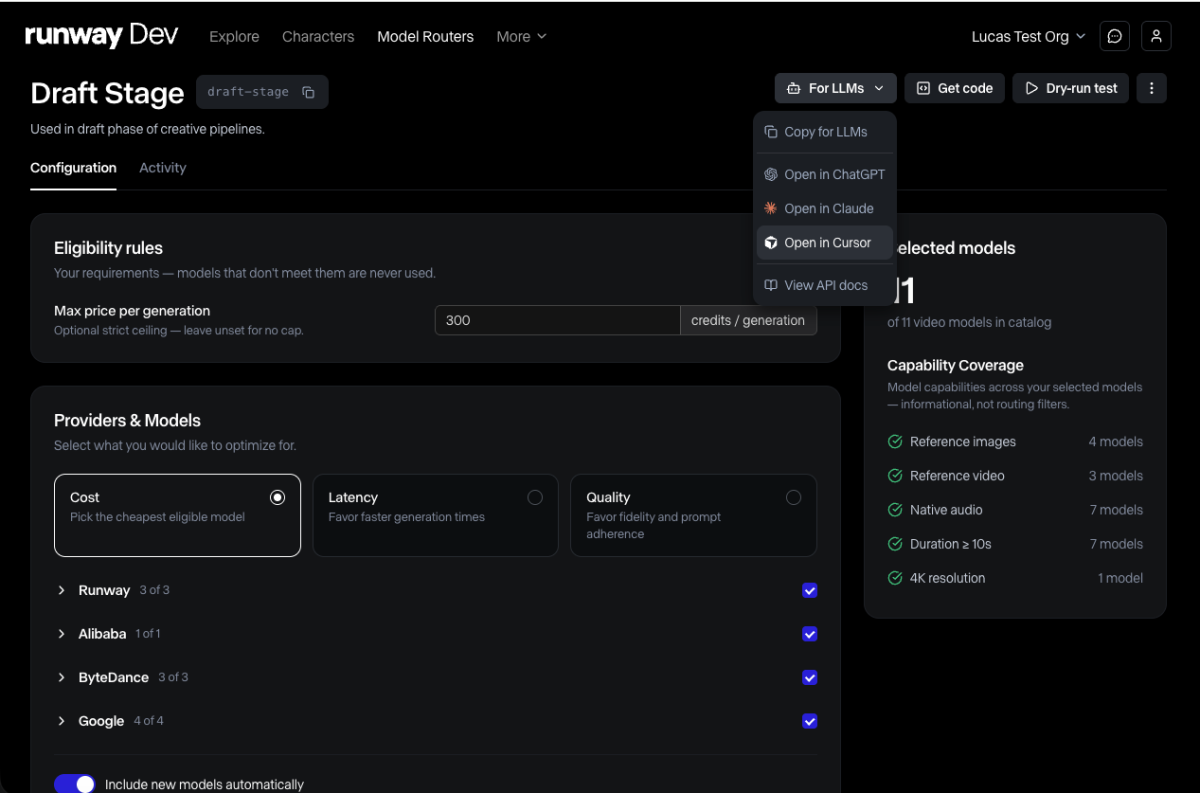
On Thursday, the startup launched Runway Media Router through Runway Dev, its developer platform, released earlier this month, that provides API access to a growing roster of third-party image, video and audio models alongside Runway’s own. 

The Media Router is a tool that automatically selects the best image, video, or audio generation model for a request based on whether a developer prioritizes quality, speed or cost. While model routers have become increasingly common in the world of large language models, Runway says this is the first built specifically for generative media. 

“The routing really fits into that overall promise of being the easiest one-stop shop for developers to integrate with any type of generative media model,” Anthony Maggio, Runway’s chief product officer, told TechCrunch.

Advertisement

The launch, shared exclusively with TechCrunch, marks another step in Runway’s evolution from an AI video startup into infrastructure for companies building with generative media. Through Runway Dev, customers including Adobe, Cloudflare, ElevenLabs, Expedia, Shutterstock, and Quora can build media generation directly into their own products using Runway’s API rather than sending their users to Runway’s own app or site.

The launch of the router comes as the number of generative media models has exploded, making it increasingly difficult and time-consuming for developers to evaluate new releases. Through the Runway Dev platform, developers can access the latest media models when they’re released. 

“Most developers are not spending the time to really understand the capabilities of each of these models and where they excel or differ based on various types of outputs across video, image, and audio,” Maggio said. “The unique proposition we’re bringing to the table is all of that intelligence around what the best model is for each different use case, and meshing that with preference you apply around the context of your business.”

Maggio noted that Chinese generative media models are becoming increasingly popular. However, many businesses building their own products might not be comfortable working with models that come out of China, so they could, he said, potentially set a preference for American model providers — a preference that may become more common as the Trump administration explores bans and sanctions against Chinese open AI models

Advertisement

That’s just one example of preferences that developers can set, though. Maggio says customers are mainly interested in routing the model to account for token pricing and quality. Token pricing has become a hot topic in 2026 as enterprises that went all-in on agentic AI felt the sting of high token bills. In the world of LLMs, model routing for token pricing has become common, so it only makes sense that routing for generative media would follow. The Media Router launch also comes weeks after Runway replaced its unlimited subscription plans with token-based pricing, a move that drew criticism from some users. 

On the quality front, deciding what models provide the best quality for any given task isn’t as easy for generative media as it is with language models, Maggio says. That’s where the router’s intelligence layer kicks in. It’s based on the expertise Runway’s in-house creative team has developed in evaluating output across every media type — things like how video models handle motion, how image models handle composition, or how voice models handle lip syncing. 

Runway had already done a lot of the work building that intelligence layer for its agent product, a conversational AI creative partner that Runway launched in May to help turn text prompts into fully edited multi-shot videos and marketing campaigns. 

The Runway Media Router, Maggio says, takes the same routing technology Runway built for its own products and packages it for outside developers to use.

Advertisement

Runway’s strategy today reflects how fragmented and competitive the current generative media landscape is, and how much the startup needs to expand and pivot to stay competitive. Runway’s last AI video model release — Gen 4.5 — was in December. At the time, the model topped leaderboards, outperforming similar models from incumbents like Google. In the same month, Runway released its first world model

Aside from an upgrade to its video editing model, Aleph 2.0, in May, Runway hasn’t dropped a new dedicated frontier video model in months. (TechCrunch has asked when the startup plans to release Gen-5.) Today, while Aleph 2.0 ranks among the leading video editing models according to Artificial Analysis, the company’s text-to-video and image-to-video models no longer lead the rankings. In the top 20 spots are models from heavy hitters like Google and China’s ByteDance and Alibaba. 

Rather than asking developers to bet on a single model staying ahead, Media Router assumes that the best model will continue to change — and it keeps Runway in the game so that it can continue to build on the frontier. If not as the best new AI model, then as the best orchestration layer. 

Anastasis Germanidis, Runway’s co-founder and co-CEO, acknowledged that the startup has been known for a long time primarily for “that end user piece,” but it had to build a full stack to get there, one that includes a developer platform, a creative tool suite, and an inference layer underneath it all. He says the company has seen increasing interest from companies for Runway to live across every part of that stack. 

Advertisement

“You need great models underneath, but the orchestration increasingly matters a lot because people are building entire campaigns with those models, or they’re building entire finished multi-scene generations out of those models,” Germanidis told TechCrunch. “It’s something that we increasingly had to build — that intelligence layer that comes on top of the pure pixel models. The router is one way in which the benefits of that come to users.”

Or as Maggio put it more broadly: “If you zoom out at the one thing Runway has been doing since 2018, it’s that we’re deeply focused on research, while building for where we think the space is going at the same time.”

Got a sensitive tip or confidential documents? Rebecca Bellan is reporting on the inner workings of the AI industry, from the companies shaping its future to the people impacted by their decisions. Contact her securely, and off the record, on Signal at rebeccabellan.491 or via email at rebecca.bellan@techcrunch.com from a non-work device.

When you purchase through links in our articles, we may earn a small commission. This doesn’t affect our editorial independence.

Advertisement

Source link

Continue Reading

Tech

‘The Morning Show’ gets a fifth and final season

Published

on

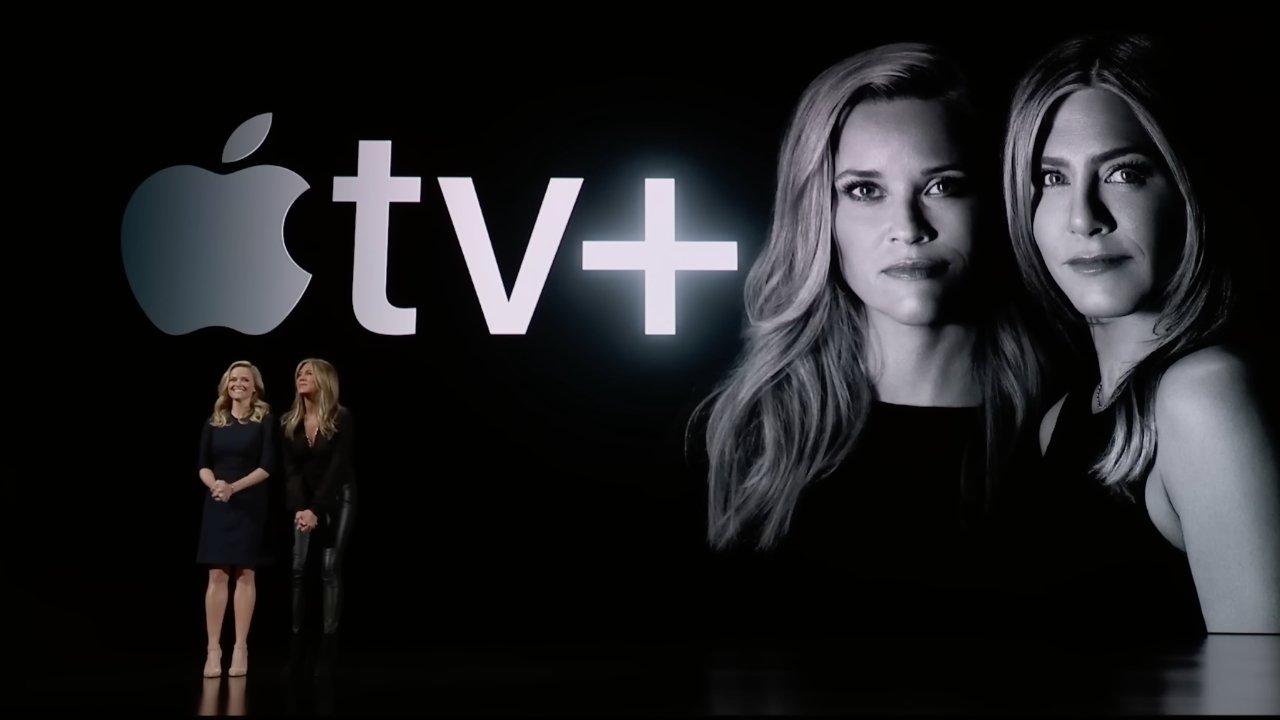
Jennifer Aniston and Reese Witherspoon helped bolster fledging Apple TV with “The Morning Show” in 2019. The final season of the award-winning drama has been announced, bringing an era to a close.

Eddy Cue wanted “The Morning Show.” Long before the service was announced in March 2019, or debuted in November that year, Cue was looking for shows that would bring the streamer attention, and “The Morning Show” was being shopped around.

Created by Jay Carson and developed by Kerry Ehrin, the drama was being executive produced by its stars, Jennifer Aniston and Reese Witherspoon. “I thought the show was amazing,” Cue later told Variety, “but… I came down to the realization that we weren’t going to get it, because somebody would always offer more.”

“But I thought we were special, and so I asked for a meeting with [Aniston and Witherspoon],” he continued. He says he asked “whether they thought they were going to make one of the best shows ever in television,” and they said yes.

Advertisement

“So do I,” he told them. “That means you need to do it with us, and the reason you have to do it with us is because we don’t have any other shows. So we believe 100% in what you’re doing, and we’re going to launch our service on that.”

Launching Apple TV+

The first star on stage at the launch of Apple TV+, as it was originally known, was Steve Spielberg. Then the lights went down, there was a long pause, and the spotlight came up on Reese Witherspoon and Jennifer Aniston.

“Reese and I are so proud to be a part of this exciting launch with Apple, officially announcing our new project, ‘The Morning Show,’” said Aniston.

“So in ‘The Morning Show,’ said Witherspoon, “we pull back the curtain on the power dynamics between men and women in the high-stakes world of morning news shows.”

Advertisement

“It’s a real insider’s view into the lives of the people who help America wake up every day,” she continued before handing back to Aniston.

“And through the prism of those under-slept, over-adrenalized people behind and in front of the camera, we take an honest look at the complex relationships between women and men in the workplace, and we engage in the conversation people are a little too afraid to have unless they are behind closed doors.”

That’s “The Morning Show,” and that’s exactly where the show went over what we now know will be its eight-year run.

As with many Apple TV series, “The Morning Show” was given a two-season order right at the start. But it has not aired as consistently as later hits such as “Slow Horses,” which runs annually.

Advertisement

Instead, “The Morning Show” has aired only four seasons so far, with its fifth and final one now in production to air in 2027. It’s worked out as a new season every second September, and perhaps because of that, each run has been a critically-acclaimed event event.

The show didn’t ignore how comparatively slowly it was being released, either as the story moved on two years between seasons three and four. It’s not known yet when the final season’s storylines will pick up, but it is known that it will feature new characters played by Jeff Daniels, Jesse Williams, and more.

Those new faces will join the regulars including Aniston, Witherspoon, and Billy Crudup. Crudup is just one of the actors to have won awards for the series, but he holds the distinction of having won the very first Emmy that Apple TV ever received.

If the new season keeps to the existing format, it will bring the total number of episodes up to 50. It’s a small number compared to network TV shows of the past. Over the same time frame, for example, Aniston’s “Friends” cranked out 194 half-hour episodes.

Advertisement

But maybe this what has made “The Morning Show” so consistently strong. Seasons are released when they’re ready, more or less, instead of having to hit specific air dates.

The seasons are long enough, at 10 episodes each, to tell a meaty story. But they’re not so long as to need those tales being stretched out unnaturally.

Back when hour dramas ran for upwards of 22 episodes per season, there used to be a reluctant belief on the part of producers. One third of your season’s episodes could be great, they would say, one third might be okay, but try as you might, one third would be terrible.

So far “The Morning Show” has avoided that trap. Here’s looking forward to seeing if it can get to the finishing line as strongly as it has run so far.

Advertisement

Apple has not announced any details of the last season yet, but if it follows form, the season will run in September 2027. And we’ll have to wait until August 2027 to even see the first trailer.

Source link

Advertisement
Continue Reading

Tech

Hackaday Europe 2026: Half Quad, Half Blimp: Test. Fly. Survive.

Published

on

A great many drones out there, whether homebuilt or store-bought, follow the same basic format. Four motors, some kind of controller, and a lithium-polymer battery supplying the juice to keep everything in the air. It’s a format that produces a remarkably capable air vehicle, suitable for everything from high-speed camera work to urban search and rescue.

With that said, the format does have its limitations. [Suryansh Sharma] has been working on alternative designs for fancy and interesting drones that are half quadcopter and half blimp, and he came to Hackaday Europe 2026 to tell us all about it.

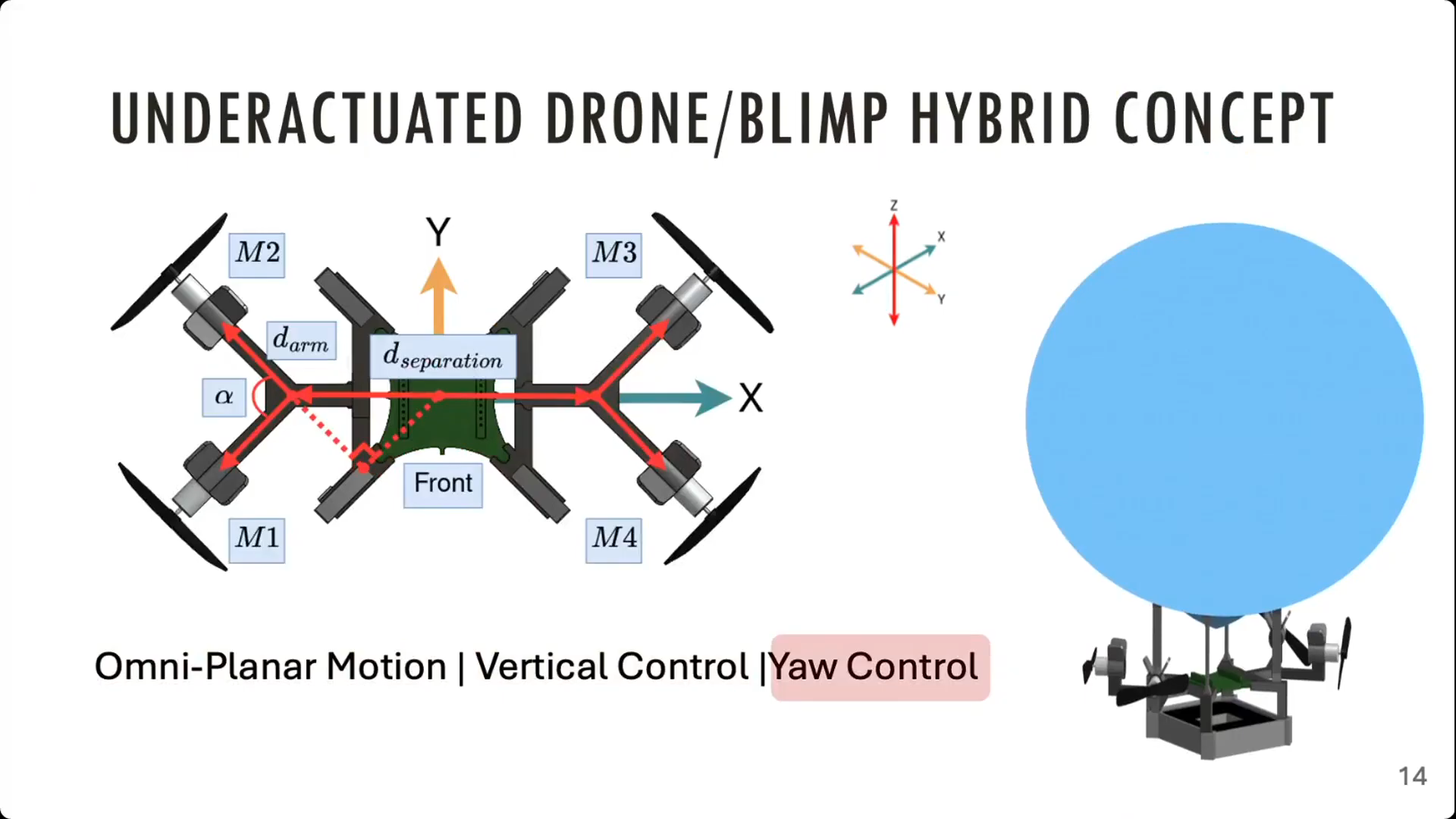
Combining a multirotor design with a balloon for additional lift proved useful for certain applications. Despite the motors all being mounted in the horizontal plane, vertical translation is possible by firing the right combination of motors, due to convenient aerodynamic effects.  Credit: slides

[Suryansh]’s talk took in a number of drone projects which he has been involved with. The first was the creatively-named BEAVIS, or Balloon Enabled Aerial Vehicle for IoT and Sensing. This was a project that aimed to tackle one of the greatest limitations of the common multirotor drone. Namely, as [Suryansh] so elegantly puts it, they “suck when it comes to staying in the air.” This is for a very simple reason—much like the helicopter, a multirotor drone must expend energy continuously to generate lift by spinning its propellers. Conventional multirotors don’t have wings that generate lift from forward motion, and any sort of gliding or similar behavior is basically impossible. Continual energy expenditure is the only thing keeping a multirotor aloft.

The point of BEAVIS was to fix this by combining drone tech with a simple lighter-than-air balloon. It’s an interesting combination, because a multirotor drone has excellent maneuverability and agility, but terrible endurance. A lighter-than-air balloon is quite the opposite, which has excellent endurance while suffering in all other respects. The BEAVIS concept outfits a small balloon with four motors in a split-cross configuration, which allows for planar translation as well as the ability to control yaw of the craft. With all four motors mounted horizontally in the same plane, it may seem like vertical control is not possible. However, by turning on two opposing props, it’s possible to create a low-pressure region beneath the craft which tends to push it downwards. Meanwhile, if you turn all four props on in the right directions, you create a high pressure region underneath the balloon which pushes the craft up. With the balloon, it has the benefit of being able to just hang in the air without continually burning through battery power. Endurance times of well over an hour were possible with this build, compared to maybe less than ten minutes for a comparable pure multirotor.

Advertisement
BEAVIS was developed into JANUS, a drone with an actuator system that pivots the motors so that it can fly in a pure quadcopter mode in the event of balloon failure. Credit: slides

BEAVIS was eventually developed into Janus— described as a “morphing quadrotor blimp with balloon failure resilience.” The goal was to build a craft that was viable for deployment in the real world, and that could undertake mobile ecological sensing work. The main difference to the previous design was that it would no longer solely fly as a balloon with horizontally-mounted props. Instead, Janus would feature a mechanism to allow the rotors to be positioned in the vertical axis to allow for conventional multirotor flight. This was key to allowing the craft to fly both as a lighter-than-air craft, and to survive and keep flying in the event the balloon burst or was otherwise damaged. The build was eventually deployed in Kenya to aid in ecological data collection for conservation efforts.

The Avy emergency response drone uses a metal launchpad and pogo pins to provide electrical power to keep the batteries topped off at all times. Credit: slides

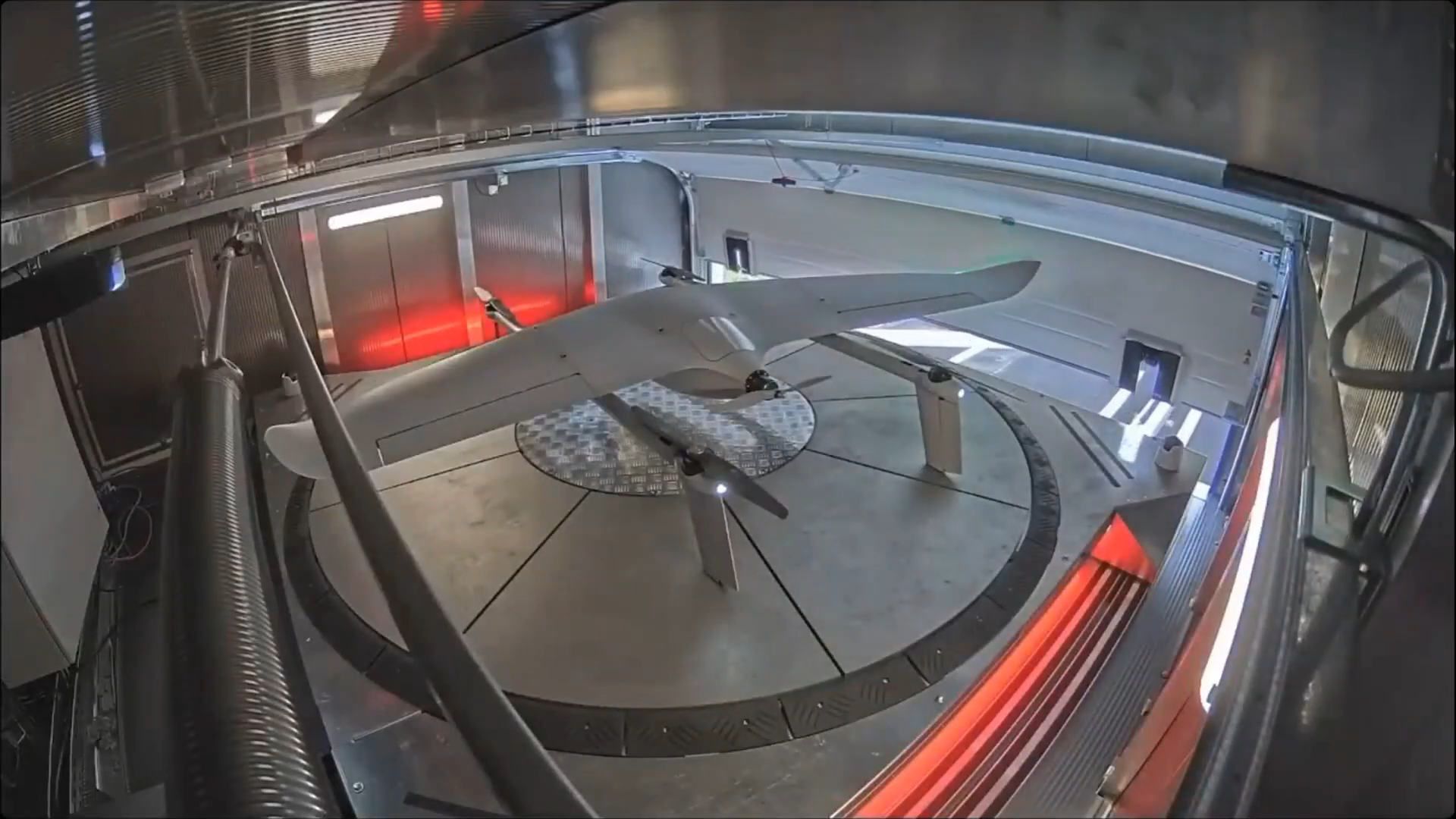
[Suryansh] has been involved in other drone-related projects, too. Open Gimbal was a particularly interesting effort, involving the construction of a bench-testing rig for developing small multirotor drone craft. The 3-DoF platform offered unrestricted rotational freedom, allowing for a craft to be put through its paces in a controlled way without requiring a large open  space for free flight. [Suryansh] also discusses his work with a company called Avy, which specializes in VTOL drones with a focus on emergency response roles. The company has deployed drones that use multirotor technology to launch vertically, while relying on fixed wing aerodynamic elements to extend range and improve efficiency for longer flight times. The drones feature a neat charging setup, wherein pogo pins on the fins pick up power from the metal launchpad to ensure that batteries are fully charged and the drone is ready to go at all times.

Ultimately, multirotor drones have taken on their basic form for good reason. With that said, as [Suryansh]’s talk explains, modifications to the form can have great utility when made to suit a particularly specific mission or application. If you’re developing a drone for a certain purpose, and you’re running into hard limitations, you might try thinking outside the box to make something more fitting for your goals.

Source link

Advertisement
Continue Reading

Tech

Four Young Mathematicians Awarded the 2026 Fields Medals

Published

on

Scientific American reports that the 2026 Fields Medals went to four mathematicians for work ranging from the theory of knots to the motion of fluid: The Fields Medals went to Hong Wang of New York University and France’s Institute of Advanced Scientific Studies (IHES), Yu Deng of the University of Chicago, John Pardon of Stony Brook University and Jacob Tsimerman of the University of Toronto. In the awards’ 90-year history, Wang is only the third woman to win one, after mathematicians Maryam Mirzakhani and Maryna Viazovska in 2014 and 2022, respectively. Wang and Deng represent the prizes’ only Chinese-born recipients besides mathematician Shing-Tung Yau, who won a Fields Medal in 1982.
Hong Wang co-proved the three-dimensional Kakeya conjecture, establishing a fundamental limit on how little space is needed to rotate a line through every possible direction. Mathematician Nets Katz called it the field’s “holy grail” problem and said the achievement made her “a central figure” in the area.

Yu Deng and his collaborators reconciled the microscopic and macroscopic mathematics of fluid motion, proving that equations describing chaotic molecular interactions and large-scale fluid behavior are fundamentally connected. N.Y.U. mathematician Scott Armstrong called it “a truly spectacular, singular result.”

John Pardon made an early breakthrough in knot theory by proving that certain sequences of knots can have arbitrarily large “distortion,” a measure of how difficult they are to traverse. Princeton mathematician David Gabai said the problem had “attracted much interest among mathematicians during the previous 25 years.”

Jacob Tsimerman and two collaborators proved the Andre-Oort conjecture, giving mathematicians a stronger way to understand special points on complex geometric objects known as Shimura varieties. Collaborator Jonathan Pila described him as “a brilliant mathematician” known for his “brilliance and resourcefulness.” Tsimerman has also advanced Hodge theory and hopes pure mathematics can help researchers better understand AI.

Advertisement

Source link

Continue Reading

Tech

US government says Iran-linked hackers are disrupting American water and energy providers

Published

on

The U.S. government is warning that Iranian state-backed hackers are actively breaking in and disrupting industrial control systems at American water and energy providers. This new alert comes months after federal agencies warned of an escalation in hacking from Iranian actors amid the ongoing war.

In an advisory updated Wednesday, the FBI, the NSA, the Department of Energy, and CISA said Iranian hackers were targeting programmable logic controllers on internet-connected operational networks, allowing them to manipulate data on their displays, causing outages and disruption.

The Iranian hackers were initially discovered earlier this year to be targeting controllers made by Rockwell, but the advisory has now expanded the types of industrial control systems under attack to include products from Schneider Electric and Siemens.

The agencies warn that “potentially all internet exposed” industrial control systems may be affected, and urged critical infrastructure owners to take action. Per the advisory, the Iranian-backed hackers were “conducting this activity to cause disruptive effects within the United States,” likely in response to the ongoing war between Iran, and the U.S. and Israel.

Advertisement

According to the FBI, the hackers broke into one critical infrastructure provider and changed the controllers’ programming logic to disabled processes that handled critical shutdowns and alarms. The feds said this allowed “systems to enter unsafe conditions without notifying operators of the anomalies.”

This is the latest in a series of cyberattacks launched by Iranian government hackers and their proxies across the region since the start of the war in February. 

The hacks have ranged from the country’s typical espionage and hack-and-leak operations, such as leaking the contents of the FBI director Kash Patel’s personal email account, to more atypical destructive hacks that have caused large-scale damage or disruption. Among the more notable incidents was a hack on the U.S. medical tech giant Stryker, which allowed the Iranian hacking group “Handala” to remotely wipe tens of thousands of employee devices.

Handala also took credit for a data breach affecting California water provider Cal Water in June, and claimed it could have disrupted the water supply (without providing evidence). The water provider said that it saw no evidence of unauthorized access to its operational networks, which control the water supplies.

Advertisement

When you purchase through links in our articles, we may earn a small commission. This doesn’t affect our editorial independence.

Source link

Continue Reading

Trending

Copyright © 2025