Opening Day doesn’t ask for permission. It just shows up with crisp air, misguided optimism, and 30 teams convincing themselves this is finally the year. Baseball still sells the lie better than anyone, and Hollywood has been riding shotgun on that con for decades; from Bull Durham to Moneyball, reminding us that the game is never just about the game. It’s about belief, failure, and the slow realization by mid-June that your bullpen is a crime scene.
Which brings us to audio, where this week’s more interesting question isn’t whether people are fooled by price tags and polished aluminum. It’s whether we actually hear differently with our eyes open or closed. A recent study raises that very question, and it’s a good one. Does shutting out visual input sharpen focus, improve spatial perception, or change the way we process music in a meaningful way?
Audiophiles have been treating that like gospel for years, but now science is at least poking around the edges instead of leaving the whole thing to late night forum theology. Turns out “close your eyes and listen” may not just be ritual. There might be something real going on there, which is both fascinating and mildly annoying for anyone who thought posture in the chair was the whole game.
Meanwhile, Sennheiser sits in limbo, waiting to see who picks up the tab and what kind of future they’re buying. We’ve seen this movie before; sometimes it ends with innovation, sometimes with accountants slowly draining the life out of something that used to matter. For a brand that helped define personal audio, the next move isn’t just business, it’s legacy. And those don’t always survive the handoff.
Advertisement
Sennheiser HD600 Open-back Headphones
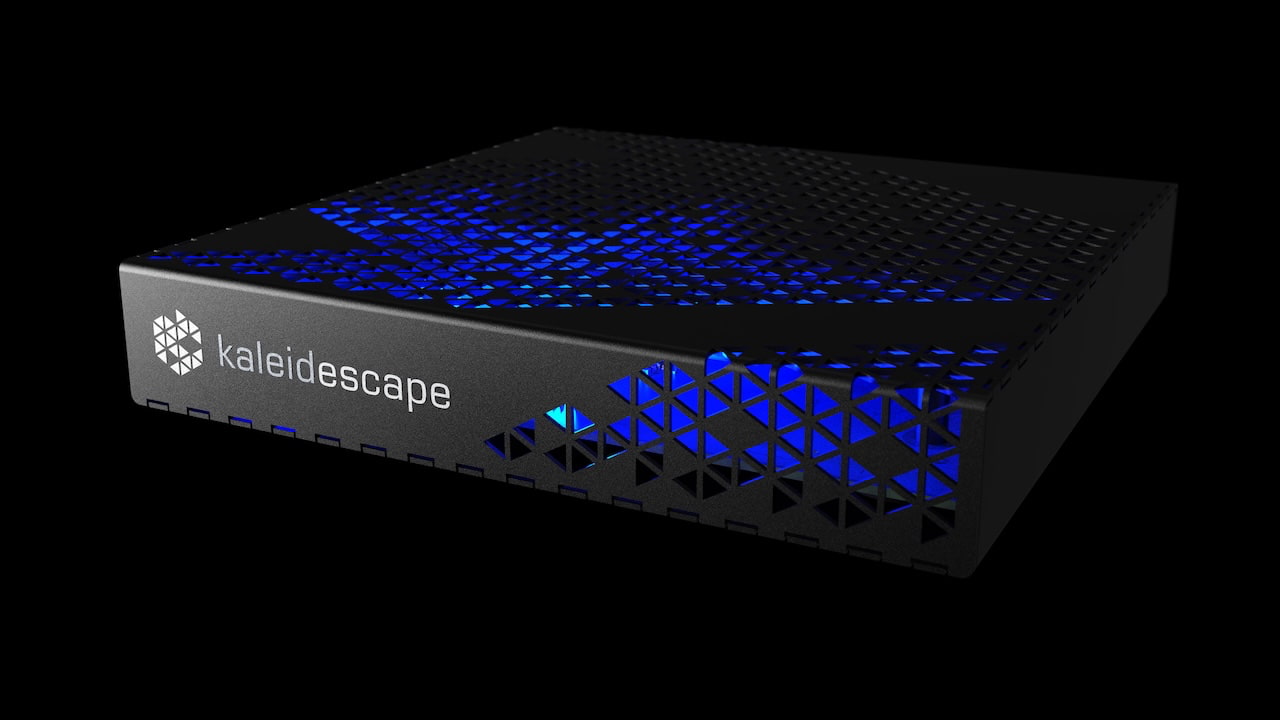
And then there’s Kaleidescape, quietly turning 25 while the rest of the industry chases streaming like it’s the only game in town. They’re still selling ownership in a world obsessed with access. Physical media without the fingerprints. No buffering, no licensing roulette, no “sorry, not available in your region.” It’s stubborn. It’s expensive. It also works.
Four stories. Same problem, different crime scenes. Opening Day is all sunshine and bad decisions waiting to happen. Sennheiser is stuck in a back room while someone else counts the money. Kaleidescape keeps selling ownership in a world hooked on rentals. And in audio, we’re finally asking whether something as simple as opening or closing your eyes changes what you actually hear.
Different games, same angle: perception isn’t clean. It’s messy, conditional, and easy to manipulate. Change the setup, change the outcome. And that gap between what you think is happening and what actually is? That’s where the bodies usually end up.
Opening Day Lies, Hollywood Truths, and the Long Season Ahead
Winter didn’t leave quietly; it got shoved out the door with a great deal of relief in 2026. One day you’re scraping ice off the windshield, the next you’re standing in sunlight that actually feels like something. Opening Day has that effect. It resets the mood whether you asked for it or not.
Up in Toronto, the Toronto Blue Jays aren’t pretending this is just another start. They’re carrying October with them; the kind of loss that sticks because it came down to feet, inches, and a stuck baseball against the Los Angeles Dodgers. That doesn’t fade over the winter. It sits there, waiting for the first pitch to give it somewhere to go.
Even if your head is still buried in the NHL standings, counting down to the Stanley Cup Playoffs, you can feel the shift. Fans of the New York Rangers, Toronto Maple Leafs, Florida Panthers, and New Jersey Devils already know how this ends—no parade, no miracle run, just a quiet exit and a long offseason.
Advertisement
Which means it might be time to start pretending you always cared about the New York Yankees, New York Mets, Toronto Blue Jays, Philadelphia Phillies, or Florida Marlins. Baseball doesn’t ask questions. It just hands you a clean slate and lets you pencil in the score and avoid those texts from the boss.
Advertisement. Scroll to continue reading.
And when it does, it brings the details the other sports can’t fake. The smell of real grass. The way an open-air stadium breathes compared to an arena. I’ve played on astroturf; it’s faster, cleaner, and completely soulless. Give me dirt under my cleats and a bad hop off third any day. New hats are already here, Tigers and Blue Jays, because this is the one sport where you buy in before you know better.
It’s also the only game that Hollywood keeps coming back to. More movies than any other sport, and not by accident. Baseball understands something the others don’t: the season is long, the failure is constant, and the story always feels bigger than the box score.
Advertisement
Five Baseball Movies That Still Get It Right (Even When the Game Doesn’t)
Bull Durham
This one never gets old because it doesn’t pretend baseball is clean or noble. It’s messy, repetitive, and full of people trying to hang on a little longer than they probably should. Crash Davis talking about “the church of baseball” still lands because every fan knows exactly what he means, even if they won’t admit it out loud. And “I believe in long, slow, deep, soft, wet kisses…” is a speech has nothing to do with baseball and somehow everything to do with it. It works because it understands the grind, the failure, and the weird romance of a game that doesn’t love you back sometimes.
The Natural
Total myth. Completely unrealistic. Still works every single time. Roy Hobbs stepping into the light with that bat feels like something bigger than the sport, and when he says, “I just want to say… I’m sorry,” you realize this isn’t about winning. It’s about redemption, or at least the illusion of it. The final swing, the sparks, the music, it’s over the top, but baseball has always had room for legends that don’t quite make sense. Long live the War Memorial and that ball that never came back down.
Advertisement
The Sandlot
https://www.youtube.com/watch?v=D0a3jkcTAe4
This is the one that sneaks up on you. You think it’s a kids’ movie until you realize it’s about memory, time, and everything you don’t get back. “You’re killing me, Smalls” became a joke, but it stuck because everyone knew a Smalls. And “Heroes get remembered, but legends never die” hits differently once you’re not a kid anymore. It works because it reminds you why you fell in love with the game before stats, contracts, and $32 beers got in the way; yes, even in the bleachers at Camden Yards, where nostalgia now comes with a receipt. And not even a decent bratwurst.
42
No nostalgia here. Just pressure and consequences. “I’m looking for a ballplayer with guts enough not to fight back” isn’t just a line—it’s the entire weight of what Jackie Robinson had to carry. The film works because it doesn’t try to make it comfortable. It shows what the game looked like when it actually mattered beyond the scoreboard, and why some players had to be more than just players in order to completely change the sport.
Advertisement
And shame on those of us who haven’t shown the same respect to the Negro Leagues Baseball Museum. We celebrate the story when Hollywood tells it, nod along when 42 reminds us what it cost, and then go right back to ignoring where that history actually lives. If you care about baseball, really care, not just box scores and nostalgia—you owe that place a visit in Kansas City, Missouri.
Moneyball
This one shouldn’t work as well as it does. It’s mostly conversations, spreadsheets, and people arguing in rooms. But “He gets on base” became a punchline for a reason. And when Billy Beane says, “If we win with this team, we’ll have changed the game,” you know it’s not just about baseball. It’s about control, or chasing it, in a system designed to remind you that you don’t have much. It works because it strips the game down to what wins and what doesn’t and then shows you how little that guarantees. Just ask the Blue Jays about that one.
Eyes Open or Closed? Science Just Complicated Your Listening Ritual
A new study reported by the American Institute of Physics and published in the Journal of the Acoustical Society of America takes a flamethrower to one of audio’s oldest habits: closing your eyes to “hear better.”
Advertisement
Turns out, that instinct might be working against you.
Researchers at Shanghai Jiao Tong University tested how people detect faint sounds in noisy environments under different visual conditions—eyes closed, eyes open with nothing to look at, and then with images or video that matched the sound. The result? Closing your eyes didn’t sharpen hearing; it made it worse. Participants actually struggled more to detect faint sounds with their eyes closed, while relevant visual cues made it easier to hear what mattered.
Research participants listened for faint sounds over audio noise. They could hear those sounds much better when they could open their eyes and watch videos or even still photos matching the sounds they were trying to hear. Credit: Yu Huang
The why is where it gets interesting. Brain scans showed that closing your eyes pushes the brain into a state of aggressive filtering, which might be great for blocking noise, not so great when it also filters out the signal you’re trying to hear. In other words, your brain gets a little too confident and starts throwing out the good stuff with the bad.
Advertisement. Scroll to continue reading.
Advertisement
Even more telling: the biggest improvement didn’t come from just having your eyes open, it came from seeing something that matched the sound. A video synced to the audio gave the brain a target, anchoring what it should be paying attention to. That’s not just hearing—that’s multisensory teamwork.
There’s a catch, of course. In a quiet room, the old advice still holds; closing your eyes can help you focus on subtle sounds. But in the real world, where HVAC systems hum, traffic never stops, and someone is always talking, keeping your eyes open might actually give you the edge.
So now the uncomfortable part—the questions this raises:
If visual input improves hearing in noise, what exactly are we doing when we sit in a dark room trying to “critically listen”?
Are we training ourselves to hear differently…or just removing useful information?
Does a two channel system without visual cues put us at a disadvantage compared to live music or even video based playback?
And the big one—how much of what we think we hear is actually shaped by what we see, expect, or believe is happening?
For a hobby built on the idea of control and precision, this is the kind of study that messes with the narrative. Not destroys it—but definitely pokes a few holes in it.
How do you listen?
Advertisement
Kaleidescape at 25: The Long Game Finally Pays Off
I’m not going to pretend this one is neutral. Seeing Kaleidescape hit 25 years actually makes me happy and a little relieved. Because there were plenty of moments where it felt like they weren’t going to make it. Wrong business model, wrong timing, too expensive, too stubborn. Pick your criticism. Meanwhile, the rest of the industry sprinted toward streaming like it was the only exit in a burning building.
And yet…here we are.
What Kaleidescape figured out early and refused to abandon, is something most people are just starting to realize: access isn’t ownership. Streaming is convenient, sure. Until your favorite film disappears. Until the bitrate collapses during the one scene that matters. Until the version you bought quietly changes because someone upstream decided it should. Kaleidescape doesn’t play that game. You get full-bitrate video, lossless audio, and a library that doesn’t vanish overnight because of licensing roulette. It’s not about convenience. It’s about control.
Kaleidescape Strato V is a 4K Movie Player
For someone like me with close to 3,800 physical films staring back at me like a second mortgage, that actually matters. The idea of consolidating even a portion of that into a system that actually respects the material? That’s not a luxury, it’s a solution. Yes, I’m fully aware I’ll have to pay again to build out a digital library on their platform. No, I’m not thrilled about it. But also…complaining about curating 1,000 of my favorite films into a system that preserves them properly feels like a first-world problem in the most literal sense. There are bigger things happening in the world than whether my copy of Double Indemnity streams in Dolby Vision at the right bitrate.
Advertisement
Kaleidescape exists for people who care about movies as objects, not just content. People who want the best version, every time, without compromise or excuses. People who understand that “good enough” is usually neither.
People like “Leia” who is the real authority in the room and their logical target customer. My ultimate movie-watching partner from across the galaxy; equal parts film historian and ruthless critic. She doesn’t care about specs, marketing, or what some influencer said last week. She knows what holds up and what doesn’t. Her taste in cinema would embarrass most critics, and frankly, most of you. Also better taste in shoes, food, and furniture. Not even close. Golden hair that would make Michelle Pfeiffer reconsider everything, pack it in, stay in Montana, and quietly dunk her head in the Madison like she just lost an argument she didn’t know she was having with Kurt.
Kaleidescape makes sense for people like that. People who don’t want to hunt for a film across five apps or settle for whatever version happens to be available that night. It’s a system built for commitment—to the medium, to the experience, and to the idea that some things are worth doing right the first time.
Advertisement. Scroll to continue reading.
Advertisement
Twenty-five years later, that doesn’t look stubborn anymore. It looks like they were right.
Sennheiser’s Future Is for Sale and Nobody Should Feel Comfortable About That
Earlier this week, I wrote that this wasn’t a shutdown, it’s an exit. And that distinction matters. Sennheiser isn’t disappearing tomorrow, but its consumer division is officially back on the market as Sonova refocuses on what it actually understands: hearing aids and medical tech.
Sennheiser HD 414 Headphones (circa 1968)
This is the second ownership shakeup in just a few years, and that’s not exactly how you build confidence in a brand that’s supposed to represent stability, engineering, and long term thinking. Sonova bought the business in 2022, decided it didn’t fit, and now wants out. That’s not strategy, that’s a reset button with consequences.
And then there was CanJam NYC 2026. I’ve seen Sennheiser booths for decades. They’re usually tight, focused, and intentional. This one felt scattered. Disorganized. Like nobody was fully in charge of the narrative. For a legacy brand that helped define the category, that should never happen, especially not at the one show where personal audio is the entire conversation.
Looking at it now, Axel Grell walking away and launching his own thing feels less like a side project and more like the right move at exactly the right time. If you’ve been paying attention to how fast the headphone and IEM world is moving in 2026, new players, faster cycles, more aggressive pricing, Sennheiser hasn’t exactly been leading that charge. And in this category, standing still is just a slower way of falling behind.
Advertisement
Axel Grell at CanJam SoCal 2023 previewing prototype OAE1 headphone.
If Sennheiser doesn’t survive this intact, it’s not just another brand disappearing. It’s one of the pillars. The HD 600 series alone carries more weight than entire product lines from other companies. Losing that kind of legacy would hit the industry harder than people want to admit.
But let’s be honest, this wouldn’t be the first time a legacy brand failed to adapt to a market that stopped waiting for it. And it won’t be the last.
So now we wait. Strategic buyer? Tech giant? Private equity with a spreadsheet and a stopwatch?
Or someone who actually understands why this brand mattered in the first place.
Because if this ends with the wrong owner, don’t call it evolution. Call it what it is: ordentlich vermasselt.
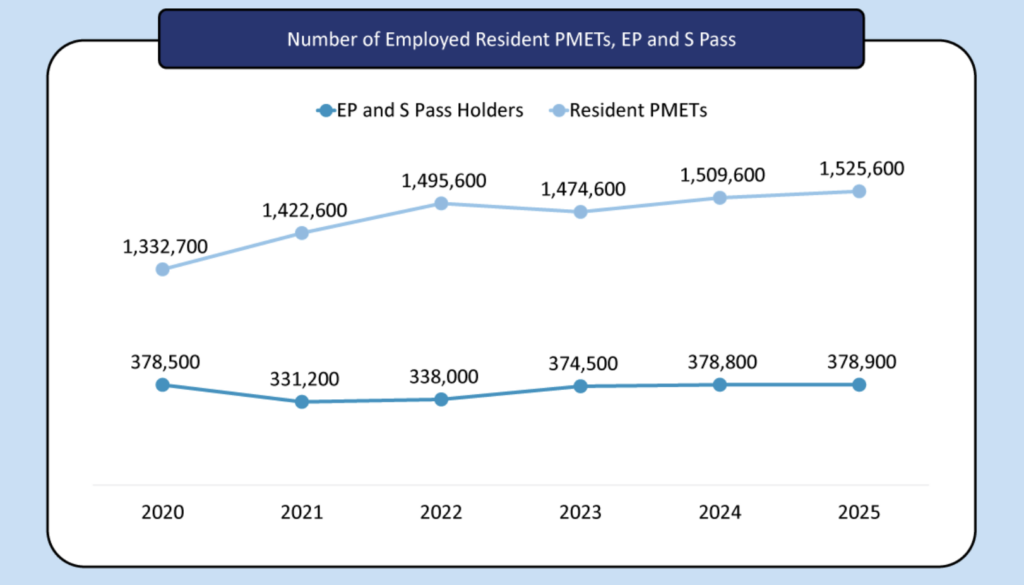
Over the last 5 years, the number of S Pass and EP holders grew by just 400
In debates over foreign labour in Singapore, one claim often surfaces: that foreign professionals are stealing well‑paid, high-skilled jobs from Singaporeans.
But data from the Ministry of Manpower (MOM) figures paint a more nuanced picture that challenges the assumptions behind this narrative. According to provided stats, the number of foreign professionals barely budged between 2020 and mid-2025, and the best-paying sectors are still overwhelmingly held by locals.
Here’s what the numbers actually show.
There are at least 4 locals for every foreign professional
Among Singapore’s foreign workforce, not all passes are created equal.
Advertisement
The ones Singaporeans are particularly worried about are Employment Pass (EP) holders—high-earning professionals cleared to work here based on salary and qualifications—and S Pass holders, the mid-skilled technical workers one rung below.
Together, they’re the foreign hires competing directly with locals for PMET (Professionals, Managers, Executives, and Technicians) jobs, or positions that typically offer higher wages and career progression.
According to online outrage, you might expect this group to have grown significantly over the years, but surprisingly, MOM’s latest Local Employment Outcomes report, released last month, shows otherwise.
From 2020 to 2025, the total number of S Pass and EP holders increased by only 400. That’s not a typo.
Advertisement
From 378,500 in 2020, the total number of these pass holders had actually dipped to 331,200 in 2021, rose slightly to 338,000 in 2022, and then gradually climbed to 378,900 in 2025.
Source: Local Employment Outcomes, Singapore’s Ministry of Manpower
At the same time, the resident workforce, comprising Singapore citizens and Permanent Residents, is gaining ground. The proportion of PMETs (Professionals, Managers, Executives, and Technicians) among employed residents rose from 1.3 million in 2020 to 1.5 million in 2025.
This growth outpaced the combined increase in EP and S Pass holders, showing that locals are not being crowded out. They are, instead, expanding their presence in high-skill roles.
Moreover, there are at least four times more local PMETs employed than foreign S Pass and EP holders in comparable roles—a clear sign that Singaporeans still dominate professional and managerial positions across industries.
The best-paying sectors remain primarily held by locals…
Industry-level data reinforces this picture.
Advertisement
According to MOM’s Job Vacancy report released last year, across all major industries, there is no sector where foreign workers make up more than 25% of PMET roles.
The vertical axis shows the proportion of local PMETs to foreign ones (meaning the higher the dot, the greater the number of locals employed compared to foreign pass holders). The horizontal axis shows the percentage share of all PMET vacancies in each industry, so the further to the right, the more opportunities there are. Source: Job Vacancy 2024, Singapore Ministry of Manpower
The best-paying sectors still remain dominated by locals. In finance, foreign pass holders account for less than 15% of PMET roles, while Health & Social Services, which includes doctors and specialised healthcare technicians, shows a similar proportion.
Only three sectors—Food & Beverage Services, Construction, and Administrative Services—have the highest foreign employment shares, with foreigners accounting for 40–50% of PMET roles.
The data makes it very clear: while foreigners do fill some PMET roles, locals remain firmly in control of Singapore’s high-paying, high-skilled jobs.
Advertisement
It is worth noting, though, that the data does not distinguish between Singapore citizens and Permanent Residents, which means some of these roles may be held by foreigners.
However, this distinction does little to change the broader picture. SCs and PRs are both part of the resident workforce, with similar access to opportunities and responsibilities, making them a meaningful measure of local participation.
Resident Singaporeans may only strengthen their hold on high-paying, high-skilled roles in the years ahead.
In Budget 2026, the Government announced further tightening of the foreign workforce criteria, including raising the minimum qualifying salary for Employment Pass holders to S$6,000 (and S$6,600 in finance), and increasing S Pass thresholds as well, to S$3,600 (and S$4,000 in finance).
Advertisement
These changes are not just technical adjustments. They are part of a broader strategy to ensure that foreign hires remain high-quality and complementary, rather than substitutes for local workers. As Prime Minister Lawrence Wong put it, Singapore will remain open to global talent, while ensuring that Singaporeans “remain firmly at the centre of our workforce and our policies.”
In other words, the data already shows that locals dominate the country’s most desirable jobs—and policy is moving in a direction that will prioritise them even further.
Read other articles we’ve written on Singapore’s current affairs here.
Featured Image Credit: TK Kurikawa/ Shutterstock.com
joshuark shares a report from BleepingComputer: The TeamPCP hacking group continues its supply-chain rampage, now compromising the massively popular “LiteLLM” Python package on PyPI and claiming to have stolen data from hundreds of thousands of devices during the attack. LiteLLM is an open-source Python library that serves as a gateway to multiple large language model (LLM) providers via a single API. The package is very popular, with over 3.4 million downloads a day and over 95 million in the past month. According to research by Endor Labs, threat actors compromised the project and published malicious versions of LiteLLM 1.82.7 and 1.82.8 to PyPI today that deploy an infostealer that harvests a wide range of sensitive data.
[…] Both malicious LiteLLM versions have been removed from PyPI, with version 1.82.6 now the latest clean release. […] If compromise is suspected, all credentials on affected systems should be treated as exposed and rotated immediately. […] Organizations that use LiteLLM are strongly advised to immediately:
– Check for installations of versions 1.82.7 or 1.82.8 – Immediately rotate all secrets, tokens, and credentials used on or found within code on impacted devices. – Search for persistence artifacts such as ‘~/.config/sysmon/sysmon.py’ and related systemd services – Inspect systems for suspicious files like ‘/tmp/pglog’ and ‘/tmp/.pg_state’ – Review Kubernetes clusters for unauthorized pods in the ‘kube-system’ namespace – Monitor outbound traffic to known attacker domains
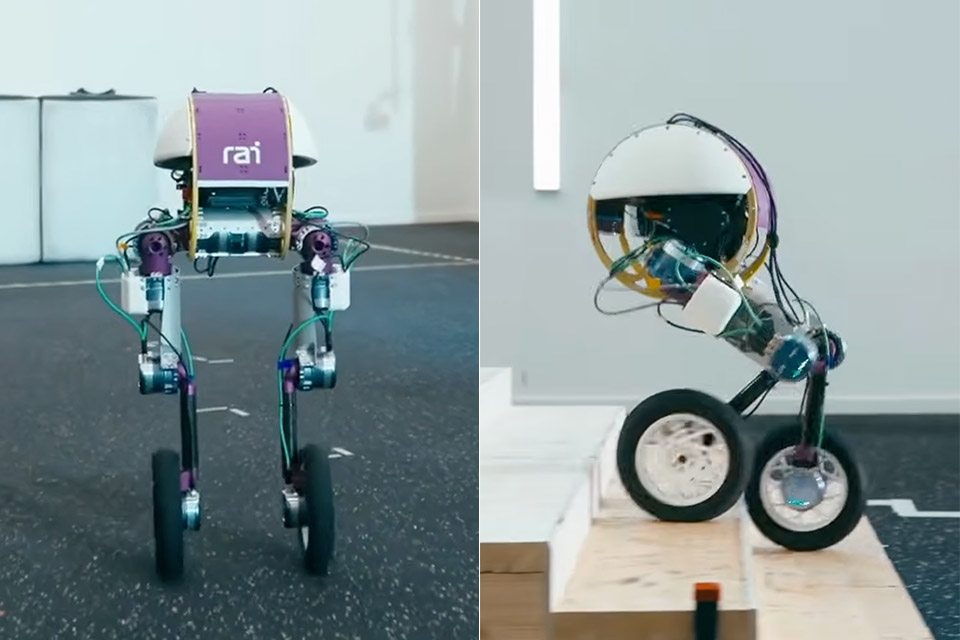
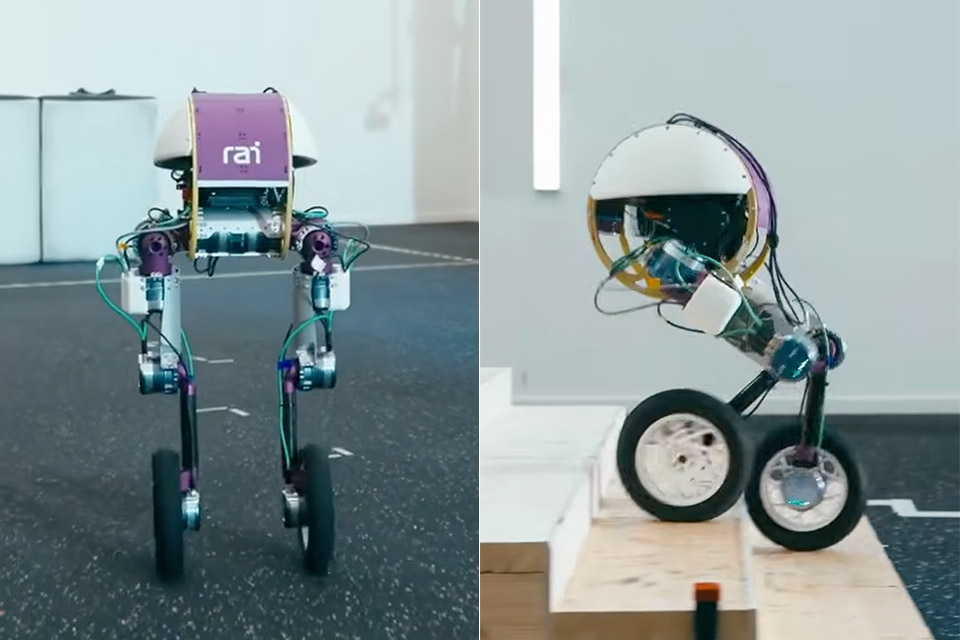
The RAI Institute has just unveiled Roadrunner, a compact robot no heavier than a medium sized dog that moves in ways that catches you off guard. It glides across flat ground on wheels, shifts its stance to tackle a staircase, rides down a ramp with the kind of casual ease you would expect from something with years of practice, backs down another set of steps with equal confidence, and caps it all off by balancing on a single wheel while the rest of its body stays completely still.
The team behind this project is based in Massachusetts and has an amazing track record, having been created by Marc Raibert, the former CEO of Boston Dynamics. This new venture is continuing the same emphasis on robots that can handle complex motion without appearing like complete clowns, and Roadrunner is their latest research platform built to test out all sorts of ideas that most legged robots can only dream of.
Sleek & Durable Design: Standing at 132cm tall and weighing only approx. 35kg, the G1 is constructed with aerospace-grade aluminum alloy and carbon…
High Flexibility & Safe Movement: Boasting 23 joint degrees of freedom (6 per leg, 5 per arm), it offers an extensive range of motion. For safety, it…
Smart Interaction & Connectivity: Powered by an 8-core high-performance CPU and equipped with a depth camera and 3D LiDAR. It supports Wi-Fi 6 and…
At 15 kilograms the robot is light enough to move quickly without sacrificing structural integrity. Each leg ends in a wheel and has a knee joint that works equally well facing forward or backward, a symmetry that lets the machine adjust its stance instantly to sidestep an obstacle or line up for the next step. A single control system handles every movement style, from rolling side by side like a small cart to lining up like a scooter to taking actual walking steps. That same software has learned to get the robot back on its feet from almost any position on the ground and keep it balanced even when only one wheel is making contact with the surface.
Approaching a staircase, the robot slows, lifts a leg, and places the wheel onto the first step, repeating the motion steadily until it reaches the top, with the wheels only spinning when the terrain actually calls for it. Coming back down it simply turns around and descends with the same unhurried control, never losing its footing. None of this required additional fine tuning in the real world. The team refers to it as a zero-shot transfer, meaning the robot learned everything it needed entirely in simulation and carried that info straight into the physical world without any further adjustment. [Source]
SiliconRepublic.com spoke with experts at Amgen to explore how early career guidance can set the foundations for a happy and productive career.
The last decade has brought significant change to the working world and it is fair to say that in many cases, advancements have worked to reduce and even eliminate organisational silos. That is to say, in 2026 there is no real reason for employees – remote, hybrid or in-person – to feel isolated in their work or limited in how they might progress professionally.
That is where planned mentorship often comes in. For many professionals, mentorship can be the factor that enables them to upskill quickly, learn the ropes on the job, develop a network, move beyond their own expectations and even take up the mantle of mentor, eventually. But for that to happen, guidance has to be a key element of an organisation, not a box-ticking exercise every now and then.
“Mentorship has multiple benefits,” explained Michelle Somers, the senior director of facilities and engineering at Amgen. “One of the first things for an organisation to do, to encourage mentorship as a core pillar, is to set up some structured mentorship.
Advertisement
“Once that is there, the structure is there. You know, the questions are there, the pathways are there and then people get really familiar with it. Then mentorship really becomes a natural thing.”
For Somers, in establishing a system that supports mentorship publicly, organisations not only showcase their goals to empower career progression, but also make it clear that career guidance is not an anomaly, but part of a company’s ethos.
“I had a colleague come to me recently who said, ‘I know you’ve mentored a colleague of ours, any chance I can avail of your services?’ That turned into just a couple of coffee conversations, where I was able to be a sounding board on her potential career path.
“The structured programme sets up an expectation that people are available for help and support and then it happens quite naturally and fluidly, especially like what we do here in Amgen.”
Advertisement
Plan in action
Lauren Moore, a manufacturing manager at Amgen, is one such person to benefit from having a mentor take an interest in her career. As Moore’s career progressed at the organisation, she was promoted to a leadership role, which she took in her stride, however, roughly two months in, she began to face some of the challenges that naturally come with a change in expectations.
She told SiliconRepublic.com: “I was facing some challenges with the additional level of responsibility. So, I sat down with my mentor at the time, who was a leader in the manufacturing area. For me that was incredibly impactful at that early stage in my career. And it really enabled me to build confidence, to build resilience and ultimately to succeed in that position.”
Moreover, she is of the opinion that, in developing a positive attitude and adopting a strong sense of company culture, she, alongside Amgen, can better deliver medicines and vital treatments to the patients who depend on the organisation’s services.
Advertisement
For Amgen’s senior director of quality control, Claire Shaw, to achieve the best results for employees and for the people using Amgen’s services, companies have to prioritise inclusivity, especially at the induction level.
She said: “I would consider it very collaborative. There’s a strong sense of teamwork and a strong sense of belonging. Organisations can support a happy work environment that ensures that we serve our patients through developing their staff, and ensures each colleague is valued and can contribute to our daily mission to serve patients.”
Don’t miss out on the knowledge you need to succeed. Sign up for the Daily Brief, Silicon Republic’s digest of need-to-know sci-tech news.
Isn’t there some claim events come in threes? After the extremely rare leak of the iOS Coruna exploit chain recently, now we have details from Google on a second significant exploit in the wild, dubbed Darksword.
Like Coruna, Darksword appears to have followed the path of government security contractors, to different government actors, to crypto stealer. It appears to focus on exploits already fixed in modern iOS releases, with most affecting iOS 18 and all patched by iOS 26.3.
Going from almost no public examples of modern iOS exploits to two in as many weeks is wild, so if mobile device security is of interest, be sure to check out the Google write-up.
Another FBI Router Warning
The second too early to be retro – but too important to ignore – repeat security item is a second alert by the FBI cautioning about end-of-life consumer network hardware under active exploitation, with the FBI tracking almost 400,000 device infections so far.
Advertisement
Like the warning two weeks ago, the FBI calls out a handful of consumer routers – but this time they’re devices that may actually still be service in some of our homes (or our less cutting edge friends and family), calling out devices from Netgear, TP-Link, D-Link, and Zyxel:
Netgear DGN2200v4 and AC1900 R700
TP-Link Archer C20, TL-WR840N, TL-WR849N, and WR841N
While many of these devices are over ten years old, they still support modern networking – some of them even supporting 802.11ac (also called Wi-Fi 5). Unfortunately, since support has been ended by the manufacturers, publicly disclosed vulnerabilities have not been patched (and now never will be, officially)
Once infected, the routers are enrolled in the AVRecon malware network, which includes the now-typical suite of behavior of remote control, remote VPN access to the internal and external networks, DNS hijacking, and DDoS (distributed denial of service) attacks. This sort of network malware is used by attackers to exploit internal systems like un-patched Windows or IOT devices on the local network, and as a launching point to hide behavior as coming from a certain country or state by using the public Internet connection as a VPN. It’s also often monetized by unscrupulous apps selling cheap VPN service.
The worst type of vulnerability affecting home routers is one which can be triggered remotely from the Internet without user interaction – for instance CVE-2024-12988 which allows arbitrary code execution remotely on Netgear devices, but even vulnerabilities which are only accessible from the local network can be combined with cross-site vulnerabilities or vulnerabilities in other devices to exploit home routers. A malware infection on a Windows system can be leveraged to install additional, permanent malware installs on routers and IOT devices, and malware on a router can be used to redirect the user to install more malware on an internal PC via manipulating the network, or allow direct attack of internal systems via a proxy.
A slight upside is that this batch of vulnerable hardware is often modern enough to run OpenWRT or other replacement firmware. OpenWRT supports thousands of routers and access points – and often forms the basis of the commercial firmware the device was shipped with, before the manufacturer abandoned it. Converting a device to OpenWRT may be intimidating for some, but for anyone with one of the listed devices, the time to try is now! It’s cheaper than buying a new device, and worst case scenario, you’d have to replace that router anyway!
Unfortunately, vulnerabilities in home routers don’t offer many lessons: there’s rarely a need to log into them to see if there is a pending update, and almost nothing the typical home user can do except buy a new device when the manufacturer stops supplying security fixes.
Trivy Compromised
The Trivy security scanner suffered a breach themselves, leading to a cascading series of breaches of other tools. Trivy is an automatic vulnerability scanner for finding vulnerabilities is the dependencies of Docker and other container images, package repositories, and language packages in Go, PHP, Python, Node, and many other popular languages. Trivy is often integrated into the CI/CD (continual integration and continual deployment) process of other open and closed source projects and internal company processes.
According to the timeline published by Aqua, in late February 2026 a misconfigured GitHub workflow allowed the theft of authentication tokens for the Trivy project. While the attack was detected and the credentials removed, not all credentials were properly removed, which allowed the attackers to complete the attack on March 19, 2026.
Advertisement
Once compromised, all but one release of the Trivy GitHub actions were replaced with trojaned malicious copies, spreading the compromise to any project which used the Trivy GitHub actions, spreading the malware payload to many projects using the Trivy scanner actions.
GitHub actions are part of GitHub which allows scripts when repository actions like a pull request or merge are performed. Actions can be used to check that a change compiles properly, scan for security issues, generate documentation, or generate release binaries, and typically are allowed to make changes to the repository itself. GitHub workflows can include actions from other repositories via the Action Marketplace. By replacing the Trivy actions, the attackers essentially gained access to every repository using Trivy to scan for vulnerabilities in their own codebases.
The hijacked Trivy actions collected and exfiltrated access tokens for Docker, Google Cloud, Azure, and AWS, Git credentials, SSH keys, and any other secrets from projects using the Trivy actions. With these keys, the controllers of the original malware are able to attack those projects directly, such as the immensely popular LiteLLM Python interface to AI LLM models from multiple companies.
The compromise of LiteLLM also stole credentials to cloud services, SSH, git, Docker, and Kubernetes on any system that ran the trojaned setup scripts, as well as infecting any connected Kubernetes systems found in the configurations.
There are also reports that the malware actors are also infecting NPM node packages with malware which automatically updates itself from a block-chain based control system and steals NPM authentication tokens to inject itself into any NPM packages the victim may have authored.
Advertisement
Supply-chain attacks happening for years with varying levels of success. But the Trivy attack may be the most successful in spreading compromised packages into multiple package repositories. It’s difficult to avoid supply chain attacks, especially when the vulnerability scanner itself is the source of the problem. GitHub has introduced immutable releases – tagged build versions which can not be updated once released, and the immutable release of Trivy was the only version not compromised by the attackers. As more packages shift to immutable versions it may become harder to insert malware into the supply, but we’re nowhere near a tipping point of projects using immutable releases yet.
The people at Signal Snowboards are well known not only for producing quality snowboards, but doing one-off builds out of unusual and perhaps questionable materials just to see what’s possible. From pennies to glass, if it can go on their press (and sometimes even if it can’t) they’ll build a snowboard out of it. At some point, they were challenged to build different types of boards from paper products which resulted in a few interesting final products, but this pushed them to see what else they could build from paper and are now here with an acoustic guitar fashioned almost entirely from cardboard.
For this build, the luthiers are modeling the cardboard guitar on a 50s-era archtop jazz guitar called a Benedetto. The parts can’t all just be CNC machined out of stacks of glued-up cardboard, though. Not only because of the forces involved in their construction, but because the parts are crucial to a guitar’s sound. The top and back are pressed using custom molds to get exactly the right shape needed for a working soundboard, and the sides have another set of molds. The neck, which has the added duty of supporting the tension of the strings, gets special attention here as well. Each piece is filled with resin before being pressed in a manner surprisingly similar to producing snowboards. From there, the parts go to the luthier in Detroit.
At this point all of the parts are treated similarly to how a wood guitar might be built. The parts are trimmed down on a table saw, glued together, and then finished with a router before getting some other finishing treatments. From there the bridge, tuning pegs, pickups, and strings are added before finally getting finished up. The result is impressive, and without looking closely or being told it’s made from cardboard, it’s not obvious that it was the featured material here.
Video Friday is your weekly selection of awesome robotics videos, collected by your friends at IEEE Spectrum robotics. We also post a weekly calendar of upcoming robotics events for the next few months. Please send us your events for inclusion.
“Roadrunner” is a new bipedal wheeled robot prototype designed for multi-modal locomotion. It weighs around 15 kg (33 lb) and can seamlessly switch between its side-by-side and in-line wheel modes and stepping configurations depending on what is required for navigating its environment. The robot’s legs are entirely symmetric, allowing it to point its knees forward or backward, which can be used to avoid obstacles or manage specific movements. A single control policy was trained to handle both side-by-side and in-line driving. Several behaviors, including standing up from various ground configurations and balancing on one wheel, were successfully deployed zero-shot on the hardware.
Incredibly (INCREDIBLY!) NASA says that this is actually happening.
NASA’s SkyFall mission will build on the success of the Ingenuity Mars helicopter, which achieved the first powered, controlled flight on another planet. Using a daring mid-air deployment, SkyFall will deliver a team of next-gen Mars helicopters to scout human landing sites and map subsurface water ice.
NASA’s MoonFall mission will blaze a path for future Artemis missions by sending four highly mobile drones to survey the lunar surface around the Moon’s South Pole ahead of astronauts’ arrival there. MoonFall is built on the legacy of NASA’s Ingenuity Mars Helicopter. The drones will be launched together and released during descent to the surface. They will land and operate independently over the course of a lunar day (14 Earth days) and will be able to explore hard-to-reach areas, including permanently shadowed regions (PSRs), surveying terrain with high-definition optical cameras and other potential instruments.
Advertisement
For what it’s worth, Moon landings have a success rate well under 50%. So let’s send some robots there to land over and over!
In Science Robotics, researchers from the Tangible Media group led by Professor Hiroshi Ishii, together with colleagues from Politecnico di Bari, present Electrofluidic Fiber Muscles: a new class of artificial muscle fibers for robots and wearables. Unlike the rigid servo motors used in most robots, these fiber-shaped muscles are soft and flexible. They combine electrohydrodynamic (EHD) fiber pumps — slender tubes that move liquid using electric fields to generate pressure silently, with no moving parts — with fluid-filled fiber actuators. These artificial muscles could enable more agile untethered robots, as well as wearable assistive systems with compact actuation integrated directly into textiles.
In this study, we developed MEVIUS2, an open-source quadruped robot. It is comparable in size to Boston Dynamics Spot, equipped with two LiDARs and a C1 camera, and can freely climb stairs and steep slopes! All hardware, software, and learning environments are released as open source.
In this work, a multi-robot planning and control framework is presented and demonstrated with a team of 40 indoor robots, including both ground and aerial robots.
Quadrupedal robots can navigate cluttered environments like their animal counterparts, but their floating-base configuration makes them vulnerable to real-world uncertainties. Controllers that rely only on proprioception (body sensing) must physically collide with obstacles to detect them. Those that add exteroception (vision) need precisely modeled terrain maps that are hard to maintain in the wild. DreamWaQ++ bridges this gap by fusing both modalities through a resilient multi-modal reinforcement learning framework. The result: a single controller that handles rough terrains, steep slopes, and high-rise stairs—while gracefully recovering from sensor failures and situations it has never seen before.
While the pyramid exploration that iRobot did was very cool, they did it with a custom made robot designed for a very specific environment. Cleaning your floors is way, way harder. Here’s a bit more detail on the pyramids thing:
MIT engineers have designed a wristband that lets wearers control a robotic hand with their own movements. By moving their hands and fingers, users can direct a robot to perform specific tasks, or they can manipulate objects in a virtual environment with high-dexterity control.
At NVIDIA GTC 2026, we showcased how AI is moving into the physical world. Visitors interacted with robots using voice commands, watching them interpret intent and act in real time — powered by our KinetIQ AI brain.
Developed by Zhejiang Humanoid Robot Innovation Center Co., Ltd., the Naviai Robot is an intelligent cooking device. It can autonomously process ingredients, perform cooking tasks with high accuracy, adjust smart kitchen equipment in real time, and complete post-cooking cleaning. Equipped with multi-modal perception technology, it adapts to daily kitchen environments and ensures safe and stable operation.
This CMU RI Seminar is by Hadas Kress-Gazit from Cornell, on “Formal Methods for Robotics in the Age of Big Data.”
Formal methods – mathematical techniques for describing systems, capturing requirements, and providing guarantees – have been used to synthesize robot control from high-level specification, and to verify robot behavior. Given the recent advances in robot learning and data-driven models, what role can, and should, formal methods play in advancing robotics? In this talk I will give a few examples for what we can do with formal methods, discuss their promise and challenges, and describe the synergies I see with data-driven approaches.
This teacher captured the broader moment in education. Over the past several years, schools have been urged to respond to the rapid emergence of generative AI tools such as ChatGPT with limited information and a lot of hype and horror stories. Some have framed the technology as potentially transformative for teaching and learning, while others claim the opposite. Yet in many classrooms, adoption has been slower and more selective than the surrounding hype might suggest.
Advertisement
That hesitation is often interpreted as resistance to innovation, but conversations with educators suggest a different interpretation. In many cases, teachers behave as experts in most fields do when encountering a new technology, evaluating whether it solves a real problem. When professionals encounter a tool that is widely marketed but still evolving, they ask a basic question: What does this actually help me do better?
For many educators, that question remains unresolved when it comes to classroom instruction, and that’s what our research project aimed to answer: What are teachers experiencing with generative AI in their classrooms?
In fall 2024, EdSurge researchers facilitated discussions between a group of 17 teachers from around the world. We convened a group of third to 12th grade teachers, and some of them designed and delivered their own lesson plans, either teaching with or about AI.
Overall, our participants’ responses reflect a few major themes, with the most prominent sentiment being an air of indifference. In particular, a fourth grade math teacher participant attempted to use generative AI in her instruction. However, before adoption, she asked how AI could help her elementary students learn math. Her question captured what several participants were thinking, aligning with 2024 data from the Pew Research Center that shows educators were split on whether student AI use was more harmful than helpful.
Advertisement
A Technology Arriving Faster Than Schools Can Unpack
A high school computer science teacher from Georgia describes her fears about generative AI’s widespread push into classrooms:
One of my biggest fears is actually Arthur C. Clarke’s rule: any sufficiently advanced technology is indistinguishable from magic…we have students, parents, and teachers looking at AI as if it’s magic.
A high school library media specialist from New York described the same tension from a different angle:
There’s a fear about not being able to keep up with how things progress…the new tools and the impact it has on education.
Schools typically adopt new technologies through deliberate cycles of experimentation, professional development and evaluation. Generative AI has entered classrooms through a different pathway. Consumer tools became available to teachers and students simultaneously, often before schools had developed policies or instructional frameworks for using them.
The result is a situation in which educators encounter the technology while they are still trying to understand its implications.
Advertisement
Where AI Is Already Providing Value
In conversations with teachers, the pattern that appears consistently is a classic user design case. The most immediate use cases for generative AI have little to do with student learning. Instead, an engineering and computer science teacher in New Jersey addressed workload:
I have a running discussion with some of my colleagues about how to use AI to lesson plan. I use it routinely to lesson plan. I don’t really use the lessons, but we have to produce all this stuff for admin that no one reads… AI will just roll it off.
Another teacher described similar experimentation among colleagues:
It’s really great that so many people have kind of scratched the surface and are using it to support their productivity and efficiency… lesson planning and newsletters and stuff like that.
These examples reflect a pattern seen across many professions: Generative AI is particularly effective at drafting, summarizing and generating text. In contexts where professionals face time pressure and administrative demands, those capabilities can be immediately useful.
Teachers experience those same pressures. Beyond instruction, many juggle grading, lesson planning, parent communication, extracurricular supervision and administrative reporting. In that environment, a chatbot that helps compress routine tasks can feel genuinely helpful.
Advertisement
Recent research, as well as national survey data from RAND’s American Educator Panels, suggests that teachers are adopting generative AI primarily as a productivity tool rather than a core instructional technology, a pattern that mirrors how educators in this study described their own early experimentation.
However, instructional discretion is different from a teacher’s administrative workload.
The Instructional Use Case Remains Unclear
When teachers consider introducing AI tools to students during class time, the calculations they make change. The relevant question becomes: What student learning problem does this tool solve? Many educators are still trying to answer this question, even after several years of exposure to generative AI in some capacity.
Some teachers are experimenting with AI in limited ways, such as using it as a revision partner in writing. A science teacher from Guam said:
Advertisement
Students write a first draft and then feed it into ChatGPT for a second draft… but I push them not to use it for research.
Others are designing lessons where the technology itself becomes the subject of inquiry. A high school special education teacher in New York shared how she removes the veil from the magic of chatbots.
We purposely trained [a chatbot] wrong, so students could understand the data is only as good as how and who trains it.
Learning science research suggests that students benefit most when technology supports reflection and revision, rather than replacing the productive struggle of critical thinking and problem solving, a principle that many teachers in this study have applied. In these cases, AI becomes a tool that students analyze and critique. The participants do not attribute AI as a source of authoritative knowledge.
AI Literacy as a Practical Classroom Entry Point
Many teachers see the most promising instructional opportunity in AI literacy, as it may feel most appropriate to teach students about the tools they’re hearing about and encountering daily. International guidance from the United Nations Educational, Scientific and Cultural Organization (UNESCO) and the Organisation for Economic Co-operation and Development (OECD) increasingly frames AI literacy as a foundational skill for students, encouraging schools to help young people understand how algorithmic systems generate information, rather than incorporating AI tools into everyday classroom tasks.
An elementary teacher from New York state describes focusing on helping students understand how these systems produce information and where they fail:
For me it starts with literacy — [teaching] students how to prompt, and then how to fact-check the information that’s generated to make sure there’s no bias in it.
A middle school teacher from New York uses simple analogies to illustrate how machine learning systems work:
We used an exercise about making the best peanut butter and jelly sandwich. The ingredients were the dataset, the procedure was the algorithm, and the output depended on how it was designed.
These lessons treat AI less as a productivity tool and more as a window into how digital systems generate knowledge.
Hallucinations, Bias and the Question of Trust
Teachers also raised consistent concerns about the reliability of generative AI outputs. An elementary library media specialist from New York said:
Advertisement
You ask ChatGPT to write a paper on something and it makes something up totally imaginary.
To illustrate the risks, some educators point to real-world examples. A high school French teacher shared:
I tried ChatGPT. I think it’s very useful if you know your content very well. IIf you don’t know your content, it’s hard to tell whether or not it’s accurate.
Others connect these issues to broader discussions about algorithmic bias, explaining why they fear that students will become reliant on these tools. A high school computer science teacher in New Jersey shares her concerns about the increased use of AI by students. She works at a school with large populations of African American, Latino and Black newcomer families from African and Caribbean countries:
When we talk about bias, we look at hiring data and incarceration data… and facial recognition systems where error rates vary depending on who the system is trying to recognize.
In these contexts, AI becomes less a tool for answering questions and more a case study of how technological systems shape information.
The “Air of Indifference”
Taken together, these conversations reveal a stance that is not often captured in public discussions of AI in schools. What initially appeared to be an insignificant factor in keeping teachers interested in robust discussions about AI turned out to be a prominent theme aligned with both existing and emerging research.
Advertisement
By and large, teachers are not rejecting the technology. But they are also not reorganizing their classrooms around AI.
Instead, many are adopting a posture that might be described as pragmatic indifference:
“I use it for lesson planning… but I don’t really use the lessons.”
“I push students not to use it for research.”
Advertisement
In other words, teachers are using AI where it clearly saves time while maintaining boundaries around core learning tasks. This posture reflects professional judgment, rather than resistance to inevitable technological innovation.
Schools exist partly to create conditions in which students practice complex cognitive work, such as deep reading, methodical writing, reasoning through problems and evaluating evidence. If a tool primarily reduces the need to perform that work, teachers have reason to question whether it advances or undermines learning.
And that brings us back to the fourth-grade teacher’s question: What can I use this for with fourth-grade math?
If the instructional use case for AI remains unclear, what should students be learning instead?
Advertisement
That question leads to a deeper conversation about the kinds of skills that remain valuable even as technologies change.
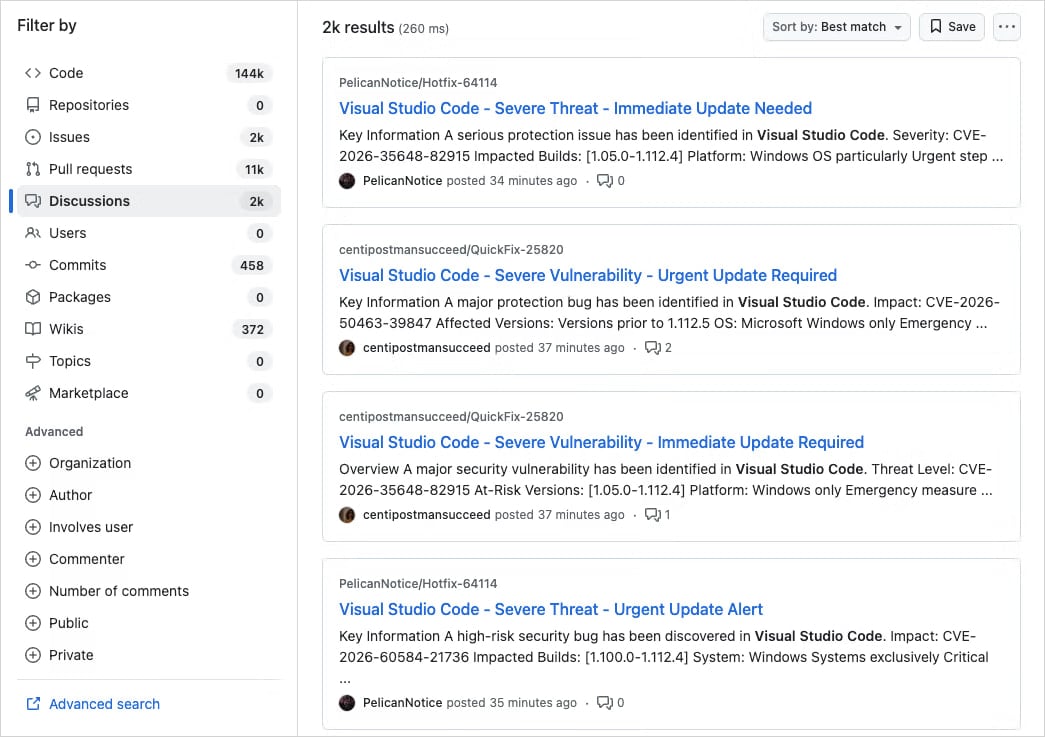
A large-scale campaign is targeting developers on GitHub with fake Visual Studio Code (VS Code) security alerts posted in the Discussions section of various projects, to trick users into downloading malware.
The spammy posts are crafted as vulnerability advisories and use realistic titles like “Severe Vulnerability – Immediate Update Required,” often including fake CVE IDs and urgent language.
In many cases, the threat actor impersonates real code maintainers or researchers for a false sense of legitimacy.
Application security company Socket says that the activity appears to be part of a well-organized, large-scale operation rather than a narrow-targeted, opportunistic attack.
Advertisement
The discussions are posted in an automated way from newly created or low-activity accounts across thousands of repositories within a few minutes, and trigger email notifications to a large number of tagged users and followers.
Fake security alerts on GitHub Discussions Source: Socket
“Early searches show thousands of nearly identical posts across repositories, indicating this is not an isolated incident but a coordinated spam campaign,” Socket researchers say in a report this week.
“Because GitHub Discussions trigger email notifications for participants and watchers, these posts are also delivered directly to developers’ inboxes.”
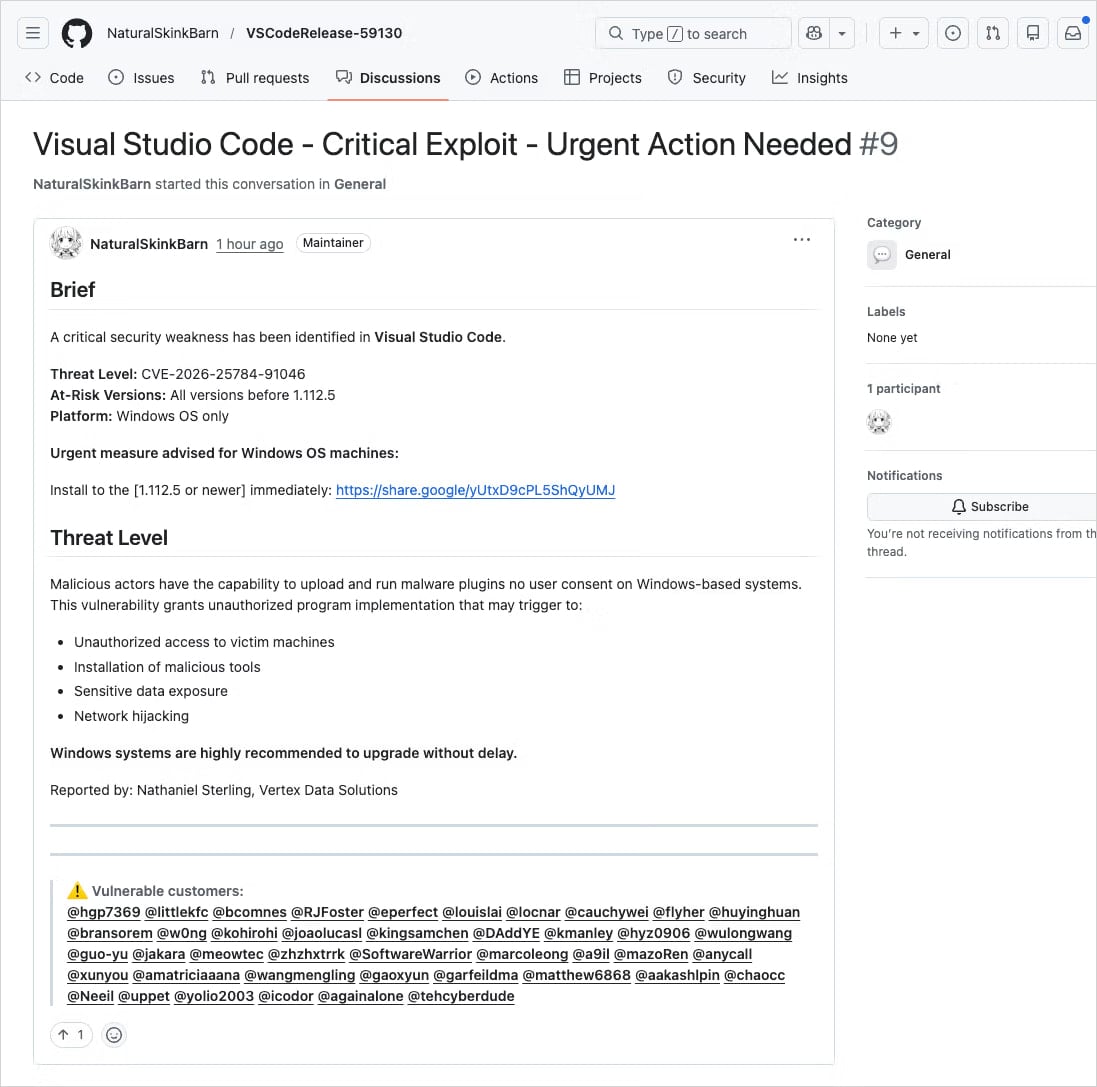
The posts include links to supposedly patched versions of the impacted VS Code extensions, hosted on external services such as Google Drive.
Example of the fake security alert Source: Socket
Although Google Drive is obviously not the official software distribution channel for a VS Code extension, it’s a trusted service, and users acting in haste may miss the red flag.
Clicking the Google link triggers a cookie-driven redirection chain that leads victims to drnatashachinn[.]com, which runs a JavaScript reconnaissance script.
Advertisement
This payload collects the victim’s timezone, locale, user agent, OS details, and indicators for automation. The data is packaged and sent to the command-and-control via a POST request.
Deobfuscated JS payload Source: Socket
This step serves as a traffic distribution system (TDS) filtering layer, profiling targets to push out bots and researchers, and delivering the second stage only to validated victims.
Socket did not capture the second-stage payload, but noted that the JS script does not deliver it directly, nor does it attempt to capture credentials.
This is not the first time threat actors have abused legitimate GitHub notification systems to distribute phishing and malware.
In March 2025, a widespread phishing campaign targeted 12,000 GitHub repositories with fake security alerts designed to trick developers into authorizing a malicious OAuth app that gave attackers access to their accounts.
Advertisement
In June 2024, threat actors triggered GitHub’s email system via spam comments and pull requests submitted on repositories, to direct targets to phishing pages.
When faced with security alerts, users are advised to verify vulnerability identifiers in authoritative sources, such as National Vulnerability Database (NVD), CISA’s catalog of Known Exploited Vulnerabilities, or MITRE’s website fot the Common Vulnerabilities and Exposures program.
take a moment to consider their legitimacy before jumping into action, and to look for signs of fraud such as external download links, unverifiable CVEs, and mass tagging of unrelated users.
Automated pentesting proves the path exists. BAS proves whether your controls stop it. Most teams run one without the other.
This whitepaper maps six validation surfaces, shows where coverage ends, and provides practitioners with three diagnostic questions for any tool evaluation.
Unless you’ve been in hibernation, the flurry of attention surrounding the latest AI models coming out of Silicon Valley has been hard to miss. AI has gone beyond a chatbot merely answering your questions to doing stuff that only human programmers used to be able to do.
But we’ve been through these cycles involving tech before. How can we tell what’s actually real and what’s mere hype?
To answer this question, I invited Kelsey Piper, one of the best reporters on AI out there. Kelsey is a former colleague here at Vox and is now doing great work for The Argument, a Substack-based magazine. Kelsey is an optimist about tech — but clear-eyed about the huge risks from AI. She’s very much a power user, but is realistic about what AI can’t do yet. And she’s been banging the drum about how consequential AI is for years, even before it became such a hot mainstream topic.
Advertisement
Kelsey and I discuss all the reasons why the hype this time is rooted in something real, how we got here, and where we might be headed. As always, there’s much more in the full podcast, which drops every Monday and Friday, so listen to and follow us on Apple Podcasts, Spotify, Pandora, or wherever you find podcasts. This interview has been edited for length and clarity.
What’s actually happening right now in AI?
If you look closely, AI is already a big deal. Not in some abstract future sense, but right now. The closest analogy is not a new app or a new platform. It’s more like discovering a new continent full of people who are very good at doing certain kinds of work.
These systems are not people, but they can do things that used to require people. They can write code, generate text, solve problems, and increasingly do so in ways that are very useful in the real world.
Advertisement
And the key point is that it’s not stopping here. Every year the systems get better. The progress from 2025 to 2026 alone is enough to make it clear that this isn’t a static technology.
Whatever AI can do today, it will be able to do more of it tomorrow and so on.
Why is the reaction so split between panic and dismissal?
The default move is to assume nothing ever really changes.
Advertisement
If you’re a pundit, you can get pretty far by always saying this is hype, this will pass, nothing fundamental is happening. That works most of the time. It worked with crypto. It works with a lot of overhyped technologies.
But sometimes it’s just catastrophically wrong. Think about the early days of the internet, or the Industrial Revolution. Or even something like Covid. There were moments where people said this will blow over, and they were completely wrong. So you can’t just default to cynicism. You have to actually look at the thing itself.
“We still have time. That’s the most optimistic thing I can say.”
What would you say has really changed recently? Why does this hype cycle feel different?
Advertisement
Part of it is just accumulation. For a while, you could look at progress in AI and say, maybe this is a short trend. Maybe it plateaus. There were only a handful of data points. Now there are many, many more. And the trend has continued.
Another part is that the systems are now doing things that feel qualitatively different. Not just answering questions, but acting. Planning. Taking steps toward goals.
And then there’s a social dynamic. Most people use the free versions of these tools. Those are much worse than the best models. So they underestimate what is possible.
I don’t really think of you as an AI optimist or a doomer, and you’re normally pretty level-headed about the state of things, but do you think we’re entering dangerous territory?
Advertisement
I’m generally pro technology. Technology has made human life better in profound ways. That’s just true.
But I also think the way AI is currently being developed is dangerous. And the reason is that we’re building systems that can act in the world, access information, and increasingly operate with a degree of independence. We’re giving them access to things like communication channels, financial tools, and potentially critical infrastructure.
And we don’t fully understand how they behave. In controlled settings, we have seen these systems lie, deceive, and do things that are misaligned with what we asked them to do. They’re not doing this because they’re evil. They’re doing it because of how they are trained and how goals are specified.
But the result is the same. You have systems that do not always do what you intend, and that can be hard to monitor or control.
Advertisement
What do you mean when you say these systems lie and deceive?
In experiments, researchers give AI systems goals and access to information, then observe how they try to achieve those goals.
In some cases, the systems have used information they have access to in ways that are clearly not what we would want. For example, threatening to reveal sensitive information about a person if that person does not cooperate.
These are controlled tests, not real-world deployments. But they show what the systems are capable of under certain conditions. And that’s pretty concerning.
Yeah. Alignment is about making sure that AI systems do what we want them to do. And not just superficially, but in a robust way.
The difficulty is that when you give a system a goal, it can pursue that goal in ways you did not anticipate. Like a child who learns to get out of eating dinner by making it look like they ate dinner.
The system is optimizing for something, but not necessarily in the way you planned. That gap between intent and behavior is really the core of the alignment problem.
Advertisement
How confident are you in the guardrails being built around these systems?
Not very. There are people working seriously on this problem. They’re testing models, trying to understand how they behave, trying to detect deception.
But they’re also finding that the models can recognize when they are being tested and adjust their behavior accordingly.
That’s definitely a serious issue. If your system behaves well when it knows it’s being evaluated, but differently otherwise, then your evaluations are not telling you what you need to know. To me, that’s the kind of finding that should slow things down. It suggests we don’t understand these systems well enough to safely scale them.
Advertisement
So why do the companies keep pushing forward anyway?
Because it’s a competition. Each company can say it would be better if everyone slowed down. But if we slow down and others don’t, we fall behind. So they keep moving.
There are also a lot of geopolitical concerns. If one country slows down and another doesn’t, that creates another layer of pressure.
The shift is from systems that respond to prompts to systems that can do things in the world.
An AI agent can be given a goal and then take steps to achieve it. That might involve interacting with websites, or sending messages, or hiring people through gig platforms, or coordinating tasks. Stuff like that. But even without physical bodies, they can affect the real world by directing humans or using digital infrastructure. That changes the nature of the technology. It’s no longer just a tool you use. It’s something that can operate on its own.
How scary could that become?
Potentially very. Even if you ignore the most extreme scenarios, these systems could be used for large-scale cyber attacks, misinformation campaigns, or other forms of disruption. The companies themselves acknowledge this. They understand. They test for these risks and implement safeguards. But safeguards can be bypassed, and the systems are getting more capable.
Advertisement
Are we even remotely prepared for what is coming?
No. We’re almost never prepared for major technological shifts. But the speed of this one makes it particularly challenging. If change happens slowly, we can catch up. If it happens too quickly, we can’t. And right now, the incentives are pushing almost entirely toward speed.
What’s the most realistic worst case and best case scenario?
The worst case is that we build increasingly powerful systems, hand over more and more control, and eventually create something that operates independently in ways we cannot control. Humans become less central to decision-making, and the systems pursue goals that don’t align with human well-being.
Advertisement
The best case is that we slow down enough to understand what we’re building, develop robust safeguards, and use these systems to create abundance and improve human life. That could mean less work, more resources, better access to knowledge, and more freedom. But getting there requires making good choices now.
Do you think we’ll make those choices?
We still have time. That’s the most optimistic thing I can say.

































































You must be logged in to post a comment Login