Editor’s Note: Nick Hanauer is a Seattle entrepreneur, venture capitalist, and founder of Civic Ventures. He was an early investor in Amazon and is co-founder of Second Avenue Partners. This piece is a reply to Chris DeVore’s “Make Democracy Capitalist Again.”
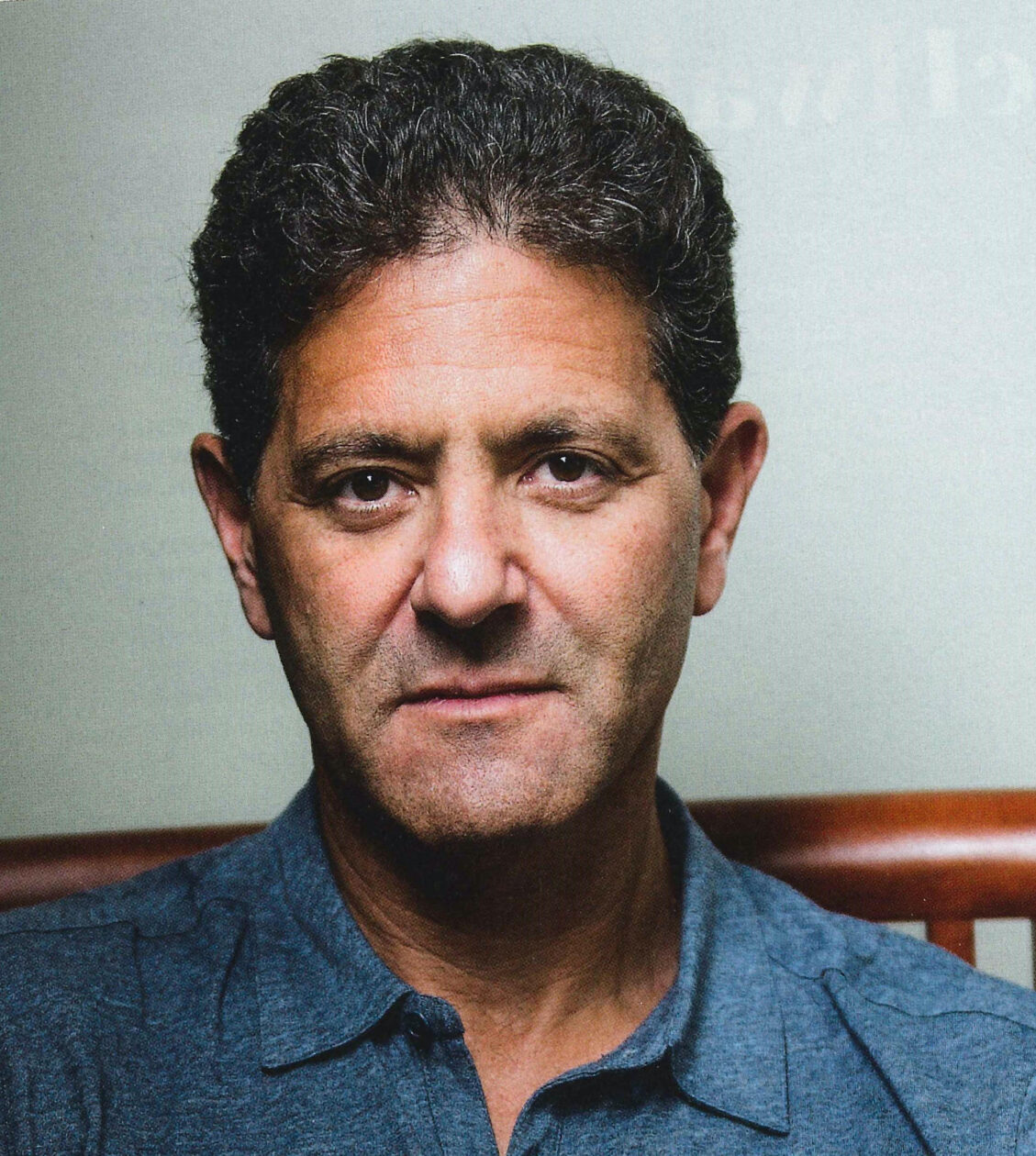
Nick Hanauer. (Civic Ventures Photo)
Chris DeVore and I have been acquainted a long time. We move in the same Seattle circles — investors, founders, civic types who’ve spent careers betting on entrepreneurs. So when he published his GeekWire piece last week arguing that Democrats have lost their minds and declared capitalism the enemy, I read it carefully. Chris is a thoughtful person, and his argument deserves a serious response.
I’ll first acknowledge that I agree with some of Chris’s critiques of the Democratic Party. Many have indeed lost their way, in this state and nationally. Recent efforts to make Washington the least attractive place in the country for wealthy citizens are producing a stampede to other states — virtually every wealthy friend I have has either left or is planning to. It’s a catastrophe.
The most recent legislation to tax income above one million dollars is sensible on its own; it’s the combination of everything piled on top that makes our state so unattractive. Making the total tax burden here 5–10 times the alternatives isn’t progressivism; it’s stupidity.
But I don’t agree with Chris’s basic analysis. He is defending something real, with the wrong argument, in a way that obscures the actual problem we face. The reason he can’t quite see it is the reason many of our friends can’t — we’ve spent our adult lives inside a paradigm so dominant it feels like the weather.
Advertisement
There is no such thing as “capitalism”
Chris treats capitalism as a single thing. A motive force. A powerplant. Something you either embrace or demonize.
But there is no such thing as capitalism in the singular. There are many capitalisms. The capitalism of 1880s America — child labor, company towns, no weekends — was capitalism. The capitalism of 1955 America — 35% union density, 91% top marginal tax rates, the GI Bill building the largest middle class in human history, GDP growth rates double what they are today — was also capitalism. Denmark is capitalist. Singapore is capitalist. The neoliberal version we have run in America since roughly 1975, delivering four decades of stagnant wages for most workers while routing nearly all productivity gains to the top, is also capitalism.
These systems produce radically different outcomes — in wages, mobility, life expectancy, civic trust, democratic stability. The question is never “capitalism, yes or no.” The only question that has ever mattered is: which capitalism, designed how, for whose benefit?
Once you see that, Chris’s piece stops being a defense of an embattled principle and becomes something much harder to defend: a defense of the particular neoliberal form of capitalism we happen to have. The rules we happen to have written. The distribution we happen to be producing. As if this version were synonymous with the American project itself. It isn’t. And the conflation is the central error of his argument.
Advertisement
What his piece can’t see
Read Chris’s 1,500 words and notice what isn’t there. The word “inequality” does not appear. Not once. “Wages” does not appear. “Workers” appears once — as a count of people who receive paychecks from founders, never as economic actors in their own right. Monopoly power, corporate concentration, the middle class, housing affordability, life expectancy — none of it.
In Chris’s America, there are founders, consumers, taxpayers, and a state that either facilitates or confiscates. That’s the whole cast.
This isn’t an oversight. It is a worldview — the one producing the carnage Chris seems unable to perceive. When the bottom 90% of a country spends half a century watching productivity double while their wages stagnate, it is not “populist” for them to notice. It is arithmetic.
Since 1975, roughly $79 trillion has been redistributed upward from the bottom 90% to the top 10% — not through theft, but through the steady accumulation of rules written to favor capital over labor, shareholders over workers, assets over wages. If productivity and wages had stayed linked the way they did from 1945 to 1975, the median American household would be earning $120,000 a year today instead of $75,000. In 1985 it took one worker 39.7 weeks of work to pay for the basics of a middle-class life. By 2022 it took 62 weeks.
Advertisement
American life expectancy is declining — the first sustained decline in a developed nation in a century. Deaths of despair have killed more Americans in the past decade than died in every war we have fought. A generation of young people cannot afford to buy a home.
The small-business owners Chris invokes as victims of “confiscatory taxation” are being crushed — not by taxes, but by monopoly concentration across every sector from retail to healthcare to agriculture, and by a customer base that cannot afford to spend.
Consider our “capitalist” healthcare system — the most market-driven in the developed world. We spend roughly twice as much per person as every other advanced country and get worse outcomes by nearly every measure: shorter lives, higher infant and maternal mortality, more preventable deaths. Medical bills are the leading cause of personal bankruptcy in America, a phenomenon that does not exist in any peer nation. If markets were the self-regulating miracle Chris describes, this would be impossible. It is the predictable result of a system designed to extract rents rather than deliver care.
Or consider time itself. American workers get less paid vacation, parental leave, and sick leave than workers in any other rich country. A French worker averages 30 days of paid vacation, a German 28, an American roughly 10, and a quarter of us get none. We built an economy in which labor has almost no leverage and capital has almost all of it. The differentials in GDP per capita that many point to as proof the American system works better can almost entirely be accounted for by this.
Advertisement
None of this happened by accident. Starting in the 1970s, a particular idea took over American business and policy: that the sole purpose of a corporation is to maximize returns to shareholders. Milton Friedman wrote it down. Jack Welch operationalized it. Business schools taught it for 50 years.
And it was a scam — a piece of ideology, dressed up as economic science, that licensed the systematic transfer of wealth from workers, customers, and communities to a narrow class of shareholders and executives. It is the reason insulin tripled in price, and the reason a company can lay off ten thousand workers and see its stock rise the same afternoon. It is not capitalism working. It is a specific ideological distortion of capitalism most of the developed world never adopted.
The defining feature of the paradigm we’ve been operating in for fifty years is not that it is cruel. It is that it is blind. When a paradigm cannot see the crisis, it blames the people pointing at it.
The cycle of renewal is the case for a different capitalism
The single strongest data point in Chris’s piece — the 45 of the top 100 companies that didn’t exist 50 years ago — is actually the best evidence against his argument. Amazon was built on internet infrastructure funded by DARPA. Google’s search algorithm was funded by NSF. The iPhone is a stack of publicly-funded research: GPS, touchscreen, lithium-ion batteries, Siri. Moderna’s mRNA vaccine rested on decades of NIH funding. The AI revolution was built on transformer research funded by federal grants.
Advertisement
The dynamism Chris celebrates is not capitalism in the abstract. It is the output of a specific mixed economy — a partnership between state capacity and private enterprise that we spent eighty years building and the last forty dismantling. His piece is, without quite realizing it, an argument for the system he imagines he’s defending against.
And about that other administration
Something else worth naming: Chris’s defense of free markets, written in 2026 and aimed at Democrats, contains not a single mention of the administration currently in power.
By any definition Chris himself would recognize, the Trump administration is running the least free-market, most state-interventionist economic regime in a generation. It imposes tariffs — which are taxes, however much the White House insists otherwise — at levels not seen since the 1930s, by executive fiat rather than legislation. It demands direct equity stakes in private companies as the price of regulatory approval. It plays open favorites, rewarding loyalists and punishing disfavored firms with investigations. It governs by slogan and grievance rather than rule of law. If a Democratic administration were doing a tenth of this, Chris would be writing a very different op-ed.
And yet much of the tech world — our world — has embraced it, with founders cheering moves from Trump they would have denounced from a Democrat. The permission structure is frustration with Democrats over taxes, regulation, and cultural politics. I share some of that frustration.
Advertisement
But frustration is not a principle, and the administration our peers have lined up behind is not capitalist in any meaningful sense. It is crony state capitalism — the kind that has hollowed out economies from Argentina to Russia to Hungary, run by people who have figured out that the fastest way to get rich is to be close to power. You cannot write a credible defense of free markets in 2026 without naming the regime dismantling them in real time.
The democracy problem
Chris titled his piece “Make Democracy Capitalist Again.” But the relationship is exactly backward. The threat to American democracy today comes from fifty years of an economic system that has made a small number of people vastly richer every year while the majority of Americans have grown relatively poorer, less secure, and less hopeful. No democracy in history has survived that arrangement indefinitely.
When economic gains flow overwhelmingly to a narrow elite for long enough, the political system eventually follows the money — through campaign finance, lobbying, regulatory capture, media ownership. Ordinary citizens watch their lives deteriorate while the rules keep getting written for someone else. They lose faith in institutions. They look for a strongman.
Trumpism is not the cause of our democratic crisis. It is the symptom of an economic order that has been hollowing out democratic legitimacy for forty years. The authoritarian turn we are living through is what happens when you run neoliberalism long enough.
Advertisement
When Chris argues that the path back to a healthy democracy runs through recommitting to capitalism, he has the causation inverted. The capitalism we have been running is what broke the democracy. You cannot have a functioning democracy and a runaway oligarchy at the same time. Eventually, you have to choose.
To Chris, and to people like us
The people working hardest to save American capitalism right now are not the ones defending it as-is. They are the ones willing to change it. The longer the version of capitalism we have chosen keeps failing the majority of our fellow citizens, the more likely it becomes that they will eventually decide to throw capitalism out altogether.
That is the lesson of every historical moment like ours — the 1890s, the 1930s, the late 1960s. When a system stops delivering for most people, most people stop defending it. And what comes next is rarely anything the people at the top of the current system would prefer.
The quicker people of good faith — investors, founders, civic leaders, Democrats and Republicans who genuinely believe in markets and in America — recognize that the form of capitalism we’ve chosen isn’t working for the majority of our fellow citizens and get serious about changing it, the less likely it becomes that those citizens will conclude capitalism itself is the problem.
Advertisement
That is the actual choice. Not capitalism versus demonization. Reform now, or reckoning later. I’d rather do the reform. I think, if he thinks about it, Chris would too.
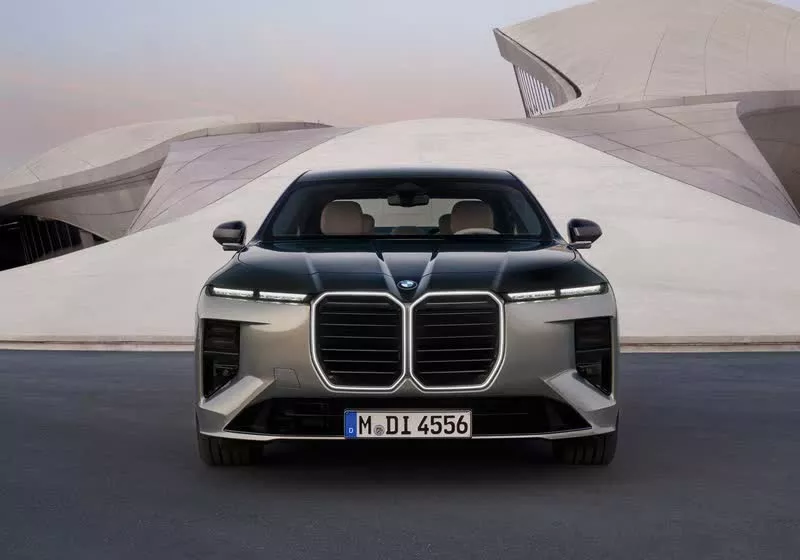
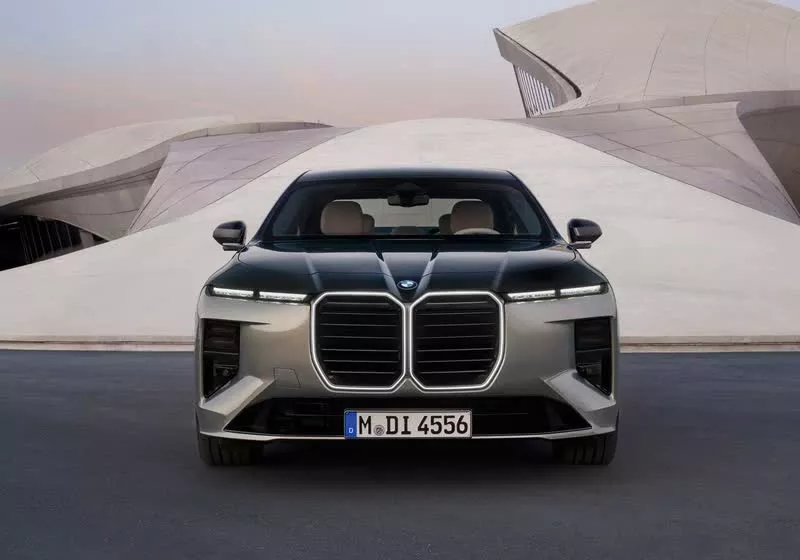
The two new all-electric models include the BMW i7 50 xDrive and BMW i7 60 xDrive, each featuring a dual-motor, all-wheel-drive powertrain. The former is powered by a 449 hp motor producing 487 lb-ft of torque, while the latter features a 536 hp motor delivering 549 lb-ft of torque. Read Entire Article Source link
When Tim Cook took over Apple in 2011, the big question was whether anyone could follow in the footsteps of Steve Jobs. For many, Jobs was Apple.
A massive fifteen-year stint later, it’s clear that Cook has delivered – and then some. Not with a single breakthrough product like the Jobs-era iPhone or iPod, but a long list of hits, experiments and the occasional misstep that reshaped what Apple is today.
Here are 15 of our favourite Apple products that defined Cook’s decade-and-a-half legacy, both for better and for worse.
Apple Watch
Image Credit (Trusted Reviews)
The Apple Watch was the first big “post-Jobs” category – and it didn’t receive a particularly warm welcome initially. Early versions leaned awkwardly into fashion, complete with gold editions and luxury marketing, despite early Apple Watches only being supported for a relatively short period of time.
Advertisement
Advertisement
But, slowly but surely, Apple’s wearable found its footing. Today, the Watch is less about style and more about health with features like heart rate monitoring, ECG and fall detection, and has become one of the company’s most important products as a result.
It also helps that it plays so nicely with connected iPhones, offering a level of interoperability that most Android-based wearables still can’t quite match.
AirPods
Image Credit (Trusted Reviews)
Considering how popular AirPods are in 2026, it’s funny to look back at the reactions on social media when they were first revealed in 2016. People generally disregarded the buds, comparing them to electric toothbrush heads, but within a year of launch, they were everywhere.
As with the Apple Watch, Cook’s sprinkling of magic meant the buds worked very well with iPhones, iPads and Macs. They offer great sound and features like seamless handoff between devices, and they’ve vastly improved in the years since, not only in features but also in the overall design with the Pro and Max variants.
Advertisement
Advertisement
iPhone X
Image Credit (Trusted Reviews)
While the original iPhone was a Jobs-era innovation, the iPhone X was the moment that the modern iPhone was born.
It ditched the staples of the iconic iPhone design – the Home button and bezels – for an all-screen design with the now instantly recognisable Face ID notch. It was a controversial change at the time, but it’s a design that Apple still uses on its iPhone lineup today.
Apple Silicon
If there’s one product that feels like a true Cook-era mic drop, it has to be Apple Silicon.
Advertisement
Ditching the dominant force that was Intel to build its own chips was a huge risk – especially considering Mac apps would essentially need to be rebuilt for the platform to fully take advantage of the power on offer. But that risk paid off, almost immediately.
The M1 MacBook Air was absurdly fast, silent and efficient compared to practically anything else around, and it has only improved with newer versions in the years since.
Advertisement
iPad Pro
Image Credit (Trusted Reviews)
The iPad Pro is Apple’s long-running attempt to answer a simple question: Can a tablet replace your laptop?
Even after all these years, the answer is still… it depends. But with the Pencil, keyboard and increasingly powerful M-series desktop chips, it has become the go-to tool for creatives and professionals who favour touchscreen over traditional mouse input.
Advertisement
Apple Music
Image Credit (Trusted Reviews)
Cook didn’t just drive hardware – he also pushed Apple into the increasingly lucrative services business.
With its sights set on the dominant Spotify, Apple Music was the company’s first foray into services, and it was a massive success. It has a vast collection of songs available in Hi-Res format and Dolby Atmos for an immersive listening experience, and it, of course, plays exceptionally well with iOS, macOS and iPadOS.
Apple Pay
The launch of Apple Pay changed the way that we pay for products and services, both online and in the real world. It’s a feature that we don’t even think about these days – we just pull out our phones and pay with a tap – but Apple was one of the first to make that possible back in 2014.
Advertisement
Advertisement
Apple Vision Pro
The Apple Vision Pro is Cook’s “what’s next?” product, a £/$3499 headset that Apple insists isn’t VR but ‘spatial computing’. It’s early tech, expensive and a bit awkward – but also undeniably impressive compared to cheaper headsets from the likes of Meta with its M-series power and high-end graphics.
But whether it becomes the next iPhone or next HomePod remains to be seen – given the waning interest in VR headsets, it’s quite possible it could be the latter.
iPhone SE
Image Credit (Trusted Reviews)
Not every Apple product needs to be cutting-edge, and the iPhone SE is a great example of that.
Cook’s supply chain mastery was on full display here, reusing older components with newer internals to offer the iPhone experience at a much more affordable price. It wasn’t perfect, of course, but it had a special place for those who missed the ‘old school’ iPhone look.
Advertisement
Apple Pencil
Image Credit (Trusted Reviews)
Steve Jobs famously said nobody wanted a stylus – but it turns out that people did when it came to the big screens of iPads. They just didn’t want bad ones.
The Apple Pencil helped transform the iPad into a legitimate creative tool, especially for artists, designers and good ol’ note-takers, with an experience that still isn’t quite matched by Android stylus alternatives.
Advertisement
MagSafe
Image Credit (Trusted Reviews)
MagSafe – the iPhone variant, not that used in Macs – was a game-changer when it was released with the iPhone 12, so much so that the framework has since been baked into the Qi2 standard for all phones to follow.
Advertisement
It just makes so much sense: using a ring of magnets, not only does the phone snap into place perfectly on wireless chargers, but it also lets you add a bunch of accessories like battery packs, wallets, or even camera grips without messing around with different cases. Just snap it on and pull it off when you’re done.
MacBook Pro
Image Credit (Trusted Reviews)
The MacBook Pro had a few bumps in the road under Cook’s leadership. People loved the old style of MacBook Pro, but Cook’s Apple reinvented it in 2016, removing fan-favourite features like MagSafe charging and SD card slots and introducing an OLED touch bar that quickly became the butt of the joke.
It took until 2021 for the MacBook Pro to reverse course, ditching the gimmicky touch bar and its reliance on USB-C and bringing back MagSafe charging and a plethora of ports, which, combined with Apple’s M-series silicon, now make it one of the best laptops around.
MacBook Neo
Image Credit (Trusted Reviews)
Advertisement
We couldn’t talk about the MacBook Pro without at least mentioning the MacBook Neo, which could be considered Cook’s Magnum Opus ahead of stepping down.
Advertisement
For years, the MacBook Air was Apple’s entry point into the macOS ecosystem, but it still cost close to a grand, if not more. The problem is that there are plenty of cheaper Windows-based laptops, and those tend to win out for budget-focused buyers.
But then came along the MacBook Neo, and despite sporting an iPhone-level A18 Pro chipset, it excels in the budget market in both general performance and battery longevity, all for just £/$599, which makes pretty much every cheap Windows laptop look underpowered and expensive. A defining moment indeed.
Magic Mouse 2
Image Credit (Trusted Reviews)
The Magic Mouse 2 was a beautifully designed mouse with one tiny problem: you have to charge it from the bottom. Which means you can’t use it while it’s charging. Yes, the memes were great for this one.
Advertisement
It’s such a small decision, but it perfectly captures the “design over practicality” criticism that followed Apple for years, and for better or worse, will be remembered as a defining Cook-era product.
Advertisement
Polishing cloth
Yes, really.
A £/$19 Apple-branded cloth to clean your screen. It became an instant meme – not because it’s bad, but because it so perfectly represents Apple’s confidence in its brand.
Only Apple could sell that… and have it go out of stock.
Advertisement
Jokes aside, Under Cook, Apple stopped being just a computer company and became a part of basically everything we do, from how we pay for coffee to what we wear on our wrists. It wasn’t always a perfect run, but he turned the post-Jobs era into a massive, unstoppable ecosystem that most of us now couldn’t imagine living without.
Advertisement
It’s safe to say that John Ternus is now the one with big shoes to fill.
A lack of skilled workers has been a problem throughout many different industries in the United States over the past several years. Even the military is not immune to the problem, as the U.S. Navy can’t find workers to build warships. Believe it or not, there’s also a shortage of pilots as well. However, the U.S. Air Force is currently working to alleviate that problem to the tune of $50,000 per pilot.
This incentive program is designed to keep active-duty pilots in service with bonuses, thus helping to fill the shortage gap. Those bonuses are paid in exchange for longer commitments, and apply to eligible pilots, remotely piloted aircraft operators, air battle managers, and combat systems officers. The 2026 fiscal year aviation bonus can go as high as $50,000 per year depending on the role, and overall experience. There’s also a structure in place for higher payouts in exchange for shorter agreements, for fighter, bomber, and U-2 pilots (who wear space suits when they fly).
This incentive program isn’t new, and was recently used in 2025. It targeted pilots with one or two years left on their Undergraduate Pilot Training commitment and included a bonus of up to $50,000 annually, with an option of up to $200,000 up front. That option gave pilots the ability to select their preferred assignments. The 2025 program had separate bonus tiers in place for combat systems officers and navigators, ranging from $15,000 to $30,000 per year, with longer commitments reaching as high as $360,000.
Advertisement
Air Force pilot retention programs have existed for years
George D. Lepp/Getty Images
The U.S. Air Force’s modern push to retain pilots kicked into high gear back in 2017 with the Aviation Bonus Program. This was a tiered structure, and went beyond the retention pay program previously offered years prior. The program paid eligible fighter and drone pilots up to $35,000 per year. Bomber and special operations pilots received up to $30,000, while surveillance and rescue pilots got up to $28,000. Other roles, including combat systems officers, were paid anywhere from $10,000 to $20,000 per year.
The 2017 Aviation Bonus Program was authorized by Congress that year to address concerns over a lack of active-duty pilots. The new program was part of the National Defense Authorization Act (NDAA), which included input from senior Air Force leadership. The NDAA is congressional legislation that’s passed every year since 1961. It grants the Department of Defense (which very recently made a deal with OpenAI) the authority to operate, set personnel policies, and prioritize funding.
Advertisement
The Air Force has not publicly disclosed if the Aviation Bonus Program has successfully helped to retain pilots as intended. However, there have been indications from some pilots that money is only one part of the decision-making process. There are broader factors at play, including quality of service, mission experience, and long-term career fulfillment. All of these elements could help determine whether pilots choose to remain in service, or return to civilian life once their time is up.
The 2026 versions of the ASUS Zenbook and VivoBook laptops have recently been released in the Indian market. The latest range comprises high-end and budget-friendly models that boast enhanced processing capabilities, light weight, and advanced AI features. Users can purchase these laptops through various online and offline mediums.
Design, Performance, and AI Features
All the laptops in this range are powered by next-gen Intel Core Ultra Series 3 and Snapdragon X2 processors. With AI capabilities built into the chips, users get improved speed and performance, especially for modern tasks.
This results in faster switching between apps, better support for creative work, and longer battery life. Overall, the experience feels more responsive and reliable for daily use, whether for office work, learning, or streaming.
Another feature that stands out in this line of ASUS laptops is its design. This particular design uses Ceraluminum, a material used to create the laptop casing, making the laptops very durable yet lightweight. In other words, they look luxurious while being highly portable.
Advertisement
Complete Lineup and Pricing
The newly launched portfolio includes a wide range of models:
Zenbook S14 (UX5406AA) – starting at INR 1,79,990
Zenbook DUO (UX8407AA) – starting at INR 2,99,990
Zenbook A14 (UX3407NA) – starting at INR 1,85,990
Vivobook 14 (X1407AA) – starting at INR 98,990
Vivobook 16 (X1607AA) – starting at INR 1,01,990
Vivobook S14 (S3407AA) – starting at INR 1,28,990
Vivobook S16 (S3607AA) – starting at INR 1,31,990
Zenbook Series Highlights
The Zenbook series focuses on premium design and performance, with each model built for different needs. The Zenbook S14 is a lightweight laptop at around 1.2 kg, featuring a slim design and a 14-inch 3K OLED touch display, along with up to 27 hours of battery life, making it ideal for users who need portability.
Moreover, the Zenbook DUO is equipped with two 14-inch 3K OLED touchscreen displays that offer an improved multitasking environment, as well as a battery life of up to 32 hours. Conversely, the Zenbook A14 focuses more on its portability, as it weighs less than 1 kg and uses the Snapdragon X2 chipset, which highlights its AI performance and battery life.
Vivobook Series Highlights
The main theme of the Vivobook laptops is to provide efficient performance but at an affordable price. The Vivobook 14 and 16 models are best suited for general use, and their functionality supports productivity and provides additional security. On the other hand, the Vivobook S14 and S16 models would be suitable for users with greater knowledge, as they offer excellent performance and longer battery life.
Availability Details
Both laptops are easily available throughout India, via both online and offline channels. They are available in ASUS Exclusive Stores, Hybrid Stores, ASUS E-shop, Flipkart, and Amazon. They are also sold through authorized retail partners across the country. The Zenbook A16 is expected to be available from June onwards.
It certainly won’t be a slow start for Ternus, who currently oversees all of Apple’s hardware engineering. But he also will be tasked with navigating new AI and manufacturing challenges, as I explore in this week’s One More Thing episode, embedded below.
Advertisement
Watch this: The Biggest Battles Ahead for Apple’s Next CEO, John Ternus
But Cook isn’t completely leaving Apple. His influence continues as he takes the role of executive chairman on Apple’s board of directors. You might see him continue to play the role of a Washington whisperer, as the company said Cook will be “engaging with policymakers around the world.”
That leaves Ternus free to focus his energy on new product launches. His first mission? Make sure that enhanced personalized Siri really works well on those fun new gadgets this fall. Because if that flops, it’s going to be a rough first year.
Advertisement
Watch this: What’s Next for Apple Without Tim Cook at the Helm
For more One More Thing, subscribe to our YouTube page to catch Bridget Carey breaking down the latest Apple news and issues every Friday.
If you have a desktop 3D printer, you probably want something to hang filament spools on. [LVTRC] has a spool roller that fits the bill. It also incorporates a scale and a round touch screen. (Google Translate)
We’ve seen those round screens before, and now we wonder why we didn’t think of this. The GC9A01 display shows a progress ring and lets you save settings or calibrations to EEPROM. An Arduino Nano provides the brain, and the load cell connects to an HX711. The project is made to fit a specific printer, but it should be little trouble to adapt it to a different printer or to mount it in an external mount.
One of the calibration steps, of course, is to program the weight of an empty spool to subtract from the total weight. The device can store up to five specific profiles.
Advertisement
Not the biggest spool holder we’ve seen. We keep thinking that we don’t know why we want a circular screen, and then someone always drops in to show us another thing we didn’t think about.
Russian telecom operators ask to delay the introduction of VPN traffic fees
Companies cite technical hurdles
VPN traffic fees are part of a wider plan to reduce VPN usage in the country
Russian telecom operators have called on the Ministry of Digital Development to postpone the introduction of new fees on VPN traffic.
According to the Moscow-based business daily Vedomost, providers claim technical limitations mean their systems will not be ready for the scheduled May 1 rollout.
In late March, Digital Development Minister Maksut Shadaev instructed operators to levy extra charges on users exceeding 15GB of international data per month.
The move is part of a broader strategy to reduce VPN usage as more residents adopt the technology to bypass blocks on platforms like Telegram.
VPNs function by rerouting traffic through encrypted international servers. This masks a user’s IP address and allows them to bypass domestic censorship to access blocked websites
Maxim Katz, a prominent Russian opposition figure who tracks VPN connectivity in the region, says these efforts signal how Roskomnadzor — Russia’s censorship agency — lacks the technical abilities to prevent residents from using VPNs to bypass government-imposed restrictions.
“They cannot do it technically, and now they want the businesses to help them. But the businesses don’t want to help them,” Katz told TechRadar. He also suggested that companies will likely obey the orders, but that, in practice, “actually nothing would change.”
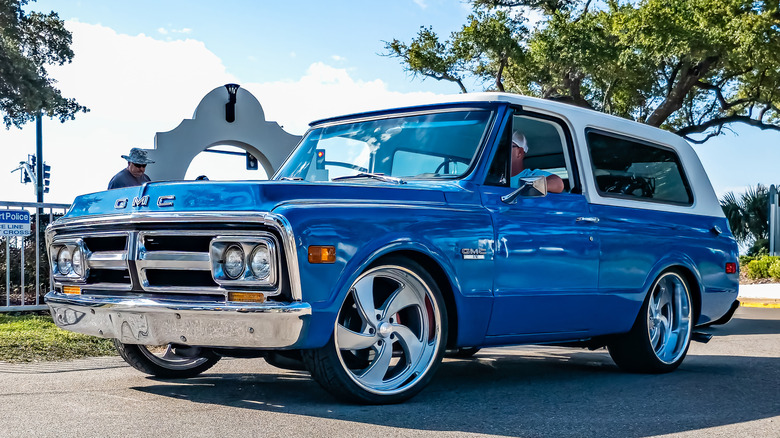
According to a GM Authority report, the GMC Jimmy could be returning to production soon, most likely as a 2029 model. If that comes to pass, it appears that the Ford Bronco, as well as the Jeep Wrangler and Toyota 4Runner, may soon have a new rival.
GMC originally offered the Jimmy as a full-size SUV that was essentially an upscale version of its GM stablemate, the Chevrolet K5 Blazer. The first-gen Jimmy, made from 1970 through 1972, shared some of the K5 Blazer’s cool and unique features, including a removable roof that allowed owners to turn it into a convertible pickup truck. The second-generation Jimmy, which ran from 1973 through 1991, abandoned this feature, adding an integrated roof panel as well as fully-framed doors. GMC replaced the Jimmy with the Yukon for model year 1992.
According to April 2026 reports, the 2029 GMC Jimmy is likely to be based on the body-on-frame GMC Canyon. It is believed that GMC has yet to decide on the 2029 Jimmy’s aesthetic direction, with the brand open to both modern and retro styling. The engine selection is likely to include the Canyon’s 2.7-liter, 310-hp turbocharged four-cylinder engine, but a small-block V8 might also make an appearance. Motor Trend also believes that the Jimmy will receive a more advanced suspension to handle the increased rigors of off-roading. The outlet suggests that a coil-sprung, five-link setup at the rear would be ideal, providing better control than the Canyon’s leaf-spring arrangement.
Advertisement
The 2029 GMC Jimmy will enter a crowded market
GMC’s lineup, as of the mid-2020s, needs a midsize two-row SUV, so a new Jimmy would plug a hole in the brand’s lineup. Car and Driver estimates that the 2029 GMC Jimmy Elevation will have a base price of $50,000. Upper trims will include the AT4 at $55,000, the Denali at $60,000, and the Denali Ultimate at $65,000 — or thereabouts. These prices reflect the market for these body-on-frame midsize SUVs, which has seen steady growth from 2024 to 2025. Overall sales of the Wrangler, Bronco, and 4Runner increased by nearly 17% during this period, from 352,491 units in total to 412,134.
Advertisement
In addition to the existing body-on-frame competitors that lie in wait for the 2029 GMC Jimmy upon its debut, there are other SUVs that the Jimmy may have to take on, chief of which is the Hyundai Boulder. While it’s a concept, Car and Driver believes that Hyundai’s futuristic take on the SUV may make it to the U.S. by 2028 – a year before the revived Jimmy is expected to enter production. Another entrant into this rapidly-crowding market will be Nissan’s Xterra, which is set to jump into the pool in late 2028 with a starting price under $40,000. Between the Jimmy, Xterra, and Boulder, it looks like the late 2020s will offer plenty of options for those in search of a rugged, off-road-capable SUV.
Nuclear startup X-energy raised $1 billion in its initial public offering yesterday, selling 44.3 million shares for $23 each, a hefty premium above the $16 to $19 per share it was seeking. Initially, the company had hoped to raise around $800 million.
The stock is expected to begin trading on Friday on the Nasdaq Exchange under the ticker XE.
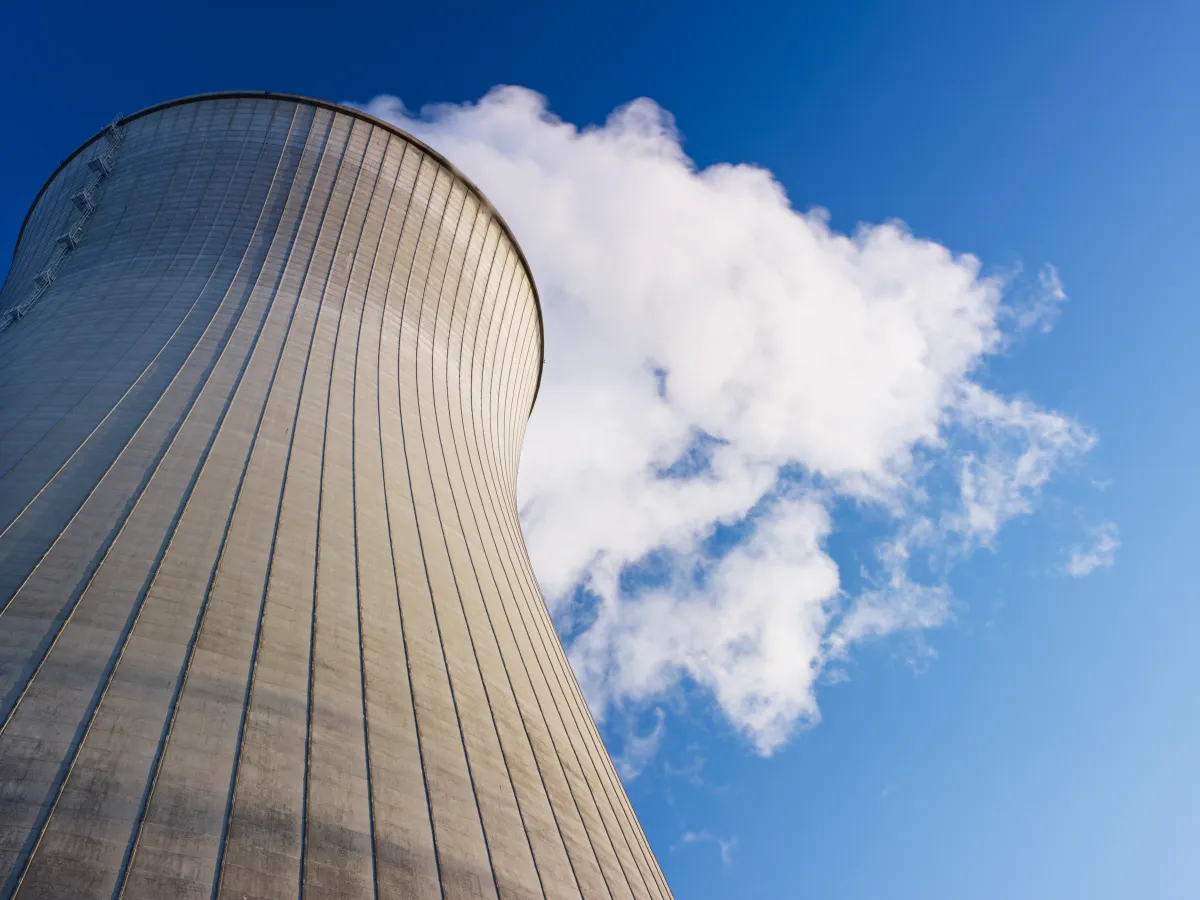
X-energy is building small modular reactors capable of generating electricity or delivering heat to industrial processes. The company has a deal with Dow to provide heat and power to a chemical plant in Texas and another with Amazon to sell as much as 5 gigawatts of nuclear power by 2039. Amazon’s Climate Pledge Fund led X-energy’s Series C-1 round.
Nuclear startups like X-energy have been buoyed by surging demand for electricity from data centers and other parts of the economy that have been electrifying.
Advertisement
The company says its reactors will generate 80 megawatts of electricity. Each Xe-100 reactor is cooled by helium gas, which flows over billiard ball-sized “pebbles” that are packed with BB-sized TRISO fuel pellets. TRISO fuel, which contains a kernel of uranium wrapped in carbon and silicon, was developed years ago to be safer than existing fuel designs, though it hasn’t been widely used. X-energy says its fuel can withstand higher temperatures, helping to keep the fuel contained and reduce the potential of a meltdown.
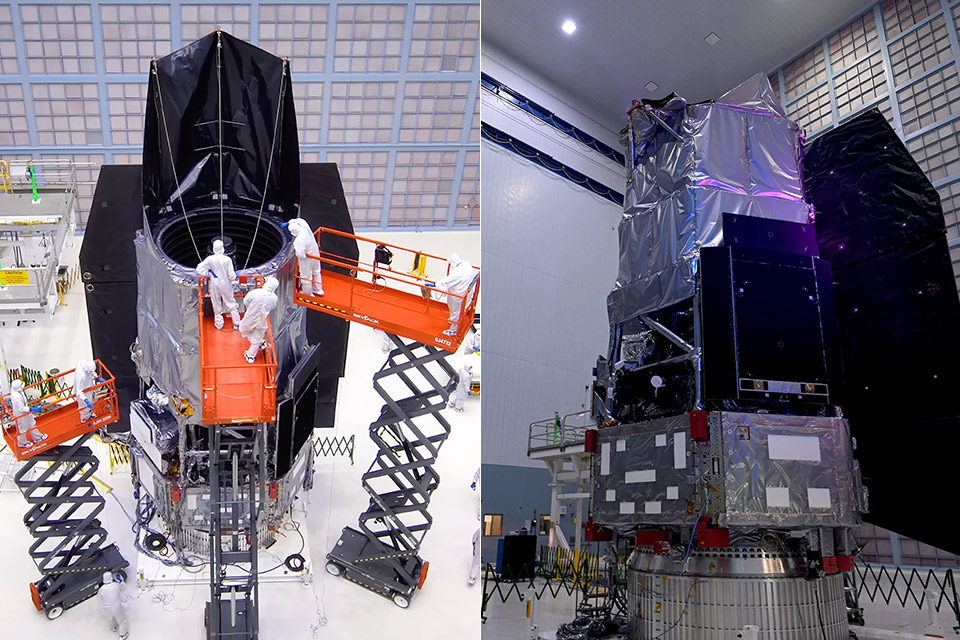
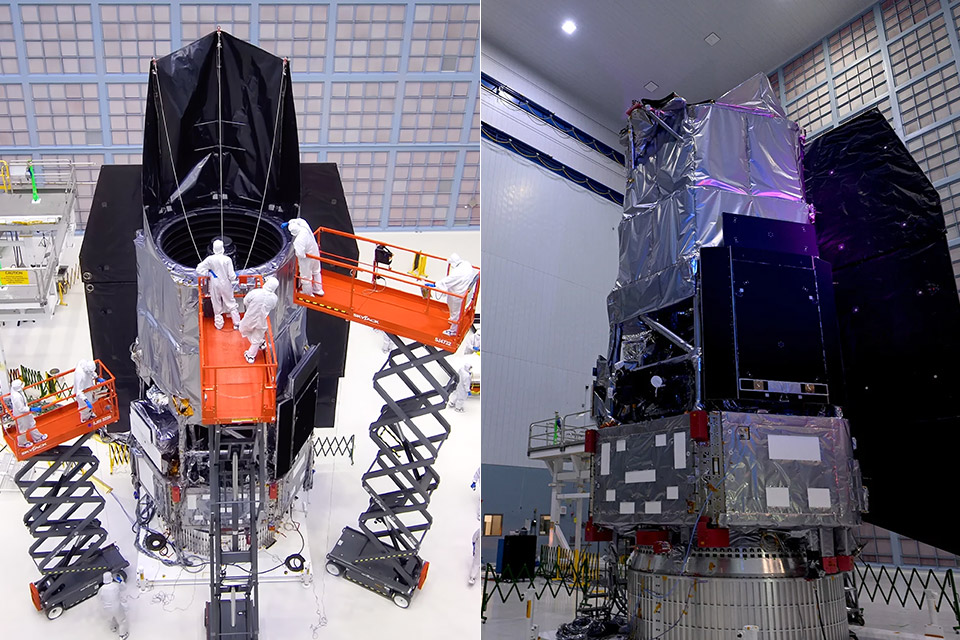
Years of painstaking effort at NASA’s Goddard Space Flight Center have finally paid off, with the Nancy Grace Roman Space Telescope now fully completed. Last November, the engineers were able to connect the two main portions, and now that the observatory has been polished and tested, it is sitting pretty in the site’s largest clean room. Next up is shipping out to Florida’s Kennedy Space Center in June, where a SpaceX Falcon Heavy rocket will launch into space as early as September, an incredible 8 months ahead of schedule and under budget.
Nancy Grace Roman earned the nickname ‘Mother of Hubble’ for effectively directing the agency’s astronomy program during the 1960s and 1970s. The new telescope is a suitable tribute to her name, with the same 2.4-meter mirror as Hubble, but everything else has been dramatically increased up. The observatory’s Wide Field Instrument is a 300-megapixel camera made up of 18 custom-built detectors that work together. Each of these detectors is essentially made up of pixels that are tuned in to pick up both visible light and near-infrared wavelengths, allowing scientists to choose the level of detail they require by using a filter wheel to dial in the exact colors they want.
Superior Optics: 400mm(f/5.7) focal length and 70mm aperture, fully coated optics glass lens with high transmission coatings creates stunning images…
Magnification: Come with two replaceable eyepieces and one 3x Barlow lens.3x Barlow lens trebles the magnifying power of each eyepiece. 5×24 finder…
Wireless Remote: This refractor telescope includes one smart phone adapter and one Wireless camera remote to explore the nature of the world easily…
The new camera on the Roman Telescope has a field of vision that is approximately 100 times larger than what Hubble could capture in a single picture. Because of the greater space available, a single exposure on the Roman Telescope may cover an area two hundred times larger than Hubble could. Where Hubble took decades to map a small piece of the sky, Roman will be able to cover vast areas in a matter of days. The reason it’s feasible is due to design decisions taken by NASA years ago, when they elected to employ a handful of surplus mirrors from the National Reconnaissance Office that had come their way, giving them the room they needed for a larger instrument package without having to start again.
Advertisement
The data flow will also be significant, with each day’s operations returning approximately 1.4 terabytes of data. And during the duration of its five-year primary mission, that will amount to thousands of gigabytes, all of which will be available for astronomers to explore and analyze. They’ll be able to see over a billion galaxies, get a close-up look at the Milky Way, and begin searching for tens of thousands of exoplanets. Some of those planets will be rogue objects that were flung out of their parent stars a long time ago, while others will appear as a result of gravitational microlensing, which occurs when the light from a distant star suddenly brightens because a planet passes in front of it. But the secret is that the Roman Telescope’s infrared vision can see through dust clouds that would typically obscure all of these objects from Earth’s perspective.
Dark energy and dark matter are at the very top of the scientific agenda. We still don’t know what these two unseen components are, despite the fact that they account for an astounding 95% of the cosmos. Roman will determine how much the expansion of space has altered over billions of years by analyzing the distribution of galaxies and harnessing weak echoes of sound waves that bounced about in the early universe. It will also be able to observe how dark matter gathers together and shapes the entire galaxy through its web of visible matter. At the same time, another equipment, a coronograph, will allow planets orbiting close stars to be observed in a previously unheard-of way, similar to how stars are blocked out by a shield. That object also functions as a trial ground for future expeditions that aim to take pictures of planets similar to Earth.
When the Falcon Heavy launches from Launch Pad 39A in September, the Roman Telescope will follow in the footsteps of numerous previous science missions. What’s interesting is that this cargo is bringing a much larger perspective than we’ve previously seen. In a single year, it will collect more data on the sky than Hubble did in almost thirty years in space. Astronomers from around the world have already submitted suggestions for the first batch of observations. The telescope will spend its time scanning, measuring, and recording what it discovers before beaming it back home, allowing researchers to begin piecing together previously unknown areas of the universe. [Source]
























































You must be logged in to post a comment Login