Earlier this month, Donald Trump posted on Truth Social that “Palantir Technologies (PLTR) has proven to have great war fighting capabilities and equipment. Just ask our enemies!!!” — notably including the stock ticker, because why not just make the market manipulation explicit.
The stock popped after that and has continued to rise in the past couple weeks, though it’s still down on the year.
Welcome to patronage capitalism with a stock ticker attached.
Last year, we wrote about the disturbing trend of tech founders and VCs nodding along to the neoreactionary pitch that democracy is holding back innovation, and that what the industry really needs is a “tech-friendly” strongman to sweep away institutional guardrails. We argued this was both morally bankrupt and strategically suicidal, since real innovation requires exactly the kind of stable, open, competitive institutions that authoritarianism systematically destroys.
Palantir has apparently decided to volunteer as the case study. Palantir — the very company whose entire sales pitch is built around using technology to make better strategic decisions and predict how things will play out.
Advertisement
But now the company seems to be betting that Trumpist-flavored authoritarianism is a permanent feature of the American political landscape — and that going all-in on it will never, ever have any long-term consequences.
Over the weekend, the company’s official account posted what it called a “brief” 22-point summary of CEO Alex Karp’s bookThe Technological Republic, framed as an introduction to the “philosophy” behind Palantir’s work. Most of it is a reheated version of the familiar Thiel-adjacent playbook — Silicon Valley owes a debt to the country, we must build AI weapons before our adversaries do, the iPhone has made us soft — the kind of thing that gets nodded along to at certain conferences and immediately forgotten.
But a few points deserve to be called out. First, there is the quite telling series of bullet points effectively saying that famous people shouldn’t be subject to public criticism because it means they might not want to help save you piddling simpletons.
We should show far more grace towards those who have subjected themselves to public life. The eradication of any space for forgiveness—a jettisoning of any tolerance for the complexities and contradictions of the human psyche—may leave us with a cast of characters at the helm we will grow to regret.
[….]
Advertisement
The ruthless exposure of the private lives of public figures drives far too much talent away from government service. The public arena—and the shallow and petty assaults against those who dare to do something other than enrich themselves—has become so unforgiving that the republic is left with a significant roster of ineffectual, empty vessels whose ambition one would forgive if there were any genuine belief structure lurking within.
This is the same Harpers Letter-style nonsense where people who deem themselves to be great thinkers or great men of history find it horrifying that the public might call them on their bullshit. I mean, sure, we should show more grace in general to lots of people, but these fragile-minded billionaires keep acting like because some wacko on social media calls them on their bullshit pronouncements it’s the end of the world.
But it gets way worse from there. Buried near the end are points 21 and 22, which are insane, and should make anyone who continues to work with or for Palantir radioactive:
Some cultures have produced vital advances; others remain dysfunctional and regressive. All cultures are now equal. Criticism and value judgments are forbidden. Yet this new dogma glosses over the fact that certain cultures and indeed subcultures . . . have produced wonders. Others have proven middling, and worse, regressive and harmful.
We must resist the shallow temptation of a vacant and hollow pluralism. We, in America and more broadly the West, have for the past half century resisted defining national cultures in the name of inclusivity. But inclusion into what?
Advertisement
Strip away the corporate-academic language and you’re left with a very old, very problematic argument: certain cultures — and we all know which ones they are claiming are supposedly the “middling” and “regressive” ones — are inferior, and the pursuit of inclusivity has been a civilizational error. That framing — some cultures produce wonders, others are regressive and harmful, pluralism is a civilizational threat — has been used to justify exclusion, hierarchy, and far worse for over a century. And while internet fascists like to think of it as edge lord contrarianism today, to most people it just comes across as a shiny coat of paint on historical bigotries and ignorance.
It’s also worth being clear about who’s doing the arguing. Palantir sells operational software to defence, intelligence, immigration & police agencies. These 22 points aren’t philosophy floating in space, they’re the public ideology of a company whose revenue depends on the politics it’s advocating.
This is the publicly endorsed worldview of a company that is rapidly becoming load-bearing infrastructure for the federal government’s surveillance and enforcement apparatus, and it contains arguments that would be at home in a white nationalist pamphlet.
Advertisement
Palantir has always been a bit creepy and cultlike in their worship of government power. Years back I debated one of its founders regarding Google employees convincing the company to drop out of a government AI surveillance effort, Project Maven. He insisted that those employees were naive and Google was weak for backing down. Of course, Google’s decision to leave Project Maven turned out to be a huge win for Palantir, who effectively took it over in Google’s place.
But back then, Palantir at least played the game of pretending to care about cultural diversity and pluralism. As Chris Person pointed out, until fairly recently, Palantir had employee resource groups called Palamigos, PalaNoir, PalanQueer, PalanGender Queer, the Palantir Interfaith Network, PalAPI, and PalNoir. The company celebrated exactly the kind of pluralism and multicultural identity that Karp’s manifesto now denounces as “shallow” and “vacant.”
And yes, they even pretended they had a pro-DEI stance:
At least now we see what happens when they feel they can go full mask off.
Advertisement
With Trump in power, Karp apparently feels free to discard the diversity framing the company used for years to recruit employees and just say the quiet part out loud.
The push has put a key Palantir product called Foundry into at least four federal agencies, including D.H.S. and the Health and Human Services Department. Widely adopting Foundry, which organizes and analyzes data, paves the way for Mr. Trump to easily merge information from different agencies, the government officials said.
Creating detailed portraits of Americans based on government data is not just a pipe dream. The Trump administration has already sought access to hundreds of data points on citizens and others through government databases, including their bank account numbers, the amount of their student debt, their medical claims and any disability status.
Palantir has made itself ideologically and technically indispensable to one specific administration’s political project — which happens to include mass deportation, data consolidation on citizens, and the kinds of enforcement actions that require exactly the ideological framework Karp just publicly endorsed.
Supporters of Palantir will likely argue that it sounds like this “embrace fascism” strategy is working great. The company is signing these rich contracts and getting its technology deep within the infrastructure of the federal government. And, yes, you could say that these are short term wins (even if the stock price is kinda lagging).
But these things cut both ways. When your value to the government is primarily ideological alignment with a specific political project, you become a clear and visible target the moment that project loses power.
One of the many problems with fascism as a business strategy is that it only works if the fascists stay in power indefinitely. It’s a woefully unpopular ideological position, especially in the US — betting on a temporarily ascendant horse that has no chance in a longer race.
But Karp and Palantir have bet the farm that either Trumpism will remain a powerful force within the government or that they will be so deeply buried in the systems that it would be effectively impossible to rip them out when more grounded leadership enters the picture.
Advertisement
That’s an incredibly risky bet, and one I doubt will pay off.
Karp has made sure that he and his company have become ideologically toxic to a non-fascist government. A future non-Trumpist administration will have tremendous reputational incentive to very visibly rip out Palantir, as a signal that the prior regime’s infrastructure is being dismantled.
This is exactly the trap we warned about last year when we wrote about Silicon Valley’s embrace of fascism for short-term gain. Contractual dependency you can unwind. But you’ve told everyone in public what you are, and you can’t walk that back when the winds shift.
And the winds do shift. Companies that tied themselves to nationalist or authoritarian regimes throughout the 20th century tend not to have great long-term track records as independent entities. Some survive — though often in name only, most heavily restructured, with decades of reputational rehabilitation to follow. When you make yourself a load-bearing pillar of a specific regime’s specific project, your fate becomes tied to that regime’s fate.
Advertisement
Then there’s the talent question. The piece we wrote last year noted that authoritarianism drives brain drain — that foreign students, researchers, and the global talent pool that has always fed American innovation are already heading elsewhere. Palantir just published a document telling the world, in effect, that a diverse workforce is “shallow” and “vacant” and that some cultures are “regressive.” The engineers who have options — and the best ones always do — just got a very clear signal about whether they should take Palantir’s recruiter call.
There’s a version of Palantir’s business that doesn’t require publishing a white-nationalism-adjacent manifesto. You can sell analytical software to the federal government without announcing that pluralism is a mistake and that some cultures are regressive. Plenty of defense contractors manage it. The business didn’t force the decision to publish those 22 points. It was a choice to double down on ideological signaling, presumably because Karp and company have calculated that visible loyalty gets rewarded in the current environment.
And perhaps it earned some cheers from the remaining trolls on X, for whatever that’s worth.
But it’s a recipe for disaster over the long haul, which seems odd for a company whose entire sales pitch is based around the ability to use its tech to get great insights into how strategic decisions will play out.
Advertisement
This is exactly the warning we gave tech founders last year. The pitch that democracy is messy and slow, that innovation really needs someone who “gets it” cutting red tape, leads directly and predictably here: first you justify the pragmatism of cutting red tape, then you’re chasing the contracts, then drafting the manifestos, until your stock price depends on friendly presidential posts and your long-term viability depends on a political coalition never losing power.
Palantir has decided this is its business model. The rest of the industry should watch very carefully what happens next. Because the thing about tying yourself to a regime isn’t that it never works. It’s that when it stops working, it stops working all at once — and you’ve burned every other option on the way there.
Looking for the most recent Mini Crossword answer? Click here for today’s Mini Crossword hints, as well as our daily answers and hints for The New York Times Wordle, Strands, Connections and Connections: Sports Edition puzzles.
Need some help with today’s Mini Crossword? I thought that 4-Across, 7-Across and 3-Down were pretty fun — little puzzles inside of the puzzle. Read on for all the answers. And if you could use some hints and guidance for daily solving, check out our Mini Crossword tips.
If you’re looking for today’s Wordle, Connections, Connections: Sports Edition and Strands answers, you can visit CNET’s NYT puzzle hints page.
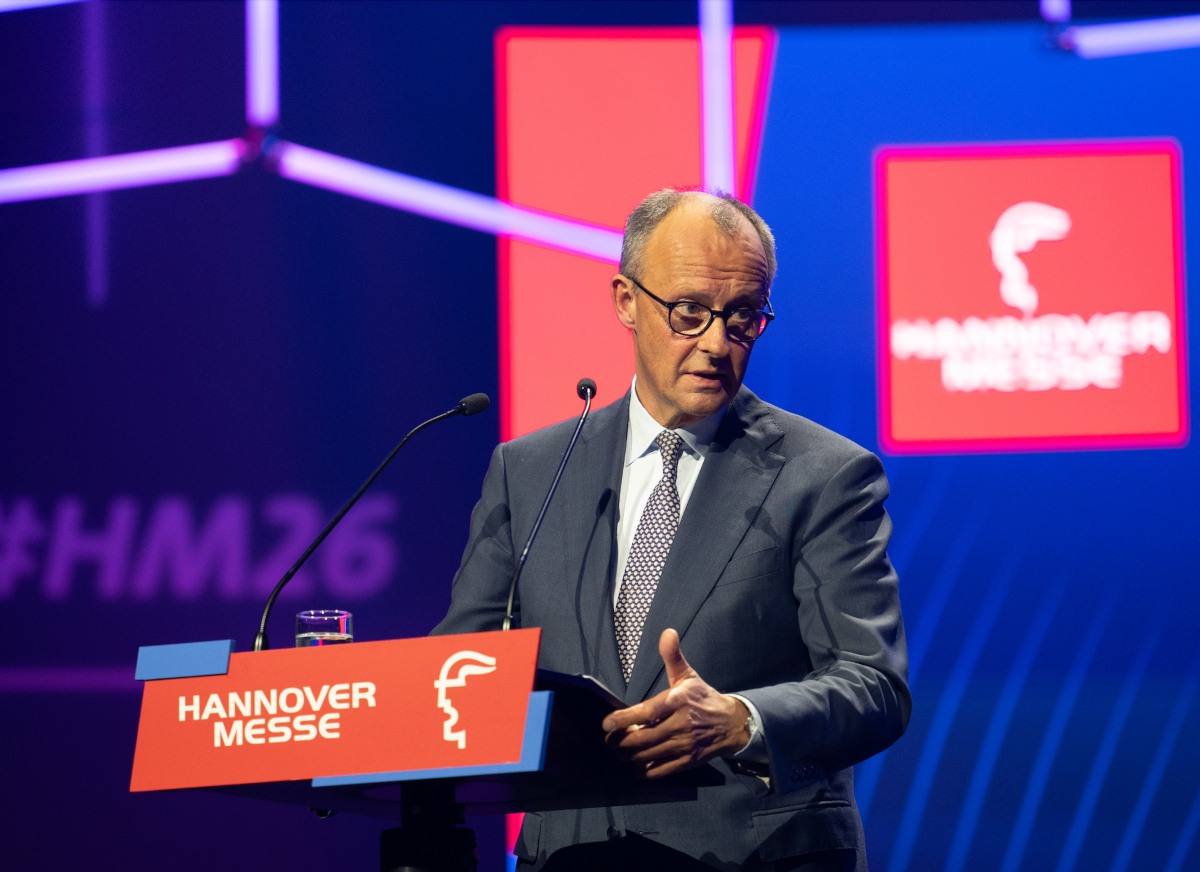
At the huge Hannover Messe trade fair over the weekend, attendees heard calls for a lightening of EU Act regulations for industrial AI.
It’s one of the largest industrial trade fairs in the world, and little surprise that AI dominates this year at the Hannover Messe in Germany, with both the CEO of Siemens and German chancellor Friedrich Merz calling for a carve-out for industrial AI when it comes to EU regulations.
In a speech on Sunday, Merz warned that if Europe is to boost productivity, industrial AI will need more regulatory freedom than, for example, consumer AI.
“I will push to ease the regulatory burden in the EU on AI and, where possible, to exempt industrial AI from the current regulatory straitjacket that is too tight for AI within the European Union,” Merz said in his speech.
Advertisement
“AI will contribute to greater efficiency and productivity, optimised use of resources and, above all, reduced costs.”
This position may well be influenced by the views of Munich-based Siemens, Germany’s most valuable company with a market capitalisation of some €194bn, according to Bloomberg.
Speaking in an interview at the Hannover Messe, Siemens CEO Roland Busch warned the industrial giant would prioritise investments in the US and China if the EU did not lighten its regulations in a sector he said is already subject to sector-specific regulations.
“It’s complete nonsense to treat industrial and machine data the same way as personal data,” Busch said, according to Bloomberg. “I can’t explain to my shareholders why I’m investing money in an environment where I’m being held back.”
Advertisement
The warnings come at a time when the EU’s AI Act is due to come into full force on 2 August of this year. While supporters have hailed the EU’s position on AI as a measured and necessary approach to a technology that has led to scandals like that of the Grok ‘nudification’ app, both critics and supporters continue to call for amendments, as Europe vies to compete in the fast-moving world of AI innovation. So we can expect to hear many more such calls between now and August.
Don’t miss out on the knowledge you need to succeed. Sign up for the Daily Brief, Silicon Republic’s digest of need-to-know sci-tech news.
Hyundai has officially unveiled the Ioniq 3, a compact hatchback for European markets, and it’s going after something most EVs struggle to nail: being genuinely practical for real life. Hyundai promises no range anxiety, no confusing tech, and no cramped back seats.
For Hyundai, it all starts with the design. The company is calling it “Art of Steel,” and the idea is pretty simple: clean surfaces, sharp lines, and no unnecessary fuss. The Ioniq 3 introduces a new Aero Hatch silhouette with a sleek roofline that flows straight into a rear spoiler, giving it a distinctive look without trying too hard.
Hyundai
It also features Hyundai’s signature pixel lighting and four central dots that reference the letter “H” in Morse code, a nice easter egg for buyers. You get eleven exterior color options, multiple interior schemes, and wheel sizes ranging from 16 to 19 inches. There’s also an N Line variant if you want a sportier look.
Hyundai
Honestly, I like this design and prefer it over the too minimalist aesthetic that EV cars generally go for.
Are the specs good enough to ditch your petrol car?
While the design looks good, it wouldn’t matter much if the car cannot deliver a good range and performance. According to the press release, the Ioniq 3 comes in two battery options. The Standard Range offers a projected 344 km (213 miles) WLTP range, while the Long Range bumps that up to 496 km (308 miles), which Hyundai claims will be class-leading.
Advertisement
What excites me more than the range is the fast charging tech. DC fast charging takes either version from 10 to 80 percent in under 30 minutes, and AC charging goes up to 22 kW. It’s not as good as what Chinese rivals like Xiaomi or BYD are offering, but it’s nothing to scoff at either. Both versions produce 250 Nm of torque, with a top speed of 170 km/h.
Hyundai
Inside, the flat-floor layout gives you genuine rear legroom and headroom comfortable enough for three adults in the back seat. The trunk offers 441 liters of space, with a bonus compartment hidden beneath the trunk floor. The cabin comes with heated and ventilated seats, a BOSE sound system, and dual-zone climate control, which feels generous for this segment.
As you can see, the Ioniq 3 is packed with features, offers a good range, and looks good while doing it. The car will be produced at Hyundai’s plant in Turkey, with pricing yet to be announced. That said, online chatter suggests it will start at around £25,000–£30,000. If Hyundai can hit that price, it might have a winner in its hand.
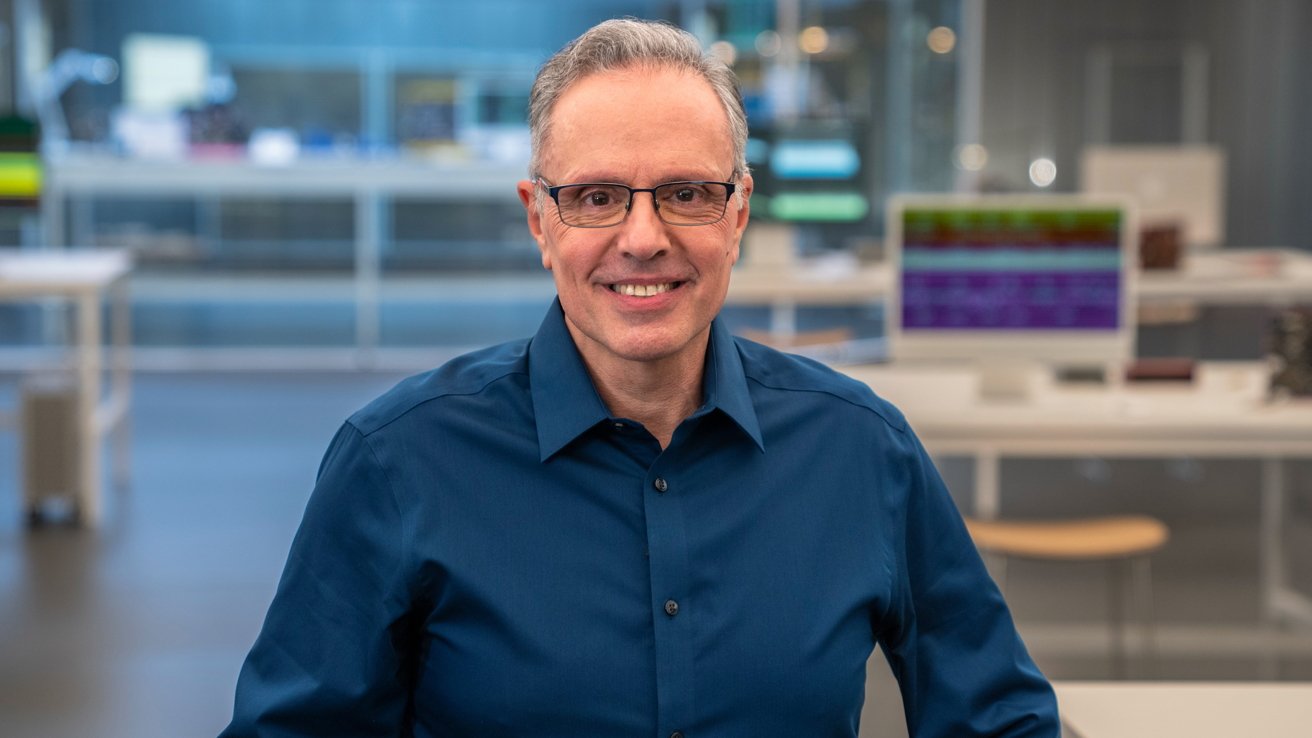
Apple may have combined its two hardware teams into one under Johny Srouji, but he’s taken it a step further by segmenting his hardware group into five. Though not much really changed.
Apple’s newest c-suite member Johny Srouji
Apple CEO Tim Cook is stepping down and giving the position to John Ternus, who is currently the SVP of Hardware Engineering. That position is being absorbed by Johny Srouji, who will now be the Chief Hardware Officer. According to an internal memo obtained byBloomberg, Srouji introduced his five areas of focus and the leaders reporting to him. There are zero surprises or any real notable change. Continue Reading on AppleInsider | Discuss on our Forums
Cyberdecks are typically reminiscent of weird computers in futuristic sci-fi films, moreso than the computers of today. The cool thing about cyberdecks, though, is you get to build them however you like. [WillTechBuilds] has put together a deck of his own that diverges from cyberdeck norms and ends up closer to something you might have bought off the shelf at Best Buy.
For a start, the build eschews the typical Raspberry Pi or other single-board computer that normally lives at the heart of a cyberdeck. In its place is a motherboard harvested from a GMKTec NucBox G5. It runs the Intel N97 CPU. It’s an x86 processor that’s roughly equivalent in power to an i5 from 10 years ago, but it only sips 12 watts. The compact motherboard is installed in a compact 3D-printed case along with a porbable USB-C battery pack, a small widescreen LCD, and a Lenovo ThinkPad trackpoint keyboard. This latter design choice, along with the x86 chip, is what gives this build so much of a laptop feel. There’s no weird Linux desktop, green-glowing terminal, or chunky mechanical keyboard here, let alone any GPIO pins. Definitely an oddball entry to the cyberdeck world, but valid nonetheless.
We’ve featured cyberdecks built out of everything from CRT TVs to event badges. As always, we’d love to see your latest innovative creation on the tipsline. Video after the break.
Over the years, smartphone brands have steadily refined their craft. From design to performance, devices in 2026 feel sharper, smarter, and far more polished than before. But a recent look at the Sony Xperia 1 VIII suggests Sony might be holding on a little too tightly to the past, and not entirely in a good way. Here’s why I feel that way.
This doesn’t look like the Sony we remember
I remember when Sony really stood out. There was a certain confidence to its design language, something that felt distinct. Looking at the Xperia 1 VIII now, though, it feels like that clarity has faded a bit. The back panel, at least in this render, is where things really fall apart for me. The design looks absolutely confusing. Sony’s signature vertically aligned camera setup has always been part of its identity, and moving away from that strips away a sense of familiarity that long-time users associated with the brand. Without that, the design feels oddly generic, almost like it could belong to any other phone.
As for the camera island, it comes across as bulky and somewhat dated, reminding me of the OnePlus 10 Pro from 2022, a design language even OnePlus has since moved on from. That’s what makes this feel particularly off. It feels like revisiting an idea the rest of the industry has already left behind.
Weibo
What stands out even more is how out of sync this feels with where smartphone design is headed today. Most brands are leaning into cleaner, more minimal aesthetics that feel refined and modern. Loud, heavy camera islands are usually reserved for niche or limited-edition designs now, not mainstream flagships.
All of this makes it seem like Sony isn’t quite setting its own direction, but is instead borrowing from trends that have already run their course. And for a brand that once led with such a strong design identity, that shift feels a little disappointing.
Advertisement
A shift without a sense of direction
To be honest, I’ve always held Sony to a slightly higher standard. It was one of those brands you expected to take a clear, confident stance on design and experience. That’s why this feels a bit disappointing now. It’s not just about one device, but the sense that the brand has lost some of its direction along the way.
Weibo
At a glance, the Xperia 1 VIII certainly tries to set itself apart, but that distinction feels a bit hollow. It comes across more like a shift without a clear purpose. That’s where it starts to lose ground. In the current flagship landscape, looking different isn’t enough on its own. A design needs to carry intent, show progression, and align with the direction the industry is moving in. This one doesn’t quite deliver on that front. Standing out is simple; moving the needle is what really counts.
Ben McKenzie had a question: “When did WIRED die?” Specifically, the actor-director wanted to know when did WIRED “‘DIE,’ all caps.”
McKenzie wasn’t asking for himself; he was engaging in the time-honored celebrity tradition of reading mean tweets. Although, in this case, the object wasn’t himself so much as the publication hosting the event. McKenzie, who famously played Ryan on The O.C. before becoming a leading voice of crypto skepticism, was sharing the stage with WIRED senior correspondent Andy Greenberg for the first of what will hopefully be a series of smaller events that we are calling WIRED@Night.
McKenzie, coauthor of Easy Money: Cryptocurrency, Casino Capitalism, and the Golden Age of Fraud, has a new independent documentary in theaters called Everyone Is Lying to You for Money. Greenberg, who often writes about crypto scams, talked to him about scenes from the book and movie, in which McKenzie traveled to places like crypto hub El Salvador to understand why the technology still has so much appeal despite its less-than-stellar reputation.
Advertisement
One of McKenzie’s explanations? Male loneliness. “It’s the longing for community, actual community,” McKenzie said, noting that crypto exists online as a kind of extreme gambling, something that really exploded into the mainstream during the Covid-19 pandemic. Here’s to more IRL antidotes to that kind of digital isolation.
We spend hours testing every product or service we review, so you can be sure you’re buying the best. Find out more about how we test.
Philips Baristina Milk Frother: Two-minute review
The Philips Baristina milk frother is designed to be partnered with the company’s Baristina bean-to-cup espresso machine, and it works an absolute treat. As it’s available as an optional extra for the Baristina machine, I’ve been using it for a couple of weeks alongside my Philips LatteGo 4400 Series espresso machine, and have found it to deliver much more pleasing results compared to my machine where milk foam is concerned.
It has three modes: hot milk foam, hot milk and cold milk foam. It’s incredibly easy to control, with just a single button that you press for no more than one second for hot milk foam, or you can hold it for three seconds to activate the cold milk foam mode. If you want hot milk, you need to remove the coil from the whisk before starting up the machine. Once the button is pressed, the Philips Baristina Milk Frother will spring into action to deliver you a foamy result. There’s no audible beep to let you know it’s finished, but the light on the button will go out.
Advertisement
In use, I found the Philips Baristina Milk Frother to be extremely quiet, measuring around 40dB using the decibelX app on my iPhone, and standing right next to it while it was working. It’s much quieter than using a steam wand on a coffee machine, or the automatic LatteGo system on my Philips machine.
The good thing about the Philips Baristina Milk Frother is that it’s been designed to work with any type of milk, including non-dairy varieties. This can’t be said of all milk frothers, including the Smeg Mini Milk Frother, which is intended to be used only with chilled full-fat dairy milk, and is a feature I find particularly appealing, being an oat milk drinker.
In tests, hot milk foam was very thick, making it well-suited for topping a cappuccino or even an espresso macchiato. Realistically though — and if you’re particularly specific about milk in your coffee — it’s just too thick to make a caffe latte or flat white. For me, personally, whose regular order is an oat milk flat white, I didn’t mind the thickness of the foam, especially as some other milk-foaming systems I’ve used aren’t as effective.
Advertisement
The exact results you achieve will depend on the specific milk you put in. I tried a couple of different oat milk brands and achieved similar results each time — this being a high level of foam, but without much gloss.
With that being said, if you want to be able to adjust the foam texture when frothing milk using a device such as this, the Dreo Baristamaker or Smeg Multi Milk Frother give you the option. It’s a similar story with cold milk foam too, with the Philips Baristina Milk Frother returning a thick, stable foam that is ideal for iced cappuccinos.
Sign up for breaking news, reviews, opinion, top tech deals, and more.
The carafe itself has a non-stick coating that helps your milk pour out easily, and it makes washing up as easy as possible. All it took during my use was a rinse under the tap to remove any leftovers. The whisk is removable to help ensure nothing is caught in it, and this, along with the lid, are both dishwasher safe.
Advertisement
While I was consistently pleased with results, given the fact you can’t specify the level of foam you’d prefer, and you can find more affordable options that do have such function, I have to dock some points from the Philips Baristina Milk Frother.
The Philips Baristina Milk Frother has a list price of $99.99 in the US and AU$149 in Australia. In the UK, it’s currently only available when bundled with the matching Baristina bean-to-cup coffee machine.
Its list price places the Philips milk frother in mid-range territory. The Nespresso Aeroccino 3, which has previously been the milk frother I’ve used at home and which offers the same limited range of features, retails for $99 / £79 / AU$109, making it cheaper only in Australia.
Advertisement
If you want a milk frother that offers more features, Smeg Multi Milk Frother, which has six functions and is also suitable for making drinks like hot chocolate, costs $249.95 / £179.95 / AU$299 and is available globally.
The Philips Baristina Milk Frother has been designed to perfectly match its recently released Baristina bean-to-cup espresso machine. My colleague, Cat, has already reviewed that machine, where she awarded it a full five stars, claiming it to be the best budget espresso machine currently available.
One of the only negatives she could find was that there was no built-in steam wand for frothing milk, making this standalone milk frother a necessity for milk-based coffee drinkers. It comes in the same two color choices of white or black, and adopts the same ribbed aesthetic as the main body of the matching machine.
It comprises a cylindrical carafe, a translucent plastic lid, a removable whisk that’s held in place magnetically and a base that powers the frother. The carafe has a non-stick lining, with raised markings indicating the maximum fill level. There’s no minimum fill level marking, and Philips doesn’t list one on its website — it just mentions a capacity of 4 fl oz / 120ml — but I rarely filled up to the maximum fill line, and was still able to return a large amount of milk foam.
To activate the milk frother, you just need to press the button once to activate hot milk foam, or hold it for roughly three seconds for cold milk foam. You’ll know you’ve activated cold milk foam mode correctly because the ring light around the power button will turn blue. If you just want hot milk with no foam, you can unclip the coil from the whisk handle.
There’s no dedicated pouring spout on the Baristina Milk Frother, you’re free to pour out wherever you want. However, do note that the lack of spout, combined with the sheer thickness of milk foam produced does mean you can forget about creating latte art.
Advertisement
Image 1 of 5
(Image credit: Future / Max Langridge)
(Image credit: Future / Max Langridge)
(Image credit: Future / Max Langridge)
(Image credit: Future / Max Langridge)
(Image credit: Future / Max Langridge)
I found the Philips Baristina to be relatively quick to finish foaming milk, taking around 90 seconds with oat milk filled to the maximum fill line. The Nespresso Aeroccino 3 that I’ve previously used takes closer to two minutes to heat at full capacity, and the level of foam isn’t always as consistent.
While I primarily used oat milk during my testing, I did also use full-fat dairy milk and, as expected, the results were similarly impressive. Full-fat dairy milk is higher in protein, which is essential when frothing milk to achieve the desired results. Non-dairy milks don’t always have similar levels, so for the Baristina Milk Frother to deliver the level of foam it did with oat milk, is mightily impressive.
I was also impressed by the machine’s ability to consistently heat milk up to around 140ºF / 60ºC, which is ideal for most milk varieties.
Cleaning up is an absolute walk in the park, as the non-stick lining means you only need to rinse the milk frother under the tap to remove any leftovers.
Advertisement
(Image credit: Future / Max Langridge)
Philips Baristina Milk Frother review: Should you buy it?
Buy it if…
Don’t buy it if…
Advertisement
Philips Baristina Milk Frother review: Also consider
Philips Baristina Milk Frother review: How I tested
(Image credit: Future / Max Langridge)
I tested each of the Philips Baristina Milk Frother’s modes using chilled oat milk and fresh full-fat milk, in accordance with Philips’ instructions.
As part of my testing, I used an oat milk that I’ve previously had trouble generating froth with when using a Nespresso milk frother. The Philips machine fared much better.
I cleaned the non-stick carafe under a tap and used a cloth to wipe away any stains, as per the instructions in the user manual.
Apple announced a huge leadership shake-up earlier today. Tim Cook will step down as CEO of the company he has headed for nearly 15 years on September 1st. That post will be filled by John Ternus, who has been with Apple for 25 years, essentially crafting out the modern product line itself. Cook is leaving down but will remain executive chairman, where he will oversee global policy and board activities.
Cook first joined the Apple team in 1998 and became CEO in 2011. During his tenure, the company’s market worth increased from approximately $350 billion to $4 trillion. Each year, the company’s income nearly quadrupled, 2.5 billion gadgets were distributed worldwide, and it even began offering services on a scale that exceeded several Fortune 500 corporations. New product lines, including as watches and earbuds, emerged, as did totally new modes of computing. Supply chains have stretched all over the world, and stores have arisen on every continent imaginable, but it’s the ordinary objects you carry in your pocket that truly tells the story.
HELLO, MACBOOK NEO — Ready for whatever your day brings, MacBook Neo flies through everyday tasks and apps. Choose from four stunning colors in a…
THE MOST COLORFUL MACBOOK LINEUP EVER — Choose from Silver, Blush, Citrus, or Indigo — each with a color-coordinated keyboard to complete the…
POWER FOR EVERYDAY TASKS — Ready the moment you open it, MacBook Neo with the A18 Pro chip delivers the performance and AI capabilities you need to…
John Ternus, on the other hand, began working at Apple in 2001, a year after finishing his mechanical engineering degree. He joined the product design team and worked his way up the hardware engineering hierarchy. By 2013, he was a vice president in charge of all hardware engineering, and he was promoted to senior vice president eight years later. Almost every major device line released by Apple has gone through his teams, including every generation of iPad, multiple iPhone models, AirPods, Apple Watch, and the transition to the Mac’s custom chips, and in recent years his focus has been on using tougher materials, making them easier to repair and less harmful to the environment. He just delivered a large presentation last September to launch the new iPhone line-up, and those who know him claim he can tell right away whether a prototype is good enough.
During the announcement, Tim Cook praised his replacement, describing Ternus as a visionary with impeccable precision and a leader with a strong sense of purpose. Ternus hailed Cook as a mentor and discussed his time working for Steve Jobs. Both guys emphasized that there will be no significant shift in direction at Apple. The values that have guided the organization for 50 years remain in place. However, the fact that Ternus, a hardware expert, is going into the senior position suggests that there may be a modest shift in direction. You see, Cook’s path to success differs significantly from Ternus’. Cook came from an operational background, but Ternus has spent his whole career working directly with the products.
Advertisement
Anyone who has been following the company closely knows that the timing was not unexpected. Rumors about Cook’s plans had been circulating for months, and he had hinted in interviews that he would wait until the proper moment to act. September now gives those two leaders four months to work together harmoniously, and it appears Ternus will also join the board of directors. Arthur Levinson, who has led the board for nearly 15 years, is stepping down to become the lead independent director. Meanwhile, Johny Srouji, a long-time chip designer, has been promoted to chief hardware officer. [Source]
Power lines, storm clouds, and shoes over Seattle. (Kurt Schlosser Photo)
After a vague report that some companies were seeking to build “large” data centers in Seattle, Mayor Katie Wilson is exploring a moratorium on new data centers.
This seems like the typical performative, hypocritical stunt we expect from our politicians. A distraction from harder issues, like ensuring we don’t retrace Cleveland’s history as the economic landscape fractures.
It is easy to ban data centers when you don’t have any (hello Maine!). Seattle’s high real estate and electricity prices mean “large” data centers in the city simply aren’t competitive. We have long had colocation facilities serving local businesses, but they’re quite small by modern standards.
Banning large data centers in Seattle is like banning cattle grazing in midtown Manhattan. Seattle just isn’t going to attract the cutting-edge AI and hyperscaler data centers that require lots of land and power. The Texas panhandle is a better place to put those.
Using data centers to complain about data centers (by posting on Facebook) carries more than a whiff of hypocrisy. Wouldn’t a sincere commitment to “environmental justice” and “economic resilience” mean not using any dastardly data centers? The mayor could abandon all online political messaging. Or order city departments to stop using any data center services.
Advertisement
(Oddly, the City of Seattle’s data center is in Spokane. Which says something about the competitiveness of data centers in Seattle and/or the city’s inclination to support local businesses.)
The Means of Production
A self-proclaimed socialist, Comrade Katie has realized the socialist ideal of owning the means of production, at least of our city-owned utilities. But with ownership comes accountability and responsibility.
By drawing a line against new data centers, she would remove the easiest scapegoat for her performance. No blaming Big Tech. No pointing to AI. What remains is a testable proposition: will Seattle have affordable, reliable power?
Some challenges loom.
Advertisement
Affordable and Reliable Power
Seattle City Light already charges some of the highest electricity prices in Washington, a state that generally enjoys low power costs thanks to abundant hydropower.
Mayor Wilson’s first move was to fire the head of City Light and nominate a replacement with no utility experience. After pushback from both the employees’ union and the City Council, a new leadership search has begun. No explanation has been provided for why the previous CEO was fired or what the mayor’s strategy is for City Light (or, for that matter, anything economic).
Seattle City Light has announced accelerating price increases, well above inflation, for the coming years:
Effective January 1, 2026, you will see the previously approved average rate increase of 5.4% start appearing on your bill.
Business customers can expect to see overall bill increases between 4% to 7%, depending on their customer class and consumption profile.
Advertisement
Looking ahead to 2027 and beyond, we anticipate annual rate increases of 7 to 10%
The utility also needs to nearly double its capacity—from 2,000 to 3,800 megawatts in the next seven years—independent of any data centers. A growing population, electric vehicles, heat pumps, and broader electrification are all driving load growth.
It will take deft management to keep our grid both affordable and reliable. A moratorium on new data centers isn’t enough to keep the lights on in Seattle, and solutions that don’t fit on a bumper sticker seem like a stretch for the political class.
Fresh Water on Tap
While we’re looking at city-owned utilities, Seattle Public Utilities faces serious challenges of its own. The utility recently received a striking vote of no confidence in its ability to provide its most basic service: water.
Advertisement
Eastside cities across Lake Washington, united as the Cascade Water Alliance, get their water from Seattle’s reservoirs. They have concerns about Seattle’s investment and maintenance, and after much analysis and negotiation, the Eastside is switching to get its water from Tacoma:
“[Tacoma Public Utilities’] proposal offered longer supply certainty, greater financial benefit, and an opportunity to move towards a regionalized water system.”
You can read a lot between those lines. The fact it will take 15 years to transition Eastside taps to Tacoma water suggests deep concerns about Seattle’s ability to deliver.
Beyond maintenance worries, this customer exodus also means the smaller remaining base of ratepayers will bear the system’s fixed costs, pointing to higher water bills ahead for Seattleites.
No Excuses
If data centers aren’t coming—and can’t be blamed—then rising electricity prices, capacity shortages, and reliability issues rest squarely with the mayor. The same goes for water.
Advertisement
Grandstanding about data centers is easy. Making difficult and unsatisfying tradeoffs to ensure our city utilities deliver is the hard part.
So by all means, ban the large data centers that were never coming. Clear the field. Remove the distractions.
We can focus entirely on how our city utilities perform under Mayor Wilson.



































































You must be logged in to post a comment Login