






Connect with us
DAPA Banner

Tech

Palantir posts mini-manifesto denouncing inclusivity and ‘regressive’ cultures

Published

on

Surveillance and analytics company Palantir recently posted what it called a “brief” 22-point summary of CEO Alex Karp’s book “The Technological Republic.”

Written by Karp and Palantir’s head of corporate affairs, Nicholas Zamiska, “The Technological Republic” was published last year and described by its authors as “the beginnings of the articulation of the theory” behind Palantir’s work. (One critic said it was “not a book at all, but a piece of corporate sales material.”)

The company’s ideological bent has come under more scrutiny since then, as tech industry figures have debated Palantir’s work with Immigration and Customs Enforcement (ICE), and as the company has positioned itself as an organization working for the defense of “the West.”

In fact, congressional Democrats recently sent a letter to ICE and the Department of Homeland Security demanding more information about how tools built by Palantir and “a range of surveillance companies” are being used in the Trump administration’s aggressive deportation strategy.

Advertisement

Palantir’s post doesn’t reference much of that context directly, simply saying that it’s providing the summary “because we get asked a lot.” It then suggests that “Silicon Valley owes a moral debt to the country that made its rise possible” and declares that “free email is not enough.”

“The decadence of a culture or civilization, and indeed its ruling class, will be forgiven only if that culture is capable of delivering economic growth and security for the public,” the company says.

The post is wide-ranging, at one point criticizing a culture that “almost snickers at [Elon] Musk’s interest in grand narrative” and at another point touching on recent debates about the use of artificial intelligence by the military.

Techcrunch event

Advertisement

San Francisco, CA
|
October 13-15, 2026

“The question is not whether A.I. weapons will be built; it is who will build them and for what purpose,” Palantir says. “Our adversaries will not pause to indulge in theatrical debates about the merits of developing technologies with critical military and national security applications. They will proceed.”

Advertisement

Similarly, the company suggests that “the atomic age is ending,” while “a new era of deterrence built on A.I. is set to begin.”

The post also takes a moment to denounce the “postwar neutering of Germany and Japan,” adding that the “defanging of Germany was an overcorrection for which Europe is now paying a heavy price” and that “a similar and highly theatrical commitment to Japanese pacifism” could “threaten to shift the balance of power in Asia.” 

The post ends by criticizing “the shallow temptation of a vacant and hollow pluralism.” In Palantir’s argument, a blind devotion to pluralism and inclusivity “glosses over the fact that certain cultures and indeed subcultures . . . have produced wonders. Others have proven middling, and worse, regressive and harmful.”

After Palantir posted this on Saturday, Eliot Higgins, the CEO of the investigative website Bellingcat, dryly remarked that it was “extremely normal and fine for a company to put this in a public statement.”

Advertisement

Higgins also argued that there’s more to the post than a simple “defense of the West” — in his view, it’s an attack on what he said are key pillars of democracy that need rebuilding: verification, deliberation, and accountability.

“It’s also worth being clear about who’s doing the arguing,” Higgins wrote. “Palantir sells operational software to defense, intelligence, immigration & police agencies. These 22 points aren’t philosophy floating in space, they’re the public ideology of a company whose revenue depends on the politics it’s advocating.”

Source link

Advertisement
Continue Reading
Click to comment

You must be logged in to post a comment Login

Leave a Reply

Tech

Typing with your brain might soon be as simple as wearing a beanie

Published

on


Silicon Valley startup Sabi is the latest entrant to suggest using the brain as an interface device. The company is developing a noninvasive device that translates internal speech into text. Rather than relying on implanted hardware, Sabi is building a wearable device – initially in the form of a beanie,…
Read Entire Article
Source link

Continue Reading

Tech

Researchers are using ultrasound to trigger smell directly in the brain for VR

Published

on


Current systems emphasize sight and sound, with some progress in haptics. Smell remains largely absent, despite its unusually strong connection to memory and emotion.
Read Entire Article
Source link

Continue Reading

Tech

Flash Joule Heating Recovers The Good Stuff

Published

on

Rare earth materials are a hot button topic these days. They’re important for everything from electric vehicles to defence hardware, they’re valuable, and everyone wishes they had some to dig up in their backyard. Lithium, too, is a commodity nobody can get enough of, with the demand for high-performance batteries grows each year.

When a material is desirable, and strategically important, we often start thinking of ways to conserve or recycle it because we just can’t get enough. In that vein, researchers have been developing a new technique to recover rare earth metals and lithium from waste streams so that it can be put back to good use.

Get It Back

Enter the technique of flash joule heating. The method is relatively straightforward, in concept at least. It involves a high energy discharge from a capacitor bank, which is passed through a sample of material to be recycled or refined. The idea is that the rapid energy discharge will vaporize some components of the sample, while leaving others intact, allowing the desired material to be separated out and collected in a straightforward and economically-viable manner.  It does this in a manner rather contrary to traditional techniques, which often involve large amounts of water, acids, or alkalis, which can be expensive and messy to dispose of or reprocess to boot.

A flash joule heating apparatus used to recover rare earth materials. Credit: Jeff Fitlow, Rice University

Researchers from Rice have developed this technique to recycle rare earth metals from waste magnets. Imagine all the magnets that get thrown away when things like hard drives and EV motors get trashed, and you can imagine there’s a wealth of rare earth material there just waiting to be recovered.

In this case, the high-energy discharge is applied to waste magnet material in an effort to vaporize the non-rare earth components that are present. The discharge is performed in the presence of chlorine gas, which would chlorinate materials like iron and cobalt in the sample, removing the volatile elements and leaving the rare earth elements behind in solid form. Laboratory experiments were able to refine the material to 90% purity in a single step.

Advertisement
In the rare earth case, the undesired material is vaporized and removed by the chlorine gas while the rare earths remain behind in the solid phase. For capturing lithium from spodumene ore, it’s the opposite. Credit: research paper

As per the research paper, lifecycle analysis suggested the technique could reduce energy use by 87% compared to contemporary hydrometallurgy recycling techniques, while also reducing greenhouse gas emissions in turn and slashing operating costs by 54%.

The technique can also be applied to separate lithium from spodumene ore. It’s an abundant material, particularly in the United States, and improved ways to process it could increase its value as a source of lithium. When it comes to processing spodumene with flash joule heating, the discharge of electric current makes the lithium in spodumene available to react with chlorine gas. The rapid heating causes the vaporized lithium to form lithium chloride which can be bled off, while other components of spodumene like aluminium and silicon compounds remain behind. It’s basically the opposite of the rare earth recovery method.

As outlined in the research paper, this method achieved recovery of lithium chloride with 97% purity and a recovery rate of 94% in a single step. It’s also a lot simpler than traditional extraction methods that involve long periods of evaporating brine or using acid leeching techniques. Indeed, the laboratory rig was built using an arc welder to achieve the powerful discharge. Other researchers are examining the technique too and achieving similar results, hoping that it can be a cleaner and more efficient method of recovery compared to traditional hydrometallurgy and pyrometallurgy techniques.
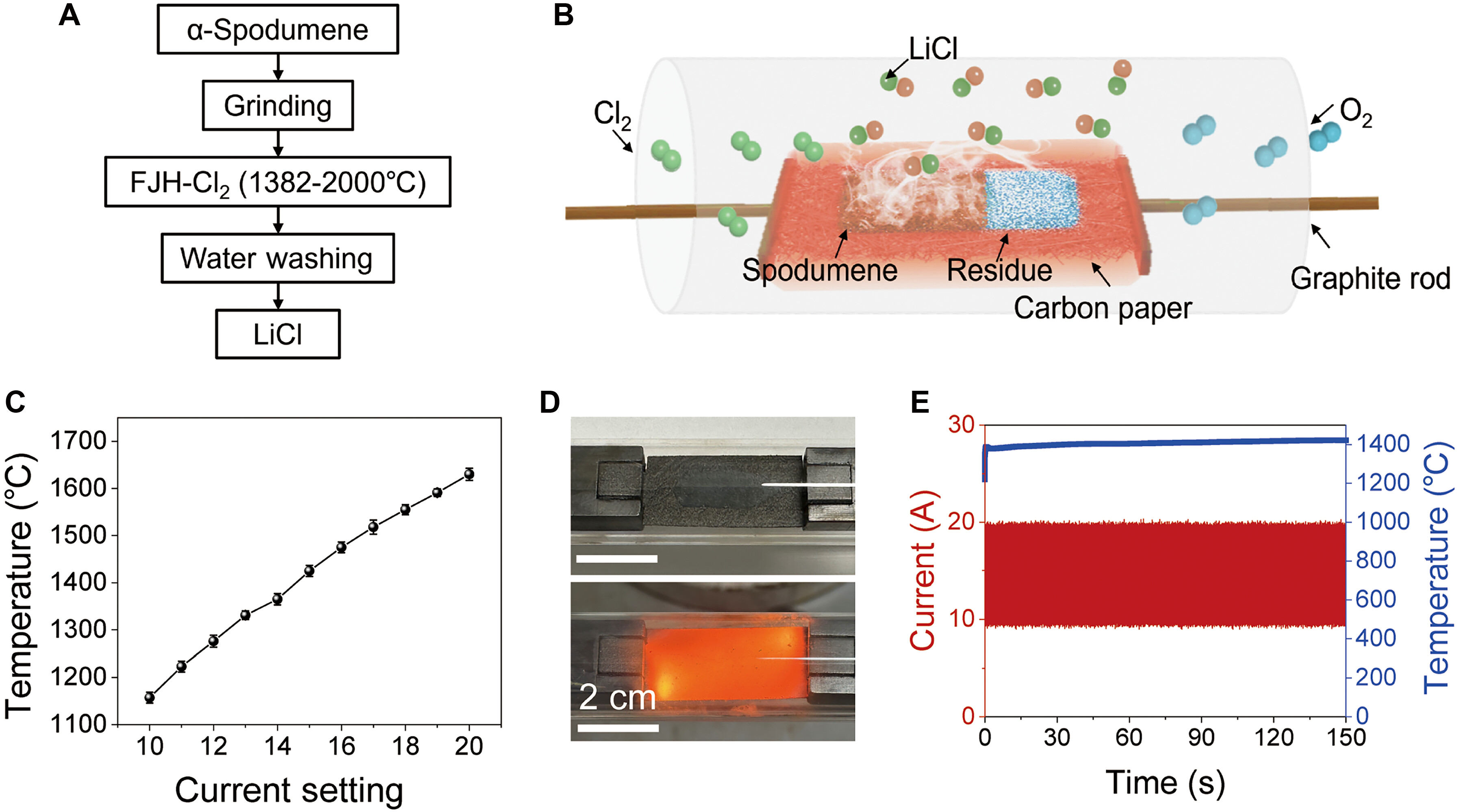
The lithium recovery process using flash joule heating. Credit: research paper

These methods remain at the research stage for the time being. Pilot plants, let alone commercial operations, are still a future consideration. Regardless, the early work suggests there is economic gain to be had by developing recycling plants that operate in this manner. Assuming the technique works at scale, if it makes financial sense and recovers useful material, expect it to become a viable part of the recycling industry before long.


 

Advertisement

Source link

Continue Reading

Tech

Coral raises $12.5M to automate healthcare’s administrative back office

Published

on

The New York startup has built AI that reads handwritten fax forms, processes prior authorisations, and completes patient intakes in under five minutes, all without asking providers to change how they work. It has reached multiple millions in revenue in under a year and is targeting 4x growth by end of 2026.


Coral, the New York-based AI startup automating administrative workflows for specialty healthcare providers, has raised $12.5 million in a Series A led by Lightspeed and Z47.

The company was founded in 2024 by Ajay Shrihari, a robotics and AI researcher, and Aniket Mohanty, who has a background in medical image processing.

In under a year of commercial operation, Coral has reached multiple millions in annual revenue and is targeting 4x growth before the end of 2026.

Advertisement

The 💜 of EU tech

The latest rumblings from the EU tech scene, a story from our wise ol’ founder Boris, and some questionable AI art. It’s free, every week, in your inbox. Sign up now!

The problem Coral is solving is not technological complexity, it is administrative volume. In American healthcare, every appointment generates a trail of prior authorisation requests, referral packets, insurance eligibility checks, and discharge paperwork.

Much of this flows through fax machines, which remain deeply embedded in clinical workflows despite being a technology from a previous era.

Advertisement

Rather than attempting to replace fax infrastructure, an approach that would require providers to rebuild systems they cannot afford to rebuild, Coral connects to existing EHR systems, fax lines, and payer portals and automates around them.

Providers do not change how they work. Coral changes what happens inside that workflow.

The company began in the durable medical equipment sector, one of the most fax-intensive corners of outpatient care, where a single order can require multiple rounds of documentation before approval.

DASCO, a home medical equipment provider, has been an early customer, describing turnaround times dropping from hours or days to minutes.

Advertisement

Coral then extended the same model into infusion centres, where a delayed authorisation means a missed dose, not a delayed appointment, and into specialty pharmacy.

In each new vertical, the same administrative bottleneck appeared in the same shape.
The product’s core capability is document understanding at healthcare’s specific level of messiness: handwritten fax forms, scanned insurance cards, prior authorisation templates, and payer portal screens.

Coral’s models have reached 99.7% accuracy across these document types, a threshold the company describes as the minimum viable standard for healthcare, where errors have clinical and financial consequences.

Complete patient intakes, including complex cases, now run in under five minutes. When information is missing, which is frequent in this environment, the platform coordinates with payers, patients, and referral sources to resolve the gap without requiring staff intervention.

Advertisement

The strongest signal in the commercial story is not the revenue figure but the payment behaviour. A portion of Coral’s customers are paying the full contract value upfront, an unusual dynamic in enterprise software, and a striking one in a sector where vendor evaluation cycles are typically slow and risk-averse.

The explanation is mechanical: when a workflow that previously took hours completes in under five minutes at high accuracy, the return on investment is immediate and visible. Commit now, stop the queue now.

Coral recently shipped AI-powered voice and text workflows that automate follow-ups with payers, patients, and referral sources, replacing calls that previously required a staff member to pick up the phone.

The next phase of product development includes an AI workflow builder that will let providers design and deploy their own administrative processes without involving IT, and a co-pilot layer that surfaces operational intelligence from the data already flowing through the platform: which payers have the highest denial rates and why, where cases are stalling in the authorisation process, which referral sources convert reliably and which do not, and what changes would improve outcomes on insurance claim resubmissions.

Advertisement

Rohil Bagga, investor at Lightspeed, described the company as “delivering real outcomes at scale” in an environment where legacy automation has historically failed.

Ashwin KP, investor at Z47, framed the investment thesis around the specific characteristics of healthcare administration: over a trillion dollars in annual overhead, chronically underserved by technology, and requiring deep vertical expertise to crack.

The Series A funds team growth and product development, with Coral adding engineering talent alongside people who have spent careers inside healthcare operations.

Advertisement

Source link

Continue Reading

Tech

iPhone Ultra Launch Ahead: Six Big Upgrades Expected

Published

on

Apple is expected to introduce its first foldable iPhone later this year, and early reports suggest it may be called the iPhone Ultra. Newest leaks from tipster Jon Prosser suggest the device could bring one of the biggest changes to the iPhone lineup in years, especially in terms of design and usability. Here are six major upgrades that the iPhone Ultra is expected to offer.

Foldable Design with a New Look

iPhone Ultra Front Design
Image: FPT

The iPhone Ultra is expected to come with a completely new foldable design. Instead of a regular smartphone shape, it may open like a book, giving users a much larger screen when unfolded. It will also have a wider design instead of the usual tall shape seen in other foldables. For example, while using the outside screen, the user will have a smaller screen measuring 5.3 to 5.5 inches. Once unfolded, the second screen will expand up to 7.8 inches, bringing the user experience closer to that of an iPad mini.

The use of a titanium frame may help make it durable while keeping it lightweight. Another key highlight is the expected crease-free inner screen, which could improve the overall viewing experience. In terms of looks, the device may be limited to black-and-white color options.

Like other folding phones, TouchID will probably find its way back. It’s much easier to use a fingerprint sensor on the power button than to integrate Face ID sensors into both displays.

Software & Camera Configuration

Camera design of the iPhone Ultra
Image: FPT

One of the key differences between the iPhone Ultra and Pro models is the camera configuration. Unlike other models, the iPhone Ultra will have only two cameras. One will be a primary camera with a 48 MP sensor, while the other will be an ultra-wide camera with a 48 MP sensor. Unfortunately, since there won’t be a telephoto lens, zooming options may be limited for the users. Besides, the dual screen will require two front-facing cameras.

The iOS 27 is likely to introduce new multitasking features designed for the iPhone Ultra. Among the expected improvements are multi-app functionality, where users can perform multiple functions simultaneously, and app designs that more closely match what the iPad offers, particularly when used on the inner display. It is not going to be iPadOS but rather selected elements from the operating system.

Advertisement

Everything will be handled by the new A20 Pro chip, which may work on the 2nm manufacturing process. It’s very early to judge the performance numbers, but we are expecting the iPhone Ultra to feature 12 GB RAM and use the new C2 modem.

Expected Price

Apple is expected to position the iPhone Ultra as a premium product. The device is expected to start at around $1,999, making it Apple’s most expensive iPhone yet. However, since it offers both phone- and tablet-like experiences in a single device, some users may find the premium pricing justified.

Source link

Advertisement
Continue Reading

Tech

ASUS Drop Zone Service Now Available in More Cities Across India

Published

on

When Asus launched the Drop Zone program last year, it was seen as a commendable gesture to make repairs less taxing for consumers. Now, keeping in the same vein, Asus is expanding its Drop Zone initiative in India by adding 22 new stores to the network. The program, which allows users to submit laptops for servicing at ASUS Exclusive Stores instead of dedicated service centers, is now being rolled out across multiple regions, including Delhi NCR, Haryana, Karnataka, Kerala, Maharashtra, Tamil Nadu, Uttarakhand, Uttar Pradesh, and West Bengal.

What is Asus Drop Zone Service?

The Drop Zone initiative is designed to simplify the repair process by allowing customers to drop off and collect their devices at nearby ASUS stores. This eliminates the need to travel to service centers, which can often be inconvenient—especially for users in tier-2 and tier-3 cities.

With this expansion, ASUS is clearly trying to address common pain points like accessibility, turnaround time, and service transparency. Customers also get multiple service options, including carry-in support for immediate consultation, on-site servicing by technicians, and the Drop Zone model for easier logistics.

ASUS says it already has a wide after-sales network in India, with over 200 service centers and on-site support covering more than 17,000 pin codes across 761 districts. The Drop Zone expansion adds another layer to this ecosystem, bringing services closer to users. The company also offers 24/7 support through calls, chat, email, and remote troubleshooting. Speaking on the matter, Arnold Su, VP, Consumer and Gaming PC, System Business Group, ASUS India, said

Advertisement

At ASUS, our focus has always been on delivering a reliable and consistent ownership experience that extends well beyond the product itself. The expansion of our Drop Zone initiative into 22 additional stores marks a significant step towards making after-sales support more accessible and transparent for our customers. Guided by our 4A framework, we remain committed to building a service ecosystem that is responsive, convenient, and aligned with evolving customer needs.

Source link

Continue Reading

Tech

Company discards 32GB server RAM sticks worth $20,000

Published

on


At current market prices, the hardware appears valuable. Comparable SK hynix registered DDR4 modules currently sell for about $287.95 each, putting the total value at more than $20,000. However, that figure reflects today’s pricing, not what the hardware was worth when it was removed from service.
Read Entire Article
Source link

Continue Reading

Tech

Klipsch OJAS kO-R2 Speaker Debuts at Milan Design Week 2026: Only 600 Pairs, Don’t Expect Them to Last Long

Published

on

Klipsch is returning to Milan Design Week 2026 with something that goes beyond another product launch; it’s a continuation of one of the more interesting collaborations in modern hi-fi. Following the limited-run kO-R1 in 2024, Klipsch and OJAS have officially unveiled the kO-R2, a new loudspeaker created with Devon Turnbull, the artist and acoustic designer behind OJAS, as part of Klipsch’s 80th anniversary.

That matters more than the usual show-floor debut. The first kO-R1 wasn’t just a speaker, it was a statement about where heritage audio could go when handed to someone outside the traditional engineering echo chamber. Turnbull approached Klipsch’s horn-loaded DNA with a minimalist, almost gallery-first mindset, and the result landed somewhere between serious hi-fi and functional art. It sold out quickly and didn’t need a stack of Audio Science Review graphs to justify itself. Turns out art and musical enjoyment still carry more weight than rigid objectivism.

The kO-R2 builds directly on that foundation. Klipsch and OJAS describe it as a blend of minimalist design, advanced acoustic thinking, and bespoke materials, with an emphasis on form that’s meant to live as comfortably in a design exhibition as it does in a listening room. There are no performance specifications or pricing details yet, which feels intentional. This isn’t being positioned as a spec war product; it’s being framed as a continuation of an idea.

ko-r2-loudspeaker-oak
Klipsch OJAS kO-R2

And that’s the real story. At a time when much of the industry is chasing incremental upgrades and feature checklists, Klipsch is doubling down on a collaboration that prioritizes identity, experience, and cultural relevance. Bringing the kO-R2 to Milan Design Week instead of a traditional audio show makes that point clear: this is as much about design language and audience expansion as it is about sound.

Whether the kO-R2 ultimately delivers on the acoustic side will come later. For now, Klipsch and OJAS have done something more difficult; they’ve made people outside the usual audiophile bubble pay attention. 

Advertisement

Unveiled at Milan Design Week 2026

Set against the backdrop of the Fondazione Luigi Rovati, in partnership with USM Modular Furniture and Karimoku, Klipsch and OJAS are hosting curated, appointment-only listening sessions during Milan Design Week through April 26, 2026. Those who get access are encouraged to bring their own music, turning the kO-R2 preview into something more personal than the usual show-floor demo.

After its debut in Milan, a broader launch for the kO-R2 is expected in June 2026.

“Working with Klipsch continues to be an exploration of how we can strip audio down to its most essential, emotional core,” said Devon Turnbull. “With the kO-R2, we focused on creating something that feels immediate and human—where the technology disappears, and the listener is left with a pure, physical connection to the music.”

kO-R2 Design Concept

The kO-R2 is a two-way, sectoral horn-loaded loudspeaker positioned as the next step in the Klipsch x OJAS collaboration. It’s handcrafted in Hope, Arkansas, by the same team behind Klipsch’s legacy designs, and features an OJAS-developed multisectoral horn paired with Baltic birch cabinetry. The goal is clear: deliver the dynamic, low-distortion traits horn systems are known for, while presenting something that looks just as considered as it sounds.

Advertisement
ko-r2-loudspeaker
Klipsch OJAS kO-R2 Loudspeaker in Hammertone Silver.

The core of the latest speaker design is the OJAS 1506 multisectoral horn, fabricated from heavy cast aluminum and finished with electrophoresis and a flat black powder coat.

The exponential horn pulls from classic Western Electric and Altec Lansing design cues, but it’s not a straight throwback. The square, isosceles trapezoidal mouth is doing real work here, controlling dispersion in both planes rather than just looking the part. The result should be more even frequency distribution and a wider, more stable listening window, which is exactly what these older horn concepts were chasing in the first place.

Advertisement. Scroll to continue reading.

The kO-R2 leans into a restrained, material-first design without skimping on the hardware. It uses a high-quality compression driver, anodized aluminum binding posts, and anti-vibration feet—nothing flashy, just components that make sense for a horn-loaded design like this.

Details like the laser-engraved metal ID plate add a layer of exclusivity without turning it into a gimmick, and the five-step high-frequency attenuator is there for a reason: dialing in top-end energy to match the room and placement, which matters more with horns than most speaker types.

Advertisement

Calling it a “museum piece” isn’t entirely off base, but the real goal here isn’t to redefine audiophile expectations. It’s to bridge two worlds that don’t usually overlap this cleanly: serious acoustic design and industrial design that people actually want to live with.

The kO-R2 represents a powerful intersection of heritage and forward-thinking design. Partnering with Devon allows us to honor Klipsch’s 80-year legacy while pushing into new creative territory—delivering a product that is as culturally relevant as it is acoustically exceptional,said Vinny Bonacorsi, COO of Klipsch.

Klipsch OJAS Logo

The Bottom Line 

This isn’t a typical brand crossover. Klipsch is working within its core strength—horn-loaded design—while Devon Turnbull brings a different perspective on how these systems look and live in real spaces. The kO-R2 builds on the kO-R1 with a larger, more complex horn and a move to a floorstanding design, which should translate into greater scale and output.

There are still no detailed specifications or pricing, but the context matters. The kO-R1 launched at $8,498 per pair and sold out quickly. For the kO-R2, production is expected to be limited to around 600 pairs, so availability is going to be tight from the start.

It’s aimed at a specific buyer: someone who values both the design and the underlying acoustic approach, and who is comfortable buying into the concept without a full data sheet upfront. Between the prior pricing and limited run, this won’t be a mainstream Klipsch product—and that’s the point.

Advertisement
Klipsch OJAS kO-R2 Loudspeakers
Klipsch OJAS kO-R2 Loudspeaker in Red Oak veneer.

Price & Availability

Once released (expected to be June 2026), 600 pairs of the kO-R2 will be available worldwide in either Red Oak veneer or Hammertone Silver with a powder-coated, matte-black horn. Price has yet to be announced

Source link

Advertisement
Continue Reading

Tech

Who Owns Carroll Gas Stations?

Published

on


Two entrepreneurs, Benson Phelps and Carroll Faye, teamed up to open a small coal and wood delivery company in Baltimore in 1907. The business saw success in its early years, expanding rapidly over its first couple of decades. Faye decided to move on to other ventures and sold his stake in the business to Phelps, but the company continued to use Faye’s first name as its brand. The Carroll Independent Fuel Company began selling oil in the 1930s under the guidance of Phelps, and it never stopped. Today, drivers can still buy fuel from the same company, although they’ll now recognize it as Carroll Motor Fuels.

The Carroll network of gas stations might have grown significantly over its century-plus of trading, but its ownership structure has remained consistent. It’s still an independent, family-owned business, with various members of the Phelps family at the helm. John Phelps serves as the company’s CEO and President, while Richard B. Phelps III holds the title of Executive Vice President alongside C. Howard Phelps. Several more Phelps family members hold leadership roles.

Carroll isn’t the only gas station chain that has remained family owned since its inception. The Love’s chain of gas stations is also still owned by members of its founding family, and it has risen to become one of America’s largest privately owned companies.

Advertisement

The Carroll network operates under multiple brands

Alongside its own-brand gas stations, Carroll Independent Fuel also operates stations under various other names. The East Coast chain’s network includes stations that use Sunoco branding, which is most famously associated with the NASCAR Cup Series. Other locations are branded as BP gas stations, with Carroll working with the British-owned oil company since 2006.

Advertisement

In 2012, Carroll Independent Fuel also acquired High’s, a Baltimore-based chain of convenience stores. In an interview with the Baltimore Business Journal, Executive Vice President Howard Phelps said that the company realized that “competition on the gasoline retail side was transitioning to convenience,” and that Carroll wanted to “to go toe to toe” with rivals like Sheetz and Wawa.

The Carroll network continues to grow, with the company acquiring seven new sites in 2022. The new locations helped develop its network outside the company’s home state of Maryland, with Delaware, New Jersey, and Pennsylvania all seeing new Carroll-operated locations launched.

Advertisement


Source link

Continue Reading

Tech

Fluidic Contact Lens Treats Glaucoma

Published

on

We’ve always been interested in fluidic computers, a technique that uses moving fluids to perform logic operations. Now, Spectrum reports that researchers have developed an electronics-free contact lens that monitors glaucoma and can even help treat it.

The lens is made entirely of polymer and features a microfluidic sensor that can monitor eye pressure in real time. It also has pressure-activated drug reservoirs that dispense medicine when pressure exceeds a fixed threshold. You can see Spectrum’s video on the device below.

This isn’t the first attempt to treat glaucoma, which affects more than 80 million people, with a contact lens. In 2016, Triggerfish took a similar approach, but it used electronic components in the lens, which poses problems for manufacturing and for people wearing them.

Naturally, the device depends on 3D printed molds to create channels and reservoirs in the lens. A special silk sponge in the reservoirs can absorb up to 2,700 times its weight. One sponge holds a red fluid that is forced by pressure into a serpentine microchannel. A phone app uses a neural network to convert the image of the red fluid into a pressure reading.

Advertisement

Two more sponges hold drugs that release at a given pressure determined by the width of the associated microchannel. This allows the possibility of increasing the dose at a higher pressure or even delivering two drugs at different pressure levels.

It is fairly hard to hack your own contact lenses, although we’ve seen it at least once. But smart contacts are not as rare as you might think.

Advertisement

Source link

Continue Reading

Trending

Copyright © 2025