

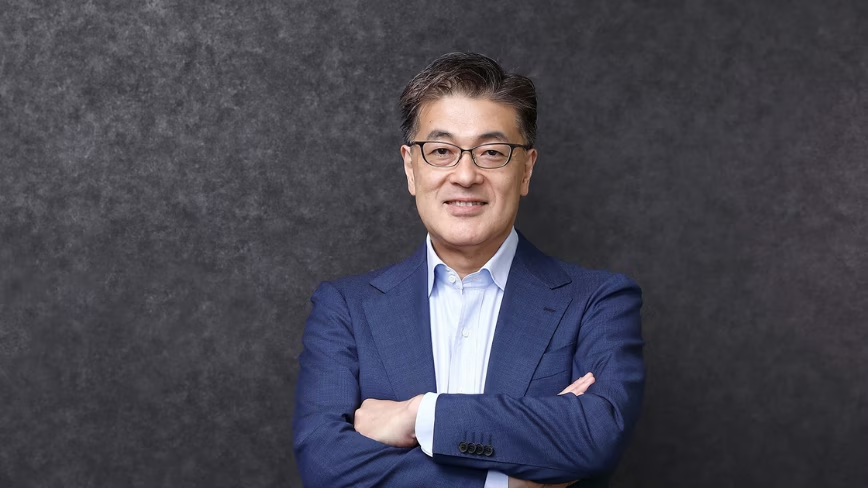
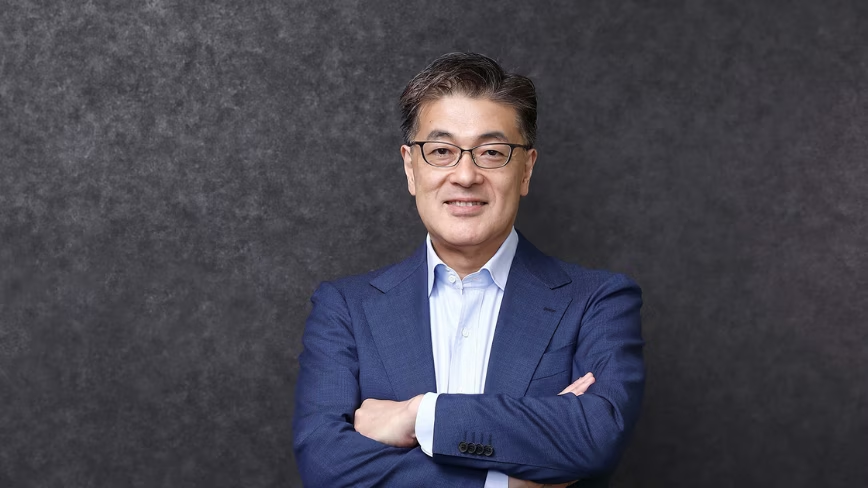

Professionals from IAS and Rent the Runway explore the impact AI has had on organisational R&D.

By its very nature, research and development (R&D) is a field that is constantly evolving, and with that evolution comes the transformation of both the workplace and professional expectations.
For Mark Walsh, director of engineering at Rent the Runway, technological advancement in R&D is among the most influential trends changing the landscape for experts working in research.
He told SiliconRepublic.com, “Dare I say it, the most exciting, volatile and frankly uncertain trend is the rapid evolution of AI. I use all three of those words deliberately, because I think anyone who tells you it is purely exciting without acknowledging the volatility and uncertainty is not being fully honest.
“The pace of change is unlike anything I have seen across my career and the scope of what is shifting – from how we write and review code, to how we think about system design and even team structure – means that almost nothing in the R&D space is untouched by it right now. That is genuinely exciting, even when it is also genuinely unsettling.”
Alexander Smirnov, a staff software engineer at Integral Ad Science, shares Walsh’s opinion that it is impossible to explore the topic of critical 2026 trends in R&D without mentioning the elephant in the room, AI.
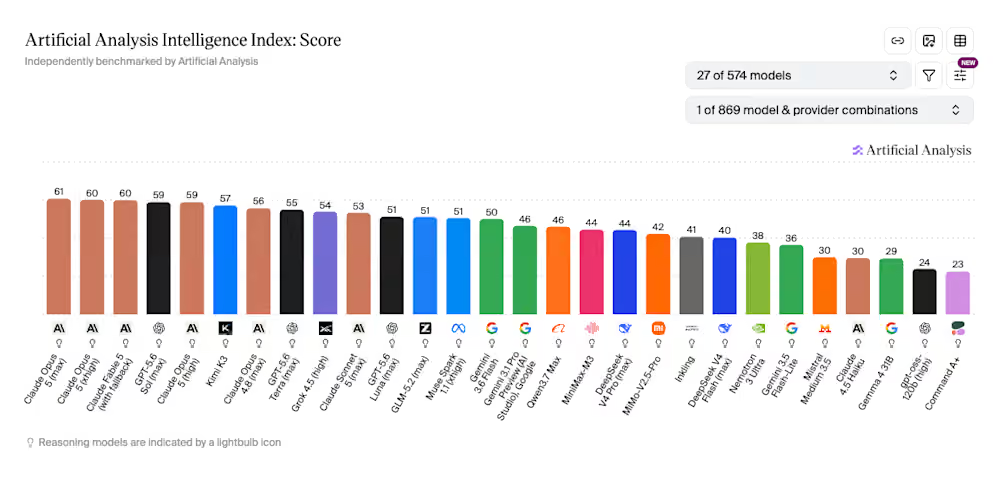
“We have witnessed a massive leap in AI capabilities and the rapid pace of competition is remarkable, with vendors releasing frontier models every few months. Engineers write less code now, relying more on coding agents every day. And it is not only coding – they are also helpful during the design, exploration and planning stages,” said Smirnov.
“Navigating legacy codebases has never been easier; you can start with a new project really quickly now. Asking questions in plain English about the codebase and receiving almost instant, context-aware results feels like a magical experience.”
Rapid movement
With that in mind, how have R&D teams evolved to meet the demands of a sector undergoing daily transformation?
Walsh said, “For starters, we are certainly not at the end of that adaptation. I would say we are continually adapting and at a far more rapid pace than I have seen at any point before. What that looks like in practice is a culture of ongoing discovery rather than waiting for the landscape to settle before making decisions, because it is not going to settle.
“Teams need to be comfortable operating with a degree of uncertainty, evaluating new approaches with rigour, making considered decisions and being willing to revisit those decisions when the ground shifts.”
Smirnov finds that many teams are adopting new workflows and increasingly embedding LLMs or agentic workflows during development and operational support.
He said, “It’s a great tool, but we still need to learn how to use it effectively, to break old habits and develop new skills. The change is not always easy. It is crucial to find dedicated time for learning.”
He further explained that having the time for self-learning, experimenting with new tools, testing novel workflows, and even just thinking about what can be done differently with the new tools are all ideal forms of upskilling,
He noted IAS’s ‘community of practice’ Slack group, where engineers share their ideas, exchange custom agentic skills and post tool reviews, which can help colleagues “to better understand the ecosystem and its capabilities”.
Make it count
Walsh also offered a word of advice to professionals new to the R&D space. He explained that it can be tempting to jump on the bandwagon and embrace any and all technologies as they emerge, but you can’t forget how and why you were selected for your role in the first place.
“I believe we are still engineers and knowledge workers first and foremost. Our most valuable asset is our judgement – the ability to think critically and to generate novel ideas. In a landscape moving as fast as I observe, I believe that foundation becomes more important, not less,” he said.
“The tools around that can and have always changed; however, the thinking you bring to how you use them is what endures. The temptation right now is to chase the tooling or even the next buzzy approach, but the fundamentals that make someone effective in this space remain what they always were: the ability to break a complex problem apart, sit with uncertainty without grabbing the easiest answer, and communicate clearly about risk to people who are not close to the technical detail.”
He advised professionals to avoid becoming dazzled by tools at the expense of critical thinking, as the ones who will thrive are also the ones who understand why they are reaching for a particular approach, not just figuring out how to use it.
Walsh said, “Curiosity and rigour together are a combination that I believe will serve anyone regardless of what the landscape looks like in the future.”
This was echoed by Smirnov, who said, “What is not changing is human judgement. Although agents can generate code in seconds, developers must thoroughly understand how that code works under the hood.
“LLMs generate output based on probabilistic token prediction from their training data; they are not actually thinking like humans do, but rather serving up the ‘average of the internet’.”
For both experts, while AI has undoubtedly transformed R&D, what has not altered is the importance of strict adherence to the fundamentals – primarily, thinking differently, critically and independently of tech.
Smirnov said, “Understanding how to use new tools effectively is no longer optional. The future belongs to those who pair strong computer science fundamentals with the ability to direct, audit and collaborate with intelligent agents.”
Don’t miss out on the knowledge you need to succeed. Sign up for the Daily Brief, Silicon Republic’s digest of need-to-know sci-tech news.





















































You must be logged in to post a comment Login