Connect with us
DAPA Banner
DAPA Coin
DAPA
COIN PAYMENT ASSET
PRIVACY · BLOCKDAG · HOMOMORPHIC ENCRYPTION · RUST
ElGamal Encrypted MINE DAPA
🚫 GENESIS SOLD OUT
DAPAPAY COMING

Tech

PlayStation sales just had its worst May in 25 years, and Xbox's was the worst ever

Published

on


Market research firm Circana’s Mat Piscatella reports that May 2026 saw the lowest number of PlayStation consoles sold in the United States during any May since 2000, a few months before the PlayStation 2’s launch. Meanwhile, Xbox unit sales experienced their worst May on record.
Read Entire Article
Source link

Continue Reading
Click to comment

You must be logged in to post a comment Login

Leave a Reply

Tech

Cramming A Mini-ITX Gaming PC Into A 3D Printed Steam Machine Sized Case

Published

on

The recently released Valve Steam Machine is somewhat awkward in that it uses a custom, non-standard PCB and non-standard power supply. This fact apparently has irked some people who decided that it makes perfect sense to try and cram a Mini-ITX board, Small Form Factor (SFF) PSU and full-sized discrete GPU into an enclosure of the same size. Cue the SFF Mini-ITX Steam Machine Case project by [3DCatt] over at Printables.

This is apparently a project done in cooperation with AMD’s [Jacob Terkelsen], who showed off the 3D printed case stuffed full with the aforementioned parts, which includes a GeForce RTX 5060 GPU. Of note is that the Valve Steam Machine uses a different cooling configuration as it has both the CPU and GPU on the same PCB. These share the same massive heatsink, as can be seen in e.g. the [Gamers Nexus] teardown video.

For this angular imitation machine it would have been nice to use a blower-style GPU, to exhaust the hot air rather than dump it all into the case. This is also an issue that was raised by [Jacob], with more ventilation added to mitigate the issue. What the overall performance will be compared to regular compact Mini-ITX cases remains to be seen, but if you really want to live the Steam Machine life and have some parts kicking around along with a 3D printer, it might be worth a shot.

Advertisement

Source link

Advertisement
Continue Reading

Tech

5 Things It’s Best To Unplug Before A Bad Storm Hits

Published

on


Every year, the U.S. sees about 100,000 thunderstorms across the country. They occur in every state and can happen day or night. Most common during the warmer months, thunderstorms require three ingredients: moisture, unstable air, and a source of lift. According to the National Weather Service, only about 10% of storms in the U.S. are considered severe, but that doesn’t make them harmless — they have the potential to wreak havoc on your electronics.

We know how to protect ourselves in the event of a severe storm: stay inside, away from windows, and avoid electrical equipment. You should also take steps to protect expensive or susceptible electronics. Even if lightning only strikes nearby and doesn’t hit your home, it can send a surge of electricity that may destroy anything that’s plugged in. 

According to the National Centers for Environmental Information, the damage caused by storms added up to over $46 billion in the U.S. in 2024. Filing an insurance claim for storm-related damage is something many homeowners hope to avoid, which is why unplugging certain devices is a good idea. Here are five things you should unplug before a storm hits your neighborhood, including TVs, computers, and AC units.

Advertisement

TVs and gaming systems

We know, we know, this one may be a pain if you have cords hidden behind an entertainment center or even your wall. But your television and gaming systems likely represent a hefty investment. A power surge caused by lightning might not only fry electronics, but it may also void any manufacturer’s warranties that protect these products. 

According to CNET, the average American expects to spend $1,177 on a new TV, so it’s likely one of the most expensive electronics in your home. Consoles aren’t cheap, either: A new Switch 2 currently costs $449.99 (and that price is going up by $50 in the fall), and a PS5 retails for at least $599.

Advertisement

When a thunderstorm is on the horizon, turn off your TVs and gaming systems and unplug them from the wall. If you want to make things a bit easier on yourself, you can invest in a power strip with surge protection, but most experts recommend that you unplug that power strip as well. If you’re not home to unplug your system, that surge protector may provide protection, and if you are home, it’s easier to unplug one thing than every device separately.

Advertisement

Desktop computers

Your boss may think you’re just dreaming up an excuse to take a break from work, but if you have a desktop PC at home, you should turn it off during a storm. If your boss gives you a hard time about prioritizing your safety during a thunderstorm, remind them that the CDC recommends that you do not touch anything connected to an electrical outlet during a storm, including computers! Laptop users are out of luck — it’s safe to keep using it as long as it’s not plugged into the wall.

To protect your desktop computer, shut down and then unplug all components, including the tower, monitor, keyboard, mouse, modem, router, and printer. If all items are plugged into a power strip, simply unplug the power strip from the wall. Your computer is susceptible to any power surges, even from an indirect strike, and while the damage may be repairable, it’s likely to be pricey. In the case of a power surge, items with delicate circuitry are most at risk, including the motherboard, and replacing the motherboard often carries other costs, such as a new power supply or processor.

Advertisement

Kitchen appliances

Your toaster or blender may be the last thing on your mind when severe weather strikes, but even small appliances contain complex electric components that may not survive a lightning strike or power surge. Major kitchen appliances like your refrigerator and stove can remain plugged in. You certainly don’t want your food to spoil, but if you’re evacuating due to a weather event, you should unplug larger appliances except the refrigerator until you get home.

When the thunder starts to boom, unplug smaller appliances like toasters, coffee makers, mixers, air fryers, and even microwaves. A power surge may affect the digital displays and internal circuitry. In fact, experts recommend that you unplug some small appliances when they’re not in use, including toasters and coffee makers, to reduce the risk of fire. You may be more worried about expensive electronics like your television, but small appliances don’t have the built-in protection that larger appliances boast, and are more vulnerable.

Advertisement

Smart home devices

While it’s easy to take modern conveniences for granted, the rapid integration of technology has almost entirely rewritten how we live. Most of us carry tiny computers in our pockets, wear smart devices on our wrists, use GPS when we drive somewhere unfamiliar, and meet virtually with people who may live thousands of miles away.

Technology has also changed how we live in our homes. Doorbell cameras allow us to see who’s knocking without leaving our living room, and smart thermostats automatically adjust the temperature to keep us comfortable. Robot vacuums can do housework while we’re away, and voice-controlled systems allow us to easily check the weather. Even if you only have one or two smart devices, you should consider unplugging them during a storm. Devices that are connected to cable, internet, and even satellite systems are especially vulnerable, as power surges can pour through those pathways.

You may not be able to unplug your doorbell camera, but you can protect any smart hubs like Amazon Alexa, smart plugs, and your streaming devices. Even if the devices are turned off, they’re often still drawing some power, and a lightning strike could be disastrous.

Advertisement

Air conditioning units

Many of us have some form of air conditioning in our homes, whether it’s central AC or a few window units. It’s probably the last thing you want to do when a thunderstorm hits on a hot, muggy summer evening, but experts agree that both types of systems should be shut off during a storm.

Turn off your central air conditioning during a thunderstorm. In the event that lightning strikes your home, it can cause a power surge that could significantly damage the system. If it’s the compressor that gets damaged, replacing it might be almost as expensive as simply installing a new one in its place. 

Debris can also damage the exterior portion of your unit and block airflow, causing additional damage to other areas of the system, while a power surge potentially causes heat spikes that melt plugs and components like control panels. Prevent all this by simply turning off the system at your thermostat.

If you have a window unit, you can leave it plugged in if it’s difficult to unplug, but you should turn it off. Window unit lightning strikes don’t happen often, so the biggest threat is a power surge that could damage the unit.

Advertisement


Source link

Advertisement
Continue Reading

Tech

UW grad’s startup idea comes into focus with a digital marketplace for photographers

Published

on

SnapMatePhoto is a Seattle-based marketplace for finding photographers. (SnapMatePhoto Image)

In an age when everyone seems to have their phone out at every imaginable event, Sky Yang still envisions a need for real photographers to capture the moment.

Yang is the founder of SnapMatePhoto, a Seattle-based digital marketplace connecting customers with photographers for graduation portraits, weddings, maternity shoots, and more.

An amateur photographer himself, Yang created his idea while a senior at the University of Washington. Friends kept asking him to take their graduation photos, and even offered to pay him for his services. He realized there were limited resources online for people to easily find an affordable photographer.

“A lot of people couldn’t afford a professional photographer, but I think they still deserve a nice graduation photo — because that’s an important moment in their life,” Yang said.

Yang started building the website while still at UW, initially focused on connecting students with student photographers looking to build their portfolios. The startup got into the UW’s Buerk Center for Entrepreneurship accelerator program.

Advertisement
Sky Yang is an amateur photographer who created SnapMatePhoto to give people more choices for who to hire to shoot their special occasions. (Photo courtesy of Sky Yang)

Yang, who is originally from China and majored in economics with a minor in business, has since graduated and now works in logistics operations at Amazon. SnapMatePhoto launched last October and now lists more than 120 photographers in the Seattle area.

Photographers on the platform list their specialties, portfolio images, and rates — ranging from $35 to $700 — and customers can browse and book directly through the site. SnapMatePhoto handles payments through Stripe, charging roughly 15% from photographers and 11% from clients.

Yang sees the rise of AI-generated imagery as validation for his business, not a threat. He said he briefly experimented with AI-generated videos to promote SnapMatePhoto early on, but pulled them down within a couple of weeks after backlash from both photographers and customers, who called it AI slop.

“The real image, the real human connection is only going to be more and more important in this AI age,” Yang said.

The company is bootstrapped, with Yang raising a small amount from friends. Revenue has grown quickly — from roughly $3,500 in its first month to nearly $7,500 in May. Yang said the company is reinvesting heavily in marketing and advertising and is not yet profitable.

Advertisement

Yang mentions competitors in the space including Snappr and Flytographer, as well as Airbnb. The short-term property rental platform offers a photographer marketplace under its varied services, which Yang sees as another validation for what he’s building.

SnapMatePhoto operates with a small team — Yang, one developer, one designer, and a handful of UW interns focused on photographer acquisition and influencer outreach. Mentors with the Buerk Center accelerator advised Yang to focus on Seattle before expanding too soon, but he does have his eye on California.

For now, Yang is leaning into the grind of building a startup while working long days at Amazon, but he says the hard work genuinely makes him happy.

“Yesterday I was reviewing a photographer’s work for a wedding, and I see all the moments from the beginning to the end — the whole ceremony just brought me a lot of joy,” he said.

Advertisement

Source link

Continue Reading

Tech

NASA tests AI medic for astronauts too far from Earth to call a doctor

Published

on

AI AND ML

Please state the nature of the medical emergency

NASA researchers are testing an AI clinical decision support system to help astronauts diagnose and treat medical symptoms during deep-space missions.

The Crew Medical Officer Digital Assistant (CMO-DA) is powered by a Red Hat-backed open source tool called RamaLama, designed to simplify how developers run, pull, and serve AI models. While it’s no Star Trek-esque Emergency Medical Hologram (EMH) quite yet, it could be a boon to ailing astros far from home.

Advertisement

Earlier this year, NASA decided to bring Crew-11 back from the International Space Station (ISS) early because of a medical concern. As missions venture further afield – to the Moon, Mars, and beyond – an early return may no longer be practical, while communication delays can rule out real-time consultation with doctors on Earth.

Red Hat says that CMO-DA started life as a proof of concept before moving from a cloud-dependent model to a fully disconnected edge deployment. It currently runs on a terrestrial twin of the HPE Spaceborne Computer aboard the ISS.

Inference is multimodal. “RamaLama provides the engine to run both large language models (LLMs) for complex medical reasoning and Vision Language Models (VLMs) for image-based symptom analysis,” Red Hat stated. “This allows the CMO-DA to process both text and visual data without needing a massive infrastructure footprint.”

CMO-DA runs locally on the device, which means responses do not depend on a connection to Earth.

Advertisement

That said, the system has yet to leave Earth. Testing on the Spaceborne twin allows the system to be refined before any potential deployment to the ISS. “Once validated on Earth, the CMO-DA will be demonstrated to NASA leadership so that they can evaluate its further use,” Red Hat said.

HPE’s Spaceborne project is on its third iteration aboard the ISS. Built from off-the-shelf components, the system is based on HPE Edgeline and Proliant servers and is more than capable of machine learning and AI workloads.

In the future, the team plans to integrate Red Hat Enterprise Linux AI for the next iteration of the CMO-DA.

Sadly, there appears to be no chance of a virtual Robert Picardo turning up to dispense medical advice to stricken astronauts. ®

Advertisement

Source link

Continue Reading

Tech

Here’s Your Daily Reminder That You Don’t Own Digital Content

Published

on

People in Europe will soon lose access to Studio Canal movies they paid for on the PlayStation Store.

Sony has notified customers in a handful of European countries that they’ll soon lose access to some movies that they’ve purchased through the PlayStation Store due to the upcoming expiration of a licensing deal with Studio Canal. If you bought any of the movies on the list in affected regions, which includes hundreds of titles, “it will be removed from your video library” on September 1, according to the warning. It’s yet another frustrating reminder that paying for a digital product doesn’t actually equate ownership — when licenses expire or servers are shut down, your purchased content might go right with them. 

The PlayStation Store posted the notice about the termination of Studio Canal movies on several regional pages, including those for UK, French, Italian and Spanish customers. Don’t get your hopes up for a refund, either. The notice doesn’t mention anything of the sort. The expiration date is still a few months away, though, so there’s still a chance things could change. The PlayStation Store was set to pull Discovery shows a few years back due to licensing issues, but it ultimately worked out a new licensing agreement so it could reverse course on their planned removal.

Advertisement

Source link

Continue Reading

Tech

Daily Deal: The 2026 Complete Godot Stack Development Bundle

Published

on

from the good-deals-on-cool-stuff dept

Dive into Godot – a rising star in the game engine world – with the 2026 Complete Godot Stack Development Bundle. You’ll learn to create platformers, RPGs, strategy games, FPS games, and more as you master this free and open-source engine with easily expandable systems. Plus, you’ll also explore techniques for game design and game asset creation – giving you the ultimate techniques to customize your projects. It’s on sale for $25.

Note: The Techdirt Deals Store is powered and curated by StackCommerce. A portion of all sales from Techdirt Deals helps support Techdirt. The products featured do not reflect endorsements by our editorial team.

Filed Under: daily deal

Source link

Advertisement
Continue Reading

Tech

Today’s NYT Connections Hints, Answers for June 27 #1112

Published

on

Looking for the most recent Connections answers? Click here for today’s Connections hints, as well as our daily answers and hints for The New York Times Mini Crossword, Wordle, Connections: Sports Edition and Strands puzzles.


Today’s NYT Connections puzzle is a fun mix of categories. Horse people and board-game players, you both get a category. Read on for clues and today’s Connections answers.

The Times has a Connections Bot, like the one for Wordle. Go there after you play to receive a numeric score and to have the program analyze your answers. Players who are registered with the Times Games section can now nerd out by following their progress, including the number of puzzles completed, win rate, number of times they nabbed a perfect score and their win streak.

Advertisement

Read more: Hints, Tips and Strategies to Help You Win at NYT Connections Every Time

Hints for today’s Connections groups

Here are four hints for the groupings in today’s Connections puzzle, ranked from the easiest yellow group to the tough (and sometimes bizarre) purple group.

Yellow group hint: Do not pass Go.

Advertisement

Green group hint: Think Vogue.

Blue group hint: Straight lines.

Purple group hint: Neigh!

Answers for today’s Connections groups

Yellow group: Monopoly squares.

Advertisement

Green group: Components of a fashion show.

Blue group: Commonly striped things.

Purple group: Ending in horse gaits.

Read more: Wordle Cheat Sheet: Here Are the Most Popular Letters Used in English Words

Advertisement

What are today’s Connections answers?

completed NYT Connections puzzle for June 27, 2026

The completed NYT Connections puzzle for June 27, 2026.

NYT/Screenshot by CNET

The yellow words in today’s Connections

The theme is Monopoly squares. The four answers are Boardwalk, Income Tax, Short Line and Water Works.

The green words in today’s Connections

The theme is components of a fashion show. The four answers are catwalk, collection, designer and model.

Advertisement

The blue words in today’s Connections

The theme is commonly striped things. The four answers are barber pole, billiard ball, credit card and crosswalk.

The purple words in today’s Connections

The theme is ending in horse gaits. The four answers are decanter (canter), envelope (lope), firewalk (walk) and foxtrot (trot).

Toughest Connections puzzles

We’ve made a note of some of the toughest Connections puzzles so far. Maybe they’ll help you see patterns in future puzzles.

#5: Included “things you can set,” such as mood, record, table and volleyball.

Advertisement

#4: Included “one in a dozen,” such as egg, juror, month and rose.

#3: Included “streets on screen,” such as Elm, Fear, Jump and Sesame.

#2: Included “power ___” such as nap, plant, Ranger and trip.

#1: Included “things that can run,” such as candidate, faucet, mascara and nose.

Advertisement

Source link

Continue Reading

Tech

Cloudflare’s engineering headcount surged 45% after it cut 1,100 jobs, and its CEO has a framework for who survives AI

Published

on

TL;DR

Cloudflare’s engineering team grew 45% even after mass layoffs, as CEO Prince says AI kills “measurer” roles while builders and sellers survive.

Cloudflare’s engineering headcount surged 45 percent in the weeks after the company cut 1,100 jobs in May, according to BNP Paribas data drawn from LinkedIn profiles. The finding, first reported by Business Insider, shows Cloudflare’s engineering staff grew from 1,308 to 1,894 even as its total workforce shrank by a fifth. CEO Matthew Prince confirmed the trend and offered a framework for understanding it: every company, he said, is made up of builders, sellers, and measurers, and AI is eliminating the third group.

Prince told Business Insider that the distinction is straightforward. Builders make the product, sellers bring in the revenue, and measurers track, report, and coordinate the work of the first two groups. The roles being cut at Cloudflare, and across the tech industry, fall overwhelmingly into the measurer category: middle managers, operations staff, finance analysts, and marketing coordinators whose work AI agents can now approximate.

If you think about what AI is most effective at, it’s looking at data sets and summarizing them,” Prince said. He added that if his engineers become more productive with AI, he would hire more of them, not fewer. The logic is that AI amplifies the output of people who build and sell but replaces those whose primary function is oversight and reporting.

Advertisement

The 💜 of EU tech

The latest rumblings from the EU tech scene, a story from our wise ol’ founder Boris, and some questionable AI art. It’s free, every week, in your inbox. Sign up now!

The BNP Paribas analysis, which Business Insider says Prince reviewed and confirmed, could not be independently verified outside that report. LinkedIn profile data captures job title changes and may not perfectly reflect internal headcount. But the direction is consistent with Prince’s stated strategy: Cloudflare cut broadly and then invested heavily in the function it considers most valuable.

The pattern is not unique to Cloudflare. TrueUp, a platform that tracks tech hiring, reports that open technology roles are up 14 percent in 2026 compared with a year ago, with hardware engineering positions surging 52 percent. The gains are concentrated in technical and product roles, while openings in operations, human resources, and general management have declined.

Advertisement

Companies are hiring more people who build things and fewer people who manage the people who build things. GitLab followed a similar playbook in May, cutting seven percent of its workforce and stripping out up to three layers of management while reorganising its engineering division into 60 autonomous teams. CEO Bill Staples called it preparation for the “agentic era,” and the companies that have cut most aggressively are not shrinking their engineering capacity but concentrating it.

Prince’s framework carries an implicit warning for anyone whose job description centres on coordination, reporting, or process management. He was blunt about the trajectory, telling Business Insider that “a lot of the support roles are not going to be the roles that drive companies going forward.” If your work can be described as measuring what other people produce, the category you occupy is the one AI targets first.

The broader labour market data complicates the picture slightly. Tech CEOs have recently shifted from warning about AI job losses to insisting AI will create jobs, a pivot that coincides with approaching IPOs for companies including OpenAI and Anthropic. Prince’s framework sits somewhere between the two narratives: he is not claiming AI creates jobs across the board, but that it creates engineering jobs specifically, at the expense of everyone else.

Whether the builders-sellers-measurers model holds beyond Cloudflare is an open question. Not every measurer role is dispensable, and not every company can absorb a 45 percent engineering expansion while cutting a fifth of its overall workforce. The framework also assumes that AI tools are reliable enough to replace human judgment in oversight functions, an assumption that remains contested even among AI researchers.

Advertisement

What is not contested is the direction of hiring. Cloudflare’s Q1 2026 revenue grew 34 percent year over year to $640 million, and the company added a record number of enterprise customers even as it shed 1,100 roles. The restructuring was not driven by financial weakness but by a bet that the work those people did can now be done by software, and that the savings are better spent on engineers who write more of it.

Prince’s taxonomy gives a name to a shift that dozens of companies are executing simultaneously but rarely describe this clearly. The question for the tens of thousands of workers displaced across the tech sector this year is whether “measurer” is a temporary label applied to roles that will eventually return, or a permanent verdict on an entire category of work.

Source link

Advertisement
Continue Reading

Tech

Polestar Faces a Ban on Selling Its EVs in the US

Published

on

Automaker Polestar will not be allowed to sell its 2027 models and beyond in the US after the US Department of Commerce’s Bureau of Industry and Security banned those sales over concerns about Chinese-made connected technology. And the company has no plans to return.

The crux of the issue is Polestar’s ownership by Volvo and Volvo’s own parent company, China-based Geely.

Advertisement

The Swedish manufacturer of electric vehicles, which became a distinct brand in 2017, revealed the ban in an SEC filing, which it paired with a press release this week announcing that it’s shifting manufacturing to Europe.

It said in the release that it will continue to sell existing stock of its Polestar 3 and Polestar 4 vehicles in the US and to support customers through its service network. 

A representative for Polestar told CNET in an email that, because of the Commerce Department’s decision, the company has no plans to sell new cars in the US from model year 2027 onward, including the planned Polestar 7.

The company has marketed the Polestar 7 as a premium compact SUV. It’s due out in 2028.

Advertisement

This decision isn’t surprising: A 2024 letter from Polestar (PDF) to the Bureau of Industry and Security foreshadowed what would eventually happen. It said at the time that the agency’s prohibitions could eventually lead the company to stop selling vehicles in the US, even ones it manufactures in South Carolina.

The US ban has not been posted on the Commerce Department’s website or social media, but it’s in line with the agency’s directive to police technology from China that the government considers a potential security threat. This month, the department issued a $36 million penalty against Bosch for exporting sensors and auto software to Huawei. 

In May, however, the Bureau of Industry and Security granted Volvo special authorization to sell its vehicles in the US after the auto company said it discussed its connected technology with the department. 

A representative of the Bureau of Industry and Security did not immediately respond to a request for comment.

Advertisement

US agencies aren’t just looking at the auto industry. The Federal Communications Commission has targeted consumer products including routers and drones that have technology made in China.

Considering EVs in the US

Polestar is not one of the top 10 EV manufacturers, lagging behind larger companies including Tesla, BYD and Volkswagen. 

Electric vehicles only account for about 6.5 percent of the US auto market, according to industry watcher Edmunds. In the US, EVs are typically priced higher, and federal rebates to purchase these types of vehicles have been phased out

With gas prices high this summer, consumers may be giving EVs another look, but concerns remain about pricing and range. 

Advertisement

Some automakers are trying to boost the appeal of electric vehicles through lower-cost models. Slate is taking preorders for a basic, modular EV truck that costs $24,950 before delivery fees. Other EV models, such as the Chevrolet Bolt, can be found for about $30,000.

Source link

Advertisement
Continue Reading

Tech

Requiem For Long Wave, As The BBC Goes Silent

Published

on

Something happened this morning which will have been unnoticed by many, but which for a certain breed of radio enthusiast marks the end of an era. The BBC stopped broadcasting Radio 4 on their 198 kHz Long Wave frequency, ending over a century of transmission in the band. For now the transmitter carries a recorded message telling listeners that the service has ended, but it’s expected that this will soon be turned off.

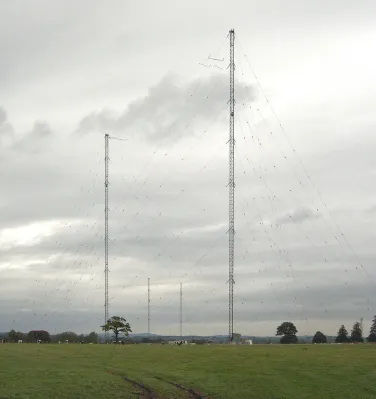
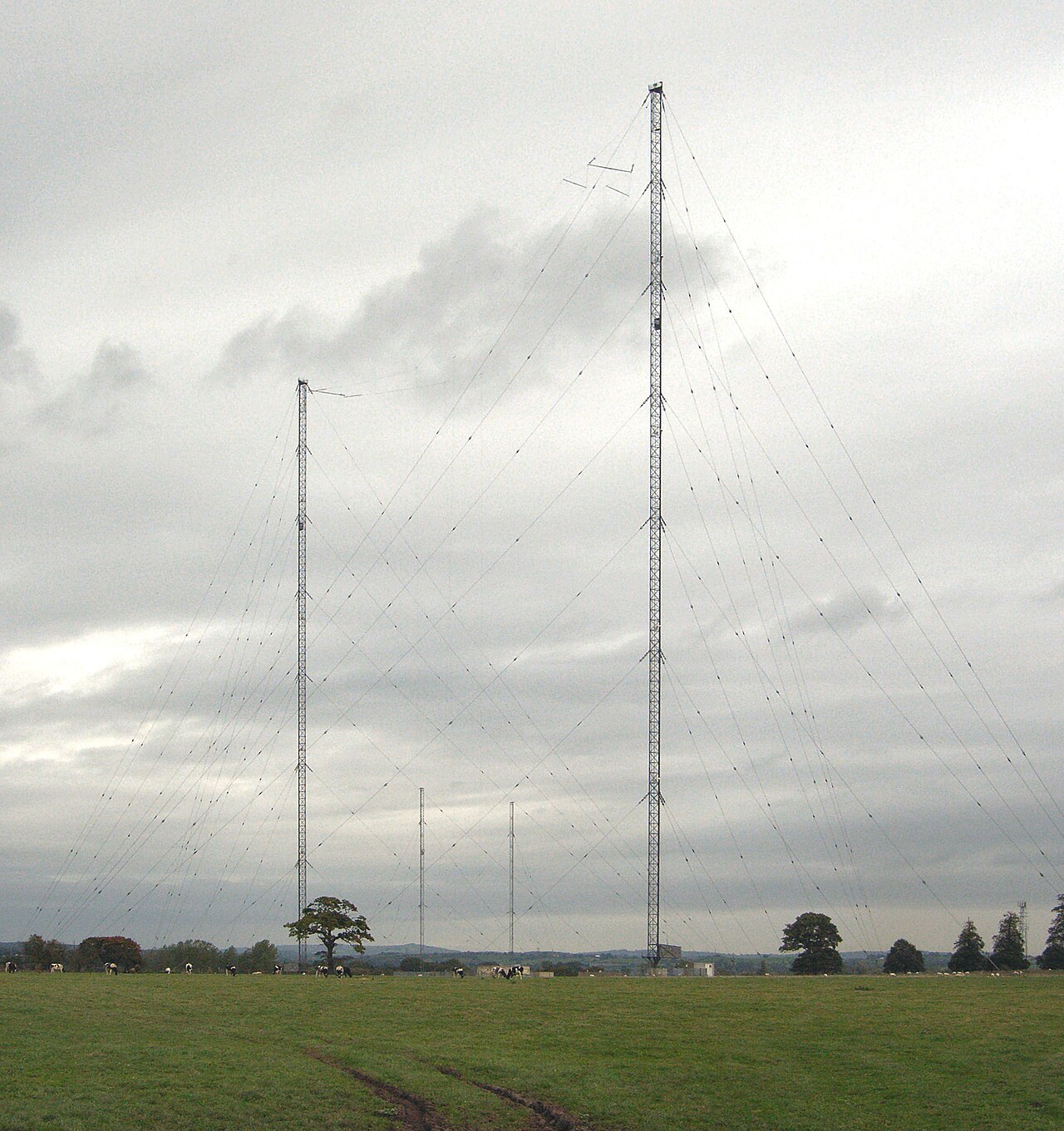
A pair of very large transmitting masts against a cloudy grey sky.
The main 198kHz BBC transmitter, at Droitwich. Bob Nienhuis, Public domain.

American readers may be unfamiliar with Long Wave as it’s a band not allocated in their region. Covering 153 to 279 kHz, it’s a relic from the earliest days of high-power broadcasting in the 1920s, used because of the enormous distances that could be covered with its lower frequencies. The main long wave transmitter for the BBC is at Droitwich, and its demise comes because there are no more spares for its high-power transmitter tubes. It joins many Medium Wave, or AM, as it is commonly known, stations in leaving the airwaves, as increased interference from switch mode electronics and the availability of higher quality alternatives took away their listeners. It’s fair to say that there will be few whose lives are inconvenienced by the switch-off in 2026, but it’s worth taking a moment to remember.

The first BBC Long Wave transmissions in the mid-1920s were on a 1600 metre wavelength, or 187.5 kHz. A series of international agreements saw them move to 193 kHz, and then 200 KHz or 1500 metres in 1934. They stayed on that frequency until another shift down 2 KHz to 198 kHz in 1988. They were atomic-controlled, and thus usable as a frequency standard. The programming started with station names redolent of their era, first the BBC National Service, then the Light Programme you’ll see on the dial in the header image, and finally the more modern-sounding Radio 4. A famous BBC programme tied to Long Wave is the Shipping Forecast, a weather bulletin for deep-sea fishermen which became cult listening on land and now features on FM and digital services too, and there’s even a probably-apocryphal tale that British nuclear submarine captains would once use its presence or absence to judge whether nuclear war had occurred.

In an Oxfordshire farmhouse not far short of fifty years ago, a young child who would later become a Hackaday writer heard a radio show like nothing before, which made an impression that continues to this day. The show was one of the earliest airings of the original Hitchhikers Guide To The Galaxy radio series, through a 1970s ITT radio tuned to BBC Radio 4 on (then) 200 kHz Long Wave. So long, Droitwich, and thanks for all the fish.

Advertisement

Source link

Continue Reading

Trending

Copyright © 2025