A new email from Sony says that PlayStation will require players to verify their age later this year to keep using communication features like messages and voice chat. Insider-Gaming reports: The initiative comes from the goal of providing “safe, age-appropriate experiences for players and families while respecting their privacy” and providing “meaningful control over their gaming experiences.” The age-verification process will be implemented globally, and players will need to verify their age to continue using PlayStation communication services, such as messages and voice chat. If the player opts not to verify their age, they can still use other services, such as games, trophies, and the store. Only the communication experience will be affected if you choose not to verify your age. PlayStation didn’t provide a date for when players will need to begin the verification process.
It’s barely been a few days back since we discussed just how open to mistakes and abuse YouTube’s copyright takedown system is, when NVIDIA’s demo video for its controversial DLSS 5 tech got briefly pulled down because an Italian news channel did a piece featuring the footage which it copyrighted. The copyright bots took it from there and the actual source material for the news footage got booted.
While that is a great example of an obvious simple error resulting in copyright collateral damage, there have been plenty of examples of abuse resulting in this sort of thing, too. And if you want a great example of how this could all get much, much worse thanks to AI, you need look only at let’s play YouTuber Nubzombie getting two copyright copyright claims on his video of Silent Hill 2 gameplay for most absurd reasons. It seems multiple people have taken music from the game, originally by Akira Yamaoka, and layered some lazy AI-created voiceovers on top of it and then setup automatic copyright enforcement for those sounds.
Earlier last night, content creator Nubzombie uploaded a video titled A.I. IS RUINING YOUTUBE (and my life). In the video, Nubzombie states that their latest playthrough of the original version of Silent Hill 2 was hit with a copyright strike by someone called “Agro memos.” As you can see (or rather hear), in Nubzombie’s video, the track that the Agro memos strike is protecting is a clear copy of Akira Yamaoka’s track “Promise,” but with an AI-generated voice over top.
Then, in the space of a few hours, Nubzombie uploaded a second video. As they explain in that follow-up, as soon as their first video had finished uploading to YouTube, their Silent Hill 2 playthrough was hit with a second copyright strike. This time, it was from a different artist, named “詹姆斯.K,” but the copyright claimer this time isn’t even trying to hide the fact that their track is a ripoff of Akira Yamaoka’s “Promise”…because 詹姆斯.K’s track is literally called “Promise.”
This has always been the problem with YouTube’s automatic and bot-driven copyright enforcement mechanisms. There is very little that gets in the way of bad actors claiming copyright on all kinds of content actually produced by others, sometimes with this sort of languorous and brief additions to said content, and then slap copyright enforcement on it to issue automatic takedowns or demonetization claims. That YouTube has allowed this problem to fester for years and the timeline is now colliding with the prevalence of AI tools that make all of this even easier for the bad actors is inexcusable.
Advertisement
Though it gets a little bit stranger with that first copyright notice, since it appears Sony Music might be involved.
While I couldn’t find any information on the second “Promise” rip-off, I did find something odd regarding the former. Agro memos’ most recent tracks on YouTube, like this one, state in the descriptions that they were “Provided to YouTube by The Orchard Enterprises.”
Orchard Enterprises is a division of Sony Music Entertainment. Turns out Orchard’s got a bit of history of pulling this kind of stunt, dating all the way back to 2022. In this video, content creator EckhartsLadder details how he was repeatedly hit with copyright claims by Orchard Enterprises in 2024 because Orchard falsely claimed that the track “Resonance” by HOME, which EckhartsLadder used as their intro and outro song for all their videos, belonged to the Sony Music subsidiary.
Sony hasn’t responded to questions about all of this as of the time of this writing, but it damned well should. Best as I can tell, Sony doesn’t have any of the video game rights to the Silent Hill franchise, and this specific game was produced by Konami in 2001, and then a remake was released in 2024. It doesn’t seem to me that Sony should have anything to do with any of this.
But even if some division of Sony is a bad actor in all of this, the onus is on YouTube to fix its platform and protect its creators. This is long overdue.
Yes, that Prego — the pasta sauce people. The company has teamed up with StoryCorps, a nonprofit dedicated to preserving everyday American conversations, to release a physical recording device built specifically for the dinner table. It’s called the Connection Keeper, and the whole point of it is to capture the kind of conversations that happen when everyone puts their phones down and actually talks to each other.
What it is and how it works?
The Connection Keeper is a small puck-shaped device, apparently nodding to the round lids on Prego’s pasta sauce jars, that you place in the center of the table. Hit the button on top, and it starts recording. That’s more or less the entire interface. There’s no screen, no app, and no Wi-Fi setup needed for this. Just a button, a USB-C port, and a 16GB microSD card that can store up to eight hours of conversation.
It can also prompt your family with conversation starters if dinner has gone quiet and someone’s just pushing food around their plate.
Where do the recordings go?
Once you’re ready to do something with your recordings, you move them over to a StoryCorps portal via USB-C. StoryCorps keeps everything private by default, and Prego says the portal is encrypted with full privacy controls, though the specifics of how all that works haven’t been fully laid out yet. Recordings will be accessible and shareable starting May 4.
Advertisement
Prego
If you want to, you can also contribute your conversations to StoryCorps’ public archive, where anyone online can listen. That’s a meaningful thing to consider before uploading, especially if kids are involved, or anyone at the table didn’t know they were being recorded.
At $20, the price is quite reasonable for what it is. The catch is that Prego plans to produce fewer than 100 units, with sales opening on April 27. So if this sounds like something you’d actually use, you’ll want to move quickly once it goes on sale. It’s a weird product from an unexpected brand, but in a world where every device is fighting for your attention, something that quietly sits on the table and just listens feels almost radical.
A sweet idea, with a slightly complicated aftertaste
The Connection Keeper is a genuinely sweet idea on the surface. There’s something almost nostalgic about a screenless, button-press recorder sitting in the middle of the dinner table, quietly catching the jokes, the arguments, the stories your grandmother tells for the third time that you’ll one day wish you’d heard a fourth. But the moment you start thinking about what actually happens to those recordings, the warm feeling gets a little complicated.
Prego
Your dinner-table conversations are as personal as it gets. The things said over a bowl of pasta on a Tuesday night, the offhand comments, the vulnerable moments, the stuff nobody outside that room was ever supposed to hear. Handing any of that over to a portal, even one that claims to be encrypted and private, asks for a level of trust that Prego and StoryCorps haven’t fully earned yet, mostly because they haven’t fully explained themselves. What does “full privacy controls” actually mean in practice? Who has access to the servers? What happens to your recordings if StoryCorps shuts down or gets acquired? These aren’t paranoid questions. They’re reasonable ones that any company asking you to record your family should have ready answers for before the product goes on sale, not after. Until those details are out in the open, the Connection Keeper is a device with a lot of heart and not quite enough transparency to match it.
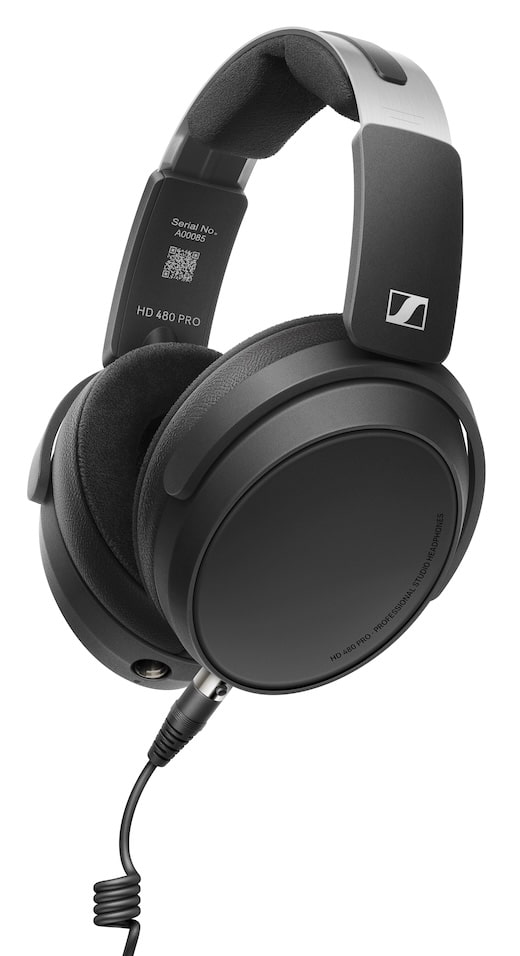
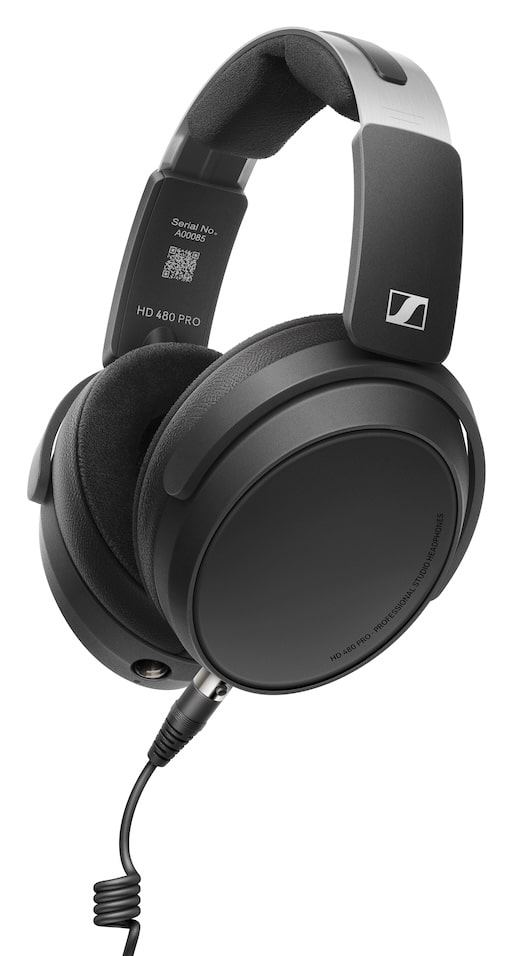
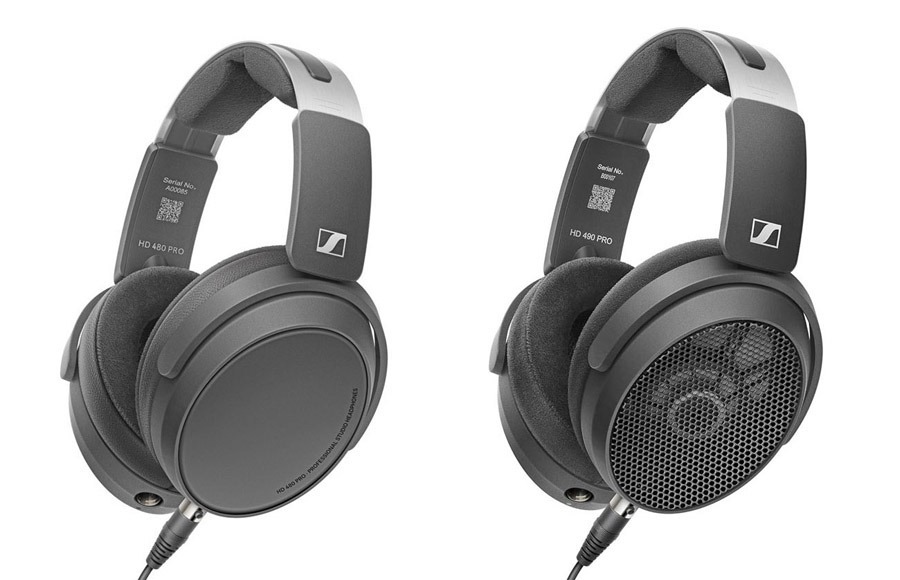
Sennheiser isn’t waiting around for its consumer business questions to get sorted out. In 2026, the brand is pushing forward where it still carries real weight, professional audio, with the launch of the $479 HD 480 PRO, a closed back studio headphone that builds on the open back HD 490 Pro introduced in 2024.
Positioned at the top of its 400 series closed back lineup, the HD 480 PRO is aimed squarely at working environments like tracking, monitoring, and live use where isolation actually matters. Sennheiser is framing it as its most versatile pro headphone to date, designed to handle recording and production duties while still being usable for critical mix decisions. Patents covering fit, comfort, and noise decoupling suggest this is more than a simple closed back variation.
More importantly, it’s a reminder that while the company’s consumer side direction remains uncertain, the pro division is still doing what it has always done, building tools that people in studios and on stages can rely on.
The HD 480 PRO is designed to address two common issues with closed back headphones: inconsistent bass accuracy and long term comfort. Sennheiser is aiming for controlled, reliable low end while keeping the fit comfortable enough for extended use in recording, tracking, and monitoring across studio, live, and mobile workflows.
Achieving accurate low-end performance in a closed-back design has always been a balancing act. Isolation helps with tracking, but it often comes at the expense of bass control and realism. That’s the gap Sennheiser is trying to close with the HD 480 PRO.
Advertisement
“With closed-back headphones, a good reproduction of the low-end is usually difficult to achieve. This is where the HD 480 PRO excels. Compared to other closed-back headphones, they are a lot tighter on the bass, their low-end is super-accurate and realistic,” notes Jimmy R. Landry, Category Market Manager, Music Industry at Sennheiser.
Who Is the Sennheiser HD 480 PRO For?
Whether used in the studio by producers, mixers, musicians, and recording engineers, or in live settings by FOH and monitor engineers, the HD 480 PRO is positioned as a flexible tool for monitoring, recording, and production, with the added claim that it can be used for mixing. Sennheiser is targeting users who need a consistent reference across different environments, including mobile use.
The tuning focuses on accuracy and a relatively neutral frequency response, with controlled low end intended to translate reliably across other systems, whether that’s home speakers, car audio, or PA setups.
“Knowing that you can rely on what you’re hearing is everything; that’s what you get with the HD 480 PRO.” Jim Kaufman, producer
Advertisement
“When I’m going to be mixing on headphones outside my studio, it’s imperative I have a pair that I trust. With the HD 480 PRO, to have this level of quality and accuracy in a closed-back headphone is amazing.” Will Brierre, mix engineer
“As producers, we have to receive the best sound to our ears that we can. Every detail is important. When you’re wearing the 480s, you’re immersed in the sound, completely undistracted by the outside world.” Young Chencs, artist and producer
Advertisement. Scroll to continue reading.
Drivers
The HD 480 PRO uses 38mm dynamic drivers with neodymium magnets, paired with lightweight voice coils intended to improve efficiency and overall responsiveness.
Advertisement
Comfort and Shielding
The HD 480 PRO uses a multi-stage passive isolation design to help reduce external noise and keep the focus on the signal. The ear pads include grooves to accommodate glasses, which helps maintain a more consistent seal, an important factor for stable bass and overall accuracy. Angled earcups position the drivers more precisely, with the goal of delivering a consistent listening experience.
“Comfort is of paramount importance when headphones are a work tool,” adds Gunnar Dirks, Senior Product Manager for professional headphones. “Engineers often spend hours on end in their sessions. They need a lightweight, ergonomically designed pair of headphones to keep focus and concentration up. The HD 480 PRO eliminates any pressure points and fit every head precisely and comfortably even if you’re wearing glasses.”
Connectivity
Like the open-back Sennheiser HD 490 PRO, the closed-back Sennheiser HD 480 PRO is a wired-only design. To add some flexibility, it includes input jacks on both earcups for detachable cables, allowing users to choose their preferred configuration or adapt to different studio setups. The earcups are also angled to position the drivers more precisely, with the goal of maintaining a consistent listening experience.
Vibration Attenuation System
A series of design features grouped under the term “Vibration Attenuation System” eliminates unwanted vibration, reflections, and distortion, preserving the clarity of the signal. Ultralight voice coils ensure authentic and dynamic reproduction.
Advertisement
Like its open-back counterpart, the HD 490 PRO, the HD 480 PRO benefits from several Sennheiser-patented features.
Special Axes Geometry: The mechanical design of the 480 enables the headphones to optimally adapt to the head and maintain an equal contact pressure no matter what the shape of the user’s head. The listening experience is consistent across users.
Comfort Zone for Glasses: The ear pads are designed to avoid excessive pressure on the temples, using a softer contact zone that helps maintain a proper seal while improving long-term comfort.
Blocking Cable-borne Noise: A coiled section near the earcup connector helps reduce cable-borne noise, limiting the transfer of mechanical vibrations from handling or contact with surfaces like a desk into the earcups.
Advertisement
Daily Professional Use
The detachable cable can be connected to either the left or right earcup, allowing for more flexibility depending on the setup and helping keep the cable out of the way during tasks like instrument tracking. The earcups are also braille-marked for easier identification. Designed by Sennheiser’s professional team, the HD 480 PRO is built with long-term use in mind and aimed at delivering consistent performance over time.
HD 490 PRO or HD 480 PRO?
The open-back HD 490 PRO and closed-back HD 480 PRO are at the top of the 400 series of purpose-built professional audio headphones. So which one is best for which application?
“Our developers have been working painstakingly to bring the sound of the closed HD 480 PRO as closely as possible to that of the open HD 490 PRO. Which model is the better choice for you really depends on how you work,” explains Gunnar Dirks. “The open HD 490 PRO will be ideal for mixing in quiet environments, while I would recommend the closed HD 480 PRO for applications where you need isolation, for example, when you’re tracking vocals in the room, when monitoring or using them as an FoH reference, or simply when you’re working in the same space as others.”
Advertisement. Scroll to continue reading.
Advertisement
Comparison
HD 480 PRO (2026)
HD 490 PRO (2024)
Product Type
Headphones
Headphones
Price
$479
$429 (MSRP)
Acoustic Principle
Closed Back
Open Back
Ear coupling
Circumaural
Circumaural
Transducer Principle
Dynamic
Dynamic
Transducer Diameter
38 mm
38 mm
Frequency Response
3 to 28,700 Hz (-10 dB)
5 Hz to 36, 100 Hz (-10 dB)
Sensitivity
107 dB SPL (at 1 kHz/1Vrms) 98 dB (at 1 kHz, 1 mW)
105 dB SPL (1 kHz/1 Vrms) 96 dB SPL (1 kHz/1 mW)
Max. SPL
130 dB (1 kHz, 5% THD)
128 dB SPL (1 kHz 5 % THD)
THD
<0.5% (at 1 kHz, 100 dB SPL)
<0.2 % (1 kHz, 100 dB SPL)
Impedance
130 ohms (1 kHz)
130 ohms (1 kHz)
Connection
Wired
Wired
Power rating
300 mW (100 h, noise as per IEC 60268)
300 mW (100 h, noise as per IEC 60268)
Temperature Range
0°C to +50°C for operation; -25°C to +70°C for storage
0°C to +50°C for operation; -25°C to +70°C for storage
Relative Humidity
10 to 80%, non-condensing for operation; 10 to 90% for storage
10 to 80% not condensing storage: 10 to 90%
Weight
272 g (w/o cable)
260 g (w/o cable)
Included Accessories
Coiled Cable (3m)
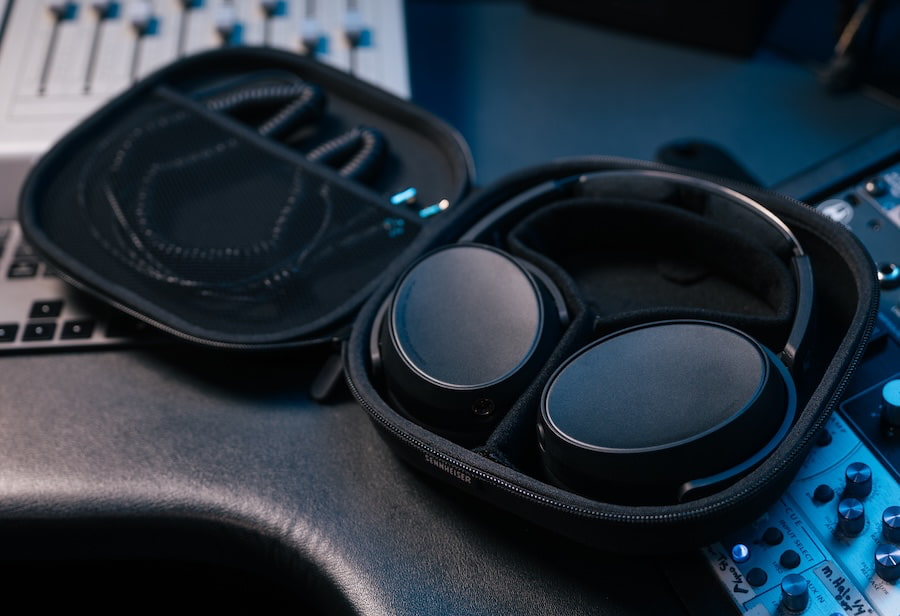
Headphone Bag
Quick Guide
Safety Guide
3.5 mm (⅛”) jack plug to 6.3 mm (¼”) adapter
Advertisement
1.8 m cable
Mixing ear pads
Producing ear pads
Quick Guide
Advertisement
Safety Guide
The Bottom Line
There’s some uncertainty around Sennheiser’s consumer business, but the professional side remains separate for now, which means products like the HD 480 PRO and HD 490 PRO are not directly affected.
The HD 480 PRO (and PRO Plus) stands out for its focus on flexibility within a closed-back design—dual-sided cable entry, attention to long-term comfort, and an effort to deliver more controlled low-end performance than is typical for this category. It’s clearly built as a working tool rather than a lifestyle product.
What’s missing is anything beyond wired connectivity and a broader feature set—there’s no DSP, no wireless option, and no attempt to blur the line into consumer use. That’s intentional, but it narrows the audience.
Competition is strong across multiple price points, including the Beyerdynamic DT 770 PRO X and Beyerdynamic DT 990 PRO X at the lower end, and models like the Final DX3000CL and Meze Audio Strada further up the ladder.
Advertisement
These are aimed at professionals and serious creators who need a consistent, reliable reference for tracking, monitoring, and potentially mixing, especially in environments where isolation matters. The decision ultimately comes down to fit and comfort as much as sound, which makes a hands-on demo less of a suggestion and more of a requirement.
Price & Availability
The Sennheiser HD 480 PRO retails at $479 USD (MSRP). These headphones come with recording earpads, a 9-foot coiled cable, and a carrying bag.
If you prefer, the HD 480 Pro Plus has the same features and accessories as the HD 480 Pro but includes a hard travel case for $519 at Amazon.
Alternatively the Sennheiser HD 490 Pro and Pro Plus open-back headphones are also available for $429 / $499 at Amazon.
Pro Tip: The Sennheiser HD Pro 480 PRO and 490 PRO are engineered in Germany and hand-assembled in Romania
Having molten aluminium interact with atmospheric water forms a source of hydrogen which can be rather problematic if you’re trying to cast aluminium parts. As the molten metal cools down, the dissolved hydrogen is forced out, creating bubbles and other flaws that make aluminium foundries rather upset. While you can inject inert gases to solve the problem, you can also lean into this issue to make some rather fascinating aluminium crystals and geodes, as [Electron Impressions] recently did.
The key here is to use a eutectic Al-Cu alloy at around 45% Cu by weight, as this alloy readily forms large crystals as it cools down. With hydrogen injected into the molten metal, this hydrogen forms large bubbles inside the cooling metal with crystals clearly visible.
A way to create proper geodes involves very slow cooling and pouring off the still molten metal before the eutectic point is reached. As can be seen in this video, this creates a rather impressive looking geode after it’s been smashed open. This also gives a good clue as to how these geological features form in nature, although one does not typically observe Al-Cu alloy geodes in the wild.
A set of 26 malicious apps on Apple App Store impersonate popular wallets, such as Metamask, Coinbase, Trust Wallet, and OneKey, to steal recovery or seed phrases and drain them of cryptocurrency assets.
The threat actor used multiple methods to imitate official products, including typosquatting and fake branding, to lure users in China into downloading them.
Because such apps are restricted in the country, the attacker published them as games or calculator apps, likely in the hope of being perceived by the users as a trick to bypass the bans in the country.
Kaspersky researchers say that all 26 fake apps are part of the same campaign, which they named FakeWallet, and associate them with the SparkKitty operation that has been running since last year.
Once opened, the apps redirect users to phishing pages designed to appear as legitimate portals for the crypto services.
These sites convince victims to download trojanized wallet apps using iOS provisioning profiles, a legitimate enterprise feature that is abused to sideload malware onto their devices. The same technique was also observed in SparkKitty.
Installing a provisioning profile Source: Kaspersky
The trojanized apps contain additional code that intercepts mnemonic phrases during wallet setup or recovery screens, encrypts them with RSA and Base64, and sends them to the attacker.
For cold wallets like Ledger, attackers rely on in-app phishing prompts that trick users into manually entering their seed phrases via fake security verification screens.
These phrases, which are only held by the rightful wallet owner, are intended for wallet porting/recovery to new devices and require no further confirmation or passwords.
Hence, threat actors can use them to restore the victim’s wallet on their own devices and drain the wallet without the possibility of recovering the funds.
Seed phrase phising screen Source: Kaspersky
Kaspersky noted that the campaign primarily targets users in China. However, the malware itself has no geographic restrictions, so it could affect users globally if the operators decide to expand their targeting scope.
Cryptocurrency holders are advised to double-check the publisher of the apps they download, even from official app stores, and use only the links provided on the official website.
Advertisement
Last week, it was uncovered that a fraudulent Ledger app that made it into Apple’s App Store stole $9.5 million worth of cryptocurrency from 50 macOS users.
Apple has removed all 26 FakeWallet apps from the App Store following Kaspersky’s responsible disclosure.
BleepingComputer has contacted Apple with questions about the threat actor’s process to bypass the company’s App Store verfications but we have not received a response by publication time.
AI chained four zero-days into one exploit that bypassed both renderer and OS sandboxes. A wave of new exploits is coming.
At the Autonomous Validation Summit (May 12 & 14), see how autonomous, context-rich validation finds what’s exploitable, proves controls hold, and closes the remediation loop.
A recent report from Nikkei Asia yet again highlights how tight the market has become. It centers on the ongoing memory shortage, which is expected to persist until chipmakers have both the capacity and the facilities to meet demand for AI-focused components from hyperscale customers. Read Entire Article Source link
Artemis II’s recent launch filled the public with a sense of wonder and awe on the grandest scale. Not since 1972 (Apollo 17) has man attempted to travel to the moon for exploration, which adds even more excitement to this recent mission. While spectators — both in person in Florida and on TV — surely appreciated the historic nature of the mission, the most immediate takeaway is the raw, visceral punch of the explosive launch. Sending such a massive rocket to break free of Earth’s gravitational pull and punch through the atmosphere into space requires a staggering amount of power.
It takes 8.8 million pounds of thrust to be exact, which violently propelled the 322-foot NASA rocket into space. Just one of the liquid hydrogen and oxygen-powered rockets could power almost a million miles of streetlights. The Artemis II SLS (Space Launch System) topped out at a staggering 24,500 mph, the velocity required to reach the moon. This speed was in line with what the crew of the Apollo 13 mission experienced in 1970, which reached similar top speeds of 24,247 mph.
But this wasn’t the whole story. Artemis II didn’t simply thrust to the Moon in a straight line at a constant speed. The flight began with SLS launching Orion into Earth’s orbit, fighting hard against gravity, before passing through the atmosphere’s layers and into space.
As Artemis II ascended, it reached speeds in excess of 24,000 mph, though the exact speed depends on the frame of reference. At its closest approach to the Moon, the rocket hit 60,863 mph relative to Earth. However, relative to the Moon, the speed was measured at 3,139 mph. Either way, these speeds are hard to relate to, as even an F-35 Lightning II fighter jet tops out at around 1,200 mph.
Advertisement
As the Orion spacecraft re-entered Earth’s atmosphere, it reached speeds of roughly 25,000 mph before slowing dramatically in Earth’s atmosphere and safely parachuting into the ocean at splashdown. NASA’s coordination, planning, technical prowess, advanced engineering, and brainpower — to say nothing of the crew’s bravery — speak to mankind’s ingenuity and thirst for exploration.
The crew laid the foundation for future missions and lunar research. Who knows where modern space travel could go next? But what is certain is that we all got to watch history being made by some very brave people, at unbelievable speeds.
The global lactose-free products market is poised to grow from around $19.5bn in 2026 to $36.5bn by 2034.
Irish food giant Kerry Group has opened an expanded biotechnology manufacturing facility in Cork as it targets the growing global lactose-free market.
The facility, based out of Carrigaline, will help the company increase its capacity to produce lactase enzymes needed for lactose-free and sugar-reduced dairy products.
Lactase is a natural enzyme produced by humans to digest lactose, though a majority of adults worldwide cannot digest lactose efficiently. Market research suggests that the global lactose-free products sector is poised to grow from around $19.5bn this year to $36.6bn by 2034.
Advertisement
The Carrigaline site supports 200 clients across 80 countries. Lactase enzymes produced at the site are used to process more than 2m tonnes of milk annually, reaching around 28m consumers worldwide, Kerry said.
The expanded facility, alongside the company’s Kildare-based Global Innovation Centre and a biotechnology centre in Germany, established last year, are expected to help accelerate Kerry’s lab-to-commercial pipeline.
The company said it is “well positioned” to support the next phase of growth in the lactose-free market, with the expanded centre acting to link advanced enzyme engineering and strain development with large‑scale manufacturing.
“This investment translates decades of biotech research into scalable, real‑world capability,” said Shane McGibney, the president and CEO of biotechnology solutions and transformation at Kerry Group.
Advertisement
“By strengthening the link between enzyme engineering and industrial production, we’re able to move innovations more efficiently from the lab to the production line – helping customers access reliable supply and bring new products to market with greater speed and confidence.”
Minister for Enterprise, Tourism and Employment Peter Burke, TD added: “This facility demonstrates how industry, skills and innovation come together to support the future of Ireland’s food and biotechnology sectors.
“As a global leader in food, Kerry Group continues to play an important role in advancing high-value capability from its Irish base. Manufacturing sites like Carrigaline help move innovation towards scale and strengthen Ireland’s position in advanced manufacturing.”
Don’t miss out on the knowledge you need to succeed. Sign up for the Daily Brief, Silicon Republic’s digest of need-to-know sci-tech news.
State-sponsored North Korean hackers are likely behind the $290 million crypto-heist that impacted the KelpDAO DeFi project on Saturday.
The attack reportedly also impacted the lending protocols Compound, Euler, and Aave, with the latter announcing a freeze and blocking new deposits or borrowing using rsETH as collateral.
KelpDAO is a decentralized finance (DeFi) project built around liquid restaking on the Ethereum network. It accepts user ETH deposits, restakes them, and returns a liquid token named ‘rsETH,’ that represents the restaked position.
The rsETH token is meant to help users keep earning restaking yield, while it stays usable across DeFi, including cross-chain via LayerZero, an inter-blockchain communication protocol and interoperability layer.
On April 18, KelpDAO announced that it detected “suspicious cross-chain activity” involving rsETH, forcing it to pause rsETH contracts across the Ethereum mainnet and L2s.
Advertisement
The project launched an investigation with the help of LayerZero, Unichain, and other partners.
Blockchain activity showed that around 116,500 rsETH were stolen, around $293 million in USD value, and went through Tornado Cash to hide the trace.
According to additional details that LayerZero shared today, the attack targeted the verification layer (DVN) used to validate cross-chain messages for rsETH.
Specifically, the attackers compromised some RPC nodes used by the verifier, feeding it falsified blockchain data, while simultaneously DDoS-ing healthy RPC nodes to force the system to rely on the “poisoned” ones.
Advertisement
This allowed a fake cross-chain message to be accepted as valid. The system confirmed transactions that never actually occurred on-chain and enabled moving the rsETH without authorization.
Based on preliminary evaluation of the attack indicators, LayerZero believes that the infamous Lazarus hackers are likely responsible for the heist.
“Preliminary indicators suggest attribution to a highly sophisticated state actor, likely DPRK’s Lazarus Group, more specifically TraderTraitor,” stated LayerZero.
The protocol also noted that the incident was isolated to rsETH and that there’s no broader contagion across other apps or assets.
Advertisement
While the KelpDAO breach constitutes a major loss so far this year in terms of the stolen amount, the Lazarus Group has also been linked to another large theft, $280 million from the Drift Protocol.
According to a post-mortem report, that attack was the result of a six-month-long, carefully planned operation that involved malicious agents attending conferences and $1 million deposits into the project.
AI chained four zero-days into one exploit that bypassed both renderer and OS sandboxes. A wave of new exploits is coming.
At the Autonomous Validation Summit (May 12 & 14), see how autonomous, context-rich validation finds what’s exploitable, proves controls hold, and closes the remediation loop.
Tim Cook has announced that he will be stepping down as Apple CEO on September 1. Senior vice president of hardware engineering John Ternus, long seen as the company’s leading succession candidate, will take over following a summer transition period. Read Entire Article Source link

























.png)












































You must be logged in to post a comment Login