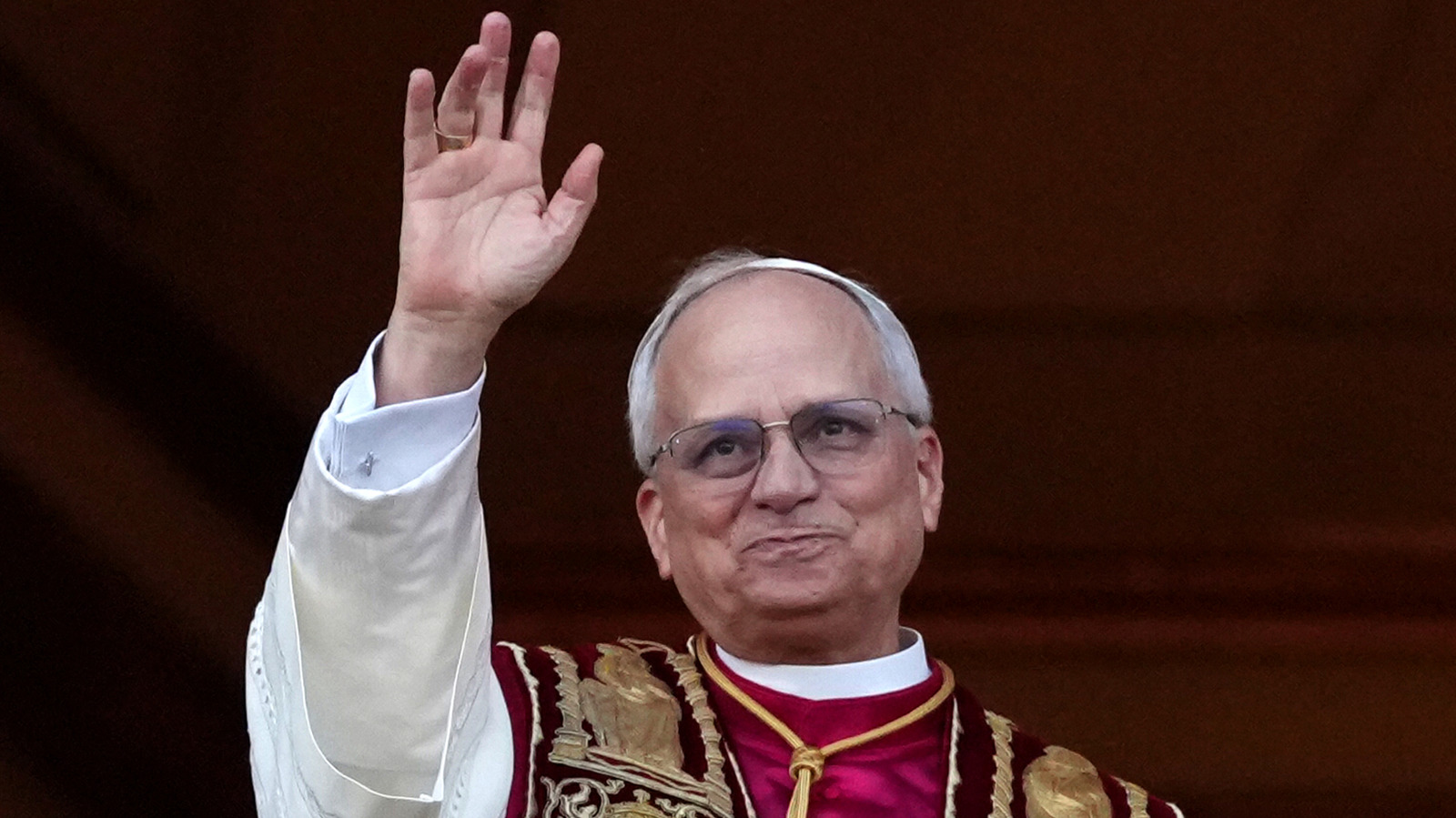
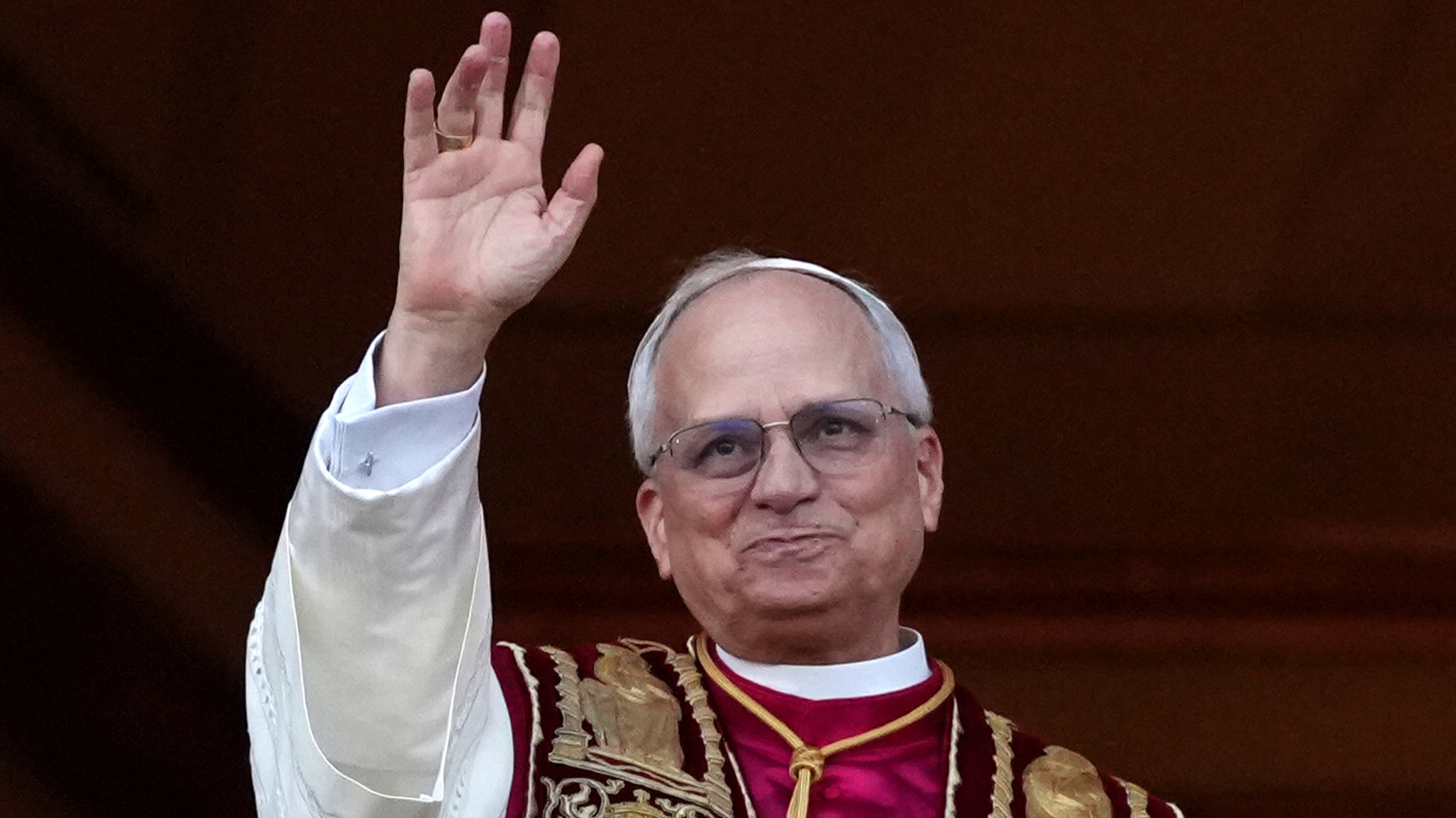
Pope Leo XIV has taken a stronger stand against AI. On Monday, Leo released his first papal encyclical — an almost 400-year-old tradition in which the Catholic Church shares its perspective on an issue. In this case, over about 42,300 words (in the English version), the Pope warned of “the misconception of equating this type of ‘intelligence’ with that of human beings.”
“These systems merely imitate certain functions of human intelligence. In doing so, they often surpass human intelligence in speed and computational capacity, offering tangible benefits across many fields,” Pope Leo stated.
He continued: “So-called artificial intelligences do not undergo experiences, do not possess a body, do not feel joy or pain, do not mature through relationships and do not know from within what love, work, friendship or responsibility mean. Nor do they have a moral conscience, since they do not judge good and evil, grasp the ultimate meaning of situations, or bear responsibility for consequences. They may imitate language, behavior and analytical skills, or even simulate empathy and understanding, but they do not understand what they produce, for they lack the affective, relational and spiritual perspective through which human beings grow in wisdom.”
Notably, the Pontiff presented the remarks alongside Anthropic co-founder Christopher Olah.
Advertisement
The Pope stated that it’s necessary to “establish adequate regulatory tools capable of upholding justice and curbing the distorting effects of technological power.” He emphasized that wealth is already concentrated in the hands of very few people and that it’s up to governments to ensure it doesn’t become even more so. In that vein, he added that leaders must ensure that humans, not AI, make all decisions related to weapons in the future.
He also called for “an educational alliance for the digital age” that encourages teaching young people to think critically about AI, to guard against “apathy for seeking the truth.” Regulations should also protect young people against “violent or degrading” AI-generated content, along with grooming and sexual exploitation.
Leo warned that such technology — and any profits that come with it — shouldn’t be used to justify systematic job loss. As such, he encouraged retraining and employment protections for workers whose jobs are at risk due to AI.
Pope Leo’s remarks weren’t made against AI as a whole, stating that it shouldn’t be seen “as a force antagonistic to humanity.” If carefully managed, he said, it could “open up a horizon extending in all directions.” In February, the Vatican teamed up with language service provider Translated to offer AI-powered live translations to Holy Mass attendees.
We still don’t have a release date for the new game engine.
Rocket League is getting a new engine and it’s not for the cars. During the Rocket League Paris Major, Epic Games debuted a short teaser trailer for a redesigned Rocket League. More importantly, the gameplay footage was made with Unreal Engine 6.
Advertisement
Surprisingly, Epic Games didn’t go with Fortnite to show off a first look at its next-gen game engine, but it’s still the first time the company showed any in-game footage built with Unreal Engine 6. Notably, all the gameplay shown was “captured real-time in game,” according to the trailer. Epic Games didn’t specify what upgrades Unreal Engine 6 would bring to Rocket League, but we can see some cosmetic upgrades like the improved reflections on the cars, which also look more detailed.
There’s still not much information out about Unreal Engine 6, but the company’s CEO, Tim Sweeney, previously indicated that the team is working on transitioning to the latest version. For Rocket League, the jump to Unreal Engine 6 is a big leap considering it still runs on the third version of Epic Games’ game engine. But, we don’t have a release timeline for Unreal Engine 6 yet, and it’s been more than four years since the Unreal Engine 5 came out.
HANDS ON Even after 60 releases, to borrow Carlsberg’s slogan, OpenBSD is probably the most secure FOSS Unix-like OS in the world.
OpenBSD 7.9 arrived just a couple of days after
project lead Theo de Raadt’s birthday. Our congratulations to both. The
last four months or so have seen the fastest succession of security
issues in Linux that we can remember in the project’s existence so far,
but OpenBSD sails on serenely.
Back in March, Anthropic announced that
its Claude Mythos LLM had found a successful OpenBSD attack – but it
wasn’t a hole. A TCP/IP packet with malformed Selective
Acknowledgement options could crash the kernel. This was a real
problem, and the bug that caused it went back 27 years, but it doesn’t
let anyone in. The OpenBSD developers had already included a fix
for the bug two weeks earlier, so OpenBSD 7.8 users would get it the
next time they ran sysupdate, and it is of course fixed in
this version.
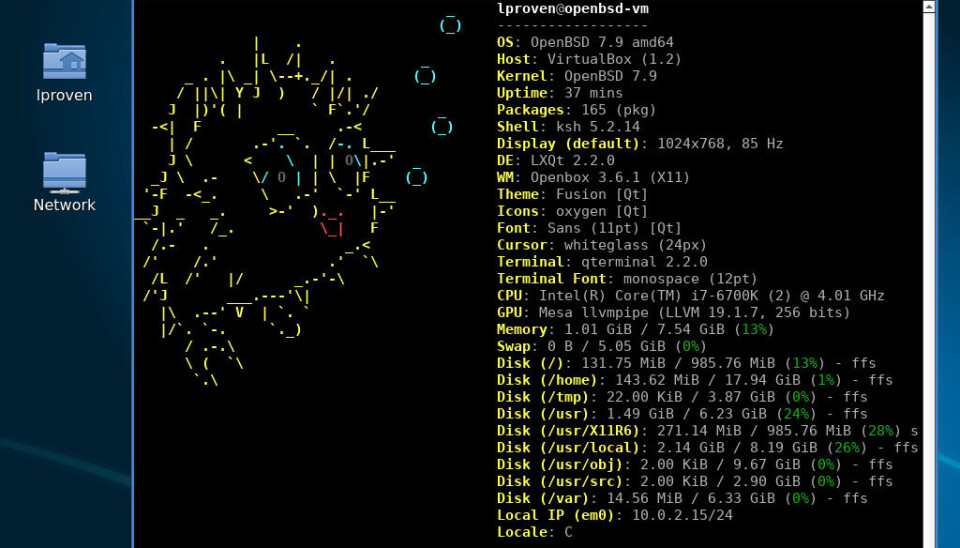
LXQt on OpenBSD, because you don’t have to live in an xterm if you don’t want to
The new features in version 7.9 are relatively modest. On x86-64
machines – which it terms amd64 – 7.9 now supports a
maximum of 255 processor cores, and fixes a bug on machines with over
512 GB of RAM. It can also handle up to 52 partitions per disk.
Internally, there can be up to 64, but the limit is now the number of lowercase and uppercase letters of the Roman alphabet, which it uses in
labels.
Advertisement
On x86-64 and Arm64, the CPU scheduler now understands heterogeneous
CPU cores with different performance levels, and can assign processes to
four different performance levels described by the letters S-P-E-L,
denoting SMT, performance, efficient, and lethargic.
This should improve power management, and another feature called
“delayed hibernation” can also help. Rather than letting a suspended
laptop simply turn off if its battery runs out, when power levels get
very low, the machine will wake up then immediately hibernate – a
process that ends with it turning completely off. OpenBSD still doesn’t have a
journaling file system. It uses FFS2, an improved
version of the original Berkeley Fast File
System developed by Kirk McKusick. This used to include a
performance enhancement called soft updates (McKusick’s
own explanation) but these were removed
in 2023. That means that turning off a running machine without
shutting it down could cause disk corruption. Delayed hibernation will
help prevent one cause of that, at least.
The release announcement also lists other changes, including improved support for RISC-V boards, basic support for Wi-Fi 6, the
graphics driver stack from Linux kernel 6.18, and even more
optimizations to the already-low-latency sound driver stack. There are
various tweaks and bug fixes for the various RISC
platforms it supports. Version upgrades include LibreSSL 4.3.0,
OpenSSH 10.3, and many improvements to the Berkeley Packet Filter (bpf) and Packet Filter firewall (pf), including source
and state limiters.
Desktop use is not the primary goal of OpenBSD, but you certainly
can. It includes multiple window managers and desktops, as documented
in its handbook – although this is slightly out of date. Version 7.9
includes GNOME 49, KDE Plasma 6.6, MATE 1.28, Xfce 4.20, LXQt 2.2, and
various more minimal window managers. It has its own X11 server, Xenocara, based on X.org 7.7 and
Xserver 21.1.21, but you can also run XLibre with some manual effort,
and some desktops support Wayland. There is also a downstream project to
build a live bootable medium called FuguIta, although it hasn’t caught up
with the new release just yet.
Advertisement
OpenBSD releases are each accompanied by a unique banner painting and theme tune. This time, it’s a swinging jazz instrumental called Diamond in
the Rough [MP3], which we really enjoyed. It’s by Bob Kitella, who along
with de Raadt is one of the team at the Alberta internet
exchange YYCIX.
Calling OpenBSD a diamond in the rough seems quite
appropriate. It does have some significant gaps in its
functionality, but it is small, clean, and secure. We very much enjoyed
a recent essay on ascetic computing by
Dave “Ratfactor” Gauer, in
which he discusses why his OS of choice is OpenBSD.
Out there in the chaos of the open source communities on the social
networks that this vulture visits, we often encounter great resistance
when we tell people that they’re experiencing problems because of their
poor choice of equipment. For an easy life and a reliable computing
experience, we advise against wireless devices (peripherals or
networks), Bluetooth audio devices, and so on. The vicissitudes of
Nvidia support on Linux have long been well understood, and eloquently
conveyed by Torvalds himself.
Avoid this stuff, use devices with plain old cables, and things tend
to work more easily and more reliably. Here, we are coming to
appreciate the OpenBSD stance on Bluetooth, for instance: it simply does
not support it at all. This approach reminds us of the way that Python
sliced through the Gordian knot of indentation styles. For instance,
this C
style guide [PDF] identifies 14 named indentation systems. Python
dispenses with all that by making indentation syntactically significant,
ending the flame wars at a stroke. Of course, many veterans howl their
dismay and rage at this – and yet Python consistently ranks as the
world’s favorite language, over
and over
and over
again. OpenBSD cuts through some of the complexities of Linux and
the other BSDs in a broadly similar way.
No LLM-created code has been committed directly into OpenBSD as yet – and it looks unlikely, if only for copyright reasons, as de Raadt laid
out in March. The tmux changes were grandfathered in indirectly because OpenBSD has included tmux in its base system since 2009. We’ve
looked at the changes and they seem small, clean, and innocuous to us.
Arguably, the objection is an ideological one of purity. We fear that
OpenBSD may end up on the Open
Slopware list we mentioned in January. When we reported
recently on Fedora and Ubuntu’s AI moves, we mentioned the Stop slopware site and the No-AI Software
Directory. This probably means OpenBSD won’t appear on the latter either, but we suspect that the team will not care.
OpenBSD version upgrades are relatively simple, straightforward, and well
documented. So, to take 7.9 for a spin, we first tried it in a
VirtualBox VM. Although it’s a small OS, it wants a large virtual drive because by default it creates nine separate partitions, and
because of their different permissions, they’re a key part of the OS’s
enviable security. Worse still, their sizes cannot be dynamically
adjusted. Since the installation program is a very low-tech plain-text
affair, it offers no help with customizing the layout: if you don’t like
its proposal, then you must devise your own completely from scratch. It
really would help massively if OpenBSD had some kind of simple Logical
Volume Manager.
Give it enough space, though, and installation goes smoothly. We
also tried on the bare metal of an old Lenovo ThinkPad X220, with its
own dedicated 128 GB SSD. This threw up an interesting wrinkle: it found
the machine’s Wi-Fi controller no problem, identifying it as an
Intel Centrino Advanced-N 6205 – but because the necessary firmware was not included on the 761 MiB ISO
download, it couldn’t activate the device, even though it let us enter our WLAN credentials. That’s a problem, as the installer defaults to
fetching the installation file sets from the internet. We plugged in an
Ethernet cable, and then installation continued and finished
successfully. The installer automatically installed the required
firmware package, so on our first reboot, the Wi-Fi connection came
online all on its own.
Advertisement
Installing this vulture’s preferred desktop
environment was as simple as logging in as root and
entering pkg_add xfce. Selecting it is not quite so easy,
though: OpenBSD’s display manager, xenodm,
lacks the ability to choose a desktop environment. To fix that, we
needed a one-line, two-word script: create an ~/.xsession file containing exec startxfce4, and that was it – a fully working graphical desktop. We added a second monitor, and it was
detected, added, and enabled automatically, and we could set it to
portrait mode in Xfce’s display settings.
Although the X11
section of the OpenBSD Handbook says that KDE’s
recently replaced SDDM is available, as far as we can tell, it has been removed from 7.9 – as has Ubuntu’s LightDM. Even so,
just saying “yes” when the installation program asks if you want GUI
results in a working Fvwm 2.2.5
environment.
The Reg FOSS desk has been exploring OpenBSD since version
7.1 in 2022, including 7.2, 7.5, 7.6, 7.7,
and 7.8.
It’s still not an easy OS to install, but if you can dedicate a computer
to it, installation is much easier. We recommend avoiding complexities
like dual-booting and multiple drives. As a small bonus, it boots and
installs perfectly from a Ventoy
multi-OS USB key.
OpenBSD still supports x86-32, there’s no trace of systemd and never
will be, and if you really want GNOME or KDE, you can have them.
Bringing up a GUI-based system remains substantially easier than it does
on FreeBSD. If you’re prepared to obtain the hardware it wants, rather
than hoping that it will support whatever kit you happen to already
have, this is an excellent way to improve your Unix skills – as well as
starting to enjoy computing again, free of the distractions of shinier
FOSS OSes. ®
OPINIONAt Google’s I/O 2026 developer conference last week, the company’s Search VP Liz Reid celebrated the rapid growth of AI Mode, which Google refers to as its end-to-end AI search experience. External observers refer to it as simply as the end of search.
“We’re seeing phenomenal growth with AI mode queries more than doubling every quarter since launch,” said Reid, noting that AI Mode now has more than one billion monthly users.
She continued, “But what’s even more remarkable, you’re asking your real questions in all their super specific and detailed glory, knowing search can really tackle them.”
Reid is absolutely right! We put this real question to AI Mode, “Why does Google Search suck now?” And you won’t believe the answer! (Actually, you won’t be surprised.)
Advertisement
The Chocolate Factory’s AI search substitute offered this completely trustworthy reply:
“You are definitely not imagining it. Users, tech critics, and researchers have documented a measurable decline in Google Search quality. The core issue is that the search engine no longer feels like a tool designed to find the best corner of the web; instead, it feels like a vehicle designed to keep you on Google-owned properties or clicking on monetized links.
“The degradation of Google Search stems from a mix of aggressive monetization, an ongoing arms race with web spammers, and the disruptive introduction of AI features.”
Despite the absence of explicit blame assignment and the obsequious initial sentence, this all seems reasonable. However, in the low-rent area of the results page, there was some fine print: “AI can make mistakes, so double-check responses.”
Advertisement
In other words, Google disclaims responsibility for AI Mode while providing a way for you, the user, to double-check its responses. If you look carefully at the results, you may see citation links back to the websites laundered to generate the unvouched-for text.
The top AI Mode paragraph represents the remains of four morsels of online text swallowed and digested by Google’s site crawler: “This is Why Google Search is Dying* and How to Search Instead” from Tadeusz Szewczyk’s seo2 blog, “Why Has Google Search Become So Annoyingly Bad? (and some useful workarounds),” a post to Medium by Terry Hutchins, a Reddit thread titled, “Is Google Search actually getting worse, or is it just me?” by Severe_Aardvark_3109, and “Some Simple Economics of the Google Antitrust Case” by Alex Tabarrok.
The second paragraph is calling from within Google’s house. It’s sourced from a YouTube video by AlexFalcone and a different Reddit thread, “Am I going crazy or are search engine results becoming less and less accurate?” by Ok-Extent-7596.
Google generously presents these links, in the form of inline citations or source chips – clickable, numbered footnotes that have been embedded with AI Mode emissions – as a nod to shouty traditionalists who value information provenance.
Advertisement
Not that it helps these websites much. As noted recently by SEO biz Ahrefs, “Google’s AI Overviews now result in a 58 percent lower average clickthrough rate for top-ranking pages, up from 34.5 percent just eight months ago.” (Google last year said the opposite.)
AI Overviews differ from AI Mode. AI Overviews have been integrated into the Search experience and appear in response to certain kinds of queries, generally atop traditional search results.
AI Mode “expands on the benefits of AI Overviews with more advanced reasoning and multimodal capabilities,” as Google puts it in its explainer [PDF]. It’s accessible through a tab icon on the right-hand side of Chrome’s omnibox when a new tab is opened and through an “AI Mode” button within the Google.com search box.
They may or may not provide similar answers and may or may not cite the same sources.
Advertisement
For example, when we put the question “Why does Google Search suck now?” to AI Overviews, here’s what we got:
“Google Search often feels worse today because it prioritizes profits over precision. The search results page is heavily cluttered with AI-generated summaries, sponsored ads, and search-engine-optimized (SEO) spam, which forces you to dig past multiple links to find the actual information you want.”
Google’s AI again cites Szewczyk’s seo2 blog as a reference, along with two new sources, “These Results Illustrate Why Google Search Is So Awful in 2025,” from Make Use Of, and “Enough is enough: I ditched Google’s broken search engine and boosted my productivity,” from Android Authority.
Just for the sake of completeness, here’s AI Overview answering, “Why is Google Search great?”
Advertisement
“Google Search is great because it combines unmatched speed, advanced AI capabilities, and a massive index of information. It does more than just provide links, allowing you to easily plan trips, research local businesses in your immediate San Francisco vicinity, and understand complex topics with minimal effort.”
Among the five citation links for that result, three reference Googleblogposts. The privacy intrusion – having the browser surface location information unbidden – is just a reminder about the consequences of browser personalization.
This is the new (horrible) normal
Like it or not, there’s going to be more AI in search going forward.
Reid described how Google’s redesigned Search box now includes deeper AI integration.
Advertisement
“We’re making it even easier to continue the conversation with Search, bringing AI Overviews and AI Mode into one seamless AI search experience, so you can flow effortlessly from your question to your response on the main search results page to follow-ups in AI mode,” she said.
Why not just let users decide which sites they trust?
The anticipated result, at least among those outside of Google, is that search results links to external websites will be further deemphasized.
The problem with this approach is that it means Google makes its AI into a traffic routing layer, as opposed to presenting a set of site and document referral options that users can select. It wants to direct the flow of traffic instead of just providing a map.
Advertisement
The endgame, presumably, is capturing some portion of automated transactions made by software agents through mechanisms like Google’s Universal Cart, Agent Payments Protocol (AP2), and Universal Commerce Protocol (UCP).
When Google itself cautions, “AI can make mistakes, so double-check responses,” why not just let users decide which sites they trust for themselves, rather than burying source information in footnote links and directing those using its AI service to handle the fact-checking?
AI models can be quite helpful for coding questions. They’re a vast improvement over man pages for looking up esoteric command line flags and options. But they should be kept separate from search. If they must be entrusted with automated browsing, their decisions or recommendations should be subject to user discretion and review.
Search assumes source visibility and invites searchers to consider whether they trust sites enough to visit them. It demands mental engagement and decision-making to move from a list of results to query resolution. That’s a role people should play.
Advertisement
AI presents an answer, one that’s so easy to accept it comes with a reminder to double-check. But it’s an answer without responsibility or liability. It’s not the right answer for the web. ®
“The expansion of SpaceX’s Starlink network of internet relay satellites continued Monday with a Memorial Day launch from Cape Canaveral Space Force Station,” reports Spaceflight Now.
The mission added another 29 Starlink satellites to more than 10,000 already in low Earth orbit:
This was SpaceX’s 60th orbital flight of the year, consisting of 59 Falcon 9 rockets and one Falcon Heavy rocket…
Nearly 8.5 minutes after liftoff, [Falcon 9 first stage] B1078 landed on the drone ship, ‘A Shortfall of Gravitas,’ positioned in the Atlantic Ocean off the coast of South Carolina. This was the 151st landing for this vessel and the 614th booster landing to date for SpaceX.
Advertisement
Meanwhile, the second stage shut down eight minutes and 39 seconds into flight and entered a coast phase, before short second burn at T+52 minutes. The stack of Starlink satellites deployed 61 minutes and 26 seconds after launch.
AI’s biggest champions have argued for some time that the technology will usher in an era of unprecedented productivity gains, richly rewarding workers who harness it while displacing those who don’t.
Zeb Evans, CEO of the collaboration software startup ClickUp, claims that this shift is imminent. Last Thursday, Evans announced on X that the company, which was last valued in 2021 at $4 billion, had laid off 22% of its workforce yet characterized that reduction as not a cost-cutting measure, but rather a radical embrace of AI that will propel the company to the next level.
“Most savings from this change will flow directly back into the people who stay. We’ll be introducing million-dollar salary bands. If you create outsized impact using AI, you’ll be paid outside of traditional bands,” Evans wrote.
ClickUp recently introduced roughly 3,000 internal AI agents to handle a wide range of complex tasks on behalf of its employees, according to a Fortune article published several days ago. Instead of performing the work themselves, staff members are now expected to direct these agents and ultimately review the output to ensure it meets the company’s standards.
Advertisement
Evans’s goal, according to his X post, is for AI to turbocharge ClickUp into a “100x org.”
ClickUp is not alone in its hope that AI agents will provide massive productivity gains.
In fact, according to a recent Gartner survey, about 80% of companies using autonomous tech have cut jobs. However, the study found that workforce reductions aren’t necessarily translating into meaningful financial returns.
While Gartner’s findings suggest some companies use unproven AI as an excuse to downsize, ClickUp maintains it is not one of them.
Advertisement
Evans told TechCrunch via email that the startup is indeed seeing productivity gains from AI agents. Not only is ClickUp measuring those efficiencies internally, but it’s also apparently gearing up to include them in a forthcoming product for its customers.
“Instead of gamifying token cost, we gamify value created and time saved,” Evans wrote.
In recent months, a growing number of companies have started monitoring employee token consumption, using it as a metric to see who is actually adopting AI tools. But critics argue that “tokenmaxxing”—as this concept is known—is the wrong metric because it simply racks up AI expenses.
“The people that automate their jobs with AI will always have a job,” Evans claimed in his post. But if AI keeps taking over more tasks, ClickUp will eventually need fewer and fewer people, eliminating those who fail to automate their functions well.
Advertisement
Tech circles have long theorized about this scenario.
One extreme example of a high-profile startup using AI automation to the max already exists. Polsia, a one-year-old startup that claims to handle all software operations for solopreneurs, is run by just one person: its founder and CEO, Ben Broca. That efficiency is apparently paying off: Polsia just raised $30 million at a $250 million valuation.
When you purchase through links in our articles, we may earn a small commission. This doesn’t affect our editorial independence.
Granted, the core Copilot experience remains unchanged in the latest update, but according to Windows Latest, a new drop-down menu on the title bar introduces four snapping options, letting users dock the assistant to the left or right edge of the screen or keep it in a standard resizable window…. Read Entire Article Source link
With the Framework Laptop, the touchscreen “just worked” as did other basic functionality from the KDE desktop on FreeBSD, including peripherals like a wireless mouse. Among the challenges were Zoom failing for video calls but eventually working, the web camera took steps to enable, and Microsoft Teams only partially worked. With the help of online resources, ultimately she was able to succeed in her journey of running FreeBSD daily on a laptop.
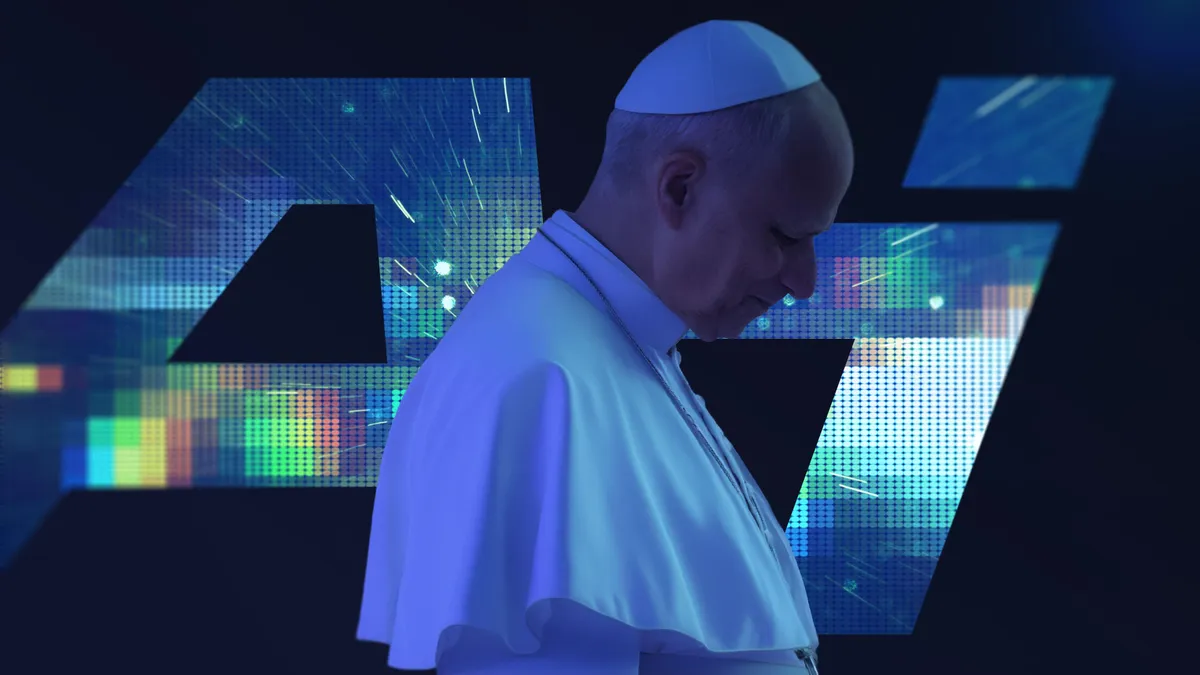
Since his earliest days in the job, Pope Leo XIV has made talking about AI a priority of his papacy. On Monday, he released his first encyclical under the name Magnifica Humanitas (which translates to magnificent humanity) — a powerful 42,300-word document calling for regulation of the technology and a moral framework that protects humanity for generations to come.
The 70-year-old American pope, who is a mathematician by training, was elected to the papacy in May 2025 and has made “the safeguarding of the human person in the time of artificial intelligence,” as the encyclical’s subhead reads, a central tenet of his first year in the role.
Advertisement
The document’s publication arrives at a moment when many are already comparing it to the industrial revolution in terms of its impact on our work and ways of life. AI companies, including OpenAI and Anthropic, are growing and improving the capabilities of their models at extraordinary rates, stoking the fires of the ongoing debate about whether AI will be more beneficial or harmful to society.
Amid all of this, Pope Leo identifies AI as “a valuable tool that requires vigilance,” challenging the concentration of power among tech companies and addressing developers directly in places. The document is broad scope, calling for caution in deploying AI in warfare and the workplace, and it will likely become a cornerstone text as policymakers and tech companies hammer out their strategies for building and regulating the technology in the coming years.
Pope Leo calls for AI to be “disarmed.”
Vatican Media
One message in the text that’s already drawing attention is Pope Leo’s call to “disarm AI.” While this might sound like a warning against the military use of artificial intelligence, it goes much further than that.
Advertisement
“To disarm means discrediting the assumption that technical power automatically confers the right to govern,” the pope writes. “To disarm does not mean rejecting technology, but preventing it from dominating humanity. It means freeing technology from monopolistic control and opening it to discussion and debate, therefore making it human-friendly and restoring it to the plurality of human cultures and ways of life.”
What the pope’s encyclical says about our use of AI
This encyclical is more than just a message to tech companies and the Catholic Church. Instead, the pope seems to be addressing all of humanity, prioritizing “equal dignity of all human beings,” “the supreme value of human rights,” and “building a common good.” For Catholics and non-Catholics alike, Magnifica Humanitas presents ideas for people across the globe to rally around as AI becomes an ever-increasing presence in our lives.
The pope cautions against allowing those who control AI to dictate and impose the ethical frameworks for governing the technology. Instead, he says, the ethics of AI should be subjected to “shared standards of social justice” and openly discussed among all people. “A more moral AI is not enough if that morality is determined by a few,” he writes. In other words, we should all get to have a say about the role of AI in our world.
Advertisement
Pope Leo has advice for all of us about using AI.
Vatican Media
He also has thoughts about how we should approach our own use of AI. The speed and simplicity of using AI tools might be appealing, he says. But they can also “encourage excessive reliance and the search for ready-made answers, and weaken personal creativity and judgment.”
AI’s imitation of positive human communication can be engaging and even helpful at times, he adds. “However, for less discerning users, it can also be misleading, creating the illusion of a relationship with a real personal subject.” This is particularly risky, he adds, when the imitation of care and support occurs in contexts where real human bonds are lacking.
“Here, the danger is not so much that a person may believe they are communicating with another person, but rather that they may gradually lose the very desire to form genuine human connections,” writes the pope.
Advertisement
Why does the pope care about AI?
To understand the extent of the pope’s interest in AI, we first need to look at his choice of name. His decision to go by Pope Leo XIV harks back to Pope Leo XIII, who held the papacy at the time of the industrial revolution and wrote an encyclical called Rerum Novarum on capital and labor.
The current Pope Leo is in many ways continuing the work of his namesake, according to Brian Boyd, US faith liaison at The Future of Life Institute.
“Leo is developing the tradition of Catholic social teaching on asking how can we, as a society, serve the common good better — recognizing that AI is the most important technology that we have in the last couple of centuries, possibly last couple of 1,000 years, for how it’s going to affect how we live together,” said Boyd, speaking with CNET ahead of the encyclical’s publication.
In the past year, the pope has spoken about AI in the context of the protection of children, what he calls “the sacred nature of the human face and voice,” and concerns about workers’ rights, Boyd added. Pope Leo has made a point of addressing the tech industry directly, including in his encyclical, where he says developers “bear a particular ethical and spiritual responsibility, for every design choice reflects a vision of humanity.”
Advertisement
Sometimes, he’s faced backlash to this stance. Back in November, for example, when the pope addressed the Builders AI Forum, venture capitalist Marc Andreessen mocked him publicly — although his use of memes fell flat when many, including some in Silicon Valley, agreed that the pope had a point.
“It was fascinating to see not just Catholics, [but] people of goodwill from all different stripes, saying, why are you upset about someone pointing out what should be common sense, but outside of certain niches is just utterly ignored?” Boyd said.
The fact that Leo is the first American pope also likely plays a role in how and why he’s addressing the big US-based tech companies, Boyd added. While he was born in the US, he spent many years working for the Catholic Church in Latin America, giving him an understanding of both America’s self-perception and the global view of the country
“That dual perspective really makes him ideally suited to both address people in Silicon Valley and also to represent the rest of the world in a way that’s deeply needed, because… a lot of these voices aren’t listened to, aren’t cared for,” he said.
Advertisement
The pope might not have the power of governments to regulate AI companies and hold them accountable in a way that affects their ability to do business and their bottom line, but that doesn’t mean his soft power should be underestimated. Earlier this month, he created a Commission on AI designed to convene leaders in the name of promoting human flourishing, and the Vatican’s moral authority could well carry significant weight as regulation continues to develop.
There are a surprising number of experiments an amateur nuclear physicist can perform, from making a Geiger counter to fusing hydrogen atoms in a fusor. One project which we haven’t seen before is a neutron generator, such as the benchtop neutron generator made by [Rapp Instruments] (translated).
This particular generator takes a feedstock of pure deuterium, which it ionizes and accelerates into a titanium target. The first deuterium nuclei to hit the target react with it to form titanium deuteride, immobilizing them until more ions strike them and they undergo nuclear fusion. The fusion reaction mostly forms helium-4, but sometimes forms helium-3 and a free neutron, which is radiated away. The radiated neutrons are slowed down by a block of high-density polyethylene, and a portion of them strike a silver or indium foil wrapped around a Geiger counter tube. The neutrons activate the silver or indium, and the Geiger counter detects the resultant increase in radioactivity.
The design is a linear particle accelerator built inside an evacuated glass tube. It uses two high-voltage power supplies: a 20 kV supply which ionizes the deuterium gas fed into the tube, and a 100 kV supply which accelerates ions emitted from the source into the target. The target itself is surrounded by a cup-shaped electrode to capture secondary electrons emitted during impact. To prevent arcing, the tube needs to be at a very low pressure, reached by extensive use of an oil diffusion pump.
Advertisement
Radioactivity measurements of the silver and indium foils showed that the generator did work; when irradiating the silver foil for five minutes, it generated 175 counts per second after the neutron source was turned off. Plotting the count rate versus time suggested that a mixture of two silver isotopes was being generated, Ag-110 and Ag-108, based on their half-lives. Irradiation of indium produced a similar exponential decay in radiation.
We recommend checking out the rest of the site; it’s a gold mine of projects, such as this mass spectrometer. For more background on neutron generators, we’ve covered their theory and some of the more common varieties.
Homegrown jewellery brand State Property is now sold beside luxury giants worldwide
Singapore is not short of jewellery stores.
From the gleaming counters of Cartier and Tiffany at Ion Orchard to the indie labels that have quietly multiplied over the past decade, the options are vast.
But in 2015, when Afzal Imram and his wife Lin Ruiyin launched State Property, there was a specific gap they felt no one was filling—fine jewellery that led with design rather than gemstones.
10 years on, that conviction has taken them from a home workshop to retail shelves in the US, the Middle East, the UK, Japan and Hong Kong. Their pieces have even been worn by Michelle Obama, Taylor Swift and Robert Downey Jr.—a roster that would be implausible for most independent jewellers anywhere in the world, let alone one founded by two Singaporeans straight out of university with no industry connections.
Advertisement
“We’re as good as anyone else from any other part of the world,” Afzal, 37, told Vulcan Post. “I don’t think we should see ourselves as being held back in some way.”
We spoke with Afzal to find out how the couple built State Property into an internationally recognised indie fine jewellery brand.
A shared obsession with design
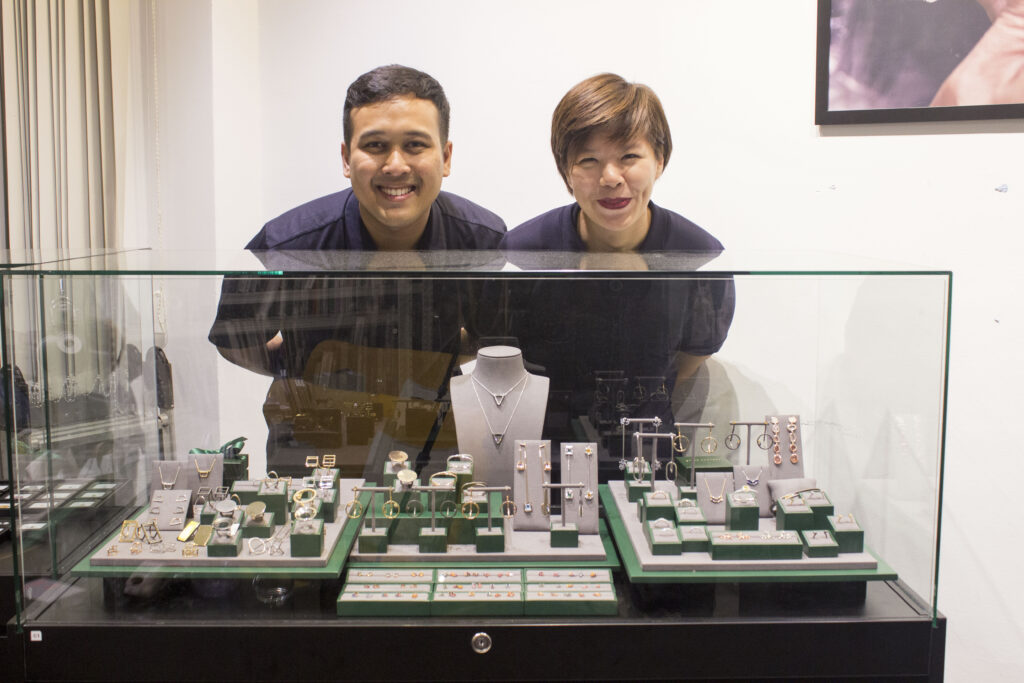
State Property’s husband and wife duo, Afzal and Ruiyin./ Image Credit: State Property
Afzal and Ruiyin, 36, met around 2010 through mutual friends. He was studying industrial design at NUS, while she was at Central Saint Martins in London, completing a degree in jewellery design.
The uncanny geographic distance closed when Afzal went on an exchange to Paris, where the pair spent the time collaborating on each other’s projects, each covering what the other lacked.
“What she’s good at, I’m not good at, and what I’m good at, she’s not so good at,” Afzal said. “We managed to kind of help each other out.”
Advertisement
Both were drawn to architecture and geometry—a design sensibility that would later define State Property. Fine jewellery felt like a natural medium for the couple, who wanted to create pieces that could endure for years, even generations.
“With fine jewellery, it’s not as throwaway as fashion accessories. The trends don’t move so fast, and people keep the pieces for much longer. For generations, sometimes,” Afzal explained
After graduating from university in 2014, the duo began taking on commissions and design consulting work from home through a studio they called Proper People—which still operates today and handles State Property’s branding—to fund State Property’s first collection.
A year later, they launched State Property.
Advertisement
Crafting jewellery across continents
(Left): The Holmes Earrings from State Property’s first collection, Substate; (Right): The Edessa Epaulette Enchantress Bracelet from its fifth collection, Arcane. /Image Credit: State Property
Where traditional jewellers start with a beautiful stone and design around it, State Property does the opposite and prioritises the concept of the piece, then sees what material best fits.
Their vision, as the founders put it, is to strike a balance between minimalism and maximalism—inspired by the 20th-century design style Art Deco, which is characterised by modern materials in symmetry.
Every step of the process for each product is drawn and made by hand./ Image Credit: State Property
A new collection can take anywhere from six months to a year to develop, with each treated as a living body of work. New pieces tied to the same theme are introduced over subsequent seasons, while designs that no longer fit are gradually retired.
Today, State Property has seven collections spanning fine jewellery for both men and women.
Prices start at S$750 for a single 14-karat gold and diamond earring, while pieces from the brand’s anniversary Story of Everything collection range from S$4,980 for a toadstool pendant to S$11,650 for the Railroad Diamond Bracelet. Bespoke commissions and special edition pieces can cost significantly more.
The creative process involves collaborative brainstorming by the duo and prototyping, which ranges from Ruiyin’s sketches to creating wax models worn for scale and comfort, before anything goes up for final production.
Advertisement
Eventually, all final pieces are made in 18-karat gold, with production split across a trusted network of workshops in Hong Kong, Sri Lanka, Italy, and elsewhere, each chosen for specific techniques.
Diamonds are cut in India; gemstones are sourced from Sri Lanka and Brazil. For bespoke commissions involving a client’s own stone, the casting, enamelling, and stone-setting may each happen in different locations—with the final setting done by local artisans in Singapore, so the founders maintain direct oversight of the gemstone at every stage.
Every collection balances accessible everyday pieces with more experimental designs that Afzal knows may be slower to sell—but those, he’s found, generate the most excitement and allow the duo to push their creative boundaries.
“That’s what keeps the brand moving the needle.”
Advertisement
Building credibility from scratch
Designing is done in-house, while other parts of production take place all over the world, including Singapore./ Image Credit: State Property
For the first couple of years, growth was slow and almost entirely organic. The two knew how to design, and they knew how to make a brand look good. Everything else, from pricing to strategy and managing a team, had to be learned on the job.
Pricing, in particular, was a sticking point early on. The most expensive pieces from that first 2015 collection went for around S$3,000. Even that felt bold at the time.
“Asking someone to pay S$3,000 for our work? Who wants to spend that here?” Afzal recalled thinking.
The brand’s first real turning point came in 2017, when State Property won the Emerging Accessories Designer of the Year at the Singapore Fashion Awards.
One of the judges was Tina Tan-Leo, a veteran of Singapore’s fashion retail industry, who offered some perspective that neither founder had considered. “She basically said, ‘Guys, your stuff is good to go international. Why aren’t you there?’”
Advertisement
Tina went on to mentor the State Property for six months, reworking pricing, laying out processes for export, and crucially introducing them to the wider world of independent designer jewellers.
“She was the key for us to put State Property on this international trajectory,” Afzal said.
Ruiyin had described the moment as “surreal”: seeing something that started as an idea in a sketchbook worn by one of the world’s most recognisable women on a red carpet.
Advertisement
From there, the list grew to a degree that still seems improbable for a Singapore business: Rihanna, Gigi Hadid and Florence Pugh, among others.
For a label with no family connections in the industry and no established country reputation to lean on, the cultural legitimacy this provided was transformative.
“If you say you’re a jewellery brand from Singapore, people internationally aren’t sure what that means,” Afzal said. “We had to build that trust ourselves.”
In 2021, that trust was further cemented when State Property became the first Singaporean fine jewellery label on global luxury e-commerce Net-A-Porter.
Advertisement
Getting onto the main street
(Left): Jenna Ortega wearing State Property’s Markeli Twin Link Necklace and Darro Diamond Necklace; (Right): Catherine O’hara wearing the Bering Ring./ Image Credit: State Property
For most of State Property’s early years, discovery came through word-of-mouth, Instagram, and appointments only.
The brand participated in Boutique Fairs starting in 2018, and had a consignment presence at Tangs Plaza from 2019 to 2021—both useful for visibility, but limited in reach.
However, the audiences at these places were accustomed to affordably priced goods, not 18-karat gold and diamond fine jewellery.
That changed with brick-and-mortar retail. State Property opened its Armenian Street atelier in early 2021, followed by a boutique at Takashimaya Shopping Centre in Sep 2022.
The foot traffic proved what no amount of digital marketing could replicate for the luxury jewellery brand. Back then, local and international sales were roughly even. Today, Singapore has become the stronger half.
Advertisement
Internationally, State Property now sits in approximately 20 retailers across Hong Kong, Japan, North America, the UK, and the Middle East, including Dover Street Market London, Moda Operandi, Goop, and most recently a trunk show at Bergdorf Goodman in New York.
Cracking those markets wasn’t just about getting stocked, it required genuinely understanding how people in different climates and cultures dress.
“In Singapore, we don’t have seasons that affect how we dress,” Afzal said. “But in temperate climates, there are considerations that don’t come to us naturally—what earrings work when you’re wearing a scarf, whether you’d even wear a bracelet if you need gloves.”
The research meant travelling to each market, observing what people were actually buying and wearing, and only partnering with retailers whose values aligned with the brand’s. “We’re fortunate to have caught the eyes of key retailers like Saks Fifth Avenue and Goop,” Afzal said.
Advertisement
The team today numbers about 10, and has grown to become a family affair: Afzal’s brother handles the finances, his sister-in-law manages retail partnerships, and a childhood friend of Ruiyin’s oversees manufacturing.
Building a premium brand in Singapore
Some bespoke rings designed by Afzal and Ruiyin./ Image Credit: State Property
State Property’s clientele is made up of people typically in their late 30s to 40s, who tend to be culturally driven and already well-versed in luxury jewellery. These are customers who own pieces from Cartier, Van Cleef, and Tiffany, and are looking for something that sits alongside that collection rather than duplicating it.
Most of its business also comes from returning clients. The brand does not chase volume. “We celebrate every sale,” Afzal has said, “because each one means so much to us and goes a long way in helping us build the brand we envision.” It is built, deliberately, on relationships.
State Property’s pearl necklace, pearl earrings and rabbit chair auctioned for charity in 2019./ Image Credit: Indesign Live, State Property
In Jul, State Property will take part in the Singapore International Jewellery Expo, along with Singapore Diamond and Jewellery Week and the World Diamond Congress. The brand will mark the event with new designs and an art collaboration with local mushroom growers, using mycelium to create jewellery displays.
Afzal and Ruiyin are also interested in exploring adjacent categories.
In 2019, State Property was invited to customise a Qeeboo Rabbit Chair for a group installation at design fair Saturday Indesign. They styled it with a pearl necklace and earring, keeping true to their jewellery aesthetic even on a piece of furniture. The chairs were later auctioned to raise funds for the Children’s Cancer Foundation.
Advertisement
Their measure of success has shifted over time.
“When we started, success looked like recognition—getting into the right stores, having press coverage, being seen,” Afzal said. “But now success is when a piece we made becomes part of someone’s life, when we become the go-to brand for a client’s jewellery needs, or when clients come to us to commemorate deeply personal moments.”
For founders looking to build something premium from Singapore, Afzal advised not to shortchange any part of it.
“The brand has to be built holistically—from how it’s presented online all the way to your after-sales service,” he said. “There is nowhere within that where you can drop the ball.”




















































You must be logged in to post a comment Login