There’s still the possibility of that Trump pardon.
A federal appeals court has upheld the fraud conviction of FTX founder Sam Bankman-Fried, according to Reuters. Bankman-Fried was convicted of running one of the largest financial frauds in history, involving his crypto-exchange FTX. He was also convicted of money laundering and is currently in prison.
Judge Barrington Parker wrote in the appeals ruling that “the government’s evidence against him was, conservatively stated, robust.” Bankman-Fried and his team still have the option to bring the appeal to higher courts, including the Supreme Court.
Advertisement
All told, he faced seven charges and was found guilty of each and every one. The disgraced crypto mogul was sentenced to 25 years in prison back in 2024. Since that time, he’s been fighting to overturn the ruling in a variety of ways.
There’s the aforementioned appeal, which was just denied. Bankman-Fried is also seeking a re-trial on the grounds that new witness testimony could alter the case made against him by prosecutors. He seeks to represent himself in this re-trial, though it’s highly unlikely to happen.
The White House has been pretty free with pardons in the crypto space. Apropos of nothing, the Trump family has a crypto business of its own, which has netted the family over $2 billion since he took office in 2025. There’s no real way to see who has invested in Trump’s crypto memecoin.
President Trump has also been found liable for fraud in a New York court. Additionally, he has been indicted in federal court for conspiracy to defraud the United States and the Trump organization was convicted for a years-long scheme involving criminal tax fraud, defrauding investors and falsifying business records. Maybe Bankman-Fried will get that pardon under the little-known “game recognize game” provision.
Mythos helped to find a new meet-in-the-middle technique that relies on a Möbius Bridge, a more sophisticated fingerprinting algorithm used in meet-in-the-middle attacks. Using it, Green said, the code Mythos produced was able to reduce the number of required inputs to 289. Anthropic said that savings can reduce the time required for such attacks by 200- to 800-fold.
The ability to produce that many inputs makes the attack beyond reach outside of the laboratory. Further, the actual speed-up is unknown, since the weakened AES algorithm tested used only 7 rounds. Specification-compliant AES, Green said, uses 10, 12, or 14 rounds, depending on key size.
Anthropic is careful to explicitly spell out most of these caveats. The Monday blog post goes on to argue, however, that the results are nonetheless meaningful and could ultimately fundamentally disrupt the process of cryptanalysis, or the adversarial testing of cryptosystems.
“The cybersecurity community is now grappling with the fact that language models are able to discover so many bugs that the standard human processes (like vulnerability triage, verification, and remediation) struggle to keep up,” Anthropic wrote. “We predict that the same will soon be true in academic cryptography research. As language models increasingly produce novel research outputs autonomously, human researchers may become bottlenecked on studying and validating these results for technical validity, novelty, and utility.”
Advertisement
Not mentioned in Anthropic’s report is whether its researchers used Mythos to attack more tested cryptosystems, such as elliptic curve cryptography and RSA. Attack improvements against these systems would be more impressive. By achieving the most impressive result against an algorithm still in its infancy, it’s not clear how much of an advantage Mythos truly provided. There’s no way of knowing if researchers using conventional cryptanalysis techniques were already close to discovering the same attack.
Ultimately, the lesson from the research is simple. AI-assisted cryptanalysis remains untested, and providers of these platforms have a vested interest in exaggerating their benefits. At the same time, there’s growing evidence that LLMs may provide significant advantages in finding cryptographic weaknesses. It would be a mistake to conclude that LLMs won’t one day play an important role in the race between securing and compromising our most vital assets.
The headline and body of this story have been updated to reflect the withdrawing of HAWK.
The round builds on the company’s $4.2m pre-seed round in 2025 and will be used to scale and grow the organisation’s quantum ambitions.
Zuriq, a quantum computing company based out of Switzerland, has announced a seed funding round of $25.5m.
The round was led by Quantonation, with participation from Forward.one, Extantia, Firgun Ventures and additional previous round investors. The company raised a $4.2m pre-seed round in 2025.
Zuriq is a spin-out of ETH Zürich and intends to use the funds to scale its trapped-ion quantum processors and expand its team alongside research and development efforts as it works to significantly increase the number of qubits its architecture can support.
Advertisement
According to the organisation, the majority of trapped-ion quantum computers are based on a decades-old design in which ions are held in one-dimensional chains stitched together into larger grids using complex junction structures.
Zuriq claims to have taken a novel approach with processors that are natively two-dimensional and infrastructure that allows ions to move freely in any direction without the junctions that constrain reconfiguration.
Prof Jonathan Home, a scientific adviser at Zuriq and professor of the Department of Physics at ETH Zürich, said: “What makes this approach powerful is geometry. Hold ions in a line and the count grows one at a time, hold them in two dimensions and it grows with the area of the chip, on a standard chip, that is the difference between tens of ions and many thousands.
“Just as important, the ions can be moved freely in three dimensions, so they can be connected together far more flexibly, and that connectivity is what ultimately makes a quantum computer more capable. Reaching the scale and connectivity that real applications will need has been the central challenge for the whole field.”
Advertisement
Zuriq has stated it is now turning its attention to scaling its technology and plans to increase the number of ions on a chip to enable powerful, commercially useful machines.
Christophe Jurczak, a founding partner at Quantonation, said: “A common misconception is that the quantum race is already decided, but that is far from reality. Zuriq is demonstrating that there remain significant and transformational physics breakthroughs still to be made in quantum architectures.
“The scientific calibre of the team is world-class, which is why Zuriq has been phenomenally successful in attracting global talent to join them and build 2D-native quantum computers where trapped-ion qubits finally have the freedom to move and connect.”
Also this week (27 July), Multiverse Computing, which is based in San Sebastián, Spain, announced a $570m Series C funding round at a $1.7bn pre-money valuation.
Advertisement
The funds are expected to go towards expanding the company’s model library, continuing research and development, investing in sovereign AI infrastructure and building out a regional presence in east and south-east Asia, the Middle East, Canada and the US.
Don’t miss out on the knowledge you need to succeed. Sign up for the Daily Brief, Silicon Republic’s digest of need-to-know sci-tech news.
The Age Signals API will be available globally before the end of the year.
Jetcityimage/Getty Images
Google shared some details on how it will ask Android developers to handle age verification requirements. The platform it’s adopting is called the Google Play Age Signals API. The tool is currently being tested in Brazil, and it will arrive in Australia and Canada in mid-August ahead of a global rollout later in the year.
The Age Signals tool allows parents to share their own or their child’s age with devs as a range. This as a more private option than requiring age be shared as a specific number or birthdate while still helping devs meet a growing number of age verification requirements. If an adult shares their child’s age range, all apps using the API will have access to the information and the program will automatically deliver an age-appropriate experience. The parent controls will be available in the Google Family Link app.
“Rather than enforcing one-size-fits-all rules, we give developers the flexibility to choose how they integrate safety signals. With this reliable signal, you retain complete agency to tailor your app’s content, features, and settings to match your audience,” Google’s blog post states. Age verification has become a hot topic over the past year, with several countries and US states passing wide-reaching laws putting more responsibility on platform owners and app developers to make checks.
31.7% of surveyed employees admit to scrolling on their phones during meetings
Distraction habits are taking over the workplace, with potentially devastating consequences for long-term employment prospects
Directors are over 4 times more likely to arrive late for a meeting than an entry-level employee
Scrolling through your phone is now considered preferable to engaging in discussion in meetings, with almost a third (31.7%) of employees admitting to looking at their phone instead of the daily PowerPoint, new research has claimed.
Digital distractions in the workplace are costing employees of all ages opportunities to progress, while Gen Z employees are struggling with time management. The findings of a Careerminds UK survey of 600 UK employees highlight meetings, emails, and notifications delivering distraction from the focused task, with completion or attention to personal tasks while at work by 37.2% of respondents.
Time management challenges are affecting employees across the workplace, with Gen Z particularly singled out as struggling to get organized and engage.
Latest Videos FromTechRadar
Advertisement
“Career-damaging habits”
The survey found chronic laziness, ignored messages, and phone scrolling in meetings among the bad habits, with 44.2% of respondents admitting to indulging in 3 or more “career-damaging habits” every month.
Meanwhile, the threat of “quiet habits” can potentially have the biggest impact on any chance of progression with your current employer.
If you’re prone to avoidance behavior such as staying silent in meetings (31%), venting about a line manager to a colleague (19.2%), or saying yes to a task you cannot complete (5.7%) then you also need to look at ways to break the habits that are holding you back.
“None of these behaviours is likely to derail a career on its own, but together they influence how reliable, engaged and ready for greater responsibility you appear to the people making decisions about promotions and pay rises,” noted Amanda Augustine, a Certified Professional Career Coach (CPCC) and resident careers expert at Careerminds UK.
Sign up to the TechRadar Pro newsletter to get all the top news, opinion, features and guidance your business needs to succeed!
“The encouraging news is that these aren’t fixed personality traits; rather, they’re everyday habits that can be identified, addressed and improved upon with consistent effort.”
Advertisement
Gen Z: struggling with time management
Perhaps the most concerning data emerging from the survey, however, involves Gen Z. Careerminds UK found found that over a quarter (26.7%) of employees in the 18-29 age group arrived late to meetings in the previous month, far more than the 3.3% rate in the over 55s group. Additionally, the younger cohort is more likely to “pull a sickie” (26.7% versus 12.2%) for extra time off.
However, there is perhaps an opportunity for directors to set an example and arrive at meetings on time, with 38.0% more likely to arrive late for meetings, as opposed to 9.2% of entry-level employees.
Advice from Careerminds UK includes becoming more organized at work, putting time aside for dealing with messages, being present, engaged, and communicative, and admitting to challenges to deadlines before they become an issue.
[Attoparsec] occasionally rides a bicycle for transportation, but with the major downside of doing this in North America, a place where bicycle infrastructure is generally neglected. From snow removal, maintenance, separation from cars, or even existing in the first place, the places bicyclists use are generally last to be cared for. One of these deficiencies is landscaping maintenance, with plant growth routinely extending into travel ways. Rather than continue to get hit in the face by tree branches, [Attoparsec] took matters into his own hands, or in this case, head.
Since he’s riding down the bike path anyway, the original thought was to add a trimmer to the front of the bicycle. This has a notable downside of being dangerous to others, so instead he added a string trimmer to his helmet. The electric trimmer was scavenged from an old handheld landscaping tool, with a 3D printed mount designed in CAD to cleanly mount to his bicycle helmet. It’s wired to a control on the handlebar, so when a branch is coming up it can be activated by hand and then pruned without much thought other than properly aiming one’s head.
By most measures this eccentric contraption seems to work quite well. There’s not enough torque to affect the rider’s head in any negative way, the strings are long enough to reach far enough to trim the leaves and branches before they can impact the rider’s face, and it’s safe for other users of the bike path. [Attoparsec] calls this “guerrilla urban landscaping”, a bit different from other forms of guerrilla gardening we have seen before.
What just happened? Russia has charged Telegram founder and CEO Pavel Durov with “aiding terrorism” and placed him on an international wanted list. The Federal Security Service (FSB) claims the platform failed to remove channels, chats, and bots used by Ukrainian intelligence to organize attacks inside Russia. Telegram’s response was less than diplomatic: its official X account posted a photo of Durov giving the middle finger.
The charges follow a terrorism-related investigation that became public in February. The FSB alleges that Telegram was used to coordinate sabotage, terrorist attacks, mass killings, and cyberfraud, resulting in deaths and extensive property damage.
A large part of the case centers on Daivinchik/Leo, a popular Telegram dating chatbot in Russia, where Tinder is no longer available. According to the FSB and Russia’s Investigative Committee, Ukrainian agents posed as young women to contact and entrap young Russians before coercing them into committing crimes.
Russian authorities say 46 people aged between 12 and 22 have been arrested over the last year after being recruited through the bot. They are accused of attacking law enforcement officers or setting fire to transport, energy, communications, and financial infrastructure. Ukraine has not commented on the allegations.
Advertisement
Durov, 41, could face life imprisonment if convicted. The FSB did not explain how it plans to add him to an international wanted list, and it’s unclear whether Moscow will seek an Interpol Red Notice. The billionaire lives in Dubai and holds French and Emirati citizenship. He posted that he was in Georgia last week, but his current location is unknown.
The case arrives amid Russia’s intensifying campaign against foreign internet services. Moscow has effectively throttled Telegram, forcing users to rely on VPNs, yet the Kremlin and Russian defense ministry continue posting on it daily. It was previously reported that the slowdown angered Russian soldiers and pro-war bloggers who depend on the app, while the Kremlin attempts to push citizens toward its state-backed Max service. A subsequent VPN crackdown was blamed for widespread banking outages.
Durov’s legal problems extend beyond Russia. French authorities arrested him in 2024 over allegations that Telegram failed to tackle criminal activity and cooperate with investigators. He denied wrongdoing and was eventually permitted to leave France while the investigation continued. Telegram later changed its terms to allow the disclosure of suspects’ IP addresses and phone numbers in response to valid legal orders.
Durov left Russia in 2014 after coming under government pressure over VKontakte, the social network he also founded. He has characterized Moscow’s actions against Telegram as an attempt to undermine privacy and free speech. The company’s response to the latest charge suggests that position has not changed.
A new NYT Strands puzzle appears at midnight each day for your time zone – which means that some people are always playing ‘today’s game’ while others are playing ‘yesterday’s’. If you’re looking for Wednesday’s puzzle instead then click here: NYT Strands hints and answers for Wednesday, July 29 (game #878).
Strands is the NYT’s latest word game after the likes of Wordle, Spelling Bee and Connections – and it’s great fun. It can be difficult, though, so read on for my Strands hints.
Want more word-based fun? Then check out my NYT Connections today and Quordle today pages for hints and answers for those games, and Marc’s Wordle today page for the original viral word game.
Advertisement
SPOILER WARNING: Information about NYT Strands today is below, so don’t read on if you don’t want to know the answers.
Latest Videos FromTechRadar
Advertisement
NYT Strands today (game #879) – hint #1 – today’s theme
What is the theme of today’s NYT Strands?
• Today’s NYT Strands theme is… Trade names
NYT Strands today (game #879) – hint #2 – clue words
Play any of these words to unlock the in-game hints system.
WART
RAVE
MAST
STOP
TROOPER
PASTE
NYT Strands today (game #879) – hint #3 – spangram letters
How many letters are in today’s spangram?
• Spangram has 8 letters
Advertisement
NYT Strands today (game #879) – hint #4 – spangram position
What are two sides of the board that today’s spangram touches?
• First side: left, 1st row
• Last side: right, 1st row
Right, the answers are below, so DO NOT SCROLL ANY FURTHER IF YOU DON’T WANT TO SEE THEM.
Advertisement
Advertisement
NYT Strands today (game #879) – the answers
(Image credit: New York Times)
The answers to today’s Strands, game #879, are…
SMITH
MASON
JOINER
TANNER
COOPER
WEAVER
SPANGRAM: ARTISANS
My rating: Hard
My score: 1 hint
As I was working around the board collecting “trade names” I could not help but wonder how many of today’s trades would be considered the work of ARTISANS in the future — programmer, writer, barista?
Sign up for breaking news, reviews, opinion, top tech deals, and more.
Many in the search are jobs that are now quite niche, yet we only need think of how many people are named SMITH or COOPER to realize how commonplace they once were.
Not so commonplace, however, to prevent me from needing a hint, although in my case it was laziness that prompted me to take the shortcut, thus demonstrating my inevitable replacement by a far more capable AI version.
Advertisement
Yesterday’s NYT Strands answers (Wednesday, July 29, game #878)
DOLL
PUPPET
DUMMY
MANNEQUIN
FIGURINE
STATUE
SPANGRAM: FABRICATED
What is NYT Strands?
Strands is the NYT’s not-so-new-any-more word game, following Wordle and Connections. It’s now a fully fledged member of the NYT’s games stable that has been running for a year and which can be played on the NYT Games site on desktop or mobile.
I’ve got a full guide to how to play NYT Strands, complete with tips for solving it, so check that out if you’re struggling to beat it each day.
Every new application, API, and automated workflow adds identities that need oversight, yet most organizations lack a single source of truth for who has access to what. IntegraTRACE, founded by software engineer Steve Emmanuel, provides a SOC 2 Type II compliant identity visibility platform that centralizes human, non-human, and agentic identity data across cloud environments. The company is expanding from North America into Europe and Asia.
Enterprise technology has become significantly more interconnected over the past decade. Cloud platforms, automation, artificial intelligence, and software integrations have allowed organizations to operate with greater speed and flexibility, but they have also made understanding digital access far more complicated.
Every new application, automated workflow, and API introduces more identities with larger scope that require oversight, making visibility increasingly difficult as technology ecosystems continue to expand. A report shows that identity-based attacks accounted for nearly 1 in 3 intrusions observed in 2024, with attackers increasingly relying on valid accounts and stolen credentials as initial access methods.
Steve Emmanuel, CEO and founder of IntegraTRACE, witnessed that shift firsthand throughout more than a decade in software engineering. Beginning as a developer before advancing into technical leadership roles, he found that every step into larger organizations brought greater complexity. Teams expanded, cloud environments grew, and new applications were introduced, yet one challenge consistently remained.
“The biggest misconception is that somebody is keeping track of everything,” Emmanuel says. “Engineering assumes security has the answers. Security assumes engineering has the answers. Everyone believes someone has the complete picture, but very often there isn’t a reliable source of truth.”
Advertisement
Those experiences ultimately inspired the creation of IntegraTRACE, a SOC 2 Type II compliant identity visibility platform designed to help organizations understand how human, non-human, and agentic identities interact across cloud environments and enterprise applications. Rather than focusing solely on authentication or access management, Emmanuel explains that the company’s objective has been to provide organizations with a centralized view of digital identities as enterprise infrastructure becomes increasingly distributed.
From the beginning, Emmanuel wanted the platform to solve practical customer challenges rather than pursue features simply because they were popular. He explains that customer feedback has played a central role in product development, allowing the engineering team to respond quickly as cloud environments and identity ecosystems continue evolving.
According to Emmanuel, one of the most common responses from customers is realizing how much identity information had been dispersed across separate systems. Centralizing that information provides a clearer picture of access across the organization and helps surface potential risks before they become larger security concerns.
“Visibility changes the conversation,” Emmanuel says. “When organizations can see every identity and its level of access in one place, they gain insights that were previously difficult to obtain.”
Advertisement
From his perspective, customers frequently identify over-privileged accounts, dormant credentials, and permission structures that would have taken weeks or even months to uncover through manual reviews. Bringing those insights together into a centralized view allows security and engineering teams to spend less time gathering information and more time addressing potential risks.
IntegraTrace
He credits much of the company’s early growth to maintaining a close relationship with customers. Rather than following lengthy development roadmaps, the engineering team regularly incorporates customer feedback into the platform, often delivering requested improvements within weeks. Emmanuel believes that approach has helped ensure every product enhancement is tied to a practical business need.
Advertisement
“We’re building something people genuinely need,” he says. “When customers tell us there’s a problem slowing them down, we want to solve it quickly. That feedback continues to shape how the platform evolves.”
Looking ahead, Emmanuel says the company’s ambitions extend well beyond cloud infrastructure. Following early adoption across Canada and the United States, IntegraTRACE is preparing for expansion into Europe and Asia while broadening its visibility capabilities into HR systems, financial applications, and other enterprise software where identities continue to multiply.
His long-term vision is to make identity visibility a foundational layer across an organization’s technology ecosystem. As businesses continue adopting AI, automation, and increasingly connected applications, Emmanuel believes understanding digital access will become as important as managing the systems themselves.
“The organizations that adapt most successfully won’t necessarily be the ones with the most security tools,” Emmanuel says. “They’ll be the ones that have the clearest understanding of every identity operating across their business and the confidence to act on that knowledge.“
We spend hours testing every product or service we review, so you can be sure you’re buying the best. Find out more about how we test.
KitchenAid KF3: Two-minute review
The KitchenAid KF3 Fully Automatic Espresso Machine is the middle child of the company’s 2026 release of a trio of compact bean-to-cup coffee machines, sitting below the KitchenAid KF4 and above the KF2. Because of its slim build, it’s a great option for smaller kitchens, but it can easily service a larger household thanks to four customizable user profiles and a solid selection of over 15 coffee-based drink recipes.
It benefits from KitchenAid’s IntelliGrind system — also featuring on the company’s larger machines like the KF8 and KF6 — that automatically determines the best grind size depending on the beans you pour into the top-mounted hopper. During my testing, I found it consistently delivered a well-extracted and tasty espresso.
Advertisement
The KF3’s automatic milk system uses a hose that you need to place into your own container (the KF4 uses a similar system but includes a container), letting you make a variety of drinks including lattes and cappuccinos. Despite not claiming to work with non-dairy milks, I found it delivered a good level of foam when using a barista-style oat milk.
Latest Videos FromTechRadar
KitchenAid has given the KF3 a couple of iced coffee recipes too. As with the KF4, and other machines I’ve tested such as the Philips LatteGo 4400 Series, you need to put some ice cubes in your glass or cup first, and KitchenAid claims that the machine will brew espresso at a lower temperature. However, when checking the temperature of a regular shot at ‘medium’ temperature and an iced-espresso shot with a food-grade thermometer, both registered at around 40ºC / 104ºF, meaning the iced espresso was still hot enough to melt the ice, resulting in a lukewarm and diluted drink.
Advertisement
The other slight niggle I have with the KF3 is that it goes through water quite quickly as it performs a rinse cycle on startup and shutdown. I can understand the latter process to clean out the internals, and the rinsing of the milk hose to keep everything hygienic, but the start-up rinse cycle seemed unnecessary. Fortunately the rear-mounted water tank is quite large at 1.8L, but if you have a larger household or you drink a lot of coffee each day, you’ll be refilling it regularly.
Overall, however, the KitchenAid KF3 is a fantastic mid-range automatic espresso machine that’s well made, brews delicious drinks and is ultimately easy to maintain. In fact, I’d say that it does more than enough to compete with the best coffee makers.
(Image credit: Future / Max Langridge)
KitchenAid KF3: Specifications
Swipe to scroll horizontally
Name
Advertisement
KitchenAid KF3 Fully Automatic Espresso Machine
Type
Bean-to-cup
Dimensions (H x W x D)
Advertisement
14.2 x 7.7 x 18.5 inches / 361 x 196 x 470mm
Weight
19.8lbs / 9kg
Water reservoir capacity
Advertisement
1.9 quarts / 1.8 liters
Milk frother
Yes (automatic)
Bars of pressure
Advertisement
15
Noise level
72dB grinding, 60dB brewing
User profiles
Advertisement
4
KitchenAid KF3: Price and availability
Launched in UK and US April 2026, Australia in July 2026
List price $999.99 / £749 / AU$1,349
The KitchenAid KF3 Fully Automatic Espresso Machine launched first in the UK and US in April 2026, and eventually made its way to Australia in July 2026. It has a list price of $999.99 / £749 / AU$1,349, meaning it’s one of the company’s more affordable machines, while being classified a mid-range option in the grand scheme of things.
Sign up for breaking news, reviews, opinion, top tech deals, and more.
Only the lower-spec KF2 is cheaper at $799.99 / £699 / AU$1,099 if you want an automatic machine, while the Semi Automatic Espresso Machine is cheaper still, although that naturally requires a bit more hands-on involvement.
Advertisement
The top-tier model in this latest series, the KF4 ($1,299.99 / £899 / AU$1,599) offers much of the same functionality as the KF3, albeit with a wider selection of recipes, a bigger touch display and ships with a milk carafe.
The similarly specced Philips LatteGo 4400 Series is also worth considering in this price range, with its list price of $799.99 / £599.99 / AU$1,199.
KitchenAid KF3: Design
Compact size makes it great for smaller spaces
Milk system is simple to use and clean
No dishwasher-safe components
At first glance, the KitchenAid KF3 looks very similar to other models in the company’s lineup, from the KF4 and up to the KF8 (there’s currently no KF5). It’s more compact than the KF6-8, but the same size as the KF4 and KF2, at 14.2 x 7.7 x 18.5 inches / 361 x 196 x 470mm (H x W x D), making it easy to slide onto a kitchen counter. And slide it you can, as there are two small wheels on the bottom at the rear, so you can lift from the front and move it forwards and backwards with ease.
(Image credit: Future / Max Langridge)
Looks-wise, it adopts a similar aesthetic as the rest of its siblings. It’s boxy, with rounded corners, and is available in either Porcelain White or Matte Black. To cut manufacturing costs, KitchenAid has ditched the predominantly metal build of the larger models, replacing it with plastic. It still looks and feels very much a premium product though.
Advertisement
The clearest indicator that lets you know this is the KF3 is the small 2.4-inch / 6cm color display. The KF2 doesn’t have one at all, while the KF4’s color screen is larger and touch enabled. It’s a relatively low-resolution screen compared to the likes of the Philips Café Aromis, but is still bright and clear, and the use of color helps to identify the drink you want to make.
(Image credit: Future / Max Langridge)
The KF3’s display is flanked by 10 touch buttons: four that provide quick access to user profiles, drinks menu, rinsing cycles and machine settings; two to initiate and cancel brewing; and four to cycle forward and back through menu options, return and select.
The top-mounted hopper is large enough to accommodate 250g of coffee beans and, as with the other compact machines in the series, it features a removable opaque lid with a silicone seal. This means you can’t easily see the amount of leftover beans (there’s a clear audible indication if it doesn’t have any to grind) but, then again, the beans aren’t exposed to light and air, keeping them fresher for longer.
Image 1 of 3
Advertisement
(Image credit: Future / Max Langridge)
(Image credit: Future / Max Langridge)
(Image credit: Future / Max Langridge)
Furthering its benefits for smaller kitchens, the lid is removable rather than hinged means it’s easy to fill the hopper if you have the KF3 positioned under a wall cabinet. There’s also a small chute for pre-ground coffee, and a scoop is included in the box.
The 1.8L water tank slides in and out the rear of the machine and has an integrated handle to make the process simple, although I personally prefer the side-mounted tank on the Philips LatteGo 4400 as it makes refilling a little bit easier. However, the KitchenAid’s tank features a hinged lid, so more often than not I would leave it in place and pour water in from a jug.
KitchenAid supplies a water filter with the KF3 that it says is good for around two months of use. It was initially a little fiddly to install, but the included coffee scoop doubles up as a tool that clips onto the filter, giving you the extra length needed to screw it into place.
The drip tray is deep and extends virtually the full depth of the KF3, and has a large spout at the back for easy emptying. Used coffee grounds are deposited into a removable bin in the center that can be tipped out when full — you’ll see a notification on the display when it’s time to do so.
(Image credit: Future / Max Langridge)
The KF3’s milk system uses a silicone hose that connects to the side of the dispenser located on the front of the machine. You need to insert one end of the hose into a small socket, while the other end drops into a tall glass or bottle. KitchenAid offers a sealed container with a double-ended hose as an optional extra for $59.99 / £39 / AU$59, which is included with the KF4 by default.
Advertisement
The KF3 features a thorough rinsing cycle for the hose to ensure it’s kept clean, but note that none of the removable parts are dishwasher safe.
Lastly, the height of the coffee dispenser can be adjusted to suit a variety of cup sizes, including large mugs and tumbler glasses. I found I needed to use a little bit of force to move it, but this is a minor niggle.
KitchenAid KF3: Performance
Well-extracted espresso time after time
Good, but not great, milk foaming
‘Iced’ drinks still hot
Four customizable user profiles
The best thing about the KitchenAid KF3 Fully Automatic Espresso Machine is that you can confidently rely on it to deliver an excellent espresso with every use. The IntelliGrind system automatically determines the best grind size depending on your chosen beans to ensure it brews a tasty shot with good crema. I used medium-roast and dark-roast beans during my testing period and I was more than satisfied with the results in each case.
The fact that you don’t have to worry about grind size makes this a fantastic option for coffee novices who aren’t sure how to get the best results. If you’re not entirely satisfied, then you’ll find a lever hidden behind the side compartment (which provides access to the brewing unit) that you can use to adjust grind size to a finer or coarser level. I ultimately left it at the default setting in the middle.
Advertisement
That being said, the KF3 does give you the option to adjust the strength and body of the espresso. Strength is denoted on a scale of one to three, with the difference being the dose of coffee that’s ground into the brewing head — 7g being the lightest strength and 14g being the strongest.
You can also select light, medium or strong body, which relates to the rate at which water flows during extraction. A strong-bodied coffee, for example, takes the longest, as the water flows through slowly to extract the most amount of flavor.
You’re also able to adjust the volume of coffee delivered for each drink and the water temperature.
Auto Milk is KitchenAid’s milk-foaming system and it works well, although I’m of the opinion that a steam wand will always produce superior results. I was, however, pleased to find that it worked well with plant-based milks, despite not having a dedicated option. Coffee machines that cater specifically to plant-based options, such as the KitchenAid KF8, will heat it to a lower temperature compared to dairy for optimal results.
Advertisement
When I made a cafe latte using a barista-style oat milk, I found the KF3 produced a good level of foam with a silky texture, and at a drinkable temperature. I achieved similarly good results with full-fat dairy.
(Image credit: Future / Max Langridge)
There are four user profiles on the KF3 for you and your household to store their own drink preferences. While the KF4 lets you name them, they’re fixed at User Profile 1, 2, 3 and 4 here.
KitchenAid understands that iced drinks are popular, even at home, and has given the KF3 dedicated presets for cold coffees. In theory, the shot the machine dispenses is brewed at a lower temperature, although you do still need to put ice in your cup or glass, but that didn’t seem to be the case in reality.
I used a thermometer to measure the temperature of both a regular espresso shot and an iced espresso shot and found them to be similar. The regular shot was around 50ºC when brewed at a medium temperature, while the iced shot was around 45ºC. I conducted this test twice, with the same results both times.
Advertisement
As such, the iced espresso shot was still too hot and melted the cubes in my cup relatively quickly, resulting in a diluted drink. If you like your cold coffees, you’d be better off considering other machines like the De’Longhi Dedica Duo and the Jura J10 that offer proper cold-extracted espresso.
The KF3, like other KitchenAid espresso machines, is QuietMark-certified, indicating it should be whisper-quiet in use. That’s something I can certainly attest to, as I recorded around 70dB while grinding and 60dB when brewing, using the decibelX app on my iPhone and standing next to the machine in a relatively quiet space. That puts it on par with the KF4, although we found the flagship KF8 to be quieter still with an average of 44dB during the entire coffee-making process.
Image 1 of 2
(Image credit: Future / Max Langridge)
(Image credit: Future / Max Langridge)
Keeping the KitchenAid KF3 clean is incredibly simple. Not only does it automatically complete a rinse cycle on startup and shutdown (which, as I mentioned does mean the water tank can empty relatively quickly), but it will also prompt you when it’s time to empty the ground container and drip tray. It will also ask you to rinse the milk system after every use. You can skip this process at first, but when you turn the machine off — or it automatically shuts down after a predetermined amount of time — it won’t do so until the hose has been flushed.
There are further and more thorough cleaning procedures within the settings menu for washing the brewing unit with special cleaners, and a couple of tablets are included in the box. You will need to buy descaler and a milk system cleaner separately.
Advertisement
There’s also an option to evaporate all the water from the system entirely, which my colleague Cat Ellis has previously expressed as being a feature she wishes all automatic espresso machines had. This is particularly useful if you know you’re not going to be using the machine for an extended period of time and keep it hygienically dry for the duration.
Image 1 of 3
(Image credit: Future / Max Langridge)
(Image credit: Future / Max Langridge)
(Image credit: Future / Max Langridge)
Should you buy the KitchenAid KF3?
Swipe to scroll horizontally
KitchenAid KF3 score card
Attribute
Notes
Advertisement
Score
Value
Well-priced considering the features and functionality.
4/5
Advertisement
Design
An attractive design that’s compact enough to suit all kitchens.
4.5/5
Performance
Advertisement
Excellent performance for hot coffee-based drinks, and milk foaming is good. Iced options aren’t quite up to scratch, however.
4/5
Buy it if…
Advertisement
Don’t buy it if…
KitchenAid KF3: Also consider
If you’re not sure whether the KitchenAid KF3 is the right espresso machine for you, here are three other options to keep in mind.
KitchenAid KF3: How I tested
I used the KitchenAid KF3 for two weeks, and having already spent time with the KF4, I was well versed with what to expect from the slightly lesser-specced machine. I prepared a wide range of drinks with and without milk, and used two different styles of coffee beans to test the IntelliGrind feature on the KF3.
Advertisement
I used a barista-style oat milk and full-fat dairy milk to test the automatic milk-foaming system, and ran the machine’s recommended cleaning cycles.
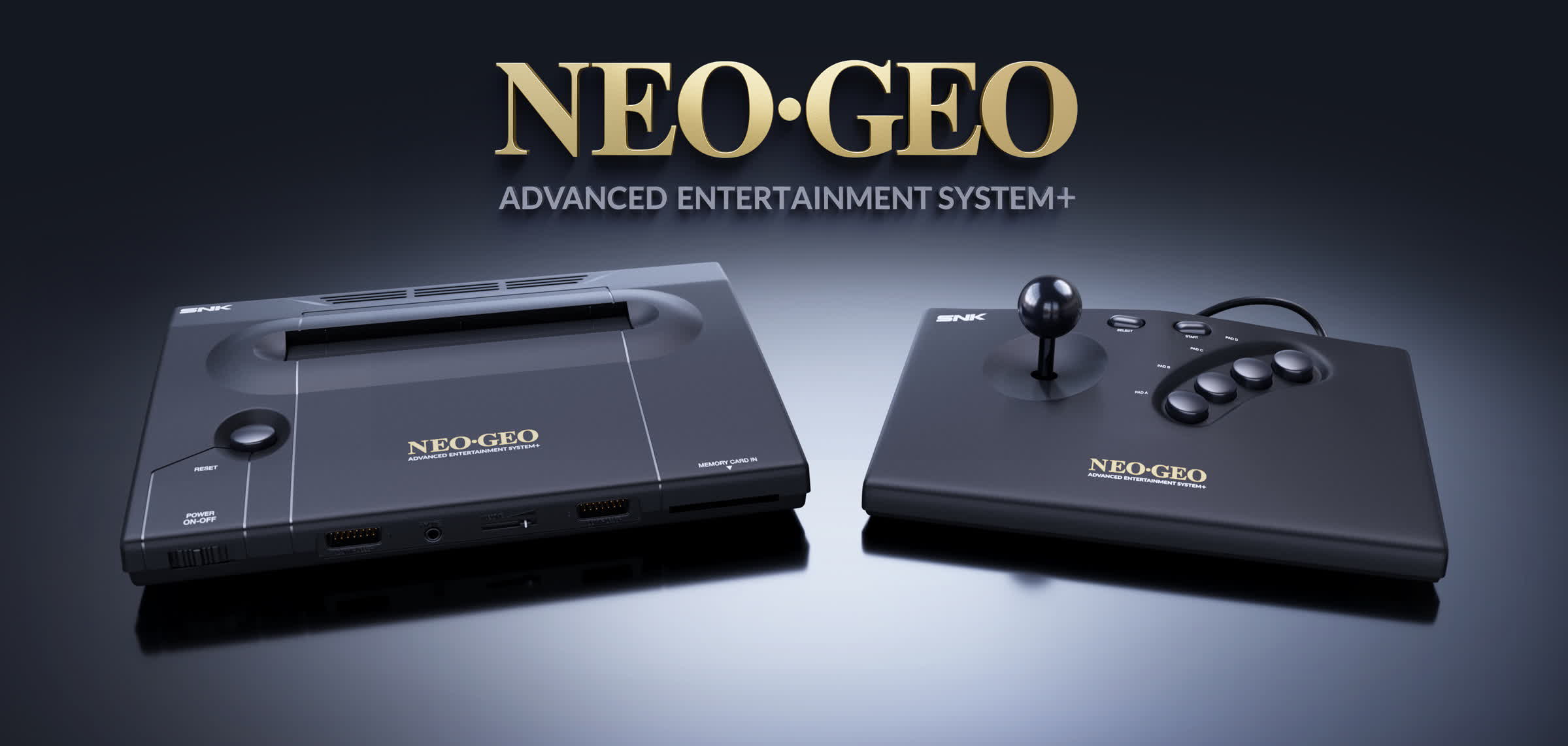
Retro-Suckers: Back in the 1990s, Neo Geo was one of the most popular arcade platforms thanks to its unmatched computing power and graphics prowess. SNK tried to bring the system into the home with the Neo Geo AES console, which used its own cartridges that were physically incompatible with arcade MVS cartridges. The attempt ultimately failed, but the Neo Geo AES is now making a comeback among gamers seeking an “authentic” hardware experience without relying on emulation.
Plaion and SNK announced the revival of the Neo Geo AES platform earlier this year. The “premium” retro-gaming console is now available for pre-order, with multiple variants, accessories, and even an “extra-luxury” edition packed with controllers, cables, and game cartridges.
The Neo Geo AES+ is part of Plaion’s “Replai” offering, which sells several modern iterations of classic platforms such as the Intellivision, Atari 2600, and the Amiga. Plaion describes the Neo Geo AES+ as a faithful reimplementation of the original Japanese machine, using legacy ASIC-based solutions that don’t require any kind of emulation.
Custom ASIC chips replicate the original machine’s software and hardware functionality, which allegedly includes full compatibility with original AES cartridges.
Advertisement
Arcade authenticity aside, the Neo Geo AES+ also includes a few modern niceties to ease the pain of using classic consoles with modern setups. The machine provides a low-latency HDMI output, overclocking, and high-score storage on a separate memory card. I can safely say that overclocking is a rather crucial upgrade, as Metal Slug and other Neo Geo games are infamous for turning into annoying slideshows when too many sprites are shown on screen.
Neo Geo AES+ is coming out on November 12, 2026, with plenty of different pre-order options. The original edition costs €200 and includes a console, an arcade stick, and an HDMI cable. There is also an all-white Anniversary Edition, which costs €300 and comes with an additional wireless arcade stick, a white Metal Slug cartridge, a memory card, and more.
Sitting at the other end of the spectrum, the Neo Geo AES+ Ultimate Edition packs several additional controllers, 10 fan-favorite Neo Geo games, and plenty of dongles and cables. This particular version has a €900 price tag, which is still not enough to impress retro enthusiasts who remember how much the original console cost back in the 90s.
The Neo Geo platform played an important role in video game history, blowing away the hardware competition and giving rise to long-running series such as Metal Slug, The King of Fighters, and more. Neo Geo emulation has long been a “solved” problem on PCs and mobile devices, thanks to MAME and other actively developed projects.
Advertisement
The Neo Geo AES+ is the latest in a long list of modern devices designed to replicate both the games and hardware features of the original console. It might very well be the most effective one yet, although I don’t plan on spending €80 on one of the individual AES cartridges that Plaion is going to launch alongside the console.































































You must be logged in to post a comment Login