






Connect with us
DAPA Banner

Tech

Projectors and Fog Team Up to Create Walk-Around 3D Scenes

Published

on

DIY Custom Multiview Stereo Projection 3D Fog Scenes
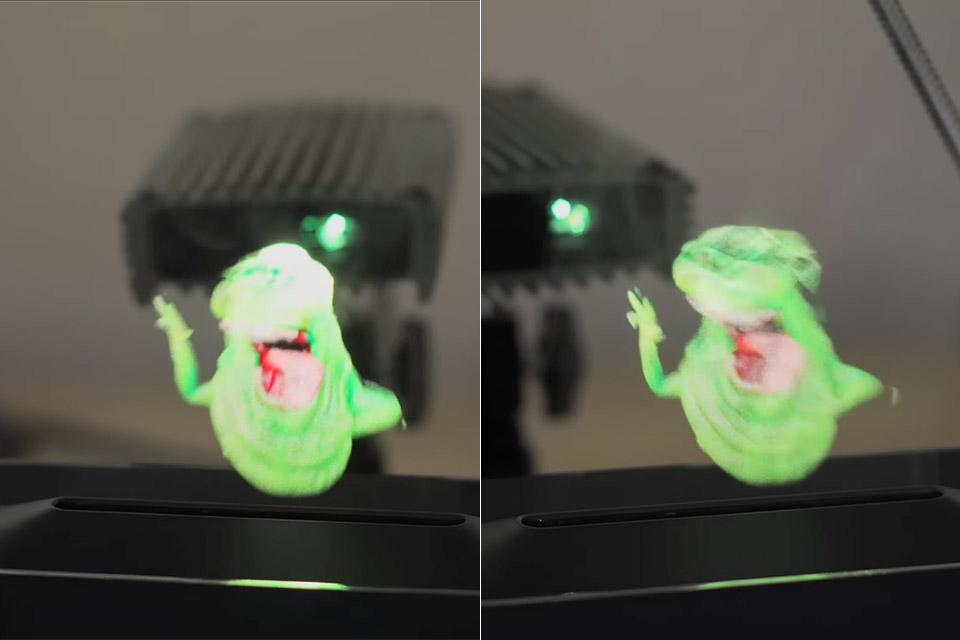
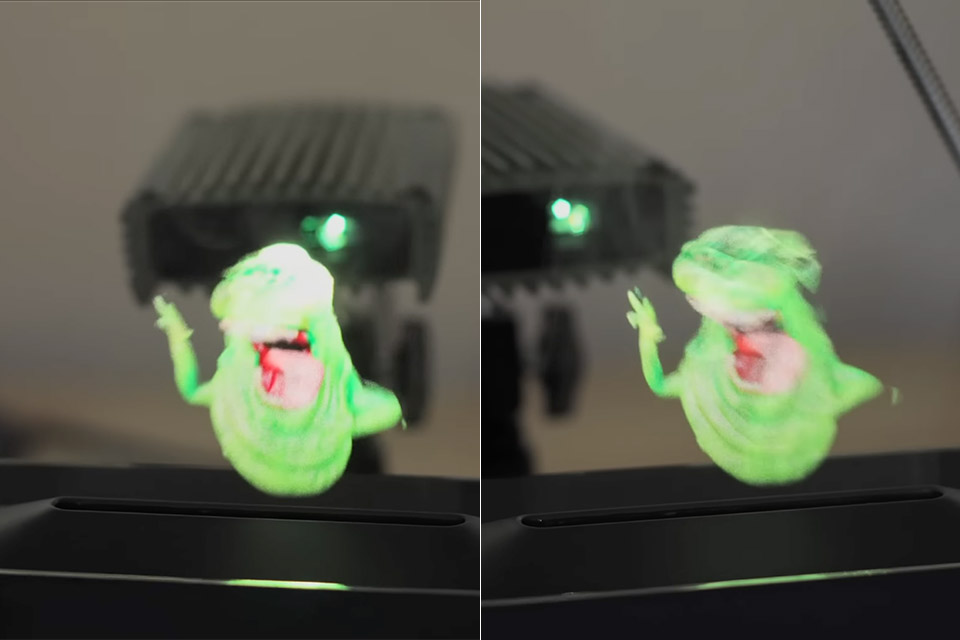
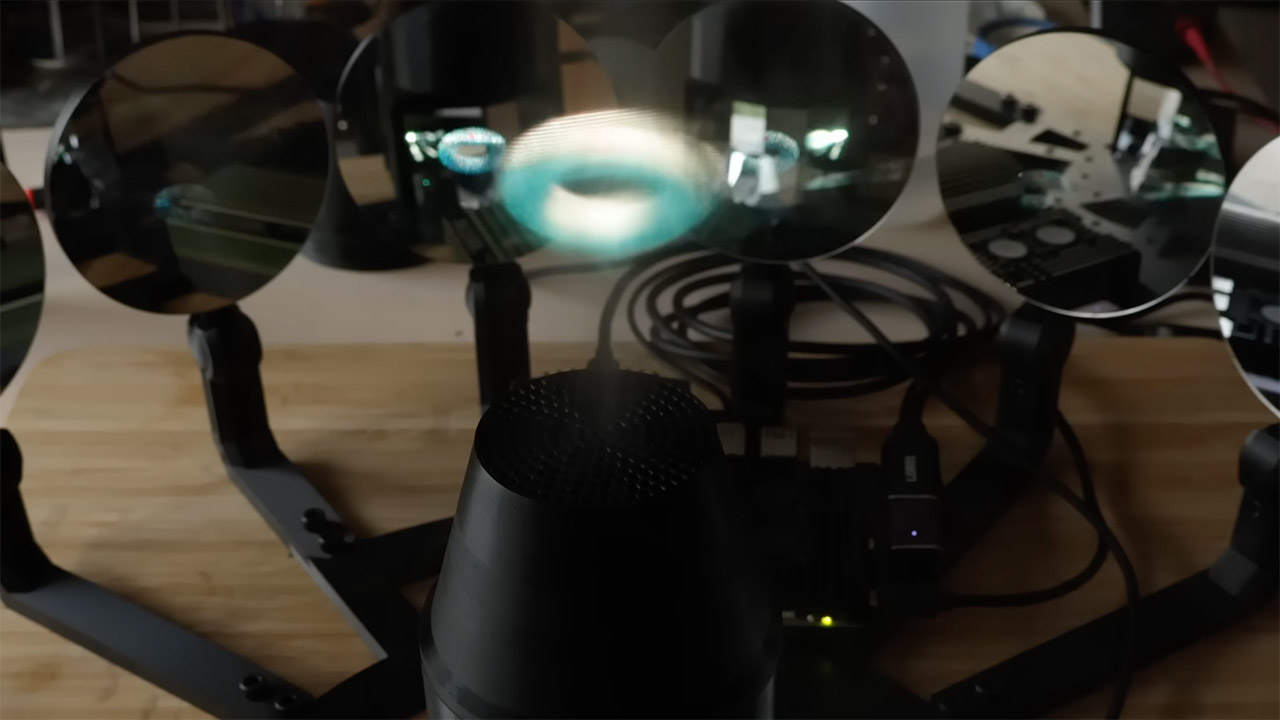
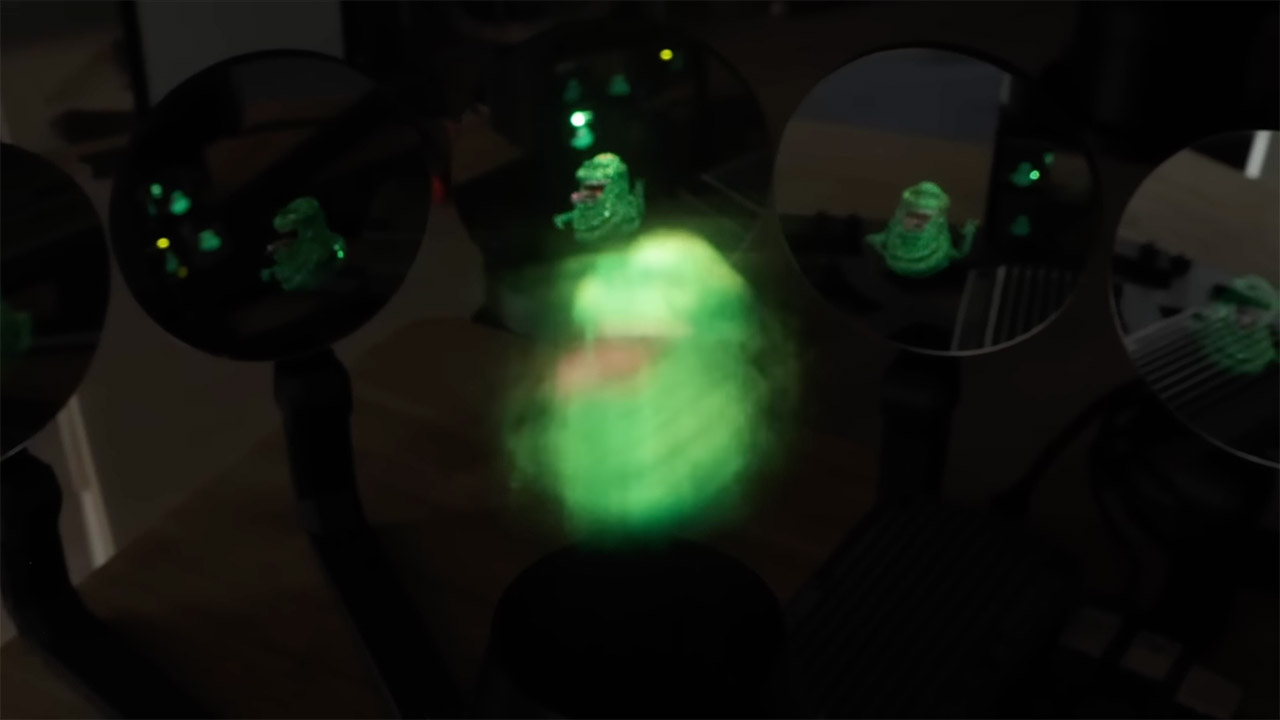
Maker ‘Ancient’ recently worked on a project that transforms standard fog into a small stage for 3D models. So you stand in front of it and see this green ghost, also known as Slimer from Ghostbusters, floating around in mid-air. You go to one side, and the perspective refreshes fluidly, as if the ghost is actually floating about in there. There is no need for special glasses or anything like that.


The method works by carefully projecting into a space filled with tiny water droplets. The light scatters in the fog, but the moment you divert your gaze away from a straight line to the projector, it becomes very dim. They got past this by putting in a variety of projections all around the fogbox. This manner, no matter which angle you look at, one of the projections will be exactly aligned while the others will fade away. It’s a simple yet effective design that creates a sense of depth and allows you to stroll around the object from various perspectives.

Sale


TCL C1 Smart Projector 4K Support, Google TV & Netflix Officially Licensed, WIFI and Bluetooth, Auto…
  • 【Smart Google TV Projector】 – Google and TCL collaborate on this projector system. Make sure you can enjoy immediate access to certified Netflix…
  • 【Dolby Audio Home Theater Projector with 8W Speaker】 – The TCL C1 projector delivers an immersive sound experience powered by Dolby Audio and a…
  • 【4K Video, Native 1080P, HDR10, 230 ISO Lumens for Perfect Images】 – TCL’s ImmersiColor technology reproduces details with impeccable color…

DIY Custom Multiview Stereo Projection 3D Fog Scenes
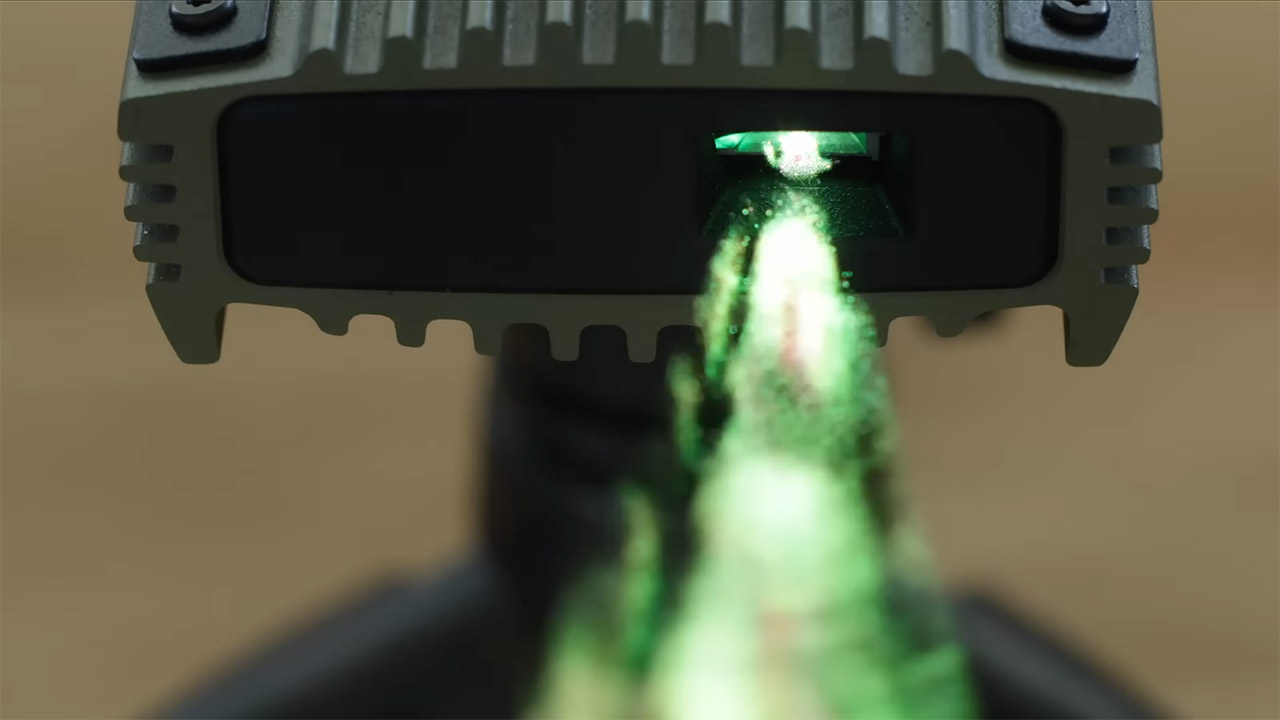
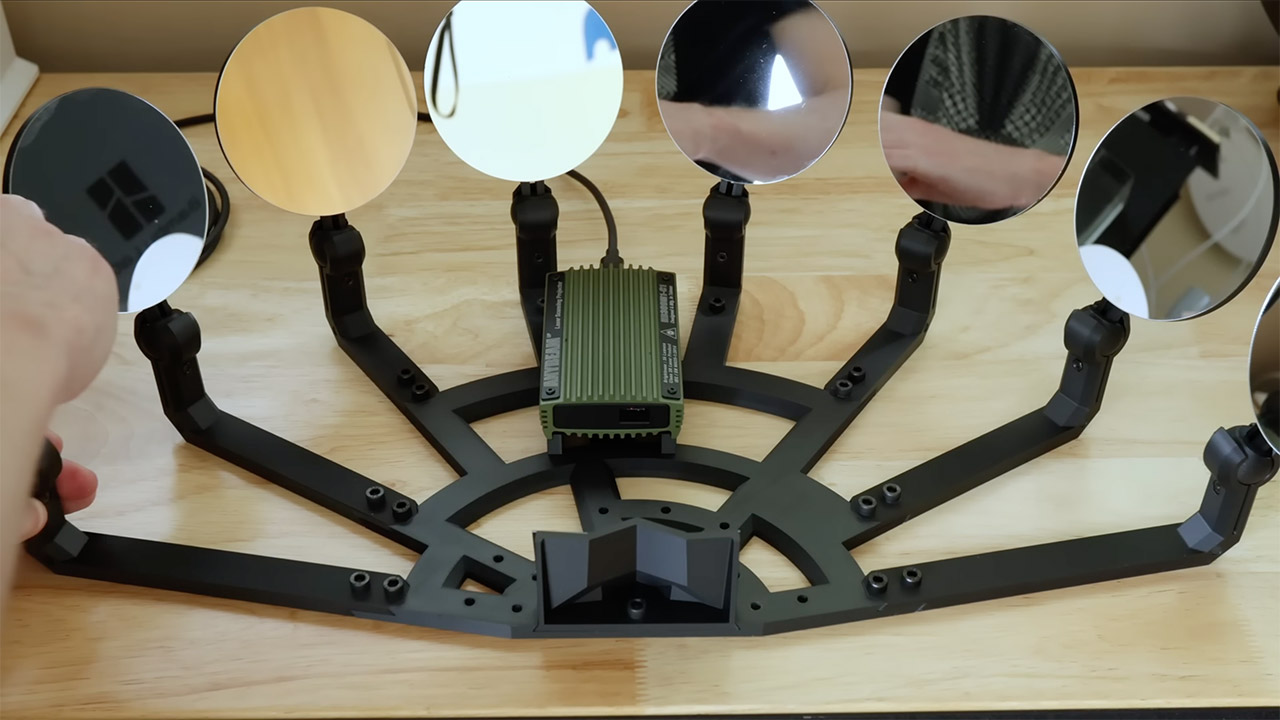
The build process begins with a simple projection test to ensure that everything works in 2D. Then things get a little more tricky with folding optics to keep the entire outfit compact. Mirrors bend the light to ensure that all of the equipment fits together in a small place without having to hurl the images over great distances. Then there are the specific cuts to ensure that the mirrors fit perfectly in the case where they will be installed.

DIY Custom Multiview Stereo Projection 3D Fog Scenes
Assembly puts everything together by combining the mirrors, projector, and frame into one compact unit. Then there’s the atomiser, which mixes the water to produce a homogenous fog within the viewing area. The calibration stage comes next, during which each projection must be properly aligned so that the images overlap exactly inside the mist. Without doing it correctly, the entire thing collapses when you change positions.

DIY Custom Multiview Stereo Projection 3D Fog Scenes
Once everything is in order and you’ve completed the final checks, the demos really shine. You get a 3D model suspended in the fog, which changes perspective as you walk around it. It’s all pretty smooth. A second presentation includes more complicated motion or lights. Everything works without anyone having to tell you what’s going on; just the silent buzz of fans and the beautiful illumination in the mist.

DIY Custom Multiview Stereo Projection 3D Fog Scenes
The entire system is built around common components that most hobbyists can easily obtain. The image output is handled by projectors, and the fog serves as a display surface that appears only when necessary. There are no spinning parts or arrays of lights to mess things up; instead, the entire system relies on the natural way that light works in fog to handle the stereo and motion stuff automatically.

Advertisement

Source link

Continue Reading
Click to comment

You must be logged in to post a comment Login

Leave a Reply

Tech

Cohere acquires, merges with Germany-based startup to create a ‘transatlantic AI powerhouse’

Published

on

Cohere, the Canada-based enterprise AI unicorn, announced Friday that it would merge with the Germany-based enterprise AI company Aleph Alpha.

The deal, which has yet to close, will value the newly formed company at $20 billion, the FT reported. Schwarz Group, one of Aleph Alpha’s top backers, will also invest $600 million in Cohere’s Series E round, which is expected to close later this year, CNBC reported.

A handful of Silicon Valley players continue to dominate the AI commercial landscape, which is busy with consolidation activity.

A press release announcing the Cohere-Aleph Alpha union said one goal of the merger was to give businesses and governments an alternative to these dominant tech players, one that offers greater independence and control over their data. It also hopes to combine the talent pool across Canada and Germany to create a “transatlantic AI powerhouse.” 

Advertisement

Source link

Continue Reading

Tech

This Ring Doorbell deal is a cheap way to smarten up your front door

Published

on

Most video doorbells make you choose between a wide-angle view of your porch or a tight shot of whoever’s face is at the door, but the Ring Battery Doorbell doesn’t ask you to compromise.

Right on that premise, the Ring Battery Doorbell is currently down from $99.99 to $59.99 at Amazon, putting $40 back in your pocket for a camera that covers significantly more of your front door area.

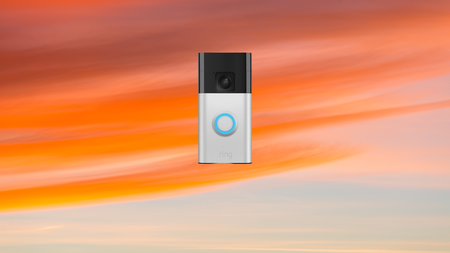
Ring Battery Video Doorbell on a red and orange backgroundRing Battery Video Doorbell on a red and orange background

Upgrade your home with 40% off a Ring Battery Doorbell 

For anyone who has been putting off adding a smart doorbell to their home, this 40% discount makes the barrier to entry massively lower.

Advertisement

View Deal

The headline feature here is Head-to-Toe Video, which expands the vertical field of view compared to the previous generation, so you can see both a visitor’s face and any packages left on your doorstep in a single frame.

Advertisement

That wider perspective pairs naturally with Live View, which lets you pull up a real-time feed from your phone at any moment, whether you’re in the next room or across town on a work trip.

Two-Way Talk is built in as well, so you can have a full conversation with whoever’s at the door without opening it, which is particularly useful for redirecting delivery drivers when you’re not home.

Advertisement

Motion Detection alerts push a notification to your phone the moment activity is detected outside, and because the doorbell runs on a built-in rechargeable battery, installation doesn’t require any existing doorbell wiring at your property.

Advertisement

The Whatsapp LogoThe Whatsapp Logo

Get Updates Straight to Your WhatsApp

Join Now

Advertisement

Charging is handled via USB-C; you simply detach the unit from its wall bracket, connect the included cable, and click it back into place when it’s ready, which makes the whole process considerably less disruptive than it sounds.

The Ring Battery Doorbell also connects with Alexa-enabled devices, meaning an Echo Show can display a live feed when motion is detected, and compatible Echo speakers will announce when someone arrives.

It’s worth noting that features like Smart Alerts for person and package recognition, video history, and Quick Replies each require a Ring Protect subscription, sold separately, so factor that into your running costs.

For anyone who has been putting off adding a smart doorbell to their home setup, this 40% discount makes the barrier to entry meaningfully lower than it has been.

Advertisement

Advertisement

SQUIRREL_PLAYLIST_10148964

Source link

Advertisement
Continue Reading

Tech

DJI Osmo Pocket 4, Recteq X-Fire Pro and Alienware 27 QD-OLED

Published

on

Engadget’s hottest review roundup truly has it all this week: a new pocket cam, a 2-in-1 smart grill, a pair of drones and a pricey skinny vac. And that’s before we even get to the highly capable gaming display that will only set you back $350. Read on to catch up on the reviews you might’ve missed over the last two weeks as we prepare for another slate of big events next month.

DJI Osmo Pocket 4

Image for the large product module

DJI/Engadget

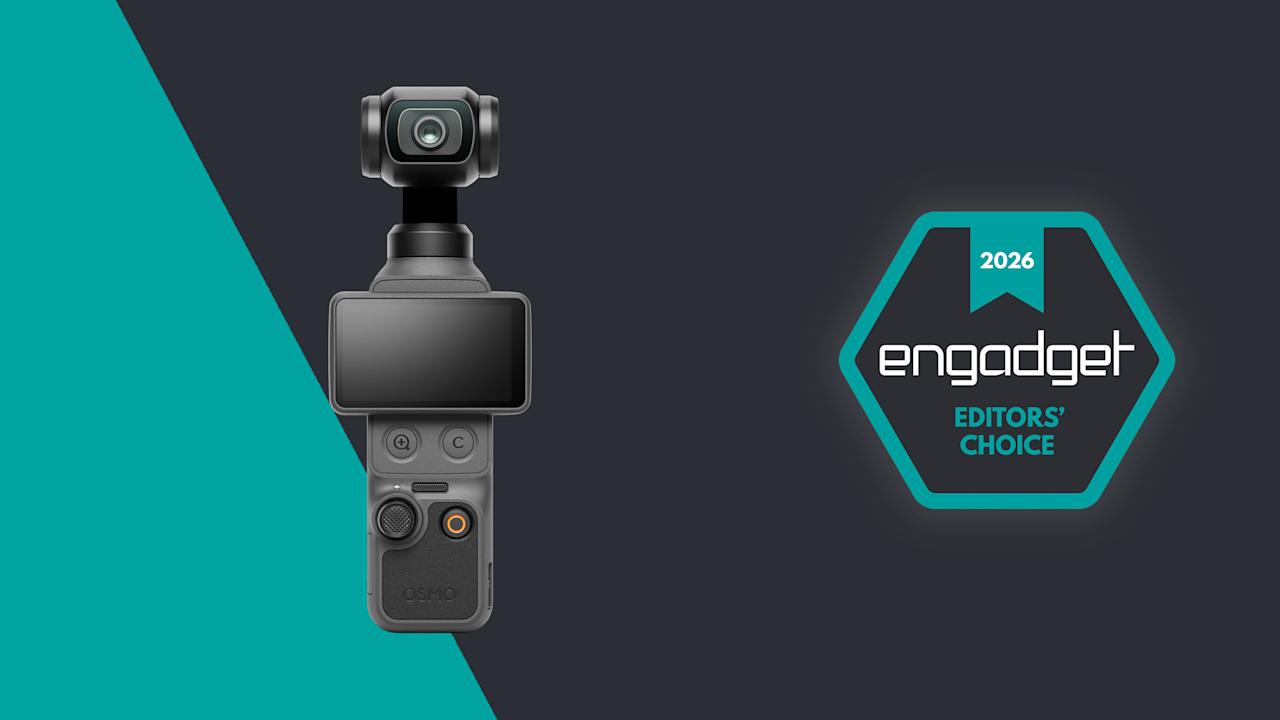
The Osmo Pocket 4 is still the best pocket-friendly vlogging camera you can buy. With excellent image quality, improved photos, great stabilization and pro D-Log mode, it’s incredibly easy to record everything from simple vlogs to near cinematic-quality video. The high level of portability and extended battery life make this an easy camera to reach for whatever you’re filming.

Pros
Advertisement
  • Excellent image quality
  • Improved low-light performance
  • Onboard storage
  • Modular accessories
Cons
  • Still only 3K in portrait mode
  • No dust or water protection due to the gimbal
  • No optical zoom
  • Not available in the US

DJI’s Osmo Pocket cameras have become a staple of Engadget’s live event coverage over the last few years. They’re convenient, compact and product high-quality footage when speed matters. Contributing review reporter James Trew recently put the new Osmo Pocket 4 through its paces, concluding that “you’re getting better image quality that will pay you back over time.”

Recteq X-Fire Pro 825

Image for the large product module

Recteq/Engadget

The X-Fire Pro offers the ease of gas with the wood flavor of pellets in the same grill. While there could be more features, the build quality is excellent and the performance is reliable.

Pros
  • Two grills in one
  • Reliable Wi-Fi tools
  • Robust build quality
  • Direct-flame searing
Cons
  • Small pellet hoppers
  • No super smoke, keep warm or other handy modes
  • Not compatible with wireless food probes

With the X-Fire Pro, Recteq set out to make a pellet grill that would appeal to fans of gas grills. The company has done just that, offering a dual-mode device that imparts wood flavor you don’t inherently get from propane or natural gas. “Recteq has successfully combined the best aspects of pellet grills with a dedicated high-heat mode and separate controls that will be familiar to gas grillers,” I said. “This model offers robust build quality, reliable performance and Wi-Fi connectivity for extended smoking sessions.”

Alienware 27 QD-OLED monitor

Image for the large product module

Dell / Engadget

Advertisement

In a world where every piece of gaming gear seems to be getting more expensive, Alienware’s  $350 AW2726DM 27-inch QD-OLED monitor feels like a gift to gamers on a budget.

Pros
  • Stupendously affordable
  • Three-year warranty with burn-in protection
  • Simple, straightforward design
  • QHD resolution with 240Hz VRR
  • Rich colors
Cons
  • Mediocre brightness
  • Not a ton of ports
  • No native G-Sync support

Can a $350 gaming monitor offer enough to get the job done? If you’re talking about the Alienware 27 QD-OLED display, that answer is a resounding “yes.”

“The AW2726DM might not have all the fancy features you get on more expensive monitors, but it’s an excellent example of a no frills gadget done right,” senior reporter Sam Rutherford said. “You get just enough ports, a straightforward design and a beautiful QD-OLED panel with a solid resolution and refresh rate — all for just $350.”

DJI Lito drones and a Dyson PencilVac

Like the Osmo Pocket 4, DJI’s latest Drones are unlikely to make it to the US. However, if you live elsewhere, there’s a lot of performance available for under $400. “The Lito series shows that DJI is intent on dominating every drone price range and category, including the bottom end,” contributing reporter Steve Dent said. “Despite their low prices, the new drones don’t skimp on features, offering full obstacle protection, ActiveTrack subject tracking, relatively high speeds and sharp 4K video quality — just like models that cost a lot more.”

Advertisement

If your spring cleaning could still use a jump start, perhaps a fancy, skinny vacuum could do the trick for light duty. “With its minimalist form factor, the PencilVac is still an engineering marvel,” UK bureau chief Mat Smith said. “Its high degree of mobility makes it easy to clean in tight corners and between furniture. I just wish it were slightly more powerful.”

Source link

Continue Reading

Tech

Internal memo: Five senior execs out at Qualtrics as new CEO restructures leadership team

Published

on

Qualtrics is based in Provo, Utah, and downtown Seattle (above). (GeekWire File Photo)

Qualtrics CEO Jason Maynard shook up the company’s senior leadership team on Friday at its dual headquarters in downtown Seattle and Provo, Utah, less than three months after taking the helm of the experience management technology company.

Five executives are no longer with the company, Maynard told employees in an internal email viewed by GeekWire, calling the moves “a difficult but important step” designed to “simplify our structure and ensure we are positioned for our next phase of growth.”

The impacted leaders span Qualtrics’ business, engineering, IT,  and marketing teams: 

  • Brad Anderson, president of products, UX, engineering and security; 
  • Eddie Chen, chief strategy and corporate development officer; 
  • Jeff Gelfuso, SVP and chief product and experience officer; 
  • Juan Rodriguez Estevez, chief information officer; 
  • and Lynn Girotto, chief marketing officer. 

Anderson is the most senior of the departing execs, having been at Qualtrics for more than five years, overseeing the company’s engineers, product managers, designers, and security engineers. He previously spent nearly 18 years as a high-ranking Microsoft exec. Maynard’s email singled him out, thanking him for his leadership and impact in his role.

In addition to the departures, Maynard outlined plans for a broad reorganization, reshuffling teams across marketing, customer operations, IT, and corporate development. He said in the memo that a new SVP of marketing would be named Monday, and more details will be announced internally next week. 

It’s not clear how many employees were impacted by the changes overall. Qualtrics is not yet commenting publicly on the changes.

Advertisement

The priority is to “ensure we build with speed, clarity, and a relentless focus on driving stronger outcomes for customers and bringing new AI capabilities to market faster,” Maynard wrote.

Maynard took over as CEO on Feb. 3, succeeding Zig Serafin, who stepped down in October 2025. (Jim Whitehurst and Mark Gillett had served as interim co-CEOs in the meantime.) Maynard previously spent a decade at Oracle, where he was executive vice president of revenue operations, joining through the NetSuite acquisition in 2016.

Qualtrics, which employs more than 4,500 people globally, makes software that helps companies gather and act on feedback from customers, employees, and others through surveys, AI-powered analytics, and other tools. It was taken private by Silver Lake and Canada Pension Plan Investment Board in 2023.

Source link

Advertisement
Continue Reading

Tech

Physicists Revive 1990s Laser Concept To Propose a Next-Generation Atomic Clock

Published

on

Physicists have proposed a new kind of atomic clock based on a revived superradiant laser concept that could produce an extraordinarily stable signal with a linewidth around 100 microhertz, potentially the narrowest ever for an optical laser. “The implications of this result could stretch well beyond timekeeping,” reports Phys.org. “A laser immune to environmental frequency shifts would be a powerful tool in optical interferometry — using interference patterns in light to make ultra-precise measurements.” From the report: In a conventional laser, a mirrored cavity bounces light back and forth between atoms, building up a bright, coherent beam. A superradiant laser works differently: rather than relying on the cavity to maintain coherence, the atoms themselves act as single coordinated emitters, collectively synchronizing their light emission. Following early theoretical ideas emerged in the 1990s, the concept didn’t gain concrete traction until 2008, when researchers at the University of Colorado proposed that superradiant lasers could serve as a new kind of atomic clock.

Atomic clocks work by using laser light to probe a very precise transition in an atom, causing electrons to transition between energy levels at an extraordinarily stable frequency. Because a superradiant laser stores its coherence in the atoms rather than the cavity, its output frequency is far less vulnerable to environmental disturbances like vibrations or temperature fluctuations. Yet although this concept was first demonstrated experimentally in 2012 in a pulsed regime, the influence of heating has so far held superradiant lasers back from their full potential. To keep the laser running continuously as an atomic clock requires, atoms must be constantly replenished with energy. Doing this atom-by-atom delivers random kicks that heat the atomic sample and disrupt the lasing process, confining it to brief pulses rather than a steady beam.

In their study, Reilly’s team considered whether a modification to earlier theoretical concepts could make a continuous laser suitable for an atomic clock. In almost all previous studies, atoms were treated as simple two-level systems: an electron sitting in a ground state, occasionally jumping up to an excited state and back again. The team proposed that the heating problem could be solved by adding one extra ground state to the picture. In a two-level system, if both the pumping (re-energizing) and decay processes happen collectively through the cavity, the mathematics constrains the system in a way that prevents stable, continuous lasing. But with three levels available, pumping and decay can operate on entirely separate transitions, breaking that constraint and allowing the collective approach to work. The findings have been published in the journal Physical Review Letters.

Source link

Advertisement
Continue Reading

Tech

Palantir is reportedly helping the IRS investigate financial crimes

Published

on

Palantir has helped the Internal Revenue Service’s Criminal Investigations office probe a variety of financial crimes in the U.S. for much of the last decade, The Intercept reported.

The IRS has paid the firm $130 million since 2018 to use its data analysis software to pore over financial records for investigative purposes, the outlet reported, citing public records detailing Palantir’s IRS contract that were obtained by the nonprofit watchdog group American Oversight.

It was previously known the IRS was using Palantir’s products, and that the agency sees the software as a way to automate and modernize audits. Last summer, it was also reported that Palantir was assisting DOGE, the “government efficiency” initiative launched by President Trump’s executive order with a project designed to access IRS records. However, the extent of the agency’s use of the company’s tools had not been previously reported.

The software, Palantir’s Lead and Case Analytics platform, is being used to aggregate and analyze data across a variety of federal agencies. The software can find “connections from millions of records with thousands of links” between various databases, and the tool is particularly good at mapping human relationships and communications, according to the outlet. 

Advertisement

Earlier this week, American Oversight sued the Trump administration for public records related to numerous federal agencies’ use of Palantir tools, including the IRS. TechCrunch has reached out to Palantir for more information and will update the article if the company responds.

Source link

Continue Reading

Tech

Tim Cook, John Ternus, the FBI, and 'Star Wars,' on the AppleInsider Podcast

Published

on

You didn’t see that coming, at least not now, but Tim Cook’s successor is John Ternus and there’s so much news about both men. Plus what Apple had to update because of the FBI, how “Star Wars” benefits from the Apple Vision Pro, and more, on the AppleInsider Podcast.

Man in a dark shirt stands inside an Apple Store, large glowing Apple logo on wall behind him, with a black circular logo containing lowercase letters ai in the top right corner
If John Ternus ever had to buy his iPhones at an Apple Store, he doesn’t now – image credit: Apple

This week, Apple pulled off something special. It managed to totally surprise everyone, and yet at the same moment, surprise no one at all.
It really was startling when it was announced that Tim Cook is stepping down as Apple CEO, but it wasn’t remotely unexpected that his successor would be John Ternus.
Continue Reading on AppleInsider | Discuss on our Forums

Source link

Continue Reading

Tech

Chatbots take a back seat as new GPT-5.5 model focuses on getting work done

Published

on

OpenAI is pushing AI beyond chat with the recent release of GPT-5.5, a model designed to complete multi-step work instead of stopping at answers.

Minimalist ChatGPT logo on a light gray background, featuring a black interlocking knot symbol above the bold black text ChatGPT centered in the frame
OpenAI logo

The company introduced GPT-5.5 on April 23, a new flagship AI model designed to handle multi-step tasks across software, research, and everyday computer work. It moves toward agentic systems that plan, act, and complete jobs with minimal guidance.
OpenAI claims that GPT-5.5 can handle loosely defined requests by breaking them into steps. It can use tools, verify results, and continue working until the task is complete.
Continue Reading on AppleInsider | Discuss on our Forums

Source link

Continue Reading

Tech

Best Apps for Focus (2026): Focus Friend, Forest, Focus Traveller

Published

on

when you’re trying to stay focused on something, there’s no shortage of distractions on your phone, through your web browser, or out the window. And with attention spans crumbling in the TikTok era, we now have an entire category of apps dedicated to helping you stick to what you’re supposed to be doing.

These apps all work more or less in the same way, giving you a straightforward method of tracking how long you’re spending on a task, and offering some sort of incentive to keep going for the allotted amount of time. Sometimes you get a few extra features as well, like the ability to block access to other apps.

In the interest of trying to write this specific article without switching between browser tabs and apps every two minutes, I gave three of the best focus tools a try. Here’s how they stack up.

Focus Friend

Image may contain Book Publication and Comics

Focus Friend gives you a companion bean to focus with.

Advertisement

Photograph: David Nield

The vibe of Focus Friend is very much a warm and cozy one. When you first set up the app, you get your own personal bean, which you can give a name to. Once you’re through the intro screens, your bean will start knitting—and anytime you pick up your phone after that, the knitting stops.

The idea is that if you stick to the block of time you’ve set, your bean can come up with a variety of knitted creations, which can then be traded for different decorations for your bean’s living space. As you might expect, you can pay for decorations too, and a Pro subscription ($2 a month) means your bean is able to get more creative with its knitting.

It’s up to you how long your focus sessions are, and you have the option of playing some relaxing music, blocking access to other apps, or keeping the screen on while you work or study—and while your bean gets busy doing some knitting. It’s all quite whimsical and easy to set up. You don’t even need to register a user account.

How effective you find Focus Friend really depends on how taken you are by your bean and its knitting projects. At its core the app is really just a stopwatch, though the option to actually block other apps is useful. For me, the extra dollop of cutesy companionship does make a difference, and helps sticking to a task.

Advertisement

Focus Friend for Android and iOS (free or from $2 a month)

Forest

Image may contain Advertisement and Poster

Forest grows virtual trees while you work or study.

Photograph: David Nield

The trick that Forest uses to keep you focused is growing virtual trees inside the app. The longer you stay engaged and able to avoid distractions, the more trees you get—until you have your very own forest on your phone. The app developers have partnered with the nonprofit Trees for the Future to grow millions of actual trees out in the real world too.

Source link

Advertisement
Continue Reading

Tech

Rescuing The Data On A 1960s LGP-21 Computer’s Disk Memory

Published

on

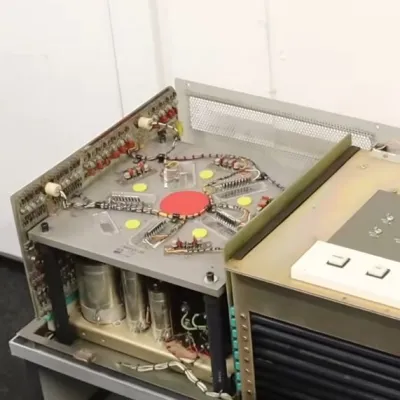
One of the nice things about magnetic storage is that as long as the magnetic layer remains intact, the data it contains should stay readable pretty much indefinitely. That raises the prospect of recovering data from really old computer systems featuring magnetic memory, such as the 63-year old LGP-21 that [David Lovett] of Usagi Electric is currently restoring. Its magnetic memory disk is nothing amazing by modern standards, but after initial testing it seems to spin up and read data just fine, raising the question of what was left on the drive when it was last used, meaning what was in memory at the time.
The read/write head side of the LGP-21's magnetic memory. (Credit: Usagi Electric, YouTube)
The read/write head side of the LGP-21’s magnetic memory. (Credit: Usagi Electric, YouTube)

Non-invasive data recovery here involves writing a program that will simply read the entire disk from beginning to end. Tracks 0 and 1 were found to be unreadable due to some kind of hardware issue, but track 2 could be backed up by looking at the output on the CRT, thus providing a track to use. Fascinatingly the LGP-21’s memory disks uses interleaved tracks to reduce the number of read/write heads as part of the overall cost-saving measures relative to the more expensive LGP-30. As you might expect, this slows down memory access a lot over its big brother.

Before any recovery attempt could begin, the Flexowriter typewriter that forms the user interface to the computer had to be given some serious maintenance, along with a few other components like a switch and the paper tape reader. This restored the ability to even properly enter data and receive output instructions.

The subsequent effort to recover the stored data involved a bootstrap program that got loaded into memory, after which the remainder of the program was loaded from paper tape. Following this everything worked swimmingly, though with the caveat that with not even a floppy drive to use, the raw hexadecimal data was hammered out on paper with the Flexowriter over the course of 1.5 hours.

Advertisement

This data will now be scanned in and OCR-ed into something that can hopefully be easily analyzed. Hopefully we’ll know before long what this system was last used for.

Advertisement

Source link

Continue Reading

Trending

Copyright © 2025