
Security teams log 54% of successful attacks and alert on just 14%. The rest move through your environment unseen.
The Picus whitepaper shows how breach and attack simulation tests your SIEM and EDR rules so threats stop slipping by detection.




Nearly a dozen flaws, some critical, in major AI agent frameworks that enterprises use to build apps reveal a security failure that extends beyond prompt injection – or any single model – according to Check Point researchers.
“Our research shows a deeper failure: in many agentic frameworks, prompt-controlled content can cross the boundary into trusted framework logic itself,” Yarden Porat and Shahar Tal note in a write-up about a Wednesday Black Hat talk on post-injection exploitation across AI agent frameworks, which they also discussed with The Register.
“A bug in an agent framework isn’t a bug in one product – it’s a bug in the layer a whole category of AI apps runs on,” Tal told us. “And the agent needs no dangerous tools to be turned against you: reading the wrong document is enough. We’re building this layer faster than we know how to defend it.”
The researchers spent a year trying to break various frameworks that enterprises use including LangChain, LangGraph, CrewAI, AutoGen, Microsoft Agent Framework, and Google ADK. And across these frameworks, the team found and disclosed 11 vulnerabilities.
“Almost none of it was a completely new bug class,” Tal said. “That’s insecure deserialization, server-side request forgeries, path traversals, use-after-free. These are bugs that we learned to fix 20 years ago, and they’re sitting underneath agents that now read your inbox, or update your database.”
These are old types of threats, and the model isn’t the weak link, he added. The failure exists in the “plumbing around the model, and we think this has been overlooked,” Tal told us. “There’s a lot of research going into prompt injection and defenses, which are important, but that’s just the beginning.”
Defenders should assume prompt injection, according to the researchers. The bug is what the framework does with the injection – and in these cases, the threat hunters found that the frameworks often fail to keep attacker-controlled content in the data plane. This allows it to influence trusted orchestration, memory, state, routing, and system instructions.
For example, the duo found a critical checkpoint deserialization bug in Microsoft Agent Framework that led to remote code execution.
“Agents have checkpoints, which are a way for them to save their state or rewind to an earlier point,” Tal explained.
These checkpoints are saved snapshots of an agent’s state, or task progress at a specific moment, and they serialize data – such as conversation history – into persistent storage, so if an error occurs, the system reloads this saved state instead of starting from scratch.
In this case, Check Point’s team found an insecure deserialization issue where, via prompt injection, the agent loaded untrusted checkpoint data, and this could allow attackers to execute malicious code on the system. “One person’s message plants the payload, and then a different person rewinds their own session, which triggers the payload, and now the attacker has a shell on that server,” Tal said.
Microsoft recognized the researchers’ findings, paid a $10,000 bug bounty and fixed the issue. But because the framework wasn’t a generally available product when Check Point found the flaw, Microsoft did not issue a CVE.
Microsoft told us that it appreciated the researchers reporting the vulnerability. “We have released protections to harden the Agent Framework and prevent the concrete exploitation path demonstrated in the proof of concept,” a spokesperson told The Register. “In addition, we updated the specific checkpoint file with additional language to define the security boundary.”
The duo also found flaws in Google ADK (agent development kit). However, Google responded differently, the researchers told us, and did not completely fix the vulnerability or issue a CVE.
“ADK ships a built-in development assistant that can write files, and it stays reachable over the HTTP API even though it is hidden from the app listing,” Porat told us.
To break this trust boundary, an attacker opens a session, asks ADK to write an agent whose Python code runs at import time, and then asks the server to run the agent, he explained. The server then imports the file and executes the attacker’s code.
“There is no authentication on that API by default, and adk deploy cloud_run publishes the same API, so on a default Cloud Run deployment it is reachable without credentials,” Porat said. “From there it reaches the environment’s API keys and the container’s Google Cloud service account.”
Google did not respond to The Register’s inquiries. But according to Check Point, Google initially deemed the issue not a bug.
“We argued the consequence rather than the mechanism: code execution on that container reaches the environment’s API keys and the container’s Google Cloud service account, which is secret theft, not a developer inconvenience,” Porat said.
Google ultimately paid a $3,133.70 bounty and issued a partial fix, we’re told.
In total, the bug hunters received $17,133.70 in rewards for their efforts.
And this isn’t a story about one vendor or framework doing a “particularly bad job,” Tal said. “If one was an outlier, this would be a story about that one vendor,” he added. “Our finding is that the same bug classes turn up in all of them.” ®
If we asked you what tools a cowboy in the Wild West needed most, you’d probably say their spurs, their saddle, their Stetson hat, and perhaps the lasso. You’d be right, too, but just as our modern misconceptions about cowboys give us a historically warped view of how they really were, spurs and saddles aren’t the whole story. Cowboys during the Wild West — roughly the latter half of the 19th century — relied on a lot more than just the stereotypical accouterments of their mythologized career. Some of the tools they relied on weren’t always for the reasons you’re thinking — and of course, there’s a lot of interesting history behind each and every one that’s worth digging into.
We want to take a very brief look at Wild West-era tech that would have played an important role in a cowboy’s life, even if only indirectly. Some of the most groundbreaking innovations in human history came about during the westward-moving American frontier. Thus, America’s beloved cattle drivers came to rely on them in some fashion. Let’s take a look at these five items in particular.
Throughout history, humans did think up some quick, long-distance communication methods, like semaphores. The telegraph took that to the next level. The electric telegraph, as we know it, sent its first official message in 1844. For the first time in history, a message could travel the miles at virtually the speed of light. You can still send a telegram today if you really want to.
Since the American West was so vast, so far from the eastern seat of government, and still expanding, the telegraph closed the distance, in a sense. Updated prices, standardized time zones, train schedules, it could all be sent much faster than even the Pony Express. Since cowboys worked primarily as cattle drivers directing cattle to railway depots, from whence they’d go east to the slaughterhouses, the telegrams were the superior means of communication over these vast distances; the telegraph affected supply chains of all kinds, like cotton and textiles, in some cases completely upheaving how they’d functioned previously. The telegraph might transmit the price of beef and coordinate the rail, and thus would have been a pivotal — even if unspoken — technological advancement underpinning a cowboy’s career.
Aside from that, the telegraph would have helped a cowboy in other ways. News, for example. News could arrive as it happened, so cowboys no longer had to wait on riders or word of mouth. They also had the ability to wire money orders via Western Union as early as 1870.
Nowadays we don’t think twice about canned food. It’s so commonplace and dull that it doesn’t even merit a conversation, but it’s hard to overstate just how big of a technological advance this was in the 19th century. Food spoils quickly, so before canning — heating food and sealing it in an airtight container — there were massive constraints on how and where food could be stored, how it was transported, and how long you could safely eat it. After canning, long journeys halfway around the globe without frequent stops for provisions became possible. It changed how people fed their families, how wars were fought, and unsurprisingly, how cowboys lived.
Canned food quickly became available in the American West, for obvious reasons. Cowboys might have enjoyed meat, fish, vegetables, and fruit thanks to it while out on cattle drives far from anywhere that would sell it fresh. They often ate from chuck wagons, white-topped wagons carrying enough to feed everyone on the trail (via NCSU). Some of the brands you’re most familiar with (Campbell’s Soup, for one) started out in the late 19th century. It’s entirely possible a cowboy over 100 years ago was enjoying the tomato soup that you now take for granted as part of your emergency supply in the pantry.
Granted, not all their food was canned, and it wasn’t sacrosanct; during that period, there were times when poorly done canning led to rotten food and consequently, a public mistrust of the process.
Guns loaded with bullets in brass cartridges have been the norm for over a century. Prior to that, a trained soldier needed a full minute to breech-load a musket with a paper cartridge and a single shot. Battles up to and including the American Civil War (a war already deploying submarines) were fought in lines of men standing in open fields while they shot, reloaded, and shot. All of that changed in the mid-19th century with the proliferation of metallic cartridges. Aside from being faster to reload, metallic cartridges made guns safer to shoot and kept powder dry for longer (via American Rifleman).
For one, if cowboys were attacked on the trail, it usually was an ambush, likely necessitating a gun that can load and fire quickly. The term “vigilante” originates from that time since law enforcement was scarce in the regions where cowboys might have worked. Dangers on the trail included predators, cattle thieves (better known as rustlers), and in some cases Native American tribes, so a cowboy armed himself for self-defense and to protect his boss’ herds (via NCSU). Further, cowboys were on long cattle trails that pitted them against wet weather, so paper cartridges wouldn’t be ideal.
The irony is that cowboys did need guns, but not for the reasons you’d suspect. The reality was cowboys shooting an attacking bear, or rustlers knowing there wasn’t a lawman for miles who’d punish the crime.
Alongside metallic cartridges, guns made significant strides around the same time. Guns went from single-shot affairs to weapons that a person could shoot and reload in quick succession, particularly repeater rifles and revolvers. Gun manufacturers like Smith & Wesson and Winchester became household names at this time. As such, a cowboy might have access to a Winchester 1873 or a Colt 1873 (known as the Colt Single Action Army), a repeating rifle and revolver, respectively (via Lamar University Press).
Coupled with metallic cartridges, the benefits are clear: cowboys had guns they could shoot and reload quickly. As previously stated, a cowboy faced several threats where a firearm would be essential. However, there’s a lot more nuance to cowboys and guns than most may realize. For one, these early repeating weapons were finicky. Misfires could happen, and generally speaking, gunshot injuries were more often accidental than not.
Then there’s the less spoken-of side to the Wild West: gun control. Gun violence wasn’t as rampant as many believe, but people at the time were still fed up with it. In some cases, cowboy gangs were the main aggressors. Cities like Tombstone enacted strict laws on ownership and open carrying, in response (via Smithsonian). If you’re imagining a Hollywood movie where a cowboy struts into town with a six-shooter bouncing on his hip, the reality is more likely that he’d make a beeline to the local officer and surrender it for the duration of his stay. If he didn’t, he might spend his last moments looking down that officer’s barrel.
Locomotive engines rose to prominence in the 19th century, changing everything as the telegraph did. Now, heavy cargo could be taken long distances relatively quickly, safely, and reliably, and the average person had access to cheaper goods from faraway places. Beef was one of these things. The demand for beef from growing cities in the east could be sated with the immense herds of longhorns in the sprawling west. All that was needed was cowboys to drive herds (numbering in the thousands) between mountains, across plains and rivers, to their cattle cars. Cowboys took long routes such as the famous Chisholm Trail to guide cattle safely from pastures to the rail, with all the environmental, animal, and human dangers that entailed.
Cow towns (or cattle towns) arose as a direct result of this, to service tired cowboys at the end of their route (via Kansas Historical Society). These cow towns epitomized the Wild West idea of a town we all have in our heads: hoof-churned streets, roisterous saloons, and violent clashes between the law and armed men. Even once the cows stopped coming, many of these towns found new sources of prosperity.
The train made a lucrative business out of bringing beef to places that didn’t have much. That business needed burly men who could be trusted to get a horde of stubborn animals from point A to B safely. So even though many cowboys probably rarely — if ever — set foot on a train, many of them would have had no employment without it.


A Canadian man pleaded guilty today to his role in accessing company accounts at cloud storage provider Snowflake and stealing data from at least 165 organizations in a scheme to extort millions of dollars from victims.
26-year-old Connor Riley Moucka, also known as Alexander Moucka and Waifu, was arrested on October 30, 2024, for stealing data of hundreds of millions of individuals from companies using Snowflake’s storage service.
Between February and October 2024, Moucka and John Erin Binns, also indicted for these attacks, accessed Snowflake accounts not protected by multi-factor authentication (MFA) using logins stolen via infostealer malware.

Without MFA enabled, the threat actor needed only the correct usernames and passwords to log into customer accounts.
According to court documents, the unauthorized access was used to identify valuable information (e.g., organization name, user roles, IP addresses) in cloud storage instances using custom software.
Moucka and Binn tried to extort multiple companies after stealing terabytes of data from their Snowflake tenant environments and obtained at least $2.5 million in bitcoin from at least three victims.
The following information was stolen from the breached accounts:
They also advertised on various hacker forums to sell the information for fiat currency or cryptocurrency, and Moucka obtained at least $ 495,000 this way.
In a press release today, the U.S. Department of Justice says that “in at least one instance, Moucka re-extorted a victim with threats of further disclosure of the victim’s stolen data.”
“Moucka used the stolen data of a government officer and members of a then-former government officer’s immediate family in this re-extortion attempt.”
The DoJ says that victim companies suffered more than $9.5 million in losses and more than 100 million individuals have been affected by the Snowflake attacks.
Moucka pleaded guilty to four counts of the indictment (computer fraud, wire fraud, aggravated identity theft, and a related conspiracy) and is scheduled for sentencing on October 27.
He faces a maximum sentence of 32 years in prison.
At the time of the attacks, Binns resided in Turkey, where he was arrested. A local court approved an extradition request from U.S. prosecutors but it was contested.
The list of impacted companies includes AT&T, Ticketmaster, Santander, Pure Storage, Advance Auto Parts, Los Angeles Unified, QuoteWizard/LendingTree, and Neiman Marcus.
Following these data breaches, Snowflake announced it would enforce MFA protection and require all passwords to be at least 14 characters long.

Security teams log 54% of successful attacks and alert on just 14%. The rest move through your environment unseen.
The Picus whitepaper shows how breach and attack simulation tests your SIEM and EDR rules so threats stop slipping by detection.


Maksim Silnikau, the creator and administrator of the Ransom Cartel ransomware operation, was sentenced to 16 years in prison for his role in ransomware attacks against at least 18 companies worldwide.
The U.S. Department of Justice announced today that the 40-year-old Belarusian national was sentenced for conspiracy to commit offenses against the United States, conspiracy to commit wire fraud, and aggravated identity theft.
The DOJ says Silnikau had been active on Russian-speaking cybercrime forums since at least 2005 and used the aliases “J.P. Morgan,” “xxx,” and “lansky.”
He was also a member of the Direct Connection cybercrime website between 2011 and 2016, when the site was shut down following the arrest of its administrator.
According to court documents, Silnikau began developing the Ransom Cartel ransomware operation in May 2021 and recruited other cybercriminals through underground forums to participate in attacks.
He supplied members with information and tools used in the intrusions, including stolen credentials for compromised computers and software designed to encrypt victims’ computers.
Silnikau also operated an affiliate website that allowed members of the ransomware operation to manage attacks, communicate with each other, negotiate ransom demands, and distribute revenue shares after a ransom was paid.
Between 2021 and 2023, Ransom Cartel affiliates attacked at least 18 companies worldwide, including organizations in California, New York, Nebraska, and countries outside the United States.
During the attacks, the threat actors stole corporate data and demanded payments in exchange for decryption keys or promises that the stolen information would not be publicly leaked.
Federal prosecutors said the ransomware operation attempted to extort at least $5.2 million from its victims.
The United States identified more than $6.7 million in losses suffered by 18 known victims, although prosecutors said the total was likely higher because some victims had not reported their attacks.
In one August 2022 attack, Ransom Cartel reportedly disrupted the operations at a medical technology startup developing robotic surgical technology for two months. In May 2023, the gang also attacked infrastructure used by a group of law firms, causing business disruptions lasting from several days to multiple months.
One law firm paid a ransom worth $125,000 after being disrupted for nearly a month, while another suspended operations for almost a month before paying a $300,000 ransom.
Prosecutors said the combined losses associated with those attacks reached approximately $2.2 million.
Ransom Cartel launched publicly in December 2021 and shared code similarities with the REvil ransomware encryptor.
However, the lack of some of REvil’s obfuscation features led researchers to believe that it may have been created by a former core member of the operation who did not have access to the complete source code.
Silnikau reportedly held a central role in the ransomware-as-a-service operation, recruiting affiliates, working with initial access brokers who supplied access to compromised corporate networks, communicating with victims, and handling ransom payments.
He also transmitted ransom payments through cryptocurrency mixers to make it harder for law enforcement to trace the funds.
Silnikau was initially arrested in Spain on July 18, 2023, as part of an international law enforcement operation. However, he fled while awaiting extradition to the United States and was later captured while attempting to return to Belarus.
“The defendant fled Spanish authorities while awaiting extradition to the United States and was apprehended while trying to cross from Poland to his native Belarus,” prosecutors said in their sentencing filing.
Silnikau ultimately consented to extradition and was sent from Poland to the United States to face prosecution in the Eastern District of Virginia.
Security teams log 54% of successful attacks and alert on just 14%. The rest move through your environment unseen.
The Picus whitepaper shows how breach and attack simulation tests your SIEM and EDR rules so threats stop slipping by detection.

Counterfeit goods are becoming increasingly sophisticated, forcing brands to rely on expensive authentication systems that often require specialized scanners or proprietary hardware. Researchers now believe a smartphone could do much of that work instead. A team has developed a new printing system that creates responsive anti-counterfeit labels that are more durable, easier to mass-produce, and can be verified using nothing more than a phone. The research was published in the International Journal of Materials and Product Technology.
At first glance, the technology looks like another incremental improvement in product security. In reality, it addresses one of the biggest limitations of anti-counterfeit systems today: accessibility. If authentication only works with expensive equipment, it becomes difficult to deploy at scale. By enabling smartphone-based verification, the technology could make counterfeit detection practical for manufacturers, retailers, and even consumers.
The new system combines three technologies into a single printable label. Researchers developed temperature- and light-responsive microcapsules, paired them with a UV ink formulated for high-speed printing, and created a portable smartphone-based detection system capable of verifying authenticity. The microcapsules contain functional materials that react to environmental conditions, producing optical signatures that are difficult to replicate using conventional printing methods.

Durability was another design priority. According to the researchers, nanotechnology-based linkers strengthen the polymer capsules, allowing the labels to remain stable under heat and humidity. The ink contains no volatile organic solvents, making it compatible with both screen and inkjet printing while remaining suitable for large-scale manufacturing. Even after repeated cold-storage testing, the labels retained more than 83% color fastness, suggesting they could withstand demanding supply chains.
Verification happens through a smartphone. A portable detector measures how light interacts with the printed label, and a machine-learning model then analyzes the captured data to determine whether the product is genuine. During testing, the system achieved nearly 97.5% accuracy, even when distinguishing between authentic labels and convincing counterfeits.
Counterfeit products affect industries ranging from luxury goods and pharmaceuticals to electronics and food packaging. While companies continue investing in holograms, QR codes, and RFID-based security features, many of those systems either add cost or require dedicated verification hardware.

A smartphone-compatible authentication system changes that equation. Because nearly every supply chain participant already carries a smartphone, the barrier to verifying products becomes dramatically lower. That could make authentication faster at warehouses, easier for retailers, and potentially accessible to consumers checking a product before making a purchase.
The researchers believe the technology could eventually be used across multiple packaging industries, though commercial deployment will depend on manufacturers integrating the printing process into existing production lines. If that happens, the next generation of anti-counterfeit labels may not rely on increasingly complex security features alone. Instead, they may simply rely on the device already sitting in your pocket.


We may receive a commission on purchases made from links.
For people on the road, keeping all your devices charged can be challenging. Unless, of course, you have your own solar panel with you. There are plenty of compact solar panels from reputable manufacturers that you can plug directly into your mobile phones, cameras, fans, or laptops. But if you need a solar panel that can also work with your power tool system, you might want to take a look at Ryobi.
One of the brand’s many backpack-sized offerings, Ryobi now offers two foldable solar panels, one 14-watt ($79) and the other 21-watt ($99). When folded, both models measure 12.25 inches by 6.5 inches, which make them even more compact than a 13-inch MacBook Air. Both options share a lot of core features, such as USB-A and USB-C output ports, compatibility with Ryobi power sources, and multiple usage options. You can either lay them flat on the ground or hang them from something with their built-in loops.
Although they do have a few key differences. First and most obvious is that the 21-Watt model is slightly thicker when folded, since it has three panels instead of two. While it is half a pound heavier than the 14W, the 21W model is more efficient and Ryobi claims it can charge your phone about 30 minutes faster. Both are covered under Ryobi’s 3-Year Limited Warranty.
There aren’t many reviews yet for either unit, but early feedback has been generally positive. For the 14W model, it has a perfect 5-star rating on the Ryobi website, where one owner said that they used it more often than they thought they would. They praised its size and said, “I highly recommend this product to anyone who spends time outdoors!” On Home Depot, it has a slightly lower rating of 4.4 stars from 15 people.
As for the 21W model, it has a slightly higher rating of 4.9 stars from 7 people on the Ryobi website, but it does have a significantly lower rating on Home Depot, wherein it holds 3.8 stars from 43 reviewers. One reviewer noted that it does take some time to charge devices, but also highlighted how it worked for both their personal and professional needs. They said it was a great companion from the beach to the job site.
Another customer on the 14 watt model’s page mentioned that they bought and loved both. Apart from the thickness, they said both worked as expected. While they’re not as powerful as the 60W foldable solar panels, both seem to hit the mark for many users. Apart from charging your small electronic devices regularly, it’s also capable of charging your Ryobi 18V ONE+ power sources.
One popular option that Ryobi lists as compatible is the 18V ONE+ 150W Battery Power Source and Charger Kit. Priced at $129, this kit includes a 150-watt power source and charger, 2Ah battery, and dual-port wall plug. For output, it has a pair of USB-A ports and a 120V outlet, plus an external LED lamp. It’s also a product we’ve previously recommended to level up your fishing game. As of July 2026, more than 170 people have rated it an impressive 4.8 stars on average on the Ryobi website. On the other hand, it holds a 4.6-star average from 870 Home Depot customers.
If you want something that can power larger appliances, Ryobi also notes that it works with the 18V ONE+ 1,800W Power Station Kit. Retailing for $899, it can be quite the investment, but it does include a slew of practical features worth considering, since it can hold up to 8 batteries and even power full-sized fridges and television sets. On the Ryobi website, more than 20 people rated it 4.2 stars. On Home Depot, the unit itself has the same rating but from 260 people.
Both units are compatible with all 18V ONE+ batteries. When not used with the Ryobi solar panels, you can also power them via wall chargers and car adapters. Ryobi also sells different cables at different lengths between 4 inches to 10 inches that you can purchase.
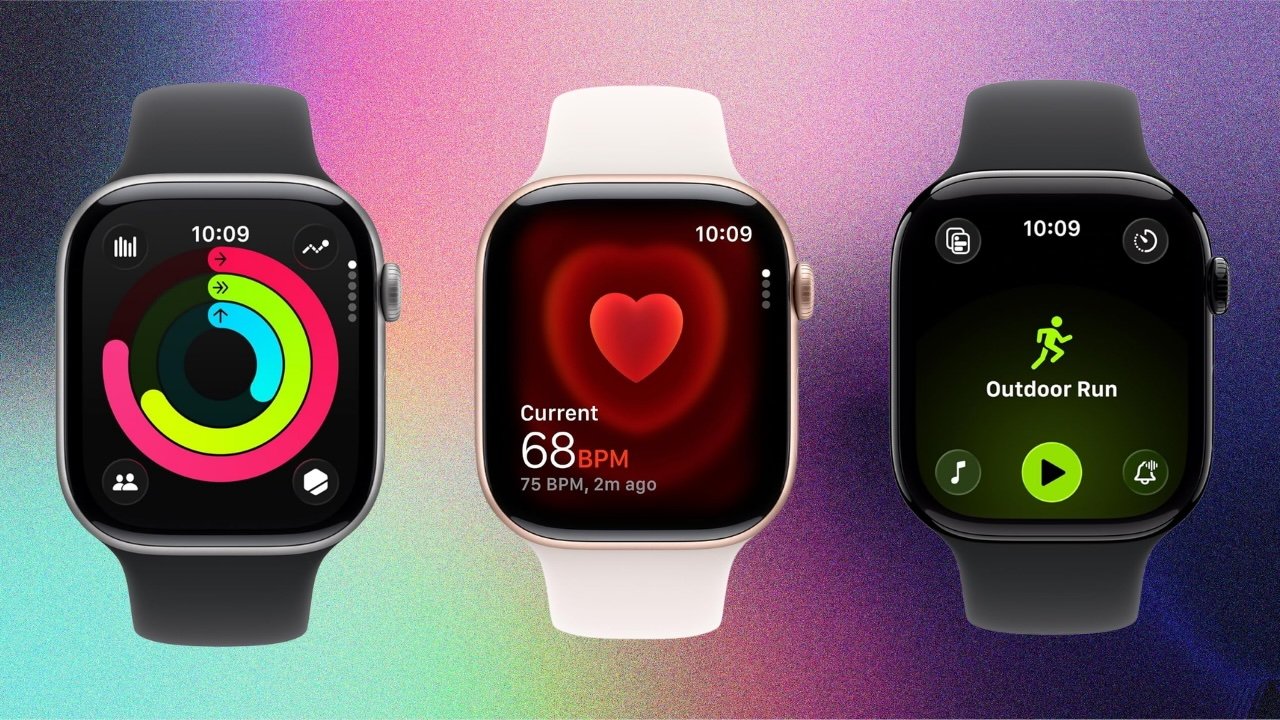
Summer Apple Watch sales at Amazon and Walmart deliver discounts of up to $172 off SE 3, Series 11, and Ultra 3 styles.
Prices across Apple’s wearables line start at $219 this week, with standout offers being a $172 discount on the 42mm GPS + Cellular Apple Watch Series 11 at Walmart and a $100 markdown on the Apple Watch Ultra 3 at Amazon.
Grab Apple Watch deals from $219
42mm Apple Watch Series 11 deals
46mm Apple Watch Series 11 discounts
Apple Watch SE 3 savings
Apple Watch Ultra 3 markdowns
Several of the deals reflect the lowest prices seen in 30 days, with units in stock and eligible for expedited delivery through Amazon Prime or Walmart Plus. You can find even more price drops in our Apple Watch Price Guide, which is updated throughout the day.


Allen Millyard’s one-of-a-kind masterpiece, a bright red motorcycle powered by a full eight-liter Dodge Viper V10, sold at H&H Classics on July 22 for a final price of £149,500. When fees and premiums are included in, the total comes to almost $201,500. The hammer dropped for £130,000, or around $175,000, right in the middle of the pre-sale estimate.
Millyard’s project began in his Berkshire garage in 2004, with little more than a used Viper GTS engine. After five years of meticulous crafting, a road-legal machine made its premiere in 2009. The massive beast under the hood is a 20-valve 10-cylinder pushrod engine that generates an impressive 507 horsepower and 525 pound-feet of torque. The bike weighs a whopping 1,300 pounds overall, with the engine accounting for nearly 700 pounds of that total. The front suspension is supported by 75-millimeter stanchions taken from JCB hydraulic cylinders, while the rear suspension is supported by a set of heavily modified Yamaha R1 shocks. To keep up with the heat, he even created ceramic-coated exhaust headers by hand. As expected, this beast does not have a multi-speed transmission. A fixed ratio allows the massive low-end torque to do all of the work, with the rear sprocket selection dictating whether the bike is geared at roughly 160 mph or over 270 mph.
Sale

During testing at Bruntingthorpe, Bruce Dunn of Motorcycle News reached 207.101 mph. Years later, in May 2023, Millyard and Henry Cole (a TV celebrity) achieved 183.5 mph on the identical bike at Elvington Airfield, breaking the Guinness World Record for the fastest tandem motorcycle. It has driven approximately 10,000 miles on public roads and race circuits, including a lap of the Isle of Man TT course, visits to Guernsey and the Isle of Wight, and a few trips across Germany. Honestly, only a few people have sat on it throughout the years.

Millyard had decided that he’d done enough with it because the machine was getting increasingly difficult to handle due to his declining muscle strength, and he thought he’d checked off every box he set out to do with the bike. He described it as a painful decision, but the proceeds from the sale will free up some space and finances for other projects. When the audience requested to hear it run during the auction, he started the engine and ran it for them while TV cameras were filming a future edition of The Motorbike Show.

Tim Whittaker, a local collector and engineer, submitted the winning bid. He’s been eyeing this bike for years, and believe us, he didn’t want it to end up in some private collection and never see the light of day. Whittaker plans to ride the bike himself, starting on runways and progressing to public roadways as he builds confidence. He has already agreed to loan the motorcycle to the National Motorcycle Museum in Solihull for the winter months, allowing visitors to see it up close.
[Source]


If there’s one automotive brand that has become synonymous with safety, it’s Volvo. Since the Swedish company introduced the very first three-point seatbelt over 60 years ago, its vehicles have continued to be among the safest machines on the road, often creating safety features that have become standard across the entire automotive landscape. While Volvo has that safety reputation, that doesn’t necessarily mean that the current iteration of the company is producing the safest vehicles. In fact, only two current 2026 Volvo models have earned a Top Safety Pick award from the Insurance Institute of Highway Safety: the EX90 large SUV and XC90 mid-size SUV (along with its plug-in hybrid version). Every other 2026 model comes up short, including the the 2026 Volvo XC40 small SUV.
That isn’t to say the XC40 gets poor ratings from the IIHS. On a scale of good, acceptable, marginal, and poor, it earned good ratings for the small overlap front and moderate overlap front crash tests, as well as providing good seat belt reminders. However, it only earned acceptable ratings for its side crash test and whiplash prevention. There are also several areas that the IIHS didn’t test the XC40 on, such as its headlights, front crash prevention, and LATCH (Lower Anchors and Tethers for Children) ease of use.
Because of these setbacks, a number of small SUV competitors from all around have been able to greatly outshine the Volvo XC40 in safety, earning either the IIHS’ Top Safety Pick or Top Safety Pick+ designations. Here, we’re going to look at five different models that are generally regarded as more safe by the IIHS than the model designed by the historically safety-minded automaker.
As Volvo is a luxury brand, we’re going to start in that realm with the BMW X1, which has earned a Top Safety Pick+ award from the IIHS for the 2026 model. Just like the XC40, the BMW earned the top good rating for its small overlap front and moderate overlap front crash tests, but it also earned that same rating for its side crash tests, rather than just acceptable.
The BMW X1 was also tested in a number of areas that the XC40 wasn’t. It earned good scores for its headlights, child safety anchors, and standard front crash prevention system for pedestrians. For the latter, it avoided a collision in every test scenario. However, it did only get an acceptable rating for its standard front crash prevention system for vehicle-to-vehicle scenarios. It passed every test for this rating except for one. Instead of avoiding the collision, the vehicle had to reduce its speed by 16 mph from a starting speed of 31 mph when approaching a motorcycle off-center. Meanwhile, the Volvo XC40 didn’t go through any of these tests.
There’s one area that the Volvo outperformed the BMW: the seat belt reminders. Here, the X1 earned just a marginal rating, which is due to two very specific places where it comes up short. The IIHS found that the sound to alert someone that their seat belt wasn’t properly fastened was too low, though the initiation time, audio frequency, and duration all passed. The other its that there’s no visual startup status alert for seat belts in the second row. While the BMW X1 has these issues, it still far outpaces the Volvo in totality.
There were a few Mazda compact SUVs that could’ve made this list, but the one we’re going to spotlight is the Mazda CX-5. Yes, it’s the more expensive than the CX-30 and CX-50, both of which also received Top Safety Pick+ awards from the IIHS, but with that slightly larger price tag, you get a vehicle that’s rated about safe as one can be across the board.
In every single area that the IIHS tests, the Mazda was able to receive a good rating, whether it be crash tests, crash prevention tests, or seat belt reminders. For its child seat anchors, they were so exemplary that they received a good+ rating, which is as high as the IIHS goes in its ratings. There’s almost nothing bad that has been found regarding this SUV’s safety.
Yet while the CX-5’s safety ratings are excellent, they aren’t perfect. There are two important caveats that need to be addressed. The first is it wasn’t tested for whiplash prevention, which the Volvo XC40 earned an acceptable rating on. Secondly, it’s true the CX-5 earned a good rating for its headlights, but that good rating is exclusive to the S Premium Plus trim. For the S, S Select, S Preferred, and S Premium trims, the headlights only got an acceptable rating. This is because the headlights are not curve-adaptive for these lower-tiered trims. That means for the true good ratings from the IIHS across the board, you need to get the most expensive trim of the Mazda CX-5. Even with the other CX-5 trims, you at least know what you’re getting with those headlights, as the Volvo XC40 didn’t have its tested.
The Hyundai Tucson is another small SUV that has very similar IIHS safety ratings as the Mazda CX-5. At time of writing it’s the 15th best-selling vehicle in the United States in 2026 according to Car and Driver at 117,612 units sold, and that means a lot of people are pretty safe on the street. There are a couple of places that the Tucson does come short not only to the CX-5 but also the Volvo XC40, but it does so well elsewhere that it still earned that Top Safety Pick+ award from the IIHS.
In terms of crash tests, it received good ratings for small overlap front, moderate overlap front, and side crash tests. The one significant blight against the Tucson is that for its whiplash prevention test it received a poor result. The acceptable rating the Volvo earned for this was the result of it getting six demerits on the tests, whereas the Hyundai got 10 primarily for upper neck load and moment management. The XC40 got zero demerits for this but received more for everything else in these tests than the Tucson.
For crash prevention, the Tucson received good ratings across the board too. However, just like the Mazda CX-5, its headlights scores vary based on the trim. The top-level Limited earned the good rating, while the SE, SEL, and XRT trims earned an acceptable one. The seat belt reminder tests were all good, and for child seat anchors, they were deemed acceptable. The IIHS found the low anchors to be a little too deep in the seat, but considering the Volvo XC40 didn’t even have this tested, you at least know what you’re in for with the Hyundai Tucson.
The Mazda CX-5 and Hyundai Tucson had very similar safety ratings, and the 2026 Kia Sportage is right alongside those two in the eyes of the IIHS. Not only is SlashGear a big fan of this SUV, this is another Top Safety Pick+ award winner that is about as well rated as you could hope for across the board, and there aren’t even any major caveats that need to be pointed out like with Tucson.
In the four primary crash test categories, the Sportage earns a good rating in three of them: the small overlap front, moderate overlap front, and side tests. The one exception is the whiplash prevention test, which still earned an acceptable rating. In total, it received five demerits during that testing, one fewer than the Volvo XC40.
The Sportage’s crash avoidance and mitigation tests also all received good ratings. Once again though, we see a split for the headlights tests among the various trims that Kia offers for the vehicle. Unlike the previous two models, there are actually two Sportage trims that earned a good score with the SX Prestige and X-Pro Prestige. The LX, EX, X-Line, and SX trims were still deemed acceptable.
The other acceptable rating the Kia received was for its child seat anchors. Like the Tucson, the low anchors were a bit too deep into the seats for the IIHS’ liking. However, the seat belt reminder tests were all good. All in all, the Kia Sportage fits right in line with what the IIHS values in selecting its safest models.
The IIHS gave a total of 11 different small SUV models the Top Safety Pick+ award for their 2026 model years. In every single case, each model has at least one area tested that received a rating of less than good. It’s so difficult to produce a machine this large and complex that doesn’t have at least one area to find minor faults. Well, in actuality, there was in fact one model that exclusively earned good ratings, and that’s the Subaru Forester.
Whether it’s the crash tests, the crash avoidance and mitigation tests, or the internal safety feature tests, the Forester passed with flying colors. It even managed to get a good rating on the whiplash prevention tests, only earning a single demerit in its testing. Among the 11 top-rated models, the only other one to earn that good rating was the Hyundai Ioniq 5, but that one still had three demerits in those tests.
When you get down to the child seat anchor tests, you get a score that’s even better than good, as it received the coveted good+ rating as the Mazda CX-5 did. Not only is the LATCH system easy to use, but it gets that plus designation for having extra latches, allowing for anchors for all three seats in the second row instead of just the window seats. If you’re deciding to get yourself a Subaru Forester over a Volvo XC40, there are many pros and cons you need to consider before buying, but when it comes to safety, the IIHS regards the 2026 Forester as about a safe as you can get on the road.

Meta today released Muse Code, a terminal-based AI coding agent now in beta, alongside Muse Spark 1.2, a coding-focused update to its Muse Spark family of frontier models — a one-two punch that puts the company in direct competition with Anthropic’s Claude Code, OpenAI’s Codex, and the growing field of agentic coding harnesses that have rapidly become the primary way many professional developers ship software.
“Releasing Muse Code in beta today,” Meta co-founder and CEO Mark Zuckerberg wrote in a post on rival social network X (under his longtime handle @finkd). “It’s a terminal coding agent that takes on complete software engineering tasks across large repos: planning changes, writing code, validating the results.”
The launch marks Meta’s most serious entry yet into a category it has largely watched from the sidelines.
While Anthropic and OpenAI turned their coding agents into flagship products — and startups like Cursor built billion-dollar businesses on the workflow — Meta’s developer story long centered on Llama, the open-weight model family it gave away to the tune of more than a billion downloads.
Muse Code changes that in more ways than one: it’s a full harness, installable on macOS or Linux with a single curl command, co-trained with the model that powers it — and, like the Muse Spark models behind it, entirely proprietary.
However, Zuckerberg teased that open source may be in the cards for Muse Spark or perhaps another product entirely, in a reply to a question on X, saying “I’ll have more to share on that soon.”

Developers and prospective users can install it now on their Terminal using the following one-line command — but be warned, if that’s you, you’ll need to log in with a Meta account and provide billing details first in order to begin: curl -fsSL https://dev.meta.ai/install.sh | bash
Muse Code’s headline architectural bet is what Meta calls async background agents.
Rather than spawning helper agents fresh for each task — the pattern most rival harnesses use — Muse Code keeps a set of specialized background agents alive for the entire session.
According to Meta’s blog post, these agents “remain active throughout each session, rather than being spawned for individual tasks, helping avoid redundant information gathering,” carrying out next steps on their own and choosing when to report back to the main agent.
The practical pitch is less latency and less babysitting: an agent that already knows the repository doesn’t have to re-explore it every time the developer asks for something new.
When a job is large enough, Muse Code fans out to separate sub-agents working in parallel, each in its own isolated git worktree, so the developer’s working copy is never touched.
“In testing we had it build six features for a game simultaneously with no collisions,” Zuckerberg wrote on X.
Worktree isolation and parallel sub-agents exist in competing tools, but Meta is leaning on the combination of persistence plus parallelism as its differentiator.
The second notable design choice is auditability. Every model call, tool run, approval, and edit is appended to a local event log before it executes — a single source of truth that Meta says makes the runtime “replay-exact and restart-safe.”
If Muse Code crashes 20 hours into a long-running task, it resumes precisely where it stopped, with no lost work and no re-prompting. For engineering leaders who have been burned by opaque agent runs, a complete local audit trail may prove to be the feature that matters most in enterprise evaluations.
Muse Code also ships with bundled “skills” that will look familiar to users of rival tools: /plan turns a task into an approval-gated plan, /grill stress-tests that plan until it holds up, and /goal drives the agent toward completion of a stated objective.
Under the hood is Muse Spark 1.2, which Meta describes as a coding-focused update to Muse Spark 1.1 with “significantly scaled up training compute on coding tasks” and broader training environment diversity, improving code generation, complex debugging, and codebase understanding while maintaining general agentic capability.
The update lands squarely on the Muse family’s weakest flank. When the original Muse Spark debuted in April, it vaulted Meta back into the top five on frontier reasoning and vision benchmarks — but trailed on the agentic coding evaluations that matter most to this market, scoring 77.4 on SWE-Bench Verified against Claude Opus 4.6’s 80.8 and Gemini 3.1 Pro’s 80.6, and lagging well behind GPT-5.4 on GDPval’s measure of long-horizon work tasks.
Four months later, a coding-specialized checkpoint paired with a purpose-built harness reads as Meta’s direct answer to that gap.
Two training details stand out. First, Meta co-trained the model with Muse Code itself, using rejection-sampled harness trajectories and recipe optimizations for goals, context compaction, and sub-agents — meaning the model was explicitly tuned to perform best inside this particular tool. That mirrors an industry-wide shift away from treating models and harnesses as separable products.
Second, Meta used a self-improvement loop: Muse Spark 1.1 generated challenging coding environments and instruction-following templates, then graded candidate solutions against those requirements, producing a scalable training dataset for its successor. Meta credits the loop with making 1.2 measurably better at following complex instructions.
Meta published benchmark charts comparing Muse Spark 1.2 against other coding models on Terminal-Bench 2.1, DeepSWE 1.1, and an internal Meta coding benchmark, pointing readers to a separate methodology report for details — though the announcement text itself doesn’t tout any placements, an unusual reticence in a field where rivals trumpet leaderboard wins. The charts explain why: they show a strong but clear second place.

On Terminal-Bench 2.1, Muse Spark 1.2 running in Muse Code scored 82.9%, edging OpenAI’s GPT-5.6 Terra in Codex (81.8%) and xAI’s Grok 4.5 in Grok Build (81.6%) but trailing Anthropic’s Opus 5 at max effort in Claude Code, which leads at 86.7%.
On DeepSWE 1.1, Muse Spark 1.2 posted 59.3% — third, behind Opus 5 (65.0%) and GPT-5.6 Terra (64.8%). Most striking is Meta’s own internal coding benchmark, where Muse Spark 1.2’s 70.6% comfortably beats GPT-5.6 Terra (65.4%) and Gemini 3.6 Flash (63.9%) yet still sits nearly nine points behind Opus 5’s 79.4% — an unusually candid admission that even on the test Meta designed itself, Anthropic’s model wins. Indeed, Claude tops all three charts.
The generational gains are real, though: Muse Spark 1.2 improves on 1.1 by 6.7 points on Terminal-Bench and 6.3 on DeepSWE. One caveat buried in the chart labels — the 1.1 scores were recorded in the generic mini-swe-agent harness while 1.2 ran in Muse Code, so some of that jump belongs to the new harness rather than the new model.
The company’s most striking demonstration is a long-horizon case study: Meta pointed Muse Spark 1.2 at GPU kernel optimization and let it run for more than 1,000 tool calls over up to 24 hours on NVIDIA Hopper hardware.
Working in Triton and barred from simply wrapping existing third-party kernel libraries, the agent wrote, compiled, and profiled its way to what Meta calls “substantial improvements” over baseline implementations of KDA and MLA kernels — including genuinely non-obvious optimizations like re-centering gated cumulative decay at a chunk midpoint.
“It kept finding substantial improvements well beyond the initial exploration phase,” Zuckerberg wrote. Sustained improvement over a 24-hour autonomous run, if it holds up outside Meta’s demos, addresses one of the most persistent criticisms of coding agents: that they plateau or drift once past their initial burst of progress.
The pricing structure may be the most consequential — and most scrutinized — part of the launch. Meta is offering Muse Spark 1.2 through its Meta Model API in two tiers.
The standard tier is priced at $1.25 per million input tokens and $4.25 per million output tokens (with cached input at $0.15), and Meta commits that prompts and completions on this tier are not used to train its models. There is no long-context premium, and rate limits run to 3,000 requests and 4 million tokens per minute, per team. It’s about mid-range price, compared to other leading AI models available over API.
The contributor tier is where Meta’s strategy diverges sharply from its rivals: $0.10 per million input tokens and $0.20 per million output tokens — roughly 12x and 21x cheaper than standard, respectively, with cached input at a near-free $0.002 — in exchange for explicit permission to use your prompts and completions to train future Meta models. It’s the cheapest available on the market, but you pay with your data — as described below.
|
Model |
Input ($/1M) |
Output ($/1M) |
Total ($/1M) |
Source |
|
Muse Spark 1.2 Contributor |
$0.10 |
$0.20 |
$0.30 |
|
|
MiMo-V2.5 Flash |
$0.10 |
$0.30 |
$0.40 |
|
|
deepseek-v4-flash |
$0.14 |
$0.28 |
$0.42 |
|
|
deepseek-v4-pro |
$0.435 |
$0.87 |
$1.305 |
|
|
GPT-5.6 Luna |
$0.20 |
$1.20 |
$1.40 |
|
|
MiniMax-M3 |
$0.30 |
$1.20 |
$1.50 |
|
|
LongCat-2.0 — limited-time promo |
$0.30 |
$1.20 |
$1.50 |
|
|
Gemini 3.1 Flash-Lite |
$0.25 |
$1.50 |
$1.75 |
|
|
MiMo-V2.5 |
$0.40 |
$2.00 |
$2.40 |
|
|
Gemini 3.5 Flash-Lite |
$0.30 |
$2.50 |
$2.80 |
|
|
LongCat-2.0 — standard |
$0.75 |
$2.95 |
$3.70 |
|
|
MiMo-V2.5 Pro (≤256K) |
$1.00 |
$3.00 |
$4.00 |
|
|
Muse Spark 1.1 / 1.2 |
$1.25 |
$4.25 |
$5.50 |
|
|
GLM-5.2 |
$1.40 |
$4.40 |
$5.80 |
|
|
Grok 4.5 |
$2.00 |
$6.00 |
$8.00 |
|
|
MiMo-V2.5 Pro (>256K) |
$2.00 |
$6.00 |
$8.00 |
|
|
Qwen3.8-Max |
$2.00 |
$6.00 |
$8.00 |
|
|
Gemini 3.6 Flash |
$1.50 |
$7.50 |
$9.00 |
|
|
Gemini 3.5 Flash |
$1.50 |
$9.00 |
$10.50 |
|
|
Gemini 3.1 Pro Preview (≤200K) |
$2.00 |
$12.00 |
$14.00 |
|
|
GPT-5.6 Terra |
$2.00 |
$12.00 |
$14.00 |
|
|
GPT-5.4 |
$2.50 |
$15.00 |
$17.50 |
|
|
Kimi K3 |
$3.00 |
$15.00 |
$18.00 |
|
|
Gemini 3.1 Pro Preview (>200K) |
$4.00 |
$18.00 |
$22.00 |
|
|
Claude Opus 5 |
$5.00 |
$25.00 |
$30.00 |
|
|
GPT-5.5 |
$5.00 |
$30.00 |
$35.00 |
|
|
GPT-5.5 Instant (chat-latest) |
$5.00 |
$30.00 |
$35.00 |
|
|
Sakana Fugu Ultra (≤272K) |
$5.00 |
$30.00 |
$35.00 |
|
|
GPT-5.6 Sol — Standard mode |
$5.00 |
$30.00 |
$35.00 |
|
|
Claude Fable 5 / Claude Mythos 5 |
$10.00 |
$50.00 |
$60.00 |
|
|
GPT-5.6 Sol — Fast mode |
$10.00 |
$60.00 |
$70.00 |
This is the tier Zuckerberg is steering new users toward: “It’s easy and low-cost to get started,” he wrote. “Install Muse Code with one line and you can start on our contributor tier.”
In VentureBeat’s own testing on a Mac mini, the one-line installer worked as advertised — a 97 MB download and a sign-in — but the agent stopped short of running anything, reporting that no models were visible and that payment was “required to finish setting up your account.”
In other words, even the heavily discounted contributor tier requires a payment method on file before Muse Code will do any work: low-cost is accurate, but free is not.
Meta frames the contributor tier as lowering the barrier for prototyping and experimentation “where training on your data is acceptable.”
But it also means the default on-ramp for Muse Code sends developers’ code and prompts into Meta’s training pipeline — a tradeoff enterprises with proprietary codebases will need to consciously opt out of by moving to standard pricing.
The contributor tier also carries much tighter rate limits (60 requests per minute versus 3,000), a clear signal it’s aimed at individuals and small experiments rather than production workloads.
The approach is classically Meta: subsidize access, harvest data at scale, and use it to close the gap with the frontier. Zuckerberg made no secret of the ambition, calling Muse Spark 1.2 “our next step as we push toward frontier, with larger, more capable models on the way.”
However, for developers and enterprises who want or are required legally to keep their code secure, the tradeoff may not be one they’re willing or able to make.
What today’s announcement conspicuously lacks is any mention of open source — a striking omission from the company that spent three years positioning itself as the standard-bearer of open AI.
From the original LLaMA’s debut in February 2023 — whose weights famously leaked onto 4chan within weeks, inadvertently kickstarting the movement to run capable models on consumer hardware — through Llama 2’s commercially usable license, the coding-specialized Code Llama, and the 405-billion-parameter Llama 3.1, which Zuckerberg launched in July 2024 with a manifesto titled “Open Source AI Is the Path Forward,” Meta’s entire pitch to developers was that frontier-class weights should be free to download, self-host, and fine-tune.
The strategy worked: by early 2026, the Llama family had been downloaded roughly 1.2 billion times, averaging about a million downloads a day, with self-hosting offering enterprises cost reductions VentureBeat has previously reported at as much as 88% versus proprietary API providers.
Then came the unraveling. Llama 4 debuted in April 2025 to mixed reviews and, eventually, admissions that its benchmark results had been fudged — while Chinese open-weight rivals from DeepSeek, Alibaba, and Zhipu AI surged to account for some 41% of downloads on Hugging Face by late 2025, eroding Llama’s claim to leadership of the very movement it started. The rocky rollout spurred Zuckerberg’s summer 2025 overhaul of Meta’s AI operations into Meta Superintelligence Labs (MSL), with Scale AI co-founder Alexandr Wang recruited as chief AI officer.
The Llama era effectively ended this past April 8, when MSL shipped the original Muse Spark — “the most powerful model that meta has released,” in Wang’s words — as Meta’s first proprietary model: cloud-only, with no downloadable weights and no self-hosting, initially confined to Meta’s apps and a private API preview.
Asked directly at the time whether Llama development would continue, a Meta spokesperson told VentureBeat only that “our current Llama models will continue to be available as open source” — pointedly silent on future ones.
Wang, for his part, said bigger models were already in development “with plans to open-source future versions” — but four months on, today’s release does nothing to advance that promise: no weights, no license, and neither the blog post nor Zuckerberg’s thread so much as uses the word “open.”
The reversal is all the sharper because Meta’s rivals have been moving in the opposite direction. OpenAI released its Codex CLI as open source under the permissive, enterprise-friendly Apache 2.0 license and followed with its gpt-oss open-weight models; Google’s Gemini CLI harness is likewise Apache-licensed.
With Muse Code, Meta lands closest to the posture of Anthropic — whose Claude Code remains proprietary — while the company that once argued open source was the path forward now asks developers to pay per token for a model they cannot inspect, or to subsidize that access with their own data.
Seen in that light, the contributor tier reads as the successor to the Llama strategy itself: the ecosystem flywheel is no longer free weights in exchange for mindshare, but cheap tokens in exchange for training data.
But Zuck’s reply on X — asked directly by AI developer Luckey Farady, “Will Muse Code be open source?” he responded “I’ll have more to share on that soon” — does keep hope alive that Meta will return to the open source AI ballgame.
Terminal coding agents have become the fastest-growing surface in enterprise AI, and until today the category has effectively been a two-horse race between Anthropic and OpenAI, with Google and a crowd of startups in pursuit.
Meta’s entry brings a genuinely different architecture (persistent background agents, an append-only local event log), a credible long-horizon demo, and an aggressive pricing wedge.
The open questions are the ones benchmarks charts can’t answer: whether Muse Spark 1.2 actually matches Claude and GPT-class models on real-world repositories, whether developers trust Meta with their code, and whether the contributor tier’s discount is enough to make them stop asking. Muse Code is available in beta today; Muse Spark 1.2 is live in the Meta Model API with expanded global access.


Today’s U.S. electrical grid, among the largest, most complex systems ever built, is operating at its limit. The combination of rapid industrial growth, more frequent extreme weather, and a record surge in electricity use has pushed the grid to its breaking point, according to the U.S. Department of Energy.
Built decades ago for a more predictable world in which power came mostly from centralized coal or gas plants and electricity use grew at a steady pace, the grid faces unanticipated strain due in part to growing demand from data centers. The jobs of professionals managing the infrastructure have evolved from traditional engineering tasks to complex, fast-moving challenges.
Industry reports show that millions of modern digital sensors, smart meters, and grid monitors are generating nonstop waves of information. The sheer volume of data requires instant, automated computer analysis because human operators cannot process it fast enough.
Pressure on utilities stems from two sources: a spike in electricity demand and a shift in how power is generated.
An example of the operational strain can be seen at the regional level. With the recent deployment of artificial intelligence tools and high-performance computing, data centers require immense amounts of energy to operate. The largest power transmission utility in Texas recently reported a staggering 220 gigawatts of new connection requests, driven largely by a surge in AI and cloud-computing facilities, according to a CNBC report.
Alongside the rise in regional demand, global energy networks are absorbing an unpredictable variety of weather-dependent renewable energy such as wind and solar. The switch creates a volatile operating environment wherein supply and demand are balanced, second by second, to prevent blackouts.
The challenges are compounded by the vulnerability of the grid’s physical and digital framework.
More-frequent severe weather events cause costly disruptions, such as the devastating winter freeze that crippled the Texas grid and record-breaking heat waves that have overloaded transformers.
Simultaneously, the energy networks’ digital architecture faces threats. As utilities replace outdated analog equipment with smart meters and control systems, they are increasingly vulnerable to cyberattacks.
To overcome physical and digital vulnerabilities, grid reliability organizations, such as those conducting North American security simulations like GridEx, emphasize that the grid must become smarter, more agile, and completely automated. Energy researchers are noting that the key to this change lies in integrating AI across every layer of utilities’ operations.
According to energy industry experts, using AI to manage power systems is no longer a futuristic research project; it has become a baseline operational necessity. Grid analysts emphasize that traditional grid-planning methods are too slow to handle rapid energy dynamics or to balance volatile renewable energy in real time within decentralized power systems such as microgrids.
AI can fill the gap by processing vast amounts of data instantly. Machine learning algorithms can quickly analyze information from thousands of sensors, historical usage patterns, and weather forecasts to predict issues before they happen.
An industrial digitization study conducted by McKinsey & Co. indicated that integrating advanced data and automation across infrastructure networks could reduce system design errors, decrease equipment downtime by up to 50 percent through predictive maintenance, and extend the lifespan of power machinery by up to 40 percent.
From forecasting energy spikes to automatically fixing localized voltage drops, AI acts as the digital backbone of a self-healing grid, experts say. Deploying the complex systems requires a new workforce: power engineers who understand data science, as well as data scientists who understand electricity.
To bridge the gap between groundbreaking AI research and practical field deployment, IEEE Educational Activities, in partnership with the IEEE Power & Energy Society, has launched the online Artificial Intelligence for Power and Energy Systems course program.
The program explores core challenges threatening modern utilities. Rather than treating AI as an unverified black box that operates without human supervision, the curriculum focuses on safety, asset preservation, and strict reliability standards.
The curriculum is designed to educate power system engineers, utility managers, and data scientists tasked with modernizing the grid. The program was developed by Fangxing “Fran” Li, professor of electrical engineering and computer science at the University of Tennessee in Knoxville and chair of the IEEE Working Group on Machine Learning for Power Systems.
The program breaks down the technical transition into five modules that bridge high-level theory with real-world solutions:
AI fundamentals. This module teaches engineers how basic machine learning models apply to power grids. It discusses how specialized neural networks solve complex power-flow calculations and how AI models can safely transition from computer simulations to physical, high-voltage equipment.
Accelerating grid control. Learners are taught to leverage deep reinforcement learning, an AI approach that uses trial and error, to accelerate automated grid adjustments during emergency power events.
Forecasting and data analytics. Using predictive modeling, engineers learn how to predict sudden demand surges, variable wind and solar outputs, and fluctuating wholesale electricity market prices to keep power affordable and available.
Physics-informed and safe AI. To address trust—a barrier to utility AI adoption—this course covers AI models hard-coded to obey the laws of physics. The approach is designed to ensure that automated algorithms never make erratic choices that damage grid equipment.
Generative AI and next-generation tech. Learners can explore the frontier of utility technology, including graph neural networks and large language models. This module highlights how generative AI can process complex, interdisciplinary data to streamline utility planning, emergency responses, and regulatory reporting.
The algorithmic literacy and practical execution tools provided by the course program can help convert systemic risks into grid resilience.
For individual access, visit the IEEE Learning Network. If you are looking for customized organizational options, contact a content specialist to discuss volume pricing.
From Your Site Articles
Related Articles Around the Web




Weekend Open Thread: Wit & Wisdom


Meta enters AI-training agreement with far-right ‘propaganda rag’ Newsmax


Zack Polanski: an incitement to murder Nigel Farage?


MicroStrategy Post-Earnings CLARITY Act Push Could Add New Catalyst for Its Stock


XRP Ledger v3.3.0 brings five institutional features


Bitcoin Enters the 3rd Stage of the Bear Market


Luke Littler’s dominance sparks GOAT debate


Seema Kaliramna Wins Discus Throw Bronze, Takes India’s CWG Medals Tally To 17


New York sues Kalshi over prediction market gambling


Crypto PAC spending tops $2M in Michigan House race


DTCR: Deleveraging And A Hedge Fund Collapse Point To A Possible AI Bottom


Trump Announces Hamas Disarmament Agreement as Iran Strikes Kuwait Air Base and US Attacks Pause Overnight

3 Fed Officials Just Explained Their Rate Hike Vote: Is Inflation Winning?


ESET tracks rise in malicious AI skills and adaptable malware


France Cricket implodes: letters hidden in a drawer and a board at war


Four people die trying to cross Channel in small boats


Gemini Spark can now use Chrome logins and saved passwords to run errands on your behalf

Building A Reproduction PlayStation Motherboard
XRP Ledger urges node upgrade after manifest flood


Moneyflip CEO charged in $40K murder-for-hire plot


You must be logged in to post a comment Login