Connect with us
DAPA Banner

Tech

PS Audio Launches Foundry F12 Subwoofer: High-End Bass Takes Aim at SVS and REL

Published

on

Bass is easy to sell and hard to get right. Plenty of subwoofers can rattle windows; far fewer can deliver real low-frequency extension with control, weight, and musical discipline. That’s the gap PS Audio is aiming for with the new Foundry F12—and the surprise isn’t just the performance target, it’s the price. At $2,749, PS Audio has planted this squarely in the same competitive lane as higher-end offerings from REL and SVS, not below them. That’s a deliberate move, and a confident one.

The Foundry F12 isn’t trying to be a budget bruiser or a lifestyle accessory—it’s PS Audio stepping into serious subwoofer territory and asking a simple question: if you want bass you can hear and feel without sacrificing precision, is this the smarter way to get there?

PS Audio Foundry F12: A New Contender in High-Performance Subwoofers

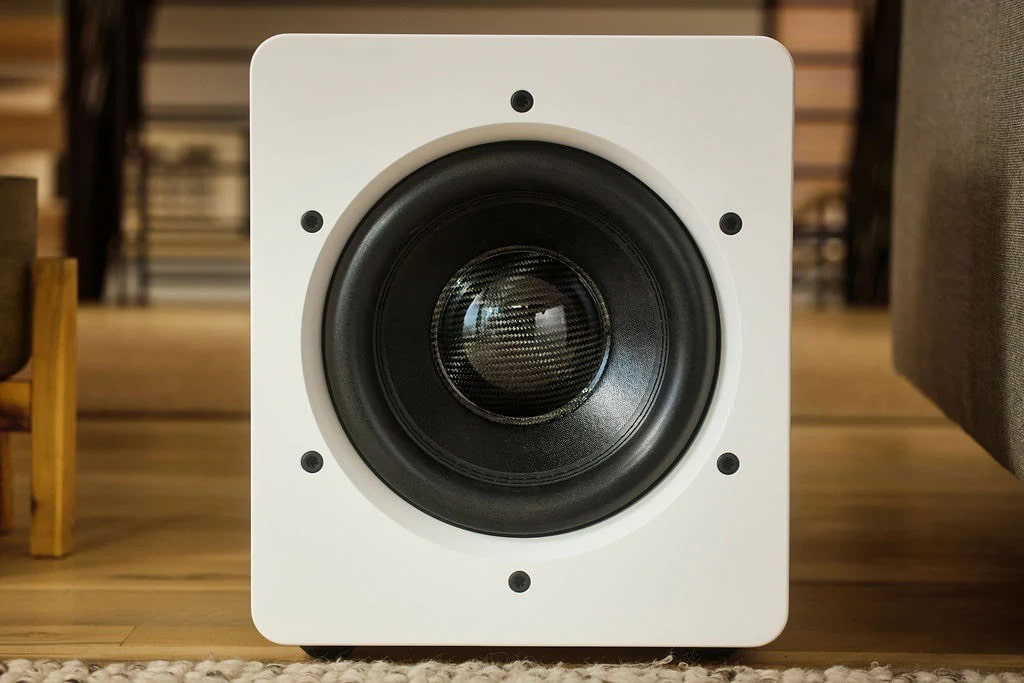
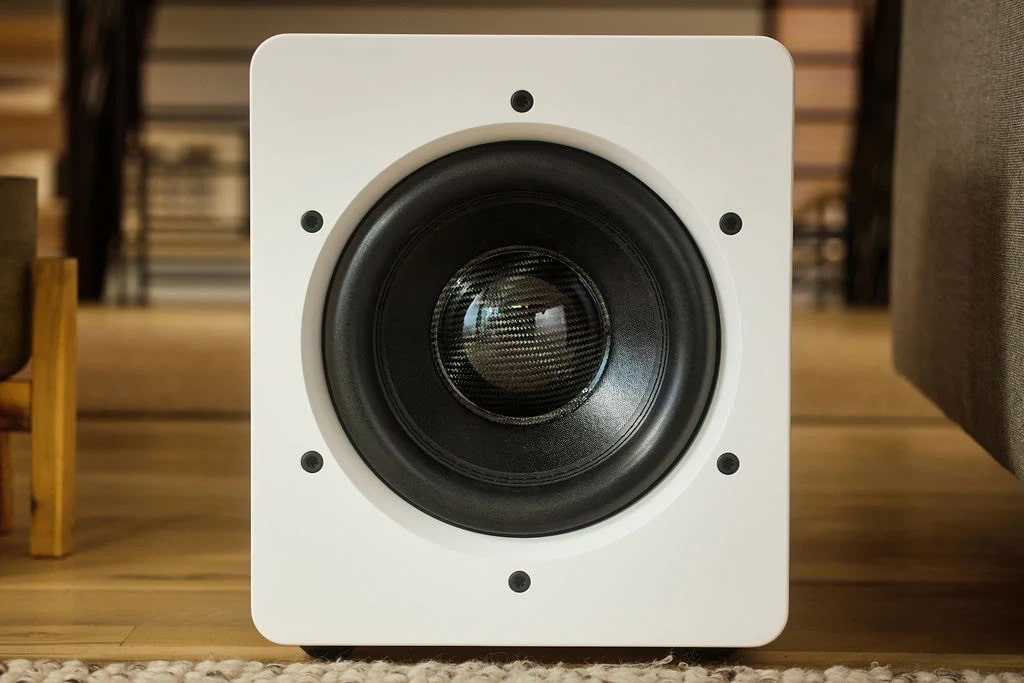
ps-audio-foundry-f12-subwoofer-white-front-no-grille

PS Audio is positioning the Foundry F12 as a sealed subwoofer designed for accuracy and consistency in real listening rooms. It is currently the only model in the Foundry lineup, and it is clearly intended as a single, full-range solution rather than part of a staged rollout.

The core idea behind the F12 is straightforward. Low-frequency performance is dominated by room behavior, especially below 200 Hz, and many subwoofers prioritize maximum output over control and integration. PS Audio’s approach with the F12 is to focus on predictable bass response, manageable placement, and compatibility with both music and home theater systems, without relying on ports or exaggerated tuning.

The F12 uses a sealed enclosure, a long-throw driver developed for this application, a high-power internal amplifier, and onboard DSP to manage low-frequency behavior. None of this is unusual on its own, but the combination reflects an emphasis on control rather than sheer output. The design goal is bass that integrates cleanly with main speakers and maintains timing and tonal balance at normal listening levels.

Advertisement

PS Audio also emphasizes ease of integration and placement flexibility. The enclosure size is intended to allow positioning based on acoustic needs rather than furniture constraints, and the system is designed to work in a wide range of room sizes without requiring extreme calibration or multiple subs.

In practical terms, the Foundry F12 appears aimed at listeners who want low-frequency extension that supports the rest of the system instead of drawing attention to itself. It is not positioned as a budget option or a high-output specialist, but as a controlled, sealed subwoofer built to perform consistently in everyday listening environments.

Foundry F12 Subwoofer Key Features

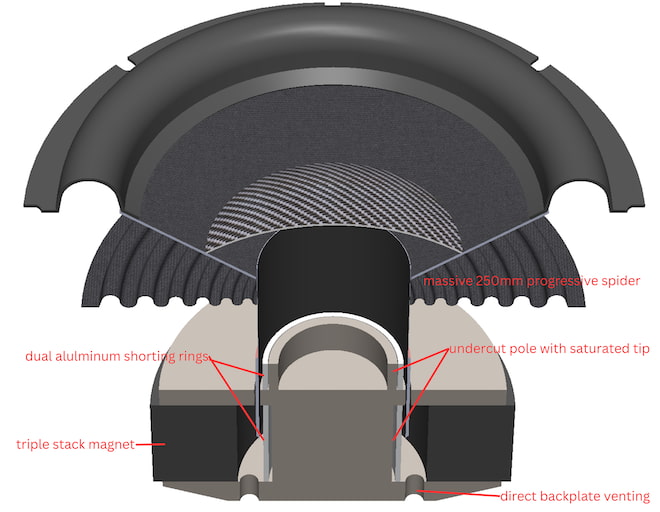
ps-audio-foundry-f12-driver-cutaway

Custom 12-inch Driver: The Foundry F12 uses a custom 12-inch long-throw driver designed specifically for sealed-enclosure operation and consistent in-room performance. Rather than chasing maximum output, the focus is on linear excursion and control, allowing the driver to move a significant volume of air while remaining stable across its operating range. Although the F12 is supported by a 1,000-watt continuous amplifier, the design priority is precision—clean starts and stops, accurate tracking of musical dynamics, and the avoidance of overhang or compression that can blur low-frequency detail.

Flat Response: The Foundry F12 is engineered for a controlled, predictable frequency response rather than exaggerated low-end tuning. PS Audio specifies the subwoofer at –6 dB at 20 Hz in an anechoic ground-plane measurement, with in-room response extending flat to below 20 Hz when typical room gain is present. Across the operating range, response is rated at ±0.5 dB up to 500 Hz, reflecting an emphasis on linearity and integration rather than low-frequency emphasis or voicing tricks.

DSP: The Foundry F12 incorporates onboard DSP to manage crossover behavior, room interaction, and overall tonal balance. The system supports both manually adjustable parameters for fine tuning and automatic room measurement with EQ to address in-room bass behavior. All DSP functions are accessed through the Foundry Control App, allowing users to configure and adjust performance without relying on external processors or hardware controls.

Advertisement

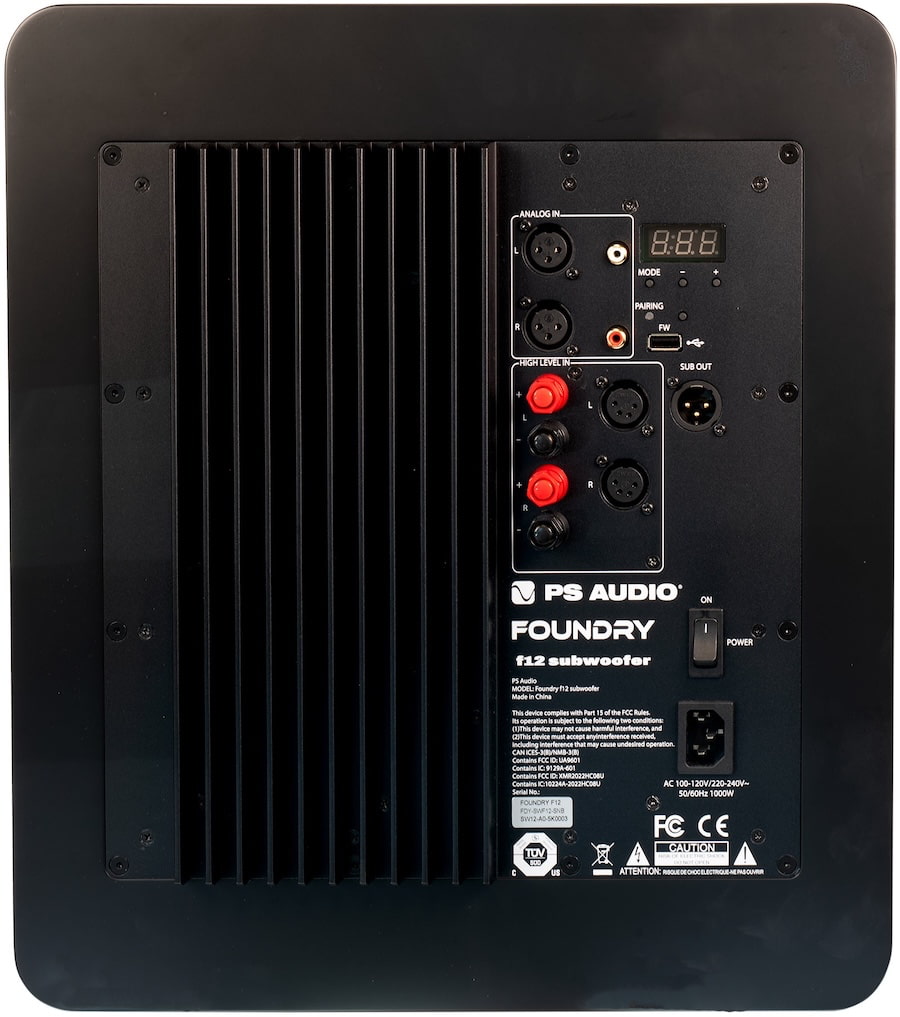
Multiple Inputs: The Foundry F12 offers multiple connection options to support a wide range of systems, including low-level RCA inputs, balanced XLR inputs, and high-level speaker terminals. This allows the subwoofer to integrate with traditional two-channel systems, balanced preamp setups, and amplifiers without dedicated subwoofer outputs, providing flexibility without additional adapters or converters.

Advertisement. Scroll to continue reading.
ps-audio-foundry-f12-subwoofer-rear

WISA: The Foundry F12 supports wireless operation via an optional WiSA transmitter, enabling lossless audio transmission without a physical signal cable. A single transmitter can support ten or more subwoofers, with each unit requiring its own receiver, allowing for flexible placement and multi-sub configurations without running long interconnects across the room.

Multi-Sub Configuration: The Foundry F12 is designed to simplify multi-subwoofer setups by including a dedicated subwoofer output on each unit, allowing multiple F12s to be daisy-chained without external splitters or processors. This makes it easier to deploy two or more subwoofers around a room to address bass consistency and room modes. PS Audio also offers an optional stacking kit that allows two or three F12 subwoofers to be vertically stacked, with the required mechanical hardware and interconnect cables included for straightforward installation.

ps-audio-foundry-f12-subwoofers-triple-stack

Specifications

Foundry F12
Product Type  Subwoofer
Price $2,749
Enclosure Type Sealed Box
Driver 12-inch long-throw
Driver Excursion 60mm Xmax p-p / 80mm Xmech p-p
Amplifier Power Output 1000W continuous (1800W Peak)
Max SPL 113 dB @ 2m ground plane
Input Impedance 50kΩ (RCA), 100kΩ (XLR)
Frequency Response -6 dB @ 20 Hz anechoic (ground plane), flat to below 20 Hz in-room with room gain; ±0.5 dB to 500 Hz
Dimensions (WxHxD) 14.75″ × 16.75″ × 17.5″ (18.125″ with grille)
Net Weight 77 lbs (35 kg)
Color Options Satin White, Satin Black
ps-audio-foundry-f12-subwoofer-stack-white-lifestyle
PS Audio Foundry F12 dual stack with FR10 Loudspeaker.

The Bottom Line 

The PS Audio Foundry F12 is clearly aimed at listeners who want a sealed, high-control subwoofer that prioritizes integration, accuracy, and flexibility over raw output theatrics. At $2,749 each, it lands in a competitive and unforgiving segment of the market, where strong alternatives already exist. Models like the SVS SB-5000 R|Evolution and MartinLogan Grotto Series undercut it slightly on price, while higher-end options such as the MartinLogan Depth Series and REL Series S push well beyond it, with REL also emphasizing stackable configurations.

Where the Foundry F12 differentiates itself is in system thinking. Sealed design, onboard DSP with app control, multiple input options, wireless capability via WiSA, and straightforward multi-sub and stacking support point to a product designed for serious two-channel and home theater users who care about consistent bass performance in real rooms. This is not a subwoofer for buyers chasing maximum SPL per dollar. It is for listeners who already own capable speakers, understand room behavior, and want bass that integrates cleanly without drawing attention to itself.

Advertisement

The remaining question is not whether the Foundry F12 is well conceived—it clearly is—but whether PS Audio plans to extend this approach into more accessible price tiers. If that happens, the Foundry F12 may be remembered less as a one-off and more as the opening move in PS Audio’s long-term play in the subwoofer category.

Price & Availability

The PS Audio Foundry F12 subwoofer is priced at $2,749 at PS Audio. An optional wireless transmitter costs $199 and a Stacking Kit (for two subwoofers) is available for $99, but you’ll need an extra Stacking Kit to stack 3 subwoofers.

Source link

Advertisement
Continue Reading
Click to comment

You must be logged in to post a comment Login

Leave a Reply

Tech

New UNC6783 hackers steal corporate Zendesk support tickets

Published

on

Google: New UNC6783 hackers steal corporate Zendesk support tickets

A threat actor tracked as UNC6783 is compromising business process outsourcing (BPO) providers to gain access to high-value companies across multiple sectors.

According to the Google Threat Intelligence Group, dozens of corporate entities have been targeted through this method to exfiltrate sensitive data for extortion.

Austin Larsen, GTIG principal threat analyst, says that UNC6783 typically relies on social engineering and phishing campaigns to compromise BPOs working with targeted companies.

Wiz

However, there have been instances where the hackers have also contacted support and helpdesk staff within targeted organizations, in an attempt to obtain direct access.

The researchers say that UNC6783 may be linked to Raccoon, a persona known to have targeted multiple BPOs that provide services to large companies.

Advertisement

In social engineering attacks over live chat, the threat actor directs support employees to spoofed Okta login pages hosted on domains that impersonate those of the target company and follow the pattern [.]zendesk-support<##>[.]com.

Larsen says that the phishing kit deployed in these attacks can steal clipboard contents to bypass multi-factor authentication (MFA) protection, enabling the attacker to register their device with the organization.

Google has also observed attacks where UNC6783 distributed fake security updates to deliver remote access malware.

After stealing sensitive data, the threat actor proceeds to extort victims, contacting them via ProtonMail addresses with payment demands.

Advertisement

While GTIG did not offer more information about Raccoon, threat intelligence account International Cyber Digest recently disclosed that someone using the alias “Mr. Raccoon” claimed a breach at Adobe, which the company has yet to confirm.

The attacker claimed to have gained access to Adobe data after compromising an India-based BPO working for the company. They deployed a remote access trojan (RAT) on an employee’s computer and subsequently targeted the employee’s manager in a phishing attack.

Mr. Raccoon said that they stole 13 million support tickets containing personal data, employee records, HackerOne submissions, and internal documents.

In conversations with BleepingComputer, the threat actor behind the CrunchyRoll breach confirmed that they were also behind the Adobe attack, but did not provide any evidence.

Advertisement

Google’s Mandiant listed several defense recommendations against UNC6783 attacks, including deploying FIDO2 security keys for MFA, monitoring live chat for abuse, blocking spoofed domains that match Zendesk patterns, and regularly auditing MFA device enrollments.

Automated pentesting proves the path exists. BAS proves whether your controls stop it. Most teams run one without the other.

This whitepaper maps six validation surfaces, shows where coverage ends, and provides practitioners with three diagnostic questions for any tool evaluation.

Source link

Advertisement
Continue Reading

Tech

Dodging A 60-Year-Old Design Flaw In Your RAM

Published

on

Modern computers use dynamic RAM, a technology that allows very compact bits in return for having to refresh for about 400 nanoseconds every 3-4 microseconds. But what if you couldn’t afford even such a tiny holdup? [LaurieWired] goes into excruciating detail about how to avoid this delay.

But first, why do we care? It once again comes down to high-frequency trading; a couple nanoseconds of latency can be the difference between winning or losing a buy order. You likely miss all the caches and need to fetch data from the remote land of main memory. And if you get unlucky, you’ll be waiting on that price for a precious 400+ nanoseconds! [Laurie] explains all the problems faced in trying to avoid this penalty; you try to get a copy of the data on two independent refresh timers. That’s easier said than done; not only does the operating system hide the physical addresses from you, but the memory controllers themselves also scramble the addresses to the underlying RAM!

For the real computer architecture nerds, there’s a lot more to it, and [Laurie] goes over it in meticulous detail in the video after the break.

Advertisement

Thanks to [Keith Olson] for the tip!

Source link

Advertisement
Continue Reading

Tech

Remember The “Ministry Of Truth” Freakout? Rubio Is Now Doing Something Far Worse Through Elon Musk’s X

Published

on

from the ah-yes,-the-ministry-of-truth dept

Remember when the Biden administration set up something called the “Disinformation Governance Board” and the entire MAGA universe lost its collective mind? It was the “Ministry of Truth.” It was “government speech police.” It was the single most Orwellian thing any American administration had ever done in the history of civilization. Nina Jankowicz, the researcher tapped to lead it, received death threats. The whole thing was shut down within weeks because of the outcry.

Of course, all of it was an exaggeration. That board was actually set up to coordinate efforts to counter foreign disinformation — not to police Americans’ speech. We said so at the time, even while criticizing DHS for the monumentally stupid way they named and rolled it out. The name was terrible. The communication around it was worse. But the underlying mission — helping coordinate the government’s own efforts to respond to (not censor) foreign influence operations — was legitimate and, frankly, important in this era of information warfare.

Well, Secretary of State Marco Rubio just signed a cable doing something that sounds vaguely similar, but way worse. Specifically, he’s directing U.S. embassies and consulates worldwide to launch coordinated campaigns countering foreign propaganda — and the cable explicitly endorses Elon Musk’s X as an “innovative” tool for the effort. It also admits that this is pure psyops work:

The cable instructs those embassies and consulates to pursue five broad goals: countering hostile messaging, expanding access to information, exposing adversary behavior, elevating local voices who support American interests, and promoting what it calls “telling America’s story”. Embassies are told to recruit local influencers, academics and community leaders abroad to carry counter-propaganda messaging, an approach designed to make American-funded narratives feel locally organic rather than centrally directed.

“These campaigns seek to shift blame to the United States, sow division among allies, promote alternative worldviews antithetical to America’s interests, and even undermine American economic interests and political freedoms,” the cable says. “Using digital platforms, state-controlled media, and influence operations, they pose a direct threat to US national security and fuel hostility toward American interests.”

Advertisement

Notably, the cable tells diplomatic offices to coordinate their work with “the Department of War’s Psychological Operations” – the military unit more commonly known as Miso, or Military Information Support Operations, formerly Psyop, which is part of the Pentagon.

This is far more expansive than anything the Disinformation Governance Board ever even contemplated — and the same people who screamed about the Ministry of Truth are, once again, completely silent.

Kate Klonick has written an excellent deep dive on this for Lawfare, tracing the structural transformation that made this possible. She puts it plainly:

The idea that the State Department would issue a formal cable endorsing a specific social media platform by name as a tool of U.S. diplomacy—let alone military psychological operations—would have been, until recently, almost unthinkable. But the structural transformation that has taken place over years has made the news feel almost ordinary today. It was a transformation that dismantled, piece by piece, the legal accountability, operational independence and institutional resilience that once made such a cozy relationship between government and platforms inconceivable.

And see if any of this sounds familiar:

Advertisement

Rubio identifies five operational goals—countering hostile messaging, expanding information access, exposing adversarial behavior, elevating local voices sympathetic to U.S. interests, and “telling America’s story”—and instructs embassies to recruit local influencers and community leaders to carry U.S.-funded narratives in ways designed to feel organically local rather than centrally directed.

Why, that sounds quite similar to what the Biden DHS said about the Disinformation Governance Board. Except, suddenly: no partisan freakout. No weeks of stories on Fox News. No screaming in the NY Post about speech police. Gee. I wonder why.

The U.S. State Department is instructing embassies to recruit local influencers to carry U.S.-funded narratives in ways designed to feel organically local rather than centrally directed. This is, by definition, a covert influence operation. It’s the kind of thing that, when other countries do it, we call propaganda. It’s the kind of thing the Global Engagement Center was specifically designed to expose.

Oh, right. About the Global Engagement Center.

You may recall that one of the early moves of the returning Trump administration was to shut down the GEC, the State Department office specifically created to help identify and counter foreign influence campaigns. At the time, Rubio — the same Marco Rubio who just signed this cable — framed the shutdown as a free speech victory:

Advertisement

Under the previous administration, this office, which cost taxpayers more than $50 million per year, spent millions of dollars to actively silence and censor the voices of Americans they were supposed to be serving. This is antithetical to the very principles we should be upholding and inconceivable it was taking place in America.

That was always a lie. The GEC (just like the Disinformation Governance Board) didn’t “silence and censor” Americans. It studied foreign influence campaigns — the kind run by Russia’s Internet Research Agency, by ISIS recruitment networks, by Chinese state-linked information operations — and helped expose them. It’s the kind of work that requires sustained expertise, institutional knowledge, and sophisticated analytical capacity. The kind of thing you can’t just spin up overnight when you suddenly realize you need it.

So all of the hand-wringing about the Disinformation Governance Board, the GEC, and the idea that governments were too close to social media platforms was a bunch of nonsense all along. It was always about trying to gain and then keep power, destroying the institutions that dealt with foreign disinformation campaigns until they could capture them for their own purposes.

Klonick traces how Twitter/X became susceptible to exactly this kind of capture:

Musk systematically dismantled Twitter’s trust, safety, and content moderation infrastructure. The teams that had worked, however imperfectly, to maintain platform integrity not just for commercial reasons but to limit the spread of coordinated inauthentic behavior, state-linked influence operations, and targeted harassment were gone within months of Musk’s ownership. With both the corporate accountability architecture and the internal operational safeguards stripped away, the platform’s amplification and suppression mechanics became, in effect, tools that could be deployed at anyone’s, but namely Musk’s, discretion.

Before Musk’s acquisition, the major US tech platforms — whatever their flaws — generally bent over backwards to avoid being captured as instruments of state messaging.

Advertisement

The Rubio cable, on the other hand, specifically endorses X’s Community Notes feature as a tool for countering “anti-American propaganda operations without compromising free speech.” Klonick correctly identifies this as:

…a remarkable exercise in circular reasoning: the government endorsing, for use in state-directed information operations, a moderation tool on a platform owned by a former (and perhaps still current) senior government advisor.

But it’s worse than circular reasoning. Community Notes is a crowdsourced system. Its outputs are determined by which users participate and how they coordinate. While it’s (actually very cleverly) designed to avoid brigading attacks, that does not mean it’s perfect in avoiding manipulation. If the U.S. government can organize sympathetic actors to use Community Notes to surface pro-American narratives as part of a formal PSYOP-adjacent campaign, then so can every other government on the planet. China can coordinate its own actors. Russia already runs exactly these kinds of operations. Iran has entire units dedicated to this. The cable essentially advertises to every adversary exactly how to game the system — and the people who actually understood these vulnerabilities, the trust & safety teams, the GEC researchers, the disinformation scholars, are exactly the people this administration spent years attacking and driving out of their jobs.

Oh, unless they expect Elon Musk to tilt the playing field to their advantage — which is exactly the kind of thing these very same people were loudly freaking out about when Biden was president.

Now, some might point out that the broader “censorship industrial complex” crusade wasn’t only about counter-messaging efforts like the DGB and the GEC. It was also about the Murthy v. Missouri case, which dealt with something categorically different: the allegation that the Biden administration pressured platforms to remove third-party users’ speech. The Rubio cable, by contrast, directs government employees themselves to use the platform for their own messaging. These are genuinely different things.

Advertisement

But the supposed animating principle behind the entire crusade was that the government had no business being entangled with social media platforms on matters of information and speech. Not just “the government shouldn’t pressure platforms to remove user content,” but the much broader claim that any government-platform coordination on information amounted to a sinister censorship machine.

Jim Jordan’s “censorship industrial complex” hearings didn’t just target White House communications with platform trust & safety teams. They went after researchers. They went after the GEC. They went after nonprofits studying foreign manipulation. The message was that any institutional involvement in the information ecosystem was inherently suspect. That principle, it turns out, had an expiration date — specifically, January 20, 2025.

And remember, in the Murthy case itself, the Supreme Court rejected the argument that the Biden admin’s communications with platforms constituted coercion. The plaintiffs couldn’t even establish standing because they couldn’t show the government actually changed platform behavior. Meta felt totally comfortable telling the White House “no” — as Zuckerberg himself admitted repeatedly on Joe Rogan, just weeks before telling Elon he was happy to silence people at the Trump White House’s request.

So the same political movement that treated government staffers sending cranky emails — emails that platforms felt perfectly free to ignore — as an existential constitutional crisis now sees nothing wrong with a formal State Department cable directing coordination with a specific privately-owned platform and military PSYOP. If the principle only matters when your political opponents are the ones in the White House, it was always just about weaponizing the systems of government for your own benefit.

Advertisement

Klonick puts the broader structural picture together:

The privatization of Twitter removed all traces of public accountability. The gutting of content moderation infrastructure removed operational resistance. The political alliance between the administration and the tech sector removed institutional resistance. And now a formal diplomatic cable removes the last pretense of arms-length separation between U.S. government messaging objectives and the platforms that carry them.

The legal questions that Murthy left unresolved—about when government pressure on private platforms crosses the constitutional line—will almost certainly be relitigated in this new context. But the more immediate reality is that the internet Americans and global audiences navigate is increasingly shaped not merely by the preferences of platform owners and advertisers, but by the strategic communication objectives of the U.S. government, implemented through platforms that have every financial and regulatory reason to cooperate.

This is the pattern we’ve watched unfold for years: wrap your power grab in the language of the thing you’re destroying. Call fact-checking “censorship.” Call attempts to expose foreign influence campaigns “the speech police.” Dismantle the institutions that actually did the thing you claim to value, then use the resulting vacuum to do exactly what you falsely accused your opponents of doing — only bigger, more openly, and with military coordination.

The sheer audacity of the sequencing is what makes all of this so infuriating. They spent years pointing at the Disinformation Governance Board and screaming “Ministry of Truth!” They shut down the Global Engagement Center while Rubio called it censorship. They destroyed the research infrastructure and the institutional knowledge that actually helped identify and counter foreign influence operations. And now, having cleared the field of anyone who might push back, they’re running their own influence operations through a platform with no independent oversight, no transparency mechanisms, and no institutional resistance — and they’re doing it openly, through formal diplomatic channels, in coordination with military psychological operations.

Klonick closes with the right question:

Advertisement

The question is no longer whether the government can use social media as a tool of statecraft. It already is. The question now is whether any institution—legal, normative, or structural—retains the capacity to check it.

Given that the people who claimed to care about checking government entanglement with social media are now the ones wielding it most aggressively — and spent years systematically destroying every institution that might have served as a check — don’t hold your breath.

Filed Under: counterspeech, disinformation, disinformation governance board, foreign influence, global engagement center, marco rubio, psyops, state department

Companies: x

Source link

Advertisement
Continue Reading

Tech

As the Strait of Hormuz Reopens, Global Shipping Will Take Months to Recover

Published

on

As the world held its breath on Tuesday night, news of a ceasefire and the potential reopening of the Strait of Hormuz brought a collective sigh of relief. But with shipments stalled in the strait for over a month, the disruption to global shipping will not resolve immediately.

“Traffic through Hormuz dropped by about 95 percent [during this conflict]. As a result, prices surged, and not just for crude oil but also for refined products like jet fuel, diesel, and gas oil,” says Carsten Ladekjær, CEO at Glander International Bunkering, which specializes in supplying fuel and lubricants to the global shipping industry.

The impact has been uneven across regions. Countries heavily dependent on Middle Eastern energy—particularly in Asia—have been most affected. India sources around 55 percent of its energy imports from the region, China about 50 percent, Japan 93 percent, South Korea 67 percent, and Singapore 70 percent, according to Ladekjær.

While the ceasefire signals a possible reopening, key details remain unclear. “Even with a ceasefire, reopening won’t be immediate,” Ladekjær says. “There’s a backlog, with ships waiting to leave, and likely a controlled process for who gets out first. Iran still appears to be managing that.”

Advertisement

Energy markets reacted quickly. Brent crude fell to around $94 from $110 earlier in the week—a drop of roughly 15 percent.

“Refined products like diesel and jet fuel have dropped even more, because markets are forward-looking—they price in expectations,” says Arne Lohmann Rasmussen, chief analyst and head of research at Global Risk Management. “But we’re still well above prewar levels, which were around $60 to $70.”

A System Under Backlog

Around 1,000 ships remain in the Gulf, including hundreds of tankers awaiting passage.

As of this writing, more than 800 cargo ships and tankers are stuck inside the Persian Gulf, with over 1,000 additional vessels waiting on both sides of the Strait of Hormuz.

Advertisement

Under normal conditions, roughly 150 vessels pass through the strait daily. Experts say clearing the backlog will take time, as ships must be sequenced through, refueled, and repositioned.

ANKARA TURKIYE  APRIL 8 An infographic titled First ships pass through the Strait of Hormuz after the USâIran ceasefire...

Ships began passing through the Strait of Hormuz after the ceasefire announcement.

Elif Acar/Getty Images

“That’s a logistical nightmare. We don’t yet know what the current capacity will be, especially from a security standpoint,” says Lohmann Rasmussen. “It’s not something that can be solved overnight. There are logistical issues, security issues, and even communication challenges.”

Though the market has already seen a correction, that doesn’t mean prices at the pump or in storage will drop immediately.

Advertisement

Source link

Continue Reading

Tech

Computer Won’t Run Windows 11? Google’s ChromeOS Flex Is a Solid Alternative

Published

on

Google is issuing you its periodic reminder that you aren’t tethered to Microsoft’s operating system if you own a PC. In fact, the search giant is making it easier than ever to switch over to ChromeOS Flex.

As part of a new partnership with Back Market, a refurbished electronics company, Google is now offering ChromeOS Flex USB Kits to make installing its signature OS a breeze on PCs and Macs alike.

Whether you’ve been purposefully avoiding a Windows 11 update or you’re one of the more than 500 million computer owners with a PC that is too old for an operating system upgrade, your Windows 10 PC hasn’t received an update since last October when Microsoft ended its support for it. (Microsoft’s Extended Security Updates program will keep pushing critical updates your way until this coming October for $30, a fee I doubt many people clinging to an old PC are willing to pay.)

Advertisement

When your operating system stops getting updates, you’re facing down the barrel of a security nightmare — no more exploits will get fixed, leaving your system (and potentially sensitive data) vulnerable to bad actors. Google’s ChromeOS Flex continually supports older devices than Windows 11, which could make it a good alternative until you upgrade to another PC.

The new Back Market USB kit is available now for $3, or you can download ChromeOS Flex for free by following the simple instructions included at the end of this article.

A quick ChromeOS Flex history lesson

Google’s ChromeOS isn’t available to install on a laptop or desktop like Windows or Linux, but the next best thing is Google’s ChromeOS Flex. Formerly known as Neverware CloudReady, the OS is primarily built for businesses and education. But ChromeOS Flex is free for personal use, and it’s so lightweight that it’s great for breathing new life into a computer that’s struggling from the demands of Windows, MacOS or Linux. 

Google acquired Neverware in December 2020, and the result was ChromeOS Flex. While CloudReady was good, Flex is much closer to the experience you’d get with a Chromebook or other ChromeOS device. That includes the official Chrome browser, support for Family Link (or school-issued) accounts, and Phone Hub, which lets you connect to an Android phone to view notifications and share files between the phone and laptop. The one thing you don’t get is access to the Google Play Store and Android apps.

Advertisement

ChromeOS Flex runs well even on old hardware. That’s why it’s such a good option for repurposing a laptop that can no longer run current versions of Windows, MacOS or Linux. Google guarantees Flex to work, however, only on a growing list of certified models. If your model isn’t certified, that doesn’t mean it won’t work, though. It just means that full functionality and performance aren’t a given.  

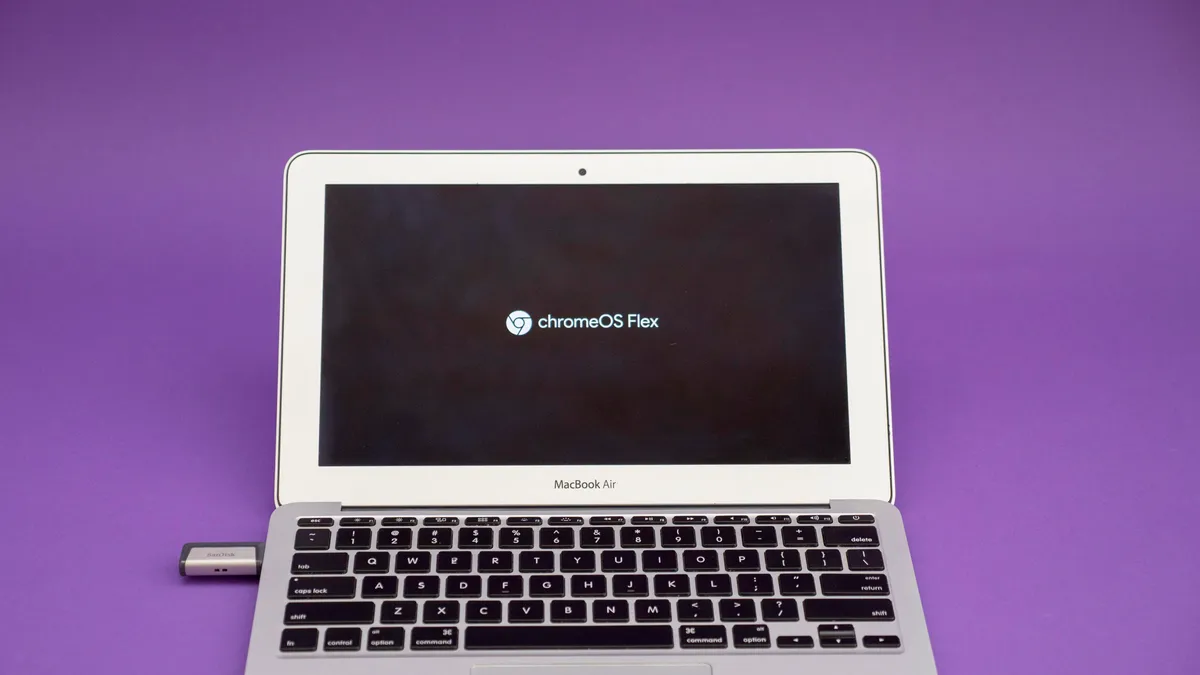
MacBook Air open on a desk showing the installation screen for ChromeOS Flex on the display.

You can wipe a laptop’s drive and install ChromeOS Flex or run the OS off a thumb drive to test it out first. 

Josh Goldman/CNET

You choose: Trial run or full install

One of the best features of ChromeOS Flex is that you can run it off a USB flash drive or SD card to test it out first without completely overwriting your current OS. For best performance, it’s not recommended to run Flex full-time from a flash drive, but it will let you see if it works for your needs. 

Advertisement

Installing ChromeOS Flex is quick and painless. The first step is to gather everything you need:

  • A USB thumb drive or SD card 8GB or larger
  • A Windows, Mac or Linux computer to install ChromeOS Flex on

Note that installing ChromeOS Flex will completely erase your entire hard drive. Any important files should be backed up first. You’ll also need a ChromeOS, Windows PC or Mac device with the current version of the Chrome browser installed. This will be used to create the ChromeOS Flex USB installer, and it doesn’t need to be the same device you plan to install it on. The thumb drive will also be completely erased when creating the installer.

To run ChromeOS Flex, the target laptop (or desktop) will need to be Intel or AMD x86-64-bit compatible (newer than 2010 for the best experience), have 4GB RAM or more, have at least 16GB of storage and you’ll need full administrator access to the BIOS. Once you have everything you need, it’s time to create the USB installer. 

  • Open a Chrome browser window on a ChromeOS, Windows PC or Mac device and add the Chromebook Recovery Utility extension via the Chrome web store. This is what you’ll use to build the USB/SD card installer. 
  • Go to the Chrome browser’s extensions menu located at the top right of the Chrome browser window (it looks like a tiny puzzle piece). Click on it, and a drop-down list of extensions will appear. Find the Chromebook Recovery Utility on the list and click on it to launch. The utility might need to be toggled on, too, which can be done by clicking on Manage Extensions at the bottom of the drop-down list of extensions. 
screen-shot-2022-08-23-at-12-52-18-pm.png

In the Recovery Utility, instead of selecting a model to recover, you’ll select ChromeOS Flex. 

Josh Goldman/CNET

  • When the Chromebook Recovery Utility launches, you’ll be asked to identify what model Chromebook you’ll be recovering. However, there will be a link labeled Select a model from a list in the dialog box. Click that link, and from the Select a manufacturer drop-down list that appears, select Google Chrome OS Flex. Below that drop-down is another labeled Select a product from which you’ll choose Chrome OS Flex.  
  • Next, insert your flash drive or SD card into the device you’re using to create the installer, select it as your target drive and then click Create now. The creation process takes up to 20 minutes but mine was done in half that time. Once the installer is finished, the drive can be ejected and is ready to use. 
screen-shot-2022-08-23-at-1-18-07-pm.png

When the installer is done, your USB drive or SD card are ready to use to run or install ChromeOS Flex. 

Advertisement

Josh Goldman/CNET

You’re almost done. It’s time to grab the laptop you want to convert to a Chromebook. Make sure the laptop is turned off and insert your ChromeOS Flex installer thumb drive or SD card. 

The next step is to boot the laptop from the thumb drive instead of the internal storage drive. This requires you to press a boot key while the laptop is booting. Boot keys vary by manufacturer. For instance, on a MacBook Air, the boot key is the Option key. Google has a list of boot keys for major manufacturers if you’re not sure what yours is.   

Turn on the laptop and, as it boots, press the boot key to interrupt the boot process. You may need to press and hold the key, or press it repeatedly, to enter the boot menu. If done correctly, the laptop should give you the option to select which drive you’d like to boot from: the laptop’s internal drive or your USB drive. Select the USB drive and press Enter

Advertisement
MacBook Air open showing the boot drive menu on the display.

Once you enter the boot menu options, select the USB installer drive you created to get started. 

Josh Goldman/CNET

If you’ve done everything correctly, you’ll see the ChromeOS Flex splash screen followed by a Welcome to ChromeOS Flex screen. (If not, retrace your steps using Google’s installation guide.) From there, you can choose to test the OS and run it directly from the flash drive or install ChromeOS Flex on the internal storage. Doing the latter gives you the best performance; however, it also erases all content from the internal drive, and the native OS can’t be recovered. If you aren’t 100% certain you want to use ChromeOS Flex, try running it from the USB drive first. 

The full OS installation can take up to 20 minutes (my MacBook Air took less than 5 minutes, though). Regardless of how you run it, the setup process is the same. Select a Wi-Fi network, agree to Google’s terms of service, choose whether the Chromebook is for yourself or a child, and then sign in with your Google account information. 

Advertisement
ChromeOS Flex installed on an old MacBook Air.

Sign in to ChromeOS Flex with a Google account and password and you’re ready to get to work.

Josh Goldman/CNET

Ta-da, Chromebook! At least, close enough for most needs. Performance will depend on what your laptop has. My install was on an early 2015 MacBook Air, and it’s much faster than it was with MacOS on it. The only downside for my particular model is that the built-in webcam is not supported, but an external USB webcam worked just fine. 

If you’ve got a USB flash drive and an old laptop, it’s certainly worth the minimal effort to test out and, again, it’s free. 

Advertisement

Source link

Continue Reading

Tech

Prosecutors Still Trying To Convict 62-Year-Old Woman For Wearing Penis Costume To Anti-Trump Protest

Published

on

from the more-of-that-famous-prosecutorial-discretion dept

Never underestimate the stupidity of law enforcement. When things could just be left alone and everything would turn out OK, officers insist on inserting themselves into the equation, ensuring maximum pain and humiliation for everyone involved.

In this case, a Fairhope, Alabama officer decided he couldn’t simply do nothing when coming across a grandmother at a “No Kings” protest. Here’s how this started, as detailed by Liliana Segura for The Intercept:

In the body camera footage, a police officer parks his black SUV on the grass, a rosary swinging from the rearview mirror. He exits his car, moves briskly past a pair of protesters, and points an accusatory finger at the suspect: a 7-foot-tall inflatable penis holding an American flag.

The alleged crime? Unclear. There’s no sound at first, only the silent spectacle of a person in a penis suit turning toward a cop with a stance that says, “Who, me?” A handmade sign comes into view in the person’s right hand. It reads “No Dick Tator.”

You can see the whole thing for yourself here:

Advertisement

It’s really an amazing recording. It includes several high points, including cops trying to stuff a person who’s inside an inflatable penis into the back of a cop car before deciding it might be easier to separate the person and the costume… before struggling to fit the costume itself into the trunk of a cop car. It also includes superbly stupid things like this:

Fairhope Police Cpl. Andrew Babb was less amused.

“I’m serious as a heart attack,” he tells Gamble when the audio begins to play on the 14-minute body camera video. “I’m not gonna sit here and argue with you.”

He demands to know how she could possibly justify such an obscene display: “I would like to hear how you would explain to my children what you’re supposed to be.”

Advertisement

Every easily-offended, would-be censor has the same go-to for complaining about stuff they don’t like: “how would I explain that to my children?” I don’t know, man. They’re your kids. Take any approach you want, including ignoring the question. It’s not on the rest of the world to make sure you never have to have an uncomfortable conversation with your kids. If you can’t figure it out, maybe you shouldn’t be in the business of raising kids, much less in the business of enforcing laws.

There are also plenty of far less funny moments, like the fact that three cops decided to get involved in pinning 62-year-old Renea Gamble to the ground for the crime of… well, that was all pretty much undecided at the point the officers decided to enforce their will with their power.

Corporal Andrew Babb obviously didn’t know the law, but that wasn’t going to stop him.

“I said, ‘That’s not freedom of speech,’” Babb continues. “‘This is a family town and being dressed like that is not going to be tolerated.’”

A. It actually is freedom of speech.

Advertisement

B. Every town is a “family town,” unless you happen to live in a dystopian sci-fi novel.

Everything about the arrest is a non-starter. And yet, local prosecutors — propelled forward by supportive local government officials — are still trying to pin criminal charges on Renea Gamble. Mayor Sherry Sullivan claimed the costume was an “obscene display” which would “not be tolerated in Fairhope.” City Council president Jack Burrell claimed the costume “violated community standards” Neither assertion is true, which means neither statement can support an arrest, much less the bringing of criminal charges.

Some of the initial enthusiasm for punishing Gamble was stifled when her arrest went viral, resulting in a nationwide discussion of this ridiculous situation. But apparently the town thinks it’s now safe to proceed with saddling Gamble with a criminal record.

Rather than dropping the case, the city attorney slapped Gamble with additional charges earlier this year: disturbing the peace and giving a false name to law enforcement. Her trial, first set to take place months ago, has been delayed multiple times. It is now set for April 15.

The “peace” wasn’t disturbed until Officer Babb decided he was going to take Gamble’s costume personally. And “giving a false name to law enforcement” is really stretching things when all Gamble did was sarcastically respond “Auntie Fa” when officers demanded her name after stripping her of her inflatable penis.

Advertisement

So, the case continues, which is only going to bring more embarrassment to town leaders and law enforcement officials. The backlash that greeted the arrest will return, which means the arresting officer may want to consider employment elsewhere. Hopefully, this will all end with the town cutting a check to Gamble for violating her rights.

Until then, Gamble is going to keep on doing what she does:

Gamble has tried to keep a low profile since her arrest. At the No Kings protest last week, though, the “No Dick Tator” sign appeared in the hands of a masked woman who wore dark sunglasses and a bandana over her face.

It was Gamble, again wearing an inflatable costume.

She was dressed as an eggplant.

Advertisement

People who view dissent as a threat, if not inherently unlawful, cannot ever hope to win. Acts like this only embolden those already involved in dissent and attract others to join the cause. They may have the power, but the people have the inflatable genitals and the will to use them.

Filed Under: alabama, andrew babb, david gespass, fairhope pd, free speech, jack burrell, no kings, penis, renea gamble, sherry sullivan, trump administration

Source link

Advertisement
Continue Reading

Tech

A self-driving car in Austin killed a mother duck, sparking neighborhood outrage

Published

on

The death of a duck in the Austin, Texas enclave of Mueller Lake has neighbors raising concerns about autonomous vehicles and whether they belong there.

While humans are responsible for killing animals with their cars all the time, this incident has brought negative attention to the new technology. Local media picked up on the duck incident after a resident posted in a Mueller neighborhood Facebook group that an Avride autonomous vehicle (with a human safety operator behind the wheel) ran over and killed a duck, and did not stop afterwards. “It didn’t slow down or hesitate at all, just steamrolled through,” the post, which KXAN reported on, reads.

Residents’ familiarity with this particular duck, which was nesting in a pot located outside of a local Italian eatery, has added to the outrage and mistrust of the autonomous vehicle technology. For those concerned about the future of the duck’s eggs, local residents have them in an incubator, Axios’ Austin reports.

An Avride spokesperson confirmed with TechCrunch that the vehicle was in autonomous mode at the time. Avride hasn’t paused testing on public roads altogether. However, the company has adjusted its area of operations by excluding certain streets around the lake in Mueller neighborhood where the incident with the duck occurred, according to spokesperson Yulia Shveyko.

Advertisement

The resident also claimed in their post that the vehicle failed to stop at a stop sign. Avride told TechCrunch it did not find evidence to support that claim. The vehicle came to complete and appropriate stops at all relevant stop signs.

Shveyko said the team has reviewed vehicle data and behavior, including replaying the scene multiple times in simulation. Avride is now evaluating potential improvements to the technology to help avoid similar situations in the future, she said. Notably, this includes running a series of controlled experiments in simulation to ensure that any changes do not negatively impact the vehicle’s safety performance in other scenarios.

Avride isn’t the only company testing or commercial deploying autonomous vehicles in the city. Zoox has been testing in the city. Tesla and Waymo, in partnership with Uber, also operate a commercial robotaxi service in parts of Austin.

Techcrunch event

Advertisement

San Francisco, CA
|
October 13-15, 2026

Source link

Advertisement
Continue Reading

Tech

Razr 70 Ultra leak shows how Motorola plans to impress you with bold new finishes

Published

on

Motorola is gearing up to launch the successor to last year’s Razr 60 Ultra. Early CAD renders recently offered a first look at the device, suggesting that the upcoming Razr 70 Ultra won’t change much in terms of design. However, a new leak now hints that Motorola could focus on unique colors and finishes to help it stand out.

What are the new color options?

Reliable tipster OnLeaks has shared press renders (via Android Headlines) of the Razr 70 Ultra in two standout finishes: Orient Blue Alcantara and Pantone Cocoa Wood. The Orient Blue variant is expected to feature a faux leather back with a diamond stitch pattern, giving it a premium look and feel. The Cocoa option, on the other hand, could feature a wood-like texture with visible grain.

Instead of just offering the device in different shades like most smartphone makers, Motorola appears to be giving each color a distinct finish, adding a tactile element that goes beyond standard glossy or matte coatings. With the overall design expected to remain unchanged, the finishes should help the company differentiate the new model from its predecessor.

Motorola has already taken this approach with previous Razr models, offering vegan leather backs and Pantone-inspired colors. The Razr 70 Ultra seems to be taking that a step further by pairing bold colors with more noticeable textures. It’s a subtle shift, but one that could make the device feel more unique.

What else do we know about the Razr 70 Ultra?

Although Motorola hasn’t officially shared any details yet, the device is expected to pack Qualcomm’s Snapdragon 8 Elite Gen 5 chipset, paired with 16GB of RAM and 512GB of storage. The images also suggest that Motorola may stick with a dual-camera setup, though it’s unclear if there will be any sensor upgrades.

More details should surface in the coming weeks ahead of the official launch, which could take place later this month. Motorola unveiled the Razr 60 Ultra in April last year, so it’s likely the successor will arrive around the same time.

Advertisement

Source link

Continue Reading

Tech

Europe’s first commercial robotaxi service is live in Zagreb

Published

on

Verne, the autonomous mobility company spun out of Croatian hypercar maker Rimac, launched commercial robotaxi rides in Zagreb on 8 April alongside Pony.ai and Uber. The vehicles operate with safety operators onboard for now. Waymo is targeting London for Q4 2026.


Verne, the autonomous mobility company spun out of Croatian electric hypercar maker Rimac Group, has launched what it is calling Europe’s first commercial robotaxi service in Zagreb, Croatia. From 8 April, members of the public can book and pay for autonomous rides through the Verne app.

The service will shortly also be available through the Uber platform, following a three-way partnership announced on 26 March between Verne, Pony.ai, and Uber.

The vehicles in service are Arcfox Alpha T5 robotaxis equipped with Pony.ai’s seventh-generation autonomous driving system. They operate autonomously, but trained safety operators are onboard during this early phase of the rollout.

Advertisement

The three companies have said they aim to transition to fully driverless operations as soon as regulatory approvals and safety performance benchmarks allow.

The 💜 of EU tech

The latest rumblings from the EU tech scene, a story from our wise ol’ founder Boris, and some questionable AI art. It’s free, every week, in your inbox. Sign up now!

Under the partnership structure, Pony.ai provides the autonomous driving technology; Verne owns the fleet and manages operations on the ground, including regulatory approvals; and Uber integrates the service into its ride-hailing platform.

Advertisement

Uber is also investing in Verne as a strategic partner.

The result is surprising in geographic terms. Zagreb is a city of under a million people, and Europe’s most prominent autonomous mobility efforts have been concentrated in larger western markets, Waymo has announced plans for a fully driverless service in London in the fourth quarter of 2026, and Germany has hosted multiple competing programmes for years.

Verne’s Croatian origins explain part of the answer. The company has spent years in close discussion with Zagreb’s regulators and local authorities, a process made easier by its ties to Rimac, which is headquartered in the city and is one of Croatia’s highest-profile technology companies.

Marko Pejković, Verne’s co-founder and CEO, said the launch delivered on a commitment the company had made publicly: “We said we would launch in Zagreb in 2026. Today, we did. This is just the start.”

Advertisement

Verne’s current service uses Pony.ai’s technology rather than its own platform, which is still in development. The company originally planned to use Mobileye’s autonomous driving system before switching to Pony.ai ahead of the launch.

Verne has a factory near Zagreb that is expected to begin producing its own purpose-built robotaxi this year, a compact two-seat vehicle with no steering wheel or pedals, designed from the ground up for driverless ride-hailing.

The Arcfox Alpha T5 deployment is understood to be a bridging arrangement while that vehicle reaches production readiness. Beyond Zagreb, Verne has begun permitting discussions with 11 cities across the EU, UK, and the Middle East, with more than 30 additional cities under active consideration.

For Pony.ai, which listed on Nasdaq in late 2024, the Zagreb launch is the first deployment of its technology in commercial service outside China, where it recently reached unit economics breakeven in two tier-one cities.

Advertisement

Source link

Continue Reading

Tech

Bending Faux-Neon LEDs Make For Animations Glass Tubes Can’t Match

Published

on

Odds are, if you like neon lights, you’re not thrilled with the LED faux-“neon” strips that are supposed to replace them. They’ve got their advantages, but the light quality of RGB LEDs lacks something compared to the emission spectrum of nobel gas, at least to purists. On the other hand, you cannot create an animation by bending glass tubes, like [David Hamp-Gonsalves] has demonstrated with his Neon Animated Eye.

Back in the day, you’d have needed dozens of tubes for a flickery animation, but [David] figured that since these LED strips are flexible, why not flex them? He’s using addressable LEDs — WS2812s, specifically — so activating and deactivating the pupil of the eye is easy-peasy. Opening and closing the lid is accomplished with a geared motor driven by a TB6612 driver turning a barrel cam. The ends of the stiff LED strip being brought together and pulled apart result in the blinking effect here, but as [David] points out you’re hardly limited that specific motion. There’s a whole world of Tron-like glowing animatronics that can be created with this technique. Code and STLs are available on GitHub, though, if you want to replicate the eye exactly.

[David] says he’d like to see this in a storefront someday, but given that fatigue life is a thing, it might be something to keep in your back pocket for seasonal displays like Christmas and Halloween rather than something that’s going to run 24/7. On the other hand, if you’re careful about limiting flexion and which faux-neon strip you buy, you might be able to create an animation that can last for years.

Advertisement

This is hardly the first time we’ve seen these faux-neon strips , but it is the first time we’ve seen them animated. We can’t help but think the Hauntimator software we featured before would be a good paring with this hack.

Source link

Advertisement
Continue Reading

Trending

Copyright © 2025