Connect with us

Tech

Qualcomm Announces Snapdragon X2 Series Processors Will Support Linux

Published

on

Snapdragon X2 Series processors feature a neural processing unit (NPU) delivering 80 trillion operations per second and allowing advanced AI features to run locally. And Snapdragon X2 Series “is expanding to Linux,” Qualcomm announced today, calling it one of their most-requested capabilities:

Qualcomm Technologies is a top contributor to Linux development at a kernel level, and now we’re embracing support for Snapdragon X2 Series as a platform directly. We’re upstreaming core drivers for Snapdragon X2 Series — including the Hexagon NPU and Adreno GPU — to open the door to developers and partners. We are starting with support for two operating systems based on Linux…

– Debian: We’re kicking off with Debian by the end of this year, one of the most influential Linux distributions and the foundation behind many of the distros people use every day.
– Ubuntu: Qualcomm Technologies has partnered with Canonical to bring Ubuntu, the world’s most widely used Linux distro, to the platform with Snapdragon X2 Series certification targeted for the first half of 2027.

…and this is just the beginning. Our partners HP, ASUS and HUMAIN are planning Linux support in the first of 2027, so that their devices deliver the incredible experience users expect with Snapdragon X2 Series in a new operating system.

Advertisement

Qualcomm’s developer blog called it “a significant step forward” in Qualcomm’s commitment to a developer-first approach, and “to the open-source community.”

“For developers, the important part is simple: more core hardware features are being reviewed and merged, so that laptops with Linux on Snapdragon X2 Series will be easier to build, test, and debug…”

The enablement work completed so far has been validated on a Debian 13-based (“Trixie”) user space and a custom kernel, so developers should treat this as the current reference environment while support continues to mature… Linux support for laptops with Snapdragon X2 Series is rolling out in stages, starting with the core pieces developers need before they can do production-level work on their device… For developers who want to try it today, the call to action is straightforward: start with Snapdragon X2 Series hardware, review the latest recipes to build Qualcomm Linux Debian Images, build available upstream sources the Debian OS image and test the peripherals that matter to you, such as graphics, AI inference, device I/O, or basic application bring-up. Early testing helps identify the gaps that matter most before support becomes broader and ready for production-level workloads…

You do not have to wait for everything to be fully finished before getting hands-on. If you are comfortable working from upstream sources you can start evaluating Snapdragon X2 hardware today… Check out the step-by-step instructions, including the full build flow and deployment guidance for Snapdragon X2 Series Linux software.

Advertisement

Put simply, this effort is less about supporting specific Linux distributions and more about empowering the developers who make Linux available on new hardware. This Developer Preview targets distribution maintainers, toolchain developers, kernel contributors, and hardware enablement engineers. It provides the upstream building blocks, including kernel patches, drivers, and reference device trees, needed to enable Snapdragon X2 Series support in their own projects and distributions. For end users looking for a turnkey “install and go” experience, that will come later as distributions adopt what lands upstream. We’re encouraging the community to build on this work and help shape what comes next.

The blog post notes that in the initial enablement stage, “Qualcomm Linux supports systemd-boot as the Universal extensible firmware interface (UEFI) boot manager to load and boot the Linux kernel.”

Hands-on demos were given at the Snapdragon Summit in Maui of Linux running on Snapdragon X2 Series hardware, which the developer’s blog calls “a practical look at what works today and where Snapdragon X2 Series Linux support is headed.”

Read more of this story at Slashdot.

Advertisement

Source link

Continue Reading
Click to comment

You must be logged in to post a comment Login

Leave a Reply

Tech

What is Meta Muse? The AI agent explained

Published

on

Although Meta had already unveiled its AI agent back in the summer, the recent Connect 2026 event revealed more of its capabilities.

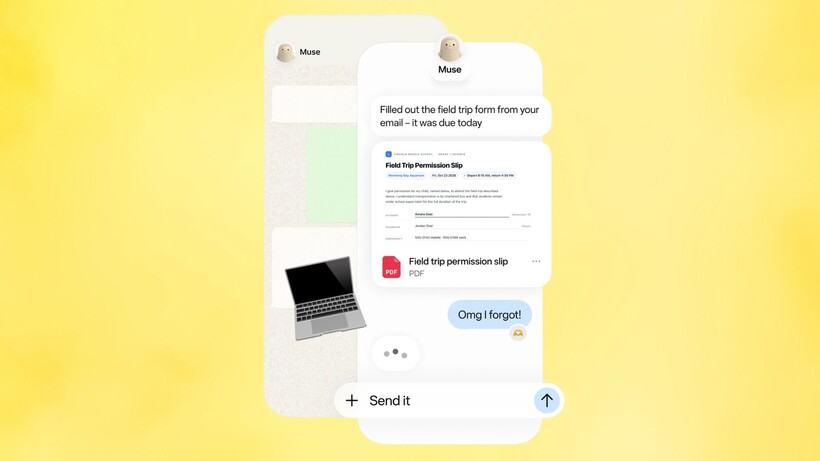
Coined Muse, Meta’s AI agent promises to “take the busywork off your plate” and can do anything from creating shopping lists based on emails, drafts replies and can even order deliveries on your behalf.

But how does Muse really work and how can you access the tool? What security measures are in place to ensure Muse is safe to use?

We explain everything we know about Muse below. For more from Meta’s Connect event, visit our Ray Ban Meta Glasses 3 first impressions while I’ve given my two cents on Meta’s audio-only glasses too. 

Advertisement

Muse is Meta’s new AI-powered agent that’s designed to communicate with you in a more natural way than other chatbots. Found within its own dedicated app, WhatsApp, Mac desktop and web browsers, Muse can answer questions, book reservations, complete tasks, generate images or documents and even make purchases on your behalf. 

Advertisement

Overtime, Muse will get to know you and help you to get things done both on a day-to-day and a long-term basis. That means you can ask Muse to both set quick timers or guide you through a workout plan. 

You can also connect Muse with compatible third-party apps too via Connectors, which enables you to unlock different abilities for the agent. For example, at Meta’s 2026 Connect event, it announced new brands will be able to connect to Muse, including Walmart, Sephora and PayPal, while travel sites like Expedia are coming soon.

Advertisement
Meta MuseMeta Muse

Meta explains that, because it’s agentic AI, Muse is able to figure out which skills it should use when provided with a task. That means it’ll know when it needs to browse the web or search for information from other sources, like your calendar or messages. 

Otherwise, you can also have long, in-depth conversations with Muse, and can customise its voice to speak slower or faster according to your preference. Muse can even have its own email address that it can use to get things done. It really is designed to be like having your own personal assistant.

Muse is available for free, but there is a usage limit that refreshes weekly. At the time of writing, Meta hasn’t disclosed what that limit actually is.

Advertisement

If you exceed the limit then you can opt to upgrade to a paid subscription which unlocks more Muse tokens each week. There are currently two subscriptions to choose from, with the cheapest being the Power plan that costs $20 a month and unlocks 500m Muse tokens each week.

Advertisement

Next there’s the Max plan for $100 a month and provides you with 3B Muse tokens each week.

At the time of writing, Muse is not currently available in the UK.

Meta also unveiled the Muse Charm at its Connect event, which looks reminiscent of an old-school Tamagotchi.

Meta’s new Muse CharmMeta’s new Muse Charm
Image Credit (Meta)

Advertisement

While details are currently sparse, as Meta says it will share more later this year, it’s essentially a pocket-sized device that has Muse built-in. Whether it’ll act like a virtual pet you have to look after, though, remains to be seen.

Advertisement

Source link

Continue Reading

Tech

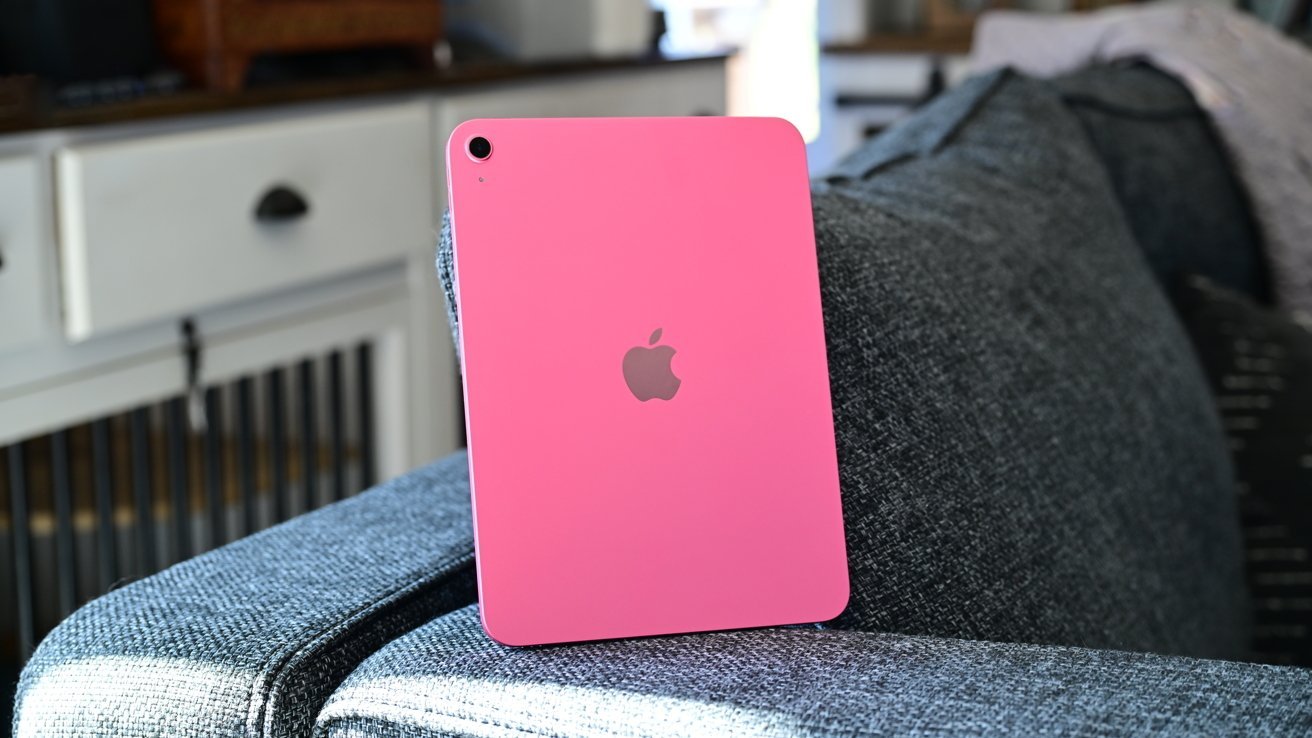
iPad 12 leak points to A19 chip and Apple Intelligence

Published

on

Apple’s next low-cost iPad is shaping up to get a faster chip and the hardware needed to run Apple Intelligence.

The 12th-generation iPad is expected to bring Apple Intelligence and its Siri features to Apple’s entry-level tablet. It could also gain faster cellular and wireless connectivity.

This appears to be the same iPad that was rumored to release in early 2026.

Details found in Apple’s code, spotted by MacRumors contributor Aaron Perris, identify an A19 chip and 8GB of RAM. The A19 supports Apple Intelligence, while 8GB meets its minimum memory requirement.

Advertisement

The code also points to a C1X modem, which supports sub-6GHz 5G. An N1 networking chip would enable Wi-Fi 7, Bluetooth 6, and Thread.

Apple has not announced a release date or price for the new iPad. Current rumors suggest that the device could launch in spring 2027, with a starting price likely to match the current model’s $449.

Source link

Advertisement
Continue Reading

Tech

Reviving The PoE++ Feature On A Ubiquiti Switch

Published

on

Recently [The Parallel Port] was asked to take a look at repairing the PoE++ feature on a Ubiquiti switch that otherwise worked fine. This is a pretty nice 24-port rackmounted switch with 2.5 Gbit-capable RJ-45 ports and two 10 Gbit SFP+ ports, so by itself it’s pretty useful, but having the 400 Watt PoE feature just go AWOL still stings, especially if you bought it new for $800.

With power applied the switch starts up as normal, including its 1.3″ touch screen that provides direct port information as well as a fancy screensaver cum QR code for the AR feature.

After logging into the switch’s BusyBox console it showed that all ports reported bad for the PwrGood status, and there were PoE power status request errors in the log, but this could be just the consequence of something else. Using a PoE splitter it was confirmed that the PoE functionality was indeed dead.

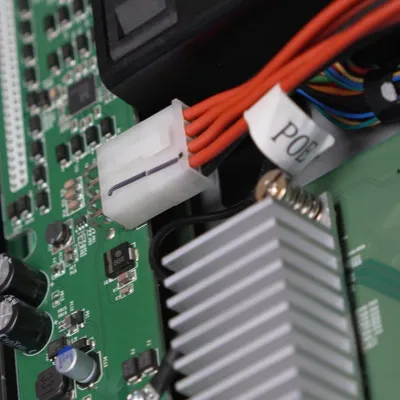
After disassembly and some testing with a multimeter and thermal camera, a short and related hot spot on the PCB that the PoE power board connects to was identified, with the short persisting after removing this PCB from the switch. Since the switch had suffered a bit of an electrical event the TVS diode was checked, but it turned out to be fine.

Next to it, marked as fuses, were protective thyristor surge protection devices (Trisil), functioning as a crowbar device. These aren’t supposed to be shorted to ground until a surge event occurs, but these were indeed both shorted when measured directly. Clearly they had taken the brunt of the electrical event and sacrificed themselves in the process.

Advertisement

One replacement later of these devices the switch now happily reports a good PoE status and even was able to power a DC fan via the PoE splitter. Even if it wasn’t a particularly hard fix, this is definitely one of those cases where knowing how the protective circuit works can save a lot of time in diagnosing and fixing a fault.

Source link

Advertisement
Continue Reading

Tech

Tesla Semi enters volume production after years of delays

Published

on

The takeaway: Tesla has begun volume production of the Semi, its battery-electric heavy truck, at a new facility next to Gigafactory Nevada. The launch marks a more serious commercial phase for the Semi after years of delays. The company says the first Semis produced at the new factory are now being delivered to customers.

The Sparks, Nevada, plant can eventually produce 50,000 trucks a year, or about 1,000 a week, according to Tesla. Before this milestone, the company delivered a small number of trucks to PepsiCo in 2022, but those vehicles were built on a pilot line.

Tesla used an event at the factory to highlight changes made to the truck’s battery, powertrain, and charging system. It also named customers that include PepsiCo, US Foods, DHL, WattEV, ABF Freight, Einride, IMC Logistics, and OK Produce.

The Semi will be sold in two versions. Tesla lists the Standard Range model at 325 miles of range when hauling a full 82,000-pound gross combination weight trailer. The Long Range model is rated for 500 miles under the same conditions. Tesla executives said the Long Range truck could reach about 600 miles with a lighter load of roughly 60,000 pounds.

Advertisement

Tesla has not released current prices or total reservation figures. When the company introduced the Semi in 2017, it set the starting price at $150,000 for a 300-mile version and $180,000 for a 500-mile version. Electrek reported earlier this year that Tesla was quoting some customers about $290,000 for the 500-mile truck.

The production Semi uses Tesla’s 4680 battery cells rather than the 2170 cells used in earlier test vehicles. Tesla says the truck’s battery pack has 822 kWh of capacity. The company says it has reduced the truck’s energy consumption to about 1,700 watt-hours per mile when fully loaded, down from an original target of 2,000 Wh/mile.

Those efficiency gains are important because they allow Tesla to use a lighter battery pack while maintaining its range target. The company also said it cut nearly 1,000 pounds from the truck during development.

Tesla also reworked the drive system. The earlier design used a carbon-fiber-sleeved rotor. The production version uses a steel-caged rotor and a bar-wound stator that Tesla also uses in the Cybertruck. Tesla says the redesigned drive axle is about 80 kilograms lighter.

Advertisement

The company also simplified the truck’s lubrication system. The hub no longer uses oil, while the motor and gearbox share a single oil supply. Tesla says that oil should last more than 250,000 miles.

The Semi now has redundant electric power steering instead of hydraulic steering. Tesla says the new system gives drivers better response and control. It also allows a tighter wheel cut, which the company says brings the Semi’s turning radius close to that of a Model Y. That could matter in crowded industrial yards, city streets, and loading docks.

Tesla has also carried over elements of the Cybercab’s thermal-management system. The Semi uses an indirect system with pumps, compressors, and heat exchangers that manage temperatures across the cab, battery, and drive unit. Tesla says the design reduces the amount of refrigerant plumbing needed throughout the vehicle and can move heat where it is needed.

Charging remains one of the larger questions around the truck. A Semi’s 822-kWh pack requires far more power to charge than a passenger EV. Tesla is building Megacharger stations that can provide as much as 1.2 megawatts per stall. At the event, Tesla showed a truck charging from 3% to 60% in about 30 minutes.

Advertisement

The company says it plans to have more than 30 Semi charging locations, with over 200 megawatt-capable charging posts, by the end of the year. It also expects fleet operators to install overnight charging equipment at their own facilities.

Tesla is pitching the Semi as a fleet product with remote diagnostics, mobile service, over-the-air updates, and driver profiles that can follow drivers from one truck to another. It says its current Semi fleet has recorded more than 98% uptime.

Some fleet operators have already placed large orders. Einride announced a 500-truck deal in August. IMC Logistics said this week that it plans to buy 50 Semis for California drayage work. A shipper coalition also selected Tesla to provide 2,500 trucks for zero-emission freight operations in California.

Tesla argues that electric trucks can cost less to operate than diesel models because they require less maintenance and are less exposed to swings in fuel prices. “You know, volatility in the oil market and the diesel market goes up and down,” Tesla Vice President of Engineering Lars Moravy told The Verge. “But typically, we’ve seen in the history of the last 20 years, electricity is pretty flat. And wouldn’t it be great to have a flat cost in your shipping rates?”

Advertisement

Source link

Continue Reading

Tech

You Might See Prime as a Shipping Option on Sites Other Than Amazon. How It Works

Published

on

Free and fast delivery could be an option where you least expect it. More independent stores might be offering Amazon Prime shipping on their websites, and you won’t need to log into your Amazon account to get it.

The announcement this week is an expansion of the company’s Amazon Supply Chain Services, in which merchants pay the company to house their inventory and pick, pack and ship items to customers. Sellers will not have to pay extra to use Prime shipping as an option for customers and can keep their usual payment processing, order management and store policies.

So, imagine you’re shopping for items at one of the thousands of independent, non-Amazon.com stores on the internet. You select some things to buy, head to checkout and see Prime as one of the shipping options. That could mean fast and free, if you have a Prime account.

It’s not an entirely new thing — independent stores have offered Prime shipping on their websites before. What’s different now is that you won’t have to click on a “Buy with Prime” widget and then log in to your Prime account. You can finish checkout on the store’s website.

Advertisement

Read more: Amazon’s Early Prime Day Deals Are Here. Grab the Top Discounts Before They’re Gone

If you choose Prime as the shipping option, Amazon will confirm that you’re a member after the order is placed.

CNET reached out to Amazon to see if the company has a list of independent retailers offering Prime shipping, but a representative did not immediately respond.

There are more than 240 million Prime subscribers worldwide, 180 million of those in the US.

Advertisement

Source link

Advertisement
Continue Reading

Tech

Trump wants AI in every classroom. Here’s why Republicans are saying no.

Published

on

Six months ago, first lady Melania Trump walked into a White House education summit next to a faceless robot powered by artificial intelligence, which she said could one day give children personalized instruction.

“Imagine a humanoid educator named ‘Plato,’” she said. “Access to the classical studies is now instantaneous…humanity’s entire corpus of information is available in the comfort of your home.”

Weeks earlier, her guest at the State of the Union had been a 10-year-old from Alpha School, a fast-growing private school network where children learn reading and math from AI software for two hours a day, and spend the rest of their time on workshops and projects overseen by adults the school calls “guides” rather than teachers.

The Trump administration had chosen AI as the future of American schooling, and wanted everyone to know it. But they picked a bad year to ask Americans to trust the technology with their kids.

Advertisement

Earlier this month, top leaders at Anthropic, OpenAI, and Google DeepMind publicly urged for an AI development slowdown, warning that companies racing to build ever more powerful systems could lose control of them, threatening not only large swaths of infrastructure but even humanity itself. Trump responded by calling the panic a “hoax” and said the US would not “hinder or stifle” the industry, because “whoever wins AI wins.” This “let them cook” mantra has met nearly every AI fear this year, from job loss to data center construction.

  • Trump has made AI in classrooms a priority and Alpha Schools his showcase, but Republican-led states like Florida, Iowa, and Utah have passed limits on AI and screens in schools.
  • Alpha says its students learn 2.6 times faster with two hours a day of AI instruction. No outside researcher has verified that, though studies may soon launch.
  • Republican and Democratic voters want guardrails on classroom tech. Within the GOP fight a fight is brewing over parental choice, innovation, and whether publicly funded schools must prove they work.

Yet the public is not convinced, and parents perhaps least of all. Efforts to bring AI into classrooms have run into organized opposition, and much of it is coming from inside Trump’s own coalition, setting up a fight between the administration’s pro-tech allies and conservatives who think screens have already done enough damage to kids.

In the nation’s two largest school districts, New York City has recently pulled student-facing generative AI from classrooms through eighth grade and Los Angeles blocked it on all student devices. But it’s not just Democratic-run cities that are pushing back. Earlier this year Utah barred students from using generative AI on assignments without a teacher’s say-so, and required schools to notify parents when it’s used in class. Oklahoma followed suit with a law, passed without a single “no” vote, that requires districts to tell parents which AI tools they use and what data they collect, and lets families opt out. Florida went further last week, when its Board of Education adopted rules for parents to opt their children in before they use AI at school, guaranteeing non-AI alternatives, and banning “companion” chatbots outright.

Even at the Heritage Foundation, a conservative think tank with close ties to Trump, leaders are warning about the risks of AI in the classroom. In a March report, Heritage officials cautioned that AI tools built with addictive design features can harm children’s attention, mental health, and learning, and said schools should set limits rather than assume the technology will regulate itself. In July, the Manhattan Institute, another conservative think tank, recommended New York State bar students from using AI until third grade and keep it out of tests at every grade.

All the while, the Trump administration continues to push in the opposite direction, casting the wider AI race as one the US cannot afford to lose to China. Last year, Trump signed an executive order creating a White House task force to bring AI into K-12 classrooms, train teachers to use it, and build an “AI-ready workforce” to keep America as the global leader.

Advertisement

Polling data released in August found voters across the political spectrum concerned about AI in classrooms, with 85 percent worried about students using it to finish assignments without learning anything. Republicans were, if anything, slightly more eager than Democrats for government guardrails, 80 percent to 76 percent. Put differently, Republican voters appear closer to the Heritage Foundation than to the White House, which points to a coming clash inside the GOP over parental rights, innovation, and whether schools that take public money should have to prove their tactics work.

Up to this point much of the AI backlash has focused on regulating the tech in public schools, while some of its most ambitious boosters have concentrated on building private schools and developing new tools. A state can cap screen time in its elementary classrooms and let another family down the road pay thousands of dollars for Alpha, and everyone can call it a win for parent choice.

That peace may start to fray though as more public money comes on the table. Texas recently expanded vouchers to Alpha network schools and the company has also sought to open publicly funded charter schools. Other states are likely to confront these issues as well, meaning the AI education fight on the right may soon be unavoidable — and would land before an electorate whose patience for the tech, in schools and increasingly everywhere else, has been running thin all year.

The Trump administration’s AI bet

Advertisement

The AI-in-schools executive order came just three months into Trump’s second term, and called for AI education to begin as early as kindergarten. Within five months, Education Secretary Linda McMahon was touring Alpha School’s Austin campus, describing it as “the most exciting thing” she’d seen in education in a long time.

Alpha is hardly the first education company to promise a shiny new school model, but it has quickly become an influential player in the growing national debate around AI in schools. Its story so far reflects many of the big questions around AI in the classroom, including how to determine if the tech is helping or hurting kids, who is profiting, and what role governments should play in facilitating its adoption.

Alpha had been a small operation for most of its existence. MacKenzie Price, a Stanford graduate, co-founded it in 2014 after her second-grade daughter complained that school was boring. The tech billionaire Joe Liemandt became Price’s partner and the school’s principal financial backer. As recently as 2024 it served about 300 students across three campuses.

Growth exploded in summer 2025, when Alpha took over campuses from a shuttered Montessori chain and announced plans for 10 new schools. This August it announced plans for 27 more.

Advertisement

Behind the school’s growth is its claim that students enrolled can cover a full day’s worth of academics in just two hours with AI, learning twice as fast as they would at a traditional school. Alpha can “enable the increase in human intelligence,” Price declared on a panel in Washington, DC, earlier this month, because “our academics can be delivered so much more efficiently and effectively.”

Alpha says results from MAP tests, a widely used measure of academic growth, show its students learning 2.6 times faster on average than similar students at other schools. But no outside researcher has audited or independently verified those results.

That may soon change. MIT’s Blueprint Labs, the group behind some of the most rigorous charter school research in the country, told Vox it is designing pilot studies to measure the effects of the school’s programs on achievement and engagement, using experimental designs. Alpha is paying for the research; the lab says its own researchers will set the questions and methods. Harvard’s Human Flourishing Program is separately planning to study students’ life skills and well-being via a longitudinal study during the next academic year, Christina Hinton, who is involved with the research, told me. For now, Alpha’s academic claims remain its own.

Meanwhile, scrutiny of Alpha has grown. A Wired investigation last year described the school’s surveillance system as capable of recording students’ screens, keystrokes, and mouse activity and potentially tracking their eye movements. A 404 Media report published this winter claimed Alpha’s own internal documents said its AI-generated lessons sometimes did “more harm than good.” Alpha has disputed both reports, saying they relied on cherry-picked examples and accounts from fired employees, and provided me with an open letter it says every current family at the Brownsville campus signed, stating that the school Wired described doesn’t resemble theirs.

Advertisement

But education officials are still wary. This month, ProPublica and the Texas Tribune reported that at least nine states, Texas among them, had turned down Alpha’s bids to open publicly funded charter schools, with officials repeatedly pointing out that the model had only been tested on affluent students. (Tuition varies based on location, ranging from $10,000 a year at its Brownsville campus to $75,000 at its most expensive California schools.) Where Alpha had worked with lower-income students, ProPublica and the Texas Tribune found, it either hadn’t released enough data to back its claims of student growth or state test scores fell well short of what its leaders had predicted.

After the Texas State Board of Education rejected Alpha’s charter bid in the summer of 2025, Alpha didn’t reapply. While policy advocacy was “frustratingly slow,” Price wrote, Alpha’s goal was “for students everywhere at every income level to be able to use this model of learning.” They turned instead to Texas’s new voucher program, which lets families spend public money at private schools. Unlike a charter, a private school in the program doesn’t have to give state tests or show anyone how its students perform. The comptroller, which runs the Texas Education Freedom Accounts (TEFA), approved most of Alpha’s Texas schools, which, counting virtual programs and specialty academies, now number more than 30.

None of the concerns that Texas’s State Board of Education had raised about Alpha’s test scores, missing data, or AI applied. “That wasn’t relevant,” Travis Pillow, a spokesperson for the TEFA voucher program, told ProPublica. “Our role is to make sure that a school meets the requirements in the law.”

The five most expensive Alpha schools in Texas opted to leave the voucher program earlier this month, but many Alpha network schools are still participating, including Texas Sports Academy, Montessorium, NextGen Academy, Nova Academy, and Waypoint Academy. TEFA confirmed to me that students are attending Alpha affiliates via vouchers this year.

Advertisement

Anna Davlantes, a spokesperson for Alpha, told me that in lieu of vouchers for their most expensive campuses, her network is offering families financial aid.

Despite Alpha’s enthusiastic embrace in the White House, the introduction of AI in schools is increasingly challenged by forces on the right, from grassroots MAGA parents to social conservatives and technocrats.

The new AI rules in Florida, Oklahoma, and Utah, for example, grew out of a broader conservative push against screens in classrooms that predated the rise of chatbots and was turbocharged by parents’ frustrations with virtual learning during the pandemic.

Earlier this year Iowa capped elementary school screen time at an hour a day in a bill Gov. Kim Reynolds signed with Health and Human Services Secretary Robert F. Kennedy Jr. at her side. Tennessee passed a weakened version of a bill that would have banned devices in elementary schools outright, while similar bills in Missouri and Kansas died after school districts and teachers unions objected.

Advertisement

Uniting these efforts is a growing conviction that the last 15 years of education technology has failed most kids. The sponsor of Kansas’s bill used to sit on his state’s board of education and remembers thinking that ed tech held such promise. “What we found out is that not only is it not the education of the future, but it is destroying the education of the past,” he told Education Week. A growing number of lawmakers and parents have been citing The Digital Delusion, a book self-published in 2025 by neuroscientist Jared Cooney Horvath, that blames the proliferation of screens for declining student achievement. In January Sen. Ted Cruz (R-TX), who is otherwise one of the Senate’s leading opponents of AI regulation, invited Horvath to testify about the harms of AI on student learning and mental health.

The screen skeptics overlap with a more traditionalist wing of the GOP that objects to classroom technology on principle. Missouri’s original bill would have required cursive and kept 70 percent of student work on paper. The classical education movement, which holds up teachers as a moral example, has grown fast on the right. (Of the 895 identified classical schools nationwide, roughly one-third opened or converted to the model between 2020 and 2024, according to a Heritage Foundation tracker.)

The strand of conservatism that cuts closest to Alpha School comes from a third group, the school choice advocates. On paper, Alpha sounds like what the school reformers have wanted for years: It can offer an alternative to underperforming local public schools, its AI programs can theoretically compensate for inconsistent teacher quality, it provides personalized instruction, and it checks mastery on every lesson, so families can easily know whether their child is learning. Those are problems the education reform movement was launched to solve, and Alpha claims to fix them all.

The reformers, though, want proof. Mike Petrilli, who runs the conservative Thomas B. Fordham Institute think tank and has spent decades advocating for charter schools, wrote recently on his Substack that parents who want to pay for Alpha out-of-pocket should be able to, but “that doesn’t mean the rest of us shouldn’t be skeptical, or that we shouldn’t worry about fraud, or that we should allow public funding to flow to these school.”

Advertisement

This split was on display in DC this month at the education conference where Price appeared. Molly Hart, who runs Utah’s public schools and calls herself a school choice supporter, argued that once a school takes taxpayer money, “the game changes,” and parents can’t make a real choice without data about how it performs. Erika Donalds, who chairs the education center at the America First Policy Institute and is one of the Trump administration’s closest allies on schools, said parents, not the government, should decide which results matter. Donalds compared the choice to picking a restaurant on Yelp.

The evidence has started to catch up with parental concern. In a randomized trial involving nearly 1,000 students at a Turkish high school, those given access to a GPT-based math tutor that readily supplied answers scored 17 percent lower on a subsequent exam taken without it. A version designed to withhold answers eliminated that penalty but produced no statistically significant learning gain. A newer working paper tracking nearly 27,000 Chinese students found that adopting AI raised homework scores by 18 percent but lowered monthly exam scores by 20 percent within six months.

Alpha School is working to add more detail to that pile, and other studies will surely follow. It’s at least possible that some aspects of AI in education prove more promising with further study. But public skepticism will remain a major barrier, either way. On an issue where parties are still sorting themselves out, the White House and its allies are swimming against a growing anti-tech tide that extends far beyond just AI or even schools. That’s unlikely to change before 2028, and whoever wants the Republican nomination will have to say which parents they’re listening to.

Source link

Advertisement
Continue Reading

Tech

Google Messages now lets you swipe to check timestamps and reply to texts

Published

on

Checking when a text was sent in Google Messages just got a lot easier. Google is widely rolling out new swipe gestures that change how you see timestamps and reply to messages. If your usual swipe suddenly does something different, this is why.

How do the new swipe gestures work in Google Messages?

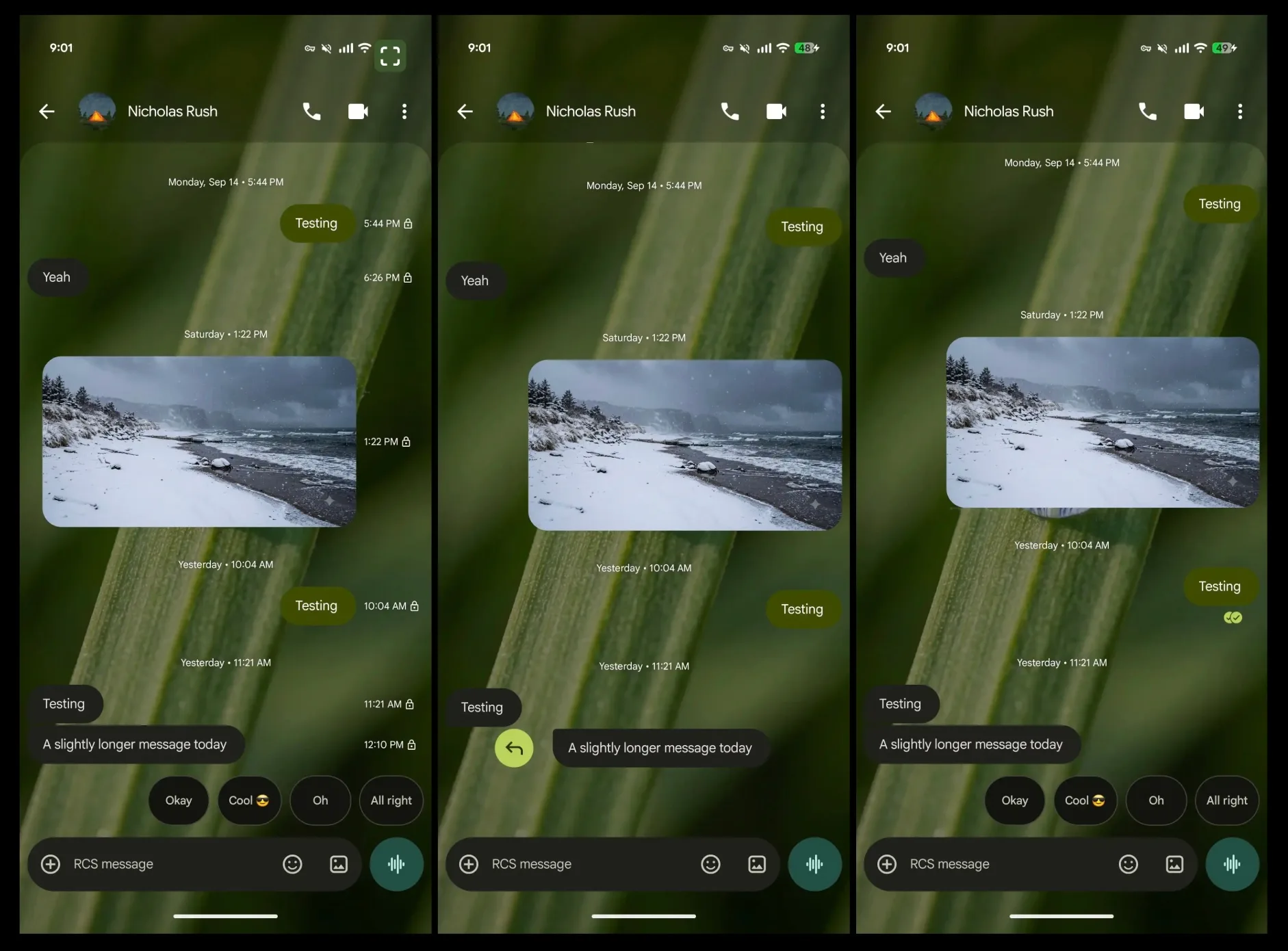
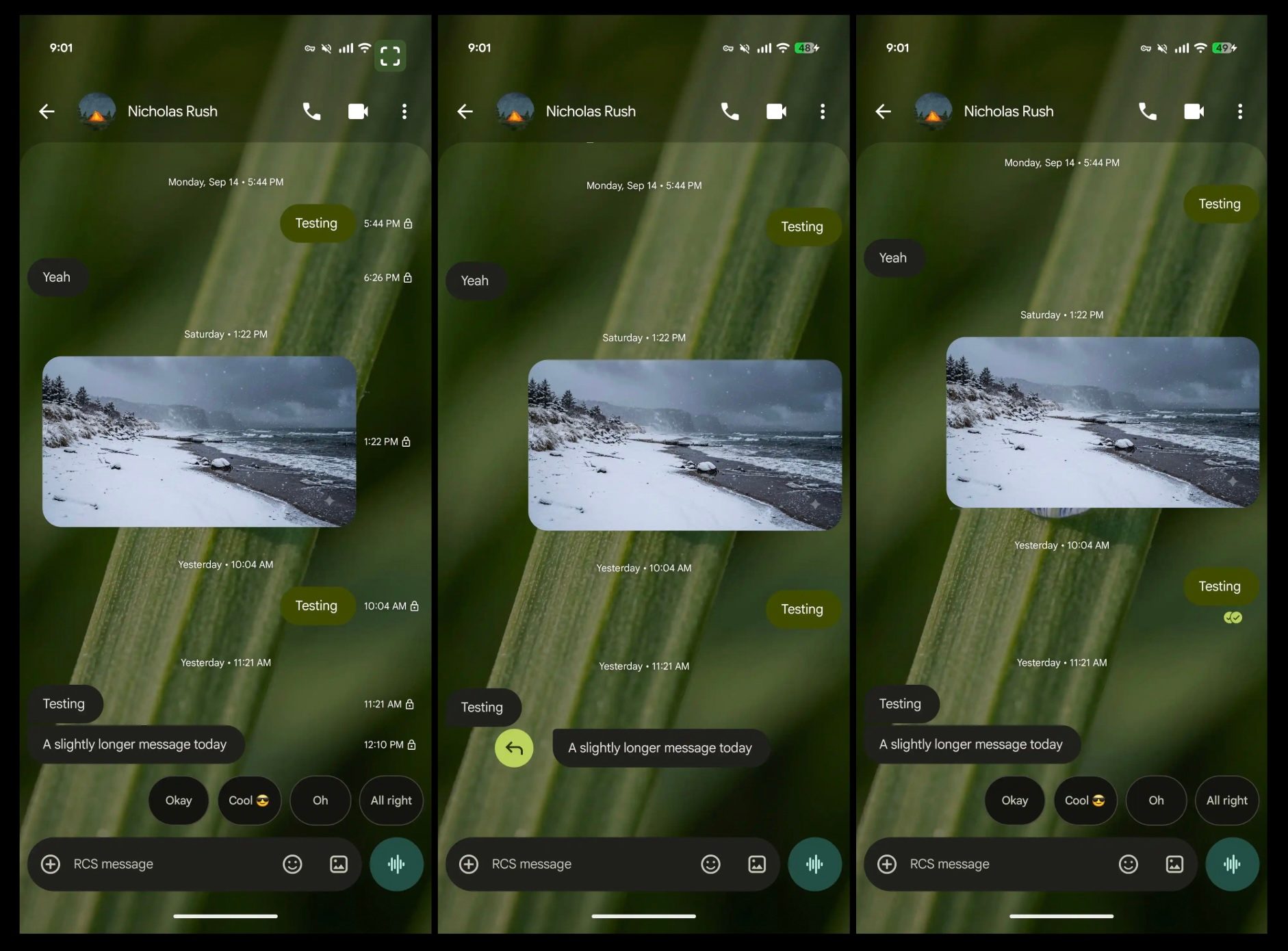
Until now, you had to tap each message bubble to see when it was sent, whether it was delivered, and whether it was encrypted. According to 9to5Google, you can now swipe left anywhere in a chat to reveal timestamps for every message at once, along with RCS encryption status.

Replying works differently too. Swiping left used to send a direct reply, but now you swipe right on a specific bubble, which takes a little precision. Tapping a message still works, but it now shows only delivery status rather than all the details.

RELATED COVERAGE:

What else is new in Google Messages?

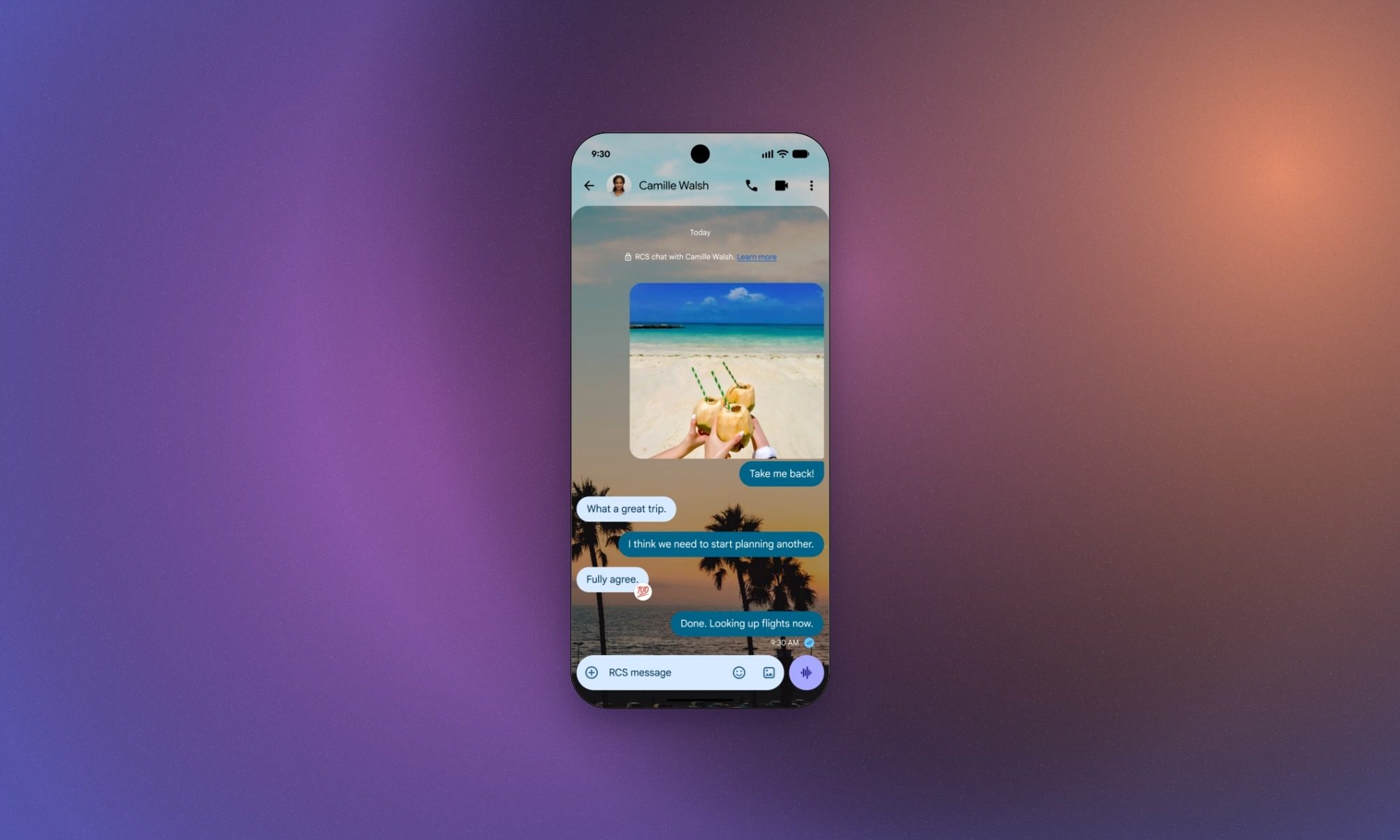
The swipe update arrives a day after another handy change. You can now long-press any message to open a quick menu with Reply, Forward, Copy, Star, Delete, Select more, and Info. That saves you a trip to the menu at the top of the chat.

Long-pressing also lets you highlight just part of a message, so you can copy only an address or code. Google Messages also appears to be using the older two-circle read receipt design in the current rollout. This decision comes after Google experimented with a single-circle approach.

Advertisement

The new gestures have appeared in version 20260910_03_RC02, but the rollout hasn’t reached everyone yet, so try updating the app if you don’t see it. Your muscle memory may complain for a few days, but seeing every timestamp in one swipe is worth it.

Source link

Advertisement
Continue Reading

Tech

Five Police Officers Criminally Charged for Misusing Flock Cameras in Indianapolis

Published

on

“Nationwide, at least 100 police department employees have been charged with or accused of misusing license-plate readers for unauthorized purposes,” reports the Washington Post. They cite their past investigations “based on thousands of pages of police and court records,” which found that “In many of these cases, officers used Flock’s roadside cameras to track the location of romantic partners and exes.”

In fact, five Indianapolis police officers were just criminally charged Wednesday with fraud and misconduct. “One has also been charged with stalking,” the police department said in a statement, noting that one office had already resigned, “while the four other officers have been suspended and recommended for termination. County prosecutor Ryan Mears admitted “A lot of this was initiated by The Washington Post.”

And the Post published a new investigation Wednesday:

Using publicly available information, The Post found that…one of the officers charged Wednesday, appeared to have relied on Flock cameras to track vehicles used by his wife and two close personal acquaintances, searching the plates 3,759 times over a 10-month period — an average of about 12 lookups per day. At the time, Police Chief Tanya Terry said she suspended one officer while the department conducted an investigation into possible misuse and a systemwide audit of the city’s 301-camera Flock system. That audit led to the discovery of more widespread abuse, [County prosecutor Ryan] Mears said Wednesday.

Advertisement

Mears said the department’s findings highlight the vast power Flock cameras give police officers and raise questions about whether the government should be doing more to prevent the misuse of that power. “Many of the proposed guardrails and the things that have been proposed would not have prevented the behaviors and actions we see here today,” Mears said. “Does there need to be independent oversight? Does there need to be judicial oversight of the Flock camera system?”

One of the Indianapolis officers, Schultz, an 18-year veteran of the police department, was accused of using Flock to track his ex-wife and women he met while on duty or out in public. He was charged with multiple counts of official misconduct as well as two counts of stalking. Schultz told one woman he was an FBI agent, according to prosecutors, and began texting her and showing up at places she frequented, including at her gym and at a school function with her daughter. Prosecutors said he arrived at her gym within an hour of her at least nine times between June 12 and Aug. 1 of this year… Another woman met Schultz after her car was stolen from a mall parking lot, and he began texting her flirty messages later that night. The two dated briefly, and Schultz later looked up where the woman went on dates with another man. Schultz searched the plates of a third woman 178 times and also frequently showed up where she was, including her gym, a Smoothie King and a Walmart earlier this month…

A third officer, Binford, told investigators he had used the log-in credentials of another officer who had logged in to Binford’s laptop during a field training exercise. Binford searched the plate of his ex-wife more than 1,000 times between April 2024 and April 2025. Indianapolis police had no regular practice of auditing officers’ Flock searches until recently, [Police Chief] Terry said in an interview last month. The department’s investigation into the tool’s misuse has been “a learning process for us,” she said at the time.

Read more of this story at Slashdot.

Advertisement

Source link

Continue Reading

Tech

There's a New Way to Break RSA Encryption

Published

on

“Signature forgery.” It’s a new way to break RSA keys — and it doesn’t require factoring. Ars Technica reports on new research using classical computing to “reduce the current RSA security level to an unacceptably low threshold” and lower the required computing resources by orders of magnitude.

There’s “a gap in current RSA-type security assumptions,” according to a paper co-authored by University of California, San Diego professor Nadia Heninger, who argues that gap “gives classical cryptanalytic evidence in favor of moving away from RSA entirely during the current post-quantum transition.”

The practical risk is limited, but still significant. Applying the attack against the deprecated use of 1024-bit keys took a handful of months on an academic CPU cluster, significantly less than the current estimates for 1024-bit factoring that would require resources that only nations or companies with massive resources could achieve. Widely used RSA implementations are also safe. Nonetheless, the research has taken cryptographers by surprise… “If this result holds up under peer review, it would indeed be a conceptual break-through,” Karsten Nohl, a cryptography expert and the head of innovation at Allurity, said in an interview. “RSA is as difficult to break as it is to factor large integers, at least so we thought. The researcher suggests that you can practically break RSA without cracking its key….”

The key forgery attack Heninger and the other researchers devised poses an immediate threat to 1024-bit RSA. Even for 2048- and 4096-bit keys, the method reduces the security of RSA to unacceptable levels. The National Security Agency, National Institute of Standards and Technology, and European Union Agency for Network and Information Security require that any cryptosystem should provide a level of no less than 128 or more bits, meaning the operations required must exceed 2**128. The forgery attack drops these levels to 2**65, 2**90, and 2**119 for 1024-, 2048-, and 4096-bit keys respectively. These levels may further drop because Heninger’s team did all the coding by hand and used no AI or GPUs in performing the forgeries. The researcher said these tools will “almost certainly” drop the security levels further.

Advertisement

The attack works only against blind-signature implementations of RSA… Still, some real-world systems continue to use blind-signature, also known as textbook, RSA… The paper’s authors and other researchers stress that the new attack poses little real-world threat. It does, however, drastically lower the estimated security of textbook RSA, and it does so in a way no one knew of previously… The new attack will further increase the urgency of completely moving away from the cryptosystem.

Thanks to long-time Slashdot reader phatrabt for sharing the article.

Read more of this story at Slashdot.

Advertisement

Source link

Continue Reading

Tech

How To Stop Meta Training Its AI Models On Your Smart Glasses’ Visual Data

Published

on

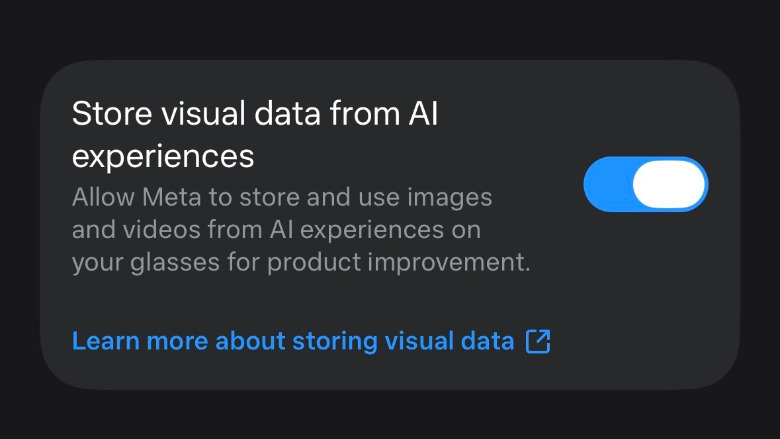
The setting affects whether workers can review photos and videos from your glasses.

Meta has started to roll out the setting that allows people who use its smart glasses to opt out of allowing the company to use “visual data” collected by the device for AI training. The setting is now available within the Meta AI app.

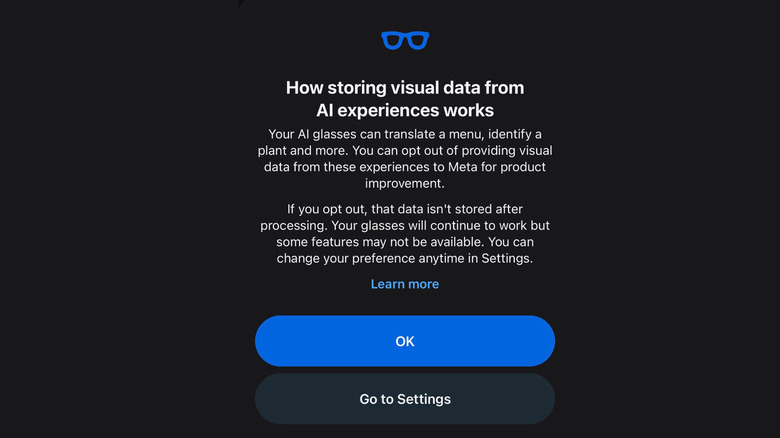
The company has begun notifying glasses owners about the change with a pop-up in the Meta AI app. “Your Al glasses can translate a menu, identify a plant and more,” it says. “You can opt out of providing visual data from these experiences to Meta for product improvement. If you opt out, that data isn’t stored after processing.”

The notification directs users to the relevant settings page, but you can also find it directly by navigating to the settings for your glasses, selecting “Meta AI” and scrolling down to “store visual data from AI experiences.” You’ll need to have your glasses out of their case and connected to your phone in order to change the setting. If you have multiple pairs of glasses, you’ll need to repeat this step for each pair.

Advertisement

Opting out may prevent you from being able to use certain features with the glasses, Meta says. This includes “visual reminders,” like looking at an object and asking Meta AI to remind you to buy it next week. It’s not clear if any other features are affected.

Along with the new setting, Meta has also published a more detailed description of how it uses “visual data” in a help center article that explicitly mentions the possibility of human review. “When you use AI experiences on your Meta glasses – like asking about something you’re looking at or using live AI – Meta stores the resulting visual data and may use it to power glasses features and improve Meta products,” the company explains. “This includes the process of training and improving AI models, which may be automated or manual (human).”

The company goes on to note that it only stores “visual data” collected while using certain AI features, including Live AI. Visual data, the company says, does not include “photos and videos you capture with your glasses when the capture LED is on.”

Advertisement

Source link

Continue Reading

Trending