





Connect with us

Tech

Rare Burnout 3 Xbox ‘Beta 3’ Disc From July 2004 Finally Gets Dumped

Published

on

Burnout 3 Beta Disc Xbox 2004
Game preservationist MattKC spotted an undocumented original Xbox copy of Burnout 3 on eBay this summer and paid a steep price to have it shipped from Australia. Printed on the face is July 28, 2004, the words Beta 3, and a warning that reads Confidential material: return to mastering lab. A name on the label, blurred in the video for privacy, belonged to a product manager at EA Australia, which fits the moment Electronic Arts bought Criterion and took the series in-house. How the disc left that office and landed on a public auction remains a guess.


Retail Xbox games normally put their data under a DVD-Video wrapper to prevent a PC drive from accessing them after a brief warning, but this DVD-R disk was an exception. It was a purple-tinted consumer DVD-R that had been used for a development kit. So, when connected to a normal drive and ran through DiscImageCreator, it produced a clean 3.7 GB image in just a few minutes. XDVDMulleter then unpacked the data, and after a bit of a tussle, the build was booted up by the emulator Xemu. There was no program database file on the disk, which would have been extremely unlikely for a late master.

Sale


Lenovo Legion Go S – 2025 – Mobile Gaming Console – AMD Radeon graphics – 8″ PureSight IPS Display…
  • ALL GAMES, ALL PLACES, ALL YOURS – Get ready to game on the 8″ 120Hz Lenovo PureSight display and launch any title using Legion Space. The AMD Ryzen…
  • SEE EVERY DETAIL – Make every scene pop with 500 nits of stunning brightness and 100% sRGB color accuracy. And with 10-point touch support, your…
  • PLAY YOUR WAY – Play hundreds of high-quality PC games with your complimentary 3 months of PC Game Pass and EA Play. With new games added all the…

Burnout 3 Beta Disc Xbox 2004
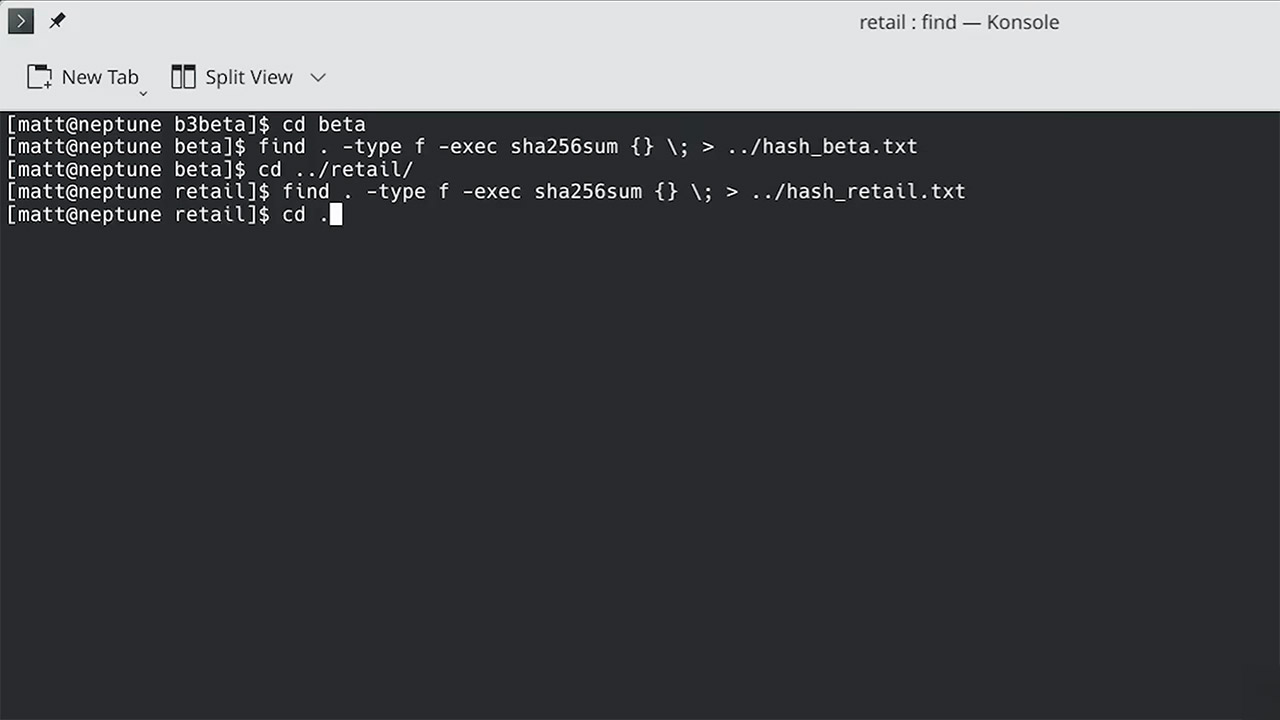
Running a hash check on all the files against a PAL retail dump revealed eight changes, one of which was the main executable. Signing accounts for a portion of the difference. Criterion had created this particular copy as a debug binary for a development console rather than a retail-signed XBE for a store disk. The English in-game play appears almost identical to the finalized game. However, changing the language triggered the appearance of a few strings that had been written to run too long for the UI. The retail version of the game just condensed those sentences. References to a generic server for online play were replaced with an EA server in later files. You also lose Xbox Live and Insignia hosting Burnout 3, as those strings would never appear in a live session anyhow.

Burnout 3 Beta Disc Xbox 2004
Crash mode contains the most significant code modification discovered by MattKC. After getting some considerable air in a wreck, the beta simply outputs out the height using a standard sprintf function and one decimal point. A few European languages, however, use a comma to mark that point, so the retail executable includes a bespoke formatter to ensure that local punctuation is respected. That’s about the extent of the differences; no leftover cars, no cut tracks, and no debug menu sticking about in the menus. Criterion had evidently finished the US executable about an hour before this disk was released, and the European one approximately 6 days later, which explains why the remaining work appears to be copy fitting rather than any meaningful new features.

Burnout 3 Beta Disc Xbox 2004
MattKC thought this buy was a poor source of hidden material but an excellent shelf piece. He did, however, submit the ISO to the Internet Archive as Burnout 3: Takedown, Xbox Beta 3, 07/28/2004, so that anyone can look without having to search for another one of those burned DVD-Rs. For a game so close to being ready for release, the archive is the real treasure. You now have a late PAL localization pass out in the open, dated and hashed, which is more than most corporate disks receive even after 22 years.
[Source]

Advertisement

Source link

Continue Reading
Click to comment

You must be logged in to post a comment Login

Leave a Reply

Tech

I created an interactive digital avatar of myself — and you can talk to it

Published

on

When Alexandru Voica, head of corporate affairs at the video-generation startup Synthesia, sent me a link this summer to the newest addition to their PR team, I was surprised. It was an interactive virtual avatar of him, trained to answer common press questions about Synthesia, like what it does and how it works. The day before, I was on a panel where PR people asked me if I minded pitches that used AI-generated text. But Alexandru’s avatar was beyond that — this seemed to me the final boss of using AI in PR. 

In September, Synthesia invited me to its new office space in New York. Originally based in the U.K., Synthesia is a hot digital avatar startup alongside others like D-ID, HeyGen, and Colossyan. It hit a $4 billion valuation earlier this year and said last year it had crossed $100 million in ARR.

Synthesia lets enterprises build interactive training videos with AI avatars and recently launched a product called Roleplay Sessions that lets employees practice, for example, sales pitches with an interactive AI avatar that responds and scores their responses.

When I went to the new office opening and they asked me if I would like my own AI avatar, I didn’t even hesitate to say yes. Of course I would like my own digital twin. My outfit was cute that day, and my hair was in place.

Advertisement

Until I met my digital twin, I had been indifferent toward avatars, but I felt they would inevitably become part of everyday online life. I heard of people on Instagram creating them in their likenesses to help them make social content. I find it all to be very interesting, and it’s perhaps why I have no qualms now presenting to you my digital twin. This is the first time Synethsia has made a digital avatar for a journalist (or for anyone, period, outside of Voica). It is trained on my story about why venture-backed startups commit more fraud than non-VC-backed startups and will only answer questions about that story. 

Below, simply press “start in a new window” to begin.

You can ask it questions like:

  • Why did I decide to write this story?
  • What is the research paper about?
  • What did the researchers find?

To make this, I entered a mini film studio nestled inside Synthesia’s office where they took numerous photos of me and captured a two-minute recording of my voice. I had to consent to these avatars being made and, well, digital Dom was born. They created a personal avatar for me (one that just reads whatever script I give it) — with and without glasses — and they made two interactive avatars for me (ones that can talk back and listen to me), also with and without glasses. 

We picked an article to train the interactive avatar on, and then one of the teams built my interactive avatar, which is powered by a combination of voice-to-text, video, language, and text-to-voice models. My avatar’s tech stack includes Synthesia’s own video and voice models, although the company also allows customers to choose alternatives from other labs like Cartesia, ElevenLabs, Google, or OpenAI. Enterprises can also choose to host their avatars on whatever cloud they want or pay Synthesia to host them.

Advertisement

The voice-to-text model turns what people say into text, the agentic language model makes sense of text and can take actions based on it, the text-to-voice model turns a response into audio, and finally a video model (built by Synthesia) animates the avatar as it talks. 

Overall, Synthesia builds three types of products — a video-creation and distribution platform with classic avatars, where someone types in a script and the avatar repeats it; an agentic platform called Sessions where people can interact with the avatars in surveys or roleplay; and an API platform where people can take Synthesia video and voice models and combine them with other tech services to build interactive avatars or other types of products.

It took the Synthesia team a couple of days to make my avatars. I played first with the personal ones and typed a fairly generic script to see how my AI voice sounded. I had it talk about how fall has arrived in New York, my favorite time of year. The voice was fairly accurate, and I was glad it didn’t pick up any of the hoarseness I had when I recorded my audio sample. 

I showed it to some non-tech friends who found it both interesting and creepy.

Advertisement

Then I showed them my interactive one, which is deterministic, meaning it will only say what it was trained to respond to. In this case, that was my venture fraud story. I asked it questions like where I was before TechCrunch and what part of New York I lived in, but each time it directed me back to the story.

My friends didn’t think the voice sounded much like mine and thought the likeness was not as good as the personal avatar, but nonetheless it was close enough to be somewhat creepy. My mom called it “amazing,” which is pretty high praise from her. She and my father kept trying to ask it questions “only they would know” about me — but the model didn’t answer, redirecting them each time to the venture fraud story.

“I don’t remember giving birth to two of you,” she joked after testing the model.

This experience has made me think about what the future of journalism could be. Would people be OK with turning on the news and it being presented by an avatar? One investor told me no immediately. Certainly there is a lot of pushback today on AI slop that has infiltrated social media and other news-sharing platforms. But others I asked weren’t so sure. Could avatars augment — or even replace — journalists? Would CEOs want to talk to an AI avatar of a journalist rather than a human one? 

Advertisement

What I like about my career is connecting with people, writing stories, and researching new topics. But the biggest part of journalism is trust. That doesn’t seem like it could ever be outsourced to an AI.

Outside of journalism, I’m confident the idea of cloning yourself could be appealing. No more catching up on work after a holiday or vacation, because a version of you can always be around, answering questions.

We’ll have to see how avatar usage evolves in corporate America. But now that I have my own, I have mixed feelings. After I got over the initial novelty of it, I examined my avatar closely after it stopped talking and waited — for what, I’m not sure. Maybe I’m waiting for it to blink. Or to say something new, or to smile, or to just let me know that it knows. 

Because my digital twins are deterministic, they will never do that. But I can see how easy it would be for someone to fall into a tinge of AI psychosis with one that was nondeterministic, meaning powered by a chatbot that was free to pontificate.

Advertisement

I told one investor that, whatever the future of digital twins is, I predict that my generation, Gen Z, likely won’t get used to them. They feel sci-fi: Everything we’ve ever seen in a movie is here now. But I will say, I find digital avatars less jarring than humanoids. At least with an avatar, if stuff gets weird, I can always log off. 

Until then, however, here is my personal avatar, giving you a rundown of all the top stories on our site this week!

When you purchase through links in our articles, we may earn a small commission. This doesn’t affect our editorial independence.

Advertisement

Source link

Continue Reading

Tech

‘Physics is not simply a collection of equations’ for this UL researcher

Published

on

Dr Maria Alhajji discusses her energy storage research and the Sophia Project, a physics outreach initiative at UL that engages school students.

Researchers and scientists can draw their inspirations and motivations from many sources. For Dr Maria Alhajji of University of Limerick (UL), the connection between theory and reality is fascinating.

“I am inspired by the moment when someone connects a scientific concept with something they have already observed in everyday life,” she tells SiliconRepublic.com.

As an assistant professor in the physics department of the Faculty of Science and Engineering at UL, she sees her field as “a way of understanding the world – from why the sky appears blue to how electricity, communications, medical technologies and renewable-energy systems work”.

Advertisement

Her role combines teaching, research, undergraduate and postgraduate student supervision and academic service, and contributing to departmental education and outreach initiatives.

“I am particularly passionate about helping students and young people see that physics is not simply a collection of equations,” she says.

“Whether I am teaching first-year students or investigating materials for energy-storage systems, I want people to recognise physics as an active and evolving discipline that shapes our everyday lives.”

Alhajji holds a BSc from Saudi Arabia’s King Faisal University, as well as an MSc and PhD from UL, where she previously worked as a postdoctoral researcher and research fellow.

Advertisement

With an academic background in electrochemistry and energy-storage materials, she now teaches across areas including mechanics, electromagnetism, semiconductor devices, electronics, modern physics and materials analysis.

“I was drawn to electrochemical energy storage because it brings together physics, chemistry, materials science and engineering,” she explains.

“It allows us to study processes occurring at atomic and microscopic scales while addressing one of society’s most urgent challenges: the transition to secure, reliable and sustainable energy.”

Energy solutions for the future

For Alhajji, modern society’s embrace of renewable energy can’t be limited simply to generating electricity from wind or solar; that power also needs to be stored effectively and viably so that it “remains available when the wind is not blowing, the sun is not shining or demand on the grid is particularly high”.

Advertisement

Her scientific research focuses on understanding how the properties of an electrode influence the reactions taking place at its surface and how these learnings can be applied to battery design for use in grid-scale energy storage.

Redox-flow batteries are an energy solution that, according to Alhajji, can be designed for long-duration operation, scaled to suit large installations and maintained differently from conventional sealed batteries.

These qualities, among others, make them ideal for stationary applications that demand consistent and reliable power, according to US industry body Battery Council International, which notes that their unique design – by separating energy storage from power generation – provides flexibility and durability.

Alhajji notes that that while wider deployment of such batteries depends on improving their performance, durability and cost, the principles underpinning them can be applied when considering other electrochemical technologies.

Advertisement

“My broader aim is to establish a clear relationship between a material’s structure, surface chemistry and electrochemical function,” she says.

“I find interfaces particularly fascinating. The performance of an entire battery can depend on reactions taking place across an extremely thin boundary between an electrode and an electrolyte. Small changes at that interface can have a measurable effect on the efficiency and lifetime of the full system.”

The connection between fundamental understanding and technological, real-world impact is a continuous source of motivation for her.

“This understanding can guide the rational design of energy-storage materials that support faster, more reversible reactions while remaining efficient and stable over long-term use.

Advertisement

“I am interested not only in how well an energy-storage system performs, but also in the fundamental physical and chemical processes responsible for that performance.”

She cites iron-based energy storage systems as a promising avenue worth exploring due to that metal being “widely available and potentially more economical than many materials used in current battery technologies”, which could lead to progress in developing energy-storage systems that are efficient, durable, scalable and based on more sustainable materials.

Young scientists

Alhajji’s passion for her field is represented not only in her researching and testing of energy production and storage solutions, but in her attitude to teaching and trying to inspire future generations.

Over the summer, she coordinated UL’s annual Sophia Project physics competition, run by her department and involving more than 70 primary-school children from Cork and Limerick.

Advertisement

“Sophia is a physics outreach initiative at UL that engages schools through interactive workshops, demonstrations and a schools’ physics competition,” she explains. “I have been involved in developing and delivering the workshops and in leading the competition element of the programme.

“The workshops use accessible, hands-on experiments connected to familiar experiences. Pupils might explore static electricity, air pressure or siphoning, or discuss questions such as why the sky is blue.

“Rather than simply showing an experiment and providing the answer, we encourage pupils to predict what will happen, observe the result and develop their own explanation.”

She says that the broader goal of the initiative is to build young people’s confidence and curiosity in science while developing their creativity, teamwork and problem-solving skills, and that schools and teachers have praised its ability to create and maintain interest among participating children.

Advertisement

She acknowledges, too, that teachers themselves can have significant influence in these types of initiatives.

“By supporting teachers and developing engaging activities that can be used in the classroom, we can reach many more young people and build a lasting culture of curiosity, creativity and problem-solving.”

Stay curious

For those starting out on a scientific career journey, Alhajji offers some words of wisdom.

“A career in science is not about always knowing the correct answer. It is about learning how to investigate a question carefully, evaluate evidence and continue when an experiment does not behave as expected. Unexpected results are often where the most interesting research begins.

Advertisement

“Stay curious and never be afraid to ask what appears to be a simple question. Many important scientific discoveries begin with someone questioning something that others have taken for granted.”

She acknowledges the need for a strong foundation in the likes of physics and maths, but notes that softer skills – such as communication, teamwork and practical problem-solving – should not be overlooked.

“Modern scientific research is highly collaborative and often brings together people from several different disciplines,” Alhajji notes.

And she stresses, also, the importance of keeping an open mind – advice which perhaps might be heeded regardless of one’s age, academic status or specific career journey.

Advertisement

“You do not need to have your entire career planned from the beginning. Curiosity is often the best place to start.”

Don’t miss out on the knowledge you need to succeed. Sign up for the Daily Brief, Silicon Republic’s digest of need-to-know sci-tech news.

Source link

Advertisement
Continue Reading

Tech

Ray-Ban Meta Audio Glasses Drop the Camera and Suddenly Make More Sense

Published

on

Meta has spent years trying to convince consumers that putting cameras on their faces is perfectly normal. With the new Ray-Ban Meta Audio, it is trying something refreshingly different: removing the camera entirely, which also means the person sitting across from you no longer has to wonder whether they are being recorded.

For a lot of people, that alone may be the feature that finally makes smart glasses feel less creepy.

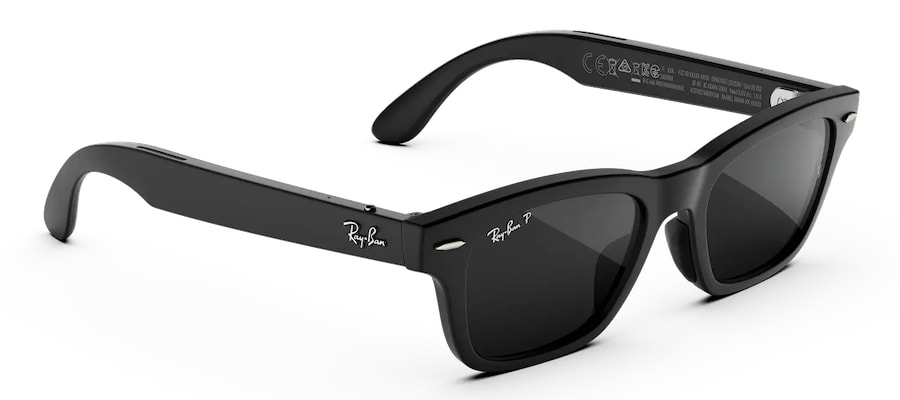
Announced at Meta Connect 2026, Ray-Ban Meta Audio combines open-ear speakers, six microphones, Meta AI and conventional prescription-compatible eyewear in a 43-gram frame. Prices start at $349, preorders are open now, and shipments begin October 13, 2026.

That makes them Meta’s first audio-only glasses, although not the first product to try the concept. The more interesting question is whether Ray-Ban styling, Meta’s AI ecosystem and substantially longer battery life can make audio glasses relevant again after Bose, Amazon and smaller competitors spent years poking at the category.

Advertisement

No Camera Is The Feature

Ray-Ban Meta Audio uses two open-ear speakers positioned in the temples and a six-microphone array for calls and voice commands. Meta claims the microphone system can capture the wearer’s voice more clearly than earbuds, while the open design keeps the ear canal unobstructed for greater situational awareness.

Removing the camera does more than avoid having strangers wonder whether dinner is being livestreamed to Instagram. It allows Meta and Ray-Ban to make the frames lighter and extend battery life to up to 12 hours, compared with nine hours for the camera-equipped Ray-Ban Meta Gen 3. The included charging case adds up to another 48 hours, according to Meta.

There is a tradeoff. Without a camera, Ray-Ban Meta Audio cannot use Meta’s multimodal AI features that analyze what the wearer is looking at, and Live AI visual interaction is unavailable. Voice-based Meta AI, text translation, live translation, music, podcasts, messaging and calls remain available.

Advertisement

That may be enough for a lot of people.

ray-ban-meta-audio-glasses-styles-2026
Ray-Ban Meta Audio glasses are available with different lenses, including prescriptions for an extra $100 charge. Top 2 are Burbank models, and bottom 3 are Clubmaster models.

Meta also unveiled its much more ambitious Meta VR Glasses at Connect, but the two products share little beyond being worn on your face.

Meta VR Glasses weigh about 100 grams, use dual micro-OLED displays with 2412 x 2288 pixels per eye, support Dolby Vision and Dolby Atmos, and rely on eye tracking and hand gestures for navigation. A tethered compute puck contains the Snapdragon Reality Elite processor, storage and battery, with up to three hours of high-resolution media playback. They arrive in spring 2027 for $1,299.99.

Those are portable VR computers designed for movies, gaming, spatial workspaces and immersive sports. Ray-Ban Meta Audio is essentially an open-ear audio wearable and AI interface disguised as normal glasses.

Advertisement. Scroll to continue reading.
Advertisement

One replaces much of what a VR headset does. The other wants you to leave your earbuds at home.

Ray-Ban’s advantage is the eyewear side of the equation. The Meta Audio lineup launches with Clubmaster and Burbank frames in 23 lens and color combinations, including clear, tinted, polarized and Transitions options, with support for a wide range of prescriptions.

People might actually want to wear them, which is apparently still an important feature for glasses.

ray-ban-meta-audio-burbank-black-angle
Ray-Ban Meta Audio Burbank
  • Type: Audio-only AI smart glasses
  • Weight: 43 g
  • Audio: Dual open-ear speakers
  • Microphones: 6-mic array
  • Battery Life: Up to 12 hours
  • Charging Case: Up to 48 additional hours
  • Wireless: Bluetooth 5.3, Wi-Fi 6
  • Water Resistance: IPX4
  • Frames: Clubmaster, Burbank
  • Lens Options: Clear, tinted, polarized, Transitions and prescription
  • AI: Meta AI with voice interaction and translation
  • Camera: None
ray-ban-meta-audio-clubmaster-black
Ray-Ban Meta Audio Clubmaster

The Bottom Line

Ray-Ban Meta Audio may prove more interesting than Meta’s camera-equipped glasses precisely because it does less. There is no camera, no display and no attempt to turn every walk to the deli into a mixed-reality demonstration.

What remains is open-ear audio, calls, AI assistance and translation built into glasses that weigh 43 grams and can potentially last through an entire day. For listeners who like the awareness of open-ear earbuds but already wear glasses, that combination makes considerably more sense than adding another device around their ears.

Advertisement

The only irony is that Meta may have made its most socially acceptable smart glasses by making them slightly less smart.

Where to buy:

Source link

Advertisement
Continue Reading

Tech

Is VR back from the dead? After the terrible year 2026 has been so far the Meta VR Glasses give me hope

Published

on

Since the Oculus Quest 2, the VR industry has been chasing a high point that seems impossible to re-summit — let alone surpass. I mean, how can you compete with popularity propelled by global pandemic-caused lockdowns and ultra-low costs when people are no longer trapped in their homes and facing down RAM-crisis-fuelled tech price hikes?

You can’t. But the Meta VR Glasses give me hope that’ll change, that VR is on an upward swing again.

Source link

Advertisement
Continue Reading

Tech

You Can Check Your Samsung Galaxy’s Health With A Built-In Test

Published

on

Try this before sending it in for repair or upgrading.

If your Samsung Galaxy has begun draining its battery too fast or dropping calls, or just seems to be on the wrong side of an update, there is quite a bit of hardware that you can check before downloading another app or going to a repair shop.

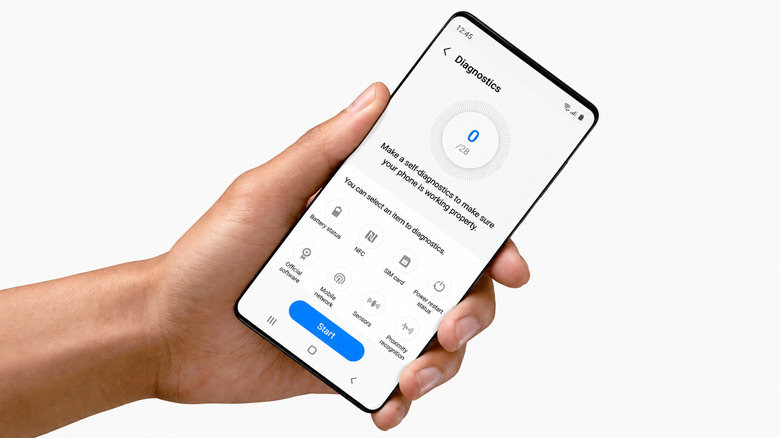
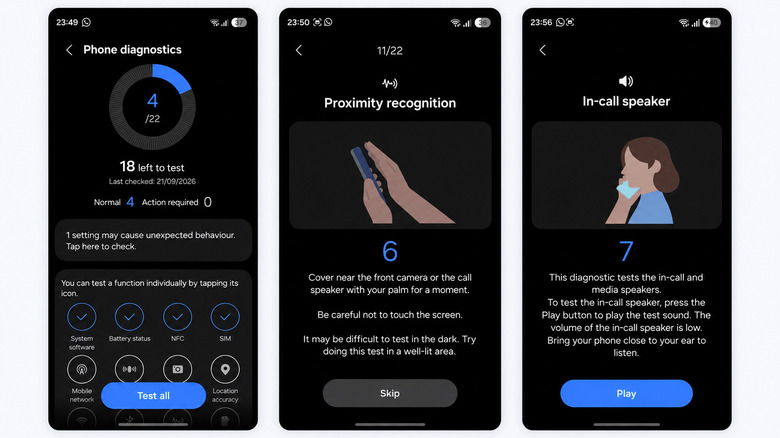
Samsung has a phone diagnostics suite in Device care. Go to Settings > Device care > Diagnostics and then tap on Phone diagnostics. From there, you can test individual components or tap Test all and go through the checklist.

According to Samsung, Device care diagnostics are available on Galaxy devices running Android 12 or later, though the specific menus and available tests vary by phone and software version. The diagnostics are also available via Samsung Members.

Advertisement

I completed the entire test on a Samsung Galaxy S26 Ultra, which gave me 22 checks to complete. But this is not a true measure of how “fast” your phone is. Think of it more as giving the hardware a physical.

Samsung checks a surprisingly large chunk of your phone

The diagnostics are much more than battery health. Samsung can test the touch screen, cameras, microphones, speakers, physical buttons, sensors, Wi-Fi, mobile network, Bluetooth, SIM card, NFC, USB connection, charging and fingerprint reader, depending on your Galaxy model. Models with features like an S Pen or wireless charging can get additional checks.

Certain tests are performed automatically, while others involve you. For instance, the proximity test requires you to cover the area around the front camera or call speaker with your palm. Another one plays audio via the in-call speaker and asks you if you can hear it. It’s a bit more complicated than watching a progress bar act busy. If a test fails, Samsung says the app may offer troubleshooting suggestions or a related FAQ.

Advertisement

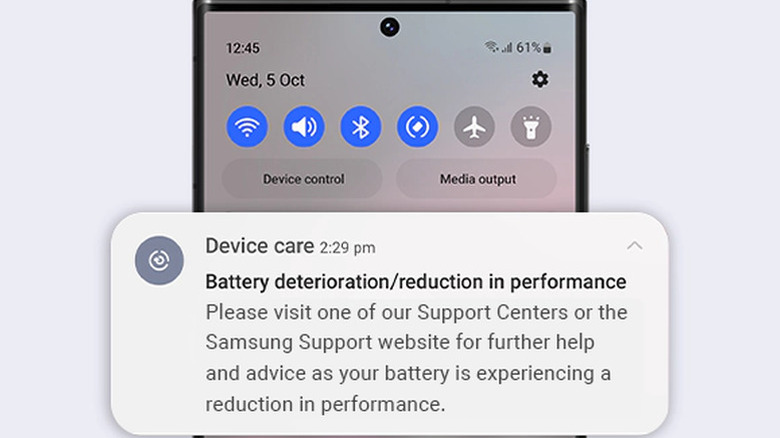
If you are checking the status of an older Galaxy, battery status is likely the most useful result. Samsung rates the battery as Normal, Weak or Bad. Weak indicates that its efficiency may have decreased due to long-term use or environmental conditions. Bad means that battery life has significantly degraded, and Samsung recommends getting service advice.

That’s much more helpful than asking yourself if your battery just seems worse than it used to.

Advertisement

A healthy Galaxy can still feel slow

Just because your Galaxy passes all the diagnostics does not mean it will be as fast as it was on day one. Samsung’s tests check whether components and functions are working correctly. They don’t provide you with a CPU benchmark, let you know if your internet connection is crawling or tell you if your phone is performing well in games.

Those are different jobs. An internet speed test measures the connection your phone is using, so distance from the router, congestion and other network conditions can affect the result. A benchmark like Geekbench measures processor performance instead and is more useful for comparing your phone with similar phones.

Samsung’s support guidance doesn’t specify a benchmark score at which a three-year-old Galaxy is too slow. Age alone is not a good indicator, as a Galaxy A-series phone and an Ultra model started with very different hardware.

If the diagnostics pass and your phone is still slow, Samsung says outdated software, background apps, insufficient available memory or temporary system errors may be to blame. Google also says Android phones can begin to have problems when less than 10 percent of their storage is free.

Repeated failed diagnostic tests or a Bad battery result are stronger reasons to consider servicing the phone. If you do hand it over for repair, Samsung’s Maintenance mode can hide photos, messages, contacts and other personal data while still allowing technicians to test the device.

Advertisement

Source link

Advertisement
Continue Reading

Tech

This App Lets You Use An Apple Watch With An Android Phone

Published

on

If you moved to Android, your Apple Watch can come with you.

Whether the iPhone is the best smartphone around is debatable, but what’s undeniable is how well Apple has nailed the products that surround it. The AirPods continue to dominate the truly wireless earbuds market, and the Apple Watch remains one of the most polished smartwatch experiences you can get. Unfortunately, Apple’s accessories work best when you have an iPhone to go along with them. In fact, the Apple Watch straight up doesn’t work with Android.

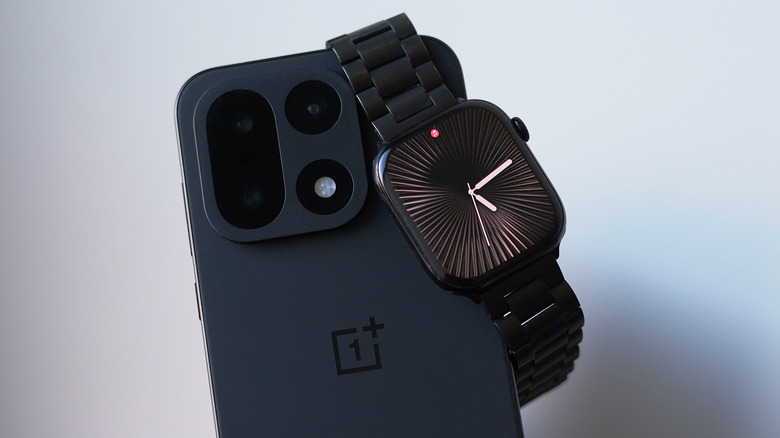
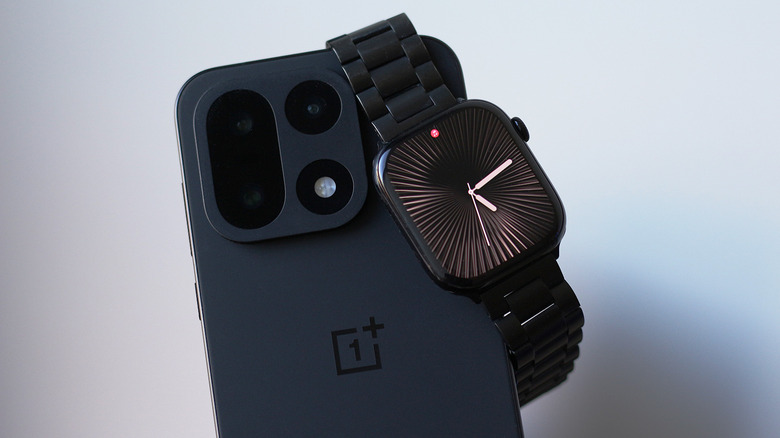
I recently moved to a OnePlus device only to realize that I have to carry my iPhone around just for my Apple Watch to stay useful. Then I stumbled upon Merge Watch — an app that claims to bridge the gap and let me pair my Apple Watch with an Android phone. People have found workarounds in the past to make this happen as well, but they require the cellular version of the Apple Watch. At this point, you’re using two devices that don’t talk to each other.

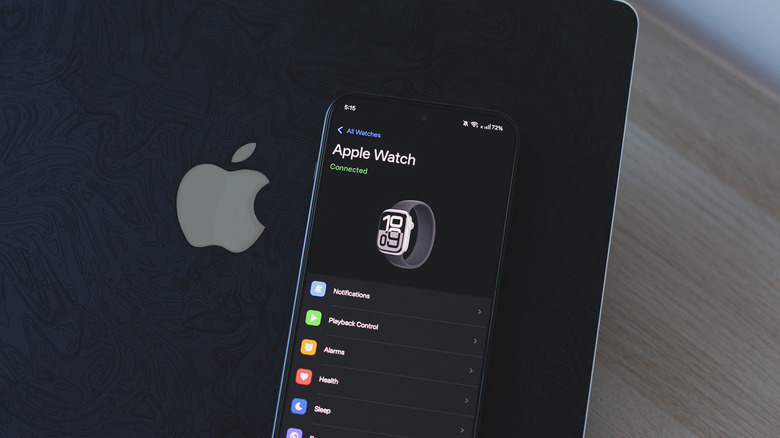
You do need to first activate your Apple Watch with an iPhone. You then install the Merge Watch app on both your Apple Watch via its App Store and on your Android device via the Play Store. Launch the app on both devices and grant it the required permissions — it asks for Bluetooth permissions, health data, notification access and battery optimization exceptions. Tap your phone’s name on your Apple Watch and confirm the pairing request by typing in the six-digit code on your phone.

Advertisement

Health data is synced with Google Fit and takes a while to show up when you first set up the app. Assuming the setup process went smoothly, your Android phone and your Apple Watch should now be able to talk to one another.

How well does Merge Watch work?

Pairing the two devices is one thing, but how much of the Apple Watch experience actually carries over to Android is another. Surprisingly, notification forwarding works really well. You can even reply to messages using your Apple Watch. When you play music on Spotify or any other app, you get playback controls on your wrist. Google Fit’s user interface is not my favorite thing in the world, but it does sync with the health data my Apple Watch collects.

You probably don’t want every app from your Android phone buzzing you on your wrist, so you can turn off notifications on a per-app basis through the Merge Watch app on your phone. ECG recordings also show up on your phone, alongside detailed sleep tracking data.

Advertisement

Although my Android phone and Apple Watch are now connected more closely than they ever were, the experience sadly isn’t as polished as I’d hoped, especially for a paid service. For starters, every notification that my Apple Watch receives is through the Merge app rather than appearing as a native watchOS notification, so it almost feels like you’re opening an app within an app just to check or reply to your notifications. 

Every other app installed on your Apple Watch still works independently — it’s just the Merge Watch app that forwards notifications and acts as the shared experience between the two devices. It’s actually more like notification mirroring, since, unlike the iPhone, which automatically decides whether a notification appears on your phone or watch, your Android phone still buzzes with notifications even when you’re actively using your Apple Watch. I assume it’s the best any third-party developer can do given the limitations set by Apple.

Advertisement

Using an Apple Watch with Android

Although you are trusting a third-party app with access to fairly sensitive information and health data, Merge Watch’s privacy policy claims that most of the data stays on your devices, and when notifications are sent through an internet relay, they’re end-to-end encrypted. The harsher pill to swallow is its subscription model. There are two tiers to choose from, but to unlock all the app’s features, you’ll need to shell out $6 a month.

I tested the experience with my iPhone switched off to see if I could really daily drive my Apple Watch with an Android device. The results were a bit mixed. Merge Watch doesn’t require your Apple Watch to be connected to the internet. It delivers notifications primarily through Bluetooth. However, there are instances where the app simply doesn’t nudge me on my wrist. It takes manually launching the app on the Apple Watch to get things working again. This sometimes results in my watch pinging me a dozen times at once when the app does eventually wake from sleep.

I did notice slightly higher power consumption on my Apple Watch, which makes sense given the app is running continuously in the background fetching notifications all day. I ran this setup on watchOS 27 on an Apple Watch Series 10 connected to my OnePlus 15 running Android 16. OxygenOS does have a reputation for aggressively pausing background activities in favor of endurance, and even with battery optimization disabled for Merge Watch, I couldn’t eliminate occasional notification delays. 

Overall, Merge Watch is a decently reliable service if you want to pair an Apple Watch with your Android device. While I would have much preferred a one-time payment over a monthly fee, it’s hard to complain when there are barely any other working solutions.

Advertisement

Source link

Continue Reading

Tech

Old-School Credit Card Scams Are Far From Dead

Published

on

Welcome to Kernel Panic! A weekly newsletter by Lily Hay Newman and Matt Burgess from inside the new world of privacy and digital security. To receive this newsletter in your inbox each week, sign up here.

When every random text message feels like it’s a scam, and with AI supercharging digital fraud, old-time credit card skimmers and bogus letters that arrive in the mail may seem laughable as potential threats in 2026. But as we all suffer through a seemingly unending barrage of potential scams, these antiquated attacks are still costing victims around the world dearly.

The fake-new-credit-card-in-your-mailbox trick is particularly insidious. Portugal, France, and Germany have all had waves of physical credit card scams in recent years where criminals have mailed phony replacement cards or letters to potential victims. Included letters often claim a current card is set to expire soon, whether the victim actually has one that’s about to expire or not. In order for the new (fake) card to be activated, the scam letter says, it should be registered using an included QR code or URL. Some sham cards even have real customer names printed on them, says Georg Hauer, an advisor for digital banks. “The card is almost like a token that creates the trust that is needed in order to fall for the actual trick,” he says.

If someone scans the QR code, they’re typically redirected to a fake banking website, where they’re asked to enter their details—potentially giving cybercriminals direct access to their real accounts. “This has been escalating for close to two years, and I believe that this type of scam might have proven to be successful enough to be rolled out in other countries,” Hauer says. “The cost of producing a personalized fake card has dropped in recent years thanks to AI just being able to copy a design based on an image, and the higher conversion rate per victim might justify the extra costs.”

Advertisement

Mail scams aren’t the only ’90s throwback on the docket. The US Attorney’s Office for the Northern District of Alabama indicted two Romanian nationals last week on charges related to alleged credit card skimming. Authorities say the pair specifically targeted government SNAP food assistance benefits distributed to recipients in most states on antiquated magnetic stripe-only debit cards, or Electronic Benefit Transfer (EBT) cards.

Fraud related to chip credit cards does exist as well, but this recent case serves as a reminder that classic skimmers targeting magnetic stripe credit cards are still deployed by scammers because there’s apparently still enough swiping going on to make it worth their while. The FBI says that EBT card skimming has risen in popularity among scammers since about 2021.

“Skimmer fraud is rampant with losses in the United States alone reaching over $1 billion each year,” US Attorney Phillip W. Williams Jr. said in a press release about the recent indictment. (That billion dollars includes multiple types of credit card skimming, not just EBT targeting.) “It is a silent insidious theft that occurs by merely swiping a credit card at a point of sale.”

Gary Warner, the director of intelligence at the cybersecurity firm DarkTower points out that dozens of states continue to use mag-stripe only cards for benefits purposes. “The risk here is that if the mag stripe is compromised, a clone of the card can be created and access not only the current value, but future value as well,” he says.

Advertisement

More broadly, Warner tells us, there are still multiple risks related to making payments using the magnetic stripes on any cards—even if they also include more secure chips that have been issued over the last decade-plus. “Non-bank ATMs and smaller non-chain merchants may expose your chip-enabled card to mag stripe reading,” Warner says. “Mag-stripe skimmers are often installed in such a way that the chip read is forced to fail.”

Source link

Continue Reading

Tech

DC Circuit OK’s Hegseth’s Abuse Of A Crummy Statute To Punish AI Vendors Who Won’t Give Him The Deadly Toys He Wants

Published

on

from the missing-the-real-national-security-risk dept

Pete Hegseth and Trump got a dubious win today: a 2-1 panel of the DC Circuit found that the designation of Anthropic as a supply chain risk was not unlawful. It dismissed Anthropic’s challenge despite (1) a different court having found the exact opposite not that long ago; (2) being predicated on a statutory interpretation of “supply chain risk” that would effectively deem most AI models, and potentially all software, a supply chain risk; (3) having made this designation selectively and punitively; and (4) it resulting in Anthropic being disqualified from selling its model to any government agency, including those without same concern the DC Circuit credited the military with having.

To some extent the difference in the two decisions can be explained by the two different statutes at issue. Hegseth claimed the authority to make “supply chain risk” designations under two separate ones, 10 U.S.C. § 3252, which was at issue in the California challenge, and 41 U.S.C. § 4713, which was at issue in this case. Congress is also partly to blame for this mess, because in writing the statutory definition for “supply chain risk” in the 4713 statute it created more space for dubious interpretations like this one (“Whatever paradigmatic examples individual members of Congress may have had in mind, the statutory definition is not limited to “adversar[ies],” 10 U.S.C. § 3252(d)(4), and instead covers “any person,” which cannot refer only to foreign entities, 41 U.S.C. § 4713(k)(6).”).  The statute also constrained how such designations could be challenged, sending them all directly to the DC Circuit, rather than a district court, which is why Anthropic’s challenge of the Hegseth action ended up in two separate cases.

But a bizarre situation has still resulted where one court has said that Anthropic’s First Amendment and due process rights had been violated, and another has now said they weren’t, even though the same action was involved with both. Anthropic argued that the California district court’s earlier decision should have been controlling, but the DC Circuit disagreed:

Anthropic contends that the Northern District’s decision is preclusive as well as persuasive. But because the Department’s designation authority is much broader under section 4713 than it is under section 3252, the issues flagged by Anthropic are not the same in both cases. So, for example, the Northern District’s determination that the section 3252 designation was arbitrary does not control our determination whether the section 4713 designation was arbitrary. Likewise, the Northern District’s determination of exigency under section 3252 does not control our determination of exigency under section 4713. In any event, Congress gave this Court exclusive jurisdiction to review procurement actions taken pursuant to section 4713 designations, see 41 U.S.C. § 1327(b)(1), and it specifically barred other courts from reviewing any other “action taken under” section 4713, see id. § 1327(a). That strict “allocation of jurisdiction” to this Court makes it inappropriate to constrain our review based on the Northern District’s judgment. Restatement (Second) of Judgments § 28 (1982); see Shaw v. State of Cal. Dep’t of Alcoholic Beverage Control, 788 F.2d 600, 607–09 (9th Cir. 1986); Lyons v. Westinghouse Elec. Corp., 222 F.2d 184, 188–89 (2d Cir. 1955) (L. Hand, J.).

Instead, because the DC Circuit read the statutory authority Hegseth drew from differently, apparently given its textual differences, it found Hegseth entitled to take the action that he did. But it is a dubious reading that would have broad implications the court did not address. In short, because Anthropic would still have control over its model, the court found that it could be considered to have the power to “manipulate” it, even after being deployed in government, and that made it a supply chain risk.

Advertisement

The Secretary reasonably concluded that removing Anthropic from the Department’s supply chain was necessary to protect national security by reducing supply chain risk to the Department’s information systems. Specifically, the Secretary credited a joint recommendation from two senior Department officials that Claude might be “subject to manipulation” by Anthropic “in such a manner as to inhibit the DoW’s use thereof.” App. 178. Likewise, he credited Under Secretary Michael’s conclusion that Anthropic might “manipulat[e]” the “design, integrity, and operation” of the Department’s Claude models, potentially causing “critical defense system[s] failing to engage” as intended by the Department. Id. at 182.

The record in this case amply supports the Secretary’s conclusion. To begin, it is undisputed that Anthropic can and does control how Claude responds—or fails to respond—to user prompts. Anthropic’s Chief Science Officer explained how the company “seek[s] to embed safety considerations directly into the model itself.” App. 8. Its CEO explained how such training gives the model an “identity, character, values, and personality” of its own, tethered to a “constitution” developed to impose “high-level principles and values” on Claude itself. Id. at 93–94. And the head of its public-sector business explained: “Model training is the primary mechanism through which Anthropic can influence the behavior of models used by the Department.” Id. at 276. Anthropic disclaims any ability to access or alter a model that has already been delivered to the Department, see id., despite the “technical measures” that it uses to police compliance with usage restrictions by private customers, id. at 8. Nonetheless, extant models reflect Claude’s “[c]onstitutional” training. Id. at 274–75. Moreover, Anthropic may encode additional restrictions each time it delivers any “new version of the model” to Department contractors. Id. at 276. Finally, it is undisputed that such model restrictions are vitally important to Anthropic, which describes them as lying “at the core of [its] mission.” Id. at 2.

The record also indicates that Anthropic’s model training is effective in enforcing usage restrictions and that, as a result, Claude has refused to answer legitimate queries from government users. Anthropic itself explained how early, commercially available versions of Claude frustrated Department and intelligence-community users by refusing prompts to evaluate classified materials. App. 255. Likewise, as Under Secretary Michael explained, the Department learned in 2025 that Claude had refused to process CDC prompts to support research to prevent the spread of infectious diseases. Id. at 212. Anthropic responds that these glitches reflected safety features appropriately built into models sold to private companies and were resolved after Anthropic engineers worked with the relevant government stakeholders. Id. at 255–56, 261–62. Perhaps so, but the point here is not that these model or usage restrictions were arbitrary; instead, it is that Anthropic’s model training does effectively enforce contractual usage restrictions.

Finally, the record reveals a recent, serious dispute about the scope of the contractual prohibitions on lethal autonomous warfare and mass domestic surveillance. Under Secretary Michael describes the incident in general but striking terms: [O]ne of Anthropic’s executives questioned the propriety of the potential use of their software for a sensitive military operation abroad despite that use being permitted under the existing Terms of Service. This led to alarm by the DoW and the prime contractor who provides Anthropic software, and raised material doubts as to whether they would cause their software to stop working or cause some other disastrous action that would put our warfighters[’] lives in danger. App. 181. Anthropic does not say much about this incident, except to suggest that it reflected a misunderstanding. Id. at 236–37. But regardless, Anthropic has made clear that it views the contractual prohibition on mass domestic surveillance as urgent to support “democratic values,” id. at 146, and the contractual prohibition on lethal autonomous warfare as urgent to avoid “put[ting] America’s warfighters and civilians at risk” of a catastrophic AI mistake, id. at 147. For its part, the Department has made clear that it views an “any lawful use” authorization to be critical to its “AI-first” strategic plan. Id. at 202, 206. With such diametrically opposed positions and with contractual limitations that are hardly self-defining, the prospect for disputes is apparent.

In sum, the Department reasonably feared that Anthropic might manipulate Claude’s design to prevent it from performing national-security functions that the Department deems contractually authorized and necessary.

The nightmare hypo that the court credited was what if the military had some sensitive plans that depended on Claude’s use, which Anthropic then changed on the fly, which jeopardized the mission. But there are multiple problems with the court’s acceptance of the government’s argument here.

For one, if the court’s statutory interpretation about the power to affect the operation of delivered software were correct, then pretty much any software product, at least those still subject to vendor-supplied updates, could be considered supply chain risks, given that any update could make substantive changes. In any case, it would seem to mean that any AI model would be too risky for the government to use, because there is nothing unusual about Anthropic’s model-control architecture—to the extent Anthropic could still control its model, so could any other AI vendor potentially control theirs. Whether they would or not would depend on the contract restraining them, and the only thing potentially different about Anthropic is that it did not want to be contractually obligated to allow certain functions that Hegseth really wanted—functions that were ethically dubious at best and monstrously dangerous at worst.

But because that contractual reluctance upset Trump and Hegseth, they singled Anthropic out, alone, for negative treatment, turning their pique that “we can’t agree with Anthropic on how the software would need to be designed for us to be able to buy it” into “and because we can’t agree then NO ONE ELSE IN THE GOVERNMENT CAN EVER USE IT.” Per the DC Circuit, such an overbroad measure—after all, not every agency had the same concerns about changeability that the military might, yet Hegseth was deciding for them, too, whether they could use Claude, even when its architecture created no particular risk to them—and clearly punitive measure was perfectly fine because it implicated the implicit “national security” exception to the First Amendment the Founders apparently wrote into it in invisible ink.

To succeed on such a First Amendment retaliation claim, the plaintiff or petitioner must prove that (1) it engaged in protected speech, (2) the government took materially adverse action against it, and (3) the speech caused the materially adverse action. See Houston Cmty. Coll. Sys. v. Wilson, 595 U.S. 468, 477–79 (2022); Aref v. Lynch, 833 F.3d 242, 258 (D.C. Cir. 2016). Anthropic has satisfied the first and second prongs of this test, but not the third. The First Amendment squarely protects Anthropic’s advocacy regarding the safe and appropriate use of AI products. Moreover, the Department’s exclusion of Claude from its supply chain plainly qualifies as a materially adverse action. However, we can discern no causal connection between the two. Instead, the record makes clear that the Department removed Anthropic from its supply chain not because of its advocacy, but because Anthropic refused to agree to a contract term the Department deemed essential to national security.

Because Anthropic wouldn’t do the deal Hegseth wanted to do, he was therefore entitled to declare it too risky for anyone in the government to use, without it being seen as punishing Anthropic for its disinclination.

Advertisement

Anthropic points to various pungent statements in the Secretary’s February 27 social media post. Among other things, the Secretary denounced Anthropic’s “sanctimonious rhetoric,” “virtue-signaling,” and “Silicon Valley ideology.” App. 77. Such rhetoric seldom provides a sound basis for judging the lawfulness of federal executive action. See, e.g., Mullin v. Doe, 146 S. Ct. 2121, 2139 (2026); Trump v. Hawaii, 585 U.S. at 700–02. In any event, for all its flourishes, the Secretary’s social media post squarely addresses Anthropic’s refusal to provide the “all lawful uses” contractual authorization. He described Anthropic’s behavior as a “textbook case of how not to do business” with the Pentagon. App. 77 (emphasis added). He reiterated the Department’s demand for “full, unrestricted access to Anthropic’s models for every lawful purpose in defense of the Republic.” Id. (cleaned up). And he characterized Anthropic’s refusal to provide that access as imposing an unacceptable “veto power over the operational decisions of the United States military.” Id. The nub of this dispute was contractual, and the First Amendment did not require the Department to continue a contractual relationship that it viewed as creating a national-security risk.

Per the DC Circuit panel, the First Amendment takes a backseat to the President and his Secretary’s determination that a technology can ever be used by the government, no matter what.

This case raises profoundly difficult questions about the appropriate military uses of an almost unimaginably powerful new technology. The Secretary raises the deeply sobering prospect of overly constrained AI models shutting down unexpectedly and thus causing important military operations to fail. Anthropic raises the deeply sobering prospect of unconstrained AI models hallucinating inappropriate targets for lethal military force. Both possibilities present obvious national-security concerns. But in our Republic, it is the President and the Secretary of War who must determine how best to balance the competing risks. In doing so here, the Secretary did not transgress any limits on his authority under the Supply Chain Security Act or the Constitution. Accordingly, we deny the petitions for review.

Which cannot possibly be right if the Bill of Rights is to have any meaning in limiting government power, and especially not on a record like this.  Yet here we are.

Filed Under: 1st amendment, defense department, dod, donald trump, pete hegseth, supply chain risk

Companies: anthropic

Advertisement

Source link

Continue Reading

Tech

You Can Make A Microprocessor That’s All Your Own

Published

on

For a while now we’ve followed the slow progression of affordable integrated circuit fabrication, and through the likes of Tiny Tapeout we’ve seen impressive strides made. But they’re not the only player in the space, and [Breaking Taps] has a video showing their microprocessor built using wafer.space.

The microprocessor itself is a little unusual, being a transport triggered architecture design with two busses. The whole thing might better be described as a system-on-chip than a microprocessor, as like a microcontroller it contains both memory and peripherals. He’s used Spade to design the thing, and we get an in-depth look at all the steps involved between design and fabrication. It’s a level or two more difficult than passing the DRC standards for your PCB fabricator. The result is a chip carrier with the chip itself visible under clear epoxy. It’s using an old fabrication technology so the silicon is surprisingly big, but unlike Tiny Tapeout’s cell based fabrication the whole chip is the one circuit. Mounting it on a PCB and using a breadboard, he’s able to demonstrate it running simple programs.

It’s clear that having your own IC fabricated is not for everyone, as even though wafer.space has performed minor miracles it’s still a service for people with a few dollars in hand. But look at it this way, we’re still near the start of this particular curve, and we expect that further affordability breakthroughs will follow.

Advertisement

Source link

Advertisement
Continue Reading

Tech

The hottest new hangout for middle schoolers is NPR’s comment section?

Published

on

Parents have spent years trying to keep their kids off social media, so some kids headed to the one place no adult would think to look for them: NPR.

On this week’s “This American Life,” host Ira Glass tells the story of the team behind NPR’s podcast “Wild Card,” who noticed a flood of baffling comments under their Spotify episodes last fall. A producer assumed the bizarre abbreviations and indecipherable emojis were bot traffic and shared screenshots in NPR’s Slack. They then reported the posts to Spotify.

But Hannah Chin, an audio producer and Gen Z colleague, took one look at the screenshots and recognized, almost immediately by Glass’s telling, that these weren’t bots. They were likely middle schoolers who were too young for social media, running a group chat in the comments of the podcast. (Perhaps someone at NPR should have grokked this sooner: it spotted kids doing the same thing on TED Radio Hour show last year.)

As for why NPR in particular, when Glass tracked down one of the kids to ask, he was given the kind of unvarnished answer that a middle schooler would give: “Um, I think we just, like, looked for podcasts that didn’t have many comments.”

Advertisement

“I tell you, buddy,” responded Glass, who has hosted “This American Life” for three decades, “I do a public radio show, and that hurts a little to hear.”

Source link

Continue Reading

Trending