









Connect with us

Tech

Ro Khanna Calls For The Right To Oppose Data Centers To Be Protected

Published

on

The congressman thinks it’s time for a “Data Center Bill of Rights.”

Representative Ro Khanna (D-CA) has introduced a new resolution calling on the House of Representatives to preserve local communities’ ability to reject data center projects near their homes. The resolution’s pitch for a “Data Center Bill of Rights” follows several state-level attempts to block or pause data center projects, including a one-year data center moratorium in New York.

The idea behind Khanna’s resolution is to protect people’s ability to regulate data center development, “without being preempted or overruled by the State,” the measure says. Communities should ideally be able to reject any data center project through a “transparent community process” and have the option to ban data center projects in residential areas and “within 2,500 feet of homes, schools, childcare facilities, hospitals or nursing homes.” The measure also says communities should have the option to demand transparency from data center providers, block changes to their electricity rates and require data centers to use clean energy.

The resolution is essentially an outline of a bill rather than a law that can be passed now, but it does highlight several concerns that make regulation worth pursuing. Those include the harmful pollution produced by the generators and turbines that power data centers and the up to 32 billion gallons of water AI data centers could consume each year by 2028.

Advertisement

The environmental and financial impacts of rapid data center buildout have been the primary concerns motivating data center protests and regulation across the country. It would be one thing if those issues were settled at the state level, but the federal government has largely tried to make it harder to do so, exempting data centers from existing environmental laws and pushing to prevent states from regulating them at all. A bill of rights could be one way to protect people’s ability to oppose data centers, in the absence of a nationwide data center moratorium. The resolution is the inverse of the housing laws of Khanna’s home state of California, which have largely tried to combat “NIMBY” objections to high-density development.

Source link

Advertisement
Continue Reading
Click to comment

You must be logged in to post a comment Login

Leave a Reply

Tech

Startup Spotlight: HitchPiggy wants to turn empty car seats into a new rideshare marketplace

Published

on

HItchPiggy founder Skylar Windham, left, on a trip to Florida with his friend and former graduate school professor Alexis Cancemi.

Planning a trip to a college campus, concert or Northwest landmark? Portland startup HitchPiggy is betting the ride you need may already be headed out on the road.

The company’s new marketplace allows drivers to post trips they’re already planning and connect with passengers heading the same way. Unlike on-demand services such as Uber or Lyft, HitchPiggy is focusing on regional travel, allowing drivers to choose who rides with them and what passengers contribute toward the trip.

Founder Skylar Windham says the idea has been percolating in his head for years, sparked from experiences traveling through Europe. Only recently, AI-powered coding tools allowed him to build the platform he always imagined.

The bootstrapped startup is small, with a little more than 100 registered users signing up for Pacific Northwest trips since its launch on June 1. No rides have been completed through the platform just yet, but Windham is looking to grow college ridership this fall through a partnership with the Portland State Business Accelerator.

Arsh Haque, director of the Portland State Business Accelerator, said he loves startup ideas like HitchPiggy that are hatched from international experiences.

Advertisement

“I got to firsthand experience a solution like HitchPiggy abroad, have always wanted it in the U.S., and think Skylar has the raw talent to bring it here,” said Haque.

Windham — a therapist and sailboat instructor by training — believes the service is on the right course as it tackles the complex challenge of matching drivers and riders. In fact, Windham’s background as a certified counselor and sailor is proving to be a useful in getting HitchPiggy on the road.

Counseling has honed listening skills, while sailing has taught adaptability.

“When you’re trying to reach a destination and the conditions change, you have to stay calm and adjust your course without losing sight of where you’re going,” Windham tells GeekWire. “That applies to building a startup too.” Let’s meet our latest Startup Spotlight company: HitchPiggy.

Advertisement

In 50 words or less, give us your elevator pitch.

Skylar Windham using the ridesharing service BlaBlaCar in France in 2015, which later inspired him to start HitchPiggy.

HitchPiggy is like Airbnb for the empty seats in your car. It helps drivers already traveling between cities connect with passengers heading the same way, making travel more affordable and putting existing empty seats to better use.

What problem are you obsessed with solving?

There are already thousands of empty seats traveling between cities every day. I want to help drivers and passengers fill them instead of letting them go to waste.

What surprised you after talking to customers?

Advertisement

I’ve been pleasantly surprised by how encouraging and helpful people have been. Even when there’s been a hiccup, users have been patient and supportive. I think HitchPiggy naturally attracts community-minded people who genuinely want to help each other.

How has AI changed the way you build your company?

I first tried building this idea in 2016 by hiring engineers overseas, but getting the product right was difficult. Eventually, I put the project on the back burner. Today’s AI tools gave me the ability to finally build the platform I had envisioned, despite having no coding background.

What’s one thing people misunderstand about your startup?

Advertisement

@media (max-width: 600px) {
.gw-founder-box { float:none !important; max-width:100% !important; margin:20px 0 !important; padding:16px 18px !important; }
.gw-founder-box .gw-label { font-size:12px !important; margin-bottom:8px !important; }
.gw-founder-box .gw-hero { font-size:19px !important; }
.gw-founder-box .gw-byline { font-size:15px !important; }
.gw-founder-box .gw-meta { font-size:12px !important; margin-bottom:14px !important; }
.gw-founder-box .gw-facts { padding-top:14px !important; }
.gw-founder-box .gw-facts li { margin-bottom:12px !important; }
.gw-founder-box .gw-facts li:last-child { margin-bottom:0 !important; }
.gw-founder-box .gw-value { font-size:15px !important; line-height:1.45 !important; }
}

Many people assume HitchPiggy is like Uber or Lyft. It isn’t. It’s a community-based rideshare platform for intercity travel, not local, on-demand rides.

Another common misconception is that the idea itself is unusually risky. In reality, people have been sharing rides for years through Craigslist, Facebook groups, and word of mouth. HitchPiggy makes that process more transparent and easier to use. It won’t be for everyone, and that’s okay. But for people who already like the idea of sharing rides, I think it’s a much better option than what has existed before.

What about safety?

Like any platform that connects people online, there is some inherent risk, and HitchPiggy can’t eliminate that entirely. What the platform can do is help people feel more informed and comfortable before deciding to ride together. Users can see details about who they may be traveling with, the vehicle, pickup location, route, timing, cost, and other important trip information. They can also message each other beforehand and ask any questions they need.

Advertisement

What’s the toughest decision you’ve made in the past year?

The toughest decision I’ve made was deciding not to pursue investors, at least not yet. There’s a lot of pressure in the startup world to raise money and grow as quickly as possible, but I wanted to build HitchPiggy differently. I’d rather grow steadily and learn from real users before trying to scale. It hasn’t been the fastest path, but it has felt like the right one.

What’s the one piece of advice you give to other entrepreneurs?

Have thick skin. Most feedback will be positive, but there will always be people who are quick to tell you why your idea won’t work. Anything worth building comes with challenges. Focus on what’s possible instead of everything that could go wrong. If entrepreneurs listened too closely to every critic, very little would ever get built.

Advertisement

We’ll know our company has made it when…

It’s a household name and people naturally check HitchPiggy before looking for a bus or train ticket whenever they’re traveling between cities.

Source link

Advertisement
Continue Reading

Tech

Get $100 bonus when you pre-order the Galaxy Watch Ultra 2

Published

on

Samsung is opening pre-orders for the Galaxy Watch Ultra 2 with a bonus most retailers won’t match once the watch actually ships.

Order the Titanium Silver Galaxy Watch Ultra 2 bundled with a $100 Amazon gift card and you’ll pay $699.99. Considering the RRP is $699, you’re getting a free gift card to spend on whatever.

Galaxy Watch ultra with gift cards on a blue and pink backgroundGalaxy Watch ultra with gift cards on a blue and pink background

Get $100 gift card when you pre-order the Galaxy Watch Ultra 2

This Galaxy Watch Ultra 2 pre-order is just $699.99, down from $799.99, and comes with a free $100 Amazon gift card.

Advertisement

View Deal

Our review found the standout here is the screen, a 1.52-inch AMOLED panel that hits 5,000 nits of peak brightness, which our reviewer described as bright enough to remain legible in dazzling midday sunshine that left other wearables struggling to keep up.

Advertisement

That kind of visibility earns its keep once you’re actually outdoors, and our testing found the Galaxy Watch Ultra 2‘s dual-GPS setup held a straight, accurate line through Canary Wharf, an area of tall skyscrapers and rivers that regularly throws GPS tracking off course entirely.

That accuracy now extends into a new trail running mode built for this generation, letting you load custom GPX routes with turn-by-turn directions, elevation tracking and personalised hydration alerts as you push further off the beaten path.

Advertisement

The Whatsapp LogoThe Whatsapp Logo

Get Updates Straight to Your WhatsApp

Advertisement

Join Now

Durability hasn’t been sacrificed for any of this either, since the watch retains its shockproof titanium body and now carries an IP69K rating alongside 10ATM water resistance, protecting it through dust, hot water jets and deep submersion.

Advertisement

Built-in LTE connectivity means you can make calls, send texts and get updates straight from your wrist even when your phone stays behind, which our reviewer noted makes it one of the more genuinely useful cellular smartwatches around right now.

Our review did flag that battery life still tops out around two days of real-world use and that several health features remain locked to Samsung phones, so this pre-order bonus suits committed outdoor athletes more than casual browsers.

At $699.99 instead of $799.99, with a $100 Amazon gift card thrown in on top, this is the cheapest way to lock in the Galaxy Watch Ultra 2 before it ships on the 7th of August.

Advertisement

Advertisement

SQUIRREL_PLAYLIST_10148964

Source link

Continue Reading

Tech

OpenAI’s first gadget sounds like a tiny expressive AI companion

Published

on

For months, reports have suggested that OpenAI’s first hardware product would be a screen-free smart speaker designed to act more like an AI companion. We already knew it could understand its surroundings, be carried around the home, and proactively help users. A new Bloomberg report now gives us a clearer picture of what the device may actually look like.

As per the report, OpenAI’s first gadget will be shaped like a doughnut and measure about the same size as a hockey puck. You will be able to carry it between rooms or leave it nearby on whatever surface is convenient. The device is expected to be on the expensive side, as the company has pondered pricing it around $300 to $400. A release is currently planned for 2027.

A smart speaker you are meant to carry around

Previous reports suggested that the device could control smart-home appliances, play media, answer questions, respond to messages, and use ChatGPT to help throughout the day. Voice will serve as the main interface, but the device will also have a camera and environmental sensors. Those additions could let the AI understand what is happening around it instead of relying entirely on spoken instructions. Apple is exploring a similar concept for future AirPods, which could use built-in cameras to understand the wearer’s surroundings.

OpenAI also expects it to become more familiar with its owner over time. Conversations could change according to a person’s routines, preferences, and past interactions, allowing the assistant to offer help before someone reaches for a phone or types a prompt. Of course, the device will have access to advanced models for human-like conversations. OpenAI has already made considerable progress in this area through the recent introduction of ChatGPT Live.

Its body could become part of the interface

Microphones and speakers will handle conversations, while lights will show when the AI is listening or responding. Parts of the device will also move during interactions, giving it the presence of a small robot rather than a speaker sitting passively in the room. The comparison that comes to mind is WALL-E or R2-D2. Their movements and reactions make them feel alive, aware, and emotionally present. OpenAI seems to be pursuing a similar effect by giving ChatGPT a physical form and an expressive personality.

Advertisement

I still have questions about how all of this will work in practice. A moving, doughnut-shaped AI companion could easily feel gimmicky if the design or motion is even slightly off. OpenAI is collaborating with legendary former Apple design chief Jony Ive and his LoveFrom studio on the device, which gives me some confidence that the final execution will feel polished rather than toy-like.

OpenAI president Greg Brockman has already confirmed that the company is building a family of devices, and this small companion could be the first to give ChatGPT a physical presence in users’ homes.

Source link

Advertisement
Continue Reading

Tech

Your Next Flight Just Got a Whole Lot More Fun with the Lenovo Legion Go S Handheld Gaming PC

Published

on

Lenovo Legion Go S Handheld Gaming PC Z2
Waiting at the gate stretches on forever when all you have is a phone screen and whatever free Wi-Fi the airport offers. Once the plane doors close, that same stretch of hours can feel even longer. A proper PC game library sitting in your hands changes the entire equation, and the Lenovo Legion Go S, priced at $667 (was $850), is built exactly for that kind of mobility.


The new 2025 portable weighs just 1.63 pounds and is 11.77 inches wide, 5.02 inches tall, and less than an inch thick, making it as easy to transport in a backpack as a big paperback or a slim tablet case. You can put it in a side pocket or under the seat in front of you, and it will just disappear until you need it again. The entire design is really sturdy; there are no loose controllers to lose or rattle about in your backpack to worry about.

Sale


Lenovo Legion Go S – 2025 – Mobile Gaming Console – AMD Radeon graphics – 8″ PureSight IPS Display…
  • ALL GAMES, ALL PLACES, ALL YOURS – Get ready to game on the 8″ 120Hz Lenovo PureSight display and launch any title using Legion Space. The AMD Ryzen…
  • SEE EVERY DETAIL – Make every scene pop with 500 nits of stunning brightness and 100% sRGB color accuracy. And with 10-point touch support, your…
  • PLAY YOUR WAY – Play hundreds of high-quality PC games with your complimentary 3 months of PC Game Pass and EA Play. With new games added all the…


The grips are nicely contoured and fit easily in both hands. The hall-effect joysticks are exceptionally precise, with little drift to interfere with long gaming sessions, and the buttons and triggers deliver sharp, unambiguous feedback. Even after an hour or two of play during a delay or in-flight, your hands are still comfortable and not cramping. The front-facing speakers generate good sound in quieter locations, and there is a 3.5 mm socket for plugging in headphones when cabin noise becomes too loud.

Advertisement

Lenovo Legion Go S Handheld Gaming PC Z2
The 8-inch PureSight IPS panel has a respectable 1920 by 1200 resolution, a 120 Hz refresh rate, and variable refresh capability. The colors remain brilliant, and the 500-nit brightness is more than adequate to cut through airport fluorescents or the strange mixed illumination inside a plane. The variable refresh makes motion ultra smooth even when frame rates drop on difficult titles, so the image never becomes choppy on you. If you ever need to rapidly scroll through a menu, touch input works great; no need to grab for that little trackpad.

Lenovo Legion Go S Handheld Gaming PC Z2
Under the hood, there’s an AMD Ryzen Z2 Go processor with integrated Radeon graphics, 16 GB of memory, and a 512 GB SSD. It runs Windows 11 and supports PC games from Steam, Epic, and Xbox Game Pass (three free months included). Older and mid-range games run at solid frame rates with acceptable settings. Newer releases may require you to lower the resolution and detail slightly, but they are still totally playable. That’s the beauty of this thing on the road: you may pick and select the game that best suits your current mood and the remaining battery life.

Lenovo Legion Go S Handheld Gaming PC Z2
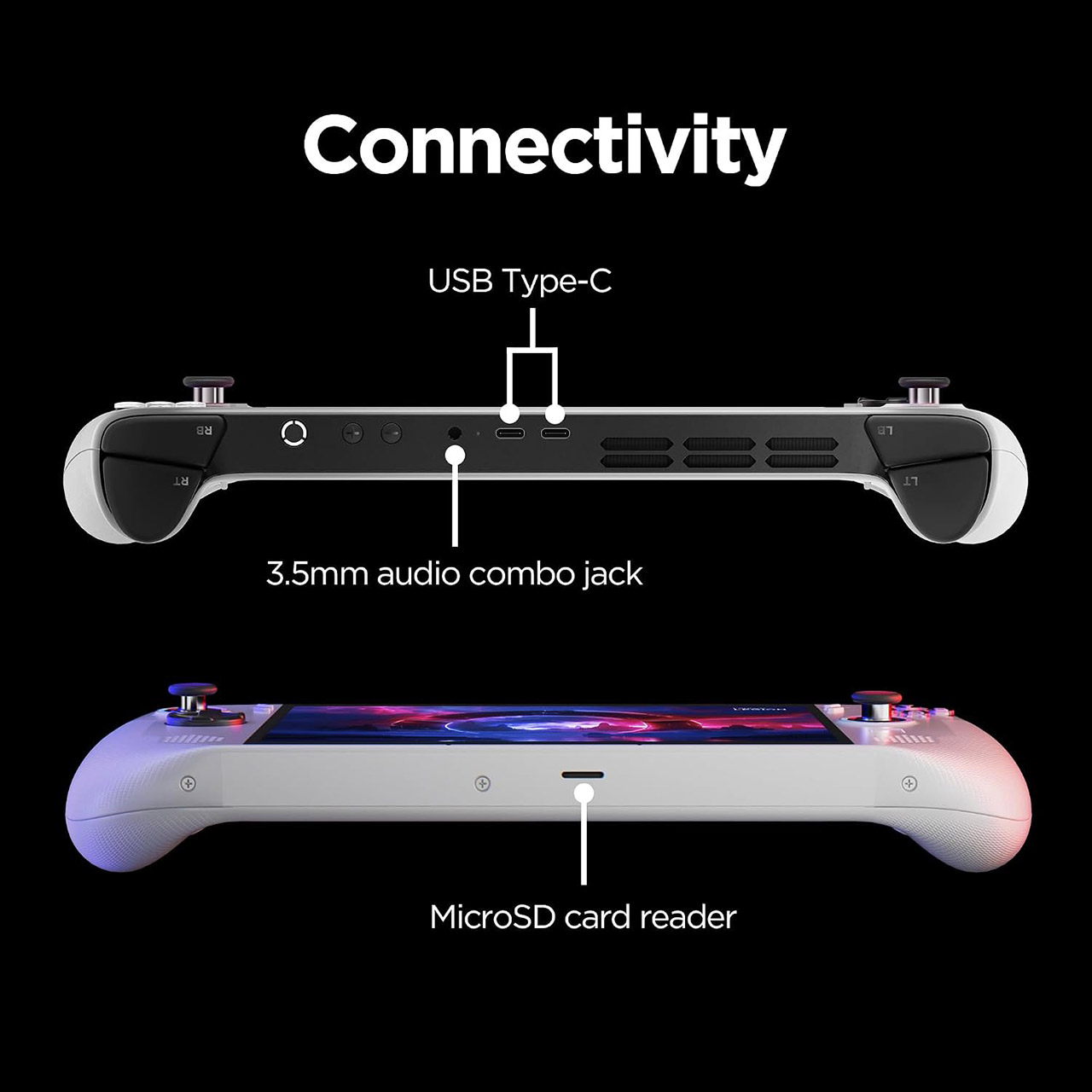
The 55.5 watt-hour battery provides a couple of hours of hard gameplay or much longer sessions with lighter or well-optimized titles. Lower brightness and power limitations can help you squeeze out every last bit of power. Then there’s rapid charging; after half an hour hooked into the supplied 65-watt USB-C adaptor, your battery is as good as new. That’s useful on a brief layover or at the gate when you need a fast refill before flight. Dual USB4 connections are located along the top edge, allowing you to charge and play while also connecting a portable display if you ever want to blow things up on a larger screen at a hotel desk.

Lenovo Legion Go S Handheld Gaming PC Z2
The cooling system works well, keeping the device cool against your palms even during extended gaming sessions, and if you ever need more storage, the microSD expansion slot allows you to load up with a selection of games tailored to a specific trip, eliminating the need to cram the internal drive to the gills. Wi-Fi 6E and Bluetooth are also available to keep downloads and controllers operational when airport networks cooperate.

Source link

Continue Reading

Tech

Sony Inzone M10S 2 review: takes the best esports monitor and makes it even better

Published

on

Why you can trust TechRadar


We spend hours testing every product or service we review, so you can be sure you’re buying the best. Find out more about how we test.

Sony Inzone M10S 2: Two-minute review

The Sony Inzone M10S was one of the best gaming monitors of 2024, offering uncompromising performance and a suite of practical tournament-ready features that made it the perfect choice for both professional and aspiring esports players.

Now Sony is back with the Inzone M10S 2, a successor that delivers a number of small but nevertheless impactful upgrades while maintaining everything that made the original so good. It’s the same 2560 x 1440 resolution, but feels even snappier thanks to an increased 540Hz refresh rate and a lower 0.02ms response time. There’s even a dual mode, letting you bump the resolution down to 720p for a staggering 720Hz picture — invaluable for Counter-Strike 2 or Rocket League.

Advertisement

Source link

Continue Reading

Tech

5 Of The Best Undercounter Beverage Refrigerators You Can Buy In 2026

Published

on


We may receive a commission on purchases made from links.

It might seem excessive to have an extra refrigerator just for your beverages. For wine lovers, though, investing in beverage refrigerators is important because it can help keep their vintages at the optimal storage temperatures. And while there are luxury refrigerators made just for wine that cost thousands of dollars, a regular beverage refrigerator can be good enough for a casual collector.

Advertisement

These days, there are also reasonably-priced beverage refrigerators that can serve meaningful purposes even in any home. Whether it’s your office, game room, garage, or bedroom, a beverage refrigerator is a great way to have another spot in your home for drinks. It’s also a good way to keep the temperature in your main fridge constant, since you won’t be opening the door as much. It even lets you take back some fridge real estate for meal prep or leftovers.

They don’t even need to be used on beverages at all. You can use them for medication, extending the shelf life of cosmetics, or even storing breastmilk. So, if you’re looking for a beverage refrigerator that you can easily tuck under a cabinet, table, or spare corner, here are some of the best ones you can buy today.

Advertisement

EUHOMY Mini Fridge

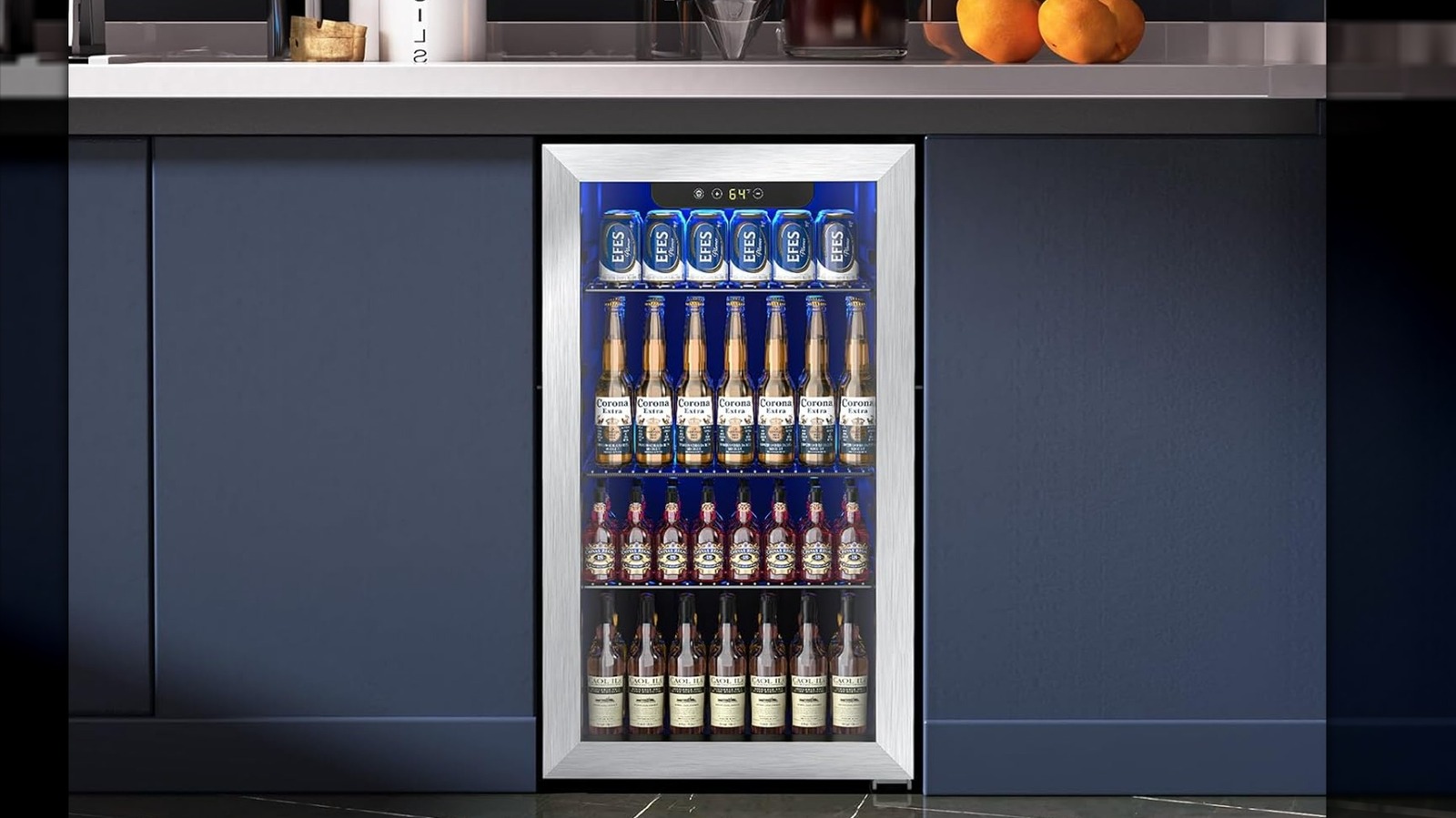
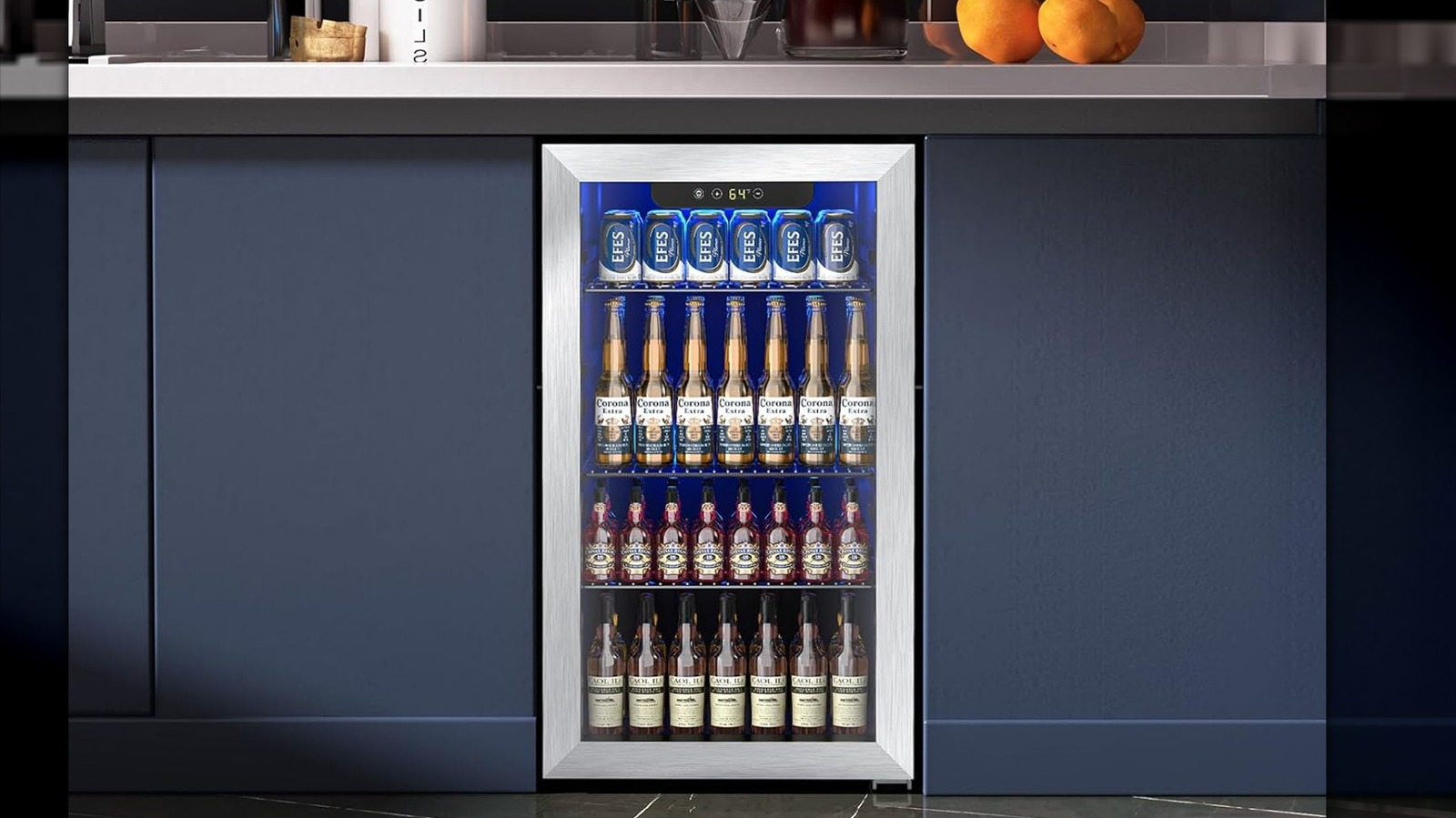
EUHOMY has produced several highly-rated cooling appliances, such as ice nugget makers and electric coolers. It makes some of the best under-counter beverage refrigerators too. The EUHOMY Mini Fridge is available in eight different sizes that range from 18L to 4.5 cu-ft. Sold in two colors (black and silver), the prices range from $99.99 to $299.99. For its largest size option, 4.5 cu-ft, it has seven slots you can use to adjust one of the four shelves. Measuring 20.3 inches by 31.5 inches by 21.7 inches, it can fit up to 145 cans. Whether you want to cool beer, fruit juice, soda, or wine, you can set the temperature between 32 and 61 degrees Fahrenheit. It has a double-panel door with UV protection, which can be set to open towards the left or right. Not to mention, it claims to generate less than 40 dB of noise, which is as quiet as a library. This makes it ideal for places like nurseries or bedrooms.

Collectively, they have been rated 4.3 stars by over 4,400 users on Amazon with some sizes, such as the 1.7 cu-ft, 3.0 cu-ft, 3.1 cu-ft, and 4.5 cu-ft, being listed as Amazon’s Choice products. Previously, we’ve mentioned how its $100 18L model can be a useful appliance for your garage.

Advertisement

Electactic Mini Fridge

All together, Electactic Mini Fridge‘s seven sizes have been rated a 4.3-star average rating from 1,500 Amazon users. Apart from the 2.6 cu-ft model, all options are listed as Amazon’s Choice products. They’re priced between $125.98 to $329.69. Its largest option, 4.5 cu-ft, comes in two colors: black ($299.98) or silver ($329.69).

The 4.5 cu-ft model measures 20.28 inches by 21.85 inches by 31.5 inches, plus leveling feet that can come in handy when put in uneven locations. In more practical terms, it can fit either 37 standard wine bottles or 145 cans that are a little under 5 inches in height. You can adjust it to your preferred layout with four shelves and a reversible door. It comes with an interior LED light that you can switch on and off, a temperature display, and a button that lets you set it between 32 and 61 degrees Fahrenheit. With a special compressor, it’s one of the quietest options on this list with a less than 36 dB noise rating.

Advertisement

That said, the ideal temperature between beverages and wine can be quite different. If you want to be able to enjoy both without ruining your bottles, Electactic also offers the 4.4 cu-ft Dual Zone Wine Cooler, where you can store 21 wine bottles and 88 cans separately. Despite being double the price at $679.50, more than 140 people have given it a positive 4.3-star average rating. It’s also listed as an Amazon’s Choice product.

Advertisement

hOmeLabs Beverage Refrigerator and Cooler

When it comes to household gadgets, hOmeLabs has been known to roll out highly-rated options across different categories. In the past, we’ve highlighted how its 2.4 Gallon SwiftLid Trash Can makes for a great under $100 bathroom upgrade. They make highly-rated beverage refrigerators as well.

Similar to other brands, the hOmeLabs Beverage Refrigerator and Cooler has reversible doors and three adjustable shelves that you can use to optimize the layout. It measures 33.3 inches by 17.3 inches by 18.9 inches, plus adjustable feet. With a 3.2 cu-ft capacity, it’s the smallest option in this list, but it can still hold up to 120 slim cans. There’s a temperature display, LED light, and buttons to both increase and reduce temperature. It does have a smaller temperature range of 34 to 50 degrees Fahrenheit compared to the other options on this list. However, it’s more than enough for people who want to avoid accidentally freezing their drinks. For example, Soda Sense mentions that the ideal temperature for carbonated water shouldn’t go below 34 degrees Fahrenheit.

The hOmeLabs Beverage Refrigerator and Cooler is only available in one size and sells for $309.99 on Amazon. An Amazon’s Choice product, more than 6,800 people have rated it around 4.5 stars. Due to its small footprint and user-friendly design, it also joins our list of essential man cave tech.

Advertisement

Antarctic Star Beverage Refrigerator Cooler

The different Antarctic Star Beverage Refrigerator Cooler models have an average rating of 4.3 stars from more than 4,700 Amazon customers. With 10 sizes available, you have a wide array of options. For the largest size, which measures 20.28 inches by 21.26 inches by 31.5 inches, the prices range between $299.99 to $309.99. It has room for up to 145 cans but can hold up to 36 standard-sized wine bottles with its five movable shelves instead. Although it has the most limited temperature range capacity on this list at 40 to 61 degrees Fahrenheit, it’s also still within the ideal wine storage temperature, which Wine Folly notes is 55 to 59 degrees Fahrenheit. While it has all the expected features, like a soft LED light, temperature display and control, and adjustable feet, it does have an added security lock control.

If you plan to dedicate just a small space to your drinks, Antarctic also sells a 10L model for $104.99. Since it operates as quietly as a whisper at 38 dB, it won’t be disruptive if you have to be around microphones in your gaming room or when you’re reading in your library. Measuring 16.14 inches by 12.6 inches by 9.25 inches, it can hold either six wine bottles plus two cans or 12 cans alone.

Advertisement

Icyglee 4.5 Cu.ft Beverage Refrigerator Cooler

On Amazon, Icyglee lists six beverage refrigerator models with capacities that range between 1.7 cu-ft or 4.5 cu-ft. Depending on their color, the prices range between $149.99 to $289.99. All together, they share the same 4.5-star average rating from 1,100 customers. Apart from the 3.2 cu-ft models, the other four designs are also listed as Amazon’s Choice products.

Advertisement

For its 4.5 cu-ft model, it measures 21.7 inches by 20.3 inches by 31.5 inches. One important note is that while it shares the same 145 can capacity as many other under-counter beverage refrigerators, its dimensions are unique in that it can fit up to 37 standard wine bottles (the most out of this list). With a 3 sq. ft. footprint, the four shelves can be moved across six slots. It has one of the widest temperature ranges at 32 to 61 degrees Fahrenheit, so it can handle everything from breast milk to champagne. Although it’s not the quietest with a 40 dB operation, it’s still within the same range of sounding like a whisper.

If you’re okay with a smaller capacity, the 1.7 cu-ft model with its two shelves and 1.9 sq. ft. footprint can hold up to 68 12 oz. cans or 16 wine bottles. It shares the same temperature range, UV-blocking glass, reversible hinges, adjustable feet, and LED light.

Advertisement

Methodology

Since under the counter beverage refrigerators tend to come in multiple sizes, we compared the largest models in their line-up, as well as their smallest ones. We also note the size of the unit, so you can better estimate whether it will fit into your space. We included price ranges, so you can better estimate what to expect to spend at different dimensions, and we made sure to only include beverage refrigerators that have been rated at least 4 stars by over a thousand reviewers. Although it didn’t affect their placement on the list, we took note of which models have been highlighted as Amazon’s Choice products or top-selling items under their category.

Since people use their beverage refrigerators in various ways, we mention three key features: temperature range, storage capacity for both cans and standard bottles, and noise ratings. When possible, we also mentioned unique features that set them apart from similar models, such as locking mechanisms. Although it didn’t affect their placement, we also took note of shelving flexibility and if their doors are reversible. To give you a more holistic view of the brands, we’ve also highlighted other categories where their products have also received praise.

Advertisement


Source link

Advertisement
Continue Reading

Tech

The billion-dollar religious economy of Singapore

Published

on

Singapore’s religious organisations brought in over S$1 billion in donations in 2024

There are few sectors in Singapore that receive more than S$1 billion a year without selling a single product.

Religion is one of them.

On any given weekend, tens of thousands of Singaporeans walk into churches, temples, mosques and gurdwaras carrying cash, making PayNow transfers or setting up recurring GIRO donations.

Those individual acts of giving add up quickly, but that money doesn’t simply keep the lights on or fund weekly services. It powers a vast ecosystem spanning schools, childcare centres, nursing homes, healthcare providers, social service agencies, overseas missions and some of Singapore’s most valuable religious properties.

Advertisement

So just how much money flows through Singapore’s religious organisations—and where does it all go?

Taking the largest slice

Leong San See Temple (left) and St Andrew’s Cathedral./ Image Credit: St Andrew’s Cathedral/ Adobe Stock

It’s not really a secret, so much as a scattered one.

Registered charities and Institutions of a Public Character (IPCs), including religious institutions, are required to file annual returns with the Commissioner of Charities, and that data sits in plain view on the Charity Portal (charities.gov.sg) and in the Commissioner’s own annual report.

In FY2024, Singapore’s roughly 2,400 registered charities collected a combined S$29.18 billion in total receipts (donations, government grants and other income), of which S$3.68 billion came from donations alone—up 3.7% on the year before.

Of that S$3.68 billion, religious charities took the single largest slice at S$1.4 billion, accounting for nearly 40% of all charitable donations received that year.

Advertisement
Image Credit: Commissioner of Charities

Donations are only part of the picture.

In FY2024, religious charities also reported S$597.5 million in “other income”—a category that includes programme fees and services rendered, investment income, membership fees and merchandise sales, among other sources—as well as S$17.4 million in government grants. Altogether, the sector recorded S$2.02 billion in total receipts for the year.

For some of the larger religious organisations, these additional income streams sit alongside extensive property holdings and affiliated entities, meaning their financial footprint extends well beyond the donations they receive.

Singapore’s biggest religious fundraisers

Christian megachurches are disproportionately visible in these figures, particularly because they are large, urban, well-organised, and required to disclose more than smaller neighbourhood temples or mosque committees.

Image Credit: New Creation Church

New Creation Church is the clearest example of scale.

According to its FY2025 filing on the Charity Portal, the church recorded total receipts of S$205,387,076, of which S$154,745,232—about 75%—came directly from tithes and offerings. That puts New Creation’s annual donation income roughly in line with, or ahead of, the totals reported by many local universities and hospitals.

Advertisement

Total expenditure for the year came to S$149,769,323, leaving a surplus on top of already substantial reserves. In its financial reports (income statement and balance sheet), the church has disclosed accumulated funds and reserves of over S$1 billion, held under a stated reserve policy of maintaining at least three months of operating expenses.

The Star development, home to The Star Vista and The Star Performing Arts Centre./ Image Credit: The Star

Much of the group’s commercial activity is conducted through its wholly owned subsidiary, Rock Productions, which owns and operates The Star Performing Arts Centre and The Star Vista Mall, along with a bookshop and gifts arm, and a travel agency running tour packages, most notably to Israel.

New Creation Church isn’t an outlier within its own tier. Other large congregations—City Harvest Church, Cornerstone Community Church, and Faith Community Baptist Church among them—file similarly substantial numbers.

It isn’t only the churches

The scale isn’t unique to Christianity. It’s simply best documented there, because large independent churches tend to be structured as single, centralised charities with straightforward annual filings.

Singapore’s Buddhist, Hindu and Muslim institutions move comparably large sums.

Advertisement

Major Buddhist institutions such as the Buddha Tooth Relic Temple and Museum and large charitable temples like Kwan Im Thong Hood Cho Temple are among the country’s most prolific individual fundraisers, running annual charity drives that rival megachurch tithing totals.

The Buddha Tooth Relic Temple and Museum (left) and the Kwan Im Thong Hood Cho Temple./ Image Credit: Chinatown Singapore/ SilverKris

The Buddha Tooth Relic Temple and Museum recorded S$24,853,980 in total receipts for FY2025, with an estimated half derived from donations and ceremony-related income. It spent S$18,791,738 during the year and ended the financial period with S$74,533,049 in total funds and reserves.

Meanwhile, Kwan Im Thong Hood Cho Temple reported S$35,955,465 in total receipts, of which S$28,787,487 (around 80%) came directly from donations. The temple recorded expenditure of S$19,706,028 and held S$238,290,111 in total funds and reserves.

The Sultan Mosque (left) and the Abdul Gafoor Mosque (right)./ Image Credit: Visit Singapore/ Tripadvisor

On the Muslim side, key forms of religious giving are more centralised than in most other faith communities.

Under the Administration of Muslim Law Act (AMLA), all mosques in Singapore are vested in MUIS (the Islamic Religious Council of Singapore), which oversees their governance, requires them to use a common financial accounting system, and subjects them to annual external audits. As a result, financial information about individual mosques is generally disseminated through MUIS’ governance framework rather than through standalone charity filings, making mosque-level donation data less readily available on the Charity Portal.

MUIS administers zakat (compulsory wealth tax) collections and other Islamic religious funds. It also oversees the Mosque Building and Mendaki Fund (MBMF), which is collected through employers using the CPF Board’s contribution system.

Advertisement

MBMF contributions are mandatory for working Muslims by default, although contributors can opt out or vary their contribution levels by applying to MUIS. The fund supports mosque construction and upgrading, religious education, and Yayasan Mendaki’s educational and social programmes.

Every working Muslim in Singapore (including PRs and foreign workers) contributes S$3 to S$26 per month—and the scale of these contributions has grown significantly over the decades. According to MUIS, annual gross MBMF contributions collected through the CPF system increased from S$421,203 in 1975 to S$48.9 million in 2024, while the fund’s accumulated reserves reached S$230.6 million as at end-2024.

Separately, MUIS collected S$73 million in zakat in 2024, highlighting the substantial scale of centrally administered Islamic giving in Singapore.

Not all Muslim charitable giving, however, is channelled through MUIS. Voluntary sadaqah (charitable donations) may be given directly to mosques, charities, individuals or through MUIS, and is not centrally administered.

Advertisement

While there is no official nationwide figure for such donations, Islamic Finance Singapore estimates—based on a sample of audited mosque financial statements—that Singapore’s roughly 70 mosques receive around S$105 million in sadaqah annually.

The Sri Mariamman Temple./ Image Credit: ICCS

Hindu institutions have a partially centralised governance structure through the Hindu Endowments Board (HEB), a statutory body that administers the endowments of Sri Mariamman Temple, Sri Srinivasa Perumal Temple, Sri Sivan Temple and Sri Vairavimada Kaliamman Temple.

It also has supervisory powers over the accounts of all Hindu endowments in Singapore, including those it does not directly administer.

HEB reported S$19.6 million in total income for FY2025, including S$4.6 million in donations and contributions as well as S$5.5 million in temple service income. It also managed S$92.2 million in total funds, reflecting the accumulated endowments and trust funds. (Do note that these figures represent only the temples under HEB’s administration rather than the Hindu community as a whole.)

Many independent Hindu temples also receive substantial donations and other income. For example, Arulmigu Velmurugan Gnana Muneeswarar Temple reported S$4.16 million in total income for FY2023, while total expenditure amounted to S$1.18 million. Meanwhile, Murugan Hill Temple recorded S$1.73 million in total receipts for FY2025, with S$954,259 in total expenditure.

Advertisement

The other source of wealth

Beyond cash donations and investment portfolios, many religious institutions have accumulated substantial property holdings over decades.

The Lian Shan Shuang Lin Monastery./ Image Credit: Bodhi Travel

Many historic religious sites established in the 19th and early 20th centuries, such as the Lian Shan Shuang Lin Monastery, Sri Mariamman Temple and Church of St. Joseph, sit on freehold or very long-tenure land. By contrast, new Government Land Sales sites released for Places of Worship in newer housing estates are generally offered on 30-year leasehold terms.

Some newer religious organisations have also acquired substantial commercial property assets directly. Rock Productions, the wholly owned subsidiary of New Creation Church, invested close to S$500 million to acquire The Star Performing Arts Centre and The Star Vista Mall.

The property is not merely a venue but also a revenue-generating asset. Rental income made up 17.2% of New Creation Church’s FY2025 total income (amounting to about S$35 million), second only to its largest income stream, which is its tithes and offerings.

Large property portfolios and sizeable donation income naturally raise another question:

Advertisement

How are religious institutions taxed?

Religious organisations in Singapore benefit from two distinct layers of tax relief.

  1. Income tax exemption
    Registered charities, including most established religious organisations, are generally exempt from income tax on income applied towards their charitable purposes, including the advancement of religion. But if a charity operates a commercial business through a separate legal entity—as New Creation Church does through Rock Productions—that subsidiary is generally subject to corporate income tax like any other company.
  2. Property tax exemption
    Under Section 6(6) of the Property Tax Act, the Comptroller may exempt a building, or part of one, that is used exclusively as a place of public religious worship, for charitable purposes, or for purposes conducive to social development. Buildings used only partly for such purposes may instead receive a partial exemption.

On top of this, charities with Institution of a Public Character (IPC) status (many church, temple and mosque-linked charities qualify) can issue tax-deductible receipts, meaning individual and corporate donors get a tax deduction for what they give, encouraging philanthropic giving.

None of this is automatic or permanent. IPC status, tax exemption and charity registration all come with ongoing compliance obligations and can be revoked.

The safeguards

Singapore’s regulatory scrutiny of religious finances tightened after the City Harvest Church scandal—still the country’s most consequential case of religious-charity misconduct.

City Harvest Church founder Kong Hee (right) with his pop-singer wife Ho Yeow Sun in 2013./ Image Credit: Getty Images

The Commissioner of Charities opened a statutory inquiry into City Harvest Church in 2010 following complaints about the management of its Building Fund. The inquiry ultimately uncovered a scheme involving about S$50 million, including S$23 million channelled into sham bond investments used to finance the music career of Sun Ho—wife of founder Kong Hee—as part of the church’s “Crossover Project,” and a further S$26.6 million in transactions intended to conceal the earlier misuse.

The criminal proceedings that followed became one of Singapore’s longest-running trials, running well over a hundred trial days. Kong Hee and five other church leaders were convicted of criminal breach of trust and/or falsifying accounts in 2017. Separately, exercising its powers under the Charities Act, the Commissioner of Charities permanently disqualified the six individuals from holding governance or management positions in charities.

Advertisement

While Singapore’s core charity laws were already in place before the City Harvest scandal, the case reinforced the importance of strong governance and more active regulatory oversight.

Annual financial disclosures and statutory enforcement powers under the Charities Act had long existed, but the years that followed saw governance expectations progressively strengthened through successive revisions to the Code of Governance for Charities and IPCs in 2011, 2017 and 2023. These updates placed greater emphasis on board independence, conflict-of-interest management, internal controls, risk management and financial accountability.

A billion-dollar ecosystem

Singapore’s religious sector moves hundreds of millions of dollars each year, supported by sizeable donation streams, investment portfolios, valuable property holdings and, in many cases, favourable tax treatment. Yet, reducing these organisations to their balance sheets would miss the broader picture.

While worship remains their core mission, a significant share of these resources is channelled into wider public and community purposes.

Advertisement
New Creation Church hosted over 300 migrant workers at a special appreciation banquet held at The Star earlier in May./ Image Credit: New Creation Church

New Creation Church, for example, reported providing S$265,600 in financial assistance to members in financial distress in FY2025, alongside education bursaries for students from lower-income families, appreciation events for migrant workers, and outings and activities for senior citizens.

Similarly, Kwan Im Thong Hood Cho Temple has channelled part of its donations towards broader social causes. According to its FY2025 annual report, the temple pledged S$1 million each to Nanyang Technological University and Singapore Management University towards bursaries for financially disadvantaged students, and contributed S$50,000 to support caregivers of needy beneficiaries through a local charity.

These examples are far from exhaustive. Across Singapore, religious organisations collectively support a wide range of initiatives.

In the end, the question is not whether religious organisations are wealthy—they often are. The more meaningful question is how that wealth is governed, where it comes from, and how it is used.

  • Read other articles we’ve written on Singaporean businesses here.

Featured Image Credit: Chinatown Singapore/ Visit Singapore/ St Andrews Cathedral/ ICCS

Advertisement

Source link

Continue Reading

Tech

Fare Is Fair: Zoox Launching Robotaxi Service in Las Vegas

Published

on

Autonomous ride-hailing company Zoox will start charging for rides in Las Vegas next week, ending its free pilot program. Starting Aug. 10, the Amazon-owned startup will begin offering a paid service for its pod-shaped, purpose-built robotaxis — a bummer for free riders, but the next logical step for the company in its growth from a flashy startup to a viable business model.

Zoox’s road from pilot program to paid rides has been more of an expressway. CNET Senior Writer Abrar Al-Heeti was one of the first to test ride Zoox’s purpose-built robotaxi in 2024. The pilot program opened to the public in 2025 with free rides in Las Vegas and San Francisco, later expanding to Austin and Miami. The pod-shaped autonomous vehicles were among the highlights of CES 2026, roaming the Vegas strip. Since launch, Zoox claims it has carried nearly 1 million riders across its pilot cities, covering over 3 million miles on public roads.

Last week, Zoox announced that it had received the Part 555 commercial exemption from the National Highway Traffic Safety Administration, giving the company federal regulatory approval to charge for rides in its purpose-built robotaxi. According to a Zoox representative, the next step was completing “the necessary notifications in Nevada to begin charging for rides.”

Starting Aug. 10, Zoox will flip the switch and start charging for rides in Las Vegas.

Advertisement
Three Zoox robotaxis wait in traffic among other cabs and private vehicles.

Optimized pricing

According to Zoox, fares will initially be calculated based on a base fare, distance traveled, time traveled from pickup to drop-off and applicable taxes. Destination fees — for trips to or from the airport or to high-traffic events at the Sphere or T-Mobile Arena, for example — may also apply, following a structure similar to that of other ride-hailing and traditional taxi services. To start, Zoox says it’s aiming to be competitive with ride-hail “comfort” tier pricing (think Uber Comfort or Lyft Extra Comfort), which averages around 20% to 30% more expensive than standard UberX or Lyft Standard.

This initial fare calculation, visible at the time of booking, is the price, not an estimate. Unlike other services that may update the final price based on actual distance and time traveled, Zoox says its optimal-route price is fixed and will not change, even if the robotaxi takes a longer route (for example, to avoid traffic or accidents) or the trip takes longer than expected.

CNET reached out to Zoox regarding the specifics of next week’s transition from free to paid service, changes to the Zoox app and what customers should expect. We will update this space when we hear back.

A Zoox robotaxi on the road in Las Vegas, with palm trees and an American flag in the background
Zoox’s robotaxi is purpose-built for passengers — no pedals and no steering wheel required.Zoox

No more free rides

Las Vegas is the first stop for paid Zoox rides, but it won’t be the last. Eventually, payments will launch in other cities, such as San Francisco, but Zoox says it doesn’t have any additional details to share yet. For now, service for riders in the San Francisco Zoox Explorers program remains free.

Earlier this year, Zoox and Uber announced a multiyear strategic partnership to feature Zoox robotaxis on the Uber app, marking Zoox’s first third-party platform integration. Zoox will continue operating its own separate app in these launch markets alongside the Uber integration.

For tourists and Vegas locals, the end of free rides in Sin City is sure to be a disappointment (who doesn’t love free stuff?), but Zoox frames this as an important step toward becoming a self-sustaining business, rather than just another startup running on venture capital. That positive cash flow will help fuel the company’s continued testing, mapping and research and development work that extends well beyond the pilot cities.

Advertisement

Zoox is also conducting manual mapping and autonomous testing with safety drivers in Seattle, Los Angeles, Atlanta, Washington, DC, Dallas and Phoenix using a fleet of retrofitted Toyota Highlanders.

Source link

Continue Reading

Tech

Garmin Cirqa Review – Trusted Reviews

Published

on

Verdict

With generally accurate auto-activity tracking, long battery life and a screenless design that keeps notifications and mid-workout stat-checking at bay, the Garmin Cirqa is a brilliant wearable for discreet monitoring. However, its somewhat bulky sensor and limited strap options mean it can’t help but stand out on your wrist. It’s also around £100/$100 more than the Fitbit Air, which makes it a slightly harder recommendation.

  • Screenless design for discrete wear

  • Up to 10 days of battery life

  • Accurate auto-activity tracking

  • Module is large and bulky

  • Strap selection is currently small

  • No built-in GPS

SQUIRREL_PLAYLIST_10208665

Advertisement

Key Features

  • Trusted Reviews IconTrusted Reviews Icon

    Review Price:
    £179.99

  • Advertisement

    Screenless design

    The Garmin Cirqa is designed to offer discrete health monitoring and fitness tracking, without a display to disturb you

  • Advertisement

    Long-lasting battery

    Expect up to 10 days between charges

  • Advertisement

    Automatic activity tracking

    Plus a useful button for quick starting an activity

Introduction

Garmin is the latest wearable brand to introduce a screenless fitness tracker.

Advertisement

Coined Cirqa, the tracker is designed to allow you to quietly yet accurately track your key metrics and workouts without distracting you with a shiny screen. But with Whoop leading the market for so many years, and Google’s Fitbit Air receiving a glowing five-star rating from us, where exactly does the Garmin Cirqa fit? 

We’ve been reviewing the Cirqa for the past few weeks to find out whether it stands a chance at entering our best fitness trackers guide.

Advertisement

Design

  • Screenless design
  • Physical button that’s used to start tracking a workout
  • Module sticks out slightly

I’ve waxed lyrical about how screenless fitness trackers are the first to actually keep me motivated, so I was especially keen to get my hands on the Cirqa.

Much like the Whoop and Fitbit Air, the Cirqa is a screenless device designed to quietly track your health data and workouts, then sync all the info to its companion app for you to check later. The idea is that you’re not constantly distracted by notifications, or tempted to see how your metrics are looking while working out.

Advertisement

The module that houses the battery and sensor (which is a Gen 4 sensor and not the newer Gen 5, but more on that later) sits under the fabric strap, and has a physical button at its side. The button lets you quickly start tracking an activity without needing to rely on auto-tracking or dive into the app. Although you can assign only one activity to the button, it’s still very useful and comes in handy.

Side button on Garmin CirqaSide button on Garmin Cirqa
Side button on Garmin Cirqa. Image Credit (Trusted Reviews)

My biggest issue with the module isn’t that its sensor is an older generation, but that it doesn’t sit neatly under the small/medium-sized strap. Compared to the Fitbit Air and Whoop, its edges stick out slightly, yet the strap is noticeably thicker than the Fitbit Air’s at 24mm. It just doesn’t look quite as sleek or discreet as I’d like. 

Advertisement

Garmin Cirqa on wristGarmin Cirqa on wrist
Image Credit (Trusted Reviews)

Speaking of the strap, the included fabric band, which comes in a choice between four colours, is undoubtedly on the sporty side. It doesn’t look so alarming when I’m exercising, but it doesn’t quite look the part in everyday outfits.

Admittedly, this is down to personal preference, but I’d like to see Garmin offer some less sporty-focused straps. Whoop, for example, offers sleek leather bands while the Fitbit Air has silicon straps that just look nicer than the Cirqa’s. 

Brown leather Whoop strapBrown leather Whoop strap
Whoop offers sleeker bands. Image Credit (Trusted Reviews)

Features and App

  • No built-in GPS but Garmin’s Connected GPS does offer accurate tracking
  • Auto-workout detection is reliable
  • Natural Cycles integration

Unlike many of the best Garmin watches, the Cirqa isn’t equipped with built-in GPS but Connected GPS instead, which means the Cirqa uses the GPS signal from your paired phone to accurately track your pace and location. That means you will need to bring your phone with you if you want to track your running route, for example. 

Advertisement

Advertisement

I don’t see this as an issue at all, as I would always bring my phone out for a run with me for a variety of reasons (safety, listening to music and taking a photo of a sunset as an excuse to stop running, in that order). However, if you’ve grown accustomed to leaving your phone at home, then this might be a dealbreaker. 

Even so, I found the location tracking to be pretty accurate, as it clearly follows and correctly maps my routes via the Garmin Connect app. It did once suggest I had meandered into the Thames while on a lunchtime walk into Canary Wharf, rather than walking neatly on the road alongside it, but that seems like an anomaly as I’ve done the route countless times since with no issue.

Walking route on Garmin Connect appWalking route on Garmin Connect app
The Cirqa thought I went for a lunchtime dip in the Thames. Image Credit (Trusted Reviews)

Auto-workout detection is reliable overall, and the Cirqa does a good job of deciphering when I start and end both walks and runs. It did oddly detect that I was walking when I was sitting on a train into London, which was weird, but again that seems like a strange outlier rather than an ongoing issue.  

One of the newer additions to Garmin is its Natural Cycles integration, an MHRA-registered fertility-tracking app. While this requires a separate subscription, Natural Cycles monitors your skin temperature overnight to determine your fertile and non-fertile days, so you can plan or prevent pregnancy.

I’ve previously used the Natural Cycles band to track my temperature overnight and, although I receive notifications to remind me to pop it on before bedtime, it can be easy to forget – especially when going to bed at different times. That’s where the Cirqa (and other compatible Garmin watches) comes in so handy, as I wear it 24/7, so I don’t need to worry about putting it on overnight. 

Advertisement

Advertisement

At A Glance on Garmin Connect appAt A Glance on Garmin Connect app

Otherwise, as a screenless tracker, its companion app is naturally crucial. Enter Garmin Connect. The app, which is available on both iOS and Android, is easy to use with all your health and fitness metrics clearly labelled and listed. The At a Glance section is customisable, so you can pick and choose which metrics you can see instantly. 

Unlike Whoop, a subscription isn’t required to make the most of the Cirqa, but you can choose to sign up to its Garmin Connect Plus plan. This unlocks Active Intelligence, Garmin’s AI-powered feature that provides personalised insights, nutrition tracking and Garmin Coach. It’ll set you back either £69.99 a year or £6.99 a month, and could come in handy for those who want access to Coach and AI. 

Health and Fitness Tracking

  • Tracking for over 80 workouts
  • Body Battery monitoring
  • Excellent sleep tracking

Aside from its design, arguably the reason to opt for the Garmin Cirqa is its excellent health and fitness tracking features. Thanks to its Gen 4 sensor, the Cirqa can track metrics such as heart rate, blood oxygen saturation, stress levels, HRV, VO2 Max, and more. 

However, it’s worth noting that Garmin has since introduced the Gen 5 sensor, which promises overall better responsiveness, the ability to take an ECG, and skin temperature sensing. Garmin explained its decision to use Gen 4 over the newer Gen 5 was because it’s smaller and would sit more discretely than the latter.

Advertisement

Advertisement

In fairness, I do understand the reasoning, and definitely wouldn’t want a larger sensor than this one, but it’s a shame nonetheless.

Even so, the Cirqa still offers accurate monitoring that aligns with my Whoop MG (a device that can take an ECG). For example, both devices give me an average HRV reading of between 74 and 75. 

What’s especially interesting is its sleep tracking. Each morning you’re given a score out of 100 to reflect how well you slept, alongside a breakdown of your sleep cycle, restless moments and how sleep improved your Body Battery score over the night.

You can then visit the Sleep Coach tab, which advises you on how long you should sleep. Its data generally lines up with Whoop, though there are a few inconsistencies I’ve noticed, such as wake-up times and the exact sleep stages. 

Advertisement
Sleep stages on Garmin Connect appSleep stages on Garmin Connect app
Image Credit (Trusted Reviews)

The Cirqa also shines with its activity tracking. Its auto-detection is incredibly accurate, which means I haven’t had to worry about reaching for my phone. Although the Cirqa isn’t fitted with built-in GPS, auto-workout detection still uses your smartphone’s GPS to provide accurate distance and location data.

Advertisement

Regardless of whether you’ve manually tracked a workout or let the Garmin auto-detect it, the Cirqa will provide you with a GPS map overlay so you can see how your pace, heart rate and elevation changes while out on your run or walk.

Walking route on Garmin Connect appWalking route on Garmin Connect app
Image Credit (Trusted Reviews)

I also used the Cirqa to track a couple of light Yoga sessions, which provided an accurate overview of my heart and respiratory rates. However, I was surprised to see just one pose logged. After doing some digging, you’re actually meant to manually add in each pose that you do after the workout, which feels pretty laborious. 

Training Readiness on Garmin Connect appTraining Readiness on Garmin Connect app
Image Credit (Trusted Reviews)

Otherwise, Training Readiness is available on the Cirqa, which helps advise you on what level of workout intensity you should do. Your score, out of 100, takes into account last night’s Sleep Score, your Acute Load, HRV status, and recent stress and sleep levels.

Generally, I had no disputes with my Training Readiness score during my review period, as it aligned with how I felt. Now, whether I took heed of its advice and ran a 10K is a different story. 

Advertisement

Advertisement

Battery Life

  • Garmin’s claims of up to 10 days are accurate
  • Charging takes under two hours

Garmin claims that the Cirqa should see around 10 days of battery life, which puts it right between the Fitbit Air and Whoop, with the former promising up to seven days while the latter offers up to 14.

In my experience, I’ve found the Cirqa lives up to Garmin’s claim, as I last charged it six days ago and am currently sitting at 52%. That suggests it could surpass its 10-day promise and maybe edge towards the two-week mark.

You could probably eke out a bit more juice by switching on the Battery Saver option, which disables heart rate monitoring, auto-activity detection, the start activity function, and pulse oxygen monitoring. However, I doubt anyone would really need to, as even with the option turned off and all tracking settings enabled, I’ve still found that the Cirqa has a solid battery life.

I do wish there were on-wrist charging, like the Whoop, as it’s just so convenient. Instead, it uses Garmin’s usual proprietary cable, which I found took just over an hour to recharge the Cirqa.

SQUIRREL_PLAYLIST_10208665

Advertisement

Advertisement

Should you buy it?

You want a discrete, screenless Garmin that offers excellent tracking and doesn’t need a subscription

For accurate health and exercise tracking, an intuitive companion app and an interruption-free, screenless design, the Garmin Cirqa is one of the best options out there. And, unlike Whoop, it doesn’t need a subscription either.

Advertisement

The screenless nature of the Garmin Cirqa means it doesn’t support the expected smartwatch tools such as Google or Apple Pay, or the ability to receive notifications. If you want an extension of your phone, then a smartwatch is a better option.

Advertisement

Final Thoughts

Overall, I’m impressed with the Garmin Cirqa. Its screenless design makes a lot of sense for anyone who wants detailed health and fitness tracking without the constant temptation to check a display mid-workout, while Garmin Connect remains one of the easiest and most comprehensive companion apps around.

Its tracking is generally accurate, battery life is strong, and the lack of a mandatory subscription immediately makes it more appealing than a Whoop band for many people. You still get a broad range of health, sleep and activity insights without committing to another monthly cost, which is a huge advantage.

That said, the Cirqa isn’t perfect. Its sensor module is bulkier than I’d like, the strap options feel too sporty for everyday wear, and the lack of built-in GPS may be frustrating if you prefer to leave your phone behind. It’s also not as affordable or discreet as the Fitbit Air, which remains a strong alternative for anyone who wants a cheaper screenless tracker.

Advertisement

Even so, if you’re already invested in Garmin’s ecosystem, or you want a capable screenless wearable with excellent battery life and no required subscription, the Garmin Cirqa is an easy recommendation.

How We Test

We thoroughly test every smartwatch we review. We use industry-standard testing to compare features properly, and we use the watch as our main device over the review period. We’ll always tell you what we find, and we never, ever accept money to review a product.

  • Tested for over two weeks
  • Worn as our main tracker during the testing period
  • Heart rate data compared against other wearable devices

FAQs

Does the Garmin Cirqa have GPS?

No, the Garmin Cirqa doesn’t have GPS built-in. Instead, it uses Garmin’s Connected GPS, which uses your phone’s GPS signal to track your location.

Advertisement
Can you use the Garmin Cirqa without a subscription?

Yes, unlike Whoop and the Oura Ring 5, you do not need a subscription to use a Garmin Cirqa. While there is an optional subscription that unlocks additional features like Garmin Coach, Active Intelligence (Garmin’s AI tool) and more, it isn’t necessary for the wearable, and you can still track metrics like heart rate, temperature and activities without it.

Advertisement

Full Specs

  Garmin Cirqa Review
Manufacturer Garmin
IP rating IP68
Waterproof 5ATM
Size (Dimensions) 27 x 47 x 9 MM
Weight 20.7 G
Release Date 2026
First Reviewed Date 05/08/2026
Colours Black, Captain Blue, French Grey, Mauve
UK RRP £179.99
USA RRP $199.99

Source link

Continue Reading

Tech

You Can Now Link More Devices to a Signal Messaging Account

Published

on

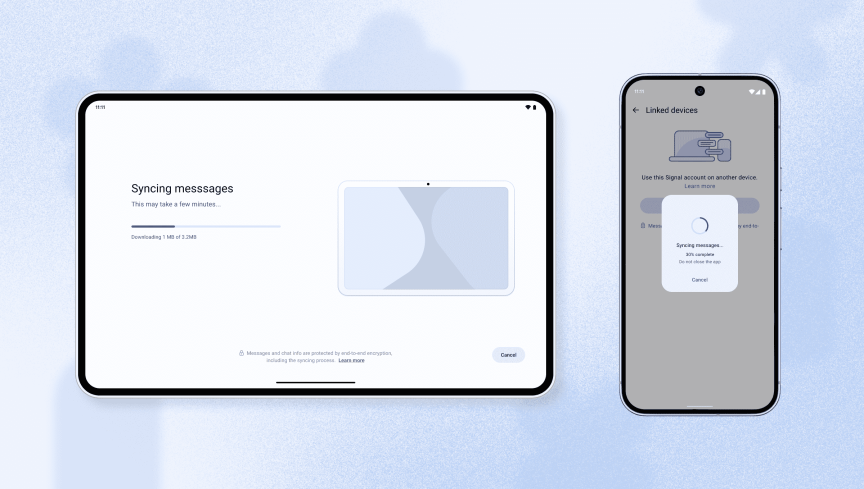
For customers juggling multiple devices, Signal has some welcome news. The messaging app announced this week that Android customers can now link another Android phone or tablet to their account. The company also said that iOS customers can link an iPhone to their accounts. Customers can update their existing accounts with Signal iOS v8.22 in the Apple App Store and Signal Android v8.20 in the Google Play Store.

To link, download the Signal app onto the new device, then open the app to view a QR code. On the primary account phone, open Signal and go to Signal Settings > Linked devices > Link a new device. Scan the QR code to link the new device. Customers can link more than one device.

From CNET: I Tried Signal, Telegram and WhatsApp, and This Is the One I’d Recommend

If desired, customers can transfer their message history and 45 previous days of saved media to the new device. The company said the transfers process is fully end-to-end encrypted, which means the data is scrambled and unreadable to others.

Advertisement
Transferring messages with Signal
Customers can transfer their Signal message history to a new linked device.

Improved interface

Signal also says the app will now adapt its layout to different screen sizes so it looks more natural on linked devices, like tablets. When you look at the app on a tablet, it will adjust its appearance to match the tablet’s aspect ratio. The same will hold true for foldable phones, which can have wider screens when folded out, and for iPads and iPhones, the company said.

Signal said customers can also link Chromebooks but that the interface is not completely updated yet.

According to Signal, the rising popularity of foldable phones and devices with unconventional aspect ratios has forced the company to upgrade the app’s appearance across various devices.

Signal linked devices image
Signal updated its app so that it fills the screen on whatever device the customer uses.

What is Signal?

Signal is a free-to-use messaging app launched in 2014 by American cryptographer Moxie Marlinspike (a pseudonym for Matthew Rosenfeld). The app encrypts text messages, scrambling them so they’re unreadable to outsiders, and only the sender and recipient can read them. The app also encrypts voice calls and video chats.

Other messaging apps that also use encryption include Facebook Messenger, WhatsApp, Session, Threema and Wire. Unlike text messages sent through your regular phone service, encrypted messages can’t be read by your mobile carrier, which can otherwise view and store the contents of SMS and MMS messages sent over its network.

A messaging app that uses encryption is generally secure, but customers should read the fine print, says CNET privacy expert Attila Tomaschek. “Even if your messaging app uses end-to-end encryption, it may still be logging metadata,” Tomaschek said. “In which case, it’s not as private or secure as you may want it to be. So it’s important to check the app’s privacy policy to see how it handles metadata.”

Advertisement

Signal has roughly 70 million customers, putting it well behind competitors such as WhatsApp (3 billion), Snapchat (932 million), WeChat (1.41 billion), Messenger (more than 1 billion) and Telegram (1 billion).

Source link

Advertisement
Continue Reading

Trending

Copyright © 2025