Connect with us
DAPA Banner
DAPA Coin
DAPA
COIN PAYMENT ASSET
PRIVACY · BLOCKDAG · HOMOMORPHIC ENCRYPTION · RUST
ElGamal Encrypted MINE DAPA
🚫 GENESIS SOLD OUT
DAPAPAY COMING

Tech

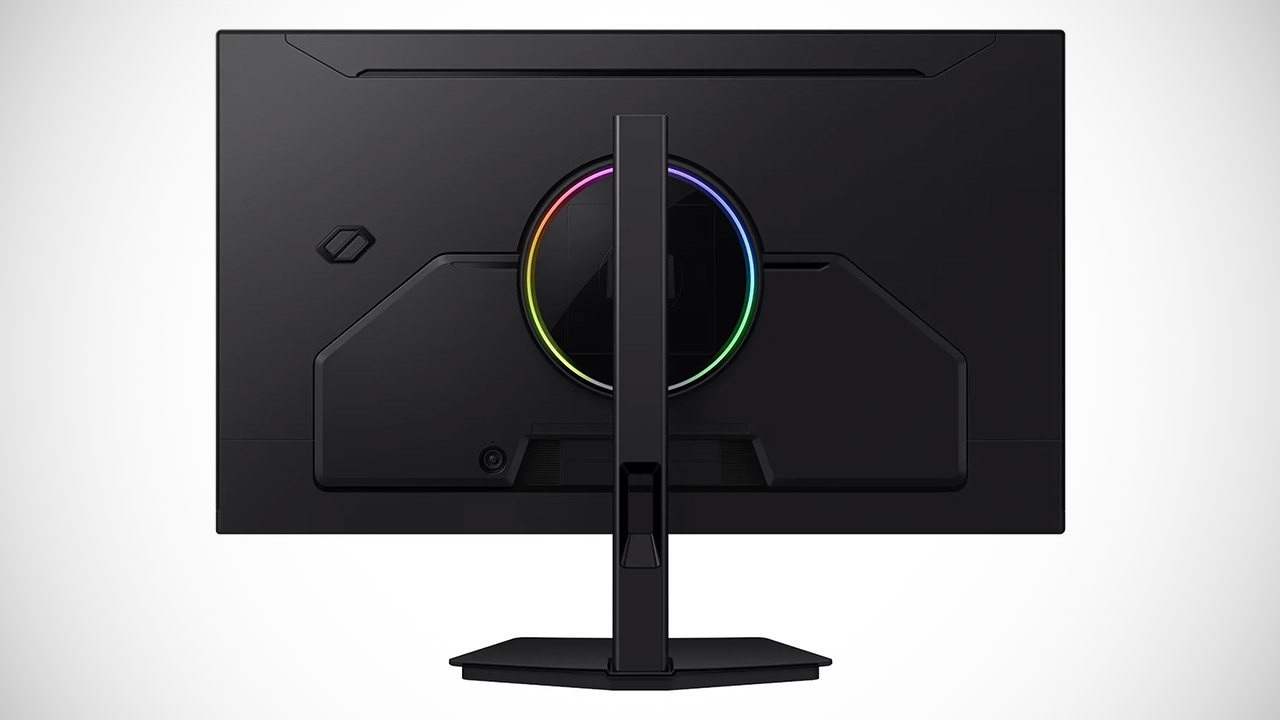
Samsung Odyssey G8 is World’s First 6K 32″ Gaming Monitor, Costs $1,600

Published

on

Samsung Odyssey G8 6K Monitor
Samsung released its Odyssey G8 monitor this week, and the 32-inch display brings a full 6K resolution to gaming for the first time. Gamers who chase the sharpest possible picture now have a genuine new choice that delivers 6144 pixels across and 3456 pixels down on an IPS panel. That pixel count produces a density around 224 pixels per inch, which makes fine details in environments and character models stand out in ways lower resolutions simply cannot match.


Resolution alone doesn’t tell the entire story, as Samsung has sneaked something quite clever into the Odyssey G8, in the shape of a dual mode feature. Users can switch to a roughly 3K resolution and receive a refresh rate of 330 Hz instead of the standard 165 Hz at full 6K. Anyone who prioritizes ultra fluid motion over pixel-perfect clarity should switch between the two settings depending on the game or what your system is capable of at the time. Thanks to AMD FreeSync Premium and NVIDIA G-Sync compatibility, both modes will keep screen tearing at bay regardless of resolution.

Sale


Samsung 34′ Odyssey G5 Ultra-Wide Gaming Monitor with 1000R Curved Screen, 165Hz, 1ms, FreeSync Premium…
  • OPTIMAL CURVE, TRUE IMMERSION: The all-encompassing 1000R display fills every part of your peripheral vision and draws you right into the character’s…
  • WQHD RESOLUTION: The ultrawide WQHD monitor provides a seamless dual-monitor experience with a 1000R curvature that matches the human field of view…
  • SMOOTH TRANSITIONS: This gaming monitor features a 165Hz refresh rate and 1ms (MPRT) response time, eliminating motion blur for a smooth, competitive…

Connectivity-wise, the Odyssey G8 is designed to meet the high needs of that screen, with one top-tier DisplayPort 2.1 connection that can manage the full bandwidth without sacrificing clarity. Two HDMI 2.1 connections are available for console owners and those who want to connect numerous devices at once. The accompanying stand adjusts in almost every direction you might want, including height, tilt, swivel, and pivot, ensuring that your monitor sits perfectly for long gaming sessions. A tiny RGB light on the back provides additional lighting options without taking the eye away from the screen.

Advertisement

The Odyssey G8’s color performance is refreshingly realistic rather than simply trying to put up some impressive numbers, as it covers 99 percent of the sRGB region and has a 1000-to-1 contrast ratio, which is typical for an IPS screen. HDR10+ Gaming compatibility is also included, which means that brightness and contrast levels can be adjusted scene by scene in compatible titles, which is especially useful when you’re in the thick of some fast-paced action. Brightness levels are normally enough for most rooms, but do not expect to set any records.

Samsung Odyssey G8 6K Monitor Launch
Driving a 6K display at a playable speed necessitates some serious hardware, as recent high-end graphics cards paired with tools like DLSS are just about up to the task in modern games, but for many users, the greatest benefit will come from playing slower-paced games or combining gaming with other tasks such as streaming or content creation. We got our first look at the Odyssey G8 in action with Cyberpunk 2077, and the increased resolution made a significant difference, even if the system struggled to keep up. City streets and distant textures appeared much richer and more detailed.

The Odyssey G8 costs roughly $1600, which places it firmly in the premium bracket. We’re talking about a monitor designed specifically for enthusiasts who already have some serious hardware in their setups and want a display that will evolve with them as their gear improves. The IPS panel sacrifices perfect blacks for OLED, but the trade-off results in improved brightness constancy and crisper text, which is a benefit for everyone who isn’t simply a hardcore gamer.
[Source]

Source link

Advertisement
Continue Reading
Click to comment

You must be logged in to post a comment Login

Leave a Reply

Tech

‘Creepy’ Listening Tool for Targeted Ads Didn’t Actually Work, FTC Says

Published

on

The Federal Trade Commission announced on Thursday that Cox Media Group and two other marketing companies, MindSift LLC and 1010 Digital Works, have agreed to collectively pay nearly $1 million to settle allegations that they deceived their customers—other businesses—by claiming that they could help target ads based on audio recordings collected from consumers’ smart devices via a marketing service called Active Listening.

In a statement to WIRED, a spokesperson for CMG says, “We are pleased to have this matter resolved. Our local marketing team relied on marketing materials provided to us by a third-party vendor about their product. We withdrew the materials expeditiously and stopped further use of the product.”

MindSift and 1010 Digital Works did not immediately respond to a request for comment. (Disclosure: The author of this article previously worked for the FTC.)

Over the years, conspiracy theories about companies listening to people through their phones in order to serve them ads have been repeatedly debunked. The marketing about Active Listening, which was first reported by 404 Media, stoked those fears. According to the FTC, at one point a website advertising the service included the slogan, “Creepy? Sure. Great for marketing? Definitely.”

Advertisement

In three separate complaints, the FTC says that CMG made several claims about its ability to collect consumers’ conversations from “smartphones, smart TVs, smart speakers and other devices” and then use AI to target ads to potential customers based on where they live and what they said. CMG and the other companies also said that consumers had consented to the collection and use of their voice data, according to the complaints.

The FTC alleges that none of those things were true.

Instead, the FTC contends that what CMG was offering was “nothing more than consumer email list buying” and that the lists it resold were “a significant markup over the cost of the data.”

As part of their agreements with the FTC, CMG and the two other companies promised not to make misrepresentations about their marketing services or their collection and use of audio recordings or transcripts of consumer conversations.

Advertisement

CMG agreed to pay $880,000, while MindSift and 1010 Digital Works each agreed to pay $25,000. The combined $930,000 will go to businesses that were “impacted” by the three companies’ practices, according to the FTC—in other words, businesses that purchased the Active Listening marketing service because they were under the impression that the service worked as advertised, including that people consented to having their voice data used.

The FTC’s complaints don’t make allegations about whether it’s illegal to use audio recordings collected from people’s smart devices to target them with ads, but the FTC clearly has a problem when a company says it does that but actually doesn’t. In a statement, Christopher Mufarrige, the FTC’s director of the bureau of consumer protection, says, “It is a basic rule of business that you need to be honest with your customers, and these companies failed to do that.”

Source link

Advertisement
Continue Reading

Tech

Apple’s latest appeal to the Supreme Court challenges Epic case

Published

on

The Supreme Court could now weigh in on the Apple versus Epic case where Apple was found in contempt of an injunction and forced to allow all developers to link externally without commission.

The Apple versus Epic saga is nowhere near an end even if Epic is celebrating a victory prematurely. Even as the case returns to Circuit Courts, Apple is requesting the Supreme Court to review two specific issues it has with the proceedings so far.

In the Supreme Court filing viewed by AppleInsider, Apple shares that the scope of the anti-steering injunction exceeds the District Court’s limits set by CASA. It also argues that the injunction violation was issued in error due to suggesting it was violating the “spirit” of the law rather than the letter.

Its arguments in the 34-page filing suggest that the Supreme Court should take up these matters because Apple’s is a perfect vehicle to address these issues. Apple asserts that providing a decision would settle matters for future cases, and if left untouched, could cause the CASA verdict to be a dead letter.

Advertisement

Basically, Apple hopes that there are enough discrepancies to ensure the Supreme Court at least picks up the case. In the meantime, Apple will continue its proceedings with Epic in the lower courts.

The story so far

Epic sued Apple in 2020 on antitrust grounds, but Epic lost on every count except one. That count pertained to Apple’s anti-steering practices.

Large blue-tinted screen showing a stylized apple wearing sunglasses and speaking to rows of shadowy seated viewers, evoking a dystopian surveillance or propaganda broadcast atmosphere

Epic’s ‘1984’ parody ad

Apple removed the anti-steering provisions and provided a new, if complex, way for developers to link to external purchases. It meant developers still owed Apple a commission, 12% or 27%, even if it directed customers to the web.

Advertisement

Even though Epic filed the case and it wasn’t a class action, the injunction was applied to all developers based in the United States. Apple clearly planned to appeal that point even then, but then things were made more complicated.

Epic filed a complaint, which resulted in Apple being found in contempt. However, the original injunction didn’t mention anything about Apple’s commission, and the violation was argued in spirit.

Various appeals and arguments later, and Apple has been told it is owed a commission, even on external links. The problem is, Apple would have to come back to court and decide on the commission rate with Epic.

That’s how the case has arrived at the Supreme Court. And even though Apple tried to get the proceedings halted in the lower courts, twice, it must now face both at once.

Advertisement

Apple’s arguments

The foundations of Apple’s arguments appear to be sound. The courts do appear to be ignoring the precedent set by CASA.

Three Fortnite character silhouettes dancing: a bulky bear-like figure on green, a muscular fighter on pink, and a slim figure with glowing eyes on purple, all in playful poses

Epic’s iPod-like ad

The Supreme Court ruled that lower courts were exceeding their jurisdiction by applying injunctions outside the scope of a case. However, the 9th Circuit has argued that there is an antitrust exception to CASA that would allow the decision in Apple’s case to stand.

Apple believes very strongly that this effectively bypasses the Supreme Court’s ruling and authority. That’s why it said it would render the CASA case a dead letter.

Advertisement

The other argument also has to do with how the 9th Circuit does business. Apple argues that in the other Circuit Courts, civil contempt is applied only if the letter of the law is violated, not the spirit.

Even if you don’t care about any of this legal back and forth, it is still incredible that the Epic Games lawsuit has reached this point. It started with a “1984” parody ad starring an apple wearing sunglasses and could finish with setting incredibly important precedent via the Supreme Court.

If Apple wins the “in spirit” portion of its arguments, Apple gets to carry on with its previous 12% and 27% commission rates for external linking. It would also mean proceedings in the lower courts would return to appeals stages.

If the universal nature of the injunction is thrown out, then only Epic will be affected by Apple’s move away from anti-steering practices. It would mean a total and abject failure of a case that cost Epic over a billion dollars already.

Advertisement

Apple has requested that its petition be considered during the Supreme Court’s June 25 conference. Perhaps Epic’s CEO should hold off on celebrations until after that date.

Source link

Advertisement
Continue Reading

Tech

Threat hunters find Google API keys still usable 23 minutes after deletion

Published

on

You know your Google API key has leaked so you rush to disable it before bad actors can start running up charges on your account. Bad news: According to security researchers at Aikido, people can use the API keys for up to 23 minutes after a user deletes them, creating a window of opportunity that, when combined with Google’s automatic billing tier upgrades, can devastate victims.

“We’ve identified a substantial window where an attacker with access to a leaked Google API key can continue to misuse that credential, after the user believes the key is revoked,” Joseph Leon, a security researcher with Aikido, told The Register. “In that window, an attacker could run up charges, pull sensitive files uploaded to Gemini, and exfiltrate cached context.” 

Aikido tested the gap during 10 trials over two days. In each trial, researchers created an API key, deleted it, and then sent three to five authenticated requests per second until no valid response came back for several minutes. 

From the time a user deletes the Google API key to when it can no longer be used propagates gradually across Google’s infrastructure, he said. Some servers reject the key within seconds while others keep accepting it for 23 minutes.

Advertisement

What this means is that an attacker holding a deleted key can repeatedly send requests until one reaches a server that has not caught up, Leon said. If Gemini is enabled on the project, they can dump files that were uploaded and exfiltrate cached conversations.

The paper cited a similar problem researchers disclosed in December involving AWS keys. In that case, after deletion, attackers had a four-second window to exploit, and researchers showed how they could create new credentials in that time. 

“Four seconds was enough to matter on AWS,” Leon wrote in the paper. “Given recent attention to Google API keys used to access Gemini, we set out to measure how long Google’s API key revocation window remains open.” 

Flaws can hit devs with huge surprise bills

The Register has reported numerous cases of Google API key abuse in which developers are suddenly hit with five figure bills after their credentials are compromised. 

Advertisement

The problem was compounded in April after Google reworked its billing policy to include spending tiers for users. While developers initially thought of it as a way to limit costs, Google automatically upgrades that spending tier to the next highest level without their knowledge. 

For users who have been working with Google for more than 30 days and have spent more than $1,000 over the lifetime of the account, their cap can be increased from $250 to $100,000 if their usage spikes – a windfall for crooks if the credentials fall into the wrong hands.

Developers whose Google API keys were stolen told The Register that their bills rocketed up to five figures minutes after their credentials were stolen, as bad actors loaded up on Google’s Gemini models such as Nano Banana and its video production model Veo 3. 

Google issued refunds in the three instances that The Register brought to its attention, returning $154,000 to those developers.

Advertisement

The victims told The Register that, during the attack, they were frantically trying to shut down the spending and turn off access to their projects even as costs climbed by thousands of dollars. Leon said in cases where a Google developer tries to shut off access to their account, deleting the API key will still give crooks time to inflict damage. 

“It’s hard to put a dollar figure on it,” Leon told us. “The window averaged 16 minutes in our testing and stretched to nearly 23 at the worst. During that window, the success rate is wildly unpredictable. We saw minutes where over 90% of requests still authenticated, and others where fewer than 1% did. An attacker who knows this can send requests at high volume to maximize their odds of hitting a server that hasn’t caught up. For Google API keys with Gemini access, the damage isn’t just a compute bill. It’s the files and cached context an attacker can exfiltrate before the key actually dies.” 

Using VMs, Aikido tested its findings across three Google Cloud regions – east coast US, western Europe, and southeast Asia – then they spot checked those results on different dates. For each trial, Aikido deleted a single API key and sent requests from each of the three VMs in parallel, Leon wrote in the paper. 

“VMs further from the US picked up the deletion faster, which is the opposite of what you’d expect. We can’t say exactly why from the outside. Google’s request routing is more complex than ‘VM region equals server region,’ and a VM in Singapore isn’t necessarily talking to servers in Singapore,” the paper states. “But the pattern was consistent across trials, which points to something about regional infrastructure, caching, or routing affinity driving the difference.” 

Advertisement

The trial used keys with access to Gemini, but he observed the same behavior with keys scoped to other GCP APIs, such as BigQuery and Maps. Google has built faster revocation for other credential types, Leon said. 

He said Google’s service account API credential revocations propagate in about 5 seconds. Gemini’s newer API key format – the one that starts with AQ – propagates in about a minute. 

“Both run at Google scale. Both suggest this is technically solvable for Google API keys, too,” Leon wrote. 

But Google told Aikido it has no plans to address the 23-minute gap researchers found with its other API keys. 

Advertisement

“After reviewing our report, they closed it as ‘Won’t Fix (Infeasible)’ with the comment ‘the delay due to propagation of the deletion of these keys is working as intended,’ “ Leon told us.

The Register has reached out to Google about this research, but has not yet received a response.  ®

Source link

Advertisement
Continue Reading

Tech

Can OpenAI’s ‘Master of Disaster’ Fix AI’s Reputation Crisis?

Published

on

Three months ago, OpenAI cofounder Greg Brockman told me his concerns about a mounting public relations crisis facing artificial intelligence companies: Despite the popularity of tools like ChatGPT, an increasingly large share of the population said they viewed AI negatively. Since then, the backlash has only intensified.

College commencement speakers are now getting booed for talking about AI in optimistic terms. Last month, someone threw a Molotov cocktail at OpenAI CEO Sam Altman’s San Francisco home and wrote a manifesto advocating for crimes against AI executives. No one has more to lose from this reputation crisis than OpenAI.

The person tasked with trying to fix it is Chris Lehane, OpenAI’s chief of global affairs and a veteran political operative. I sat down with him this week to discuss what I’d argue are his two biggest challenges yet: convincing the world to embrace OpenAI’s technology, while at the same time persuading lawmakers to adopt regulations that won’t hamper the company’s growth. Lehane views these goals as one in the same.

“When I was in the White House, we always used to talk about how good policy equals good politics,” says Lehane. “You have to think about both of these things moving in concert.”

Advertisement

After working on crisis communications in Bill Clinton’s White House, Lehane gave himself the nickname “master of disaster.” He later helped Airbnb fend off regulators in cities that viewed short-term home rentals as existing in a legal gray area, or as he puts it, “ahead of the law.” Lehane also played an instrumental role in the formation of Fairshake, a powerful crypto industry super PAC that worked to legitimize digital currencies in Washington. Since joining OpenAI in 2024, he’s quickly become one of the company’s most influential executives and now oversees its communications and policy teams.

Lehane tells me public narratives about how AI will change society are often “artificially binary.” On one side is the “Bob Ross view of the world” that predicts a future where nobody has to work anymore and everyone lives in “beachside homes painting in watercolors all day.” On the other is a dystopian future in which AI has become so powerful that only a small group of elites have the ability to control it. Neither scenario, in Lehane’s opinion, is very realistic.

OpenAI is guilty of promoting this kind of polarizing speech in the past. CEO Sam Altman warned last year that “whole classes of jobs” will go away when the singularity arrives. More recently he has softened his tone, declaring that “jobs doomerism is likely long-term wrong.”

Lehane wants OpenAI to start conveying a more “calibrated” message about the promises of AI that avoids either of these extremes. He says the company needs to put forward real solutions to the problems people are worried about, such as potential widespread job loss and the negative impacts of chatbots on children. As an example of this work, Lehane pointed to a list of policy proposals that OpenAI recently published, which include creating a four-day work week, expanding access to health care, and passing a tax on AI-powered labor.

Advertisement

“If you’re going to go out and say that there are challenges here, you also then have an obligation—particularly if you’re building this stuff—to actually come up with the ideas to solve those things,” Lehane says.

Some former OpenAI employees, however, have accused the company of downplaying the potential downsides of AI adoption. WIRED previously reported that members of OpenAI’s economic research unit quit after they became concerned that it was morphing into an advocacy arm for the company. The former employees argued that their warnings about AI’s economic impacts may have been inconvenient for OpenAI, but they honestly reflected what the company’s research found.

Packing Punches

With public skepticism toward AI growing, politicians are under pressure to prove to voters they can rein in tech companies. To combat this, the AI industry has stood up a new group of super PACs that are boosting pro-AI political candidates and trying to influence public opinion about the technology. Critics say the move backfired, and some candidates have started campaigning on the fact that AI super PACS are opposing them.

Lehane helped set up one of the biggest pro-AI super PACs, Leading the Future, which launched last summer with more than $100 million in funding commitments from tech industry figures, including Brockman. The group has opposed Alex Bores, the author of New York’s strongest AI safety law who is running for Congress in the state’s 12th district.

Advertisement

Source link

Continue Reading

Tech

DALI VEGA Wireless Hi-Fi System Delivers All-in-One Sound With BluOS, HDMI ARC, and Adaptive Orientation

Published

on

All-in-one wireless hi-fi systems are no longer the polite little lifestyle boxes hiding on credenzas and apologizing for themselves. In 2026, they are becoming one of the most important categories in premium audio, with Focal’s Mu-so Hekla, and Ruark’s R810 Radiogram, all pushing the idea that better sound no longer has to arrive with a rack of separates, a snake pit of cables, and a marriage counselor/interior decorator on standby.

DALI is now stepping into that fight with VEGA, a $4,500 single box wireless sound system built for listeners who want real hi-fi performance without turning their living room into a shrine to black aluminum. At this price, VEGA will raise some eyebrows, probably in a very restrained Scandinavian manner, but that is where the market is headed: fewer boxes, better industrial design, and sound quality that has to justify more than just convenience.

dali-vega-natural-oak-on-shelf

As listening habits evolve, more people are enjoying music than ever before thanks to unlimited access to high-quality audio,” said Krestian Pedersen, DALI Head of Product Management. “Music is becoming an integral part of people’s lives, and the key to it all is convenience. It has to be easy, but without compromising on quality. Our goal with VEGA was to create a product that fits the way people live and access music in their daily lives. We wanted to make a product that people want to keep turned on all the time.”

DALI also has an advantage here that many lifestyle audio brands do not. The Danish manufacturer builds almost everything in-house, including drivers, cabinets, and even the small hardware that holds the system together. That level of control has helped DALI develop loudspeakers that blend clean Scandinavian industrial design with real engineering substance.

Advertisement

Over the years, DALI speakers have consistently earned Editors’ Choice recognition because they deliver on the fundamentals: driver quality, cabinet execution, coherent voicing, and strong sonic performance for the money. VEGA is aimed at the same buyer, but with a different brief: deliver a high-quality DALI listening experience from one box that people can leave on, live with, and actually want in the room.

dali-vega-oak-on-wall
DALI VEGA

VEGA keeps the Scandinavian design brief intact with real wood veneer finishes, anodized aluminum details, and custom woven fabric. It will be available in Dark Oak and Natural Oak, which should help it blend into actual living spaces rather than looking like a lab instrument that wandered into the dining room.

DALI has also paid attention to the physical controls. The volume wheel uses glass, acrylic, and anodized aluminum, along with an aerospace-grade ball-bearing mechanism designed to give it a smoother, more precise feel.

Uses Ten In-House Drivers and Adaptive Stereo Processing

Every major part of VEGA has been developed by DALI’s engineering team, including the drive units, amplification, and DSP platform. The system uses ten in-house-developed drivers, including ultra-light 25mm soft-dome tweeters with low-viscosity ferrofluid and a large rear chamber designed to reduce resonant frequencies.

Advertisement

DALI has also arranged the bass/midrange drivers in a back-to-back configuration to help reduce cabinet resonance. That matters in a single-box wireless system, where the cabinet has to do a lot of work without becoming part of the performance in the wrong way.

Power comes from 400 watts of amplification, delivered through eight 50-watt channels. VEGA also uses paper-and-wood-fibre cones, low-loss surrounds, and passive bass radiators to support low-frequency output and overall balance. DALI claims VEGA delivers best-in-class bass performance, which is exactly the kind of claim that deserves a listening session before anyone starts slow-clapping in a black turtleneck at a $1 million speaker launch in Aalborg.

dali-vega-dark-oak-vertical

The other key technology is DALI Adaptive Stereo Enhancement, or ASE, a proprietary in-house-developed system that is currently patent pending. ASE is designed to create a wider stereo presentation from a single speaker by adapting in real time to the incoming signal.

Advertisement. Scroll to continue reading.
Advertisement

DALI VEGA Adjusts for Placement and Orientation

VEGA can be used freestanding or wall-mounted in portrait or landscape orientation. DALI’s Adaptive Orientation Adjustment, or AOA, automatically adjusts the speaker’s output based on how it is positioned, including stereo mapping and spatial presentation.

Users can also adjust placement settings based on proximity to walls or corners, which should help VEGA perform more consistently in real rooms. That matters at $4,500, because “just put it anywhere” is usually where good sound goes to die behind a ceramic vase.

dali-vega-dark-oak-top

BluOS, HDMI, AirPlay 2, and TIDAL Connect

VEGA is built around BluOS, giving it high-resolution wireless streaming, multiroom playback, internet radio, and app control across compatible BluOS-enabled products.

DALI also gives VEGA a useful mix of inputs, including HDMI, analog, optical digital, USB audio, and Bluetooth, which makes it more flexible than a wireless speaker that only wants to live inside an app. It can connect to TVs, digital sources, and analog components, although turntable users will still need to confirm whether their deck has a built-in phono stage or use an external one.

Advertisement

Streaming support includes Spotify Connect, TIDAL Connect, and Apple AirPlay 2, with preset buttons on the unit for quick access to favorite sources or playlists. The OLED display also rotates with the speaker’s orientation, which is a small but smart touch. At $4,500, “small but smart” should be part of the admission price.

dali-vega-dark-oak-top-drivers

DALI VEGA Key Specifications

System type:
Single-box wireless hi-fi system with active 2-way crossover

Drivers:
4 x 25mm soft-dome tweeters
4 x 4.5-inch paper-and-wood-fibre bass/midrange drivers
2 x rectangular 3 x 6-inch passive radiators

Amplification:
400 watts total
8 x 50-watt Class D BTL amplifier channels

Advertisement

Frequency response:
32Hz to 22.7kHz, ±3dB

Maximum SPL:
110dB at 1 meter

Bass tuning:
Passive radiator tuning frequency: 32Hz
Subwoofer output with 120Hz low-pass filter

Streaming and wireless:
BluOS
Spotify Connect
TIDAL Connect
Apple AirPlay 2
Bluetooth with AAC, aptX, and aptX HD

Advertisement
Advertisement. Scroll to continue reading.

Supported audio:
16-bit to 24-bit audio
32kHz to 192kHz sample rates
BluOS supports FLAC, ALAC, WAV, AIFF, MP3, AAC, OGG, WMA, MQA, and DSD256 with DSP-to-PCM conversion

Inputs:
HDMI ARC
Stereo RCA analog input
Optical digital input
USB Audio/Service for HDD or USB drive
Bluetooth
BluOS

Outputs:
Subwoofer output
USB power, 5V/1A

Advertisement

Placement options:
Freestanding in free space
Freestanding near a wall
Freestanding close to a corner or wall
Wall-mounted in landscape or portrait orientation

Key features:
Adaptive Orientation Adjustment
Adaptive Stereo Enhancement
Up to 40 programmable presets
Direct or Custom EQ
Rear-wall distance adjustment
HDMI audio delay
Input sensing
OLED display that rotates with orientation

Dimensions:
5.63 x 26.90 x 9.57 inches
143 x 683 x 243 mm

Weight:
19.18 pounds
8.7 kg

Advertisement

Finishes:
Dark Oak
Natural Oak

dali-vega-dark-oak-lifestyle

The Bottom Line

DALI VEGA is not just another wireless speaker with better clothes. It is a $4,500 all-in-one wireless hi-fi system built around ten in-house-developed drivers, 400 watts of amplification, BluOS streaming, HDMI ARC, AirPlay 2, TIDAL Connect, Spotify Connect, and DALI’s Adaptive Stereo Enhancement and Adaptive Orientation Adjustment technologies.

What makes it interesting is DALI’s control over the hardware. The company builds its own drivers, cabinets, and key components, which gives VEGA a stronger engineering foundation than many lifestyle-first wireless systems. The real trick is whether DALI can deliver a convincing stereo presentation and proper low-frequency performance from one box without making it sound like digital wizardry wearing Danish furniture.

What is missing? There is no HDMI eARC, no Wi-Fi 7 future-proofing, no listed Dolby Atmos support, and turntable users will still need a phono preamp unless their deck has one built in. At $4,500, those omissions matter.

Advertisement

VEGA is for design-conscious music listeners who want serious hi-fi performance without separates, speaker cables, or a rack full of gear. It will make its public debut in Vienna next month, but it does not go on sale until September, which gives everyone enough time to decide whether one box can replace a system, or just rotate beautifully while trying.

Advertisement. Scroll to continue reading.

Source link

Advertisement
Continue Reading

Tech

Anker Debuts Soundcore Liberty 5 Pro Earbuds With Its Thus AI Chip

Published

on

Following the initial tease of its Thus AI chip, Anker announced the first earbuds with the component during its Anker Day event. The Soundcore Liberty 5 Pro and Liberty 5 Pro Max both utilize the chip for what the company calls Whisper Clear voice performance. Of course, the usual earbud features are here — active noise cancellation (ANC), voice controls and personalized sound — but there are some unique tools available on these models as well. Those include an AI Note-Taker on the Liberty 5 Pro Max and touchscreen charging cases for both. 

Let’s start with what the Thus chip does on both sets of Liberty 5 Pro earbuds. The silicon is used alongside eight microphones and two bone conduction sensors to ensure optimal voice performance in noisy locations. By also employing an AI model, the system separates the speaker’s voice from background noise so they’re heard clearly on the other end of calls. Anker says the bone conduction sensors allow the setup to capture the user’s voice a lower volumes, so long as they’re in “moderately quieter settings.” The Thus chip also powers voice commands, offering 20 options for various controls and tasks, with Anker claiming a response time of under a second. 

Both the Liberty 5 Pro and Liberty 5 Pro Max have Soundcore’s Adaptive ANC 4.0 that uses those eight mics to process audio data at up to 384,000 times per second. This action continuously monitors both external noise and any sounds that may enter the ear canal before adjusting the ANC in real time. Anker says its noise-canceling algorithm can combat a broad range of noises — including human voices. What’s more, the company claims the ANC performance on its new earbuds is up to 2x more effective than the Liberty 4 Pro

To customize the sound to your ears, both sets of earbuds offer HearID 5.0. This feature creates a personalized EQ based on a brief hearing test. With the help of AI Sound Enhancement, the earbuds provide audio restoration that can recover up to 65 percent of “the quality” that’s typically lost to Bluetooth compression.

In terms of battery life, both the Liberty 5 Pro and Pro Max will last up to 6.5 hours on a charge with ANC enabled. When you factor in the charging cases, the total use time is 28 hours for each model. Multipoint Bluetooth connectivity is also onboard both, as is Bluetooth 6.1, Apple Find My and Google Fast Pair compatibility. Plus, both sets of earbuds are IP55 rated for dust and water resistance. 

Advertisement

There is one main area where the two new models differ is their smart cases. The Liberty 5 Pro case has a 0.96-inch TFT touchscreen on its front edge while the Liberty 5 Pro Max case has a much larger 1.78-inch AMOLED display. The Pro Max is also equipped with an AI Note-Taker that’s capable of generating transcripts, including identifying speakers and action items, after meetings in the Soundcore app. This feature isn’t available on the Liberty 5 Pro, but Anker does offer AI-based translation on both models. Translation is available on the earbuds with the Liberty 5 Pro, and it’s available on both the earbuds and the case with the Liberty 5 Pro Max. 

Both the Liberty 5 Pro and Liberty 5 Pro Max are available today for $170 and $230 respectively. The Liberty 5 Pro is available in black, blue, pink and white while the Pro Max will come in either black or gold.  

Source link

Advertisement
Continue Reading

Tech

ClickUp cuts 22% of staff, offers $1M salaries in AI restructuring

Published

on

TL;DR

ClickUp cut 22 per cent of its workforce and introduced $1 million salary bands for remaining staff. CEO Zeb Evans says the company is restructuring around a “100x org” model where AI agents outnumber employees 3:1.

ClickUp, the $4 billion productivity platform, has cut 22 per cent of its workforce. CEO Zeb Evans announced the layoffs in a post on X, framing them not as a cost-cutting exercise but as a structural bet on AI. The savings, he said, will flow back to the employees who stay in the form of million-dollar salary bands.

Advertisement

Evans called the new structure a “100x org.” The premise is that AI agents have changed what it takes to build software, and the roles required to operate at the highest level are now fundamentally different. Incremental improvements to existing systems will not get ClickUp there, he argued. The company needs to rebuild rather than iterate.

The restructuring follows months of aggressive AI adoption inside ClickUp. A Fortune profile published days before the layoffs revealed that the company now runs roughly 3,000 internal AI agents across its departments, a 3:1 ratio of agents to employees. Evans had already mandated that staff go through an AI agent trained to stand in his place before contacting him directly.

The 💜 of EU tech

The latest rumblings from the EU tech scene, a story from our wise ol’ founder Boris, and some questionable AI art. It’s free, every week, in your inbox. Sign up now!

Advertisement

Evans outlined three categories of employee he sees as essential to the new model. The first is “builders,” which he splits into 10x engineers and 10x product managers. His claim is blunt: the best engineers are not writing code any more. They are directing agents that write code. The skill that matters is judgment, the ability to orchestrate and review. AI makes the best engineers wildly more productive, he wrote, while everyone else using AI slows them down.

He called this the “great reckoning of AI coding” and said every company will face it soon. Companies celebrating 500 per cent more pull requests are generating volume, not outcomes. More code, in his view, is just another bottleneck.

The second category is “system managers,” or agent managers. These are people who automate their own jobs with AI and then become owners of the systems they built. Evans argued that anyone who automates their role will always have a job. The underlying systems, not the individual tasks, are what matter.

The third is “front-liners,” the people who spend their time with customers. In a world saturated with AI communication, Evans said, human contact becomes the one bottleneck companies should not try to replace. Front-liners should spend nearly 100 per cent of their time in meetings with customers, while the systems around those meetings are fully automated.

Advertisement

Product management and design, he added, are merging. Designers with customer focus become more like product managers. Product managers with UX intuition become more like designers. The bottleneck of user research is gone, he claimed, because a single mention to an agent can kick off and analyse a research cycle.

The most provocative element is the compensation model. ClickUp is introducing salary bands that reach $1 million per year in cash. The path is available to nearly anyone in the company who produces “100x impact” by creating or managing AI systems. In a world where the best people create 100 times more output, Evans argued, companies cannot afford to lose them and should aim to retain them for decades.

The announcement lands in the middle of a brutal stretch for tech workers. The industry has shed more than 100,000 jobs across roughly 250 events in 2026 so far. Meta cut 8,000 roles the same week despite record revenue. Oracle eliminated up to 30,000 to fund AI infrastructure. GitLab restructured for the “agentic era.” The pattern is consistent: companies report record performance and cut headcount simultaneously, redirecting savings into AI.

Evans’s framing is more explicit than most. Where other CEOs use euphemisms about efficiency and realignment, he is making a direct argument that the roles being eliminated are structurally obsolete. Whether that is candour or hubris will depend on whether the 100x org delivers the outcomes he is promising.

Advertisement

ClickUp reported roughly $300 million in annual recurring revenue as of 2025 and has been eyeing an IPO. The company acquired AI coding platform Codegen late last year. With AI reshaping the economics of developer tools and productivity software, Evans is betting that a smaller, better-paid workforce directing thousands of agents will outperform the company it replaces.

Not everyone is convinced. In China, courts have ruled that replacing workers with AI is not legal grounds for dismissal. In the US, no such protection exists. For the 22 per cent of ClickUp employees who lost their jobs this week, the distinction matters.

Source link

Advertisement
Continue Reading

Tech

What to Do in LA if You’re Here for Business (2025)

Published

on

Neon sign in pink yellow teal and white that says The Garland 50 1972 to 2022

Photograph: Jordan Michelman

4222 Vineland Ave., North Hollywood, (818) 980-8000

“The Valley” isn’t just one place, either—a collection of unique cities and subcultures that occupy the environs north of LA proper, this is the land of Paul Thomas Anderson films, immortalized in the music of Tom Petty and Frank Zappa. If you’re in the Southlands for events in and around the television and film industry, or to check out the Universal Studios theme park complex, you’ll save time and money by staying close.

The Garland is your Valley adventure home port. This place manages the neat trick of being both hip and eminently utilitarian: You could come here to lounge by the pool, take in the gardens, and hang out at the busy bars and restaurants, or you could use this place as a spot to drop your bags between all the other things you’re in town to do. There’s an impressively beautiful outdoor pool (with a massive fireplace), guided neighborhood tours (the Brady Bunch house is nearby), and ample parking. The whole thing has a Spanish colonial flair with flashes of 1970s tiki. This place gets double points if you happen to be traveling with your family—kids love the Garland.

Image may contain Ashtray Business Card Paper and Text

Photograph: Jordan Michelman

8221 Sunset Blvd., (323) 656-1010

Advertisement

I don’t know what you’re here in town for, or what qualifies to you, personally, as a business trip. The hotels I’ve recommended so far are all swell, but I’ve included them first and foremost for reasons of practicality and geography. That’s not why you stay at the Chateau. You come here instead for the myth and the history, the infamy and the iconic status of it all: here, where Duke Ellington composed “Swingin’ Suites,” where Stephen Stills wrote “For What It’s Worth” (“stop, hey, what’s that sound”), where Jim Morrison swung from the chandeliers, where Dominic Dunne lived while reporting the OJ Simpson trial for Vanity Fair. God only knows what’s gone on in these elevators, to say nothing of the guest rooms, which are appointed more like apartments and come swathed in spectral haunted metaphysical atmosphere, baked in California sunshine.

You can work here; so much incredible work has happened here! Nicholas Ray and James Dean rehearsed Rebel Without a Cause here! Whatever project it is you’ve got cooking—a novel, a screenplay, a symphony, or just a humble pitch deck—I don’t think there’s a concept in the world that can’t be improved by injecting a little Chateau mystique into its DNA. You will see celebrities; you will find quiet moments to yourself among the ghosts; you will find yourself quietly reflecting to yourself, alone in your room, “Holy shit, I can’t believe I’m really here!” There’s no other hotel in the world that is remotely like it.

Where to Work

LA is freelancer central, and the sort of place where working on your screenplay (or whatever) from the bar or coffee shop has attained a kind of mythical status. The city has plenty to offer in the form of traditional coworking spaces, private clubs, and laptop gardens. Here are some of my favorites.

Advertisement

360 E. 2nd St., 8th floor, (213) 433-2400

The Centrl Office chain of coworking spaces is well-represented across Los Angeles, with locations in Downtown and Marina Del Ray, and two spots in the South Bay city of El Segundo, aka “Silicon Beach” (at least one part of the wider massif known by this moniker). Each location has its own way of leaning into the “creative campus” vibe, offering a variegated array of services from suites and meeting rooms to day offices, drop-in coworking open plan spaces, and virtual office options that allow for mail and package delivery. Centrl Office does what it says on the tin—this is a classic approach to the coworking space model, and sometimes that’s exactly what you need, with supersonic Wi-Fi and printers and kitchens and lounges.

1370 N. St Andrews Place, (323) 381-5996

Part coworking space, part event venue, the Preserve feels uniquely LA. Truly a campus take on coworking, the facility boasts more than 6,000 trees and plants, a very cool series of indoor/outdoor working spaces, a library, bungalows, studio offices, and meeting rooms, plus an on-site cafe and soundproof phone rooms. Wi-Fi here is 1 GB per second; there’s valet parking and nursing rooms and wellness classes and Corian desks; people run whole companies out of this facility, and also they host weddings. The building, which underwent a multimillion-dollar, award-winning renovation in the late 2010s, was originally designed by Paul Revere Williams, a patron saint of Los Angeles architecture and design whose other works include the iconic LAX spaceship tower and the Beverly Hills Hotel. If you’re looking for a Los Angeles experience for your coworking needs—perhaps with an intent to hunker down for multiple days, so as to truly absorb the entirety of what goes on here—the Preserve is for you.

Advertisement

5971 W. 3rd St., (323) 933-2112

Like the Preserve, the Rita House could only be here, in Los Angeles, but the two spaces couldn’t feel more different. Rita is located inside a 1927 Spanish colonial building originally constructed for prop and costume design for the film studio industry in Hollywood. The building’s unique history goes back to the roots of coworking as a creative pursuit. There are monthly membership options, day rates, and a real focus on content production, with dedicated rooms for self-tape auditions and podcast taping, as well as larger meeting and screening rooms. You’ll find the requisite high-speed Wi-Fi and business center amenities here, but it’s inside a space that feels more like classic Hollywood Boulevard than Sand Hill Road. Every great city has a coworking space that doubles as a people-watching and networking hub, and in LA I think that’s here.

4334 Sunset Blvd., (213) 200-0969

I love working from Los Angeles coffee shops, and Dinosaur is one of my favorites for this particular pursuit. Located on the border between Silver Lake, Los Feliz, and East Hollywood, this place is a creative laptop melee of people whose names you’ve seen in the writers’ credits at the end of various films and television shows—or those who’d like to someday be. The coffee comes from Woodcat Coffee, whose flagship store is over on Sunset Boulevard in Echo Park, and the store is bright and full of that good California light. It just feels creative here—get shit done on the front patio, or eavesdrop on the interesting conversations all around you. I visit nearly every time I’m in LA.

Advertisement

Where to Eat

How could I pick 10 places to eat in Los Angeles? How could anyone pick 20, or 50, or 101 like they do each year at LA Times Food? That section’s weekly (daily!) reporting on food across LA should be something you start scouting now, in the weeks before your trip, so as to stay hip to the most interesting new stuff happening across the region. For me, these are 10 restaurants I’ve personally visited and enjoyed, running the gamut across price, location, and experience. They aren’t even necessarily my 10 favorite LA restaurants, but they’re all spots I’d gladly go back to, and in a city so thoroughly spoiled for choice, that’s saying something.

2736 W. Sunset Blvd., (213) 913-6850

Avish Naran cracked some heretofore unknown atom when he opened Pijja Palace in 2022. I guess it is an Indian sports bar? But it is also sort of a red sauce Italian joint, a cocktail destination working more or less entirely in its own creative idiom, a really swell place to watch the Lakers lose their way through the dregs of the executive-produced-by-LeBron-James era, and so forth. There’s green chili pickle masala wings and korma curry pizzas and dosa onion rings (a required order) and plenty of beer from near and far to enjoy it all with. Do not miss ordering a cocktail here—this is quietly one of the more inventive cocktail programs in the city, which is saying something, because nothing is really quiet about Pijja Palace. Go here with a big group, or sneak in solo at the bar. I wish it were three times as big, but also I don’t want to change anything about it at all.

Advertisement

Source link

Continue Reading

Tech

WhatsApp ads could make Irish debut after discussions with DPC

Published

on

‘We have been advised that the highest restrictions will be in place for users that have not verified their age,’ the DPC said.

SiliconRepublic.com understands that an Irish launch of ads in WhatsApp could be moving forward after plans were previously delayed over data protection concerns.

The Irish Data Protection Commission (DPC) has had “ongoing engagement” with WhatsApp Ireland, it said in a statement to SiliconRepublic.com.

“The DPC has made a number of recommendations for improvements. Our understanding is that many of these have been implemented and improvements have been made around transparency.

Advertisement

“We have been advised that the highest restrictions will be in place for users that have not verified their age.”

It is understood that ongoing discussions with Meta have concluded and that the DPC is satisfied with its engagements with the company.

Meta, meanwhile, has said that its planned global rollout for WhatsApp ads is progressing gradually. It is not known precisely what changes the DPC recommended to Meta. The company did not respond to a SiliconRepublic.com query on the details of changes suggested by the DPC.

First unveiled last June, the new ads, where allowed, appear in WhatsApp’s ‘Updates’ tab, home to both its ‘Channels’ and ‘Status’ features. For a monthly fee, users can subscribe to Channels – for example, a news network – for “exclusive updates”, according to Meta. The company said it will also promote channels that it detects would be interesting to users.

Advertisement

Meta said that the ads will use “limited” information, such as a user’s country, city, language, device or browser used, the channels they already follow and how they interact with ads.

Additionally, the company will also use activity information such as the channels people view, the content they engage with in channels, if users have added their WhatsApp account to the ‘Accounts Center’ or if the company knows them to be over 18, Meta said.

The announcement last year prompted a sharp response from data privacy advocacy group NOYB, which said that data from Meta’s various platforms gets linked and “users are tracked for advertising without any genuine choice.”

The DPC told the press last year that the rollout would be discussed with other national data protection authorities before an EU launch in 2026.

Advertisement

Don’t miss out on the knowledge you need to succeed. Sign up for the Daily Brief, Silicon Republic’s digest of need-to-know sci-tech news.

Source link

Advertisement
Continue Reading

Tech

Why the DJI Osmo Pocket 3 Keeps Delivering in 2026

Published

on

DJI Osmo Pocket 3 Camera 2026
Few pieces of tech hold their ground several years after launch the way this one does. Creators who picked up DJI Osmo Pocket 3, priced at $419 (was $499), when it first arrived still reach for it on trips, family outings, and quick daily shoots. Even with a newer model now available, plenty of people choose the original because it simply works well without extra fuss.


Portability is the most important factor in determining how often someone will take out their camera and start filming, because let’s be honest, this thing is light as a feather and fits snugly in your jacket pocket or small bag, making it a no-brainer to carry around every day without even realizing it’s there. With continual access to a camera, it becomes second nature to capture those odd, ephemeral moments that would otherwise go undetected and unrecorded. Moments that you wish you had actually captured, and frequently would have, if you’d had a little more notice to pull the heavier equipment out of storage.

Sale


DJI Osmo Pocket 3, Vlogging Cameras with 1” CMOS & 4K/120fps Vlog Camera, 3-Axis Stabilization, Fast…
  • Capture Stunning Footage – This vlogging camera features a 1-inch CMOS sensor and records in 4K resolution at an impressive 120fps. Capture…
  • Effortlessly Frame Your Shots – Get the ideal composition with Osmo Pocket 3’s expansive 2-inch touch screen that rotates for both horizontal and…
  • Ultra-Steady Footage – Say goodbye to shaky videos. Osmo Pocket 3’s advanced 3-axis mechanical stabilization delivers superb stability. Enjoy smooth…


Vibrant 4K footage, with built-in three-axis stabilisation, will render your house, or even a walk through the woods, as level and smooth as silk. There is no sense of a shaky, handheld appearance whatsoever, not even during those action-packed stunts that would completely wreck a phone video or a basic action camera. The mechanical stabilizer keeps everything under control, whether you’re banging about the streets or taking a quick turn up a mountain bike route.

Advertisement

DJI Osmo Pocket 3 Camera 2026
Then there’s the sharp detail, colors, and low noise found in this bad boy, as the 1-inch sensor takes 4k footage that can easily compete with larger devices on the market. It gets even better: the screen rotates so you can simply point it at your subject in whatever direction you wish to video; no need to fiddle with vertical and horizontal settings; just point and shoot. The screen is completely clear and tells you exactly what’s going on, allowing you to make those all-important adjustments on the go, without trial and error. Touch controls are direct and responsive, allowing you to start filming in seconds.

DJI Osmo Pocket 3 Camera 2026
The battery life is likewise impress, providing a whole day of shooting without the need to recharge continually, as many owners have logged up solid hours of use on a single charge, which is a blessing for travel, a long event, or whatever your thing is. The recording settings are very extensive without being overly confusing; active tracking follows your subject with ease, time-lapse condenses extended sequences, and the built-in audio captures clear sound for all you vloggers out there. If you desire even higher sound quality, you may always connect an additional microphone. Software updates have been flowing thick and fast, introducing minor upgrades and modifications that have undoubtedly extended the life of this camera.

Source link

Continue Reading

Trending

Copyright © 2025