
Connect with us

Tech

Samsung Says It’s Launching Galaxy S26 FE and Tab S12 Later This Year

Published

on

The Samsung surge continues. The company confirmed on its earnings call this week that it will launch the Galaxy S26 FE phone and Tab S12 Android tablet later this year. The announcement comes a week after a Galaxy Unpacked event in London, where Samsung introduced the eighth-generation Galaxy Z foldable phones and new smartwatches.

The Galaxy S26 FE phone will be the final model of Samsung’s S26 series, which includes the Galaxy S26 Ultra, S26 Plus and S26. The Tab S12 will be the flagship of the next Galaxy tablet series.

The S26 FE phone could launch in August or September, and the Tab S12 tablet might come out in September or October, according to reports.

Read more: Samsung Expects the Chip Shortage to Get Worse Before It Gets Better

Advertisement

Samsung typically unveils several devices each year across product categories and prices. At its July Unpacked, the Seoul-based giant launched the Galaxy Z Fold 8 UltraGalaxy Z Fold 8Galaxy Z Flip 8Galaxy Watch Ultra 2 and Galaxy Watch 9. These phones and watches are now available for preorder.

Putting the S26 FE phone on sale will help the company “maintain S26 momentum,” said Daniel Araujo, head of Samsung’s strategic planning group for mobile experience. He also said on the earnings call that the company saw increased smartphone sales in the second quarter of the year, led by the S26 models.

Araujo confirmed that the Tab S12 tablet would go on sale in the second half of 2026, along with the new foldable phones and Watch Ultra 2.

Advertisement

Speculations about the specs

A significant amount of information has been leaked about the design and specs of the S26 FE. Samsung news site SamMobile says the phone could have an Exynos 2500 chip — Samsung’s advanced mobile processor for powerful AI and high-end graphics — as well as the Android 17-based One UI 9 for the software interface.

SamMobile reports that the screen will be the same as the S25 FE, at 6.7 inches. There could be three cameras, a 4,900 mAh battery — good for an entire day after a full charge — and 45-watt wired charging. Prices could be around $800, and the product could go on sale in August or September.

As for the Tab S12, tech site Android Police reported there may be only two tablets in the series — the Galaxy Tab S12 Ultra and the Galaxy Tab S12 Plus — with no base model.

The Plus version could have a 12.4-inch Dynamic AMOLED 2X display, a Dimensity 9500 chip with 12GB RAM, up to 512GB storage and a 10,500mAh-plus battery.

Advertisement

A Samsung representative did not immediately respond to a request for comment.

Read more: How to Nab Samsung’s New Galaxy Foldables for Less

Samsung strong

Despite industry-wide price hikes and intensifying competition — such as Apple’s widely rumored iPhone foldable coming this fall — Samsung consistently distinguishes itself from rivals, says CNET reporter and video producer Abrar Al-Heeti.

“Samsung was a pioneer in the foldable phones market and continues to be a leader there, and its display innovations always stir up a lot of hype at tech events and launches,” Al-Heeti said.

Advertisement

Al-Heeti said the Unpacked event, which she covered for CNET, was another example of Samsung trying to keep one step ahead of the competition, especially with Apple’s foldable looming on the horizon.

“Samsung decided to debut its own 4:3 foldable, the Z Fold 8, which is garnering plenty of buzz and earning several positive reviews,” she said.

Source link

Continue Reading
Click to comment

You must be logged in to post a comment Login

Leave a Reply

Tech

Daily Deal: Ultrathin Sleep Aid Under Pillow Speaker

Published

on

from the good-deals-on-cool-stuff dept

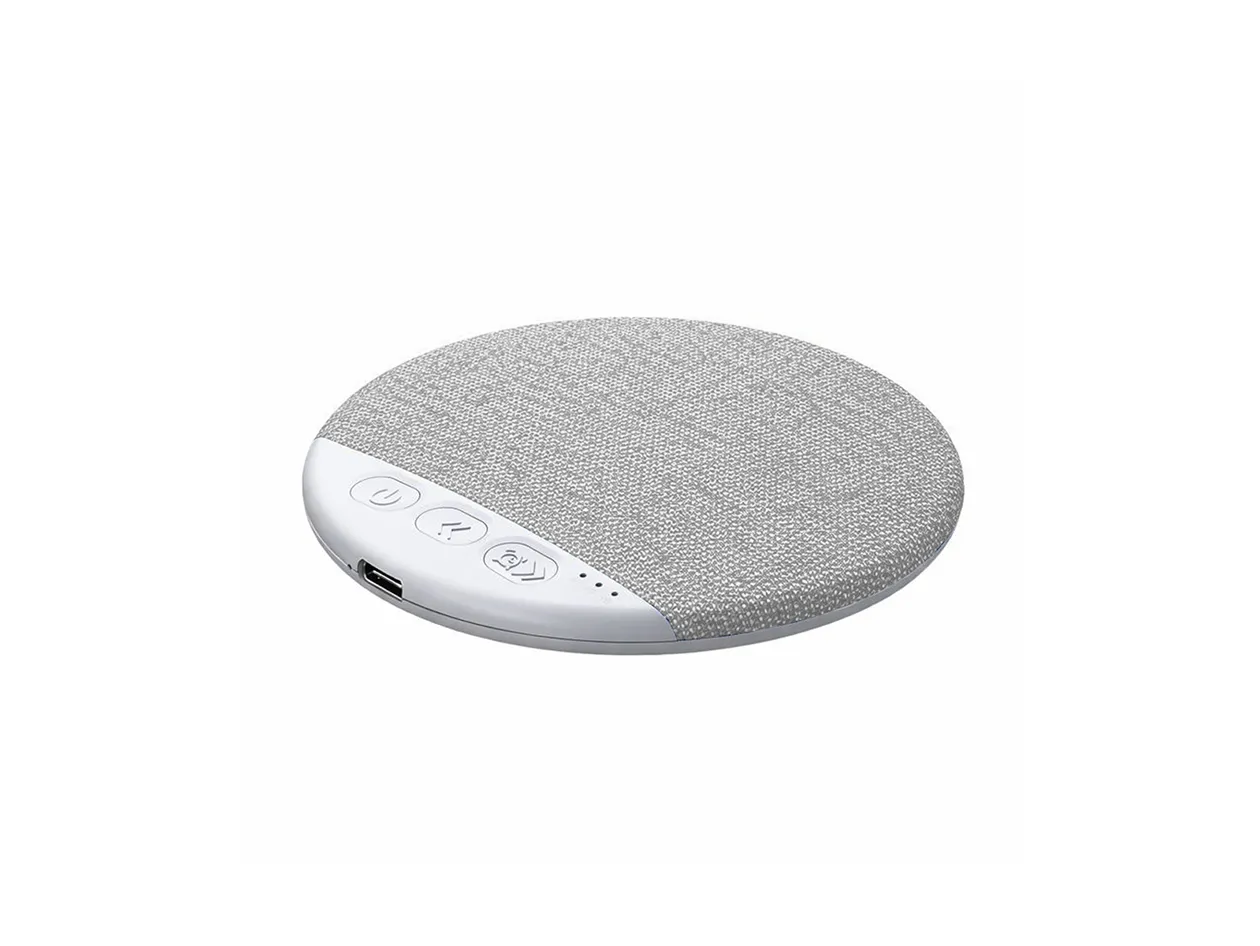
Enjoy calming sounds, bedtime music, audiobooks, or podcasts without wearing headphones or disturbing a sleeping partner. The Ultrathin Sleep Aid speaker fits comfortably beneath or beside your pillow, delivering clear, localized audio while remaining virtually unnoticeable during sleep. Whether you’re winding down after a long day, taking a quick afternoon nap, or helping children drift off with bedtime stories, it creates a more relaxing listening experience. Bluetooth connectivity, TF card playback, and a rechargeable battery make it easy to enjoy your favorite audio at home or while traveling. It’s on sale for $15.

Note: The Techdirt Deals Store is powered and curated by StackSocial. A portion of all sales from Techdirt Deals helps support Techdirt. The products featured do not reflect endorsements by our editorial team.

Filed Under: daily deal

Source link

Advertisement
Continue Reading

Tech

AI’s impact on research and development is undeniable, say experts

Published

on

Professionals from IAS and Rent the Runway explore the impact AI has had on organisational R&D.

By its very nature, research and development (R&D) is a field that is constantly evolving, and with that evolution comes the transformation of both the workplace and professional expectations. 

For Mark Walsh, director of engineering at Rent the Runway, technological advancement in R&D is among the most influential trends changing the landscape for experts working in research. 

He told SiliconRepublic.com, “Dare I say it, the most exciting, volatile and frankly uncertain trend is the rapid evolution of AI. I use all three of those words deliberately, because I think anyone who tells you it is purely exciting without acknowledging the volatility and uncertainty is not being fully honest.

Advertisement

“The pace of change is unlike anything I have seen across my career and the scope of what is shifting – from how we write and review code, to how we think about system design and even team structure – means that almost nothing in the R&D space is untouched by it right now. That is genuinely exciting, even when it is also genuinely unsettling.”

Alexander Smirnov, a staff software engineer at Integral Ad Science, shares Walsh’s opinion that it is impossible to explore the topic of critical 2026 trends in R&D without mentioning the elephant in the room, AI. 

“We have witnessed a massive leap in AI capabilities and the rapid pace of competition is remarkable, with vendors releasing frontier models every few months. Engineers write less code now, relying more on coding agents every day. And it is not only coding – they are also helpful during the design, exploration and planning stages,” said Smirnov. 

“Navigating legacy codebases has never been easier; you can start with a new project really quickly now. Asking questions in plain English about the codebase and receiving almost instant, context-aware results feels like a magical experience.”

Advertisement

Rapid movement

With that in mind, how have R&D teams evolved to meet the demands of a sector undergoing daily transformation?

Walsh said, “For starters, we are certainly not at the end of that adaptation. I would say we are continually adapting and at a far more rapid pace than I have seen at any point before. What that looks like in practice is a culture of ongoing discovery rather than waiting for the landscape to settle before making decisions, because it is not going to settle. 

“Teams need to be comfortable operating with a degree of uncertainty, evaluating new approaches with rigour, making considered decisions and being willing to revisit those decisions when the ground shifts.”

Smirnov finds that many teams are adopting new workflows and increasingly embedding LLMs or agentic workflows during development and operational support. 

Advertisement

He said, “It’s a great tool, but we still need to learn how to use it effectively, to break old habits and develop new skills. The change is not always easy. It is crucial to find dedicated time for learning.”

He further explained that having the time for self-learning, experimenting with new tools, testing novel workflows, and even just thinking about what can be done differently with the new tools are all ideal forms of upskilling, 

He noted IAS’s ‘community of practice’ Slack group, where engineers share their ideas, exchange custom agentic skills and post tool reviews, which can help colleagues “to better understand the ecosystem and its capabilities”. 

Make it count

Walsh also offered a word of advice to professionals new to the R&D space. He explained that it can be tempting to jump on the bandwagon and embrace any and all technologies as they emerge, but you can’t forget how and why you were selected for your role in the first place. 

Advertisement

“I believe we are still engineers and knowledge workers first and foremost. Our most valuable asset is our judgement – the ability to think critically and to generate novel ideas. In a landscape moving as fast as I observe, I believe that foundation becomes more important, not less,” he said.  

“The tools around that can and have always changed; however, the thinking you bring to how you use them is what endures. The temptation right now is to chase the tooling or even the next buzzy approach, but the fundamentals that make someone effective in this space remain what they always were: the ability to break a complex problem apart, sit with uncertainty without grabbing the easiest answer, and communicate clearly about risk to people who are not close to the technical detail.”

He advised professionals to avoid becoming dazzled by tools at the expense of critical thinking, as the ones who will thrive are also the ones who understand why they are reaching for a particular approach, not just figuring out how to use it. 

Walsh said, “Curiosity and rigour together are a combination that I believe will serve anyone regardless of what the landscape looks like in the future.”

Advertisement

This was echoed by Smirnov, who said, “What is not changing is human judgement. Although agents can generate code in seconds, developers must thoroughly understand how that code works under the hood. 

“LLMs generate output based on probabilistic token prediction from their training data; they are not actually thinking like humans do, but rather serving up the ‘average of the internet’.”

For both experts, while AI has undoubtedly transformed R&D, what has not altered is the importance of strict adherence to the fundamentals – primarily, thinking differently, critically and independently of tech. 

Smirnov said, “Understanding how to use new tools effectively is no longer optional. The future belongs to those who pair strong computer science fundamentals with the ability to direct, audit and collaborate with intelligent agents.”

Advertisement

Don’t miss out on the knowledge you need to succeed. Sign up for the Daily Brief, Silicon Republic’s digest of need-to-know sci-tech news.


Source link

Advertisement
Continue Reading

Tech

Mastercard spent decades training its fraud system to see bots as thieves. Now bots are the ones doing the buying.

Published

on

Every time a Mastercard gets tapped, the network has less than a tenth of a second to judge how likely the purchase is to be fraudulent. It made that call across 175 billion transactions last year. Now the buyer on the other side of that judgment is starting to change, and Greg Ulrich, the company’s chief AI and data officer, spelled out the consequence for the VB Transform 2026 audience in Menlo Park on July 14. “We’ve built a bunch of risk rules over time that were intended to stop a bot from transacting,” Ulrich said. “Now we need to enable the bot to transact, so that requires a change to our risk framework and our risk rules.”

Ulrich joined Mastercard eleven years ago when an analytics company he worked at was acquired, and said trust struck him from day one on the job. “It’s what enables a merchant that’s never met you to accept payment and ensure that they’re going to get paid. It’s what enables you as a consumer to transact and ensure that things are going to work out in a trusted, secure way. And if something goes wrong, there’s a safe and secure path for a dispute and to resolve this,” he said.

175 billion transactions, scored in under 100 milliseconds

He took the audience inside each of those calls. “When you tap your Mastercard to pay for a product or service, we’re providing a score to that transaction,” he said. “We have under 100 milliseconds to look at that and give a score from zero to 999 about how likely is that to be fraudulent or real. And we pass that on to the issuing bank.”

Advertisement

Generative AI widened what that score can see. “Because we have new technology, we can bring in more data, we can bring in more context, and now we’re finding that we can identify 300, 400% more fraudulent transactions at those high-risk bands,” Ulrich said, without adding friction or false positives for consumers. The company’s Safety Net system has stopped more than 70 billion fraudulent transactions, he told the audience, and Mastercard is building its own transformer model on its transaction data as a foundation for new safety, security, and personalization solutions. VentureBeat’s Beyond the Pilot podcast took that production fraud stack apart in detail earlier this year.

A third of the services business already runs on AI

The business stakes reach past fraud. About 40% of Mastercard’s company is now based on services, Ulrich said, including marketing services; fraud, safety and security; and business intelligence. “A third of those are predicated on AI, and those are growing at a much faster clip than everything else,” he said.

One line he returned to all session went further. “What’s going to enable AI to continue to scale is not the capabilities of the agents, it’s how much we trust those agents to do on our behalf as a consumer, as a business, as a financial institution, or otherwise,” he said.

Five layers stand between agents and the network

Agentic commerce changes the object being secured. “Instead of a single atomic transaction where I say go buy something, I’m effectively delegating authority, or a consumer’s delegating authority, a business is delegating authority,” Ulrich said. “And when that happens, it’s a much more complicated transaction.” Trust, in turn, has a precondition. “The only way it’s going to work with trust is if we can identify what was the intent, what are the behaviors, what are the constraints that were intended in that transaction.”

Advertisement

Ulrich walked through five layers Mastercard has built against that problem. Identity comes first. “I want to make sure I can understand not just who the consumer is, but who the agent is, that I combine them together and that I have KYA or know your agent, that I’m validating that it’s legitimate technology, that it’s a legitimate agent,” he said. “We can register it into our system.”

Verifiable intent settles the “wrong-Nikes” problem

Verifiable intent is second, a tamper-proof cryptographic record of the original instructions that travels with the transaction. “If you’ve asked for Nike black Nikes in size 12, but you got them on a final sale and they’re not returnable and that wasn’t in your instruction, there’s a way to look at that in an objective and clear way on the back end,” he explained.

Controls form the third layer, defining which merchants an agent can buy from, at what limit, and under what constraints. Execution runs through Mastercard Agent Pay, which carries “the tokenization, authentication, the acceptance framework embedded within it” and has launched with Microsoft, OpenAI, Google, and others, Ulrich said. Intelligence is the fifth layer, spanning risk rules, insight tokens that grant “consented or permissioned access to insights” for personalized recommendations, and monitoring through Recorded Future to identify threat actors in the system.

The bigger prize is a procurement agent with a budget

Consumer purchases are where agentic commerce started. Ulrich pointed the room past them, to business-to-business procurement as the larger opportunity. His example was a manufacturer that wants an always-on assembly line, with an agent that manages inventory levels, tracks when stock runs low, replenishes automatically, and understands the budget and the approved suppliers. “When you can start enabling that, you require those same five layers for that type of transaction,” he said.

Advertisement

Making it work across companies multiplies the parties that have to trust each other. “You need clear standards for identity, you need clear standards for intent, you need these to work across. You’re gonna have a procurement agent, a supplier agent, a banking agent. They’re all gonna need to communicate to enable this to happen in an autonomous way, and that’s gonna require really scaled trust infrastructure.”

Powerful new models, same security motion

Mastercard sat in the early wave of Project Glasswing with Anthropic’s Mythos model, and worked with OpenAI’s GPT-5.5-Cyber, he said. “What we’ve seen from both of those is incredibly powerful models finding new vulnerabilities in the ecosystem that were difficult to detect previously, but it’s really a new tool as opposed to a new motion,” Ulrich said.

Inside the company, the chief security officer leads that work. A dedicated team has prioritized the most critical assets, runs them through the models routinely, tracks findings by high, medium, and low severity, and uses the same technology to handle patches. Ulrich said the approach has already been extended out, and that Mastercard is working to make the same architecture and patching available to others as well.

What Mastercard would build differently after 14 months

“The guardrails, the security, all this stuff has to be embedded at the front end. These can’t be things that we’re adding on at the back end. That’s lesson one. Lesson two is you have to be operating for scale, and the other one is around observability and accountability matter as much as the intelligence,” Ulrich said, counting off what building inside Mastercard taught the team. The company built what he described as an agentic factory, an operating system with the compliance, the observability, and the guardrails built in rather than bolted on per agent. Model drift, once tracked manually by dedicated teams, is now automated into that factory.

Advertisement

Asked by an audience member about the gotchas, Ulrich did not soften the pilot-to-production trap. “If you’re trying to extend that and then add guardrails in as you’re extending it, once you’ve already built it, I think you’re doomed to fail,” he said.

Mastercard built a series of agents last year for its 4,000 consultants, covering deep research, text to SQL, Excel, and PowerPoint, tools that by his account did not exist at the level Mastercard needed. Were the company starting today, Ulrich said, it would build them fundamentally differently. “I don’t know that we anticipated when we built things fourteen months ago that we would be rethinking the fundamental architecture and the approach already.”

Agentic identity joins KYB and KYC

The identity layer is where Ulrich expects the market to move next. Inside Agent Pay, Mastercard authenticates the consumer the way it does in traditional e-commerce and binds the agent to that person. “Outside of that framework, I think there will be open standards to identify who an agent is and bind the agent with the consumer,” he said. “And then we can tie that with verifiable intent.”

VentureBeat’s June 2026 Pulse research points at the same gap. Only 32% of the 107 qualified enterprise respondents give every agent its own scoped, managed identity, and just 12% include an agent-identity product in their consideration set.

Advertisement

He called identity “one of the faster-growing ecosystems,” noting Mastercard has been expanding there organically and inorganically for about six or seven years, with the work now spanning “agentic identity as well as the traditional KYB and KYC identity.” The risk rules that keep bots off the network came out of more than two decades of applying AI to those transactions. The rewrite, for the agents Mastercard now wants to let in, is already underway on the same network that scored 175 billion of them last year.

Source link

Continue Reading

Tech

AI price wars: OpenAI cuts GPT-5.6 Luna prices by 80% as model competition shifts toward cost

Published

on

To quote an ancient Jedi Master “Begun, the AI price wars have!”

OpenAI is sharply reducing the prices of two models in its GPT-5.6 frontier series, cutting GPT-5.6 Luna, the smallest and fastest model in the series, by 80% and GPT-5.6 Terra, the mid-tier model, by 20%, while adding a premium Fast mode for its flagship GPT-5.6 Sol model.

The cuts place Luna much closer to the lowest-cost commercial models in the market and arrive just a few days after Anthropic released its highly performant Claude Opus 5 at the same price as Opus 4.8, and Google introduced Gemini 3.6 Flash and Gemini 3.5 Flash-Lite, two rival models built around lower inference costs, faster execution and more efficient agent workloads.

OpenAI is successfully undercutting Google’s price per intelligence and attempting to sway Anthropic users, who may not mind paying more, with a speed boost.

Advertisement

OpenAI says Luna will now cost $0.20 per million input tokens and $1.20 per million output tokens, for a combined input-plus-output price of $1.40 per million tokens.

Terra will cost $2 per million input tokens and $12 per million output tokens, for a combined price of $14.

Pricing for Sol Standard remains unchanged at $5 per million input tokens and $30 per million output tokens. OpenAI is also adding Sol Fast mode at twice the Standard price: $10 per million input tokens and $60 per million output tokens.

The company says Fast mode delivers up to 2.5 times the throughput without changing the model’s underlying intelligence.

Advertisement

OpenAI co-founder and CEO Sam Altman took to X to announce the changes as “major price cuts today.”

VentureBeat Frontier AI model API pricing comparison

Model

Input ($/1M)

Output ($/1M)

Advertisement

Total ($/1M)

Source

MiMo-V2.5 Flash

$0.10

Advertisement

$0.30

$0.40

Xiaomi

deepseek-v4-flash

Advertisement

$0.14

$0.28

$0.42

DeepSeek

Advertisement

deepseek-v4-pro

$0.435

$0.87

$1.305

Advertisement

DeepSeek

GPT-5.6 Luna

$0.20

$1.20

Advertisement

$1.40

OpenAI

MiniMax-M3

$0.30

Advertisement

$1.20

$1.50

MiniMax

LongCat-2.0 — limited-time promo

Advertisement

$0.30

$1.20

$1.50

LongCat

Advertisement

Gemini 3.1 Flash-Lite

$0.25

$1.50

$1.75

Advertisement

Google

Qwen3.7-Plus

$0.40

$1.60

Advertisement

$2.00

Alibaba Cloud

MiMo-V2.5

$0.40

Advertisement

$2.00

$2.40

Xiaomi

Gemini 3.5 Flash-Lite

Advertisement

$0.30

$2.50

$2.80

Google

Advertisement

LongCat-2.0 — standard

$0.75

$2.95

$3.70

Advertisement

LongCat

MiMo-V2.5 Pro (≤256K)

$1.00

$3.00

Advertisement

$4.00

Xiaomi

GLM-5.2

$1.40

Advertisement

$4.40

$5.80

Z.ai

Grok 4.5

Advertisement

$2.00

$6.00

$8.00

xAI

Advertisement

MiMo-V2.5 Pro (>256K)

$2.00

$6.00

$8.00

Advertisement

Xiaomi

Gemini 3.6 Flash

$1.50

$7.50

Advertisement

$9.00

Google

Qwen3.7-Max

$2.50

Advertisement

$7.50

$10.00

Alibaba Cloud

Gemini 3.5 Flash

Advertisement

$1.50

$9.00

$10.50

Google

Advertisement

Gemini 3.1 Pro Preview (≤200K)

$2.00

$12.00

$14.00

Advertisement

Google

GPT-5.6 Terra

$2.00

$12.00

Advertisement

$14.00

OpenAI

GPT-5.4

$2.50

Advertisement

$15.00

$17.50

OpenAI

Kimi K3

Advertisement

$3.00

$15.00

$18.00

Moonshot AI

Advertisement

Gemini 3.1 Pro Preview (>200K)

$4.00

$18.00

$22.00

Advertisement

Google

Claude Opus 5

$5.00

$25.00

Advertisement

$30.00

Anthropic

GPT-5.5

$5.00

Advertisement

$30.00

$35.00

OpenAI

GPT-5.5 Instant (chat-latest)

Advertisement

$5.00

$30.00

$35.00

OpenAI

Advertisement

Sakana Fugu Ultra (≤272K)

$5.00

$30.00

$35.00

Advertisement

Sakana AI

GPT-5.6 Sol — Standard mode

$5.00

$30.00

Advertisement

$35.00

OpenAI

Claude Fable 5 / Claude Mythos 5

$10.00

Advertisement

$50.00

$60.00

Anthropic

GPT-5.6 Sol — Fast mode

Advertisement

$10.00

$60.00

$70.00

OpenAI

Advertisement

Pricing is shown per one million tokens. Total cost is calculated as input price plus output price. Cached-input pricing is excluded to keep the comparison consistent across providers.

OpenAI moves Luna into the low-cost tier

The most consequential change is the Luna price cut.

When OpenAI introduced the GPT-5.6 series, Luna was priced at $1 per million input tokens and $6 per million output tokens, for a combined total of $7. The new pricing reduces that combined figure to $1.40.

That places Luna below Google’s Gemini 3.5 Flash-Lite, which costs a combined $2.80 per million input and output tokens, and far below Gemini 3.6 Flash at $9. Luna also now costs less than OpenAI’s own GPT-5.4 and Terra models by a wide margin.

Advertisement

It is not the cheapest model in the broader market. Xiaomi’s MiMo-V2.5 Flash, DeepSeek’s flash model and several other APIs remain less expensive on a pure token basis. But the reduction brings an OpenAI frontier-series model into direct competition with the market’s low-cost inference tier.

OpenAI says the GPT-5.6 series represents its frontier model family, with Sol positioned at the top of the lineup, Terra as the middle tier and Luna as the smallest and fastest option.

The lineup was initially released in late June 2026 through a limited rollout by U.S. government request, before broader access, with each model intended to offer a different tradeoff among intelligence, latency and cost.

Sol is aimed at the most complex reasoning-heavy and agentic workloads, including advanced coding, multi-step planning and tool-using systems, while Terra is designed for general production use where a balance of capability and efficiency is required. Luna is positioned for high-throughput, low-latency tasks such as summarization, classification, routing, and lightweight real-time assistants where cost per request is the primary constraint.

Advertisement

Terra drops to match Google’s Gemini 3.1 Pro pricing

Terra’s 20% reduction moves its combined price from $17.50 to $14 per million tokens.

At that level, Terra now matches Google’s Gemini 3.1 Pro Preview pricing for context windows of 200,000 tokens or less.

It also undercuts OpenAI’s GPT-5.4, which remains priced at $2.50 per million input tokens and $15 per million output tokens, offering the same intelligence for about 1/13th the cost, as Krea AI’s Nic Dunz noted on X:

The adjustment creates a wider separation between OpenAI’s three GPT-5.6 tiers. Luna costs one-tenth as much as Terra on a simple combined input-plus-output basis, while Terra costs 60% less than Sol Standard.

Advertisement

Sol Fast moves in the opposite direction. At a combined $70 per million tokens, it is the most expensive model configuration in the comparison below, reflecting OpenAI’s decision to charge a premium for latency-sensitive workloads rather than lower Sol’s base price.

Cuts follow Google’s low-cost Gemini releases and Anthropic’s Claude Opus 5

OpenAI’s pricing changes come only about a week and a half after Google introduced its own low-cost Gemini 3.6 Flash and Gemini 3.5 Flash-Lite.

Google priced Gemini 3.6 Flash at $1.50 per million input tokens and $7.50 per million output tokens. Gemini 3.5 Flash-Lite costs $0.30 per million input tokens and $2.50 per million output tokens.

Google framed both models around the economics of agent deployment, arguing that lower token usage, fewer reasoning steps and reduced tool calls could lower the total cost of long-running software engineering and knowledge-work tasks.

Advertisement

Gemini 3.6 Flash reportedly uses 17% fewer output tokens than Gemini 3.5 Flash on the Artificial Analysis Index, with savings reaching as high as 65% on some long-horizon engineering workloads. Gemini 3.5 Flash-Lite is positioned as the fastest model in Google’s 3.5 series.

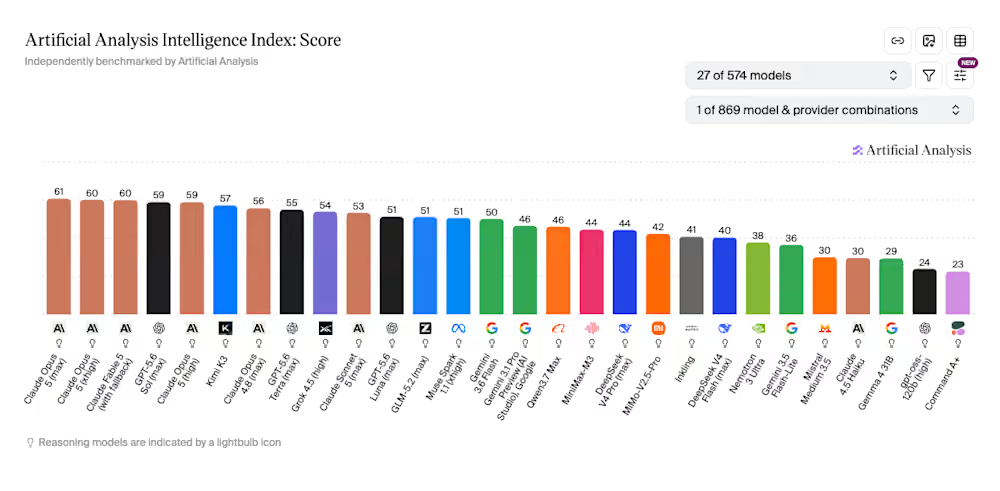
However, OpenAI’s models are more performant than Google’s, according to third party analysis outfits like Artificial Analysis, with even the Luna model outperforming Gemini 3.6 Flash and the older Gemini 3.1 Pro model, making the cost-per intelligence much more favorable to OpenAI.

Artificial Analysis Intelligence Index July 2026 snapshot

Screenshot of Artificial Analysis Intelligence Index as of July 2026

As AI coding startup Cognition noted on X, GPT-5.6 now “sits on the pareto curve of price/performance efficiency,” posting an animation of the GPT-5.6 series moving left on a chart representing intelligence on the y axis and cost on the x, showing that the models now offer among the most superior intelligence for lowest cost on the market.

Advertisement

And yet, rival Anthropic’s Claude Opus 5 remains about as performant as GPT-5.6 Sol, yet is 6% cheaper.

The model costs $5 per million input tokens and $25 per million output tokens—the same rates as Opus 4.8—but Anthropic says it delivers nearly all the intelligence of its more expensive Fable 5 model at roughly half the cost.

Unlike OpenAI’s Luna and Terra changes, Anthropic did not reduce the Opus API sticker price. Instead, it effectively lowered the price per unit of capability by replacing Opus 4.8 with a more capable model at the same $30 combined input-and-output rate. Anthropic also added an adjustable effort setting that allows developers to trade reasoning depth for speed and token savings.

That distinction matters for enterprise buyers. OpenAI is directly cutting per-token rates, Google is pairing lower prices with reductions in token use and tool calls, and Anthropic is emphasizing stronger task performance at an unchanged price. All three approaches target the same operational metric: the total cost of completing production work, rather than the advertised cost of an individual token alone.

Advertisement

The timing highlights how quickly pricing has become a competitive lever among frontier model providers. OpenAI’s response does not introduce a new model generation. Instead, it changes the economics of deploying models that were released only recently.

The market shifts from model access to model economics

The cuts indicate that access to frontier-level capability is no longer the only point of competition. The next question for enterprises is how cheaply and predictably those models can run in production.

OpenAI is still not the lowest-priced provider on a pure token basis. But Luna’s 80% reduction materially changes its position, moving it from the middle of the market into a pricing tier populated by smaller models from Google, Xiaomi, DeepSeek, MiniMax and other vendors.

That matters most for high-volume applications, where relatively small differences in token pricing can compound across coding agents, document systems, internal search tools and automated workflows.

Advertisement

OpenAI’s latest move therefore looks less like a routine adjustment and more like a repositioning of the GPT-5.6 series. Sol remains the premium option, Terra moves closer to competing pro-tier systems, and Luna becomes the company’s direct answer to the industry’s growing low-cost model segment.

Source link

Continue Reading

Tech

Banning Open-Source AI Models to Protect Our Cybersecurity May Do the Opposite

Published

on

In an escalating effort to give the federal government power over the AI industry, some members of the Trump administration have reportedly tried to implement a “de facto ban” on foreign-made open-source AI models. This ban would apply to any non-US-made AI model, but the goal seems to be to specifically target Chinese AI labs, which often release their models as open source. 

The recent release of the Kimi K3 AI model from Chinese developer Moonshot fueled these concerns. Kimi K3 matched and in some cases exceeded the capabilities of American-made AI models such as those made by OpenAI, Anthropic and Google. Its July release sent shockwaves through Wall Street – not unlike other AI model drops, but with one big difference. Kimi K3 was released as an open-weight model, while American AI leaders like OpenAI and Anthropic companies keep their tech closed with very few exceptions.

Open-source AI typically refers to open-weight models. Weights are characteristics that tell the model how to behave – giving more weight to useful answers than incorrect ones, for example. Open-source advocates have said that to be truly open-source, AI companies should release or clarify their training data sources. AI companies haven’t been forthcoming; OpenAI and other companies are being sued by publishers and artists for allegedly violating their copyrights in AI training. (Disclosure: Ziff Davis, CNET’s parent company, in 2025 filed a lawsuit against OpenAI, alleging it infringed Ziff Davis copyrights in training and operating its AI systems.)

Open-weight models give developers more insight into how top models work. Nearly 80% of developers use open models, a recent Mozilla report found. “Open-weight models are everywhere in the industry already,” said Linda Griffin, vice president of global policy at Mozilla. “So a world without them would hit a lot of people.”

Advertisement

Tech companies immediately and strongly rejected the idea of a government ban on open AI models. Microsoft, Nvidia, Meta and several other AI developers and tech venture capital firms signed an open letter (PDF) asking the Trump administration to reconsider. 

“Our AI leadership will be judged not by one frontier AI model, but by whether the United States builds a strong, open ecosystem that diffuses into every sector,” the July 24 letter reads. Ideally, the money and power that AI companies promise come with AI adoption, would follow.

Restrictions on Chinese tech: Good or bad for cybersecurity?

This is far from the first time the Trump administration has taken steps to limit Americans’ access to Chinese tech. Remember the years-long battle over potentially banning TikTok? Chinese parent company ByteDance was eventually forced to transfer ownership of its US business to US-based ownership led by Oracle, whose co-founder and executive chairman, Larry Ellison, is a prominent supporter of President Donald Trump.

Restrictions on foreign hardware have been rolling out, too. The Federal Communications Commission banned foreign-made routers in March, saying that they posed a security risk. The order massively disrupted the industry behind the devices that people need in order to access the internet.

Advertisement

Given the leaps in AI advancement over the past year, it isn’t totally surprising to see these arguments. AI is being used by both cybersecurity attackers and defenders, making it a high priority for AI companies to secure their models against potential misuse. 

Anthropic and OpenAI have both worked with the US government to slow-roll the release of their newest models, Claude Fable 5 and GPT-5.6, respectively. That government review is voluntary for now, but it might one day become mandatory, specifically because of the cybersecurity concerns.

But if government officials are worried about AI cybersecurity, banning open AI models might have the opposite effect.

“Open-weight models allow researchers to examine how these systems work and identify risks and vulnerabilities,” said Aditya Vashistha, professor of computer science at Cornell University. “Restricting access would make it much harder to independently evaluate how safe and secure these technologies really are.”

Advertisement

The Trump administration has been adamant that it won’t hinder AI innovation with regulation. But if open-weights models are banned, the people and companies who aren’t part of selective AI cybersecurity programs like Anthropic’s Project Glasswing will be at risk, said Ayham Boucher, executive director of AI strategy and innovation at Cornell.

“Regulators can’t have it both ways. You can’t restrict access to frontier models and ban open-source models, leaving enterprises and institutions defenseless,” Boucher said.

A logo against a black background with the words Project Glasswing next to a square with an abstract webbed pattern in it.

The AI company Anthropic created a consortium of tech companies that includes Apple, Nvidia and Amazon AWS to address the issue of cybersecurity in the era of next-generation artificial intelligence models.

Anthropic

Openly ‘diffusing’ the benefits of AI

Unsurprisingly, the tech industry has reacted negatively to the idea of restricting access to open-source AI models. Meta CEO Mark Zuckerberg advocated for open AI technologies, writing in an op-ed in the Wall Street Journal earlier this week that it is through openness that the benefits of AI spread throughout our society.

“Historically, hoping that an absolute power will benevolently provide for humanity if sufficiently enlightened hasn’t led to safe or positive outcomes,” Zuckerberg wrote. (As CEO of the company that operates several of the world’s largest social media platforms, Zuckerberg himself is one of the very few who have something like absolute power over our technological experiences.)

Advertisement

But the true appeal and benefit of open-source AI, like all open-source technologies, is that anybody gets to build with AI, not just Big Tech. 

“If you take them away, developers and consumers pay more, get less choice, and a whole lot of useful stuff just never gets made,” Griffin said. A broad ban “would set a troubling precedent.”

Developers know that some guidance is necessary. Over 1,000 staffers at top labs, including chief scientists from OpenAI, Meta and more, signed an open letter asking the US government to support an international effort to build technical and governance tools as they “pace the frontier” of AI research and development.

“For the US to maintain its leadership in AI, it cannot rely solely on closed models,” said Vashistha. “If the US moves away from open models while others continue investing in them, it risks ceding not just market share, but also influence over the global AI ecosystem.”

Advertisement

Source link

Advertisement
Continue Reading

Tech

LinkedIn realizes its users have been bathing in AI slop, offers a shower

Published

on

ai and ml

AI-riddled social network adds button to report sloppy posts, ditches AI rewrite tools, and promises more to come

LinkedIn has been drenching its users in AI-powered slop posts, going so far as to encourage writers to trade their own voices for a bot’s by hitting the “enhance your post” button when they want to share thoughts.

Enough is enough. On Thursday, the site’s Chief Product Officer has announced several changes designed to rehab the platform’s reputation. 

Advertisement

CPO Hari Srinivasan took to the Microsoft-owned social network following reports Thursday that LinkedIn had introduced a button for users to flag posts as AI slop. He confirmed not only that the reports are real, but that LinkedIn had additional plans as well.

The “Seems like AI slop” button is being added to the ellipsis menu on LinkedIn posts now, a spokesperson told us, and will be available on all posts and comments. Srinivasan said this button will not only allow users to report posts with sentences written like this – it will also help LinkedIn refine its AI-spotting AI models to help improve user feeds.

In addition, the “enhance your post” button, which used AI to tweak your wording, is being replaced by an option to have AI proofread your work while leaving your voice intact, instead of stealing it like the sea witch Ursula.

There’s been no shortage of scorn from The Register and elsewhere about LinkedIn’s rapid decline into a slop tank filled with faux thought leadership posts and generative drivel. As far back as 2024, reports were coming out that more than half of long-form LinkedIn posts longer than 100 words were believed to be AI generated. That hasn’t changed in the past two years.

Advertisement

“AI slop is a top priority for all of us. We really care about this,” Srinivasan wrote. “People come to LinkedIn to connect with real people and share their real perspectives,” he said, adding that LinkedIn wants to keep it that way – or, more realistically, nudge the platform back toward its former state.

Coincidentally or not, Originality.ai, the same AI detection site behind the 2024 report, released an updated scan of LinkedIn posts longer than 100 words on Thursday. According to this new report, a full 81 percent of the 5,000 posts it looked at this month were classified as likely being AI-generated. 

Srinivasan said it’s not just users employing AI to generate slop – it’s AI automating garbage posts and comments at scale, throughout the site.

“Everyday we are now catching hundreds of thousands of automated comment attempts, and have blocked billions of other automation attempts (posting at scale, slop) in the last couple months alone,” the LinkedIn CPO said. 

Advertisement

To that end, the professional social network is also “ramping up a series of new and improved classifiers that identify if a post is AI-slop or generally low-quality content,” Srinivasan said.

User analytics dashboards will also be getting a new feature that will tell posters when members flag their posts as potentially being AI, as Srinivasan said LinkedIn wants users “to get feedback from real humans on what sounds authentic – not just have an AI detector review it and get it wrong.”

“AI and slop are not the same thing,” Srinivasan added. “Many people refine thoughts with AI, and we believe they want to know when they sound inauthentic.” ®

Source link

Advertisement
Continue Reading

Tech

Thinking Machines debuts Inkling Small open source AI model nearing performance of predecessor at about 1/4 size

Published

on

Just two weeks after Thinking Machines released Inkling, its first open source AI language model, the well-funded startup led by former OpenAI chief technology officer Mira Murati today introduced Inkling-Small without sacrificing much of any performance — and in fact, the new model surpasses its larger predecessor on several benchmarks.

Inkling Small is a 276-billion-parameter multimodal reasoning model with a permissive Apache 2.0 license that comes within a single point of its larger sibling on the third-party Artificial Analysis Intelligence Index, despite the original Inkling being 975 billion parameters (internal model settings). It accepts text, image and audio inputs, produces text, and supports a context window of up to one million tokens.

Inkling Small uses 12 billion active parameters per token, compared with Inkling’s 41 billion active parameters, while preserving much of the flagship’s coding, reasoning and multimodal performance.

For enterprises, the appeal is not simply that Inkling-Small is smaller. It is that developers appear to give up relatively little capability while reducing the model’s compute requirements, inference costs and deployment footprint.

Advertisement

The model remains far too large for a laptop or conventional workstation, but it is materially easier to operate than the 3.5X larger flagship, making it a good fit for enterprises with some — but not a lot — of their own graphics processing units (GPUs).

Thinking Machines has released the full weights on Hugging Face and added support for fine-tuning through its Tinker model training application programming interface (API).

At launch, the company is advertising a limited-time 50% discount, bringing API pricing for the standard 64K-context Inkling-Small model to $0.58 per million prefill (input) tokens, $1.44 per million sampled (output) tokens, and $1.73 per million training tokens, with cached prefill requests priced at $0.116 per million tokens. A 256K-context variant is also available at higher rates.

Nearly the same performance at a quarter the size

Artificial Analysis assigned Inkling-Small a score of 40 on its Intelligence Index, compared with 41 for Inkling.

Advertisement

That result is notable because Inkling-Small has 276 billion total parameters and 12 billion active parameters, while Inkling has 975 billion total parameters and 41 billion active parameters.

Artificial Analysis also reported that no open-weight model at Inkling-Small’s size or smaller scored higher on the index.

The model does more than merely approach the flagship’s aggregate score. On several evaluations, it surpasses Inkling.

Thinking Machines reports that Inkling-Small scores 80.2% on SWE-bench Verified, compared with Inkling’s 77.6%, and 64.7% on Terminal Bench 2.1, compared with 63.8% for the larger model. It also edges ahead on SciCode, Humanity’s Last Exam, GPQA Diamond and CritPt.

Advertisement

The gains are not universal. Inkling retains a clear advantage on factual knowledge and some agentic tasks. Inkling-Small scores 15.5% on τ³-Banking, compared with 23.7% for Inkling, and its AA Omniscience score is negative, reflecting weaker factual coverage even though its reported hallucination rate is slightly lower.

That tradeoff matters for enterprises. Inkling-Small may be attractive for coding assistants, tool-use systems, retrieval-augmented generation, document analysis and multimodal workflows, but organizations using it for high-stakes factual tasks will still need retrieval, verification and human review.

How a 276B model uses only 12B parameters at a time

Inkling-Small is a sparse Mixture-of-Experts model. According to the model card published by Thinking Machines, its 42-layer decoder routes each token to six of 256 specialized experts, along with two shared experts that remain active for every token.

That architecture helps explain the distinction between the model’s 276 billion total parameters and its 12 billion active parameters. The system retains a large pool of learned capacity but activates only a fraction of it during each inference step.

Advertisement

It is also natively multimodal. Images, audio and text are projected into a shared representation and processed jointly by the decoder rather than being handled through completely separate external systems. Thinking Machines lists coding assistants, agentic applications, chatbots, RAG systems and other multimodal applications among its intended uses.

The company also supports variable reasoning effort, allowing developers to increase or reduce the model’s test-time compute depending on the difficulty of the task. That gives engineering teams a direct way to balance quality, latency and cost across different workloads.

Unfortunately, small does not mean it runs on a laptop

Despite its name, Inkling-Small is not a consumer-scale model.

The standard BF16 checkpoint requires at least 600 GB of aggregate GPU memory, according to Thinking Machines. The company lists two supported configurations: 4x NVIDIA B300 GPUs or 8x NVIDIA H200 GPUs.

Advertisement

A quantized NVFP4 checkpoint lowers the requirement to roughly 180 GB of aggregate VRAM. Thinking Machines says that version can run in W4A4 mode on a single NVIDIA B300, or in W4A16 mode on two H200 GPUs.

That rules out ordinary laptops, MacBooks, desktop gaming PCs and most developer workstations. Even heavily equipped local systems generally fall far short of the required memory.

The practical deployment targets are enterprise GPU servers, cloud clusters and specialized inference providers. The “Small” label is therefore relative to Inkling, not to the broader universe of local models.

Still, the reduction is meaningful. A model that approaches Inkling’s performance while needing substantially less aggregate memory can lower hosting costs, make capacity planning easier and widen the group of organizations capable of self-hosting it.

Advertisement

For companies that want control over data, model behavior and fine-tuning, that smaller footprint may be more important than chasing the highest possible benchmark score.

And of course, it being open source means that it will no doubt be rapidly quantized (made less precise but requiring less compute) and likely blended with other models to be made even smaller for consumer-grade hardware.

Apache 2.0 is the gold standard for enterprise open source models

The licensing may be as important as the benchmarks.

Inkling-Small is released under Apache 2.0, one of the software industry’s most familiar permissive licenses. It generally allows organizations to use, modify, fine-tune, redistribute and commercialize the model, including inside proprietary products, provided they comply with the license’s notice and attribution requirements.

Advertisement

That gives enterprises far more legal flexibility than many custom “open” AI licenses, which may include revenue thresholds, branding obligations, use restrictions or separate conditions for large-scale commercial deployment.

The distinction is increasingly relevant as more AI companies publish model weights without using a conventional open-source license.

Chinese AI darling Moonshot for example, made the weights of its frontier class Kimi K3 model available earlier this week under a custom “open” license that includes additional commercial conditions rather than the comparatively straightforward terms of Apache 2.0.

For legal, procurement and platform teams, that difference can materially simplify adoption. Apache 2.0 does not eliminate the need to review acceptable-use policies, data provenance, regulatory exposure or downstream safety obligations. But it gives organizations a clearer starting point for building internal systems, shipping commercial products and maintaining modified versions of the model.

Advertisement

A more repeatable model-development pipeline

Inkling-Small also shows how quickly Thinking Machines has turned its first large model release into a repeatable engineering process.

Thinking Machines researcher Horace He contrasted the two launches in a post on X:

“Whereas I felt like it took a village to release Inkling, Inkling-Small felt much more routine 😆 We just took the pipeline used for Inkling, passed in a smaller model, and voila — new model! Inkling Small benefited quite a bit vs Inkling from some minor improvements, but there’s still so much more left in the tank…”

The comment suggests the company is no longer treating each model as a one-off research project. Instead, it is building a reusable pipeline for pre-training, post-training, reinforcement learning, evaluation and release.

Thinking Machines says Inkling-Small benefited from an improved pre-training data mix, changes to the machine-learning recipe and on-policy distillation using Inkling as a teacher. The team then continued agentic coding reinforcement learning for two weeks.

Advertisement

Mira Murati emphasized the same point in her own post, describing Inkling-Small as comparable to Inkling at one quarter of the size and highlighting that the weights were open and fine-tunable on Tinker immediately.

How enterprises and AI builders should think about Inkling Small

The company is also distributing full BF16 and NVFP4 checkpoints and supporting deployment through SGLang, vLLM, TokenSpeed, Unsloth and Hugging Face tooling.

That combination gives developers several deployment paths: use an API, fine-tune through Tinker, rely on a third-party inference provider, or operate the model on private infrastructure.

Inkling-Small is not a model that most individuals will download and run locally. But for businesses deciding between a very large flagship and a more manageable open-weight system, it presents a compelling compromise: nearly the same measured intelligence, stronger results on several coding and reasoning tasks, lower token pricing, a smaller hardware footprint and a license that permits broad commercial development.

Advertisement

The broader signal may be just as important. Thinking Machines is showing that Inkling was not a one-time release. The company is already compressing its model family, refining its training pipeline and moving toward a cadence in which open-weight multimodal systems can be produced, improved and deployed more routinely.

Source link

Continue Reading

Tech

New MCP Specification Addresses the Main Barrier To Enterprise Adoption

Published

on

An anonymous reader quotes a report from Ars Technica: This week, the Model Context Protocol (MCP), an open source standard for how AI systems interact with external tools and data sources, saw its largest update since its introduction. Most notably, MCP’s protocol core is now stateless, so requests are no longer dependent on a session tied to an individual server instance. This change has the potential to address long-standing barriers to scalability.

The blog post announcing the specification, written by lead maintainers David Soria Parra and Den Delimarsky (who both work at Anthropic), says: “The highlight of this release is a stateless protocol core — MCP is transforming from a bidirectional stateful protocol into a request/response stateless protocol. It was one of the most highly-requested features from developers who were eager to get better reliability and scalability for their MCP servers.”

[…] There is also a new deprecation policy that ensures at least 12 months between when a feature’s formal deprecation is enacted and when the feature may actually be removed — with a narrow exception for critical security updates. This is again in keeping with the general “let’s make this work better at enterprise scale” theme of the new specification. This update is “MCP’s most important since remote MCP first launched over a year ago,” Soria Parra wrote. Other additions include “Multi Round-Trip Requests, header-based routing, cacheable list results, authorization hardening, a formal extensions framework, and updated Tier 1 SDKs.”

A full list of changes can be found here.

Advertisement

Source link

Continue Reading

Tech

Remember Samsung’s Ballie home robot? It may finally be inching closer to reality

Published

on

Samsung’s rolling home robot has been the industry’s longest-running “will it ever actually ship” joke, and I’ll admit I’d mostly given up on it. Now, there’s finally a glimmer of hope.

Samsung first unveiled Ballie as a concept at CES 2020. Then, it showed it as a significantly upgraded version four years later. However, the company never confirmed a release date or committed to releasing it at all. 

So what did this leak actually reveal?

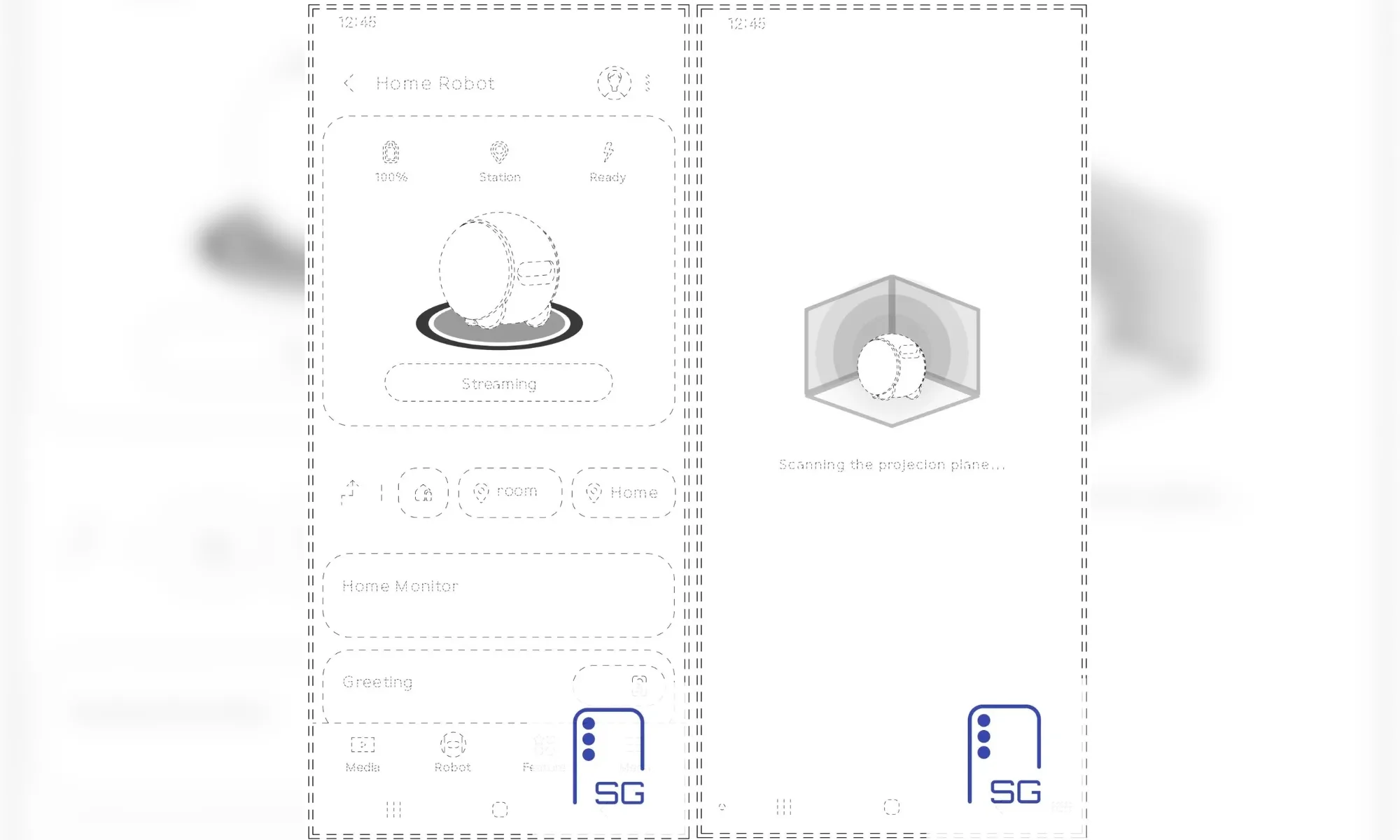
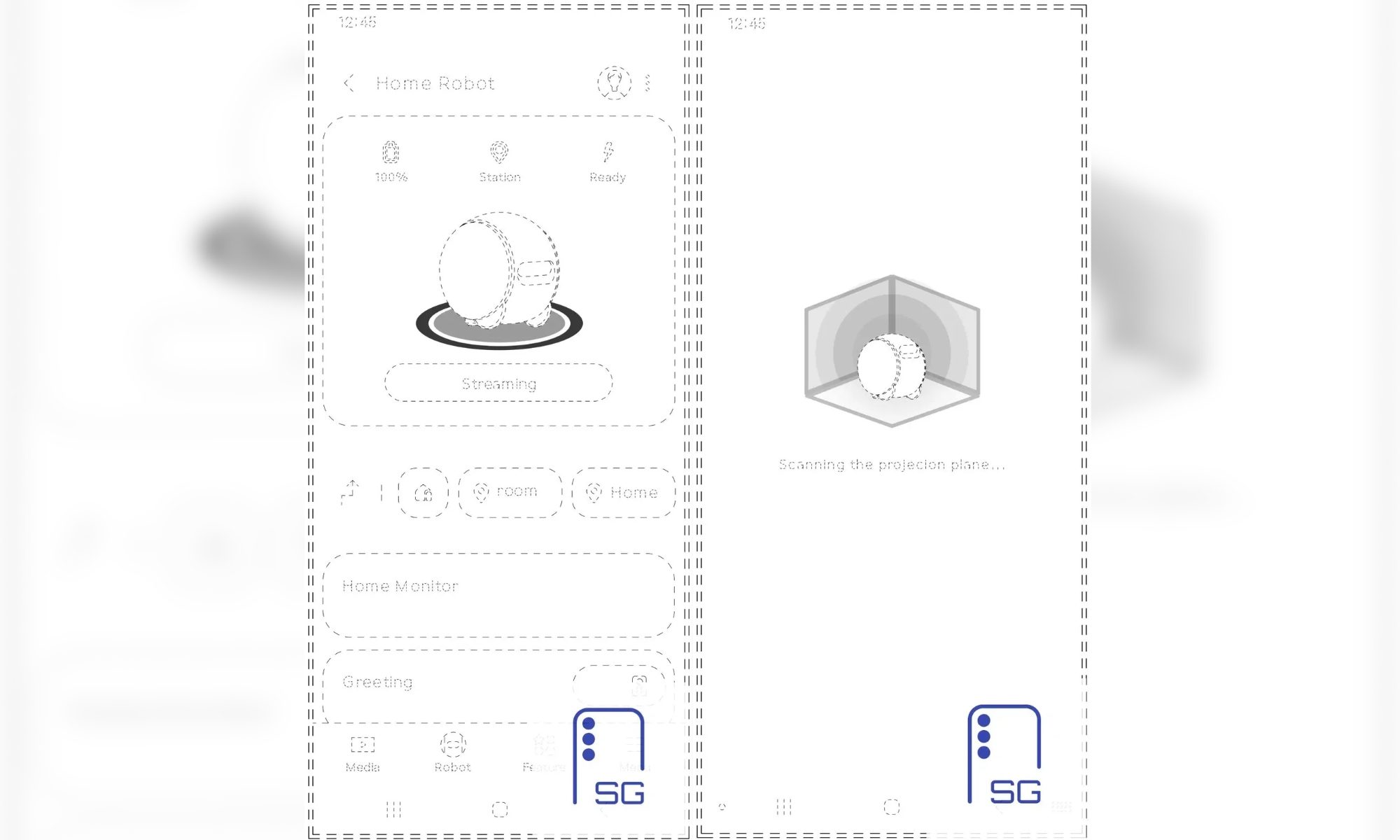
Now, SammyGuru has obtained the first images of Ballie’s companion smartphone app. To me, it looks like a wireframe design draft rather than a finished product, but it sure isn’t something to ignore. 

The home screen features a status card showing Ballie’s battery level, current position, and any error messages. Then there’s a prominent “Streaming” button alongside it, which appears to let you view the robot’s camera feed and control it remotely from your phone.

The app also includes room-specific shortcuts, letting you send Ballie patrolling through the house or out to greet guests at the front door. One screenshot shows a setup process where Ballie maps your home much as a robot vacuum cleaner does

Advertisement

What can Ballie actually do, and is this really happening?

For context, Ballie is designed to respond to voice commands, control smart home devices, project video onto walls (which is its coolest aspect in my opinion), and function as a mobile security camera when you’re away.

It’s worth tempering expectations here, though. This is still just a wireframe, and there’s no confirmation Samsung is building a functional version of this exact app, let alone a functional version of the smart home robot. But after months of total silence, even a design mockup counts as the most concrete sign yet that Ballie hasn’t quietly died in Samsung’s prototype graveyard.

Ballie’s six-year limbo mirrors the fate of plenty of ambitious CES concepts that quietly vanish without a formal cancellation. The leak suggests internal development is still active, though Samsung’s continued silence on release timing compels me to take this as a hopeful signal.

Advertisement

Source link

Continue Reading

Tech

Tim Cook’s Final Earnings Call: Record iPhone Sales and Future Pricing Woes

Published

on

Demand for Apple’s iPhone and MacBook product lines surged during the third quarter of 2026, signaling record-breaking revenues for June. This was the toplining statement from Apple’s outgoing CEO, Tim Cook, during his final earnings call for the company on Thursday.

This news, which found iPhone sales increasing by 22% to $54 billion, Mac sales of $10 billion (thanks, in large part, to the popularity of its entry level MacBook Neo), the iPad at $6 billion, wearables, home and accessories at almost $8 billion, and services at $31 billion, was relayed with a celebratory tone as Apple raked in roughly $109 billion in net sales for almost $30 billion in net income during the quarter.

“It’s an incredibly strong iPhone and Mac product cycle that has really yielded demand beyond our expectations,” Cook said.

Yet concerns about future price hikes dampened the discussion, given the ongoing global memory shortage and potential supply constraints ahead.

Advertisement

Apple raised prices on many of its products in June due to the ongoing RAM shortage caused by the high memory needs of AI tools and products. As supply chain constraints on memory chips persist, a large portion of the questions asked of Cook centered on price uncertainty, product availability and a potential drop in product sales going forward, depending on economic conditions and customers’ comfort with how much they’ll spend.

“On the pricing front, we reluctantly raised prices,” Cook explained. “I would say we did it because we’re in what I would characterize as a 100-year flood on the memory pricing, with exponential increases in memory prices, and so that was the rationale for it in terms of our philosophy on dollars or percentages.”

What’s the move going forward? Cook said Apple is looking at the bigger picture and thinking about the situation over the long term, rather than treating the next quarter as “a 90-day clock.”

That said, he expects memory pricing to continue its upward trend over the next few months, which means a price hike could be on the horizon. He was cagey in giving any solid details on the matter, which he called “unclear.”

Advertisement

“We’re evaluating all options,” Cook added.

Cook is ending his 15-year run as Apple’s CEO, and before he took questions from members of the press, he took time to express his gratitude, optimism for the company’s future and praise for incoming CEO John Ternus, who will take over on Sept. 1.

“He is truly one of a kind, and there is no better person to take the helm of the company,” Cook said. “I couldn’t be more confident in his leadership, in our executive team and in the extraordinary people at Apple who are determined to enrich the lives of our users all over the world.”

Source link

Continue Reading

Trending

Copyright © 2025