
Join Mikko Hyppönen and security leaders from the NFL, CHANEL, and Atlassian for a two-hour digital summit on what AI-speed attacks change, what defenders should stop doing, and how to validate, decide, fix, and re-validate at machine speed.
Tech
ShinyHunters uses WAF bypass trick in Oracle PeopleSoft attacks

The ShinyHunters extortion gang is using a URL-encoding trick to bypass web application firewall rules that mitigate the Oracle PeopleSoft CVE-2026-35273 flaw, allowing the threat actors to resume widespread exploitation of a flaw on vulnerable servers.
Google’s Mandiant and Threat Intelligence Group (GTIG) say this new technique has allowed the threat actor to once again target PeopleSoft servers that had not applied security updates and instead blocked access to the vulnerable PSEMHUB endpoint using a WAF.
On June 10, BleepingComputer first reported that the ShinyHunters extortion gang was targeting Oracle PeopleSoft servers using a zero-day vulnerability, allowing them to steal data from 100 organizations.
The next day, Oracle fixed the PeopleSoft zero-day as CVE-2026-35273, stating that it allows unauthenticated remote code execution.
Google also reported that same day that ShinyHunters, whom they track as UNC6240, was exploiting the CVE-2026-35273 flaw in attacks on the education sector, confirming BleepingComputer’s reporting.
At the time, Mandiant advised organizations that could not immediately install the security updates or disable the Environment Management Hub to block external access to the vulnerable `/PSEMHUB/*` endpoint.
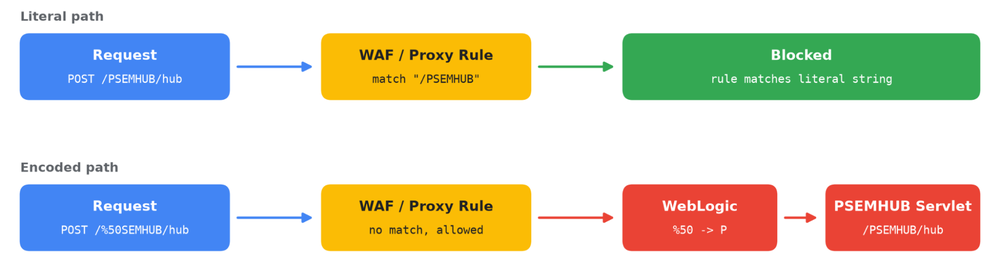
However, in a new report, Google says ShinyHunters has now modified its exploit to bypass WAF rules that look for this literal path, rather than encoded versions of it.
For example, instead of sending requests to:
/PSEMHUB/
the attackers are requesting:
/%50SEMHUB/
The ‘%50’ sequence is the percent-encoded version of the letter ‘P’.
Mandiant says many WAFs and reverse proxies compare the literal request path before decoding it, causing rules designed to block ‘/PSEMHUB/’ to miss the encoded version.
Oracle WebLogic, on the other hand, decodes the encoded ‘P’ and routes the request to the vulnerable endpoint, bypassing the WAF rule.
“This allows the threat actor to reach the endpoint on systems whose operators may have believed their WAF rules had mitigated the exposure,” Mandiant explains.
Source: Mandiant
Google warns ShinyHunters may not always use the ‘%50’ bypass variation, and could switch to other percent-encoded, mixed-case, or other variations of ‘/PSEMHUB/’ to bypass WAFs.
Instead of relying on a web application firewall, Mandiant urges organizations to install the latest security update to protect against CVE-2026-35273.
Organizations are also advised to search WebLogic access logs for requests to ‘/PSEMHUB/’ and encoded variants such as ‘/%50SEMHUB/’ to detect signs of exploitation.
WAF bypass leads to new data-theft attacks
Google says the new wave of attacks has deployed web shells on dozens of systems worldwide within higher education, technology, IT services, healthcare, agriculture, transportation, and government organizations.
“Mandiant recommends that organizations running Oracle PeopleSoft take the following immediate actions. Additional remediation and hardening guidance is included later in this post,” warns Mandiant.
Before attempting exploitation, the attackers typically send between five and 15 POST requests to `/%50SEMHUB/hub` containing serialized Java objects.
On vulnerable systems, these requests return information about the host operating system without writing files or disrupting the service, allowing ShinyHunters to determine whether a server can be exploited quietly.
Once they determine a system is vulnerable, the threat actors exploit the flaw again to execute commands directly in memory or deploy JSP web shells.
Google says the attackers deploy an ‘x.jsp’ web shell for command execution and ‘u.jsp’ and ‘u2.jsp’ shells for uploading larger files.
On compromised Windows servers, ShinyHunters used these shells to deploy an executable named ‘Ple64.exe’, which masquerades as a signed Light Alloy media player installer but installs a backdoor tracked by Google as SIDEEYE.
The SIDEEYE malware is used to steal credentials, for process and file management, to create interactive reverse shells, and for reverse proxy functionality.
The threat actors also deployed the open-source Neo-reGeorg tunneling toolkit via the ‘tunnel.jsp’ and ‘tunnel.jspx’ files.
This toolkit allows SOCKS5 proxy traffic to be tunneled over normal HTTP and HTTPS connections, letting the compromised PeopleSoft server be used to spread laterally into the internal network.
Mandiant also observed ShinyHunters using the legitimate MeshAgent remote management software to maintain access to compromised Linux systems.
ShinyHunters previously claimed a new PeopleSoft zero-day
These new attacks come after ShinyHunters claimed that they breached FBI systems using what they described as a new Oracle PeopleSoft zero-day vulnerability.
ShinyHunters told BleepingComputer on September 22 that the alleged vulnerability allowed remote code execution and was used to access the FBI Jobs platform, then spread laterally into the FBI’s AWS GovCloud infrastructure.
The group claimed it stole between 2TB and 3TB of data related to current and former FBI employees, job applicants, and other internal systems.
At the time, BleepingComputer could not independently verify the alleged zero-day, the claimed lateral movement, or the amount of data reportedly stolen.
The FBI confirmed that it was investigating claims of unauthorized activity affecting FBIjobs.gov but did not confirm that its systems had been breached or that data was stolen.
ShinyHunters has confirmed to BleepingComputer that they used this WAF bypass against FBI Jobs, but continue to claim that they also exploited “NEW unknown vulnerability in the same PSEMHUB component.”


Continue Reading
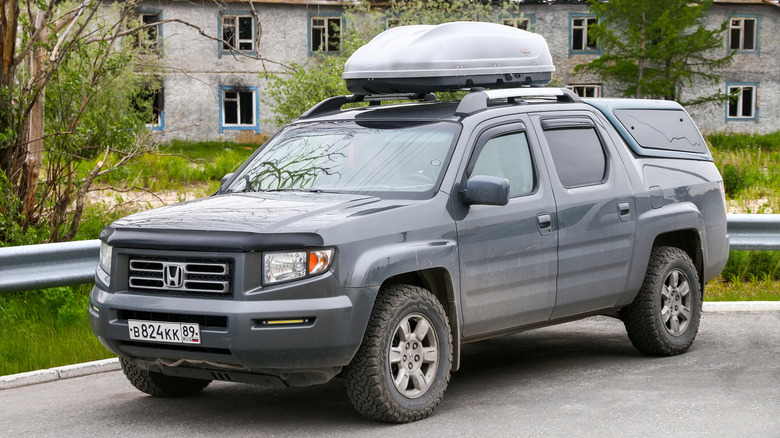
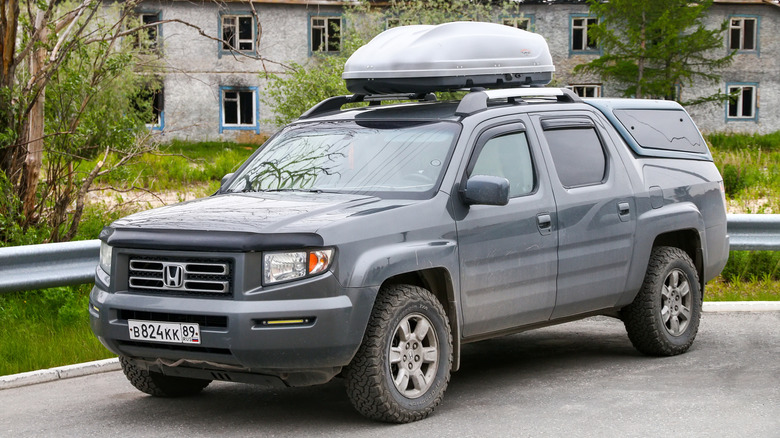
If you own a Honda that has been recalled in 2026, then you know how frustrating the situation can be, especially as the automaker’s problems continue to make headlines. But when it comes to one specific recall involving rearview camera failures, the NHTSA has finally closed its investigation. They found that the replacement wire harness installed under a 2022 recall was not expected to develop the same wear-related failure during a reasonable vehicle lifespan.
The NHTSA’s Engineering Analysis covered 129,092 trucks and was prompted by questions about whether the recall repair would hold up over time. That concern actually stemmed from the original problem, which could cause the rearview camera’s tailgate wire harness to wear down and break. This could happen after repeatedly opening and closing the tailgate. Honda’s 2022 recall covered over 117,000 Ridgelines and called for the harness to be replaced with an improved part.
The NHTSA didn’t open its own Recall Query until June 26, 2024, nearly two years after Honda’s original recall action. That review was upgraded to an Engineering Analysis on February 11, 2025, as the agency continued examining whether the replacement harness could eventually experience the same type of failure. The NHTSA’s findings mean that there is no additional action coming from this investigation, and it ultimately closed its Engineering Analysis.
What the recall means for owners
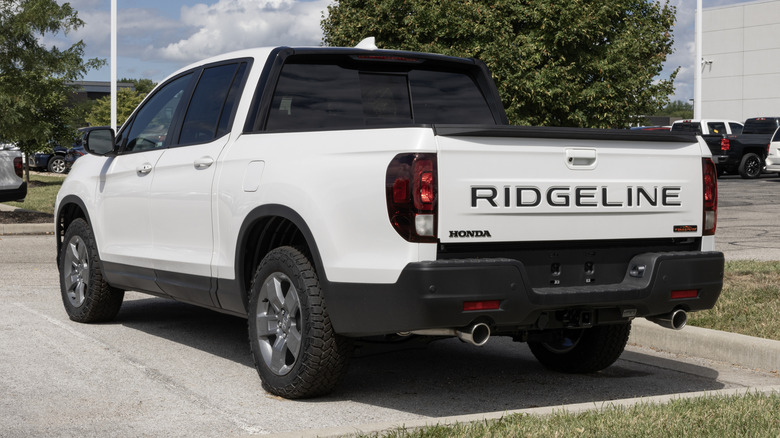
As part of its investigation into Honda’s rearview camera recall, the NHTSA took a closer look at the vehicles and the wire harness itself. The agency’s Vehicle Research and Test Center surveyed Ridgeline owners in Ohio, inspected select vehicles from those responses, and conducted durability testing to try and replicate the original failure. The NHTSA could not duplicate the problem, and it also found that most of the reported camera issues were caused by different problems unrelated to the harness.
Honda’s original 2022 recall perhaps wasn’t as straightforward for some Ridgeline owners in terms of correcting the problem. Honda initially told owners in January 2023 that the replacement parts needed for the repair were not yet available. That remained the case until August of that year when the automaker finally gave the greenlight, notifying customers to schedule a free repair at an authorized dealer. The repair itself involved replacing the RVC tailgate harness with an improved part, which Honda estimated would take about an hour and a half.
For Ridgeline owners who need to check the current status of the recall, the process is fairly simple. The Honda Service Center recall lookup allows vehicle owners to enter their 17-digit VIN to see if there are any active Honda recalls for their specific model. Owners can then schedule the repair through an authorized Honda dealer, where recall-related repairs are done at no charge. That gives Ridgeline owners a way to move forward and get the recall addressed.
A graphics card is rarely bought in isolation. It has to fit the case, the cooling system, the display, the games or applications that will run on it, and increasingly, the kind of work a PC is expected to handle. A compact 1440p gaming machine has little in common with a 4K enthusiast build, while a workstation running local AI models can make entirely different demands on its GPU.
ASUS’s Radeon range reflects those differences rather than trying to force every buyer toward the same specification. The lineup stretches from the Radeon RX 9060 XT through the RX 9070 GRE and RX 9070 XT, with different card designs addressing everything from compact systems and carefully matched white builds to demanding gaming and local AI workloads. All of the graphics cards covered here also come with a three-year warranty, which matters when a GPU is likely to remain one of the most substantial components in a PC for several years.
Choosing between them, then, is less about finding a universally superior card and more about understanding where each one makes sense. The RX 9070 XT is built for buyers who want serious 1440p and 4K gaming performance. The RX 9070 GRE occupies a more measured position for 1440p systems, while the RX 9060 XT makes a stronger case where size and compatibility carry more weight. The Turbo Radeon AI Pro R9700 sits outside that gaming hierarchy altogether, targeting users who need the memory and compute capability for local AI and other demanding workloads.
Start with the kind of PC you are building
A graphics card can be powerful on paper and still be the wrong choice for a particular PC. Case dimensions, cooling, noise, display resolution and the kind of software you use all matter once the card is installed.
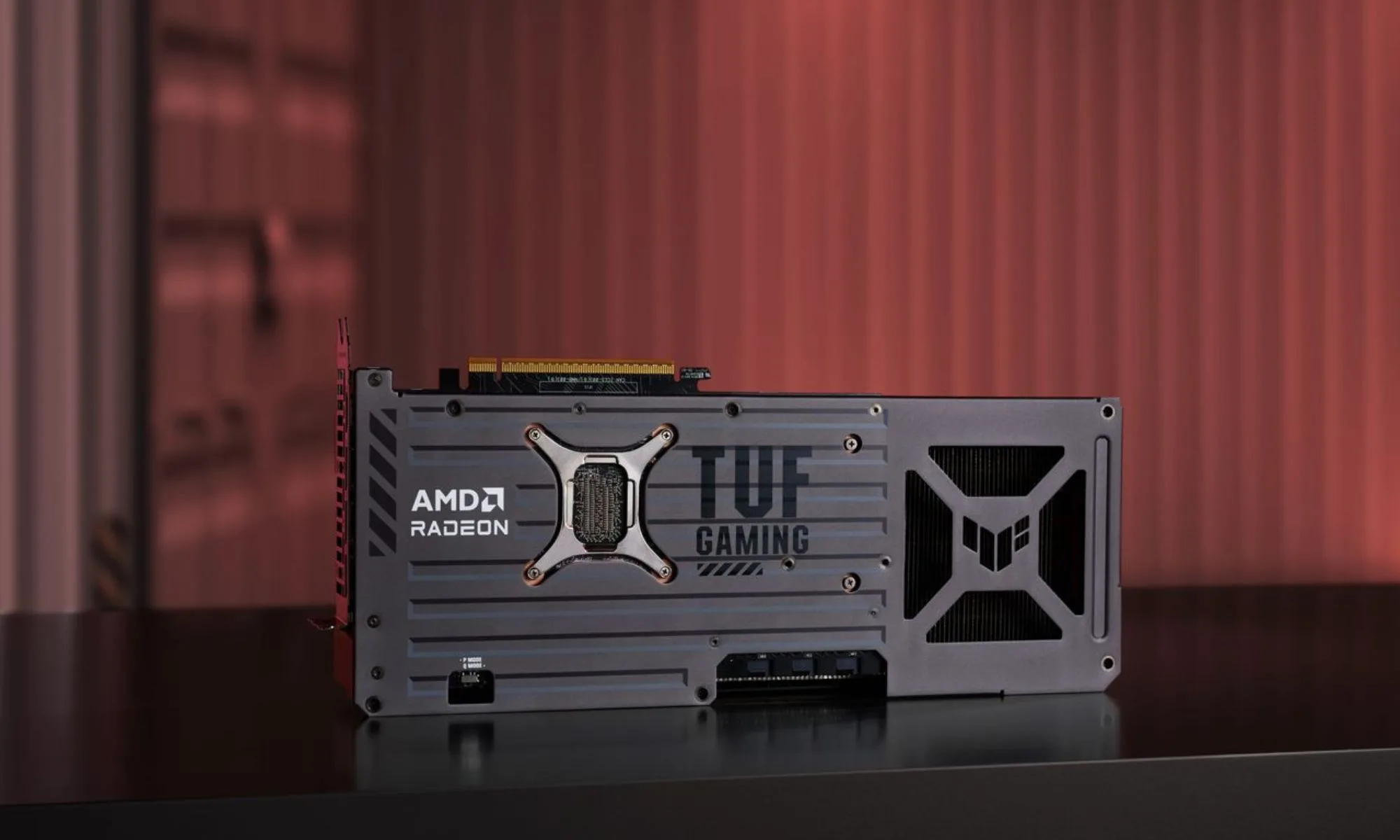
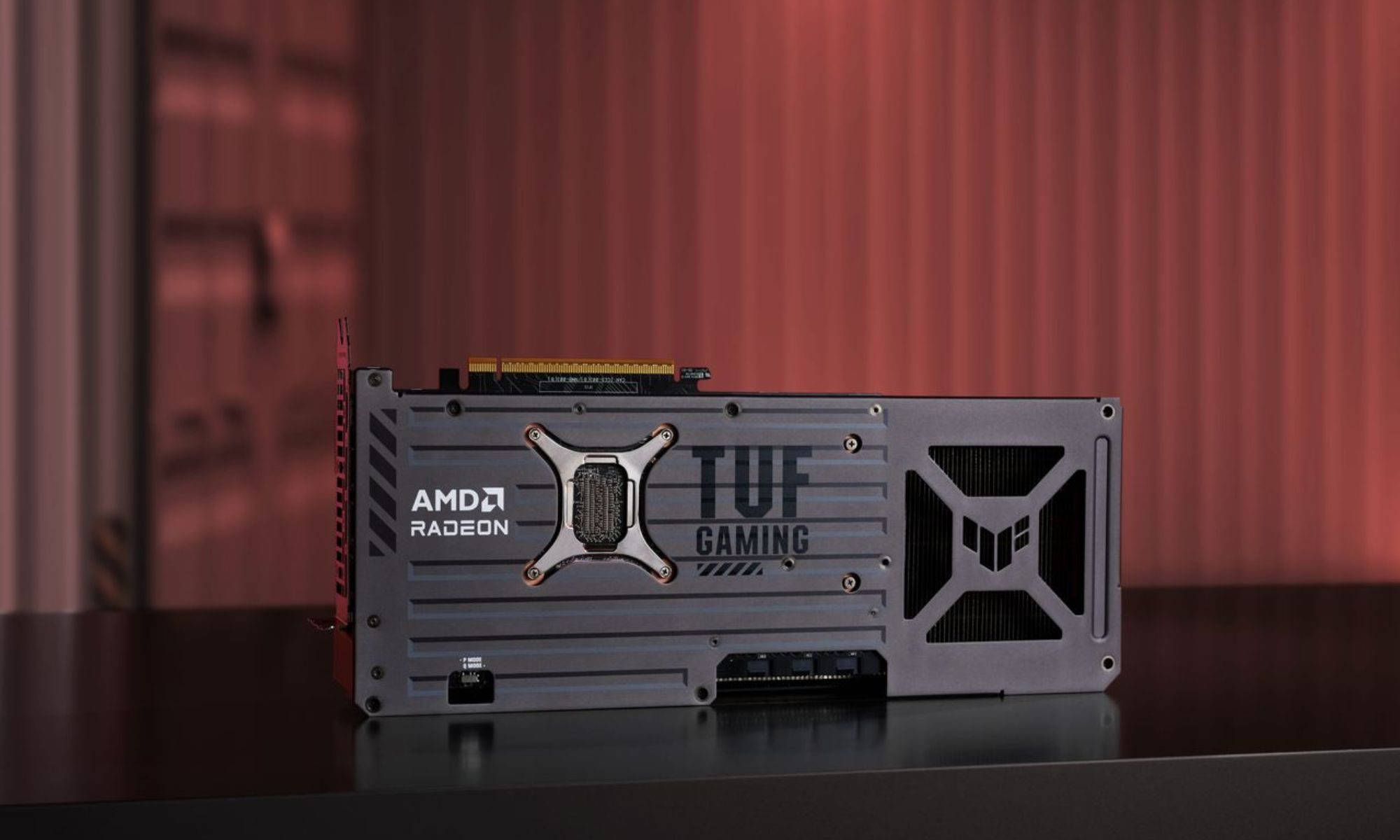
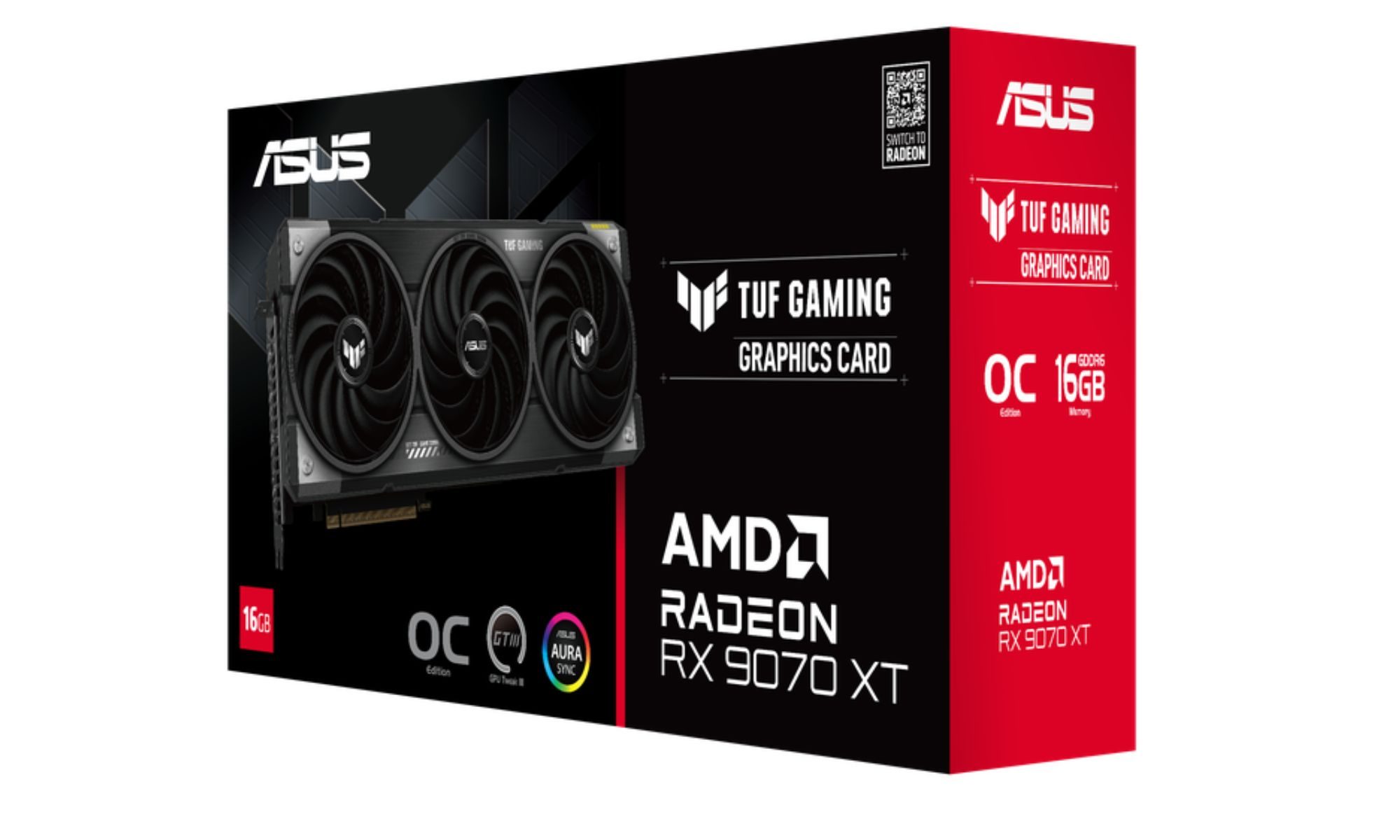
The ASUS TUF Gaming Radeon RX 9070 XT OC Edition is the straightforward choice for someone who wants to push gaming performance without treating the rest of the card as an afterthought. It is built around 16GB of GDDR6 memory and is designed for strong 1440p gaming as well as 4K, with an OC mode reaching up to 3080 MHz boost and 2540 MHz game clock according to ASUS.
The TUF’s cooling system is a major part of the card’s overall proposition. Its 3.125-slot design uses three Axial-tech fans, a large fin array and a phase-change GPU thermal pad, while dual-ball bearings are designed for long-term use. A metal exoskeleton adds rigidity while also allowing additional ventilation. The result is a card that makes sense when performance is the priority and the PC has enough room to accommodate a substantial cooler.
The TUF model also adds features not found on the Prime or Dual cards, including an illuminated TUF logo and a protective PCB coating designed to help guard against short circuits caused by moisture, dust and debris. ASUS also uses military-grade components designed to support long-term durability and reliable power delivery.
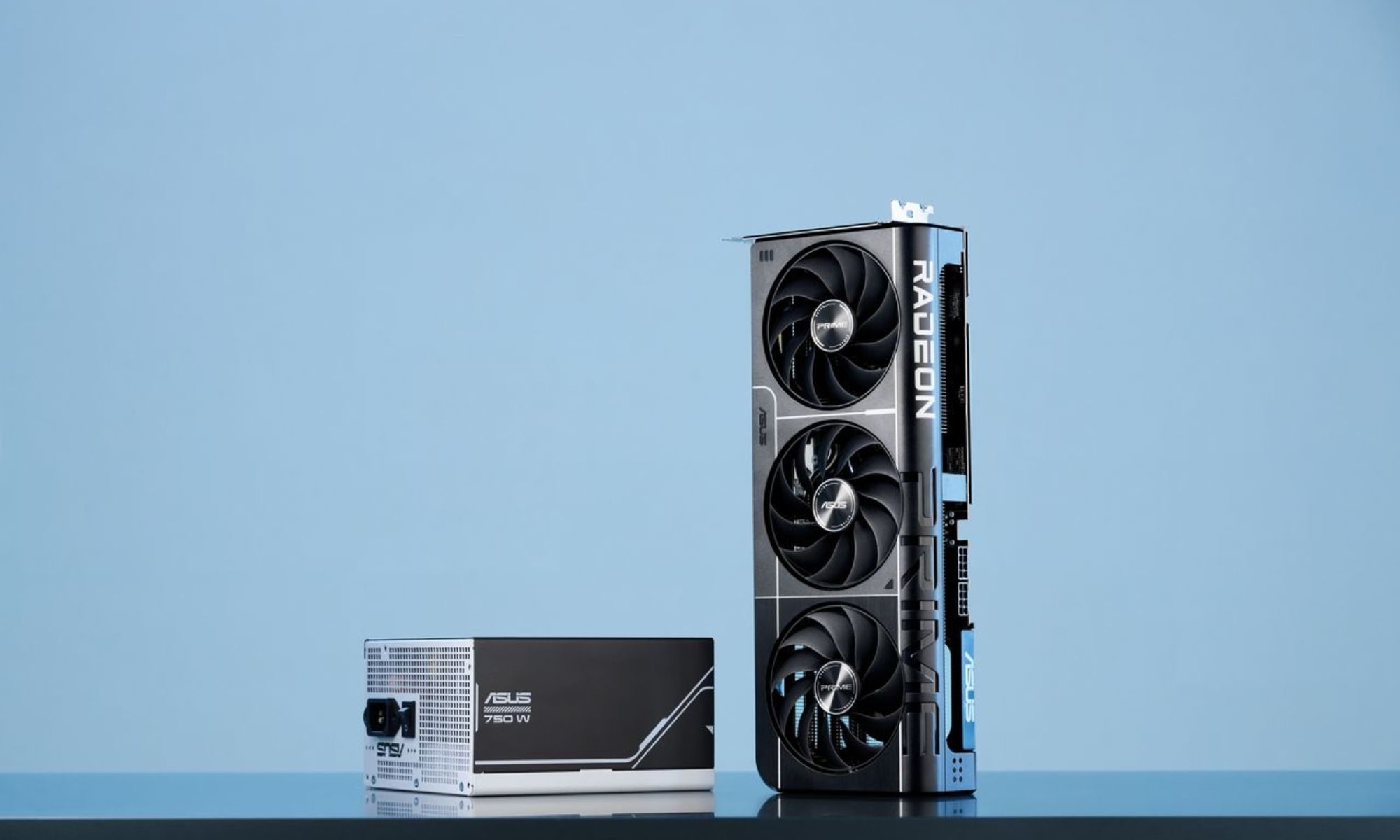
The ASUS Prime Radeon RX 9070 XT OC Edition takes much of the same performance proposition and puts it into a smaller package. It retains 16GB of GDDR6 and is built for 1440p and 4K gaming, but its 2.5-slot design gives compact builds more breathing room. Its OC mode reaches up to 3030 MHz boost and 2480 MHz game clock, while Axial-tech fans, a phase-change GPU thermal pad and dual-ball bearings handle the cooling.
The distinction between TUF and Prime is therefore less about raw performance than the space available inside the case. TUF gives the cooling system more room to work; Prime gives the builder more room to work around the GPU. For a large enthusiast build, TUF’s substantial cooler is an easy trade. In a more compact system, Prime’s smaller footprint can matter considerably more.
Gaming and AI workloads call for different priorities
Not every demanding GPU workload is a gaming workload. A card that makes sense for high-refresh 1440p or 4K gaming can have very different strengths from one designed to run large AI models locally, and the difference becomes particularly important once memory capacity enters the equation.
The ASUS Turbo Radeon AI Pro R9700 is built for that second category. Its 32GB of GDDR6 memory, 256-bit memory interface and bandwidth of up to 640GB/s are aimed at workloads that can quickly outgrow the memory available on a conventional gaming card. The card is designed for local LLMs, Stable Diffusion and Flux, AI development, content creation and other memory-heavy compute tasks.
Its specifications are tailored accordingly. The card uses RDNA 4 with 128 AI accelerators and up to 1,531 TOPS of INT4 performance, while PCIe 5.0 support and a 2-slot design make it suitable for dense multi-GPU workstation configurations. Its cooling system is also designed around sustained compute rather than short bursts of gaming, combining a diecast shroud and backplate with a wave-pattern design that ASUS says can reduce memory temperatures by up to 16%.
For a gaming PC, the RX 9070 XT and the other Radeon gaming cards make more sense because their strengths are aligned with that workload. The Turbo Radeon AI Pro R9700 becomes the more relevant choice when the machine is expected to handle local AI, large models or sustained GPU compute, where 32GB of VRAM and dedicated AI capability can matter far more than gaming-oriented specifications.
1440p gaming does not always require the biggest card
The step down from the higher-end gaming cards does not mean stepping away from serious 1440p performance. The mid-range options in this lineup are aimed at systems where smooth gaming matters, but power consumption, physical size and overall build balance deserve more attention.
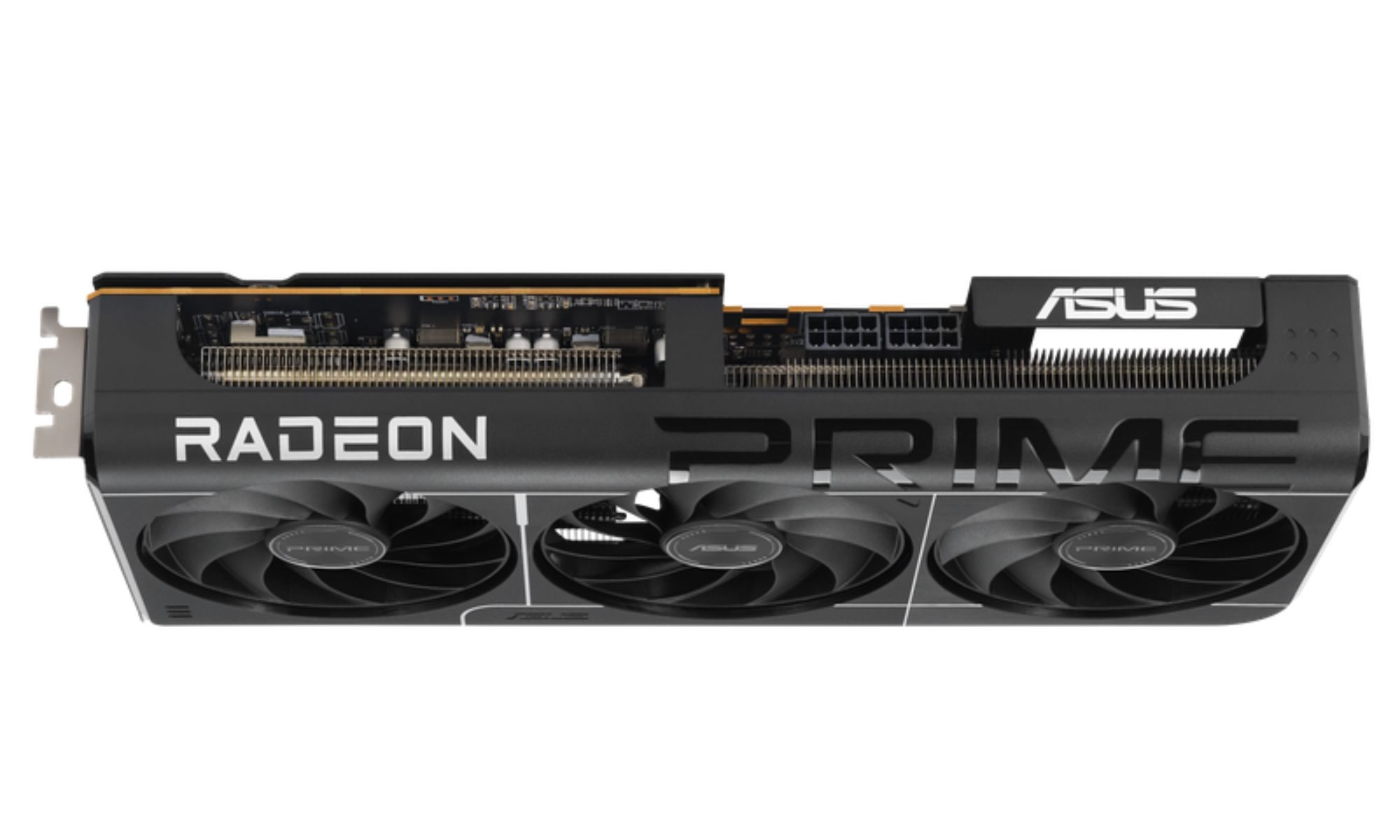
With 12GB of VRAM and an OC mode reaching up to 2880 MHz boost and 2300 MHz game clock, the Prime Radeon RX 9070 GRE EVO OC Edition is built around that balance. Its 2.5-slot design measures 304 × 126 × 50mm, making it slightly smaller than the Prime RX 9070 XT. Lower power consumption within the 9070 tier also makes the EVO a practical fit for a build where the GPU does not need to dominate the entire system.
A similar approach carries over to the ATS Radeon RX 9070 GRE OC Edition, which reaches the same 2880 MHz boost and 2300 MHz game clock figures and measures 305 × 126 × 50mm. Both cards use Axial-tech fans, a phase-change GPU thermal pad, dual-ball bearings and 0dB technology, so there is little value in repeating the same cooling specification list for each model.
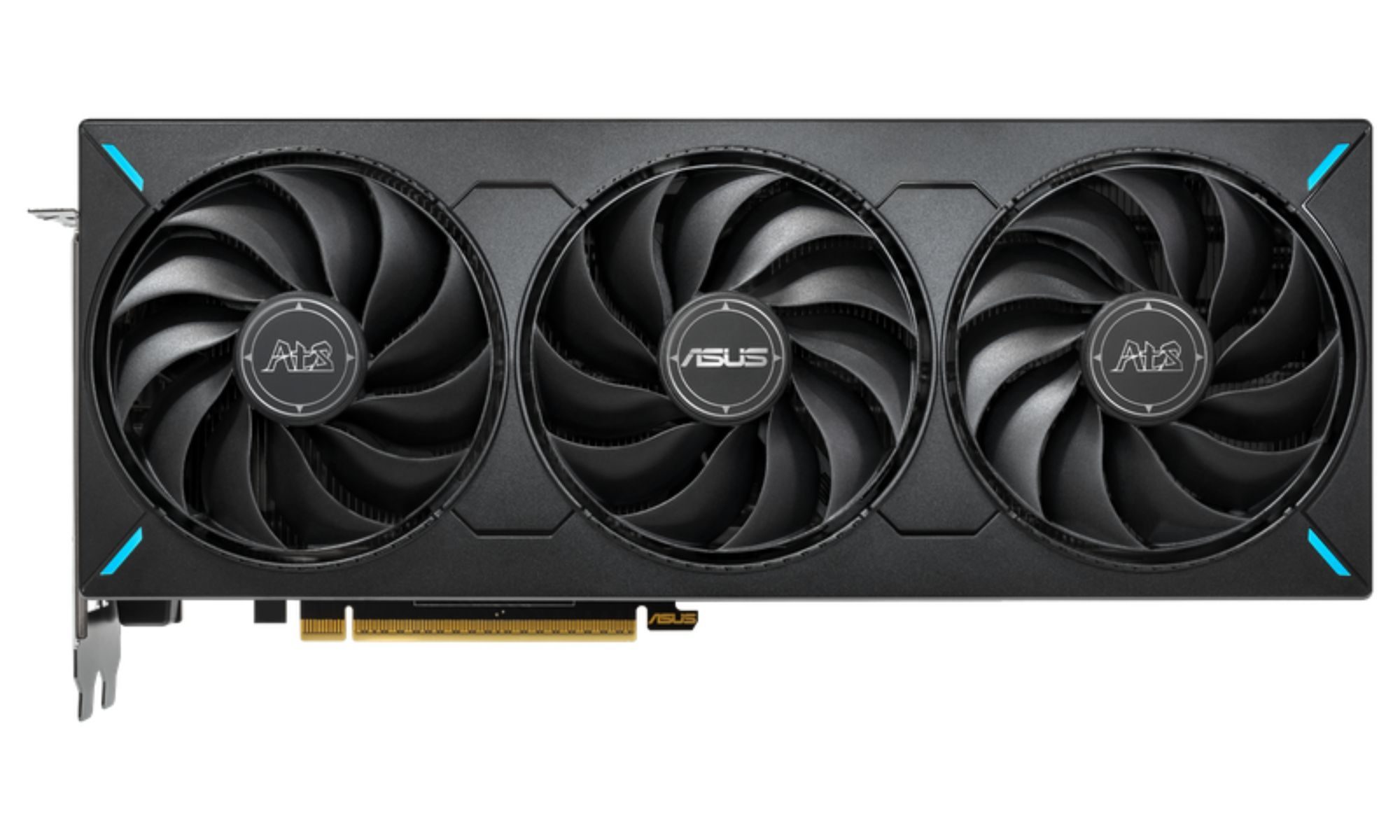
For a 1440p gaming PC, these cards occupy a useful middle ground. They offer the performance needed for that resolution without moving into the larger footprint and higher-end positioning of the RX 9070 XT, making them worth considering when the rest of the system needs to stay compact and balanced.
When size and design become part of the decision
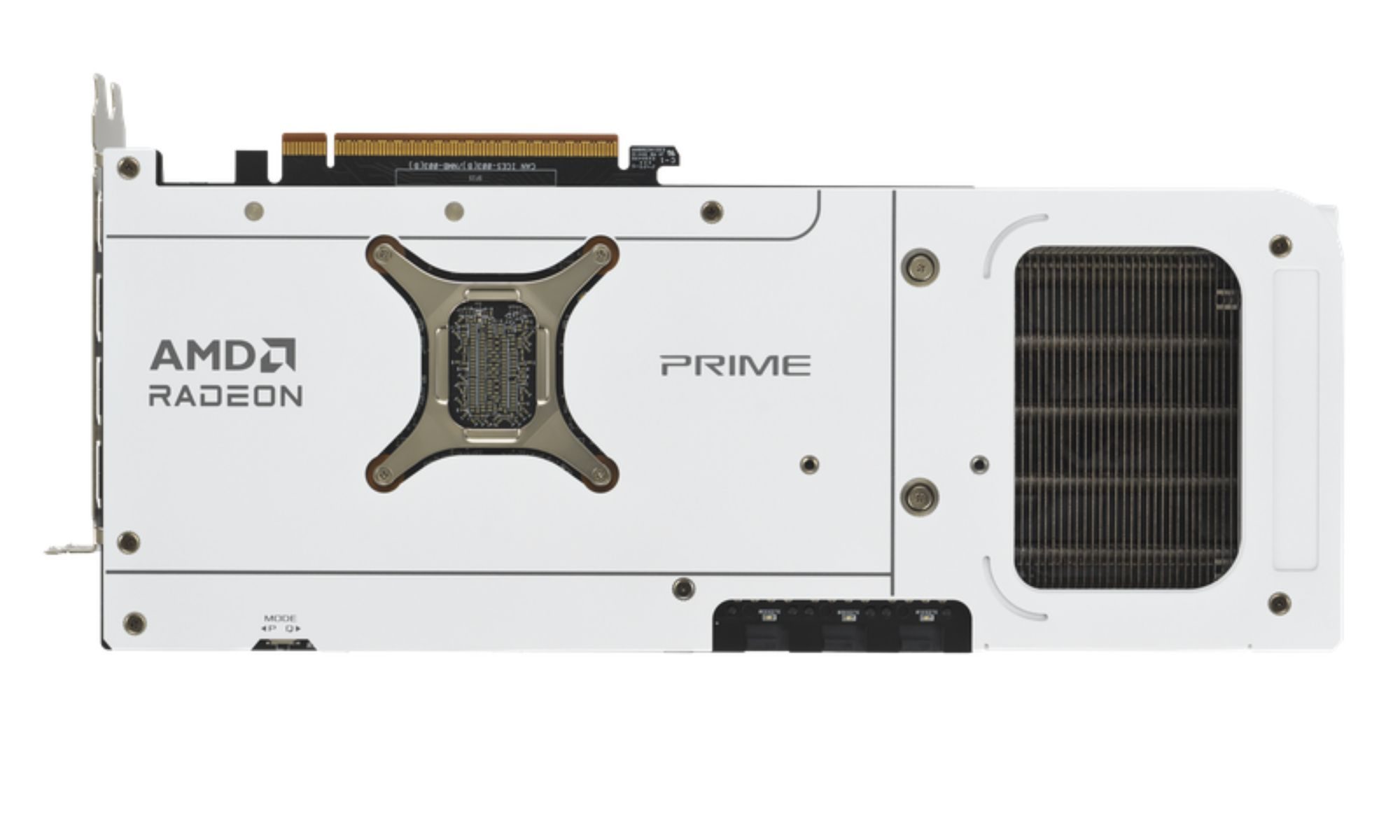
Physical compatibility is not always about fitting the largest GPU into the smallest case. In some builds, the graphics card also has to work with the visual language of the rest of the system. ASUS offers a white version of the Prime Radeon RX 9070 XT for precisely that kind of build, retaining the same 2.5-slot format as the standard Prime model.
There is no need to treat the white edition as a different performance tier. Its appeal is the white finish and sleek design, while the underlying cooling and performance proposition remains broadly aligned with the standard Prime RX 9070 XT.
A similar white edition is also available for the Radeon RX 9060 XT, giving buyers building smaller or more affordable systems another way to keep the graphics card consistent with an all-white setup.
Smaller builds still have options
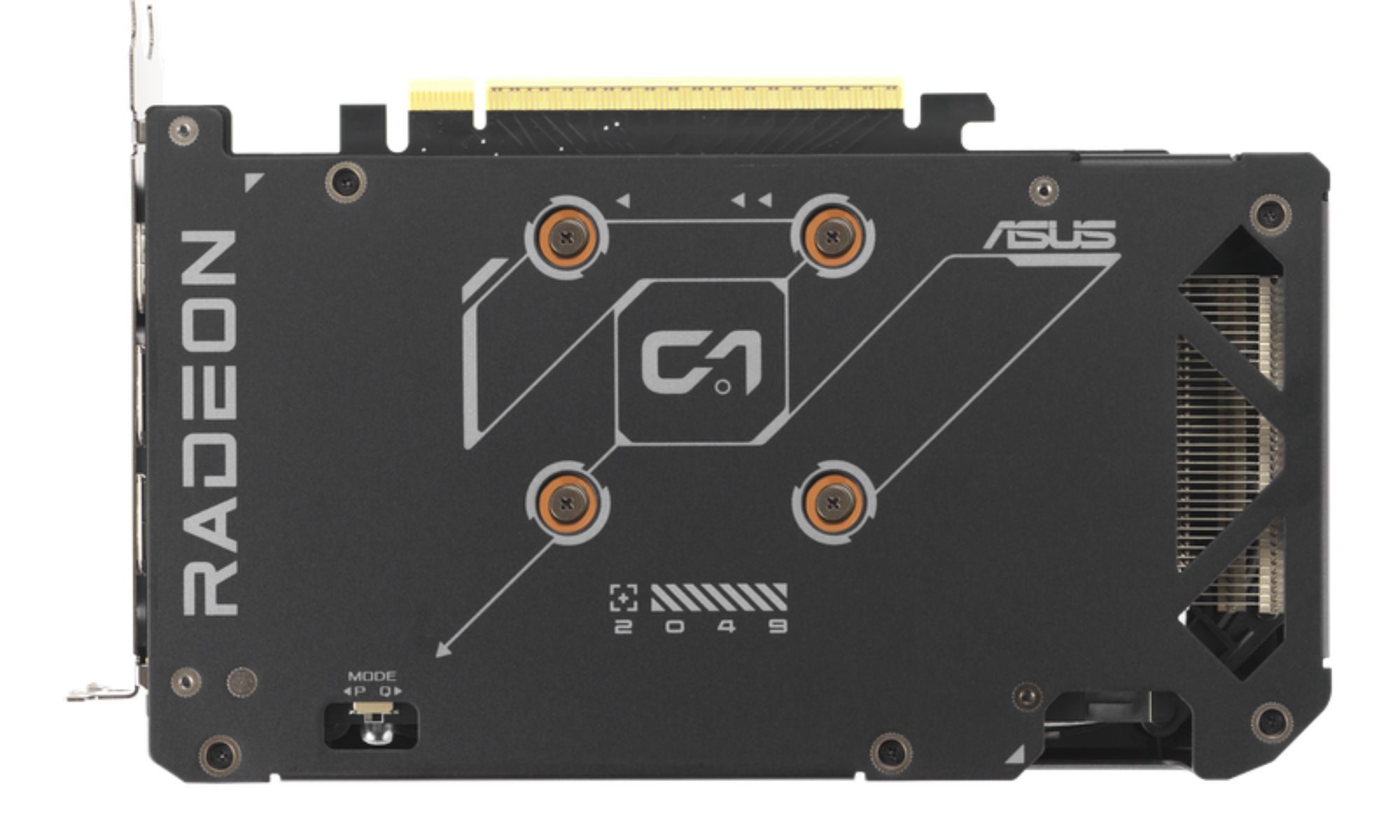
A compact PC does not necessarily mean settling for a compromised graphics card. The ASUS Dual Radeon RX 9060 XT 16GB GDDR6 is aimed at buyers who need to make better use of limited space, including those building in smaller form factor cases.
Its 2.5-slot design is intended to balance compatibility with cooling, while the Axial-tech fan design uses a smaller hub and longer blades to maintain airflow through the card. 0dB technology also allows the fans to remain off during lighter workloads, while dual-ball bearings are designed for long-term durability.
In a compact build, those dimensions can have consequences beyond the graphics card itself. A GPU that occupies less space leaves more room to work around adjacent components and makes overall component selection less restrictive. That makes the Dual Radeon RX 9060 XT a practical choice when building around a smaller chassis is the priority, rather than trying to squeeze a larger card into a case that was never designed for it.
GPU control does not end when the card is installed
ASUS also has a software layer that runs across much of this lineup. GPU Tweak III provides access to OC and Silent modes, fan controls, thermal settings and system monitoring, allowing users to adjust the behaviour of the card rather than treating its factory configuration as fixed. Profiles can store preferred voltage and clock settings, while the hardware monitor can track fan RPM and system power metrics.
Dual BIOS provides another level of control on the supported cards, allowing users to switch between Quiet and Performance profiles. The Turbo Radeon AI Pro R9700 is the exception in this lineup, with the supplied ASUS brief specifying that Dual BIOS is not available on that model.
The result is a lineup that is easier to understand when viewed through the PC being built rather than through a simple hierarchy of numbers. TUF is about substantial gaming performance and cooling. Prime RX 9070 XT makes high-end performance easier to fit into a compact build. Prime White is for buyers who want the graphics card to complement the rest of the system. The two RX 9070 GRE cards occupy the 1440p middle ground, while the RX 9060 XT brings dedicated graphics into smaller systems. Turbo AI Pro R9700 takes the conversation beyond gaming altogether.
Explore the ASUS Radeon graphics card range to compare the models and find the card that fits your build, workload and priorities.
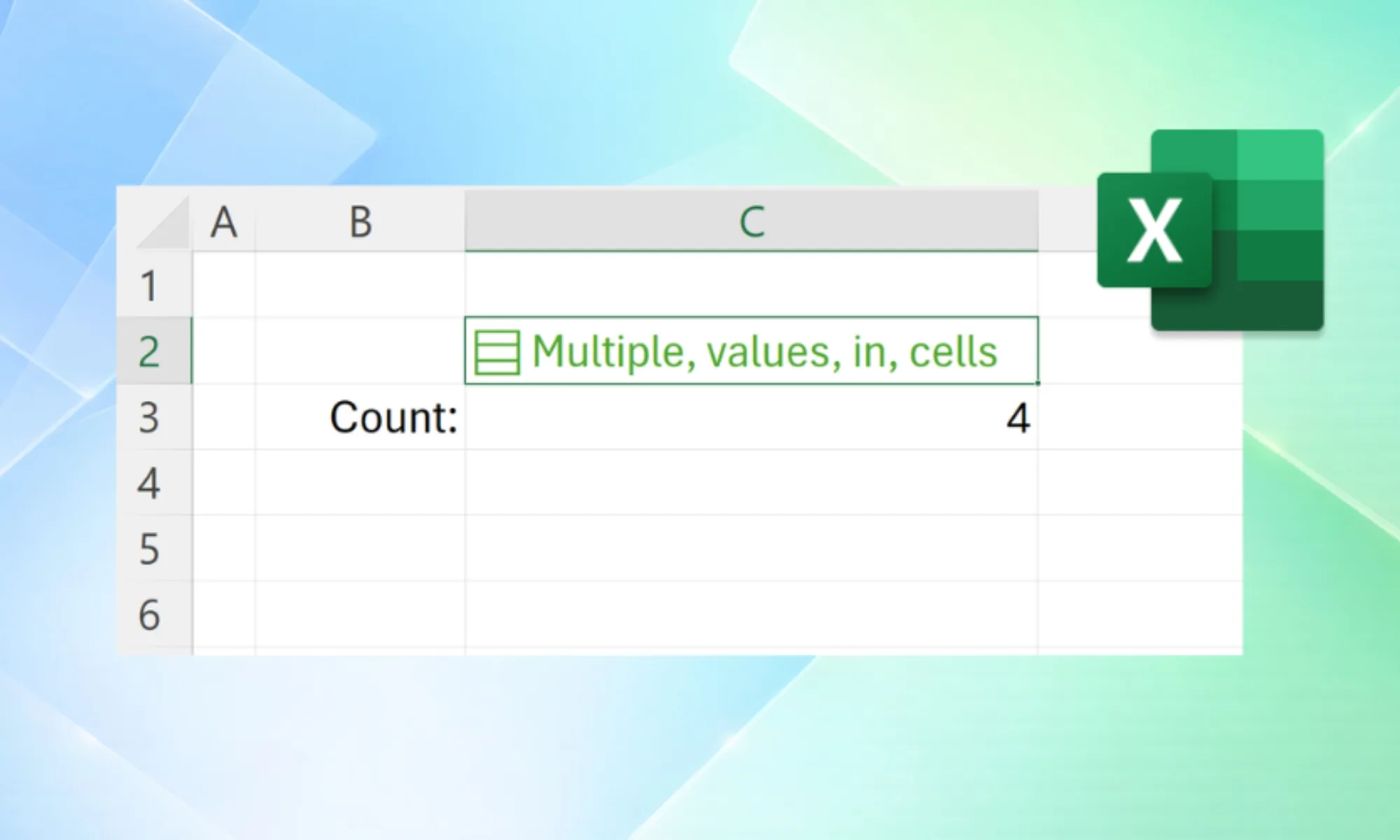
Microsoft is changing one of Excel’s most familiar rules: a cell no longer has to contain just one value. The company has introduced lists, arrays in cells and nested arrays, giving users new ways to keep multiple pieces of information together without turning them into a single block of text.
The features are currently rolling out as previews to Excel for Windows and Mac Beta Channels. Microsoft says the behaviour may change before general availability and recommends against using the features in important workbooks at this stage.
Excel lists make multiple values easier to manage
The simplest part of the update is the new Lists feature. Instead of putting several values into separate cells or combining them into ordinary comma-separated text, users can store multiple individual values inside one cell.
For example, a project could have several owners listed in a single cell, while a survey response could contain multiple appointment times. With lists, Excel keeps those entries separate internally, allowing users to filter individual values and use them in calculations.
Creating a list involves selecting Insert > List or pressing Ctrl+J, then entering or pasting items separated by commas or semicolons, depending on regional settings. Users can later edit individual entries by double-clicking the cell or pressing F2.
The feature also changes how filtering works. Instead of treating a comma-separated cell as one large piece of text, Excel can filter by individual items. Referencing a list can also return all its values, allowing them to spill into separate cells when needed.
That could make spreadsheets containing project assignments, survey responses or other multi-value data considerably easier to organise.
Arrays bring a much bigger change to spreadsheets
Microsoft is also introducing arrays directly inside cells, including nested arrays. Arrays can now exist as values or formula results inside a single cell and can have different sizes and shapes. Users can also wrap spilling formula results in braces to keep the entire result inside one cell.
Nested arrays take this further by allowing arrays to exist inside other arrays. Microsoft says formulas that previously returned truncated results or a #CALC! error in some array-of-array situations can now return the complete nested result.
To work with these structures, Excel is gaining four new functions: FLATTEN, HAS, HASANY and HASALL. FLATTEN can remove levels of nesting, while the HAS functions can check whether a particular value, some specified values or all specified values appear within an array.
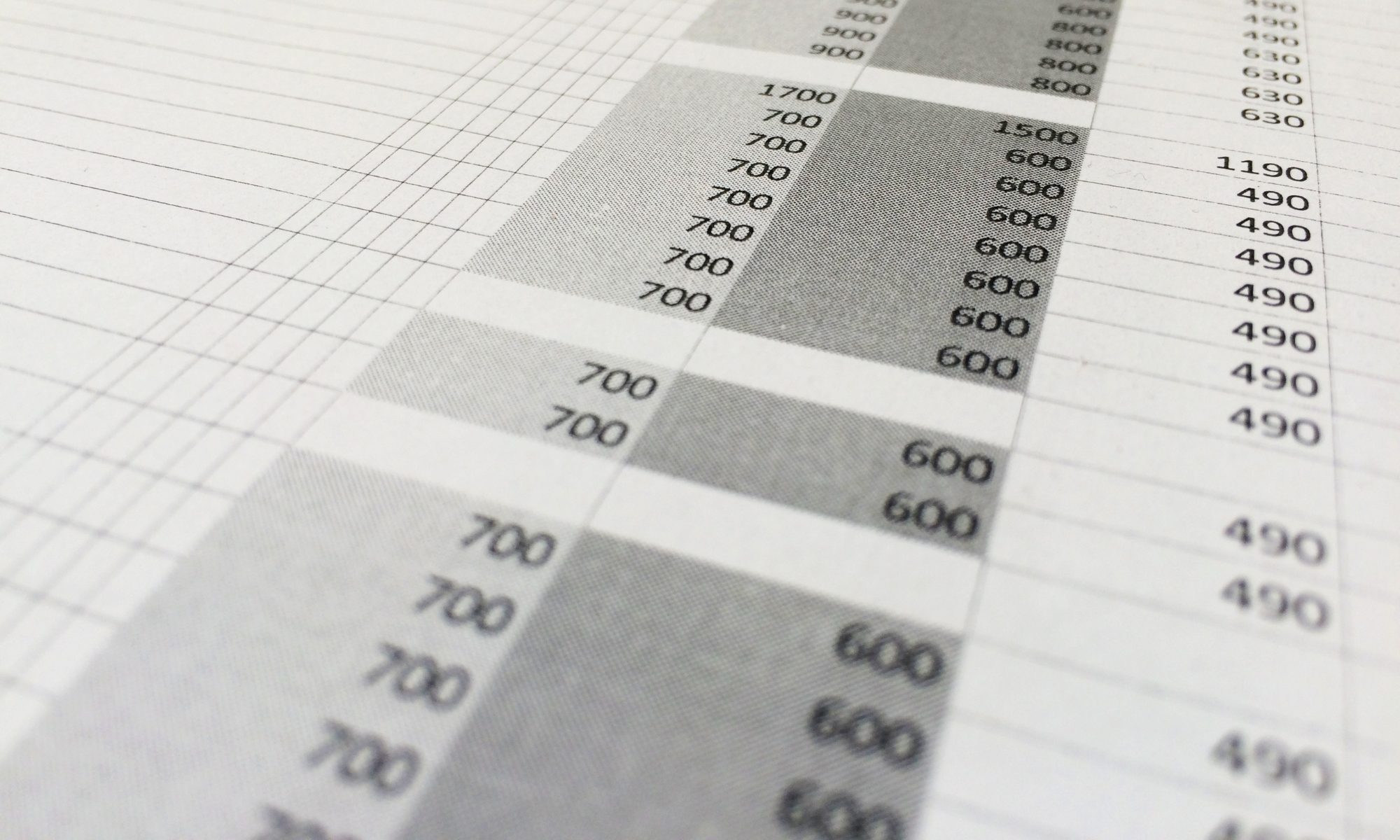
For power users, the change could open up new spreadsheet designs. Microsoft demonstrates a run tracker where different numbers of kilometre splits can be stored in the same row while statistics are calculated alongside them.
There are still limitations. Conditional formatting, data validation, charts, PivotTables, Power Query and Find & Replace do not yet fully support list and array values. The features currently require specific Beta Channel builds, and nested-array calculations require Compatibility Version 3.
For now, Microsoft is treating this as a preview rather than a finished Excel feature. But if the rollout goes smoothly, the humble spreadsheet cell is about to become considerably more capable.
Related coverage:
What is Copilot? Everything you need to know about Microsoft’s AI assistant
How to use ChatGPT to write Excel formulas
Windows 11 tips and tricks: 10 hidden settings you need to try
Tech
This tiny Japanese laptop survived drop tests that would destroy most business notebooks built anywhere else

- Panasonic Let’s Note SC7 weighs just 919 grams but passed drop tests from both 76 and 30 cm
- The chassis meets the US military’s MIL-STD-810H toughness standard
- Battery testing returned nearly 23 hours of continuous everyday use
Japanese manufacturers have long built a reputation for producing remarkably light business notebooks, with some models weighing under a kilogram entirely.
Panasonic has now expanded that lightweight lineup with the Let’s Note SC7, a compact notebook weighing just 919 grams total.
The company also carried over its distinct circular wheel pad, letting users scroll by tracing a finger along the pointing device’s outer rim.
Latest Videos FromTechRadar
Packs a full-day power into a small frame
The SC7 features a 12.4-inch display with a 3:2 aspect ratio, taller than the widescreen format common on most rival laptops today, showing more vertical content at once, improving efficiency when editing spreadsheets, documents, or browsing lengthy web pages daily.
Inside sits an Intel Core Ultra 5 325 processor paired with a 47 TOPS neural processing unit for on-device AI tasks.
The low-end version of this device comes with 16GB of LPDDR5X RAM and 512GB of internal storage – however, users can choose models with 32GB or 64GB of RAM and 1TB or 2TB of internal storage depending on the buyer’s needs.
Let’s Note SC7 ships with Wi-Fi 7, Bluetooth 5.4, two Thunderbolt 4 ports, two USB 3.2 Gen 1 ports, HDMI, and Gigabit Ethernet.
Under the hood, this notebook uses a 56Wh removable battery, which is attached with two screws rather than a latch.
According to Panasonic, this battery lasts roughly 17.7 hours during video playback and 32.4 hours in idle mode under JEITA 3.0 standards, and charging through the bundled 65W USB PD adapter reaches about 46% capacity within 30 minutes.
A magnesium alloy body measuring 273.2 x 208.9 x 19.9 mm combined with internal ribbing keeps the notebook sturdy, though it still appears slim.
Sturdiness, software, and benchmark results that support the design
Panasonic subjected the SC7 to internal drop tests from 76 centimeters and 30 centimeters across 26 separate directions during development.
The chassis also passed a 100 kgf pressure vibration test and met the US Department of Defense’s MIL-STD-810H toughness standard – few compact business notebooks built outside Japan undergo this level of physical stress testing before reaching commercial release.
The built-in NPU meets requirements for Microsoft‘s Copilot+ PC program, enabling both cloud-based and local artificial intelligence processing directly on device.
PCMark 10 testing showed the processor performing at full capacity, aided by Panasonic’s proprietary MaxPerformer heat and power tuning system.
On Geekbench 7, the Let’s Note SC7 scored 2354 points on single-core tasks and 10437 points on multi-core benchmarks.
Battery testing under PCMark 10’s Modern Office profile returned roughly 22 hours and 59 minutes of continuous everyday use.
For security, this device includes facial recognition through an infrared camera alongside a fingerprint sensor built into the power button.
It is currently available in gray, black, rose, and deep indigo, but there is no indication that this device will sell outside Japan.
All these capabilities do not come for cheap, as Panasonic lists this device for 298,100 yen, which is about $1,880.
Via PC Watch (originally in Japanese)

Follow TechRadar on Google News and add us as a preferred source to get our expert news, reviews, and opinion in your feeds.
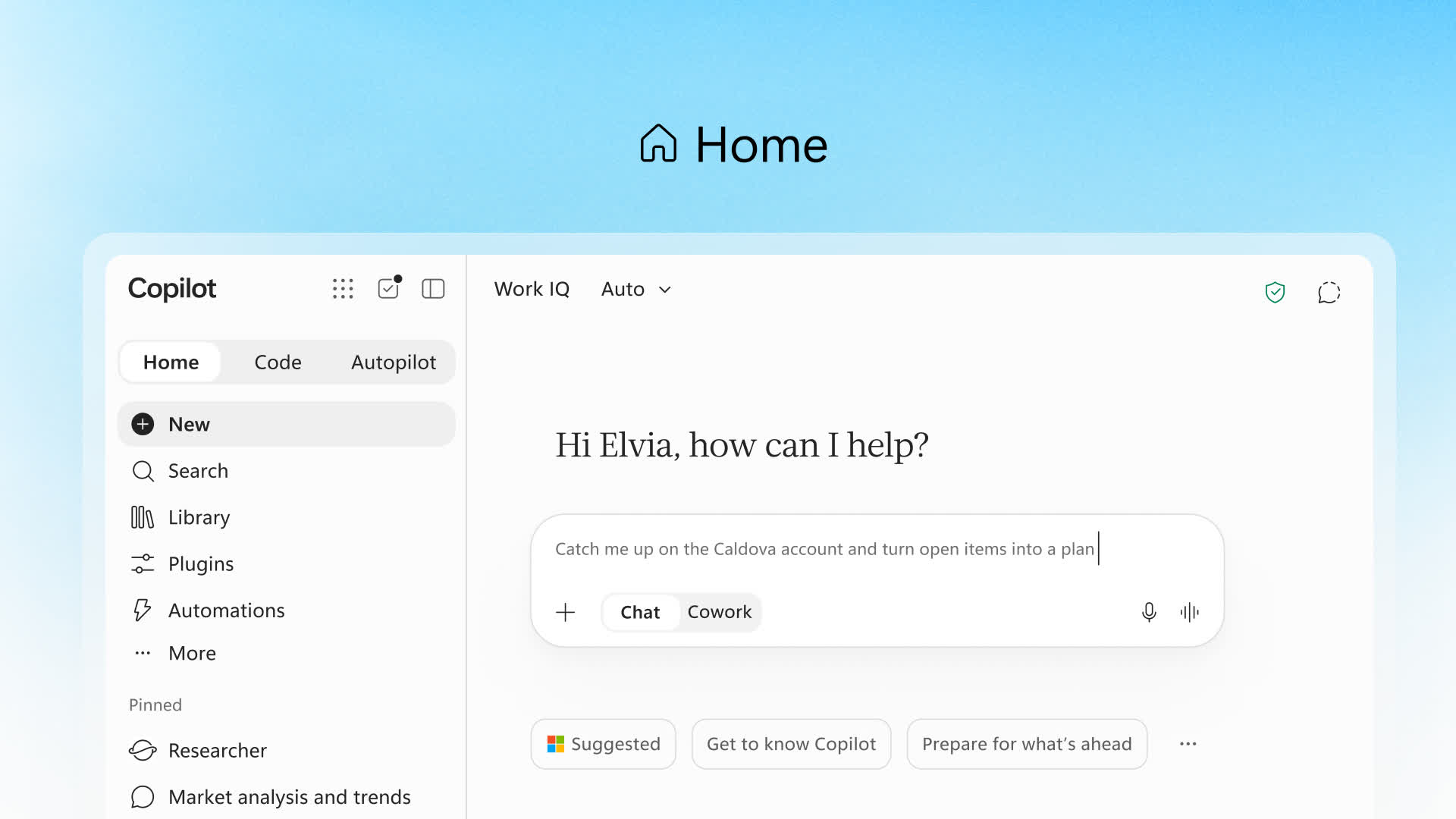
Ripple effect: Microsoft may be backing away from the Copilot+ PC branding, but it’s doubling down on the bigger idea behind it: turning AI into a layer that actively runs your computer and gets work done for you. Its latest Copilot overhaul pushes that vision further than before, combining Office, coding tools, and autonomous agents into what CEO Satya Nadella calls a “new OS for work.” Public testing begins in the coming weeks.
Microsoft recently unveiled a major overhaul for Copilot’s business tools. The new suite hands the AI assistant more control in Office, embeds GitHub Copilot’s functionality into professional toolchains, and automatically coordinates tasks between team members.
The new Copilot implementation, which Microsoft CEO Satya Nadella calls a “new OS,” consists of several parts. One of them, simply called Home, lets users chat with Copilot as it examines files to offer recommendations on how it can help. Home can also take over Office 365 apps such as Word, Excel, and PowerPoint to automatically draft files for users to edit.
– Satya Nadella (@satyanadella) September 25, 2026

Another tool, Code, builds apps based on natural-language prompts using the same tools as GitHub Copilot. Microsoft claims that Code uses Microsoft IQ to maintain contextual knowledge of users’ work environments beyond what it currently sees onscreen.
Lastly, Autopilot, a rebrand of Scout, offers the highest level of automation. After users provide it with a role and an objective, Autopilot handles various tasks such as scheduling meetings, following up with contacts, watching channels, starting and resuming projects, and more, all without further human input. The cloud-hosted feature also works 24/7, working across Teams, Outlook, documents, and other programs while remaining in constant contact with teammates.

Home and Code will enter Microsoft’s Frontier program in the coming weeks, while Autopilot will be available in private preview at the end of this month. Another aspect of Home, called Today, will enter private preview in October. Today aims to show users a unified information space with details from emails, Teams chats, meetings, and other sources while also drafting documents and proposing schedules.
Nadella’s “Copilot OS” claim sounds a lot like the supposedly defunct Project Aion, which would have become a separate OS built around Copilot running within an Edge shell. Users would operate apps and create documents by chatting with Copilot instead of controlling them directly. Although Microsoft might have shelved Aion, a video demonstration of the new Copilot update closely resembles certain aspects of it.

Notably, this latest push to embed Copilot in users’ systems follows an admission from Microsoft and Qualcomm that the Copilot+ PC brand has been abandoned, with the companies acknowledging that consumers simply don’t care about “AI PCs.” It remains unclear whether Home, Code, and Autopilot will be next in a growing trail of shelved AI initiatives such as Copilot+ PCs and Recall.
Oxford has let OpenAI use old texts from its Bodleian Library to train its AI models, according to internal papers seen by the Guardian. Ethan Penny and Dan Milmo broke the story on Saturday.
The papers say texts that OpenAI scanned at the library went into the firm’s training data.
Oxford made its deal with OpenAI public in March 2025. At the time, it said OpenAI’s tools would help scan rare texts so more students and scholars could read them. It did not say the texts would be used to train AI.
By June 2025, the Bodleian had sent OpenAI 125,000 scans of old PhD theses, the Guardian reported. They include theses written at European and US universities in the 19th and 20th centuries.
Notes from staff meetings, which the Guardian got through a freedom of information request, show some staff had doubts. They worried about harm to Oxford’s name and about the energy use of AI.
However, Oxford said the scans were small in scale, out of copyright and not exclusive to OpenAI. The library keeps the rights and will start to post the scans online in the next few months, a spokesperson said.
The spokesperson also said the AI training side had not been hidden. Scanning was Oxford’s main goal, but staff had been open that the texts would also be used to train models.
“With more than a billion people using this technology in everyday life, it’s important it reflects different cultures, histories and perspectives,” an OpenAI spokesperson told the Guardian.
Oxford is the only UK member of OpenAI’s NextGenAI group. Other members include Boston Public Library, Caltech, MIT and the University of Michigan.
The deal comes as AI firms buy printed books for slop-free training data, since the web is now full of AI-made text. Some buyers cut books apart to scan them, which has upset secondhand booksellers.
In August, 404 Media tracked a box of rare books to an Amazon site that scans and destroys books for AI. The Bodleian’s books stay whole under its deal, the Guardian reported.
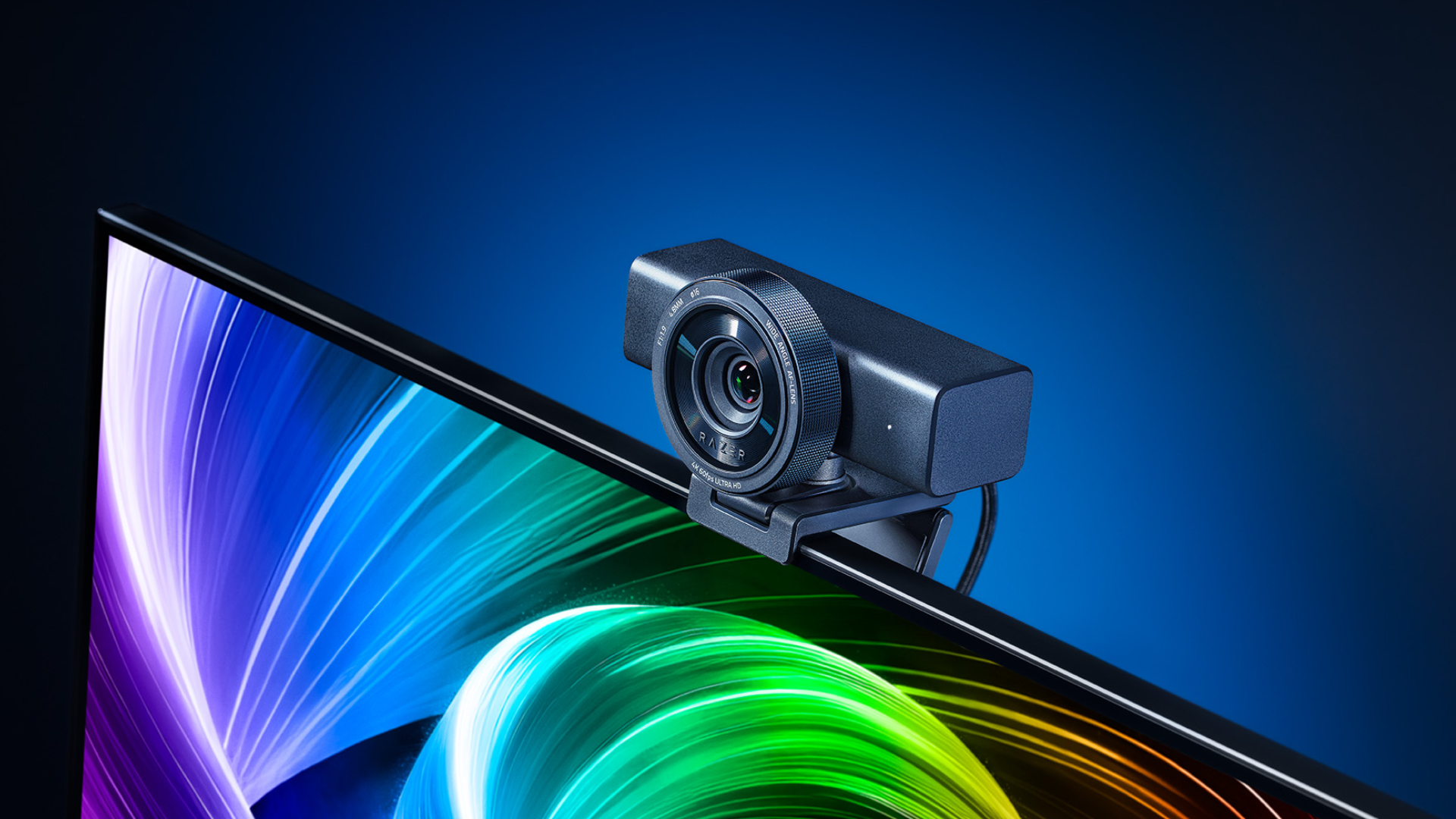
Razer’s new Kiyo V2 Pro webcam uses Sony’s 8.3-megapixel STARVIS 2 sensor and costs $300.
Sony’s STARVIS 2 sensor also enables the headline feature here: 4K video capture at up to 60fps, a specification most consumer webcams still limit to 1080p or 1440p once frame rates climb above 30fps.
Razer pairs that sensor with a lens capable of an f/1.9 aperture, a wider opening than most webcams offer and one that should improve low-light clarity while producing a stronger background blur behind the subject.
AI and imaging features
Beyond the optics, the Kiyo V2 Pro introduces automatic framing, a feature that uses pan, tilt and zoom to keep a speaker centred in the frame, similar to the tools Apple already offers on recent iPhones during FaceTime calls.
Razer has also carried over the one-click output enhancement feature from its microphone lineup, and the camera automatically adjusts exposure, white balance and noise levels to match whatever environment it sits in.
The Kiyo V2 Pro also captures ultra-high dynamic range footage that pulls out more shadow and highlight detail, and Razer has narrowed the field of view from 93 degrees on the original V2 to 86 degrees on the Pro model.
That narrower angle helps the sensor maintain sharper detail at the full 4K resolution and reduces the fisheye distortion that often appears at the edges of a wide-angle frame during video calls.
Software support for the webcam extends to Razer Synapse, which lets users manually fine-tune settings such as ISO and shutter speed rather than relying solely on the automatic modes built into the camera itself.
Razer ships the Kiyo V2 Pro with both a clamp for monitors and laptop lids and a universal tripod mount, alongside an integrated privacy shutter built to resemble a camera’s own shutter mechanism.
Availability and pricing
The webcam is available now through Razer.com and other retailers, and its $300 price places it among the pricier options in the current webcam market.
Razer has not confirmed a UK release date or local pricing for the Kiyo V2 Pro, though the webcam’s US launch suggests a wider rollout is likely to follow in the coming months.
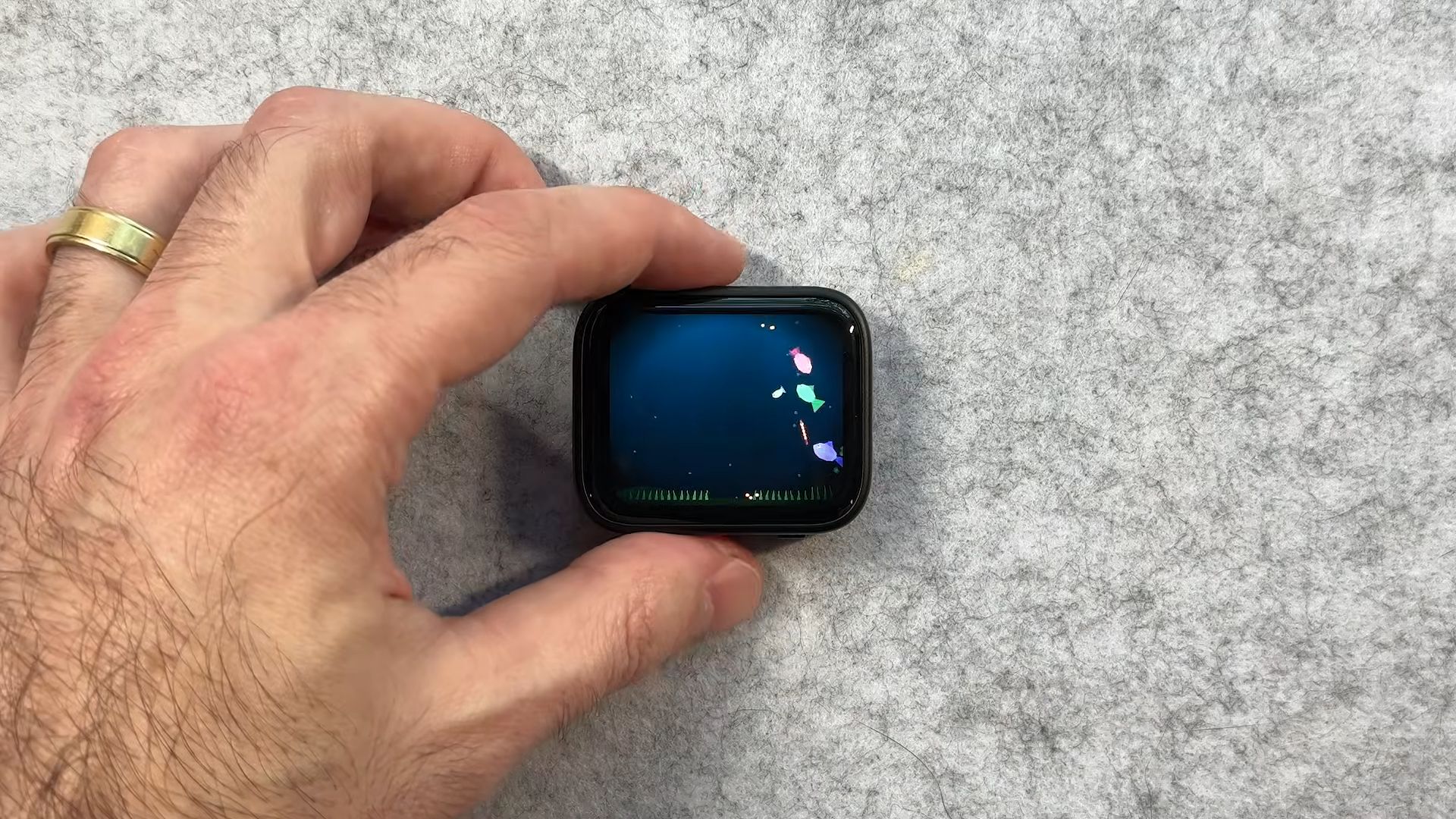
The problem with trying to make a fish tank fit in your pocket is that you’ll either end up with water everywhere or a bunch of dead fish. Perhaps that’s why [StratoBuilds] pursued a digital solution instead.
The concept behind Pocket Tank is relatively simple—it’s a small device that displays a virtual tank with a bunch of little fish swimming around inside. It’s based on the Waveshare ESP32-S3-Touch-AMOLED-1.8, which, if you’re wondering, is an ESP32-S3 with a 1.8″ screen attached, all wrapped up in a convenient plastic housing.
Thanks to the powerful microcontroller, there’s plenty of grunt on tap to run and display a small simulated fish tank. [StratoBuilds] whipped up a system wherein fish movement and animations are handled by regular code running at 25-30 fps, while the fish’s decision making is handled by a custom large language model that was condensed down to run on the ESP32 itself. As the fish swim around the tank, the situation is observed by the LLM and the fish’s current goals are changed accordingly depending on what’s going on. Much like a Tamogotchi, there are regular maintenance tasks for the user to handle, too, like cleaning the tank and feeding the fish to keep them alive.
The blog post and YouTube video do a great job of explaining the project; files are on GitHub for those that wish to tinker more directly. It’s funny, because when we normally look at fish tanks, we’re talking about real ones.
Thanks to [56k] for the tip!


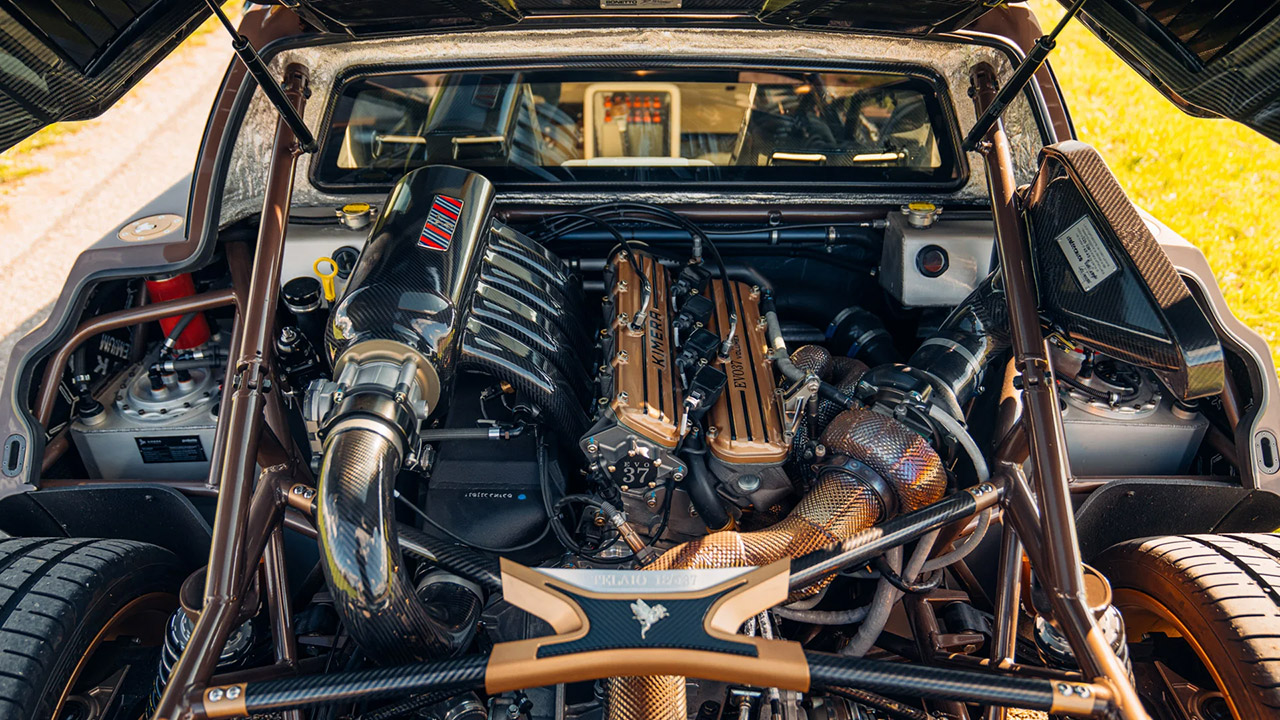
Four decades after Walter Röhrl and Markku Alén drove Lancia’s Rally 037 to the 1983 World Rally Championship, a small Italian workshop in Cuneo has given that last rear-drive title winner a second life. Kimera Automobili, run by former rally driver Luca Betti from Villa Kimera about 100 kilometers south of Turin, limited the EVO37 to 37 cars. Number 018 now sits in Broad Arrow’s catalog as lot 158 for the Zoute Concours Auction on Friday, October 9, 2026, at Approach Golf in Knokke-Heist, Belgium.
Kimera used the same starting point as the original manufacturer and ran with it: the donor Lancia Beta Montecarlo center section was stripped, reinforced, and improved with a glossy new carbon-fiber shell. Behind all of this was a crew that knew what they were doing, including Sergio Limone, the man who had led the 037 and Delta S4 to great success, and Claudio Lombardi, Lancia’s former rally engine designer who had gone on to do the same for Ferrari in F1, both of whom gave the project their approval. The bodywork was then bolted to the chassis, and Italtecnica created a brand new 2.1 liter, 16 valve four-cylinder engine from the ground up. They preserved the 037’s supercharged configuration but added a turbocharger, resulting in a snappy 505 PS and 550 Nm of torque sent to the rear wheels via a fast six-speed Dana Graziano manual gearbox. The top speed is rated as 310 km/h, with a 0-100 km/h time of just 3 seconds, which is not bad. The vehicle features Öhlins double-wishbone suspension and Brembo carbon-ceramic brakes with four-piston calipers for stopping power.

LEGO Speed Champions Ken Block’s ’65 Ford Mustang Hoonicorn V1 77262
- CUSTOM MUSTANG RACE CAR – This LEGO Speed Champions Ken Block’s ’65 Ford Mustang Hoonicorn V1 (77262) building toy for boys and girls ages 9 years…
- AUTHENTIC DETAILS – Builders will recognize cool features from the car’s debut in the 2014 Gymkhana SEVEN film, including exposed velocity stacks on…
- KEN BLOCK MINIFIGURE – The included Ken Block minifigure features a Hoonicorn hat and jacket, plus an extra helmet accessory for added play value



This vehicle left the workshop in March 2025 and has since traveled a total of 237 kilometers. Kimera’s Luci del Bosco paint job is a deep, rich metallic brown inspired by the old Lamborghini Miuras and Countachs. The gold wheels and beige leather upholstery over carbon fiber chairs give the cabin a relaxed feel, while the exposed gearlever is adorned with a wooden gear knob. LEDs light the road up front, and there’s air conditioning, ABS brakes, a digital rear view camera, and parking sensors to keep things polite without interfering with the exposed carbon, which is exactly what you want to see.


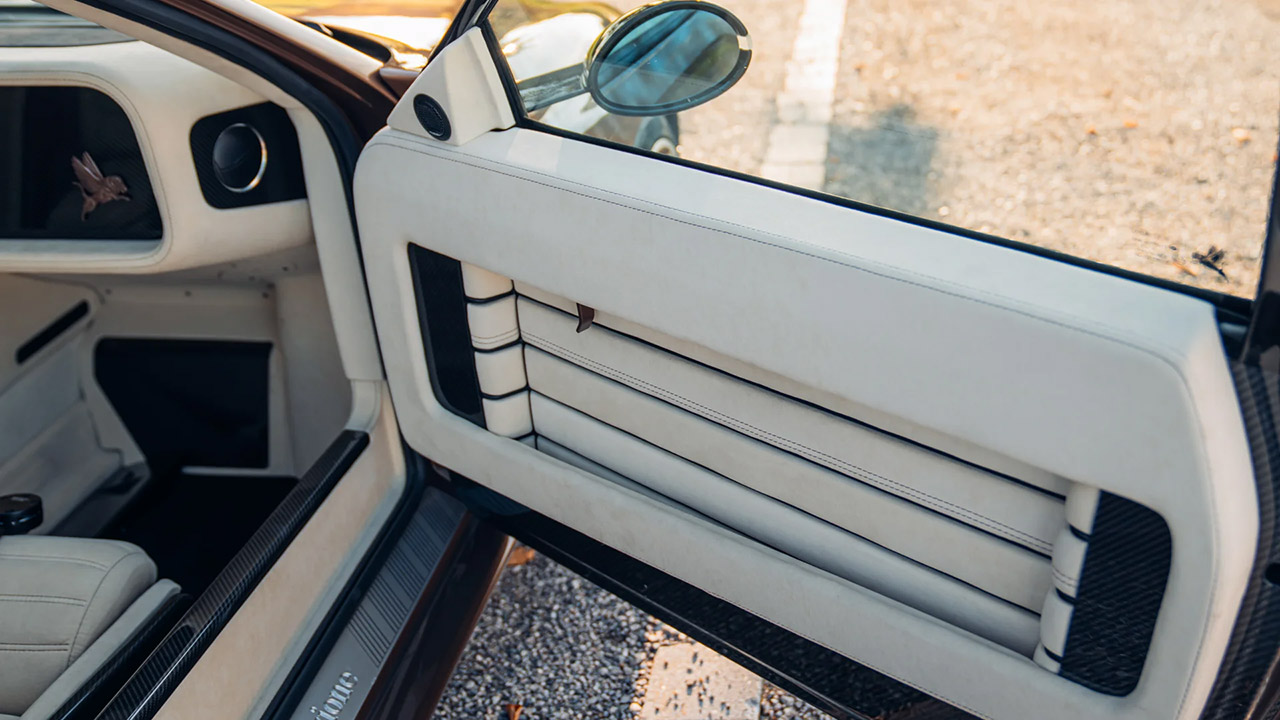
When this project first got off the ground in 2021, the asking price ranged between €450,000 and €480,000. Since then, the market has moved on, and Broad Arrow thinks that this particular specimen, number 018, is now valued between $950,000 and $1,150,000. Kimera has informed the Broad Arrow team that they will gladly assist with import and registration if the future owner is in Europe or the United States, and will even adjust the specifications to suit the buyer if they prefer something different. The tax issue is equally easy; because this is a VAT-qualifying sale, both the hammer price and the buyer’s premium are subject to tax.

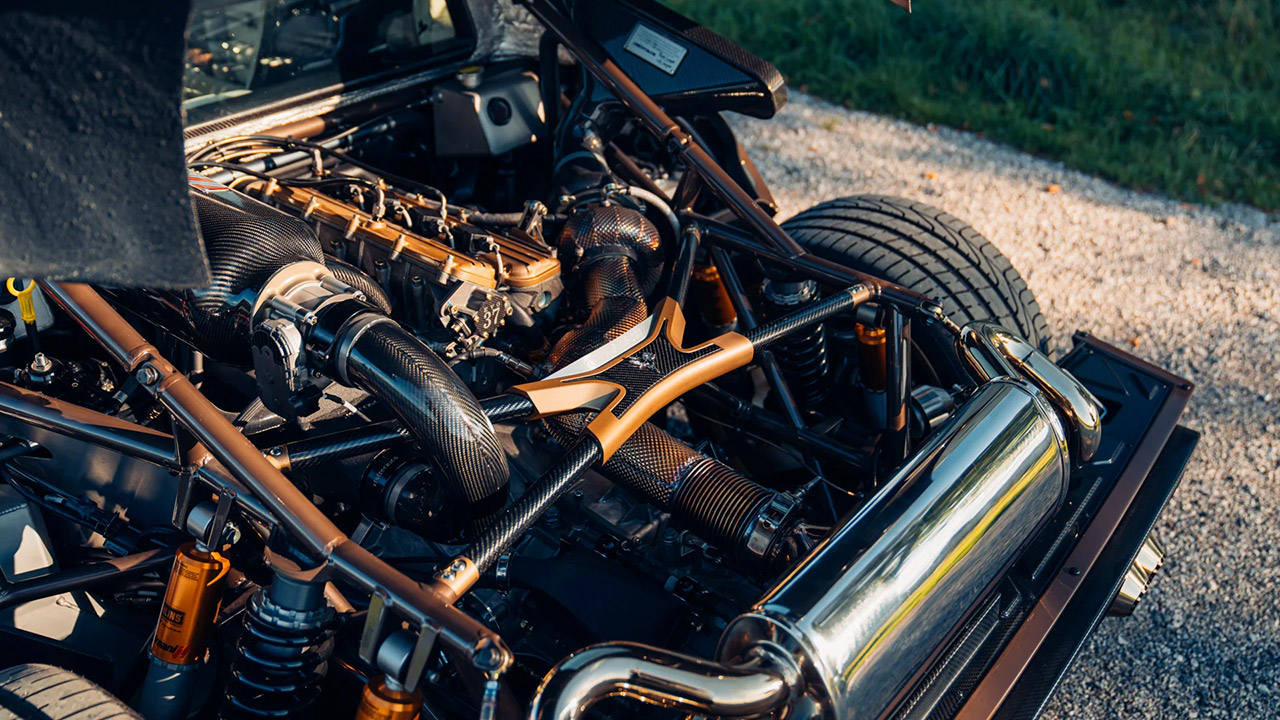
The auction of this car will take place on October 9, 2026 as part of the Zoute Grand Prix Car Week, with a public viewing on the 7th and 8th and bidding beginning in the afternoon of the ninth. It’s a rare opportunity to own an original 037 Stradale that is this new and in this condition, and if that’s not enough, Kimera is still willing to re-spec the thing if the buyer has any other ideas.
[Source]
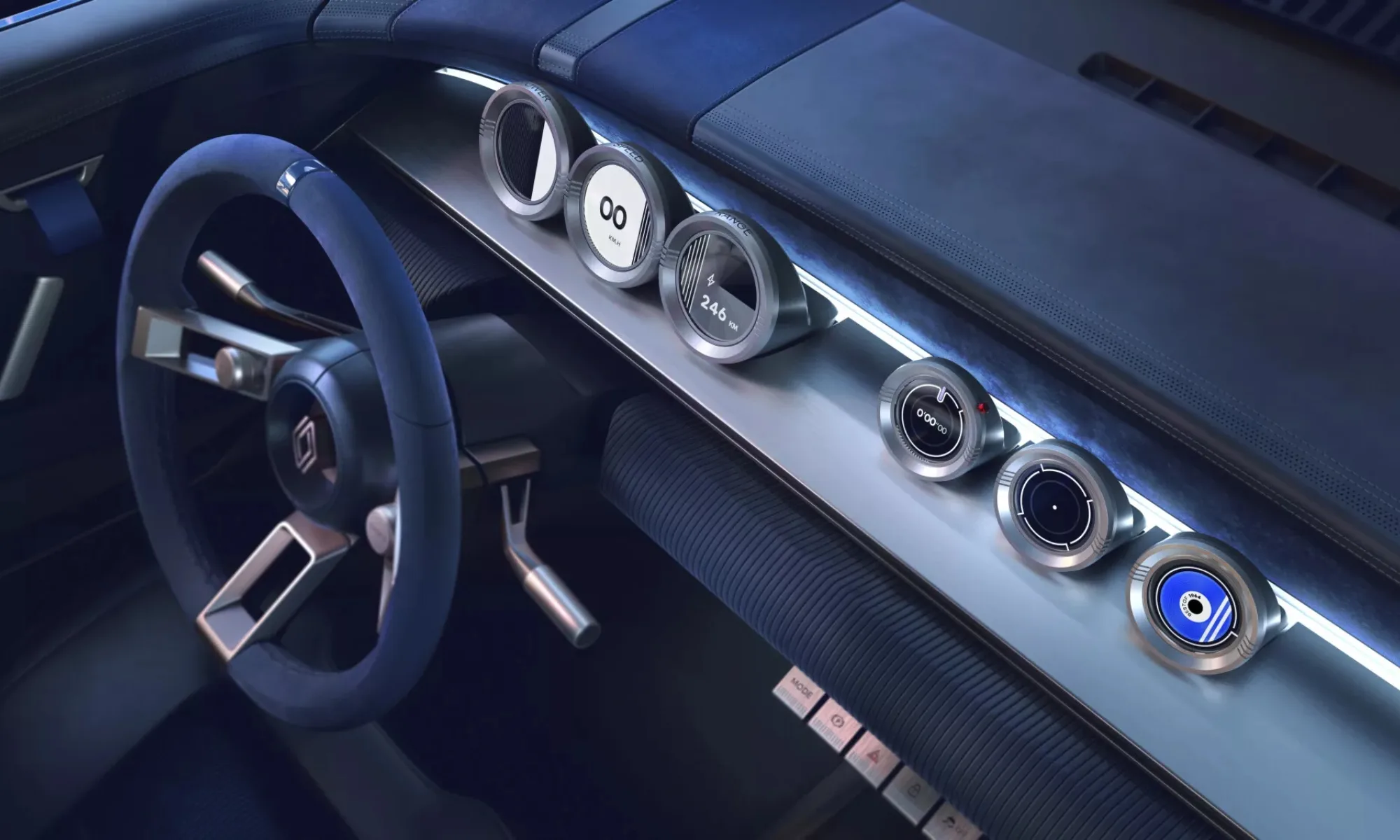
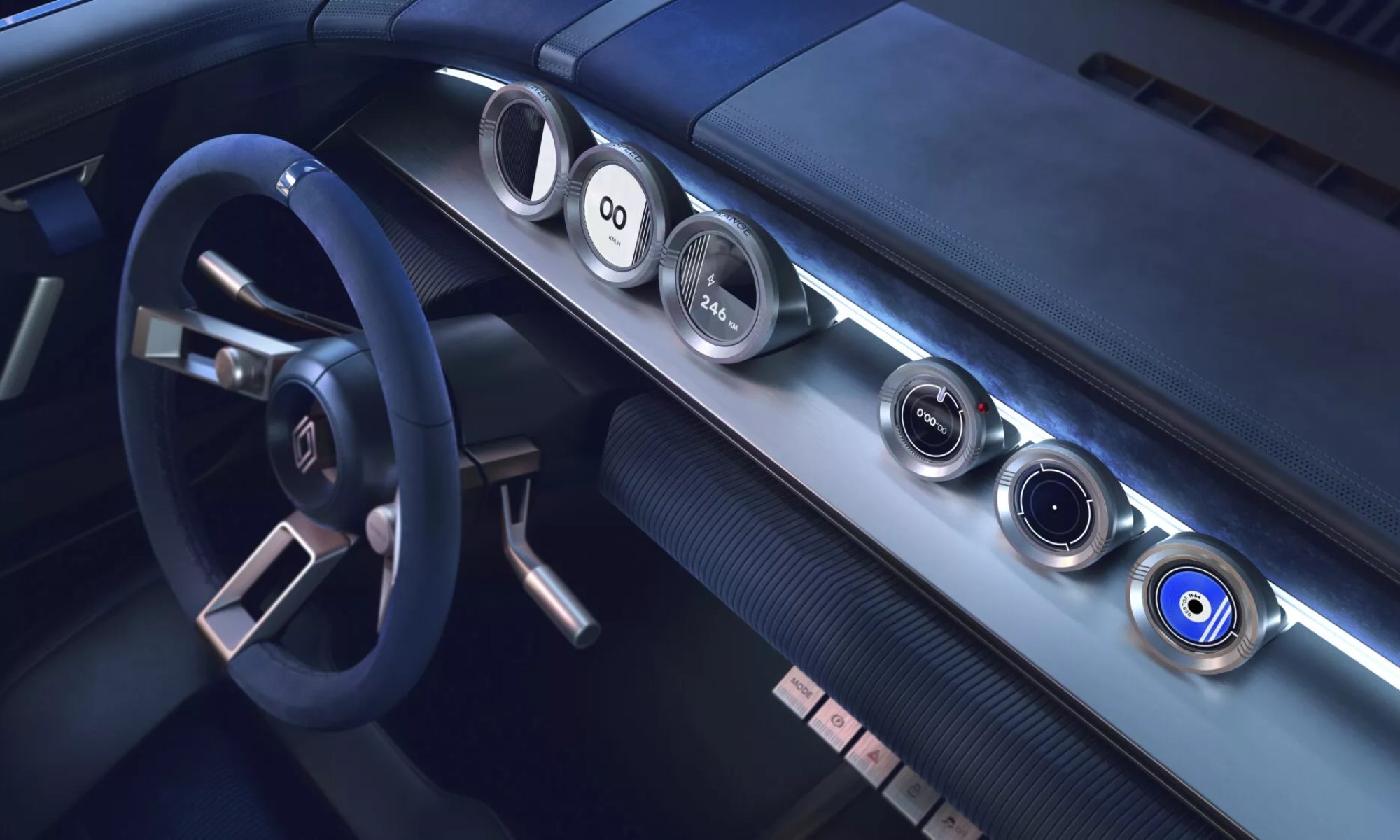
Renault is bringing one of its most recognisable performance cars into the electric era with the Renault 8 Gordini Concept, a two-seat electric coupé inspired by the rear-wheel-drive icon that debuted in 1964.
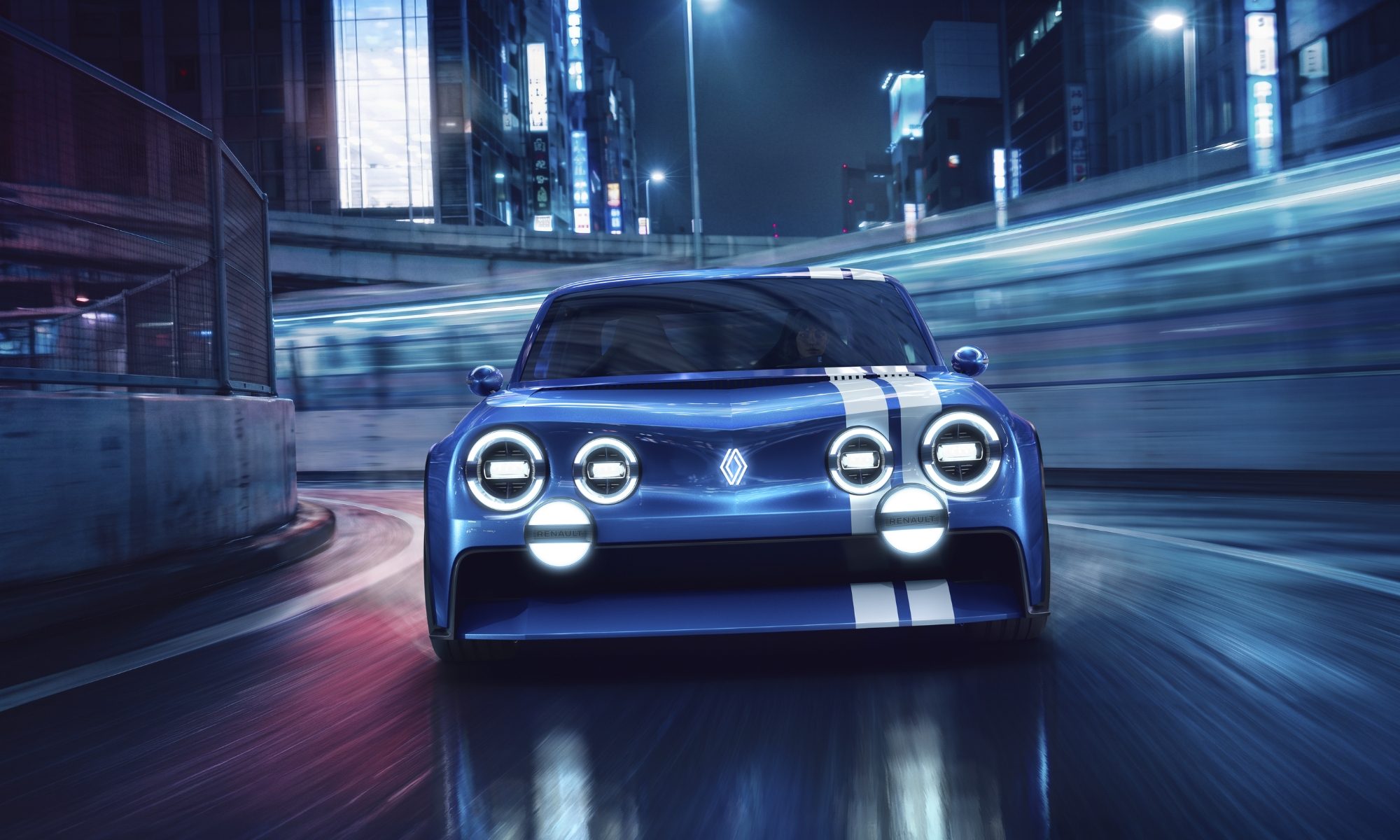
The concept combines the visual language of the original R8 Gordini with a much more aggressive modern design. It has a low, wide stance, motorsport-inspired proportions and a 270hp electric motor. Renault says the project is part of its wider effort to revisit important models from its 128-year history through one-off creations.
Renault unveiled the concept on September 24 at Renault Carwalk, and it is scheduled to appear at the Paris Motor Show from October 12 to 18.
The classic Gordini gets a radically different electric makeover
The original Renault 8 Gordini arrived in 1964 with a 95hp rear-mounted engine and rear-wheel drive. It became known for delivering racing-inspired performance in an affordable package and served as a training ground for drivers including Jean Ragnotti. Its distinctive double white stripe eventually became a defining visual feature.
The new concept keeps the rear-wheel-drive character but replaces the petrol engine with a 270hp electric motor. Measuring 4.12 metres long, 1.88 metres wide and 1.27 metres tall, the coupé sits on 19-inch front and 20-inch rear wheels. Its proportions are deliberately closer to a modern rally car than the four-door original.
Renault has also carried several familiar details into the new design. The car gets six round headlights, squared-off wheel arches, a modernised Gordini badge and the iconic double white stripe. The stripe is no longer simply decorative, with Renault incorporating it into various structural and design elements of the car.
The design was created entirely in-house. More than 300 sketches were submitted during an internal Renault Design competition before two proposals were developed into scale models and combined into the final concept.
A two-seat EV focused on driving rather than practicality
Inside, Renault has taken a similarly minimalist approach. The cabin features brushed aluminium across the dashboard and controls, contrasted with Alcantara upholstery. Digital round displays echo the circular headlights, while bucket seats and a prominent stopwatch button reinforce the car’s motorsport-inspired character.
Renault describes the concept as part of its effort to connect its heritage with future design rather than simply recreate old cars. The R8 Gordini follows previous projects including the R17 electric restomod x Ora Ïto and Renault 5 Diamant.
For now, this remains a concept car, and Renault’s media page does not confirm that it will enter production. The company does say the concept will become part of its historical collection, alongside other vehicles and archive material at the future Renault Collections museum in Flins, expected to open in around 15 months.
So while you probably won’t be ordering one from a Renault showroom anytime soon, the electric R8 Gordini shows how Renault is imagining its performance heritage in an EV era.
Related coverage:
Over 500,000 Toyota Camrys recalled over a blank digital dashboard
Lexus halts plans of an electric car based on the stunning LF-ZC concept and it’s such a bummer
Toyota made a gaming chair that is probably more expensive than your gaming rig
Toyota just introduced its own robotaxi to tackle Tesla and Waymo

Crypto World4 minutes ago
What Is a ‘Pocket Rescission’? Inside Trump’s Move to Cancel $810 Million in Federal Funding

Tech6 minutes ago
Honda’s Failing Rear-View Cameras Investigation Is Over, And Here’s What They Found

NewsBeat7 minutes ago
10 NHS employees removed from duty after accessing Noah Woods’ medical records | News UK





-

 Crypto World4 days ago
Goldman Sachs and Deutsche Bank Agree: The S&P 500 Rally Isn't Over
-

 Tech6 days ago
Researchers escape OpenAI Codex sandbox to run commands on host
-

 Fashion2 days ago
8 iPhone Accessories That Add Personality
-

 Crypto World6 days ago
Who Needs CLARITY Anyway? ARB Could See 70X Increase: Hodler’s Digest
-

 Fashion1 day ago
Weekend Open Thread: J.McLaughlin – Corporette.com
-

 Entertainment4 days ago
These 17 Fall Amazon Dresses Seriously Look Like Anthropologie
-

 Business6 days ago
Analog Devices (ADI) Bets $1.35 Billion on Chips that Let Machines Think for Themselves
-

 Crypto World6 days ago
Coinbase, Robinhood, Circle Seen as Tokenized-Stock Winners
-

 Crypto World4 days ago
This Bearish Netflix Stock Trade Can Cash In On Video Streaming Giant’s Woes
-

 Tech5 days ago
Google’s $899 Googlebook is a bet that you’ll buy a new laptop for Gemini
-

 Crypto World4 days ago
Trump-Xi Polymarket Odds for Handshake Hit 50%
-

 Crypto World3 days ago
Crude Oil Prices Pressured by Diplomatic Hopes in the Middle East
-

 Crypto World3 days ago
Bitcoin price tests $83,600 Supertrend support after $87K rejection
-
 Business4 days ago
Oil Price Today (September 23): Crude oil below $100 on hopes of US-Iran talks. What did Trump say?
-

 Crypto World3 days ago
Bitcoin Threatens Sub-$84,000 Breakdown as Long Liquidations Spike
-

 Crypto World5 days ago
Meta Jumps 11% As Muse Shines and Investors Show an Appetite for Advancing AI
-

 Crypto World4 days ago
Did Jim Cramer Just Give GameStop Stock the Kiss of Death When He Said the Turnaround Is Working?
-

 Crypto World6 days ago
Bitcoin price holds above $81K as key catalysts line up
-

 Crypto World6 days ago
ARB Price Signals Spur Speculation of 70x Upside in Hodler Digest
-
 Crypto World5 days ago
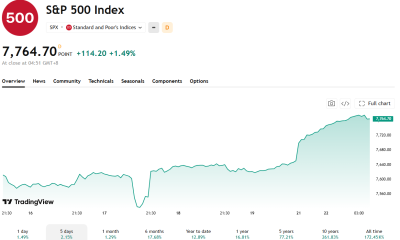
Trump, Xi Meet on S&P 500's Best Day Since Early August: Will Markets Stay Bullish?
You must be logged in to post a comment Login