In this week’s Sunday Reboot, Apple’s AI model-shrinking talk could have massive benefits, with a chance of also being a billion-dollar deal if it plays its cards right.
Sunday Reboot is a weekly column covering some of the lighter stories within the Apple reality distortion field from the past seven days. All to get the next week underway with a good first step.
Small AI models, big pricing
Back on July 9, a startup in the AI world gained a lot of attention. PrismML used the mythical power of mathematics and science to somehow cut down the size of large language models (LLMs) by a considerable amount.
The process resulted in models like the 54GB Qwen 3.6 being compressed down to an astoundingly tiny 4GB. That’s a 27 billion-parameter model being smushed down to a size that would fit on some promotional USB thumb drives from back in the day.
Advertisement
While there was some suspicion that Apple was looking at the startup, it was confirmed by PrismML itself on July 14. In an interview, PrismML CEO Babak Hassibi said that Apple and other companies were evaluating the work of its technology.
Hassibi’s public confirmation was an interesting one, especially since Apple has a tendency to NDA everything it does with other companies. While it is unknown if Apple did the same with PrismML, Hassibi seems confident enough in the tech to ignore the possible ire from a potentially massive client.
I say “client” because this sort of important thing in the current AI-centric market warrants acquisition talks. It’s something that, if one company buys PrismML and makes the tech exclusive to it, the buyer then has a serious advantage over the rest of the industry.
An acquisition is entirely a possibility for Apple, based on the July 15 report about the reign of John Ternus is believed that Apple is showing signs of changing its acquisition tactics, from spending hundreds of millions on a single company to spending billions.
Advertisement
It’s an extremely small change. What’s an extra decimal place between friends?
This sort of advantage could well be valued at the billion-dollar level to Apple, if it does acquire the startup. That said, it would also require the startup to be willing to be purchased, too.
Hassibi’s interview doesn’t really seem like someone willing to sell up. It feels more like he’s trying to get more attention from other AI firms to create a bidding war, if the company does want to be sold.
The alternative is that he’s trying to secure as many lucrative licensing agreements as possible from AI companies in general. All while remaining independent.
Advertisement
Either route seems like a win for PrismML.
On-device advantage
For Apple, if the technology is sound, it has big benefits, specifically for its aim of increasing the amount of on-device processing.
Apple’s current problem is that iPhones don’t have massive amounts of memory, nor do most entry-level consumer devices. While some AI-related tasks can be performed with on-device processing, it can get offloaded to a cloud server.
The remote processing can perform much bigger tasks and workloads than a smartphone. Partly because of the higher amount of processing capability, but mostly because the server can have massive amounts of memory to handle the sizable models in the first place.
Advertisement
Siri on the iPhone is better under iOS 27 and macOS 27 Golden Gate.
Apple has managed to use a process of distillation and training to recreate some of Google Gemini’s functionality in a smaller iPhone-friendly model. But something like PrismML could be a force multiplier.
Not only could the big models potentially work entirely on an iPhone in the first place, but these distilled models could get even smaller. That frees up more memory for processing the tasks that use these distilled models.
Add in the continuing improvements in AI processing that are coming down the line, and a future iPhone could be an absolute beast.
Advertisement
Better AI on more hardware
There’s also the possibility of Apple doing something completely unexpected: expanding Apple Intelligence’s reach.
During WWDC, Apple said that the most powerful on-device models would be available only on specific iPhone and Mac models. That includes the iPhone Air and iPhone 17 Pro with 12GB of memory, the M4iPad also with 12GB of memory, and an M3 Mac with the same memory or better.
Apple says the most powerful on-device AI models will not be on all devices – image credit: Apple
While processing is a factor, memory is certainly going to be another. It’s not hard to imagine Apple using the PrismML tech to cut the size of that “most powerful on-device model” to fit into the smaller memory allowances of earlier models.
Advertisement
Extrapolating that further, maybe Apple could expand the availability of Apple Intelligence to older, lower-specification devices.
Sure, there are some tradeoffs, such as much slower processing of tasks. Owners of older hardware would probably be fine with that.
PrismML is a prime opportunity for Apple to take a massive leap when it comes to AI.
If it wants to dominate the field when it comes to on-device processing, it has a chance to take a very major step toward that goal.
Advertisement
Last week’s Sunday Reboot talked about the iPhone 17 Pro Max going into a time capsule for 250 years, and pondered if it will emerge in one piece.
Anduril Industries revealed Thunder today at the Farnborough Airshow, a Group 5 autonomous attack rotorcraft developed jointly with Archer Aviation. The platform is designed from the start to fly alongside current and next-generation crewed attack and assault helicopters, multiplying their firepower while keeping human crews farther from the most dangerous parts of the fight.
Development began in 2024, thanks to a collaboration between the two companies. Archer offered their work on electric vertical takeoff and landing aircraft and rotor technologies, while Anduril contributed their knowledge in Lattice mission autonomous software and defensive systems. They designed a tiltrotor from scratch that can take off and land vertically before converting to a smooth and efficient cruising flight. The key to all of this is a series hybrid-electric powertrain, as well as some clever tiltrotors that can change RPMs based on flight phase, all of which help to reduce power consumption, fuel burn in cruising mode, and noise profile while flying low.
Due to platform compatibility issue, the DJI Fly app has been removed from Google Play. DJI Neo must be activated in the DJI Fly App, to ensure a…
Lightweight and Regulation Friendly – At just 135g, this drone with camera for adults 4K may be even lighter than your phone and does not require FAA…
Palm Takeoff & Landing, Go Controller-Free [1] – Neo takes off from your hand with just a push of a button. The safe and easy operation of this drone…
Thunder may be packed into a conventional shipping container and transported by road, rail, air, or sea, and it can also self-deploy over great distances. The main body and nose contain modular payload bays that may hold a variety of items, including ten air-to-ground missiles such as Hellfire, JAGM, and Anduril’s Barracuda-100M. Perhaps you’d prefer to carry sixteen air-launched effects like the Altius-600, or seventy-six 70 mm rockets. The nose bay can even contain a dozen counter-drone bombs, while electronics, sensors, and cargo may all be put into the same modular bays.
Advertisement
Thunder is designed to have the same range and speed of the Army’s next-generation Cheyenne II while carrying a payload comparable to that of an AH-64 Apache. Several test sorties have already been conducted on a full-scale prototype to iron out some of the major systems. The actual Thunder airframe is scheduled to fly in 2027.
Anduril’s autonomous capabilities are also controlled by its Lattice software. Thunder can operate alongside crewed helicopters, then safely separate from them, share a common tactical picture, and perform mission-critical duties with only high-level direction from a commander, removing the need for constant pilot control. And by attaching three of them to an Apache, you can increase the number of useful weapons without endangering more aircrew. Its design was influenced by lessons learnt in Ukraine about the vulnerability of low-flying helicopters to drones, air defenses, and other threats.
Thunder was designed to be more than just an attack aircraft. It can also execute long-range fire support, intelligence collection, maritime patrol or search for missing people, and perhaps anti-submarine operations. Archer plans to announce some commercial customers for the dual-purpose vehicle later this week, with an emphasis on freight and remote logistical operations that require the same vertical takeoff, range, and payload.
We don’t know how much Thunder will cost, but Anduril says it’ll be a fraction of the cost of a crewed attack helicopter and cheap enough that commanders will be ready to take some more risk if a drone is shot down. However, production will be based on commercial supply chains and manufacturing techniques designed expressly for eVTOL aircraft, which should help keep costs low and numbers high.
Drones like this were tracked using 5G network signals during a demonstration at AT&T Stadium.
Jeff Carlson/CNET
On a balcony not far from World Cup venue AT&T Stadium in Arlington, Texas, a dot suddenly popped up on a large screen, representing an unwelcome drone snaking toward a rectangular no-fly zone. Within a few seconds, a “friendly” drone zipped past the balcony to intercept and encourage the unwelcome aircraft to turn back.
The wayward drone wasn’t identified using standard methods such as radar, however. Instead, its flight path was tracked by 5G cellular radios just like the ones you see on towers and buildings.
This proof-of-concept demo was put on by AT&T and Ericsson to show off their Integrated Sensing and Communication technology, timed to coincide with one of the world’s largest sporting events. Drones were the focus that day, but the same technology could be applied to track other subjects like vehicles or people within range of the 5G network.
Ericsson representatives Kristen Cone and Rahul Patel demonstrated ISAC, a tracking technology for identifying objects such as drones using 5G signals.
Jeff Carlson/CNET
Although it was a small-scale demo, it comes amid a growing proliferation of drones operating in areas they’re not supposed to fly. According to Reuters, the FBI said more than 700 drones were confiscated by US agencies during the World Cup, some of them piloted by operators who didn’t realize they were in no-fly zones that had been extended for the matches.
Advertisement
But as we’ve seen in Ukraine and Russia, tiny drones can be highly elusive and destructive — a nightmare scenario for planners of events like the 2028 Olympics in Los Angeles or even small public gatherings.
Real-time data from a trio of towers
For this demonstration, the companies created a “multistatic sensing configuration” using three cell towers, each containing the same kind of Ericsson Massive MIMO, or multiple-input multiple-output, radios found on other nearby cell sites, with a sensing capability enabled. They were spaced about 1.6 miles away from the demo area.
In this demonstration, tracking software identified a potentially threatening drone (the blue dot) and tracked it before it crossed into the no-fly zone (in red).
AT&T/Ericsson
When the rogue object was sensed by the network, well outside the no-fly zone, the system’s software classified it, using signal processing and AI algorithms, as a drone flying about 11 mph. If the drone had been a real threat, other agencies, such as law enforcement and the Department of Homeland Security, would have received the same live data to determine what action to take.
Although only two drones were tracked during the demo, AT&T says the system can track swarms of them.
Advertisement
Why use the 5G network for this type of tracking?
Identifying flying objects isn’t new: Radar installations around the world continuously scan the skies to track aircraft and detect potential threats. But they tend to scan at high altitudes and require dedicated hardware to operate.
A cellular network, by contrast, already has an established footprint of towers and cell sites that provide continuous phone coverage across much of the US. The demonstration tracked drones flying at around 300 to 400 feet, but the range of detection can be up to 6 kilometers.
A pilot controls a “friendly” drone during a demonstration of technology that can track and identify unwanted drones using 5G network signals.
Jeff Carlson/CNET
Robert Soni, vice president of Radio Access Network technology at AT&T, pointed to the company’s 75,000 sites across North America.
“This is a significant number that is difficult to replicate by building a purposeful radar,” Soni said during a briefing after the demo. “We’re also closer to the ground, and because of our angle of elevation, we can go down to a lower altitude than you could with traditional airborne-based radar. We’re able to see more of the nation.”
Advertisement
Akhil Gokul, vice president and head of technology for the Americas at Ericsson, explained that the density of towers enabled for sensing leads to greater accuracy “because you’re getting reflections [of radio frequency waves] from multiple towers,” he said. “You can get a much richer set of data that can be fed to our models.”
This approach also makes a 5G-based tracking system more resilient, with no single point of failure; cell networks already have the ability to automatically compensate when a tower goes offline for maintenance or during extreme weather events.
Demonstrating new uses for existing hardware is also a big part of the appeal of something like ISAC, because adding components to towers is expensive and time-consuming.
“I think the industry is always looking for what else the wireless network can do,” said Yigal Elbaz, senior vice president and network chief technology officer at AT&T. “Like anything else, you always want to drive to see what you can already do with your existing infrastructure.”
Advertisement
The drone demonstration used a standard Ericsson Massive MIMO radio like the one shown here mounted on the metal frame.
Jeff Carlson/CNET
Pushing for 6G technologies today
The sensing technology that was demonstrated is expected to be part of the eventual 6G standards, but the AT&T and Ericsson people I talked to didn’t want to wait to get started on testing.
“From a technology point of view, this was viewed as a 6G capability, and this is something that’s actually being developed in the standards,” said Gokul. “What we’re doing in collaboration with AT&T is accelerating that much earlier.”
Disrupting the old process shifts the timelines for technologies that are needed in the next couple of years. Soni doesn’t want to wait for 2030 to start that cycle, around when 6G may start rolling out.
“[Previously,] standards have to get done first, proof of concepts happen second, trials happen later and then finally we see technology at home,” Soni said. “We’re trying to break that cycle … of the Gs themselves by introducing this early.”
Advertisement
The drone demonstration in Texas involved just two drones on the outskirts of an empty stadium, but it showed that the technology can track and identify objects in real time using existing 5G hardware. Real-world uses, from potential threats to assisting autonomous vehicles, aren’t going to wait for standards to mature, and neither are AT&T and Ericsson.
Jeff Carlson writes about mobile technology for CNET. He is also the author of dozens of how-to books covering a wide spectrum ranging from Apple devices and cameras to photo editing software and PalmPilots. He drinks a lot of coffee in Seattle.
See full bio
There was once a race to put out cameras with ever higher numbers of megapixels to snare customers eager to take the highest quality digital photos. These days, we know that things like optics, processing, and finer qualities of an image sensor are all very important beyond pure resolution. But, for a time, companies behaved as if megapixels mattered over all else.
But what if you could go farther—shooting not millions, but billions of pixels in a single image? That’s precisely what [Yannick Richter] came to Hackaday Europe to talk about, covering his Project Gigapixel build.
More Pixels
When it comes to building a consumer camera with higher resolution, manufacturers achieve this by creating an image sensor with a greater number of sensing elements. This, of course, can get expensive and difficult the farther you want to scale, particularly if you’re trying to fit more sensing elements into a given standard sensor size.
Advertisement
A scanner sensor has great linear resolution. Pan one behind a high-quality lens, and you can capture images in super high resolution… just hope that nothing moves while you’re capturing a shot!
However, there are other ways to capture images in greater resolution that don’t require a larger image sensor. Namely, you can actually use quite a simple image sensor of limited resolution, and simply move it to various positions, capturing light all the while. Then, all you need to do is stitch the output together and you have a remarkably high resolution image. It might sound complicated, but as [Yannick] explains, it’s a perfectly cromulent way to build a gigapixel image.
[Yannick’s] project began with an old Epson flatbed scanner. This made the perfect donor for such a project, as it came with a linear image sensor with quite good resolution for scanning photographs and documents. The only problem is that it needs to move in a straight path in order to capture a full image. The goal was to build it into a scanner-style camera that was truly portable, which required some reverse engineering and creative design to make it into a practical tool for real-world photography. [Yannick] didn’t want to just stuff the existing scanner in a bodged-together camera body, either. He wanted to interface the sensor directly and build a custom linear-scanning camera from the ground up, with the high-resolution linear sensor mounted behind a nice medium-format Pentax lens.
[Yannick] lashed up a Raspberry Pi to read from the sensor.
The key was that the scanner in question—an Epson V370—used a Sony CCD scanning element, rather than a cheaper CIS element. A proper CCD sensor is more expensive, but produces better output, and is more suitable for the sort of imaging [Yannick] was trying to do with this build. Namely, by running the scanning element behind a medium format lens to capture incredibly high-resolution images at up to 40800 x 80000 pixels, or 3.2 gigapixels if you multiply it out.
The talk covers all the work that [Yannick] did to make this a fully functional camera. That included doing a deep dive into Epson documentation to figure out how to interface the sensor at all. Thankfully, service manuals provided enough detail on how the 12-line RGB sensor works to get the project over the line. Interfacing the sensor was achieved via reusing the ADC and timing generation hardware from the scanner itself, hooked up to a Raspberry Pi 5 and a RP2350.
Plenty of work was required to figure out how to properly offset all the R, G, and B pixels to line up properly into a coherent color image. [Yannick] also dives into the mechanical design, regarding how the sensor was assembled on a 100-millimeter linear drive to scan it behind the lens assembly to capture images. There were also issues generating a live preview that you’d get on any other digital camera, which is not exactly practical to generate from a scanning image sensor. Instead, a standard Raspberry Pi camera was included in the build for live preview to help with lining up a shot.
The camera is capable of taking incredibly high resolution images with rich detail. Of course, image sizes are hefty in turn.
Perhaps the best part of the talk is when [Yannick] shows off the final results. The simple fact is that 3.2 gigapixel images capture a ton of detail when they’re taken well and focused correctly. A simple shot of some benchtop instruments doesn’t look like anything special, until [Yannick] shows that cropping in will let you read the codes off a 0603 SMD resistor. Obviously, the camera is limited when it comes to speed and it can’t really capture moving objects well. However, when it comes to grabbing very high resolution shots of still scenes, it’s a great performer. If taking gorgeously detailed landscapes or stunning architectural shots is your thing, you might find such a build an appealing proposition for your own needs.
We spend hours testing every product or service we review, so you can be sure you’re buying the best. Find out more about how we test.
Sony PS-LX3BT: Two-minute review
The Sony PS-LX3BT is one of the first new turntables to leave Sony’s R&D department in years. It comes some time after the launch of the Sony PS-LX310BT, one of what TechRadar rightfully deems to be the best turntables for beginners — and has big shoes to fill, accordingly.
And fill them it sort-of does, at least in the most literal of senses. It shares a lot of physical attributes, aims for the same sleek aesthetic, and seeks to corner the same, well, corner of the market with user-friendly interfaces and a no-nonsense approach to playing records. It’s a shame it doesn’t quite stick the landing.
Advertisement
Price is the major sticking point for me — its launch price far overshot similarly specced, and better-featured, turntables in the same market. This was the backdrop against which certain bugbears became serious missteps — from a stylus that Sony insists you need to replace through them, to a cheap-feeling body that feels like it’s come from a device a third of the price.
Latest Videos From
These things overshadow the PS-LX3BT’s capable performance with audio, via its decent on-board preamp and its star-of-the-show press-and-play Bluetooth connectivity. It could be good — it is good, by some metrics — but not for where it’s asking to sit.
(Image credit: Future / James Grimshaw)
Sony PS-LX3BT review: Price & release date
Unveiled February 2, 2026
Priced $399.99 / £299 / AU$469
The Sony PS-LX3BT is a fully automatic, Bluetooth-enabled plug-and-play turntable, with an eye cocked squarely at the upper limits of the entry level. At its launch price of $399 / £299 / AU$469, it’s not what I would call cheap; in fact, it’s undercut by a fair few near-equivalent competitors — most compelling of which is the Audio-Technica AT-LP70XBT.
Then, there’s this turntable’s own sibling (they actually launched together), the Sony PS-LX5BT which is pricier but adds a more delicate stylus pressure of 2.0g ± 0.5g, a thicker and more premium rubber mat, a tweaked circuit design engineered to suppress unwanted vibration, a dedicated gold-plated audio jack out port (something not present here) with a cable in the box, plus a slightly more high-end, all-black finish.
Advertisement
Most other competitors in the market, though, do not have ‘Sony’ tastefully emblazoned on the chassis. Sony is a tried-and-tested household brand for AV tech, be it TVs, games consoles, CD players or integrated hi-fi systems.
Sign up for breaking news, reviews, opinion, top tech deals, and more.
Hence, the brand is likely better-trusted by new or returning vinyl enthusiasts to deliver something intuitive, fuss-free and of a minimum quality. Is this trust well-founded? The 2019 Sony PS-LX310BT was a huge success, but it was also a lot cheaper (depending on where you lived), having launched at $199 / £200 / AU$399. So, you can see the issue…
(Image credit: Future / James Grimshaw)
Advertisement
Sony PS-LX3BT review: Specs
Swipe to scroll horizontally
Dimensions
430 mm x 117 mm x 366 mm
Motor
Belt drive
Advertisement
Platter
Die-cast aluminum
Phono preamp
Yes
Advertisement
USB
No
Bluetooth
4.2
Advertisement
Speeds
33 1/3, 45 RPM
Stylus
Moving magnet
Advertisement
Extras
USB-C power adapter, 45 adapter
(Image credit: Future / James Grimshaw)
Sony PS-LX3BT review: Features
Fully automatic operation
AptX Adaptive Bluetooth output
Built-in phono preamp and gain control
The Sony PS-LX3BT is an automatic turntable; this means it can be operated entirely by the array of buttons and switches adorning its anthracite-hued surface. Simply select the size and speed of your record, then use the buttons at the front to control the placement or removal of the tonearm. The platter’s rotation is triggered by moving the tonearm past a certain point, so even if you want to use the PS-LX3BT manually (by virtue of the silver finger-rest protruding from where the headshell would be) you literally only have to lift a finger to play a record.
Automatic turntable mechanisms are not so new, and this mechanical design doesn’t sound especially new either, with some familiar clunks and whirrs I know from my old Rotel system. What is, at least slightly newer, though, is Bluetooth connectivity, which the PS-LX3BT quite proudly has. More specifically, there’s aptX Adaptive Bluetooth transmission, for low-latency, high-resolution streaming from the turntable to your Bluetooth receiver of choice and accessed via a suavely flush button in the front-left corner of the chassis face.
Advertisement
On top of this Bluetooth connectivity, the LX3BT has connections the old-fashioned way, via a hard-wired stereo RCA cable out from the back. It’s an odd choice to use a permanently attached cable instead of a port – and at that, given the audience for this thing, I’m surprised there isn’t a 3.5mm Aux out either.
Still, that RCA cable feeds a built-in and switchable phono preamp, which means you can plug your turntable in most any amplifier without needing an extra gain stage. On top of that, there’s a gain switch that lets you boost or attenuate your turntable’s output by 4dB. Surprising in a different way; thoughtful, even.
The LX3BT has, like many other entry-level turntables of its ilk, a completely built-in cartridge arrangement with a replaceable stylus element. The stylus part here looks strikingly like one of Audio-Technica’s AT-3600 series, but is “designed specifically for this turntable”, according to Sony’s website FAQ. With a bit of sleuthing, the stylus does appear to be Audio-Technica’s AT3600LAX, a conical stylus with a carbon-fiber cantilever – though Sony’s specs point to a slightly heftier 3.5g tracking force. (Incidentally, my own tracking-force measurements of the tonearm put its exertion at a, for me, troublingly high 3.7g.)
Crucially, this thin layer of proprietariness creates an uneasy route to self-replacement, or indeed upgrade. Sony would prefer you go through its dealers or customer service department for a like-for-like stylus replacement, indicating that “other styluses are not supported”. Built-in cartridges and replaceable styli can be clever entry-level phenomena, and can be executed transparently well, but here, in this manner, it trends a little too close to being anti-consumer for my liking. Minus thoughtfulness points.
Advertisement
(Image credit: Future / James Grimshaw)
Sony PS-LX3BT review: Sound quality
Warm, clear sound from stylus
Faultless Bluetooth transmission
Clean, clear built-in preamp
For all the grumblings I’ve leveled at the Sony PS-LX3BT thus far, I will contend that it actually does sound good. That definitely-not-an-AT-3600L-in-a-moustache cartridge presents a perfectly reasonable quality of sound — great, even, for its place in the market.
True to the marketing copy, the LX3BT sounds warm, the general color of its cartridge being a little on the soft side with some noticeable roll-off towards the upper reaches. Future Islands’ As Long As You Are sounds no less rich for this character, all big, warbly synths and croon-adjacent missives throughout. It’s an enjoyable listen.
Testing the 7-inch functionality of the automatic mechanism, I chucked on early-80s groover Emergency (Dial 999) by Loose Ends (a DJ-set staple, and an undeniable bop besides — fight me). It ended up being a great conduit by which to recognize the strengths of the PS-LX3BT’s built-in phono preamp. Often in budget turntables, these can be brittle or a little saturating; this one is clear and full, rendering those snappy standout snares and breakout vocal refrains in gratifying detail.
The whole outfit seems to benefit guitars and vocals over anything, though everything sounds, to some extent, present and fulsome; Ryuichi Sakamoto’s Risky, featuring Iggy Pop, is a sparse arrangement benefited by Iggy’s game attempt at a Let’s Dance-era Bowie impression — his voice is a raspy little joy all the time, but rendered to some good effect here.
Advertisement
Unobtrusively good sound quality notwithstanding, the aptX Adaptive Bluetooth connectivity is arguably the star of the show. It’s fast to connect to, and, with regards to fidelity, sounds indistinguishable from its analog alternative. I had a whale of a time in the kitchen listening to Mitski’s Nothing’s About To Happen To Me, in all its full and heartbreaking glory, fuss-free.
Sound quality score: 4 / 5
(Image credit: Future / James Grimshaw)
Sony PS-LX3BT review: Design
Cheap-feeling construction
Easy to set up
One-touch Bluetooth
Pulling the PS-LX3BT out of the box, I found the chassis to be quite light. Surprisingly light, even. Putting it together, it became clear that almost every element was some form of plastic — besides occasional aspects, and the die-cast aluminum platter. It’s not a reassuring weight, though the turntable is undeniably stable on its feet.
I’m more disappointed by the perceivable cheapness of the construction on display here. A series of design decisions were made that preferred cost to user experience, leading to a pretty nasty-feeling finish on the chassis shell, a flimsy tonearm rest clasp that doesn’t actually clasp, and a spring-assisted tonearm that inspires little confidence.
At least the LX3BT is an easy thing to set up — as easy as seating the platter belt, plugging in a power adapter and delivering the hardwired stereo RCA cable to your amp or speaker of choice. It couldn’t be more plug-and-play, nor more foolproof to use via its clearly labeled buttons and knobs.
Advertisement
Again, the best bit of the Sony PS-LX3BT seems to be its Bluetooth. Where many other devices struggle unduly with one-touch connectivity, connecting this turntable to my portable speaker was the easiest time of my life; a single button press, a modicum of patient waiting with speaker held (camply) in-hand, and it was paired.
This aptX Adaptive connectivity can be utilized simultaneously to the PS-LX3BT’s analog outputs, too. This means dual-zone listening; I got to enjoy hi-res Mitski in the kitchen while my wife bopped along in the living room, too. And, again, it sounded great! A positive side-effect design decision, that pitches the Sony LX3BT well for casual home listening.
(Image credit: Future / James Grimshaw)
Sony PS-LX3BT review: Value
Great-sounding entry-level turntable…
…that’s fundamentally overpriced
And doesn’t allow self-replacement of stylus
To be completely frank, I find it difficult to square the price of this against its own quality, let alone the standards set by other turntable brands. It’s the top end of the entry level, and yet it has the same unfriendly design principles as the cheap-and-cheerful, ten-a-penny budget turntables it’s meant to outclass.
The caveat is that it does, ultimately, deliver on its core purposes. It’s an automatic turntable, and it does indeed automate much of the turntable-playing process — for the most part successfully, too. It’s a Bluetooth-enabled turntable, and its Bluetooth just works, which is something you can’t say for some other devices. And through it all, it sounds pretty darn decent.
Advertisement
But these are all things that turntables a third cheaper can offer. You deserve so much more for $400 / £300 than a brand logo; if you let it, that same amount of investment could buy you a solid turntable that delivers better quality sound, and gives you the keys to the kingdom vis-a-vis calibration and repairs too.
Here, it is worth my acknowledging that, in the intervening weeks since the LX3BT’s launch, there seems to have been a post-launch price-adjustment of sorts; many outlets are offering it at $348 / £250, or even slightly less. This makes the turntable a much more palatable prospect investment-wise, but I do think my criticisms stand — and that other turntables have met the moment a little better.
(Image credit: Future / James Grimshaw)
Should I buy the Sony PS-LX3BT?
Swipe to scroll horizontally
Sony PS-LX3BT scorecard
Attribute
Advertisement
Notes
Score
Features
AptX Adaptive Bluetooth and a fully automatic mechanism let down by an opaque approach to stylus and stylus replacement
Advertisement
3 / 5
Sound quality
Warm, full sound; a clear preamp and unobtrusive Bluetooth connection make for clear and easy listening
4 / 5
Advertisement
Design
A quintessential Sony design, sleek and minimal — but cheap in-hand, in a number of places
3 / 5
Value
Advertisement
A hard turntable to recommend at its launch price — cheaper and better-specced competitors exist
2.5 / 5
Buy it if…
Advertisement
Don’t buy it if…
Sony PS-LX3BT review: Also consider
Swipe to scroll horizontally
Header Cell – Column 0
Sony PS-LX3BT
Audio-Technica AT-LP70XBT
FiiO TT13
Advertisement
Dimensions
430 x 117 x 366 mm
110 x 400 x 330mm
114 x 450 x 350mm
Advertisement
Motor
Belt drive
Belt drive
Belt drive
Advertisement
Platter
Die-cast aluminum
Die-cast aluminum
Die-cast aluminum
Advertisement
Phono preamp
Yes, switchable
Yes, switchable
Yes
Advertisement
USB
No
No
No
Advertisement
Bluetooth
SBC / aptX / aptX Adaptive
SBC / aptX / aptX Adaptive
SBC / aptX / aptX LL / aptX HD
Advertisement
Speeds
33 1/3, 45 RPM
33 1/3, 45 RPM
33 1/3, 45 RPM
Advertisement
Stylus
Moving magnet
Audio-Technica AT-VM95C
Audio-Technica AT3600LA
Advertisement
Extras
Dust cover, 45 adapter
Dust cover, felt mat, 45 adapter, 1m RCA cable
Dust cover, remote control, RCA cable
Advertisement
How I tested the Sony PS-LX3BT
Tested for 4 weeks
Used as a part of a living-room hi-fi system
Tested with a Cambridge hi-fi amplifier and Dali Sonik 1 bookshelf speakers
The Sony PS-LX3BT spent a month or so atop my living-room hi-fi stack, as my primary means of listening to records. As such, its output was treated by a Cambridge Audio A2 integrated amplifier, which itself fed a pair of Dali Sonik 1 bookshelf speakers.
Bluetooth connectivity was tested with my trusty kitchen speaker, a Soundcore Motion 300. For testing, I listened to a wide variety of favored records across genres, to get a comprehensive feel for the LX3BT’s performance.
Apple TV is to screen director Sian Heder’s follow-up to the Oscar-winning “CODA,” a biopic about the life of a woman who got the government to take action over the rights of disabled people.
In 2022, Sian Heder directed and co-wrote “CODA,” which earned Apple TV the first-ever Best Picture Oscar for a streaming service. Apple immediately announced that it was backing Heder to direct a dramatization of Judy Heumann’s bestselling memoir, and the finished film is now heading for theaters and Apple TV.
Co-written by Heder and Rebekah Taussig, “Being Heumann” stars Ruth Madeley as Heumann. Best known for “Doctor Who” and Russell T. Davies’s “Years and Years,” Madeley has spina bifida and is wheelchair-bound.
Heumann contracted polio in the late 1940s aged 18 months and spent most of her life in wheelchairs. According to Entertainment Weekly, Heder was shown a documentary about her and cold-emailed Heumann about making a film of her life.
Advertisement
“She was so forceful and hilarious and blunt and empathetic and all of these contradictions,” says Heder. “And I thought, ‘I do need to tell this story, and I’d love to meet this woman.’”
Heumann became known as the mother of the Disability Rights Movement, chiefly because of her 1977 sit-in. Aiming to persuade President Carter to enact the Rehabilitation Act of 1973, Heumann led sit-ins that occupied federal buildings including Washington, D.C., and New York City.
The protests were known as the 504 Sit-ins, after section 504 of the Rehabilitation Act which states that no otherwise qualified handicapped individual could be excluded from programs that receive federal funding. Heumann helped with the recognition of disabled rights and section 504 was finally enacted..
Heumann died unexpectedly in March 2023, aged 75. She had one Zoom call with actor Madeley before then. “I was completely in awe. I was so desperate for her to like me,” Ruth Madeley says. “I feel really privileged that she knew my name.”
Advertisement
“Her grit, her joy, and her complexities all make her so much fun to play,” she continued. “Also, to have Sian at the helm was a huge pull for me.”
Judy Heumann headed the 1970s sit-ins that led to greater disability rights – image credit: Apple TV
The film is based on the book “Being Heumann: An Unrepentant Memoir of a Disability Rights Activist” by Judy Heumann. Co-writer Rebekah Taussig is also the author of the 2020 memoir “Sitting Pretty: The View from My Ordinary Resilient Disabled Body.”
“Being Heumann” is to open the 2026 Toronto International Film Festival, which runs from September 10, 2026, to September 20. It will then get a theatrical run from November 6, 2026, before streaming on Apple TV from November 13.
Advertisement
Whether or not “Being Heumann” has any chance at repeating Heder and Apple’s Oscar success depends on exactly how the film’s theatrical window is managed. Directly following Apple’s win, the Academy Awards introduced new rules which limit what films can qualify for the Oscars.
To be eligible for consideration, the initial one-week release of “Being Heumann” in theaters will have to include one of six US metro areas including Los Angeles County, New York, Chicago, the Bay Area, Dallas-Fort Worth, and Atlanta. It will then have to be followed by another week-long run in 10 of the top 50 US Markets, no later than 45 days after that initial release.
There are more rules, and they vary for different Oscar categories. But overall the rules have effectively made it harder for streamers to win the Best Picture Oscar.
Knockoff is an extension that shows you which brands on Amazon are fake.
Ordinary Systems
Amazon’s search engine has become flooded with gibberish-named knockoff brands in recent years. To make your shopping experience a bit less phony, developer Josh Pigford built Knockoff, a free extension that will clean up your feed by automatically hiding or dimming listings from all those sketchy, mass-produced brands.
Knockoff is available for Firefox, Chrome and all Chromium-based web browsers such as Microsoft Edge, Opera and Brave. It’s also available as a Safari extension.
Pigford launched the tool earlier this month, and it’s since gone viral, with tens of thousands of downloads. A few days before the launch, Pigford posted on X, “Built a little chrome extension that lets you dim (or hide!) all the crap, mass-produced, fake brands on Amazon.” The post garnered 22,000 likes.
Knockoff is now live!
Filter out the knockoff crap brands on Amazon.
Advertisement
Sorry to brands like WNPETHOME, EHEYCIGA, YXYL, LU&MN, JOYIN, TOMY, GODONLIF, YOOJEE, LINGTENG, LANEIGE, VISCOO, BIODANCE, COOFANDY, BALENNZ, TOSY and LUENX.https://t.co/9mLk0EAsfGhttps://t.co/K07lMkepOW
It works pretty simply. Once installed, any products from fake brands, dropshippers or otherwise suspicious vendors are marked and grayed out, highlighting the more reputable brands you might actually know. There’s also an option to automatically hide the fake brands so you don’t even have to see them at all.
In an interview with 404 Media, Pigford says that Knockoff is built on prior extensions that aim to do this, such as AmazonBrandFilter and Amazon Brand Detector. The extension, which runs locally, doesn’t require an account, doesn’t send data to any company servers and doesn’t cost anything. It’s also open-source (as of version 0.7.2), and you can find the source code on GitHub.
Advertisement
The extension’s functions are pretty simple to understand. If it’s grayed out, it’s likely a fake brand, but the extension does need some fine-tuning.
Joe Hindy/CNET
So, how well does Knockoff work?
Anything sounds good on paper, but the proof is in the pudding. I took Knockoff for a test drive to see how well it filtered the mass-produced junk.
My trial wasn’t terribly complicated. I searched for a variety of products across several categories using Knockoff’s stock settings to see how well the extension would filter out the knockoff brands without any additional tuning.
The short answer is that it did quite well. While searching for vacuum cleaners, it left most of the listings intact since they were from known brands, including Shark, Bissell and Dyson. Only a few listings were grayed out, mostly because no brand name was listed in the product description.
Solar lights fared much worse. Knockoff actively blocked dozens of listings for lack of brand names and also blocked listings from Jkimk, Technet, Tonulax and other unrecognized brands (most of which are stylized in all capital letters), while keeping listings for established brands, such as Brightown, a real company based in Raleigh, North Carolina.
Advertisement
Some product categories did better than others. Solar lights were awash in fake brands, but vacuums only had a few.
Joe Hindy/CNET
Phone cases are where things start to get trickier. The extension blocked brands such as Supfine, Dumkery, Hiearcool and several others. However, it initially also blocked Torras, a well-known case brand with in-store stock at Best Buy, which holds thousands of global patents for many of its products. It doesn’t get much more real than Torras, but the company’s products were flagged because its name is stylized in all caps, which the extension checks. Torras was added as a trusted brand in subsequent updates.
Knockoff listed some lesser-known but still legitimate earbuds brands, such as Tozo and Linsoul, as real companies, while it properly flagged phony hand tool brands, including Wgge and Horusdy. Brands that aren’t recognized by the extension often appear highlighted, but on the product page, the extension flags them as suspected fakes or entirely unrecognized.
It helps that Knockoff has a system for reporting brands that are incorrectly labeled as legitimate (or wrongly marked as fake). If the extension flags a product as fake when it’s legit, you can click the badge and “report as a real brand.” Likewise, if the extension flags a product as legit when it’s really fake, you can click the badge and “report as junk” when you click on a badge over a brand that the extension recognizes. You may have to turn on badges for good brands in the settings to do this.
Knockoff lets you report brands that are good or bad to help make the extension more accurate over time. All reports are handled by hand.
Joe Hindy/CNET
Since Knockoff’s launch, Pigford has released an update that addresses user responses, including a method to directly send feedback if you want to report a brand. The latest versions need a few extra permissions, but they’re mostly for enabling new features.
Advertisement
Knockoff is a good start for filtering junk
Overall, Knockoff is a useful extension in a digital marketplace dominated by AI-generated assets and unverified third-party products.
When you’re shopping, the biggest benefit is avoiding low-quality off-brands. Even if you’re not actively shopping for anything, it’s fun (and terrifying) to see how many grayed-out product listings you can find in any given product category. We recommend turning on badges for known brands, but otherwise, the stock settings performed the best.
At the same time, Knockoff shows you brands likely to be fake on Amazon, but it doesn’t tell you which products are actually good or bad. Fake brands often come with fake or bot-written reviews more often than legitimate brands.
Still, it all depends on what you’re shopping for. If all you need is a pack of zip ties for light cable management or to attach a tomato plant to a garden trellis, the ones sold by dropshippers will work just fine and save you a couple of bucks.
Advertisement
And while Knockoff certainly makes it easier to shop for quality items, the extension still needs some fine-tuning and human analysis. Updates to the extension seem to be doing exactly that, so if you’re just now discovering the tool, it’s likely the extension has gotten even better over time.
Knockoff certainly makes it easier, but it’s still good to know how to spot these yourself so when your package arrives, you’re happier.
Amazon
Avoid fake brands without the extension
An eagle-eyed shopper can spot a knock-off brand from a mile away if they know where and how to look at product listings.
The first step, according to Russell Holly, director of commerce content at CNET, is to look for the brand outside of Amazon.com. “If it seems like a string of random characters and that brand name isn’t selling elsewhere, there’s a good chance the seller is not the manufacturer,” said Holly.
Holly also says to pay closer attention to negative reviews, since brands often fake only positive reviews. Negative reviews can be a better indicator of quality problems that may help explain why a product is cheaper than others in the same category.
Advertisement
Similarly, you can also look for a brand’s product support. If the only way to report a problem is directly to Amazon, Holly says you’re most likely dealing with a dropshipper that doesn’t offer product support if something breaks.
Another way to spot a fake brand is to find the same product sold under multiple brands. An example is a Broserengy alarm clock, Bluetooth speaker, phone charger combo. It is nearly identical to this product from Fansbe, including the RGB lights at the bottom, the placement (and labeling) of the buttons and the auxiliary USB port around the back for charging an accessory. These are two subtly different versions of the same product.
Not too long ago, the entire car industry felt a massive shift toward electrification. At the time, it seemed like the days of the internal combustion engine were numbered, with EVs and hybrids poised to take over. That belief had backing: the European Union set a target for zero CO2 emissions from all new cars and vans sold from 2035 onward, effectively banning the sale of new gas and diesel cars by that date.
Still, the EV transition didn’t play out the way the EU hoped, and the bloc has since walked that promise back. The European Commission now wants to scale the requirement down to a 90% emissions reduction rather than a full 100% cut — a softening automakers lobbied hard for and environmental groups have sharply criticized, saying it undermines climate goals.
Either way, the push toward an all-electric future has made automakers adjust course. Mercedes-AMG, for one, swapped the C63’s V8 for a turbocharged four-cylinder plug-in hybrid, and the new car ended up roughly 882 pounds (400 kilograms) heavier than its predecessor, all while lacking the V8 character that made the C63’s name.
Advertisement
When talking to Motor1, one Mercedes-AMG representative admitted the new powertrain “failed to resonate with our traditional customers.” It’s just one example, but it captures a broader mood: enthusiasts want their power the old-fashioned way, and some automakers are listening.
Advertisement
Mercedes AMG and luxury sedan V8
DiPres/Shutterstock
When we looked at whether Mercedes is bringing back the V8 last year, it seemed like the CLE63 would be first in line, debuting before the end of 2025 and then spreading to the E-Class lineup and a future G-Class. That timeline didn’t hold. The V8’s actual debut is going to the S-Class instead, with a flat-plane-crank M177 arriving in the 2027 S580.
The old S580 used a cross-plane version of the same 4.0-liter twin-turbo V8, and the switch is meant to sharpen throttle response and push the redline higher. In the mild-hybrid S580, it produces 573 horsepower and 553 lb-ft of torque, and the CLE63 is expected to be one of the first AMG models to receive it after that.
The bigger signal came directly from Mercedes-Benz. In a February 2025 investor and strategy press release, the company confirmed that Mercedes-AMG’s future lineup will include “a next-generation, high-tech electrified V8” alongside dedicated high-performance EVs. Mercedes-Benz also confirmed in that release it already has a full slate of “future-proof EU-7 ready engines and transmissions,” ranging up to eight cylinders. Mercedes even said it will continue offering V12s in certain markets.
However, there’s no indication the C63 itself is getting the V8 back — instead, it’s set to be replaced entirely by a six-cylinder C53. The C53 will rely on the same 443-hp turbocharged inline-six found in the CLE 53. In simpler terms, the six-cylinder CLE53 is now getting a more powerful V8 CLE63 treatment, while the four-cylinder C63 is now becoming a six-cylinder C53.
Advertisement
Ram V8 renaissance
Ram pulled the 5.7-liter HEMI from its 1500 lineup back in 2024, replacing it with the twin-turbo 3.0-liter Hurricane inline-six, offered in a 420-hp tune and a 540-hp high-output version. The backlash was immediate enough that Ram confirmed the HEMI V8 would return for the 2026 Ram 1500, just one model year later.
Motor1 covered Ram brand CEO Tim Kuniskis commenting on the reversal, stating that “Ram screwed up when we dropped the HEMI.” The returning 5.7-liter HEMI produces 395 hp and 410 lb-ft of torque, paired with Ram’s eTorque 48-volt mild-hybrid system. Notably, Ram isn’t ditching the six-cylinder — the Hurricane stays in the lineup as the standard engine.
Advertisement
The brand is now pitching it alongside the V8 as a matter of buyer choice, rather than a straight replacement. Orders for the 2026 Ram 1500 opened this year, with deliveries beginning this summer. It’s a similar case to AMG, where the automaker publicly admits it misjudged things, but Ram reversed course quite a bit faster.
Ram is going even further at the top of the range: the 2027 Ram 1500 TRX SRT is returning with a 6.2-liter supercharged HEMI V8 making 777 hp and 680 lb-ft of torque, a 75-horsepower jump over the previous TRX generation. This should do it to fully cure the “no V8” Ram disease.
Advertisement
Jeep Wrangler HEMI V8 comeback
Jonathan Weiss/Shutterstock
Jeep’s 6.4-liter HEMI V8 has looked finished more than once. The engine was slated to end after the 2024 model year, then got a “Final Edition” farewell for 2025 — and it was pulled from Canadian Wrangler order books before the 2025 model year even began. However, now it seems the 6.4 is going nowhere.
Besides the aforementioned Ram 1500, the Wrangler Moab 392 is also one of 2026’s car models getting a Hemi engine. This one is rated at 470 hp and 470 lb-ft of torque, and priced over $20,000 below the outgoing 2025 Rubicon 392. Jeep CEO Bob Broderdorf didn’t dress up the reversal. Mopar Insiders covered him saying “Our community made their voices heard, and we listened.”
The Moab 392 kicks off Jeep’s “Twelve 4 Twelve” campaign, which will see a special-edition Wrangler released on the 12th of every month through 2026 to mark the brand’s 85th anniversary — and it wasn’t the last V8 edition, either. Jeep followed with the Wrangler Willys 392, pushing the price of a V8-powered Wrangler down under $70,000.
However, not every Jeep model is getting the same treatment. The V8 hasn’t returned to the Grand Cherokee, and the Wagoneer and Grand Wagoneer are sticking with the twin-turbo Hurricane six instead. For now, the HEMI’s comeback is a Wrangler story specifically, not a brand-wide one.
Advertisement
GM goes all out on the V8
JHVEPhoto/Shutterstock
Unlike the other brands on this list, GM never actually killed the V8, but it came close. In 2021, the company set a target of selling only zero-emission light-duty vehicles by 2035, leaving no room for gas-powered trucks or SUVs past that date. That shifted in May 2025, when GM announced an $888 million investment in its Tonawanda Propulsion plant, where GM is set to build its new V8. This is the single largest sum GM has ever put into one engine facility, to put things in perspective.
The sixth-generation small-block family is already rolling out, too. The Corvette got a related 6.7-liter LS6 version, and the 2027 Chevrolet Silverado redesign carries two more variants, a 5.7-liter and a larger 6.6-liter, both naturally aspirated.
Advertisement
A turbocharged four-cylinder and a diesel inline-six round out the rest of the lineup. The same underlying architecture powers the GMC Sierra, Chevrolet Tahoe and Suburban, GMC Yukon, and Cadillac Escalade, so the new engine’s reach extends well past one truck. GM’s timing wasn’t subtle.
As Caleb Jacobs over at the The Drive pointed out, the investment landed just as Ram was working to win back the customers it lost by cutting the HEMI. Where Ram, Jeep, and Mercedes-AMG all had to walk back a decision they’d already made, GM’s approach was to just not make it in the first place — and to spend nearly $900 million making sure it wouldn’t have to.
Advertisement
Porsche doubles down on the SUV V8
Sjoerd Van Der Wal/Getty Images
Porsche’s flagship SUV was supposed to prove the brand could go all-electric at the top of its range. However, when we looked at the 2026 Porsche Cayenne Electric, we noted its lack of character and difficult-to-justify price. Now, the brand’s newest flagship is changing course.
The upcoming Porsche K1, a three-row SUV slated to sit above the Cayenne, was set to be Porsche’s first EV-only nameplate, built on Volkswagen Group’s dedicated electric architecture. Instead, the K1 is switching to VW Group’s Premium Platform Combustion architecture, the same platform underpinning the upcoming Audi Q9, and gas power is now the plan at launch: a twin-turbo eight-cylinder and a six-cylinder, each available with plug-in hybrid assistance.
This shift happened for a couple primary reasons: the platform’s software wasn’t ready in time, and EV interest is cooling across the market. Porsche hasn’t abandoned the electric version entirely — it’s still planned for a later date — but the combustion K1 is now set to arrive first, roughly a year after the Q9. Porsche has been consistent about why gas power still matters to the brand.
Speaking with Edmunds, SUV drive systems manager Timo Henn said a V8 option “is maybe important to some customers,” pointing to the more mechanical feel some buyers still want from the drivetrain. It’s a quieter reversal than Ram or Jeep, but the direction is the same: an automaker that planned to leave the V8 behind, choosing instead to build its newest flagship around one.
Advertisement
How we made the list
JustPhotos22/Shutterstock
These brands aren’t the only automakers bringing V8s back — Porsche’s rivals at BMW never abandoned it, and Toyota and Nissan are still holding out on their own reversals. We picked these five because they represent the clearest and most publicly documented cases: a brand cutting the V8, facing real backlash, and reversing course on the record, whether through a CEO’s own words or a formal engineering announcement.
It’s also worth remembering that none of this is permanent. Emissions targets shift constantly — the EU’s own 90% proposal could change again before it’s finalized — and hybridization is only going to get more common as automakers try to keep V8s alive under tightening rules. The V8 clearly isn’t dead yet, but nobody, including the automakers themselves, seems to know exactly how long it will last.
Advertisement
To keep this list grounded in verified reporting rather than speculation, we relied on primary sources — official statements and press releases from Mercedes-Benz, Ram/Stellantis, Jeep, GM, Chevrolet, and Porsche — wherever possible, along with reporting from publications like Autocar, Motor1, Car and Driver, Hagerty, The Drive, Mopar Insiders, Edmunds, Auto123, and Autoblog, as well as the European Parliament’s own documentation on emissions policy.
Since the first V2 rocket sailed above the Kármán line back in 1944 and right up until the modern era, the trajectory of most space-bound rockets was more or less the same: after expending their propellants they would either crash into some desolate steppe or plunge into the ocean. In either event, the rocket was disposable. The important bit up top might go on to explore the stars or send a human crew off on their mission, but the booster rocket that lifted the spacecraft out of the atmosphere was always going to be sacrificed for the cause.
But in the 1970s NASA had a wild idea: what if we didn’t smash a brand-new rocket valued at millions of dollars into the ocean every time we wanted to put something in orbit? Instead, they would build a hybrid space vehicle that blended the vertical takeoff and raw power of a rocket with the capabilities of an airplane, allowing it and whatever it was carrying to make a gentle runway landing at the end of its mission. As such, the Space Shuttle was born.
With the benefit of hindsight, we now know the Shuttle wasn’t quite the spaceflight revolution that NASA had hoped for. The age of reusable rockets didn’t truly begin until 2015, when SpaceX landed the first stage of their Falcon 9. To date they’ve repeated the feat nearly 600 times, all the while increasing the reliability and speed of their operations. Today the Falcon 9 is the most prolific launch vehicle in history, and nearly every other rocket in active development is being designed to include some element of reusability.
Most recently, China demonstrated that they could recover their Long March 10B rocket by gently bringing it down into what amounts to a giant butterfly net. While it might seem a bit quaint compared to rockets that land on their tails like something out of a 1950s sci-fi movie, the idea offers considerable promise.
There and Back Again
But why did it take 70+ years before we were able to regularly refly orbital-class rockets? It’s not that there’s anything inherently complex about reusing a spent rocket. Sure, there’s a case to be made that material science improvements have made the engines robust enough for repeated use. But even if you had to rebuild the engines after each flight it would still be better than slamming the whole vehicle into the ocean. Similarly, there’s nothing particularly unique about the structure of the Falcon 9 that enables it to fly multiple times — it’s a big metal tube with tanks inside of it, just like essentially every rocket that has flown before it.
Advertisement
The revolutionary technology demonstrated by SpaceX in 2015 didn’t have anything to do with making their rocket go up, it was that they were able to safely bring it back without damaging or physically altering it. The Falcon 9 first stage that came back to Earth was in the same condition it was when it left the launch pad eight minutes or so earlier, albeit with empty propellant tanks and a layer of soot on the outside.
As such, most of the variability we see when comparing the reuse of past, present, and future rockets comes not from how the vehicle ascends, but how it ultimately comes to rest back down on Earth.
Splashdown is Easy, But Rough
Without question, the easiest way to recover a rocket intact is to simply slow it down before it hits the surface of the ocean using parachutes This is how all American crewed capsules, and more applicably the Space Shuttle’s Solid Rocket Boosters (SRBs), have been recovered after their flights.
Once pumped out, the hollow SRBs could be towed to shore.
But even when descending under multiple huge parachutes, splashdown isn’t exactly a gentle event. It could probably best be described as “survivable”, in that the vehicle and crew will come through the experience in one piece, but neither is likely to be terribly happy about it.
The situation of course ends up being even worse for the rocket, as its structure is going to be subjected to the brunt of the impact force. Additionally, a complex aerospace vehicle getting partially submerged in salt water is a recipe for corrosion and electrical issues, to say nothing of the thermal shock the hot engines will experience when getting dunked.
Advertisement
One could argue that the only reason this method of recovery worked for the Shuttle SRBs is because of their relative simplicity when compared to a liquid-fueled rocket capable of independent flight. At the risk of oversimplifying the structure of the SRB, at splashdown it was effectively a hollow tube with minimal avionics and thrust vector control (TVC) hardware that could simply be replaced before the next flight.
Still, the NASA document Solid Rocket Booster (SRB) Refurbishment Practices goes over the considerable work required to bring each booster back to flight status after coming down in the ocean. Given the challenges of refurbishing the boosters, it’s perhaps unsurprising that NASA elected to forgo their reuse on the Space Launch System despite its SRBs being largely identical to their Shuttle predecessors.
Teaching Rockets New Tricks
In the very early days, while they were still trying to reach orbit with the Falcon 1, SpaceX had actually considered a Shuttle SRB-style recovery procedure. But in the end they decided to outfit the Falcon 9 with deployable landing legs and the rest, as they say, is history.
The DC-X demonstrated propulsive landing in 1993, but couldn’t reach orbit.
Landing legs allow a rocket to come down on effectively any flat surface, be it a concrete pad next to the launch facility or a floating platform. But there are some fairly serious drawbacks to this approach. For one thing, the requirement for precise terminal guidance means parachutes are out of the question. The rocket needs fins, attitude thrusters, or other control surfaces to come down on the center of the pad.
It also means the rocket needs to perform a propulsive landing. That is, use its own primary engines to bring its velocity on touchdown to as close to zero as possible. This in turn requires engines that can not only restart in flight — a capability that has not traditionally been required by first stage boosters — but are able to throttle down low enough to control the rocket’s descent without simply pushing it back upwards. It’s difficult to overstate how unnatural a state of operation this is for a rocket. Indeed, it’s the antithesis of how nearly every rocket has operated since the Song Dynasty started experimenting with gunpowder in the 10th century.
Advertisement
Even if you can accomplish all that, the true cost of landing a rocket is in the extra mass. Although the legs will be stowed away and unused for 99.8% of the rocket’s flight time, it still has to lug all that weight uphill. If that wasn’t bad enough, there’s also the extra weight of whatever control mechanism is in place to guide the rocket’s descent trajectory as well as the propellant that needs to be kept in reserve for the landing burn.
All told, landing a rocket on legs comes with a massive payload penalty. In the case of the Falcon 9, the rocket’s maximum capacity to Low Earth Orbit (LEO) in its expendable configuration is approximately 22,800 kg (50,300 lb). But when outfitted with the hardware necessary to land, that number is reduced by nearly 25% to 17,500 kg (38,600 lb).
Dropping the Dead Weight
There was a time, not so very long ago, when critics doubted the financial viability of recovering and reusing rockets like the Falcon 9. But today, reuse has gone from theoretical to standard operating procedure. Outside of a few Old Space holdouts, it’s top of mind for every launch provider and critical for remaining competitive in a fast-moving commercial market. In November, Blue Origin even managed to land their New Glenn heavy-lift rocket on only its second flight.
So at this point the question isn’t whether or not future rockets will be reusable, but rather, what is the most efficient way to achieve that reusability?
Advertisement
The first stage of Starship after being caught in mid-air.
With that in mind, it’s easy to see the appeal of China’s net recovery. While the rocket must still perform a propulsive descent — although in theory the necessary positional accuracy, and therefore the technical challenge, is somewhat reduced — it doesn’t need to have landing legs installed. This mass savings increases the vehicle’s useful payload capacity, which in turn makes it more profitable to operate. Achieving the same end goal while being easier and cheaper is an improvement in anyone’s book.
Admittedly, having the rocket come down in a huge net adds a certain amount of whimsy to the whole endeavor, but the overall logic is sound enough. It should also be said that SpaceX, for all the success they’ve had with landing their Falcon 9 on a set of deployable legs, are themselves planning on catching both the first and second stages of their next-generation Starship vehicle. Instead of a net, their goal is to pluck the rocket out of the air with a huge robotic pincer mechanism.
One is reminded of the old joke about how the Americans and Russians approached the problem of writing in space: NASA spent millions of dollars developing a pen that would work in microgravity, while their Russian counterparts simply used pencils. If China can demonstrate the ability to reuse a rocket they snagged in their net, the more elaborate methods of recovery employed by American rockets may one day look like a similarly overengineered solution.
Game companies might not like physical media much anymore, but gamers sure do. There’s nothing like pawing over your collection to find what to play, and inserting a cartridge with a satisfying click before sitting down to an old-school game like — wait, Cyberpunk 2077? Yeah, that wasn’t released on cartridge, but that didn’t stop [Jibril-sama] over on Reddit. The cartridges are 3D printed — stls on makeworld only, as of this writing — and contain old 2.5″ SSDs that [Jabril] was able to pick up in bulk.
This larger base seems ideal for building into a PC console, but either would work.
Inside the base unit is a simple USB3-SATA adapter that hooks to [Jabril]’s gaming PC. There are two versions of the base unit: a simple vertical unit, and a horizontal one with some springs to give a satisfying grip.
On each disk is a launch script that is vetted by a program on the PC that autolaunches only the cartridges you’ve told it to trust, which is a level of security we can appreciate. [Jabril-sama] has kindly made that available under the MIT license on GitHub.
We don’t know how much life is left in these cheap drives, but they should last a while if the only write is the odd save file. Hopefully [Jabril-sama] is cycling through his games fairly often, as SSDs are only non-volatile storage if your time horizon is short enough.
Advertisement
Thanks to [iliis] for the tip! Remember, if you use our tips line to share what you find, you’re not doomscrolling, you’re doing a public service.
In the chill of a London spring night, under overcast skies, iconic Trafalgar Square opens around me. Admiral Nelson rises on his pedestal, the National Gallery rests behind, the church of St Martin-in-the-Fields sits nearby. From the 13th century, the site served as the Royal Mews for hawks and then horses. By 1844, it was a public space at the heart of one of the biggest cities in the world.
Despite the square’s presence through that grand sweep of history, it’s not why I’m here. My interest is far more specific: I want to find out what happens to spaces like this when artificial light, specifically from light-emitting diodes (LEDs), intrudes. My companion tonight is Simon Thorp, a local lighting designer, who crouches in the shadows near Nelson’s spire, light meter in hand. “Two lux,” he reports, “and it’s very comfortable here.” Two lux is 10 to 20 times the illuminance of a full moon. We can see each other clearly, and a nearby sign assures us that closed-circuit television (CCTV) is in operation for safety’s sake.
Light designer Simon Thorp uses a luxmeter to measure the intensity of light emitted by a street lamp in St. James’s Park, London.
Advertisement
Luigi Avantaggiato
Trafalgar Square captures the relationship between lighting and darkness that exists in almost every city, suburb, small town, and village around the world. The lighting here is a mishmash of old technologies and new, of shadow and glare, the ornamental gas lamps fronting the National Gallery all but washed out by the LEDs inside modern versions of traditional “brass and glass” fixtures a few meters away—21st-century technology housed in 19th-century designs.
The ugly truth of artificial lighting today is that in parts of London, as in many cities around the world, lighting levels are excessive, with unshielded illumination blasting in all directions. And the irony is that too much light invites danger: It creates shadows, impedes our vision, and gives the illusion, without the reality, of safety. Thorp notes that modern CCTV cameras are “pretty great” even at low-light levels, while harsh light makes it hard for both human eyes and digital sensors to see.
Advertisement
“The more bad light we add, the more bad light we think we need,” says Thorp. “We can’t see because of the light we’ve added. And it makes areas that were perfectly okay seem darker.”
Among the costs of this excess, the most alarming may be its toll on human health (and that of other animals) by disrupting circadian rhythms, impeding the production of melatonin, and contributing to sleep disorders that are tied to every major modern disease. New research shows that increased exposure to blue light from LEDs is having “substantial biological impacts” such as suppression of the sleep hormone melatonin and an increased risk for obesity, certain cancers, and type 2 diabetes.
A panoramic view from the Eiffel Tower looks down on the illuminated Champ de Mars gardens [center] leading toward the École Militaire, with the tall silhouette of the Tour Montparnasse visible on the Paris skyline.
Luigi Avantaggiato
Advertisement
I have come to London and Paris—which led the way in the expansion of public street lighting in the 19th century—because they embody both the current enormity of the problem as well as a future certain to be lit by trillions of chips: controllable, tunable, and energy-efficient LEDs.
Living with artificial light at night
The standard justification for nighttime illumination is public safety. Lighting experts’ term for the phenomenon is “artificial light at night.” While people won’t often admit it, the desire for light at night seems to stem from a primal fear of the dark. Darkness is where the bad guys hide. And if dark is bad and light is good, then more light can only be better.
This assumption has guided our use of nighttime light for hundreds of years. And yet, high-lumen output doesn’t necessarily correlate to a reduction in crime, research has found. In other words, if we relied on the data as much as we do our primal anxieties and paused those anxieties long enough to learn how light and darkness interact, our nights would almost certainly be lighted differently—especially now that we have the extraordinary technology that is the light-emitting diode.
A 19th-century gas lamp [white square] manufactured by William Sugg & Co. next to a pedestrian path in Trafalgar Square, along with the architectural floodlighting on the neoclassical facade of the National Gallery, showcase the interplay between modern and historic lighting systems.
This rapid global migration to LEDs represents a shift in the fundamental physics of how we illuminate our world. From oil lamps and candles to gas lamps, early examples of artificial light at night relied on a burning wick, an incredibly inefficient way to create light. An incandescent bulb is effectively a heater that happens to produce light as a by-product, so it squanders nearly all of its energy as heat.
But LEDs aren’t just more efficient and less expensive. The use of solid-state technology gives the lights an extraordinary life-span, often measured in decades rather than years. This significantly lowers the maintenance costs, as city workers spend far fewer hours replacing broken or burned-out lights. Even more striking, by manipulating the properties of the semiconductor material, engineers can dictate the precise color and intensity of the output, something that gives LEDs incredible versatility. For a lighting designer like Thorp, LEDs offer countless possibilities.
Digital control for smarter lighting
Wandering from Trafalgar Square along the edge of St. James’s Park, Thorp and I find ourselves near Westminster Bridge, one of nine city bridges that in 2021 were part of the Illuminated River project, meant to make the Thames more beautiful at night. Each bridge now features a new LED lighting scheme that moves and changes color and intensity to create a coordinated work of art. But Thorp is frustrated that the project did nothing to correct the often glary lighting on the riverbanks. “Why don’t you pay the money to correct all of this bad lighting instead of adding new lighting?” he says. LED technology, he points out, has the potential to fix that problem.
The Illuminated River artwork for Blackfriars Bridge uses a color scheme that closely complements the red pillar supports that remain from the original Blackfriars Railway Bridge.
Luigi Avantaggiato
Advertisement
In fact, this may be the most meaningful potential of LEDs: the ability for a community to control when, where, at what levels, and in which colors its lights shine. A public space like Trafalgar Square could be lit more brightly during rush hour, then dimmed as the night progresses, the lights not only connected to one another but to the surrounding streetlights and commercial lights. Anywhere in the world, LED streetlights could be programmed to rise and fall in brightness depending on the time of night or time of year. They could even be turned off during bird migrations, to reduce the number of birds that are disoriented by the lights and ultimately killed in collisions with reflective and illuminated windows.
Up to now, LED public lighting has largely not been part of any comprehensive plan to curtail and control nighttime illumination. Most LED installations have simply replaced older, inefficient “dumb” electric lighting with newer “dumb” LEDs and thus made light pollution worse. The main reason? Because LED lighting is cheaper, we tend to use more of it—a literally shining example of the Jevons paradox. Even as awareness of light pollution grows, we aren’t yet taking advantage of LED technology’s full potential.
The good news is that we could start tonight. At DarkSky International, the world’s foremost organization fighting light pollution, CEO and executive director Ruskin Hartley tells me the organization has five principles for responsible outdoor lighting: It should be useful, targeted, low level, controlled, and warm-colored. “They’re enabled because of the capabilities of LEDs,” Hartley says.
The technology to control LEDs will be part of the solution. In the olden days of the analog era, a streetlight was either on or off. To change a lighting schedule, you had to physically rewire a circuit. Today, the Digital Addressable Lighting Interface (DALI) protocol turns each luminaire into part of a network, with its own digital address and a driver that reports to a central server. With DALI, the lighting is managed through software rather than physical switches.
Advertisement
Unfortunately, most LED streetlights have been deployed without this technology because it costs more. But Paul Drosihn, general manager of the DALI Alliance, says that using such controls makes the LEDs much easier to maintain. Before the new digital protocol, it took an average of nearly three visits to identify, diagnose, and repair a defective luminaire. “Now it’s one,” Drosihn says. “Saving the cost of sending two guys on a cherry picker to replace those [lights] is immeasurable. What I just described to you is pretty much all the utilities need to know.”
The intricate cast-iron understructure of Westminster Bridge glows in vibrant green and teal light as part of the Illuminated River public art project, a color palette selected to echo the green benches of the nearby House of Commons.
Luigi Avantaggiato
What’s more, DALI allows the tuning of the lights’ spectrum so that they become warmer and less disruptive as the night progresses. Digitally connected, full-spectrum luminaires allow cities to transform the nocturnal experience—saving money, increasing health and safety, and creating a warmer and more appealing atmosphere at night.
Advertisement
This digital intelligence is equally transformative for the “bleed lighting” that spills from building interiors, Drosihn says. “You don’t think of night lighting as coming from inside buildings, but it does,” he says. “Particularly in the States, you drive through any major city and all the lights are on, on every floor of every high-rise, even if no one is home.”
Already, the use of digital controls for interior lighting has become commonplace in some European cities, Drosihn says. By integrating DALI with occupancy sensors and building-management systems that monitor HVAC, electrical systems, and security networks, a skyscraper can become a dynamic participant in the urban environment—dropping a floor’s interior lights to zero the moment the last person leaves. As a result, electronic controls combined with LEDs can act like a dimmer switch for a city’s entire skyline.
White light blights the night
With all the possibilities from LED technology, why are our nights too often lit with harsh and clinical light, casting glare and creating shadows, disrupting human and ecological health, erasing the stars from our skies? The answer starts with the color of LEDs. At first glance, an LED streetlight looks like a collection of small white bulbs, but it’s not. To produce a light we perceive as white, most manufacturers coat a blue semiconductor core with a yellow phosphor material that absorbs a portion of that high-energy blue light. The problem is that this “white” light is still heavily blue, which is exactly the color no species has evolved to expect at night.
A historic three-lantern cast-iron street lamp along the pedestrian walkway of Westminster Bridge casts a glow against the night sky.
Advertisement
Luigi Avantaggiato
And because blue light is the second most energetic part of the visible spectrum (violet is the most), it doesn’t just illuminate our streets and invade our homes. Blue light also scatters in the atmosphere more easily than any other color, which helps to create the hazy, illuminated fog known as sky glow over every city of any size.
“Cooler” colored LEDs in the 4,000- to 6,500-kelvin range offer the most lumens at the lowest cost, so most early adopters installed these blue-rich white lights. The good news is that LED technology has continued to advance, and a growing number of communities are choosing warmer-colored streetlights that have less blue. (Phoenix, for example, converted 100,000 streetlamps to 2,700 K LEDs in 2020.) And, of course, light pollution isn’t just a result of LEDs. Older lighting technology also adds to the glare—bright white metal-halide lights, especially—and cities are loath to replace something that isn’t yet broken.
Advertisement
But our main failure isn’t a technical one. It’s that we have yet to revise our thinking about lighting at night. We use LED technology just as we did the old sources of light. As a result, we have largely offset the gains that were promised in terms of reducing energy consumption and carbon emissions by making light pollution worse, and have so far let an incredible opportunity go unrealized.
Can the City of Light do it right?
Across the Channel in Paris, the failure to realize the potential of LEDs feels even more palpable. Unlike London, which suffered heavily from German bombs, the lovely 19th-century Paris that Baron Haussmann created largely escaped destruction in World War II. To nearly 50 million annual tourists, the beautiful uniformity of the architecture is instantly recognizable. But the City of Light’s nocturnal atmosphere is also part of the draw, and extensive attention has been given to relighting its buildings and monuments. When I wander into the Cour Carrée in the Louvre, for example, I’m stunned by rows of amber LEDs that together create a warm glow along the palace facades. When I see the Eiffel Tower, first from a distance walking along the Seine and then up close, I find myself staring as I would at a campfire, the structure’s metalwork amber-lit with more than 336 high-pressure sodium bulbs.
The Eiffel Tower’s signature golden illumination was inaugurated in 1985. The 336 high-pressure sodium projectors are installed directly inside the monument’s structure.
Advertisement
Luigi Avantaggiato; Lighting designer for the golden lights of the Eiffel Tower: Pierre Bideau
Still, the city’s night lighting is far from perfect. With millions of residents, thousands of stores and restaurants, and 300,000 streetlights, the city overall is among the world’s brightest. Even at the base of the Tower, bright white LED lamps illuminate the African émigrés selling cheap berets and Tour de France trinkets. And the city has been replacing its old sodium streetlights with new LEDs, swapping the warm yellow tones for which the city has long been known for bright white lamps no one wants to look at.
Street vendors display souvenirs at the foot of the Eiffel Tower. Their merchandise is lit by harsh white LED systems, which starkly contrast with the warm golden sodium-vapor light illuminating the tower above.
Luigi Avantaggiato
Advertisement
Nonetheless, the potential is here. In 2019, France introduced a nationwide law to reduce levels of light pollution, setting rules about both public lighting (preventing light from being projected above the horizontal) and private lighting such as stores, which are required to turn off their exterior and shop window lights after 1 a.m. In addition, an increasing number of French communities dim or turn off municipal lights after midnight to save energy and reduce carbon emissions. Although light pollution worldwide continues to increase by nearly 10 percent per year, France has managed to reduce its overall level. Chloé Beaudet, a researcher at Université Paris-Saclay, documented local light-reduction measures and found people generally agreed with the notion of dimming or turning off the lights, mainly for energy savings and ecological concerns.
Researcher Chloé Beaudet looks toward the Notre-Dame cathedral from the nearby Pont de l’Archevêché (Archbishop’s Bridge).
Luigi Avantaggiato
Advertisement
“What I find is that people living in urban areas, they accept this kind of policy,” she tells me. “They’re like, okay, I don’t really use public space at night as a pedestrian, so what’s the point of having lights on?” For her, a key takeaway is that one lighting level does not fit all areas. “I think there is really a need for policy that is differentiated according to the neighborhood.”
The west facade of the Notre-Dame cathedral glows at night following its restoration, with architectural LED lighting illuminating the three monumental portals, rose window, and twin towers in a warm white light that preserves the medieval limestone details.
Luigi Avantaggiato
Advertisement
In another positive development, the country has been minimizing artificial light to create ecological corridors designed to protect nocturnal species such as birds, bats, and insects. These corridors are connected and dark, mitigating the disruption to the 30 percent of vertebrates and more than 60 percent of invertebrates that are nocturnal. Even for city dwellers, this trame noire (“dark infrastructure”) helps to raise awareness of why controlling light pollution is important for life on Earth. Nationwide laws to control light pollution, the ability to light different parts of a city differently, dark corridors to protect biodiversity—these are exactly the kind of changes made possible with LEDs.
The iconic I.M. Pei Pyramid glows softly at the center of the Cour Napoléon at the Louvre Museum, its warm LED illumination flowing through the geometric glass-and-metal structure with a symmetrical framing of the surrounding historic pavilions against the night sky.
Luigi Avantaggiato
That’s not all. Almost until 1920, astronomers at the Paris Observatory were still gazing at the Milky Way. That’s impossible nowadays, but it could happen again. Despite the bright white LED streetlights now lining so many Paris streets, networks of LEDs using controls could lower lighting levels enough each night, so that the Milky Way could once again be visible over the French capital. And in the process, Paris could become the City of Light in ways that would set an example for other parts of the world.
Advertisement
New lighting demands new thinking
“I think we should aspire to have cities that see the stars,” Simon Thorp says when I mention this view of Paris. “You just need everything to be coordinated.”
Nearing the end of our London walk, having turned from the river and back up toward the Strand, Thorp brings me down narrow Carting Lane behind the Savoy Hotel, to where a gas fixture tops a thick lamppost, an original from 1870. A small plaque reads, “The last remaining sewer gas destructor lamp in the city of Westminster.” Thorp explains that the thick pole hides a tube that allowed methane from the sewers to get burned off at the mantle. “An early example of renewable energy,” he jokes.
The fire-orange flame is pleasing to the eye. But even here, on a narrow lane with no vehicle traffic, in a touristy area of the city, the flame is overwhelmed by a nearby, unshielded LED security light. Thorp shakes his head. “It’s stunning that someone could put in a light like that and think, ‘Great, nice job.’”
Tourists gaze at the Webb Patent Sewer Gas Lamp, London’s last remaining Victorian sewer-ventilating street light, which illuminates the rain-slicked pavement of Carting Lane just off the Strand. Invented in the late 19th century by Joseph Webb to burn off methane from the subterranean network, the lamp operates 24 hours a day.
Advertisement
Luigi Avantaggiato
Here is the crux of contemporary artificial lighting at night. We know how to light well, and LEDs give us the ability to do so. But while our technology is 21st century, too often our thinking about light and darkness, safety and security, is stuck in the past. We could be doing so much more with this technology than we are. We could relight our nights in ways that would not only reduce energy and maintenance costs but also bring a slew of benefits, including healthier nights for humans, safer skies for nocturnal creatures, and a restoration of the stars.
In 2026, the tale of these two cities and their artificial light at night is that of a brilliant technology that we’ve engineered but haven’t yet learned to master. In short, we have yet to change the way we think about artificial light at night and to use it more thoughtfully and carefully—as we might, as one hopes we will.







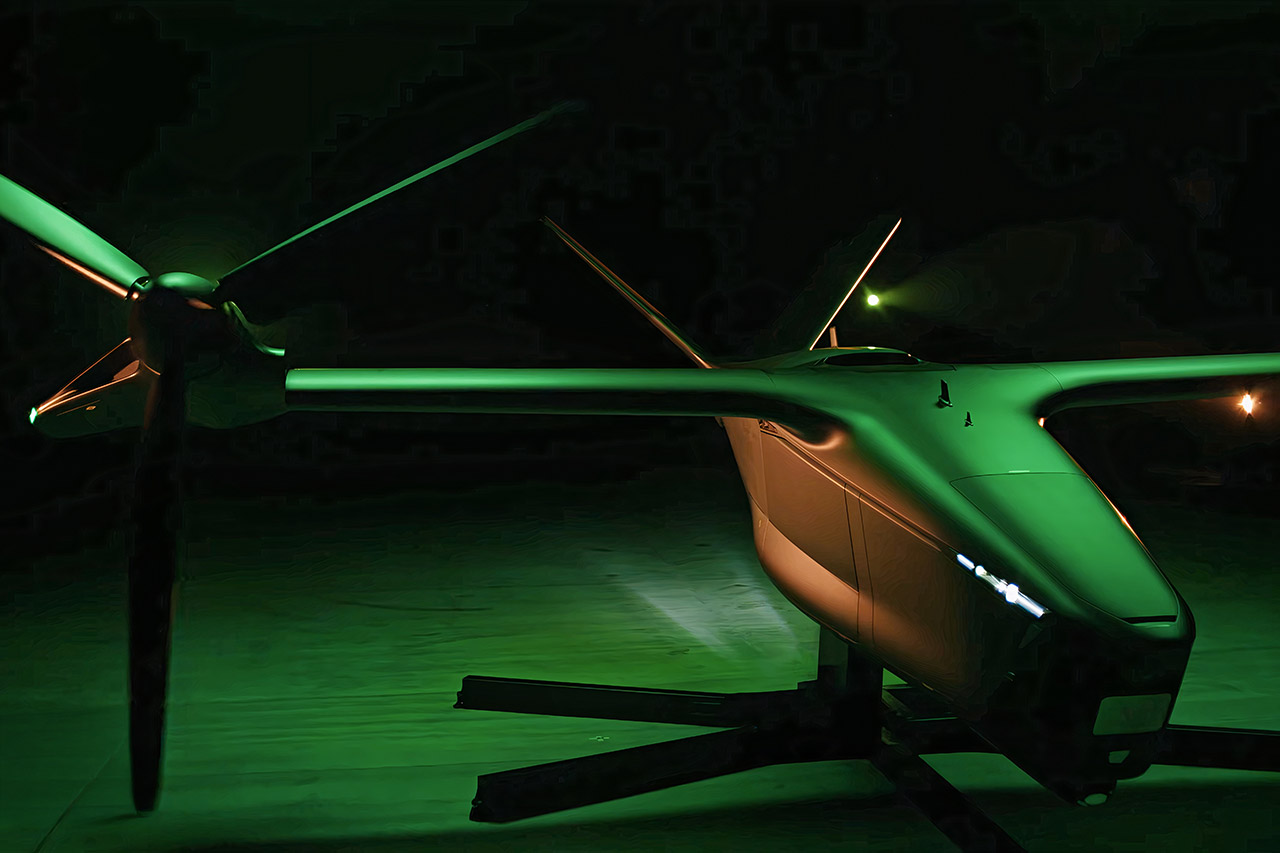
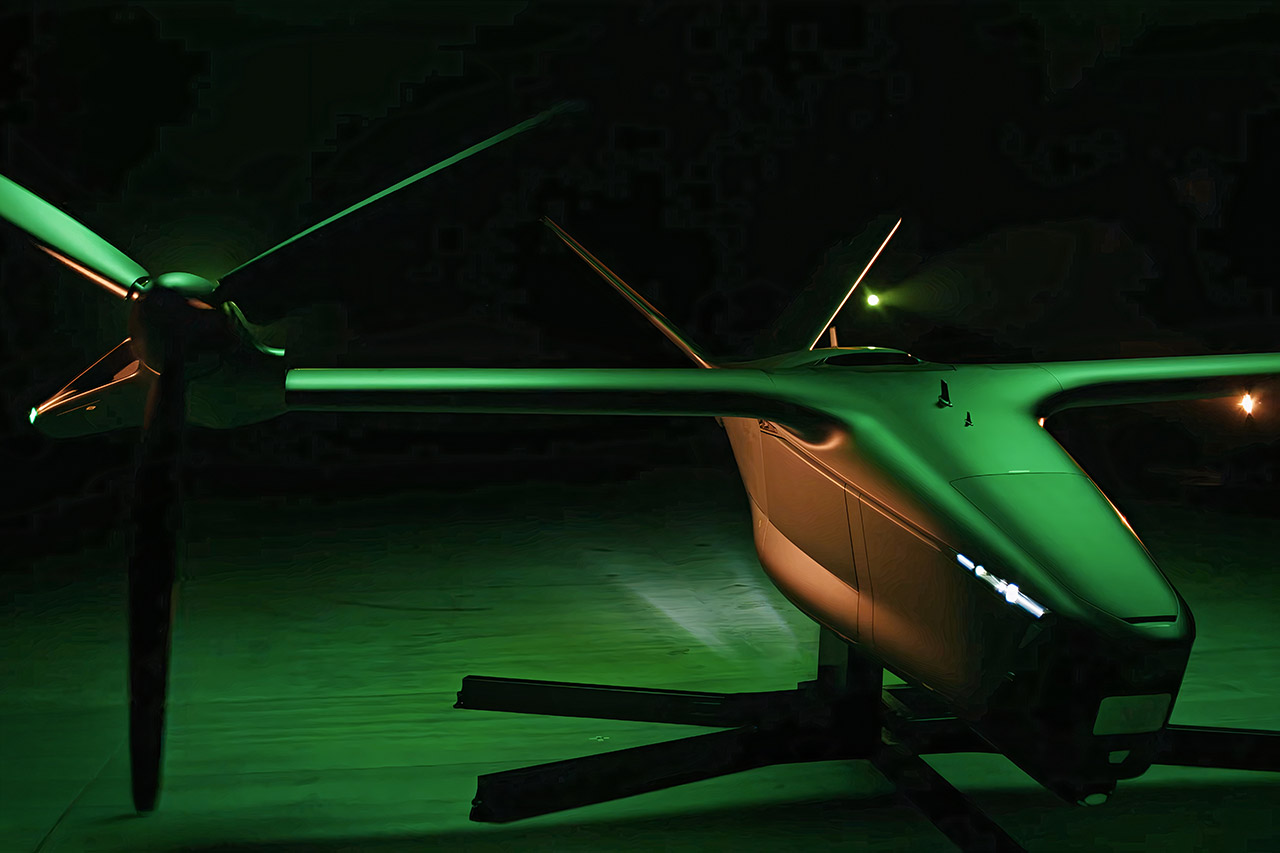

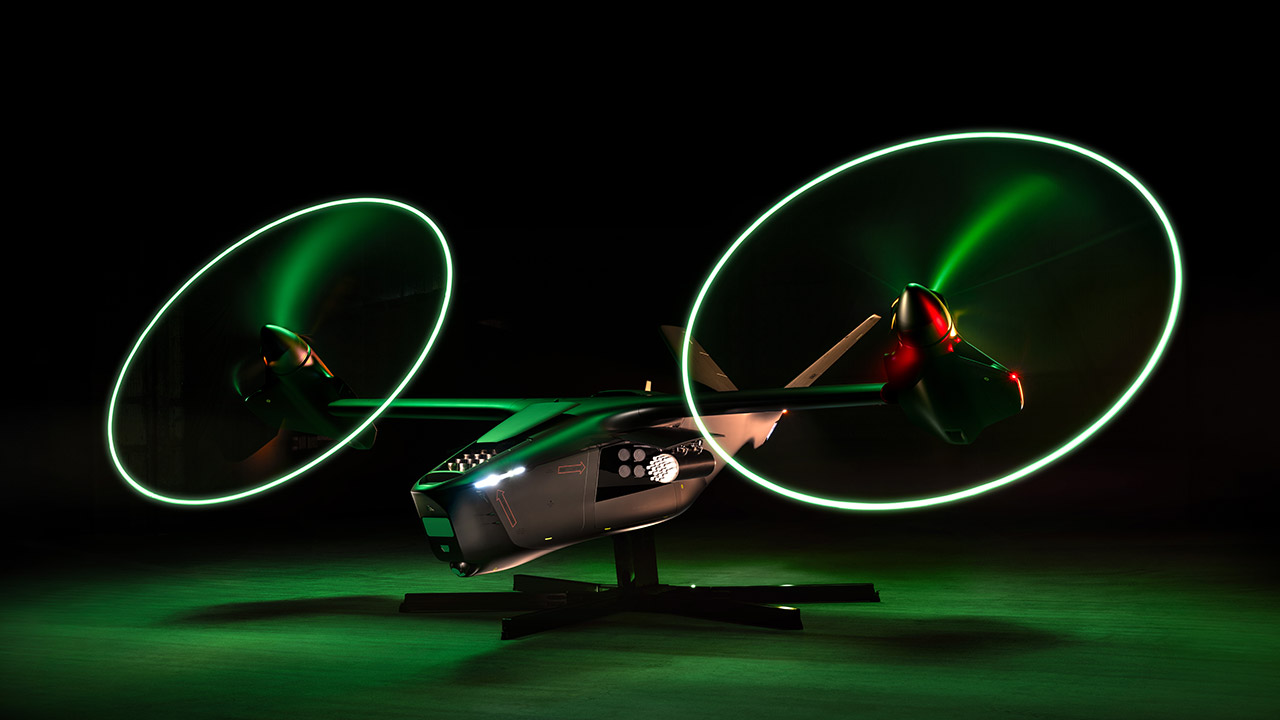
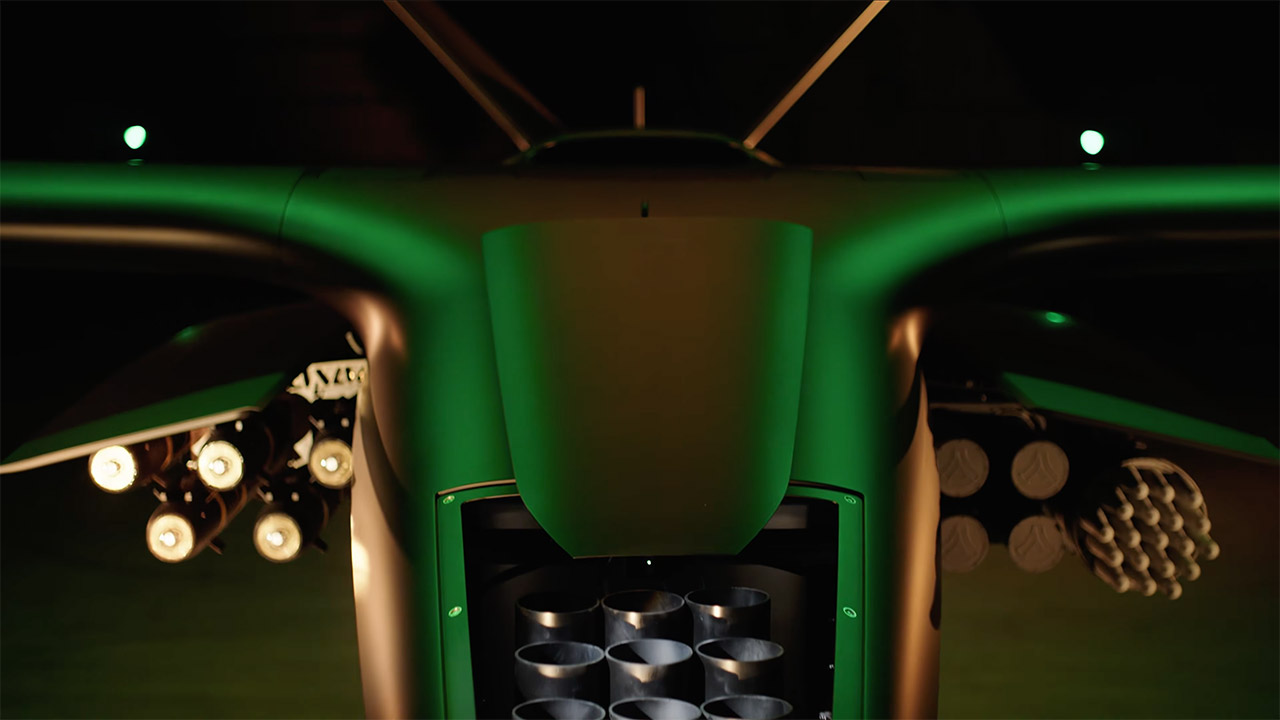

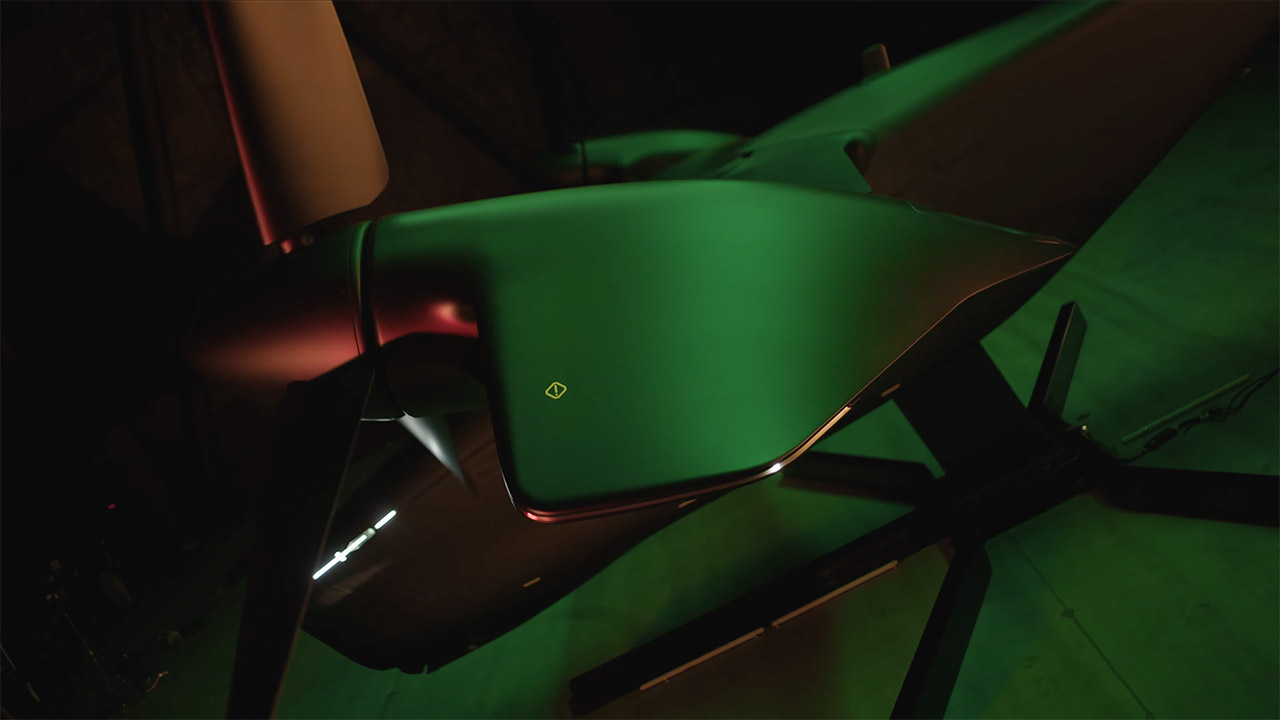




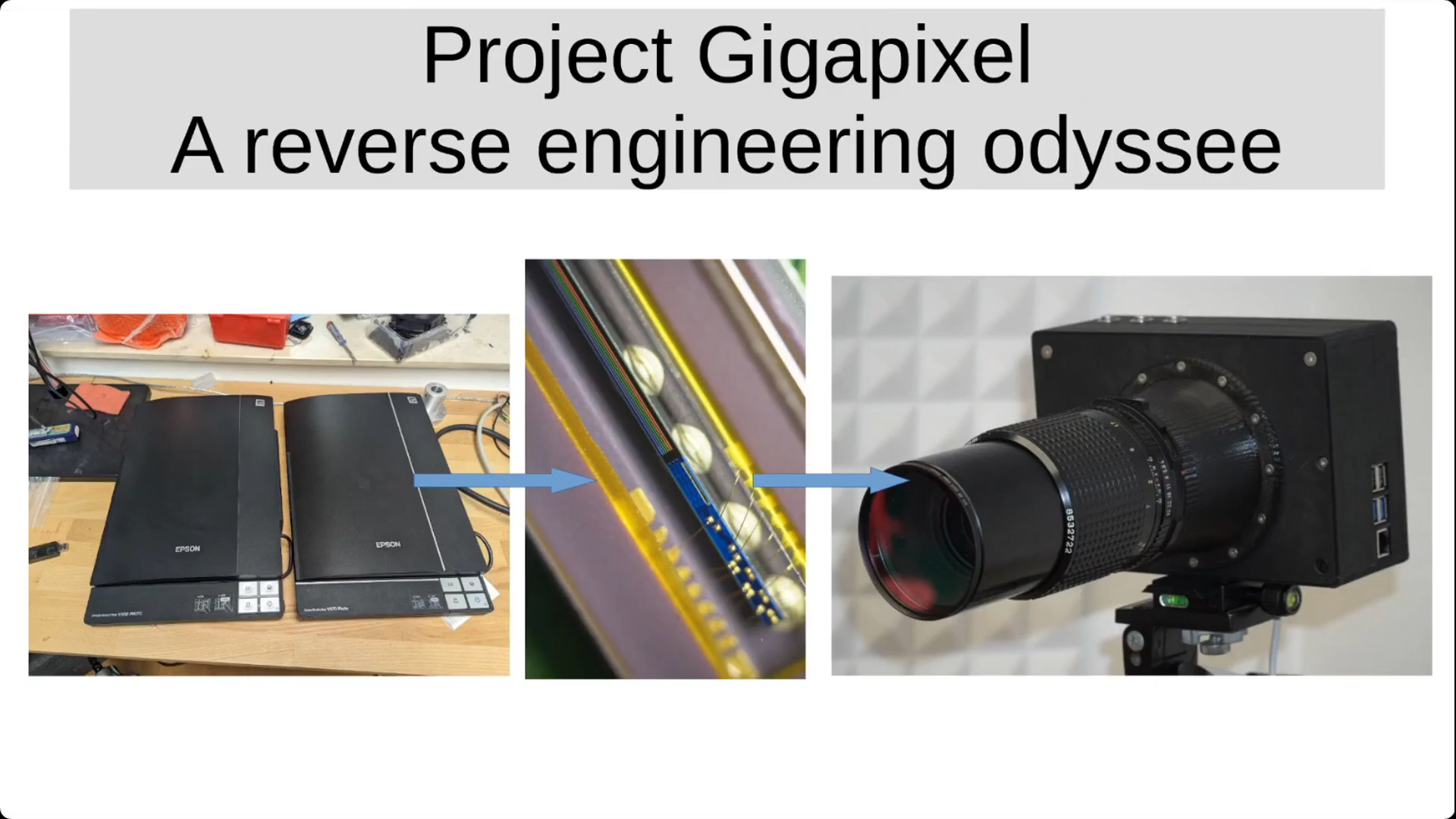
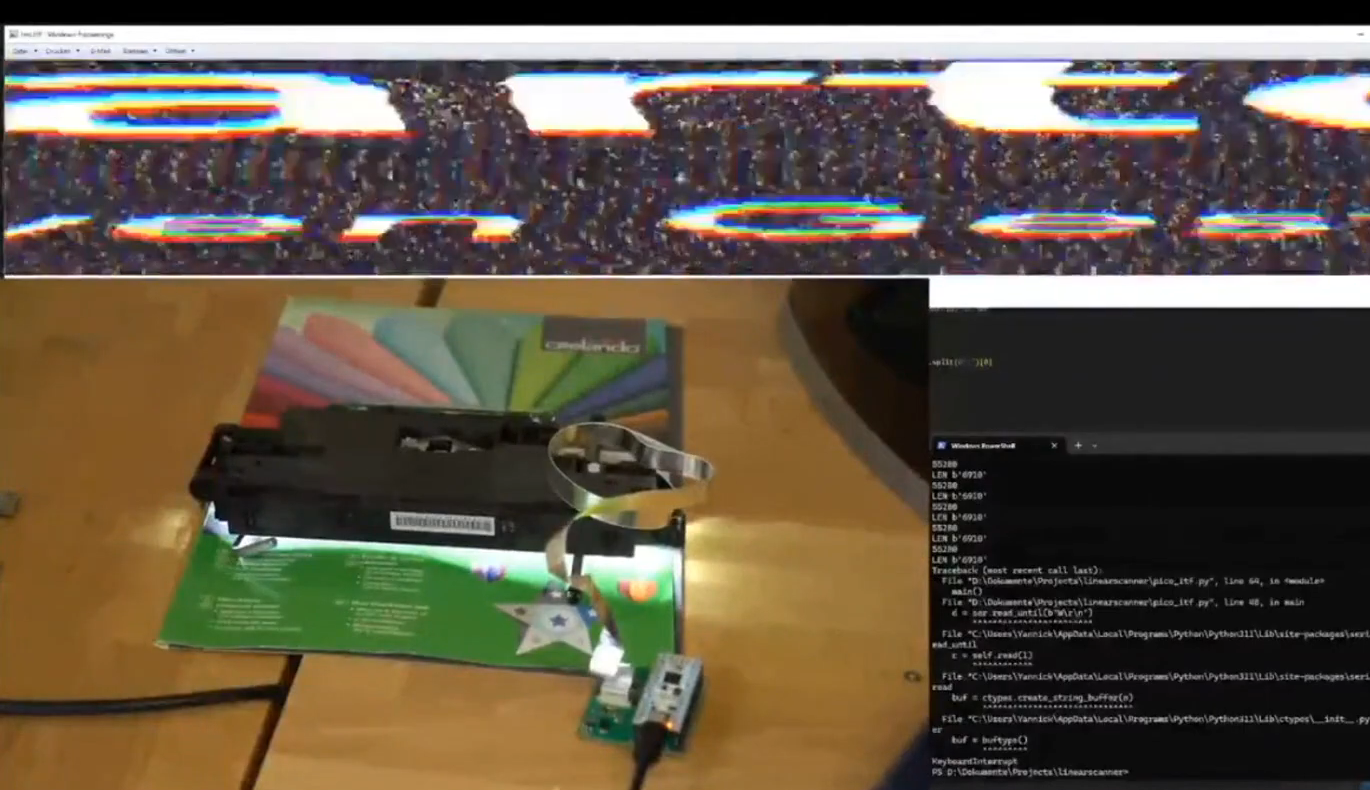
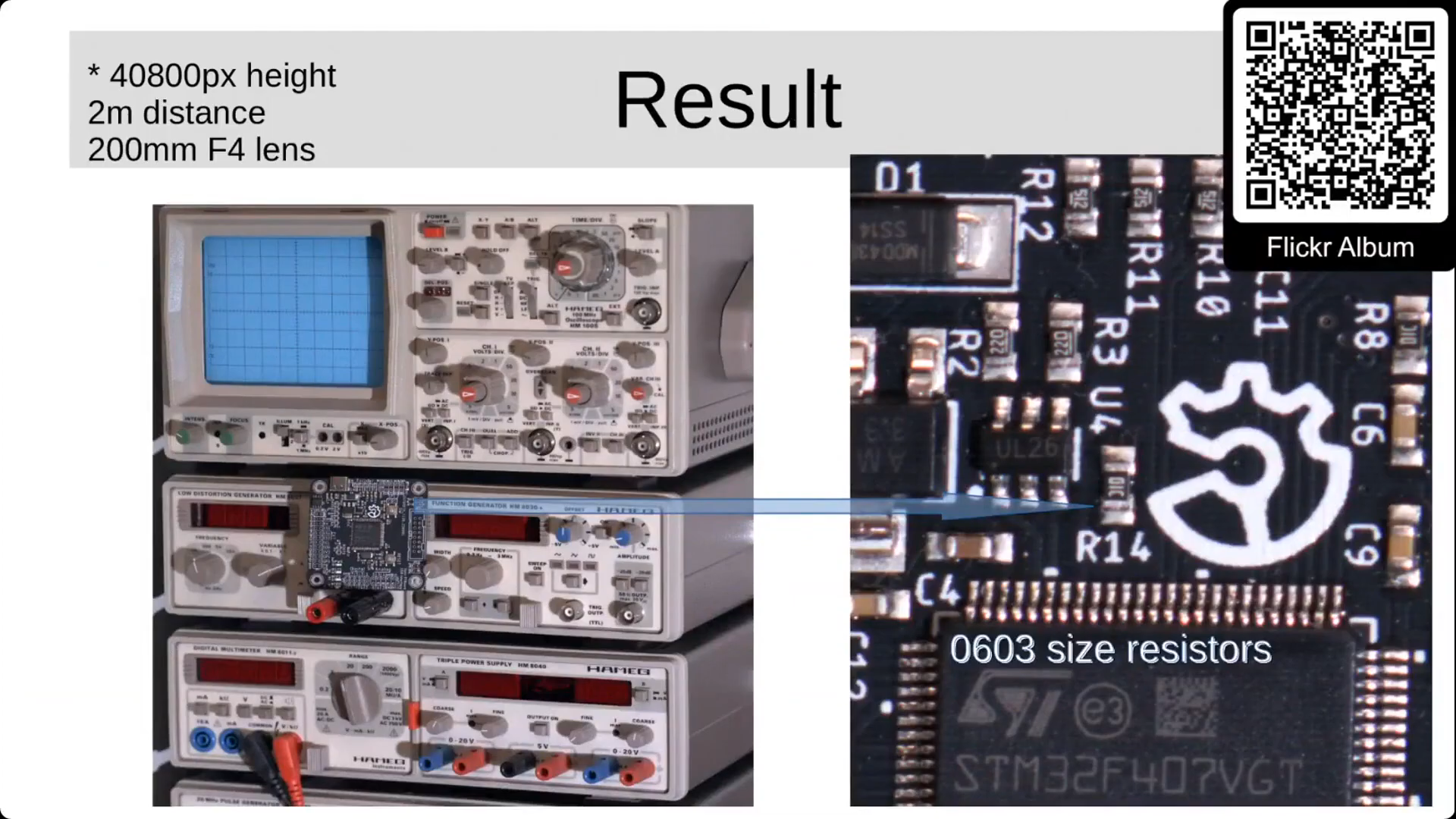


























































You must be logged in to post a comment Login