
TL;DR
Intel is taking Panther Lake handhelds, a 52-core Nova Lake desktop preview, and 288-core Clearwater Forest servers to Computex 2026, all built on the 18A process that underpins its foundry pitch to Apple, Amazon, and Musk’s Terafab.




A digitally signed adware tool has deployed payloads running with SYSTEM privileges that disabled antivirus protections on thousands of endpoints, some in the educational, utilities, government, and healthcare sectors.
In a single day, researchers observed more than 23,500 infected hosts in 124 countries trying to connect to the operator’s infrastructure, with hundreds of infected endpoints present in high-value networks.
Security researchers at managed security company Huntress discovered the campaign on March 22, when signed executables viewed as potentially unwanted programs (PUPs) triggered alerts in multiple managed environments.

PUPs, or adware, are regarded more as a nuissance than malicious, as their role is typically to generate revenue for the developer by showing advertisement pop-ups, banners, or through browser redirects.
Huntress researchers say that the software was signed by a company called Dragon Boss Solutions LLC, involved in “search monetization research” activity and promoting various tools (e.g., Chromstera Browser, Chromnius, WorldWideWeb, Web Genius, Artificius Browser) labeled as browsers but detected as PUPs by multiple security solutions.
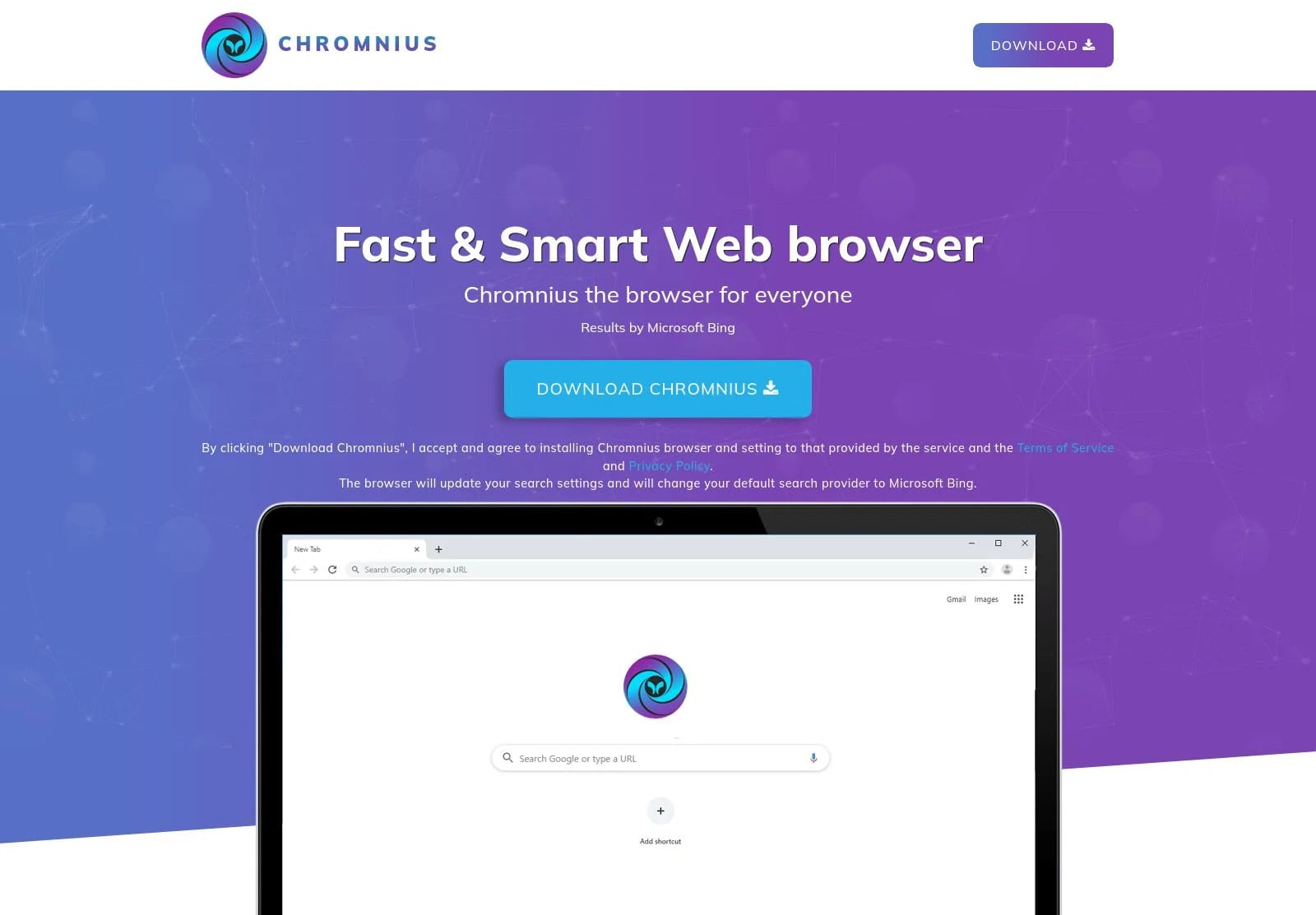
Beyond annoying users with ads and redirects, Huntress researchers say the browsers from Dragon Boss Solutions also feature an advanced update mechanism that deploys an antivirus killer.
Huntress researchers discovered that the operation relied on the update mechanism from the commercial Advanced Installer authoring tool to deploy MSI and PowerShell payloads.
Analyzing the configuration file for the update process revealed several flags that made the operation completely silent and with no user interaction. It also installed the payloads with elevated privileges (SYSTEM), prevented users from disabling automatic updates, and checked frequently for new updates.
According to the researchers, the update process retrieves an MSI payload (Setup.msi) disguised as a GIF image, which is currently flagged as malicious on VirusTotal by only five security vendors.
The MSI payload includes several legitimate DLLs that Advanced Installer uses for specific tasks, such as executing PowerShell scripts, looking for specific software on the system, or other custom actions defined in a separate file named ‘!_StringData‘ that includes instructions for the installer.
Huntress says that before deploying the main payload, the MSI installer conducts reconnaissance by checking the admin status, detecting virtual machines, verifying internet connectivity, and querying the registry for installed antivirus (AV) products from Malwarebytes, Kaspersky, McAfee, and ESET.
The security products are disabled using a PowerShell script named ClockRemoval.ps1, which is placed in two locations. The researchers say that installers for the Opera, Chrome, Firefox, and Edge browsers are also targeted, likely to avoid potential interference with the adware’s browser hijacking.
.jpg)
The ClockRemoval.ps1 script also executes a routine when the system boots, at logon, and every 30 minutes, to make sure that AV products are no longer present on the system by stopping services, killing processes, deleting installation directories and registry entries, silently running vendors’ uninstallers, and forcefully deleting files when uninstallers fail.
It also ensures that the security products cannot be reinstalled or updated by blocking the vendor’s domains through modifying the hosts file and null-routing them (redirecting to 0.0.0.0).
During the analysis, Huntress found that the operator did not register the main update domain (chromsterabrowser[.]com) or the fallback one (worldwidewebframework3[.]com) used in the campaign, presenting them with the opportunity to sinkhole the connection from all infected hosts.
As such, they registered the main update domain and watched “tens of thousands of compromised endpoints reach out looking for instructions that, in the wrong hands, could have been anything.”
Based on the IP addresses, the researchers identified 324 infected hosts in high-value networks:
41 Operational Technology networks in the energy and transport sectors, and at critical infrastructure providers
35 municipal governments, state agencies, and public utilities
24 primary and secondary educational institutions
3 healthcare organizations (hospital systems and healthcare providers)
networks of multiple Fortune 500 companies
BleepingComputer tried to reach out to Dragon Boss Solutions but could not find contact infor as their site is no longer operational.
Huntress warns that, while the malicious tool currently uses an AV killer, the mechanism to introduce far more dangerous payloads onto infected systems is in place, and could be leveraged at any time to escalate the attacks.
Additionally, since the main update domain was not registered, anyone could claim it and push arbitrary payloads to thousands of already infected machines with no security solutions protecting them, and through an already established infrastructure.
Huntress recommends that system administrators look for WMI event subscriptions containing “MbRemoval” or “MbSetup,” scheduled tasks referencing “WMILoad” or “ClockRemoval,” and processes signed by Dragon Boss Solutions LLC.
Additionally, review the hosts file for entries blocking AV vendor domains and check Microsoft Defender exclusions for suspicious paths such as “DGoogle,” “EMicrosoft,” or “DDapps.”

Automated pentesting proves the path exists. BAS proves whether your controls stop it. Most teams run one without the other.
This whitepaper maps six validation surfaces, shows where coverage ends, and provides practitioners with three diagnostic questions for any tool evaluation.

Intel is taking Panther Lake handhelds, a 52-core Nova Lake desktop preview, and 288-core Clearwater Forest servers to Computex 2026, all built on the 18A process that underpins its foundry pitch to Apple, Amazon, and Musk’s Terafab.
TL;DR
Intel will arrive at Computex 2026 in Taipei on 2 June with something it has not had in a decade: a product in every computing category built on a single manufacturing story. Panther Lake, the laptop chip launched at CES in January, is expanding to handhelds with Arc G3 and Arc G3 Extreme processors designed for the gaming handheld market. Nova Lake, a 52-core desktop chip with a new socket and new CPU architecture, will be previewed for a second-half launch. Clearwater Forest, a 288-core server processor that shipped at MWC in March, rounds out the Xeon lineup for data centres and cloud inference. All of them are built on or designed around Intel 18A, the 1.8-nanometre process node that combines RibbonFET gate-all-around transistors with PowerVia backside power delivery and represents the most advanced semiconductor manufacturing capability produced entirely in the United States. CEO Lip-Bu Tan will deliver the keynote. The venue is 40 kilometres from TSMC’s headquarters. The message is not subtle.
Panther Lake launched as Core Ultra Series 3 at CES in January and is already shipping in more than 200 laptop designs. The chip delivers 180 total platform TOPS, combining 120 TOPS from its Xe3 integrated GPU with 50 TOPS from the NPU 5 neural processing unit, and claims a 60 per cent improvement in multi-threaded performance over its predecessor at equivalent power. The Computex expansion brings Panther Lake to gaming handhelds through the Arc G3 platform: a 14-core design with two performance cores, eight efficiency cores, and four low-power cores paired with a 10 or 12-core Xe3 GPU in a configurable power envelope of 25 to 80 watts. MSI, OneXPlayer, GPD, and Acer are expected to showcase handheld devices running the Arc G3 chips at the event, with reports suggesting a Microsoft Xbox-branded handheld may also appear.
Nova Lake, branded Core Ultra Series 4, is Intel’s next desktop platform and will be previewed at Computex ahead of a late-2026 launch. The chip scales from 8 to 52 cores using new Coyote Cove performance cores and Arctic Wolf efficiency cores, introduces the LGA 1954 socket, and integrates Xe3 graphics, Thunderbolt 5, and Wi-Fi 7. The power range spans 35 to 175 watts, reflecting a design that covers both mainstream desktops and high-performance workstations. Nova Lake adopts what Intel calls a “big last level cache” architecture, a design approach inspired by AMD’s success with large L3 caches that prioritises keeping data close to the CPU cores. Intel’s first-quarter earnings revealed that AI-driven CPU demand is real: data centre and AI revenue grew 22 per cent year on year to 5.1 billion dollars as agentic AI workloads shift processing requirements back toward CPUs and away from the GPU-only model that defined the training era.

The 💜 of EU tech
The latest rumblings from the EU tech scene, a story from our wise ol’ founder Boris, and some questionable AI art. It’s free, every week, in your inbox. Sign up now!
Clearwater Forest, formally launched at MWC in March as Xeon 6+, is Intel’s most architecturally ambitious server processor. It packs 288 Darkmont efficiency cores across 12 compute chiplets manufactured on 18A, assembled using Foveros Direct 3D stacking on base tiles built on Intel 3. The IPC uplift is 17 per cent over the prior generation, and the chip targets the cloud inference and dense computing workloads that are expanding as AI deployments move from training to production. The shift toward agentic AI is driving demand for inference compute across every major cloud provider: Meta has committed more than 140 billion dollars to chip procurement from Nvidia, AMD, and Amazon, and the inference workloads those chips serve increasingly require CPU resources for orchestration, memory management, and the real-time decision-making that autonomous AI agents demand.
Intel’s server story at Computex also includes updates on Crescent Island, its dedicated inference accelerator, and Jaguar Shores, a rack-scale computing platform designed for the AI data centre of the late 2020s. Neither product has been formally launched, but both are expected to receive architectural details at Tan’s keynote. The inference accelerator is Intel’s attempt to compete directly with Nvidia’s inference-optimised products rather than conceding the AI accelerator market entirely. Whether Intel can build a competitive inference chip while simultaneously ramping its foundry business and launching three client platforms is the operational question that Computex will not answer but cannot avoid raising.
The thread connecting every product at Computex is 18A. Panther Lake is the first consumer chip built on the node. Clearwater Forest is the first server chip. The Arc G3 handheld processors are the first gaming-focused silicon. Nova Lake will be the first desktop chip, though reports indicate that more than 90 per cent of Nova Lake’s compute tiles will be manufactured by TSMC on its N2 process rather than on Intel’s own fabs, a concession to the reality that Intel’s foundry capacity is not yet sufficient to supply both internal demand and external customers simultaneously.
That concession matters because the 18A node is not just a manufacturing process. It is the product Intel is selling to Apple, Amazon, Musk’s Terafab, and every other company that has signed or is negotiating a foundry agreement. Intel recently hired Qualcomm veteran Alex Katouzian to lead a new Client Computing and Physical AI group, a signal that the company sees local AI inference, the kind of processing that runs on PCs, handhelds, and edge devices rather than in cloud data centres, as the next wave of chip demand. The Computex product lineup is the proof of concept: if 18A can produce competitive chips across laptops, handhelds, desktops, and servers, the foundry pitch to external customers becomes significantly more credible than a roadmap slide.
GitHub paused new Copilot sign-ups after agentic AI workflows consumed more compute than users paid for, an early signal that the economics of agentic AI will push processing toward local hardware. If AI agents run continuously on cloud infrastructure, the costs scale linearly with usage and eventually become unsustainable at flat subscription prices. If those agents run locally, on a laptop with 180 TOPS of AI processing power or a desktop with 52 cores and a large cache, the economics shift from per-query cloud charges to a one-time hardware purchase. Intel’s bet is that the AI PC is not a marketing label but an architectural requirement: the agentic era needs local compute, and Intel’s chips are designed to provide it.
The competition is real. Qualcomm’s Snapdragon X Elite has established itself in the thin-and-light Windows market with superior power efficiency. AMD’s Ryzen AI 300 and 400 series compete directly with Panther Lake in laptops and with Arrow Lake Refresh on desktops. Apple’s M-series processors remain the benchmark for integrated performance in the consumer market. Nvidia’s server GPUs sell for a million dollars each in China despite export controls, reflecting a level of demand that Intel’s data centre products have never generated. Intel’s advantage at Computex is not that its chips are the best in any single category. It is that it has chips in every category, all manufactured on a process node that also serves as the foundation of a foundry business, and the foundry business is the reason Apple is in talks, Musk is building a 25 billion dollar fab, and the US government owns 10 per cent of the company.
Computex has been Intel’s event for decades. The show takes place in Taipei, the heart of the global semiconductor supply chain, and Intel has traditionally used it to announce the products that define each generation of PC computing. The difference in 2026 is that Intel is no longer just a chip designer presenting products manufactured in its own fabs. It is a foundry operator competing with the host country’s most valuable company for the right to manufacture other people’s chips. Tan’s keynote will be watched not just for what Intel announces about its own products but for what those products reveal about 18A’s readiness to serve external foundry customers. Every Panther Lake laptop that ships without defects, every Clearwater Forest server that meets its performance claims, every Arc G3 handheld that runs within its thermal envelope is a data point for Apple, Amazon, and every other company evaluating whether to trust Intel with their silicon.
In 2016, Intel was the world’s largest semiconductor company by revenue. By 2024, it had fallen to eighth, behind Nvidia, TSMC, Samsung, Broadcom, Qualcomm, AMD, and Texas Instruments. Its manufacturing process had fallen two generations behind TSMC. Its CEO was forced out by a board that had lost confidence in the turnaround. The stock hit 18 dollars. Fourteen months later, Intel is at an all-time high, its foundry has anchor customers including Apple and Musk’s Terafab, and it is going to Computex with a product in every category for the first time in a decade. The turnaround is real, but it is also incomplete: the foundry loses 2.4 billion dollars per quarter, external revenue is 174 million dollars against TSMC’s 20 billion, and 90 per cent of the desktop chip Intel is previewing at Computex will be manufactured by the competitor it is trying to displace. The 18A node is Intel’s answer to all of those problems. Computex is where it starts proving the answer works.
The iPhone’s journey began in 2007 by changing the smartphone market forever, replacing physical keyboards with a 3.5-inch multi-touch display. Now, as the device moves toward its 20th anniversary, Apple may be preparing for another major design shift, a seamless, completely buttonless iPhone.
Bloomberg’s Mark Gurman has added fresh weight to the iPhone 20 redesign rumors. In the Q&A section of his Power On newsletter, Gurman said Apple’s 20th-anniversary iPhone overhaul is internally referred to by some as “Glasswing,” a name inspired by the glasswing butterfly and its transparent wings.

According to Gurman, the design includes glass edges that curve smoothly into the display on all four sides. Gurman also said Apple’s Liquid Glass interface is being shaped around this hardware direction, with the software designed to visually blend into the iPhone’s glass-heavy body. The idea appears to be a tighter connection between the device and the operating system.
Previous reporting has also pointed to Apple exploring a return to curved-screen styling. The design may aim for a seamless visual effect rather than bringing back the sharply sloped waterfall displays seen on some older Android phones.
The buttonless part of the story comes from an earlier Weibo leak by Chinese tipster Instant Digital from October 2025. The tipster claimed Apple’s solid-state button plan had completed functional verification and was being prepared for mass production on the 2027 iPhone 20.

According to that leak, the power button, volume buttons, Action button, and Camera Control button could all move to solid-state controls with localized vibration feedback. That would allow the iPhone to simulate a physical click without using traditional moving buttons.
Instant Digital also claimed Apple may begin the transition earlier with the iPhone 18. The Camera Control button is said to get a simpler structure by removing the capacitive sensing layer and keeping pressure recognition.
Ming-Chi Kuo had previously reported that Apple was working on solid-state power and volume buttons for the iPhone 15 Pro. However, the feature was later shelved due to technical and manufacturing issues. If Apple has managed to fix those issues, the iPhone 20 might finally be the one to go fully buttonless.
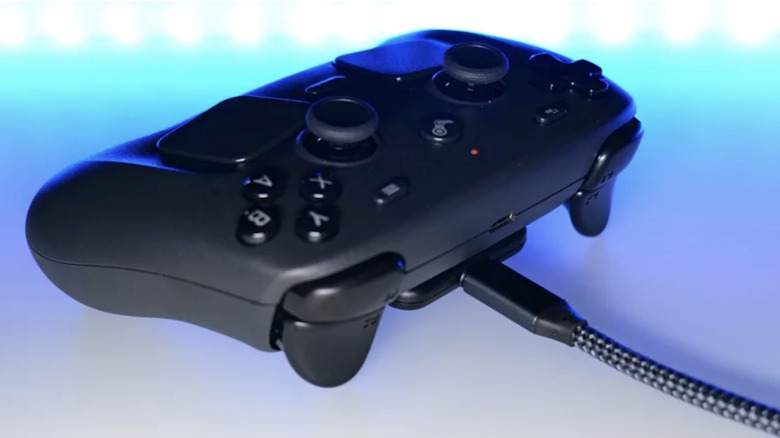
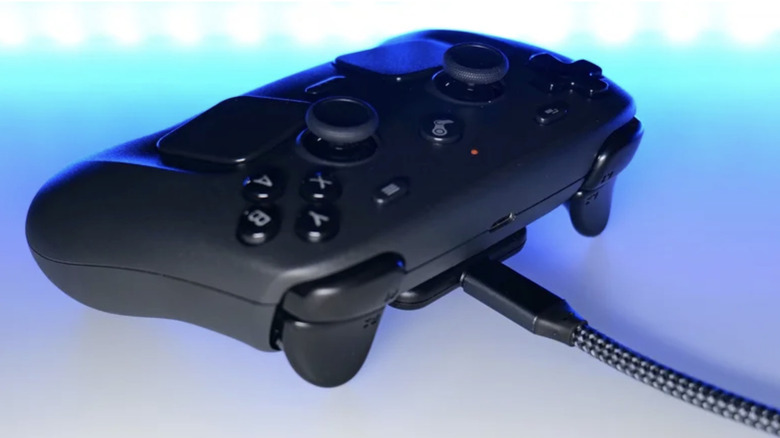
The Steam Controller has been a hot topic for the PC gaming world for the past few weeks, and a new tidbit could keep the conversation going: Valve released the CAD files for the gamepad’s shell. They’re free to download under a Creative Commons license, meaning people can now design and construct their own accessories for the Steam Controller and its puck.
The files are only for the device’s exterior; you won’t be able to 3D print yourself the innards to build your entire controller from scratch. That means that if you are on the hunt for a Steam Controller, you may be waiting for a bit while the sold-out gamepad is restocked. Fortunately, since Valve hasn’t given a release window yet for the Steam Machine and Steam Frame VR headset, it’s probably not an essential purchase right this instant for most gamers. But it is a good controller if you can find one, and it’s a nifty idea for Valve to let people get creative with the casing.
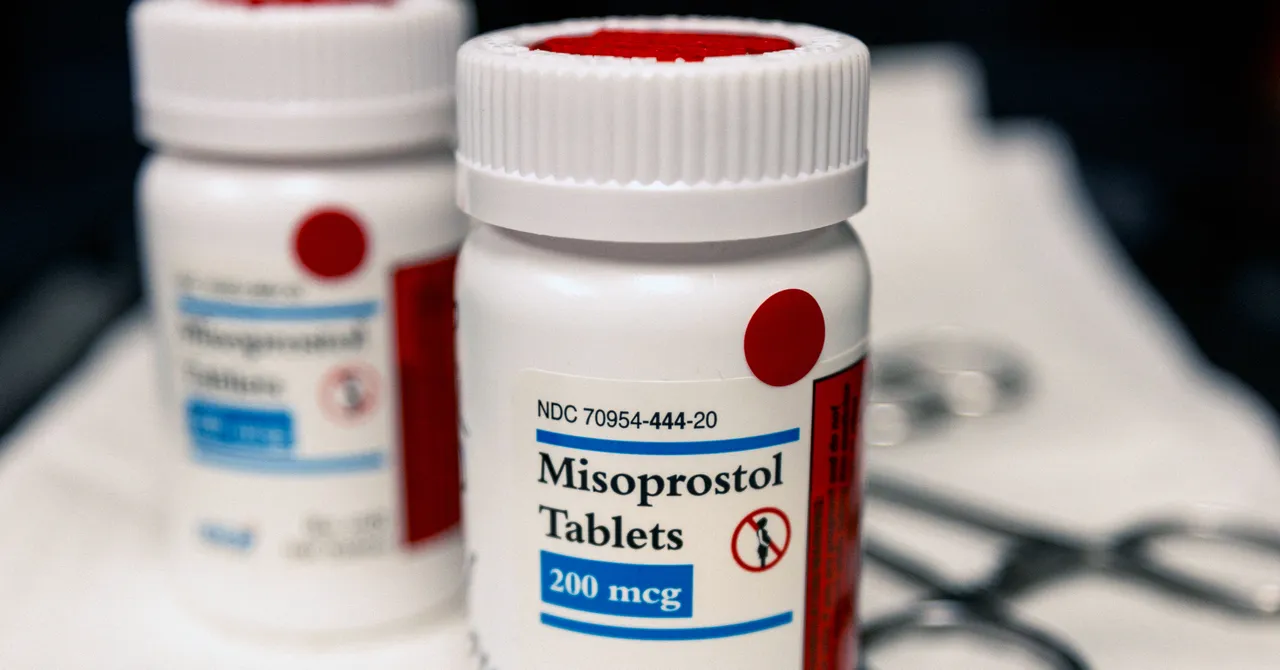
Abortion provider Carafem’s phones were ringing nonstop over the weekend after a US federal appeals court reinstated a nationwide requirement that the drug mifepristone, one of two pills used for a medication abortion, must be obtained in person. The decision, handed down on Friday, left patients unsure if they could gain access to their treatment through telehealth. “People are afraid, and they’re angry,” says Carafem’s chief operations officer, Melissa Grant. “I had people contact us saying, This can’t be true. Do you still have the medication available? Can’t you just give it to me? They were bargaining.”
With the restriction in place, Carafem quickly pivoted to a backup approach. Instead of prescribing the two-drug protocol typical for a medication abortion—mifepristone, which blocks progesterone and prevents the pregnancy from progressing, and then misoprostol, which causes the uterus to contract—the organization began prescribing misoprostol on its own. While slightly less effective than the dual-pill option, it’s been widely used in the past. “We feel comfortable prescribing it,” says Grant.
Some Planned Parenthood clinics also pivoted to the misoprostol-only regimen this weekend. “Planned Parenthood providers are doing everything they can to make sure patients know that medication abortion is still safe, legal, and available,” says Danika Severino, vice president of care and access at Planned Parenthood Federation of America.
On Monday, the Supreme Court offered a temporary reprieve, pausing the appeals court ruling for a week. The measure allows patients to once again get mifepristone through virtual clinics at least until May 11, when SCOTUS will take another look at the case. Carafem and Planned Parenthood say they are prepared to shift back to misoprostol-only if necessary. Other providers, including the digital abortion clinic HeyJane, have confirmed that they will also take that approach if necessary.
Mifepristone was developed in the 1980s in France and has been extensively studied for safety and efficacy. It was approved by the Food and Drug Administration in 2000. Under President Joseph Biden, the FDA first allowed the drug to be obtained by mail instead of in person in April 2021, during the Covid-19 pandemic. The agency permanently lifted the in-person dispensing requirement in 2023.
After the Supreme Court overturned Roe v. Wade in 2022, ending the constitutional right to an abortion, medication abortion via telehealth became a more sought-after option, especially for patients in states that adopted abortion restrictions. Approximately one in three abortions that took place in the first half of 2025 used abortion pills obtained through telehealth, according to public health nonprofit Plan C.
Access to mifepristone has become the next major battleground in reproductive health, with anti-abortion politicians and lobbyists seeking to reinstate in-person dispensing requirements on the drug and, by doing so, make medication abortion harder to obtain.
After conflicting legal rulings in 2023 sparked confusion over whether mifepristone would be available from virtual clinics, some of them planned to temporarily shift to offering misoprostol-only medication abortions. Some virtual clinics have offered single-pill options even before that. Carafem offered misoprostol-only medication abortions beginning in 2020, in an effort to provide patients with options for virtual care during the early days of Covid.
Originally developed to treat gastric ulcers, misoprostol has been used for medication abortion since the late 1980s. It remains the primary method of medication abortion in many parts of the world where access to mifepristone is limited.
“Mifepristone and misoprostol are both very safe medications, and in general, having mifepristone increases the efficacy and decreases complication rates of medication abortion,” says Rachel Jensen, a fellow with the American College of Obstetricians and Gynecologists, which endorses the misoprostol-only protocol when mifepristone isn’t available. The single-drug regimen is also endorsed by the World Health Organization, the Society of Family Planning, and the National Abortion Federation.

School’s (almost) out for summer.
When it comes time to throw open campus doors for the new school year in the fall, research tells us one out of every seven teachers won’t be returning — either because they moved schools or left the profession entirely.
But when the going gets tough, teachers don’t necessarily want to leave. Even when they’re burned out, they still love what they do.
So, the concerning data throughout the country tells a story about how stark the conditions of the teacher workforce are. In Wisconsin, for instance, teachers say they are exiting the profession at the highest rate in 25 years thanks to a range of issues, from poor leadership to safety concerns like students bringing guns to school.
Worse, shrinking student populations and rising costs have forced school districts like Portland Public Schools to make staff cuts in the face of astronomically high budget gaps. Early career teachers are thinking hard about whether they even want to continue in their chosen field.
That’s why we at EdSurge want to hear from educators who have recently left or plan to leave their jobs for another sector: What was the deciding factor? What could your school (or district or state-level leaders) have done differently to change your mind?
Your responses will help shape our coverage, and we may be in contact for an interview.


Microsoft is pulling the plug on its AI-powered Copilot assistant for Xbox, winding down the feature on mobile and canceling its planned launch on consoles.
The pullback, announced Tuesday by new Xbox CEO Asha Sharma, comes barely a year after the company debuted the gaming chatbot as a centerpiece of its AI push into gaming, demonstrating the limits of Microsoft’s strategy of embedding AI across its product lineup.
Microsoft first unveiled Copilot for Gaming at the Game Developers Conference in March 2025, pitching it as an AI sidekick that could offer gameplay tips, coaching, and recaps of where players left off. A beta launched on the Xbox mobile and PC apps and later on the ROG Xbox Ally handheld. The console version was expected to arrive later this year.
Sharma’s decision to kill the feature aligns with the AI strategy she outlined in an April 30 post on X, where she said Xbox was “refocusing our AI efforts to solving player problems like enhancing real-time graphics, improving discovery, and deepening personalization.”
She pointed to Automatic Super Resolution, which boosts image quality and performance in the background, as an example of AI done right — a contrast with the chatbot approach.

It’s part of a broader set of changes by Sharma, who told employees in a memo Tuesday that she’s overhauling Xbox’s leadership team, including bringing in executives from the Microsoft CoreAI engineering group where she previously worked.
“Xbox needs to move faster, deepen our connection with the community, and address friction for both players and developers,” Sharma wrote on X, noting that the company promoted leaders who helped build Xbox while bringing in new voices to the gaming unit.
According to CNBC, which saw the memo, the changes include the addition of four executives from CoreAI:
In addition, David Schloss, a senior director of product and growth at Instacart, will take charge of Xbox’s subscription and cloud business.
Two execs with more than two decades each at Microsoft are departing: Kevin Gammill, who oversaw Xbox user experience and game development platforms, and Roanne Sones, who led devices and ecosystem and will take a leave of absence before moving to an advisory role.
Sharma took over as Xbox CEO in February, replacing Phil Spencer, who retired after 38 years at the company. She had been running Microsoft’s CoreAI product organization and previously served as chief operating officer at Instacart and as a vice president at Meta.
Since arriving, she has moved quickly, cutting Game Pass prices, dropping the “Microsoft Gaming” name in favor of Xbox, and adopting daily active players as the division’s new internal success metric.
The changes come as Xbox faces a sustained revenue slump. Gaming revenue totaled $5.3 billion in the most recent quarter, down from $5.7 billion a year earlier, and has declined in four of the past six quarters. Hardware revenue fell 33%.
Microsoft’s recent 10-Q filing also disclosed impairment charges in the gaming business, meaning the company has written down the value of some gaming assets, suggesting that parts of its gaming portfolio aren’t performing as expected.
Sharma described the decision to wind down Copilot on mobile and stop its development for consoles as part of a plan to “retire features that don’t align with where we’re headed.” Her post did not address the status of the Copilot beta on the Xbox PC app or the ROG Xbox Ally handheld.
The feature drew skepticism from the start. Gaming writer Thomas Wilde called it “a solution looking for a problem” in a March 2025 analysis on GeekWire, questioning whether players wanted an AI chatbot alongside their games.
More recently, Wilde raised additional concerns about the feature pulling guide content from the open internet without attribution, writing that Gaming Copilot was “eating its own seed corn” by undermining the ecosystem of online guides it depended on.
The feature’s full lifecycle, from announcement to cancellation, spanned roughly 14 months.
Apple has settled a class-action lawsuit over its delayed Siri features.
While Apple’s promised Siri overhaul is still nowhere to be found, shareholders who sued over the delay can now rest easy, thanks to a huge settlement.
At WWDC 2024, as part of its Apple Intelligence announcements, Apple previewed major enhancements for Siri. The virtual assistant was supposed to receive an AI-powered cognitive boost, allowing for advanced in-app actions, contextual awareness, and more.
The company went so far as to feature Siri’s new capabilities in its marketing materials, including video advertisements. Things went south in a matter of months, however.
Apple had to delay its planned Siri update, which led to a class-action lawsuit that was settled in December 2025. On Tuesday, as noted by The Financial Times, the settlement details were finally revealed.
The parties settled for $250 million, offering U.S. Settlement Class Members $25 per eligible device. Still, Apple could be forced to pay up to $95 per device if the number of claims filed is low. Part of Apple’s $250 million settlement will also go toward administrative costs and attorneys’ fees.
Eligible devices include iPhone models with Apple Intelligence support, purchased between June 10, 2024, and March 29, 2025, in the United States. This encompasses the entire iPhone 16 range, along with the iPhone 15 Pro and iPhone 15 Pro Max.
Those who wish to submit a claim will need to provide proof of purchase, the serial number of the eligible device, their phone number, and Apple Account information. Apple will begin inviting claim submissions within 45 days, as of May 5, 2026.
Apple also provided a statement on the matter, as shared by 9to5mac.
“Since the launch of Apple Intelligence, we have introduced dozens of features across many languages that are integrated across Apple’s platforms, relevant to what users do every day, and built with privacy protections at every step. These include Visual Intelligence, Live Translation, Writing Tools, Genmoji, Clean Up, and many more.
Apple has reached a settlement to resolve claims related to the availability of two additional features. We resolved this matter to stay focused on doing what we do best, delivering the most innovative products and services to our users.”
As one would expect, Apple’s statement largely praises the currently available Apple Intelligence features, while treating the Siri-related settlement as little more than a footnote.
The now-settled class-action lawsuit accused Apple of promoting “AI capabilities that did not exist at the time, do not exist now, and will not exist for two or more years.”
It was also said that Apple’s advertisements “saturated the internet, television, and other airwaves to cultivate a clear and reasonable consumer expectation that these transformative features would be available upon the iPhone’s release.”
At the time of writing, the long-overdue Siri features are still not available to end users. They are expected to roll out with the iOS 27 update, which is set to debut at WWDC 2026 on June 8.
However, Apple’s legal issues over its delayed Siri features are set to continue via a separate class-action lawsuit. This one is led by South Korea’s National Pension Service, which argues that Apple’s delays have cost billions in stock market losses.
“It is no secret that Apple faced challenges and weathered ups and downs in its stock price in 2025, like many major companies,” Apple said in a February 2026 request to dismiss the suit. “But plaintiff takes a massive and unsupported leap by claiming that securities fraud caused the temporary price drops.”
Ultimately, it remains to be seen if this lawsuit will be dismissed or if Apple will reach a similar settlement as it did in its other Siri-related case.

You might run into trouble if you try to browse Reddit posts without logging in on your phone. Some Reddit users have reported seeing a new pop-up when visiting the website on mobile that prompts you to download the app to keep reading.
The social media platform said it’s running a test on a “small subset” of users who frequent the site on mobile browsers while logged out.
Multiple Reddit users have shared a prompt they encountered that says, “get the app to keep using Reddit.” I wasn’t able to replicate this message after deleting the Reddit app from my phone and poking around on the web version. Those who encounter the prompt while using their mobile web browser may be able to log in to continue without installing the app.
A Reddit spokesperson told CNET the company is running a test to see whether users find the app more satisfying than a mobile browser.
“These users are already familiar with Reddit, and we’ve seen that the experience is much better for them in the app,” according to a statement from Reddit. “The app offers a more personalized experience, and users can more easily find communities that match their interests.”
Redditors who noted the change expressed frustration with having to be routed to an app just to browse something that was otherwise visible as a website in a web browser. “This is a website,” one user said. “I do not want to use an app to view your website.” Others suggested possible workarounds, like having the site display as a desktop site.
Running into a prompt to log in or download an app isn’t uncommon when using social media platforms. LinkedIn curbs my anonymous snooping, so I’ve resorted to screen recording to share TikToks with some friends who’ve avoided the app.
During a quarterly earnings call last week, Reddit CEO Steve Huffman said that logged-in users spend more time on the platform than logged-out users, due to personalization.
“Seeing more users in the app, more users logging in, more users getting the personalization faster, drives engagement and, then, therefore, monetization,” Huffman said, according to a transcript of the call. “Again, all roads lead to basically the same strategy, which is: Help users find content that’s relevant to them and come back to the app more often.”


The full assets of Metal Gear Solid 2’s HD remaster were recently leaked on 4chan. An unnamed party used the notorious imageboard to distribute the source code for every version of the remaster across all supported platforms, including the PlayStation Vita edition. The leak also reportedly includes 30GB of raw,…
Read Entire Article
Source link
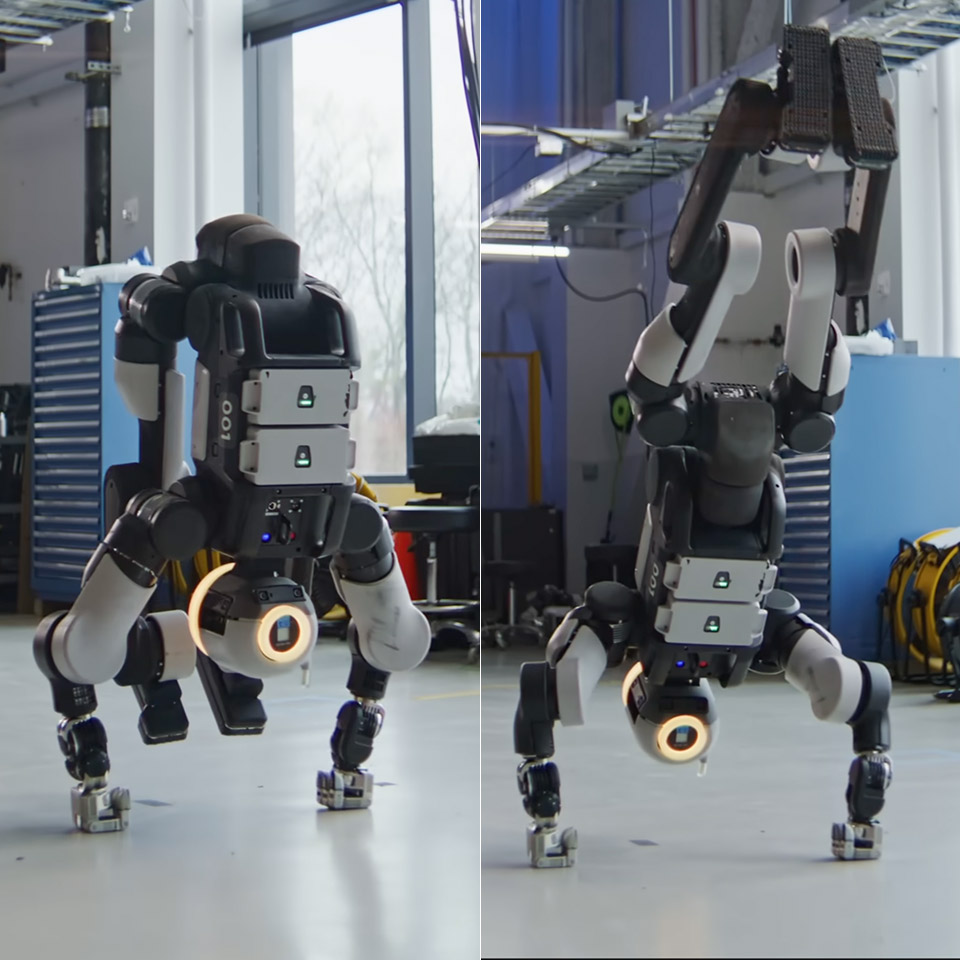
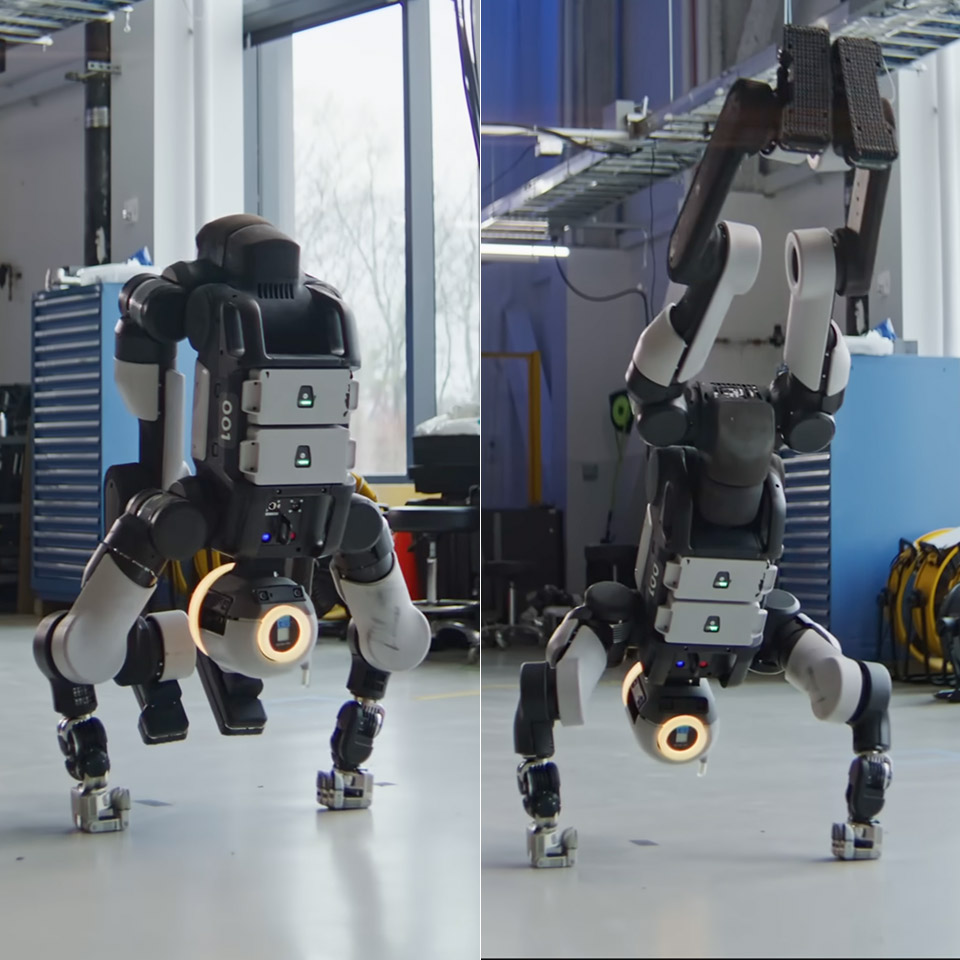
Boston Dynamics engineers just released new footage of their Atlas robot being tested. The machine is shown lurching from two feet to all sorts of weird positions, challenging its balance with each stride. It is not uncommon to watch it shift its weight from both legs onto one while the other extends outward like a spear, arms waving in sync to keep its center of mass stable as it totters about. Atlas quickly puts both hands on the floor and throws its entire body into a handstand, smooth as silk.
Then, just as you get comfy, the legs fly straight out in a horizontal line. Atlas manages to ease right back down again, with no wobble or drama, just flawless. Following that, the robot performs some gymnastics, moving into a clean stand-up stance and landing flat on both feet with barely a judder. Every recovery is a precision motion, as the software makes the smallest modifications on the fly, via the hips and ankles, to absorb the shock. The same process occurs in a cartwheel, where the arms and legs work in perfect harmony to keep the torso on track.

We already know that Atlas is more than willing to do some heavy lifting for factories, transferring loads with steady hands from container to dolly without flinching, even in uneven flooring environments, and the balance system that allows the robot to flip also means it has the ability to step across uneven ground or recover when loads shift unexpectedly on the job, as the robot delivers results on both fronts with aplomb.
Boston Dynamics claims that its test teams fine-tune Atlas by subjecting it to simulation after simulation after real-world test, with the machine learning its way through to the point where it can detect its own position without relying on external cues to stay on track. All combined, its hydraulic/electric actuators respond faster than the blink of an eye to data from all of the numerous sensors, transforming moments of uncertainty into smooth sailing.







Channel 5 – All Creatures Great and Small series 7 new post

Tesla Officially Registers Elon Musk’s Stock: What Investors Need to Know

Trump’s 25% EU auto tariff breaches Turnberry Agreement that also covers semiconductors and digital trade

Paul Scholes issues Marcus Rashford reality check as agreement emerges over Man United star


Barclay Brothers Avoid Bankruptcy: HSBC Drops High Court Petitions After IVA Deal


Met Gala 2026 Rumored Guest List Is Turning Heads


Celebrities Who Are Attending the 2026 Met Gala Event


Insider Claims Reason Behind Key & Peele Split


Texas Instruments made a new flagship graphing calculator: the TI-84 Evo


Meta (META) starts stablecoin payout to creators in Circle’s USDC on Polygon, Solana via Stripe


Strait of Hormuz Remains Heavily Restricted on April 29 Amid Iran Conflict


Two Powerball Tickets Split $143 Million Jackpot in Indiana and Kansas
Strait of Hormuz Blockade Persists Amid US-Iran Standoff, Sending Oil Prices Soaring


Kylie Jenner Hit With Second Lawsuit From Ex-Housekeeper

David Benavidez responds to team Canelo saying the fight will never happen
Winning Numbers Drawn as Jackpot Resets to $20 Million


Saudi Arabia set to withdraw LIV Golf funding after 2026 season, per reports

CoreWeave (CRWV) Stock Climbs 8% Despite $45M Insider Share Dump

Securitize and Computershare Enable Tokenized Equity Issuance for Over 25,000 U.S.-Listed Stocks


Cavaliers vs. Raptors Game 6 live score, updates, highlights from 2026 NBA playoffs first-round series


You must be logged in to post a comment Login