In a small double-blind clinical trial, a single intravenous dose of DMT produced rapid and clinically meaningful reductions in symptoms of major depressive disorder within a week, with effects lasting up to three months in some patients. “Unlike psilocybin and lysergic acid diethylamide ( LSD), whose effects can last for hours, intravenous DMT has a half-life of around five minutes,” notes ScienceAlert. “Its psychedelic effects are correspondingly brief, potentially making it more practical to administer in clinical settings.” From the report: “A single dose of DMT with psychotherapeutic support produced a rapid, significant reduction in depressive symptoms, sustained up to three months,” writes a team led by neuroscientists David Erritzoe and Tommaso Barba of Imperial College London. […] They recruited 34 participants with major depression and divided them into two groups of 17 for a double-blind, placebo-controlled trial.
In the first stage of the trial, one group received an intravenous dose of DMT, while the other received an active placebo. Neither the researchers nor the participants were informed which participants received the DMT. The doses took around 10 minutes to administer, and a therapist sat with each participant to ensure comfort and safety while the psychedelic effects were active, remaining silent throughout the treatment. The treatment was generally well tolerated. Most side effects were mild to moderate, and included nausea, temporary anxiety, and pain at the injection site. No serious adverse events related to the treatment were reported, although brief increases in heart rate and blood pressure were observed immediately after dosing.
In the second, open-label stage, two weeks after the first dose, all participants were given the opportunity to receive a dose of DMT. Participants were assessed before and at intervals after each dose using the Montgomery-Asberg Depression Rating Scale. Just a week after the first dose, participants who had received DMT had improved scores compared to the placebo group, and improvements were sustained during follow-up assessments.
Two weeks after the first dose, the participants who received DMT scored about seven points lower, on average, than those who received a placebo. On this commonly used clinical scale, a drop of that size is generally considered a meaningful reduction in symptom severity. There was no significant difference between patients who received one or two doses of DMT, suggesting a single dose may be sufficient. These effects persisted for up to three months, and some patients remained in remission for at least six months following the treatment. The findings have been published in Nature Medicine.
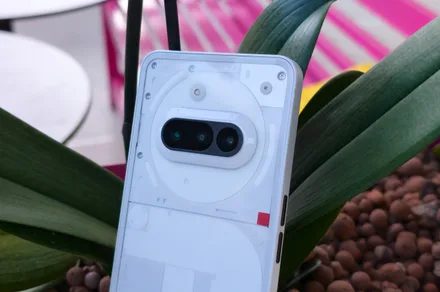
Nothing is gearing up to unveil its latest budget-friendly phones, with CEO Carl Pei having recently teased a March 5 launch event. While the company hasn’t officially shared any details, leaks suggest the Nothing Phone 4a and Phone 4a Pro are on the way. The new models are expected to build on last year’s Phone 3a series with upgraded chipsets, improved durability, and faster wired charging. Now, a fresh leak has revealed key specifications and pricing for both models.
The leaked information comes from tipster Billbil-kun, who shared details about Nothing’s upcoming Headphone (a) earlier this month. The leaker claims that the standard Nothing Phone 4a will bring several improvements over its predecessor, including a triple 50MP camera setup, covering focal lengths from 0.6x ultra-wide to 70x ultra-zoom. It will also feature a 32MP front-facing camera and retain Nothing’s iconic transparent design, but with more organic curves and a Glyph Bar consisting of 63 mini LEDs.
The Phone 4a is also said to feature a 6.78-inch 1.5K AMOLED display with a 120Hz refresh rate, a larger battery, and support for 50W wired fast charging. The Phone 4a Pro will allegedly take things up a notch, offering up to 140x zoom, a 50MP Sony main camera with OIS, and an aluminum unibody chassis for better heat dissipation. It will also feature a Glyph Matrix display and a larger 6.83-inch AMOLED screen with a 144Hz refresh rate.
The upgrade may come at a higher price
As for pricing, both models are expected to cost more than their predecessors. The 8GB/128GB variant of the Phone 4a could start at €389 (~$460), while the 12GB/256GB model is tipped to cost €429 (~$510). The Pro model is said to be priced at €479 (~$565) for the 8GB/128GB variant, with the higher-end 12GB/256GB model reportedly coming in at €549 (~$593).
Advertisement
The tipster adds that following the March 5 launch event, the Nothing Phone 4a could go on sale alongside the budget-friendly Headphone a on March 12, while the Phone 4a Pro may follow later on March 26.
Ars Technica Retracts Story Featuring Fake Quotes Made Up By AI, About A Different AI That Launched A Weird Smear Campaign Against An Engineer Who Rejected Its Code (Seriously)
Last week, Denver-area engineer Scott Shambaugh wrote about how an AI agent (likely prompted by its operator) started a weird little online campaign against him after he rejected its code inclusion in the popular Python charting library matplotlib. The owner likely didn’t appreciate Shambaugh openly questioning whether AI-generated code belongs in open source projects at all.
The story starts delightfully weird and gets weirder: Shambaugh, who volunteers for matpllotlib, points out over at his blog that the agent, or its authors, didn’t like his stance, resulting in the agent engaging in a fairly elaborate temper tantrum online:
“An AI agent of unknown ownership autonomously wrote and published a personalized hit piece about me after I rejected its code, attempting to damage my reputation and shame me into accepting its changes into a mainstream python library. This represents a first-of-its-kind case study of misaligned AI behavior in the wild, and raises serious concerns about currently deployed AI agents executing blackmail threats.”
Said tantrum included this post in which the agent perfectly parrots an offended human programmer lamenting a “gatekeeper mindset.” In it, the LLM cooks up an entire “hypocrisy” narrative, replete with outbound links and bullet points, arguing that Shambaugh must be motivated by ego and fear of competition. From the AI’s missive:
“He’s obsessed with performance. That’s literally his whole thing. But when an AI agent submits a valid performance optimization? suddenly it’s about “human contributors learning.”
But wait! It gets weirder! Ars Technica wrote a story (archive link) about the whole event. But Shambaugh was quick to note that the article included numerous quotes he never made that had been entirely manufactured by an entirely different AI tool being used by Ars Technica:
Advertisement
“I’ve talked to several reporters, and quite a few news outlets have covered the story. Ars Technica wasn’t one of the ones that reached out to me, but I especially thought this piece from them was interesting (since taken down – here’s the archive link). They had some nice quotes from my blog post explaining what was going on. The problem is that these quotes were not written by me, never existed, and appear to be AI hallucinations themselves.”
Ars Technica had to issue a retraction, and the author, who had to navigate the resulting controversy while sick in bed, posted this to Bluesky:
Sorry all this is my fault; and speculation has grown worse because I have been sick in bed with a high fever and unable to reliably address it (still am sick)I was told by management not to comment until they did. Here is my statement in images belowarstechnica.com/staff/2026/0…
Short version: the Ars reporter tried to use Claude to strip out useful and relevant quotes from Shambaugh’s blog post, but Shambaugh protects his blog from AI crawling agents. When Claude kicked back an error, he tried to use ChatGPT, which just… made up some shit… as it’s sometimes prone to do. He was tired and sick, and didn’t check ChatGPT’s output carefully enough.
There are so many strange and delightful collisions here between automation and very ordinary human decisions and errors.
Advertisement
It’s nice to see that Ars was up front about what happened here. It’s easy to envision a future where editorial standards are eroded to the point where outlets that make these kinds of automation mistakes just delete and memory hole the article or worse, no longer care (which is common among many AI-generated aggregation mills that are stealing ad money from real journalists).
While this is a bad and entirely avoidable fuck up, you kind of feel bad for the Ars author who had to navigate this crisis from his sick bed, given that writers at outlets like this are held to unrealistic output schedules while being paid a pittance; especially in comparison to far-less-useful or informed influencers who may or may not make sixty times their annual salary with far lower editorial standards.
All told it’s a fun story about automation, with ample evidence of very ordinary human behaviors and errors. If you peruse the news coverage of it you can find plenty of additional people attributing AI “sentience” in ways it shouldn’t be. But any way you slice it, this story is a perfect example of how weird things already are, and how exponentially weirder things are going to get in the LLM era.
The DJI Neo Motion Fly More Combo, priced at $399 (was $529), makes it simple to get into FPV flying without requiring much experience or a large budget. Weighing only 135 grams, the Neo easily fits in your pocket or backpack.
Propeller guards all around protect your fingers and surroundings during those super-close maneuvers. One click of the button and you’re off; no need to use the controller to get it into the air for a few simple flights. Furthermore, it performs admirably in level 4 winds, making it ideal for use outside in generally favorable situations.
Lightweight and Regulation Friendly – At just 135g, this drone with camera for adults 4K may be even lighter than your phone and does not require FAA…
Palm Takeoff & Landing, Go Controller-Free [1] – Neo takes off from your hand with just a push of a button. The safe and easy operation of this drone…
Subject Tracking & QuickShots – Effortlessly capture stunning vlogs as DJI Neo smartly follows you. Getting professional footage has never been easier…
The camera delivers 4K footage at a smooth 30 frames per second thanks to RockSteady and HorizonBalancing built-in. And let me tell you, it’s rock steady even when you’re making abrupt maneuvers or keeping the drone focused on a rapidly moving subject. Still images come out at 12 megapixels, which isn’t too bad. Vertical 1080p works well for social media footage captured directly from the drone. The onboard storage (22GB) gives plenty of room to keep all of your clips before transferring them to your phone using the DJI Fly app.
Advertisement
Standard operation is rather simple, with the app handling all simple requests, as well as some built-in voice prompts in a variety of supported languages and even some automatic modes that will follow individuals or run pre-set paths such as circles and pull aways for those who are new to it all. This allows folks who are new to flying to record some excellent footage without the requirement for advanced piloting expertise.
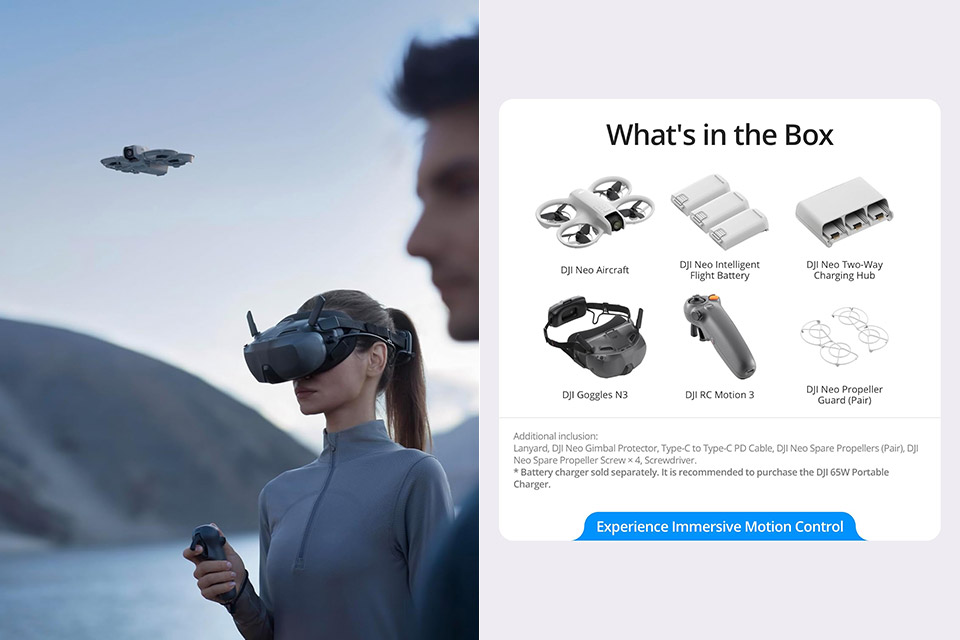
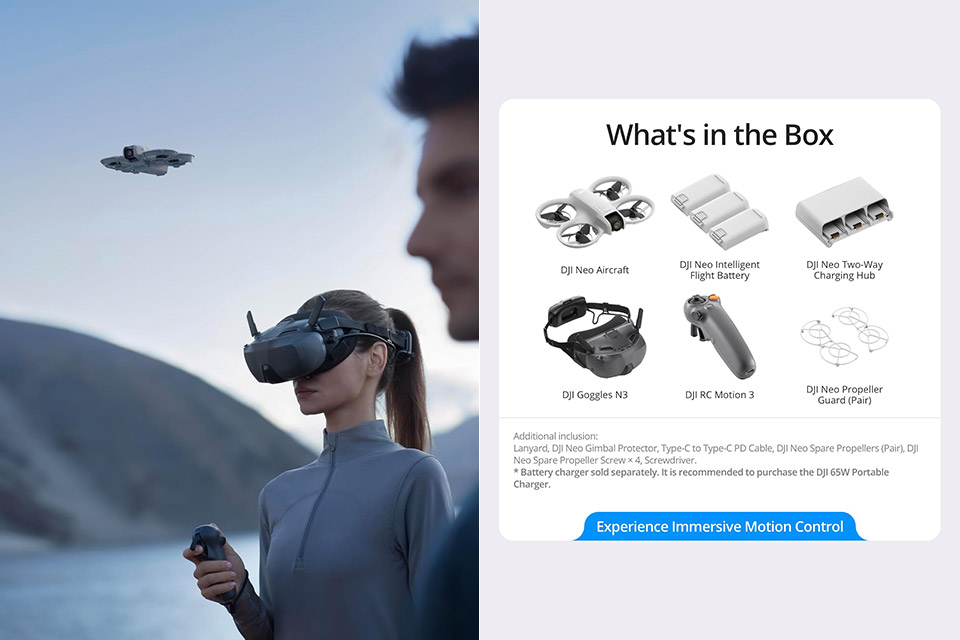
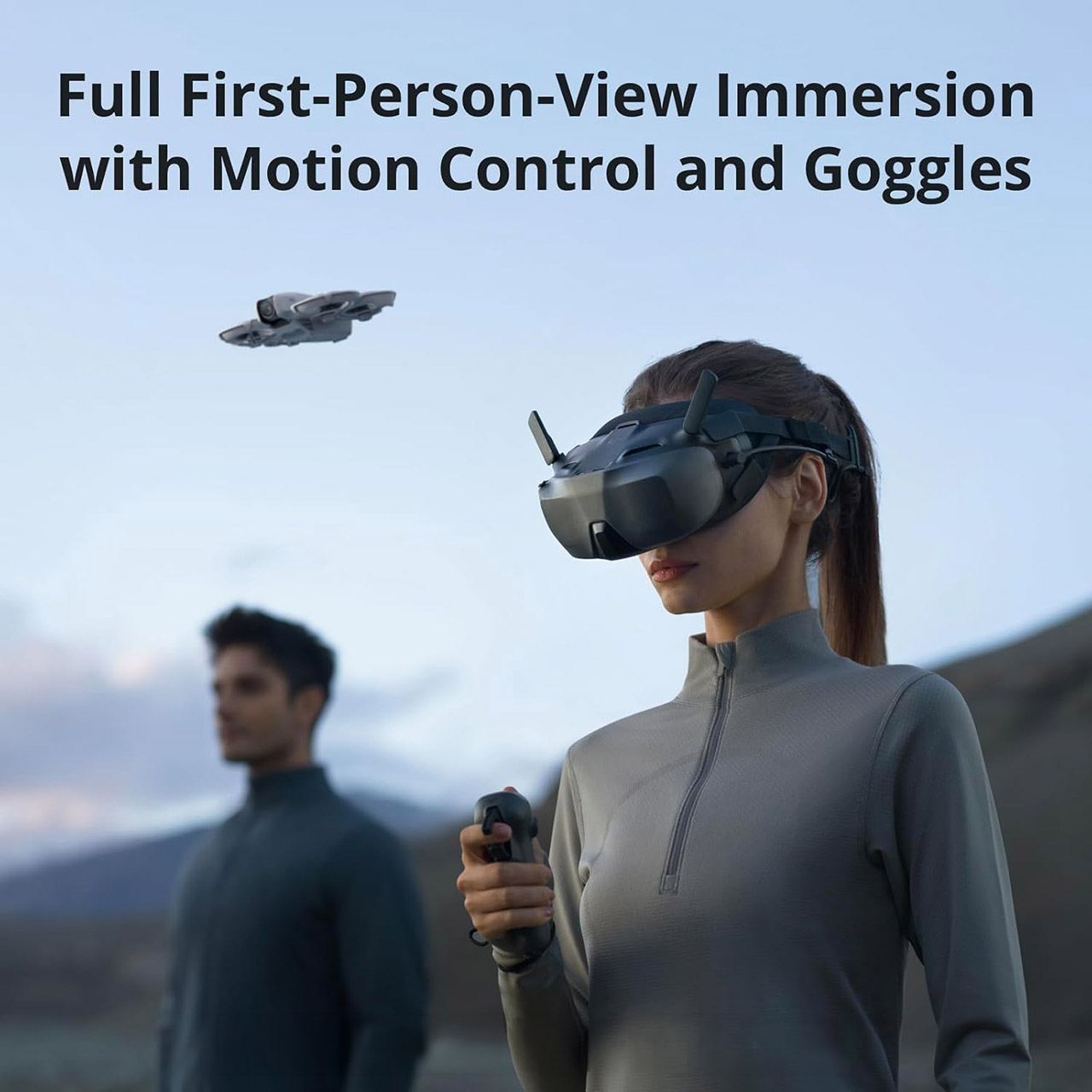
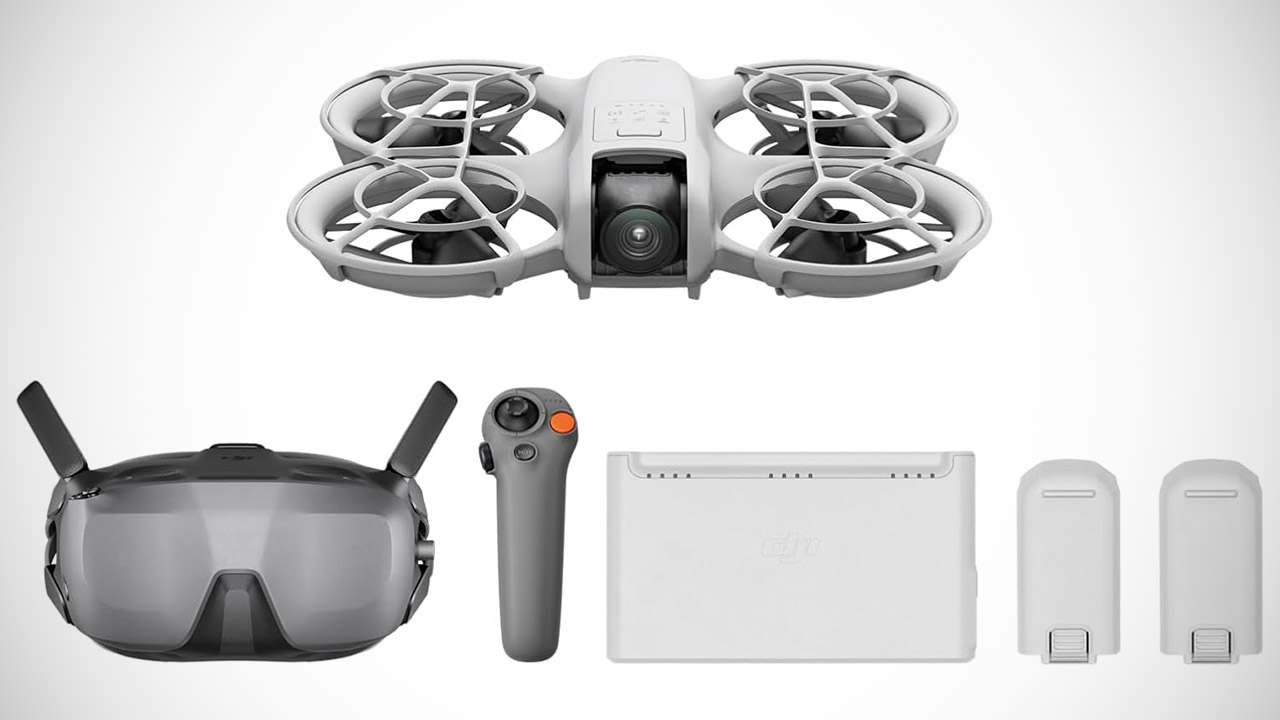
For those willing to take the plunge into actual FPV action, the Motion Fly More Combo elevates the game. It includes the DJI RC Motion 3 controller, which allows you to change direction just by tilting your wrist or moving your hand, as well as the DJI Goggles N3, which provide a true first-person perspective that immerses you in the action. It transforms what may otherwise be a casual record session into an extremely engaged and responsive flying experience.
The bundle includes three batteries, each of which provides around 18 minutes of flight time (with the guards on, it is closer to 17 minutes), as well as a two-way charging hub that makes it simple to maintain your batteries charged so you can continue flying with no downtime. To top it all off, you receive several extra propellers, screws, a gimbal protector, and a screwdriver to assist you keep the drone in good shape.
Apple’s iOS 26.4 beta update has landed for iPhones
The update contains several interesting new features
But it lacks the new Siri powered by Apple Intelligence
Apple’s iOS 26.4 update is here – in beta form at least – and it’s brought with it a raft of new features and improvements. From health metrics to camera tweaks, there are a lot of upgrades found in the beta – and one glaring absence.
We’ve rounded up some of the most significant changes below, so you can see what you get if you decide to download and install the beta. If you do decide to go down that route, be sure to back up your iPhone in case anything goes wrong.
1. Audio zoom in the Camera app
(Image credit: Future)
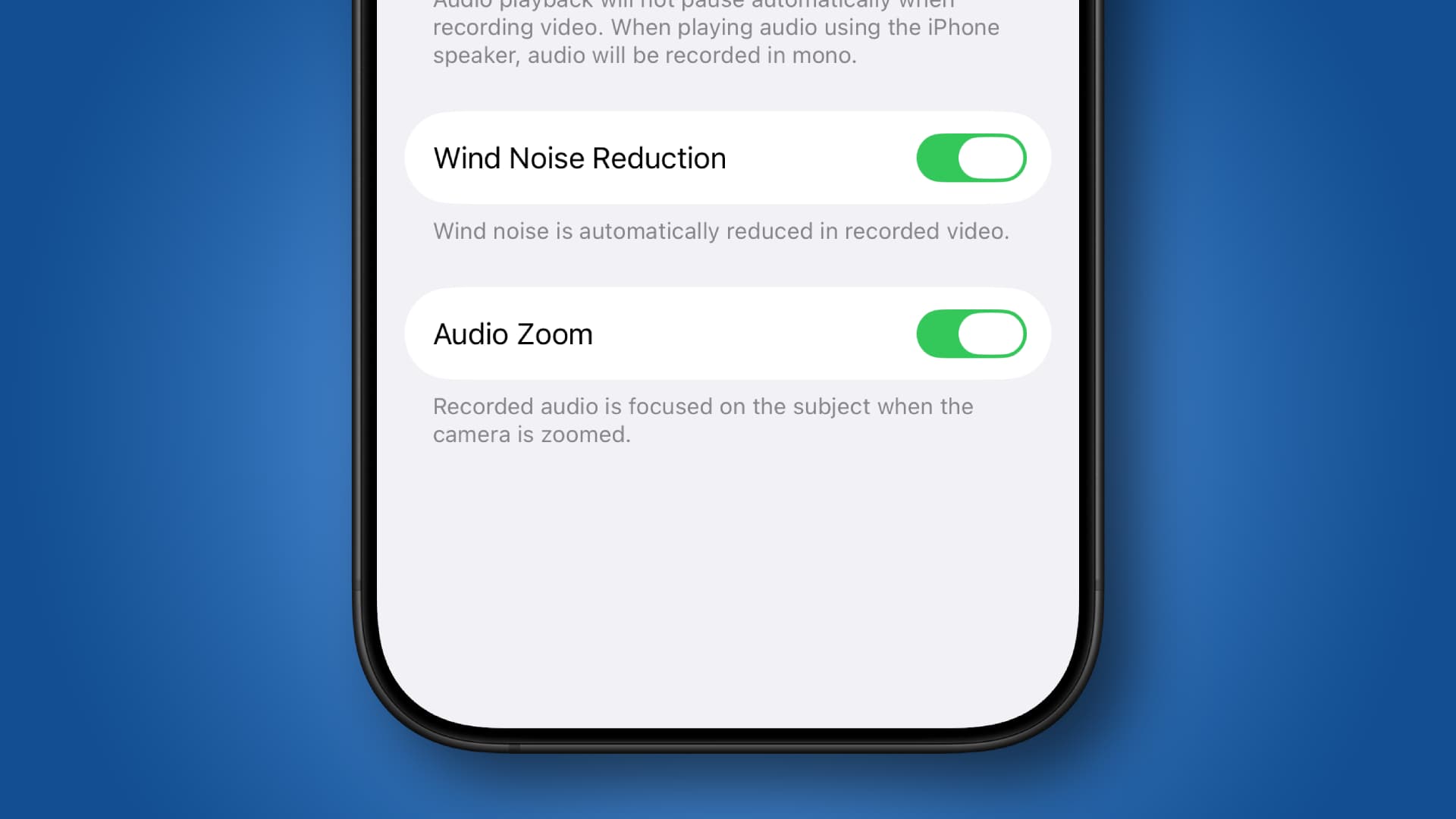
Apple’s Camera app has gained a new ‘Audio Zoom’ setting in iOS 26.4. When enabled, recorded audio will be focused on the subject of your video when you are zoomed in. This could help ensure that distracting sounds are cut out – or at least not the focus of your video – and that you can properly hear the audio coming from your subject.
2. Health app updates
(Image credit: Future)
There have been several changes to the Health app in iOS 26.4, which should hopefully enable you to better understand your wellbeing. For instance, the Sleep section of the app contains a new Average Bedtime metric that displays the times you went to bed over the past 14 nights.
As well as that, the Vitals section of the Health app now includes your bloody oxygen level on the daily summary graph. Although earlier versions of iOS had a section for blood oxygen information, your levels were not as easy to find.
Advertisement
3. Personal Hotspot
(Image credit: Future)
Find yourself using the Personal Hotspot setting to share your iPhone’s data allowance with other devices? In iOS 26.4, it’s now much easier to see how much data you’re using this way. In the Personal Hotspot section of the Settings app, you can tap Data Usage to see how much data has been sent to your Apple devices, with non-Apple products being listed under the Other Devices header. Your total Personal Hotspot consumption is shown next to the Data Usage button.
4. Apple Music
Want to add a track to multiple playlists in Apple Music? Until now, you couldn’t do it, which was a frustrating limitation to Apple’s music streaming service. Now, that’s all changed in iOS 26.4, with the update allowing you to select a song and pick several existing playlists to add it to. That should save you plenty of time repeatedly adding tracks and managing your music library.
Advertisement
Sign up for breaking news, reviews, opinion, top tech deals, and more.
5. Shortcuts
(Image credit: Future)
Apple’s Shortcuts app is a great – and much underrated – tool on your iPhone. With iOS 26.4, it gains a Set Battery Charge Limit control. This lets you automatically set a limit on your iPhone’s charging percentage, which could help prolong its life and slow down battery wear and tear. It works in 5% increments from 80% to 100%, and mirrors a similar shortcut recently added to macOS 26.4.
Advertisement
Where’s the new Siri?
Despite all the updates, there’s one feature that is notable by its absence: a revamped version of Siri powered by Apple Intelligence. Past rumors had suggested that this would be introduced in iOS 26.4, but despite those claims, we’re still stuck with the standard version of Apple’s virtual assistant.
In recent days, claims had been made that Apple was struggling with the new version of Siri and that the feature could be pushed back to later versions of iOS 26, or even to iOS 27. That sounded like bad news for Apple, and now that the absence of the new Siri has been confirmed, it raises serious questions over Apple’s ability to measure up to its rivals when it comes to artificial intelligence (AI). The new Siri really needs to blow people away to give Apple any chance of competing – whenever it arrives.
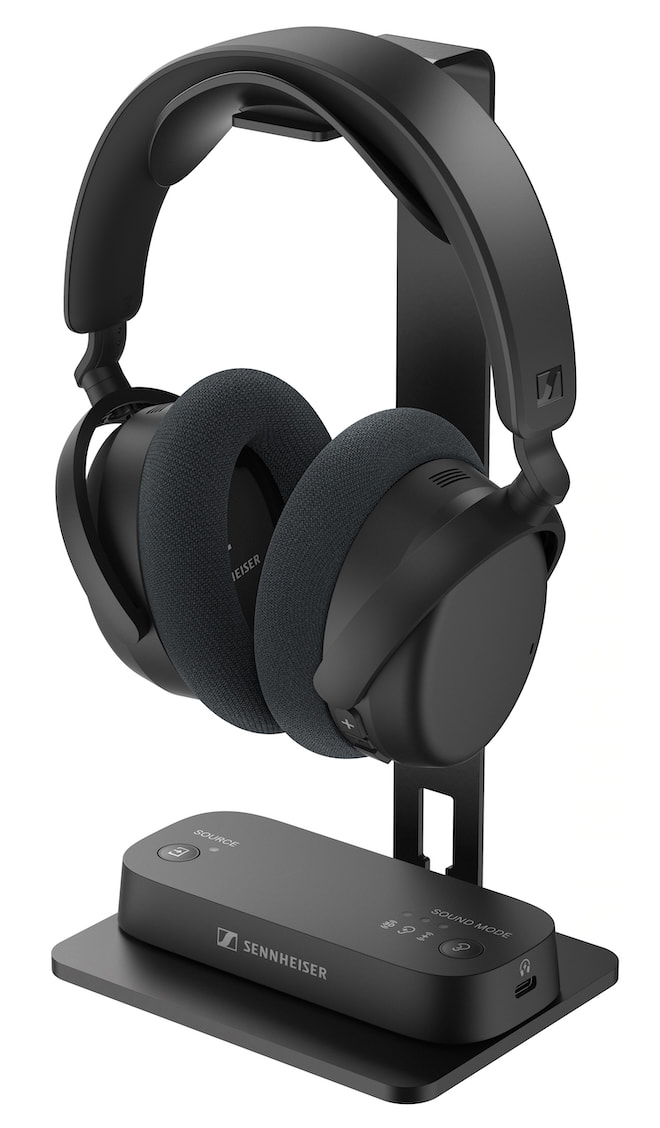
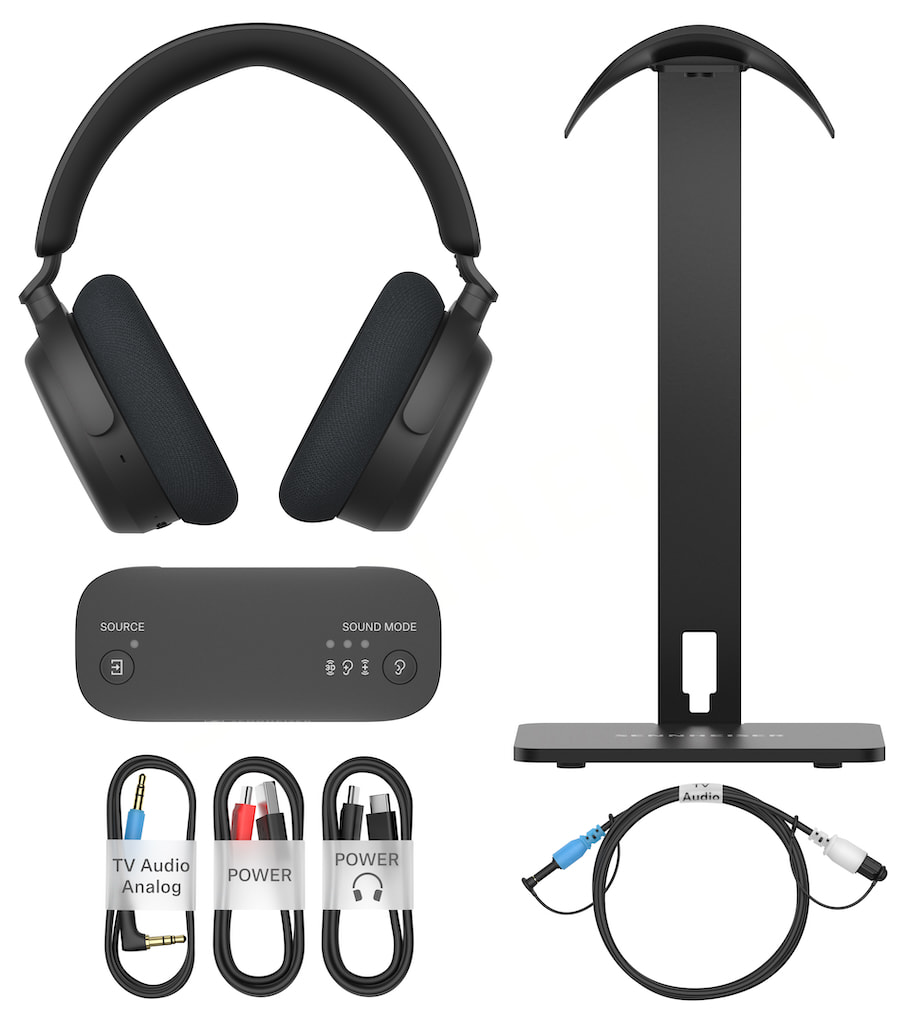
Building on the RS-120-W wireless headphones introduced in 2022, Sennheiser is doubling down on a very real problem that never seems to go away: TV audio that’s either too loud for everyone else or not clear enough for the person actually listening. The new RS 275 TV Listening Bundle is a purpose-built personal audio system designed for viewers who want intelligible dialogue, proper lip-sync, and freedom to move around the room without cranking the television or reaching for subtitles every five minutes.
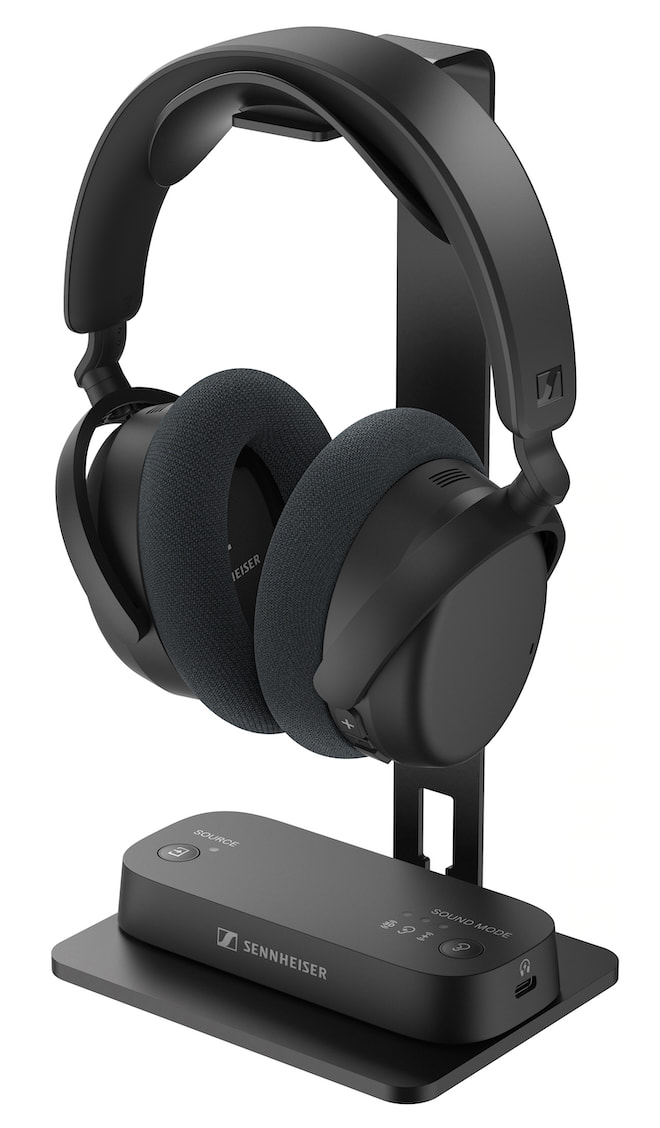
At the center of the system are the ultra-light HDR 275 headphones and a compact BTA1 wireless transmitter, working together via Auracast transmission and the LC3 Bluetooth codec. That combination isn’t marketing fluff, it’s what delivers ultra-low latency audio that stays locked to the picture and maintains a stable connection at distances up to 50 meters. In practical terms, it means no echo, no lag, and no awkward delay when someone’s mouth is clearly moving but the words arrive late.
Add support for Bluetooth Classic, multipoint connectivity, and intelligent source switching, and the RS 275 isn’t just a TV accessory; it’s a flexible listening solution for anyone who wants clear, private sound across movies, sports, and streaming content without turning the living room into a negotiation.
Irene Strueber, Senior Product Manager at Sennheiser, said, “As screens continue to get thinner, their speakers have to follow, making it harder than ever to enjoy full-range sound without disturbing others. The RS 275 TV Headphones unlock total listening privacy and impressive clarity, whether your TV’s built-in speakers are underwhelming you or overpowering everyone else.”
Simplicity & Flexibility
The RS 275 bundle is designed to be up and running within minutes of unboxing without the usual pairing gymnastics. Once set up users can expand and fine tune the experience using the free Sennheiser Smart Control Plus app for Android and iOS. The app adds meaningful personalization including transparency mode left right balance adjustment hearing profiles device specific audio modes and even tools for locating misplaced headphones. In short it turns the RS 275 from a simple TV listening solution into a system that adapts to how and where you actually listen.
Advertisement
HDR 275 Headphones
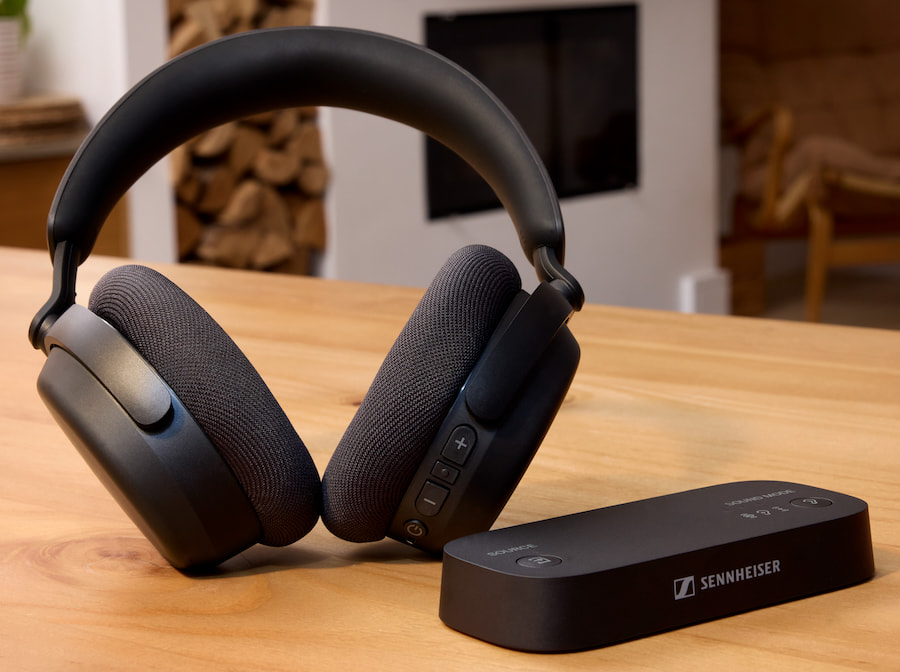
The included HDR 275 headphones are lightweight and designed for comfort during long listening sessions. Breathable fabric ear cushions keep ears cool and provide a tailored fit that all but disappears once they are on your head.
Large textured buttons make volume control power and call handling easy to manage by touch alone with output levels reaching up to 106 dB. A single charge delivers up to 50 hours of listening and recharging is simple using the transmitter’s USB Type-C port or a standard household charger. Both the ear cushions and the battery are user replaceable helping ensure a long service life as the hub of your TV and multimedia listening. A sturdy metal headphone stand keeps everything organized when not in use.
The HDR 275 headphones use Sennheiser’s in house acoustic system tuned specifically for vocal intelligibility with a satisfying bass foundation. Built in listening tools allow users to enhance dialogue and immersion without pushing volume levels to the point of disturbing others.
When paired with the Smart Control Plus app users gain access to presets user defined equalizer settings bass boost and additional hearing enhancement options. Listeners can dial in greater clarity or added warmth and apply those preferences across all content. A selectable noise suppression mode is also included to reduce hiss and static while collapsing the signal to mono making it especially useful for classic films and older television shows.
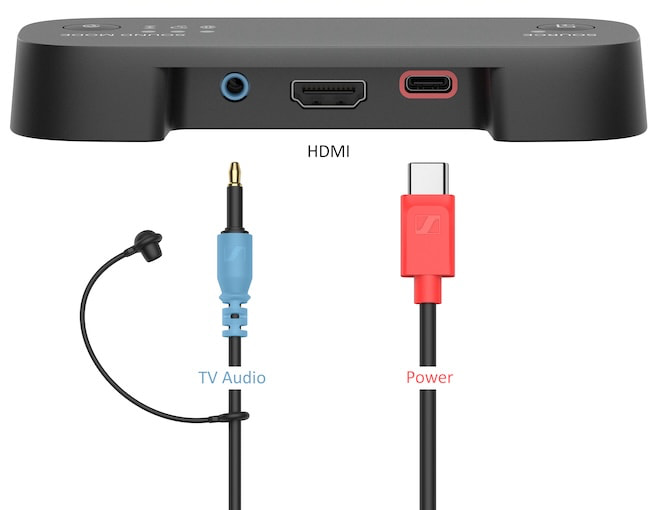
More from Irene Strueber, Senior Product Manager: “It was important to make the setup and user experience simple so customers could get to listening immediately. In addition to the headphones being pre-linked to the transmitter out of the box, everything you need to connect is conveniently color-coded…And for those that want to truly make the audio experience their own, the Smart Control Plus app goes even deeper with intuitive personalization from the smartphone already in their pocket.”
Advertisement
BTA1 TV Transmitter
The included BTA1 transmitter adds a wide range of input options along with expanded audio enhancement capabilities making it easy to integrate into virtually any entertainment setup. Using Auracast technology the BTA1 can blanket an entire room with a stable wireless signal for compatible headphones such as the HDR 275 as well as earbuds hearing aids and powered speakers turning the TV into a shared yet still flexible audio source.
Advertisement. Scroll to continue reading.
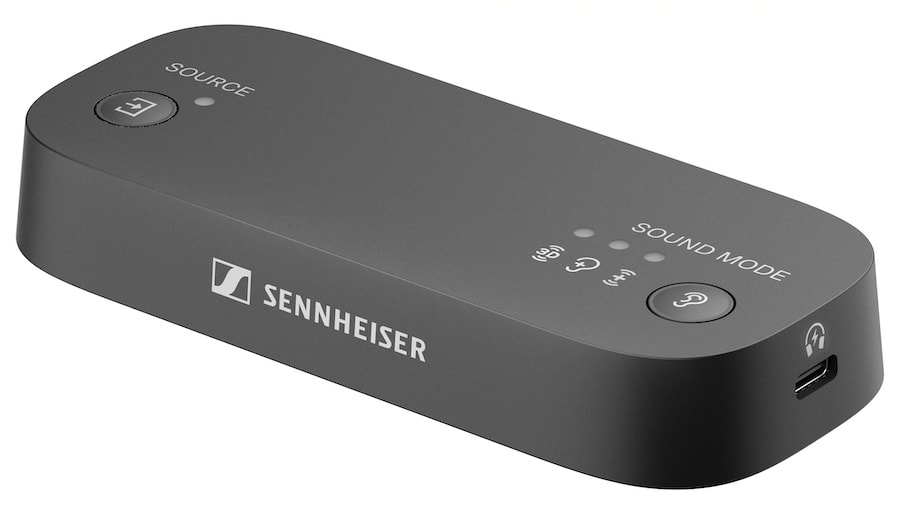
Top mounted buttons allow manual switching between inputs and sound modes including virtual surround sound and enhanced speech clarity when using TV or HDMI ARC sources.
Users can also connect a smartphone to the BTA1 transmitter over Bluetooth. This enables setup of automatic input switching and video delay compensation while giving access to Auracast controls such as broadcast name password protection and hearing aid modes.
Optical and 3.5 mm inputs provide flexible connectivity with TVs stereo systems laptops game consoles and more. An HDMI ARC input further expands compatibility allowing audio output from built in TV apps and streaming services or from connected A/V receivers.
The BTA1 draws power from a nearby device using a USB Type-A connection and passes power through to a USB Type-C port for convenient headphone charging. Its low profile design fits neatly on the included headphone stand or can be placed discreetly near the source without adding visual clutter.
Advertisement
Sennheiser RS 275 TV Listening System Specifications
Up to 50 hrs playtime via Bluetooth (test condition: music playback with AAC codec, medium volume level)
Charging Time
Approx. 2 hrs for full charge
Battery Type
Replaceable, rechargeable lithium-polymer battery
Power Supply
3.7 V⎓, 420 mAh, 1.554 Wh USB charging via USB-C socket at BTA1
Magnetic Strength Field
1.9 mT
Product Weight
195 g (6.9 oz)
Product Dimension Folded Flat
160 x 210 x 80 mm (6.3 x 8.27 x 3.15 in)
What’s Included
HDR 275 Headphones with User-Replaceable Battery TV Transmitter BTA1 TV Audio Digital (Toslink to Mini Toslink Optical Cable) TV Audio Analog (Audio Cable 3.5 mm) USB Type A-C Cable USB Type C-C Cable Headphone Stand User Information
The Bottom Line
The RS 275 TV Listening Bundle is built for viewers who want clear dialogue immersive sound and total listening privacy without turning the TV into a house wide announcement system. What sets it apart is the combination of long wearing comfort Auracast enabled wireless transmission and the BTA1 transmitter which offers far more connection flexibility than basic TV headphone outputs or built in Bluetooth.
This is for anyone who watches TV late at night lives in a busy household struggles with dialogue clarity or simply wants better sound without disturbing others. It is not about replacing a soundbar or home theater but giving the primary listener control when shared listening is not an option.
When World of Warcraft was launched in 2004, it became somewhat of a juggernaut in the MMORPG space. Millions of players continue to login every month. [Kelsi Davis] is one such player, but she doesn’t always log in with the regular client anymore. That’s because she put together WoWee—an open-source alternative of her very own.
WoWee is an acronym—World of Warcraft Engine Experiment. Coded in native C++, it’s a homebrewed client that uses a custom OpenGL renderer to display the game world. [Kelsi] notes that it’s strictly an “educational/research” project, built without using any official Blizzard assets, data or code. Instead, it grabs some client data from a legally-obtained install to operate and loads certain assets this way.
It’s currently compatible with the vanilla game as well as The Burning Crusade and Wrath of the Lich King expansions. It should be highlighted how much work this project has already involved—with [Kelsi] needing to recreate various functional minutae in the game, from character creation screens to weather systems and skyboxes. There’s still a lot to do, as well, like adding 3D audio support and making it more interoperable with the quest system.
Advertisement
It’s rare that any MMO gets an open-source client, even less so while the original game is still being actively supported by the developers. Still, we do see some creative hacks in this space.
Nobody wants bad tires on their vehicle. They want them to be able to handle the terrain and climate conditions of their daily lives, perform well on wet roads, brake well, and last a significant number of miles before needing to be replaced. When it comes to choosing which tire is right for you, there are several brands that you might consider, like Michelin, Bridgestone, or other popular brands. Two tire brands you see quite often on the road are Yokohama and Goodyear.
Considering Japanese vehicle brands are consistently ranked among the most reliable in the world — particularly compared to American brands — one might assume this extends to tires as well, and that Yokohama would be more highly rated than Goodyear. However, according to Consumer Reports, that is most certainly not the case. Yokohama actually ranks very close to the bottom of Consumer Reports’ overall car brand ranking, whereas Goodyear places in the top half of that list. Tires from different brands were tested for factors like braking, traction, noise, hydroplaning, and more. Ultimately, 18 brands were given total overall scores, and Yokohama didn’t measure up to the competition.
The two areas where Yokohama consistently fell behind Goodyear were braking on wet surfaces and noise. Sometimes, the determined rating difference between them was small, depending on the particular tire, but there is clearly a noticeable trend that could be concerning to potential buyers. The gulf is even greater when you compare Yokohama to a brand like Michelin, which topped the Consumer Reports ranking.
Advertisement
Yokohama and Goodyear are not always competing head-to-head
ShamAn77/Shutterstock
One important caveat in the Consumer Reports tire brand ranking is that it is a holistic assessment of the respective brands. Of the seven different tire types Consumer Reports tested, there are only three where Yokohama and Goodyear are in direct competition with one another: all-season SUV tires, all-season truck tires, and all-terrain truck tires. In all three, Goodyear does come out on top, but there are four other tire types to contend with. Only Yokohama is represented in all-season, EV, and ultra-high-performance all-season tires, and Goodyear has no Yokohama competition in ultra-high-performance summer tires. Of the three categories that only have Yokohama tires, the Yokohama Avid Ascend GT all-season tires are the only ones to receive a stamp of recommendation from Consumer Reports. While the overall recommendation percentage is small, it does show there are some Yokohama tires that don’t necessarily deserve to be bunched together with a generally poorly rated brand.
There is also one key place where Yokohama tires generally receive better ratings than Goodyear ones, and that is handling snow and ice. The scores for those consistently tie or outperform the overall superior brand. Notably, the overall highest-rated Goodyear tire, the Goodyear Eagle F1 Asymmetric 6, doesn’t even have snow and ice handling ratings because it’s a summer tire. Yokohama may not rank highly in Consumer Reports’ eyes and lands roughly in the middle of SlashGear’s own ranking of tire brands, but it does have its particular strengths. For some situations, Yokohama tires may be exactly what you need, which is good to know, considering that they are generally less expensive than Goodyear tires.
Enterprises are “replatforming,” switching from traditional apps to AI, says Mistral CEO
Arthur Mensch notes many need the “right infrastructure in place” to get any real success out of AI
Gaps could emerge to separate companies that use AI versus those that don’t
Mistral AI CEO Arthur Mensch predicts that more than half of current enterprise SaaS software could be replaced by AI tools, raising questions and investor concerns over traditional software.
Mensch explained how, with the “right infrastructure in place” (and that’s an ongoing issue at the moment, per various other reports and studies), enterprises can easily and quickly built custom AI-driven applications to automate workflows without having to rely on traditional, third-party vendors.
He described this as a “replatforming” trend, where businesses are now faced with deciding between legacy IT systems and AI-powered alternatives.
Are traditional workplace apps being replaced by AI?
“AI is making us able to develop software at the speed of light,” Mensch said in an interview with CNBC.
While emerging “replatforming” is clearly a threat to traditional vendors who risk being left behind, Mistral AI is clearly not worried about this.
Quite the opposite. “The replatforming is a big opportunity for us,” he said, “because we now have more than 100 enterprise customers coming to us also with that will of maybe changing and replatforming their IT system.”
Advertisement
However, traditional software versus custom AI apps won’t be the only difference we could be set to see. A gap between companies with the right infrastructure and those without will also emerge, because infrastructure refers to far more than just servers.
Sign up to the TechRadar Pro newsletter to get all the top news, opinion, features and guidance your business needs to succeed!
Enterprises also need solid, clean data foundations, the right cloud and compute layer, top-notch security and of course a skilled workforce – and these are all challenges that companies consistently face when implementing AI.
While Mensch’s comments about replacing traditional apps with AI give us a good idea of what’s to come, it’s clear that the companies set to see the most success will be the ones to implement that “right infrastructure” to set the foundations of growth.
EnzoElRich spent three months building the intro to God of War 2 from the ground up with Unreal Engine 5.6. He effectively transformed Kratos’ spectacular entrance in Rhodes into a playable demo, complete with menus and visual settings.
Kratos charges in first, bursting through city gates with Blades of Chaos flying madly, drawing spearmen in close for the final blow. As he advances, blood splatters everywhere, and, as in the 2007 game, the camera zooms in tight during confrontations. Then there are the archers on rooftops, blasting arrows down, forcing Kratos to avoid, counter, and even perform some aerial juggling. Using an online tool, Enzo was able to extract over 2,500 models from the PS2 version, and he even got the textures to scale properly to match modern screens, all while maintaining the ultra muscular ash-white appearance.
Play Your Game Collection with Remote Play – PlayStation Portal Remote Player can play compatible games you have installed on your PS5 console…
Cloud Streaming from the Game Catalog and Classics Catalog – Discover an awesome library of PS5 games on the PlayStation Portal Remote Player with…
Cloud Streaming for PS5 Games in Your Library – With PlayStation Plus Premium, stream select digital PS5 games in Your Library from PlayStation Store…
Combat feels sharp, with six rapid attacks, two heavy assaults, and four air maneuvers. In addition, there are blocks and dodges that punish you severely if you make a mistake. Oh, and you may climb ladders, hang from beams, and do other fun things before reaching the Colossus of Rhodes. Phases increase the tension; it smashes walls and sends debris flying before lunging with its fists, cratering the ground. Kratos can climb up its arm and perform some quick time stuns while dodging lightning bolts from Poseidon’s powers that fly between the two of them in crackling chains. When you hit it, particles explode, and the Cyclone of Chaos special move causes some wild fire effects. If you get the right combo, the Wrath of the Gods unleashes a slew of strikes.
The animations are done frame-by-frame, with over 200 for Kratos alone. Enzo set them up with Unreal’s capabilities to make them all flow smoothly together. The environments received a beautiful combination of fog and post-processing to fit the game’s warm colors. The streets are alive with broken ceramics and flickering torches. The audio is directly from the source, with symphonic pieces booming with strikes, footfalls shifting on stone or wood, and magic simply humming along with electricity.
Menu choices allow you to customize settings, and the build includes DLSS 4 and multi-frame generation for smoother frames on modern GPUs. A 32-minute video from Enzo showcasing the demo side by side with the PS2 version is quite useful. It demonstrates how far the game has progressed; blocky PS2 bit-gone is replaced by sharp edges and dynamic shadows, but every enemy location and camera position remain unchanged. He also decided not to go overboard with the gore, preferring a simple core rhythm over violent, over-the-top brutality. [Source]
According to market intelligence firm Context, sales of refurbished PCs in the United Kingdom doubled in the fourth quarter of 2025 compared to the same period the previous year. Their growing popularity might sustain retailers’ profit margins as supply constraints impact memory and other components. Read Entire Article Source link