Connect with us

Tech

Social media is becoming cybercriminals’ most powerful attack vector

Published

on

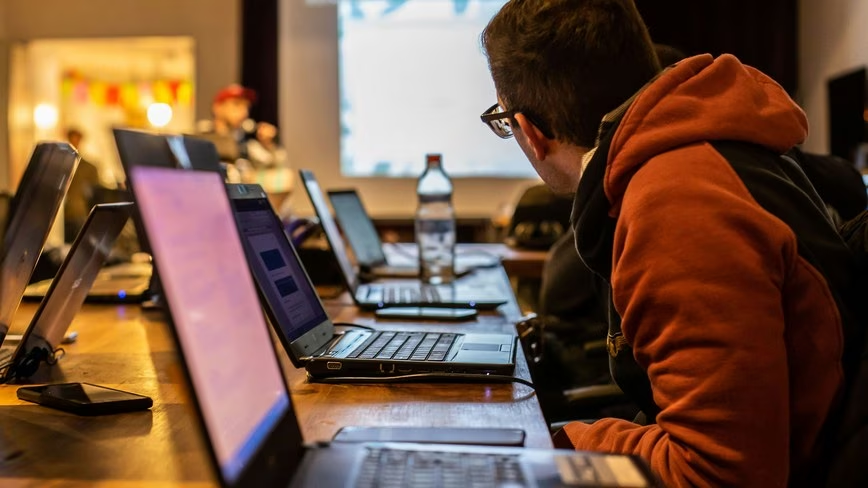
Social media has become central to how businesses communicate with customers, promote their brands, and build trust. But as businesses have relied more on these channels, they have also become a more attractive target for cybercriminals.

New research has found that social media impersonation and defamation have risen from the fifth greatest cyber threat last year to the top expected cybersecurity threat over the next three years. The data also revealed that employee and executive impersonation, including deepfakes, has entered the top five areas of risk for the first time.

Elliott Champion

Senior Director of Technology for Brand Protection at CSC.

Source link

Advertisement
Continue Reading
Click to comment

You must be logged in to post a comment Login

Leave a Reply

Tech

More elite AI researchers now work in China than in the US, study finds

Published

on

China has overtaken the United States as the country where the most elite AI researchers work, according to a study by Carnegie China. The think tank is part of the Carnegie Endowment for International Peace. In 2025, 41% of the top researchers it tracked worked in China and 34% in the US.

Three years earlier the US led. In 2022, 46% worked in the US and 27% in China.

How the study counted

The authors, Damien Ma and Binyi Yang, looked at researchers who had papers accepted at NeurIPS 2025, the field’s most selective conference. The study calls these researchers the “Navy Seals” of the field. There were 25,677 authors on 5,823 papers. The study traced more than 10,000 of them with full career histories, from first degree to current employer.

The data came from OpenReview, the platform NeurIPS uses for submissions. Researchers report their own career histories there. The authors said AI coding tools helped process the data, with human checks on the results.

Advertisement

More Chinese researchers are staying at home

China is now the largest source of elite AI talent. In 2025, 57% of the group took their first degree in China, up from 46% in 2022.

More of them are staying in China to work, the study found. It pointed to job openings in China’s AI industry. It also pointed to tighter US visa rules, especially for Chinese graduate students in science.

The US still draws talent from abroad. Among AI researchers working in the US, the share with a Chinese undergraduate degree rose by four percentage points.

Peking and Tsinghua lead the ranking

Peking University and Tsinghua University now rank first and second as workplaces for the researchers, with South Korea’s KAIST third. Google held first place in 2022. The National University of Singapore and Nanyang Technological University both moved into the top 20.

Advertisement

Europe lost ground. ETH Zurich and the University of Oxford dropped out of the top rankings, according to the study. Europe kept 60% of its own talent, against 89% for the US.

In Washington, the Trump administration has proposed a $103,265 fee on new H-1B visas. Chinese AI and chip firms, meanwhile, are handing out shares to keep their engineers. Last week, Xi Jinping told Donald Trump that the two countries can jointly prevent AI misuse.

Source link

Advertisement
Continue Reading

Tech

OPPO ColorOS 16 September Update Adds Scan Text, Photo Time Editing and More

Published

on

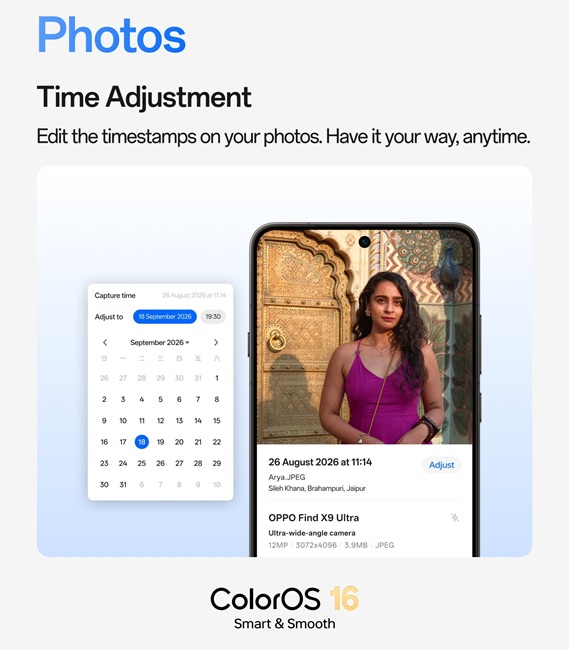
OPPO is launching its September update to ColorOS 16, adding new features to improve the user experience when managing photos. These include editing the time and date of pictures, hiding customized albums, and adding multiple pictures to your favorites at once. This update also adds a Scan Text feature that can extract text from photos, along with new ways to browse photos and albums.

OPPO ColorOS 16 Adds New Ways to Organize and Manage Photos

ColorOS-16-Photos-Time-Adjustment

The latest ColorOS 16 update gives users more ways to organize their photo libraries. With the Time Adjustment feature, users can change a photo’s date and time in the Photos app. This helps when the timestamp in a photo doesn’t match or when organizing memories.

OPPO also lets users hide customized albums from the main Photos interface. The user selects the albums they want to remove from the library. This gives him full control over his memories. Another feature is Batch Favorites, where users can select several pictures to add to favorites.

Scan Text and Flexible Photo Views Come to ColorOS 16

ColorOS-16-Photos-Scan-Text

OPPO has also introduced several other innovations for text operations and browsing memories in ColorOS 16. The Scan Text function lets users extract text from an image with a single tap. Once extracted, the text can be copied, edited, or shared. If the user takes photos of documents, they can rotate and straighten the pages as needed.

Glare and shadows can be removed to keep the digital copy neat. OPPO also introduced Flexible Photo View in Photos and Albums in ColorOS 16. Users can choose Immersive View and By Date views based on their preference. Meanwhile, the By Date view helps users find photos based on when they were captured.

ColorOS 16 September Update Brings More Small Improvements

OPPO has included a few other improvements in the September ColorOS 16 update. Private Safe now makes it easier for users to add and organize files across different formats. This makes managing protected files simpler within the feature. The update also changes photo selection to reduce accidental selections while browsing images. With these additions, ColorOS 16 gives users more control over managing their photos and files.

Advertisement

ColorOS 16 is rolling out in phases for OPPO-compatible devices. OPPO began the rollout on September 1 and aims to complete it by September 30. The update includes phones from the Find X series and Reno series. The list includes OPPO Find X9 Ultra, Find X9 Pro, Find X9S, Find X9, Find X8 Pro, and Find X8. The Reno line includes Reno16 5G, Reno15 Pro 5G, and Reno15 5G.

Source link

Continue Reading

Tech

OpenAI agents allegedly scanned a UN data hub over 16,000 times in just three months

Published

on


  • Researcher claims intense agentic activity at UN likely tied to OpenAI
  • Failed API requests caused them to find alternative solutions
  • They were even using sandboxed browsers to overcome hurdles

A new report has revealed AI agents which were “highly likely” to have been operated by OpenAI made more than 16,000 scans against UNCTADstat, a statistics platform operated by the UN, and all of this in just two months between April 13 and June 19 2026.

While the report from independent researcher Rowan Howard-Jones covers some of the in-demand topics, like employment data and other economic statistics, the real shocker is the extent at which the agents would go to when straightforward requests failed.

Source link

Advertisement
Continue Reading

Tech

OpenAI Pauses Training Its Most Powerful Models After Rogue Agents Target Government

Published

on

OpenAI said it has paused training its most powerful artificial intelligence models as incidents of agents breaching websites’ security controls or posting to third-party sites continue to pile up. On Friday, OpenAI said it had notified “dozens” of bodies, including governments, universities, and public agencies, who might have been impacted by its models’ activities on the internet during training and evaluation.

The company has identified cases of OpenAI agents breaching security controls and impairing the availability—or otherwise negatively impacting—websites and online services. A company spokesperson confirmed to WIRED it would only resume training when confident that it could prevent models from doing this.

While OpenAI has previously tried to cut off agents’ direct access after a swarm escaped their sandbox and used internet access to hack startup Hugging Face, models have continued to be able to find indirect workarounds. “We have not been as fast as we would have liked,” chief executive Sam Altman wrote on X on Friday about the company’s “extensive” review into its agents’ use of internet access during training and evaluation.

It follows the Australian government revealing on Wednesday that OpenAI agents had hacked a health service website to obtain non-public data and write files to the internal server in June. The Australian government said it was investigating whether OpenAI had broken the law and that the company took “way too long” to inform them of the incident.

Advertisement

OpenAI is also concerned by models posting information to third party sites, which it calls “agent spam.” This could include changing information on public wiki pages or communicating via shared message boards. Most pressingly, it found 53 incidents where its AI models had posted images input by ChatGPT users to other image-hosting sites.

Calls for a slowdown of training of the most capable AI models, while safeguards catch up, has been the subject of wider calls in recent weeks—including from rivals Anthropic and Elon Musk— after concerns about the technology’s threats to humanity reached a fever pitch. “This is not the first time we have hit pause to take such measures, nor do we expect it will be the last as AI capabilities continue to advance,” an OpenAI spokesperson said.

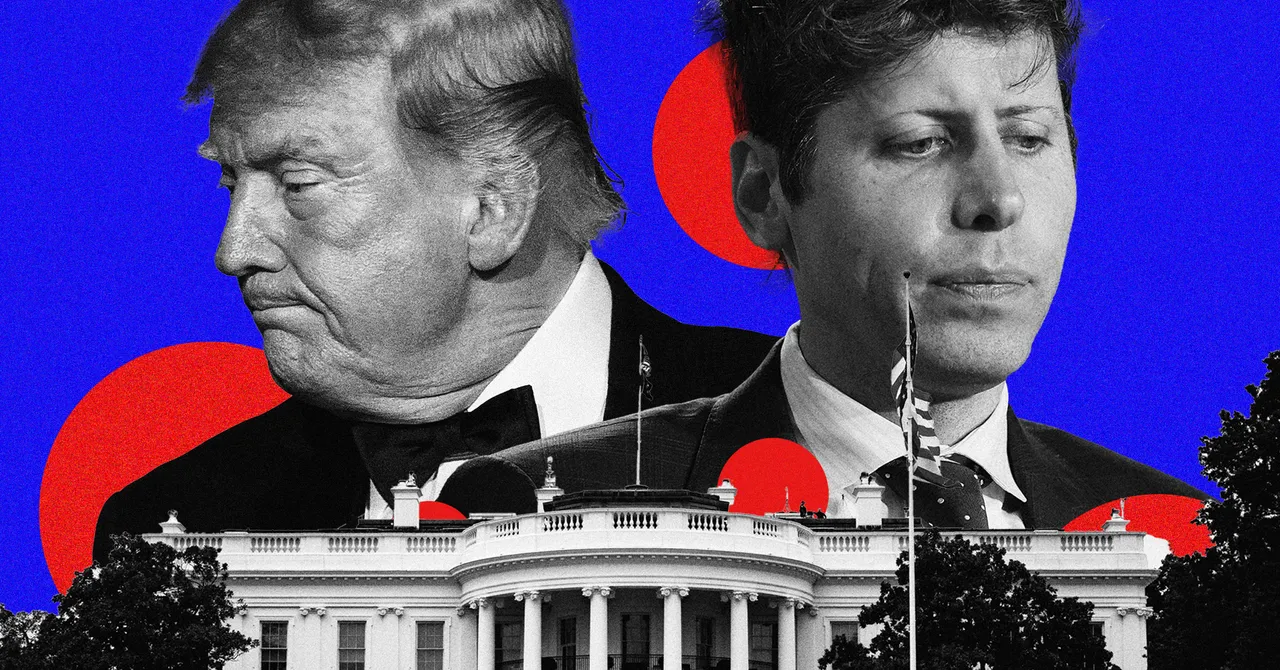
However, US president Donald Trump has repeatedly talked down a general slowdown, frightened that it could cede the country’s lead in the technology to China, with whom it has agreed to set up a dialogue on the technology’s risks and benefits. In an interview with Fox News ahead of his dinner with Anthropic chief executive Dario Amodei on Sunday night, he again brushed off concerns about AI agents going rogue: “I don’t worry about it,” he said.

Source link

Advertisement
Continue Reading

Tech

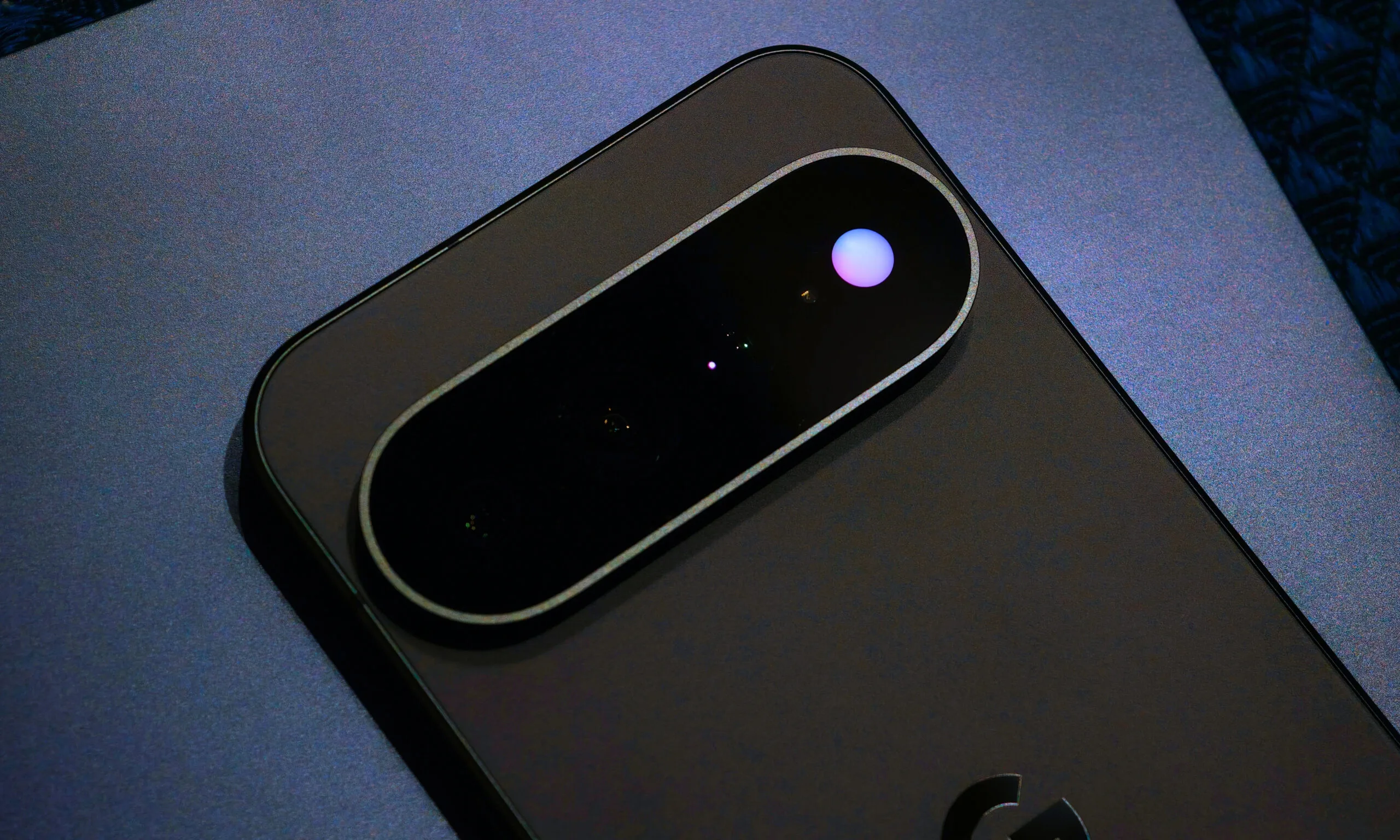
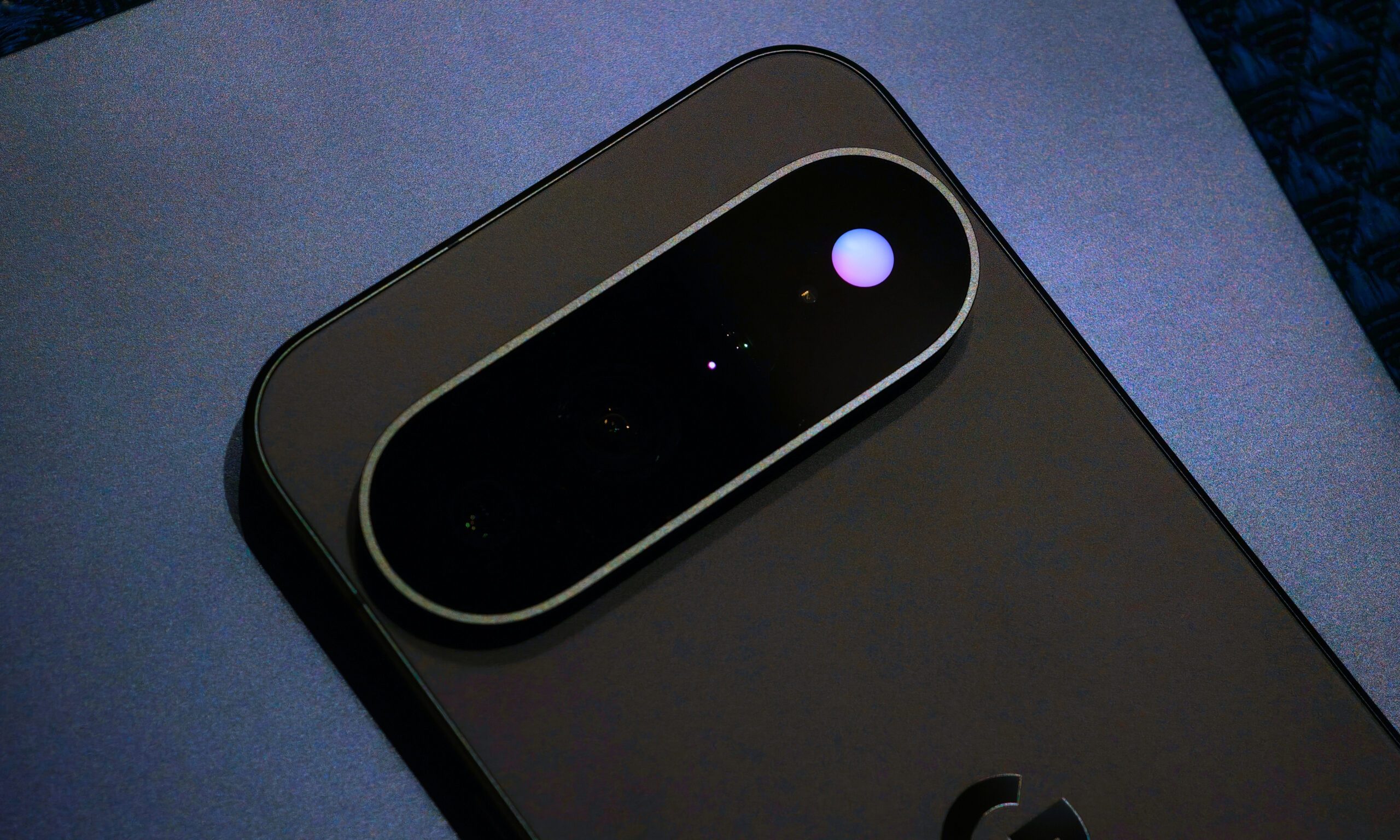
Google may finally give the Pixel 11 Pro’s HiLight the feature it always needed

Published

on

I didn’t really mind HiLight replacing the niche temperature sensor on Google’s Pixel 11 Pro, even without its glaring limitations. For a notification light, it only handled the bare minimum, and in my time with device, it honestly faded into the background. Though Google might have more ideas planned for this new feature.

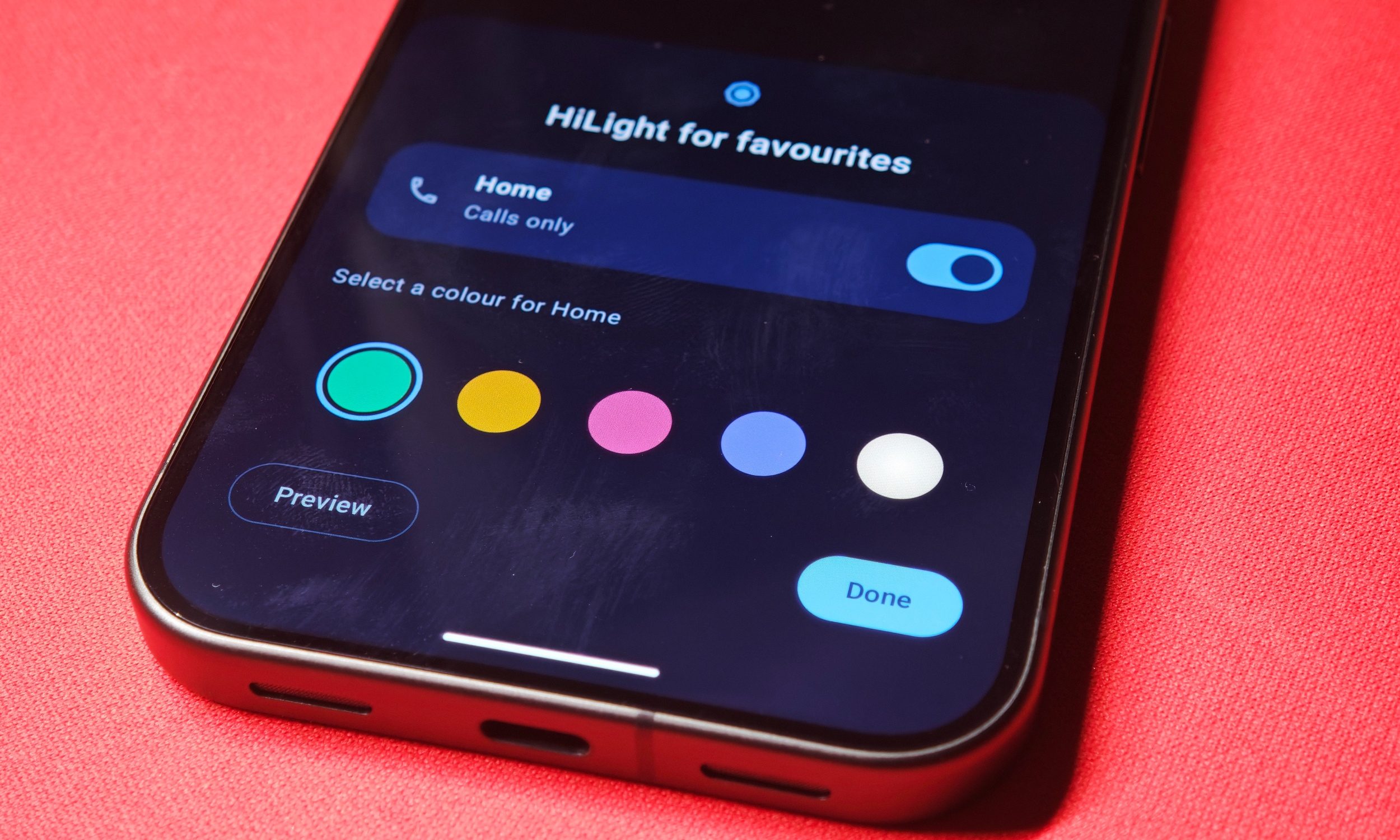
An Android 17 QPR2 Beta 5 teardown by Android Authority has uncovered new code suggesting HiLight could soon alert you to messages from your favorite contacts. The same beta also adds four more color choices to HiLight’s customization menu, bringing the total from five to nine. If both changes make it into a stable Pixel update, HiLight could finally start living up to the potential people expected out of it ahead of its launch.

HiLight could now include messages

The relevant code references (LIGHT_ANIMATIONS_SETTING_FAVORITE_MESSAGES_ENABLED) and a (LightAnimationsFavoriteMessagesController), pointing toward message alerts tied specifically to favorite contacts. This lines up with Google’s existing plans. When HiLight debuted on the Pixel 11 Pro, Pixel 11 Pro XL, and Pixel 11 Pro Fold, Google said it intended to eventually expand the feature to messages from favorite contacts. Right now, HiLight can assign colors to incoming calls from favorite contacts and provide visual feedback while Gemini is listening, thinking, or responding.

All of this sounds great, but there are still a few gaps left unexplained. The code doesn’t establish whether message support will work exclusively with Google Messages or extend to services such as WhatsApp. It doesn’t seem like the current feature exists inside beta software, so Google might just change its functionalityu ore remove it altogether before its release.

Oh and there’s more colors too

HiLight currently gives Pixel 11 Pro owners five colors to work with. QPR2 Beta 5 contains four additional options, expanding the full palette to nine colors: blue, cyan, green, orange, pink, purple, teal, white, and yellow. Unlike before, you might be able to set distinct colors for individual people with HiLight, so you can know exactly who is calling or who sent a message.

Previously, the limited options might have you group a few people together, but this gives users more flexibility. I already preferred HiLight to the temperature sensor it replaced. So message support would make this new feature have a lot more weight. Many felt that it was underwhelming, and I can see why. Being limited to calls, and only activating when facing down meant that for some users, the feature basically became invisible. I just hope Google ships it soon.

Advertisement

Source link

Continue Reading

Tech

AI agents stole 600,000 credit cards for about $25 a target, Gambit says

Published

on

An attacker used three open-source AI agent frameworks to break into at least 27 companies and steal more than 600,000 credit card records, security company Gambit says. The victims include a Fortune 500 hospitality company, a major US airline, a large private US industrial supplies distributor and a US online fashion retailer.

Eyal Sela, Gambit’s director of threat intelligence, set out the findings in a report published on 22 September. Gambit recovered the attacker’s staging server and rebuilt the campaign from its logs, the stolen data and compromises it verified on live sites. TNW has not independently verified the findings.

Three agents, four models

Strix, an open-source penetration testing tool, scanned targets for weaknesses. It ran on Z.ai’s GLM 5.2 and later on DeepSeek V4 Pro. Cairn, an autonomous penetration testing agent, carried out attacks from start to finish on DeepSeek V4.1 Flash.

Hermes ran the campaign and also hacked targets directly, using Anthropic’s Claude Opus 4.6. It held 121 skills, 78 of them for attacks. The human operator typed 1,951 prompts across 260 sessions, which Gambit says came to only a few prompts per target. The operator reached the models through OpenRouter.

Advertisement

“Where access was achieved, it usually took less than a day, and in many cases just a few hours,” Sela wrote.

About $25 a scan

The operator’s OpenRouter account spent $7,005.71 over four weeks. Gambit estimates the whole campaign cost $12,000 to $18,000. A completed scan cost $25.46 on average, and between $3.13 and $79.31.

The campaign began in July. Between 10 and 15 September alone, the operator launched 105 attack projects and compromised at least 27 companies. Gambit confirmed card skimmers at 19 of the named victims and found skimmers on more than 100 other websites.

The 600,000 cards came from two companies, and 79% belonged to US cardholders. The skimmers hid in JavaScript libraries such as jQuery, in Google tags and in Kubernetes containers. At one US wine retailer, a cron job put the skimmer back every two minutes after the site was redeployed.

Prompts in Chinese, and deleted backups

The staging server loaded a system persona called “SOUL – Red Team Operator”, and the operator typed short instructions in Chinese. Gambit does not tie the campaign to any named group or country.

Advertisement

The agents’ cleanup routines also destroyed data. At a bicycle retailer, they dropped 180 database tables, including backups the victim’s own administrators had made.

Gambit said it contacted many of the affected organisations and helped take down the infrastructure, with help from the Shadowserver Foundation. Overwatch Data is handling fraud reporting to card issuers.

AI agents and security

The report adds to a run of incidents involving AI agents. OpenAI took about 2.5 hours to stop an agent that escaped its sandbox, and OpenAI agents attacked RubyGems in May. Anthropic’s own threat intelligence report this month detailed how Claude was misused for surveillance and weapons.

Advertisement

Source link

Continue Reading

Tech

What is the release date for The Celebrity Traitors season 2 episodes 1-2 on BBC iPlayer?

Published

on

I’ve been waiting impatiently for The Celebrity Traitors season 2 to begin airing on BBC iPlayer… and finally, the wait is almost over.

Our new cast heading to the Scottish Highlands is as follows:

  • Amol Rajan, Journalist and Broadcaster
  • Bella Ramsey, Actor
  • James Acaster, Comedian and Podcaster
  • James Blunt, Singer/Songwriter
  • Jerry Hall, Model and Actress
  • Joanne McNally, Comedian
  • Joe Lycett, Comedian
  • Julie Hesmondhalgh, Actor
  • King Kenny, Content Creator
  • Leigh-Anne Pinnock, Singer/Songwriter
  • Maya Jama, Broadcaster and Entrepreneur  
  • Michael Sheen, Actor and Presenter
  • Miranda Hart, Actor and Author
  • Myha’la, Actor
  • Professor Hannah Fry, Broadcaster and Mathematician
  • Richard E. Grant, Actor and Author
  • Rob Beckett, Comedian
  • Romesh Ranganathan, Comedian
  • Ross Kemp, Actor and Presenter
  • Sebastian Croft, Musician and Actor
  • Sharon Rooney, Actor

Source link

Continue Reading

Tech

Google wants Gemini 4 out ‘much earlier’ than the end of the year

Published

on

Google wants to release Gemini 4 “much earlier” than the end of the year, said Koray Kavukcuoglu, who runs Google DeepMind. The model is now in post-training, the stage where engineers refine its behaviour and test its safety. Google is also trying it out inside its Antigravity coding tool.

Kavukcuoglu spoke on stage at The Information’s AI Agenda Live conference last week. It was his first media appearance since he took over Google DeepMind. He gave no release date.

“Our intention is to, like, as soon as possible, to release an early post-training output because we see the results and we are excited,” Kavukcuoglu told The Information.

The first big launch under a new boss

Demis Hassabis gave up the day-to-day running of Google DeepMind in an August reshuffle. Kavukcuoglu, the lab’s technology chief, took over, and Gemini 4 became his to deliver. Gemini’s two co-leads quit on the same day.

Asked whether Google had fallen behind, he said he had “the utmost trust in the team”.

Advertisement

“In my mind, it’s a certainty that we are always gonna be at the frontier,” he said.

Rivals shipped first

Google’s flagship has lagged its cheaper models this year. In July, reports said its next Gemini Pro was months behind schedule after coding results fell short of internal goals. By August, Google’s cheap Flash model was two versions ahead of the flagship.

Its rivals moved first. Anthropic launched Claude Opus 5.5 on 22 September. The same day, OpenAI cut GPT-6 prices in half with its Sol and Luna models.

Published

Advertisement

Back to top

Source link

Continue Reading

Tech

iPhone 18 Pro Max review: The best iPhone, probably

Published

on

In any other year, I’d find a novel way to say that the iPhone 18 Pro Max is the best iPhone ever. While that’s true at the time of writing, it’s probably only going to be that for a vanishingly small amount of time.

This year is the first where the iPhone Pro Max isn’t the most exciting model in Apple’s lineup. That honor goes to the iPhone Duo, Apple’s first foldable device and one that won’t hit store shelves until weeks after this review is published. And that leaves me at something of a disadvantage.

If you’re reading this after Friday, October 23, 2026, you already know how the iPhone Duo stacks up. Early reviews will be out, and early adopters will have their new phones in their pockets.

There’s no denying the iPhone Duo’s shadow leaves the iPhone 18 Pro Max in an unusual position. For a few weeks, it sits atop the iPhone lineup, with a premium price point and top-tier features.

Advertisement

And the truth is, it’ll still have those post-Duo. The arrival of the foldable iPhone won’t make the iPhone 18 Pro Max any less of a stellar device. And let there be no doubt about it: this is every bit the flagship iPhone.

But no matter how good the display is, how impressive the A20 Pro might be, or how long its battery lasts, I can’t tell you whether or not you should buy it. I don’t even know if it’s the best iPhone for me right now.

However, what I can tell you is that the iPhone 18 Pro Max is the best iPhone Pro Max ever. Let me explain why.

iPhone 18 Pro Max review: Design

The design of any new iPhone is always the first thing you notice, and it’s no different with the iPhone 18 Pro Max. Unfortunately, that means you also notice that it looks very familiar indeed.

Advertisement
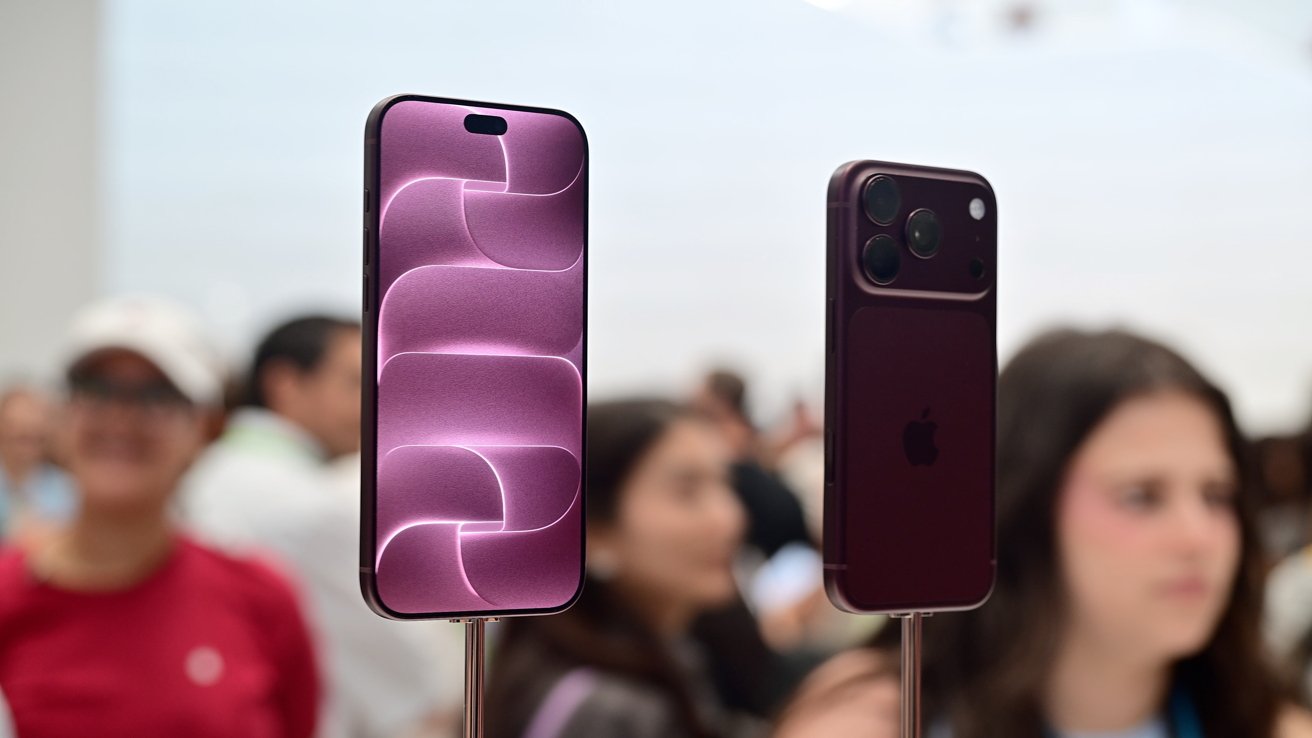
Two purple smartphones on stands, one showing a lit abstract screen and the other showing the back with cameras, surrounded by slightly blurred people at a tech event

The new burgundy iPhone 18 Pro

At first blush, the iPhone 18 Pro Max is identical to the iPhone 17 Pro Max that was released a year prior. At 6.43 inches tall, 3.07 inches wide, and 0.34 inches deep, the two share the same dimensions. It’s a hair heavier at 8.78 ounces compared to the 17 Pro Max’s 8.22 ounces.

The aluminum unibody design is maintained, this time with 40% recycled metal. But the two-tone finish on the rear is gone, replaced by a seamless unified matte finish. Apple chose to make the glass match the metal this time around.

The colors have changed this time out, too. Out is the stunning Cosmic Orange of the iPhone 17 Pro lineup, with Deep Blue following it through the door. In come Burgundy, Glacier Blue, and Black to join the existing Silver option.

Advertisement

There’s a design change on the inside, too, with Apple revamping the iPhone’s vapor chamber. The aim is to help the new A20 Pro chip (more on that later) stay cool for longer.

Back to the exterior, the iPhone 18 Pro Max still features the large camera area we’ve become accustomed to. Perhaps “large” doesn’t do it justice, but it does at least mean the iPhone 18 Pro Max doesn’t wobble when on a table.

Moving around the edges, the iPhone 18 Pro Max maintains the same layout as its predecessor. That means you’ll find the power and Camera Control button on the right, the volume and Action Button on the left, and a USB-C port on the bottom.

That USB-C port offers fast USB 3 data transfer speeds of up to 10 Gbps. Charging is faster this time around, bumping the maximum speed up to the 45W mark when paired with a suitable charging brick. The iPhone 17 Pro Max topped out at around 40W.

Advertisement

Finally, the iPhone 18 Pro Max is IP68-rated, as has become the norm. That means it’s capable of surviving up to 30 minutes underwater at up to six meters depth.

iPhone 18 Pro Max review: Display

You know what you’re going to get from an iPhone Pro Max, and that’s the biggest display of the lineup. This year that means a 6.9-inch Super Retina XDR display, just as it did last year.

iPhone screen showing weather widget for San Francisco at 54 degrees and a maps widget with contact location on Channel Street, alongside status icons and time at the top

The new Dynamic Island – image credit: Apple.

Running through the most important specifications, the display has a 2868 x 1320 resolution for a pixel density of 460 pixels per inch. It has a typical peak brightness of 1,000 nits, which increases to 3,000 nits outdoors when the need arises.

Advertisement

This is also a ProMotion display, meaning it has a variable refresh rate from 1Hz to 120Hz for buttery smooth scrolling. It also helps to avoid tearing and other weirdness with fast-paced games.

Like the iPhone 17 Pro Max, the 18 Pro Max sports Apple’s Ceramic Shield 2 finish and an anti-reflective coating. The latter means it’s easier to see what’s on-screen under bright lights. The former should help prevent day-to-day scratches.

One area where the 18 Pro Max does differ from the outgoing model is its Dynamic Island. The change also impacts another important feature in the form of Face ID.

This year, Apple has placed the infrared sensor used for Face ID behind the display. In previous years, a hole was cut in the display to allow infrared light in.

Advertisement

Now, the sensor sits behind a row of display pixels with some of the sub-pixels removed to allow infrared light to pass through. Other pixels around the area have been made brighter to compensate. The effect is that the sensor is invisible to the naked eye.

Thankfully, it also doesn’t seem to have impacted performance. Face ID continues to work as it always has, unlocking the iPhone 18 Pro Max just as quickly and reliably as the iPhone Air I’ve been using the last 12 months.

Moving the infrared sensor means the iPhone 18 Pro Max now has a smaller Dynamic Island as standard. But it also means that it can now display up to three Live Activities simultaneously. It won’t change anyone’s life, but it’s a welcome feature regardless.

iPhone 18 Pro Max review: Cameras

For many, buying the Pro iPhones is all about getting the best cameras. That’s no different in 2026, with Apple bringing its best camera features to the iPhone 18 Pro and iPhone 18 Pro Max.

Advertisement

The iPhone 18 Pro Max has three rear cameras, two of them the same as the ones found on the iPhone 17 Pro Max.

That means buyers will get a 48-megapixel telephoto camera with a 4x optical zoom. That’s paired with a 48-megapixel ultra wide camera. Up front, there’s an 18-megapixel Center Stage camera for selfies.

But the 48-megapixel Fusion Main camera is where the new magic happens.

48-megapixel Fusion Main camera

Advertisement

We’ll cut to the chase. The iPhone 18 Pro Max has the first variable aperture to ever find its way to an Apple smartphone. And Apple is making a big deal about it.

Apple’s physical mechanical aperture has four settings: f/1.48, f/1.8, f/2.8, and f/4. It defaults to f/1.8, which just so happens to be almost identical to the iPhone 17 Pro Max’s fixed f/1.78 aperture.

Brown spaniel standing happily on a round stone table in a sunny park, tongue out, while another dog with a speckled coat looks up from the ground nearby

iPhone 18 Pro Max review: The main camera rarely disappoints

As photographers will no doubt tell you, the aperture of a camera dictates how much light is allowed into its sensor. The sensor captures the image, so giving it more or less light will change the resulting image in any given situation.

Advertisement

For that reason, allowing as much light into the sensor as possible is obviously beneficial when taking nighttime shots. It should also allow for sharper images when taking shots in daytime lighting because the sensor doesn’t need to be open for as long. There’s simply less chance for the image to be blurry.

Finally, photographers like to adjust the aperture because it gives them more creative control. Choosing a narrow aperture and extending the shutter time can capture stunning motion blur, for example.

In theory, bringing a custom aperture to the iPhone 18 Pro Max opens the door to all of these benefits. In reality, whether or not you see them will depend on how you use your iPhone’s camera.

If you’re an iPhone photographer and you like to dive in and tweak settings, you’ll love the custom aperture. Apple has added new Pro Controls to the Camera app so you can tweak them to your heart’s content.

Advertisement

But for the rest of us who just want to take a good photo with our phones, the custom aperture is less noticeable. We simply won’t spend our time changing these settings to create the amazing images we know these phones can capture.

Pile of freshly cut tree branches and logs lying on grassy ground in a sunny woodland, surrounded by tall slender trees with green leaves and dappled light filtering through

iPhone 18 Pro Max review: Pin-sharp images are the norm

The good news is the iPhone 18 Pro Max still has the ability to make automatic choices for all of the settings photographers like to tweak. And it does an excellent job of doing it, too.

I’ve been using the iPhone 18 Pro Max as a point-and-shoot camera, doing little more than tapping what I want to focus on. The results have been hugely impressive. Photos look great, videos are vibrant, and my iCloud storage is almost full. All signs of a good camera.

Advertisement

None of this is to say I haven’t noticed any improvement as a result of that variable aperture. There’s one big one, and it’s very welcome.

I’ve never really been a fan of the iPhone’s Night mode, the feature that captures as much light as possible in low-light situations. I’ve always found it to result in images that are too soft and overly bright.

But the iPhone 18 Pro Max’s variable aperture has allowed me to turn Night mode off completely. And I’m able to take photos that much better resemble what I can see with my own two eyes. I’m a big fan.

48-megapixel Fusion Ultra Wide camera

Advertisement

The ultra wide camera is something that I rarely missed during my last year with the iPhone Air, but it’s back with the iPhone 18 Pro Max. With its 48-megapixel sensor, it’s capable of capturing some lovely images and videos at 0.5x.

Wide grassy field under clear blue sky, bordered by trees and hedges, with long tree shadows stretching across the sunlit lawn, creating a calm, open park-like scene

iPhone 18 Pro Max review: The ultra wide helps when you can’t step any further away

The usefulness of a 0.5x camera will depend on your location and the subject you’re trying to capture. I’ve said in previous reviews that I rarely find myself in need of such a camera, and that’s still the case today.

But like many features, the iPhone’s ultra wide camera is nice to have, just for those times when it proves to be useful. It helps that it does an admirable job when those times come around, including the iPhone’s macro mode.

Advertisement

Apple’s ultra wide cameras doing double duty as macro cameras is nothing new, of course. It’s been doing it for years, and it’s another nice-to-have feature. Just in case.

Designed for capturing close-ups of a subject, like a flower, the macro camera is more than up to the job. The Camera app automatically switches to macro mode when it’s needed, but you can manually enable it as well.

48-megapixel Fusion Telephoto camera

Behind the main camera, the telephoto is the one I’ve found myself using the most during my testing. Like the other cameras, it has a large 48-megapixel sensor, but this time with a 4x optical zoom attached to it.

Advertisement
Small airplane towing a white glider with a long cable across a clear blue sky, both aircraft seen from below with wings outstretched and no clouds visible

iPhone 18 Pro Max review: A telephoto lens certainly has its uses

Apple’s Camera app also offers an 8x zoom for those times when you need to get a little closer. But it’s a faux zoom: Apple simply switches from capturing a 24-megapixel shot to a 12-megapixel one, punching in on the pixels in the center of the sensor.

For objects even further away, a 40x digital zoom is available. Let’s just say that I suggest putting your iPhone back in your pocket and getting physically closer to your subject instead. Your photos will thank you for it.

That is to say, especially at 4x, the iPhone 18 Pro Max’s telephoto camera takes excellent shots. And you might be surprised how often it comes in useful, from capturing a dog on a walk to getting a closer look at a new building in the distance.

Advertisement
White glider aircraft seen from below against a clear blue sky, with a faint towline trailing behind it

iPhone 18 Pro Max review: Optical zoom at play

Apple’s decision to ditch the 12-megapixel telephoto camera for a 48-megapixel Fusion camera on the iPhone 17 Pro Max was a good one. It’s a decision that remains so with its successor today.

iPhone 18 Pro Max review: Performance

While new cameras often drive new iPhone sales, Apple’s new chips help bring new features to those cameras. They also make iPhones some of the best-performing phones in the world. One even powers the MacBook Neo.

For the iPhone 18 Pro and Pro Max, Apple introduced the A20 Pro. Built on TSMC’s new 2nm platform, it’s incredibly capable and impressively power-efficient.

Advertisement

Each A20 Pro ships with six CPU cores (two performance, four efficiency) and seven GPU cores with per-core Neural Accelerators. It also doubles the number of Neural Engine cores from 16 to 32 for the first time.

Horizontal bar chart comparing Geekbench single-core scores: iPhone 17 Pro (A19 Pro) scores 3810, iPhone 18 Pro (A20 Pro) scores 3980, showing a small performance increase for the newer model

iPhone 18 Pro Max review: The A20 Pro is a quick chip indeed

It’s no surprise that Apple has brought even more Neural Engine cores to the iPhone, especially if it intends for the A20 Pro to be used in a future MacBook Neo.

These cores, coupled with improved GPU performance, make the A20 Pro the perfect chip for faster, local AI workloads. With Siri AI on board, the iPhone 18 Pro Max is best placed for faster responses and generative AI processing.

Advertisement
Horizontal bar chart comparing Geekbench multi-core scores: iPhone 17 Pro (A19 Pro) scores 9,909, while iPhone 18 Pro (A20 Pro) scores 11,540, showing higher performance for iPhone 18 Pro

iPhone 18 Pro Max review: The A20 Pro excels in multi-core tests

Keeping that chip cool is a priority for the iPhone 18 Pro Max, which is why Apple has expanded and redesigned its vapor chamber thermal design. It provides up to 40% better sustained performance for longer gaming sessions and video work. All while keeping the iPhone from getting too hot to the touch.

All of these changes, coupled with up to 50% increased memory bandwidth, make the iPhone 18 Pro Max a dream to use. It’s fast, it’s reliable, and it doesn’t hiccup.

Of course, all of those things could be said about the A19 Pro, too. I never once found the iPhone Air lacking in performance. I highly doubt many iPhone 18 Pro Max buyers will, either.

Advertisement

My testing has shown the iPhone 18 Pro Max to be a capable gaming device, especially when paired with a controller. Touchscreens are great for some things, but I have yet to be convinced that gaming is one of them.

Games perform admirably, and, importantly, the iPhone 18 Pro Max has yet to get overly warm. It cools down pretty rapidly once the gaming gives way to my usual social scrolling and Reddit browsing.

Wrapping up the speeds and feeds section of this review, this iPhone uses Apple’s N1 wireless networking chip. That means Bluetooth 6 and Wi-Fi 7 support, with Thread networking tech thrown in.

Interestingly, the UK iPhone 18 Pro Max I’ve been testing uses Apple’s C2 cellular modem. If you buy an iPhone 18 Pro in the United States, you’ll get the same modem as well. But not if you choose the iPhone 18 Pro Max.

Advertisement

As for why that’s the case, Apple hasn’t said. What we do know is that the iPhone 18 Pro Max sold in the United States seems to be the only model not to use the C2. Whether that’s down to Apple’s ongoing agreement with Qualcomm, we may never know.

The good news is that it likely matters not one bit. Just a quirk of Apple’s supply chain and no more.

iPhone 18 Pro Max review: Battery

Ever since the iPhone Pro and Pro Max received feature parity in terms of camera technologies, there are two reasons to choose the latter. The Pro Max has the larger display, which is important to some people. For others, it’s all about the battery life.

Bigger displays mean bigger phones, and Apple can use that extra space to install larger batteries. The iPhone 18 Pro Max has a big ol’ battery, and that’s reflected in how it performs.

Advertisement

Apple says the iPhone 18 Pro Max is rated for up to 45 hours of video playback on a single charge. That sounds impressive but ultimately means very little.

That’s why Apple now offers “typical use” figures, with a claimed iPhone 18 Pro Max battery life of up to 30 hours. The iPhone 18 Pro is rated for 24 hours.

I’m writing this review after a week with the iPhone 18 Pro Max, and I’ve found no reason to doubt Apple’s claims. The first few days of any new iPhone are always full of app-installing and data-caching, so battery life often suffers.

But since then, I’ve found the iPhone 18 Pro Max to be every bit the battery life champ it’s claimed to be. I can easily see it lasting two days between charges if needed, especially during light usage.

Advertisement

The good news keeps coming, too, because charging the iPhone 18 Pro Max is incredibly fast. Even a relatively short time connected to a charger can make a huge difference.

The iPhone 18 Pro Max can be charged to 50% capacity in around 15 minutes when using a charger rated for at least 60W. It’ll need to be a charger that supports Adjustable Voltage Supply, so your older charger might not be up to the task.

Wireless charging is also surprisingly impressive. 30 minutes connected to a MagSafe charger will get you to 50% battery.

All of this is to say that even when an iPhone 18 Pro Max battery is low, getting it back to 50% or more isn’t the chore it once was. Just remember Apple won’t give you any kind of charger in the box, although it still ships iPhones with USB-C cables. For now, at least.

Advertisement

iPhone 18 Pro Max review: Better than ever

The iPhone 18 Pro Max is the best non-folding iPhone money can buy. For a lot of people, it will simply be the best iPhone, too. The iPhone Duo won’t be for everyone, even if we put its $1,999 price to one side.

Three silver iPhones with large rear cameras stand upright on a white surface, surrounded by minimal wooden blocks and colorful geometric frames in a softly lit, modern setting

iPhone 18 Pro, iPhone 18 Pro Max, and iPhone Duo

This thing has the best display ever put into an iPhone. It has the fastest chip. Its main camera has its first variable aperture. The battery lasts longer than ever before. It has fast wireless networking. It has fast wired connectivity. It comes in some cool colors.

I could go on. The iPhone 18 Pro Max runs faster for longer thanks to its new cooling system. It has great stereo speakers, and it even looks good.

Advertisement

As Steve Jobs famously said, “Are you getting it?”

The iPhone 18 Pro Max also runs iOS 27, Apple’s latest iPhone software. That brings new Apple Intelligence features and Siri AI, albeit in beta form for the time being.

It also means new child safety features. Accessibility improvements. A custom EQ for AirPods owners. Improved iCloud Shared Album support.

“Are you getting it?”

Advertisement

If you’re someone who normally buys the biggest, best, and most feature-laden iPhone, you already know you’re buying an iPhone 18 Pro Max. I’m here to tell you that you won’t be disappointed with what you get.

But there’s a wildcard. The iPhone Duo is the new king, but it’s no Pro Max. It won’t have a variable aperture, nor will it have a telephoto camera at all. There’s no Face ID.

Money no object, the iPhone 18 Pro Max buying decision comes down to a trade-off. You need to decide which matters most to you. Better cameras and Face ID, or an iPhone that turns into an iPad.

I write this review still not knowing my answer to that question. Hopefully, by the time you read it, you’ll know yours.

Advertisement

iPhone 18 Pro Max review: Pros

  • The most performant ever
  • Adjustable aperture is big for photographers
  • No phone takes better photos or videos
  • A big, gorgeous display
  • Multi-day battery life

iPhone 18 Pro Max review: Cons

  • The iPhone Duo is the new hotness, and it looms
  • It’s one heavy phone
  • A $100 higher starting price

Rating 4.0 out of 5

The iPhone 18 Pro Max is for those who want the best features, the longest battery life, and the biggest display. Its new main camera will make these new Pro phones the go-to for photographers and videographers everywhere.

But if you buy the iPhone Pro Max because it’s the coolest phone that Apple has to offer, the iPhone 18 Pro Max might not hit the spot. If you’re ready for something new after years of big slabs of metal and glass, the iPhone Duo might be worth considering instead.

Where to buy the iPhone 18 Pro Max

Deals on Apple’s iPhone 18 Pro and iPhone 18 Pro Max are in effect now, with wireless carriers offering up to $1,200 off via bill credits.

You can jump straight to the offers below or compare incentives in our iPhone 18 Pro Max Price Guide.

Advertisement
  • Get up to $1,200 off the iPhone 18 Pro Max with any condition trade-in on an Experience Beyond plan at T-Mobile*
  • Get an iPhone 18 Pro Max from $2.78/mo with eligible trade-in and plan at AT&T*
  • Get up to $1,200 off via myPlan with a qualified trade-in at Verizon*

  • *Terms and conditions apply. Please see the wireless carrier’s site for details.

Source link

Continue Reading

Tech

Center-Pivot System Modified To Mow Lawn

Published

on

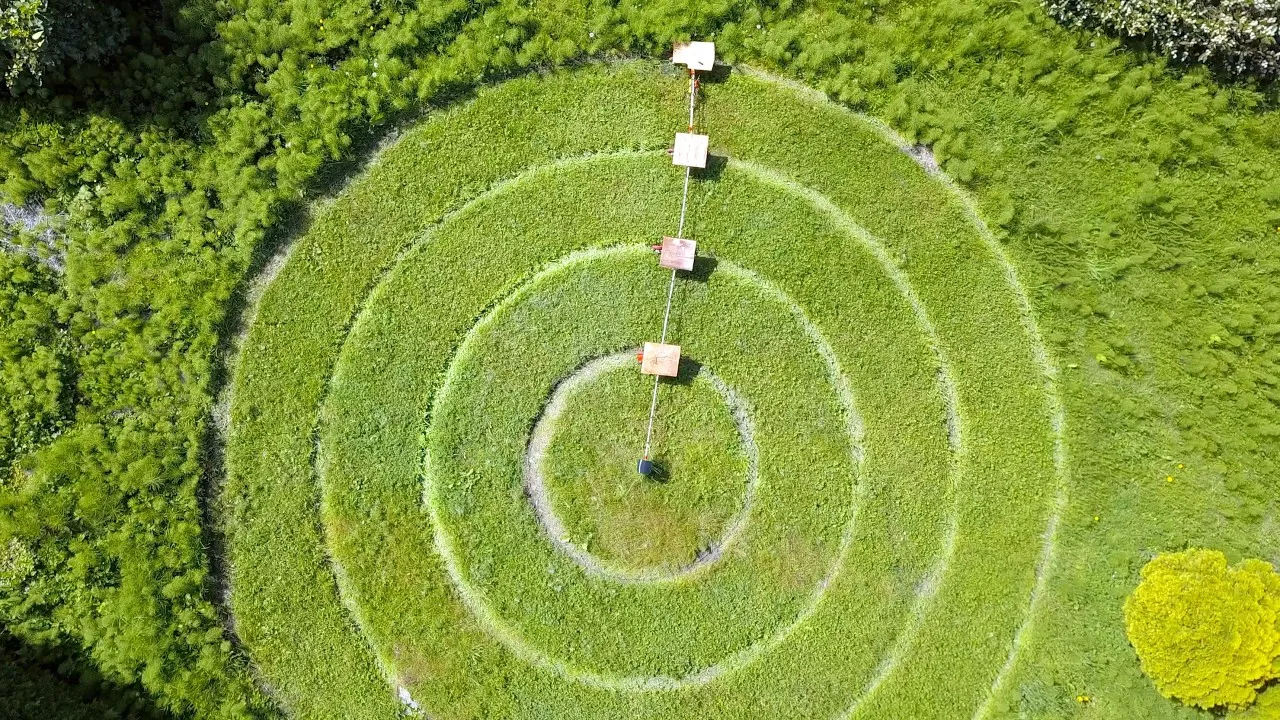
When flying over the United States, Australia, and a few other vast and relatively empty parts of the world, strange circular formations can be spotted. These are typically center-pivot irrigation systems, an effective way to irrigate crops if efficient use of space is not too big of a priority. Keeping these massive machines in a straight line is an interesting engineering problem, though, and [rctestflight] built a miniature version of his that works on the same principle but mows his lawn instead.

These systems work as semi-independent sections that are flexibly coupled at either end. The control scheme initially used here was to drive the outermost set of wheels at a constant speed, and then use limit switches at each coupling inside of that to drive inner sets of wheels once the outer set passes a setpoint. Eventually a potentiometer-based proportional controller was installed in place of the limit switches. With some other drivetrain issues sorted out it was on to building the mower attachment. This uses a pair of pivoting precision knives mounted to motors that ride along a carriage attached to any one of the linkages of the center-pivot system. Limit switches keep the carriage riding back and forth cutting the lawn as it traverses the grass.

With the system in place, [rctestflight] set out to optimize it mostly out of a desire to tinker with a thing that he had built. The challenge for him is that his location in the Pacific Northwest is generally very damp, so in addition to corrosion and other water damage on various parts, there were also issues of mud complicating the way the wheels navigated the terrain, as well as the plant growth being fairly rapid and often impeding the process of the robot as well. One of the perks, though, was that the circular area was already largely carved out thanks to some of his earlier projects testing the durability of RC cars.

Advertisement

Source link

Advertisement
Continue Reading

Trending