A Spanish court has granted precautionary measures against NordVPN and ProtonVPN, ordering the two popular VPN providers to block 16 websites that facilitate piracy of football matches.
The restrictions will apply to a dynamic list of IP addresses in Spain, and there will be no opportunity for appeals. The measures were taken ‘inaudita parte’, meaning that the defendants weren’t called to participate in a hearing.
LaLiga – the country’s professional football organizer, and its broadcasting partner, Telefónica, are required to “preserve sufficient digital evidence of the unlawful transmission of the protected contents.”
LaLiga showed a strong stance against the piracy ecosystem in recent years, previously targeting Cloudflare, accusing the internet giant of facilitating illegal sports streaming.
The two organizations proved that the VPN providers fall under the EU Digital Services Regulation, and therefore have a duty to help prevent copyright infringement carried out through their infrastructure.
Advertisement
“The orders identify how VPN systems prove to be a suitable means, ‘highly effective and accessible to generate the possibility of access to content not accessible in certain geographic points,’ distorting the real geographic location of online access, and facilitating ‘access to websites that broadcast protected content illegally,’” reads LaLiga’s announcement.
“What is more, the orders highlight how the defendant companies acknowledge and even advertise that their system is excellent at evading restrictions.”
LaLiga characterized the ruling as unprecedented in Spain, aligning it with similar decisions in France, and celebrated that the liability of VPN providers for piracy is clearly recognized.
In response, ProtonVPN took to Twitter to question the decision, declaring a total lack of awareness of the proceedings and stating that they have not been formally notified.
Advertisement
“Any judicial order issued without proper notification to the affected parties, thereby denying them the opportunity to be heard, would be procedurally invalid under fundamental principles of due process, stated the VPN service provider.
“Spanish courts, like all courts operating under the rule of law, are bound by procedural safeguards that ensure parties are given a fair opportunity to present their case before any binding judgment is rendered.”
In a request for comments to BleepingComputer, NordVPN’s spokesperson Laura Tyrylyte stated that the company was not involved in any legal proceedings in Spain.
“At this stage, we have not received the judicial documents mentioned in the press so it will be premature to comment without having reviewed them. We were not part of any Spanish judicial proceedings to our knowledge, and therefore had no opportunity to defend ourselves. Given such judgments impact on how the Internet operates, such an approach by rightsholders is unacceptable” – NordVPN
Advertisement
Tyrylyte stated that the process for blocking domains is ineffective in the fight against piracy as it does not address the root cause. Instead, hosting providers should be the target, since pirates can use subdomains to bypass the restrictions.
“Effective piracy control should focus on eliminating the source of the content, targeting hosting providers, cutting off financing for illegal operations, and increasing the availability of legitimate content.”
Through its representative, NordVPN said that the measures affect mostly reputable, paid VPN providers, while free services continue to operate largely unhindered.
“Free VPNs are often harder to regulate and, since users who seek to avoid paying for content are unlikely to pay for a VPN either, these services remain a loophole for pirates to bypass restrictions.”
Advertisement
Modern IT infrastructure moves faster than manual workflows can handle.
In this new Tines guide, learn how your team can reduce hidden manual delays, improve reliability through automated response, and build and scale intelligent workflows on top of tools you already use.
When European tech observers talk about AI ambition, the narrative often splits neatly in two: models and infrastructure. On one side are the clever bits of code that can write, reason, and generate text or images.
On the other is the gritty reality of making those bits run reliably, at scale, and in production. Today, Mistral AImade a move that bridges that divide.
The Paris-based AI upstart confirmed its first acquisition by agreeing to buy Koyeb, another French venture focused on serverless cloud infrastructure for AI workloads. The deal, terms were not disclosed, marks a clear signal: Mistral wants to own not just cutting-edge AI models, but also the infrastructure that delivers them to developers and enterprises.
Mistral has built momentum over the past two years with large language models that have put it in close competition with U.S. players. But for all the excitement around models, real-world adoption hinges on how those models are deployed and scaled.
Koyeb’s technology is built for exactly that: a serverless platform that lets developers run AI apps without managing the underlying infrastructure.
Advertisement
Think of it as giving Mistral not only the engine but also the transmission, the parts that take raw computational power and make it usable on demand. That’s a critical piece when companies want to ship AI solutions without hiring a team of DevOps experts.
This acquisition dovetails with a wider strategy playing out in Europe: build an AI stack that doesn’t depend on U.S. hyperscalers.
Mistral recently announced a €1.2 billion investment in data centers in Sweden and has been vocal about offering a homegrown alternative to cloud services from AWS, Microsoft, and Google.
By folding Koyeb’s team and platform into what they call Mistral Compute, the company is laying claim to a more complex AI offering – from model training to deployment and inference. In other words, it’s less about selling APIs and more about owning the full AI experience.
Advertisement
Koyeb’s roots are in serverless computing, scalable, managed infrastructure that lets developers forget about servers and focus on code. Its platform supports AI tasks across CPUs, GPUs, and specialized accelerators, with features like autoscaling and isolated environments for complex applications.
The founders and all 13 team members are joining Mistral’s engineering ranks, where they’ll shift focus toward embedding their technology into the Mistral Compute platform. For existing users of Koyeb’s services, the transition is designed to be smooth, with the platform continuing to operate as usual while integrating deeper over time.
In a market still heavily dominated by U.S. cloud providers, owning more of the AI value chain is both a business move and a geopolitical statement. This deal isn’t just about snapping up a smaller startup; it’s about signalling a shift in how European AI companies conceive of competition and capability.
One of the early questions about the future of AI wasn’t whether Europe could produce models that compete with those from Silicon Valley, it was whether it could build the platforms and systems those models truly depend on. With the Koyeb acquisition, Mistral is making a direct answer to that question.
The initiative builds on Ireland’s extensive semiconductor industry which is comprised of more than 130 indigenous and foreign subsidiary companies.
The Government has announced the launch of I-C3, Ireland’s National Competence Centre in Semiconductors, which is one of 30 other national chip competency centres in Europe, in 27 different countries. The initiative is designed to strengthen Europe’s semiconductor ecosystem.
Co-ordinated by the Tyndall National Institute and supported by the Department of Enterprise, Tourism and Employment through Enterprise Ireland, the initiative is also co-funded by the EU, under the Chips Joint Undertaking partnership. The hub will be led by consortium partners Tyndall National Institute, MCCI, MIDAS Ireland, NovaUCD and UCD.
Described by the Government as a “significant milestone in Ireland’s commitment to semiconductor innovation and European collaboration”, I-C3 will focus on start-ups and SMEs by providing access to essential resources, funding pathways, training, design tools and pilot line facilities.
Advertisement
The long-term objective is to empower Ireland’s start-ups and SMEs and to build on Ireland’s vibrant and extensive semiconductor industry, which is comprised of more than 130 indigenous and foreign subsidiary companies. The industry also employs more than 20,000 people and is part of a 175,000-person strong broader ICT sector.
Multinational leaders such as Intel, Apple, Qualcomm, AMD and Analog Devices have long invested in Irish R&D and I-C3 aims to further elevate Ireland’s global standing in semiconductor innovation.
Commenting on the launch, Peter Burke, the Minister for Enterprise, Tourism and Employment, TD, said, “As a hub for the semiconductor ecosystem, my Department is delighted that I-C3 will ensure that opportunities as part of the Chips for Europe Initiative are accessible for businesses of all sizes within the industry, along with bringing greater diversity of expertise and depth of innovation to the knowledge base of the semiconductor ecosystem in Europe.
“I-C3’s launch is another significant milestone in the delivery of Silicon Island: Ireland’s National Semiconductor Strategy. With this launch, my Department is very excited about I-C3’s ability to empower Irish SMEs to scale internationally, drive innovation across the semiconductor ecosystem and create high-value jobs.
Advertisement
“I-C3 will also facilitate the development of skills and talent, and build on our strengths by enhancing the relationship between infrastructure, industry and RD&I capability to ensure Ireland leads in advanced manufacturing and chip design.”
Joe Healy, the divisional manager of research, innovation and infrastructure at Enterprise Ireland, added, “With the support of I-C3, Ireland is set to double the number of people employed in semi-conductor start-ups and SMEs by 2030. The centre will act as a catalyst for innovation, collaboration, and growth, ensuring that Irish stakeholders, from academia to industry, can fully participate in the Chips for Europe Initiative.”
The EU and many of the countries under its banner have committed significantly to advancements and further independence in the global semiconductor race. Earlier this month (9 February) the European Union launched the €2.5bn NanoIC – the largest pilot line in the EU Chips Act.
Additionally, in January of this year, Dutch semiconductor equipment manufacturer ASML Holdings NV became the third European company to pass $500bn in market valuation. Previously, Danish drug maker Novo Nordisk and France-based Dior-parent LVMH reached this milestone.
Advertisement
Don’t miss out on the knowledge you need to succeed. Sign up for the Daily Brief, Silicon Republic’s digest of need-to-know sci-tech news.
We spend hours testing every product or service we review, so you can be sure you’re buying the best. Find out more about how we test.
GHD Speed: two-minute review
The GHD Speed is one of the most user-friendly hair dryers on the market. It offers a wide selection of temperatures and windspeed options, with the maximum mode delivering a hurricane of power that will blast your hair dry in ultra-quick time.
More options often equates to more confusion, but GHD has deftly avoided that trap; there’s one button for each category, and lights around the barrel means there will never be any confusion over the settings you’re using.
Advertisement
Other welcome additions include a mode lock, which allows you to wield the hair dryer confidently without worrying about accidentally pressing any buttons, and an always-on cool mode alongside the cool shot pulse option.
None of those are the USP, though. It’s the “halo dual-airflow technology” that GHD is highlighting here, which the brands states will dry hair without heat damage, thanks to the “halo” of cool air that surrounds the heated airflow. GHD says this allows you to get closer to the scalp without fear of burning it, plus you can hold the dryer by the barrel if you want to, because it will never become hot. I’m not convinced the former is true, and the latter is possible but feels a little unnatural.
However, the main potential sticking point is really the lofty price tag. While it could be seen as being partially justified by the impressive power and generous array of control options, competitors such as Dyson offer much more in a very similar price bracket – particularly when it comes to attachments (the GHD Speed includes a concentrator in the box, while the diffuser is an optional add-on).
Advertisement
That’s the short version; read on for my full GHD Speed review.
(Image credit: Future)
GHD Speed review: price & availability
List price: £299
Available: UK
At list price, the GHD speed costs £299, which places it in TechRadar‘s premium price band for hair dryers. It’s significantly cheaper than Dyson’s Supersonic Nural, which comes in at £399.99, but that model has the benefit of a number of flashy features such as automatic temperature adjustment and attachment memory – plus a much wider selection of attachments included as standard.
Sign up for breaking news, reviews, opinion, top tech deals, and more.
Advertisement
That’s not to say the GHD Speed doesn’t feel like a premium option. There’s a wide selection of controls, the build quality is high, and it’s ultra-powerful too.
Value for money score: 3.5 out of 5
GHD Speed specs
Swipe to scroll horizontally
Model:
GHD Speed
Wattage:
Advertisement
1,800-2,100W
Weight (without cord, appox):
1.4lbs / 620g
Size (H x W x L, approx):
Advertisement
2.6 x 7.9 x 9.3in / 6.7 x 20 x 23.5cm
Airflow settings:
4
Temperature settings:
Advertisement
4
Extra modes:
Cool shot, continuous cool
Cord length:
Advertisement
9.2ft / 2.8m
GHD Speed review: design
Slightly bulky design
Lots of setting options, plus a mode lock, all intuitively designed
Delivers a “halo” of cool air at all times
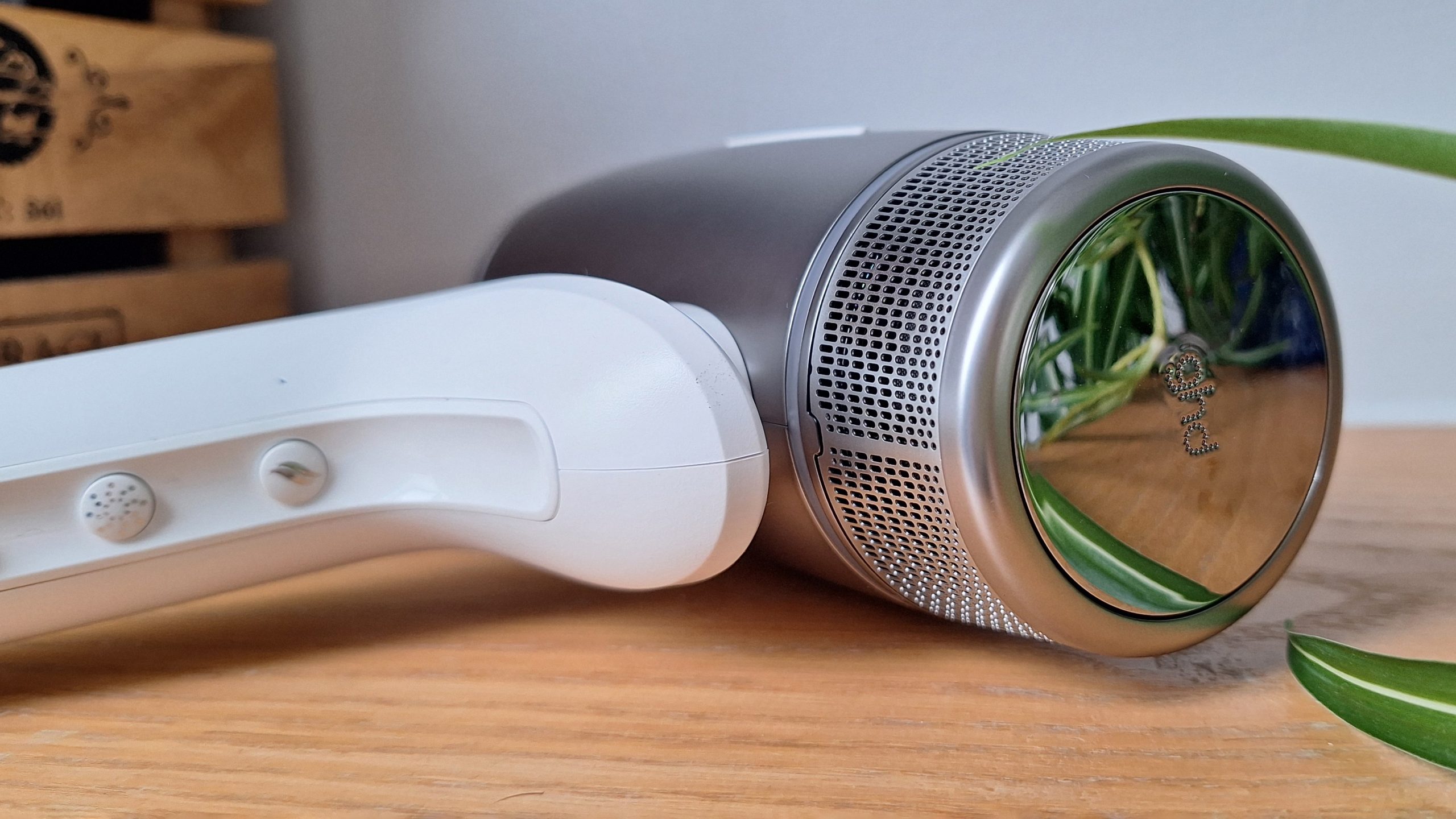
The GHD Speed has a slightly strange, disjointed design that looks like the model should be foldable – but it isn’t. It’s both chunky and heavy, weighing in at roughly 620g without its cord (by contrast, the Dyson Supersonic Nural is around 455g).
Where this dryer shines is in its control options and design. On the rear of the handle you’ll find an on-off slider switch, alongside the temperature and windspeed controls. There are four windspeed options, and four heat settings – in each case, one or two more settings than is usual.
(Image credit: Future)
There’s also a cool shot option, which you can activate using the heat button or via a separate button on the rear of the handle. You’d opt for the button on the rear if you wanted an extended period of cold air, whereas the button on the front will only deliver cool air for the length of time for which it’s depressed.
Advertisement
Also on the front of the handle is a slider to lock the current settings, so that you don’t accidentally change them as you handle the dryer. In my opinion, I’d appreciate such functionality on more hair dryers – it seems to be a struggle for manufacturers to position the buttons so that they’re easy to access yet avoid accidental presses. GHD’s solution is both neat and effective.
(Image credit: Future)
When switched on, lights around the side of the dryer barrel illuminate to indicate the windspeed and heat settings (these switch from orange to blue when you’re in a cool mode). It’s understandable at a glance, with no confusion over which mode you’re in.
(Image credit: Future)
My review model came with a concentrator nozzle, which is double-layered so that the outside remains cool to touch. It attaches magnetically and feels secure when snapped on. There’s a compatible diffuser available for £30, but that’s your lot.
Advertisement
GHD Speed review: performance
Very hot and very powerful on max settings
Relatively easy to wield and mode lock switch is useful
Dual airflow isn’t very noticeable, but my hair was left looking smooth
The GHD Speed’s USP is the “halo dual-airflow technology”, which essentially means that there’s an always-cool ring of air encircling the main airflow. GHD states that this will enable you to get closer to your scalp – but in use I couldn’t really feel the cool “halo”, and nor could I position the barrel near my head without it becoming uncomfortably toasty. This was true even when angling the dryer side-on.
The halo feature is also meant to ensure the main barrel of the dryer remains cool throughout use, allowing you to hold the GHD Speed from there. While this is correct, the reality is that I didn’t find this a natural position to grip the hair dryer – maybe in time this will change.
(Image credit: Future)
Slightly confusing special feature aside, I was super-impressed with this dryer. In max modes the GHD Speed is both ultra-powerful and super-hot. In fact, it’s the only dryer I’ve used where I haven’t automatically bumped it right up to maximum settings every time. I welcomed the added control afforded by the extra settings options, as well as the mode lock for preventing accidental presses.
GHD claims the dryer “smooths and seals the cuticle” for a glossy look. I tried a half-and-half test with another hair dryer (the Dyson Supersonic r) and while the GHD’s side was perhaps a touch smoother, I wouldn’t say it had the 56% more shine promised by GHD.
Performance score: 4.5 out of 5
How I tested the GHD Speed
I used the GHD Speed as my regular hair dryer for a couple of weeks, to get a general feel for its performance and how it left my hair looking. I also timed how long it took me to dry my collarbone-length hair, and compared the results to other hair dryers I’ve reviewed. I also assessed how easy and comfortable it is to hold, and how easy it is to use in general, again comparing my findings to other hair dryers on the market.
According to the patent document, the LLM can create a “digital clone” of social media users to simulate their online activity, posting messages, photos, and videos on their behalf if they die or take an extended break from social media. It can even interact with other users, respond to DMs,… Read Entire Article Source link
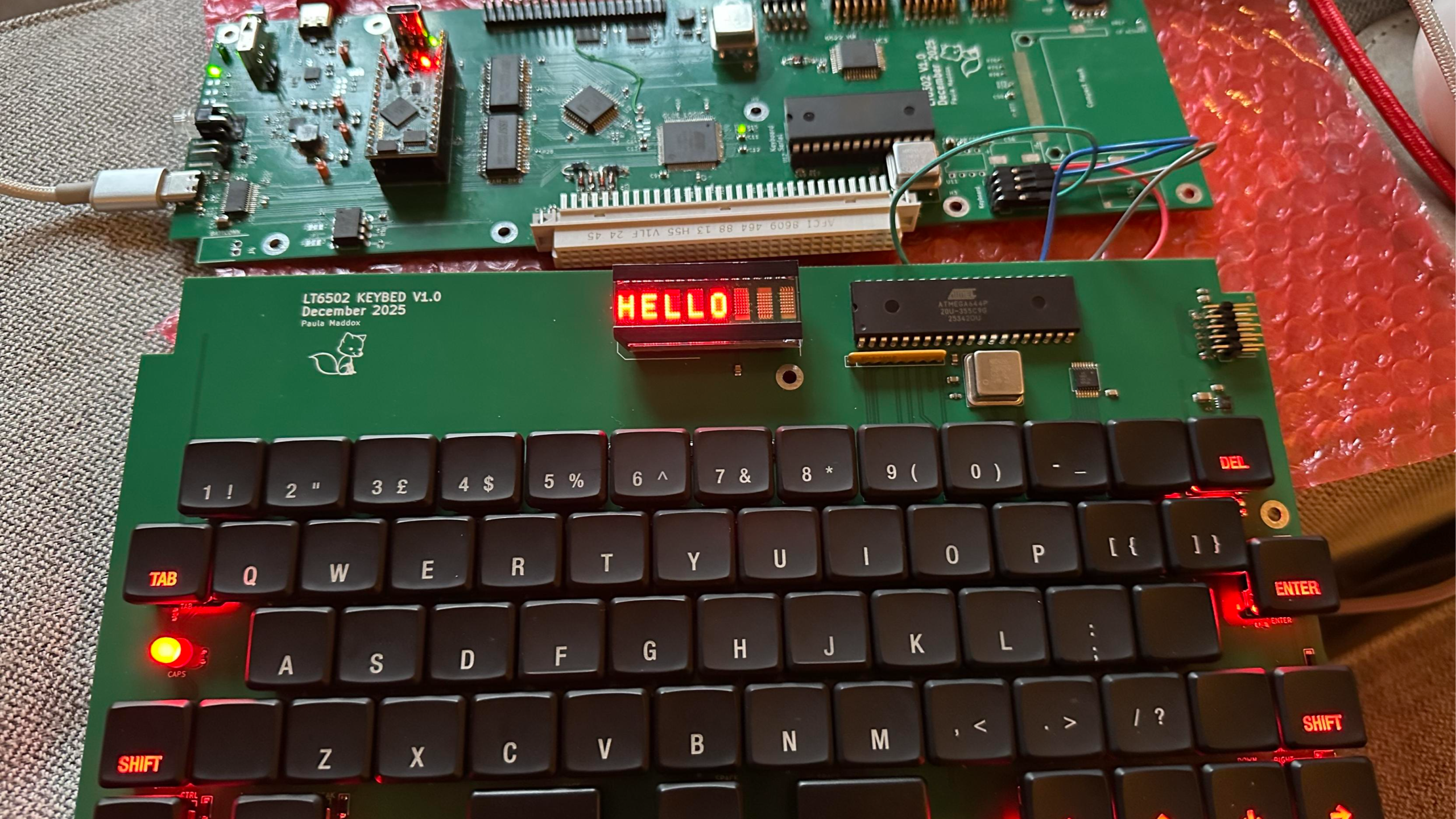
Making your own laptop can be a challenging project, but a doable one, especially given the large number of options available today for computing. Of course nothing says you need to use a modern component in your build, and in the LT6502 project by [TechPaula] they didn’t go with a modern RPi or the like, nope went right back to about 50 years ago to use a 6502 at the heart of this DIY laptop build.
The 6502 is an 8-bit microprocessor from the 1970s, found in the Commodore 64 and Apple II. This wasn’t their first venture into 8 MHz world of the 6502, prior to this laptop build there was a desktop build the PC6502 bringing this chip of old into a PC/104 form factor. The LT6502 adds in the things you’d expect with a laptop, a 9-inch foldable screen, a 10,000 mAh battery, several external ports for things such as serial console and USB-C charging. A custom keyboard adds in low-profile switches as well as including a HDSP-style 8-character display, a great addition for a modern take on this vintage chip. Onboard there is 46 KB of RAM and with the addition of the CompactFlash for storage the LT6502 runs EhBASIC which we’ve seen before in some other great projects.
The case is mainly 3D-printed safely enclosing the custom PCBs for both the keyboard and motherboard, and providing a satisfying glow with the built-in LEDs within. All of the files are up on the project’s site so be sure to swing by and check out both this and the desktop PC/104 predecessor to it. Great job [TechPaula], looking forward to seeing the future installments on the LT6502 such as implementing the included internal expansion slot.
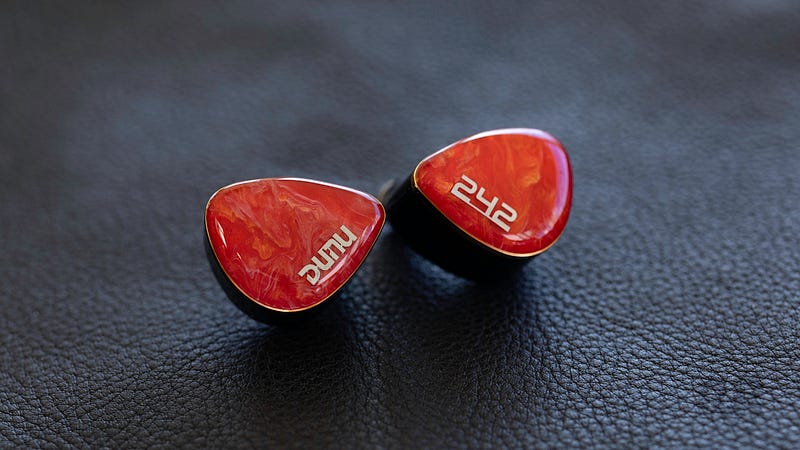
DUNU is a veteran Chinese audiophile brand. Over the 10+ years they’ve been in business, DUNU has released a wide variety of acclaimed IEMs. Their previous generation of IEMs, such as the DK3001 and Glacier, spawned entire fan-bases and modding sub-cultures. They’ve begun what looks to be a small shift in marketing and design direction, beginning with their new pair of tribrids, the DN142 and DN242. Whether it be trend-chasing or a genuine interest in exploring Chinese mythology, the new pair of DUNU tribrids lean heavily on the imagery and vision of traditional characters. They’ve simultaneously adopted a new, admittedly adorable, mascot.
The question that matters, though, isn’t whether the branding is eye-catching, but whether all this renewed creative energy translates into well-executed IEMs that actually deliver. Let’s get into it.
Listening Preferences & Review Context
This review is a subjective evaluation, shaped inevitably by my own listening priorities. I make a conscious effort to stay consistent and fair in my comparisons, but no amount of methodology fully removes personal bias. Transparency matters, so here’s the lens through which this review should be read.
My reference sound signature favors controlled, authoritative sub-bass with a textured and articulate mid-bass, a slightly warm and natural midrange, and treble that is extended and detailed without tipping into glare. I also have mild sensitivity to elevated treble energy, which influences how I assess brightness, fatigue, and long-term listenability.
Advertisement
Full details on my testing equipment, methodology, and evaluation standards can be found here.
For testing, I used a mix of dedicated DAPs and portable dongles, including the HiFiMAN SuperMini, Hidizs AP80 Pro MAX, and Astell & Kern PD10, alongside the Astell & Kern HCL, AudioEngine HXL, Meze Alba Dongle, and the Apple Dongle. This range covers everything from audiophile-leaning sources to everyday mobile use.
Unboxing
Build
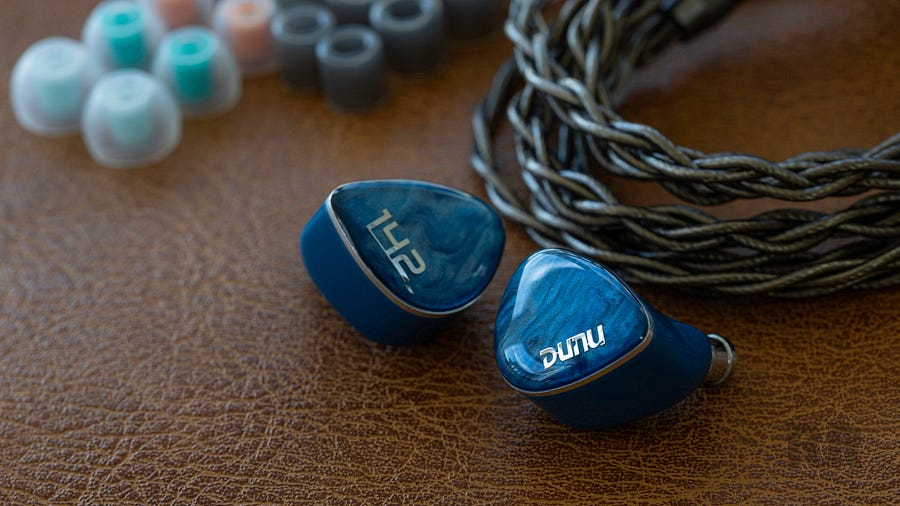
The DN142 (and its sibling, the DN242) feature 3D-printed resin shells, manufactured by HeyGears: a well-known 3D-printing outfit based in China. The DN142’s faceplates are pretty and are lined by a chromed piece of plastic. The construction is clean, as is the case with pretty much anything DUNU sells.
Advertisement
The top of the DN142’s shells houses standard 2-pin cable sockets, with no MMCX option offered. If MMCX is non-negotiable, you’ll need to look elsewhere in DUNU’s lineup. The 2-pin connectors are partially recessed, but clearance is generous enough to maintain compatibility with the vast majority of aftermarket cables.
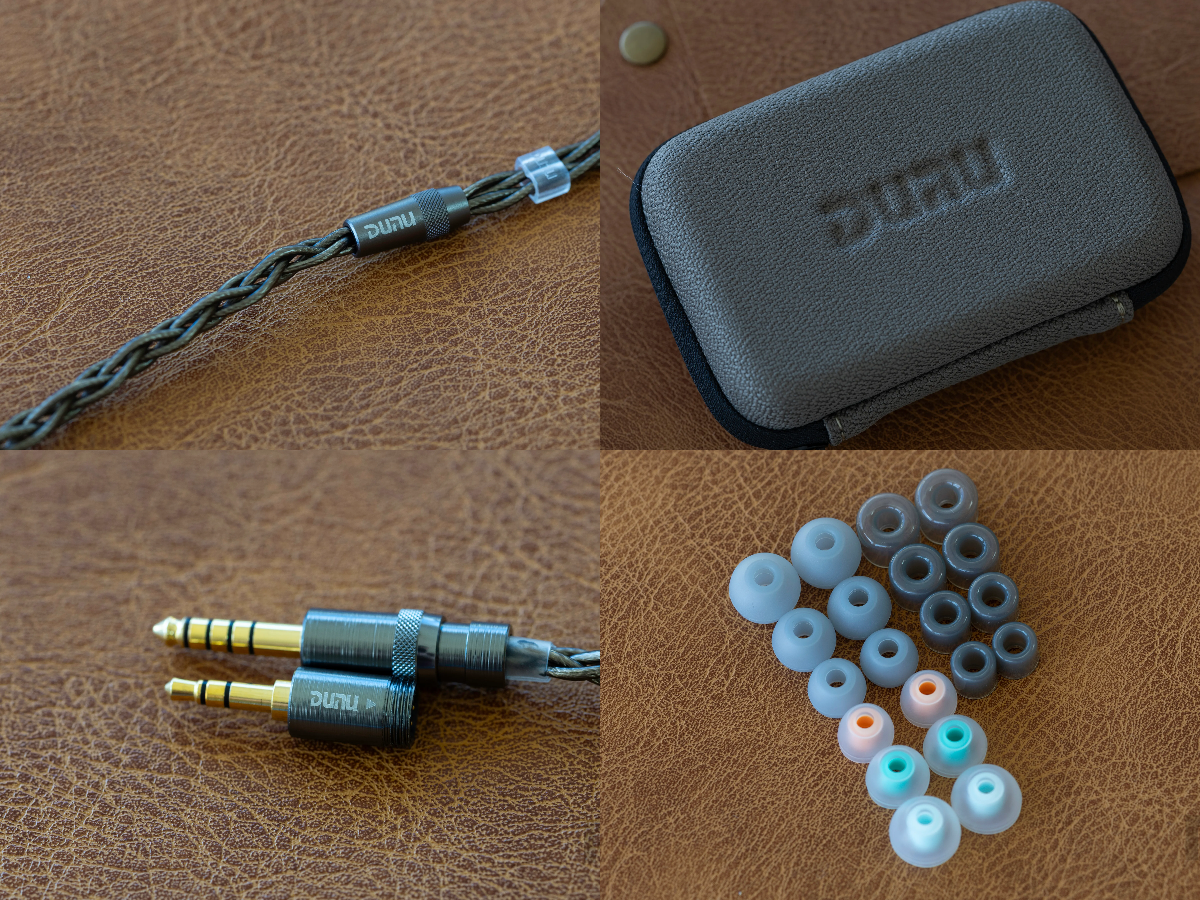
The DN142’s cable is identical to the one that comes with the ITO and DN242, which is to its benefit. This cable is well-built and uses DUNU’s excellent modular connection system. It comes with a 3.5mm and 4.4mm termination, though as of writing, you can get a free USB-C termination from DUNU when you order from their website. The cable itself is fairly soft and pliable. I can easily coil and store it in smaller cases. It’s not quite as “hefty-feeling” or comfortable as the cables that comes with pricier IEMs like the Vulkan II, but its more-than-acceptable for this price-point..
Comfort
Comfort is inherently personal and heavily dependent on individual ear anatomy, so mileage will vary.
To my ears, the DN142 is of average comfort. Its shells are on the larger side, but it is light and sculpted properly. If I don’t seat it well, I can become uncomfortable in as little as 30 minutes. If I place it carefully in my ear, I can get 1–2 hours of comfortable, uninterrupted listening.
Advertisement. Scroll to continue reading.
Advertisement
I’m pretty happy with the DN142’s passive isolation. Its nozzle size and length are compatible with my ears and allow me to block out an above-average amount of noise, even with the stock silicone eartips.
Accessories
Inside the box, you’ll find:
1 x 0.78 mm 2-pin cable
1 x 3.5 mm termination
1 x 4.4 mm termination
1 x semi-hard carrying case
3 x collectible cards
1 x 1/4-inch to 3.5 mm adapter
10 x pairs of silicone eartips
As is tradition with DUNU, the DN142 arrives well stocked. The carrying case, shared across several DUNU models, isn’t flashy, but is sturdy and does the job. The modular cable is the same proven design found elsewhere in the lineup and works exactly as intended. Tip selection is generous for silicone users, offering plenty of fit options out of the box. Foam eartips are absent, which is a bit of a letdown, but it’s consistent with DUNU’s usual approach.
Tech Specs
The DN142 is a seven-driver tribrid IEM built around a hybrid array that combines one dynamic driver for low and ultra-low frequencies, four custom balanced armatures split between midrange and treble duties, and two custom micro planar drivers handling the ultra-high frequencies. This configuration is managed by a four-way crossover architecture designed to maintain phase coherence and smooth handoffs between driver types, rather than sounding stitched together.
Per side, the DN142 weighs approximately 5.6 grams and is rated with a frequency response of 5 Hz to 40 kHz. Impedance is specified at 37 ohms with a sensitivity of 107 dB per milliwatt at 1 kHz, which places it firmly in the “easy to drive” category for most modern DAPs and dongles. Total harmonic distortion is rated below 0.5 percent at 1 kHz, suggesting competent control across the audible range.
The included cable is a 4-core, high-purity silver-plated OCC copper design measuring 1.2 meters in length, terminated with standard 0.78 mm 2-pin connectors and DUNU’s Q-Lock MINI modular plug system. Both 4.4 mm balanced and 3.5 mm single-ended terminations are included in the box.
Advertisement
Listening
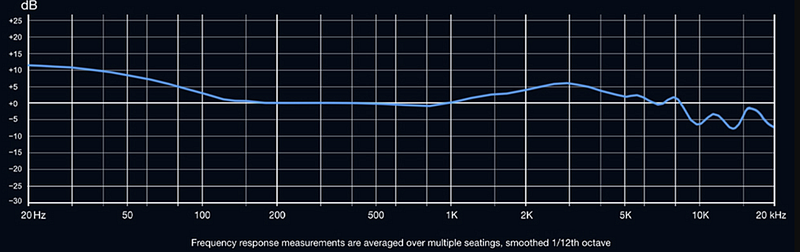
Graph, for the sniffers. Source: HiFiGO
The DN142 follows a U shaped, nearly V shaped, frequency response. It features emphasized sub-bass that gently blends down into the 200Hz range. Its lower-midrange is fairly linear and is not emphasized. The DN142’s upper-mids are energetic and forward, delivering a clear and distinct vocal range. Instrumental position is quite clear thanks to strategic emphasis in the upper-treble near the 6KHz and 8KHz ranges. Mercifully, DUNU properly-tamed the DN142’s 10KHz energy, pushing it down into a small valley to protect treble-sensitive listeners such as myself.
Dang Fine Treble Tuning
DUNU’s tuning team generally favors more treble energy than I do. Past models like the DK3001 and Falcon C are quite bright by my standards, so seeing “dual planar drivers” on the DN142 and DN242 spec sheets immediately set off alarm bells. My concern was not a lack of faith in DUNU’s engineering, but rather the industry’s uneven track record with micro planar implementations, which too often turn into bright, splashy, unfocused affairs.
The DN142 dispenses with these preconceptions, authoritatively. Its treble is lively and expressive without crossing into sharpness or sibilance. Extension is handled with control, delivering air and detail while staying composed. Tracks like “When I Come Around” by Green Day showcase the DN142’s treble resolution. It captures the fine nuances in the drummer’s hi hats, cymbals, and snare work with imaging quality that is hard to find below the $500 mark, let alone under $250. Metallic textures are rendered with convincing precision, giving transient details a lifelike, fleeting presence.
Upper treble attack and decay are handled with care, and the DN142’s ability to layer information without turning brittle makes it a genuinely formidable performer. Packing an IEM with treble energy is easy. Doing it without punishing treble sensitive listeners is not. The DN142 manages that balance well. It is not a mellow tuning, but it remains a largely safe listen. Even sharper tracks like “Satisfy” by Nero and “The Funeral” by Band of Horses introduce only the slightest hint of heat, so minor that I never felt compelled to adjust the volume.
Impartial Midrange Tone
The DN142, the first entry in DUNU’s new Delicate Series of IEMs, was designed to be generous, though transparent. While these aren’t wholly-congruent sonic ideals, DUNU did a good job of balancing them. Instrumental tone sits close to neutral, with a slight lean toward the brighter side of the spectrum. Guitar textures in tracks like “Holdin’ It Down for the Underground” by A Day to Remember come through cleanly and with purpose, without excess thickness or blur.
Advertisement
The DN142 is particularly adept at layering busy mixes while preserving separation. “Bring It on Back” by Jet is a good example, where competing instruments remain clearly defined rather than collapsing into a midrange haze. It also resolves deeper seated string elements well, even at lower listening volumes, which speaks to solid midrange resolution rather than brute force tuning.
Advertisement. Scroll to continue reading.
My main reservation with the DN142’s mids is a subtle sheen that can occasionally appear on higher pitched vocals. This effect tends to sit at the edges of vocal lines and shows up intermittently. Oliver Tree’s vocals on “Nothing’s Perfect” by NGHTMRE, already heavily processed in production, take on a bit more shine here than they would on an IEM with a calmer upper register.
Flexibly Tuned Bass
The DN142 features a sub bass focused low end. There is some mid bass presence, but not to the extent you would expect from an IEM tuned specifically for EDM. Modern, bass heavy mastering styles like those used by Joji pair well with this approach. The bass line in “Window” rumbles with satisfying depth and completeness, providing much needed contrast to the track’s high pitched vocals.
Advertisement
Rock and its many sub genres are genuinely enjoyable here, as the DN142 delivers enough weight and drive to create a lively and engaging soundstage. That said, it does not hit with the visceral force of a dedicated basshead IEM. “My Condition” by Dead Poet Society sounds clear, articulate, and weighty thanks to its robust sub bass foundation, but the drums offer only a modest sense of punch and air movement. “Little Monster” by Royal Blood is presented similarly, with a touch of punch and sufficient depth to properly fill out the lower register.
Balancing performance and fun is never easy, and doing so under $250 only magnifies the challenge. While the DN142 is not a basshead tuning, its ability to deliver an exciting low end without smearing or bleeding into the midrange is impressive. For all but the most ardent bass lovers, it makes an excellent match for rock and alternative music.
Electronic tracks are more of a mixed bag. The DN142’s relatively restrained mid bass means bass performance depends heavily on both listening volume and mastering style. “Quantum Immortality (AWAY Remix)” comes through with richness, weight, and a satisfying sense of fullness. By contrast, “One Minute” by Krewella rumbles convincingly but lacks real punch. “Double Edge” by Flux Pavilion is similarly dynamic and engaging, but once again leans more on sub bass rumble than outright impact.
Comparisons
DUNU ITO
The ITO is a $199 hybrid IEM from DUNU with resin shells and resin nozzles, a 2 pin connection, and the same modular cable used by the DN142 and DN242. Accessory bundles are nearly identical, but the additional $50 for the DN142 gets you metal nozzles, a meaningful upgrade for long term durability. Resin nozzles are more prone to cracking over time, especially in high UV or humid environments, while metal nozzles are effectively worry free.
Tuning is where these two clearly diverge. The ITO is unapologetically bass heavy, with significantly more sub bass and mid bass and a warmer overall presentation. The DN142 is cooler, brighter, and more energetic, with a cleaner and more articulate low end. While the DN142 still handles bass forward music competently, it resolves finer bass textures and mid bass detail that the ITO tends to smooth over. For electronic music, especially artists like Flux Pavilion and Taska Black, the ITO delivers more outright impact, though some listeners may find its bass overwhelming or intrusive in rock and alternative where it can bleed into the lower mids.
Advertisement
If I had to choose, the DN142 is the easy pick. The modest price increase buys a more flexible and technically capable IEM, along with more durable construction. Its carefully balanced treble also makes it a rare high energy tuning that I can enjoy despite my sensitivity. Bassheads and EDM focused listeners may still gravitate toward the ITO, but my preferences clearly favor the DN142.
DUNU DN242
The DN142 and DN242 may be marketed as siblings, but they sound far less alike than their shared shells and visual design suggest. Where the DN142 follows a U shaped, nearly V shaped, tuning, the DN242 is noticeably more linear. Its sub bass is dialed back, the lower mids are slightly warmer, and the upper mids are less pronounced. Treble on the DN242 is brighter overall, with more fill across the upper register, positioning it as a north of reference tuning with a modest sub bass shelf and elevated highs.
By comparison, the DN142 comes across as friendlier and more dynamic. The DN242 often sounds overly bright and, at times, glaring. Even relatively tame tracks that remain controlled on the DN142 can become sharp and fatiguing on the DN242. While the DN242’s leaner and brighter presentation may appeal to some listeners, it does not align well with my preferences.
Between the two, the DN142 is the clear choice for me. Its stronger bass presence, warmer midrange, and less aggressive upper register create a listening experience better suited to my music library and personal taste. The DN242’s higher price tag also works against it, offering little incentive given its tuning direction.
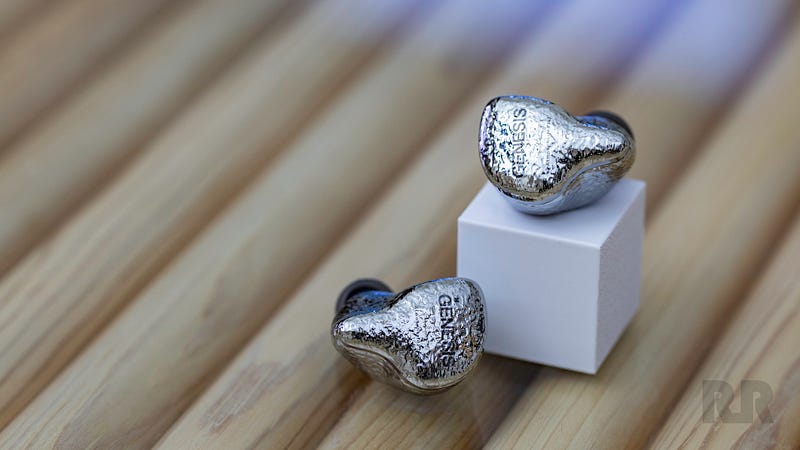
EarAcoustic Audio Genesis G318s
The Genesis G318 is an all metal IEM using a single dynamic driver per side and sells for $249, placing it directly against the DN142 on price. Both include solid cables, but I prefer the DN142’s. It makes more generous use of strain relief, features an excellent modular connector, and avoids the distracting microphonics present on the G318’s cable. The Genesis comes with a larger and more visually distinctive case, though it does not offer meaningfully better protection than DUNU’s standard zippered case. The DN142 also includes a far more comprehensive selection of stock eartips, easily surpassing the G318 in both quantity and overall quality.
Advertisement. Scroll to continue reading.
Advertisement
Sonically, the DN142 is cooler, brighter, and less bass focused than the G318. It lacks the warm, smooth, mocha latte like richness that defines the Genesis’ presentation. Instead, the DN142 relies on its multi driver configuration to balance energy and technical performance. To my ears, the G318 is the more charming listen. Its bass warmth, combined with solid technical ability and a well judged upper register, delivers a character that is relatively uncommon in the single dynamic driver segment.
That said, the DN142 offers a more electrifying experience overall. Its emphasized upper mids and treble introduce a sense of air and openness that the G318 cannot quite match. The DN142 also reaches deeper into the rear of the soundstage, resolving fine treble textures that the G318 tends to smooth over. If forced to choose just one, I would likely pick the G318 for its metal construction and richer, fuller low end, which pairs well with my library and taste. Listeners who prioritize technical performance, air, and clarity, or who are less inclined toward warmth, will likely find the DN142 the better fit.
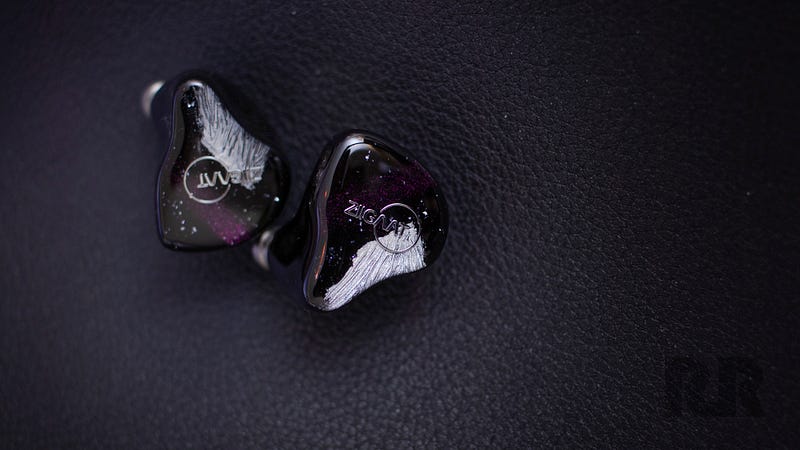
ZiiGaat Crescent
The ZiiGaat Crescents a four driver hybrid IEM with resin shells and a metal nozzle, priced at $279. It includes a basic modular cable that, frankly, does little to impress. The stock cable is among my least favorite I have encountered, lacking refinement and feeling uninspired in both handling and build. By contrast, the DN142’s cable is thicker, more flexible, less prone to tangling, and uses a far superior modular termination system.
Sonically, the Crescent presents a smoother and less dramatic upper register. Its upper mids are slightly less forward, while the lower mids carry a bit more warmth and the mid bass is marginally fuller than on the DN142. It delivers a touch more physical impact, but with slower transient response and less control. The DN142 extends further at both frequency extremes, and its added upper treble energy allows it to extract detail with greater vigor. While the Crescent’s relaxed top end is pleasant for casual listening, it does not resolve the same range of textures that the DN142 consistently reveals.
The DN142 also avoids the vocal sizzle that occasionally creeps into the Crescent’s presentation. Its more refined midrange, to my ears, highlights the quality gap between the two. As a result, the DN142 is my clear preference. The Crescent’s weaker accessory package and cable, combined with its higher price, are difficult to justify.
Advertisement
Kiwi Ears Astral
The Kiwi Ears Astral is a seven driver hybrid IEM using resin shells, metal nozzles, and flush 0.78 mm 2 pin sockets. It sells for $299, placing it $50 above the DN142. In terms of accessories, the comparison is not flattering. The Astral includes a worse case, fewer eartips, and a noticeably inferior cable. Judged on packaging alone, you would assume the DN142 is the more expensive product.
The Astral also adopts a modern U shaped tuning, but one that I find far less convincing. Its bass response lacks the natural weight and consistency of the DN142, especially with electronic music. Despite its unusual frequency response graphs, the DN142 blends sub bass into the mid bass smoothly and predictably.
The Astral, by contrast, rolls off more abruptly into the lower mids, resulting in a lopsided bass presentation. The DN142’s midrange is more linear and avoids the sterile character that creeps into the Astral. Upper mids are more energetic, treble presence is stronger overall, and importantly, the DN142 avoids the large upper treble spike that can make the Astral sound shrill and metallic.
While the Astral technically includes one more driver per side, it does not translate into superior performance. The DN142 retrieves just as much upper register detail, but without the odd timbral artifacts. The Astral’s cleaner sounding low end does not uncover additional texture or nuance, and the DN142 manages to keep pace without sacrificing mid bass body or musicality.
Between the two, the DN142 is the clear choice. Its more natural tuning, broader genre flexibility, and far better accessory package make it the stronger value. Factor in the lower MSRP and excellent stock eartips, and the savings become difficult to ignore.
Advertisement
The Bottom Line
The DN142 is a confident, well executed IEM that shows DUNU knows exactly what it is doing in the sub $300 space. It is tuned with intent, technically capable, and priced aggressively enough to make a lot of similarly “modern tuned” competitors feel awkwardly positioned. Build quality is solid, the accessory bundle is genuinely generous, and performance consistently outpaces what the asking price suggests.
This IEM is best suited for listeners who want an energetic, engaging sound without crossing into fatigue. If you enjoy clear vocals, strong treble resolution, and a sub bass focused low end that stays disciplined, the DN142 makes a lot of sense. Bassheads looking for maximum slam or listeners who prefer a very relaxed top end may want to look elsewhere, but for anyone chasing balance, detail, and versatility across genres, the DN142 is excellent value and one of the more complete packages in its price bracket.
Advertisement. Scroll to continue reading.
Pros:
Well judged U shaped tuning with strong sub bass and lively treble
Excellent treble extension without excessive sharpness or sibilance
Clear, articulate midrange with good separation and layering
Competitive technical performance
Durable metal nozzles and solid overall build quality
Outstanding accessory package, modular cable, and extensive eartip selection
Easy to drive
Cons:
Restrained mid-bass
Slight vocal sheen on higher pitched vocals
Larger shell size may limit comfort for smaller ears
Anthropic claims Claude Sonnet 4.6 showcases ‘human-level capability’ in multi-step tasks.
Anthropic has said that developers prefer its latest Claude Sonnet 4.6 to its predecessor, the Sonnet 4.5, “by a wide margin”. A majority of the users, it claimed, liked the new model even over Opus 4.5, the company’s latest frontier model.
The model launch comes just after Anthropic announced a $30bn Series G raise earlier this month led by Coatue Management and Singapore’s GIC. The round took the AI giant to a post-money valuation of $380bn – more than doubling its value from the last round it announced in September.
AI models are leaping bounds as their creators push out newer advances at increasing speeds. However, the pace of these advancements has accelerated a massive sell-off in SaaS stocks in recent months. AInvest reports that the collapse in software stocks is a “full-blown sector-wide rout”.
Advertisement
iShares Expanded Tech-Software Sector ETF is down by about 21pc year-to-date, while major companies, including ServiceNow, Salesforce, Adobe, all had their shares dragged down in recent weeks as fears of AI disruption in the sector takes over.
Claude Sonnet 4.6 isn’t quelling those fears, with Anthropic boasting that the new model shows a “major improvement” in computer use skills, compared to prior Sonnet models. The company first introduced computer use with Claude 3.5 Sonnet and Claude 3.5 Haiku back in 2024.
The new model, Anthropic said, showcases “human-level capability” in tasks such as navigating a complex spreadsheet or filling out a multi-step web form.
According to early users, Sonnet 4.6 reads context more effectively, is less prone to overengineering and “laziness”, and is “meaningfully better” at instruction taking. These users have also reported fewer false claims of success, fewer hallucinations and more consistent follow-through on multi-step tasks.
Advertisement
Overall, the new model approaches Opus-level intelligence at a lesser price point, Anthropic said. Sonnet 4.6 is comparable to Opus 4.6 in agentic coding, agentic computer use and agentic tool use, while being better at agentic financial analysis and office tasks.
The model is available on all Claude plans, including the free tier, which is now by default Sonnet 4.6. According to Anthropic, evaluations suggest that Sonnet 4.6 is “overall” safe, and safer than its recent Claude models.
Don’t miss out on the knowledge you need to succeed. Sign up for the Daily Brief, Silicon Republic’s digest of need-to-know sci-tech news.
A suspected Chinese state-backed hacking group has been quietly exploiting a critical Dell security flaw in zero-day attacks that started in mid-2024.
Security researchers from Mandiant and the Google Threat Intelligence Group (GTIG) revealed today that the UNC6201 group exploited a maximum-severity hardcoded-credential vulnerability (tracked as CVE-2026-22769) in Dell RecoverPoint for Virtual Machines, a solution used for VMware virtual machine backup and recovery.
“Dell RecoverPoint for Virtual Machines, versions prior to 6.0.3.1 HF1, contain a hardcoded credential vulnerability,” Dell explains in a security advisory published on Tuesday.
“This is considered critical as an unauthenticated remote attacker with knowledge of the hardcoded credential could potentially exploit this vulnerability leading to unauthorized access to the underlying operating system and root-level persistence. Dell recommends that customers upgrade or apply one of the remediations as soon as possible.”
Once inside a victim’s network, UNC6201 deployed several malware payloads, including newly identified backdoor malware called Grimbolt. Written in C# and built using a relatively new compilation technique, this malware is designed to be faster and harder to analyze than its predecessor, a backdoor called Brickstorm.
Advertisement
While the researchers have observed the group swapping out Brickstorm for Grimbolt in September 2025, it remains unclear whether the switch was a planned upgrade or “a reaction to incident response efforts led by Mandiant and other industry partners.”
Targeting VMware ESXi servers
The attackers also used novel techniques to burrow deeper into victims’ virtualized infrastructure, including creating hidden network interfaces (so-called Ghost NICs) on VMware ESXi servers to move stealthily across victims’ networks.
“UNC6201 uses temporary virtual network ports (AKA “Ghost NICs”) to pivot from compromised VMs into internal or SaaS environments, a new technique that Mandiant has not observed before in their investigations,” Mandiant communications manager Mark Karayan told BleepingComputer.
“Consistent with the earlier BRICKSTORM campaign, UNC6201 continues to target appliances that typically lack traditional endpoint detection and response (EDR) agents to remain undetected for long periods.”
Advertisement
The researchers have found overlaps between UNC6201 and a separate Chinese threat cluster, UNC5221, known for exploiting Ivanti zero-days to target government agencies with custom Spawnant and Zipline malware and previously linked to the notorious Silk Typhoon Chinese state-backed threat group (although the two are not considered identical by GTIG).
GTIG added in September that UNC5221 hackers used Brickstorm (first documented by Google subsidiary Mandiant in April 2024) to gain long-term persistence on the networks of multiple U.S. organizations in the legal and technology sectors, while CrowdStrike has linked Brickstorm malware attacks targeting VMware vCenter servers of legal, technology, and manufacturing companies in the United States to a Chinese hacking group it tracks as Warp Panda.
To block ongoing CVE-2026-22769 attacks, Dell customers are advised to follow the remediation guidance shared in this security advisory.
Modern IT infrastructure moves faster than manual workflows can handle.
In this new Tines guide, learn how your team can reduce hidden manual delays, improve reliability through automated response, and build and scale intelligent workflows on top of tools you already use.
Vulnerabilities with high to critical severity ratings affecting popular Visual Studio Code (VSCode) extensions collectively downloaded more than 128 million times could be exploited to steal local files and execute code remotely.
The security issues impact Code Runner (CVE-2025-65715), Markdown Preview Enhanced (CVE-2025-65716), Markdown Preview Enhanced (CVE-2025-65717), and Microsoft Live Preview (no identifier assigned).
Researchers at application security company Ox Security discovered the flaws and tried to disclose them since June 2025. However, the researchers say that no maintainer responded.
Remote code execution in IDE
VSCode extensions are add-ons that expand the functionality of Microsoft’s integrated development environment (IDE). They can add language support, debugging tools, themes, and other functionality or customization options.
They run with significant access to the local development environment, including files, terminals, and network resources.
Advertisement
Ox Security published reports for each of the discovered flaws and warned that keeping the vulnerable extensions could expose the corporate environment to lateral movement, data exfiltration, and system takeover.
An attacker exploiting the CVE-2025-65717 critical vulnerability in the Live Server extension (over 72 million downloads on VSCode) can steal local files by directing the target to a malicious webpage.
The CVE-2025-65715 vulnerability in the Code Runner VSCode extension, with 37 million downloads, allows remote code execution by changing the extension’s configuration file. This could be achieved through tricking the target into pasting or applying a maliciously configuration snippet in the global settings.json file.
Rated with a high-severity score of 8.8, CVE-2025-65716 affects the Markdown Preview Enhanced (8.5 million downloads) and can be leveraged to execute JavaScript via maliciously crafted Markdown file.
Advertisement
Ox Security researchers discovered a one-click XSS vulnerability in versions of Microsoft Live Preview before 0.4.16. It can be exploited to access sensitive files on a developer’s machine. The extension has more than 11 million downloads on VSCode.
The flaws in the extensions also apply to Cursor and Windsurf, which are AI-powered VSCode-compatible alternative IDEs.
Ox Security’s report highlights that the risks associated with a threat actor leveraging the issues include pivoting on the network and stealing sensitive details like API keys and configuration files.
Advertisement
Developers are advised to avoid running localhost servers unless necessary, opening untrusted HTML while they’re running, and applying untrusted configurations or pasting snippets into settings.json.
Also, it is advisable to remove unnecessary extensions and only install those from reputable publishers, while monitoring for unexpected setting changes.
Modern IT infrastructure moves faster than manual workflows can handle.
In this new Tines guide, learn how your team can reduce hidden manual delays, improve reliability through automated response, and build and scale intelligent workflows on top of tools you already use.
Temporal co-founders Samar Abbas (left), CEO, and Maxim Fateev, CTO. (Temporal Photo)
Temporal has raised $300 million in a Series D funding round at a $5 billion valuation, positioning the company as a key infrastructure provider for the emerging wave of AI agents moving into real-world production.
The latest round, led by Andreessen Horowitz, doubles the company’s valuation from October.
Temporal builds open-source software and a cloud service that helps companies run long-running, complex workflows reliably — what it calls “durable execution.” The Bellevue, Wash.-based company says that as AI systems become more autonomous and take actions across multiple services, reliability has become a challenge.
“Agentic AI doesn’t fail because the models aren’t good enough,” Samar Abbas, CEO and co-founder of Temporal, said in a press release. “It fails because the systems around them can’t handle real-world execution.”
Temporal says revenue grew more than 380% year-over-year, weekly active usage increased 350%, and installations rose 500%. Its cloud platform has processed 9.1 trillion lifetime action executions, including 1.86 trillion for AI-native companies.
Advertisement
OpenAI uses Temporal to help power certain production workflows. Other customers include ADP, Yum! Brands, and Block. Andreessen Horowitz described Temporal as becoming a foundational execution layer for the AI era.
“For long-running agents operating over extended horizons, the durability that Temporal provides is the difference between a compelling demo and a production system,” the Silicon Valley firm wrote in a blog post. “The underlying execution layer has become a central piece of the emerging AI agent stack.”
Temporal originally focused on helping developers manage complex, distributed workflows. But the rise of AI agents has amplified the need for infrastructure that can safely execute long-running, stateful systems over extended periods. Temporal’s platform preserves application state, automatically retries failed steps, and allows workflows to resume exactly where they left off instead of starting over.
Temporal co-founders Samar Abbas and Maxim Fateev previously worked together at Uber and helped build an internal open-source orchestration engine called Cadence. The experience helped inspire them to launch Temporal in 2019. Fateev previously worked at Amazon, Microsoft, and Google. Abbas also worked at Microsoft and Amazon.
Abbas took over CEO duties from Fateev in 2024. Fateev is now CTO.
Advertisement
Temporal has raised $650 million to date. It closed a $105 million secondary transaction in October, and raised $146 million Series C round earlier in 2025. The company employs 375 people.
Temporal also announced Tuesday that Raghu Raghuram, former VMware CEO and general partner at Andreessen Horowitz, is joining the company as a board observer.
Other backers in the latest round include Lightspeed Venture Partners and Sapphire Ventures, along with existing investors including Sequoia Capital, Index, Tiger, GIC, Madrona, and Amplify.