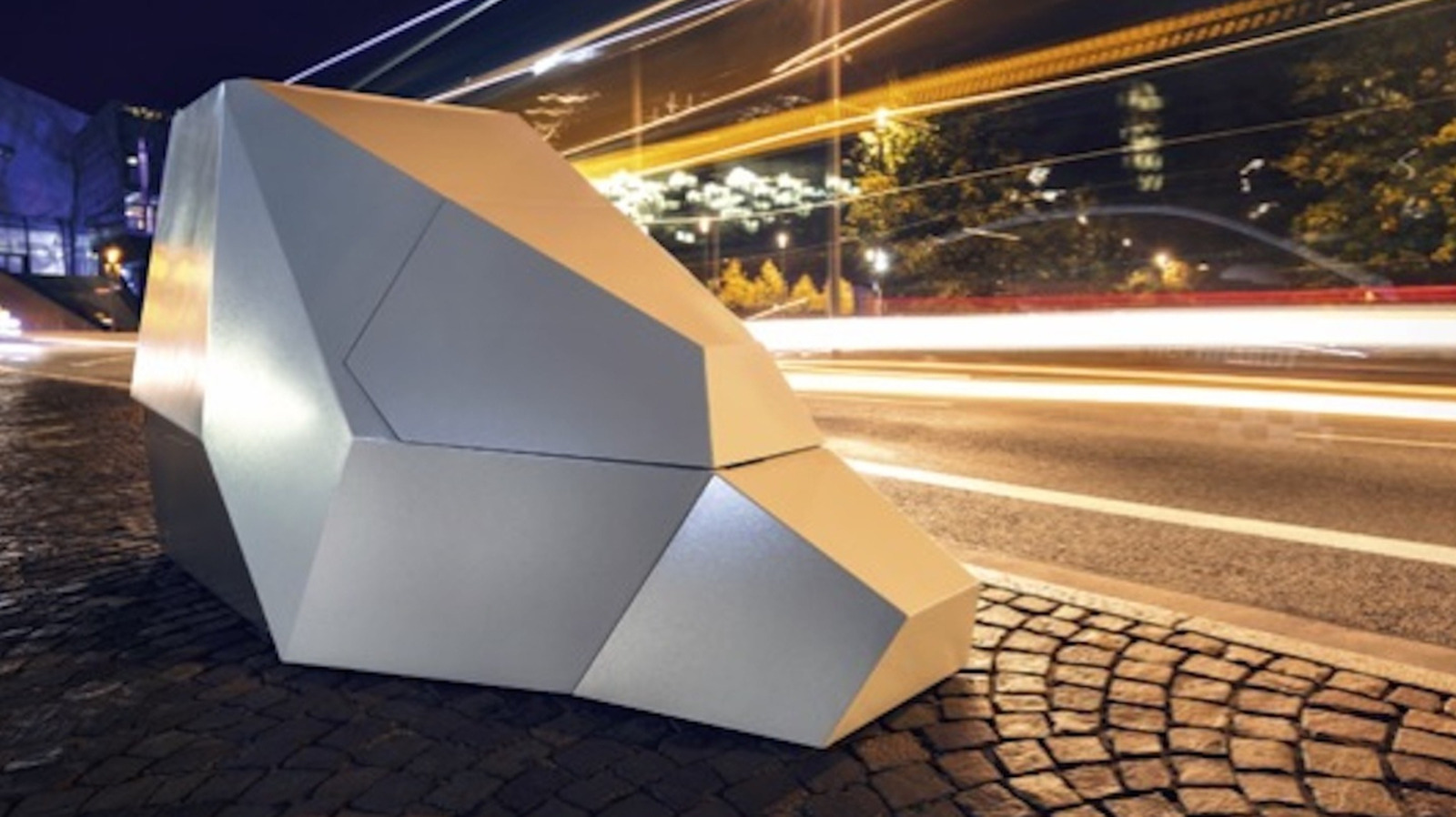
The Poliscan Enforcement Trailer is a unique-looking type of speed camera that is produced in Wiesbaden, Germany by a company called Vitronic. People engaged in online chats about these new speed cameras are describing them as both reminiscent of a Tesla Cybertruck and also like a device seen in a “Star Wars” movie. Montgomery Couty Maryland purchased six of them, along with a number of other cameras to deploy around the county.
These Poliscan Enforcement Trailers can be moved from place to place. The trailers will each replace a setup that used a speed camera in a van that required a police officer nearby to monitor its operation. Poliscan trailers can be monitored remotely to verify that they are operational; no officer will need to be stationed nearby. In addition to their external “armor,” the glass panel that the speed cameras see through is made of ballistic-grade glass to protect them from vandalism. Just like in California, cameras can now give you a ticket, no cops involved.
Advertisement
Montgomery County, Maryland’s purchase of the six Poliscan Enforcement Trailers is part of a larger purchase made by the county from Vitronic. It also purchased 96 additional smaller, more portable speed cameras, along with 38 speed cameras mounted on poles for school zone speed enforcement. This multi-year, multi-million-dollar contract was announced by Vitronic in November of 2025, with the first trailers’ arrival announced in early April of 2026.
Advertisement
Where else have Poliscan Enforcement Trailers been used for speed enforcement?
Vitronic’s Poliscan Enforcement Trailers have been used in a number of European jurisdictions. The French Interior Ministry’s Traffic Enforcement Department has been using them since 2016, when they noticed a huge increase in the number of traffic accidents where roadside construction was going on. This required a mobile solution, since construction sites are not permanent and these areas are not located where traditional speed enforcement is in effect.
They had 250 units by December of 2016, with a total of 600 units ordered by December of 2021. Speed enforcement from these automated systems increased by 26%, resulting in 25.6 million Euro in additional revenue. This aligns with what the data says about traffic cameras stopping speeders.
Barcelona, Spain has been using the Vitronic Poliscan Enforcement Trailers as well. Barcelona launched their effort with four Poliscan Enforcement Trailers that started operation in November of 2024. These Enforcement Trailers recorded up to 1,600 speeding offenses, right from the start of operation.
The Poliscan Enforcement Trailers can run autonomously for 10 days without needing a power connection. Their inherent protection from vandalism keeps them in operation continuously. It may even be possible to get a speeding ticket when you weren’t even driving the car, just like you can in Maryland.
Anyone who watched last week’s episode of Half Manwill likely understand why I can hardly bring myself to watch again this week.
Created by Baby Reindeer‘s Richard Gadd, the show follows brothers Niall (Jamie Bell) and Ruben (Gadd) through 30 years of their lives, exploring the highs and lows of their turbulent relationship.
We can expect our first real-time jump this week, but when will Half Manepisode 2 be released on HBO Max and BBC iPlayer?
Advertisement
Article continues below
Advertisement
What time can I watch Half Man episode 2 on HBO Max and BBC iPlayer?
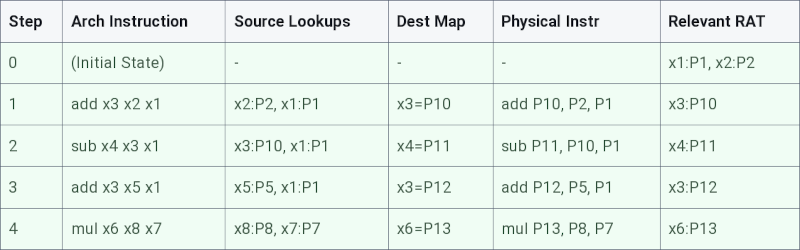
[Shreeyash] asks an interesting question: how many registers does your CPU have? The answer is probably more than you think. The reason? Modern CPUs — at least many of them — execute instructions out of sequence so they can perform multiple instructions per clock cycle. To do this, they may need to execute instructions that change registers that other instructions are still reading. In addition, you might be writing a result speculatively — a branch might make it where your result won’t wind up in the target register. The answer to both of these problems is register renaming.
The ARM CPU he looks at has many physical registers you can’t see. These get mapped to the registers you use on the fly. So when you read a register in software, you are really getting an underlying physical register. Which one? Depends on when you read it.
The RAT, or Register Alias Table, keeps track of the mapping between physical registers and the register names you use. Not only does this allow the CPU to run operations out of order, but it also lets results sit in unnamed physical registers until the time is right for it to become the real register. As a byproduct, moving one register to another becomes fast since you can just copy the alias of one physical register to another logical register.
Advertisement
Not clear? Try reading the post. There are other ways to get the same result (e.g., reservation stations), but the technique goes way back to mainframe computers. While it didn’t appear right away in microprocessors, modern ones often execute out of order and have to have some scheme to address this problem.
If you build your own CPUs with FPGAs, it is possible to do the same trick. There are also RISC-V variants that can do it.
Oliver Schusser from Apple Music says a third of uploads are AI-generated
Despite this, only 0.5% of all users are engaging with this content
Apple Music has plans to combat the AI epidemic even further
Apple Music has become the latest music streaming service to be hit with the influx of AI-generated content, says its VP Oliver Schusser — but it’s reaching only a very small percentage of all users.
Speaking with Billboard ($/£), Schusser shed light on the state of AI music in Apple Music’s library, sharing that “more than a third of what (Apple Music) get(s) today is actually what we would say is 100% AI”.
It goes to show that it’s becoming easier for labels and distributors to submit music that’s completely made using AI, and Apple Music isn’t the only service that’s facing this epidemic. Just last week, Deezer declared that nearly half of the new music submitted to the platform is AI-generated, resulting in the company’s decision to stop offering hi-res versions of these songs.
Article continues below
Advertisement
So, how is Apple planning to put out the AI fire? Well, Schusser went into further detail in his interview. “We’ve never talked about this — but we’ve developed technology in-house that would allow us to exactly see what music people are delivering us, what AI (model) it is and all that,” he reveals, likely referring to Transparency Tags.
Back in March, Apple sent out a letter to industry partners revealing its plans to roll out ‘Transparency Tags’, a new metadata system to help flag AI-generated and AI-assisted music. This means labels and distributors can disclose whether AI has been used in a song’s production when submitting to Apple Music. Though it’s optional, Schusser made it clear that he “really need(s) the content providers and the labels to take responsibility”.
There’s no denying that fully AI-generated music is cropping up in the best music streaming services, but Schusser unveiled an interesting statistic that may come as a surprise: despite the rise, it’s not having a huge impact on users’ listening and engagement habits. “The reality is, the usage of the AI music on Apple Music is really tiny. I’m rounding, but it’s below 0.5% of usage. We’re just at the beginning here,” he told Billboard — but fraud is still rife.
Advertisement
This is another issue on which Apple Music is clamping down, but it’s been doing this since the good old iTunes days: “This has been a 20-year journey because there was fraud, obviously, in iTunes already,” Schusser said, which led to the introduction of Apple’s fraud penalty. The company also doubled this penalty as of this year.
Sign up for breaking news, reviews, opinion, top tech deals, and more.
But the battle isn’t over, as Schusser puts it, “We invest way more than anyone else in reducing and eliminating fraud. We implemented a fraud penalty four years ago, where if we catch someone, then we actually take the money and put it back in the pool. We need to monitor AI music because there’s a correlation between AI and fraud”. He also shared that Apple has seen a “60% reduction” in fraudulent uploads after implementing the penalty.
As it stands, I’ve been one of the lucky ones not to have run into AI-generated music flooding my recommendations in Apple Music as well as Spotify, though the latter has come under significant scrutiny for housing AI slop. Like other platforms, Spotify is also working toward safeguarding users by removing 25 million AI tracks in the last 12 months, and devising a solid AI combat strategy for the future.
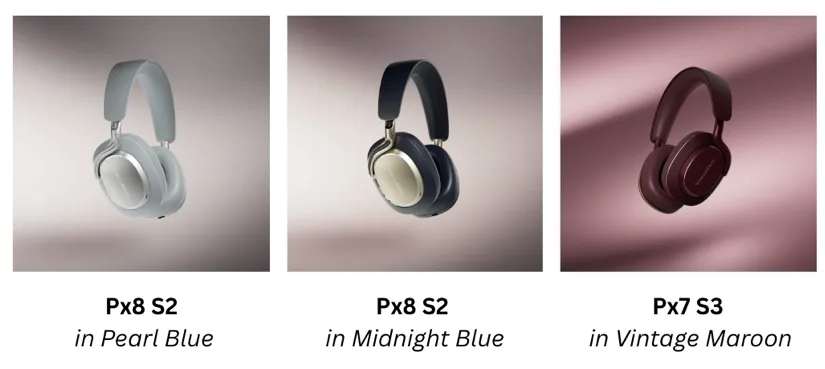
Bowers & Wilkins is kicking off the warmer months with a fresh wave of color across its flagship headphone and earbud lineup. The British audio brand has introduced new finishes for three of its most celebrated products, the Px8 S2, Px7 S3, and Pi8, bringing the total portfolio to 21 variants. Despite the expanded color range, the audio performance that made Bowers & Wilkins a household name among audiophiles remains the same.
New colors for the Bowers & Wilkins Px8 S2 and Px7 S3 headphones
Starting at the top of the range, the flagship Px8 S2 gets two new finishes: Midnight Blue and Pearl Blue. Both are trimmed in soft Nappa leather with complementary aluminium detailing, and they sit alongside the existing Onyx Black, Warm Stone, and McLaren Edition options.
Bower & Wilkins
The Px8 S2 is built for serious listeners who want a slimmer, more comfortable fit for long flights or extended wear, and these new colorways make it easier to pick one that matches your personal style. It retails at $799.
Meanwhile, the Bowers & Wilkins Px7 S3 has a single new finish called Vintage Maroon. Its rich color pairs well with the headphone’s reputation as the more accessible entry point into the Bowers & Wilkins lineup. If you want strong noise cancellation and detailed sound for commuting or working from home without paying flagship prices, the Px7 S3 at $479 is worth a serious look.
The Pi8 earbuds are also available in two new colors
Bower & Wilkins
The Pi8 true wireless earbuds get two new additions: Pale Mauve and Dark Burgundy. Both are pocket-sized and designed for all-day comfort, making them a strong pick for anyone who wants big sound without the bulk of an over-ear headphone.
The Pi8 delivers crisp, detailed audio with excellent noise cancellation, and at $399, it sits at an interesting price point for anyone who wants the Bowers & Wilkins experience in a more portable form. All new color options across the Px8 S2, Px7 S3, and Pi8 are now available for purchase on the website.
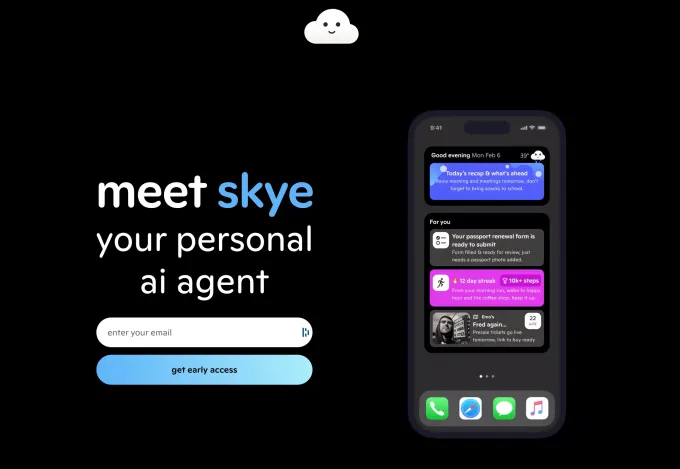
Skye, an iPhone app still in private testing, wants to change how people interact with AI on their smartphones. And even before it’s launched, it’s already attracted interest online and from investors and “tens of thousands” of users, according to its creator — a sign that consumers might want a more AI-aware iPhone.
Instead of launching an app or speaking to an AI chatbot, the startup is working to design an “agentic homescreen” for the iPhone, using iOS widgets as its interface.
Through those widgets, Skye would bring a sort of ambient intelligence to your device, offering personalized insights about your local weather, your current context, your health, and more, according to a post from its creator, who goes by signüll on X. The app can also draft email replies, help you with your meeting prep, send reminders, and flag suspicious charges in your bank accounts. Its creator also claims it can provide location-specific recommendations and additional information about local businesses, neighborhoods, and attractions while you’re out and about.
Much of this data would be pulled in through authorized connections granted by the user.
Advertisement
The app, which is being built by a small team from the startup Signull Labs, has already attracted investor attention, despite not yet having a public product.
According to an SEC filing, the startup has raised north of $3.58 million in pre-seed funding, in a round that closed in September 2025. Pitchbook also currently lists New York-based Signull Labs’ funding along with a post-money valuation of $19.5 million.
Since announcing the startup’s plans on X, signüll, whose name TechCrunch confirmed as Nirav Savjani according to the SEC filings and other documents, claims the app has added “tens of thousands” of users to the waitlist. This metric, if accurate, would suggest strong consumer interest in a more AI-aware iPhone. (And potentially, the possibility that a new type of AI device, like the rumored OpenAI smartphone, could have a chance.)
holy fuck the response to yesterday’s lunch has been absolutely unreal. ~million views on our video, tens of thousands added to a waitlist that was already 25k+, & hundreds & hundreds of emails & DMs from investors & ppl genuinely excited about what we’re building. our discord is… https://t.co/jqtU9zELqH
TechCrunch spoke to signüll, who shared more about the product and funding, under the condition of protecting his pseudonymity. TechCrunch declined, as signull’s name is listed publicly in the SEC filings establishing Signull Labs. (TechCrunch said we would still be happy to publish an interview with him when he’s prepared to go on the record.)
Image Credits:Skye/Signull Labs
The founder noted he’s previously worked at Google and Meta, though he has no obvious LinkedIn presence. He also told TechCrunch that Skye’s early backers included a16z (Andreesen Horowitz), True Ventures, SV Angel, and other individuals. Offline Ventures also lists Signull Labs in its online portfolio, we found.
California’s proposed billionaire tax appears headed for the November ballot after backers said they gathered more than 1.5 million signatures, well above the threshold needed to qualify. SF Standard reports: Backers of the initiative announced this weekend that more than 1.5 million people signed a petition to bring the one-time, 5% wealth tax to a statewide vote come November. That’s well beyond the 875,000 names needed to qualify the measure, and likely sufficient to account for illegible or invalid signatures. The Service Employees International Union United Healthcare Workers West, a union representing more than 120,000 healthcare workers, pitched the tax to make up for federal spending cuts that threaten to shutter hospitals(opens in new tab) and kick millions of people off medical insurance.
Proponents of California’s wealth tax estimate it would raise $100 billion in one-time revenue, even if some billionaires leave because of the measure. The nonpartisan California Legislative Analyst’s Office forecasts tens of billions in upfront revenue, but cautioned that the tax could cost hundreds of millions or more a year if some billionaires move out of state. The proposal, which needs a simple majority to pass, would apply to assets of people with net worth of $1 billion or more who lived in California as of Jan. 1 this year. That means it would affect about 200 people, according to the SEIU-UHW.
Back pain isn’t a niche problem. According to the CDC’s 2023 National Health Interview Survey, 24.3% of American adults suffered from chronic pain in the past three months, up from 20.4% in 2019, meaning the problem is getting worse. And yet, most people spend very little time thinking about how their car contributes to it. They should.
Studies have shown that prolonged sitting and driving has been frequently associated with numerous spinal health issues, including poor circulation, muscular fatigue, and degenerative changes such as disc herniation. A car that’s good for a bad back isn’t just one with a soft seat. As WhatCar? notes in its back pain buying guide, adjustable lumbar support is critical because it helps you achieve a seating position that supports your back fully.
However, adjustable lumbar support is only the tip of the iceberg. The most comfortable seats, according to Consumer Reports, are evaluated across multiple dimensions — lumbar support, shoulder support, hip alignment, thigh support, and the ability to precisely fine-tune your position. The good news is that luxury cars increasingly treat the driver’s body like something worth engineering around. Here are five luxury car models for drivers with a bad back.
Advertisement
Porsche Panamera
If you want a car that’s sporty, yet comfortable and accessible for people with back pain, the Panamera is a unicorn pick. The car’s electric easy-access function automatically slides the seat back and raises the steering column when you cut the engine. You can choose between a 14-way adjustable comfort seat, or an 18-way adjustable sport seat, both of which give you lots of ways to dial in the perfect seating position.
Advertisement
Both also come with memory functions, meaning that once you find that perfect position, you just save it and it’s stored for good. The seats can also be adjusted for angle, four-way lumbar support, height, length, and backrest positioning. Quite possibly the most impressive comfort feature of the new Panamera is the new Active Ride adaptive air suspension. Motor1 called it a game-changer because it doesn’t just absorb forces, it fights back against them.
This futuristic suspension setup is only available for hybrid Panamera models because it requires a 400-volt architecture you can only get with the hybrid. Active Ride can also physically raise the ride height every time you want to step in or out to make it feel even more comfortable. To top it all off, the Porsche Panamera Turbo S E-Hybrid is also the fastest hybrid you can buy for daily driving.
Advertisement
BMW X5
The BMW X5 has long been the SUV benchmark for mixing driving engagement with day-to-day comfort, and for back pain sufferers that combination matters a lot. The 2024 and later X5 uses a two-axle air suspension as standard, which provides automatic self-leveling and reduces the SUV’s height at highway speeds, cutting down on the fatigue-inducing body movement that irritates a compromised back on long runs.
The optional Adaptive M suspension adds electronically controlled dampers with adjustable stiffness for when road conditions change. You can also control the X5s ride height however you please with a simple press of a button. Seating-wise, the 2026 X5 offers impressive multi-contour 20-way adjustable front seats. Cinch named the BMW X5 one of the best cars for people with a bad back because of the fully adjustable seating with electric lumbar support and the optional Comfort Plus Pack that adds front massage seats and seat ventilation.
The ride height sits at the sweet spot for most back sufferers — tall enough to step into without crouching, but low enough that the door sill doesn’t demand a climb. Few vehicles at this price point balance those variables as consistently as the X5 does. Consumer Reports named the BMW X5 one of the most comfortable cars you can buy, and the seating comfort is part of the reason why.
Advertisement
Mercedes-Benz S-Class
Sjoerd Van Der Wal/Getty Images
Most cars let you adjust the seat to your body. The Mercedes-Benz S-Class, as usual, goes further. On S 580 models, the MBUX system includes a feature that continuously micro-adjusts the seat cushion, backrest, and multicontour lumbar supports while you’re driving. In other words, it is virtually imperceptible movements driven by a patented algorithm designed to reduce muscle fatigue and improve spinal wellbeing over the course of a drive.
However, if you do want to dial it in yourself, the new S-Class allows you to enter all of your body dimensions into the system, and the car will use science to give you the optimal driving position. Beyond, the power-adjustable front seats store up to four memory positions per driver, and the ten different massage programs target different back regions. You also get heated and ventilated seats, a heated steering wheel, heated arm rests, and the recent facelift will introduce a heated seatbelt.
Advertisement
AIRMATIC air suspension is standard across the lineup, adapting each wheel’s damping individually to smooth out road imperfections. Getting in and out is handled by auto-closing doors that operate hands-free, so you’re never twisting back to yank the door shut. To top it all off, the new S-Class has 41.4 inches of front legroom and 59.7 inches of shoulder room thanks to being a full-size sedan, and that gives you lots of room to adjust, even if you are particularly tall.
Advertisement
Volvo XC60
We’ve already covered sporty cars, mid-size SUVs, and comfortable sedans, now it’s time to look at compact-size SUVs that are better suited for drivers with back pain. Volvo’s reputation for safety tends to overshadow an equally serious commitment to spinal ergonomics, and the XC60 is where that engineering shows most clearly in everyday terms. When we reviewed the 2026 Volvo XC60, we noted that its front seats were “extremely comfortable.”
What few people know is that Volvo’s seat design heritage traces back to Dr. Alf Nachemson, a Swedish orthopedic surgeon and pioneer in lumbar spine research who directly gave consultation to Volvo on how car seats should support the human back. That institutional knowledge carries forward into the XC60’s current generation. The front seats feature four-way adjustable lumbar support — up, down, forward, and backward, as shown in Volvo‘s own documentation, while higher trims add a multi-program massage function through the backrest using air cushions.
As Cinch notes, the XC60 Plus trim adds power lumbar support and ergonomically designed Comfort front seats, while the Ultra trims extend to ventilation and massage. The ride height is high enough to step into without bending down hard, but not so elevated that entry becomes its own challenge. For a mid-size luxury SUV with genuine back-health credentials, the XC60 sits at the top of the segment.
Advertisement
Range Rover
If there is one SUV on this list that was engineered with effortlessness in mind, it’s the Range Rover. Edmunds notes that the standard air suspension dramatically lowers the vehicle upon your approach, and that’s before you even touch for the door. That is complemented by a dedicated Access Height mode that drops the vehicle to its absolute lowest position specifically for entry and exit, eliminating the high step-in that makes so many full-size tall SUVs a problem for back sufferers in the first place, and also eliminates the need for running boards.
When we reviewed the 2024 Range Rover, we mentioned how you can have it with seven seats, or four really nice ones. For the premium Autobiography trim, you get ventilated and massaging front seats in an already well-appointed cabin, while the top SV trim goes all the way to exceptional 24-way adjustable heated and cooled front seats with a hot stone massage function – one of the highest seat adjustment counts of any production vehicle we came across.
Advertisement
As well as the adaptive air suspension helping you with ingress and egress, it also helps soak up bumps in the road on the move, keeping road shock from traveling up through the seat into your spine. As What Car? highlighted in its back pain buying guide, air suspension with a dedicated entry mode is one of the most practical features a large SUV can offer, and not many cars do it more completely than the Range Rover.
Advertisement
How we made the list
PixieMe/Shutterstock
Back pain is not a one-size-fits-all condition, and neither is the search for the right car to manage it. Moreover, not all of us like the same types of cars, and it would be a shame if you had to buy an SUV only because of your back, although you wanted a sedan. To put this list together, we looked beyond marketing jargon and focused on the specific engineering features that credentialed sources consistently identify as most impactful for drivers with compromised spines.
Our criteria centered on four pillars: Adjustable lumbar support with enough range to fit different body types, ride height and access features that minimize the physical strain of getting in and out, suspension tuned to isolate road shock rather than transmit it, and seat adjustability that goes deep enough to genuinely accommodate different bodies.
We cross-referenced findings from medical and ergonomic sources including the CDC, PubMed, automotive publications including What Car?, Edmunds, Motor1, Cinch, and Consumer Reports, and manufacturer specifications to verify every claim. Lastly, we wanted to offer a wide array of vehicles, meaning you get a sport sedan, a compact SUV, a mid-size SUV, a full-size sedan, and a full-size SUV. This way, you can always get your cake and eat it.
Jon Wagner spent five years as the senior director of battery engineering for Tesla before joining California-based eVTOL developer Joby Aviation in 2017. He spoke with IEEE Spectrum about how engineering differs between cars and aircraft.
Jon Wagner
Jon Wagner leads power train and electronics at Joby Aviation.
Jon Wagner: In general, ground transportation has a different focus on cost versus mass. You know, would you be willing to spend more on the parts in order to save a certain amount of mass? The trade-offs end on the ground vehicle and at a certain point the cost is dominant, whereas with aviation, the trade-offs between cost and mass go a lot deeper. And so for certain solutions eVTOL makers are willing to spend more money in order to enable either lighter weight or greater efficiency.
The other key difference is related to safety. In essence, we’re dealing with the same motor technologies for ground transportation and aviation right now, so the failure modes are similar. But of course, with aviation we have the desire for continued safe flight and landing, and that drives what you do in the design to mitigate those failures if they were to occur. In many cases in ground transportation, the mitigation for a failure is to pull over safely to the side of the road. In aviation, the mitigation is redundancy, because there’s not an option to pull over.
Is redundancy designed into EV motors?
Advertisement
Wagner: Typically, redundancy is not designed into electric vehicle drive systems solely for the purpose of redundancy. There are some cars now that have all-wheel drive—so there’s a motor on the front, a motor on the back—so as a secondary feature you get the redundancy. But it wasn’t done with the primary intent of having redundancy.
How does Joby’s eVTOL manufacturing compare to EV manufacturing?
Wagner: The most efficient way to run a large-scale engineering effort in a mature industry, such as automotive, is to break your system up into pieces that can be outsourced to suppliers who are going to do a really good job on each piece. The downside is that when you break a problem up into three pieces, you now have interface boundaries between each of these pieces, and those always create inefficiencies. We were able to design highly integrated solutions without taking that manufacturing penalty.
Are there any materials you’re really excited about?
Advertisement
Wagner: Permendur [a cobalt-iron alloy] typically costs in the neighborhood of 10 times as much as traditional motor steel. That’s significant, and it’s often not used in ground transportation because of that cost. It comes with small improvements in performance, but enough that for aviation it’s quite interesting.
Wagner: I’ve always wanted to be a very forward thinker with respect to power-train. However, one of the things I’ve learned over the years is that power-train development has to come with a very healthy dose of patience. Developing a whole new type of power-train is a big endeavor, but it’s one that I’m very confident the aviation industry will undertake. We’re certainly undertaking it here at Joby, and we’ll see that broaden, I’m sure, with time.
This article appears in the May 2026 print issue as “Jon Wagner.”
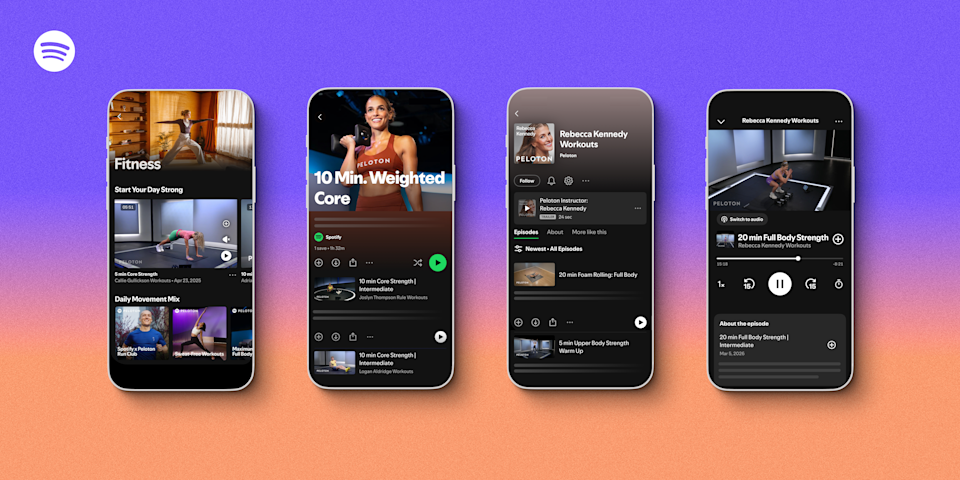
In its quest to become an all-in-one app, Spotify is now breaking into the fitness app world by offering “guided workout experiences” and on-demand Peloton classes. Premium subscribers will get access to Peloton‘s library of more than 1,400 classes in the app, while both Free and Premium can browse curated playlists (they’re listed under the genre “fitness.”)
Spotify
Spotify said the classes are primarily in English, but there are some options in Spanish and German. Like music and podcasts, Spotify lets you bounce between different devices for its fitness media, so you can start a video workout on your TV and switch to an audio-only version on your phone or smart speaker. Users can even download the classes for offline use.
The fitness category may feel like a sharp turn for Spotify, but the company said that nearly 70 percent of its Premium subscribers work out monthly and that fitness and workout content was one of the top use cases for its Prompted Playlist feature. Spotify has long been expanding its offerings outside of music, with its latest efforts giving users a way to buy physical books or create group chats.
An anonymous reader quotes a report from VentureBeat: The whale has resurfaced. DeepSeek, the Chinese AI startup offshoot of High-Flyer Capital Management quantitative analysis firm, became a near-overnight sensation globally in January 2025 with the release of its open source R1 model that matched proprietary U.S. giants. It’s been an epoch in AI since then, and while DeepSeek has released several updates to that model and its other V3 series, the international AI and business community has been largely waiting with baited breath for the follow-up to the R1 moment.
Now it’s arrived with last night’s release of DeepSeek-V4, a 1.6-trillion-parameter Mixture-of-Experts (MoE) model available free under commercially-friendly open source MIT License, which nears — and on some benchmarks, surpasses — the performance of the world’s most advanced closed-source systems at approximately 1/6th the cost over the application programming interface (API).
This release — which DeepSeek AI researcher Deli Chen described on X as a “labor of love” 484 days after the launch of V3 — is being hailed as the “second DeepSeek moment.” As Chen noted in his post, “AGI belongs to everyone”. It’s available now on AI code sharing community Hugging Face and through DeepSeek’s API. The new DeepSeek-V4-Pro model delivers “near-frontier performance” at a much lower price, costing $5.22 for 1 million input and 1 million output tokens compared with $35 for GPT-5.5 and $30 for Claude Opus 4.7. That makes it roughly 1/7th the cost of GPT-5.5 and 1/6th the cost of Claude Opus 4.7, reinforcing VentureBeat’s point that DeepSeek is “compressing advanced model economics into a much lower band.”
While GPT-5.5 and Claude Opus 4.7 still lead on most benchmarks, DeepSeek-V4-Pro gets close enough that its lower cost could “force a major rethink of the economics of advanced AI deployment.”



















































You must be logged in to post a comment Login