
Tech
Congress Wants To Put The Law Behind A Paywall. Again.


from the this-is-a-very-bad-idea dept
Every relevant court that has looked at this question — including the Supreme Court — has agreed: no one can own the law. When private standards get incorporated into binding legal requirements, the public has a right to access them freely. The Fifth Circuit, the DC Circuit, and the First Circuit have all reached the same conclusion through different cases over the past two decades.
So naturally, a bipartisan group of senators has reintroduced a bill to override all of that.
Senators Coons, Cornyn, Hirono, and Tillis have brought back the Pro Codes Act, a bill that would grant copyright protection to standards that have been incorporated by reference into law. That means building codes, fire safety codes, electrical codes, accessibility guidelines — the kind of stuff that governs whether your house is up to code and violations of which can carry civil or criminal penalties — would remain the copyrighted property of the private standards development organizations (SDOs) that wrote them.
That would be really, really bad — and also, according to multiple federal courts, unconstitutional.
The press release from these senators is really something. Tillis says the bill “protects a commonsense system that keeps Americans safe without costing taxpayers a dime.” Coons worries about “a penalty for the non-profit organizations that developed them and stand to lose their intellectual property.” The Copyright Alliance (a copyright maximalist org funded by the usual suspects in Hollywood) CEO calls it “a clear win for public safety, transparency, and economic growth.”
You’d think we were talking about some beleaguered group of nonprofits on the verge of financial collapse, valiantly producing safety standards out of the goodness of their hearts, about to be crushed by pernicious freeloaders daring to read the laws for free. The reality, as Katherine Klosek and Garrett Reynolds detailed here on Techdirt, is rather different. The main SDOs pushing this bill — the International Code Council and the National Fire Protection Association — are making more money than ever, with CEO salaries upward of $1,000,000, compared to a median nonprofit CEO salary of around $115,682. Their revenues have grown even as organizations like Public.Resource.Org and UpCodes have been providing free, unfettered access to these incorporated standards for years.
As the Fifth Circuit noted way back in 2002:
“It is difficult to imagine an area of creative endeavor in which the copyright incentive is needed less. Trade organizations have powerful reasons stemming from industry standardization, quality control, and self regulation to produce these model codes; it is unlikely that, without copyright, they will cease producing them.”
Twenty-four years later, the prediction holds up perfectly. The SDOs kept producing standards. They kept growing their revenue. They just also want Congress to hand them a monopoly over public law, because the courts wouldn’t.
And the bill is sneaky about it: it includes a provision requiring that incorporated standards be made “publicly accessible online,” which the bill’s supporters point to as proof of their commitment to transparency. But the bill explicitly says this access must be provided “in a manner that does not substantially disrupt the ability of those organizations to earn revenue.” That’s Congress writing profit protection directly into the definition of “public access to the law.” In practice, as Klosek explained last year, this means read-only access where you can’t download, copy, print, or link to the standards. That’s not access to the law. That’s a peek at the law through a keyhole, on terms set by a private corporation.
Meanwhile, the organizations actually providing genuinely useful, free public access to these laws — Public.Resource.Org, UpCodes, and others — would be exposed to copyright liability under this bill. So the Pro Codes Act doesn’t just fail to improve public access to the law. It actively threatens the entities that are already doing a better job of providing that access than the SDOs ever have.
So when the senators pushing this bill talk up the need for “non-profits” to make money, what they’re really doing is choosing which nonprofits deserve to survive — the (already extremely well-resourced) ones that write the standards, rather than ones like Public.Resource.Org that actually make those standards available to the public.
This bill has never received a committee hearing. Not in this Congress. Not in any previous Congress. The last time around, it was brought to the House floor under suspension of the rules — a process reserved for non-controversial legislation — and still couldn’t muster the two-thirds majority needed to pass. A growing coalition of libraries, journalists, civil society organizations, disability rights groups, and the NAACP has lined up against it.
They’ve lined up against this law because it’s bad. It locks up the law behind copyright.
The Supreme Court. Multiple circuit courts. A broad coalition of public interest groups. All saying the same thing: the law belongs to the public. But as long as the SDOs keep spending millions on lobbying, Congress will apparently keep trying to give it away.
Filed Under: chris coons, copyright, copyrighted law, incorporated by reference, john cornyn, mazie hirono, open standards, standards, thom tillis
Companies: public.resource.org, upcodes

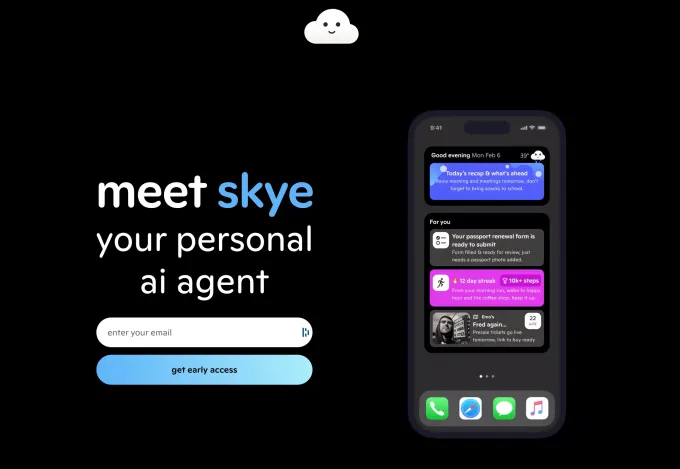
Skye, an iPhone app still in private testing, wants to change how people interact with AI on their smartphones. And even before it’s launched, it’s already attracted interest online and from investors and “tens of thousands” of users, according to its creator — a sign that consumers might want a more AI-aware iPhone.
Instead of launching an app or speaking to an AI chatbot, the startup is working to design an “agentic homescreen” for the iPhone, using iOS widgets as its interface.
Through those widgets, Skye would bring a sort of ambient intelligence to your device, offering personalized insights about your local weather, your current context, your health, and more, according to a post from its creator, who goes by signüll on X. The app can also draft email replies, help you with your meeting prep, send reminders, and flag suspicious charges in your bank accounts. Its creator also claims it can provide location-specific recommendations and additional information about local businesses, neighborhoods, and attractions while you’re out and about.
Much of this data would be pulled in through authorized connections granted by the user.
The app, which is being built by a small team from the startup Signull Labs, has already attracted investor attention, despite not yet having a public product.
According to an SEC filing, the startup has raised north of $3.58 million in pre-seed funding, in a round that closed in September 2025. Pitchbook also currently lists New York-based Signull Labs’ funding along with a post-money valuation of $19.5 million.
Since announcing the startup’s plans on X, signüll, whose name TechCrunch confirmed as Nirav Savjani according to the SEC filings and other documents, claims the app has added “tens of thousands” of users to the waitlist. This metric, if accurate, would suggest strong consumer interest in a more AI-aware iPhone. (And potentially, the possibility that a new type of AI device, like the rumored OpenAI smartphone, could have a chance.)
TechCrunch spoke to signüll, who shared more about the product and funding, under the condition of protecting his pseudonymity. TechCrunch declined, as signull’s name is listed publicly in the SEC filings establishing Signull Labs. (TechCrunch said we would still be happy to publish an interview with him when he’s prepared to go on the record.)

The founder noted he’s previously worked at Google and Meta, though he has no obvious LinkedIn presence. He also told TechCrunch that Skye’s early backers included a16z (Andreesen Horowitz), True Ventures, SV Angel, and other individuals. Offline Ventures also lists Signull Labs in its online portfolio, we found.
Since announcing Skye, Savjani has appeared on the TBPN podcast as his avatar and has been posting on X about his use of the app.
He told TechCrunch that the Skye app plans to launch to its waitlist of users soon, though he declined to give specifics.
When you purchase through links in our articles, we may earn a small commission. This doesn’t affect our editorial independence.

California’s proposed billionaire tax appears headed for the November ballot after backers said they gathered more than 1.5 million signatures, well above the threshold needed to qualify. SF Standard reports: Backers of the initiative announced this weekend that more than 1.5 million people signed a petition to bring the one-time, 5% wealth tax to a statewide vote come November. That’s well beyond the 875,000 names needed to qualify the measure, and likely sufficient to account for illegible or invalid signatures. The Service Employees International Union United Healthcare Workers West, a union representing more than 120,000 healthcare workers, pitched the tax to make up for federal spending cuts that threaten to shutter hospitals(opens in new tab) and kick millions of people off medical insurance.
Proponents of California’s wealth tax estimate it would raise $100 billion in one-time revenue, even if some billionaires leave because of the measure. The nonpartisan California Legislative Analyst’s Office forecasts tens of billions in upfront revenue, but cautioned that the tax could cost hundreds of millions or more a year if some billionaires move out of state. The proposal, which needs a simple majority to pass, would apply to assets of people with net worth of $1 billion or more who lived in California as of Jan. 1 this year. That means it would affect about 200 people, according to the SEIU-UHW.
Back pain isn’t a niche problem. According to the CDC’s 2023 National Health Interview Survey, 24.3% of American adults suffered from chronic pain in the past three months, up from 20.4% in 2019, meaning the problem is getting worse. And yet, most people spend very little time thinking about how their car contributes to it. They should.
Studies have shown that prolonged sitting and driving has been frequently associated with numerous spinal health issues, including poor circulation, muscular fatigue, and degenerative changes such as disc herniation. A car that’s good for a bad back isn’t just one with a soft seat. As WhatCar? notes in its back pain buying guide, adjustable lumbar support is critical because it helps you achieve a seating position that supports your back fully.
However, adjustable lumbar support is only the tip of the iceberg. The most comfortable seats, according to Consumer Reports, are evaluated across multiple dimensions — lumbar support, shoulder support, hip alignment, thigh support, and the ability to precisely fine-tune your position. The good news is that luxury cars increasingly treat the driver’s body like something worth engineering around. Here are five luxury car models for drivers with a bad back.
Porsche Panamera
If you want a car that’s sporty, yet comfortable and accessible for people with back pain, the Panamera is a unicorn pick. The car’s electric easy-access function automatically slides the seat back and raises the steering column when you cut the engine. You can choose between a 14-way adjustable comfort seat, or an 18-way adjustable sport seat, both of which give you lots of ways to dial in the perfect seating position.
Both also come with memory functions, meaning that once you find that perfect position, you just save it and it’s stored for good. The seats can also be adjusted for angle, four-way lumbar support, height, length, and backrest positioning. Quite possibly the most impressive comfort feature of the new Panamera is the new Active Ride adaptive air suspension. Motor1 called it a game-changer because it doesn’t just absorb forces, it fights back against them.
This futuristic suspension setup is only available for hybrid Panamera models because it requires a 400-volt architecture you can only get with the hybrid. Active Ride can also physically raise the ride height every time you want to step in or out to make it feel even more comfortable. To top it all off, the Porsche Panamera Turbo S E-Hybrid is also the fastest hybrid you can buy for daily driving.
BMW X5
The BMW X5 has long been the SUV benchmark for mixing driving engagement with day-to-day comfort, and for back pain sufferers that combination matters a lot. The 2024 and later X5 uses a two-axle air suspension as standard, which provides automatic self-leveling and reduces the SUV’s height at highway speeds, cutting down on the fatigue-inducing body movement that irritates a compromised back on long runs.
The optional Adaptive M suspension adds electronically controlled dampers with adjustable stiffness for when road conditions change. You can also control the X5s ride height however you please with a simple press of a button. Seating-wise, the 2026 X5 offers impressive multi-contour 20-way adjustable front seats. Cinch named the BMW X5 one of the best cars for people with a bad back because of the fully adjustable seating with electric lumbar support and the optional Comfort Plus Pack that adds front massage seats and seat ventilation.
The ride height sits at the sweet spot for most back sufferers — tall enough to step into without crouching, but low enough that the door sill doesn’t demand a climb. Few vehicles at this price point balance those variables as consistently as the X5 does. Consumer Reports named the BMW X5 one of the most comfortable cars you can buy, and the seating comfort is part of the reason why.
Mercedes-Benz S-Class
Most cars let you adjust the seat to your body. The Mercedes-Benz S-Class, as usual, goes further. On S 580 models, the MBUX system includes a feature that continuously micro-adjusts the seat cushion, backrest, and multicontour lumbar supports while you’re driving. In other words, it is virtually imperceptible movements driven by a patented algorithm designed to reduce muscle fatigue and improve spinal wellbeing over the course of a drive.
However, if you do want to dial it in yourself, the new S-Class allows you to enter all of your body dimensions into the system, and the car will use science to give you the optimal driving position. Beyond, the power-adjustable front seats store up to four memory positions per driver, and the ten different massage programs target different back regions. You also get heated and ventilated seats, a heated steering wheel, heated arm rests, and the recent facelift will introduce a heated seatbelt.
AIRMATIC air suspension is standard across the lineup, adapting each wheel’s damping individually to smooth out road imperfections. Getting in and out is handled by auto-closing doors that operate hands-free, so you’re never twisting back to yank the door shut. To top it all off, the new S-Class has 41.4 inches of front legroom and 59.7 inches of shoulder room thanks to being a full-size sedan, and that gives you lots of room to adjust, even if you are particularly tall.
Volvo XC60
We’ve already covered sporty cars, mid-size SUVs, and comfortable sedans, now it’s time to look at compact-size SUVs that are better suited for drivers with back pain. Volvo’s reputation for safety tends to overshadow an equally serious commitment to spinal ergonomics, and the XC60 is where that engineering shows most clearly in everyday terms. When we reviewed the 2026 Volvo XC60, we noted that its front seats were “extremely comfortable.”
What few people know is that Volvo’s seat design heritage traces back to Dr. Alf Nachemson, a Swedish orthopedic surgeon and pioneer in lumbar spine research who directly gave consultation to Volvo on how car seats should support the human back. That institutional knowledge carries forward into the XC60’s current generation. The front seats feature four-way adjustable lumbar support — up, down, forward, and backward, as shown in Volvo‘s own documentation, while higher trims add a multi-program massage function through the backrest using air cushions.
As Cinch notes, the XC60 Plus trim adds power lumbar support and ergonomically designed Comfort front seats, while the Ultra trims extend to ventilation and massage. The ride height is high enough to step into without bending down hard, but not so elevated that entry becomes its own challenge. For a mid-size luxury SUV with genuine back-health credentials, the XC60 sits at the top of the segment.
Range Rover
If there is one SUV on this list that was engineered with effortlessness in mind, it’s the Range Rover. Edmunds notes that the standard air suspension dramatically lowers the vehicle upon your approach, and that’s before you even touch for the door. That is complemented by a dedicated Access Height mode that drops the vehicle to its absolute lowest position specifically for entry and exit, eliminating the high step-in that makes so many full-size tall SUVs a problem for back sufferers in the first place, and also eliminates the need for running boards.
When we reviewed the 2024 Range Rover, we mentioned how you can have it with seven seats, or four really nice ones. For the premium Autobiography trim, you get ventilated and massaging front seats in an already well-appointed cabin, while the top SV trim goes all the way to exceptional 24-way adjustable heated and cooled front seats with a hot stone massage function – one of the highest seat adjustment counts of any production vehicle we came across.
As well as the adaptive air suspension helping you with ingress and egress, it also helps soak up bumps in the road on the move, keeping road shock from traveling up through the seat into your spine. As What Car? highlighted in its back pain buying guide, air suspension with a dedicated entry mode is one of the most practical features a large SUV can offer, and not many cars do it more completely than the Range Rover.
How we made the list
Back pain is not a one-size-fits-all condition, and neither is the search for the right car to manage it. Moreover, not all of us like the same types of cars, and it would be a shame if you had to buy an SUV only because of your back, although you wanted a sedan. To put this list together, we looked beyond marketing jargon and focused on the specific engineering features that credentialed sources consistently identify as most impactful for drivers with compromised spines.
Our criteria centered on four pillars: Adjustable lumbar support with enough range to fit different body types, ride height and access features that minimize the physical strain of getting in and out, suspension tuned to isolate road shock rather than transmit it, and seat adjustability that goes deep enough to genuinely accommodate different bodies.
We cross-referenced findings from medical and ergonomic sources including the CDC, PubMed, automotive publications including What Car?, Edmunds, Motor1, Cinch, and Consumer Reports, and manufacturer specifications to verify every claim. Lastly, we wanted to offer a wide array of vehicles, meaning you get a sport sedan, a compact SUV, a mid-size SUV, a full-size sedan, and a full-size SUV. This way, you can always get your cake and eat it.


Electric vehicles, whether they’re cars on the road or electric vertical take-off and landing (eVTOL) aircraft, are built around similar electric motors. But there are vital differences including component costs, mass, and redundancy.
Jon Wagner spent five years as the senior director of battery engineering for Tesla before joining California-based eVTOL developer Joby Aviation in 2017. He spoke with IEEE Spectrum about how engineering differs between cars and aircraft.
How do eVTOL motors differ from car motors?
Jon Wagner: In general, ground transportation has a different focus on cost versus mass. You know, would you be willing to spend more on the parts in order to save a certain amount of mass? The trade-offs end on the ground vehicle and at a certain point the cost is dominant, whereas with aviation, the trade-offs between cost and mass go a lot deeper. And so for certain solutions eVTOL makers are willing to spend more money in order to enable either lighter weight or greater efficiency.
The other key difference is related to safety. In essence, we’re dealing with the same motor technologies for ground transportation and aviation right now, so the failure modes are similar. But of course, with aviation we have the desire for continued safe flight and landing, and that drives what you do in the design to mitigate those failures if they were to occur. In many cases in ground transportation, the mitigation for a failure is to pull over safely to the side of the road. In aviation, the mitigation is redundancy, because there’s not an option to pull over.
Is redundancy designed into EV motors?
Wagner: Typically, redundancy is not designed into electric vehicle drive systems solely for the purpose of redundancy. There are some cars now that have all-wheel drive—so there’s a motor on the front, a motor on the back—so as a secondary feature you get the redundancy. But it wasn’t done with the primary intent of having redundancy.
How does Joby’s eVTOL manufacturing compare to EV manufacturing?
Wagner: The most efficient way to run a large-scale engineering effort in a mature industry, such as automotive, is to break your system up into pieces that can be outsourced to suppliers who are going to do a really good job on each piece. The downside is that when you break a problem up into three pieces, you now have interface boundaries between each of these pieces, and those always create inefficiencies. We were able to design highly integrated solutions without taking that manufacturing penalty.
Are there any materials you’re really excited about?
Wagner: Permendur [a cobalt-iron alloy] typically costs in the neighborhood of 10 times as much as traditional motor steel. That’s significant, and it’s often not used in ground transportation because of that cost. It comes with small improvements in performance, but enough that for aviation it’s quite interesting.
Will electric aircraft catch on like ground EVs?
Wagner: I’ve always wanted to be a very forward thinker with respect to power-train. However, one of the things I’ve learned over the years is that power-train development has to come with a very healthy dose of patience. Developing a whole new type of power-train is a big endeavor, but it’s one that I’m very confident the aviation industry will undertake. We’re certainly undertaking it here at Joby, and we’ll see that broaden, I’m sure, with time.
This article appears in the May 2026 print issue as “Jon Wagner.”
From Your Site Articles
Related Articles Around the Web
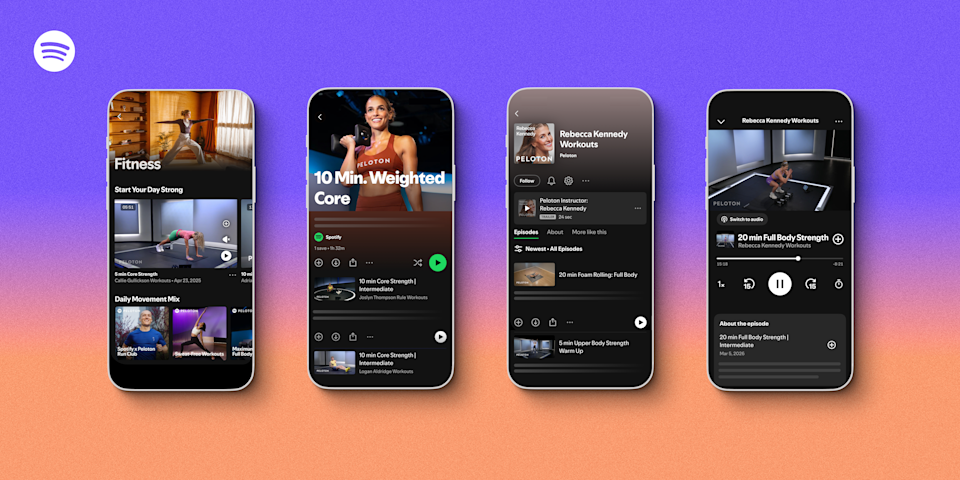
In its quest to become an all-in-one app, Spotify is now breaking into the fitness app world by offering “guided workout experiences” and on-demand Peloton classes. Premium subscribers will get access to Peloton‘s library of more than 1,400 classes in the app, while both Free and Premium can browse curated playlists (they’re listed under the genre “fitness.”)
Spotify
Spotify said the classes are primarily in English, but there are some options in Spanish and German. Like music and podcasts, Spotify lets you bounce between different devices for its fitness media, so you can start a video workout on your TV and switch to an audio-only version on your phone or smart speaker. Users can even download the classes for offline use.
The fitness category may feel like a sharp turn for Spotify, but the company said that nearly 70 percent of its Premium subscribers work out monthly and that fitness and workout content was one of the top use cases for its Prompted Playlist feature. Spotify has long been expanding its offerings outside of music, with its latest efforts giving users a way to buy physical books or create group chats.
An anonymous reader quotes a report from VentureBeat: The whale has resurfaced. DeepSeek, the Chinese AI startup offshoot of High-Flyer Capital Management quantitative analysis firm, became a near-overnight sensation globally in January 2025 with the release of its open source R1 model that matched proprietary U.S. giants. It’s been an epoch in AI since then, and while DeepSeek has released several updates to that model and its other V3 series, the international AI and business community has been largely waiting with baited breath for the follow-up to the R1 moment.
Now it’s arrived with last night’s release of DeepSeek-V4, a 1.6-trillion-parameter Mixture-of-Experts (MoE) model available free under commercially-friendly open source MIT License, which nears — and on some benchmarks, surpasses — the performance of the world’s most advanced closed-source systems at approximately 1/6th the cost over the application programming interface (API).
This release — which DeepSeek AI researcher Deli Chen described on X as a “labor of love” 484 days after the launch of V3 — is being hailed as the “second DeepSeek moment.” As Chen noted in his post, “AGI belongs to everyone”. It’s available now on AI code sharing community Hugging Face and through DeepSeek’s API. The new DeepSeek-V4-Pro model delivers “near-frontier performance” at a much lower price, costing $5.22 for 1 million input and 1 million output tokens compared with $35 for GPT-5.5 and $30 for Claude Opus 4.7. That makes it roughly 1/7th the cost of GPT-5.5 and 1/6th the cost of Claude Opus 4.7, reinforcing VentureBeat’s point that DeepSeek is “compressing advanced model economics into a much lower band.”
While GPT-5.5 and Claude Opus 4.7 still lead on most benchmarks, DeepSeek-V4-Pro gets close enough that its lower cost could “force a major rethink of the economics of advanced AI deployment.”
We may receive a commission on purchases made from links.
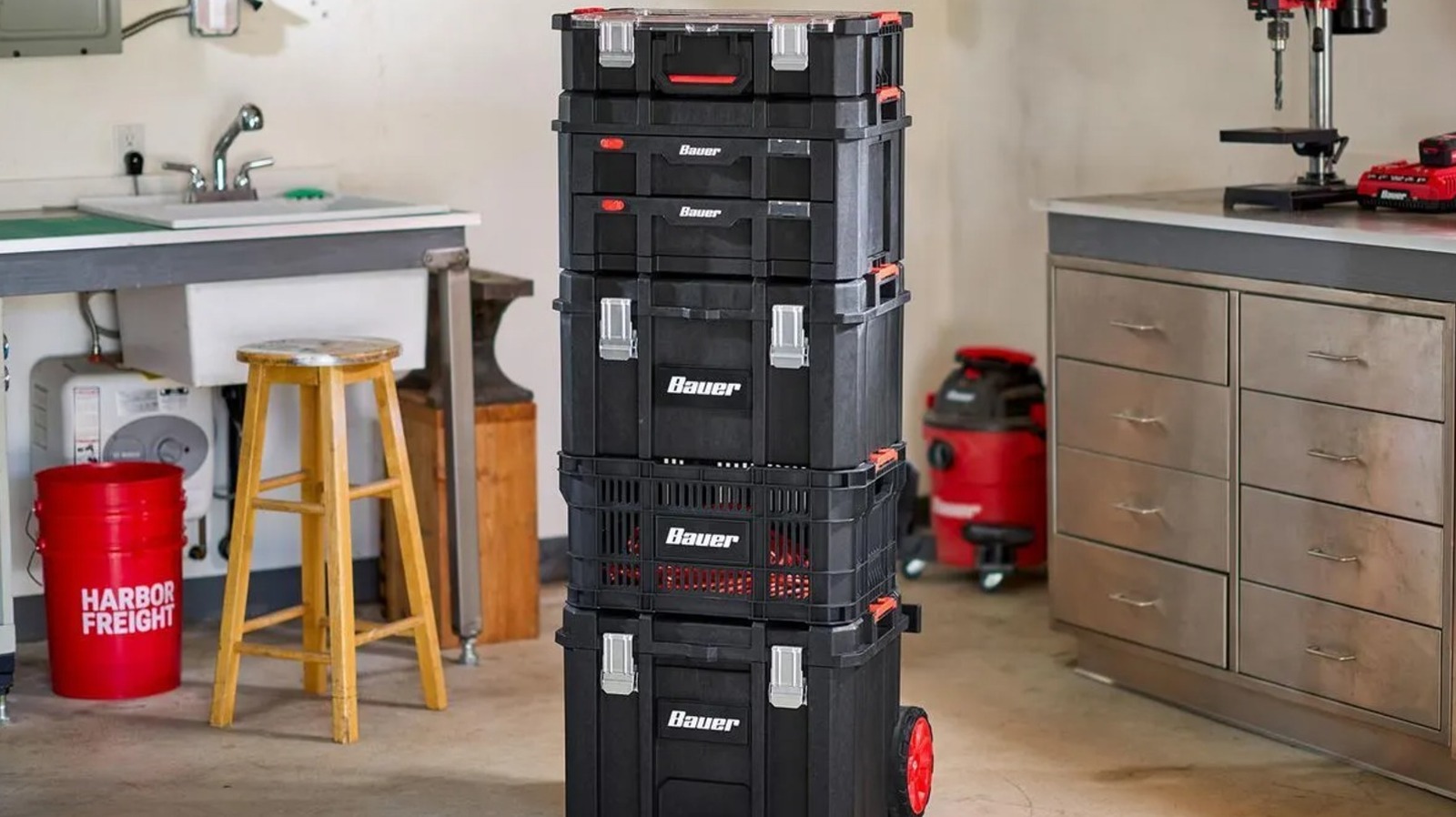
Harbor Freight has several private-label brands, including Daytona — which is primarily a car jack brand — and Hercules, which offers premium-grade hardware that targets professionals. One of the best Harbor Freight brands is Bauer, which offers power tools, outdoor equipment, workshop gear, and similar products that are more prosumer-grade than more casual options.
Along with tools and equipment, Bauer also makes storage solutions to hold and protect this gear — or any other hardware you might own. These storage options come in different shapes, sizes, and functionalities, though they are all relatively inexpensive compared to similar products from heavy hitters like Milwaukee or DeWalt. The Bauer Small Modular Toolbox (model 201327M-B), for instance, costs $30, whereas DeWalt’s comparable Tstak Small Parts & Tool Storage Organizer (model DWST17808) is $33 on sale — with an actual list price that is $20 more than that.
While both have similar widths and lengths and essentially do the same thing, the two differ in several areas. These include load capacity and durability, which are tied to the cases’ construction. While price is definitely a factor in choosing one product over another, it isn’t everything, and the DeWalt’s advantage may influence your mental math when considering these two products.
DeWalt’s heavy-duty construction gives its toolbox an advantage over Bauer’s
Both the Bauer Small Modular Toolbox and DeWalt Tstak Small Parts & Tool Storage Organizer offer removable bins with lids that offer good organization. Bauer’s lid has six removable compartments, but DeWalt’s has seven inserts (although they’re not removable). Each also offers the full width of the case without the bins for larger tools. Comparing the two boxes, Bauer’s toolbox is slightly larger, with Harbor Freight listing the maximum storage space of its toolbox as 1,110 cubic inches. DeWalt says its organizer has a volume of 3.7 gallons, which equates to about 855 cubic inches.
However, DeWalt has Harbor Freight beat in load capacity. The working load of the Bauer Small Modular Toolbox is 25 pounds, whereas the DeWalt Tstak Small Parts & Tool Storage Organizer tops out at 66 pounds, meaning it can safely carry over 1.6x more weight. That’s a big difference and may be the biggest reason a user would choose DeWalt’s case over Harbor Freight’s cheaper option. Plus, Bauer’s toolbox is significantly heavier than DeWalt’s at 9.1 versus 5.57 pounds, which may be another factor in its favor.
Part of the reason DeWalt’s case can carry more weight but has less space than Bauer’s is its heavy-duty construction. The DeWalt box is made out of thermoplastic polypropylene and strong, rust-resistant metal latches that can bear heavier loads. It also has a large, top-mounted handle for better portability than the Bauer.
Compatibility with other storage options should also be considered
Both cases are part of their brand’s proprietary systems and only connect to other cases and accessories from the same system (at least, without adapters). This could sway you in one direction or another; if you own a DeWalt Tstak Rolling Toolbox or Tstak Stackable Utility Cart, the DeWalt Tstak Small Parts & Tool Storage Organizer might be worth the higher cost, since it’ll be compatible with the products you already have. The cheaper Bauer Small Modular Toolbox would need to be used separately from any DeWalt stack, though it works perfectly with Harbor Freight’s new and improved rolling toolbox.
It’s important to note that DeWalt currently has two separate modular storage systems: Tstak and ToughSystem. Without an adapter, DeWalt’s Tstak and ToughSystem 2.0 products are not compatible with one another. ToughSystem caters more to professionals who require storage that can withstand harsher jobsite environments. Tstak, on the other hand, is better suited for DIYers and more casual users. You can, of course, purchase whichever you prefer.
Compared to Bauer’s cheaper toolbox, Tstak’s is the more durable, heavy-duty option, which may justify its higher price tag for some. Those buyers will also be able to take advantage of DeWalt’s other Tstak products and build out a solid storage setup for their tools.


There are dozens of U.S. Air Force bases scattered across the U.S. Some are large and well-known, such as Nellis Air Force Base in Nevada, which houses the Air Force’s most advanced air combat training facility. Others, however, fly under many people’s radar. For example, you may not have heard of Buckley Air Force Base in Aurora, Colorado, but the facility traces its roots back to World War II. Named for a World War I fighter pilot that was killed in combat, this base had an interesting history following the second World War. It was briefly an auxiliary field for Lowry Air Force Base before being converted to an Air National Guard Field, and then to a Navy Air Station. It was eventually transferred to the Air Force in 1959.
In 2004, Buckley became the host base for the 460th Space Wing and also hosted the Colorado Air National Guard. After the Space Wing was deactivated in 2020, Buckley became a unit of the new United States Space Force and renamed Buckley Space Force Base. Today, it hosts Space Base Delta 2, which provides support services for global missile warning and tracking. It also houses 117 tenant units, such as the Navy Reserve Center Denver and the Army National Guard Colorado. Overall, the base is used by active-duty service members from every service branch, along with civilians, contractors, reservists, and more. While you may not see any soldiers in uniform on base, you will indeed still see planes flying in and out.
The Buckley base maintains aircraft and conducts training
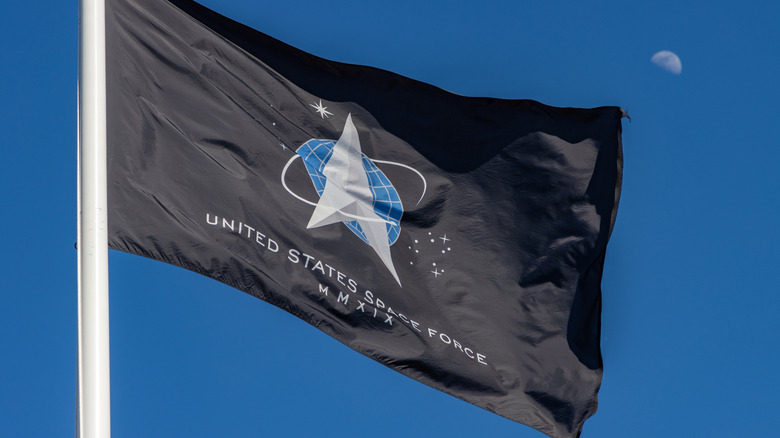
Buckley Space Force Base’s name change didn’t alter the base’s core mission, but simply reflects its realignment under the Space Force. Its main mission, to “[e]mpower Joint and Allied dominance across all domains through unrivaled global combat support,” falls under several domains, including air, space, cyberspace, land, and sea. Major units that are stationed there include the Colorado Air National Guard’s 140th Wing, which flies and maintains F-16C+ Fighting Falcon aircraft.
In addition to the Fighting Falcon, Buckley sees a wide variety of aircraft flying into and out of the base. In 2025, six MV-22B Ospreys from the Marine Corps conducted training out of Buckley, giving crews high-elevation experience for potential future operations and illustrating Buckley’s contribution to joint operations throughout the region and beyond.
The United States Space Force is a branch of the U.S. Armed Forces and operates six bases across the country, including Buckley. There are two more bases in Colorado, one in Florida, and two in California. The organization’s mission is to “secure our nation’s interest in, from, and to space.” At the time of this writing, there were 9,400 active duty members, also known as Guardians. One has even been to space, launching to the International Space Station in 2024.

Some social workers are reaching a breaking point, leading them to leave the profession
A quiet crisis is unfolding among Singapore’s social workers, the professionals who keep vulnerable families from falling through the cracks.
Many are juggling 30 to 50 active cases at any given time, and alongside the emotional demands of the job, social workers typically start on modest salaries of around S$4,000. Some are even reaching a breaking point, with the pressure in certain cases leading practitioners to leave the profession altogether.
What does a typical day look like for these workers, and what measures are in place to help them cope with mounting stress?
Too many cases, too little time

On paper, social workers in Singapore manage an average of 22 cases per year, according to the Ministry of Social and Family Development (MSF). On the ground, however, several practitioners have told media outlets that the reality is markedly different.
In 2022, some social workers who spoke with former MP Louis Ng said they were managing between 30 and 50 cases at any given time—that’s almost at least 50% more than the average number from MSF. He described such workloads as excessive, warning that they are directly detrimental to the quality of care social workers can provide.
With caseloads that high, there is simply not enough time to give each family the attention it needs. And when a crisis strikes, they cannot choose between one client and another because everyone’s situation is equally serious.
The cases are not straightforward. A single file might involve family violence, a child at risk, a parent with untreated mental illness, and a household on the verge of eviction—all at once.
One social worker told Channel News Asia (CNA) that the job ultimately comes down to ensuring children are safe, the elderly have a place to stay, and families are not in conflict. But doing that well requires time that most social workers say they do not have.
Moreover, heavy administrative demands compound the problem. One worker noted that direct contact with clients—the actual work of helping—accounts for only 5 to 10% of his time. The rest is paperwork.
The COVID-19 pandemic has only worsened the strain on our social workers, with a Jul 2021 study by the Asian Social Work and Policy Review finding that nearly 60% of frontline social workers experienced anxiety at the height of the pandemic and about 45% even faced depression.
When passion becomes a liability

Many social workers enter the field driven by a strong sense of purpose. But within the sector, some say passion alone is not enough to sustain them—and may even be counterproductive.
An anonymous founder of Instagram account @SGSocialWorkMemes, known within the industry for its candid portrayal of social workers’ experiences, shared in an interview with CNA that this narrative can have unintended consequences.
Framing social workers as being motivated by outcomes rather than income, they said, can become an excuse to justify lower pay, turning fair compensation into a perceived bonus rather than an entitlement for the work and hours put in.
Starting salaries in the sector sit at around S$4,000 per month, with many earning between S$3,000 and S$4,000. For a role that carries significant responsibility and emotional strain, some argue that the pay does not adequately reflect the demands of the job.
The overemphasis on passion also, over time, feeds a broader misconception: that social work is something anyone can do, or that social workers are essentially paid volunteers. This undermines the real expertise, training, and skill the profession requires.
Burnout in practice

Another social worker who spoke with CNA, Amelia (not her real name) has been in the sector for 10 years. She described a workday that sometimes runs from 9AM to 4AM, managing 20 of her own cases, supervising eight social workers who each carry an average of 30 cases, and responding to back-to-back crises throughout.
These crises can range from a text about a client running out of milk powder for their child, to a message about a husband beating his wife—sometimes with a photo of a bruise or bloody wound attached—to bringing three children to the hospital and having them admitted at 4AM, just five hours before work begins the next morning.
This is what burnout looks like in social work: not just exhaustion, but vicarious trauma and compassion fatigue accumulated over years of absorbing other people’s worst moments. As one worker described it, “The more you do, the more you can’t look away.”
Beyond the emotional toll, social workers also describe structural frustrations. One recurring requirement is “mandatory sightings” of children—home visits or video calls to physically verify their safety. Workers say this surveillance function can sit uneasily alongside the profession’s broader aim of supporting marginalised families rather than monitoring them.
Tensions are further compounded by rigid programme structures in Singapore’s social service system. When funding and targets are tied to specific outcomes, such as employment, social workers may find themselves unable to formally address interconnected issues like housing instability or mental health, even when these are clearly central to a family’s situation. Watching those needs go unmet within a system too narrowly defined can add to long-term strain.
What is being done

The pressures on our social workers have not gone unnoticed.
MSF has been progressively revising salary guidelines in recent years. In the latest update for the social service sector, starting salaries for social workers and counsellors rose by 3% in 2025 to S$3,970.
Overall, recommended salaries across roles in the sector increased by an average of 5%. Some positions saw larger adjustments of up to 15% in the 2026 financial year, which runs from Apr 2026 to Mar 2027.
Beyond pay adjustments, the National Council of Social Service also rolled out the Sabbatical Leave Scheme last Feb, offering social service professionals 10 weeks of paid sabbatical leave with salary support of up to S$15,000 to recharge and rejuvenate, on the condition that participants mentor junior colleagues and share their learnings upon return.
Taken together, these measures reflect gradual efforts to strengthen the sector, though growth remains modest relative to demand. As of Dec 2024, there were 3,031 accredited social work professionals in Singapore—an increase of about 7.8% in the number of registered social workers from the year before.
To expand the workforce, several efforts are underway.
In Sept 2025, the Singapore University of Social Sciences launched its sixth school, the School of Social Work and Social Development, aimed at strengthening the sector through education, research and partnerships. The launch comes as Singapore faces increasingly complex challenges and a projected demand for 2,000 additional social service professionals over the next five years.
The underlying question
Singapore’s social service sector needs to expand because the need for it is growing. An ageing population, rising mental health concerns, and increasingly complex, multi-generational family issues are driving up caseloads.
But social work carries a high level of responsibility and an equally high emotional burden, with pay that many in the profession describe as modest relative to the demands of the job.
As the gap between rising demand and limited capacity persists, the question becomes whether the system can scale fast enough to sustain those holding it up—before burnout turns into attrition, and attrition into gaps in care for the families who need it most.
- Read other articles we’ve written on Singaporean businesses here.
Also Read: Fewer than half of S’poreans feel better off than a year ago as share of pessimists doubles
Google I/O 2026 starts on May 19, and while we already have a pretty good idea of what to expect, there’s plenty of room for surprises. The tech giant has been all-in on AI for the past few years, and that probably won’t change, but there could be a few hardware announcements on tap this year.
From Android XR glasses to hearing more about Aluminum OS, there’s a lot to look forward to. Below, we’ll fill you in on what we expect Google to talk about during the I/O keynote.
More AI features
We expect Google to announce several new artificial intelligence features that integrate further into its products. Now that agentic AI is all the rage, we’ll most likely see Google lean even further in this direction. This type of AI can perform tasks on your behalf, like controlling your computer, with minimal oversight. We’ll have to wait and see what and how many AI features Google announces this time.
Let’s also not exclude updates to existing or new products that Google could announce. Veo, Lyria, Beam and countless others could get some spotlight at this year’s conference.
Veo and Lyria are Google’s AI-generated video and music tools, respectively, and have continued to improve since they were originally announced. Beam is an ambitious and futuristic way of video conferencing that uses several cameras to make you appear as though you’re speaking directly to the person in front of you as a 3D model.
Gemini 4.0
The next generation Gemini is likely going to be announced at Google I/O 2026
Among all the AI announcements, we’re expecting Google to spend a significant amount of time talking about its flagship AI model for Gemini. Whether it gets a solid 4.0 status or something like a 3.8, we know the new version of Gemini will likely be one of the biggest announcements of Google I/O 2026.
Exactly what Google has been working on with Gemini is anyone’s guess. It’s easy enough to assume that the latest model will be smarter and faster than previous models, but Gemini itself is in nearly every Google product these days, so how the latest and greatest AI from Google trickles down will be interesting to see.
Google recently released a new notebooks feature for Gemini that will let you store sources for a particular topic in one place for easy access. Notebooks are self-contained databases full of sources on a particular topic that you can continue to add to. Gemini will use a notebook for context, so you don’t have to start all over again with information sources.
Those notebooks also sync directly with Google’s AI research assistant NotebookLM, allowing you to create a host of different outputs, like video overviews, charts and more. One of the main differentiators between NotebookLM and Gemini is that NotebookLM will only use your notebook as the source of truth, whereas Gemini will scour the internet with the notebook’s context for the search.
Gemini can also now create dynamic and interactive simulations directly in your chats when you ask it to “show you” or “visualize” something.
Google hasn’t slowed its rollout of Gemini features, so a lot more are likely on their way with the latest version of the AI model.
Android XR Glasses
Android XR will most certainly steal some of the spotlight during this year’s I/O conference.
Google showed off its Android XR glasses at last year’s I/O, along with a few partnerships it formed to create them, so we’ll likely see the smart glasses become more of a product than a concept this year.
Smart glasses are gaining popularity, and Google took awhile getting back into the space after its first swing in the sector. Google Glass was way ahead of its time, but from the demos we’ve seen of Android XR, that patience may have paid off.
Google’s first set of “smart glasses” back in 2013 was an obvious pair of spectacles with a protruding lens that the wearer could view information on, and even take photos and record video. The product was met with immediate and significant pushback as an invasion of privacy, as well as being elitist and rude. This eventually resulted in the term for the wearers as “Glassholes.”
A lot has changed since the introduction of Google Glass, and Android XR glasses won’t look nearly as obvious when released, which could make it even creepier, but at least they’ll come with a load of usable features like heads-up notifications, live translation and Gemini Live. They’re also launching into an established market now, with smart glasses competitors from Meta’s collaborations with Ray-Ban, Oakley and more. Samsung’s own Galaxy XR headset runs on the Android XR platform and is already available to purchase. This first piece of hardware running on the platform paves the way for more hardware, with smart glasses being a natural next step.
Google I/O could bring us more demos, final hardware details and a release date for when you’ll be able to get Android XR glasses in your hands. Given that there are multiple partners in the ring, the price ranges could vary, potentially offering both entry-level and high-end offerings.
Android 17
Android is Google’s playground for showcasing the best of its AI features, though some of them may be exclusive to the new Pixel phones we expect to see later this year.
Google released the first beta version of Android 17, its phone-operating system, back in February, and three additional betas have been released since, with the latest in mid-April. We can expect the latest version of the OS to be released in its final form sometime in June or July, shortly before we expect the next family of Pixel devices to be announced. For the past few years, the new Pixel lineup has been announced in August during the Made by Google event.
So far, there are no blockbuster features in the Android 17 beta, but Google has introduced interesting tweaks throughout. One of the most interesting features so far is app bubbles, which allows you to quickly access any app in a floating window and dismiss it to a bubble on your screen.
Last year, Google separated its Android announcements into a separate show a week before its I/O conference: The Android Show. This allowed Google to spend more time talking about AI without sacrificing the announcements it had on tap for Android. Whether The Android Show will return this year remains to be seen — though reportedly, a YouTube placeholder for the event was accidentally set live last week before being taken down.
Aluminum OS
One of the most interesting projects Google has been cooking up is a new operating system that merges Android and ChromeOS. Dubbed Aluminum OS, the product will bring Android to laptops and other devices with the full Chrome web browsing experience.
When exactly we’ll see hardware for the new OS is still unknown, but Google could surprise us with partnership announcements or even a full product announcement at I/O this year. The return of a Google-made Pixelbook doesn’t seem out of the realm of possibility, either.
Merging both of Google’s operating systems will likely bring a more seamless software experience between how AluminumOS computers and Android phones interact.

developers outline plan to protect network from quantum threats

Birmingham bin strike ‘end in sight’

Stokes pursues classic spring blueprint for Deakin in 2026

Manchester United reach agreement with Casemiro over contract clause amid transfer speculation

US brings back mandatory military draft registration

Steven Gerrard disagrees with Gary Neville over ‘shock’ Chelsea and Arsenal claim | Football


-

 Politics7 days ago
Gary Stevenson delivers timely reminder to register to vote as deadline TODAY
-

 Fashion3 days ago
Weekend Open Thread – Corporette.com
-
 Crypto World2 days ago
Hyperliquid $HYPE Rally Builds Momentum as AI Sector Enters Prove-It Phase
-
Crypto World7 days ago
Bank of Hawai’i (BOH) Q1 2026: Net Income Drops to $57.4M as Net Interest Margin Expands
-

 Politics5 days ago
Making troops accountable for war crimes threatens US alliance, ex-SAS colonel warns
-

 Politics5 days ago
Disabled people challenge government SEND proposals over segregation concerns
-

 Business5 days ago
Rolls-Royce Voted UK’s Most Iconic Trade Mark as IPO Register Hits 150
-

 Business4 days ago
Patterson-UTI Energy, Inc. (PTEN) Q1 2026 Earnings Call Transcript
-

 Politics5 days ago
Zack Polanski responds to home secretary’s taser threat
-
 Crypto World6 days ago
Five Value Stocks with Recovery Potential in 2026: PayPal (PYPL), Nike (NKE), and More
-

 Politics5 days ago
Starmer handler McSweeney to be dragged from shadows by Foreign Affairs Committee
-
 Sports1 day ago
IPL 2026: Ruturaj Gaikwad registers slowest fifty of the season, enters all-time unwanted list | Cricket News
-
Politics5 days ago
Wings Over Scotland | How To Get Away With Crimes
-

 Crypto World6 days ago
New York sues Coinbase, Gemini over prediction market offerings
-
Entertainment6 days ago
Sydney Sweeney cameo cut from “The Devil Wears Prada 2”, source explains why (exclusive)
-
 Business5 days ago
HCL Tech share price tank over 9% after weak Q4. JPMorgan, HSBC & 3 others cut target price
-

 Politics5 days ago
‘Iran is still a nuclear threat’
-

 Crypto World6 days ago
Crypto’s great hope in Senate’s Clarity Act still has a path to survive tight calendar
-
 Sports5 days ago
Tim Bradley names the current best in the world: “Better than Inoue and Usyk”
-

 NewsBeat1 day ago
LK Bennett closes all stores after entering administration
You must be logged in to post a comment Login