






Connect with us
DAPA Banner
DAPA Coin
DAPA
COIN PAYMENT ASSET
PRIVACY · BLOCKDAG · HOMOMORPHIC ENCRYPTION · RUST
ElGamal Encrypted MINE DAPA
🚫 GENESIS SOLD OUT
DAPAPAY COMING

Business

Retail direct equity bets fall, MF holdings rise to new high

Published

on

Retail direct equity bets fall, MF holdings rise to new high
Mumbai: Individual participation in Indian equities showed a sharp divergence amid sharp swings in January-March, with their direct equity ownership falling for the third straight quarter, while mutual fund holdings, fuelled by retail flows surging to a fresh record. Foreign ownership fell to a 14-year low of 16.1% in the March quarter, underscoring their risk-off sentiment towards domestic stocks, while domestic institutional holdings rose to another all-time high.

The combined holdings of retail and high net worth investors in NSE-listed companies declined to a five-year low of 9.1% in the March quarter, down from 9.3% in the December quarter, according to data from primeinfobase.com. Meanwhile, mutual fund holdings rose for the 11th straight quarter to an all-time high of 11.46% from 11.1% in December.

“This indicates individual investors may be preferring to invest through a professional fund manager,” said Pranav Haldea, managing director, PRIME Database Group.

Retail Direct Equity Bets Fall, MF Holdings Rise to New HighAgencies

SHARP SWINGS IN JAN-MARCH Combined holdings of retail investors & HNIs in NSE-listed cos down to a 5-year low of 9.1% in Q3 l Foreign ownership slips to a 14-year low

Across NSE-listed companies, the retail investors’ direct holdings declined from 7.25% to 7.12% in the March quarter – declining for the third quarter in a row. HNI ownership slipped to 1.9% from 2.03% in the same period.
These investors cut their stakes, especially in mid-cap and small-cap companies amid the severe market sell-off in March–marking the worst monthly fall since March 2020, the onset of the Covid-19 wave and the record-breaking rally in precious metals.

Advertisement


“HNIs turned discerning and retail investors flocked to other assets such as gold, silver and REITs due to the lethargic equity returns,” said Riddhiman Jain, managing director and head – investment strategy and solutions, Waterfield Advisors.
In the quarter ended March 31, Nifty plunged 14.5% while Nifty Midcap 150 and Smallcap 250 dropped 12.7% and 14.4%, respectively.The Nifty 500 index tumbled 14%. Gold rose 6.7%, and Silver gained 6.1%.

But for the purchases by domestic institutions, including mutual funds, pension funds and insurance companies, among others, the equity fall would have been sharper.

The ownership of domestic institutional investors (DIIs) went up to an all-time high of 19.24% from 18.72%.

“The strong SIP culture prompted investors to allocate money to fund managers through passive investing instead of tracking price movements and reacting to market fluctuations due to fear,” said Siddarth Bhamre, head of research, Asit C Mehta Intermediates. “Retail money through mutual funds will continue to bail out the market. Until their invested corpus doesn’t witness an erosion, SIP money is expected to continue.”

Advertisement
Continue Reading
Click to comment

You must be logged in to post a comment Login

Leave a Reply

Business

Wall Street futures mixed amid new Middle East hostilities

Published

on


Wall Street futures mixed amid new Middle East hostilities

Continue Reading

Business

RBI likely to hold rates as West Asia crisis impact on growth remains unclear: Bank of Baroda Report

Published

on

RBI likely to hold rates as West Asia crisis impact on growth remains unclear: Bank of Baroda Report
Mumbai: The Reserve Bank of India (RBI) is likely to maintain the status quo on interest rates in its monetary policy announcement on Friday as the impact of the ongoing crisis in West Asia on economic growth remains difficult to assess, according to a report by Bank of Baroda.

The report said the central bank is expected to continue with a data-dependent approach while balancing growth concerns, inflation risks and global uncertainties.

“We may expect status quo on rates as the impact on growth due to the crisis is still difficult to ascertain, and on the inflation front, an increasing trend is imminent,” the report said.

Bank of Baroda also expects the RBI to retain its neutral policy stance, saying it provides the central bank with the flexibility to respond to incoming economic data.

According to the report, several developments have taken place since the RBI’s previous monetary policy meeting.

Advertisement


It noted that there have been reports of a 60-day extension of the ceasefire in West Asia, although uncertainty surrounding the situation remains high. While international crude oil prices have shown some correction following the development, the report cautioned that volatility in crude prices cannot be ruled out unless a formal peace agreement is reached.
The report highlighted that one of the most significant developments since the last policy meeting has been the increase in petrol and diesel prices. According to Bank of Baroda, the RBI’s inflation projections are likely to reflect the impact of these higher fuel prices.

“We expect the RBI’s CPI projection for FY27 to be revised upward,” the report stated.

The report also pointed to volatility in the Indian rupee as an important development in recent months. However, it noted that exchange rate movements do not directly fall under the scope of monetary policy decisions.

From a growth perspective, the report believes maintaining rates at current levels remains the preferred option at this stage.

It noted that headline consumer price inflation, which remains the RBI’s key policy variable, has not yet fully reflected the impact of higher costs being passed on across the economy.

Advertisement

As a result, the report expects the upcoming policy statement to be relatively more hawkish in tone, particularly through an upward revision in inflation forecasts and a stronger emphasis on near-term inflation risks.

The report concluded that, given the evolving geopolitical situation, inflation concerns and uncertainty around growth, the RBI is likely to wait for more data before making any major changes to interest rates.

Reserve Bank of India (RBI) Governor Sanjay Malhotra is set to announce the outcome of the Monetary Policy Committee (MPC) three-day meeting on Friday, June 5.

Advertisement
Continue Reading

Business

Morgan Stanley to open its wealth management funnel to agents

Published

on

Morgan Stanley to open its wealth management funnel to agents

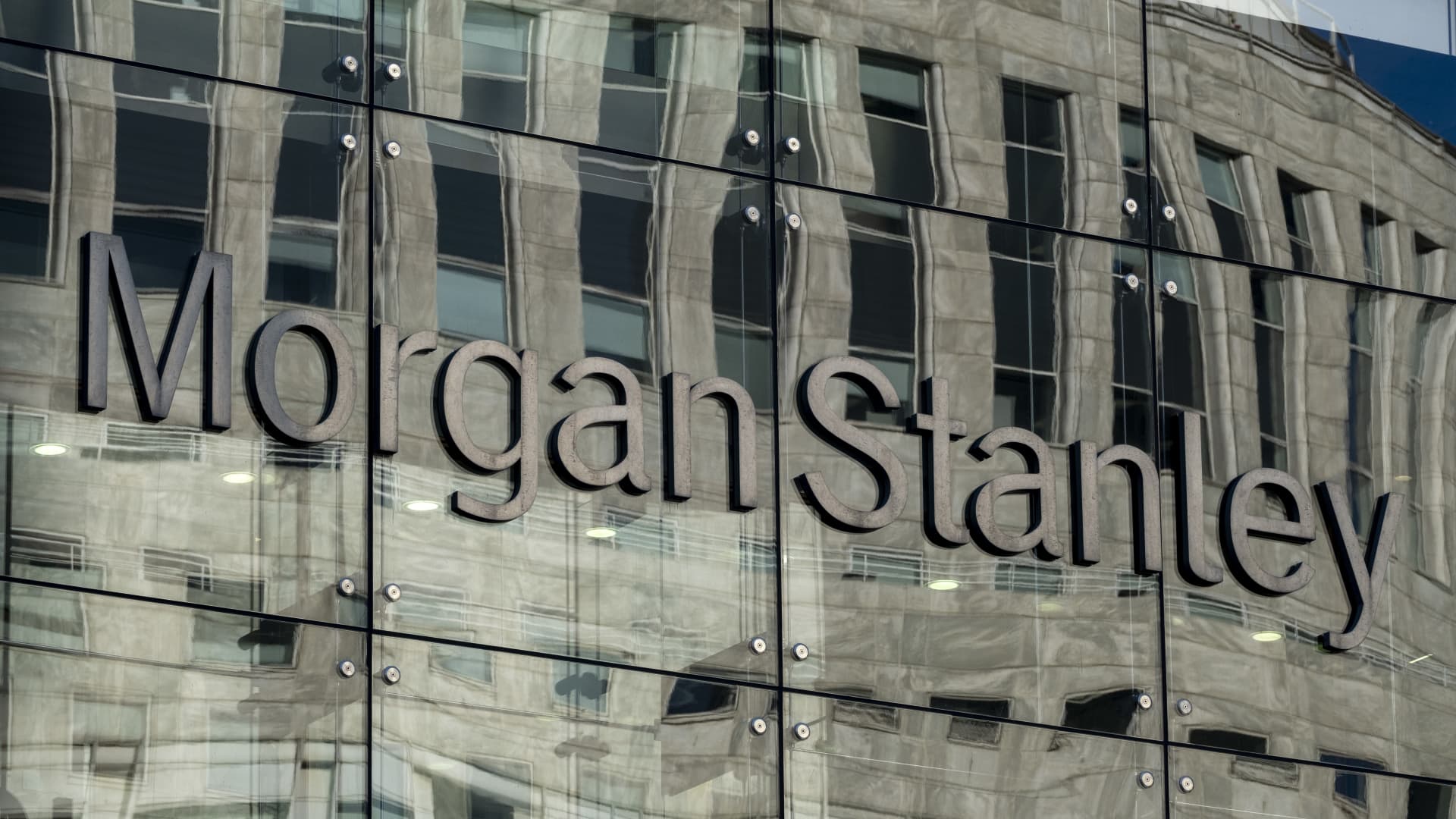
Morgan Stanley’s office in Canary Wharf financial district on Jan. 30, 2025 in London, UK.

Mike Kemp | In Pictures | Getty Images

Morgan Stanley will soon open a key wealth management funnel to artificial intelligence agents from thousands of corporations, CNBC has learned exclusively. It’s one of the earliest instances of a major Wall Street bank opening its platforms to external AI tools.

Advertisement

The move will allow clients’ autonomous agents to pull data and insights directly from the firm’s stock administration platforms, ShareWorks and Equity Edge, bypassing the traditional software interfaces built for human users, according to Mark Mitchell, chief product officer of Morgan Stanley at Work.

In April, Morgan Stanley executives attributed $1.2 trillion in assets gathered to its workplace strategy.

“The way we see it, in a future state, our corporate clients will not be logging into ShareWorks or Equity Edge,” Mitchell said.

Instead, they’ll be “using agentic AI-powered tools on their desktops within the four walls of their companies, interacting with our platforms in a purely agentic way,” he said.

Advertisement

The bank has already granted a handful of clients early agentic access and plans to open it up to the firm’s 3,400 administration clients by next year, Mitchell said.

It’s the latest sign that Wall Street is preparing for a future where AI agents handle tasks now performed by software users.

Rivals including JPMorgan Chase and Goldman Sachs are using AI agents internally for things like writing code, but have yet to publicly announce steps to allow external agents to connect directly to their firms’ systems.

Morgan Stanley wealth management

Morgan Stanley has taken the staid business of managing stock compensation plans for corporations and turned it into a crucial funnel for the firm’s wealth management division, which is the world’s largest at $7.35 trillion in client assets.

Advertisement

The firm acquired Solium Capital in 2019 and E-Trade in 2020, creating a business that it says caters to almost half of the companies in the S&P 500 and eight of the 10 biggest unicorn startups. The key insight it had was that by administering employee stock plans, Morgan Stanley can convert workers into advisory clients as their wealth grows.

The bank’s AI pitch to corporate clients is straightforward: Fast-growing technology and biotech companies want to administer increasingly complex stock plans without adding headcount in support roles like human resources, said Mitchell.

At these companies, AI agents can handle aspects of the job without adding human employees, he said.

Internally, there’s a similar logic: Morgan Stanley sees agentic AI allowing it to scale its own services — customer support, plan administration, the wealth management funnel — without adding “thousands and thousands” of employees, Mitchell said.

Advertisement

For this change, Morgan Stanley is leaning on something called the Model Context Protocol, an open source standard that allows AI models to plug into data sources.

In a pre-AI world, companies would’ve frowned upon allowing clients to bypass the online front door to their services. For decades, companies fought to hook users on proprietary platforms.

Morgan Stanley, which began partnering with OpenAI in 2022, believes that matters less in a world where AI agents become the primary interface. Software is “at an inflection point, clearly,” Mitchell said.

“The companies that are going to survive in the future are the ones who have proprietary data and business logic, which is the foundation of our offering,” Mitchell said.

Advertisement

“The fact that they won’t be logging into” the websites, he said, “doesn’t scare us at all.”

Choose CNBC as your preferred source on Google and never miss a moment from the most trusted name in business news.
Continue Reading

Business

Miller Industries: Even With Growth On The Horizon, Conditions Justify Caution (NYSE:MLR)

Published

on

Miller Industries: Even With Growth On The Horizon, Conditions Justify Caution (NYSE:MLR)

This article was written by

Daniel is an avid and active professional investor.
He runs Crude Value Insights, a value-oriented newsletter aimed at analyzing the cash flows and assessing the value of companies in the oil and gas space. His primary focus is on finding businesses that are trading at a significant discount to their intrinsic value by employing a combination of Benjamin Graham’s investment philosophy and a contrarian approach to the market and the securities therein. Learn more.

Analyst’s Disclosure: I/we have no stock, option or similar derivative position in any of the companies mentioned, and no plans to initiate any such positions within the next 72 hours. I wrote this article myself, and it expresses my own opinions. I am not receiving compensation for it (other than from Seeking Alpha). I have no business relationship with any company whose stock is mentioned in this article.

Seeking Alpha’s Disclosure: Past performance is no guarantee of future results. No recommendation or advice is being given as to whether any investment is suitable for a particular investor. Any views or opinions expressed above may not reflect those of Seeking Alpha as a whole. Seeking Alpha is not a licensed securities dealer, broker or US investment adviser or investment bank. Our analysts are third party authors that include both professional investors and individual investors who may not be licensed or certified by any institute or regulatory body.

Advertisement
Continue Reading

Business

Universal Corp: The Three Reasons Why I Am Downgrading To Hold

Published

on

Woman holding regular, electronic cigarette and disposable vape on white background. Tobacco heating systems.

Universal Corp: The Three Reasons Why I Am Downgrading To Hold

Continue Reading

Business

Established SMEs play a key role in Welsh private sector employment

Published

on

Business Live

New research on their impact has been carried out by Oxford Economics on behalf of Allica Bank

Conrad Ford chief product and strategy Officer at Allica Bank.

Established SMEs in Wales out punch their weight in terms of their contribution to jobs in the Welsh economy, show new research.

A report , carried out by Oxford Economics on behalf of Allica Bank, shows that established businesses account for over two in five jobs in the private sector despite making up just 22.8% of the Wales’ business population.

Advertisement

Established SMEs are firms with between five and 250 employees – of which in Wales there are 23,965.

Their contribution of 44% of all private sector jobs in Wales, is nine percentage points above the UK average of 35%, and significantly higher than London, where established businesses account for 30% of private sector employment. Of the nations and regions of the UK, the rate is only higher in Northern Ireland at 46%

Across the UK, established businesses are a critical driver of economic activity, accounting for more than a third of private sector employment and 37% of private sector turnover. They also support almost one in every two private sector jobs in rural areas.

Given their importance to growth, the report also highlights the challenge many established businesses face in accessing the finance they need to invest. The report highlights a £65bn lending gap to UK SMEs, accumulated over the past 25 years, which is restricting the finance and working capital available to businesses that want to expand, boost productivity and create jobs.

Advertisement

It also shows the impact that can be unlocked when established businesses can access the finance they need. In 2025, Allica Bank’s lending to established businesses enabled an estimated £520m contribution to GDP in Wales and supported 8,700 jobs locally.

UK-wide, 78% of the GDP contribution and 80% of the employment impact supported by Allica Bank’s lending occurred outside London and the south east, underlining the role productive finance can play in supporting local economies.

Conrad Ford, chief product and strategy officer at Allica Bank, said:“I speak to established businesses all the time and you quickly see how important they are to their local areas. These are the manufacturers, logistics firms, hospitality operators and specialist businesses that employ local people, support supply chains and keep communities thriving.

“The report puts numbers behind that. Although established businesses make up a minority of the wider SME business population, they account for around 60% of private sector employment.

Advertisement

“In 2025, Allica Bank’s lending to established businesses enabled an estimated £8.4 billion contribution to GDP in the UK and supported 118,000 jobs across the country. That shows what can happen when established businesses get the finance they need to invest and grow.”


Continue Reading

Business

Lloyds, Halifax and Bank of Scotland app users hit by outage

Published

on

Lloyds, Halifax and Bank of Scotland app users hit by outage

“We’re aware some customers are having issues with our app and online banking. We’re really sorry about this,” Lloyds Bank posted on X.

Continue Reading

Business

Library building in Brecon transformed into a new learning campus

Published

on

Business Live

The £6m project was carried out by Swansea-based Andrew Scott

The repurposed Ship Street Library building in Brecon.(Image: Phil Boorman Photography Ltd)

Work on a £6m project repurposing a listed building that served as a library in Brecon into a new learning campus has been completed.

Contractors Andrew Scott carried out the work on the Ship Street Library building on behalf of NPTC Group of Colleges.

Advertisement

The refurbishment and retrofit marks the next chapter in both the building’s history and the college’s development. By relocating a significant portion of its Brecon campus to a central town location, NPTC Group of Colleges aims to improve accessibility for students

The project is also expected to strengthen links with the local community and increase footfall in Brecon town centre. The building has been intentionally designed without canteen facilities to encourage students to make use of town centre amenities and support local businesses.

Inside the building.(Image: Phil Boorman Photography Ltd)

Designed by Rio Architects, the building now provides ten general teaching classrooms, student support and welfare spaces, staff areas, social learning zones, and four start-up business units, alongside a new lift to improve access.

Mark Bowen, managing director of Swansea-based Andrew Scott, said: “We are delighted to have completed the renovation and enhancement of the grade II listed Ship Street Library.

Advertisement

“This project has provided an opportunity to preserve a much-loved historic building while creating an inspiring and accessible learning environment for students and the wider community. We hope the revitalised space will strengthen local connections, support nearby businesses and inspire the next generation of learners.”

The library was originally designed by the County Architects Department under the direction of county architect JA McRobbie. It was officially opened by the then Prince of Wales in 1969 and is considered a significant example of post-war architecture of national importance.

NPTC Group of Colleges works in partnership with Coleg Sir Gâr, Coleg Ceredigion, Cardiff and Vale College, and Pembrokeshire College to develop higher technical education and employer-led training and innovation.

Advertisement
Continue Reading

Business

ADP National Employment report May 2026: Private sector adds 122,000 jobs

Published

on

ADP National Employment report May 2026: Private sector adds 122,000 jobs

This is a breaking news story about the ADP national employment report for May. Please check back for updates.

Companies in the private sector added 122,000 jobs in May, payroll processing firm ADP said in its latest report on Wednesday.

Advertisement

The figure is above economists’ estimates of a gain of 117,000 jobs. The prior month’s payrolls number was revised lower to a gain of 105,000 from an initially reported gain of 109,000.

TOP CEOS BRACE FOR DOWNTURN, WARN US ECONOMY WILL WORSEN IN NEXT 6 MONTHS

Elementary school educators in Maryland

ADP released data from its May National Employment report on Wednesday. (Amanda Andrade-Rhoades/For The Washington Post via Getty Images)

HOW AI EXPOSURE IS RESHAPING JOBS IN CREATIVE FIELDS

Which industries are hiring the most workers, according to the ADP report?

What experts are saying about the ADP report data

The ADP data is released before the Labor Department’s nonfarm payrolls report, which is due on Friday morning and can differ notably. The government data is expected to show an increase of 85,000 positions, below the 115,000 reported in April.

Advertisement
Continue Reading

Business

NorthStandard reports solid results despite global risks on the rise

Published

on

Business Live

The marine insurance mutual saw premium income grow substantially to $938m (£697.1m)

NorthStandard managing directors Paul Jennings (left) and Jeremy Grose

NorthStandard managing directors Paul Jennings (left) and Jeremy Grose(Image: GRAHAM FLACK)

Conflicts in the Middle East, Persian Gulf and Ukraine are creating a more challenging world for shipowners, one of world’s largest insurers in the sector has said. Tyneside-based NorthStandard says changing tariffs and expansion of sanctions have created uncertainty in the global market.

It comes as the Newcastle-based mutual has published what it called strong results showing a 5.8% lift in premium income to US$938m (£697.1m) in its 2025/26 year with an underwriting deficit reduced from $96m (£71.3m) to $39m (£28.9m). The provider of third party liability and related cover to shipowners and operators also reported $123m (£91.4m) growth in free reserves to $923m (£686.2m).

Writing in the membership group’s annual review, NorthStandard chairman Cesare d’Amico said: “Conflict in the Middle East from Gaza to the Persian Gulf, the continuation of the war in Ukraine, the uncertainty caused by changing tariffs, and the steady expansion of sanctions regimes all combined to undermine predictability in trade, compliance and insurance. Shipowners faced higher costs, greater operational disruption and a more complex liability landscape, often driven by events entirely outside their control.”

It is now three years since the merger of Newcastle’s North P&I and London-based The Standard Club to create NorthStandard, which is one of the top global marine insurance providers with offices in Europe, Asia and the Americas. The firm employs about 300 people on Tyneside.

Advertisement

Bosses said the objectives of that merger had now been met, including development of specialty lines, opening of new offices, expanded resources and new partnerships to benefit members. Since the merger, growing geopolitical instability – notably events in the Strait of Hormuz – has rocked the shipping world, with NorthStandard saying it has provided vast amounts of guidance to members, particularly around war risks.

And on sanctions, the club said it has invested to create a stronger service for members including the appointment of a head of sanctions who operates on a global level from the Newcastle offices.

During the year, NorthStandard also consolidated its Coastal & Inland and Sunderland Marine teams under one leadership, offering a ‘one stop shop’ for small and specialist craft. It also set up an Upstream Energy and Marine & Energy Liabilities team to target those markets.

Jeremy Grose, NorthStandard managing director, said: “The shipping industry is navigating profound change, as technological advancement and the fuel transition reshape how vessels are operated, crewed, and maintained. Our services are evolving in step, ensuring Members can adopt new fuels, technologies, and operating models with confidence.

Advertisement

Fellow managing director, Paul Jennings, added: “People are our biggest strength, and our strong performance is a direct reflection of their dedication—many of whom are based right here at our headquarters in the North East. We remain deeply committed to supporting our communities, economy, and environment through strategic, long-term collaboration and investing in our people and innovation”.

Continue Reading

Trending

Copyright © 2025