Just one year after reaching $800 million in its unrelenting funding spree, Star Citizen has now crossed yet another significant milestone. The overly ambitious space trading and combat simulator, developed by Cloud Imperium Games, has officially raised more than $1 billion from enthusiasts and early backers. Game director Chris Roberts,… Read Entire Article Source link
This week the Ubuntu desktop’s director of engineering announced they’re bringing speech-to-text dictation to Ubuntu Desktop, aiming for an experience “that feels like a natural part of the desktop while respecting user privacy and running entirely on local hardware.”
“Speech recognition has become a common feature on modern platforms, and we think it should be a first-class experience on Ubuntu Desktop as well.”
For Ubuntu 26.10, the initial version of Myna is expected to be a desktop dictation tool built around GNOME on Wayland with a push-to-talk mechanism gatekeeping when your microphone accepts input. Using it means holding a hotkey, speaking, and letting go. A small activity indicator shows while it is listening, and the transcribed text lands wherever the cursor was sitting when dictation started.
Advertisement
Recognition itself happens inside a sandboxed component called the Canonical Inference Snap, while a Speech Orchestrator manages the session and an Audio Adapter handles whatever the microphone picks up, denoising and chunking it before it ever reaches the model… Speech recognition will happen locally, and an internet connection is not needed once the appropriate model is installed… The audio data won’t be sticking around either, being stored in a small in-memory buffer that gets discarded the moment the session ends. Features like dictation into password fields, wake words, continuous listening, voice assistants, voice commands, translation, speaker identification, and automatic language detection are all off the table…
You should also know that Canonical is looking for feedback before the specs for Myna are finalized, especially from people who already rely on dictation or assistive tools on Linux.
If you bought an iPhone 16 or iPhone 15 when they launched, you may be able to claim some of the money from a class action lawsuit against Apple. It’s all tied to the new Apple Intelligence features the company previewed during launch — features that ultimately didn’t arrive on time, but were finally unveiled more extensively this month at WWDC 2026.
Apple settled a shareholder lawsuit in May, agreeing to pay $250 million to customers who bought the iPhone 16 and some iPhone 15 models during a specified period. The lawsuit alleged that Apple misled customers by promising AI features that didn’t ship when the new devices did. Payouts between $25 and $95 per eligible device are expected.
In a statement to CNET Managing Editor David Lumb, an Apple spokesperson said, “Apple has reached a settlement to resolve claims related to the availability of two additional features. We resolved this matter to stay focused on doing what we do best, delivering the most innovative products and services to our users.”
Advertisement
Why is there a lawsuit over Apple Intelligence?
When Apple advertised its new iPhone 16 lineup, it emphasized how they were optimized for AI features such as an enhanced Siri that could act as an intelligent agent. When the phones did arrive, Apple Intelligence wasn’t yet ready; its first features didn’t arrive until iOS 18.1, five weeks later.
According to the proposed settlement, “Apple allegedly saturated the market with deceptive ads, inducing consumers to purchase iPhones based on the promise of certain enhanced Siri features.”
Customers who purchased one of the following devices between June 10, 2024, and March 29, 2025, are eligible to receive a settlement payment:
Advertisement
iPhone 16
iPhone 16E
iPhone 16 Plus
iPhone 16 Pro
iPhone 16 Pro Max
iPhone 15 Pro
iPhone 15 Pro Max
The iPhone 15 Pro and iPhone 15 Pro Max are included because they had the processor and memory to run Apple Intelligence features.
It’s estimated that there are approximately 36 million customers eligible for this settlement.
Watch this: What iPhone Users Actually Want From the New Google-Powered Siri
How to claim your portion of the settlement
For now, you need to wait.
As set forth in the settlement, Apple will provide a list of eligible customers and their contact information to a settlement administrator.
Advertisement
After the data has been verified, the company Verita will send email and postal notices to those customers directing them to a settlement website. That site has not yet been created. The deadline for filing your claim will be 90 days after your notice arrives.
When can you expect to receive a settlement payment?
According to the settlement, Apple must provide the information about affected customers within five days of the settlement approval, which was scheduled for June 17, 2026.
When the data is provided and verified, a 45-day notice period begins to inform potential consumers that they’re eligible for a payment.
The actual payment of claims will occur within a 60-calendar-day window after the final details, such as exclusions and objections, have been worked out. That puts the first checks or deposits arriving sometime after September 2026, depending on court dates and possible extensions.
A group of companies that specialize in tracking international shipments of sensitive technologies is backing a Capitol Hill bill that would require America’s most powerful AI chips to incorporate stronger security mechanisms aimed at preventing the chips from reaching China and other adversaries. The letter, signed by six companies, says the Chip Security Act (CSA) would increase American chip companies’ competitiveness and close key loopholes in the U.S. export control regime.
The move clashes with claims from semiconductor lobbying groups that the requirements would constrain America’s booming chip industry. Sent to congressional leadership Thursday morning and seen by NBC News, the dispatch instead argues that more robust security verification would assure chip customers and manufacturers that they are abiding by sensitive restrictions on chip sales. The companies argue that the boosted confidence will “lead to increased sales, faster export approvals, larger transactions, greater access to new markets, and more expansive chip deals.”
Despite U.S. export control laws banning sales of advanced AI chips to certain countries, including China, loopholes in current requirements have allowed billions of dollars’ worth of America’s best AI chips to be sold to entities in third-party countries that can then forward them to China. In just one case in March, the Justice Department charged three people with conspiring to forward $2.5 billion of AI chips to China. The CSA aims to address those loopholes, mandating that chip exporters better track where advanced chips are sent, via either bespoke location-verification hardware or software that can run on existing hardware. That, bill proponents claim, would ensure that sensitive chips could be sold to countries like Malaysia or Indonesia without fear of further transfer to China… Experts say that because chips perform the advanced computations required for frontier AI systems, cutting off access to the chips is crucial to prevent geopolitical rivals from using AI systems for military or economic purposes.
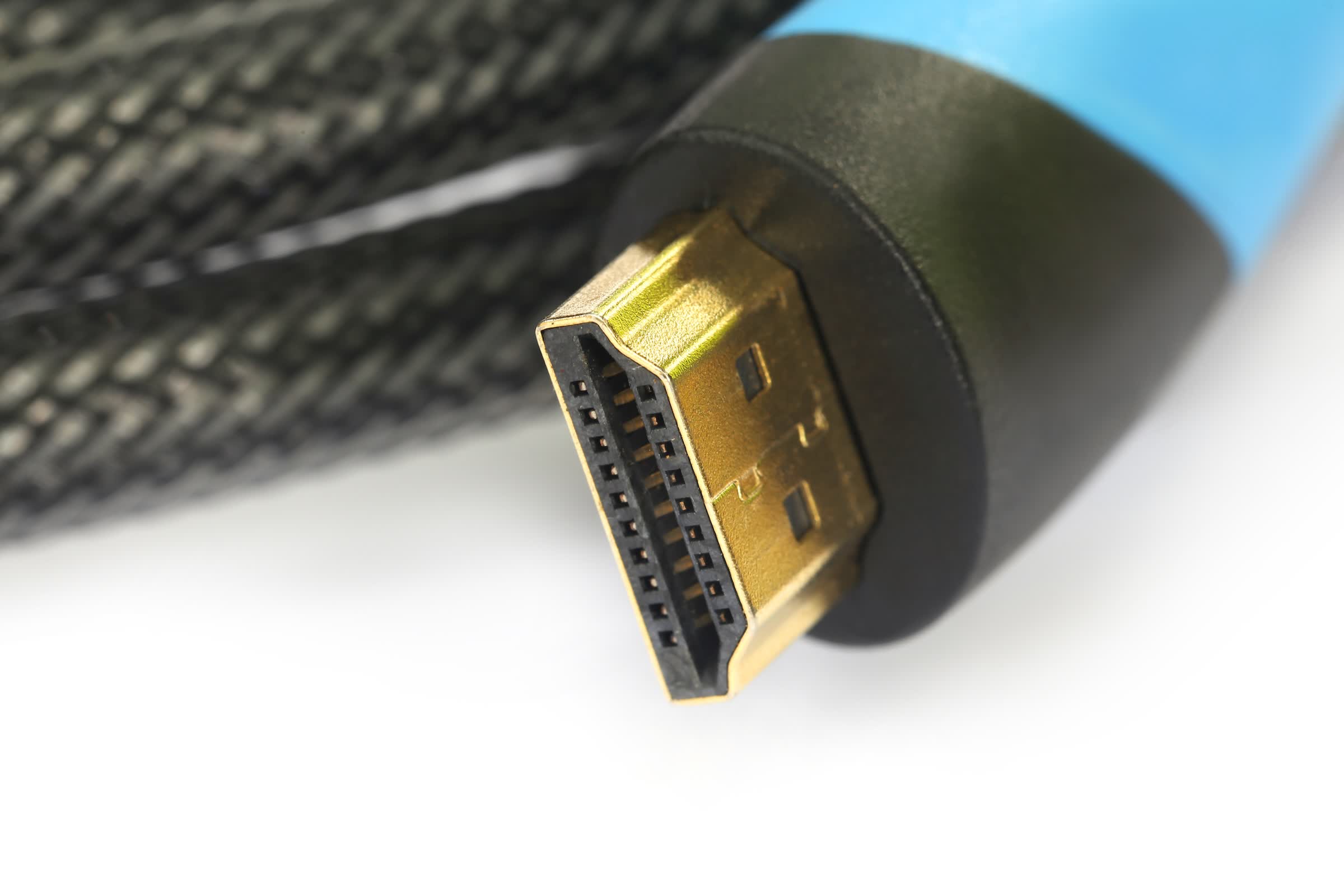
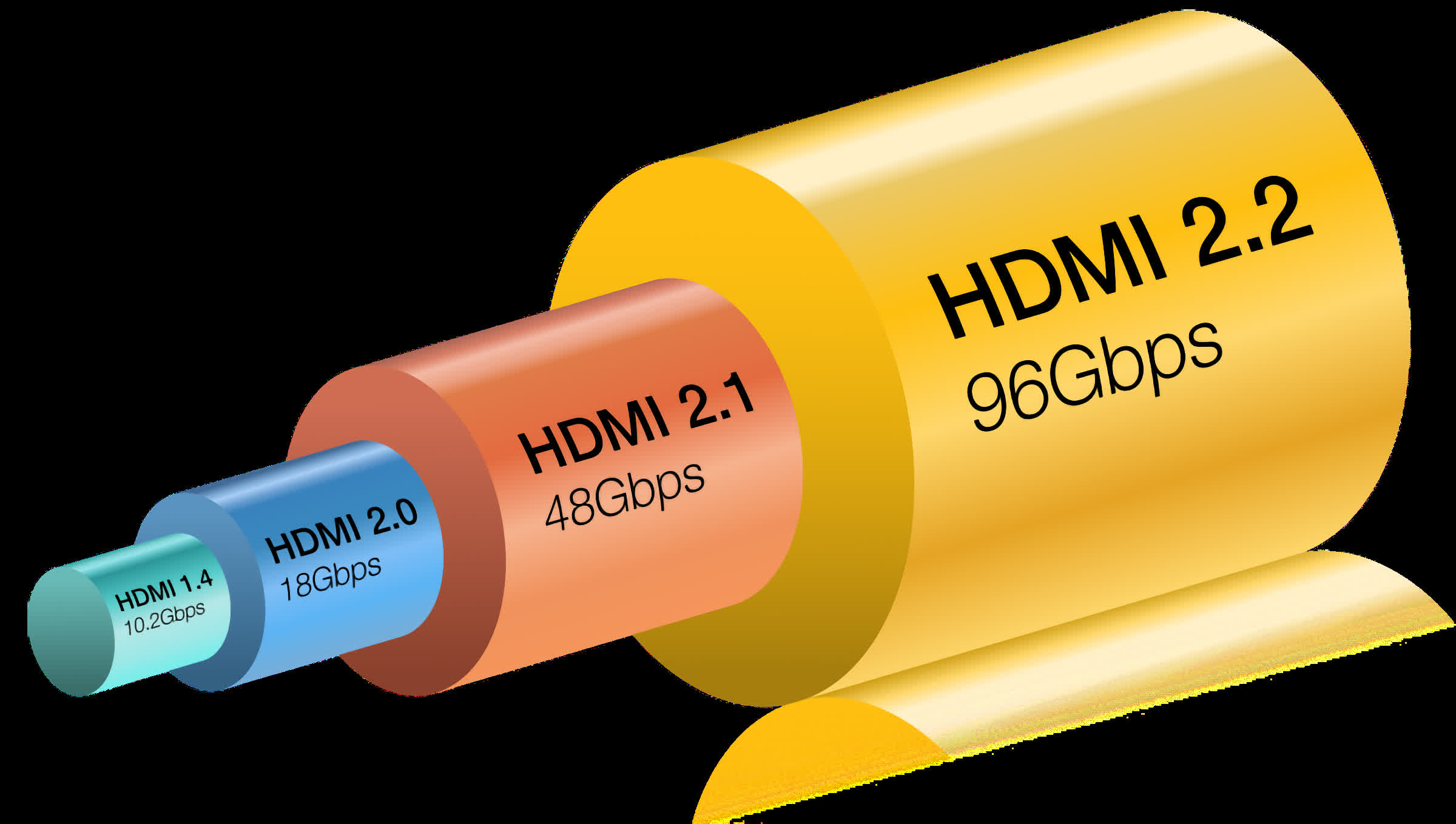
Forward-looking: The next version of HDMI is mainly about pushing bandwidth higher to carry better video and audio, not small, incremental tweaks. HDMI 2.2, teased at CES 2025 and formally released by the HDMI Forum in June of that year, raises maximum bandwidth to 96Gbps, twice that of HDMI 2.1, allowing more uncompressed video data to move between devices.
HDMI 2.2 can carry uncompressed 4K video at up to 240Hz, something that currently requires Display Stream Compression (which as we’ve shown however, is not a big limitation). It can also reach 4K at 480Hz using 4:2:0 chroma subsampling, and handle uncompressed RGB 8K at 60Hz.
The added bandwidth cuts down on the compression and other tricks current hardware has had to rely on to push high frame rates. For gamers, that extra headroom makes it easier to drive high refresh rates at 4K and beyond without leaning as heavily on compression or workarounds.
With compression still in the toolkit when needed, the spec allows for more extreme modes, too, including 1440p at refresh rates above 1,000Hz – numbers that, for now, sit well beyond everyday use.
Advertisement
That leap is tied to FRL2, the updated signaling technology underpinning HDMI 2.2. The transition is already underway at the hardware level. “We’re hearing chip manufacturers will start to sample their FRL2 chips this year,” Rob Tobias, CEO and president of the HDMI Licensing Administrator, told ARMdevices at Computex 2026. “And so we should start to see some 96 or up to 96 gigabit HDMI 2.2 products next year.” Certification efforts are ongoing, and the first wave of compatible devices is expected in 2027.
Still, the headline number – 96Gbps – doesn’t tell the whole story. HDMI 2.2 rolls out in multiple tiers, including 64Gbps and 80Gbps versions, and certification doesn’t require manufacturers to hit the top speed. That means two devices both labeled “HDMI 2.2” could perform very differently depending on how they’re built. For buyers, that puts more weight on spec sheets than branding.
In the PC space, the timing is complicated by the fact that DisplayPort 2.1 already delivers up to 80Gbps and is widely used in high-end monitors. For enthusiasts running multi-display setups, HDMI hasn’t been the primary interface for some time, and that’s unlikely to change overnight. Licensing costs may also factor into how quickly HDMI 2.2 gains traction compared with DisplayPort.
Where HDMI continues to hold ground is in the living room. Features like ARC, CEC, and ALLM are already deeply integrated into TVs and home theater systems, and HDMI 2.2 adds another layer with Latency Indication Protocol, or LIP, aimed at tightening audio-video synchronization – a persistent issue with soundbars and AV receivers. It’s a small but practical upgrade, and one that targets a problem many users encounter even in otherwise high-end setups.
Advertisement
Even so, there’s a gap between what the specification allows and what current content actually demands. Most games and video still operate well below the limits of HDMI 2.1, and 4K at 120Hz – already supported – remains underutilized. It’s easy enough to imagine future consoles taking advantage of higher refresh rates, but widespread use will depend on both hardware and software catching up.
That lag is likely to show up in the rollout. GPU support isn’t expected until late 2027 or later, and early adoption will likely be confined to premium hardware. On the TV side, HDMI capabilities often depend on the underlying processing chips, which have historically led to uneven feature support even among top-tier models. There’s little reason to expect a cleaner transition this time around.
For now, HDMI 2.2 is more about preparing for future hardware than something people need to upgrade to right away. The spec sets a high ceiling, but it may take several product generations before most users see a tangible benefit. In the meantime, its presence will likely be felt more in product positioning than in everyday performance.
Portland, Oregon-based Leatherman is known for its multitools, which feature a plier-based design built around an iconic butterfly mechanism — unlike the iconic Swiss Army Knife. One would imagine the pricing hierarchy for its lineup would be defined by the number of tools, the materials, and the build quality; while that’s generally the case, it’s not for the pliers. Instead, the blade is how you gauge whether your Leatherman multitool is cheap or expensive.
Except for the military and law-enforcement-specific MUT models that retail at $230, all inexpensive (relatively speaking, of course) Leatherman multitools bearing unmarked knife blades are made from 420HC steel. The $100 Skeletool CX and RX variants charge a $10 premium over the base Skeletool to incorporate premium 154CM steel. However, the flagship Leatherman Arc ($250) and Wave Alpha ($200) are equipped with a knife fashioned from an exotic made-in-USA steel branded as CPM MagnaCut. This steel is usually found in high-end pocket knives priced around $300, and it isn’t uncommon for some MagnaCut knives to hit the $500 mark.
Advertisement
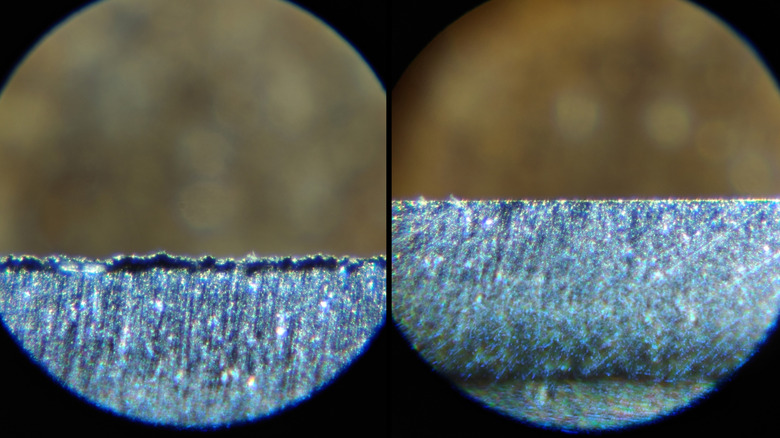
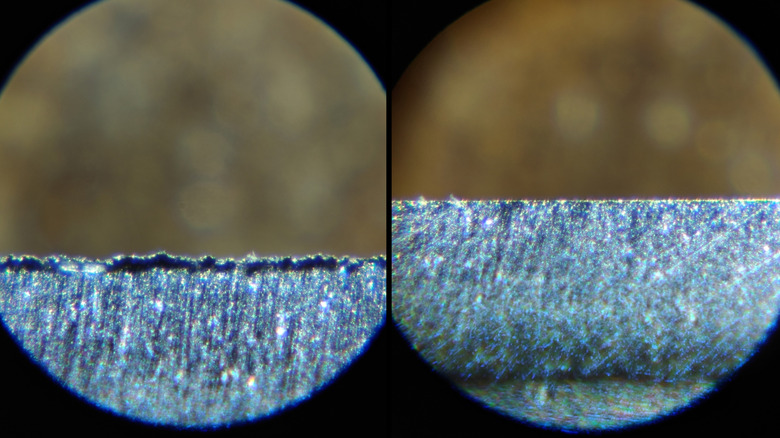
Knife steels are designed to strike an optimal balance between three mutually exclusive traits: toughness, edge retention, and corrosion resistance. MagnaCut is a super steel engineered to significantly outperform both 420HC and 154CM in all three aforementioned parameters. The super steel’s improved toughness allows the knife to be ground thinner, with a blade geometry that cuts effortlessly. Meanwhile, its elevated hardness means it stays sharper for longer and resists corrosion better.
Advertisement
What makes CPM MagnaCut steel so special?
Nachiket/SlashGear
CPM stands for Crucible Particle Metallurgy, a fancy trademark for Crucible Industries’ proprietary technique for manufacturing sintered steel. This process atomizes individual alloying elements into tiny, uniformly shaped balls. These powdered elements are then combined in precise ratios under extreme heat and uniform pressure to form an unnaturally dense metal with a perfect grain microstructure and perfect distribution of alloying elements.
This matters because the complex metallurgy underpinning knife steels essentially boils down to finding the sweet spot between hardness, toughness, and corrosion resistance. For example, increasing the carbon content of steel improves hardness and edge retention, but it also reduces toughness. Adding elements such as chromium, vanadium, and niobium to form carbides improves corrosion and wear resistance but makes the blade edge prone to chipping. Steels manufactured using the CPM process allow metallurgists to fine-tune these blends to nail the performance sweet spot.
That’s basically how MagnaCut manages to hit the Goldilocks zone of chromium content, improving corrosion resistance while inhibiting the formation of chromium carbides. Instead, it has harder and smaller vanadium and niobium carbides throughout, which improve wear resistance and significantly reduce chipping compared to other so-called super steels like CPM Rex 121 – even if it retains edges better than MagnaCut. CPM MagnaCut might not be the absolute best at any single metric, but it is an excellent all-rounder, and that’s precisely why Leatherman uses it on its priciest multitools.
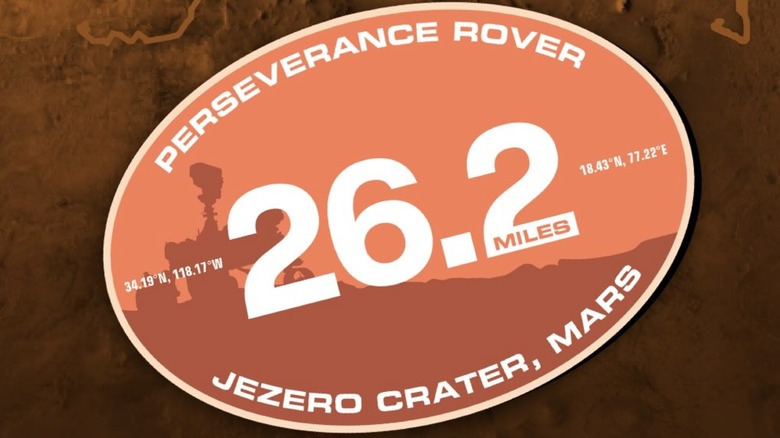
Perseverance is officially a marathon finisher. NASA shared this week that the Mars rover has surpassed a total distance of 26.2 miles since it landed on the red planet five years ago. Considering its speed tops out at .1 mph under the best conditions, that’s a pretty remarkable achievement. It crossed the marathon mark on June 14, according to NASA. “Perseverance is only the second explorer to travel the distance of a marathon on another world, following NASA’s Opportunity rover, which accomplished the feat in 2015,” the space agency wrote in an Instagram post.
By comparison, it took Opportunity 11 years and two months to cover that much ground. The Curiosity rover, which has been on Mars since 2012, has driven just over 23 miles. Perseverance “crossed the milestone while exploring intriguing, ancient terrain to the west of Jezero Crater, where the robotic geologist discovered the remnants of an ancient lake, and possible signs of ancient life,” NASA said. The rover recently sent back images from its western excursion, which included a selfie.
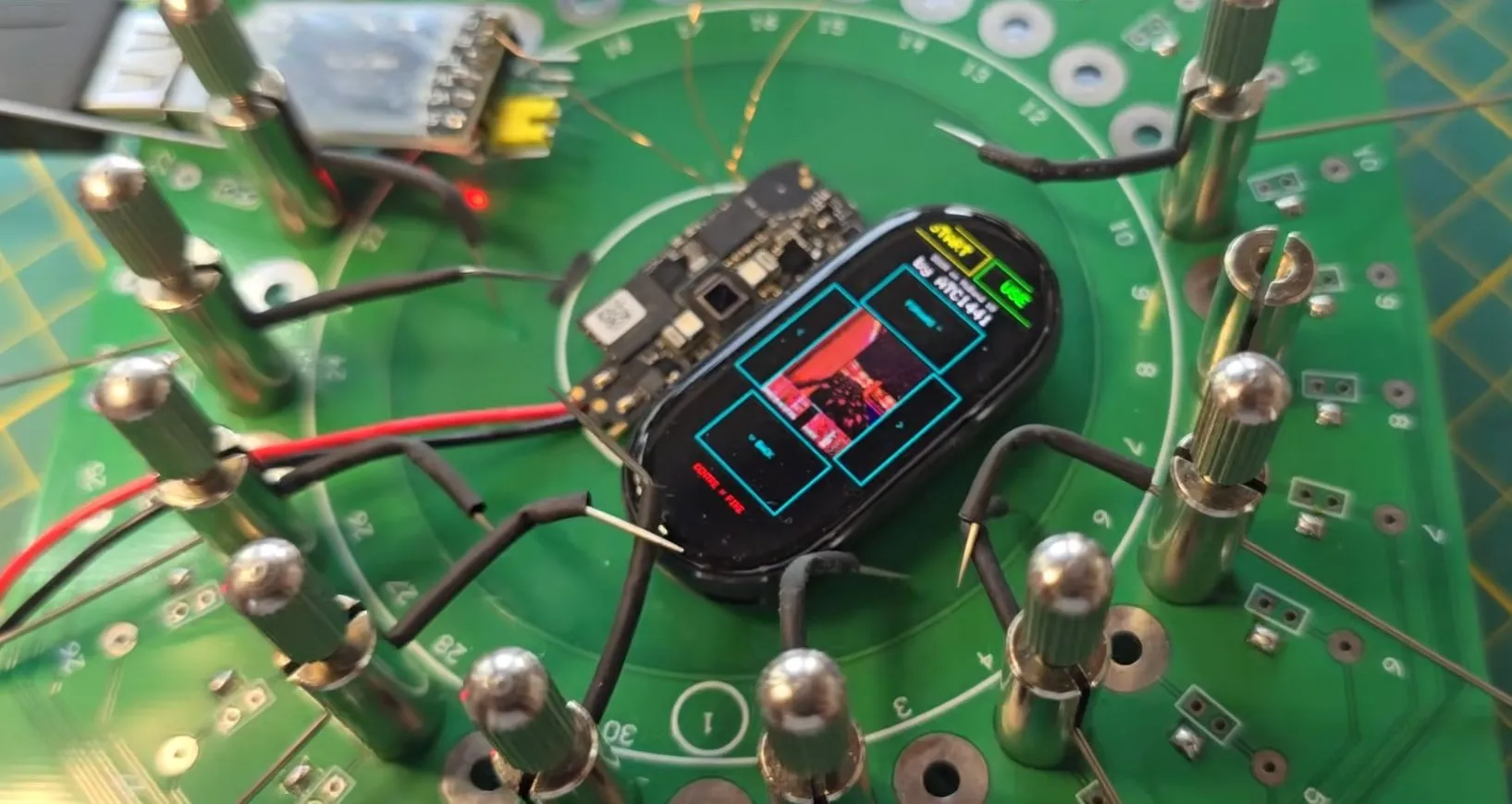
In between playing Doom on the most ergonomically challenged devices, [Aaron Christophel] likes to take a relaxing break with reverse-engineering Xiaomi Mi Band fitness trackers and writing custom firmware for them. Also so that he can play more Doom on those, natch. The latest subject comes in the form of the Mi Band 10, which features a BES2700iMP SoC, known internally at the manufacturer Bestechnic as the BEST1503. This is all documented on the GitHub project.
In the accompanying video we get some more details on this project, with the main challenge being that for this Mi Band 10 there’s no public SDK for its SoC. This was a major bummer until [Aaron] realized that the BEST1306 (BES2700IHC) is effectively the same SoC, but with a leaked SDK available via apparently audio-focused development kits. From there a BEST1503-compatible SDK could be assembled.
Naturally, to check that all of this was working correctly Doom was ported to the device courtesy of the GBADoom project. This mostly works aside from the display running in single-bit SPI mode instead of quad-SPI that it should be capable of, along with limited color depth. Despite burning all the tokens on the Claude, this provided little help, probably because the required information hasn’t leaked out of Bestechnic yet and ended up in the training data set.
Advertisement
Since the Mi Band 9 uses the same SoC, it’s expected that this reverse-engineered SDK will also work for that fitness band, though that hasn’t been tested yet.
Welcome back to TechCrunch Mobility — your central hub for news and insights on the future of transportation. To get this in your inbox, sign up here for free — just click TechCrunch Mobility!
Today is Juneteenth, a U.S. federal holiday marking the end of slavery in the United States.
About 10 years ago, there was a lot of chatter about who was winning the self-driving car race. One of the problems with that debate — besides assuming there would be just one winner — was that no one had a reliable way to measure it. This was an early era filled with a lot of demos and capital, but little substance — at least what the public, and folks like myself, had access to.
Advisory and research startup Autnmy AI has developed a generative AI platform to create a benchmarking system that evaluates and ranks autonomous vehicle companies in an effort to answer that question in real time. And this week, the startup released its Road to Autonomy Index, which searches relevant global public databases, including federal and state reports, SEC documents, public exchanges, and other data. The system weighs the company’s operations, scale, revenue, commercial partnerships, manufacturing, and safety record based on that data and provides an update every 12 hours. There are four indices that rank robotaxis, autonomous driving licensing companies, autonomous trucks, and delivery bots.
Advertisement
One important note, per Autnmy AI co-founder Rob Grant, the AI platform doesn’t just scrape information off the internet. “We agreed early on, we don’t scrape information,” he said. “If it’s publicly available or if it’s available under a Creative Commons license, we will use that information. We do have some license data that we pay folks for, and under that agreement too.”
The indices take a global approach, which produces some interesting results. One of the initial takeaways that made an impression on Grant was China’s stronger ranking across multiple categories.
As of Friday, the robotaxi leader was not Waymo. It was China’s Baidu Apollo Go program — just barely. Waymo was in the secondary position, followed by Chinese companies Pony.ai and WeRide. Tesla was in the fifth position.
A little bird
Image Credits:Bryce Durbin
I was reminded recently by a little bird to keep an eye on the Texas automated vehicle tracker tool that launched in May. And I am glad they did; looks like Tesla, Waymo, and Zoox are building up their respective fleets in the state. Reminder: This doesn’t mean every one of these are being used commercially. Zoox, for instance, cannot operate commercially until it receives an exemption from the federal government. It currently has the ability to give rides in its custom-built robotaxi but cannot charge customers.
As of May 28, Waymo had 577 autonomous vehicles registered in the state. It now has 620 of them, about a 7.5% increase in less than a month. Tesla now has 69 registered autonomous vehicles, a 64% increase from the 42 it had on May 28. Zoox, which had 35 registered autonomous vehicles last month, now has 43.
Advertisement
Avride, Nuro, and Volkswagen subsidiary MOIA are holding steady at 317, 47, and 12, respectively.
Cargofy, a logistics company that uses AI to automate freight operations, raised $11 million in a Series A funding round led by u.ventures, Toloka, and Movens Capital. Des Traynor, co-founder of Intercom, and several angel investors, also participated.
Carro, the Singapore-based online car marketplace, acquired Australian used-car platform CarPlace, Reuters reported. Terms were not disclosed.
Gatik,a startup that has developed self-driving trucks for short hauls, announced a multi-year partnership with PepsiCo. The companies wouldn’t share the value of this deal, but it does signal PepsiCo’s commitment to Gatik, which is already operating driverless trucks for the food and beverage giant across Arkansas, Arizona, and Texas.
Advertisement
QuantumScape announced a joint research agreement with Honda R&D Co. to accelerate solid-state battery development and associated manufacturing processes.
Automaker Stellantis, self-driving startup Wayve, and ride-hailing giant Uberstruck a deal to jointly develop and deploy driverless robotaxis.
XDOF, a startup focused on robot training data, raised $70 million from Thrive Capital, Spark Capital, a16z, Lux, and WndrCo.
Notable reads and other tidbits
Image Credits:Bryce Durbin
A video posted on Reddit showed a driver running a stop sign and hitting an autonomous vehicle in Dallas. TechCrunch confirmed it was an Avride robotaxi, which was hailed via the Uber app. An Avride spokesperson said no injuries were reported and that data from the incident is being reviewed “to continuously refine our technology and processes, as part of our standard procedures.” When asked about the reaction of the self-driving system and the human safety operator who was behind the wheel, Avride said, “Our safety review is currently ongoing, so we cannot provide more precise details at this time.”
Over on X, folks spotted a Tesla with an authorized limousine permit sticker for San Francisco County and the San Francisco International Airport. A spokesperson for SFO told TechCrunch that “Tesla has been issued a limousine permit to operate at SFO. This is for traditional limousine operations, meaning the vehicles have a human driver. Tesla has not been issued a permit for any autonomous operations at SFO.”
Mobileye, which has pitched itself as an autonomous vehicle technology supplier, is now making moves to become a robotaxi operator. The company plans to launch a robotaxi service in an unnamed U.S. city in 2027. History lesson: Mobileye founder and CEO Amnon Shashua told me back in 2020 that to crack the holy grail of passenger car autonomy, you needed to pursue robotaxis first.
Uber plans to launch a premium robotaxi service in Houston by mid-2027, making it the second U.S. market under its partnership with EV maker Lucid and autonomous vehicle startup Nuro.
Waymorecalled its fleet of nearly 4,000 robotaxis to stop them from driving into highway construction zones. Waymo took its robotaxis off the freeways weeks ago and has identified at least 13 instances of its robotaxis driving into highway sections that were closed for construction. Here is a detail worth noting: The software fix is “under development,” which means this issue is not resolved.
Advertisement
When you purchase through links in our articles, we may earn a small commission. This doesn’t affect our editorial independence.
Mosquitoes turn pleasant summer nights into itchy ordeals for anyone spending time outdoors. One inventor refused to accept the usual sprays, candles, and frantic swatting as the only options. Instead he created a full-body electric grid that delivers a direct shock to any insect that gets too close. Russian maker Dani Cruster, who runs the DiWHY YouTube channel, drew inspiration from ordinary bug zappers. Those devices use two layers of mesh or grid with high voltage running between them. When a mosquito flies into the space, it completes the circuit and ends its life with a sharp crack. Cruster simply asked what would happen if someone wore that same grid.
He began with heavy-duty construction mesh, which is commonly used on construction sites. The metal netting turned out to be two electrode layers. Use a centimeter-thick PVC foam board to build the frames that hold the mesh in place. A heat gun, similar to the one used to warm up paint or drywall during a renovation, is used to soften the plastic, allowing it to be twisted into curved panels that fit around the torso, arms, and legs. The finished design resembles a jumble of old Roman armor cobbled together from materials available at any hardware store.
Upgraded Dual-Band Attraction: Unlike traditional single-band fly traps, the Buzbug LED bug zapper utilizes dual-color LEDs (365nm + 395nm) engineered…
Long-Lasting & Cost Saving: Stop wasting money on frequent bulb replacements. Our high-efficiency LED tubes boast an exceptional lifespan of 25,000 to…
High-Voltage & Wide Coverage: Equipped with a robust internal electric grid, this mosquito zapper delivers an instant kill upon contact. With a…
To deliver the electricity, he used six miniature high-voltage converters made from inexpensive shock guns found in markets. Each is powered by two regular 1.5 volt alkaline batteries and can produce an output of around 10,000 volts. Each module’s wires link to the panel’s inner and outer meshes. The builder meticulously checked all of the connections before placing the modules directly into the PVC frame. The distance between mesh layers is far more significant than anything else. High voltage can jump through the air, and the builder had worked out that a whole centimeter of space would keep sparks from reaching the person inside the suit. If it’s too small, you risk burning a hair or giving the wearer a painful shock. As long as the spacing is just right, the electricity will remain between the layers and zap any insects that pass through.
Advertisement
Things became a little more tricky when he decided he wanted to create an entire suit. He had to measure and cut eighteen individual pieces of PVC, heat and shape each one separately, and then stretch mesh across both sides of the frames. The inner mesh layers are all electrically linked, therefore electricity cannot easily reach the skin. Six units are connected in parallel to power the whole costume. The battery packs will last for approximately an hour before needing to be replaced with new cells.
When testing the suit, he began with only one arm panel. Testers felt a small tickle and saw hairs stand up on their arms, but the gap prevented any serious shocks. Throughout the live tests, the builder donned dielectric gloves and goggles. He made it a point to underline how dangerous high voltage is and how you should never try to reproduce it unless you have been properly warned about the dangers.
The real trial was a facility in the deep forests outside Tarkov in Russia’s Tver Oblast, an area infamous for swarms of mosquitoes and ticks. When the user of the expensive outfit stepped out into the thick of it all, flipped on the modules, and started making their way through the woods, as the results were rather swift. Any insects that came into contact with the mesh screen simply did not survive. [Source]
While the Rust Foundation has a Security Initiative to protect its ecosystem, “the threats have expanded,” they announced this week, “and so has the kind of help maintainers need.”
Much of this comes back to a single shift: Automated tooling (much of it now built on large language models) has gotten good enough to surface real vulnerabilities in open source code quickly and at scale. That is useful, and several large Rust projects have already received and fixed credible issues found this way. The same tooling has also made it trivial to generate vulnerability reports that look plausible and are worthless. Maintainers across the ecosystem are losing real hours sorting these from the reports that matter, and the noise tends to bury the signal.
So, with funding from the Alpha-Omega Project, the Rust Foundation is bringing on a full-time AI Security Engineer in Residence dedicated to the Rust ecosystem. This position is being funded with part of the $12.5M in open source security funding that the Linux Foundation announced in March.
The role exists to take pressure off maintainers. The person in this position will use a mix of human-led and AI-assisted methods to proactively review Rust itself and the crates the ecosystem leans on most and help us separate real, exploitable issues from false positives and low-signal noise before anything reaches a maintainer…
This role will run full-time for six months to start, with room to extend depending on what we learn and the funding available. Methods, playbooks, and prompts will be documented so the work doesn’t end with the contract. We are grateful that Rust is not embarking on this work in isolation. Several other ecosystems have received parallel Alpha-Omega grants for the same kind of work (e.g., the PHP Foundation and the Drupal Association) and we plan to share tooling, triage practices, and what we learn rather than duplicating work A statement from Rust’s new AI Security Engineer in Residence acknowledges that “One of our next challenges is the wave of bugs discovered by the next generation of AI-powered developer tools.”















![Who's your favorite girl in Digital Circus? [Money Money Green green meme] #shorts #trend](https://wordupnews.com/wp-content/uploads/2026/02/1771002718_maxresdefault-80x80.jpg)






















You must be logged in to post a comment Login