Connect with us
DAPA Banner
DAPA Coin
DAPA
COIN PAYMENT ASSET
PRIVACY · BLOCKDAG · HOMOMORPHIC ENCRYPTION · RUST
ElGamal Encrypted MINE DAPA
🚫 GENESIS SOLD OUT
DAPAPAY COMING

Tech

Stop using your Casely Power Pods wireless charger immediately

Published

on

Casely has reannounced a recall of its Power Pods 5,000mAh MagSafe E33A charger after dozens of people were injured and one even killed by the defective devices, the US Consumer Product Safety Commission (USCPSC) announced. It’s recommended that you stop using the devices immediately, dispose of them safely and seek a replacement from the manufacturer.

A year ago, Casely and the USPSC published a recall of 429,000 units of the power bank with the model number E33A. That followed 51 incidents of the devices “overheating, expanding or catching fire” and burning users in multiple cases.

However, many of the devices have remained in use and are even more dangerous than initially thought. “In August 2024, a 75-year-old woman from New Jersey, was charging her cell phone with the power bank on her lap when it caught on fire and exploded,” the USCPSC reported. “The victim suffered second and third degree burns and later passed away from complications from her injuries.” In another incident this year, a 47-year-old woman was charging her phone on a plane when it caught on fire and exploded, giving her first degree burns.

As a result, the recall has been reissued due to “a risk of serious injury or death from fire and burn hazards to consumers,” according to the Commission.

Advertisement

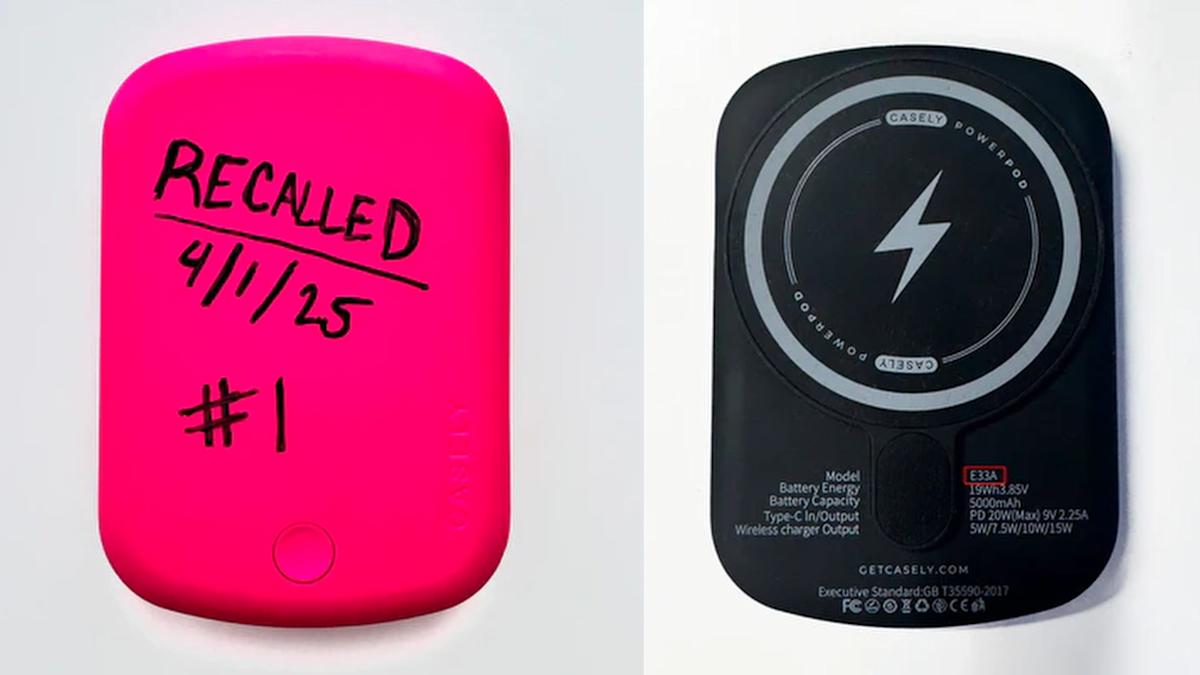
The defective Casely Power Pods 5,000mAh charger is identifiable by the Casely embossed logo on the front and model number E33A on the back. It was sold at various online retailers including getcasely.com and Amazon between 2022 and 2024.

Casely is offering free replacement units as a remedy (it’s not clear if you can get a full refund). Those seeking one should write “recalled” on the battery pack in permanent marker and submit a photo, along with a second photo showing the E33A model number as pictured above. Owners are instructed to dispose of them by contacting a facility that handles lithium-ion batteries. Do NOT throw them away with regular household waste, recycling, or standard battery disposal bins due to the risk of fire and explosion.

Source link

Advertisement
Continue Reading
Click to comment

You must be logged in to post a comment Login

Leave a Reply

Tech

Best Wear OS Watch 2026: Android-pairing wearables tested

Published

on

Although there’s no denying that the Apple Watch very much led the charge across the smartwatch industry for a good while there, in 2026 Wear OS watches are as good as they’ve ever been, boasting several features that’ll leave even Apple users feeling jealous. If you’re an Android user and are curious to know what the best Wear OS watches are right now, then we’re here to help.

One of the key things that really works in Wear OS’s favour right now is that unlike the Apple Watch which, on average, presents you with three choices each generation, you have an absurd amount of choice here. You have companies like TicWatch that have been Wear OS stalwarts for years, alongside more recent converts like OnePlus and Samsung, but then you also have Google.

The Android maker finally getting into the wearable space and effectively showing its confidence in its wrist-based platform was the game-changer that Wear OS needed. The Pixel Watch series now serves as a great example of what’s possible with Wear OS, much in the same way as the best Pixel phones with stock Android. Since the first Pixel Watch, we’ve only seen companies build upon that concept with more features, showing that innovation in this space is very much alive and well.

The only key thing to know is that, unlike how it used to be before Google shifted everything forward from Wear OS 3 onwards, these smartwatches do not work with iPhone. If you are tempted by any of the smartwatches we’ve highlighted here then you’ll need to have one of the best Android phones in tow.

Advertisement

With more Wear OS watches hitting the scene every year, this list is in a constant state of flux so it’s always worth checking back to see how our rankings have changed. If you’re focused purely on tracking your running performance then you may be better set with one of the best Garmin watches or the best fitness trackers. Alternatively, anyone who doesn’t want to go beyond a certain budget can find cost-effective picks in our guide to the best cheap smartwatches.

Best Wear OS Smarwatch at a glance

Advertisement

SQUIRREL_ANCHOR_LIST

How we test

Find out how we test Wear OS smartwatches

Advertisement

Every smartwatch we test is used by the reviewer for at least a week, or longer if the battery life lasts beyond that point or we need more time to trial its features.

During testing, we will check it for key metrics, including app support, usability and battery life. If the device offers fitness, location or health tracking features, we will also test these for accuracy and reliability. 

For distance tracking, we record how accurately the device recorded runs on tracks we know the length of. We also record how much battery is lost using things like in-built or connected GPS per hour. To check heart rate accuracy, we compared the results recorded on the wearable to those of a dedicated HRM strap.

After recording the data, we then pair it with our general experience using the wearable day-to-day, letting you know if it’s comfortable to wear or if we encountered unexpected bugs over the review period.

Advertisement

  • The new Galaxy Watch Ultra-inspired design

  • An actually useful smart assistant

  • Welcome user interface changes

  • The promised battery life improvement is disappointing

  • Some health features still tied to Samsung smartphones

  • Some might not be sold on new design

Depending on who you ask, the redesigned Samsung Galaxy Watch 8 is either a great move forward in allowing Samsung’s wearable to stand out in an ever-growing market, or it’s a weird Frankenstein’s monster that does away with the sleek aesthetic that we’ve come to expect. For our money, the Galaxy Watch Ultra-inspired ‘squarcle’ chassis is refined in its own way, and it does grab your attention.

Advertisement

Although the revamped design is the biggest change on the surface, the real upgrade with this watch is the replacement of Google Assistant with Gemini from the point of launch. Don’t get us wrong, Google Assistant was great and far more helpful than Siri, but having access to Gemini and all that comes with an AI platform on your wrist is an absolute game changer for on-the-go functionality.

You can have a full-on conversation with Gemini, all without ever having to reach for your phone. If you want a recommendation for a decent cafe to hang out in then you can ask Gemini and it’ll provide a few options right there on the watch. Obviously you can do far more than that, but it serves as a good example of what’s possible.

Having quick access to Gemini very much feels like the cherry on top of the Galaxy Watch 8’s software which already builds upon the excellent refinements we’ve seen from Samsung over the years. This take on Wear OS feels great to use, and that extends to the fitness tracking which feels robust, providing plenty of options and reams of data that enthusiasts can pore over.

One thing we would have liked to see, especially as it became a key point of the Pixel Watch 4, is a noticeable uptick in battery life. For the most part, the Galaxy Watch 8 still needs to be charged daily which just feels absurd in 2026, so you may want to switch off the always-on display to get a little more juice out of the watch in between charges.

Advertisement
  • Best battery life of any Wear OS smartwatch

  • Impressive durability given its sleek look

  • Top-notch health and fitness tracking capabilities

  • Only available in one size

  • Wellness score can be hit-and-miss

Advertisement

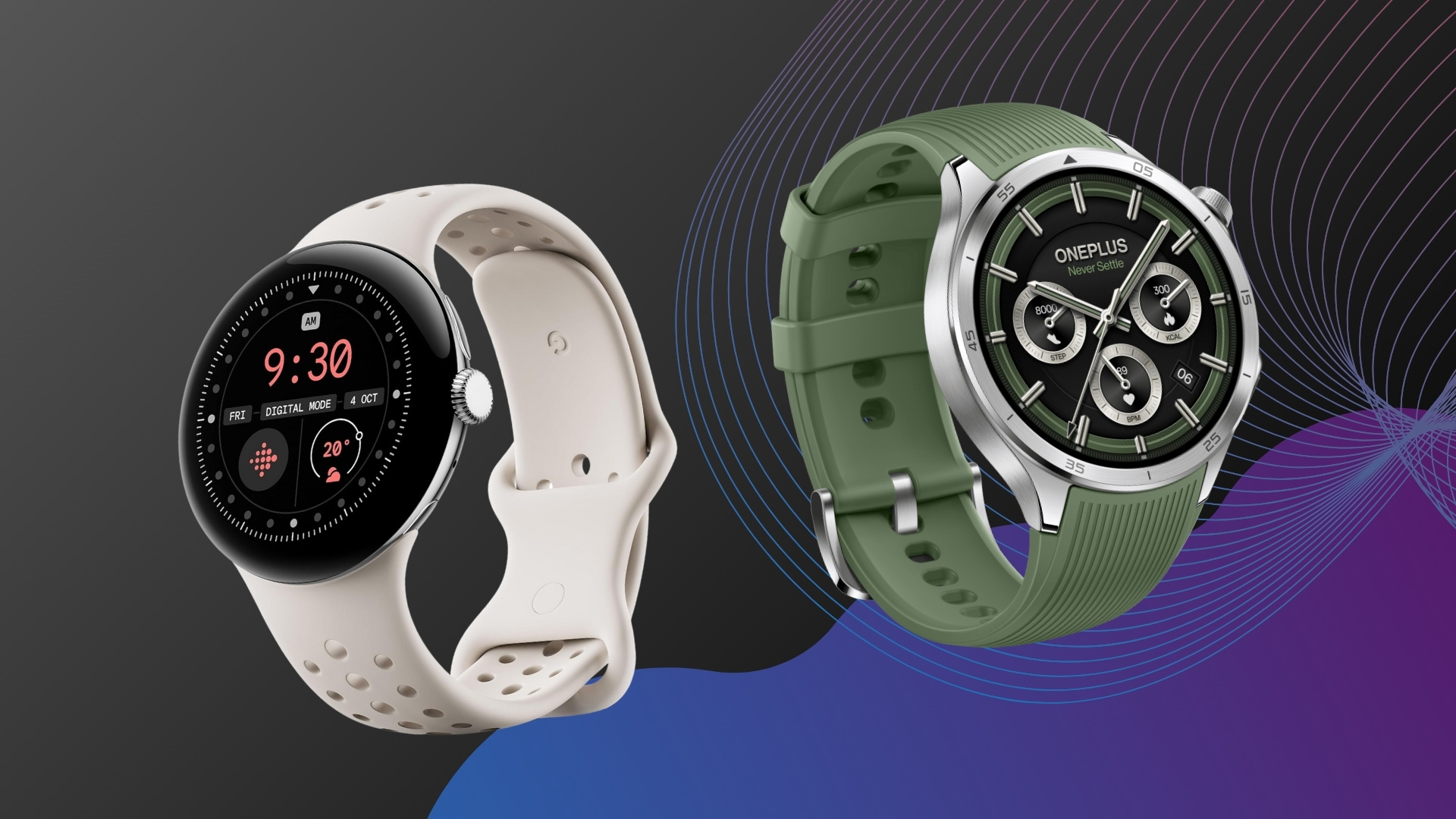
For the longest time it was the TicWatch Pro 5 that held the top spot on this list, but as soon as we got the OnePlus Watch 3 in for testing, we knew that the ranking would change fairly quickly. The chasm between the original (and abysmal) OnePlus Watch and the new OnePlus Watch 3 couldn’t be wider, and it shows just how much OnePlus has looked at the industry and taken that knowledge to improve its own products.

While there’s no denying that the OnePlus Watch 3 is a stylish bit of kit, the one area where it truly amazes above all is in battery life. The longevity of smartwatches has been a conundrum for quite some time, and even Apple has yet to really find a fix that can make the Apple Watch Series 10 last for more than a day, but that’s not a problem for the OnePlus Watch 3.

On a single charge, OnePlus’ wearable can last for up to five days at time, so it could easily outlast your smartphone several times over. As if that wasn’t enough, the power-saving RTOS mode can extend that run-time to a whopping 16 days which, at that point, you’re starting to get into Garmin territory, which isn’t something that we typically anticipate from a Wear OS watch.

Even when the RTOS mode is on, there’s still tons of functionality available on your wrist including music controls, workout tracking and even heart rate monitoring. Similar to the ingenious dual-display on the TicWatch Pro 5, this RTOS mode is the type of feature that we’d love to see more of the competition adopt going forward.

Advertisement

The only area that didn’t quite stack up was the wellness score provided by the OnePlus Watch 3, as it often seemed at odds with how we actually felt in the moment, but it’s an otherwise small blemish on what is a long lasting smartwatch that’s packed with features.

  • Outstanding battery life

  • Wear OS 3 is finally on a TicWatch

  • Fast charging

  • The secondary FSTN display is always welcome

Advertisement
  • Not the most stylish of smartwatches

  • Included watch faces are hit and miss

  • No Google Assistant

Mobvoi has been one of the staunchest supporters of Wear OS, even when Google was supplying the software with the bare minimum in terms of updates. While the company’s devices have been hit and miss in terms of quality, its experience in the market finally came to fruition with the excellent TicWatch Pro 5.

The watch has seen several price drops since its launch and you can now pick it up at a significantly discounted rate, even though it’s still an absolute beast where battery life is concerned. Thanks to the low-power secondary FSTN display at sits atop of the main screen, you can expect up to five days of use on a single charge.

That amount of longevity absolutely destroys most smartwatches, and the secondary display is a feature that we wish was adopted by more competitors. Not only is it easier to read in direct sunlight, but the coloured backlight can quickly let you know of your current heart rate zone during a workout. Features like these make the TicWatch Pro 5 one of the most well-rounded smartwatches on the market, and not just amongst its Wear OS peers.

Advertisement
  • Charming take on Wear OS 6

  • Excellent Fitbit-powered health tracking

  • LTE and satellite connectivity

  • Multi-day battery life and rapid charging

  • Fitbit Premium locks some health data behind a paywall

  • Exposed screen could make it more prone to damage

  • Some AI features not available outside the US

Advertisement

One of the key things the Pixel Watch has always had going for it is its memermising design, and that only continues with the Pixel Watch 4. The pebble-like chassis which hides its bezels phenomenally well is just unlike any other Android smartwatch on the market, and it feels more akin to something that you might find amongst the latest Apple Watches.

With the eye-catching design, you’re getting one of the best looks at Wear OS that’s currently available. This shouldn’t be too surprising given that Google is behind the device, so it very much gets preferential treatment here with a slick UI and seamless integration with Google services, but if you want the cleanest, almost watchOS-like take on Wear OS then this is it.

When it comes to fitness tracking, the Pixel Watch 4 uses the new Google Health Coach software to provide an accessible yet comprehensive look at your bill of health. The app goes all in on offering personalised information that’s tailor-made to your fitness journey, although if you want to access all of the features available then you’ll need to sign up to a Google Health Premium account which, at the time of writing, costs £7.99/$9.99 a month.

Although we’ve seen a handful of smartwatches fall into iterative territory with each update, this complaint can’t be levied at the Pixel Watch 4, which has included quite a few meaningful changes. For starters, the battery can now last for around two days on a single charge – a big win for doing away with battery anxiety over the course of a busy day.

Advertisement

The screen is also brighter than before, peaking at 3000 nits and making the Pixel Watch 4 very easy to read against direct sunlight. Listening to plenty of feedback on the matter, Google has even endeavoured to make the process of repairing the Pixel Watch 4 much easier than before (it was nigh-on impossible on the Pixel Watch 3). This won’t be a feature that everyone needs to tap into but as far as we’re concerned, it’s a big win for consumer value.

  • Rotating bezel makes it easy to scroll

  • New software is a joy to use

  • In-depth sleep and health tracking

Advertisement
  • Screen is relatively small for a wearable of its size

  • Just over a day of battery life

  • Some flagship features exclusive to Samsung phones

  • You need to install three separate apps on your phone

As much as we love the standard Galaxy Watch 8, if you want something that’s a bit more refined with a few extras that make a big difference with everyday use, then the Samsung Galaxy Watch 8 Classic is well worth a look. Even just to glance at the 8 Classic, it’s easy to see that this is one of the nicest-looking Wear OS watches on the market, being right up there with the Pixel Watch 4.

In addition to the more sophisticated design, the Watch 8 Classic comes with a physical rotating bezel – a feature which doesn’t exist on any other Wear OS watch. With this unique input, you can scroll through menus and engage with contextual controls (such as changing the volume of a song) just by rotating the bezel. It feels wonderfully tactile, and it can be very helpful to have mid-workout when you don’t want to smudge the touchscreen.

Because this is a larger wearable than the standard Galaxy Watch 8, offering just one 46mm sizing, the 8 Classic has more space available for the battery. As such, this device can run for up to two days on a single charge under more conservative use, although it’s more likely that you’ll get through a day and a half before needing to top up, especially if you want to have the always-on display and several health tracking features enabled.

Advertisement

Just like its smaller sibling, the Watch 8 Classic offers up access to Google Gemini on your wrist. With the type of dialogue that you can only enjoy through a proper large language model, Gemini leaves Siri in the dust here, as you can now do far more without ever having to reach for your phone. Want directions to a nearby establishment or an answer to a tricky question? Gemini’s got you covered.

The Watch 8 Classic also packs 64GB of storage, more than the 32GB allowance of the Watch 8, so you have more room for storing songs and podcasts offline, as well as holding on to more apps. At £449/$499, the Galaxy Watch 8 Classic is far more expensive than most Wear OS watches, although the sense of luxury will be worth the expense for some, and we’ve seen it drop in price quite a few times since launch so this isn’t as much of an issue as it used to be.

Advertisement
  • Wear OS gets some design personality

  • Strong GPS and HR accuracy

  • Ultra-bright and clear display

  • Comprehensive sleep tracking

  • Navigation crying out for rotating bezel

  • Inconsistent battery life

  • Not a good fit for smaller wrists

  • Exclusive features for Samsung phones

Aside from a few outliers from high-end companies like Mont Blanc, Wear OS watches have largely avoided the premium space, opting to stay just below the Apple Watch in terms of pricing. The Samsung Galaxy Watch Ultra serves to buck that trend, offering a top shelf experience that isn’t too dissimilar to what iPhone users have been able to enjoy with the Apple Watch Ultra.

With an asking price of £599/$649, the Galaxy Watch Ultra will far exceed the budgets of most buyers but in return, you’re getting a watch that’s built with grade 4 titanium and to fit a level of military grade durability. There’s also a new quick button which can’t be found on any other Galaxy Watch, making things easier when toggling features like fitness tracking or the torch function.

Advertisement

The only thing missing is a physical rotating bezel similar to the one found on the Samsung Galaxy Watch 6 Classic. The digital rotating bezel from the standard Galaxy Watch is here, but it’s less useful given that physical inputs are far easier to use during extended periods of exercise, something that’s understood by the best Garmin watches.

When it comes to Wear OS, the Galaxy Watch Ultra is able to show off Google’s operating system in its best light. In addition to the super bright display that can reach 2000 nits, the Watch also has Wear OS 5 out of the box, making it one of the first wearables of its kind to do so (alongside the Galaxy Watch 7).

The Watch’s dual-frequency GPS and powerful heart rate sensor allow it to also pump out accurate fitness tracking data, making it an easy option for anyone who wants the sports focussed approach of a Garmin, but with all the smarts that Wear OS has to offer.

Advertisement

Test Data

  Samsung Galaxy Watch 8 OnePlus Watch 3 TicWatch Pro 5 Google Pixel Watch 4 Samsung Galaxy Watch 8 Classic Samsung Galaxy Watch Ultra

Full Specs

  Samsung Galaxy Watch 8 Review OnePlus Watch 3 Review TicWatch Pro 5 Review Google Pixel Watch 4 Review Samsung Galaxy Watch 8 Classic Review Samsung Galaxy Watch Ultra Review
UK RRP £319 £319 £329.99 £349 £449 £599
USA RRP $349 $349.99 $349 $499 $649
EU RRP €359.99
CA RRP CA$469.99
AUD RRP AU$519.99
Manufacturer Samsung OnePlus Mobvoi Google Samsung Samsung
Screen Size 1.47 inches 1.5 inches 1.4 inches 1.34 inches 1.5 inches
IP rating IP68 IP68 IP68 IP68 IP68
Waterproof 5ATM 5ATM 5ATM 5ATM 10ATM
Battery 435 mAh 631 mAh 455 mAh 445 mAh 590 mAh
Size (Dimensions) 43.7 x 8.6 x 46 INCHES 46.6 x 11.75 x 47.6 MM x x INCHES 45 x 12.3 x 45 MM 46.4 x 10.6 x 46 MM x x INCHES
Weight 34 G 81 G 44.3 G 31 G 63.5 G 60.5 G
ASIN B0F7QD4HSD B0BYS4KJV6
Operating System OneUI 8 (Wear OS 6) Wear OS 5/RTOS Wear OS 6 (Material 3 Expressive) Wear OS 6 Wear OS 5
Release Date 2025 2025 2023 2025 2025 2024
First Reviewed Date 09/07/2025 18/02/2025 07/07/2023 08/10/2025 29/07/2025 10/07/2024
Colours Graphite, Silver Black, Silver/Green Obsidian, Porcelain, Lemongrass, Iris, Moonstone Black, White Silver, Grey, White
GPS Yes Yes Yes Yes Yes

Advertisement

Can you use Wear OS smartwatches with iPhone?

Smartwatches sporting Wear OS 3 or above do not work with iPhones, but some Wear OS 2 wearables still offer up connectivity with iOS.

Advertisement

Source link

Advertisement
Continue Reading

Tech

Only Fifteen People Will Ever Own the Lamborghini Fenomeno Roadster, the Automaker’s Most Powerful Convertible

Published

on

Lamborghini Fenomeno Roadster Reveal Convertible
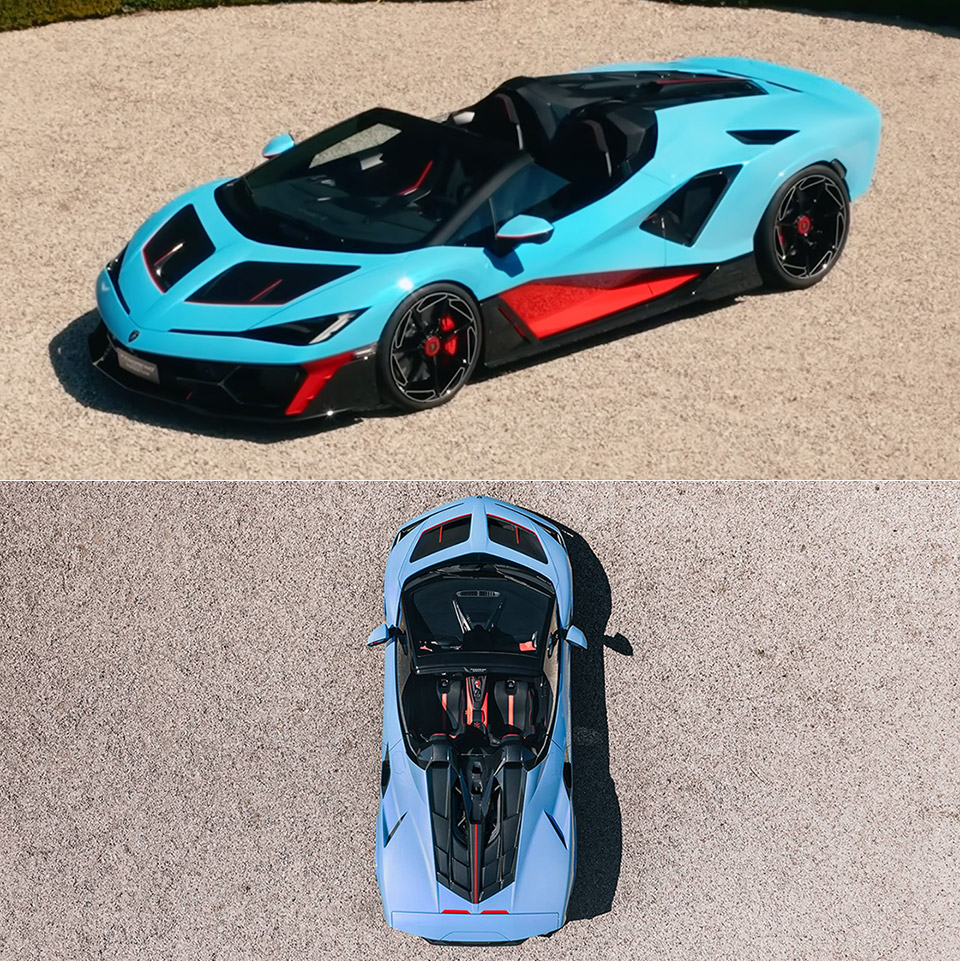
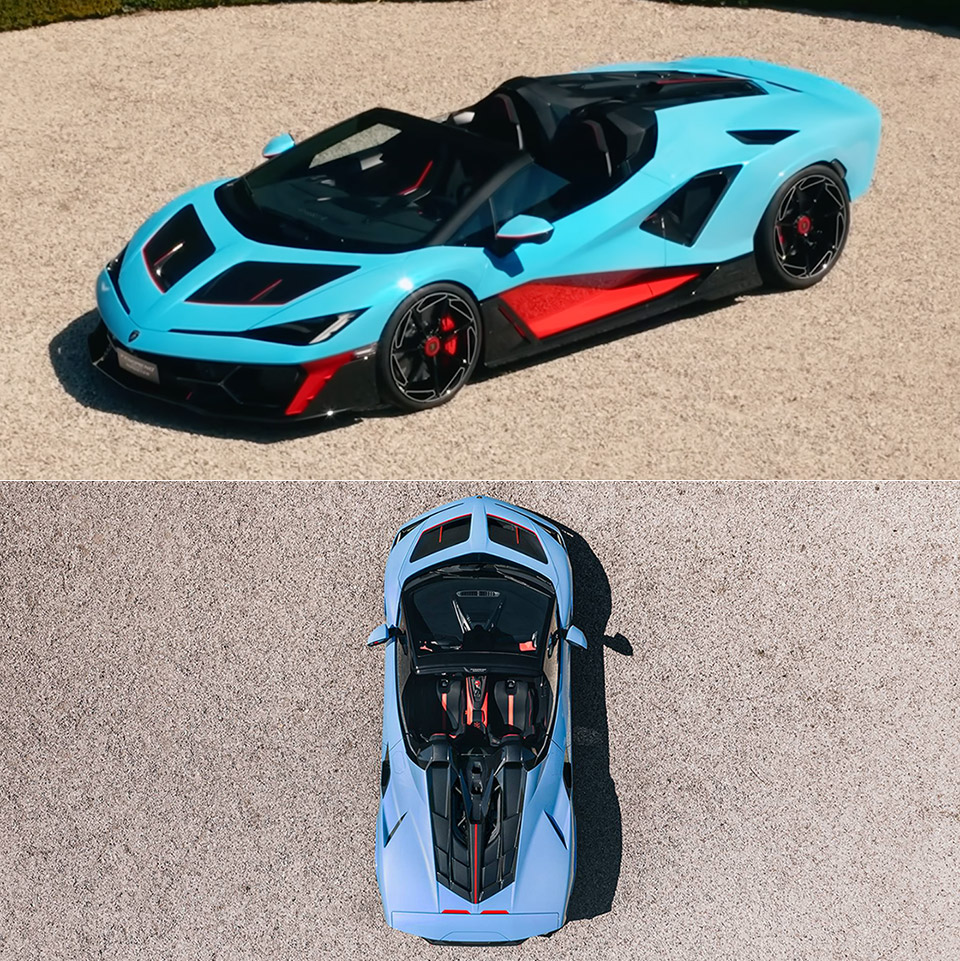
Lamborghini recently unveiled the Fenomeno Roadster, their most powerful open-top convertible yet. Built in a limited run of only 15 units at $5.8+ million each, this car takes the latest Lamborghini hybrid V12 technology and throws the roof, giving drivers a raw taste of speed and the unmistakable roar of the engine.


The design team entirely reimagined the body for life in the open air. A carbon fibre spoiler sits boldly above that flat, slab-like windshield, ready to channel air like a pro right over the cockpit and down into the engine bay, keeping the V12 nice and cool. The rollover bars come up behind the seats and fold neatly into elevated humps designed to reduce turbulence and wind noise. They preserved the sharp chiseled design and large intakes up front, while a deep diffuser and active wing join up at the back to provide nearly the same downforce and stability as their coupe brother.

Sale


LEGO Speed Champions Lamborghini Revuelto & Huracán STO Car Toys – Building Toy for Pretend Play for…
  • BUILD 2 SUPERCARS – Young racing enthusiasts ages 10 years old and up can construct the LEGO Speed Champions Lamborghini Revuelto & Huracán STO…
  • AUTHENTIC LAMBORGHINI DETAILS – Kids can recreate signature design elements including aggressive air intakes, aerodynamic wings, and iconic Y-shaped…
  • 2 DRIVER MINIFIGURES – Each buildable Lamborghini model car comes with a driver minifigure wearing a dedicated outfit and helmet for thrilling race…

Lamborghini Fenomeno Roadster Reveal Convertible
Lamborghini finished this beast in a deep, rich Blu Cepheus blue with Rosso Mars red highlights, paying homage to the colors of Bologna and the ’68 Miura Roadster, one of the company’s original open-top classics. A 6.5-liter naturally aspirated V12 engine powers three electric motors and a 7-kilowatt-hour battery. The complete setup produces a whopping 1,065 horsepower. Meanwhile, the V12 produces 824 horsepower at 9,250 rpm and 535 pound-feet of torque at 6,750 rpm, which is sent to all four wheels via an eight-speed dual-clutch transmission, with electric motors providing instant torque fill and vectoring for even sharper handling.

Lamborghini Fenomeno Roadster Reveal Convertible
Straight-line performance is unexpectedly similar to the closed-top version: 0-62 mph in 2.4 seconds, 0-124 mph in 6.8 seconds, and a top speed of 211 mph. While the battery allows you to speed about town for a few miles in EV-only mode, don’t get too thrilled, since the system is primarily there to improve overall output and assist fulfill emissions rules.

Lamborghini Fenomeno Roadster Reveal Convertible
The engineers kept the chassis rigidity roughly comparable to the coupe. To get there, they used a really advanced multi-technology carbon fiber monocoque with aerospace-grade structure and forged composite pieces up front. They added additional reinforcements to make things rock-solid, and there are only a few extra kilograms to worry about. The shock absorbers are manual and adjustable, allowing you to customize ride height and damping for both street driving and track days. They’ve also installed unique carbon-ceramic brakes with specific ventilation and super-durable pads, designed to stop repeatedly at high speeds.

Lamborghini Fenomeno Roadster Reveal Convertible
Bridgestone’s bespoke Potenza tires measure 265/30 ZRF21 in the front and 355/25 ZRF22 in the rear. You can choose your tire setup: ultra-high-performance street rubber or semi-slick compounds that are nevertheless completely road-legal.

Lamborghini Fenomeno Roadster Interior
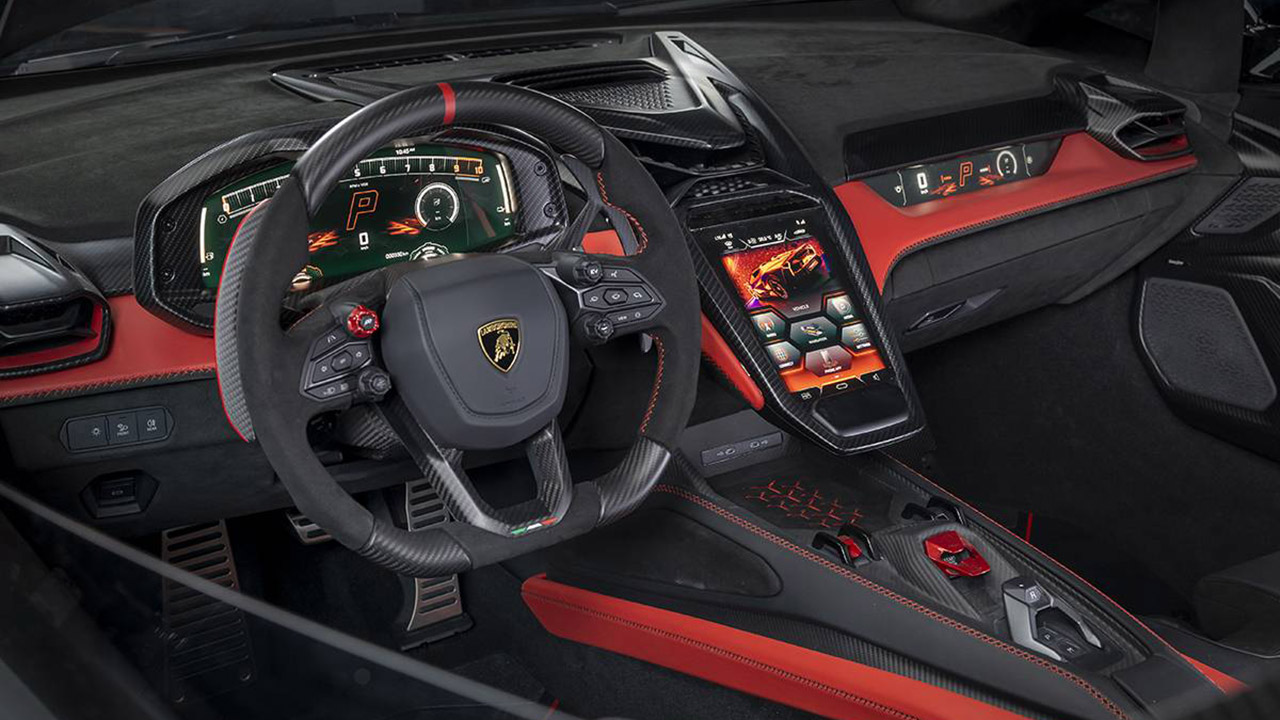
The cabin features the same pilot-inspired layout that Lamborghini is known for. Every surface is covered in carbon fibre and unique textiles, and the seats hold you and your passenger firmly in place while you’re cornering hard. Three screens present your data in pristine hexagonal graphics that match every interior feature and part of the outside trim. Haptic controls and aviation-style switches keep everything in easy reach.

Advertisement

Source link

Continue Reading

Tech

Linux kernel maintainers pitch emergency killswitch after CopyFail and Dirty Frag chaos

Published

on

OSes

Instead of waiting for patch cycles, admins could simply shut down vulnerable functions before attackers get there

Linux kernel maintainers are considering giving admins a giant red emergency button to smash the next time another nasty vulnerability drops before patches are ready.

The proposed feature, named “Killswitch,” would let admins temporarily disable specific vulnerable kernel functions at runtime instead of sitting around waiting for fixes. The so-called patch was submitted by Linux stable kernel co-maintainer and Nvidia engineer Sasha Levin after a bruising couple of weeks for Linux security.

Advertisement

The proposal basically gives admins a way to pull the plug on vulnerable kernel functionality. If exploit code starts spreading before patches arrive, the targeted function can be disabled so calls to it immediately fail instead of reaching the vulnerable code.

“When a (security) issue goes public, fleets stay exposed until a patched kernel is built, distributed, and rebooted into,” Levin wrote. “For many such issues the simplest mitigation is to stop calling the buggy function. Killswitch provides that.” 

The past couple of weeks have not exactly been great advertising for the traditional “wait for patches” approach.

First we saw the disclosure of CopyFail, a Linux local privilege escalation bug that quickly moved from disclosure to active exploitation. Days later, Dirty Frag emerged: another Linux privilege escalation flaw with public exploit code and no official fixes, after coordinated disclosure efforts fell apart before patches were ready.

Advertisement

As Levin’s proposal itself puts it, organizations are often left exposed “until a patched kernel is built, distributed, and rebooted into.” Killswitch aims to fill that gap.

Killswitch would work through the kernel’s security interface and is mainly intended for subsystems that systems can survive without for a while. In practical terms, Levin’s argument is that temporarily losing some networking or crypto functionality is preferable to leaving known vulnerable code exposed on production systems.

However, the feature would not fix vulnerable code or replace it with safe code. It just slams the door shut on the dangerous bit until administrators can properly update their kernels.

Naturally, handing sysadmins the ability to selectively shoot pieces of the kernel in the head has already sparked debate among developers over stability, potential for abuse, and whether people can be trusted not to accidentally saw off important limbs in production. 

Advertisement

Still, after CopyFail and Dirty Frag, the kernel community increasingly seems to be arriving at the conclusion that running broken functionality may now be preferable to running weaponized functionality. ®

Source link

Continue Reading

Tech

‘The way Apple’s design team intended it from the start’: Liquid Glass is getting a macOS 27 overhaul to fix its most glaring problems

Published

on


  • Apple will tweak Liquid Glass in macOS 27, a new report claims
  • The changes aim to fix the most pertinent criticisms leveled at the design
  • But they will be limited in scope and won’t fundamentally alter Liquid Glass

It’s safe to say that Apple’s Liquid Glass redesign has proven to be controversial, and nowhere is that more the case than in macOS 26. But despite Apple apparently doubling down on its commitment to the glassy user interface, it seems that the company is willing to make some concessions to improve the fit and finish of its operating system.

That’s what’s been reported in Bloomberg journalist Mark Gurman’s latest Power On newsletter. There, Gurman pointed out that in several aspects of macOS — particularly those featuring sidebars or dense concentrations of text — Liquid Glass textures “reduce text clarity or create interface confusion.” That’s something that Apple is allegedly setting out to address in macOS 27, which will be revealed at the company’s Worldwide Developers Conference (WWDC) on June 8.

Source link

Advertisement
Continue Reading

Tech

OPPO Launches Filmmaker Accelerator Program in India With Discovery

Published

on

Mobile photography used to be about taking the least muddied photo, but that’s not the case anymore. Smartphone photography is getting better every year, thanks to phones like the OPPO Find X9 Ultra. And OPPO clearly wants to be at the center of that movement in India. The company has now announced a new Filmmaker Accelerator Program, in collaboration with Warner Bros. Discovery, as part of its newly launched OPPO LUMO Creator Program. The initiative is aimed at emerging Indian creators and focuses heavily on short-form mobile storytelling.

OPPO Wants Creators to “Meet Culture Anew”

OPPO Filmmaker Accelerator Program prizes

This year marks the third edition of OPPO’s Culture in a Shot initiative. Previous themes focused on documenting traditions and celebrations, but the 2026 edition shifts toward something broader. The new theme, “Meet Culture Anew, Make Your Moment,” focuses on how younger creators reinterpret culture through everyday moments, fashion, food, travel, and digital expression.

The centerpiece here is the Filmmaker Accelerator Program, which OPPO and Discovery are positioning as a proper mentorship pipeline for young creators. Selected participants will receive guidance from industry professionals across storytelling, filming, and post-production. OPPO will also provide access to its latest smartphones and creator grants.

Speaking on the matter, Goldee Patnaik, Head of Communications at OPPO India, said

At OPPO, we believe technology should empower people to tell stories that matter.‘Culture in a Shot’ reflects our belief that culture is living, evolving, and best expressed through real people and everyday moments. With the introduction of a dedicated video category this year, we aim to inspire a new generation of creators to tell powerful stories through short-form visual content and share them with the world.

The biggest winner gets:

Advertisement
  • ₹5 lakh cash prize
  • An OPPO Find X9 Ultra smartphone
  • An opportunity to direct a collaborative short film with OPPO x Discovery later this year
  • Official recognition across OPPO India platforms

To participate, creators need to upload original videos on Instagram, 30 seconds to 10 minutes long, using hashtags such as #OPPOxDiscovery, #CultureInAShot, and #ShotOnOPPO. The contest runs from May 5 to July 15, 2026.

Source link

Continue Reading

Tech

Humanoid robots: Can Tesla and other companies deliver on the hype?

Published

on

Humanoid robots have been everywhere lately.

They’re running half-marathons in Beijing. They’re chasing wild boars off the streets of Warsaw. They’re getting put to work as airport baggage handlers, waste sorters, and traffic cops. They’re walking the red carpet with first lady Melania Trump at the White House. They’re even being ordained as Buddhist monks.

Humanoid robots have been hyped as the future of everything, from completing household chores to caring for elders to doing the dirty work on the factory floor, while Elon Musk is pivoting Tesla from cars to humanoid robots, claiming they’ll soon outnumber humans.

Today, Explained host Sean Rameswaram talked to tech writer and journalist James Vincent — who wrote a Harper’s Magazine cover story titled “Kicking Robots” — about the humanoid robot hype and how much of its promise can actually be realized.

Advertisement

Below is an excerpt of their conversation, edited for length and clarity. There’s much more in the full podcast, so listen to Today, Explained wherever you get podcasts, including Apple Podcasts, Pandora, and Spotify.

James, you’ve had the distinct privilege of doing something most of us still haven’t done — you got to meet a bunch of robots. How many robots did you meet?

I lost count after the first few, I’ll be honest. I met a few from two of the leading companies in the US. One is called Apptronik and another is called Agility Robotics. They make two very different styles of robot. They’re both humanoids in that they resemble a human — arms, legs, etc. — but Agility is very much focused on the warehouse and their robots look a little bit more inhuman. They have those backward-facing knees. Apptronik makes a more general purpose robot that looks much more like a human in terms of normal body proportion, it stands upright, and you look it eye to eye — or eye to unblinking robot eye, whatever that might be.

I got to meet them, shake hands. I played ick-ack-ock, as rock paper scissors is sometimes called in the UK. And I also — this was my heart’s content, I so wanted to do this — I wanted to kick a robot. I have that burning urge inside me that I want to get my own back before they obviously take over the world.

Advertisement

So the robots were nice to you, but you weren’t that nice to them.

Oh, I was horrible. I was terrible. They’re going to be coming for me in the future. I have no doubt about that at all.

They didn’t actually let me kick a robot, I’m very sad to say. They said it might be a bit of a safety hazard, so I got to poke one very hard with a big stick instead. And that was the next best thing.

No, it didn’t. This was the creepy thing about it. They gave me this very high-tech stick, which was I think a broom handle with a bit of safety foam taped on the end of it. And they said, “Give it a shove, give it a punt. See how hard you can push it.” And I was very nervous about this because they told me that this was one of the prototype humanoids. It was worth hundreds of thousands of dollars. And if I knock it down and it breaks, that’s great copy, but it’s also the end of my access to this company. They’re not going to be pleased.

Advertisement

I gave it a shove and it wobbled, and they were like, “No, you can do it harder than that.” I gave it as hard as I could. It staggered backwards and threw its arms up in the air as it regained its equilibrium. It was just such an uncanny moment to see a robot mimic so perfectly, to my eyes, the movements of a human. I remember doing this and having it stagger backwards and then trot back up to me, look me right in the face, and I was like, “Oh gosh, these things are real.”

What are humanoid robots meant to do, James?

If you believe the pitch decks and the hype men, they’re meant to do anything that an able-bodied human can do. They’re meant to slot right into the workplace, sort packages, bolt on car doors, anything and everything. This is the pitch. This is why they are built like humans. They want them to do anything that a human laborer can do. And that’s a big ask.

Who’s asking the robots to do it all right now?

Advertisement

A lot of companies in the US and in China, mainly. These are the two leaders in the robotics space. It used to be mainly startups, but now we’re seeing more of the big tech companies move into this space as well.

Meta recently bought a robotic startup. Google has been doing stuff with robots for ages. It’s been testing its AI out on them. And Tesla — it’s Elon Musk’s obsession, alongside colonizing Mars. He thinks that Optimus, which is the name of Tesla’s robot, is going to be the most productive, the most profitable product ever invented. I think this is typical Muskian hyperbole. But his interest is something that has moved the market hugely. And when he got involved, a lot of companies followed suit.

Why is it that we’re seeing more of this stuff? Is it just because there are more robots now?

The big reason for why we’re having this moment for humanoids at the moment is AI. The ChatGPT boom and deep learning have enabled large language models or chatbots. A lot of people have thought that this is a transferable technology that we can plug into humanoid machines and other machines and it can learn in the same way that chatbots have been able to learn and to reproduce human speech.

Advertisement

The big thing that they’re depending on is that robots in the past had to be programmed manually. You had to say, “Move your arm here, down this many degrees, across like this, and apply this much pressure.” What you have with the new form of AI is that it learns these lessons by itself. You plug in a lot of data, you give it an output that you want, and it learns how to connect those pieces together.

These companies hope that if we get enough data, we will “solve the problem of physical robotics” and we will have these machines that are multidexterous and capable of all these different tasks.

The big criticism of that is that robots are not in the same world as chatbots. Chatbots are dealing with text. You talk to a chatbot even today and it will still make mistakes every now and again. When those mistakes are transferred to the physical world, they suddenly become a lot more potentially dangerous.

A big thing that a lot of companies are doing at the moment is they’re saying, “We’re going to put these robots in the home. They are going to be the perfect robot butler and they will take care of your dishes and your laundry and all the rest of it.”

Advertisement

If a chatbot gets something wrong when you’re asking it to do some research, then it’s not the biggest deal in the world. You may spot the error and correct it. If a robot gets something wrong when it is cleaning away your plates and dishes, if it breaks one in every 10 cups, are you going to be happy with that quality? No, I don’t think so.

Is the way China’s developing these machines different from the way we are?

I would say that the main difference is that China’s doing it faster and better. I think there is more of a focus in the US on home products as a marketing tool to the rich and saying, “Look, we can take care of all these chores for you.”

In China, you have what is one of the fastest aging populations in the world. People over 60 are predicted to be 30 percent of the population by 2040. So you have a loss of manufacturing labor and you have an increased burden on social care. I think for Chinese state planners, humanoid robotics could very much plug into both of those gaps at the same time.

Advertisement

There is a slightly different focus, but it is one that is organic in terms of the advantages of the Chinese economy. The big thing that the Chinese economy has that the US doesn’t is scale. It has a massive ability to manufacture these units. It can make thousands at a time. This is why China is pulling ahead.

You spent a lot of time in your piece trying to suss out the hype versus the reality. Where do you land? Is this going to be our reality within a few years or is this more like flying cars?

I think it’s nearer to flying cars than it is to the chatbot side of things. We’ve seen really rapid advances. There has been a legitimate leap forward in terms of capabilities. However, that does not mean that we are matching the hype that is being pushed out by people like Elon Musk and other leading companies who are saying, “We’re going to have one of these robots in your house next year and it’s going to be doing all the chores you need and it’ll never make a mistake and it certainly won’t fall over and kill your cat.”

I think those promises are just not true. I can see humanoid robots becoming a more common presence within both the work and the home over the next 10-plus years. But in the next five years, in the next three years, I really doubt it.

Advertisement

Source link

Continue Reading

Tech

Classic Outlook’s Quick Steps trip over Microsoft bug

Published

on

Personal Tech

Client’s handy automations get grayed out unless you know the keyboard shortcut

If you’re using Quick Steps in Microsoft Outlook and
wondering why they’re grayed out, a bug introduced in version 2512 is the culprit.

Classic Outlook is approaching the
twilight years
of
its prodigiously long life, but users can still fall victim to productivity-killing bugs – in this case, a problem with Quick Steps.

Advertisement

Quick Steps automates common or repetitive tasks in Outlook. Always have
to move a bunch of messages to a specific folder? Quick Steps is your friend.
Pin an email and mark it as unread? Again, the actions can be lined up in Quick
Steps and executed with a single click or a keyboard shortcut.

Until Microsoft breaks it.

In a support article,
Microsoft has confirmed that in some situations, Quick Steps in classic Outlook
can appear grayed out. The workaround (if rolling back or switching clients isn’t an option) is to use a keyboard shortcut. “The shortcut will work even if the Quick Step is grayed out in the
user interface,” Microsoft wrote.

The problem is that if a Quick Step
contains actions that “can’t be fulfilled,” it’s grayed out. Microsoft’s own the example states: “A Quick Step that moves a message to a folder and
clears categories will be grayed out in messages where there are no categories
applied.”

Advertisement

“This is known
to happen with Quick Steps with Flags and Categories actions such as ‘Clear
flags on message’ or ‘Clear categories’.”

Classic Outlook has suffered several glitches of late. Microsoft admitted in April that it could occasionally chow down on
system resources for no obvious reason. Then there was its tendency to explode when opening too many emails.

Microsoft has been clear that Classic Outlook’s days are numbered. Outlook 2024 is due to drop out of
mainstream support in 2029
. However, there remains much that Classic Outlook does which New Outlook
doesn’t, such as COM support.

And, when Microsoft hasn’t broken them, Quick Steps. ®

Advertisement

Source link

Continue Reading

Tech

5 Foldable Finds From Harbor Freight That Can Help Save Space In The Garage

Published

on


It’s easy to lose track of how much space you have in the garage. When your vehicles aren’t in there, it can look like tons of room for all kinds of automotive gear, tools for around the home, and any other odds and ends you can’t find a place for in your house. But it can fill up fast. Especially if you have a couple of cars, bikes, or scooters in there too.

If you find yourself fighting for room in your garage, then you have some options. You could try decluttering and organizing everything in there with some smart DIY storage magic, or invest in a top-rated storage system from a major retailer. Alternatively, you could plan which gear you buy in advance before you wind up in that situation, or even replace some of your more bulky or clunky items with some foldable alternatives. If you want to try the latter, then Harbor Freight might just about have you covered.

Exactly what you can expect to find at Harbor Freight depends a little on where you’re based, or if you’re able to head in-store to pick it up. That’s because some items can’t be shipped to select states like Alaska or Hawaii, while other items are only available if you go in person. What you can expect to find also hinges a little on what you use your garage for. For example, you might want the tools or gadgets that only come out on rainy days to stay in your garage, or you might find that you need some ergonomically desired automotive gear for when you want to work on your ride.

Advertisement

Haul-Master heavy-duty folding trailer

Trailers aren’t exactly anything you can put away easily. Even on the smaller side of things, they can be large, cumbersome devices that can be tough to find a home for. One way you can ease the pain of trying to find a suitable place to keep your trailer is by opting for a folding trailer, like this Haul-Master trailer from Harbor Freight. Despite the fact that it can tow up to 1,720 pounds at a time, it can fold all the way down to about 24 by 63 inches, or less than two by five-and-a-half feet. Admittedly, that’s not the smallest amount of floor space if you’re really stuck for room — but if you need a trailer and want to economize your garage space the best you can, then it’s a solid choice. Especially considering how large trailers can easily be.

Advertisement

Haul-Master’s heavy-duty foldable trailer is made out of a steel frame with built-in slots for stake siding and a tiltable trailer bed. The frame is finished with a red baked enamel coating, and comes with two 5.3 by 12-inch diameter tires. When assembled and unfolded, the whole trailer comes to just shy of 5 feet long, 16 feet wide, and just over 2 feet high. Something that’s worth keeping in mind, though, is its weight: even before you load it up, it weighs almost 260 pounds. So, even though it’s compact when folded, it could still be tricky to move around your garage.

Advertisement

Franklin foldable hand truck

Sometimes you’re going to find yourself needing to move something that’s just a little too awkward to lift and carry around, like a washing machine, freezer, or some other kind of big, clunky appliance. In those cases, you might find yourself wishing you had a hand truck or trolley lying around. But, if you don’t use it often, then having something little, light, and easy to fold away when you’re done is the most useful choice. One pick that could fold away neatly in your garage when you aren’t using it is Franklin’s foldable hand truck.

The hand truck is made out of a lightweight aluminum frame, which can fold away to fit in tight spaces when it’s not in use. When empty, it weighs roughly eight pounds, making it easy to move around or lift without too much heft. Don’t be fooled by its relatively small size — it can still manage to tow up to 150 pounds. It comes with a 19.5 by 16 inch toeplate, and sits on two 7 1/4-inch wheels. 

Based on the product reviews, users are pretty happy with the hand truck across the board. It has more than 2,400 five-star ratings, with 95% of more than 3,100 customers sharing that they’d recommend the item. Many of those reviews highlight how quick and easy the truck is to fold away, along with how easy it makes it to move around all kinds of items, ranging from big flat-screen TVs to carloads of groceries. It’s not all good reviews, of course — a handful of comments note that the truck could be more robust and maneuverable — but they’re in the minority, with under 150 three-star or fewer reviews overall.

Advertisement

Franklin portable telescopic ladder

Sometimes a garage is a little less of a place to work on your car, and a little more of a place to keep useful household items alongside your car. If that sounds like your garage, then you might be able to free up a little room in there by replacing your regular ladder with a portable, telescopic option. 

According to the Harbor Freight product listing, this Franklin portable telescoping ladder can reach heights of up to 14 feet while supporting up to 250 pounds. The ladder extends one foot at a time, making it easy for you to know exactly how much you’re going to need to extend (or distend) it by while getting set up to reach your desired height. As well as its impressive extension abilities, you can also fold it away to about 2.5 feet — or 31 inches — when you’re ready to pack it away again, making it a solid option for smaller garages, tight spaces, or anywhere that you’re already storing a lot of stuff. However, there is a catch: a couple of reviews note that the 14-foot size refers to the maximum reach, meaning it could work out to be a little shorter expected.

Advertisement

Maximum heights aside, the customer reviews on this one are generally pretty great. At the time of writing, the ladder has a 4.6 out of 5-star average based on more than 1,600 reviews, with less than 15% of those ratings giving it three stars or less. A lot of the top reviews praise the ladder’s compact size and ease of use, particularly when it comes to folding it down for storage. So, you don’t need to worry about it being a pain to put away when you’re done with it.

Advertisement

Pittsburgh foldable engine stand

An engine stand isn’t a necessity in every garage, but if you find yourself working on or repairing vehicles often, then it could be useful to keep one around. As useful as they can be, they aren’t exactly small pieces of kit. They need to be able to hold engines in a way that allows you to easily access basically any part of it at any given moment, after all. They need to be robust and a decent size to be able to do so. Pittsburgh’s foldable engine stand can hold up to 2,000 pounds of weight when fully set up, while also being suitable to fold up and slide away in the corner of your garage when you don’t need it.

Pittsburgh’s red foldable engine stand sits at 34.5 inches tall, and around 35 inches wide. Front to back, the stand is 42.5 in length. According to its quite favorable user reviews, it folds away small, thanks to its smart design, making it easy to keep out of the way when you aren’t working on your engine. The stand is also highly adjustable, with a rotating engine mount and four different engine arms, meaning you can set it up, or pack it away, pretty much any way you might want to. 

There is something to keep in mind about having an engine stand in your garage — and that’s the fact that you won’t be able to lift your engine into the stand without another piece of gear. So, if you want one, you’re also going to need to get something like an engine hoist or shop crane. That’ll take up a little extra space in your garage, although it doesn’t have to be much.

Advertisement

Pittsburgh one-ton foldable shop crane

As well as the aforementioned engine stand, Pittsburgh also offers a couple of foldable shop cranes that you could slip into your garage. One type that Harbor Freight has available is a one-ton capacity foldable shop crane, which matches the company’s foldable engine stand. Using this, you can hoist your engine out of your vehicle and onto your engine stand ready for you to get to work without anything else getting in the way. And, of course, you can fold it up and put it aside afterward without it hogging up too much of your garage’s precious floor space.

The total size of a shop crane is adjustable by design, with different parts of it extending or folding so that it can safely shift your engine, or anything else you want to move around, within reason, around your workspace. On top of that, this one also sits on foldable legs, making it easier to store than some of the more static alternatives available on the market. Thankfully, the foldable elements of the crane don’t seem to have impacted its durability or sturdiness, based on customer reviews. That makes sense, considering that the crane is crafted out of steel, and weighs just under 150 pounds. Besides commending the crane’s durability and quality, a lot of the listing’s reviews also note that the crane is easy to assemble out of the box.

Advertisement

How we figured out which products to include

We kept a few things in mind while picking out products to help make the most of space in your garage. For starters, and perhaps most evidently, we only looked at products available from Harbor Freight. Then, we took a look at any items that either checked the “Foldable” box on the product listing page, or that mentioned having foldable elements in the product description. And, of course, we made sure that every product was something you might actually want to keep in your garage, like tools that only get used once in a blue moon or car maintenance-related gear.

Advertisement

We also made sure to keep a close eye on user ratings for each product. To make sure that any products shared are generally considered favorably and useful to those who have purchased it, we didn’t consider any products that had an average rating of lower than four stars. In fact, at the time of writing, all products have a rating of at least four out of five stars. As it stands, every product listed here actually has an average of at least 4.4 stars. To make sure that the average wasn’t representative of a noisy minority, and actually reflected how most consumers felt, we only considered products with at least 200 reviews. Similarly, we also made sure to only list products that were recommended by at least 90% of users who wrote a review.


Advertisement

Source link

Continue Reading

Tech

The Smartest Way To Upgrade Your Home Theater Setup Without Replacing Everything

Published

on


We may receive a commission on purchases made from links.

You don’t really have to pay outrageous ticket prices to enjoy a good flick on a big screen. If you have a spare room, whether a basement, garage, or an attic, you can easily turn it into a dedicated home theater. All you need is just a little imagination, a large TV, a surround-sound system, and a reliable Wi-Fi connection, and the experience can be magical.

If you’re a movie buff, you’ll probably consider investing in theater seats and the best home theater projectors, like the Epson Home Cinema LS11000, to get that real cinematic experience. But such upgrades will cost you an arm and a leg; you may expect to spend around $15,000 and more, according to Angi. Fortunately, if you’re on a tight budget, there are still plenty of ways you can upgrade your home theater without spending much.

Advertisement

You can keep costs low by thrifting for essentials, repurposing your home’s old tech, upgrading your audio with the best-rated soundbars for $200, or buying used home theater items. You just have to be careful because some mistakes people make when installing home theaters can easily lead to a less-than-perfect viewing experience. With that said, here’s how you can elevate the look of your home theater without replacing everything or breaking the bank.

Advertisement

Up the ambiance with good lighting

The quickest and most affordable way to make any room perfect for watching blockbusters is to upgrade your lighting. One thing to keep in mind when designing the perfect home theater room is that too much lighting can break your viewing experience. This means that if you want to convert a room with endless windows, you’ll have to install some light-blocking solutions first. Blackout curtains, blinds, and screens will reduce any glare that can reduce picture quality and cause distracting reflections.

Next, you’ll want to install a light dimmer to control lighting levels. A light dimmer will offer you the flexibility to create the perfect ambiance for watching a movie or navigating the room during an intermission. However, if your lighting fixtures aren’t compatible with a dimmer, switch to smart bulbs like the Philip Hue Smart LED bulbs available on Amazon for $53. They are easier to install than dimmer switches, offer movie-sync capabilities, and let you control their brightness and color from your smartphone.

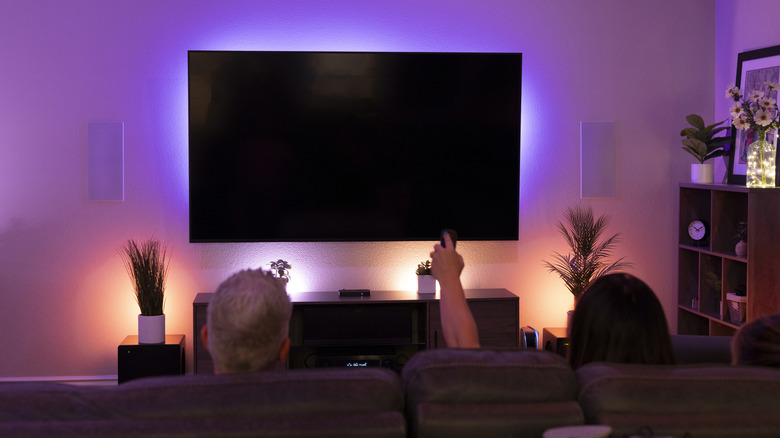
Depending on your home theater’s layout, another easy way to up your room’s ambiance is to create a subtle ambient lighting with LED strip lights. Placing them along the ceiling, behind your plush seats, and along the perimeter of your room will add some additional lighting flair. They will also reduce eye strain, make navigating dark scenes safer, and even make your viewing experience interactive with music and movie sync mode. You can stick LED strip lights behind your TV for a better experience.

Advertisement

Bring your necessary extras

Part of the joy of designing a home theater is that you can always equip it with anything you want. For most of us, movie nights aren’t complete without beverages and snacks. That’s why, if you love the habit of sharing a big bowl of popcorn with family or friends during movie night, investing in a popcorn machine is always the best idea. It will enhance your home theater’s aesthetics and will also come in handy for other events, like at-home date nights and birthdays. You can even go a step further by equipping your media room with a mini fridge stocked with your favorite drinks.

On top of that, you can give your home theater a personal touch by decorating it with acoustic movie posters that resonate with your taste and the room’s aesthetics. In addition to giving your home theater a Hollywood vibe, cinema posters will make your space feel genuine. Acoustic movie posters made with sound-absorbent materials will help block sound waves, significantly impacting your overall entertainment experience.

Also, it’s wise to load up a few throw pillows and blankets to create a cozy atmosphere. While at it, you’ll want to get a plush sofa that your friends will be jealous of. But that doesn’t mean you have to spend all your savings on a brand-new theater seat. You can save quite a bit by buying used seats or repurposing your old furniture.

Advertisement


Source link

Advertisement
Continue Reading

Tech

A New Subnautica 2 Gameplay Trailer Just Dropped Ahead Of Its Early Access Release

Published

on


We’re just a few days from the Early Access release of Subnautica 2 after a long wait, and the team has been sharing glimpses into the gameplay to drum up the hype. This weekend, the developers at Unknown Worlds hosted a two-hour livestream showcasing the first dive for anyone itching to get a deeper look at the game. The team also dropped a short gameplay trailer, which you can check out below. Subnautica 2 will be available in Early Access on May 14 from Steam, Xbox and Epic.

Subnautica 2 takes place on a new world, according to the game’s description: “Driven from your home by ongoing conflict, Alterra offers you the chance at a new life. But as the colony ship CICADA shepherds you and your fellow Pioneers to your new home, something goes awry. The ship’s AI insists that your mission should continue. Stranded and faced with near-insurmountable odds, you must do everything in your power to survive. The future of humanity on this world is in your hands.”

Advertisement

The development of Subnautica 2 hit a snag last summer, when it was reported that publisher Krafton, which purchased Unknown Worlds in 2021, had fired the heads of the studio, who subsequently sued. In March this year, Krafton was ordered to reinstate Unknown Worlds CEO Ted Gill. With its Early Access release imminent, things now appear to be back on track. But, it’ll still be quite some time before the full version of the game is ready; the developers have said they expect Subnautica 2 to remain in Early Access for “about 2 to 3 years.”


Advertisement

Source link

Continue Reading

Trending

Copyright © 2025