


I was the kind of kid who dug holes, the deeper the better. I vividly recall the ecstasy of once splaying out my fingers in a bucket full of backyard dirt, a bliss punctuated only by a sudden burning sensation in my right hand that turned out to be my first-ever encounter with a fire ant.
Tech
Tech Moves: Amazon Music names VP; Microsoft departures and a Copilot shakeup; Veeam adds exec

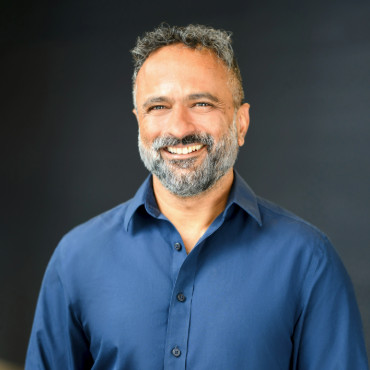

— Hrishikesh Aradhye has joined Amazon Music as vice president of product and tech for the streaming service. He spent nearly 19 years at Google, most recently as senior director of engineering leading YouTube Music and Podcasts.
“The music industry is going through a tectonic shift that will unlock entirely new kinds of customer experiences through AI,” Aradhye said.
Earlier in his tenure there, he worked at Google Research, where he helped pioneer computer vision and machine learning systems for YouTube and Android.

— Vasu Jakkal is stepping down after six years as Microsoft‘s corporate vice president of Security, Compliance, Identity, Management & Privacy. She thanked colleagues and customers in a LinkedIn post.
“It’s been an epic journey — six years ago, we formed our Security customer solution area and the growth and impact of Microsoft Security over these past years has been incredible as we built the #1 security business in the world while keeping our mission of building a safer world for all at the heart of it,” Jakkal wrote.
Jakkal is based in the San Francisco Bay Area and previously held executive roles at FireEye and Intel. She did not indicate her next move.

— Mika Yamamoto was named chief marketing and customer AI officer for Veeam Software, a Seattle-based data protection and ransomware recovery company. It’s the latest in a string of leadership changes at Veeam, which has made four other executive hires or promotions this year.
Yamamoto previously worked for Seattle-area companies including F5, Microsoft and SAP, and joined Veeam from Los Angeles-based Blackline.
“She has experienced this industry from every angle — analyst, operator, executive leader — and has consistently put the customer and partner at the center of how companies operate,” CEO Anand Eswaran said in a statement.
— In case you missed it, Microsoft has undergone a leadership shakeup within Copilot as the company works to turn its platform into a “super app.” Changes include:
- Jacob Andreou has moved from corporate vice president at Microsoft AI to executive vice president of Copilot. He joined the company in 2025 from Greylock Partners and before that was at Snapchat-maker Snap.
- Peter Sellis has been named Copilot’s lead of design, growth and engineering, reporting to Andreou. He joins Microsoft from Discord and overlapped with Andreou at Snap, where Sellis was VP of product.
- The reshuffle also comes with a departure. Trevor O’Brien, former VP of product for M365 Copilot experiences, has resigned from his role. “The past two and a half years have been inspiring, chaotic, intense, and deeply rewarding,” O’Brien said on LinkedIn. He did not indicate his next move.

— Seattle-based tech executive Niranjan Vijayaragavan has taken the role of CTO at Five9, a cloud-based contact-center-as-a-service company. He joins Five9 from Nintex, where he served as chief product and technology officer. Other past employers include Avalara and Expedia Group.
“Five9 is at the center of one of the most important shifts in customer experience as AI reshapes how companies engage with their customers,” Vijayaragavan said in a statement. The company is based in San Ramon, Calif., but Vijayaragavan will remain in Washington.

— Maura Mast was appointed president of Seattle University, succeeding Eduardo M. Peñalver, who resigned to lead Georgetown University. Mast is the first woman and first mathematician to hold the top role at the Jesuit Catholic university.
“Our world urgently needs spaces of dialogue and discernment that actively work to heal deep divisions and build a more equitable society,” Mast said in a statement, adding that SU can lead in these areas.
Mast will begin the job on Sept. 1 and joins SU from Fordham University, where she served as a dean and mathematics professor.

— The Cascadia Sustainable Aviation Accelerator named Jake Gentry as its executive director. Gentry helped create CSAA, which aims to make the Pacific Northwest a center for the production of sustainable aviation fuel (SAF). He remains a managing director at Seattle’s Earth Finance and is leading the accelerator as part of that organization.
Hawaiian Airlines CEO Diana Birkett-Rakow praised Gentry’s appointment, saying in a statement that he has “the right combination of strategic depth, execution orientation, coalition-building instincts, and commitment to the work.”
Gentry previously held sustainability leadership roles with companies including Point B and Boeing.
— Seattle’s F5 has added Gavin Munroe to its board of directors, where he will serve on the audit and risk committees. Munroe has decades of experience in financial services and most recently was chief information officer and transformation head at Commonwealth Bank of Australia.
— Harini Gokul, a former leader at Microsoft and AWS and past chief customer officer at Entrust, has joined the board of Afiniti. The company builds AI software for call centers that aims to match customers with the appropriate agent. Gokul also serves on the Medina City Council.
— Safe Software, a data and AI enterprise integration platform based in Surrey, British Columbia, has named Nabil Lodey vice president of Europe, the Middle East and Africa. Lodey will help lead the company’s expansion in the UK and Ireland.
— Allison Gruber is now VP and leader of Portland-based Cambia Health Foundation. She previously oversaw Cambia Health Solutions’ Strategy and Innovation team, where she led data-driven strategy initiatives.
— And some more folks are retiring from Microsoft, in addition to those featured Tuesday in a GeekWire story on the company’s first-ever voluntary retirement program:
- Nir Michaely, Azure software engineering manager, closes out 26 years with the company.
- John Ballard, principal security researcher, departs after nearly 30 years.
- Kristen Mattoni, senior product marketing manager, is leaving after 15 years.
Continue Reading
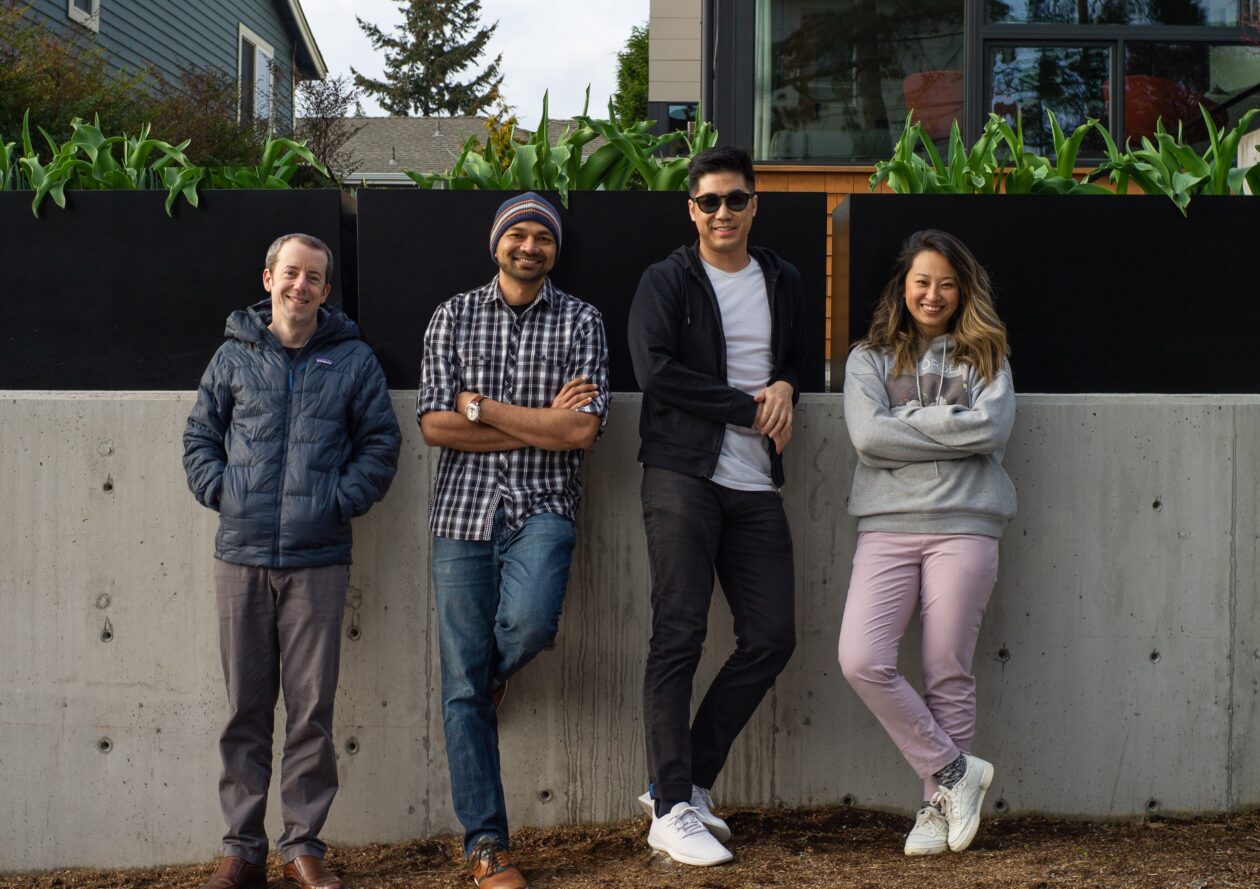

Common Room, the fast-rising Seattle startup that built an AI-powered platform to help sales and marketing teams track buying signals across their customers, is being acquired by Zoom.
Terms of the deal were not revealed in a news release on Thursday.
“When we founded Common Room in 2020, we set out with a simple vision: to transform how organizations connect with people,” Common Room co-founder and CEO Linda Lian wrote in a LinkedIn post. “Over the past six years, we’ve had the privilege of building alongside our customers through one of the biggest shifts in enterprise software, the rise of AI.”
Zoom said the acquisition will extend its Zoom Revenue Accelerator platform “upstream,” pairing Common Room’s buyer intelligence with the conversation data Zoom already captures from sales calls — giving reps insight into which accounts are in-market and why to reach out before a call even happens.
“Revenue teams will now have a single, unified platform that will help them reach the right person at the right moment with the right message at every stage of a deal, cutting busywork,” Abhisht Arora, Zoom’s chief strategy officer, said in a blog post.

Common Room emerged from stealth in 2021 with $52 million in funding from investors including Index Ventures, Madrona Venture Group, Next Play Ventures, Greylock, 01 Advisors and a bevy of angel investors — Etsy CEO Josh Silverman; former Twitter CEO Dick Costolo; and former Axiom CEO Elena Donio.
Early customers included Notion and Pulumi, and the roster has grown to include enterprises large and small.
Lian, a former associate at Madrona Venture Group and senior product marketing manager at Amazon Web Services, co-founded the company alongside three other Seattle tech vets: CTO Viraj Mody, a former engineering director at Dropbox and technical advisor to the CEO at Convoy; chief architect Tom Kleinpeter, previously a principal engineer at Dropbox; and design chief Francis Luu, who spent 10 years at Facebook.
Common Room was the 2022 GeekWire Awards Startup of the Year and is No. 80 on the GeekWire 200, our ranked index of Pacific Northwest startups.
Zoom, the San Jose, Calif.-based company best known for its video conferencing platform, has expanded in recent years into AI-powered tools for sales, customer service and workplace collaboration. The publicly traded company reported nearly $4.9 billion in revenue over the past 12 months and has a market capitalization of roughly $25 billion.
“Joining Zoom connects our graph to the conversations sellers have every day where deals are actually won and to the AI that can act on it,” Lian said in a statement. “With Zoom’s scale, resources, and global reach, we’ll be able to accelerate our roadmap while continuing to serve and innovate for our customers.”

OnePlus is directing customers in some European markets toward OPPO devices, with its German website presenting OPPO as the natural upgrade path for existing users. The regional handoff adds to “months of speculation that the smartphone brand is slowly being folded into its parent company,” reports Android Authority. From the report: The banner, seen on OnePlus’ German website, tells visitors seeking “the experience you trust” that OPPO offers the same speed, performance, and compatibility that OnePlus users have come to expect. It hosts devices ranging from earbuds and tablets to OPPO’s latest foldables, with each button taking users straight to OPPO’s website. Particularly revealing is the wording. Instead of pushing future OnePlus hardware, the company focuses on the fact that OPPO’s products are built on the hardware and software that users already know, while promising seamless compatibility with current OnePlus devices. In other words, if you’re up for your next upgrade, OnePlus seems to be saying OPPO has what you’re looking for right now.
Reports in the past several months have said OnePlus has been scaling back operations in several global markets. Previous restructuring reportedly included cutting headcount, a more focused regional strategy, and greater dependence on OPPO’s infrastructure. The two brands have been sharing engineering resources, software development, and supply chains for years now, particularly as OxygenOS and ColorOS have begun to look more and more alike.
Interestingly, the change appears to be regional. OPPO already has a retail footprint in Germany, so the handoff is fairly straightforward. In the United States, however, things are very different, where OPPO does not officially sell smartphones. That means American OnePlus customers aren’t getting the same messaging, mostly because there isn’t an OPPO lineup waiting to step in.
Early-stage firm Magnify Ventures has raised $46.6 million for its second fund from LPs including Melinda French Gates’ Pivotal Ventures.
Founded in 2021 by Joanna Drake and Julie Wroblewski, Magnify invests in companies that target the care economy, such as those building assistive robotics, family cybersecurity, and AI for home use.
The firm said Fund II will invest in companies that build AI tools for households, health and home systems, and fintech infrastructure for families.
The venture firm last raised a $52 million Fund I in 2022 (Pivotal Ventures anchored that fund), and has backed child care startup Kinside and children’s expense management startup Till Financial (in which Pivotal Ventures was also an investor).
Pivotal Ventures generally acts as a GP and LP, backing companies building in the care economy. Its investments include caregiving startups Papa (in which Magnify Ventures was also an investor) and Seen Health.
Tech
KredosAI raises $7M, led by BMW’s venture arm, to use AI to help companies collect late payments
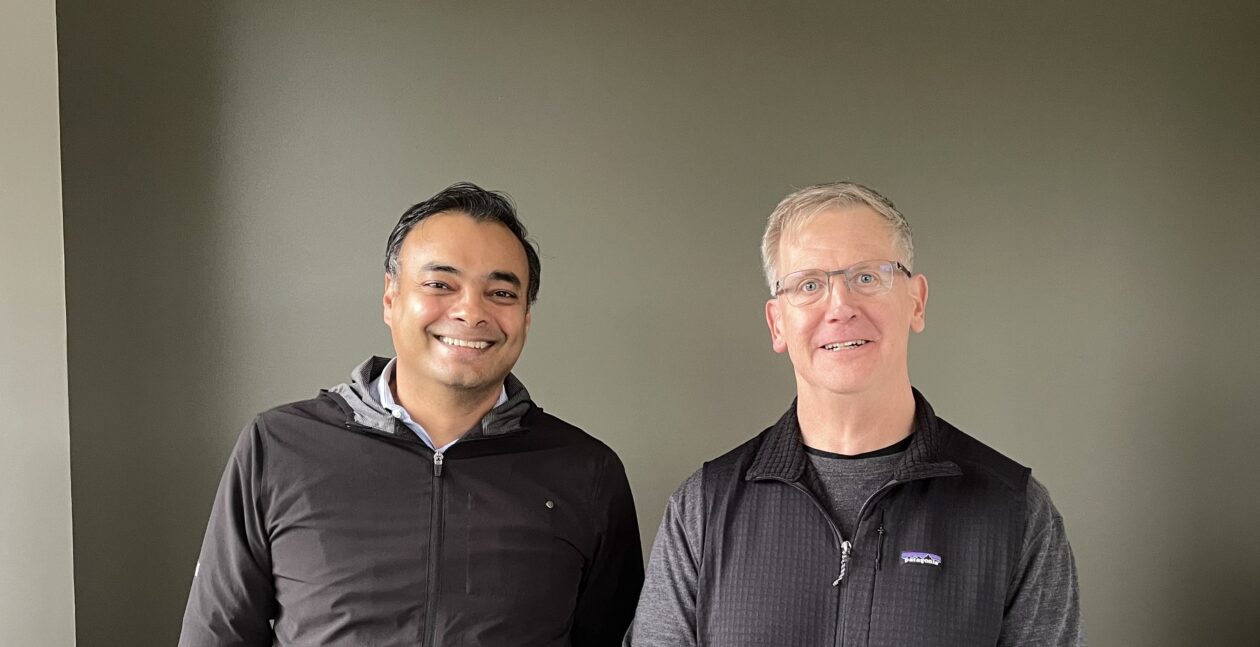

KredosAI, a Seattle-area startup that uses AI and behavioral science to help companies chase down late consumer payments, raised $7 million in a new funding round led by BMW i Ventures, the independent venture capital arm of automaker BMW Group.
The company, founded in 2021 by former T-Mobile executives Balaji Sridharan and Dave Thoms, is based in Issaquah, Wash. It focuses on the period after a bill is overdue but before the account gets sent to collections or written off. Its technology is able to tailor the wording, timing and channel of each overdue message based on a customer’s account history.
The premise, Sridharan said, is that most people aren’t being nefarious in their tardiness but are dealing with something more mundane, such as a forgotten due date, a short-term cash crunch, or possibly some kind of frustration with the service.
“The majority of consumers who go late on payment actually want to pay,” he said. “There’s a very small subset of people that are fraudsters, but most of them want to pay.”
New investors Motley Fool Ventures and Walter Ventures joined existing backers Okapi Venture Capital, StartFast Ventures, SaaS Ventures and Stout Street Capital in the Series A round. Total funding to date for the company is a little over $10 million.
The BMW connection came through an introduction from an existing investor, Sridharan said. Having an automaker’s venture arm behind it matters, he added, as KredosAI moves deeper into auto lending.
Subprime auto-loan delinquencies have climbed to their highest levels since the 1990s. Lenders, Sridharan said, weigh the problem much the way telecoms do — balancing the cost of recovering a payment against the value of keeping the customer. That overlap, along with BMW’s footprint in the car business, made its venture arm a logical fit.
KredosAI works with large enterprises, including some in the Fortune 50, though it doesn’t name most of them publicly. It got its start in telecom, which speaks to its roots: Sridharan and Thoms met at Bellevue-based T-Mobile. Sridharan spent eight years there, first running corporate strategy and later the carrier’s IoT unit, following an earlier stint at McKinsey. Thoms has spent much of his career in credit and collections at telecom and financial-services firms.
Watching T-Mobile wrestle with millions of past-due accounts each month, they came to think there was a better way to handle the conversation with a customer who’d fallen behind.
To decide what to send, the software weighs a customer’s account characteristics (how often they’ve been late before, their average balance, how long they’ve been a customer) while steering clear of off-limits signals like age. It reaches people through text, email and most recently RCS, along with AI voice agents the company began adding over the past year.
The company says the approach delivers notable improvement: across its customers, it reports cutting write-offs by 11.5% and lifting customer lifetime value by 13.6% compared with conventional collections. It says its platform has handled more than 200 million customer interactions over the past two years, with revenue growing more than sixfold in that span.
KredosAI is also a partner of FICO — the analytics firm best known for the FICO credit score — and integrates its technology into the FICO Platform, the software banks and other large companies use for credit decisions and collections.
The company competes with a range of collections-software players, including larger, more established Symend, a Calgary-based company that also uses behavioral science to interact with late-paying customers. The field also includes online debt collectors and companies selling older collections software.
The company has about 25 employees, roughly eight of them in the Seattle area.
Sridharan said the funding will go toward sales and marketing, further product development around agentic AI and voice agents, and eventually international expansion. He expects to roughly double headcount over the next year, to 50 people or more.
The additional funding, he said, “gives us a bit of fuel to go to market a little more aggressively than we have in the past.”

The game will now arrive three weeks earlier on September 4.

If you’re a video game publisher with a game arriving in the second half of 2026, you’re tossing it into a veritable bloodbath. Nearly every publisher (other than perhaps Nintendo) has been doing everything in its power to keep out of the way of GTA 6. One of the many games due to be released in the comically over-crowded September-October window (GTA 6 arrives November 19) is Onimusha: Way of the Sword, which was supposed to launch on September 25. We’re now getting it a bit earlier, with Capcom announcing a new release date of September 4.
The new release date is for all versions of the game, so PC, PS5 and Xbox Series X|S, as well as the Switch 2. It was only a month ago that Capcom announced the original release date for the first new mainline entry in its historical fantasy action series since 2006’s Onimusha: Dawn of Dreams. 2002’s Onimusha 2: Samurai’s Destiny was remastered for modern platforms last year.
The new release date for Onimusha: Way of the Sword means the game should be afforded a bit more breathing space. The previous September 25 date would have seen it arrive in the same week as highly anticipated games like Control Resonant and Silent Hill: Townfall, which both come out on September 24. After the new Onimusha lands, the next major release is currently Marvel’s Wolverine on September 15.
And if September 4 is still too long to wait for Capcom’s next big game, there’s a demo for Onimusha: Way of the Sword out right now, but bear in mind that progress does not carry over to the full game.

The textures of my childhood loom larger in my memory than sights or sounds. My first paper cut, on a piece of sheet music, and the rush of cold water my older sister used to wash away the blood. The warmth of my mother’s hug and the tender squeeze of my grandmother’s hand in mine. The whoosh of air I’d get from barreling a scooter down a hill, and the pristine crunch of stepping out into a winter’s first snow.
Eager to break my own screen addiction, I toggled my iPhone into grayscale a few years ago, an accessibility setting that renders everything in black and white. In the days that followed, I’d look up from my phone and marvel at the sense that suddenly, the world’s colors appeared more vibrant than they were before, dulled by my adjustment to highly saturated displays. It was as if I’d just kicked a really bad sugary candy habit, and could once again appreciate the natural sweetness of a piece of fruit.
I’ve since been fascinated by the ways that our senses warp to adapt to our largely digital lives, and the extent to which those changes have seeped across our perceptions of the real world. I wanted to write this piece because I had a hunch that in the same way that screens had desensitized my eyes to color, making the world appear washed out, perhaps the opposite was happening with our sense of touch: By spending so much time tapping on a screen, we’d become hypersensitive to the point of aversion to the textures of the world around us.
I found some evidence to this effect, including links between excessive screen use and sensory issues, like the overwhelm many neurodivergent children feel in response to certain textures. But in conversations with experts, I also learned there has been a much longer societal arc away from engaging dynamically with our sense of touch, a loss that has had a profound impact on how we understand the world around us.
This was the world where many of us grew up, one in which we felt our way toward understanding, sometimes playfully, sometimes a little painfully, sometimes both. To make a phone call, you once had to rotate a dial. Entering an apartment building meant turning a key inside a wobbly knob. Calculators and cameras used to be clunky, and writing was something you did with a pencil you sharpened yourself.
But now, almost everything gets done through the touch of a screen, and the sharper that resolution becomes the fuzzier sense of what’s real and what’s not becomes. We’re starved for clarity, and as we fall out of touch with the world — both literally and figuratively —we’re only getting more ravenous.
“We’re aching for friction; we need and we crave friction,” said Mark Paterson, an expert on the sociology of touch at the University of Pittsburgh, because “it affirms ourselves and the boundaries between the self and the world.”
To be an adult today is to literally lose touch, to recede into the contours of your workaday life, and to reserve your exertions to do or to produce, but less frequently to explore. And to never willingly expose yourself to the fire ants lurking in the dirt.
Growing up isn’t the only reason why the textures that stitched together my early memories — those lines between real and imaginary play — now fall as flat as a crushed juice box or a deflated birthday balloon. Like most Americans, I spend far too much of my time with my nose pressed to a glossy screen, electroconductive feedback loops replacing the many discrete activities my younger hands mastered.
If kids once grew up surrounded by a smorgasbord of textures, many of today’s iPad babies struggle to hold crayons or zip up their jackets by the time they enter kindergarten. Socializing is something we now do overwhelmingly online with teens hanging out with their friends face-to-face nearly half as often as they did 20 years ago. We’re told to touch grass, but we keep touching screens: Americans spend 90 minutes less outside of the house now than they used to, and two-thirds of parents say they spent far more time outdoors as kids than their children do now.
“If the screen could imagine what its users look like,” Paterson told me, “then we’d be one big set of eyes and just one finger.” That one finger — or at most, two to four — is the dominant medium through which most young adults engage their sense of touch for over seven hours each day, tapping and texting and swiping for the equivalent of 106 days per year.
What so many people experience as screen fatigue might actually be better described as touch hunger, the unyielding sense that we don’t touch grass, touch one another, or touch textures — neither buttons, pens, nor dials — as often as we used to. In the quest to make our daily lives as frictionless as possible, we might be losing out on some of what makes life feel like life itself.
“The world is a wonderful interface to engage with,” said Rachel Plotnick, an expert in human-technology relationships at Indiana University. “Giving that up comes with a real loss.”
How the world became flatscreen
As the 19th century yawned into the 20th, an Italian physician named Maria Montessori opened up an experimental preschool for children cooped up in an impoverished tenement in Rome.
The first Casa dei Bambini, as Montessori called it, embraced a pedagogy of touch, eschewing lectures in front of a blackboard in favor of sensory activities such as fastening buttons, sorting blocks, and sweeping corridors. In their tactile environment, the students who arrived to the schoolroom “wild and uncivilized,” Montessori once said, soon “showed extraordinary understanding, activity, vivacity, and confidence. They were happy and joyous.” At a time when only half of Italian adults were literate, many of these children quickly became the first in their families to learn to read and write.
“In order to form and maintain our intelligence, we must use our hands,” Montessori said decades later in 1946, by which time hundreds of schools around the world had adopted her methods and her name.

The anxieties that first made Montessori’s educational innovations take off around the world will feel familiar to anyone nursing a smartphone addiction today. In the wake of the industrial revolution, nobody seemed to use their hands like they used to anymore. By 1920, more Americans lived inside cities than outside of them. As that shift continued, entire generations of workers began to earn their living primarily using their minds, not their hands, for the first time.
But the dawn of mass production also led to “real concern about bodily disengagement from the world,” said David Parisi, a professor of touch and digital technologies at New York University. Americans began buying their bread instead of baking it. They did away with churning butter, spinning yarn, chopping wood, and pickling produce in favor of buying packaged margarine sticks, factory-woven fabrics, coal furnaces, and canned vegetables.
There were ultimately tremendous benefits to these industrial era innovations, like more abundant food, the birth of modern medicine, and dramatically longer lifespans. But as transformative as those innovations were, they also represented an early manifestation of the “loss of what I like to think of as a certain type of epistemology, a certain mode of knowing or being in the world,” Parisi said. “That sense of knowing through touch.”
In the century since sliced bread began appearing on market shelves, our daily lives have only become more and more tactilely convenient, which is another way of saying still more physically disengaged. And while earlier technologies still involved some “differentiation of the interface,” said Parisi — think of a button versus a knob — now ubiquitous touch screens, despite their name, have flattened even those differentiations.
Plotnick, who wrote a definitive history of the button’s electrified early days, notes that there was plenty of fear at the turn of last century that all forms of touch would one day be replaced by the pushing of a switch. “Electric buttons have become the masters of the world, overcoming distance, doing away with the necessity for forethought,” a French nobleman that she quotes complained in 1903. “And, for that matter, for thought at all. Everything is changed.”
But today, most of what we do is achieved not through a push, which at least requires a modicum of pressure, but through a fleeting tap or swipe. What Plotnick refers to as “touchscreen mania” has flattened even those once ubiquitous buttons, levers, and knobs into a glossy lifeless display.
Even branding has gone flat in deference to the smartphone, which favors the legibility of 2D design at the expense of the richness that even a veneer of texture brings. If you’ve wondered why the logos for brands like BMW, PayPal, and Olive Garden look so sterile and interchangeable now, blame the fact that most advertising now happens through your phone, which can make anything remotely textured — like Spotify’s much-maligned disco ball icon — look distorted. Like most of modern life, it seems, branding has contorted itself to fit into the deflated topography of a largely digital world.


“We are tactile creatures,” Plotnick said. “How boring is it that all of the digital experiences that we have in the world are just touching the same slick flat glass over and over again.”
And boy, do we spend a lot of time touching that slick flat glass, often at the expense of touching more important things, like nature — and one another.
Americans check their phones nearly 200 times per day. It is the first thing they see in the morning and the last thing they see when they go to sleep. Nearly one-third of adults under 30 spend over nine hours per day looking at screens, which means that if nothing changes, they will spend over 20 years of their lives under the cool blue glow. Their dexterity, and even grip strength, appears to be atrophying away the handwriting or even typing mastery of older generations, and collapsing toward the great plains of the smartphone screen.
Worry not for the grown-ups, whose motor skills are more or less fully baked, but for the iPad babies, whose fingertips have been expeditiously wired like those of a prodigious violinist to deftly navigate the contourless landscape of their devices, as anyone who’s seen a toddler navigate an iPhone can attest.
Montessori’s hands-on learning methods remain popular, particularly among well-to-do parents. But many toddlers are glued to their screens, spending about 2.5 hours per day with them on average, instead of stacking blocks or painting with their fingers. And, while affluent families might be able to afford the Montessori preschools, $80 audio toys, and screen-free summer camps, many families can’t afford the increasingly premium experience of an unplugged childhood. According to a 2019 study, tweens from low-income families use their phones two hours more per day than high-income kids. Kindergarteners from low-income families spent a startling six hours per day on screens at the height of the Covid-19 pandemic.
It’s no wonder that over three-quarters of preschool teachers say their students can’t hold scissors, crayons, or pencils as well as they used to anymore, according to a 2024 survey by Education Week. Nearly 70 percent of teachers said kids have a harder time tying their own shoes. “The only place I’ve seen crayons given to kids is on airplanes,” said Field, the developmental psychologist, who believes that children’s motor skills have increasingly molded around their use of screens, rather than around the hexagonal barrel of a pencil or the steel frame of the monkey bars.
But this haptic atrophy is about more than pure playground nostalgia. As Montessori spent a lifetime pointing out, children — and teens and adults for that matter — learn better when they learn with their hands. Kids who count on their fingers are better at math, and writing by hand lights up your brain in all the right places for encoding new memories and information. For every additional hour per day that children spend on screens, they score 10 percent lower on standardized tests, a correlation that probably helps explain why American kids have been testing precipitously worse on math and reading ever since the smartphone took over about a decade ago.

“How do kids learn about the world? Well, they need to feel if something is lumpy or soft or hard or hot or rough,” said Plotnick, who becomes concerned at times when she sees her own kids learning math on the computer. “If they’re not moving around pieces and they’re not erasing with an eraser,” she said, they might not be able to “process that content in as rich a way as if they were using their hands.”
While adults may be less vulnerable to the worst effects of screen time, they’re not immune to its dangers. Smartphone-addicts are more prone to vertigo and balance problems, meaning that the majority of Americans may be clumsier than they used to be. And if you spend all of your free time spiking your dopamine levels on your phone, then you have less time for using your hands to knit, cook, and garden, which all measurably improve your mood and can ward off depression.
“Even just writing, holding a crayon or pen, is stimulating the pressure receptors under your skin” leads to “a more relaxed neurological state” in which “your nervous system slows down, your heart rate slows down, your blood pressure slows down,” Field said. “You can trace a whole path towards ill health” from failing to adequately engage your sense of touch.
Like most technologies, the touchscreen is not inherently evil. It is not predestined to be cast as the cartoonish bad guy siphoning kids away from their cowboy dolls like LilyPad the tablet does in the latest Toy Story sequel. During the pandemic, for example, touchscreens were arguably an overwhelming force for good, allowing people to preserve some slimmer of connection with one another when being physically together became unsafe.
Arko Ghosh, a professor at Leiden University, has studied patients going through brain surgery. After they come out of anesthesia, “one of the most difficult moments of their life,” almost all of them “grab their phone, because it’s so easy and it immediately connects you to your loved ones,” he marveled. “There’s a magic going on through your fingertips that wasn’t there before.”
“How do kids learn about the world? Well, they need to feel if something is lumpy or soft or hard or hot or rough.”
— Rachel Plotnick, Indiana University
But there are also inescapable tradeoffs to outsourcing your social life to the screen instead of rubbing shoulders and shaking hands in the real world. Touch starvation or skin hunger — the yearning for human contact — reached a much–discussed fever pitch during the pandemic, but many people never shook off the itch, in part because its roots long precede the pandemic.
Teens and young adults today spend 70 percent less time hanging out in person than they did two decades ago, and a poll in the UK found that 40 percent of adults go days without speaking to another person face-to-face. Americans have far fewer friends and have way less sex than they did a few decades ago. Even when they hang out with one another, most admit that they can’t stop checking their phones.
“There is more touch on the screen than there is on other people,” Field said, “and that is a sorry experience.” Holding hands or hugging have been shown to reduce cortisol levels and flood your brain with happy hormones. Touching grass has a similar effect, and so does collaging or ceramics.
It’s no wonder that people feel existentially lonelier, far less trusting, and I would argue, fundamentally less grounded in reality than they were when they, like me, spent their childhoods literally digging into the ground. When we no longer feel the grain of the world, how can we hold onto what’s real or not?
Have we reached peak screentime?
There are some indications that the world has reached its anti-tactile breaking point.
Dissatisfaction with our touch-deprived status quo has spilled out in the form of fidget spinners and the revival of the printed word, flip phones, clackity keyboards, wristwatches, and grannycore hobbies like ceramics or crochet. “People want that tactility, that physicality,” Parisi said, of textures as benign as “the play button on a cassette deck.” They crave the subtle etched sound grooves of a vinyl record — sales of which surpassed $1 billion last year for the first time since last century — or the feel of a cool metal needle pressed against a fuzzy bunch of yarn.
“I’m of that generation where I used to love taking the record home from the store and lifting the needle” of a new vinyl, Paterson said. “There was a tactile element that’s missing in digital streaming.” He believes their resurgence may belie “an appetite to introduce more friction into people’s lives again,” he said. “I think the tide is turning.”
Naturally, as with Montessori schooling, one’s digital detox now comes with a premium price tag: An app blocker can run for $60, ceramics classes are prohibitively expensive for many hobbyists, and some dumb phones — devices with far more limited access to apps and other functions — cost far more than their “smart” counterparts. But there are other reasons to be hopeful too.

Critically, schools (and in some cases, indie musicians) have begun locking up kids’ phones altogether, mandating recess, and forcing students to go back to handwriting essays in blue books. Quite suddenly, the lunchroom is loud again.
Even car companies, which so eagerly began adopting their big ugly touchscreens a decade ago, have begun bringing back the button. “People seem to have a hunger for physical buttons, both because you don’t always have to look at them — you can feel your way around for them — but also because they offer a greater range of tactility and feedback,” said Plotnick, who’s advised companies looking to make the switch. “I do think we are seeing that pendulum swing back.”
If you are not a neo-luddite, and the idea of a small computer wrapped around your index finger doesn’t make you seethe, then there is also the promise of wearables — like Oura rings, Apple watches, and Meta glasses — which could portend a more ambient technological future, one where people spend less time staring at screens and more time living in life.
“We don’t want to romanticize buttons and demonize touchscreens or vice versa,” said Plotnick. “We don’t have to live in a world where you have to only have one or the other.”
Haunting all of this, an actual ghost in the machine, is the spectre of artificial intelligence. On the one hand, it could push us towards an entirely frictionless future, Plotnick said, one where people need not even tap or swipe anything anymore to send out a message or get food delivered to your door. On the other hand, AI calls into question the very premise that led many people to value the cerebral over the corporeal in the first place. After all, the dawn of the white-collar workforce helped crystallize the idea of an America that worked — and by extension, defined itself — within the contours of the mind. Disrupting that premise — combined with the dawn of reality-warping AI photos, videos, and misinformation — could force a reassessment of the value of a human touch.
Over half of Americans now say they have a hard time knowing what’s true, and perhaps even more importantly, more than half feel isolated from one another, and three-quarters say they’re more stressed about their country’s future than they used to be. Over 65 percent of Americans don’t feel like they belong in this country, and over three-quarters said the same of their neighborhoods. The nodes that once connected people to their surroundings, to one another, and to their own personal truth appear to be eroding.
You really can’t believe everything that you see anymore. But with the almost quaint certainty that comes from a fresh blade of grass or a fire ant’s sting, you can in fact believe almost everything you can touch. If we choose to outsource our sense of reality, and even our precious early memories, to our frictionless digital lives then we are dooming ourselves to a life in a sea of slop, that thankless mire of the proverbial metaverse. At worst, we risk stripping away the textured frictions that help define where our selves end and where the rest of the world begins.

Financial disclosures from 2025 show he purchased stocks in Apple, Amazon, NVIDIA and Meta.

The New York Times has delved deep into Donald Trump’s financial disclosures from the first year of his second presidential term. Without a doubt, it was the most personally profitable period of any president’s term in office, personally netting him a figure north of $2 billion. While much of that largesse was earned via Cryptocurrency sales, Trump has also become an investor in big tech. The paper reports that on July 23, he bought up to $5 million of stock in Amazon, Apple, Meta, Microsoft, NVIDIA and Broadcom. It notes, too, the purchases were made on the same day the White House would release its long-awaited AI Action Plan.
In January, The New York Times reported that brokerage accounts tied to the Trump family made more than 3,600 trades. But while the Trump family does not have its assets in a blind trust, it says it does not have a say in which companies its brokers buy and sell shares in. The paper has reported, however, that Trump has often made “well timed” trades, such as an investment made in Dell shortly before it secured a $9.7 billion defense contract. As the Times reports, Trump was legally obligated to disclose the purchases of stock in Amazon, Apple, Microsoft and the rest, but he did not. As a consequence of his repeated omissions, he has had to “pay a small fine for failing to honor this rule.” It’s likely any future violations may not be so easy to deal with —- in January 2025, Trump said he was in favor of American citizens who are “repeat offenders” being made to leave the US.
In modern households, the living room has become one of our most connected spaces. We catch live sports, binge-watch trending series, and stream movies. Naturally, smart TVs have become a fixture in our daily entertainment habits. Yet, as people are paying more attention to protecting their privacy on computers and phones, the devices sitting right in front of the couch are often overlooked.
MacPaw’s new ClearVPN expansion fixes this vulnerability by bringing its signature simplicity and security to Apple TV and Android TV platforms. It’s a seamless way to browse privately on the biggest screen in your home, and it works with your existing subscription to protect up to 6 devices at once.
Why Our TVs Need the Same Privacy as Our Phones
The smart TV landscape has shifted dramatically. With adoption surging to more than 900 million units globally, found in over 85% of households, smart TVs have become a permanent fixture of our daily routines.
As they evolve into digital hubs, the privacy conversation is shifting from personal, handheld screens toward the one shared in the living room. Since these units continuously interact with background apps and services, this connectivity introduces new security challenges, underscoring the need for privacy tools that keep pace with modern digital habits. Addressing this, MacPaw’s ClearVPN is now available worldwide and brings essential security to any device running Android TV 6+ or tvOS 18+. To mark the launch, Digital Trends readers can get an exclusive 50% discount on their first purchase. Users can simply use the promo code DIGITALTRENDS at checkout to claim the offer. This promotion is valid for the next three months and can be renewed or extended afterward if required.
What makes it truly appealing is that MacPaw’s ClearVPN is closing this gap by making digital privacy feel a little less complicated. As Tetiana Shokina, Product Manager at MacPaw, explains, the team did not see this as just another feature request.
“We built ClearVPN on one belief: privacy should be effortless,” Shokina says.
Shokina continues, “Bringing it to Apple TV and Android TV was the obvious next step. If simplicity is our promise, it has to work on every screen, including the biggest one.” This update marks a significant shift, delivering the same level of care in how we watch TV that users have long expected on their personal devices.
Designed to Make VPNs Less Complicated
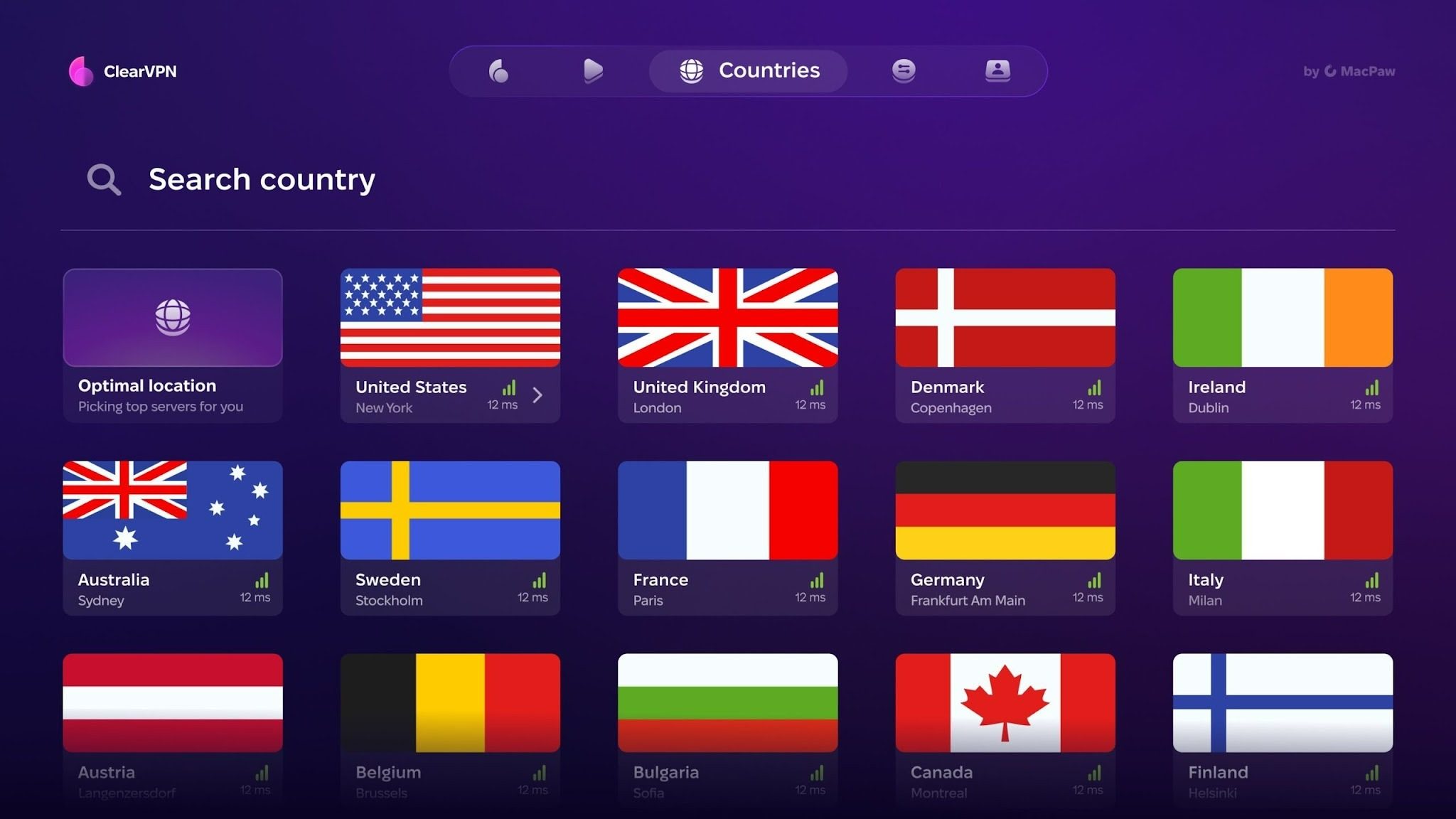
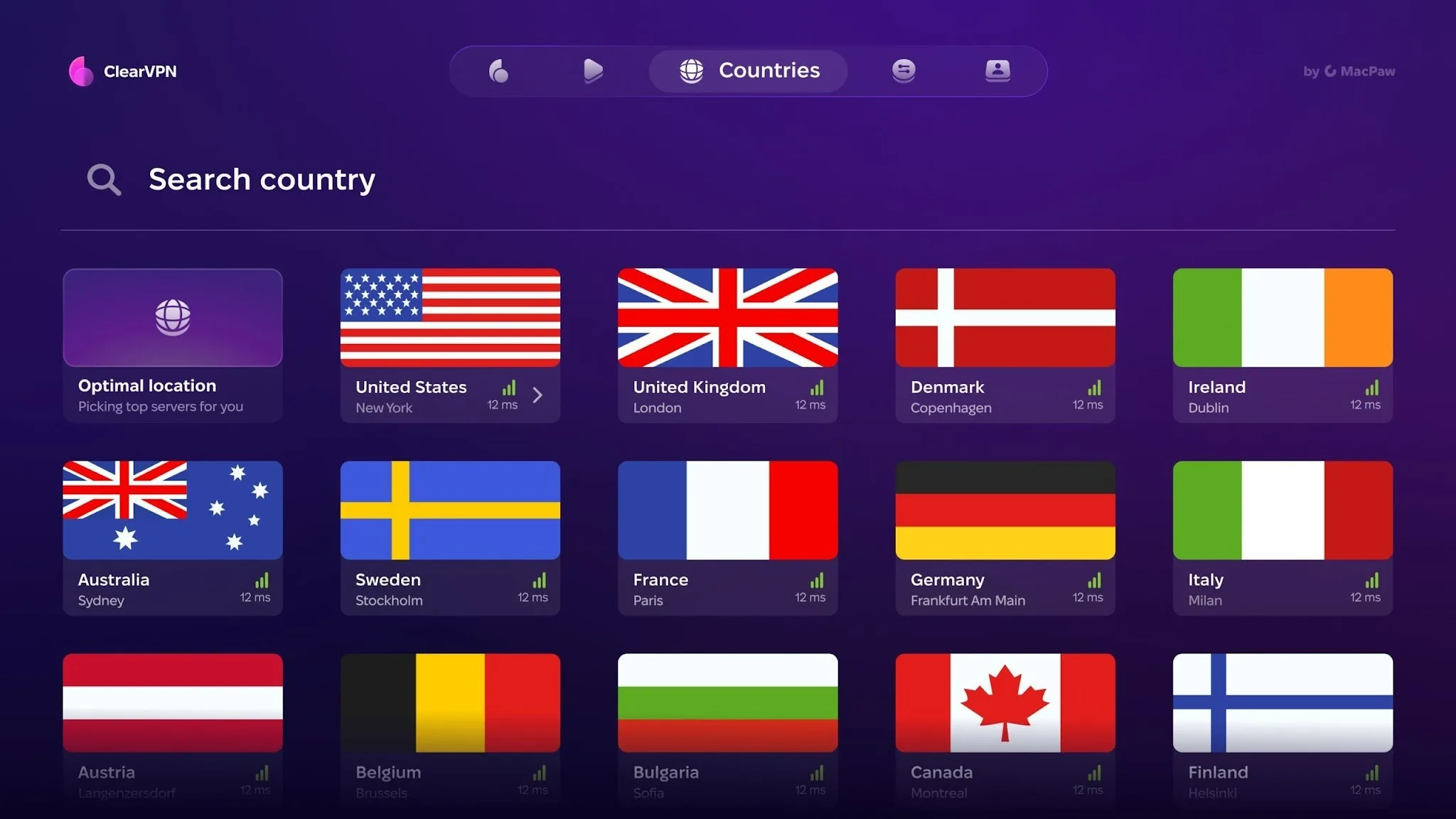
MacPaw’s ClearVPN has focused on simplicity since launching in 2020. Rather than overwhelming users with endless server lists or technical settings, the service removes the friction traditionally associated with using a VPN.
This philosophy applies directly to the smart TV experience. The Optimal Location feature automatically connects the device to the best server so that users never have to sort through a maze of technical configurations. For anyone who wants to settle onto the couch and start watching without a setup headache, this ease of use makes a meaningful difference.
Building on this convenience, the dedicated Streaming mode further removes any guesswork. Rather than searching for the right connection, users can link directly to servers optimized for their favorite platforms, ensuring a smoother stream with just a few clicks.
Furthermore, to ensure that speed matches this simplicity, MacPaw’s ClearVPN relies on industry-leading protocols that enable fast, stable connections without requiring the user to tinker with settings. The goal is to keep protection running quietly in the background so content can be enjoyed without interruption.
The service is built to adapt to a digital lifestyle. A single subscription supports up to 6 devices, allowing users to extend protection well beyond the television. Ultimately, covering everything from smartphones to smart TVs under one account creates a consistent and reliable privacy shield across every screen in the home.
Secure Your Living Room in Seconds
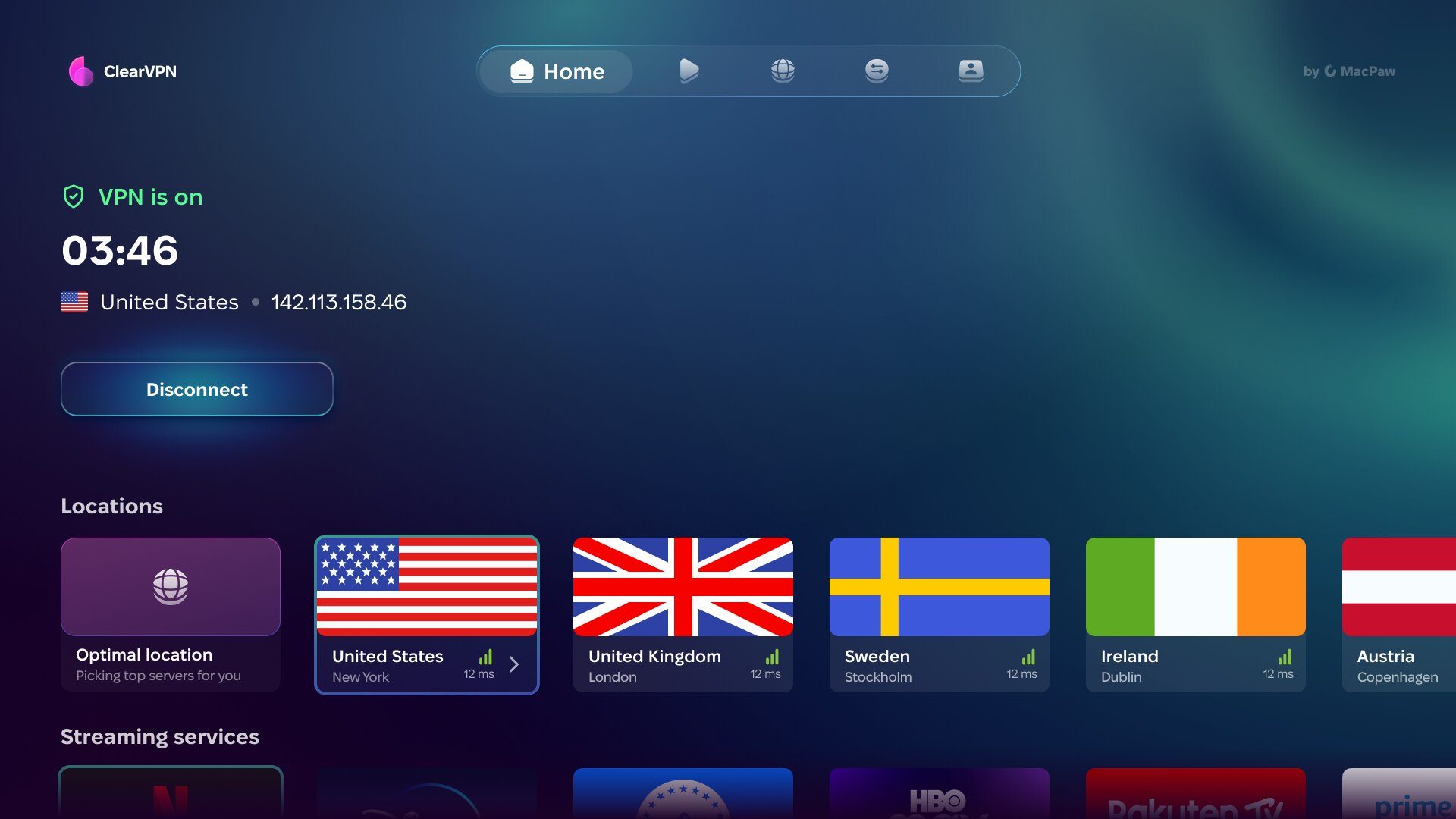
Getting started should be as easy as watching a show, and that is exactly how the setup process for MacPaw’s ClearVPN on TV was built. Anyone who has ever struggled to type a long email address or password using a television remote will appreciate how easy this is to navigate.
Users can activate this service by scanning the QR code displayed on the TV screen with their smartphone to confirm the login. Alternatively, they can use a short activation link and code to authenticate the app on a phone, tablet, or computer. Both methods remove the frustration often associated with logging into apps on smart TVs.
MacPaw’s vision aims to make technology feel intuitive and accessible. The company describes its mission as helping machines help you. Such an approach aligns closely with the service’s focus on simplifying online privacy rather than overwhelming users with technical complexity.
Privacy tools are often perceived as if they are reserved for power users, but products like ClearVPN by MacPaw emphasize making that same level of protection accessible to everyone. This is especially relevant as the number of connected devices in the average household continues to grow.
With the service already available to download across macOS, Windows, iOS, iPadOS, Android, routers, and Chrome browsers, the addition of Apple TV and Android TV extends that protection into the connected home. An extra layer of protection on these platforms is a necessity as smart TVs are no longer passive screens. They have transformed into powerful, internet-connected hubs that play a major role in how we consume content every single day.
For users looking to fortify privacy as part of their daily streaming while maintaining easy access to global content, the ClearVPN expansion offers a straightforward solution. It upholds MacPaw’s broader standard for technology by providing high-level security without requiring users to become VPN experts. It works best when it feels entirely invisible, acting as a background layer so users can focus on what they are really there to do — sit back and enjoy the show.
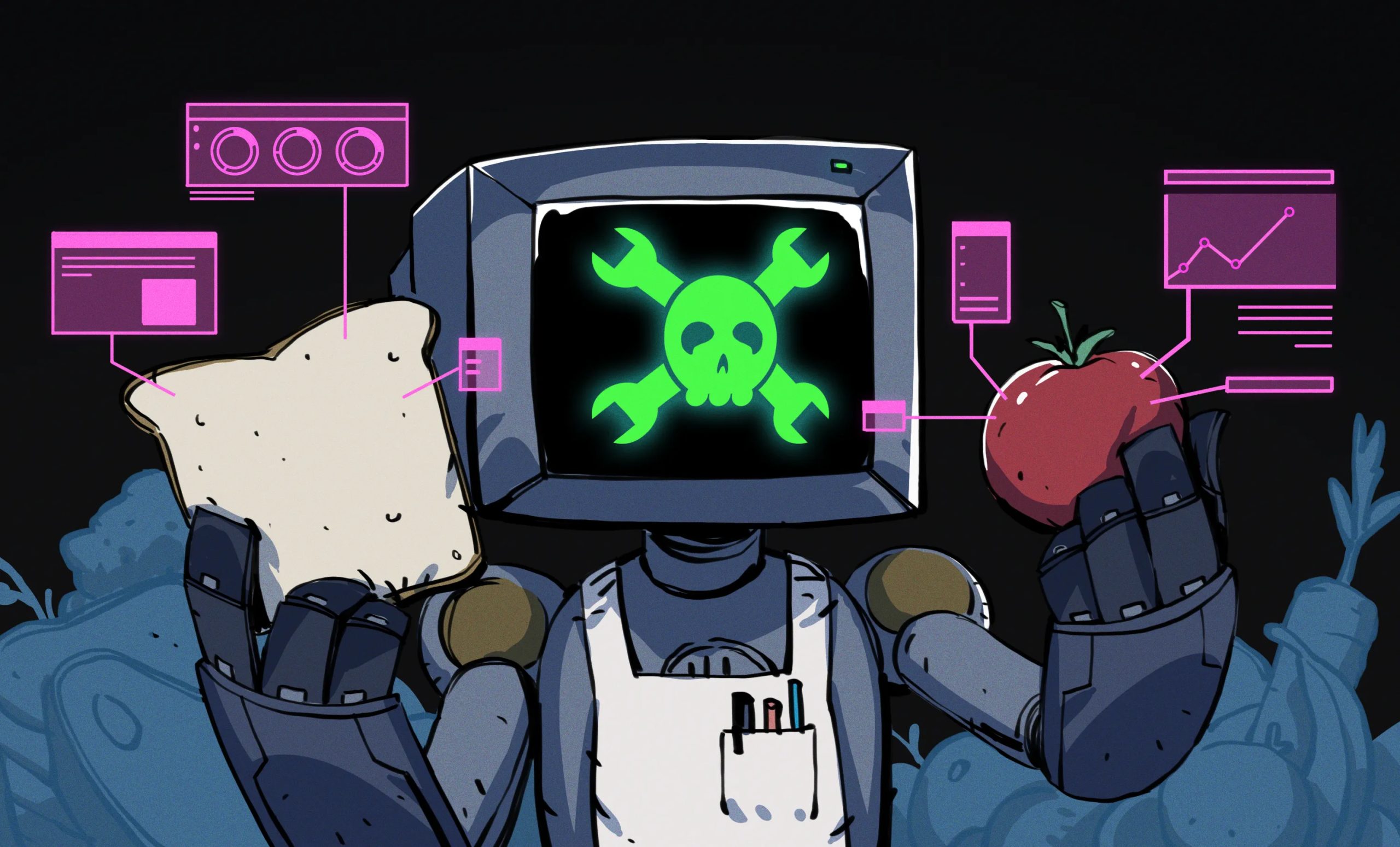
A few weeks ago we published the first in a new series of articles, Know Your Food. It was born out of the realisation that most people know surprisingly little about what they eat, and to apply a bit of Hackaday curiosity to received opinion on the subject. As we put it then: “To know both how common foodstuffs should be made, as well as how they are made industrially, should be an essential for everyone” We’ll continue in that vein, with a look at organic food.
If you buy your food in a supermarket it’s likely that in the vegetable aisle you’ll be presented with a choice. On one hand you will have the normal vegetable, and on the other and usually for a slightly higher price, the organic version of the same vegetable. What’s going on?
So What Is This Organic Stuff All About?

Organic production is a system of agriculture that emphasises natural fertilisers, pesticides, and farming methods over synthetic or intensive ones. It has its roots in the first half of the 20th century, and as the decades progressed it has become an important sector of agricultural industry. I grew up steeped in organic agriculture because my grandfather was an early adherent in the years following the war, so I’ve seen it from the sharpest end. There is a lot to commend organic production for and plenty of reasons to embrace it, but with that come some problematic aspects, and even dubious claims. Here I’ll try to unpick some of that.
It’s tempting to believe that all organic production is somehow a return to a 19th century rural idyl, complete with the obligatory chickens in the farmyard. Some organic producers do take a slice of this back-to-the-land approach to their craft, but the reality of organic farming is a very modern approach to managing the ecosystem. Organic farmers are not wary of progress, and neither are they reluctant to use pesticides or other chemicals. Instead they do so according to the principles of organic agriculture, so any techniques they use are designed to be beneficial to the ecosystem, and any chemicals have a natural origin.

An important thing to understand is that the line between organic and non-organic agriculture is not sharply drawn. Crop rotation for example is long established farming practice, as are techniques such as contour ploughing in areas with soil erosion. As for fertiliser, there will be very few farming operations whose work does not include manure in some form, or who do not take advantage of nitrogen fixing crops. Pesticides such as the insecticide pyrethrum – originally derived from chrysanthemum root – or Bordeaux Mixture as a fungicide – a solution containing copper ions, so called because of its origin in French vineyards who applied lime solutions from copper containers – find uses where applicable in both organic and conventional agriculture. The important distinction lies in the organic farmers not going further than this, into synthetic amonium nitrate fertiliser for example, or glyphosate herbicide, which you might know as Roundup.
That’s the organic sales pitch, and it’s a compelling one. Now, we’ll go through the not so positive aspects, both of the movement and of the business.
Organic status is not simply conferred to produce by virtue of being organically grown. Instead it’s a legally protected designation, enforced through a system of certification performed by designated organisations. Where I grew up in the UK for example, organic certification is performed by the Soil Association. This is good because it preserves trust in organic status, but it suffers the flaw that it’s a profitable business for the certifier, and an expensive one for the producer. This in turn favours larger producers who can afford certification, and leaves the smaller producer unable to afford certification and thus unable to label their produce as organic. They can describe it as “Organically grown” of course, but they lose the cachet of the organic label. Since many small producers are by necessity organic, this affects a large number of producers if not a significant sector of the market.
Is Organic Food Really Better?
Then there is the produce itself. Is it better than the non-organic stuff? Here we enter complex territory, because the answer differs depending upon the circumstances.
In terms of what advertising people like to call “goodness”, by which I mean nutrients, vitamins and minerals, and the like, in many cases it’s difficult to make a case for the organic product being superior to the non organic one. There will be exceptions such as apples, where a typical non-organic commercial dessert apple is overwatered to the point of diluting the beneficial properties it might have in search of the elusive “crunch”. But in the more ordinary case, that organic zucchini is unlikely to have more nutritional value than its non organic equivalent. It’s important to note that the organic product will lack any pesticide residues which may be present on its non organic equivalent, however it must be remembered that pesticide residue levels in food are subject to their own stringent regulation.

In terms of flavour, yet again it’s a mixed bag. An organic product grown in as intensive a manner as can be got away with under the rules, is not likely to taste better than the equivalent. It’s difficult even to pin down what in the husbandry governs the flavour of the finished product in a scientific sense, however as someone who grew up around organic production I’d offer the view that the longer something took to produce, the better its flavour is likely to be.
The Slow Food movement champions products made in this way, usually traditionally produced foods, heritage varieties, and foods with a particular terroir. If you’re looking for better tasting food then you may not find it with a supermarket organic label, but it’s quite likely that one of those small organic producers will have what you are looking for, simply because their methods are less intensive.
Finally, if you’re looking at the benefit to the environment, it’s likely that in most cases the organic product will impose less stress on the ecosystem and the wider environment than its non organic equivalent. If that’s your concern you should also look further than the means of production and into food miles; how far did the food in front of you travel to your plate? Here in Europe the strawberry is in season from around May to September, so does it make sense to fly them from the other side of the world in January, however nice they taste?
So now I hope you have more of an idea about organic food than you did at the start of this piece. You’ll know something about its benefits and problems, and you’ll know when it’s better than its non-organic equivalent. I hope you’ll find the food you like, and if you do, I hope it’s from a small producer, they need your business. Bon appetit!
Header: MichelM10, CC0.
When you’re jumping between the many different apps Google offers—Gmail, Google Maps, Google Calendar, YouTube, and all the rest—you may not be giving much thought to the Google account that underpins them all or to the myriad settings you can access that help to define your experience across all these apps.
If you’ve never opened up your Google account page on the web or on your phone, there are a host of options to browse through there. They cover everything from data security and browsing history to the backup email Google needs in case you ever get locked out of your account.
Here we’re going to focus on seven of the lesser-known settings: the ones that don’t necessarily get a lot of attention but which are still an important part of how your account and your Google apps operate. It’s worth spending a few minutes to review these and to make sure they’re set up in the way you’d like.
Also pause to consider how much personal information you want to share with Google, or how much of your information you’re making visible on the web. Let your own level of comfort guide your decisions on how you tweak these settings.
The starting point for all these settings is your Google account page on the web.
Set Your Home and Work Addresses
Google will use the information about where you live and work to personalize your experience. This is most useful in Google Maps, because it means you can get directions back home or to your office with a single tap rather than typing in the address each time. (You should see Home and Work shortcuts appear whenever you search for a destination.)
There are benefits for getting more accurate weather forecasts and more relevant search results too. The usual Google privacy policy rules apply: No one else will see the address information you’ve saved, but you might start seeing more ads for sandwich shops in your local area.
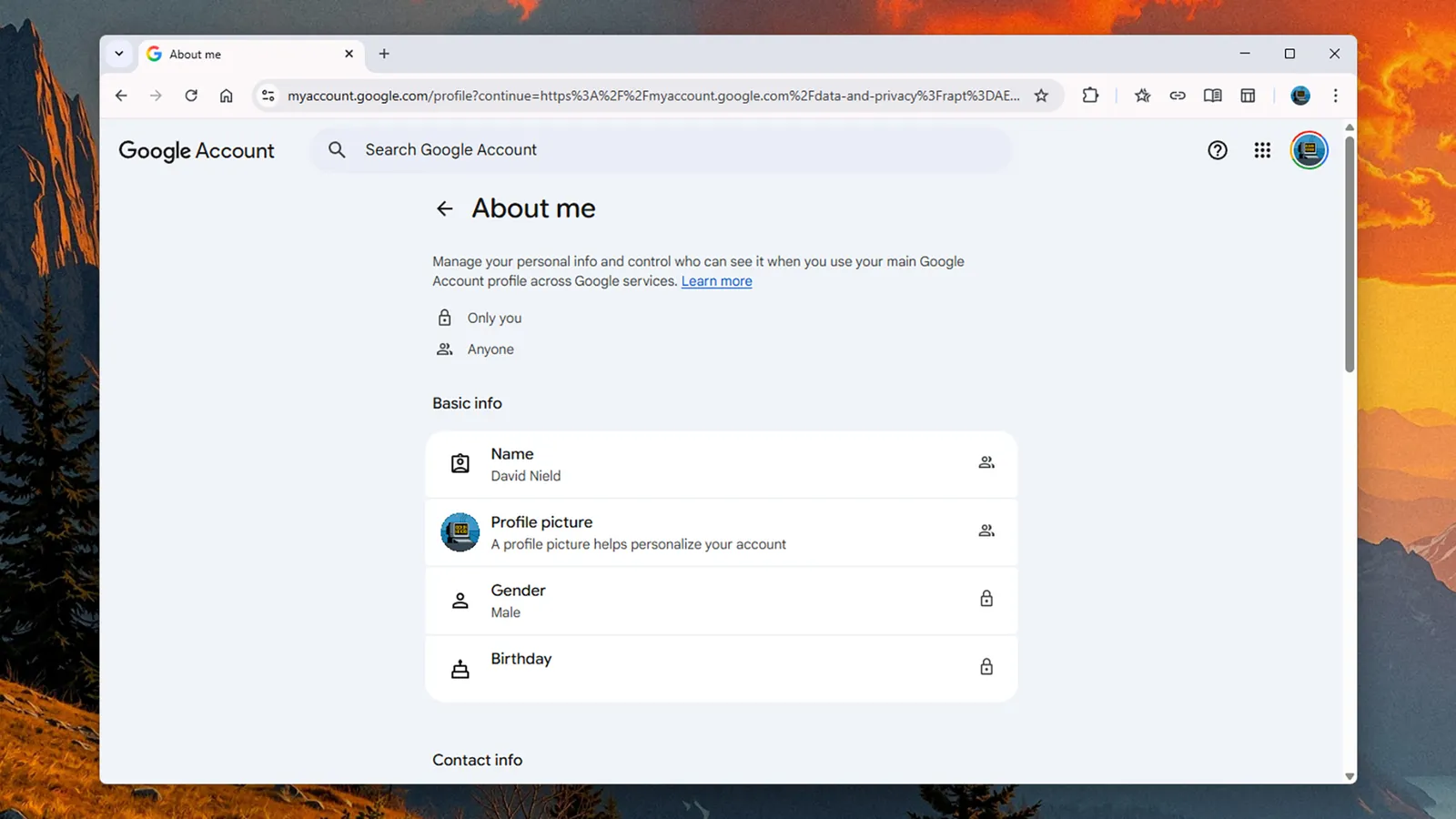
To set these addresses from your Google account page, click Personal info and then either Home address or Work address. You can either type out the address manually, or select a location on a map.
Edit Your Google Profile Information

You may not think about your Google account in the same way as a Facebook or Instagram profile, but Google does share bits of information about you with other people. If you send someone an email through Gmail, they can click on your profile photo and see whatever’s public on your Google account page. Similarly, if you leave a review on Google Maps, the viewers of that review can tap on your name or picture and see any public information on your Google account page.

Business43 seconds ago
Tesla Shares Slide Despite Record Q2 Deliveries as Investors Weigh Robotaxi Timeline

Crypto World1 minute ago
Aave V3 Goes Live on Monad With $15M Incentive Plan

Entertainment3 minutes ago
‘Helluva Boss’ Season 3 Is Going Full Adults-Only on Prime Video [Exclusive]


-

 Fashion6 days ago
Weekend Open Thread: Staud – Corporette.com
-

 Politics6 days ago
The House | Manchesterism won’t survive the painful trade-offs unless it gets citizens on board
-

 Crypto World3 days ago
Strategy authorizes up to $1.25B in Bitcoin sales under new capital plan
-

 Politics7 days ago
Potential 2028er World Cup attendee leaderboard
-

 Business6 days ago
Asia stock markets slide as tech shares slump
-

 News Videos4 days ago
MAJOR BITCOIN & MARKET UPDATE!!!! (MUST WATCH ASAP!!!)
-

 Tech7 days ago
A Look At A Gaggle Of Transputer Boards
-
 Crypto World7 days ago
Dell (DELL) Shares Tumble Over 5% Following Analyst Downgrade to Hold
-

 Crypto World5 days ago
Coinbase, Circle Deepen Crypto Stock Losses Despite Resilient S&P 500
-

 Business3 days ago
Australia treasurer says alleged access of prime minister’s bank data ’incredibly concerning’
-

 Crypto World5 days ago
Kraken's xStocks Opens Bending Spoons IPO Registration to EEA Retail
-

 Tech3 days ago
Anonymous researcher drops 0-day ‘exploitarium’ repo
-

 Sports6 days ago
FIH Pro League: India defeat Pakistan 7-1, register biggest win of campaign | Other Sports News
-
 Crypto World7 days ago
Bitcoin Sparks $600M Hourly Liquidations With $65,000 Set To Become Resistance
-

 Tech5 days ago
Bluekit phishing kit adopts browser-in-the-middle for login theft
-

 Tech5 days ago
Russian hackers now target Signal backup recovery keys
-
 Crypto World6 days ago
Hyperliquid Named on Singapore MAS Investor Alert Register
-

 Crypto World6 days ago
RTX holders must register wallets before token distribution begins
-

 Sports1 day ago
Broncos roster: OL Ben Powers (No. 74) entering final year of contract
-

 Crypto World6 days ago
Tether (USDT) Passes Ether in Market Cap as ETH Drops Toward $1.5K
You must be logged in to post a comment Login