Dana, 46, and Calista, 43, are two women in Florida who turned to the subreddit as they reckoned with the possibility of being evicted due to prolonged unemployment.
Calista tells WIRED that she has applied to more than a thousand full-time positions since losing her remote job in February 2024 but can’t seem to land an interview. She says she’s three months behind on rent. “I’ve never been close to homelessness like this before. It’s a new experience,” she says. “It’s very helpful to see the stories from other people, see the things they’ve tried, just that solidarity.”
Dana, who has extensive work experience in software development, says she has been laid off four times since the start of the Covid-19 pandemic, most recently in November, in part due to the AI boom. A single mother, she has discussed the possibility of living in a tent with her son, who recently graduated from high school. “So many people are in similar situations,” Dana says of the stories she’s read online. “It’s honestly been the most helpful from a mental perspective. I don’t feel so alone.” This is contrary, she says, to the stigmatization of poverty that she feels in her own city.
Politicians and commentators who demonize the homeless population as mentally ill drug addicts—such as former reality TV star Spencer Pratt, who ran a failed mayoral campaign in Los Angeles that characterized them as “zombies” on “super meth”—are distorting the issues at play, says Margot Kushel, director of the Benioff Homelessness and Housing Initiative at UC San Francisco.
Advertisement
“What we’re seeing in the numbers of people experiencing homelessness isn’t that we suddenly have this increase in people with mental health or substance use problems,” she says. “What we have is that the rent is too damn high.”
The cruel ways unhoused people are depicted in the media add “to the already very heavy burden of homelessness,” Kushel continues, with groups like r/almosthomeless countering those narratives and making people feel seen.
Keith, 35, in South Carolina, says he attempted suicide in 2023 after a long battle with alcoholism. He recounts how he survived jumping off a bridge but broke his back. After he received a spinal fusion, he found it difficult to work or do much of anything physical because of his injury, and finally he wound up homeless. He took to sleeping in the woods outside a hospital where he says he regularly sought assistance. “I was just staying there, like trying to get into the mental health department or something like that,” Keith says. “They would just turn you away.”
Later, Keith says, he secured a spot at a local Salvation Army shelter, found a job at a gas station, and in January made the transition into a studio apartment, staying sober and “building something that resembled a normal life,” he says. Yet lately he has started to worry that he’s “watching years of progress disappear in slow motion.” A succession of restaurant jobs, including dishwashing and prep work, have proven impossible with his back problem, and he has avoided further medical treatment for fear of the cost. Now he expects to be evicted, and he’s dreading a return to an unhoused existence.
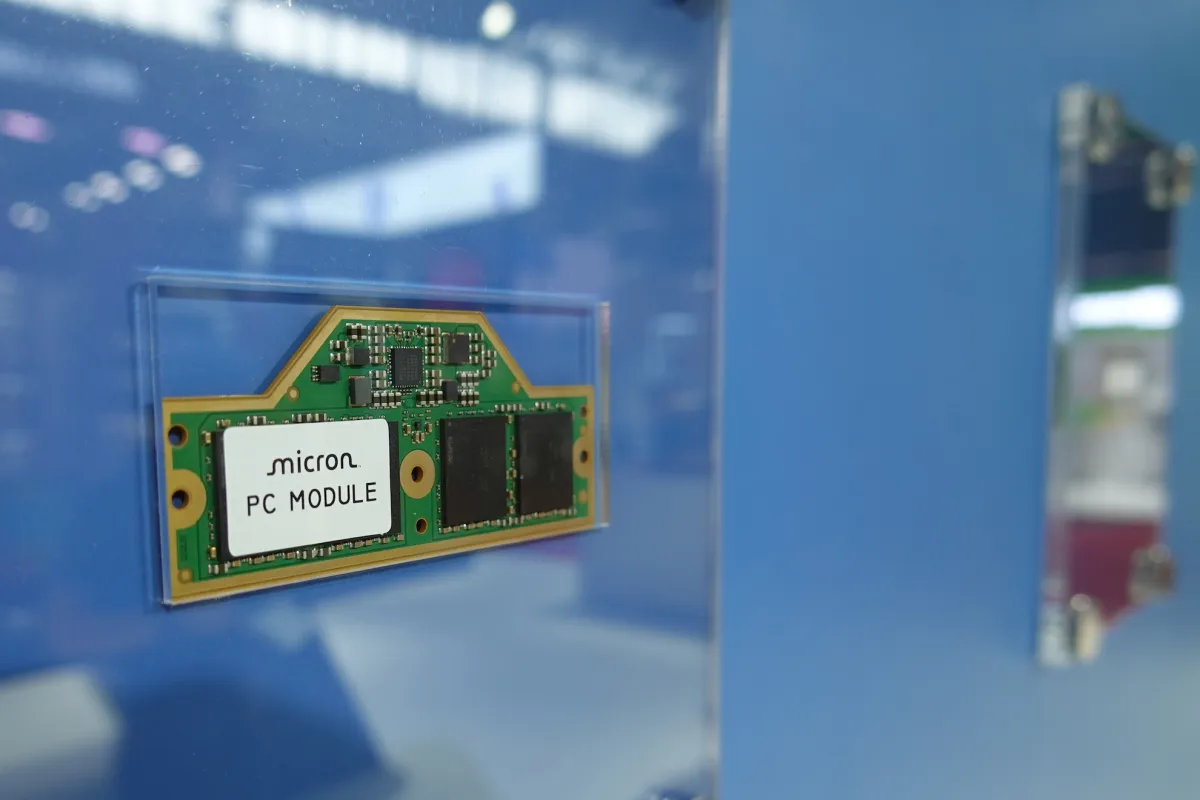
Micron, the Boise, Idaho-based memory chip maker, has captured Wall Street’s heart. Whether the love affair endures will heavily depend on how long the AI-driven supply crunch for memory chips lasts.
Micron promises that it has shored up its position for the long term, which would allow it to withstand a sudden drop in demand or overcapacity of supply. And Wall Street has become a believer, helping Micron briefly surpass the market valuation of Meta and Tesla for the first time on Thursday, though it floated back down by Friday to nearly match them.
Specifically Micron closed Friday’s trading with a market cap close to $1.27 trillion, while Meta was at $1.39 trillion and Tesla was at $1.42 trillion. Micron’s stock has soared over 236% in the past month alone, closing Friday at $1,132 a share. In comparison, it spent years upon years before mid-2025 at below $100 a share.
It’s a dizzying rise for a company that most consumers associated with the tiny memory cards that, back in the day, were commonly needed to boost PCs, smartphones, or other device storage.
Advertisement
Wall Street isn’t sweating over that product line. Micron is benefiting from the AI data center buildout boom that has created a shortage of system memory chips, both DRAM and NAND, which Micron makes, particularly High-Bandwidth Memory (HBM). A single AI server requires magnitudes more memory than a laptop.
AI system makers like Nvidia, as well as the hyperscalers building their own systems, are buying up large quantities of memory, such as Microsoft, Amazon AWS, Google, Meta and Oracle. This is forcing all the other companies who need memory to hoard it as well, from PC makers like Dell and HP, to other kinds of device makers.
This lack of supply, which has been dubbed RAMageddon, is predicted to persist into 2027. And it’s already driving up the price of consumer electronics like Apple products and Xbox consoles.
With the whole tech industry clamoring for more memory, Micron’s delivered blockbuster third-quarter earnings last week. Revenue quadrupled year-over-year to $41.45 billion, and profits skyrocketed from $1.88 billion to $28.2 billion over the same period. Micron also provided a positive outlook, forecasting fourth-quarter revenue of between $49 billion and $51 billion.
Advertisement
And Wall Street, which has been eager to find more public AI-related companies that may do as well as Nvidia, became even more enamored.
The historic problem for memory chip makers like Micron and Samsung is that building out manufacturing facilities to increase capacity is a time-consuming, expensive endeavor. And demand often falls just as companies can increase capacity, creating a glut and subsequent price drop.
Micron got ahead of any AI bust chatter by emphasizing a series of long-term supply agreements, including with Nvidia and AI lab Anthropic, that would presumably protect it. The company said in its earnings presentation that it has signed 16 strategic customer agreements across the data center, consumer, and auto market segments, which it expects to fundamentally transform its business model.
That seemed to convince a number of analysts that this company could be another long-term, profitable investment. In a research note, William Blair tech analyst Sebastien Naji noted demand growth continues to outpace the rate that new cleanroom space can come online.
Advertisement
“Given the strong likelihood of continued ASP growth in the coming quarters and improving revenue visibility thanks to a rapidly expanding set of long-term agreements (SCAs) with key customers, we see potential for more durable earnings growth and reiterate our Outperform rating,” Naji wrote.
Whether Micron really can sustain itself for long-term without a bust cycle remains to be seen. But for a brief moment on Thursday, this U.S. company was more valuable than some of the industry’s giants.
When you purchase through links in our articles, we may earn a small commission. This doesn’t affect our editorial independence.
Riot Games is changing how its Vanguard anti-cheat runs on PCs, pulling back from its always-on behavior and limiting when it’s active on players’ machines. With a new update, Vanguard will no longer automatically start when a PC boots – at least not for everyone. Instead, it can run only… Read Entire Article Source link
Because they dry fast, they’re also great for swimming. They’ve replaced traditional rash guards for a lot of people. I wear mine to the beach and into the pool. When I go on vacation, I take three or four sun hoodies with me and often end up doing laundry in town when I no longer have any sun hoodies that aren’t salty from sweat and/or the waves of the ocean in Maine.
On a hot, sunny day, they’re also often cooler than bare skin. Yes, long-sleeve sun hoodies do bundle you up, but because the fabric is so light and breathable—and I wear mine just a little baggy—they block sunlight and shed heat so well that I find them more comfortable than any other clothing or no clothing.
What to Wear
Here are four favorites from my sun hoodie collection—I have a few more that I wouldn’t recommend or that are now past season and out of production.
Heavy Rotation: The sun hoodie I wear the most is the EMS Sunguard Overhead Hoodie. It’s very soft and comfortable with a generous cut that wicks sweat away. I wear it in the city pool, and after a few minutes sitting back on the lounge chair, it’s dry enough to wear into a grocery store without it dripping everywhere.
Advertisement
Heavy Duty: The heaviest sun hoodie I have, and the one I’d wear up a mountain, is The North Face Summit Series Direct Sun Hoodie. This is a slightly thicker hoodie, though it’s still light and very breathable. Because it has a zipper, you can also get more ventilation if you need it, so the weight is never an issue. When zipped all the way up, the shirt also has a collar to protect your neck and jaw from wind or sun. There is a proprietary finish applied to the fabric of The North Face’s SPF-rated clothing, which varies by garment.
More Discreet: “Day-to-night” garments that transition seamlessly from the office to a casual dinner and a night out are something of a cliche in women’s fashion. But sometimes you really do want something that can pull double duty. When I’m going to be wearing a sun hoodie into a bar or restaurant, I reach for the Blackstrap Brackish Sun Hoodie, which looks more like a regular shirt than any other arrow in my quiver. I have it in the shark tooth jory, a red and black pattern that looks like something I’d wear even if I was not trying to keep the sun off my back. I also really like that it’s safe to wipe lenses off on—I’ve scratched up too many pairs of eyeglasses and am extremely careful about what I’ll wipe them with.
Totally Natural: I tested an earlier version of the Free Fly Bamboo Lightweight Performance Hoodie and really like it. Bamboo is supersoft and is naturally odor-resistant, though less than wool. This hoodie wears a little on the warmer side and only offers SPF 20 protection, but it dries relatively quickly, and the loose cut is excellent.
And What About Your Legs?
Hoodies with shorts are a little controversial in some quarters, but I am happy that our colleagues at GQ have blessed the look—repeatedly. The single best way to wear a sun hoodie is with swim trunks. You may think swim trunks are just for the pool or the beach, but I would submit that they have the potential to become the male equivalent of yoga pants, which you can wear everywhere in the summer (again, GQ agrees). Luckily, I’ve also been testing some of those.
Advertisement
Eye-Catching: These Minnow Boardies in a red-and-white striped pattern called Gondola have a Venetian flair. They’re on the short side (6-inch inseam) but are stretchy and soft. They’re advertised as comfortable enough for all-day wear, and I can confirm they are—into the pool, out of the pool, off to happy hour. They are showstoppers, but you’ll need a dark and neutral-colored sun hoodie to pair with them.
Today’s best phone cameras are astonishingly capable when it comes to taking pictures. With large sensors, wide apertures and a wealth of extra software features, they can take images that rival what you’d expect from pro-level mirrorless cameras.
I’ve thoroughly tested all of today’s best camera phones, including the iPhone 17 Pro, Galaxy S26 Ultra and Leica Leitzphone in my time as both phone reviewer and professional photographer.
But I still wouldn’t ever want to fully replace my camera with just a phone. I have a few key reasons why.
Advertisement
Ergonomics
While cameras have come in all shapes and sizes over the last few decades, they’re designed to be held the same way, with your fingers naturally resting in the same places when pressing the shutter button. They feel like a natural fit and even smaller compact cameras such as the Fujifilm X100VI or my own Leica Q3 43 still allow you to hold them up to take your shot in a typically comfortable way.
Phones aren’t built to be cameras first, so they naturally force a different way of holding them. The big touchscreens mean you have to delicately hold the phone by its edges to avoid accidentally touching something on screen, and with no viewfinder, there’s no option to hold them up to your eye, as you would with most regular cameras.
When holding a phone like a camera, it can feel like you have to be exceptionally delicate with it, especially if you’re quickly shooting one-handed. I often worry I’m going to drop it.
Advertisement
Andrew Lanxon/CNET
Phones are small and thin (at least compared to most cameras), making it difficult to get a firm grip, and tapping an on-screen button to take a photo always feels awkward. I worry about dropping the phone as I shuffle my fingers around into the right position. Even those phones that offer physical shutter buttons on the edge (or let you use the volume key as a shutter) still feel like you’re holding them in a way they were never truly designed for.
Sure, you can get camera grips or cases that help bulk out the phone to give you something to hold onto and some of those even offer shutter buttons and settings wheels to let you use them like a compact camera. I’ve tried many of them, but none feel as good as holding an actual camera.
Image quality
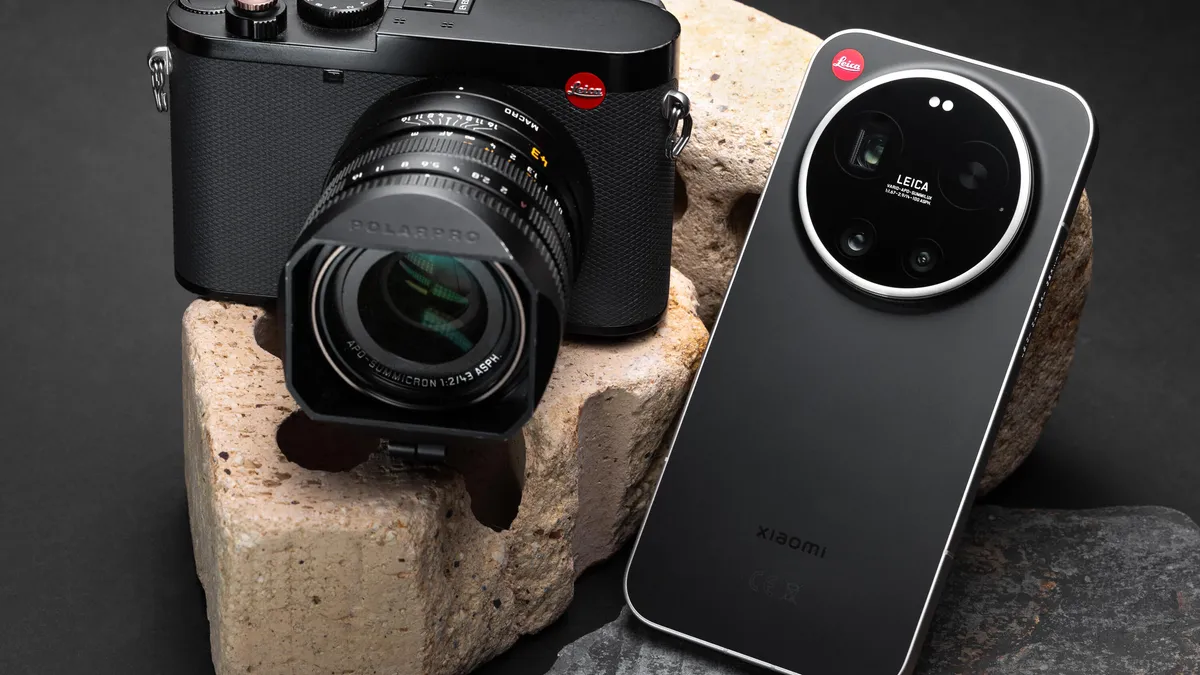
Today’s best phone cameras can take truly stunning images. I’ve been blown away by the photos I’ve been able to capture with Xiaomi and Leica’s Leitzphone, especially when using its filmic color profiles. But even this phone — arguably the best camera phone money can buy — doesn’t fully compete with a real camera.
Advertisement
Leica and Xiaomi’s Leitzphone can take some beautiful images, but even so, its quality isn’t on par with an actual Leica camera.
Andrew Lanxon/CNET
And how can it? While it has a larger image sensor than most phones, it’s still tiny compared to the vast majority of cameras out there. As is its lens. It’s why all smartphone cameras have to rely heavily on software image processing to squeeze every bit of quality they can from their sensors. Some take this way too far with images that can look seriously overprocessed, with heavy-handed sharpening being a common factor in most phones’ quality.
In reality, if you just look at these images on your Instagram feed, you’d probably never realize they were taken on a phone. The often “crunchy”-looking over-sharpened aesthetic a lot of phones produce typically only becomes apparent when you zoom into the fine details. But those signs will still be there, often alongside increased saturation and an over-reliance on HDR techniques to control highlights and shadows.
Pro cameras with larger image sensors and higher-quality lenses can produce far more natural-looking details without an algorithm stepping in.
Advertisement
The Google Pixel 10 Pro uses generative AI to add detail back into its images when taken at over 30x zoom. It’s a neat idea in theory, but I’d rather know that everything in my images is what I actually captured and not what an algorithm thinks should be there.
Andrew Lanxon/CNET
Generative AI
Speaking of algorithms, I can say with certainty that I don’t want generative AI anywhere near my photos. That’s becoming increasingly difficult to avoid with phone cameras. Google proudly boasted that it uses generative AI to upscale its zoom photos on the Pixel 10 Pro while some of Samsung’s new camera features involve using AI to replace items of clothing on your subject. Apple’s upcoming iOS 27 will even allow you to change the perspective of an image after you’ve taken it, using AI to create an angle that you never actually took in the first place.
Almost all phones offer some kind of AI in their image-taking workflow. Even phones that aren’t actively changing the background or other elements in your images are still using generative tools to upscale your photos to make them look “better.”
Advertisement
The result is that it’s difficult to say that you’ve really taken an image when you don’t know how much of it has been reconstructed by software. Oppo explained that its recent Find X9 Ultra doesn’t use any generative AI when in its Master mode — and honestly, you can tell; shots in its regular mode can certainly look over-processed, especially when it comes to the artificially-lifted shadows. Switching to Master mode (and thereby bypassing all the AI) is the way to get the best-looking shots from this phone. I found the same when using the camera on the Honor Magic 8 Pro.
I didn’t realize the Oppo Find X9 Pro was using generative AI in its telephoto zoom shots, but that’s clearly what’s happening here as it’s tried to artificially recreate the face of the person in the foreground — and it’s not done it well.
Andrew Lanxon/CNET
Call me a purist, a luddite or a technophobe, but AI has no place in my photography — either at the point of capture or when I’m editing my images later. I want to know that what I captured in my finished shot is what I, the photographer, actually wanted in that frame, not just what an algorithm spat out.
Advertisement
Life cycle
I own and frequently use cameras that are decades old. My Pentax K1000 film camera was released in 1976, while one of my favorite digital cameras — the Sony RX1R — is now 13 years old and still going strong. A phone’s life cycle is much shorter, with even top models receiving security updates for only up to seven years.
This Yashica A was released in the 1950s making it around 70 years old yet I was still able to take some great photos with it.
Andrew Lanxon/CNET
Once that support period is over, your phone is simply not safe to use and it’s time to upgrade. Sure, the idea is that by then, new technology would be available, so the phone you’d be upgrading to would be even better than your old one. But it still means that the phone camera you’re used to shooting with, which delivers the look and tones you like, simply isn’t going to hang around as long as a regular camera.
Advertisement
That lifespan can really sting, especially as advanced camera phones tend to demand more money — like the £1,700 ($2,245) Leitzphone. Are you better off buying one expensive device that does everything for a shorter period of time, or spending less on a regular phone and also buying a camera that’ll last you much longer? That’s a decision only you can make.
The Pixel 10 Pro has a long software support period of around seven years.
Andrew Lanxon/CNET
The look
I might be vain here, but as a professional photographer, I simply wouldn’t want to be seen only taking photos on a phone. It doesn’t matter if that phone is the best in the world at taking images; there’s a certain stigma around it that suggests a level of amateurism. I’m not really talking about what it looks like to strangers on the street — if anything, using a phone allows you to blend in and become effectively invisible, which is amazing for things like street photography.
Advertisement
I’m talking about more professional scenarios. If I turned up to a shoot for a commercial client paying me five figures for my images and all I used was a phone, I don’t think I’d ever get work from that client again. I could argue all I want that the quality is good enough, that they’re paying for my expertise and that the end images will still be great but it wouldn’t matter. That client would see the phone and wonder why the hell they’re paying so much for someone to take some snaps on a phone — they could have done that themselves and saved a ton of money in the process.
Some of my shoots involve a lot of gear and setup. If I turned up just with a phone, I’d never get hired again.
Andrew Lanxon/CNET
Don’t get me wrong, I don’t believe that only the best gear can take the best photos — I’ve done commercial shoots using Canon’s cheapest 50mm “nifty fifty” lens and had images taken with that lens licensed for luxury photo books. Most clients care about the images, not the equipment you’re using to get them. But there’s a balance to be struck here and using professional gear suggests that you are a professional. Turning up to a shoot — commercial, wedding, whatever — and pulling out my iPhone for the job isn’t going to do my photography career any favors.
Advertisement
So many notifications
I’ve saved my most important one for last because it’s the biggest stumbling block for me when using a phone as a camera for extended periods. If I’m taking images — whether wandering around a Tuscan village on holiday, taking photos for my YouTube channel or on set for a commercial job — I don’t want distractions that pull me away from the creative mindset I’m trying to maintain.
Using my phone for any purpose already means battling with near-constant incoming notifications from my email, from Slack, WhatsApp, Instagram and many others. It’s a perpetual onslaught of things going on that makes it increasingly difficult to concentrate on the task at hand. Sure, you can turn Do Not Disturb on — and I do — but I also don’t want to miss important phone calls or other messages I might need to act on. So I don’t like switching things off altogether either.
One of the reasons I’ve enjoyed using film cameras recently is that there are absolutely zero distractions so you can focus completely on staying in the moment.
Advertisement
Andrew Lanxon/CNET
Using a dedicated camera feels like choosing the right tool for the right job. Unlike our phones, it’s not trying to be something else by doing 1,000 other things in the background. My camera doesn’t come with bubble-pop games pre-installed and it’s not vibrating every ten seconds while my friends share memes on our WhatsApp group. Using the camera means shutting off from everything else going on in my life and focusing on the joy of image creation.
I don’t want one device that can do all the things. Sometimes it’s better to have a product that does only one thing but it does that one thing exceptionally well. And just as I don’t want a wrench that’s also a DAB radio and a meat thermometer, I don’t want a camera that’s a games console, an exercise tracker and my portal to social media.
It’s why I — and many other photographers around the world — have also really enjoyed getting into analog film photography recently as it strips out even more of the technology and allows for a more simplistic, arguably more authentic way to take images.
I use my camera increasingly as a way of finding some zen in the chaos of life and not feeling like I’m constantly switched on. It’s why my camera makes me feel more inspired. Picking it up means making an intentional decision to want to go and take photos, not just whipping out my phone to get a quick snap if I happen to see a cute dog. That intentionality invokes a deeper sense of creativity. And more often than not, it results in better, more meaningful photos.
Advertisement
I took this on an iPhone 14 Pro, so I know that phones can take exceptionally good images. I’d just rather use a regular camera for my real photography.
Andrew Lanxon/CNET
As the adage goes, the best camera is the one you always have with you, but that doesn’t mean it’ll always be the one you can take your best photos with. I love using phone cameras and I’m thrilled that I can have something so capable in my pockets for those occasions where I don’t have my camera with me.
But phones will always be supplementary cameras for me — great for those spur-of-the-moment opportunities or for shooting behind-the-scenes content. And yes, I will sometimes opt to use it on those outings where I don’t want a camera round my neck. But I’ll still always have a regular camera for my work and whether it’s a modern digital or a vintage film camera, it’ll always be the thing I reach for when I want to switch off from the world and truly focus on the joy of taking photos.
From Dublin, the company will support core regulated activities across risk, compliance, trading, operations and technology.
Trading 212, a European online investment platform, is set to open a new European hub based out of Dublin, a move that will generate 40 jobs over the course of the next three years. The expansion will enable the Dublin location to support Trading 212’s core activities across risk, compliance, trading, operations and technology.
Headquartered in London, Trading 212 was established in 2004 and employs more than 750 people globally, with a client base in the UK, EU, Australia and other international markets. The Dublin office, located at Sobo Works, Windmill Lane, will serve as a strategic EU regulatory and capital markets hub within the company’s post-Brexit multi-hub operating model.
The future roles will include specialist positions across trading, risk, compliance, finance, technology and operations. The new team will play a critical role in delivering and supporting a multi-asset execution function and strengthening Trading 212’s European regulatory operations and governance capabilities.
Advertisement
Commenting on the announcement, Michael Byrne, the CEO of Trading 212 Ireland, said: “Dublin is central to Trading 212’s international growth. As our hub for equity, ETF and CFD execution, Ireland gives us world-class regulatory infrastructure, deep talent and a position bridging Europe’s two most important financial markets.”
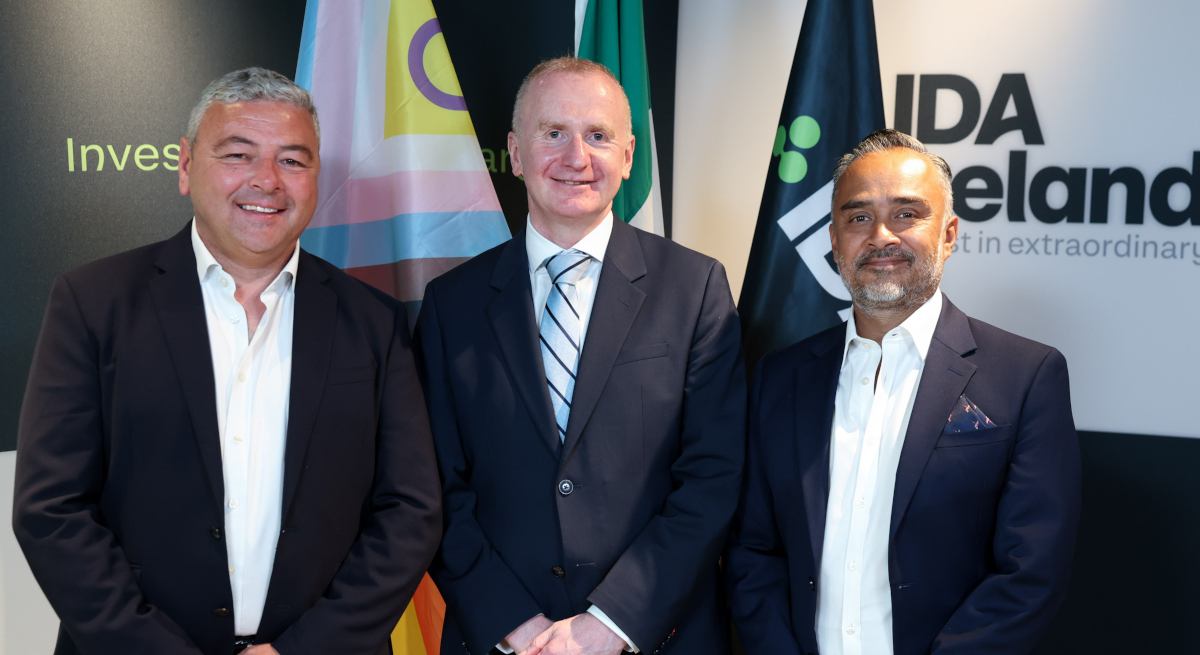
Michael Lohan, the CEO of IDA Ireland added: “Ireland has built a thriving ecosystem for financial services and technology companies, underpinned by a highly skilled workforce and a culture of innovation. Trading 212’s decision to invest here further strengthens our fintech cluster and highlights our competitive offering internationally.”
Late last week, Future Cast – an innovation, education and R&D nonprofit focused on the construction and quarrying industries – also announced a significant investment and job creation. The organisation has invested €3.25m into developing a 200-year old Co Leitrim church into a 10,000 sq ft centre for innovation, R&D and science.
The funds will also enable the creation of 15 new jobs over the coming years, with opportunities for jobseekers in concrete and material science, machine design, prototype development and specialist training.
Advertisement
Don’t miss out on the knowledge you need to succeed. Sign up for the Daily Brief, Silicon Republic’s digest of need-to-know sci-tech news.
Japanese telecommunications operator KDDI Corporation disclosed a data breach where threat actors gained access to one of its email systems used by five other internet service providers (ISPs) in the country.
The company says that it discovered the compromise on June 17 and responded immediately by blocking the attacker and implementing defense measures.
The investigation determined that the hackers exploited a vulnerability in an unnamed third-party software that KDDI Corporation used on its system.
“Although technical defensive measures have already been implemented for the system, there remains a possibility that customers’ email addresses and passwords were obtained by unauthorized third parties as a result of the incident,” KDDI warns.
Scale of exposure
KDDI is one of Japan’s largest ISPs, with 45,000 employees and an annual revenue of $32.4 billion. It is a public entity that has operated since 2000, following the merger of IDO, DDI, and KDD, Japan’s former state-monopoly international telecommunications provider.
Advertisement
The company says that the incident impacted the following five ISP operators and their email services:
STNet, Inc.
JCOM Co., Ltd.
Chubu Telecommunications C., Inc.
NIFTY Corporation
BIGLOBE Inc.
Although the investigation into the incident is still underway and the exact number of impacted accounts has yet to be determined, KDDI said it may have exposed the email addresses and passwords of up to 14,22 million customers.
This figure includes current and former customers, as well as inactive accounts that may no longer be in use.
Another mitigating factor, according to KDDI, is that some passwords were stored in hashed and/or encrypted form, meaning that they cannot be readily abused for account hijacks even if exposed.
However, KDDI did not specify what type of encryption was used or what percentage of accounts had passwords stored in plaintext.
Advertisement
KDDI says it has been contacting affected ISPs since June 17 and has also notified Japan’s Personal Information Protection Commission and the Ministry of Internal Affairs and Communications.
The company is currently working with affected ISPs to implement additional security measures to mitigate the risks arising from this exposure.
Meanwhile, customers who may have been exposed are advised to reset their email account passwords as soon as possible. If two-factor authentication (2FA) is available, it would be prudent to set it up as well for additional protection.
Security teams log 54% of successful attacks and alert on just 14%. The rest move through your environment unseen.
The Picus whitepaper shows how breach and attack simulation tests your SIEM and EDR rules so threats stop slipping by detection.
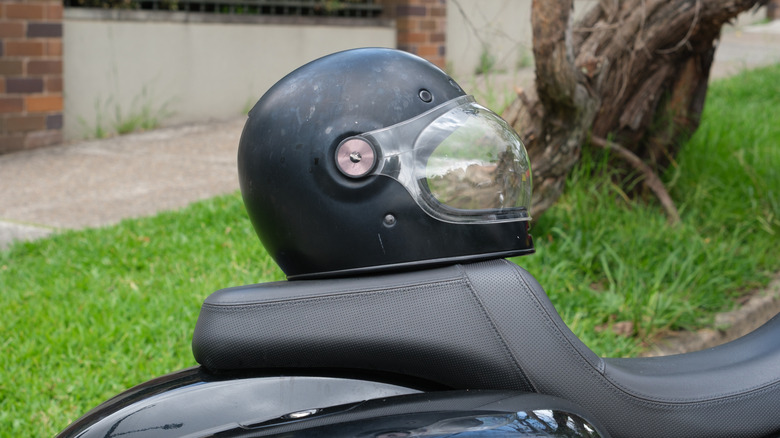
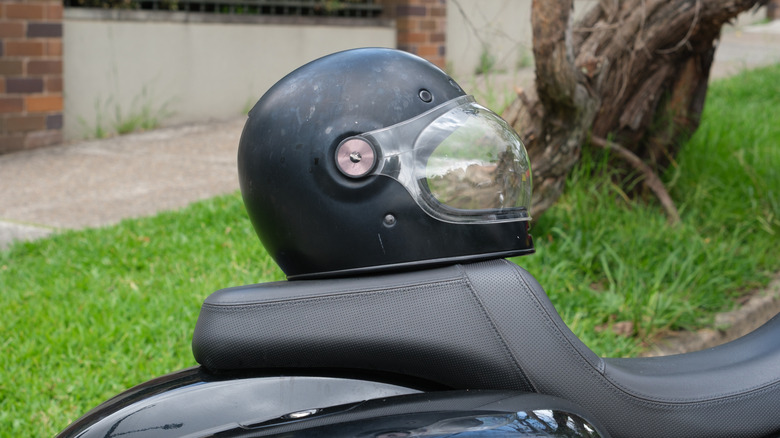
Most of your riding gear shows clear signs of wearing out. Boots split, gloves thin out, and jackets fray. With these, you can tell when it’s time for a replacement. But helmets are arguably sneakier, because, contrary to appearances, they do have a lifespan – and it’s not tied to how scruffy they look.
The five-year rule serves as a rough yardstick for when it’s time to replace your helmet with a new one. It may sound harsh, especially if you’ve spent money on customizing your beloved helmet, but there’s a pretty solid reason behind it. The component at fault is the EPS liner, which is basically an expanded polystyrene foam that sits between your skull and the hard outer shell.
This liner is made out of the same material that cushions a new TV inside its box; because it’s foam, it will absorb some of your sweat when you ride. Then, when it dries out, it shrinks a little and stiffens. It’s estimated that the foam will shrink 3 to 5% annually. Use a helmet for five years, and the problem starts to add up.
Advertisement
How can you be sure about the rule?
Helmet manufacturers recommend you stick to the five-year rule, too. helmet. Arai, for example, suggests that owners replace helmets after five years of use. It appears the foam degrades even when the helmet isn’t in use, though, as the company caps its warranty at seven years from the date of manufacture. Shoei also draws the line at five years from the first retail sale. In fact, it goes a step further, recommending a new helmet even if the EPS liner still looks good and the helmet has never been in a crash.
Advertisement
There are ways to tell if it’s indeed the time for a replacement, in case you want to double-check. You can start with the shell and hunt for cracks or any deformation by running your fingers over it. Then there’s the EPS itself. If it starts showing through on the inside, that means it’s either too worn out or has shrunk significantly, meaning it’s time for a change.
A more surefire way is to wear the helmet, fasten the strap, and give your head a little shake. If the helmet twists around or doesn’t fit as it used to, that’s your cue. Of course, if you ever crash, you should replace it right away, no matter how fresh it looks. At that point, the question turns to what to look for when buying a new motorcycle helmet.
Advertisement
What if you overuse or underuse the helmet?
Sometimes, it’s about the mileage rather than the actual passage of time. Generally, the five-year rule assumes you’re clocking somewhere around 6,000 to 8,000 miles a year. That works out to about 40,000 to 50,000 miles over five years. Commuters who ride more than that should replace helmets after two or three years, because the liner may wear out much faster. Frequent riding also means more mishaps, including drops. These are usually fine, but can still cause damage in some cases.
Even if you’re on the other end of the spectrum and barely use your helmet, though, you’ll still have to replace your helmet after five years. Moisture can slowly evaporate out of the foam or seep in; either way, it’s bad for the liner. Storing it carefully can probably stretch that out a bit, but why risk it? Besides, if your helmet is super old, it may miss out on the comfort and safety upgrades available on newer units, like the MIPS helmet technology that minimizes rotational forces in a crash.
Signals from AirPods solved two crimes: a woman was arrested for refusing to leave an Apple Store, and a Bangladeshi presenter’s iPhone was stolen, all in this week’s Apple Crime Blotter.
The latest from an occasional AppleInsider feature, looking at the world of Apple-related crime.
School board member accused of having child sex abuse material on iPhone
A school board vice president in upstate New York has been indicted on child pornography and child endangerment charges, and child sex abuse material has been found on his iPhone. That’s according to court documents cited by CNY Central.
Travis J. Longo, the 46-year-old former vice president of the Cazenovia Board of Education, allegedly “engaged in a pattern of sexually explicit communications with a child under the age of 12.” A search of the iPhone 17 Pro Max, authorities say, led to the offending images, which were discovered by a Department of Homeland Security agent.
Advertisement
Following his arrest, the rest of the board unanimously voted to compel Longo’s resignation.
Woman arrested for refusing to leave Apple Store
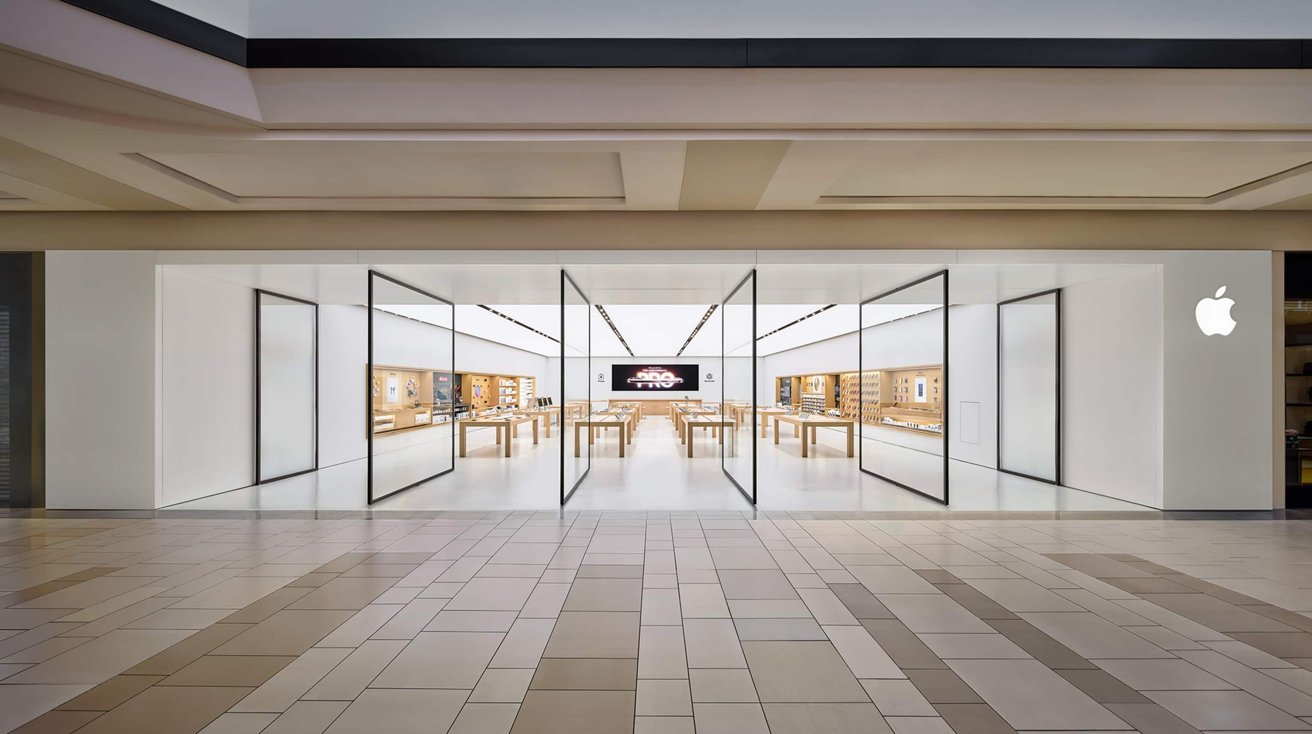
A 59-year-old Texas woman was arrested for criminal trespass after she refused to leave the Apple Store at Orland Square Mall in Illinois.
According to Southwest Regional Publishing, the incident took place in April. The woman went to the Apple Store to have her iPhone serviced, but was unhappy with the service.
After she “became loud,” she refused to leave the store, declaring that the mall was “public property.”
Advertisement
After refusing to leave, she was charged with criminal trespass.
AirPods signal led to a truckful of stolen goods
On Memorial Day weekend, a crime victim followed a signal from a pair of stolen AirPods, which led police to a trove of stolen materials.
WLAF explains it started when a Kentucky man reported that numerous items had been stolen from his vehicle and that, when he followed the Find My iPhone signal, his AirPods were showing as located near a Popeyes.
The victim also noted that his stolen credit card had been used at a Love’s Travel Stop and viewed surveillance footage showing a GMC Sierra.
Advertisement
Police later located the vehicle, in which the alleged thief was asleep in the back.
The man claimed he was innocent and offered to let the detective search the car, which soon turned up credit cards belonging to the victim. Along with items paid for with those cards, some of which had receipts.
The man, currently on probation in Florida, was charged with theft of property under $2,500 and possession of a firearm by a convicted felon, and more charges are expected.
Car burglaries solved by stolen AirPods
In another car burglary case solved with the help of an AirPods signal, a Wyoming teenager has been arrested in connection with a series of car break-ins.
Advertisement
According to Wyoming News Now, the teenager has been accused of breaking into eight cars in a Cheyenne neighborhood and stealing AirPods, guns, and other items.
That AirPod theft led the owner to track them, which had the teen’s residence pop up repeatedly. He was eventually arrested at the courthouse, while there in connection with an unrelated case, and he also had an outstanding warrant in yet another case.
He was charged with six counts of burglary and two counts of aggravated burglary.
Advertisement
iPhone, Rolex stolen in Pennsylvania
A man from the Pennsylvania town of Jersey Shore has reported that his iPhone, and also a Rolex, had been stolen from him in a “disturbance.”
Fox 56 reports the incident took place on June 11 and a 2013 silver Chevrolet Silverado was “involved.” It is described as a “theft [with] no force.”
iPad was stolen from Children Aid Society in New York
Per News 12 Brooklyn, the NYPD is “looking to identify someone they say is wanted” in the burglary. Anyone with information is urged to notify police.
Advertisement
iPhone stolen from Bangladeshi presenter Neel Hurerzahan
Neel Hurerzahan, an actress and cricket show presenter based in Dhaka, Bangladesh, had her iPhone 17 Pro Max stolen in mid-June.
According to Daily New Nation, Hurerzahan posted a picture of the possible thief on her Facebook page.
“This afternoon, this man in the picture (white shirt) ran away from Shilpakala Academy with my iPhone 17 Pro Max (orange),” she wrote, asking for help in finding the device.
Advertisement
Korean broadcaster’s MacBook stolen, recovered in Mexico
Another media professional from Asia reported having an Apple product stolen. This time it was Kim Hwan, a South Korean broadcaster who was in Guadalajara, Mexico, to cover the World Cup.
According to Asia Business Daily, Kim said on Instagram that his bag, containing his MacBook, was stolen from a hotel lobby, and that the computer contained “broadcasting materials.”
Kim went on to track the computer, first to a Walmart and then to the vacant lot behind it, where he ultimately found both the MacBook and an iPad. He believed that the thief “became aware of the tracking and abandoned the devices before fleeing.”
However, Kim has not recovered other items, including cash, a credit card, and his ID.
Coming just three weeks after HIGH END Vienna and on the same weekend as the North West Audio Show in the U.K., T.H.E. Show SoCal 2026 had a lot of competition for industry attention. The Costa Mesa event was clearly smaller than last year, but the rooms stayed busy and there was no shortage of genuinely impressive sound.
Affordable hi-fi was not really the theme. Active systems, ambitious analog front ends, low-powered tube amplification, and six-figure reference rigs dominated the better rooms. These are the systems that stood out most, not because they cost the most, but because they made music convincing enough to keep people planted in the chair.
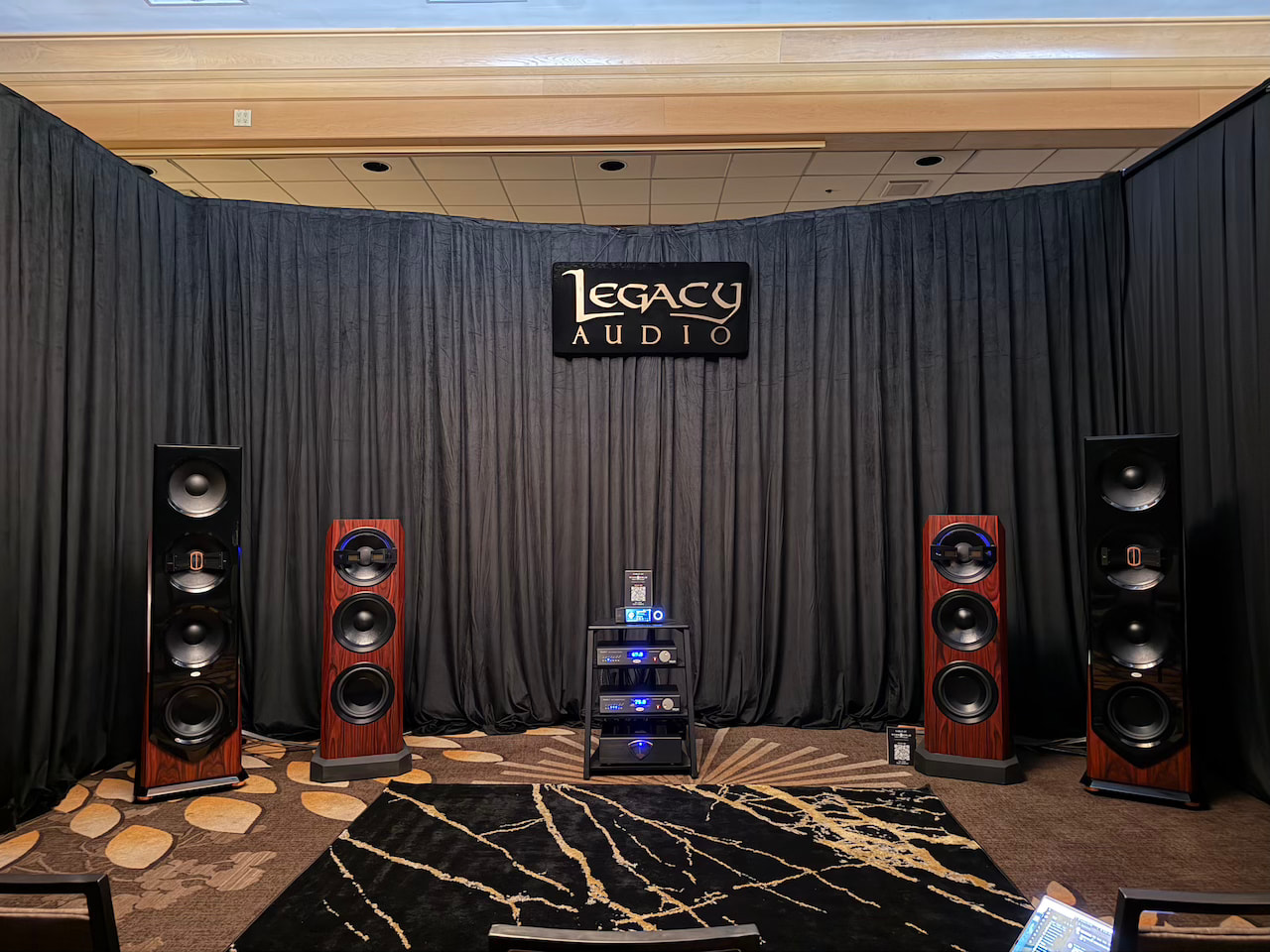
Legacy Valor ($100K/pair)
Legacy Audio Valor (the big ones) and Talos loudspeakers at T.H.E. Show 2026
Legacy Audio is another multiple Best in Show winner, with the Aeris XD earning the honor at T.H.E. Show SoCal 2025 and the Talos doing the same at AXPONA 2026. At this year’s event, however, Legacy brought its flagship: the Valor system, a nearly six-foot, 288-pound loudspeaker that represents the company’s biggest and most ambitious statement.
Priced at $100,000 per pair, the Valor combines 2,750 watts of onboard amplification per speaker with the Wavelet 2 DSP processor, room correction, and Legacy’s Stereo Unfold processing. It is not quite a “just add streamer” solution, as each speaker still requires an external amplifier channel for the high-frequency section, but it remains considerably less complicated than assembling a conventional reference system around separate passive loudspeakers, multiple power amplifiers, and outboard room correction.
Legacy rates the four-way Valor from 12 Hz to 30 kHz, ±2 dB, and its combination of large bass drivers, passive radiators, and serious internal power gives it the kind of output capability that makes polite background listening feel almost insulting. The dual 4-inch AMT tweeters are arranged in a post-convergent array designed to keep the top end consistent beyond the center seat, helping the Valor deliver a stable and expansive presentation across a wider listening area. It is also available in a deep roster of wood veneers and premium finishes, which matters when your speakers are roughly the size and visual commitment of small monoliths.
Advertisement
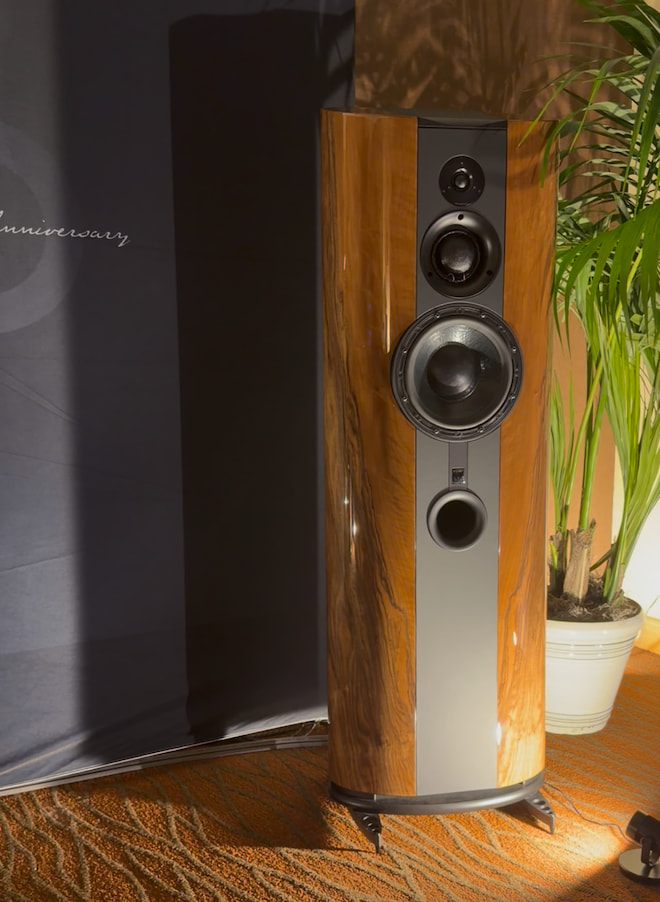
ATC EL50 ($100K/pair)
Staying with the active theme, ATC earns another Best in Show award for its EL50 Anniversary Edition active loudspeaker system, which was an easy unanimous selection at AXPONA just two months ago. Standing almost 56 inches tall and weighing 139 pounds each, these are not modest floorstanders, but they again proved remarkably comfortable in a smaller hotel room.
Lone Mountain Audio kept the core AXPONA system intact: ATC’s SCA2 preamplifier, the Innuos ZENith NG server, Playback Designs MPD-8 DAC, and WireWorld cabling. This time, the distributor also rotated in the Sonorus ATR10 Mk II reel-to-reel deck, which made a strong case for itself as an analog source in a room already blessed with excellent digital playback.
The EL50’s fully active three-way architecture remains the attraction. Each speaker contains dedicated 200-watt bass, 100-watt midrange, and 50-watt high-frequency Class A/B MOSFET amplification, with ATC’s active crossover and in-house drivers doing the heavy lifting. That integration helped the EL50 deliver the same qualities that stood out in Chicago: authoritative but controlled bass, natural scale, exceptionally clean midrange performance.
This was my first experience with Odyssey Audio, and it was not one I am likely to forget. The packed room, littered with flickering faux candles, should have been the first clue that Klaus Bunge was not interested in another polite hotel-room demonstration.
The setup was not remotely conventional. The loudspeakers were positioned very close to the side walls and roughly a third of the way into the room from the rear wall, with each driven by Odyssey’s new Meilenstein monoblocks. On paper, it looked like the sort of placement audiophiles are taught to avoid. In practice, it worked spectacularly well. The speakers disappeared, leaving an image that extended well beyond the front wall with exceptional depth, focus, and clarity.
Advertisement
Advertisement. Scroll to continue reading.
More importantly, this was not a demo built around the usual collection of pristine audiophile recordings. The Doors’ “Riders on the Storm” was genuinely immersive, placing the listener inside the recording’s rain-soaked atmosphere rather than merely showing off a wide soundstage. Tracks from Justin Bieber and Stone Temple Pilots followed and proved that the system could do more than flatter one particular type of music. Stella Acoustics’ room treatment clearly played a role as well, helping create a presentation that felt unusually open, three-dimensional, and convincing in a crowded hotel suite.
REL / Acora / VAC
REL Acoustics Carbon Speaker Black Edition (triple stack) subwoofers, Acora Acoustics MRC-3 Loudspeakers, VAC Amps at T.H.E. Show 2026
Acora Acoustics loudspeakers have consistently impressed in rooms built around VAC amplification, but this system showed how much more the company’s MRC-3 floorstanders can deliver when supported by a properly ambitious REL six-pack.
The MRC-3s were partnered with six REL Carbon Special Black Label subwoofers, arranged as triple stacks behind each speaker. At $4,999 apiece, that is essentially $30,000 worth of low-frequency reinforcement, which sounds absurd until you hear what the array does. The subs never called attention to themselves or turned the room into a bass demo. Instead, they added scale, weight, and low-end authority while preserving the speed, clarity, and dimensionality of the Acoras.
REL’s triple-stack approach also helps maintain the height and scale of the soundstage rather than simply adding more rumble below it. That was particularly apparent with the Acora MRC-3s, whose marble cabinets and ceramic drivers already deliver considerable control and resolution on their own. The result was a system that sounded full-range without relying on oversized tower speakers loaded with enough bass drivers to qualify for a municipal permit.
Advertisement
The rest of the chain was equally serious: Berkeley’s Alpha DAC Series 3P with Alpha Reference USB, Synergistic Research’s Voodoo Server, Soulution’s 541 CD player, and the Sonorus ATR10 MK2 tape machine fed VAC’s Master Preamplifier and 202iQ stereo/mono amplifiers. The system was supported by an Artesania Audio Exoteryc rack, Synergistic Research’s Galileo LUX, SRX XL, and Foundation XL cabling, along with ASC Tube Traps and Synergistic room-treatment products.
This room made a strong case for spending intelligently on bass management rather than assuming the only path to full-range performance is an enormous pair of loudspeakers with a small forest of woofers on the front baffle. The REL array gave the Acoras more authority, more scale, and more convincing low-frequency realism, while letting the speakers do what they do best.
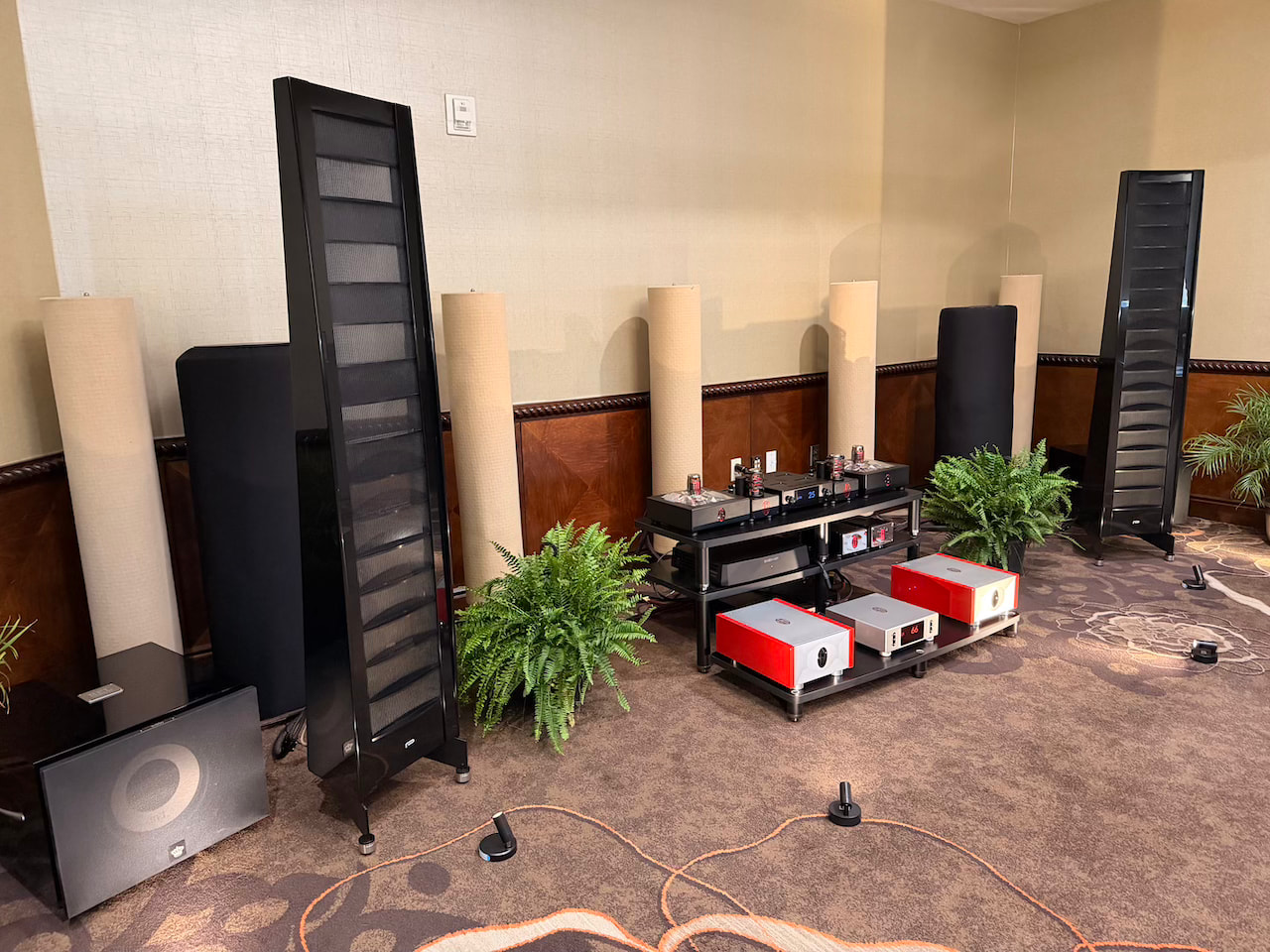
Prodigio WR2 with AGD and Bacch 3D
Prodigio Audio, formerly Popori Acoustics, is another repeat Best in Show winner. The Hungarian-made WR2 electrostatic loudspeakers were again paired with AGD electronics and Theoretica Applied Physics’ BACCH-SP adio processor, a combination capable of extracting spatial information from conventional stereo recordings that most two-channel systems simply leave on the table.
The tall WR2 panels are impressive even without processing. They are fast, revealing, and exceptionally transparent, with the kind of midrange clarity and transient speed that electrostatics can deliver when properly set up. Engage BACCH 3D, however, and the presentation becomes something else entirely. Instruments and effects extended well beyond the speakers, with spatial cues that could reach around the listener rather than remaining trapped between the two panels.
There is a caveat, because there always is. BACCH is a highly personalized, single-listener experience that works best from the precisely calibrated center seat. Move too far off-axis and the effect diminishes. Park yourself in the sweet spot, though, and the result can be startlingly immersive without requiring a room full of surround speakers.
Advertisement
This year’s larger room also benefited from a pair of REL S/850 subwoofers. The WR2s already offer more low-frequency presence than many listeners expect from a panel speaker, but the RELs added weight and extension without turning into the main event. They blended seamlessly, giving the system more foundation and scale while preserving the WR2’s speed, openness, and almost unnerving ability to disappear.
With the BACCH processor, REL subs, WR2 electrostatics, and AGD amplification, the system starts north of $85,000 before cables, accessories, and setup.
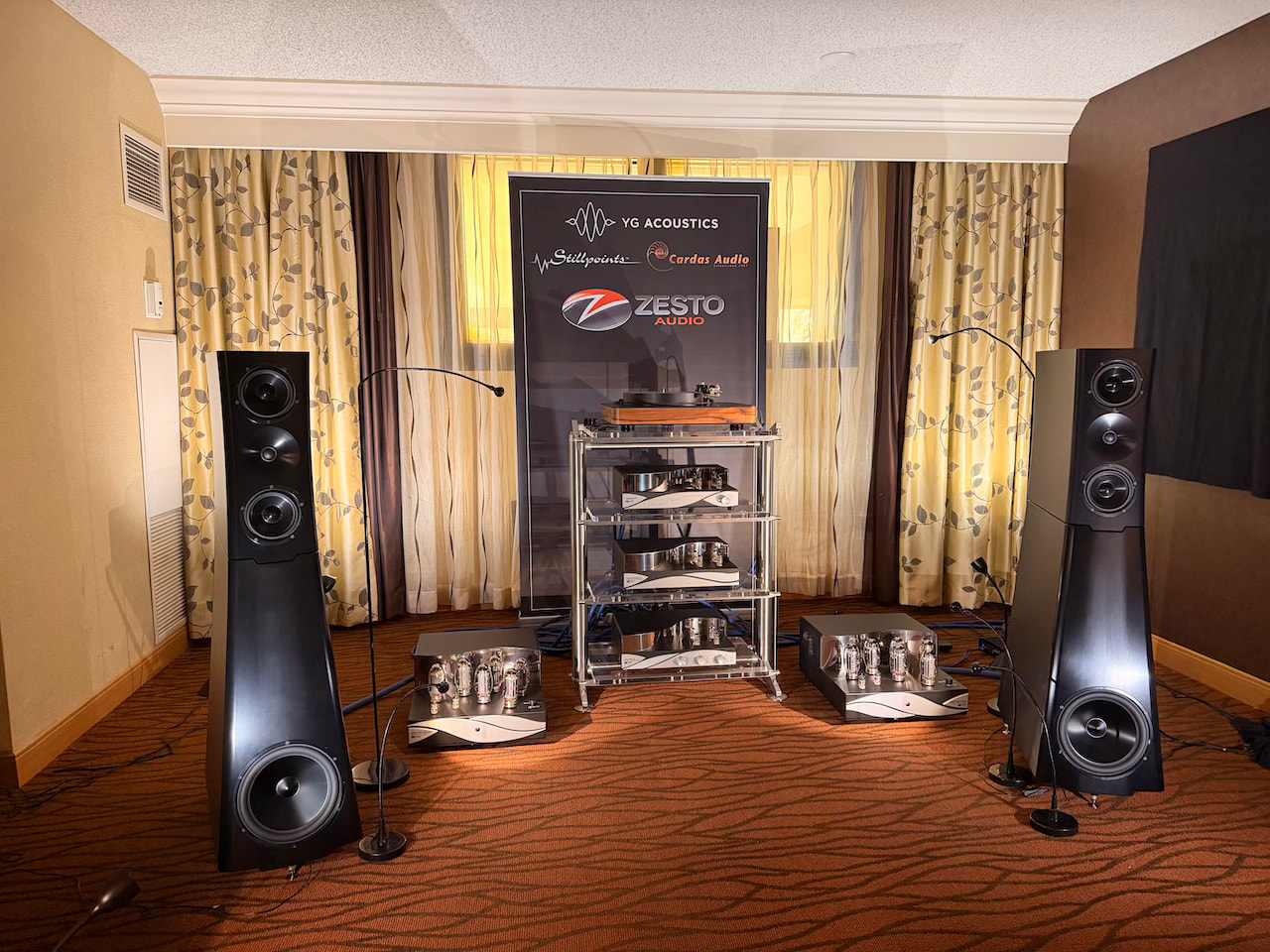
Zesto Tube Amps / DAC with YG Acoustics
Zesto Audio returned with a full tube-based system built around its new Athena DAC, Leto Ultra II preamplifier, and Eros 500 Select Class A monoblocks. At $15,000, $11,900, and $35,000 per pair respectively, the electronics were partnered with YG Acoustics’ Sonja 3.2 loudspeakers, a $106,800-per-pair reference design that requires serious amplification and rewards it accordingly.
Advertisement. Scroll to continue reading.
This was not a system chasing syrupy tube warmth or trying to sand down the edges of every recording. The Zesto and YG combination was all about resolution, control, and tonal precision, with Cardas cabling tying the system together. The Sonja 3.2’s aluminum cabinet, proprietary drivers, and exceptionally low-distortion crossover design gave the Eros 500s plenty to work with, resulting in a presentation that was detailed, dynamic, and remarkably composed.
Advertisement
The Athena DAC also provided a useful real-world demonstration of DSD playback. Switching among 1x, 2x, and 4x DSD files revealed audible differences, although the gains were not equal at every step. From outside the center seat, the move from 1x to 2x DSD seemed to offer the most noticeable improvement in refinement and separation, while the jump to 4x was far more subtle. That does not make 4x DSD pointless, but it does reinforce the reality that implementation matters far more than simply chasing the largest number on the display.
Zesto and YG Acoustics proved to be a highly potent pairing: tube electronics with enough speed, grip, and transparency to let the Sonja 3.2s show why they belong in the reference category.
Rockport / CH Precision
Rockport Technologies and CH Precision delivered one of the most expensive and meticulously assembled systems at T.H.E. Show SoCal 2026, built around the custom Lexus Silver Rockport Lynx loudspeakers and a full complement of Swiss electronics. With the speakers, Aurender N50 music server and NH10 network switch, plus CH Precision’s D10 SACD/CD transport, C10 Reference DAC, T10 Time Reference clock, L10 preamplifier, and M1.1 power amplification, this was a system hovering around the $500,000 mark before anyone started counting racks, power products, and cables.
The Rockport Lynx is a three-way floorstander with a 10-inch carbon-fiber sandwich woofer, 6-inch midrange driver, and waveguide-loaded beryllium tweeter housed in the company’s extraordinarily inert DAMSTIF3 aluminum enclosure. It is a speaker engineered to reveal everything upstream, which made it an ideal match for CH Precision’s ultra-low-noise, no-nonsense approach to solid-state electronics.
This was not a system designed to flatter weak recordings or wallpaper over the rough edges. It was all about control, silence, image specificity, and the kind of precision that makes small shifts in level, decay, and placement feel more obvious.
Advertisement
Tonian Labs Oriaco D6
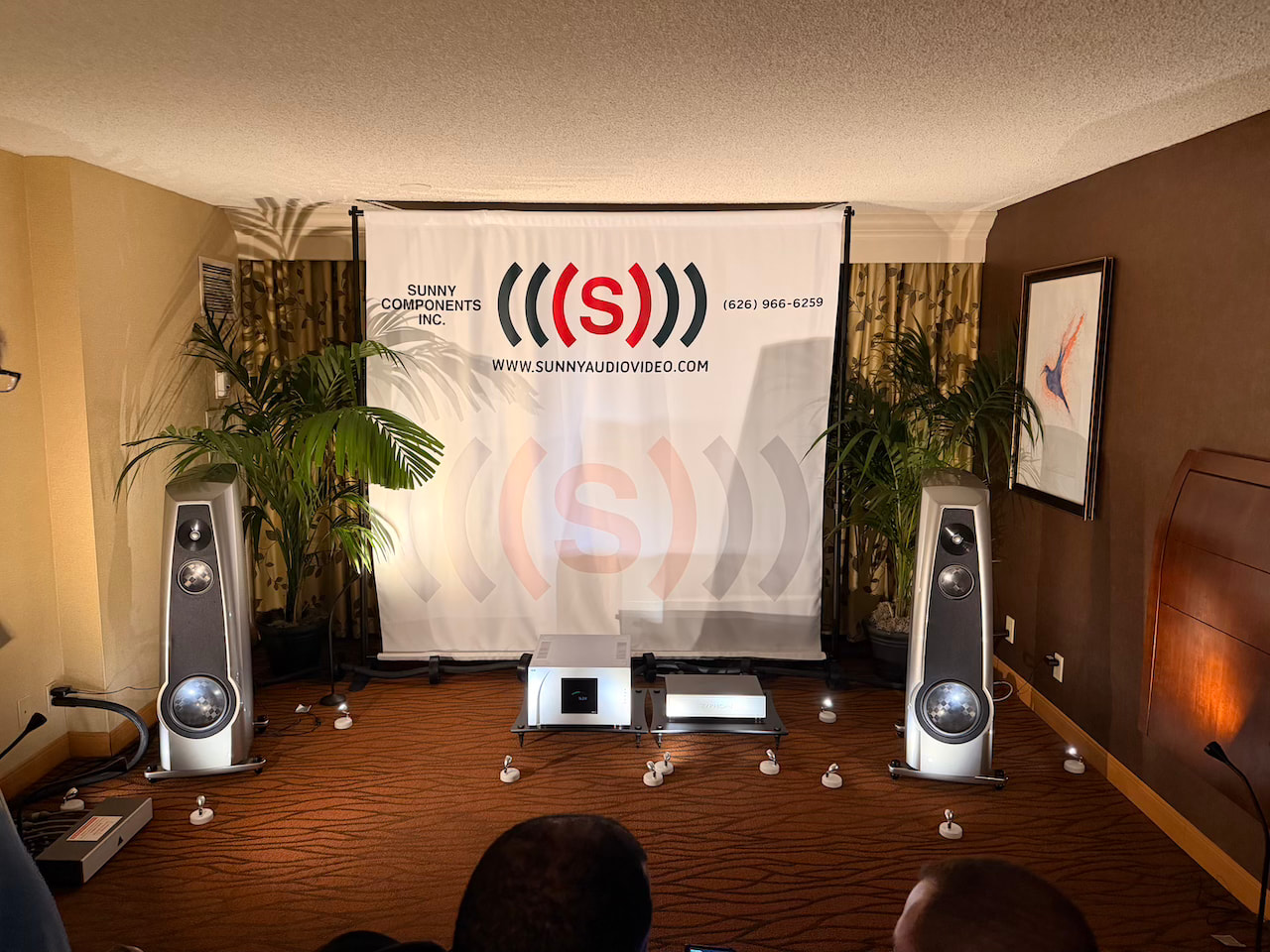
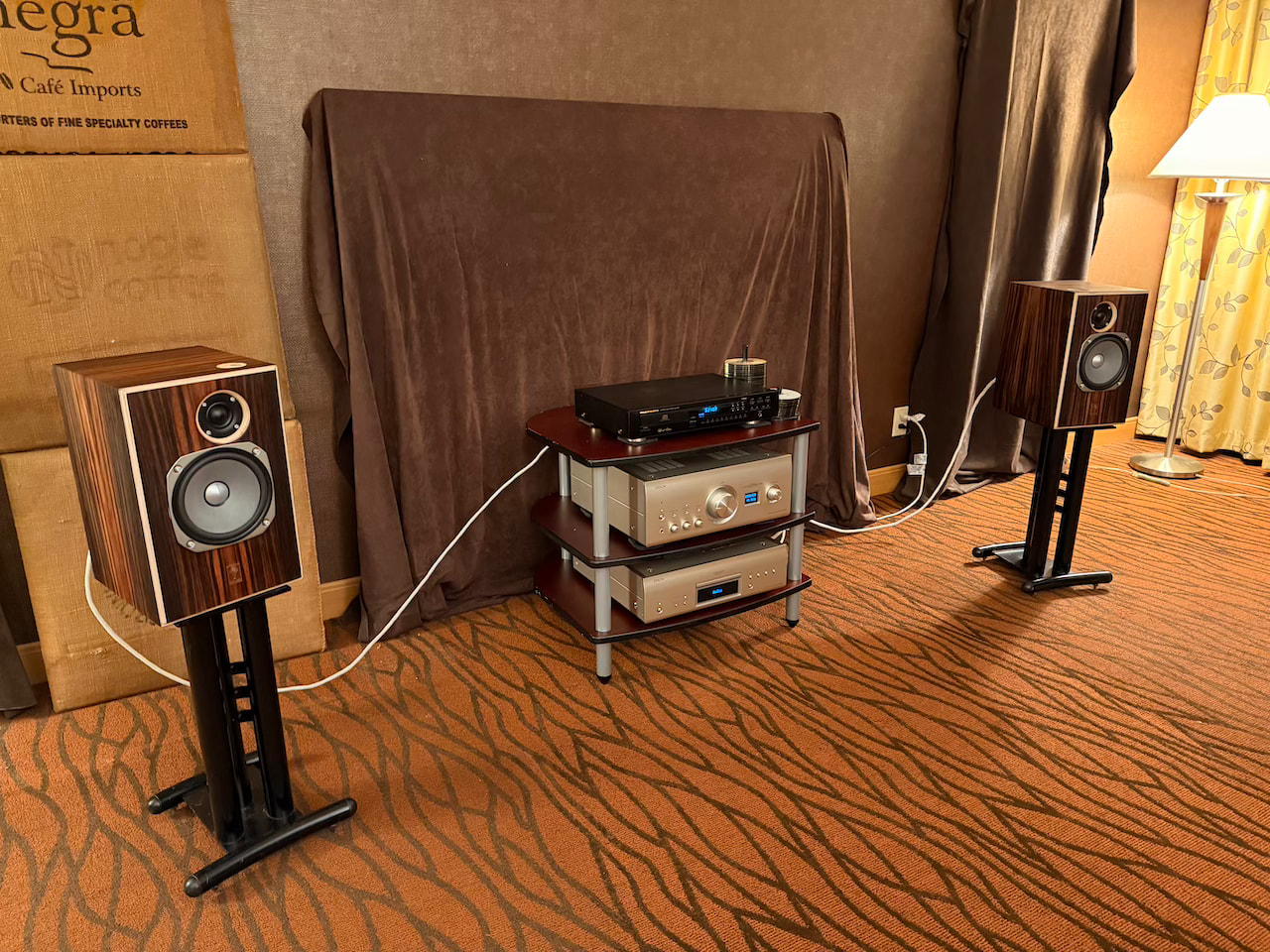
Scaling way back from the six-figure excess, Tony Minasian’s Oriaco room delivered one of the most affordable systems in this year’s Best in Show lineup. The previous winner returned with the Oriaco D6 stand-mount loudspeakers, now $6,300 per pair, driven by Denon’s PMA-3000NE integrated amplifier at $3,799. Add a CD player, stands, and cables, and the system still lands in five-figure territory, but compared with the financial carnage elsewhere at the show, this was refreshingly sane.
Minasian used a vintage Marantz CD player as the source, although the Denon’s capable onboard DAC means almost any suitable CD transport with a digital output could do the job. The PMA-3000NE delivers 80 watts per channel into 8 ohms, includes optical, coaxial, and USB-B digital inputs, and has enough current delivery to make the compact Oriacos sound far larger and more authoritative than their size suggests.
What separates Tony’s speakers is not flash or exaggerated hi-fi fireworks. They reproduce transients, decay, and vocal placement with an uncommon sense of natural ease. Percussion has real air around it, piano notes fade with convincing shape and weight, and vocals lock firmly into the center of the soundstage. The D6 uses a carefully voiced 6-inch full-range driver, front-mounted soft-dome tweeter, and a top-mounted ambient tweeter, all selected and tuned with far more care than the relatively understated cabinet suggests.
The most impressive demonstrations came from Minasian’s own recordings with working musicians, which makes sense because he knows exactly what those sessions should sound like. But the system was equally convincing with orchestral material, Snoop Dogg, and everything in between. It was another reminder that intelligent engineering, careful voicing, and good recordings can still embarrass systems costing many times more.
Atlantis Labs AT38 / AT23 Pro / Neoson
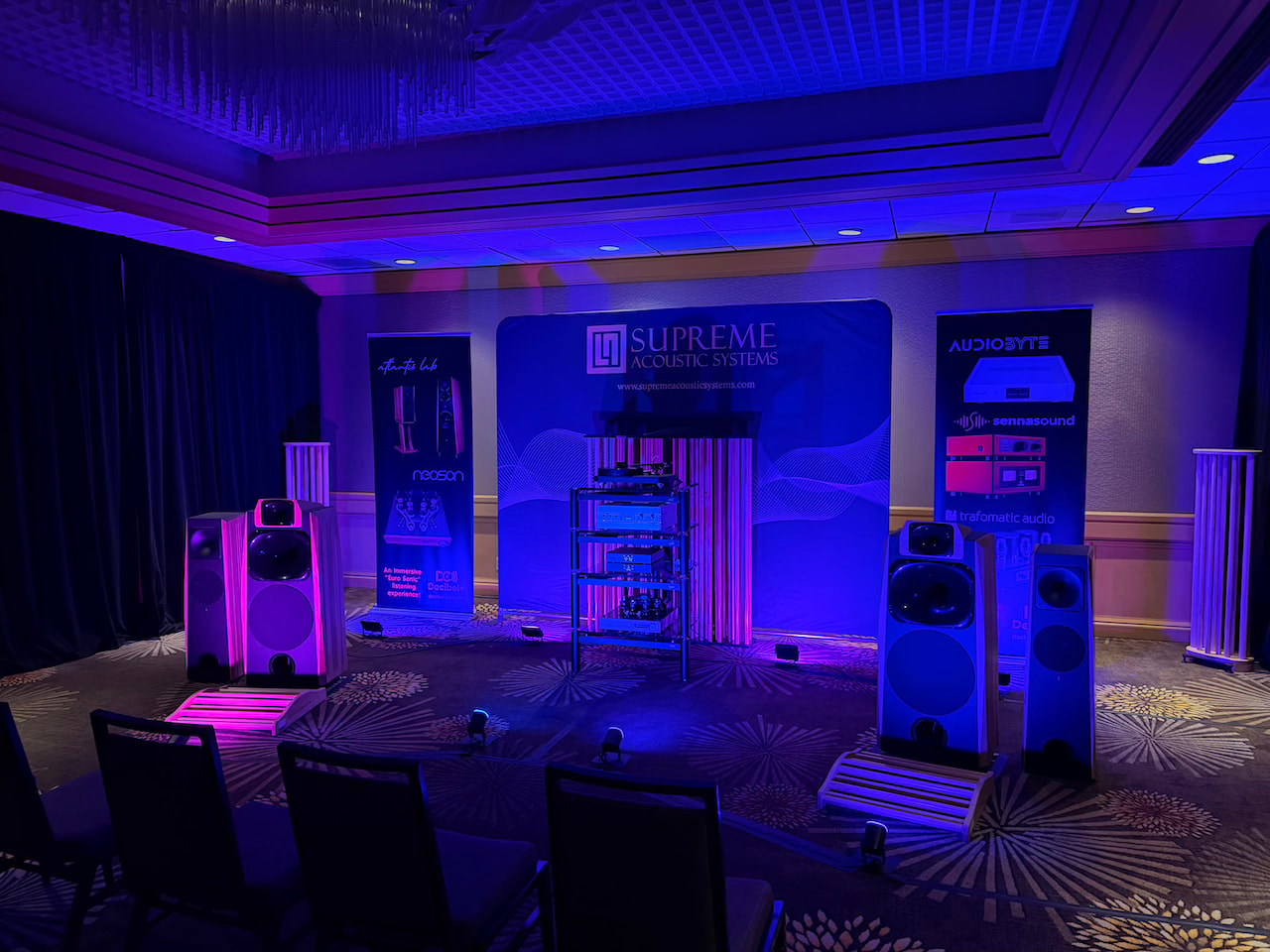
Atlantis Lab and Neoson earn a second Best in Show nod following their impressive T.H.E. Show Vegas debut earlier this year. The basic formula remained intact: high-sensitivity French loudspeakers, low-powered Class A tube amplification, and a digital front end designed to get out of the way. This time, however, the room also featured a BennyAudio turntable making its world premiere at the show.
The Atlantis Lab AT 23 PRO is the accessible entry point here at $6,466 per pair, although “accessible” becomes relative once it is partnered with the $11,828 Neoson Evolution tube amplifier and Audiobyte’s SuperHub streamer and SuperVOX DAC. That puts the digital system around $27,000 before cables, racks, and accessories. Add a serious analog front end and phono stage, and the total moves past $40,000 quickly. Welcome to high-end audio, where the inexpensive option can still require a modest conversation with your financial adviser.
Advertisement
Advertisement. Scroll to continue reading.
The good news is that the system continues to justify the attention. The AT 23 PRO throws a genuinely wide soundstage, locks vocals firmly into place, and delivers bass with speed and control rather than overhang. The Neoson Evolution’s 20 watts per channel of Class A tube power proved more than sufficient, which is exactly the point of pairing it with loudspeakers this sensitive.
The flagship AT 38 PRO, at $23,939 per pair, brought additional bass weight, greater scale, and a richer, more expansive presentation. Its horn-loaded compression drivers and 38 cm woofer give it a more effortless sense of dynamic freedom, but it did not lose the smaller model’s quickness or ability to make voices feel present in the room.
We will have more to say about the Atlantis Lab AT 23 PRO and Neoson Evolution, both of which are currently under review.
Advertisement
Wolf von Langa / Cinnamon
My first experience with the Wolf von Langa WVL 11620 ORGANIC loudspeakers was an instant delight. In a show full of systems flexing enormous power ratings, this room took a far more elegant approach.
The $39,995 German-made ORGANIC field-coil loudspeakers were paired with Cinnamon’s $17,995 Malabar VLF bass system, an SW1X PRE III Classic linestage ($28,041), and SW1X MPA V Special monoblocks ($37,836). The analog front end was equally formidable: a PrimaryControl Kinea II turntable ($27,995) with FCL tonearm ($38,995) and Fuuga MC cartridge ($10,995), feeding Cinnamon’s Galle phono stage ($32,995) and Galle step-up transformer ($8,250).
With nearly $250,000 invested in the core system before cables and accessories, this was not a modest setup. But the sound was not about brute force or audiophile fireworks. It was about finesse: natural vocal presence, excellent low-level detail, tonal color, and a sense of musical flow that made it easy to forget about the hardware.
The ORGANIC speakers delivered the speed, clarity, and realism that make a properly assembled low-power tube system so rewarding. Highly engaging at sensible listening levels, this room proved that a system does not need to turn the volume into an international incident to make a lasting impression.
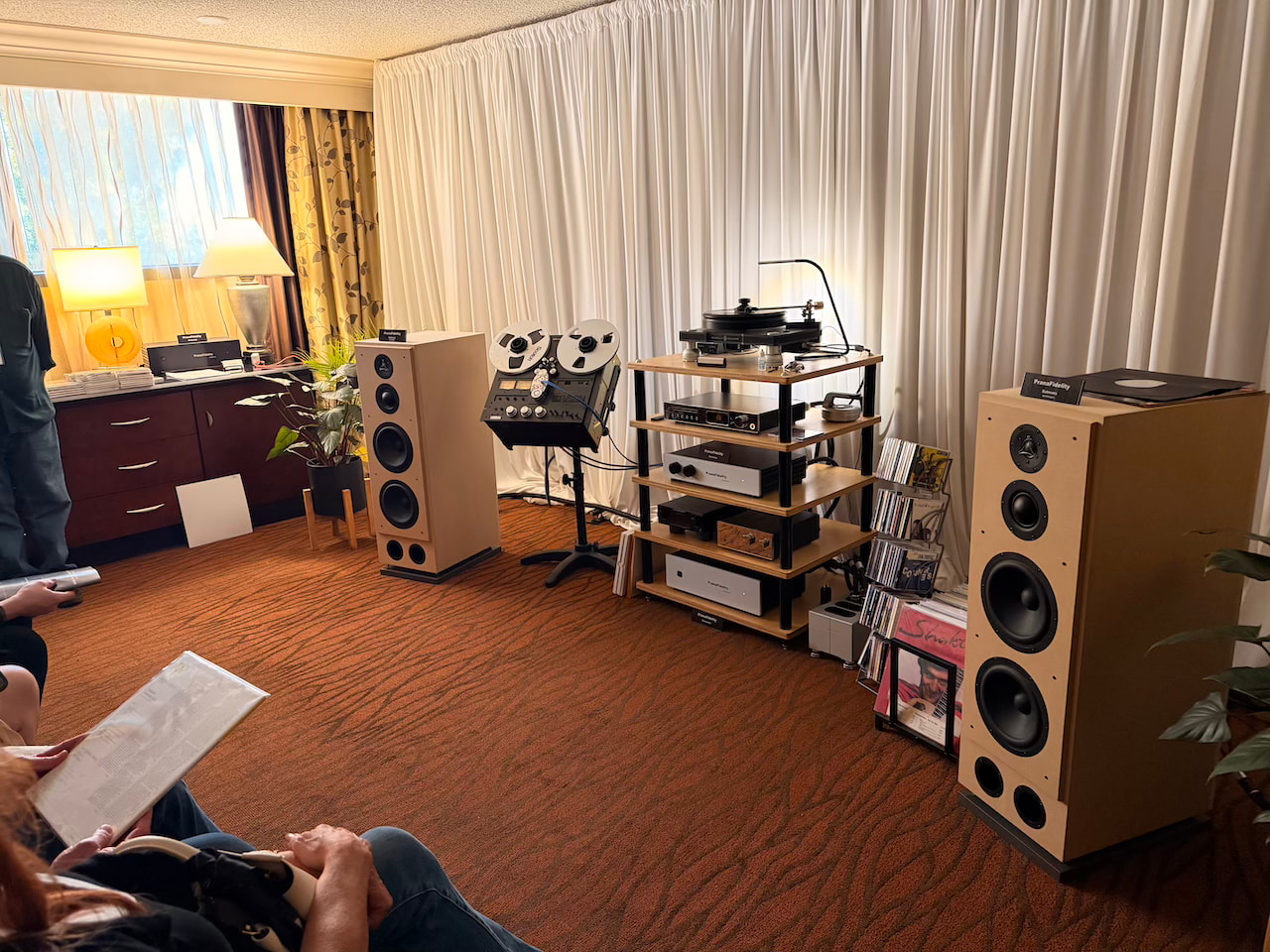
PranaFidelity / E.A.R. / Furutech
Steven Norber of PranaFidelity arrived at T.H.E. Show SoCal with something genuinely new: the Satmata, a three-way prototype floorstander completed just in time for the event. It is not a finished product yet, but based on what I heard, Norber would be wise not to overthink the final formula.
The analog front end was as serious as the speakers. A Merrill-Williams R.E.A.L. 101.3 turntable fitted with a Breuer Dynamics tonearm and OTTA Theorbo moving-coil cartridge fed an E.A.R. 88PB phono stage, while PranaFidelity’s purna/ma amplifier handled power duties. Furutech power distribution and cabling completed a system that looked deceptively straightforward by high-end show standards, at least until the music started.
Advertisement
The room was packed every time I stopped by. Late on the first day, I finally landed the coveted center seat and understood why. The Satmata created a presentation with real depth, nuance, spaciousness, and remarkably lifelike vocal presence. Rather than simply placing performers across a large soundstage, it pulled the listener closer to the recording without sacrificing scale or composure.
Nima Ben David’s Résonance showed off the system’s ability to reproduce the dynamic bowing, harmonic texture, and natural decay of solo viola da gamba. A mono selection from Porgy and Bess provided the encore, proving that even a straightforward recording can sound deeply immersive when the system gets tone, timing, and scale right. This was one of the most captivating analog rooms at the show.
Several European countries have been considering or already applying digital services taxes to large online platforms. These surcharges are aimed at revenue generated by activities such as digital advertising and online marketplaces – areas dominated by US-based companies. Read Entire Article Source link



















































You must be logged in to post a comment Login