Connect with us
DAPA Banner
DAPA Coin
DAPA
COIN PAYMENT ASSET
PRIVACY · BLOCKDAG · HOMOMORPHIC ENCRYPTION · RUST
ElGamal Encrypted MINE DAPA
🚫 GENESIS SOLD OUT
DAPAPAY COMING

Tech

The Best Outdoor Deals From the REI Anniversary Sale 2026

Published

on

It’s nearly summer. Birds are migrating, flowers are blooming, and REI is kicking off its annual anniversary sale.

It’s the outdoor retailer’s biggest sale of the year. This year’s REI sale starts May 15 and runs through Memorial Day, May 25. Many items are up to 30 percent off, but REI Co-op members save up to 20 percent on any full-price item and an extra 20 percent off any REI Outlet item. To get the discount, add the promo code ANNIV26 at checkout.

We’ve highlighted the best deals on gear we’ve loved over our years of testing. There’s something for nearly all our favorite summer activities: tents, stoves, sleeping bags, and plenty of outdoor apparel. Be sure to look at our guides to outdoor gear, like the Best Tents, Best Sleeping Bags, Best Backpacking Sleeping Pads, Best Rain Jackets, Best Backpacking Water Filters, Best Merino Wool, and Best Binoculars.

WIRED Featured Deals

Advertisement

Deals on Camping Gadgets and Gear

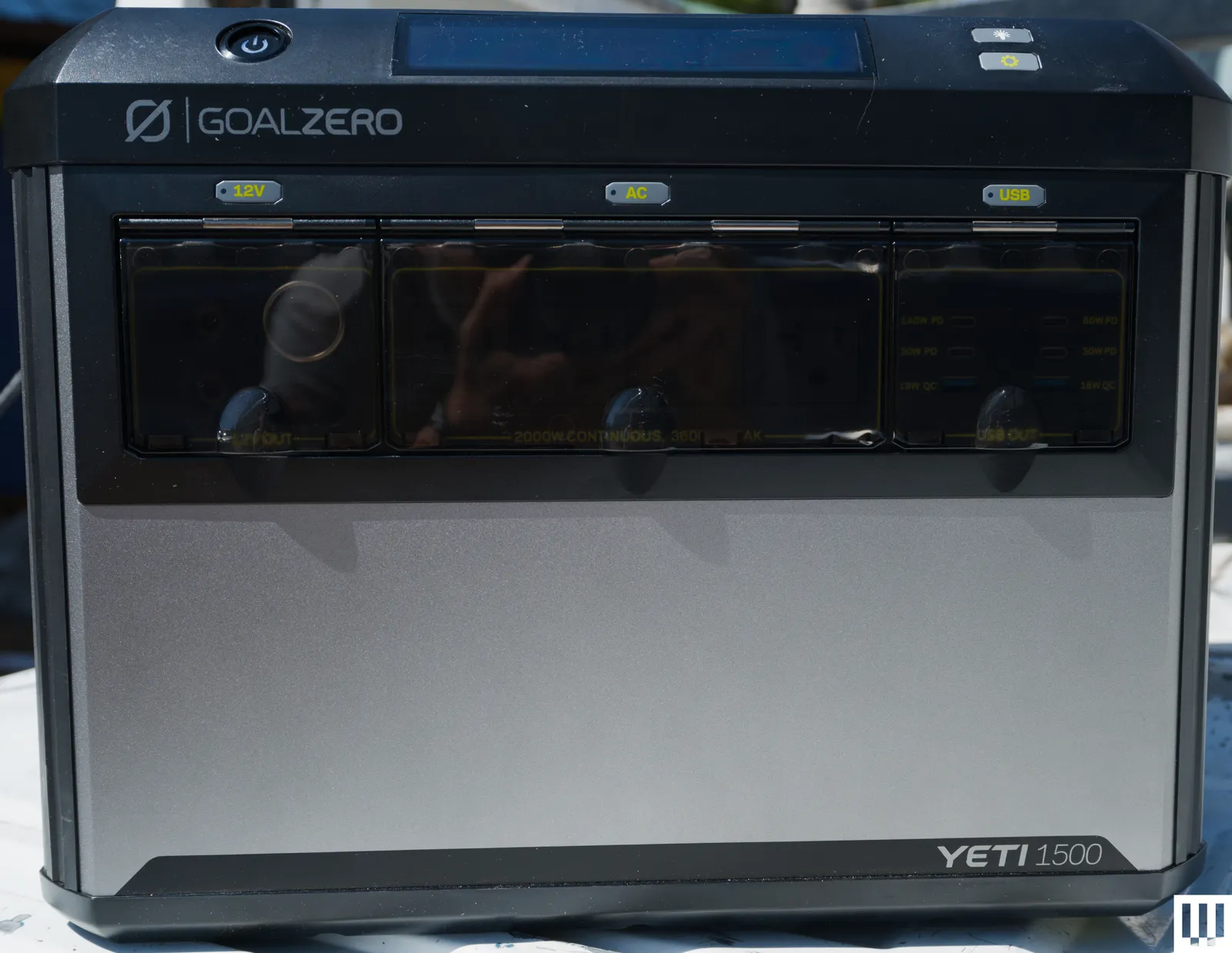
Image may contain Appliance Device Electrical Device Microwave Oven Car Transportation Vehicle Adult and Person

Photograph: Scott Gilbertson

Goal Zero’s new Yeti 1500 is one of the best camping and overlanding power stations we’ve tested. The new LiFePO4 chemistry battery is rated for 4,000 charge cycles (about 10 years of average use) and there’s a new high amp output (30 A) for tying into van and overlanding setups. Goal Zero also engineered it to be able to handle the high vibration environment of off-roading. With 4 AC outlets and USB charging at up to 140 watts, the Yeti 1500 can keep your wired world running for well over a week, no grid required.

Yes your phone has some features of a dedicated satellite messenger, but we still think you’re better off with a dedicated device. Garmin’s new inReach Mini 3 now offers some of those phone features—like voice and photo messaging—along with the emergency features and excellent service world wide. It’s also still tiny, well built and it has great battery life. The cheaper Garmin Inreach Mini 3 (which does not have the new photo sharing features) is also on sale for $400 ($50 off).

The Garmin Instinct Solar is our favorite rugged and affordable outdoor watch powered by the sun. It has long battery life and yes, recharges any time it’s in the sun. GPS is enabled and there’s tons of sports tracking and navigation features. It’s cheaper than a Fenix and just as reliable.

Coleman 1900 Camping Stove

Courtesy of Coleman

My favorite of Coleman’s current lineup, the Cascade 3-in-1 (8/10, WIRED Recommends) features heavy-duty cast iron grates, comes with a cast-iron griddle and grill, and can fit a 12-inch pan and a 10-inch pan side by side. It’s sturdier and all-around more robust than other Coleman stoves, well worth the extra money if you’re serious about camp cooking. That said, the much cheaper stove below will get you by if you’re only using it a few nights a year.

Advertisement

This is our favorite camp stove for most people. Technically this version is a little fancier than our top pick, with electronic ignition and a nice pale green paint job. Is it worth an extra $30? That’s up to you. If it’s not, snag the less fancy version for $59 at Walmart.

The thing to keep in mind when you shop REI brand gear is the company’s basic proposition: you get 90 percent of the designer item for 70 percent of the price. It’s a strategy that works quite well and has generated some really great, affordable gear. This chair is a good example of that. It’s not as nice as the Nemo above, but it’s still comfortable (it does wobble a little, side to side when you move) and nearly half the price.

Silky F180 Folding Hand Saw next to sawed logs

Photograph: Scott Gilbertson

Whenever I can, I like to cook over open flame using my firebox stove, which often means cutting wood. The best portable saw I’ve found is this Silky folding saw. It’s light enough to bring bike packing (5.3 ounces), and it folds down to about 9 inches long, which slips in a pannier no problem. This thing is razor sharp though, be careful when using it in the backcountry.

Petzl’s Tikka headlamp is one of our favorite headlamps. It provides plenty of light to cook by in the backcountry, runs on three AAA batteries (we recommend Panasonic Eneloop rechargeable batteries) and lasts over 5.5 hours. It’s also compatible with Petzl’s USB-rechargable Core battery ($30).

Advertisement

The thing to keep in mind when you shop for gear bearing the REI brand is the company’s basic proposition: You get 90 percent of the designer item for 70 percent of the price. It’s a strategy that works quite well and has generated some really great, affordable gear. This REI chair is a good example of that. It’s not as nice as the Nemo above, but it’s still comfortable (it does wobble a little, side to side when you move) and nearly half the price.

Deals on Tents

REI tents are some of the best deals around, even more so during sales. If you’d like to learn more, see our guide to the best backpacking tents and best car camping tents.

Image may contain Tent Camping Leisure Activities Mountain Tent Nature and Outdoors

Photograph: Scott Gilbertson

REI’s Base Camp tent is WIRED’s favorite car camping tent. It’s extremely well designed and proved plenty weatherproof in our testing. The traditional dome tent design, with two crossed poles and two side poles, holds up well in wind, and the tent floor is high-quality 150-denier (150D) polyester. There’s loads of storage pockets, double doors, great vents, and huge windows, making it comfortable even in summer heat.

The REI Half Dome 2 is the best budget two-person backpacking tent. I’ve toted it on many a backpacking trip and found it to be plenty sturdy, quick to set up, and capable of fitting two people and their gear. It even comes with a footprint (which I never bother with, but it’s nice to have it if you have to deal with prickers or pointy rocks).

Advertisement

The Big Agnes Copper Spur series is our top pick for freestanding ultralight tents. This is a high-quality, well-designed tent that’s lightweight, easy to set up, and roomy enough to be livable in the backcountry. The “awning” design (where the front fabric is held aloft with trekking poles or sticks) is a nice extra and the mix of 15D nylon, and 20D ripstop, while to feels fragile, as held up well over time. The 4-person version, which is one of the lightest 4P tents on the market is also on sale.

Nemo’s Dragonfly tents are great. I really like the generous amount of mesh at the top, which provides some nice ventilation on warm summer nights and is perfect for falling asleep under the stars when the weather permits. The Osmo fabric continues to live up to the hype, with much less water absorption than nylon tents in rainy weather, and there’s a good amount of room for storing all your stuff.

Sleeping Bag and Sleeping Pad Deals

Whether you need a cheap car camping bag or something more robust for fall and spring trips, we’ve got you covered. Be sure to read our guides to the best sleeping bags, best camping sleeping pads, and best backpacking sleeping pads for even more options.

Grey sleeping bag on top of light blue inflatable sleeping pad both laying in the grass

Photograph: Scott Gilbertson

REI’s Magma line of down gear are some of the best deals around. The Magma 15 sleeping bag has long been an affordable bag that’s perfect for shoulder season trips when the temp potentially swing lower than you’re expecting (the comfort rating is 21 degrees Fahrenheit). There are three lengths and three widths, making it easy to get something that’s perfect for your body, and the 850-fill-power goose down (Bluesign-approved) packs down nice and small. If you don’t need the shoulder season coverage the Magma 30 is also on sale for $262 ($87 off), and makes a great summer sleeping bag.

Advertisement

I just spent a week sleeping under this quilt at the Biggest Week in American Birding. The Magma quilt was surprisingly warm. I did have on an puffer jacket, but I managed to stay comfy down to 30 degrees. Like the sleeping bag version above, this is 95 percent of what you get from far more expensive quilts. It’s light (20.3 ounces for the medium), packs down small, includes straps to keep it on your sleeping pad, can be completely unzipped and used like a comforter or snapped up in a proper foot box on colder nights.

Sea to summit spark sleeping bag

Photograph: Scott Gilbertson

This is one of my favorite ultralight sleeping bags. There are lighter quilts out there, but when you need the warmth of a mummy bag on those colder nights, this is what I use. It also has the smallest pack size of any bag I’ve tested in this temperature range. With the included compression sack, this thing is truly tiny. The down fill is PFC-free, 850+ hydrophobic down. The zippers are on the small side, but they slide well and rarely if ever snag on the bag. I’ve slept in this bag down to 20 degrees and never been the least bit cold.

Nemo’s Forte 20 is a 20-degree synthetic-fill sleeping bag, but the comfort rating is 30 degrees. In my testing, this feels more like where you’d want to stay temperature-wise with this bag. The outer shell uses a 30-denier recycled polyester ripstop with an inside liner made from 20-denier recycled polyester taffeta. The fill is what Nemo calls Zerofiber insulation, which is made from 100 percent postconsumer recycled content fibers. The Zerofiber packs down remarkably small—this is the most compact synthetic-fill bag I’ve tested in this temp range.

The Best Outdoor Deals From the REI Anniversary Sale 2026

Photograph: Scott Gilbertson

I had to surrender my ultralight cred to the Reddit mods for carrying this robust pad, but it is totally worth the improved sleep. The 6 or so extra ounces is more than made up for by how well I sleep—rest and recovery are a key part of long miles, kids—on this pad compared to, well, every other backpacking sleeping pad. It’s that good. Alas, it is also kinda pricey … which is why you should grab one now on sale.

Advertisement

The Tensor All-Season hits all the sweet spots. It weighs an acceptably light 18.2 ounces, provides a good 3 inches of padding, and has an R value of 5.4. (The R value of a sleeping pad denotes its level of insulation; the higher the number, the warmer you stay and 5.4 is enough insulation for colder spring or autumn nights.) That works out to the best padding and R rating for the weight. It’s also mercifully quiet—none of that annoying crunching noise every time you roll over.

If you’re gearing up for a winter trip, this is a good deal on a great winter sleeping pad. The Tensor Extreme Conditions has the highest R value of any pad we’ve tested (8.5) yet somehow manages to pack down to about the size of a Nalgene water bottle and weighs just 21 ounces (587 g).

Exped Ultra 6.5R sleeping pad in lime green color

Courtesy of Exped

This is my new favorite winter sleeping pad. It doesn’t have quite the R-value of the Tensor Extreme above, but I find it more comfortable and when paired the a Therm-a-Rest Z-lite, I stayed plenty warm even on a night spent at minus 25 degrees Fahrenheit this past winter. I like it so much a bought a second one for whomever is foolish enough to come with me on such trips.

The big fat camping pad that started the trend of big fat camping pads, the Megamat is a revelation. Trust me, you have no idea how comfortable tent camping can be until you sleep on a Megamat. The 4-inch-thick Exped MegaMat is soft and surprisingly firm thanks to the closed-cell foam inside it, which relieves pressure and feels about as close to the mattress in your bedroom as you’re going to get in the woods.

Advertisement

When I sold my Jeep, I had to give up my overlanding dreams and return to being a mere camper. But this Megamat, which cuts in to fit around the wheel wells of an SUV, has brought some of those overlanding dreams back to life. I throw this in the back of my wife’s Rav4, and while it’s not a perfect fit (check Exped to see which vehicles are supported), it’s close enough that I can get a good night’s sleep in the car.

Source link

Continue Reading
Click to comment

You must be logged in to post a comment Login

Leave a Reply

Tech

Today’s NYT Mini Crossword Answers for May 16

Published

on

Looking for the most recent Mini Crossword answer? Click here for today’s Mini Crossword hints, as well as our daily answers and hints for The New York Times Wordle, Strands, Connections and Connections: Sports Edition puzzles.


Need some help with today’s Mini Crossword? I’ll tell you, 6-Across was a completely new fact to me, and I even had those particular pets when I was a kid. Read on for all the answers. And if you could use some hints and guidance for daily solving, check out our Mini Crossword tips.

If you’re looking for today’s Wordle, Connections, Connections: Sports Edition and Strands answers, you can visit CNET’s NYT puzzle hints page.

Advertisement

Read more: Tips and Tricks for Solving The New York Times Mini Crossword

Let’s get to those Mini Crossword clues and answers.

completed-nyt-mini-crossword-puzzle-for-may-16-2026.png

The completed NYT Mini Crossword puzzle for May 16, 2026.

Advertisement

NYT/Screenshot by CNET

Mini across clues and answers

1A clue: De Armas of “Knives Out”
Answer: ANA

4A clue: Jack ___, five-time “S.N.L.” host
Answer: WHITE

6A clue: Class pets that thump their feet to warn of approaching kindergarteners
Answer: GERBILS

Advertisement

8A clue: Boxer Muhammad or Laila
Answer: ALI

9A clue: Reach 0% battery
Answer: DIE

10A clue: Big name in hair loss prevention
Answer: ROGAINE

12A clue: Jack ___, six-time “S.N.L.” musical guest
Answer: WHITE

Advertisement

13A clue: Attempt
Answer: TRY

Mini down clues and answers

1D clue: “Okay then …”
Answer: ALRIGHT

2D clue: Catch, as a criminal
Answer: NAB

3D clue: Notable feature of lemon and grapefruit juice
Answer: ACIDITY

Advertisement

4D clue: Underneath
Answer: BELOW

5D clue: Actor Kevin of “Dave”
Answer: KLINE

6D clue: Long-nosed fish
Answer: GAR

7D clue: Understand
Answer: SEE

Advertisement

11D clue: Make public, as a grievance
Answer: AIR

Source link

Advertisement
Continue Reading

Tech

Wood Burning Is Reintroducing Lead Pollution Into the Air, Scientists Find

Published

on

An anonymous reader quotes a report from The Guardian: Wood heating is reintroducing lead into the air of local communities and homes, a systematic investigation by academics has found. Overwhelming evidence of lead’s neurotoxicity meant the metal was banned as an additive in petrol more than 25 years ago. The research by academics from the University of Massachusetts Amherst began by analysing samples of particle pollution from five suburban and rural towns in the north-east US. They looked for tiny particles of potassium that are given off when wood is burned and also particles containing lead. Samples from seven winters revealed associations between potassium and lead. When there were more wood burning particles in a daily sample, there was more lead in the air, with clear straight-line relationships in four of the five towns.

The project was extended to 22 other towns across the US. The relationships between lead and potassium varied from place to place, being strongest in the Rocky Mountains. By factoring in the effects of temperature, moderate to strong associations in their analysis strengthened the conclusion that the extra lead came from wood burning. The lead concentrations were less than the US legal limits, but any exposure to the metal is harmful. […] Although less than legal limits, lead particles are routinely measured in UK cities in winter when people are also burning wood. This is normally attributed to waste wood covered with old lead paint, but the Umass Amherst study suggests the metal is coming from the wood itself. This means that any wood burning could increase exposure in neighborhoods and at home. Tricia Henegan, a PhD student at Umass Amherst and the first author on the research, said: “The most logical answer [to the question of how lead ends up in wood] is that it comes from uptake in the soil, probably riding along with the nutrients and water that trees need. Once in the tree, it deposits in the tree’s tissues and remains until that tree is burned.” Other research has found that it can then become part of the smoke.

“The use of wood as an energy source is a relic of the past, one that should not be relived if given a choice. Although wood fuel use can feel nostalgic, it does have negative consequences on air quality, and therefore public health.”

Source link

Advertisement
Continue Reading

Tech

Intercom, now called Fin, launches an AI agent whose only job is managing another AI agent

Published

on

The company formerly known as Intercom just did something that no major customer service platform has attempted at scale: it built an AI agent whose sole job is to manage another AI agent.

Fin Operator, announced Thursday at a live event in San Francisco, is a new AI-powered system designed specifically for the back-office teams that configure, monitor, and improve Fin, the company’s customer-facing AI agent. Rather than replacing human support agents — which is what Fin itself does on the front lines — Operator targets the growing army of support operations professionals who spend their days updating knowledge bases, debugging conversation failures, and combing through performance dashboards.

“Fin is an agent for your customers,” Brian Donohue, the company’s VP of Product, told VentureBeat in an exclusive interview ahead of the launch. “Operator is an agent for your support ops team. This is an agent for the back office team who manages Fin and then manages their human agents.”

The announcement arrives at a pivotal moment for the company. Just two days ago, CEO Eoghan McCabe formally renamed the 15-year-old company from Intercom to Fin — an aggressive signal that the AI agent is now the business, not merely a feature of it. Fin recently crossed $100 million in annual recurring revenue and is growing at 3.5x. The broader company generates $400 million in ARR, meaning the AI agent now accounts for roughly a quarter of total revenue and virtually all of its growth.

Advertisement

Fin Operator enters early access for Pro-tier users starting today, with general availability planned for summer 2026.

The invisible crisis behind every AI customer service deployment

As companies push their AI agents to handle more conversations — Fin alone now resolves more than two million customer issues each week across 8,000 customers globally, including Anthropic, DoorDash, and Mercury — the operational complexity behind those systems has exploded. Someone has to keep the knowledge base current. Someone has to figure out why the bot entered an infinite loop with a frustrated customer last Tuesday. Someone has to analyze whether the automation rate dropped after a product update.

That “someone” is the support operations team, and according to Donohue, they are drowning.

“Almost every support ops team is already doing data analysis and knowledge management — that’s table stakes today,” Donohue said. “Where teams struggle is the agent builder work. It’s a new skill set, and most don’t have enough time for it. They get their first iteration up and running, and then they get stuck.”

Advertisement

The problem is structural. AI customer agents are not static software. They require constant tuning — a process that looks more like training a new employee than configuring a SaaS tool. Each customer conversation is a potential source of failure, and each failure requires diagnosis, root-cause analysis, a configuration fix, testing, and monitoring. It is tedious, technical, and relentless. Fin Operator aims to collapse that entire loop into a conversational interface.

How one AI system plays data analyst, knowledge manager, and debugger all at once

Donohue described Operator as filling three distinct roles that typically consume the bandwidth of support ops teams: expert data analyst, expert knowledge manager, and expert agent builder.

As a data analyst, Operator can field high-level questions like, “How did my team perform last week?” and generate on-the-fly charts, trend reports, and drill-down analyses across all of the data already stored in Intercom’s platform. The company has loaded Operator with contextual knowledge about customer-specific data attributes to help it interpret workspace-specific metrics accurately.

As a knowledge manager, Operator can ingest a product update — say, a three-page PDF describing a new feature — and autonomously search the company’s entire content library to identify what needs to change. It finds gaps, drafts new articles, suggests edits to existing ones, and presents everything in a diff-style review interface. The underlying search engine is the same semantic search system that Intercom has built and optimized for Fin over more than two years.

Advertisement

“On that knowledge management front, you just have such a time compression of something that would take, certainly hours, sometimes days, into the space of about 10 minutes,” Donohue said.

As an agent builder, Operator introduces what the company calls a “debugger skill.” Support ops teams can paste in a link to a conversation where Fin misbehaved, and Operator will trace every step of Fin’s internal reasoning, identify the root cause — often a piece of guidance that unintentionally creates a loop — propose a rewrite, back-test the change against the original conversation, and then suggest creating a production monitor to catch similar issues going forward.

“This is literally what our professional services team does,” Donohue explained. “You’ve written guidance that is unintentionally causing Fin to repeat itself — this happens a lot. You didn’t realize it, but you never gave it an escape hatch.”

The ‘pull request’ safety net that keeps humans in control of AI changes

One of the most consequential design decisions in Fin Operator is what the company calls its “proposal system” — a mechanism that functions like a pull request in software engineering.

Advertisement

Every change that Operator recommends — whether it is an edit to a help article, a rewrite of an AI guidance rule, or the creation of a new QA monitor — appears as a proposal with a full diff view. Users can inspect, edit, and approve each change before it takes effect. Nothing goes live without a human clicking “Apply.”

“Right now, we’re taking zero risk on this — Fin cannot make any changes to the system without human approval,” Donohue emphasized. “Nothing goes live until a human clicks apply.”

This is a notable architectural choice. In a market increasingly enamored with fully autonomous AI systems, the company is deliberately keeping a human approval gate in place — at least for now. Donohue acknowledged this will evolve, but said the current moment demands caution: “It’s too big a leap to just let Operator make changes automatically and then tell the team, ‘Hey, let me tell you about what I did.’”

For enterprise buyers evaluating AI tools, this design point matters. It is the difference between an AI system that proposes changes and one that enacts them — a distinction that compliance teams, security officers, and risk managers will scrutinize closely.

Advertisement

Why Fin Operator runs on Anthropic’s Claude instead of the company’s own AI models

In a revealing technical detail, Donohue confirmed that Fin Operator does not use the company’s proprietary Apex models — the same custom AI models that power the customer-facing Fin agent and that the company has promoted as outperforming GPT-5.4 and Claude Sonnet 4.6 in customer service benchmarks.

Instead, Operator runs on Anthropic’s Claude.

“We’re not using our custom models,” Donohue said. “Those are designed to directly answer customer questions, whereas these are closer to what frontier models are best suited for. This is really closer to software engineering.”

The distinction is telling. Fin’s Apex models are optimized for one thing: resolving customer service conversations with minimal hallucination and maximum accuracy. Operator’s tasks — analyzing data, writing code-like configurations, debugging complex reasoning chains — demand a different kind of intelligence. Donohue characterized these capabilities as more akin to software engineering, an area where Anthropic’s Claude models have been deliberately optimized.

Advertisement

The company has not ruled out building custom models for Operator in the future, but Donohue positioned it as a lower priority. What the team has built around Claude, he argued, is the differentiated layer: the proposal system, the debugger skill, the semantic search integration, the data attribution logic, and the charting capabilities that make Operator more than just “Claude inside the app.”

Early beta testers say Fin Operator feels like adding five people to the team

Fin Operator is currently in beta with roughly 200 customers, a number Donohue said has “ramped up pretty fast the last couple of weeks.”

Constantina Samara, VP of Customer Support, Enablement & Trust at Synthesia, said the tool has already changed how her team works: “Previously, improving how Fin handles a conversation often meant reviewing everything yourself — the conversation, the configuration, the content. With Fin Operator, you just ask. It walks you through what happened and makes improving Fin dramatically easier.”

Jordan Thompson, an AI Conversational Analyst at Raylo, reported that he has been using Operator daily and has run head-to-head comparisons between Operator’s analysis and his own manual work. “It’s very accurate,” Thompson said. “It’s just as strong at high-level trend analysis as it is at debugging individual conversations. That’s a real limitation when using an LLM connector on its own — you get conversational depth but nothing on reporting or trends.”

Advertisement

Donohue also shared an internal anecdote from the company’s own knowledge management team. Beth, who leads knowledge operations, told the product team that Operator made her feel like she had “five more people on my team.” Whether internal testimonials carry the same weight as external customer validation is debatable, but Donohue said the knowledge management use case consistently generates the most visceral reactions because the time savings are so stark — collapsing hours or days of content auditing into roughly 10 minutes.

A new pricing model signals how AI is reshaping the economics of enterprise software

Fin Operator will live inside the company’s Pro add-on tier — a relatively new bundle that already includes advanced analytics features like CX scoring, topic detection, real-time issue detection, and quality assurance monitoring across both AI and human agent conversations.

The pricing model introduces something new for the company: usage-based billing. Intercom has historically relied on outcome-based pricing — charging roughly $0.99 per conversation that Fin resolves without human intervention. Operator’s work does not map cleanly to that model because it produces configuration changes, not customer resolutions.

“This has pushed us to a different model, to go more into that usage model for support ops teams,” Donohue said. “We’ll try to be generous with the usage amounts that come into Pro, but for people who are leaning heavily in, we’ll have the ability to buy more usage blocks.”

Advertisement

The shift is worth watching. Outcome-based pricing was one of the company’s most distinctive market positions — a bet that customers would pay for results rather than seats. Extending that philosophy to internal operations work proved impractical, which suggests that as AI agents take on more diverse roles within an organization, the pricing models that support them will need to become equally diverse.

How Fin Operator stacks up in a crowded field of AI customer service competitors

Fin Operator lands in an increasingly competitive landscape. Zendesk, Salesforce, Sierra, and a constellation of AI-native startups are all building some version of AI-powered support operations tooling. The broader AI automation market is projected to reach $169 billion in 2026, according to Grand View Research, growing at a 31.4% compound annual rate.

But Donohue argued that Operator’s differentiation lies in two areas. First, breadth: Operator works across the full surface area of the company’s configuration system — data, content, procedures, simulations, guidance, and monitoring — rather than addressing a single narrow use case. Second, the fact that it spans both AI and human operations.

“Most critically, where I think we have the most differentiation is because it’s for your human system and your AI system,” Donohue said. “That’s really one of the unique spaces we have — to have a first-class AI agent and a first-class help desk, and Operator works across both.”

Advertisement

The competitive positioning also benefits from timing. The company’s recent corporate rebrand from Intercom to Fin signals a wholesale commitment to AI that legacy players may struggle to match. As CEO McCabe wrote in announcing the name change, the AI agent “is about to be the largest part of our business.” The help desk product continues as Intercom 2, but the parent company now carries the name of its AI agent — a branding move that some industry observers have interpreted as pre-IPO positioning. The Fin API Platform, launched in early April, adds another dimension: the company opened its proprietary Apex models to third-party developers and even offered to license the technology to direct competitors like Decagon and Sierra.

The real paradigm shift isn’t a new chat interface — it’s an agent that does the thinking for you

Step back from the product specifics and Fin Operator represents something potentially more consequential than a new dashboard or analytics tool. It is one of the first commercial products to explicitly embody the emerging paradigm of AI agents that manage other AI agents — a two-layer abstraction that is beginning to reshape how companies think about operational software.

Donohue was emphatic on this point. The real paradigm shift, he argued, is not the chat interface replacing buttons and menus. It is that the AI is doing the actual knowledge work — figuring out what should change, why, and how.

“The UX change is secondary, even though it’s most visible,” Donohue said. “The change is that we are identifying and doing the work of support operations. It’s doing the work of what the knowledge manager is doing, so that they just have to approve that. That’s the huge shift.”

Advertisement

The analogy to software engineering is apt. Over the past year, AI coding agents have fundamentally altered the daily workflow of developers, shifting their primary responsibility from writing code to reviewing and guiding the AI that writes it. Donohue sees the same transformation arriving for support operations professionals.

“Software engineers — three months have upended their world, where their primary job now is managing agents who are actually writing the code,” he said. “Similarly now, support ops, your job is to manage an agent who’s managing the agent for your customers.”

Whether this vision pans out at enterprise scale remains to be seen. The company is still launching Operator in beta precisely because it wants to keep refining quality through what Donohue described as a painstaking, conversation-by-conversation debugging process. “We’ve spent three months, conversation by conversation, learning, fixing, learning, fixing, to get it where it’s robust,” he said.

But if the early returns hold, Fin Operator may preview what the next generation of enterprise software looks like: not tools that help humans do work faster, but agents that do the work themselves, subject to human judgment and approval. For customer service leaders already running AI agents in production, the question is no longer just “how good is my bot?” It is now, inevitably, “who is managing it?” And increasingly, the answer is another bot.

Advertisement

Source link

Continue Reading

Tech

After testing over a dozen digital notebooks, I’ve realized that the stylus is the real MVP in the e-ink tablet equation

Published

on

I’m a massive fan of digital notebooks (aka epaper or E Ink tablets) — I’ve used over a dozen in the last few years and, as a habitual list maker and note taker, I find them extremely useful. My favorite e-notebook — purely from a writing experience — is the Amazon Kindle Scribe (2024 edition) and, while I loved it when it first launched, the Kobo Elipsa 2E is now my least favorite as newer options just do it better.

I’ve come to realize that a lot of that preference boils down to one surprising element: the stylus. Or rather, the stylus’ little nib and how it feels when you get down to the act of (figuratively) putting pen to paper.

Source link

Continue Reading

Tech

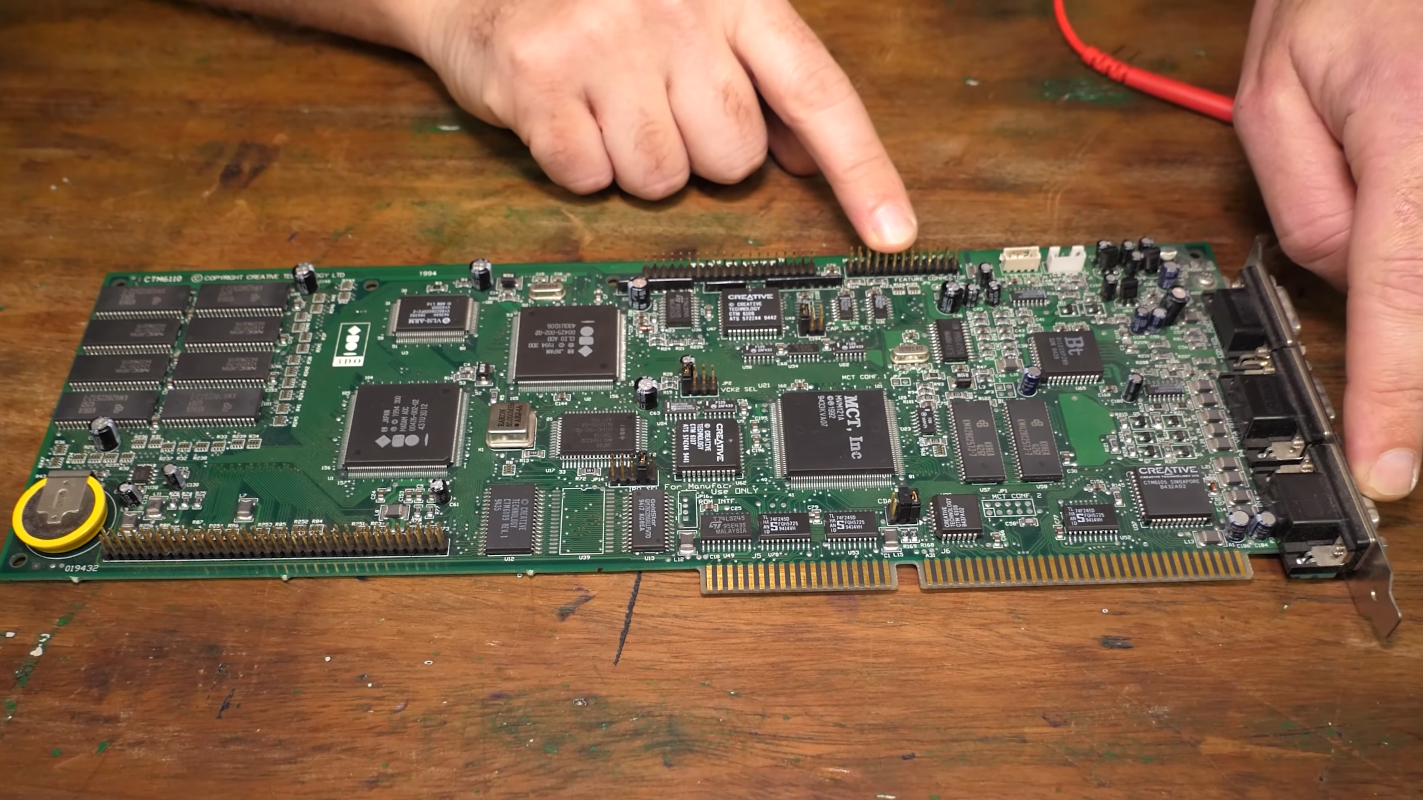
Restoring A 3DO Blaster Card From The Early 90s

Published

on

Before the modern trifecta of video game giants came to dominate the market around two decades ago, the world was awash in video game consoles. Many of these retro platforms have largely been forgotten outside of the enthusiast communities, and an average gamer today might not have ever heard of brands like ColecoVision or TurboGrafx. Among these unusual, rare, or forgotten systems was the 3DO which wasn’t strictly a console but rather a specification that manufacturers could use to make consoles on their own. But even more unusual was that this standard could be used to build 3DO-compatible expansion cards for PCs as well.

In this video, [The Retro Collective] received one of these boards to add to their museum, but like much retro hardware of this era it wasn’t working exactly like it would have out-of-the-box. After adding it to one of their period-correct 386 machines of the time, they found that it would only work properly with weight applied at one of the corners. This led to the discovery of some disconnected pins on the PCB, and a repair of that and some other issues brought the card back to life again.

The video also discusses the platform itself and shows how it would connect to a PC from that time. The PC would have needed a Sound Blaster card, a CD ROM drive with a particular proprietary interface, and a few other hardware requirements, but with everything up and working the player would have a console that theoretically competed with the original Playstation or Nintendo 64. It also illustrates an alternative path video games might have taken where expansion cards added console compatibility to any modern PC, but unfortunately the 3DO never really caught on.

Advertisement

Source link

Advertisement
Continue Reading

Tech

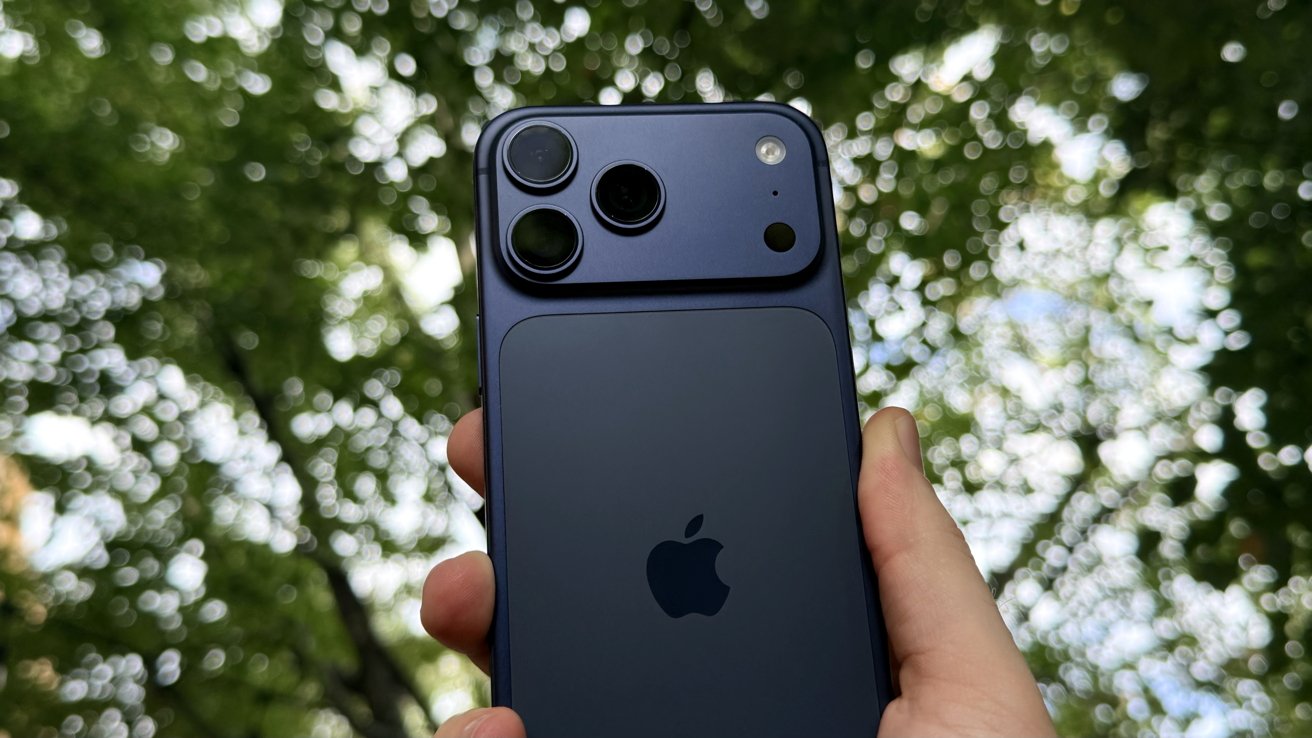
DOJ investigation into vehicle modding hardware leads to Apple subpoena

Published

on

Over 100,000 EZ Lynk users could find their data being handed over to the United States government if Apple complies with a request for app download information.

Governments subpoena Apple for information all of the time, but that doesn’t mean it gets handed over automatically. Apple will push back if the scope of the request is too broad or vague.

In the case of the EZ Lynk lawsuit, the US Department of Justice has asked Apple and Google to hand over information about over 100,000 users. According to a report from Forbes, the DOJ wants information like the name and address of every person that downloaded the EZ Lynk app.

It’s an incredible request that’s 10x the size of a previous request about a gun scope app in 2019. While the companies involved haven’t commented directly, EZ Lynk shared that it expects Apple and Google to refuse the subpoena.

Advertisement

The lawsuit itself centers around EZ Lynk being accused of breaking the Clean Air Act by selling devices that let users bypass emission controls. While EZ Lynk’s devices can be used for all kinds of modifications, it seems that emission bypass was a popular use case.

The DOJ claims it needs the information of all of these users for evidence gathering. They’d like to contact some of the individuals to act as witnesses to the case.

There are obvious Fourth Amendment issues at play here. Beyond the wide scope of the data request, the DOJ seemingly wants people to self-incriminate themselves on the stand.

Apple does respond to subpoenas and provides data within reason. This request is too vague and wide in scope, so if history is anything to go by, Apple will reject it.

Advertisement

However, that doesn’t mean the government can’t narrow its scope and ask for specific individuals’ app download records. If requested properly and legally, Apple will hand over a download record and a user’s name and address.

As we’ve seen in other cases, Apple can’t hand over data that is end-to-end encrypted like Apple Health data. Since an app download is basically just a receipt of purchase, Apple will have an unencrypted record of that interaction.

Aaron Mackey from the Electronic Frontier Foundation questions the reasoning behind the subpoena. They question what the data might be used for beyond the prosecution of the particular case.

To make matters worse, EZ Lynk alleged that the US government wanted “a backdoor” in 2019 that would enable monitoring unsuspecting users. The government denies that claim.

Advertisement

Time will tell how Apple responds and if it gets dragged into the case any further.

Source link

Advertisement
Continue Reading

Tech

Irish quantum start-up Equal1 unveils RacQ data centre computer

Published

on

RacQ will be demonstrated in action at next week’s Dell Technologies World expo in Las Vegas.

Irish quantum computing start-up Equal1 has launched the next iteration of its server technology for deployment, integration and use in data centre infrastructure.

The ‘RacQ’ is described as “the next generation” of the company’s ‘Bell-1’ server and is claimed to be “the world’s first deployable rack-mounted silicon-spin quantum computer designed to live within a standard 19-inch data centre rack”.

According to the Dublin-based company, RacQ is designed to utilise hybrid quantum-classical computing, in which classical and quantum technologies work in tandem as single system to optimise efficiency and effect, for “high-impact” application such as investment risk analysis, materials simulation and supply chain optimisation.

Advertisement

“For nearly every organisation, quantum computing remains out of reach, confined to labs,” said Jason Lynch, CEO of Equal1.

“We’re changing that. We are putting quantum inside the rack so customers can roll it in, plug it in and begin running hybrid quantum-classical workloads in days, using the infrastructure they already own.”

RacQ’s configuration is optimised for use at standard data centres, according to Equal1, with power requirements, cooling mechanisms, and weight and footprint dimensions designed for accessibility to centre operators working with “existing server stacks” or specialised high-performance “nodes”.

The system’s architecture, according to the company, is built using standard semiconductor processes and powered by ‘UnityQ’, a “breakthrough quantum system-on-chip that will integrate the complete quantum system onto a single silicon package”.

Advertisement

RacQ will be demonstrated in action at next week’s Dell Technologies World expo in Las Vegas through a research collaboration between Equal1 and Dell to explore how hybrid quantum-classical computing can operate inside existing data centre environments.

Equal1, which was founded in 2017 at University College Dublin, says quantum computing using standard silicon is the way to overcome challenges posed by AI to the power and cost thresholds of traditional computers.

The RacQ predecessor Bell-1 server, launched in March 2025, was claimed at the time as the first-ever Irish-made quantum computer, as well as the the world’s first silicon-based quantum server designed for data centres and high-performance computing.

In January of this year, the company raised $60m in a funding round led by the Ireland Strategic Investment Fund. In April, Equal1 said it would partner with Californian quantum infrastructure software maker Q-Ctrl for the deployment of rack-mounted quantum computers in enterprise data centres, as well as with French computer company Bull to help “advance the next generation of hybrid quantum-classical technologies with European solutions”.

Advertisement

Don’t miss out on the knowledge you need to succeed. Sign up for the Daily Brief, Silicon Republic’s digest of need-to-know sci-tech news.

Source link

Advertisement
Continue Reading

Tech

Why The US Can’t Adopt Ukraine’s Innovative Approach To Unmanned Warfare Systems

Published

on

from the affordable-precise-mass dept

It is widely accepted that drones have changed the conduct of modern war dramatically. The war in Ukraine, in particular, is driving the rapid evolution of drone technology. Evidence of how far things have come was provided recently by the following claim from Ukraine, reported here on The Next Web (TNW):

In April, Ukrainian President Volodymyr Zelensky announced that his forces had, for the first time in the history of warfare, seized an enemy position using only unmanned systems. No infantry. No human soldiers entering the contested ground. Drones and ground robots identified the target, suppressed defensive fire, and captured the position without a single Ukrainian casualty. The claim has not been independently verified in detail, and Ukraine’s military has declined to provide specifics.

The TNW article goes on to give some details about the company that apparently played a major role in that unmanned assault:

a Ukrainian-British defence technology startup called UFORCE, has conducted more than 150,000 combat missions since Russia’s full-scale invasion in 2022, achieved unicorn status with a valuation exceeding one billion dollars, and is now scaling production from a discreet London headquarters designed, the company says, to protect it from Russian sabotage. The age of unmanned warfare is no longer a conference-circuit prediction. It is a line item on a defence contractor’s balance sheet.

Politico interviewed the Ukrainian commander in charge of the Third Assault Brigade’s ground robotic systems unit, the one which carried out the attack. Mykola Zinkevych provided some interesting indications of what robotic systems were already doing today, and what Ukraine’s future plans were for unmanned warfare systems. For example, Zinkevych said:

Delivery of important cargo, evacuation of the wounded, conducting surveillance in open areas, destruction of enemy fortifications, sabotage operations behind enemy lines, laying minefields — all this is now performed by ground robotic systems

In the short term:

Advertisement

Infantrymen can and should be taken out of direct fire. Our goal for 2026 is to replace up to 30 percent of personnel in the most difficult areas of the front with technology

In a post on Facebook (in Ukrainian), Zinkevych gave details of the ambitious longer-term goals (via Google Translate), which will involve the wider deployment of unmanned ground vehicles (UGV):

In March alone, 9,000+ missions were completed by the military. Our goal is for 100% of front-line logistics to be performed by robotic systems.

In the first half of 2026, due to increased demand, we will contract 25,000 UGVs, which will be gradually delivered to the front. This is twice as much as in the entire year 2025.

A new paper from the Carnegie Endowment for International Peace, written by the former defense minister of Ukraine, Andriy Zagorodnyuk, explores what he calls “The New Revolution in Military Affairs”, which is being brought about by “rapid innovation and adaptation, introducing new types of unmanned systems, countermeasures, and operating methods at unprecedented speed.” A key element of this is “affordable precise mass” the highly effective deployment of cheap, long-range drones on a massive scale. He calls this transformation:

a structural shift in warfare in which new technologies drive the development of novel operational concepts and doctrines, fundamentally altering how military power is generated and employed, and forcing enduring changes in military organizations. These trends include the emergence of affordable precise mass, the fragmentation of the air domain, the growing difficulty of maneuver, the centrality of networked warfare, and the elevation of rapid adaptation as a core military capability. This transformation is still in its early stages, but countries that fail to recognize and adapt to it risk preparing for a form of war that has lost its decisiveness.

One important aspect of this shift touches on an area that will be familiar to Techdirt readers. As noted in the quotation above, Zagorodnyuk underlines the importance of rapid adaptation for this new kind of warfare:

Advertisement

The decisive advantage lies with those who can shorten the loop between combat experience, technical adaptation, and redeployment. As a result, ultra-fast adaptation becomes a paramount requirement for survival—and directly shapes force organization.

In Ukraine, this has led to drone operators being deeply involved in the technology’s evolution:

Units maintain their own repair facilities, component stocks, and small-scale production capabilities. Some operate informal research-and-development cells. Successful adaptations spread laterally through personal networks, messaging platforms, and volunteer communities rather than through centralized bureaucratic channels.

But Zagorodnyuk points out a key reason why the important lessons emerging from the wars in Ukraine and Iran are unlikely to be learned in many Western countries, including the US:

legal, contractual, and technical restrictions often prevent units from modifying or repairing their own equipment. In the United States, for example, defense contractors frequently retain control over maintenance data, software, and diagnostics, limiting what military personnel can do independently. The debate around the “right to repair” reflects this tension. While intended to protect intellectual property and safety standards, such restrictions can slow adaptation cycles and reduce operational flexibility—precisely the opposite of what high-intensity, technology-driven warfare now demands.

In other words, today’s obsession with protecting intellectual monopolies above all else could one day prove a major obstacle to fighting and winning future wars.

Follow me @glynmoody on Mastodon and on Bluesky

Advertisement

Filed Under: adaptability, affordable precise mass, development, drones, ground robots, intellectual monopolies, london, research, right to repair, russia, ugv, ukraine, unicorn, unmanned ground vehicle, warfare, zelensky

Companies: politico, Uforce

Source link

Advertisement
Continue Reading

Tech

Android Studio Download Free – 2025.3.4.7

Published

on

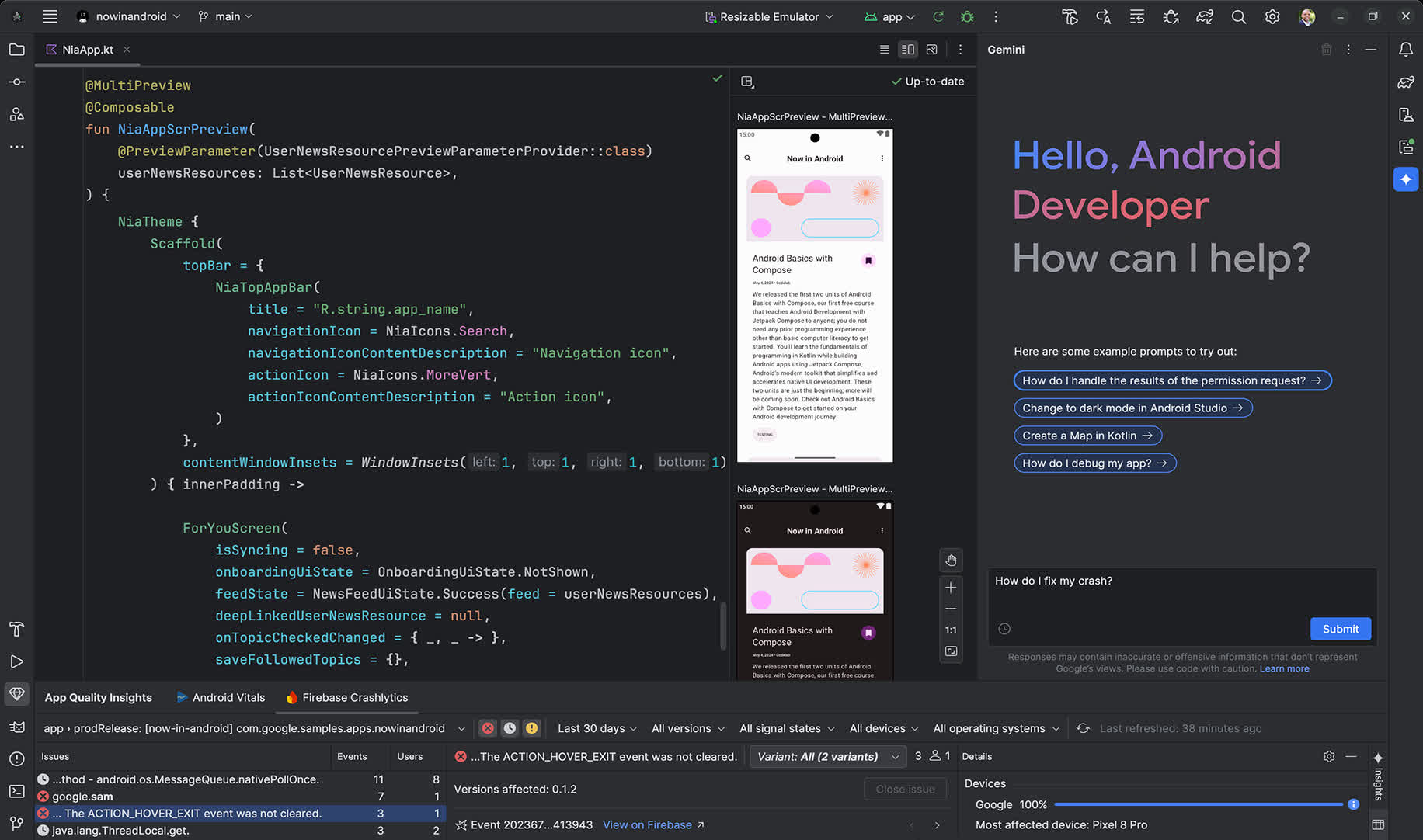
The official IDE for Android app development now accelerates your productivity with Gemini in Android Studio, your AI-powered coding companion.

What programming languages does Android Studio support?

It supports Kotlin, Java, and C++ natively, with additional support for other languages via plugins.

Do I need to pay in order to use Gemini AI assistant in Android Studio?

No, you don’t need to pay to use the Gemini AI assistant in Android Studio-for individual developers, it’s available for free. This free tier includes features like code completion, generation, and conversational assistance within the IDE.

What is Android Studio Cloud and how I access it?

Android Studio Cloud is a new browser-based version of Android Studio, accessible through Firebase Studio. It streams a Linux VM running Android Studio directly in your browser, allowing you to develop Android apps without installing anything locally. It’s ideal for coding on the go or using lower-end devices.

Advertisement

Features

Compose design tools

Create dynamic layouts with Jetpack Compose. Then preview your layouts on any screen size and inspect Compose animations using the built-in inspection tools.

Intelligent code editor

Write better code, work faster, and be more productive with an intelligent code editor that provides code completion for Kotlin, Java, and C/C++ programing languages. Moreover, when editing Jetpack Compose you can see your code changes reflected immediately with Live Edit.

Advertisement

Android App Bundle

Find opportunities to optimize your Android app size before publishing by inspecting the contents of your app APK file or Android App Bundle. Inspect the manifest file, resources, and DEX files. Compare two APKs or Android App Bundles to see how your app size changed between app versions.

Instant Run

Push code and resource changes to your app running on a device or emulator and see the changes instantly come to life. Instant Run dramatically speeds up your edit, build, and run cycles, keeping you “in the flow.”

Advertisement

Fast emulator

The Android Emulator lets you to test your application on a variety of Android devices. Unlock the full potential of your apps by using responsive layouts that adapt to fit phones, tablets, foldables, Wear OS, TV and ChromeOS devices.

Flexible build system

Powered by Gradle, Android Studio’s build system allows you to customize your build to generate multiple build variants for different devices from a single project.

Advertisement

Realtime profilers

The built-in profiling tools provide realtime statistics for your app’s CPU, memory, and network activity. Identify performance bottlenecks by recording method traces, inspecting the heap and allocations, and see incoming and outgoing network payloads.

Gemini in Android Studio

Gemini in Android Studio is an AI assistant that helps you generate code, fix code, and answer questions about Android app development. Available in Android Studio Jellyfish.

Advertisement

Code Anywhere with Android Studio Cloud

Try Android Studio Cloud directly in your browser, accessed through Firebase Studio. Streamline your workflow and skip local installations. Try the Early Access Preview.

Note: The newest versions of Android Studio do not offer a Window 32-bit version. Android Studio 3.6.3 was the last to offer a Windows 32-bit version. You can download it here.

What’s New

Complete release notes can be found here.

Advertisement

Create new UI from a design mock

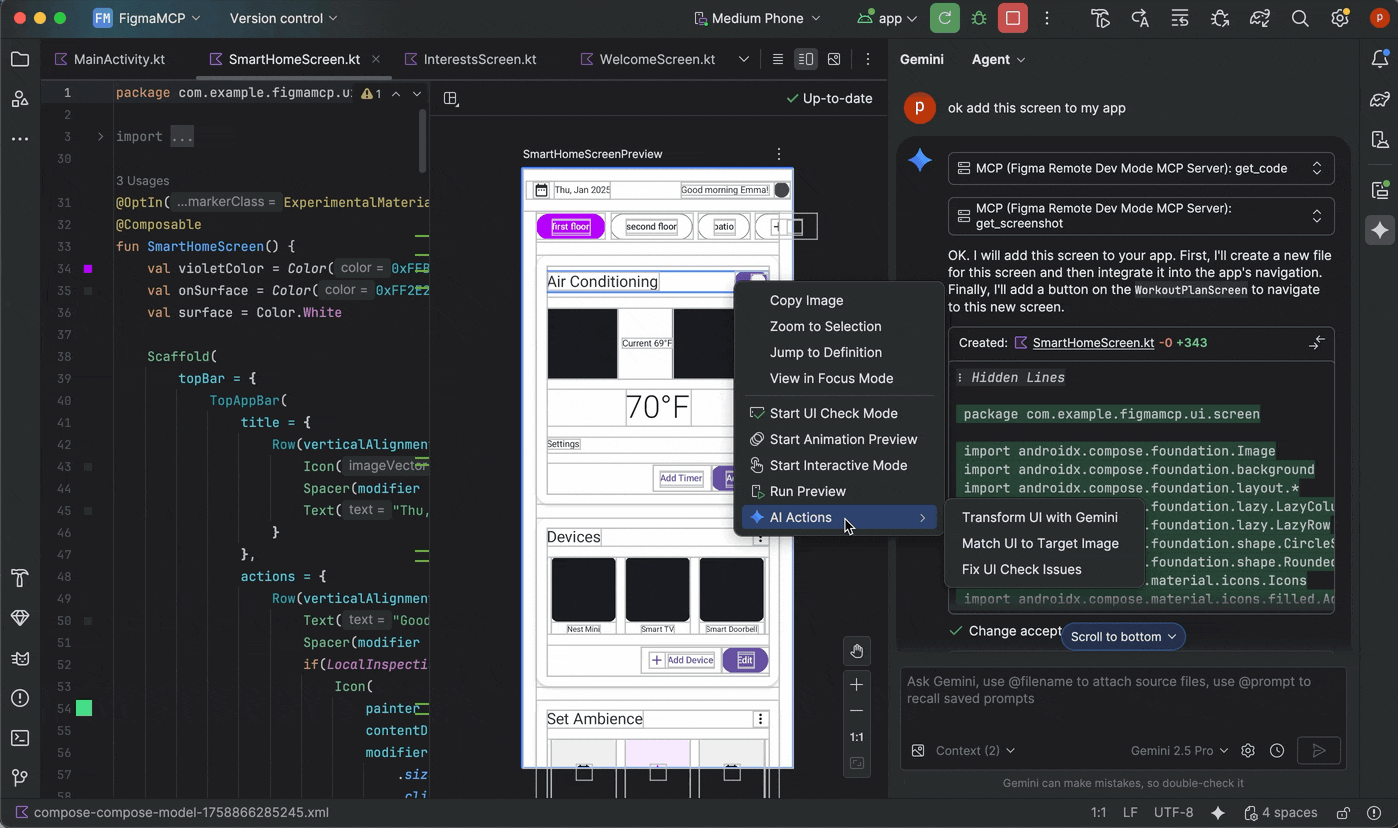
To accelerate the start of your UI development process, you can now generate Compose code directly from a design mock. In a file without an existing preview, click Generate Code From Screenshot in the Preview panel. Gemini will use the provided image to generate a starting implementation, saving you from writing boilerplate code from scratch.

Match your UI with a target image

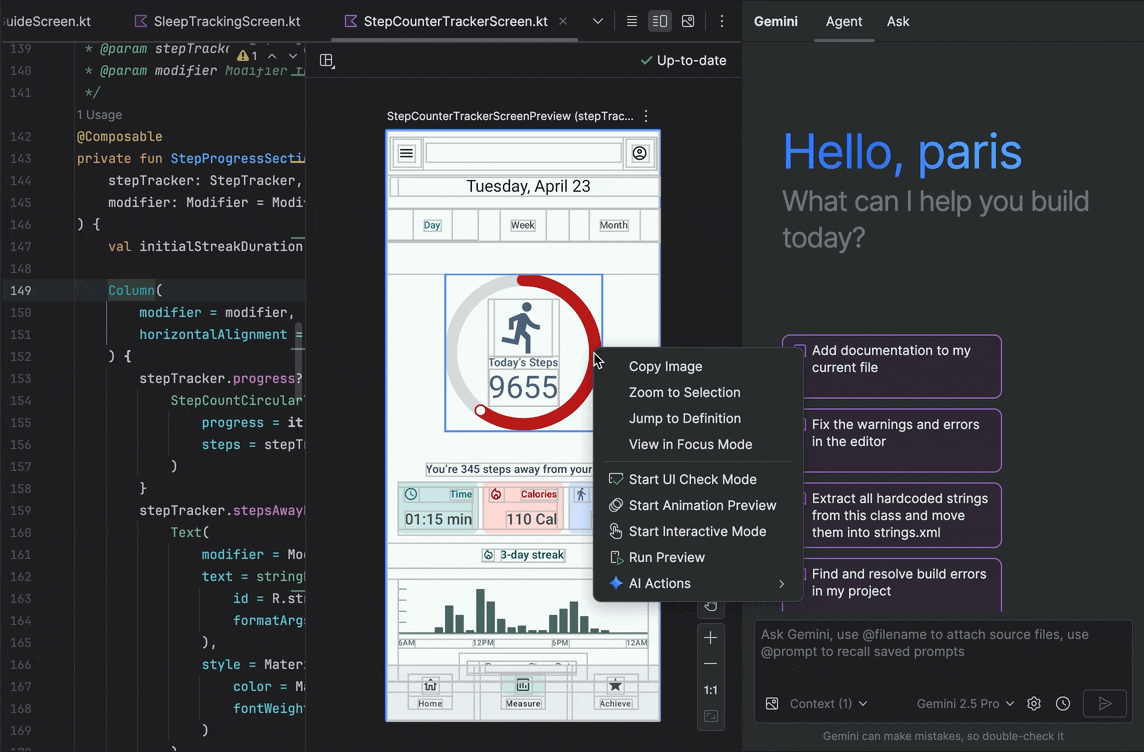
Once you have an initial implementation, you can iteratively refine it to be pixel-perfect. Right-click on your Compose Preview and select AI Actions > Match UI to Target Image. This lets you upload a reference design, and the agent will suggest code changes to make your UI match the design as closely as possible.

Advertisement

Iterate on your UI with natural language

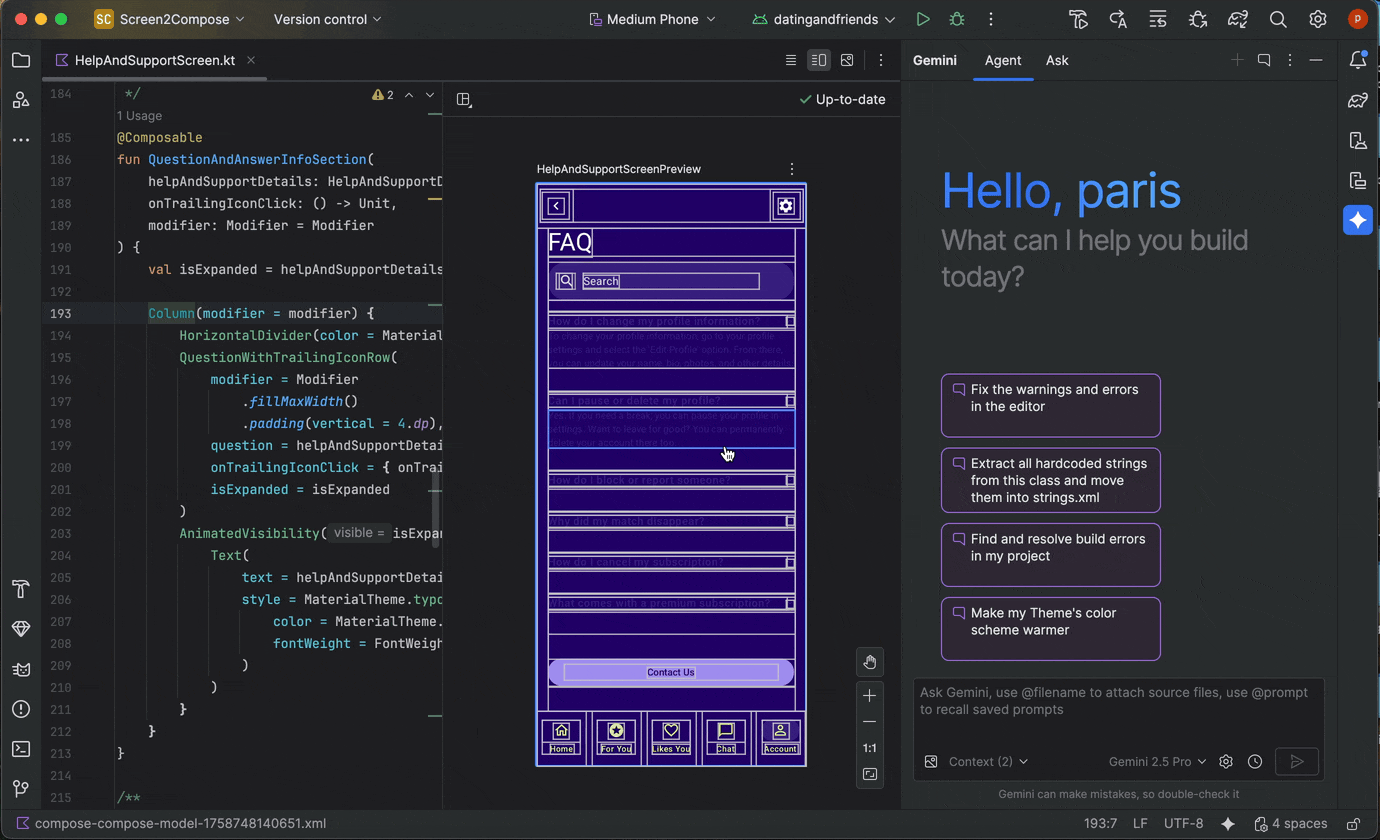
For more specific or creative changes, right-click on your preview and use the AI Actions > Transform UI. This capability now leverages agent mode, making it more powerful and accurate. This upgrade lets you to modify your UI using natural language prompts, such as “change the button color to blue” or “add padding around this text,” and Gemini will apply the corresponding code modifications.

Find and fix UI quality issues

Verifying your UI is high-quality and more accessible is a critical final step. The AI Actions > Fix all UI check issues audits your UI for common problems, such as accessibility issues. The agent will then propose and apply fixes to resolve the detected issues.

Advertisement

Manage multiple conversation threads with Gemini

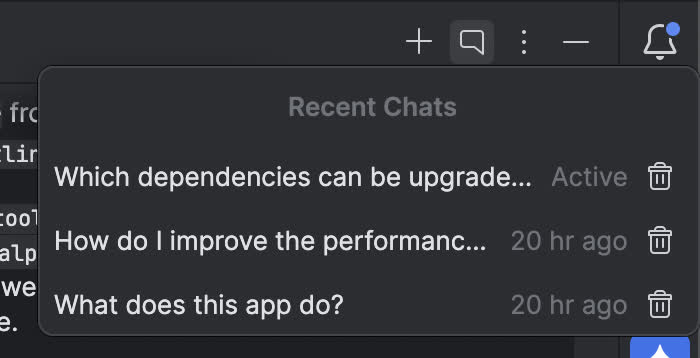
You can now organize your conversation with Gemini in Android Studio into multiple threads. This lets you switch between multiple ongoing tasks and search through your conversation history. Using separate threads for each task also improves response quality by limiting the scope of the AI’s context to only the topic at hand.

Find and review changes using the changes drawer

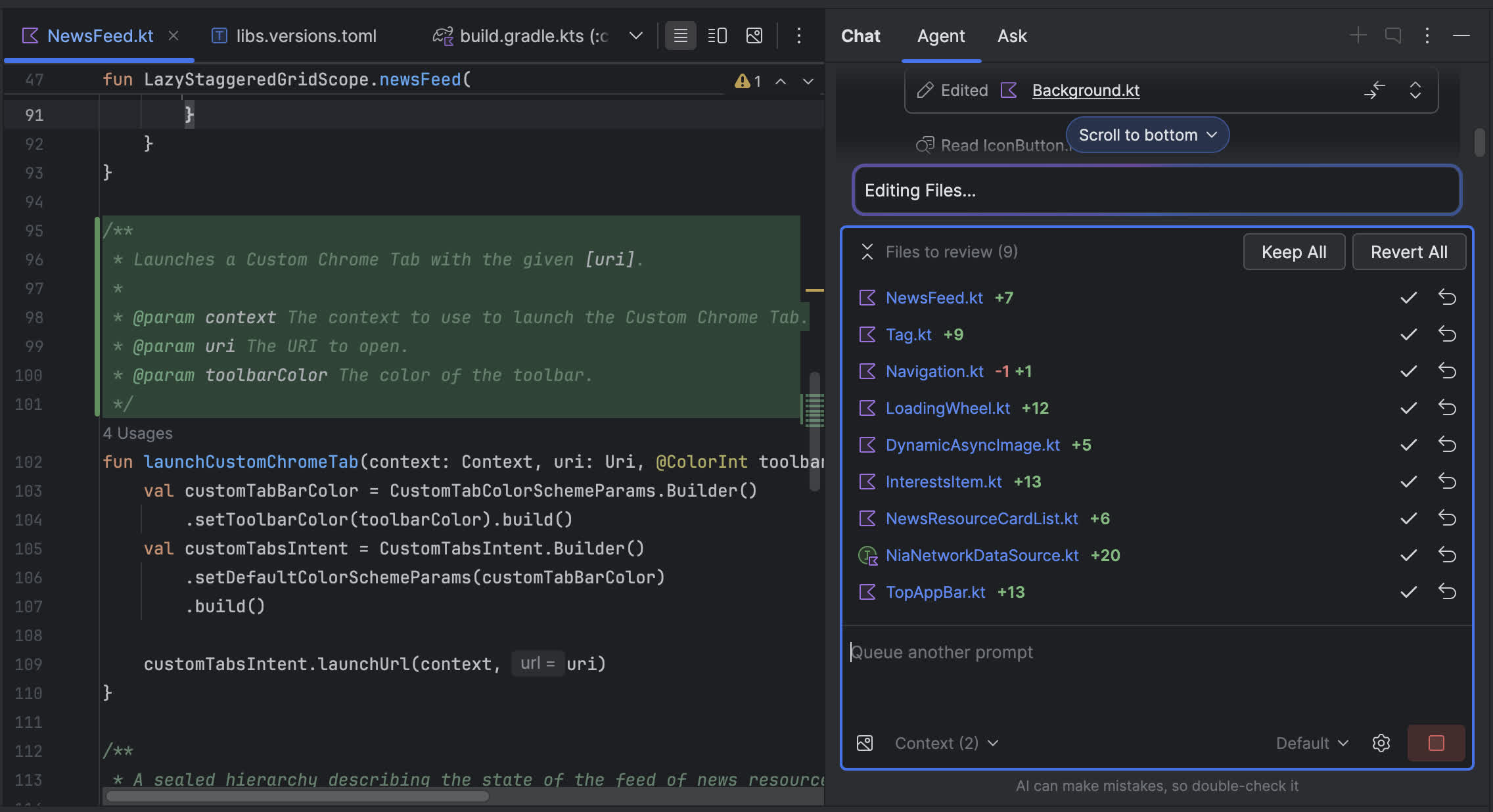
You can now see and manage changes made by the AI agent using the changes drawer. When the agent makes changes to your codebase, see the files that were edited in Files to review. From there, you can keep or revert the changes individually or all together. Click an individual file in the drawer to see the code diff in the editor and make refinements if needed. With the changes drawer, you can keep track of edits made by the agent during your chat and revisit specific changes without scrolling back through your conversation history.

Advertisement

Android Studio Otter 2 Feature Drop | 2025.2.2

Android Studio is the official IDE for Android development, and includes everything you need to build Android apps.

This page lists new features and improvements in the latest version in the stable channel, Android Studio Ladybug.

If you encounter problems in Android Studio, check the Known issues or Troubleshoot page.

Advertisement

Android Gradle plugin and Android Studio compatibility

The Android Studio build system is based on Gradle, and the Android Gradle plugin (AGP) adds several features that are specific to building Android apps. The following table lists which version of AGP is required for each version of Android Studio.

Introducing Gemini in Android Studio

Gemini in Android Studio is your coding companion for Android development. It’s an AI-powered conversational experience in Android Studio that helps you be more productive by answering Android development queries. To learn more, see Meet Gemini in Android Studio.

Advertisement

New sign-in flow

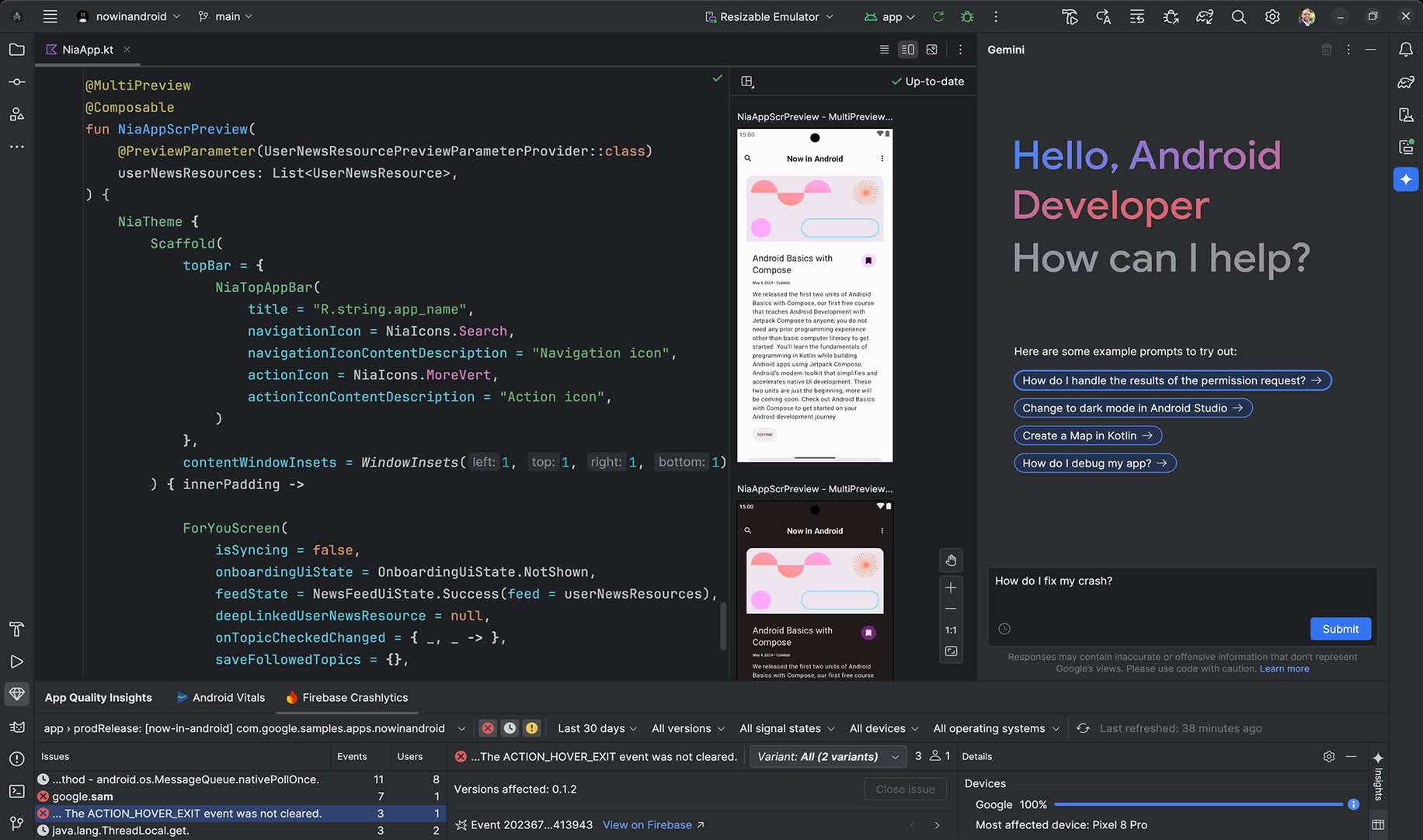
When you sign in to Android Studio with your Developer account, you benefit from Google developer services – such as viewing Firebase Crashlytics and Android Vitals reports in App Quality Insights, accessing real remote devices with Device Streaming in Android Studio, and writing higher-quality code with Gemini in Android Studio – directly from the IDE.

Android Studio Jellyfish makes it easier to add and manage accounts, and provide the IDE with only the permissions required for each feature. To get started do one of the following:

Navigate to one of the features mentioned previously and follow the prompts to sign in and provide necessary permissions

Advertisement

If you’re already signed in, you can manage your accounts and permissions by navigating to File (Android Studio on macOS) > Settings > Tools > Google Accounts.

Access real devices with Device Streaming in Android Studio

Device Streaming in Android Studio lets you securely connect to remote physical Android devices hosted in Google’s secure data centers. Powered by Firebase, it’s the fastest and easiest way to test your app against real devices, including the Google Pixel 8 Pro, Pixel Fold, select Samsung devices, and more.

After connecting to a device, you can deploy your app, view the display, interact with the device (including rotating or unfolding the device), and anything else you might do with a device over a direct ADB over SSL connection – all without leaving Android Studio. When you’re done using the device, Google wipes all your data and factory resets the device before making it available to another developer.

Advertisement

During the current beta period, you can use device streaming at no cost with Firebase projects on either a Spark or Blaze plan. To get started sign into your Developer account from Android Studio and select a Firebase project. If you don’t already have a Firebase project, it’s easy to create one. To learn more, go to Device Streaming in Android Studio.

App Quality Insights support for ANRs, custom data, and multi-events

Dive deeper into App Quality Insights (AQI) crash reports in Android Studio Jellyfish with support for ANR reports, custom data, and multi-events:

  • Iterate through events: Now explore multiple events within a Crashlytics report in reverse chronological order, revealing patterns for faster debugging.
  • Explore custom data: View custom key/values and logs for each crash report (find them in the Keys and Logs tabs after selecting a report).
  • Analyze ANRs: Access and investigate ANRs directly within both the Android Vitals and Crashlytics tabs.

Embedded Layout Inspector

The Layout Inspector is now embedded by default in the Running Devices tool window. This integration saves screen real-estate, centralizes your workflow in a single tool window, and delivers significant performance gains – with a 50% improvement in rendering speeds. You can effortlessly toggle between deeply inspecting and interacting with your app, and use snapshots for 3D visualizations of your UI. Discover the full range of features at Debug your layout with Layout Inspector.

Advertisement

App Links Assistant supports web associations file validation

The App Links Assistant now supports validation of the Digital Asset Links JSON file that should be published on your website.

This feature extends the existing validation capabilities for the intent filters that you declare in the app’s manifest file. For each domain that’s declared in the manifest file, the Assistant parses the file on your website, performs seven validation checks, and provides a detailed explanation on how to fix any errors.

To get started:

Advertisement
  • In Android Studio click Tools > App Links Assistant.
  • Double-click Links to get a detailed view of the checks the Assistant performed and understand how to fix the misconfigurations.

Ensure a seamless user experience by validating that your JSON file is correctly formatted for upload to your domain.

Baseline Profile installation

Android Studio Jellyfish automatically compiles Baseline Profiles after installation on device for projects that use AGP 8.4 or higher. This covers Baseline Profiles that have been generated through a Baseline Profile Generator module or from libraries like Compose. The automatic installation lets you experience the performance benefits of Baseline Profiles when installing your release app locally, and when using low-overhead profiling.

New colorblind checks in Compose UI Check

Compose UI Check includes new colorblind simulations and checks, empowering you to craft visually accessible experiences for all users. Simply enter UI Check mode from Compose Preview to view your Compose UI in different types of color vision deficiencies to ensure your designs remain clear and usable.

Advertisement

Redirect audio using device mirroring

Starting with Android Studio Jellyfish Canary 5, you can redirect audio from connected physical devices to your computer speakers or headphones. With audio redirection, keep your headphones connected to your computer and listen to both the computer and connected phone without having to manually reconnect to one device and then another. To enable audio redirection, go to Android Studio > Settings > Tools > Device Mirroring and select Redirect audio from local devices. Note that audio is always redirected, regardless of the settings, for Firebase Test Lab devices running Android 12 or higher.

Source link

Advertisement
Continue Reading

Tech

Wharfedale Denton 1S Bookshelf Speakers: Heritage Hi-Fi Gets a Coaxial Rebirth for $999

Published

on

Wharfedale has been mining its Heritage Series with unusual success, but the new Denton 1S is not another sepia tinted tribute act in walnut drag. Priced at $999 per pair, the compact bookshelf loudspeaker takes the Denton name in a very different direction with a clean sheet coaxial point source driver architecture, designed to deliver better coherence, tighter imaging, and a more unified presentation from a small cabinet.

That matters because the Denton story has always been about value, scale, and getting real hi-fi sound into rooms that do not require a country estate or a second listening wing. The original Denton dates back to 1967, while the Denton 1 arrived in 1974, and Wharfedale is clearly leaning into that history without being trapped by it. Under the direction of Peter Comeau, the Denton 1S joins the Linton, Super Linton, Super Denton, Aston, and new Heritage Centre as part of a growing lineup that proves British heritage hi-fi does not have to look like it was rescued from a damp Cotswolds library.

The big question is whether the Denton 1S can turn its coaxial makeover into something more than a clever engineering headline. At $999, this is not entry level background music furniture. It is aimed at listeners who want a compact speaker with the timing, imaging, and tonal balance of something more serious, without the usual boxy compromise or retro affectation.

Rebirth of the coaxial? Maybe. But Wharfedale seems more interested in giving the Denton name a proper modern spine than dressing it up for another lap at Downton Abbey.

Advertisement
wharfedale-denton-1s-bookshelf-speakers-black

Coaxial Done Properly

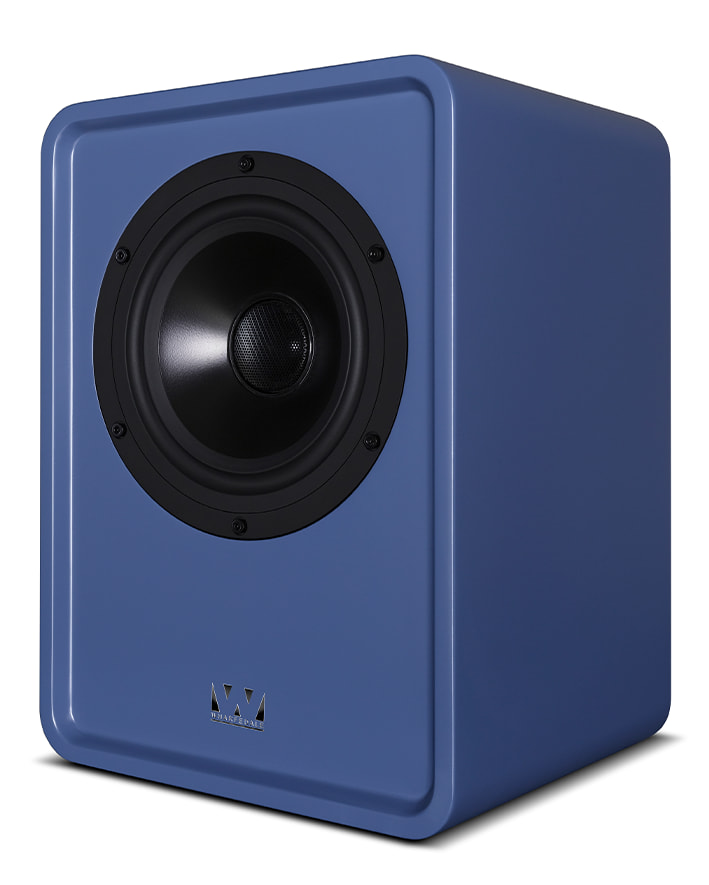
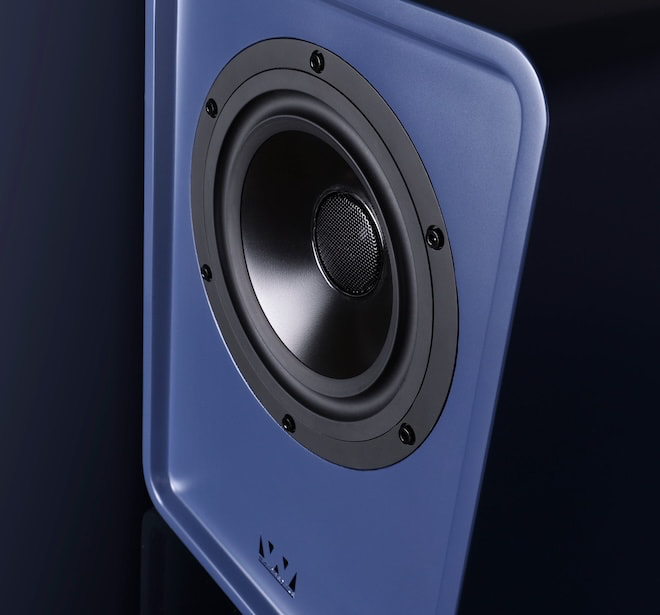
At the center of the Denton 1S is a new coaxial driver array that places a 25mm silk dome tweeter inside a 165mm mid/bass cone. The goal is simple: make both drivers behave more like a single acoustic source instead of two separate elements arguing over the same piece of music.

That matters because a properly executed coaxial design can improve timing, phase behavior, and image stability, especially in smaller rooms where listeners are not always locked into the perfect center seat like they are defending a throne. By radiating from the same acoustic center, the Denton 1S is designed to deliver a more consistent tonal balance across a wider listening area, with imaging that should remain stable both on and off axis.

The layout also gives Wharfedale some practical design advantages. With the tweeter mounted concentrically within the mid/bass driver, the front baffle remains cleaner and less interrupted, allowing for a more compact cabinet and potentially improved rigidity. It also helps the Denton 1S look more modern and purposeful than the usual retro box with a nice veneer and a charming backstory.

wharfedale-denton-1s-bookshelf-speaker-blue

Built for Real Rooms

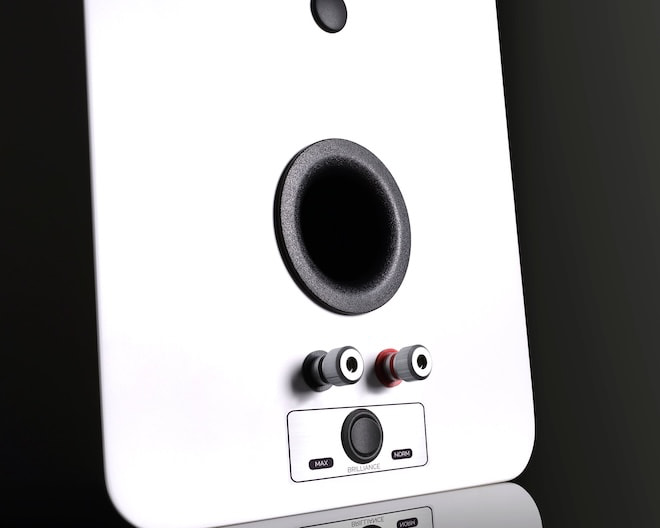
The Denton 1S is designed for homes where speakers have to live in the room, not dominate it. Wharfedale includes a discreet rear 3/8 inch mounting point for wall installation, giving owners more flexibility than the usual stand or shelf placement routine. A rear-panel Brilliance EQ switch also provides a small tonal adjustment for free-space or near-wall positioning, which is useful when the room starts making decisions for you. Rooms do that. Usually badly.

Placement options include stands, shelves, or wall mounting, making the Denton 1S a more adaptable Heritage Series model than some of Wharfedale’s larger designs. The cabinet also moves away from the traditional hardwood look, with smooth curves, a painted finish, and a cleaner silhouette that feels more contemporary without pretending the past never happened.

Advertisement

Wharfedale still keeps the heritage cues in place. The cloth grille and silver retro badging connect the Denton 1S to the company’s classic British hi-fi identity, but the execution is less country house and more modern apartment. Cabinet construction includes multi-layer panels, internal bracing, and controlled damping to reduce unwanted resonance, which matters far more than another paragraph about “timeless elegance.”

The Denton 1S will be available in matte black, matte white, and a new matte blue finish. That gives it a broader lifestyle appeal without turning it into furniture masquerading as hi-fi. It still looks like a proper loudspeaker. Just one that understands not everyone wants their living room to look like a 1978 dealer showroom.

Advertisement. Scroll to continue reading.
wharfedale-denton-1s-bookshelf-speaker-white-rear

Denton 1S Specifications:

Sensitivity is rated at 88dB, with a nominal impedance of 8 ohms and a minimum impedance of 4.5 ohms. Wharfedale recommends amplifier power between 30 and 100 watts, which should make the Denton 1S a realistic match for a wide range of integrated amplifiers, AVRs, and compact streaming amps. Peak SPL is rated at 95dB, so this is still a compact loudspeaker, not a PA system in polite clothing.

Frequency response is listed at 50Hz to 20kHz, plus or minus 3dB, with bass extension down to 45Hz at minus 6dB. That is respectable for a cabinet with an 11.5 liter internal volume, but anyone expecting true full range bass from a speaker this size needs a brisk walk and possibly a subwoofer.

Advertisement

The crossover frequency is 3.1kHz, and the cabinet measures 13.0 inches high, 9.29 inches wide, and 10.04 inches deep. Each speaker weighs 15 pounds and includes a rear panel 3/8 inch thread for wall mounting.

wharfedale-denton-1s-bookshelf-speaker-blue-angle

The Bottom Line

The Wharfedale Denton 1S is not just a smaller Super Denton or another Heritage Series box with nicer clothes. Its clean sheet coaxial point source driver is the big difference, giving it a more focused technical identity than the rest of the range.

The Linton, Super Linton, Super Denton, Aston, and Heritage Center lean into Wharfedale’s vintage inspired formula, but the Denton 1S feels like a compact modern rethink. Smaller cabinet, wall mounting, Brilliance EQ adjustment, matte finishes, and coaxial driver geometry all point to a speaker designed for tighter rooms, cleaner installs, and more precise imaging.

At $999 per pair, it is for listeners who want British loudspeaker DNA without the full retro furniture routine. Stand mount it, shelf mount it, or put it on the wall. That flexibility makes it especially useful for apartments, offices, secondary systems, or living rooms where a Linton is simply too large.

Amplifier matching should be easy on paper. With 88dB sensitivity, 8 ohm nominal impedance, a 4.5 ohm minimum, and a 30 to 100 watt recommendation, the Denton 1S should work well with Leak, Rega, Audiolab, Cambridge Audio, and Quad integrated amplifiers. The Leak Stereo 230, Rega Brio or Elex, Audiolab 6000A or 7000A, and Cambridge Audio CXA series all make sense.

Advertisement

If the Denton 1S proves more neutral than the Super Denton, the Quad 3 could be the under the radar pairing. A little warmth and texture from Quad, plus the Denton 1S’s coaxial focus, might be a very clever match. The kind of small system that walks in quietly and starts making bigger boxes nervous.

Where to buy: $999 at Crutchfield | Wharfedale USA

Source link

Advertisement
Continue Reading

Trending

Copyright © 2025