Connect with us
DAPA Banner

Tech

The EU’s strategic rebalancing of research partnerships with China

Published

on

In 2026, one of Europe’s most ambitious scientific ventures, Horizon Europe, a seven-year, roughly €93 billion framework dedicated to research and innovation, underwent a quiet but significant transformation. 

What had once been an open invitation to researchers across the globe now carries a more guarded tenor. 

In critical areas such as artificial intelligence, semiconductors, quantum technologies, and biotechnology, organisations based in China are no longer automatically eligible to receive EU funding, a sharp deviation from earlier years when Chinese participation was possible, albeit under evolving conditions. 

This change is neither arbitrary nor purely technical. It reflects the culmination of years of negotiation and strategic signalling in Brussels. 

Advertisement

According to the European Commission’s own international cooperation guidance, cooperation with third countries like China has always been conditional; Chinese researchers may contribute, but they are required to enter as Associated Partners and often must bring their own funding where EU funding does not automatically apply. 

The 💜 of EU tech

The latest rumblings from the EU tech scene, a story from our wise ol’ founder Boris, and some questionable AI art. It’s free, every week, in your inbox. Sign up now!

Yet the updated participation rules go further. 

Advertisement

In late 2025, the Commission codified conditions that essentially block Chinese institutions from receiving core Horizon Europe grants in sensitive clusters of research and innovation. 

In policy terms, the threshold for inclusion has shifted: European partners must now demonstrate that their collaborators are not owned or controlled by Chinese entities, creating de facto barriers for significant portions of bilateral work in cutting-edge fields. 

While cooperation is not extinguished outright, joint work continues in areas like climate science and agriculture under bilateral road-map mechanisms; this recalibration is telling. 

It amounts to Europe drawing boundaries around where it will share its most prized scientific infrastructure and intellectual capital and where it will withhold it. 

Advertisement

The official justifications, as framed by Commission texts, lean heavily on concerns about research security, intellectual property protection, and the perceived risk of unintended transfers of strategic technology where civil and military boundaries blur. 

Viewed in isolation, these adjustments might read as bureaucratic fine-tuning. But in the broader context of EU policy, which straddles an ambition for open scientific cooperation and an emergent emphasis on strategic autonomy, they underscore a fundamental tension. 

Europe still champions collaborative discovery across borders, yet it acknowledges nowadays research ecosystem is intertwined with global power dynamics in once unimaginable ways.

Beyond the sharp edges of eligibility rules lies a deeper question: why does this particular rebalancing matter in practice

Advertisement

Over the past decade, China has become increasingly visible in global scientific networks. Its researchers regularly co-authored papers with European counterparts, and its rapidly expanding domestic science base, often supported through state mechanisms, moved from peripheral to central positions in disciplines ranging from materials science to computational biology. 

Yet in the architecture of Horizon Europe that emerges in 2026, participation is no longer synonymous with access to EU funds.

Chinese entities still can contribute to research proposals, but they do so as Associated Partners and typically must bring their own financing, a distinction that subtly but fundamentally changes the incentives and power dynamics of collaboration.

In practical terms, the new rules change how research consortia form and operate. European institutions seeking to work at the frontier of emerging technologies must now factor in eligibility constraints when structuring partnerships

Advertisement

Where once multinational consortia could mix researchers from across continents with minimal procedural friction, they now must design collaborations that either exclude certain partners from funding streams or justify their presence through alternative mechanisms. 

This places a renewed premium on legal expertise, consortium management, and alignment with EU strategic priorities, an additional administrative layer that did not exist to the same degree in earlier cooperation frameworks. 

These restrictions could have unintended intellectual or scientific consequences. When large research systems are pushed to the margins, there is a risk that parallel ecosystems evolve, with reduced interoperability between them. In the long term, this could alter citation networks, collaborative norms, and research mobility patterns. 

It could also prompt other powerful actors to adopt similar measures, reshaping the landscape of global science into distinct blocs defined by policy fences rather than open inquiry.

Advertisement

It’s important to emphasise that the EU has not abandoned bilateral scientific engagement outright.

Mechanisms outside Horizon Europe,  including mobility schemes and targeted co-funding instruments designed to support researcher exchanges, continue to exist, and cooperation on transnational challenges such as climate change and biodiversity remains active. 

What has changed is the weight of strategic calculation in decisions about where and how to invest EU funding. As a result, science policy in Europe now sits at the intersection of research excellence, economic sovereignty, and geopolitical strategy.

For Europe’s research community, this presents a complex set of questions. Does tighter control over strategic collaborations strengthen the European innovation base? Or does it risk isolating European science from talent and knowledge flows? 

Advertisement

The answer is unlikely to be binary. 

What is clear, however, is that Horizon Europe,  once known chiefly as a vehicle for excellence and discovery, is now also a mirror of shifting geopolitical realities, showing how science policy has become part of broader efforts to navigate uncertainty in a multipolar world.

In the end, the EU’s decision to redraw the terms of research partnership with China feels less like a closing door and more like a recalibration of Europe’s compass. It acknowledges a world in which scientific discovery and geopolitical currents are no longer parallel tracks but deeply intertwined. 

The Horizon Europe programme, once the grand symbol of open scientific cooperation, now also stands as a marker of strategic foresight,  a space where Europe seeks to balance openness with caution, curiosity with control.

Advertisement

This turning point doesn’t signal a retreat from global engagement. 

What it does reflect is a modern realpolitik of research: where funding decisions are informed not only by scientific merit but by questions of security, reciprocity, and long-term technological sovereignty. 

In a scenery defined by rising competition over frontier technologies, Europe is choosing to hedge its bets, opening some doors wider, while tightening others. The future of scientific collaboration may be neither total isolation nor full openness but a nuanced choreography between cooperation and strategic self-interest.

Advertisement

Source link

Continue Reading
Click to comment

You must be logged in to post a comment Login

Leave a Reply

Tech

Americans lost a record $21 billion to cybercrime last year

Published

on

FBI: Americans lost a record $21 billion to cybercrime last year

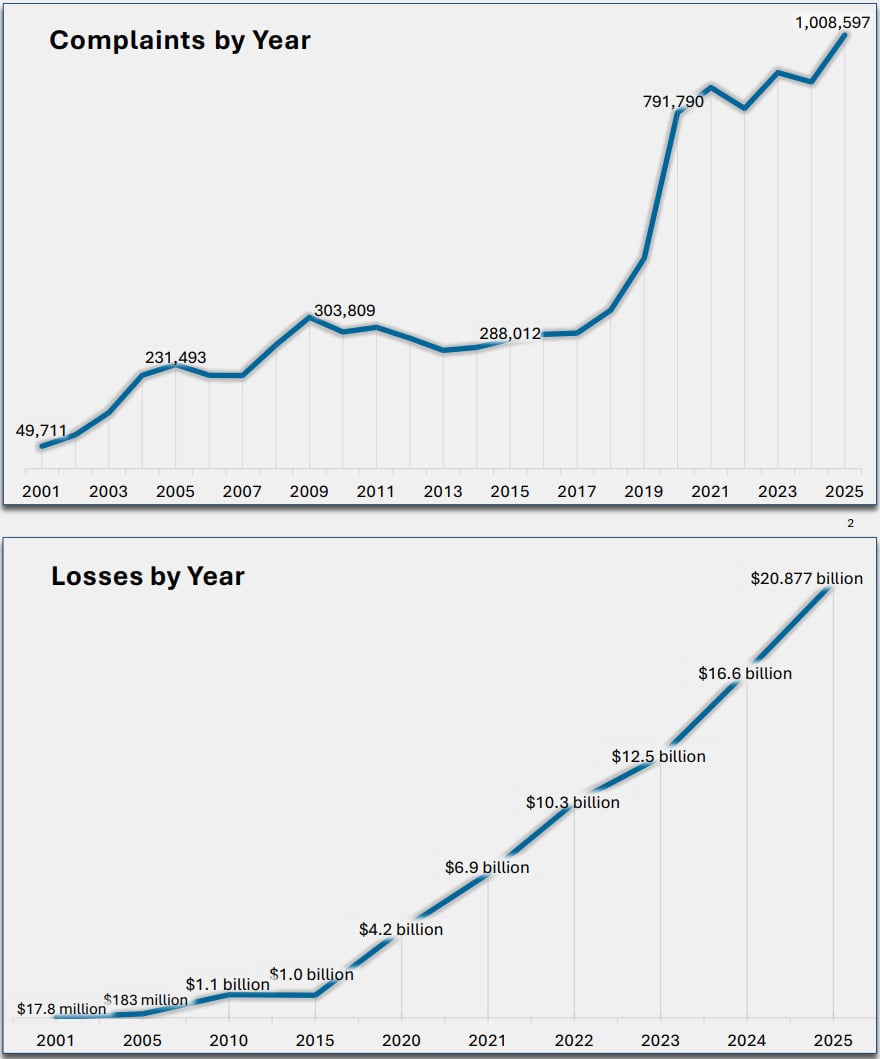
U.S. victims lost nearly $21 billion to cyber-enabled crimes last year, driven primarily by investment scams, business email compromise, tech support fraud, and data breaches, the Federal Bureau of Investigation says.

The figure continues the year-over-year record trend as it is up 26% compared to 2024, when Americans lost $16.6 billion to cybercrime.

A similar uptick was recorded in the number of complaints the Internet Crime Complaint Center (IC3) received, which surpassed 1 million last year, up from 859,000 the year before.

Wiz
Number of complaints (top) and losses (bottom)
Number of complaints (top) and losses (bottom) per year
Source: FBI

The most frequent complaints received last year referred to phishing attacks (191,000), extortion (89,000), and investment scams (72,000), which continued to drive massive losses.

Although smaller in absolute numbers, there were still a significant number of reports for serious attack types such as business email compromise (24,700 cases), data breaches (3,900), ransomware attacks (3,600), and SIM swapping (971).

Advertisement

Investment fraud accounted for 49% of all scam-related incidents recorded last year and resulted in losses of $8.6 billion. However, cybercrime targeting cryptocurrency caused the largest loss, exceeding $11 billion across 181,565 cases.

Cyber-enabled fraud was present in 453,000 complaints and accounted for $17.7 billion of the total losses submitted to the IC3 in 2025.

According to the IC3, Americans over the age of 60 were hit the hardest, with reported losses of $7.7 billion, a 37% increase compared to the previous year.

For the first time, the FBI’s report includes AI-related scams, which accounted for 22,300 complaints and $893 million in losses. These schemes involved voice cloning, fake profiles, forged documents, and deepfake videos.

Advertisement

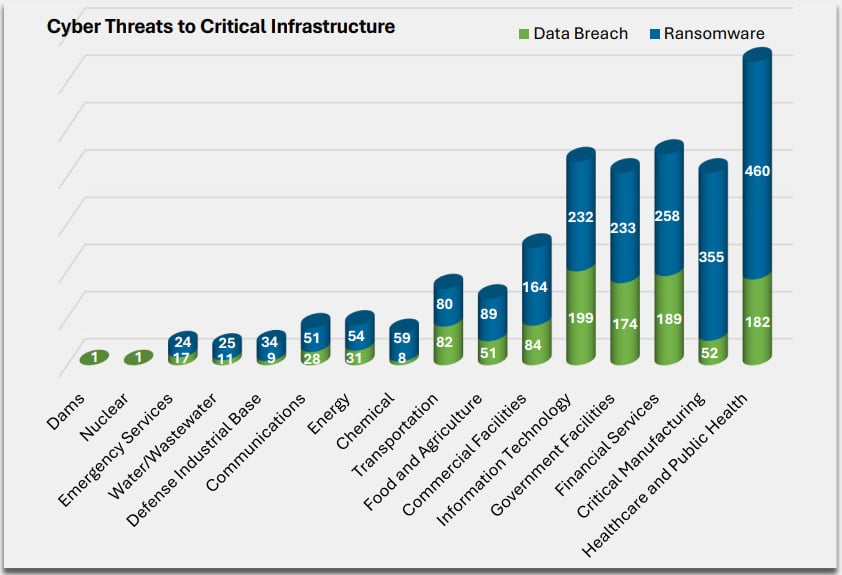
In two cases, attacks targeting critical infrastructure (dams and nuclear facilities), the FBI labeled the incidents as data breaches.

The most targeted critical infrastructure sectors in 2025 were healthcare, manufacturing, financial services, information technology, and government facilities.

Attacks on critical infrastructure entities
Source: FBI

FBI fighting back

The FBI says that it has upgraded its efforts to block attacks, notify victims, and freeze stolen funds, in some cases even being able to retrieve them.

The agency initiated 3,900 Financial Fraud Kill Chain (FFKC) interventions in 2025, successfully blocking a portion of fraudulent transactions. Of the $1.16 billion targeted by attackers, the FBI froze $679 million.

Additional efforts from the agency to prevent cyber-enabled crimes included ‘Operation Level Up’ at the start of the year, a proactive approach to prevent financial losses by identifying and alerting victims of cryptocurrency investment fraud.

Advertisement

Of the 3,780 victims notified last year, 78% were unaware that they were being scammed.

The FBI recommends people not to rush when they receive urgent requests and face pressure tactics, and to use all available means to verify the authenticity of the communication before sending money or data.

Those who suspect compromise by hackers or scammers are urged to report the incidents with full details to ic3.gov.

Automated pentesting proves the path exists. BAS proves whether your controls stop it. Most teams run one without the other.

This whitepaper maps six validation surfaces, shows where coverage ends, and provides practitioners with three diagnostic questions for any tool evaluation.

Advertisement

Source link

Continue Reading

Tech

Generative AI vs Traditional AI: Key Differences

Published

on

From being merely an auxiliary element, artificial intelligence has now become an integral part of the driving force behind businesses. Be it the analysis of large data sets or the execution of repetitive functions, the importance of artificial intelligence has already been demonstrated in multiple industries. However, the introduction of generative artificial intelligence has now added a new dimension to the capabilities that are being offered.

While traditional AI has been widely used for years, the rise of generative AI is making it important for businesses to understand how the two differ. Although these technologies are part of the same broad category, namely ‘artificial intelligence solutions,’ but they have very distinct functionalities and differences.

Understanding Traditional AI

Conventional AI systems are created to perform data handling, pattern recognition, and predictions. 

Core Characteristics of Traditional AI 

Advertisement

Predictive Capabilities 

Traditional AI is trained to make predictions based on the data they have been trained on. 

Structured Data Dependency 

This system is most suitable for handling structured data, i.e., tables and databases.

Advertisement

Task-Specific Design

They are built to perform specific jobs. 

Rule-Based or Supervised Learning Models

They are based on algorithms that use rule-based systems or supervised learning. 

Advertisement

Common Use Cases

Fraud detection in financial systems

Recommendation systems in online platforms

Demand forecasting in supply chains

Advertisement

Risk assessment in insurance and banking 

Traditional AI is an excellent choice for businesses that need accuracy and precision in handling data. Due to this excellent feature, it is the backbone of enterprise-level AI solutions.

What Is Generative AI?

Generative AI, on the other hand, is a distinct concept. It is more focused on producing new outputs instead of analysis. It can learn from large data sets and produce different outputs such as text, images, and codes.

Key Characteristics of Generative AI

Advertisement

Content Creation

It can create original content instead of predictions.

Unstructured Data Handling

Generative AI can handle complex data such as natural language and images.

Advertisement

Contextual Understanding

It is capable of responding based on the context.

Adaptive Learning

This model can learn and improve its output.

Advertisement

Corporations can create programs that facilitate creative and strategic operations and go beyond technology through the use of generative AI services.

Generative AI vs Traditional AI: A Side-by-Side Comparison

Aspect

Traditional AI

Generative AI

Advertisement

Primary Function

Data analysis and prediction

Content creation and generation

Data Type

Advertisement

Structured data

Structured and unstructured data

Output

Predictions, classifications

Advertisement

Text, images, code, and more

Flexibility

Limited to predefined tasks

Highly flexible and adaptive

Advertisement

Learning Approach

Task-specific training

Large-scale deep learning models

Interaction Style

Advertisement

Reactive

Context-aware and interactive

Use Case Scope

Narrow

Advertisement

Broad and multi-functional

This comparison emphasizes how generative AI development increases the opportunities of AI beyond conventional boundaries.

Technical Perspective: How They Work

Traditional AI Workflow

1. Data collection and preprocessing

Advertisement

2. Feature selection and engineering

3. Model training using algorithms such as regression or classification

4. Output generation based on learned patterns

Traditional systems are heavily dependent on structured workflows and objectives.

Advertisement

Generative AI Workflow

1. Training on large datasets with deep learning models

2. Learning patterns and relationships

3. Generating outputs based on inputs or prompts

Advertisement

4. Improving outputs with feedback and iterations

Generative AI employs transformer models to process the context and generate outputs similar to humans.

Why Generative AI Is Driving New Opportunities

The increased interest in generative AI services is attributed to the potential they have to enable innovation and efficiency in multiple functions. 

Key Benefits of Generative AI 

Advertisement

1. Scalable Content Creation 

Generative AI enables businesses to generate large quantities of content within a short time, such as marketing content, reports, and product descriptions, thus helping them save time and be consistent in the content they generate.

2. Enhanced Customer Engagement 

Businesses can use AI-based chat tools to produce more personalized & engaging content, thus giving the customer a superior experience and effectively fulfilling their needs. 

Advertisement

3. Quicker Product Development 

Generative AI enables faster product development through the generation of prototypes, codes, and testing.

4. Personalization  

Businesses can use generative AI to create a personalized experience based on individual needs, hence providing a better experience and satisfying users.

Advertisement

5. Data Augmentation  

Artificial data helps improve models, especially when there is a lack of data, hence providing accurate results and improved performance.

These advantages make generative AI development a vital part of digital strategy for many organizations.

Real-World Applications Across Industries

Traditional AI Applications

Advertisement

Financial fraud detection

Predictive maintenance in manufacturing

Inventory management

Customer segmentation

Advertisement

Generative AI Applications

AI chatbots and conversational agents

Marketing content creation

Code generation and debugging

Advertisement

Image and video generation

Virtual assistants and knowledge systems

These examples show how generative AI solutions extend beyond traditional automation into areas that require creativity and adaptability.

Combining Both Approaches

In fact, most organizations use a mix of traditional and generative AI to get the best out of the systems.

Advertisement

Example Use Case

Traditional AI systems process customer information to find patterns

Generative AI systems use the patterns to create personalized content

This enables businesses to use the advantages of both systems to create a more robust artificial intelligence system.

Advertisement

Challenges and Considerations

Traditional AI Limitations

Limited flexibility

Difficulty in dealing with unstructured data

Need for manual updating for new applications

Advertisement

Generative AI Challenges

Higher computational costs

Chances of inaccurate or biased outcomes

Need for effective governance and compliance

Advertisement

Understanding regulatory requirements is equally important, as generative AI regulatory compliance helps businesses manage risks effectively while adopting new technologies.

Business Impact of Generative AI

The rise of generative AI services is influencing how businesses operate and compete.

Key Areas of Impact

Marketing and Content Creation

Advertisement

Faster production of high-quality content

Customer Support

Improved interaction through intelligent chat systems

Product Innovation

Advertisement

Rapid prototyping and idea generation

Operational Efficiency

Automation of complex workflows

Organizations investing in generative ai development are finding new ways to improve productivity and deliver value.

Advertisement

Choosing the Right Approach

Selecting the right AI approach depends on the nature of your business needs.

Use Traditional AI When:

Working with structured data

Focusing on prediction and analysis

Advertisement

Managing risk and compliance tasks

Use Generative AI When:

Creating content or designs

Building conversational interfaces

Advertisement

Driving innovation and personalization

Key Factors to Consider

Data availability and quality

Infrastructure requirements

Advertisement

Integration with existing systems

Long-term scalability

A thoughtful evaluation helps businesses select the most suitable generative AI solution or combination of tools.

Concluding Thoughts

The difference between traditional AI and generative AI is based on how they approach problems and how they deliver the results. While traditional AI is based on analyzing data and making predictions, generative AI creates new information and allows for more interactive experiences.

Advertisement

As the business world continues to look into more sophisticated technology, the development of generative AI is a significant part of the current business plans. This is because it opens up more opportunities for creativity and efficiency in the customer world. 

However, traditional AI is still a viable tool in the world of data-based tasks. The most viable approach to artificial intelligence solutions is a mix of traditional and generative AI. This ensures a balance between traditional and generative artificial intelligence solutions and allows businesses to thrive and become more competitive in a more data-based world. 

Source link

Advertisement
Continue Reading

Tech

Iran-Linked Hackers Are Sabotaging US Energy and Water Infrastructure

Published

on

As US President Donald Trump threatens wholesale demolition of Iran’s infrastructure in the midst of an escalating war, Iran now appears to have already reciprocated with its own form of infrastructure sabotage: A hacking campaign hitting industrial control systems across the United States, including energy and water utilities, that US agencies say has had disruptive and costly effects.

In a joint advisory published Tuesday, a group of US agencies including the FBI, the National Security Agency, the Department of Energy, and the Cybersecurity and Infrastructure Security Agency warned that a group of hackers affiliated with the Iranian government has targeted industrial control devices used in a series of critical infrastructure targets including in the energy sector, water and wastewater utilities, and unspecified “government facilities.” According to the agencies, the hackers have targeted programmable logic controllers (PLCs)—a type of device designed to allow digital control of physical machinery—in those facilities, including those sold by industrial tech firm Rockwell Automation, with the apparent intention of sabotaging their systems.

By compromising those PLCs, the advisory warns, the hackers sought to change information on the displays of industrial control systems, which can in some scenarios cause system downtime, damage, or even dangerous conditions. “In a few cases, this activity has resulted in operational disruption and financial loss,” it reads.

When WIRED reached out to Rockwell Automation, a company spokesperson responded in a statement that it “takes seriously the security of its products and solutions and has been closely coordinating with government agencies in connection with” Tuesday’s advisory, and pointed to documents it has published for customers on how to better secure their PLCs.

Advertisement

Though the advisory doesn’t specify a particular group responsible for the hacking campaign, it notes that the attacks are similar to those carried out in by the Iran-linked group known as CyberAv3ngers, or the Shahid Kaveh Group, starting in late 2023. That team of hackers, believed to work in the service of the Iranian Revolutionary Guard Corps, inflicted several waves of attacks against Israeli and US targets in recent years, including gaining access to more than a hundred devices sold by industrial control system technology firm Unitronics and most commonly used in water and wastewater utilities.

This is a developing story, please check back for updates.

Source link

Advertisement
Continue Reading

Tech

Apple’s iPhone Fold might debut at the September launch event after all

Published

on

After years of rumors and leaks, Apple’s iPhone Fold is finally inching closer to a launch, and according to Bloomberg’s Mark Gurman, arguably the most reliable Apple oracle, the foldable is on track for a September 2026 debut. 

Earlier this week, Nikkei Asia raised eyebrows by flagging development snags with the iPhone Fold, particularly during testing. Gurman, however, pushes back, reporting that despite the device’s complex design, Apple remains committed to its September launch window. 

Is the iPhone Fold’s launch on track?

The supply at launch might be tighter than for other iPhones, but the launch timeline itself stands. Does that mean that the purported iPhone Fold will be available to purchase alongside the iPhone 18 Pro models in September 2026? It doesn’t seem so. 

While Apple intends to reveal or showcase the iPhone Fold alongside the iPhone 18 Pro and the iPhone 18 Pro Max in September this year, shipping may follow later. In his newsletter, Gurman drew a parallel between the rumored foldable and the iPhone X. 

When will Apple chip the iPhone Fold?

Apple announced the revolutionary iPhone X in September 2007, but deliveries began in November. The Fold, at least for now, could follow a similar path, potentially hitting hands as late as December this year. 

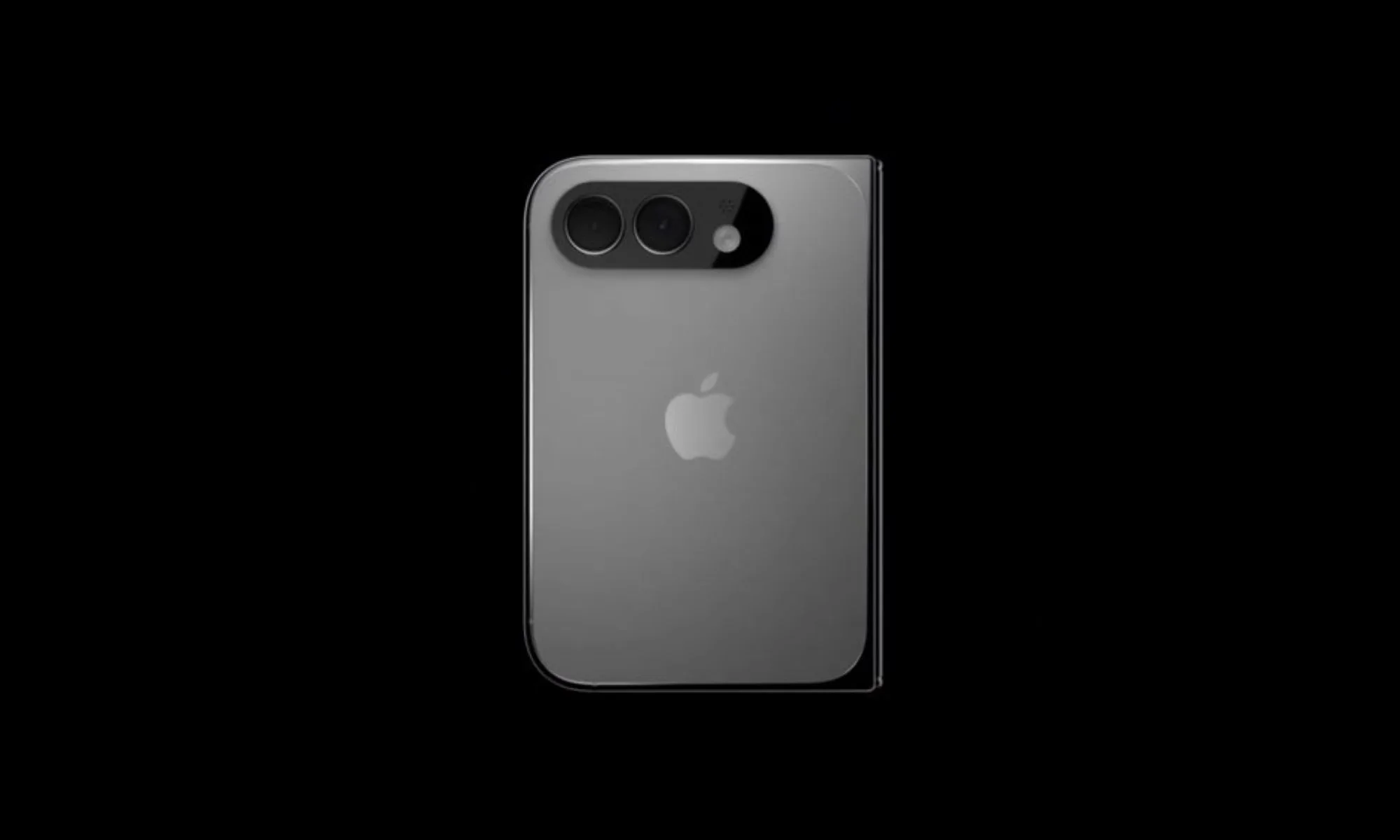
In exchange for the long wait, buyers could get a book-style foldable that unfolds from a 5.5-inch outer screen to a 7.8-inch inner screen that mimics the aspect ratio and look of the iPad mini, has a 4.5-4.8 mm side profile, runs on a new Apple chip, and has a dual-rear-facing camera array. 

Advertisement

Pricing, however, is the most sensitive aspect of the iPhone Fold, which, in my opinion, can make or break the company’s product lineup. For now, the general consensus on the internet points toward a starting price of over $2,000 for the baseline variant.

Source link

Advertisement
Continue Reading

Tech

Magnetic Levitation Using An Induction Cooktop

Published

on

Adding another item on the list of things you probably shouldn’t be trying at home, we got [Brainiac75] giving magnetic levitation a shot using an unmodified induction cooktop and aluminium foil. Although not ferromagnetic, it turns out that aluminium can be made to do interesting things in the magnetic field created by the powerful electromagnet that underlies the induction principle.

Interestingly, although there’s a detection circuit in these units that should detect the presence of an appropriate (ferromagnetic) object, it appears that even a thin sheet of aluminium foil can completely deceive it. The effect is that of a force pushing the foil away from the cooktop’s surface, with foil areas that remain close enough to the ferrite bars on the electromagnet even heating up enough to begin melting the aluminium.

After a bit of fun with various shapes and types of aluminium objects, the video moves on to a scientific explanation of what’s going on. The surface resistivity of the foil is similar enough to ferromagnetic cookware that it fools the sensor, after which the skin effect of aluminium induces a current. This then does the typical Lorentz force things.

Advertisement

Source link

Advertisement
Continue Reading

Tech

Artemis II Astronauts Are Using iPhones to Capture Stunning Space Images

Published

on

The four astronauts aboard the Integrity spacecraft now headed home from their historic arc around the moon really are like the rest of us: Sometimes they reach for their smartphones to snap photos.

For the Artemis II mission, iPhone 17 Pro Max phones have been used to capture photos inside the capsule of the astronauts pondering the views of Earth and working on mission objectives. (Technically, NASA refers to them as PCDs – personal computing devices.)

Smartphones were cleared for use in space for the first time in February. In a post on X, NASA Administrator Jared Isaacman wrote, “We are giving our crews the tools to capture special moments for their families and share inspiring images and video with the world.”

Advertisement
The Earth is shown in a spacecraft window with the faint outline of an astronaut looking out at it.

Artemis II mission commander Reid Wiseman looks out the window at Earth. The photo was taken with an iPhone 17 Pro Max.

NASA

Early in the mission, Commander Reid Wiseman snapped a pair of photos looking out the window with Earth behind him. Mission specialist Christina Koch and her dynamic curls in zero-gravity also captured a pensive view looking out over the planet. All three were made using the front camera — because wouldn’t you want to grab a selfie if you were in space?

Advertisement
Mission specialist Christina Koch looks out a spacecraft window at the earth. The angle is from below so we see the angle of her jaw, and her long braided hair floating above her.

Artemis II mission specialist Christina Koch looks out the window at Earth.

NASA

The iPhone 17 Pro’s rear cameras are pulling their own weight during the mission, too. During the live broadcast as the crew approached the moon, Wiseman took a photo of the moon’s surface using the iPhone’s telephoto camera at 8x zoom. He turned the screen toward one of the video cameras mounted inside the spacecraft, creating an image of the moon’s surface alone against the darkness of the unlit cabin, with the iPhone’s signature rounded edges and Dynamic Island cutout at the top.

Advertisement
An iPhone screen in a darkened space capsule showing a photo of the moon.

Artemis II mission commander Reid Wiseman holds up his iPhone 17 Pro Max showing a photo of the moon he captured using the telephoto camera at 8x zoom.

NASA

The main photo workhorses on this trip are a Nikon D5 DSLR and a Nikon Z9. The D5 is a model that has been used on several space excursions, and the Z9 is onboard as an experimental camera.

For NASA missions, every piece of equipment must be tested and certified, which is why the previously-approved D5 has a secure spot. Cameras must be resistent to space environmental factors like radiation, and safe if they’re floating around the capsule. However, the iPhones in space now are off-the-shelf models, according to a report by Jackie Watties of CNN.

The moon flyby was especially photo-intensive, with astronauts switching places several times so that two were always at windows with cameras and relating what they could see with their eyes. This photo of mission specialist and Canadian Space Agency astronaut Jeremy Hansen taking images using one of the Nikon cameras shows how some windows have camera shrouds attached. The shroud ensures that light from the interior isn’t reflected in the glass.

Advertisement
Artemis II mission specialist Jeremy Hansen uses a camera in front of a blue cloth shroud, which covers the window and has a hole for the camera lens.

Artemis II mission specialist Jeremy Hansen takes photos of the moon through a window shroud using a Nikon camera. The picture of him was captured using an iPhone 17 Pro Max.

NASA

In a particularly relatable photo, Hansen is also using the front-facing camera of a white iPhone 17 Pro — as a portable mirror while he shaves. As the (modified) saying goes, the best selfie screen is the one you have with you.

Advertisement
Artemis II mission specialist Jeremy Hansen holds an electric shaver in one hand to shave his face, and in the other hand holds an iPhone 17 Pro Max that he's using as a mirror.

Artemis II mission specialist Jeremy Hansen uses an iPhone 17 Pro as a mirror while shaving.

NASA

The iPhone 17 Pro isn’t the first Apple product to go into space. Crew members have taken iPods, iPads and AirPods on missions since the Space Shuttle era. The Mac Portable even went up on a shuttle (and revealed that its trackball in zero-G isn’t the best option).

An Apple representative didn’t immediately respond to a request for comment.

Advertisement

Source link

Continue Reading

Tech

Testing Suggests Google’s AI Overviews Tells Millions of Lies Per Hour

Published

on

A New York Times analysis found Google’s AI Overviews now answer questions correctly about 90% of the time, which might sound impressive until you realize that roughly 1 in 10 answers is wrong. “[F]or Google, that means hundreds of thousands of lies going out every minute of the day,” reports Ars Technica. From the report: The Times conducted this analysis with the help of a startup called Oumi, which itself is deeply involved in developing AI models. The company used AI tools to probe AI Overviews with the SimpleQA evaluation, a common test to rank the factuality of generative models like Gemini. Released by OpenAI in 2024, SimpleQA is essentially a list of more than 4,000 questions with verifiable answers that can be fed into an AI.

Oumi began running its test last year when Gemini 2.5 was still the company’s best model. At the time, the benchmark showed an 85 percent accuracy rate. When the test was rerun following the Gemini 3 update, AI Overviews answered 91 percent of the questions correctly. If you extrapolate this miss rate out to all Google searches, AI Overviews is generating tens of millions of incorrect answers per day.

The report includes several examples of where AI Overviews went wrong. When asked for the date on which Bob Marley’s former home became a museum, AI Overviews cited three pages, two of which didn’t discuss the date at all. The final one, Wikipedia, listed two contradictory years, and AI Overviews confidently chose the wrong one. The benchmark also prompts models to produce the date on which Yo Yo Ma was inducted into the classical music hall of fame. While AI Overviews cited the organization’s website that listed Ma’s induction, it claimed there’s no such thing as the Classical Music Hall of Fame. “This study has serious holes,” said Google spokesperson Ned Adriance. “It doesn’t reflect what people are actually searching on Google.” The search giant likes to use a test called SimpleQA Verified, which uses a smaller set of questions that have been more thoroughly vetted.

Source link

Advertisement
Continue Reading

Tech

Earthset and eclipse, oh my! NASA releases magnificent images from Artemis mission’s moon flyby

Published

on

Wide-angle view of Earthset during Artemis 2 lunar flyby
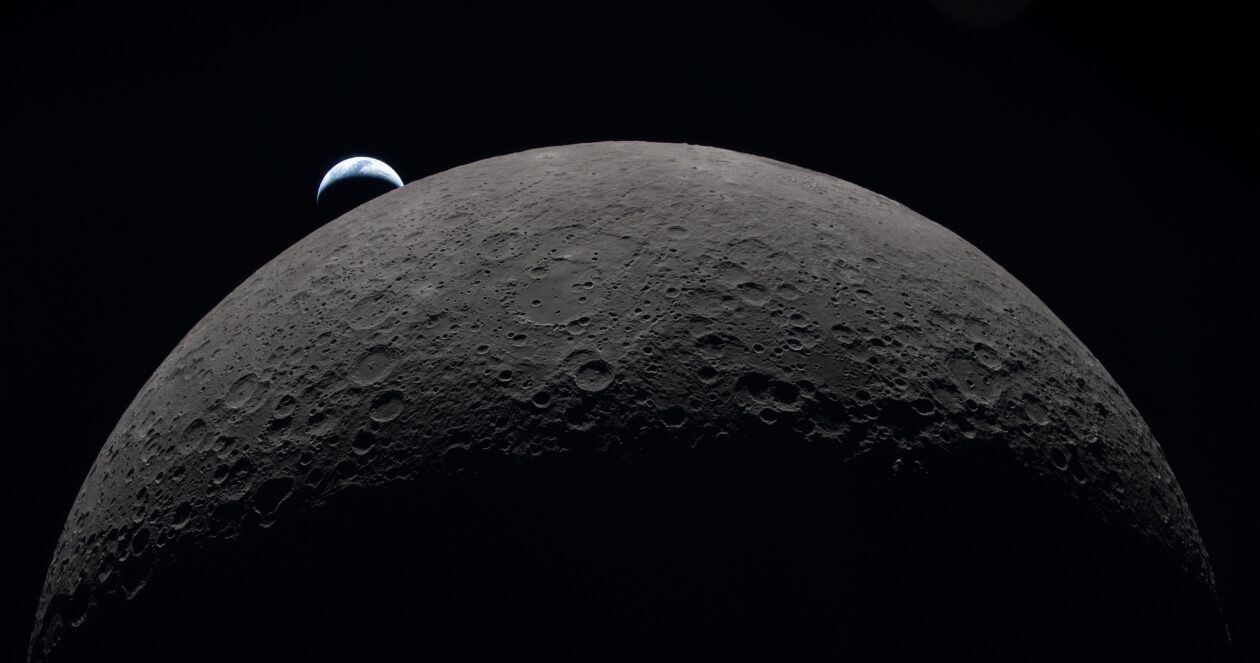
A crescent Earth sinks behind the moon’s disk in a wide-angle version of the Artemis 2 crew’s “Earthset” picture. (NASA Photo)

A day after the Artemis 2 mission’s historic lunar flyby, NASA has released a stunning set of high-resolution images documenting Earthset and Earthrise, a solar eclipse that set the moon aglow, and other views of the lunar far side and the astronauts who took the pictures.

The photographs were taken during a seven-hour lunar observation period at the farthest point of the Orion space capsule’s 10-day odyssey. The mission marked the first crewed trip around the moon since Apollo 17 in 1972, and the farthest-ever voyage by space travelers (252,756 miles from Earth, and more than 4,000 miles beyond the moon).

The Earthset photo was captured just as our home planet was sinking beneath the lunar horizon, followed about 40 minutes later by a picture of Earth rising above the horizon on the other side of the moon. The pictures rekindled the spirit of NASA’s original Earthrise photo, taken by astronaut Bill Anders during Apollo 8’s round-the-moon mission in 1968.

As Artemis 2’s astronauts prepared to take their own Earthrise photo, NASA astronaut Christina Koch said she was inspired by the original. “I had the photo up in my room as a kid, and it was part of what inspired me to keep working hard to achieve things I dreamed about,” she said.

The original Earthrise is one of the best-known photos from the Apollo era, but it took decades to confirm who actually took the shot. Anders wasn’t the sort of person to make a fuss over attribution. After a long career at NASA, at the Nuclear Regulatory Commission, in the diplomatic corps and in private industry, he settled down in Western Washington and founded the Heritage Flight Museum in Burlington, Wash. Two years ago, he died in a plane crash in waters off the San Juan Islands at the age of 90.

Advertisement

Anders and the original Earthrise aren’t the only connections linking Artemis 2 with the Pacific Northwest. The success of the mission depends in part on components built in the Seattle area. L3Harris’ Aerojet Rocketdyne facility in Redmond worked on Orion’s main engine and built some of its thrusters, while Karman Space Systems’ Mukilteo facility provided mechanisms for Orion’s parachute deployment system and emergency hatch release system.

Artemis 2’s four astronauts — Koch, NASA mission commander Reid Wiseman, pilot Victor Glover and Canadian astronaut Jeremy Hansen — were scheduled for off-duty periods today as Orion coasted toward Friday’s Pacific Ocean splashdown. The astronauts took questions from the crew of the International Space Station during a ship-to-ship chat.

“Basically, every single thing we learned on ISS is up here,” Koch said. The big difference? “I found myself noticing not only the beauty of the Earth, but how much blackness there was around it,” she said. “It just made it even more special. It truly emphasized how alike we are, how the same thing keeps every single person on planet Earth alive. … We have some shared things about how we love and live that are just universal. The specialness and preciousness of that really is emphasized when you notice how much else there is around it.”

Meanwhile, NASA’s image-processing team put in long hours overnight to work on the pictures taken by Artemis 2’s astronauts during the flyby. Pictures are being posted to NASA’s lunar flyby gallery. Check out these highlights, and click on the images to feast your eyes on higher-resolution views:

Advertisement
Solar eclipse with dark moon surrounded by sun's glow
This Artemis 2 image shows the moon fully eclipsing the Sun. From the crew’s perspective, the moon appears large enough to block the sun completely, creating nearly 54 minutes of totality and extending the view far beyond what is possible from Earth. The dark lunar disk is surrounded by a glowing halo of scattered sunlight. Also visible are stars, typically too faint to see when imaging the moon. The faint glow of the near side of the moon is visible along the left edge of the disk, due to illumination by Earth’s reflected light. (NASA Photo)
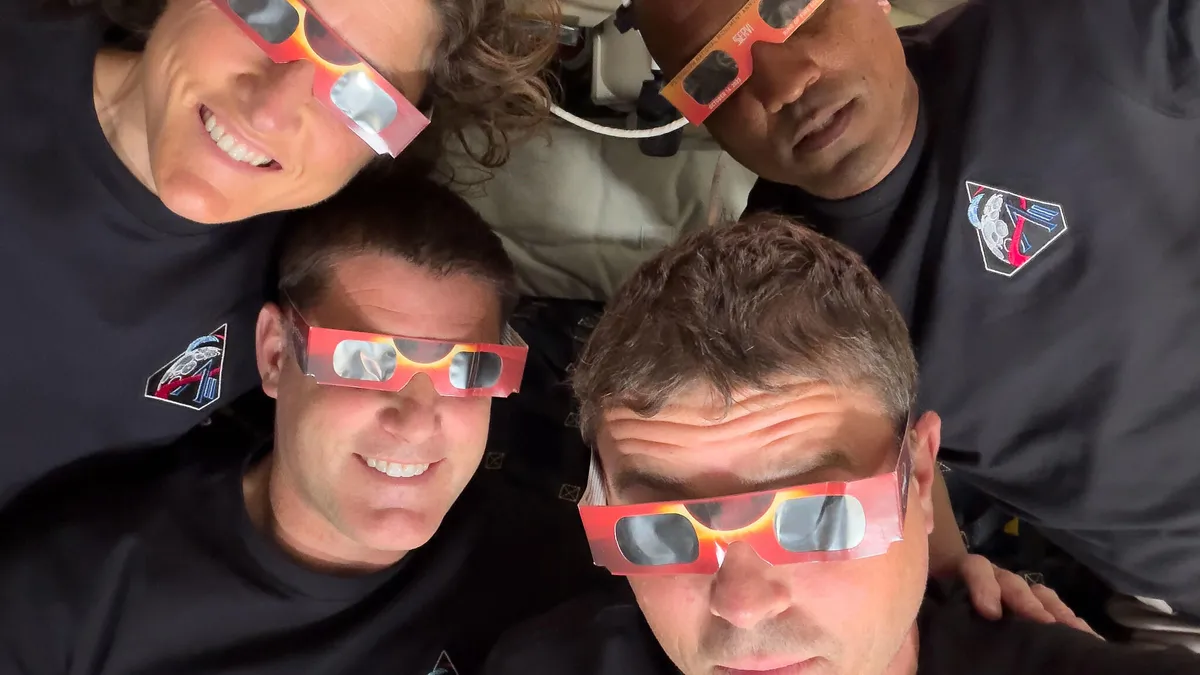
The Artemis 2 crew – Christina Koch (top left), Jeremy Hansen (bottom left), Reid Wiseman (bottom right) and Victor Glover – used eclipse glassesto protect their eyes at key moments during the solar eclipse. This was the first use of eclipse glasses at the moon for safe viewing of a partial solar eclipse. The glasses weren’t needed during the eclipse’s total phase. (NASA Photo)
This image shows the sun beginning to peek out from behind the moon as the eclipse transitions out of totality. Only a portion of the moon is visible in frame, its curved edge revealing a bright sliver of sunlight returning after nearly an hour of darkness. Space artist Don Davis posted a processed version of the image that brings out details of the sun’s corona. (NASA Photo)
Earthset picture from Artemis 2: Crescent Earth dips beneath lunar horizon
Artemis 2’s Earthset picture, captured as Earth sank beneath the lunar horizon, is reminiscent of the classic Earthrise picture that was taken by Apollo 8 astronaut Bill Anders in 1968. Earthset came at the beginning of a communications blackout for the Artemis 2 crew, and was followed 40 minutes later by Earthrise and the resumption of communications. (NASA Photo)
Our home planet appears as a delicate crescent in Artemis 2’s Earthrise photo, captured as the Earth emerged from behind the lunar disk. The moon itself is shrouded in darkness on the right half of the image. (NASA Photo)
This photo, taken just before the Artemis 2 crew began their official lunar observation period, zeroes in on a 600-mile-wide impact crater known as Orientale Basin. The black patch in the center of the crater is a mass of ancient lava that punched through the moon’s crust in an eruption billions of years ago. Orientale Basin lies along the transition between the near and far sides and is sometimes partly visible from Earth. The small, bright crater to its left is Byrgius, which has 250-mile rays extending out from its basin. (NASA Photo)
The heavily cratered terrain of the eastern edge of the South Pole-Aitken Basin is seen with the shadowed terminator – the boundary between lunar day and night – at the top of the image. The South Pole-Aitken Basin is the largest and oldest basin on the moon, providing a glimpse into an ancient geologic history built up over billions of years. NASA is targeting the moon’s south polar region for the Artemis program’s first crewed lunar landing, which is scheduled for no earlier than 2028. (NASA Photo)
Artemis 2 pilot Victor Glover and mission specialist Christina Koch peer out of the darkness of Orion’s cabin to observe the moon and acquire images during the lunar flyby. Over the course of about seven hours, the astronauts took turns looking out Orion’s windows as they flew around the moon’s far side. At closest approach, they came within 4,067 miles of the lunar surface. (NASA Photo)

Artemis updates from Alan Boyle’s Cosmic Log

Source link

Continue Reading

Tech

Netflix launches Playground, a kid-friendly gaming app with no ads or extra fees

Published

on


The newly announced Netflix Playground is an all-in-one app designed to give children a curated gaming experience built around familiar cartoon characters. The streaming giant describes it as an ever-growing library of instantly playable games for kids aged 8 and under.
Read Entire Article
Source link

Continue Reading

Tech

Buick’s Rarest ’70s Muscle Car Was Only Produced For Three Years

Published

on


At the height of the muscle car era, Buick made a very rare vehicle. This Buick came with an amazingly powerful engine that set it apart from most others of its type. This Buick muscle car was called the Buick GSX. The GSX was a higher-performance evolution of the GS, or Gran Sport, moniker that Buick had used since it first shoehorned a 401-cubic-inch “nailhead” engine from the larger Wildcat into the intermediate-sized Skylark in 1965. The Buick GSX definitely qualified as having one of the classic muscle car engines that made tons of torque.

Without a doubt, the 455-cubic-inch engine in the GSX did make a huge amount of torque. Even though the base 455 in the GSX was rated at 350 horsepower, which has generally been acknowledged as severely underrated to keep the car insurance underwriters calm, it was also rated at 510 lb-ft of torque, the highest-listed torque rating during the muscle-car heyday.

Advertisement

The Buick GSX was made during a three-year period, during which the fortunes of the muscle cars would both rise and fall. The GSX’s run started in 1970, which could be considered the peak year for American muscle cars, particularly those from General Motors, and ended in 1972. A total of 678 GSX examples were produced in 1970, with just 124 in 1971 and an even lower 44 in 1972. And then the GSX was done, with only 846 units having ever been produced.

Advertisement

What was so special about the GSX?

In reality, the 1970 Buick GSX was essentially a package of appearance items that was applied to the 1970 GS model, which came with either the standard 350-horsepower 455 or the 360-horsepower Stage 1 engine. The buyer had a choice of two exterior colors: the unique Saturn Yellow and the non-exclusive Apollo White.

The GSX also received a front chin spoiler in black, a Buick-branded hood tach originally popularized on Pontiac’s GTO and Grand Prix, a rear spoiler that sat atop the trunk lid, body-colored racing-type mirrors and headlight bezels, a padded steering wheel, and, of course, the two distinctive broad hood stripes, complemented by the narrower stripe running along the body sides from front to rear and crossing at the rear spoiler. A firmed-up suspension called the “Rallye ride package” used gas shocks, sway bars, stiffer springs and bushings, and power front discs to improve the Buick GSX’s handling. 

The 455-cubic-inch Buick GSX motor could be upgraded with the Stage 1 package, which added larger valves, a higher-compression cylinder head, a more aggressive camshaft, an upgraded four-barrel Rochester Quadrajet carburetor, and a retimed distributor. This made it one of the most powerful Buick engines, ranked by horsepower. Transmission options were either a three-speed Turbo Hydramatic or a four-speed manual. Performance numbers for the 1970 Buick GSX Stage 1, as performed by Motor Trend, were a quarter-mile time of 13.38 seconds at 105.5 mph. Pretty fast.

Advertisement

What happened to the Buick GSX in 1971 and 1972?

The 1971 Buick GSX saw some changes, as both emission regulations and the heavy hand of the insurance industry began to rein in performance. General Motors required all of its vehicles to run on regular gasoline, which lowered the standard 455’s compression ratio from 10:1 to 8.5:1, while the Stage 1 lost a full two points of compression. Horsepower dropped accordingly, from 350 to 315 in the standard 455 and from 360 to 345 in the Stage 1. One more change that Buick made to the GSX for 1971 and 1972 was the availability of a smaller, lower-powered engine — a 350-cubic-inch mill with a four-barrel carburetor producing 260 horsepower in 1971. Instead of the original two colors of Saturn Yellow and Apollo White, an additional nine colors became available.

1972 marked the final year for this fading muscle car, now available in 12 colors, even though total production amounted to just 44 cars. Power was also down, thanks to the use of “net” horsepower numbers, which lowered the output of the Stage 1 455 engine to 270 horsepower, the standard 455 engine to 250 horsepower, and the 350 engine to just 195 horsepower.

Advertisement

The Buick GSX is a distinctive muscle car that lived during both the best and the worst times of the muscle car era. Its rarity makes it one of the classic American muscle cars worth every penny.


Advertisement

Source link

Continue Reading

Trending

Copyright © 2025