
















Connect with us

Tech

The Galaxy Buds 4 Pro now come with a free $30 gift card, making the offer even sweeter

Published

on

Whether you prefer to listen to your favourite tracks or to podcasts on your commute, these noise-cancelling earbuds are for you.

There are tons of earbuds out there, but if you want the best of the best in terms of features, comfort and more, then the new Samsung Galaxy Buds 4 Pro are a strong pick.

With a slick design and a $30 gift card thrown in for good measure, these cutting-edge Buds 4 Pro are now worth even more of your time at $249.99.

Deal Samsung Galaxy Buds 4 Pro and $30 Gift CardDeal Samsung Galaxy Buds 4 Pro and $30 Gift Card

The Galaxy Buds 4 Pro now come with a free $30 Amazon gift card, making the offer even sweeter

Pick up the Samsung Galaxy Buds 4 Pro on Amazon and you’ll get a bonus $30 gift card included, turning a top‑tier pair of earbuds into an even more appealing offer.

Advertisement

View Deal

Aside from looking incredibly chic in black, the Galaxy Buds Pro pack a large amount of features that will make any type of audio you want to listen to sound incredible.

Almost everything is centred around the use of AI when it comes to the Buds 4 Pro.

Advertisement

Advertisement

When listening to music, the AI can enhance the surrounding audio through the built-in Hi-Res Audio. Pair this with the two-way speaker system found within the Buds 4 Pro, and you’ll be able to hear every nuance in its glory.

And if you’re wondering how they stack up against the competition, we can help you out there with our Galaxy Buds 4 Pro vs Sony WF-1000XM6 and Buds 4 Pro vs Buds 3 Pro versus articles.

Active Noise Cancellation (ANC) 2.0 also makes an appearance, doing a far better job at filtering through background noise than standard ANC, giving the audio you hear a chance to really open up.

As a final addition, the Buds 4 Pro have live translation capabilities so you can hear a voice in your native tongue, while someone else speaks in a language you don’t understand. This could be a huge boon for anyone who travels a lot and relies on these types of features during their journeys.

Advertisement

The earbuds have also been optimised for comfort, so you’ll forget you were even wearing them after a short while. They even have a certified IP57 rating, so you don’t have to worry too much if they encounter dust or even a bit of water.

Advertisement

Backed with two years warranty under the US version of the device, the Samsung Galaxy Buds 4 Pro give you peace of mind with your investment.

SQUIRREL_PLAYLIST_10148964

Advertisement

Source link

Continue Reading
Click to comment

Leave a Reply

Your email address will not be published. Required fields are marked *

Tech

These Are The Best Days To Buy Gas In 2026, According To GasBuddy

Published

on


Need to fill up the tank but don’t want to drain the wallet in the process? You might want to think about hitting the gas station on Sundays, at least in 2026. That’s according to a new nationwide analysis from GasBuddy, which found that Sunday is the cheapest day of the week to buy gas in most of America. Remember: That’s most, not all. Alaska, Delaware, Indiana, Kansas, Montana, Ohio, Pennsylvania, South Dakota, and Wyoming are all exceptions to the rule.

Another trend that remains true for much of the country: From coast to coast, prices typically climb higher during the middle of the week. And even though there are some exceptions to this data, as well, there’s a single fact that applies to every single one of these 50 states: Per their findings, Sunday is no state’s worst day to fill up. Saturday’s the best in Kansas, Pennsylvania, South Dakota, and Wyoming, while Tuesday’s the best in Montana alone. 

Advertisement

How GasBuddy was able to narrow down the data

The discount fill-up app’s report looked at daily statewide average gas prices over the past year and pinpointed the most consistent weekday pricing patterns. Across much of America, it looks like prices start going up on Monday, peak around midweek, and start going back down again heading into the weekend. That’s a steady weekly rhythm most of us can depend on. In most states, the difference between the lowest-priced day and the most expensive one can be anywhere from 4 to 9 cents per gallon. For motorists filling a standard 12- to 16-gallon tank, that difference is going to add up over time.

Most of us know to expect some modest fluctuations in gas prices from week to week. However, according to GasBuddy, some states actually experience much more dramatic price swings than others. It’s due to a pattern known as price cycling, and it’s most prevalent in states like Michigan, Indiana, Ohio, Florida, Texas, and some West Coast areas. There, prices often spike much more sharply on a given day before gradually declining over the next several days. In these places, the difference between the highest and lowest points in a weekly cycle can be way more dramatic: as much as 15 to 45 cents per gallon. Don’t forget that gas prices always add an extra 9/10 of a cent to add insult to injury.

Advertisement


Source link

Advertisement
Continue Reading

Tech

Paint maker giant AkzoNobel confirms cyberattack on U.S. site

Published

on

Paint maker giant AkzoNobel confirms cyberattack on U.S. site

The multinational Dutch paint company AkzoNobel has confirmed to BleepingComputer that hackers breached the network of one of its U.S. sites.

Following a data leak from the Anubis ransomware gang, a company spokesperson said that the intrusion has been contained and that the impact is limited.

“AkzoNobel has identified a security incident at one of our sites in the United States. The incident was limited to the respective site and was already contained,” the company told BleepingComputer.

“The impact is limited, and we are taking the appropriate steps to notify and support impacted parties, and will work closely with relevant authorities.”

Advertisement

AkzoNobel is a major paints and coatings company with 35,000 employees. It has an annual revenue exceeding $12 billion and active operations in over 150 countries. Brands under its corporate umbrella include Dulux, Sikkens, International, and Interpon.

Anubis ransomware claims to have stolen from AkzoNobel 170GB of data, almost 170,000 files, and leaked on its leak site samples that include screenshots of select documents and a list of the stolen files.

AkzoNobel entry on the Anubis ransomware site
Source: BleepingComputer

The published data contains confidential agreements with high-profile clients, email addresses and phone numbers, private email correspondence, passport scans, material testing documents, and internal technical specification sheets.

At the time of writing, the Anubis leak is only partial. AkzoNobel did not share with BleepingComputer any information on whether it engaged with the threat actor.

Anubis is a ransomware-as-a-service (RaaS) operation that launched in December 2024, offering affiliates 80% of the paid ransoms.

Advertisement

In February 2025, the operators launched an affiliate program on the RAMP forum, boosting its activity and influence in the cybercrime space.

In June the same year, Anubis added to its arsenal a data wiper that destroys the victim’s files to make recovery impossible.

Malware is getting smarter. The Red Report 2026 reveals how new threats use math to detect sandboxes and hide in plain sight.

Download our analysis of 1.1 million malicious samples to uncover the top 10 techniques and see if your security stack is blinded.

Source link

Advertisement
Continue Reading

Tech

Fuck ICE Says West Virginia Court, Threatening Fines And Contempt Charges

Published

on

from the get-abolished,-you-bastards dept

The administration has burnt the “presumption of regularity” to a crispness normally reserved for conquered bridges succumbing to heat death. It is now well known that the Trump administration will do whatever it wants to do, whether or not it’s supported by law. And when the courts push back, the administration responds with implicit “fuck you’s” or explicit verbal attacks on the judiciary.

The administration isn’t playing with a full deck, albeit not in the way that phrase is normally understood. Normally, it would mean the administration is batshit crazy. And it is! But its insanity isn’t of the pro-se-complainant-arguing-flag-fringe-merits variety. It’s the other thing: the refusal to respect court rulings it disagrees with. Ever.

The courts are sick of this refusal to respect a co-equal government branch. Hundreds of cases handled by dozens of judges have resulted in adverse rulings against the Trump administration. And yet, the administration refuses to stop doing the things hundreds of rulings have stated it can’t do.

It’s never been a regional thing (Fifth Circuit explicitly excluded). These are not the efforts of judges in “liberal” states who have been appointed by Democratic Party presidents. This is universal.

Advertisement

West Virginia, a state where Trump secured 70% of the votes in the last presidential election, is now poised to hand his masked ICE goons a significant loss. In one of thousands of similar habeas corpus cases filed around the nation following Trump’s racist anti-brown people surge, a federal judge has said he’s seen enough to move forward with contempt hearings and possible fines for government officials. (h/t Kyle Cheney)

The plaintiff is a Honduras native who was arrested by ICE and immediately sent to a detention facility one state over. This is something ICE does regularly, for the obvious reason of making it more difficult for detainees to challenge their detention. Since cases need to be filed wherever the person is detained, keeping arrestees in a state of perpetual motion makes this almost impossible.

But Miguel Izaguirre managed to get his case to court before he was moved again. That kept ICE from sending him to another detention center in another, possibly ICE-friendlier state (I’m glaring at you, Fifth Circuit).

Izaguirre’s allegations resemble those of most ICE detainees: he was denied his due process rights despite being arrested for a mere civil violation. The government has refused (probably because it doesn’t have it) to provide anything supporting it’s claim that Izaguirre must remain incarcerated while his civil case plays out in court.

Advertisement

From the opinion [PDF]:

[T[he Government stated that it had “carefully reviewed the pending petition and determined that the same or substantially similar issues arise in the case at bar.” [ECF No. 16- 1, at 2]. The Government further confirmed that it would not offer evidence beyond the documents attached to its response, nor would it offer any witnesses.

Since the government doesn’t actually have anything to offer in support of violating this detainee’s due process rights, the court gets right to the point:

For the reasons explained and analyzed in previous cases before this court and this district, I will once again FIND: First, the court has jurisdiction. Petitioner does not challenge an immigration proceeding or decision that would bar this court’s jurisdiction. Second, Petitioner is not “seeking admission” into the country, and the discretionary detention of 8 U.S.C. § 1226 applies to him. Third, Petitioner’s due process rights have been violated. Despite facing no criminal charge, Petitioner sits in the local jail with no hearing to determine his custody. There is no evidence in the record that Petitioner is a danger to the community or a flight risk, and there is sufficient evidence that he has community ties. Still, he has been afforded no hearing. This violates his due process rights.

Immediate release is the only appropriate remedy. Where detention has been found unlawful and no constitutionally adequate bond hearing has been provided, continued custody cannot stand.

Simply stated, but with some spite. The court makes it clear this is symptomatic of Trump’s anti-migrant efforts — something familiar enough that the court knows it needs to go further than just simply ordering the release of yet another migrant whose rights have been violated.

Advertisement

It’s something this court has seen multiple times in one week.

This case is one of 17 immigration habeas petitions assigned to the court this week. According to the Government, the detention of these Petitioners is “mandatory” under 8 U.S.C. §1225, and regardless of the constitutional defects, the federal district courts lack jurisdiction over these claims—an argument unanimously rejected in this district.

A flood of cases alleging similar violations of rights would be irritating enough. But the government absolutely refuses to abide by rulings issued in several similar cases. (Emphasis in the original.)

In 15 of the cases, Petitioners challenge their continued unlawful detention resulting from an arrest occurring on or after February 12, 2026.

The court then cites three previous rulings on similar cases, in which federal judges not only ruled they had jurisdiction to handle these cases, but that this mandatory detention violated detainees’ due process rights. All of those occurred prior to February 12. Judge Joseph Goodwin is sick of it.

But on February 12, 14, 17, 18, 21, and 22, 2026, the Government arrested noncitizens already in the interior of the United States. Today, the Government continues to wrongfully detain those petitioners without due process. Even now the Government incredulously asserts that the federal district courts do not have jurisdiction, that petitioners cannot raise due process violations, and that the Government has authority to mandatorily and indefinitely detain noncitizens in the local jail.

The Government is wrong. Judges in this district have said that over and over and over again. I have said it myself.

Advertisement

And that’s where Judge Goodwin invites the government to fuck around and find out, including the subservient local boys who are far too anxious to help ICE violate people’s rights:

This Memorandum Opinion and Order serves as explicit notice to all officials—state and federal—involved in the detention of individuals whose cases come before this court.

Continued detention without individualized custody determinations, after this court’s repeated holdings that such detention violates the Fifth Amendment, will result in legal consequences. For state jail officials, those consequences include personal civil liability without qualified immunity protection. For federal officials, those consequences include exercise of this court’s full inherent authority to enforce constitutional compliance including contempt.

Officials who believe this court has erred in its constitutional analysis may seek stay of this court’s orders pending appeal or pursue appellate review. What they may not do is continue systematic constitutional violations while preserving appellate objections and expecting this court to grant relief in case after case without enforcing its rulings.

Judge Goodwin signs off with this statement, which should be self-evident:

Advertisement

This court will enforce the Constitution.

Let’s hope he does it. Let’s hope jail officials cut people loose rather than start coughing up part of their paychecks. Let’s hope some ICE officials get to spend a few days in the cooler for refusing to comply with court orders. And let’s hope that courts across the nation generate the sort of collective and concerted pressure that will force the Supreme Court to set precedent that vastly undermines this administration’s bigoted efforts to scrub this country of people who aren’t white enough to be considered human beings by the racist goons infesting the White House.

Filed Under: dhs, ice, mass deportation, rights violations, trump administration, west virginia

Advertisement

Source link

Continue Reading

Tech

Did Alibaba just kneecap its powerful Qwen AI team? Key figures depart in wake of latest open source release

Published

on

Alibaba’s Qwen team of AI researchers have been among the most prolific and well-regarded by international machine learning community — shipping dozens of powerful generalized and specialized generative models starting last summer, most of them entirely open source and free.

But now, just 24 hours after shipping the open source Qwen3.5 small model series—a release that drew public praise from Elon Musk for its “impressive intelligence density”—the project’s technical architect and several other Qwen team members have exited the company under unclear circumstances, raising questions and concerns from around the world about the future direction of the Qwen team and its focus on open source.

The departure of Junyang “Justin” Lin, the technical lead who steered Qwen from a nascent lab project to a global powerhouse with over 600 million downloads, alongside two fellow colleagues — staff research scientist Binyuan Hui and intern Kaixin Li — marks a volatile inflection point for Alibaba Cloud and its role as an international open source AI leader.

These three Qwen Team members announced their departures on X today, though they did not share the reasons or whether or not it they were voluntary. VentureBeat reached out to sources at Alibaba for more information and will update when we obtain it. Lin himself signed off with a simple post: “me stepping down. bye my beloved qwen.”

Advertisement

While the company celebrates a technical triumph, the sudden exit of its core leadership suggests a deepening rift between the researchers who built the models and a corporate hierarchy now pivoting toward aggressive monetization.

The departing researchers’ final gift: pocket-sized intelligence

The Qwen3.5 small model series (ranging from 0.8B to 9B parameters) represents a final masterstroke in “intelligence density” from the founding team.

The models employ a Gated DeltaNet hybrid architecture that allows a 9B-parameter model to rival the reasoning capabilities of much larger systems.

By utilizing a 3:1 ratio of linear attention to full attention, the models maintain a massive 262,000-token context window while remaining efficient enough to run natively on standard laptops and smartphones — even in web browsers.

Advertisement

Lin, a PKU humanities graduate and polyglot, has long advocated for this “algorithm-hardware co-design” to bypass compute constraints—a philosophy he detailed at the January 2026 Tsinghua AI Summit.

For the developer community, Qwen3.5 wasn’t just another update; it was a blueprint for the “Agentic Inflection,” where models shift from being chatbots to autonomous “all-in-one AI workers” capable of navigating UIs and executing complex code.

The enterprise dilemma

For the 90,000+ enterprises currently deploying Qwen via DingTalk or Alibaba Cloud, the leadership vacuum creates a crisis of confidence.

Many companies migrated to Qwen because it offered a “third way”: the performance of a proprietary US model with the transparency of open weights.

Advertisement

Alibaba has recently consolidated its AI efforts into the “Qwen C-end Business Group,” merging its model labs with consumer hardware teams. The goal is clear: transition Qwen from a research project into the operating system for a new era of AI-integrated glasses and rings.

However, the reported appointment of Hao Zhou, a veteran of Google DeepMind’s Gemini team, to lead the Qwen team indicates a shift from “research-first” to “metric-driven” leadership.

Industry analysts, including those cited by InfoWorld, warn that as Alibaba pushes to meet investor demands for revenue growth, the “open” in Qwen’s open-weight models may become a secondary priority — similar to what we saw with Meta after the disappointing release of its Llama 4 AI model last spring, and subsequent reorganization of its AI division, seeing the hiring of Scale AI co-founder and CEO Alexandr Wang and following departure of preeminent researcher Yann LeCun.

Enterprises relying on the Apache 2.0-licensed Qwen models now face the possibility that future flagships —such as the rumored Qwen3.5-Max—will be locked behind paid, proprietary APIs to drive Cloud DAU (Daily Active User) metrics.

Advertisement

The takeaway? If you value Qwen’s open source efforts, download and preserve the models now, while you still can.

The “Gemini-fication” of Qwen?

The internal friction at Alibaba mirrors the tensions seen at OpenAI and Google: the “soul” of the machine is often at odds with the “scale” of the business. Xinyu Yang, a researcher at rival Chinese AI lab DeepSeek, captured this sentiment in a stark post on X: “Replace the excellent leader with a non-core people from Google Gemini, driven by DAU metrics. If you judge foundation model teams like consumer apps, don’t be surprised when the innovation curve flattens.”

This “Gemini-fication”—the shift toward a highly regulated, product-centric culture—threatens the very agility that allowed Qwen to surpass Meta’s Llama in derivative model creation. For the global AI community, the loss of Junyang Lin is symbolic.

He was the primary bridge between China’s deep engineering talent and the Western open-source ecosystem. Without his advocacy, there are fears that the project will retreat into a “walled garden” strategy similar to its Western rivals.

Advertisement

‘Leaving wasn’t your choice’

The technical brilliance of the Qwen3.5 release has been overshadowed by the heartbreak of its creators. On social media, the sentiment among the team members who built the model is one of mourning rather than celebration:

Chen Cheng, a Qwen contributor, explicitly alluded to a forced departure, writing in a post on X: “I’m truly heartbroken. I know leaving wasn’t your choice… I honestly can’t imagine Qwen without you.”

Li suggested the exit signaled the end of broader ambitions, such as a planned Singapore-based research hub: “Qwen could have had a Singapore base, all thanks to Junyang. But now that he’s gone, there’s no reason left to stay here.”

What happens to Qwen’s open source AI efforts from here on out?

The known facts are simple: Qwen has never been technically stronger, yet its founding core has been dismantled. As Alibaba prepares to face investors for its fiscal Q3 earnings report on March 5, the narrative will likely focus on “efficiency” and “commercial scale.”

Advertisement

For the enterprises currently excited about the 60% cost reductions promised by Qwen3.5, the immediate future is bright.

But for the larger AI community, the cost of that efficiency may be the loss of the most vibrant open-source lab in the East.

As Hao Zhou takes the reins, the world is watching to see if Qwen remains a “model for the world” or becomes merely a component in Alibaba’s corporate bottom line.

Source link

Advertisement
Continue Reading

Tech

Today’s NYT Connections Hints, Answers for March 4 #997

Published

on

Looking for the most recent Connections answers? Click here for today’s Connections hints, as well as our daily answers and hints for The New York Times Mini Crossword, Wordle, Connections: Sports Edition and Strands puzzles.


Today’s NYT Connections puzzle is kind of tough. I thought the purple category was creative and fun, but I didn’t guess it. Read on for clues and today’s Connections answers.

The Times has a Connections Bot, like the one for Wordle. Go there after you play to receive a numeric score and to have the program analyze your answers. Players who are registered with the Times Games section can now nerd out by following their progress, including the number of puzzles completed, win rate, number of times they nabbed a perfect score and their win streak.

Advertisement

Read more: Hints, Tips and Strategies to Help You Win at NYT Connections Every Time

Hints for today’s Connections groups

Here are four hints for the groupings in today’s Connections puzzle, ranked from the easiest yellow group to the tough (and sometimes bizarre) purple group.

Yellow group hint: Chase after.

Advertisement

Green group hint: Don’t be a sore loser.

Blue group hint: Santa’s list.

Purple group hint: Not boy.

Answers for today’s Connections groups

Yellow group: Pursue.

Advertisement

Green group: Sportsmanlike.

Blue group: Classic kid gifts.

Purple group: “____ Girl” titles.

Read more: Wordle Cheat Sheet: Here Are the Most Popular Letters Used in English Words

Advertisement

What are today’s Connections answers?

completed NYT Connections puzzle for March 4, 2026.

The completed NYT Connections puzzle for March 4, 2026.

NYT/Screenshot by CNET

The yellow words in today’s Connections

The theme is pursue. The four answers are hound, shadow, trail and track.

The green words in today’s Connections

The theme is sportsmanlike. The four answers are fair, honest, sporting and square.

Advertisement

The blue words in today’s Connections

The theme is classic kid gifts. The four answers are bike, book, toy and video game.

The purple words in today’s Connections

The theme is “____ Girl” titles. The four answers are Gone, Gossip, New and Working.

Source link

Advertisement
Continue Reading

Tech

Sennheiser HD 600 Still Reigns as the Smartest Audiophile Buy in 2026, Here’s Why

Published

on

Sennheiser HD 600 Audiophile Headphones
Even after all these years, the Sennheiser HD 600, priced at $269 (was $500), remains one of the best audiophile headphones available today. They have been around since the late 1990s and continue to receive high appreciation from both music fans and professionals. A lot of newer designs have come out since then, but the HD 600 has managed to stay current for a variety of reasons, including a great sound balance and top-notch build quality.


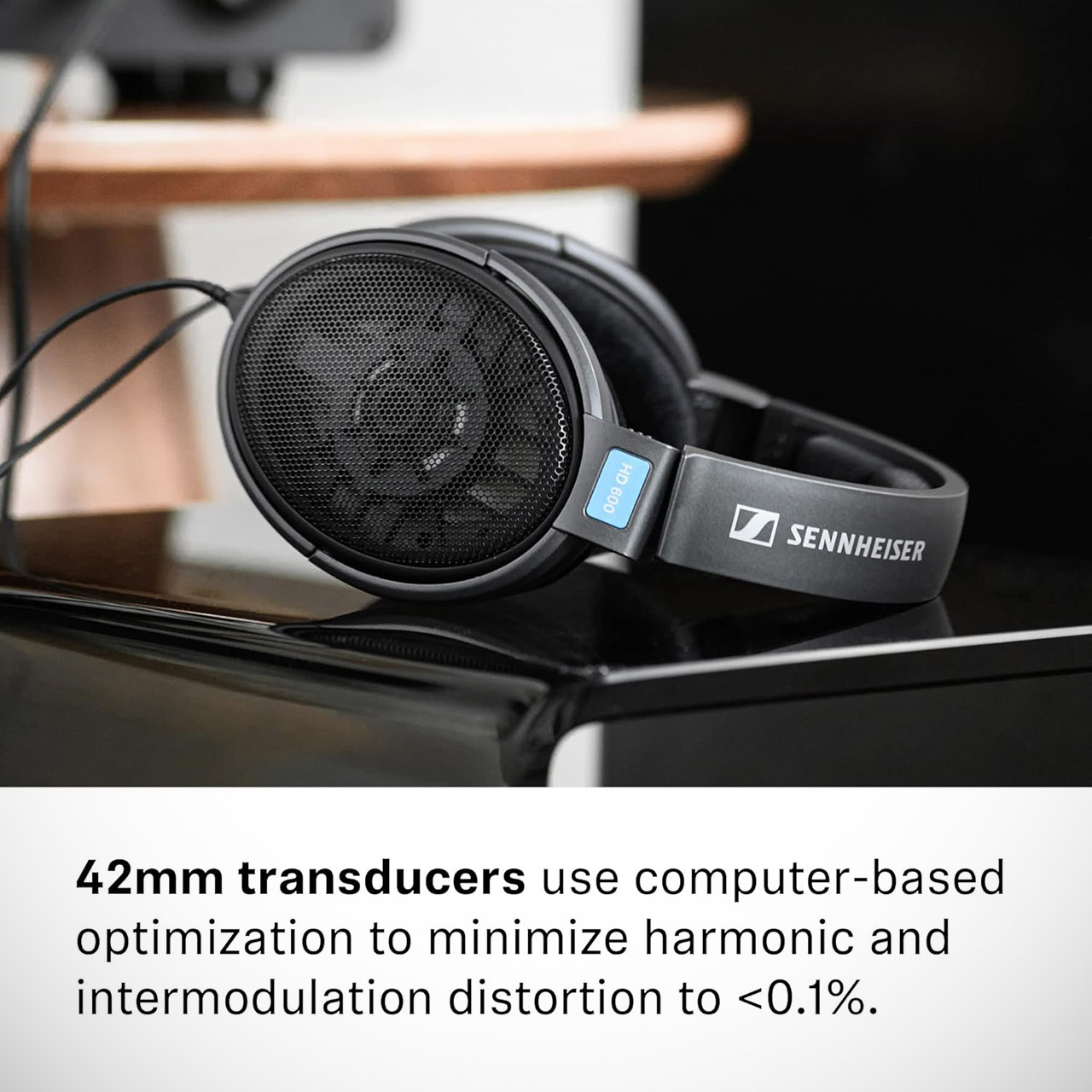
The engineers at Sennheiser originally built the HD 600 with the purpose of producing a highly accurate sound. They did an excellent job, as the drivers feature a particular diaphragm that helps to eliminate undesired resonances and prevents distortion or artificial boosting in the sound. They have a remarkably good range of 12 Hz to over 39,000 Hz, which covers almost the whole human hearing range and then some. Plus, the total harmonic distortion does not exceed 0.1 percent.

Sale


Sennheiser HD 600 – Audiophile Open-Back Dynamic Wired Headphones Over Ear with Natural Soundstage and…
  • Natural, Transparent Sound: Open-back design of these Sennheiser open back headphones wired style with advanced aluminum voice coils delivers…
  • Audiophile-Grade Clarity: These earphones wired include neodymium ferrous magnets that ensure precise, dynamic audio for immersive listening
  • Extended Listening Comfort: Lightweight Sennheiser HD600 corded headphones for music with plush ear pads allows fatigue-free enjoyment during long…


The HD 600 shines brightest in the midrange. Voices and instruments sound realistic; the guitars have substance, the pianos seem authentic, and the vocals are not over-processed with excessive colouring. Listeners frequently comment that the singers appear to be right in front of them, as if they were sitting in the room. This quality is what makes the HD 600 so popular among serious listeners and music producers, where accuracy is important.

Advertisement

Sennheiser HD 600 Audiophile Headphones
The bass is now nicely managed, in the sense that it is not overbearing, but rather well defined. Low notes arrive without the loud ‘boom’ that might be a problem with other headphones, allowing you to hear what’s going on in a music. You may not receive the same deep low-end rumble as some other headphones, but you will get crisp separation and no muddiness. The treble isn’t harsh, the cymbals glisten, and the intricacies emerge without wearing you out after a long listening session.

Sennheiser HD 600 Audiophile Headphones
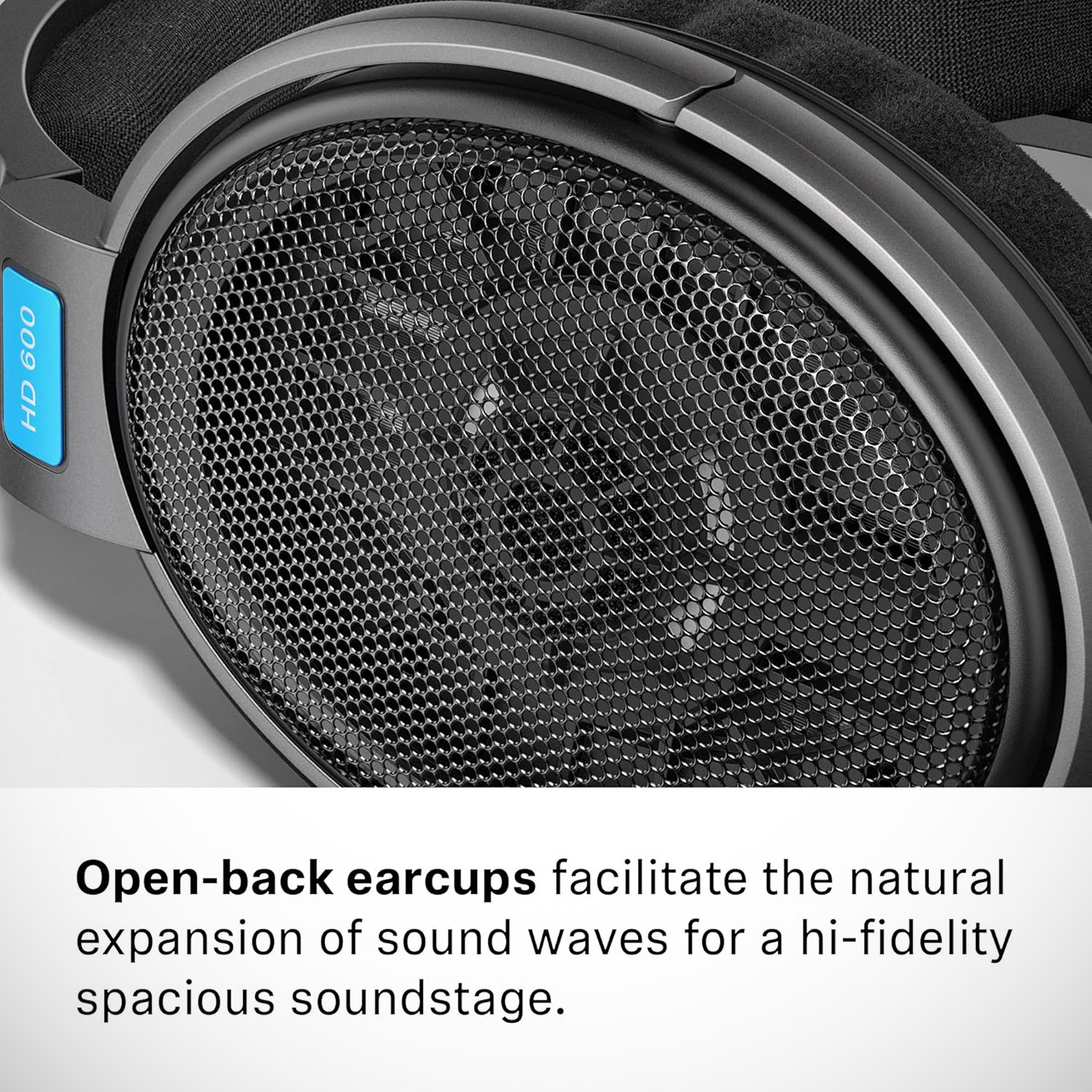
Build quality is also excellent, since the design is simple and plain, but built to last, with plastic and metal parts that are easy to swap out if necessary. The design allows for quick replacement of cables, earpads, and other components, while the velour earpads feel pleasant against the skin, The open-back design gives you a nice breezy feeling as if you’re sitting in a room listening to music rather than having it stuffed inside your ears.

Sennheiser HD 600 Audiophile Headphones
Comfort is also excellent, since the clamp tension is just right so that you are not squeezed yet the headphones remain in place, and the lightweight frame will not put strain on your head. Even after hours of listening to music, most people report that it does not become uncomfortable. The detachable cord has a standard 1/4 inch connection, making it simple to attach to any device, and it also includes a handy 3.5mm adaptor.

Source link

Continue Reading

Tech

‘I’m happy to say my job has never been boring’ says this head of data

Published

on

Katherine Leenhouts discusses her work in the data and AI space and offers her advice to professionals looking to emulate her career.

Katherine Leenhouts is director of data at PwC Ireland, but she didn’t initially plan for her career to go in that direction. “My path started at university. I started off considering a degree in something like Greek literature,” she told SiliconRepublic.com. 

“Instead, I got hooked on business after working for two small businesses during summer jobs. I switched majors and surprise, I loved my programming classes. They had the right mix of tangible results, challenge and creativity. 

“I interned at PwC, thanks to the guidance of one of my professors, and accepted a full-time role with one of their early data analytics teams. More than 15 years later, I’m happy to say my job has never been boring.”

Advertisement
In addition to AI, data and analytical skills, what abilities empower your work day to day?

Communication is a huge part of my day-to-day life. Whether I’m engaging with senior leaders from other organisations, collaborating with our own leadership or guiding interns or graduates on my team, the ability to adapt is key. I find you need to be quick on your feet. You need to be able to shift from understanding and digesting key information about a client project to explaining key changes in the data and AI space. That communication comes in many forms, whether through presentations, written proposals, requirement documents, or visual reports. My favourite is communicating through visual formats such as dashboards, slides, reports or other graphics. There is nothing more satisfying than seeing a complex idea land and give someone the insight they need to make a quality decision.

Do you use any skills that you didn’t expect to use at the beginning of your career?

Detective skills. I like a good set of requirements. When I started, I thought people would know exactly what they needed. What I discovered is that the initial task is just the starting point. I once had a client ask for a dashboard to track the status of her company’s internal audit projects worldwide. Through asking questions and getting deeper into requirements, I found she had a problem with long-running audits that went past their deadlines. These were then sometimes followed by long remediations. She didn’t want the status of internal audit projects, she wanted a dashboard that gave her a summary of where projects were stuck so she could unblock them.

We defined categories for delayed projects. She (and we) wanted data from the actual system auditors used to do their work, not from a manually updated spreadsheet. We delivered a dashboard that updated regularly, required no out-of-system updates, and gave her the information needed to take prompt, regular action to keep the business focused on improvements. The ability to question deeper and fully understand is one that is far more important than I realised at the start of my career.

How crucial are workplace AI, data and analytical skills, in the AI era?

AI fluency is now a basic requirement. Effective use of AI raises the standard of our work. Tools like coding assistants enable us to iterate more quickly. AI agents, LLMs [large language models] and others can bring the standard of work up several levels. It’s crucial that individuals know how to use AI to enhance and refine their own ideas. Without personal guidance, LLMs provide reams of good-quality but generic output. We expect an individual’s perspective and skill to shine through. When we interview individuals, we’re looking for people who think creatively, ask insightful questions, and excel at solving problems. Candidates that embrace the AI era with a mindset that values curiosity and innovation stand out.

Advertisement
What is exciting about a current role in AI and are there many challenges?

The field of AI is being created and refined daily. It reminds me of a child’s earliest years. One day they can’t crawl at all, the next they’re all over the house. AI is a lot like that. Every week the landscape changes. When you’re working in the field, you’re part of the story. That’s exciting. There are many challenges. For many organisations, data modernisation was a nice-to-have instead of a must-have. As a result, it can be challenging to apply advanced AI techniques. Organisations can be risk-averse. It takes compelling use cases to prompt changes to policies so that they balance the risks inherent in the use of novel technologies with the benefits and reduction of risk in current processes. On a personal level, adapting to new ways of working is a constant effort. What I like about our team is that this adaptation is often fun and engaging. 

What career routes are available to people skilled in AI, data and analytics?

There are two ways I see that people can be skilled in AI, data and analytics. In the first instance people have foundational technical skills, like programming in Python or SQL, working with data in cloud environments, creating and analysing insights or analysing the impact of AI on security. In that case, at PwC you’ll find a place in our tech, data plus AI team or in our cyber practice. In the second instance, if people are data-literate, know how to ask good questions and use AI tools to accelerate their work. 

AI has transformed workplace skills expectations, how can a strong leader encourage their teams?

Strong leaders set an example. They create spaces for teams to share knowledge and highlight best practices. Change is difficult, especially given the rapid changes in the AI space over the past three years. At PwC we help teams navigate these changes by embedding AI champions across the business to make it easier to adopt new habits. Our interns and graduates go through training on the tools available, ethical use and our ways-of-working.

Have you any predictions for how the year ahead may unfold in terms of AI and automation trends?

I think this is the year there’s a demand to start to see tangible returns from AI investments. We may see the first IPO of an AI company. I expect we’ll see more LLMs geared towards specific use cases, like supporting consumer health queries. We’ve already started to see more insights into what people “search” with LLMs – I hope we see more of this. We might begin to notice a clear distinction between companies that adopt AI to solve business problems and those that continue business as usual. Overall, I expect this field to continue to evolve at pace and keep pushing us to be innovative, think creatively and keep moving.

Advertisement

Don’t miss out on the knowledge you need to succeed. Sign up for the Daily Brief, Silicon Republic’s digest of need-to-know sci-tech news.


Source link

Advertisement
Continue Reading

Tech

SIVGA SV021 Pro Review: Carved to Impress, But Is the Tuning?

Published

on

In a headphone market crowded with plastic shells and predictable tuning, Dongguan-based brand SIVGA continues to carve out its niche the old-fashioned way with real wood and old-school wired design. The new SV021 Pro arrives at $179 with handcrafted wooden earcups, a closed-back architecture, and a promise of premium aesthetics without the usual boutique markup.

But in a category where looks can only get you so far, the real question is whether SIVGA’s latest budget-friendly over-ear delivers the sonic performance to match its striking build, or if it’s simply another pretty face in a very competitive field.

Driver Technology

Inside each earcup of the SV021 Pro sits a 50mm dynamic driver developed specifically for this model rather than pulled from a generic parts bin. SIVGA states that considerable in-house tuning and material research went into its design.

The diaphragm uses a five-layer aluminum composite construction, intended to balance rigidity with controlled damping. In practical terms, a stiffer diaphragm can improve transient response and clarity, while proper damping helps prevent unwanted resonance that can blur detail.

Advertisement
sivga-sv021-pro-headphones-inside-box

Driving the diaphragm is an ultra-fine black copper-clad aluminum voice coil. This type of voice coil is commonly used to reduce moving mass while maintaining conductivity, which can improve efficiency and responsiveness. SIVGA also claims benefits to perceived resolution and micro-detail retrieval.

The driver assembly itself is mounted within a six-layer reinforced composite housing, engineered to minimize unwanted vibration and reduce distortion by improving structural stability and energy transfer.

The technical story sounds promising on paper. Whether that engineering translates into real-world sonic performance is something best judged in listening — which we’ll dive into next.

Design & Comfort

Before getting to the sound, it’s worth spending a moment on design and comfort because this is an area where SIVGA has built a strong reputation. With the SV021 Pro, the brand continues that tradition. At $179, the overall build quality and material selection feel well above what you typically expect at this price point.

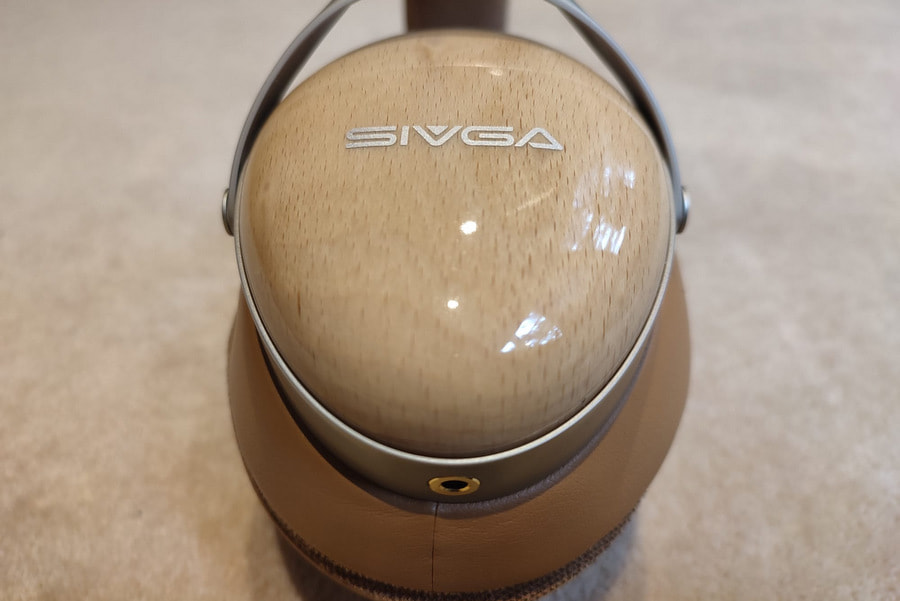
Our review sample came in the lighter beechwood finish. The fine grain pattern is clearly visible and gives the headphones an authentically handcrafted character rather than a synthetic “wood look.” For those who prefer something darker and more understated, SIVGA also offers a zebrawood version, which delivers a similarly premium aesthetic with a subtler visual impact. Whichever finish you choose, the attention to detail in the woodwork stands out immediately.

Advertisement
SIVGA SV021 Pro Headband

The structural components including the headband frame, yokes, and adjustment rails, are constructed from CNC-machined metal. This manufacturing process allows for tight tolerances and consistent precision, contributing to a solid, confidence-inspiring feel. The headphones never come across as fragile or delicate. While I didn’t test their durability with an accidental drop, they feel robust enough to handle normal daily use without anxiety.

Comfort is another area where the SV021 Pro performs well. At 289 grams, it’s relatively lightweight for a full-size closed-back design, and that lower mass pays dividends during longer listening sessions. The earpads are generously padded and notably soft, allowing the headphones to sit securely without creating pressure hotspots. On the head, they largely “disappear,” which is exactly what you want from a daily-use wired model.

Advertisement. Scroll to continue reading.

The velour contact surfaces are also a smart choice. They feel gentle against the skin and do a good job of managing heat buildup, reducing that sweaty, sealed-in sensation that can occur with synthetic leather pads — especially in warmer environments.

There is one ergonomic limitation worth noting: the yokes do not swivel. For some listeners, a lack of horizontal articulation can affect how well the earcups conform to the jawline and head shape. In my case, the depth and plushness of the earpads compensated effectively, creating a consistent seal without issue. That said, fit is personal, and those with narrower or more angular head shapes may want to be aware of this design decision.

Advertisement
SIVGA SV021 Pro Open-back Headphones  in Beechwood
SIVGA SV021 Pro (Beechwood)

SIVGA includes a 1.6-meter detachable cable with the SV021 Pro, and it’s noticeably better than the generic rubber leads often bundled at this price. The supplied cable uses a quad-braided design with a fabric outer sheath, giving it a more premium feel while also helping to minimize microphonics. In daily use, it resists kinks and doesn’t retain awkward bends, which makes it easy to manage at a desk or in a portable setup.

The stock termination is 3.5mm single-ended, which will suit most users and devices. That said, those running balanced outputs from modern portable DAC/amps may wish SIVGA had offered a 4.4mm option in the box. Fortunately, the detachable design makes aftermarket upgrades straightforward.

Also included are a simple hemp storage pouch and a 6.35mm adapter for use with full-size amplifiers. With accessories covered, it’s time to focus on what matters most: how the SV021 Pro actually sounds.

sivga-sv021-pro-headphones-kit

Listening

On paper and certainly in the hand, the SV021 Pro checks a lot of boxes. It looks distinctive, feels premium for $179, and remains comfortable over long sessions.

Where things become more complicated is in its tuning.

In practice, the sonic presentation comes across as uneven, with balance issues that are immediately noticeable. Within the first few minutes of listening to familiar reference tracks, it became clear that something was not quite aligned. The frequency response does not feel cohesively voiced, and certain areas of the spectrum draw attention to themselves in ways that disrupt overall musicality.

Advertisement

That is somewhat surprising given SIVGA’s track record. The brand has demonstrated competent tuning before, and its sister company, Sendy Audio, recently impressed us with the Egret, a model that showed careful tonal balance and refinement. By comparison, the SV021 Pro feels less resolved in its final voicing decisions.

Let us break things down by frequency range, starting with the bass.

Bass

In the low frequencies, the SV021 Pro takes a decidedly heavy handed approach. The bass is elevated to the point where it becomes dominant, introducing bloom that spills into the lower midrange and softens overall clarity.

There is certainly an audience for this kind of presentation. Listeners who prioritize impact over precision may enjoy the added weight, especially with bass driven genres such as drum and bass or electronic music where a strong low end can create a more physical and immersive experience.

Advertisement
Advertisement. Scroll to continue reading.

The trade off is control. The excess warmth masks finer details and reduces separation between instruments. Male vocals are particularly affected, often sounding pushed back in the mix. On tracks like “Papaoutai” by Stromae, his voice loses immediacy and presence, as if it is positioned behind the instrumental layer rather than anchored at the forefront where it belongs.

Midrange

By contrast, the midrange feels recessed. There is a noticeable dip through the central vocal region that robs instruments and voices of density and presence. As a result, guitars lack crunch, pianos lose harmonic richness, and vocals struggle to anchor the mix.

The overall impression is one of distance and diffusion. Instead of sounding centered and tangible, the mids come across as washed out, with reduced impact and body. The tonal imbalance between the elevated bass and pulled back midrange makes the presentation feel hollow rather than cohesive. Even casual listeners are likely to sense that the tuning does not sound quite right, as the core of the music lacks the weight and immediacy that define a natural sounding headphone.

Advertisement

Treble

The frequency response does recover somewhat as it moves into the upper midrange and lower treble. Female vocals cut through the mix with more clarity than male baritones, benefiting from the added energy in this region. There is a greater sense of articulation here, which helps prevent the presentation from sounding completely veiled.

However, that lift continues into the lower treble where it becomes problematic. A noticeable glare is introduced, adding sharpness that can turn strident at moderate to higher volumes. Over time, this emphasis contributes to listening fatigue rather than engagement.

Brass instruments in particular highlight the issue. On “Careless Whisper” by George Michael, the iconic saxophone line carries more bite than body, making the track sound harsher and more fatiguing than intended. Instead of smooth, sultry texture, the upper register leans toward edge and glare, which further reinforces the uneven tonal balance of the SV021 Pro.

sivga-sv021-pro-headphones-earcup

Technicalities & Soundstaging

There is a sense that the underlying hardware in the SV021 Pro is capable of more than what its final tuning allows. The custom 50mm drivers appear technically competent, but the chosen sound signature limits their ability to showcase resolution and balance.

The elevated bass does more than just mask fine detail. It also compresses the perceived space, leading to a narrower soundstage and less precise imaging. Instruments tend to cluster rather than occupy clearly defined positions, which reduces layering and separation. While closed back headphones rarely deliver expansive staging, there is still a baseline expectation for coherence and placement that is not fully met here.

Advertisement

In direct comparison, models such as the FiiO FT1 and Beyerdynamic DT 700 Pro X present a more balanced frequency response with stronger spatial performance. Both offer better control in the low end and more convincing imaging, allowing them to sound more open and organized despite operating within the same closed back category.

Drivability

With a rated sensitivity of 106dB/mW and an impedance of 45 ohms, the SV021 Pro is very easy to drive. In practice, it reaches high listening levels straight from a standard smartphone headphone jack without strain. There is no requirement for a dedicated amplifier to achieve adequate volume.

Using external sources does bring incremental improvements. Paired with dongle DACs and a desktop chain consisting of the SMSL DO400 and Aune S17 Pro, the presentation gained slight refinement in control and clarity. However, the changes were subtle rather than transformative. Given the headphone’s accessible price point, investing in higher end source equipment does not materially alter its core tuning characteristics. The fundamental tonal imbalance remains, and additional amplification cannot meaningfully correct it.

sivga-sv021-pro-headphones-beechwood-zebrawood
The SIVGA SV021 Pro are available in Beechwood (left) or Zebrawood (right)

The Bottom Line

The SV021 Pro is a frustrating release because so much of it is done right. The wood earcups look fantastic, the CNC machined metal frame feels durable and confidence inspiring, the cable is better than most at this price, and long term comfort is genuinely impressive. At 289 grams with plush velour pads, it is easy to wear for hours. From a design and build perspective, this is one of the more premium feeling options under $200.

Advertisement
Advertisement. Scroll to continue reading.

Unfortunately, none of that offsets the tuning. The elevated and bloated bass, recessed midrange, and glare in the lower treble combine to create an uneven and fatiguing presentation. Detail retrieval is masked, vocals lack natural body, and spatial performance suffers as a result. No amount of better amplification meaningfully corrects the core imbalance. That is the deal breaker.

SIVGA has proven it can voice headphones well in the past, which makes this outcome more disappointing. At $179, there are closed back alternatives that deliver a more cohesive and accurate sound signature. When sound quality is the primary metric, as it should be with any headphone, the SV021 Pro falls short. For that reason, it is difficult to recommend despite its undeniable strengths in design and comfort.

Pros:

  • Custom 50mm dynamic drivers with multi layer aluminum composite diaphragm and lightweight voice coil design
  • Genuine beechwood or zebrawood earcups with solid CNC machined metal frame give a premium look and feel for the price
  • Lightweight 289 g construction with plush velour pads delivers excellent long term comfort
  • Elevated bass response adds strong impact for electronic, hip hop, and other bass driven genres

Cons:

  • No swivel in the yokes may affect fit and seal for some head shapes
  • Uneven tuning with boosted bass, recessed midrange, and pronounced lower treble glare reduces tonal balance and realism
  • Congested staging and less precise imaging compared to similarly priced closed back competitors

Where to buy:

Source link

Advertisement
Continue Reading

Tech

Podcast: Exploring Japan’s Hi-Fi Scene

Published

on

Japan Hi-Fi and Music Culture Podcast with Eric Pye
Eric Pye (@audioloveyyc) returns to Japan to explore the hi-fi and music scene in late-2025.

Source link

Continue Reading

Tech

Common IT Automation Mistakes to Avoid (With a Safer Workflow)

Published

on

IT automation is supposed to reduce risk, speed delivery, and shrink operational overhead—but in real environments, it can also amplify mistakes, spread misconfigurations faster, and create “unknown unknowns” at scale.

This guide focuses on the failure patterns that hit intermediate-to-advanced teams (SRE/DevOps/Platform/IT Ops), plus a practical workflow for building automation that’s safe to run repeatedly, safe to change, and safe to roll back.

Quick take (read this first)

  • Avoid “automation theater.” If you can’t explain the goal, blast radius, and rollback, you’re not ready to automate that workflow.
  • Design for “safe retries”: idempotent actions, clear state checks, and predictable error handling.
  • Ship guardrails by default: input validation, rate limits, timeouts, and a human fallback when conditions look unsafe.
  • Treat automation as change management: version control, approvals where needed, and audit logs of what changed and who/what changed it.

Dominant intent (what searchers want)

Most people searching “IT automation mistakes” are not looking for tool comparisons—they want a practical checklist of what goes wrong in production and a concrete method to prevent those failures (especially around change control, security, and reliability).

The mistakes (and what to do instead)

1) Automating the wrong thing (or automating too early)

Mistake: Automating a workflow you don’t fully understand yet, or automating edge-case-heavy work before you’ve stabilized the “happy path.”

Advertisement

Do instead: Start by writing a one-page runbook that a human can follow, then automate that runbook. For a runbook pattern you can standardize across teams, create an internal “production runbooks” page like a production runbook template.

Practitioner note: If you can’t list the top 3 failure modes of the workflow, automation will discover them for you—at the worst possible time.

2) No clear definition of “done” (success criteria are vague)

Mistake: “Automate onboarding” without measurable success: time saved, error rate reduced, fewer tickets, fewer escalations.

Do instead: Pick one outcome metric (e.g., median provisioning time) and one safety metric (e.g., failed-run rate) before you write code. If you want a simple measurement framework, align it to toil-reduction thinking from Google’s guidance on eliminating toil.

Advertisement

3) Treating automation as a script, not as a product

Mistake: A “one-off” script becomes production-critical, but it has no owner, no lifecycle, and no on-call expectations.

Do instead: Assign an owner, a repo, and a release process (even if lightweight). For larger orgs, define a small internal policy page like an automation ownership model so abandoned automations don’t become permanent operational debt.

4) No change management (automation changes go out like ad-hoc edits)

Mistake: Updating automation directly on a server, or merging automation changes without review, testing, and traceability.

Do instead: Treat automation as change management: controlled changes, auditable history, and clear permissions. AWS explicitly frames change management as necessary for reliable operation and calls out automatic logging of changes as an auditing aid in the AWS Well-Architected change management guidance.

Advertisement

Advanced note: When you can, make changes small and reversible (roll-forward is nice; fast rollback is mandatory).

5) Skipping preflight checks (inputs aren’t validated)

Mistake: Assuming upstream systems always send sane values, or that “only admins will run it.”

Do instead: Validate inputs like a hostile internet user might control them: bounds checks, allowlists, required fields, and “dry run” modes that show intended actions without taking them.

6) No guardrails (automation can trigger outages at scale)

Mistake: Automation that loops aggressively, fans out without limits, or repeatedly performs expensive “read” operations that become costly at scale.

Advertisement

Do instead: Add guardrails: timeouts, rate limits, concurrency limits, and safety checks using live signals (error rates, saturation, dependency health). Google’s SRE guidance warns that even read operations can spike device load at scale and that automation should default to humans if it hits unsafe conditions.

7) Not idempotent (re-runs cause damage)

Mistake: A failed run leaves partial state; rerunning makes it worse (duplicate accounts, duplicate firewall rules, double-billed resources).

Do instead: Design for safe retries: check current state first, apply only the delta, and make “no-op” a normal success path. If your team needs a shared pattern library, create idempotent automation patterns internally and enforce them in code reviews.

8) Poor error handling (failures are silent, unclear, or non-actionable)

Mistake: Catch-all exceptions that hide real failures, or errors that don’t tell the operator what to do next.

Advertisement

Do instead: Use structured error handling, return explicit exit codes, and log enough context to remediate quickly. For PowerShell-heavy environments, follow Microsoft’s official try/catch/finally guidance to handle terminating errors predictably.

9) No baseline config thinking (automation fights drift instead of controlling it)

Mistake: “Our automation sets the config” but there’s no approved baseline, no monitoring, and no controlled change process—so the environment drifts and nobody knows what “correct” is anymore.

Do instead: Establish and manage approved baselines and monitor for unauthorized changes as part of configuration management. NIST describes security-focused configuration management as managing and monitoring configurations to achieve adequate security and minimize organizational risk in NIST SP 800-128.

10) No “checklist” layer (you can’t verify automation outcomes)

Mistake: Automation changes settings, but you don’t have a consistent way to verify the final state (or detect unauthorized changes later).

Advertisement

Do instead: Treat verification as first-class: post-run checks, periodic compliance scans, and “expected state” reports. NIST describes security configuration checklists as instructions/procedures for securely configuring IT products, including verifying configuration and identifying unauthorized changes, in NIST SP 800-70 Rev. 5 (IPD).

11) Concurrency mistakes (two automations fight each other)

Mistake: Two pipeline runs apply infrastructure changes concurrently, or two operators run the same automation against the same target at the same time.

Do instead: Enforce locking and single-writer rules. Terraform state locking is designed to prevent concurrent writes and potential state corruption; if locking fails, Terraform doesn’t continue, per HashiCorp’s Terraform state locking documentation.

12) Supply-chain blind spots (automation depends on unpinned dependencies)

Mistake: CI/CD workflows pull third-party components by mutable tags, so what runs today isn’t guaranteed to be what ran yesterday.

Advertisement

Do instead: Pin and verify dependencies for your automation pipeline. GitHub’s guidance on secure use of Actions states that pinning to a full-length commit SHA is currently the only way to use an action as an immutable release in GitHub’s secure use reference.

If your org is standardizing workflow hardening, create a CI/CD security hardening playbook that covers pinning, reviews for sensitive workflows, and secret exposure pathways.

How to build automation safely (a practical workflow)

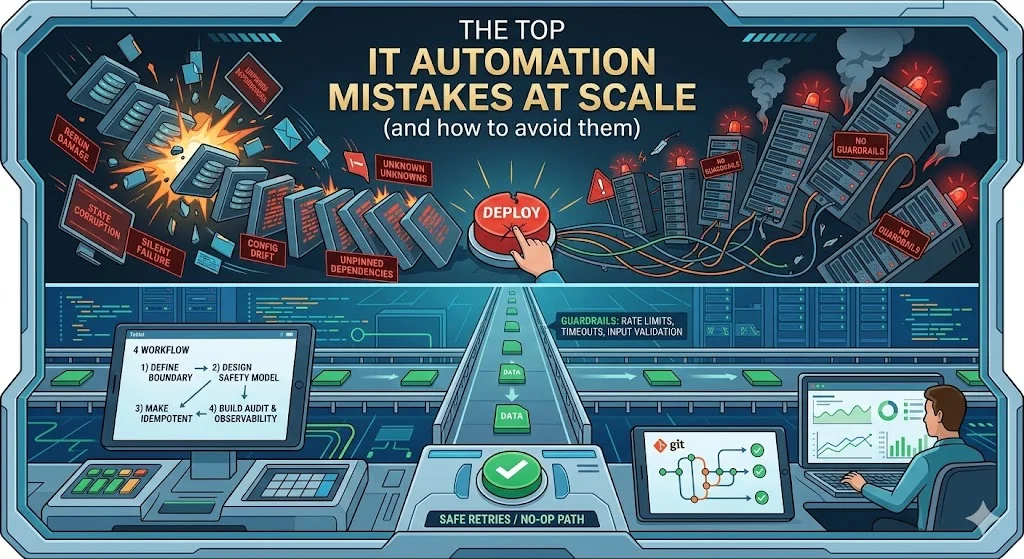
Step 1: Define the boundary

  • What is the exact trigger (human, ticket, webhook, schedule)?
  • What is the target scope (single host, one service, one environment, one account)?
  • What must never happen (data loss, public exposure, mass deletion, privilege escalation)?

Step 2: Design the safety model

  • Preflight: Validate inputs and permissions; confirm the target exists.
  • Guardrails: Timeouts, rate limits, concurrency limits, circuit breakers, and a “stop” switch.
  • Fallback: If conditions look unsafe, stop and route to a human with a clear message.

Step 3: Make it idempotent (safe retries)

  • Read current state.
  • Compute delta.
  • Apply changes.
  • Verify final state (and record evidence).

Step 4: Build observability and auditability

  • Log: who/what triggered the run, what changed, and where.
  • Metric: success rate, duration, retries, and rollbacks.
  • Traceability: link runs to commits and tickets.

From a governance perspective, automatic logging of changes helps audit and quickly identify actions that might have impacted reliability, as described in the AWS Well-Architected change management guidance.

Step 5: Roll out like you mean it

  • Start small: Canary a subset of targets, then expand.
  • Prefer reversible changes: Plan rollback (or roll-forward) before the first run.
  • Write the “undo” path: If reversal is impossible, add extra approval gates.

AWS highlights that deployments are a major production risk area and encourages automation (including testing and deploying changes) in its guidance on deploying changes with automation.

Decision tree: should you automate this?

 START | |-- Does the workflow happen often (weekly+) OR during incidents? | |-- No --> Keep manual; improve documentation/runbook. | |-- Yes | |-- Can you clearly define "success" AND "unsafe" conditions? | |-- No --> Stabilize process; add measurements; then automate. | |-- Yes | |-- Can you make it safe to retry (idempotent) with a bounded blast radius? | |-- No --> Add guardrails/locks/approvals; then automate. | |-- Yes | '--> Automate, ship with preflight + guardrails + rollback + logging.

Implementation checklist (copy/paste for your PR)

  • Has an owner and a repo (not “a script on a server”).
  • Inputs validated; “dry run” supported for risky actions.
  • Idempotent behavior documented (what happens on rerun).
  • Concurrency controlled (locks, single-writer rules).
  • Guardrails present (timeouts, rate limits, circuit breakers).
  • Logs, metrics, and run IDs are emitted; changes are auditable.
  • Rollback path defined and tested (or explicit approval gates if not reversible).
  • Dependencies pinned and reviewed; CI/CD hardening applied.

Troubleshooting (real-world failure modes)

Problem: “It worked in staging but caused a production incident”

Common causes: missing guardrails, scale effects (read load), hidden dependencies, or assumptions about data shape. Add timeouts/rate limits and use live signals; SRE guidance notes automation needs safeguards and that scale can change the risk profile dramatically.

Problem: “We can’t explain what changed”

Fix: require versioned changes, run IDs, and change logs; align to controlled change management and automatic change logging as described in AWS’s change management guidance.

Problem: “Two runs conflicted and corrupted state”

Fix: enforce locking/single-writer rules; Terraform’s state locking model exists specifically to prevent concurrent state writes and to stop runs if locking fails.

Advertisement

Problem: “The automation fails, and the error is useless”

Fix: make errors actionable (what failed, why, what to do next), and use structured error handling. In PowerShell, ensure you’re handling terminating errors using try/catch/finally patterns described in Microsoft’s documentation.

FAQ

What’s the fastest way to reduce automation risk without slowing delivery?

Start with guardrails (timeouts, rate limits, safe defaults) and add change traceability (who/what/when) before you add more features.

When should we not automate?

Don’t automate workflows with unclear “unsafe conditions,” no rollback, or unclear ownership—until you fix those prerequisites.

How do we keep automation from creating more toil?

Measure the time spent operating the automation itself and ensure it reduces net operational work; toil framing and safeguards are emphasized in Google’s SRE guidance.

Advertisement

Is “configuration drift” always bad?

Not always—sometimes reality changes faster than code—but unmanaged drift makes environments less predictable; treat baselines and monitoring as first-class.

How do we implement configuration baselines in a practical way?

Define a baseline, implement it consistently, monitor deviations, and control changes; NIST’s security-focused configuration management guidance is a strong baseline reference for this program.

Do we need checklists if we already have IaC?

Yes—IaC expresses intent, but you still need verification that deployed systems match the intended secure configuration; NIST describes checklists as including verification and unauthorized-change detection.

What’s a minimum viable CI/CD hardening step for automation pipelines?

Pin third-party components to immutable identifiers; GitHub’s secure use guidance states full-length commit SHA pinning is the way to make an Action immutable.

Advertisement

How do we align “automation” with formal change management without drowning in process?

Automate the evidence: logs, approvals where needed, and a clear history of changes; AWS explicitly calls out automatic logging as an auditing aid.

Key takeaways

  • Automation failures are rarely “tool problems”—they’re safety, ownership, and change-management problems.
  • Make automation safe to rerun, safe to stop, and safe to explain.
  • Build guardrails that assume scale and bad inputs, and default to humans when unsafe.

Source link

Continue Reading

Trending

Copyright © 2025