

Tech
The hits keep on coming for Cisco vulnerabilities



Security
CVE-2026-20230 under exploitation, while an earlier SD-WAN 0-day looks even worse than we thought
It’s looking like another tough week (month? year?) for Switchzilla amid reports of new serious vulnerabilities under attack.
First up is a server-side request forgery bug in its Unified Communications Manager tracked as CVE-2026-20230.
Cisco disclosed and patched this flaw in early June. The comms control platform doesn’t properly validate some HTTP requests, and an attacker could exploit this bug to gain root privileges on a compromised device.
At the time, Cisco said that a proof-of-concept exploit was available – and now it seems unknown miscreants are putting that exploit code to use, with threat intel company Defused warning that it observed miscreants exploiting CVE-2026-20230 over the weekend.
“The observed chain abuses the WebDialer SSRF to deploy a rogue Apache Axis service, uses that service to write a first-stage JSP file-writer, then drops a second-stage command-execution shell under /platform-services/axis2-web/,” the firm noted on LinkedIn.
Cisco Catalyst SD-WAN zero day
Then, a Mandiant advisory on Wednesday warned that a Cisco SD-WAN zero-day tracked as CVE-2026-20245 was exploited much earlier than initially disclosed, including at a communications service provider where the attacker elevated a compromised admin account to full root-level access.
While the Google-owned threat hunting biz said it can’t assess the full scope of the intruders’ post-compromise activity, this SD-WAN device compromise could have been dire, potentially giving the attacker total visibility across an entire corporation’s internet traffic. This is what makes SD-WAN zero-days such a hot target for government-sponsored spies looking to set up shop for long-term snooping activities.
It also explains the rash of attackers battering Cisco SD-WAN devices since the start of the year.
Cisco had issued an advisory for CVE-2026-20245 in early June, admitting that attackers had a head start on abusing this security hole. “In June 2026, the Cisco PSIRT became aware of exploitation of this vulnerability,” the vendor said at the time.
In a Wednesday report, however, Google’s Mandiant incident response and consulting biz reported that exploitation of this bug – Cisco’s sixth SD-WAN vulnerability listed as under attack since the start of the year, and the second zero-day in two months – began much earlier.
“In early 2026, Mandiant identified a threat actor targeting SD-WAN infrastructure at a service provider,” Mandiant threat hunters Chester Sng, Pete Boonyakarn, and Logeswaran Nadarajan wrote. “After gaining initial access, the threat actor exploited a zero-day vulnerability (CVE-2026-20245) in Cisco Catalyst SD-WAN to escalate privileges from a compromised administrative account to root-level access.”
The attacker gained initial access via an unauthorized peering connection, abusing the SD-WAN fabric to authenticate between network components and facilitate Secure Shell (SSH) access. In this case, they authenticated to the SD-WAN manager device via SSH using the vmanage-admin account on the same victim devices.
Then, they changed the default password on the admin account, authenticated directly to the SD-WAN Manager web application interface using the admin account, and exfiltrated SD-WAN fabric configurations.
Likely in an effort to cover their tracks and not get caught, the attacker changed the password of the admin account back to its original one before terminating their active session.
Neither the vmanage-admin nor the admin accounts on Cisco Catalyst SD-WAN controllers possess root shell access, however. To gain root access, the attacker exploited CVE-2026-20245, which allows an authenticated, local attacker to execute arbitrary commands as root by supplying a crafted file to the vulnerable system.
The attacker uploaded a file named evil_tenant.csv that contained the exploit payload. Upon execution, the digital intruder created a user account named troot with full root privileges. Mandiant says it later observed the miscreant accessing this new troot account from the admin account using the substitute user command.
The Register reached out to Cisco about the reported exploitation of CVE-2026-20230, and Mandiant’s investigation into CVE-2026-20245. The company pointed us to its June advisory on the latter matter, and is working on response to our first question. ®


Grand Theft Auto 6 preorders started at midnight your local time after publisher Rockstar Games finally confirmed the new installment’s price. The likely Game of the Year winner for 2026 will cost $80 when it releases on Nov. 19 for PS5 and Xbox Series X|S consoles, according to a statement from Rockstar.
Along with the standard edition, Rockstar is also offering an Ultimate Edition of the game that comes with more content, including exclusive vehicles and cosmetics, for $100.
Calling GTA 6 a highly anticipated game doesn’t do it justice. It’s been more than a decade since the release of GTA 5, and after multiple delays, the latest entry in the GTA franchise is finally on its way. Will GTA 6 be the greatest game ever created? Who knows, but the excitement has already hit a fever pitch with three months left before launch.
What is the release date for GTA 6?
GTA 6 is currently slated to be released on Nov. 19, 2026. The game was initially scheduled for a 2025 release, but was twice delayed, to a May 2026 release, then to November.
How much will GTA 6 cost?
The standard edition for GTA 6 will cost $80. This makes it one of the few games with a price tag above the typical $70. Mario Kart World for the Switch 2 was the first game with a regular price tag of $80 when it launched last year.
A GTA 6 Ultimate Edition is also available for $100. This version comes with a collection of vehicles, weapons, apparel and customizations. Here’s what comes in the Ultimate Edition:
- ’67 Vapid Dominator Buggy & Paradise Garage
- ’95 Grotti Cheetah
- Dinka Enduro motorcycle & Crest Kayak
- Exclusive Vapid Ganado Retro Build mods
- Rideout Customs & One-Eyed Willie’s mod shops
- Classic Car Collection missions
- Shitzu Squalo boat
- Hawk & Little Morgan Revolvers
- Personalized weapon variants
- PTT Youngin$ Compound activities
- Exclusive clothing, hairstyles, tattoos, and customization options for Jason and Lucia
Rockstar says the content will unlock for players who own the Ultimate Edition as they play through the single-player campaign.
Is GTA 6 available for preorder?
GTA 6 preorders started on June 25 at midnight local time for PS5 and Xbox Series X|S consoles. Those who preorder will receive the Vintage Vice City pack that includes:
- ’55 Vapid Stanier
- Shore Court Garage near Ocean Beach
- Exclusive Vice City-inspired outfits and hairstyles for Jason and Lucia
- A tropical weapon pattern inspired by Tommy Vercetti’s iconic look
Which platforms will GTA 6 be available for?
So far, GTA 6 is coming to the PS5 and Xbox Series X and S consoles. GTA 6 will likely come out on PC, but it won’t be at launch. There is currently no word on GTA 6 coming to the Switch 2.
Will there be a physical edition of GTA 6?
Not really. Rockstar confirmed there will be a physical edition of GTA 6 sold at retailers, but it won’t include a disc. Instead, it will just have a code to download the game. Some gamers have expressed their disappointment with the lack of a physical disc on social media sites like Reddit.
Rockstar did say that pre-loading for GTA 6 will take place starting Nov. 12.
Where does GTA 6 take place?
GTA 6’s setting is the state of Leonida, the fictional version of Florida. It’ll include some time in the big city and surrounding areas, including the coasts and swamplands. The star of the game will be the return to Vice City, a fictitious version of Miami. GTA 6 takes place in a modern setting, so don’t expect the ’80s version players first experienced in GTA: Vice City.
What is GTA 6’s story?
Jason Duval and Lucia Caminos are two criminals in love. Jason has been working for drug runners, and in the opening, he’s on his way to pick up Lucia from the Leonida Penitentiary. She was serving time for an unknown crime, but it involved protecting her family. The two will work together to improve their lives one crime at a time.
What else is new in GTA 6?
The big innovation coming to GTA 6 is the dual protagonists. This system will be similar to the three-protagonist setup from GTA 5, but expect Jason and Lucia to be playable in certain missions. Rockstar includes RPG elements that let the protagonists customize their bodies based on the food they eat and the exercises they do. There will also be a wealth of changes that modernize the gameplay, such as making melee attacks more realistic and improving gun controls.
Will there be a new GTA Online?
Rockstar has yet to confirm that there will be a new GTA Online with GTA 6 at launch. It is likely that the online mode will be made available sometime after launch, which is what the studio did with the launch of the original GTA Online, as well as Red Dead Online.
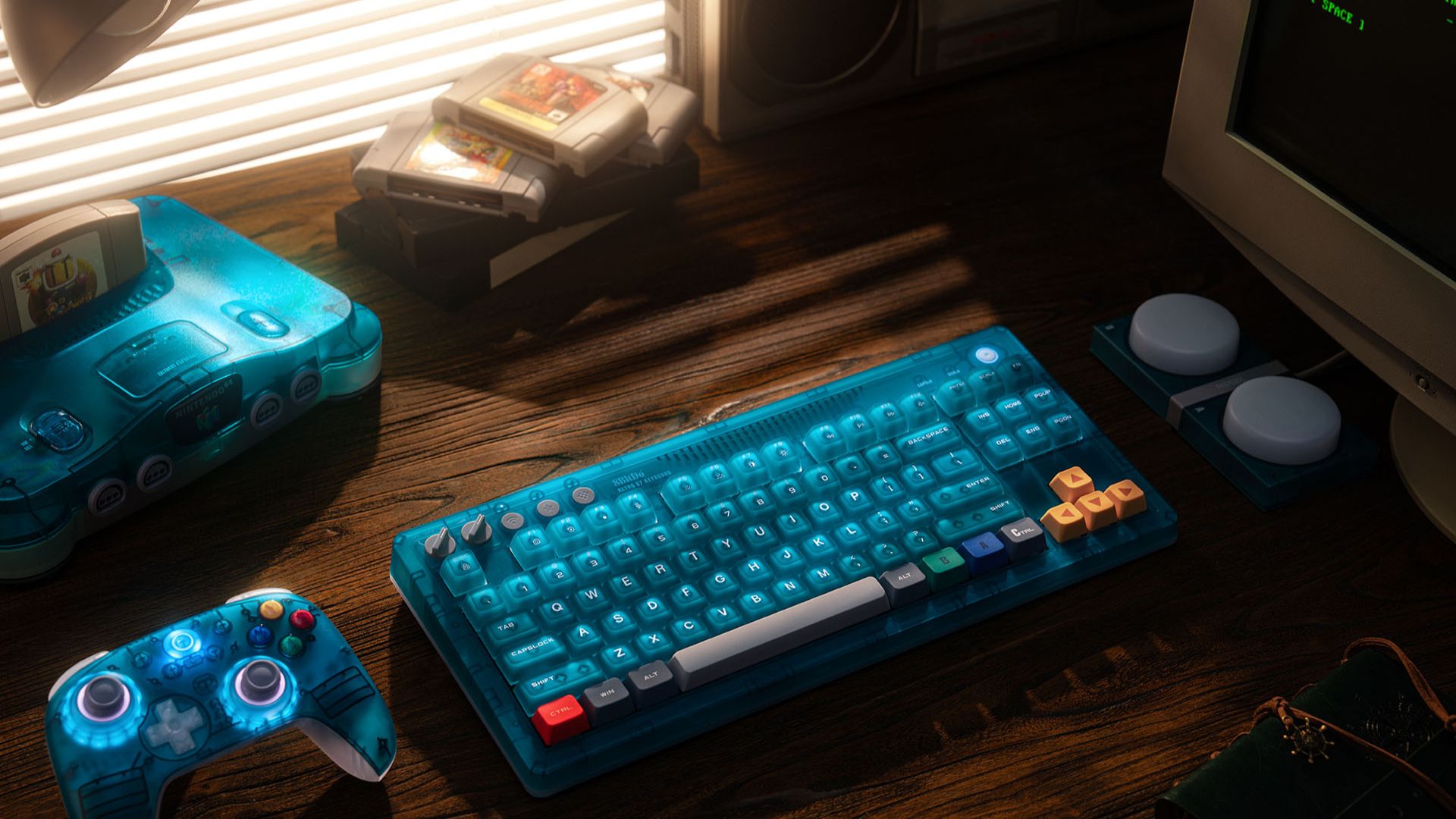
8BitDo is celebrating the Nintendo 64’s 30th anniversary with new versions of two of its most popular accessories. It is giving the Retro 87 Mechanical Keyboard and Ultimate 2 Wireless Controller a translucent blue makeover inspired by the classic console.
The new “Clear Blue” editions were initially announced in China. However, both products are also heading to the US, where they’re priced at $99.99 and $59.99 respectively.
The Retro 87 Mechanical Keyboard leans heavily into Nintendo 64 nostalgia. Alongside its translucent blue shell, it features yellow arrow keys modelled after the N64 controller’s iconic C-buttons. Meanwhile, the A, B and Start keys borrow the same blue, green and red colour scheme as the original gamepad.
Beyond the retro styling, the keyboard retains the same feature set as the standard model. That includes an aluminium plate, hot-swappable PCB and 8BitDo’s Cloud Gray linear switches. These were developed in partnership with HUANO. It supports Bluetooth, 2.4GHz wireless and wired connectivity. Moreover, it works with Windows and Android, and can be customised through the company’s Ultimate Software V2.
The keyboard also ships with two matching Super Buttons, though unlike some previous special editions, these aren’t wireless.
The Ultimate 2 Wireless Controller receives a similar treatment. It combines a translucent blue top shell with coloured ABXY buttons and grey thumbsticks. Also, a translucent white lower shell closely resembles some of the Nintendo 64’s most recognisable colour variants.
Thankfully, the cosmetic refresh doesn’t come at the expense of features. The controller still includes TMR thumbsticks, RGB lighting rings, a six-axis motion sensor and a 1000Hz polling rate. This rate applies when used in wired or 2.4GHz wireless mode. Furthermore, compatibility extends across Windows, Android, SteamOS and Apple devices.
While 8BitDo regularly releases game-themed accessories, this marks the first Ultimate 2 Wireless Controller designed around a console rather than a specific title.
The Ultimate 2 Wireless Controller N64 Edition is available now. Meanwhile, the Retro 87 Mechanical Keyboard N64 Edition is scheduled to launch on August 14, with pre-orders already open through 8BitDo’s online store.

Today only, B&H Photo is selling Samsung’s 32-inch M8 4K monitor for $299.99 via a $400 in-cart coupon.
Beating Amazon’s Prime Day price by $85, B&H Photo has dropped the Samsung M8 display to just $299.99 during its 24-hour Deal Zone event.
Save $400 on Samsung M8 monitor
The $400 discount, which is in the form of an in-cart coupon, delivers the lowest price anywhere on the 32-inch monitor. Equipped with both HDMI and USB-C ports, this monitor, now at a budget-friendly price, pairs well with modern Macs.
Along with the robust discount, B&H is throwing in free 2-day shipping within the contiguous U.S. on the M80F monitor in Warm White, so you can begin using it quickly.
If you’re looking for a budget-friendly MacBook to pair with the monitor, B&H is offering AppleInsider readers an exclusive deal on a closeout M4 13-inch MacBook Air with 512GB of storage, bringing the price down to $899.
You can also browse our roundup of the top Apple Prime Day deals throughout the last days of the sale.


The Seattle Seahawks are in search of a buyer — but first they’ve locked up the organization’s first-ever global partner, signing a multi-year partnership with Accenture this week.
The deal pairs one of the world’s largest technology consulting firms with the NFL’s reigning Super Bowl champions, with Accenture bringing data and AI capabilities to bear on the franchise’s business operations and fan engagement.
Starting with data infrastructure and platform design, Accenture will work to modernize the Seahawks’ technology foundation with an eye toward broader innovation down the road.
The collaboration launches with a tangible fan-facing element: an Accenture-presented “Trophy Tour” taking the Seahawks’ Super Bowl LX hardware on the road to Germany, Australia and Canada — markets where NFL interest is growing and fans can connect to Seattle’s football story.
“This partnership brings together two organizations committed to innovation and global engagement, and is an exciting step forward for the Seahawks as we continue to expand our international efforts,” Isabelle Van Coevorden, Seahawks managing director of global markets, said in a statement.
The deal also has a local giving component, with plans for scholarship support, volunteer engagement and community access programs in Seattle. For Accenture, it extends a broader push into sports — the firm already works with the NFL, women’s tennis and golf organizations on technology and operations.
Accenture has a significant Seattle-area presence, and the Seahawks have been intertwined with tech since Paul Allen — the late Microsoft co-founder and billionaire philanthropist — bought the team in 1997, kept it in Seattle, and turned it into Super Bowl champs.
Allen died in 2018, and his estate put the Seahawks up for sale in February — shortly after the team’s Super Bowl LX victory over New England — with all proceeds directed toward philanthropy. The franchise is expected to fetch upwards of $7 billion.
Several high-profile names have surfaced as potential buyers. Former Boston Celtics majority owner Wyc Grousbeck and ArcelorMittal CEO Aditya Mittal were reported in May to be preparing a bid. Todd Boehly, who owns the Los Angeles Dodgers, L.A. Lakers and Chelsea Football Club, emerged as another potential suitor in June.
Accenture employs 799,000 people in offices around the world, including locations in Seattle, Redmond and Kirkland. The company says it serves approximately 9,000 clients and generated about $70 billion in FY25 revenue.

Shares of Cerebras Systems dropped almost 20% on Wednesday, even after the company delivered better-than-expected first-quarter earnings on Tuesday.
That’s because in its first earnings report since going public, the AI chipmaker forecast a narrower gross margin in its core business, guiding for a full-year margin of 38% to 41%, compared with the 47% reported in the first quarter. The stock hit a new low on Wednesday, almost hitting the company’s IPO price.
Cerebras CEO Andrew Feldman told CNBC that investors had misunderstood the company’s margin guidance, noting that Cerebras will need to rent back some equipment from one of its largest customers.
The company said during its earnings call that it decided to make more capacity available sooner by temporarily renting its own systems back from an existing customer while it builds out and deploys its own data center capacity. The company said this would cut into profit margins this year.
According to the company’s earnings report, revenue for the quarter reached $193 million, up 94% year-over-year. Net loss narrowed to $14 million, down from $23.9 million a year earlier.

In a world marred with oppression and strife, one injustice rises above all else: Elon Musk is not currently a trillionaire.
When SpaceX went public earlier this month, Musk became the world’s first trillionaire. He declared in a victory lap-slash-speech that he aspires to take all of us to the moon, Mars, and “maybe beyond the solar system.” He awkwardly threw his fists in the air while his acolytes cheered him on.
But stock prices fluctuate, so right now he’s merely a several-hundred-billionaire, according to Bloomberg’s Billionaires Index.
Frankly, it’s embarrassing. How will Musk support his legion of offspring? Can he even afford to keep expanding his already considerable brood, given his outspoken pronatalism? The math is getting complicated.
We wish him the best as he navigates this trying time. And, Elon, if you need a good rice and beans recipe, or some tips on how to win big at the thrift store, we can point you in the right direction.

An anonymous reader quotes a report from MIT Technology Review: [T]he payment company Stripe, founded by brothers Patrick and John Collison, says it will fund a new $500 million nonprofit whose goal is preventing both the common cold and the flu. Its eventual aim is to get rid of respiratory viruses altogether. The new organization, called Intercept, will use grants and investments to back prevention approaches, including vaccines, as well as large-scale air-cleaning systems for schools, offices, and other public spaces. In addition to Stripe, other funders include Anthropic, Flu Lab, and the OpenAI Foundation, as well as Bill Gates and several traders at the quantitative investing fund Jane Street Capital, according to an Intercept spokesperson.
“I think we treat respiratory infections as a minor nuisance, but have really underweighted the burden that they impose on society,” says Nan Ransohoff, the Stripe executive leading the initiative along with Charlie Petty, a venture capitalist who joined Stripe this year. On average, people spend 5% of their lifetime fighting a cold or the flu, according to Ransohoff. Despite that, drug companies put relatively little effort into preventing colds. Part of the problem is that the sniffles are caused by more than 200 different viruses, according to the American Lung Association, with rhinoviruses being the most common culprits. There are so many that it typically doesn’t pay to try to stop any one of them with a vaccine. “When pharma companies look at it, it’s not as attractive as other things they could work on,” says Ransohoff. “So it hasn’t attracted the resources.”
[…] The project takes inspiration from efforts to fight the covid-19 virus, where Veesler’s group was among those involved in the speedy development of vaccines, antiviral drugs, and antibodies. According to Ransohoff, Intercept’s advisors will include Peter Marks, a former top FDA official, as well as Moncef Slaoui, the pharmaceutical executive who led the US coronavirus vaccine effort, Operation Warp Speed. A key challenge for Intercept will be coming up with ways to counter many viruses at one time. That accounts for the interest in air-cleaning technology, such as using strong ultraviolet light to inactivate viruses. The idea, the group says, is to remove them from the air in the same way municipalities remove impurities from the water supply before it’s piped to people’s homes.

from the free-to-go-but-not-free-of-surveillance dept
Here’s something no one but cops and the tech firms that love cops wanted: an ALPR that can scoop up pretty much any information being broadcasted by cars and the devices carried by the people inside them. As if ALPRs weren’t already controversial enough, here comes a tech company offering that makes most ALPRs (including those sold by Flock!) look absolutely innocuous.
Joseph Cox has the gory details for 404 Media:
A surveillance company plans to add sensors to automatic license plate readers (ALPRs) that would mean the devices, as well as capture the license plate of passing vehicles, would also sweep up unique identifiers of mobile phones, wearables, and other Bluetooth-enabled devices in those cars, potentially letting law enforcement identify specific drivers or passengers.
The technology, called SignalTrace, would turn ALPR cameras from devices focused on tracking cars to ones that can more readily track the location of particular people.
That’s some wild stuff! And not in a good way!
The legal argument for license plate readers has always been this: A car traveling on a public road has no expectation of privacy. Sure, ALPRs can generate hundreds of millions of plate/location records every year, but the (clumsy) analogy given to courts is that it’s no different than something that could be accomplished by police officers who simply wrote down every license plate that passed by their patrol car.
Of course, to duplicate what ALPRs actually do, you’d have to actually exist in a hypothetical. If a million monkeys with a million typewriters can create Shakespeare, surely a million blue-clad monkeys could generate millions of plate/location data points with the sort of accuracy one would expect from high-speed, high-quality plate reader cameras.
But we don’t exist in the infinite monkey theorem. That’s a strike against ALPRs being nothing more than a “force multiplier.”
And there is currently no legal argument that justifies hoovering data from devices and vehicles, which is something the public certainly can’t do. But that’s what surveillance tech company Leonardo is offering, according to its own pitch document:
It bridges license plate recognition data with sensor-captured device identifiers—such as those from mobile phones, Bluetooth wearables, and vehicle systems—to create a unique, trackable ‘electronic fingerprint’ for investigative use.
When multiple devices consistently move together with a vehicle, SignalTrace’s algorithms link them to that vehicle’s license plate and time-stamped location data. This correlation provides investigators with another layer of actionable intelligence, even if a suspect changes or removes a plate.
First off, let’s address this part of Leonardo’s assertion:
When multiple devices consistently move together with a vehicle…
That seems deliberately misleading. While it’s not illogical to expect surveillance tech to seek correlations between data points, you’d have to be deliberately ignorant to believe that data (i.e., captures that don’t include “multiple devices consistently moving together”) won’t be searchable. While disparate data may be mostly useless in investigations, having the option to search by identifiers other than license plate numbers means cops can track people and devices, rather than limit themselves to the movement of vehicles. And if you don’t think this will be abused, you’re so deep in denial as to be unreachable.
And there’s so much more! The Leonardo document says its tech can capture RFID info from key cards, asset tags, and pet microchips. It also says it can pull info from vehicle infotainment systems. While this may be limited to unique identifiers that link the car to the device, these systems contain plenty of other data that may not be as well-protected as drivers assume — things like GPS data, phone info for every device that has been paired with the system, as well as any communications (and connecting phone numbers) stored during hands-free operation.
Leonardo is angling for federal law enforcement contracts. And it certainly would like to hook up with whatever local agencies it can talk into paying for its services. While it’s not clear that anyone is purchasing Signal trace yet, Leonardo is already filling its pockets with federal dollars, as 404 Media reports:
Its U.S. arm has contracts with U.S. Special Operations Command and the General Services Administration, according to procurement records maintained by the transparency website Widely Reported.
At this point, there is no widely recognized legal argument that supports this sort of intrusiveness. While ALPRs get a pass because anyone can see cars and license plates when they’re traveling public roads and the Third Party Doctrine says nearly anything “willingly” handed over to third parties doesn’t require a warrant to obtain, this is something else completely.
There’s no law on the books or court precedent that says the government can, in effect, force devices carried by people in cars to turn this info over to the government just because the vehicle happened to pass a SignalTrace-powered camera.
This is tech that has no analogue in the public sphere. In other words, the general public doesn’t have access to tech that can obtain this info from other people’s devices. That was the argument used to excuse cops who used an iPhone’s night photography option to “see” through the tinted windows of a parked car. There’s also no “just a cop with a notebook and a pen” equivalent for this tech, which is what has been argued to route ALPRs around the Fourth Amendment.
Leonardo is setting up shop in the unsettled areas of the law. That’s not a great business model. Even if there’s initial interest from the government’s early adopters, securing sustained revenue streams would require the Constitution itself to be upended. I’m not saying it won’t happen. I’m just saying I wouldn’t bet my career on it.
Filed Under: 4th amendment, alpr, collect it all, location tracking, plate readers, stingray, surveillance
Companies: leonardo, signaltrace
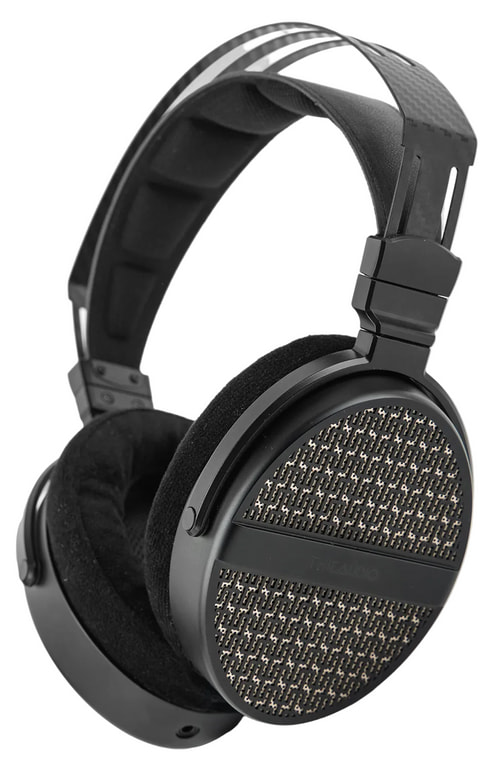
THIEAUDIO has built much of its reputation in the IEM world, where lines such as the Monarch and Hype have earned the brand a loyal following among listeners chasing serious technical performance without immediately selling a kidney.
Full-size headphones have been a less convincing side quest. The Ghost, Wraith, and Phantom all arrived with suitably spectral names, but none made much of an impression in a crowded market already full of established favorites.

The $399 Cypher is THIEAUDIO’s fourth full-size headphone and its most serious attempt yet to change that. Built around a new 50mm dynamic driver, the open-back Cypher enters one of the most competitive corners of the wired headphone market, where stalwarts such as the Sennheiser HD600 and a small army of HiFiMAN planars have set a very high bar.
After launching through Kickstarter in March, the Cypher is now available directly from THIEAUDIO and Linsoul for $399. That removes some of the crowdfunding fog and leaves one rather important question: can THIEAUDIO finally build a full-size open-back headphone worth taking seriously?
Related Reading:
Technology & Specifications
The THIEAUDIO Cypher is built around a 50mm dynamic driver using what the company describes as a semi-crystalline polymer-and-rubber composite diaphragm. THIEAUDIO says the material is intended to balance rigidity, damping, and excursion control in pursuit of low distortion, extended bass, and a natural tonal balance.
That diaphragm is paired with a 20-core N45 magnetic array and a high-tension copper-aluminum composite voice coil. On paper, the design is intended to improve driver control and responsiveness, with the potential for cleaner transients, sharper detail retrieval, and more stable imaging. As always, the proof is in the listening rather than the magnet count.
The Cypher is rated at 32 ohms with a sensitivity of 96dB ±3dB. Those figures suggest it should be easier to drive than some higher-impedance reference headphones, though its real-world amplifier demands deserve a closer look later in the review.
Build Quality & Design
The Cypher makes an excellent first impression with its overall build quality.
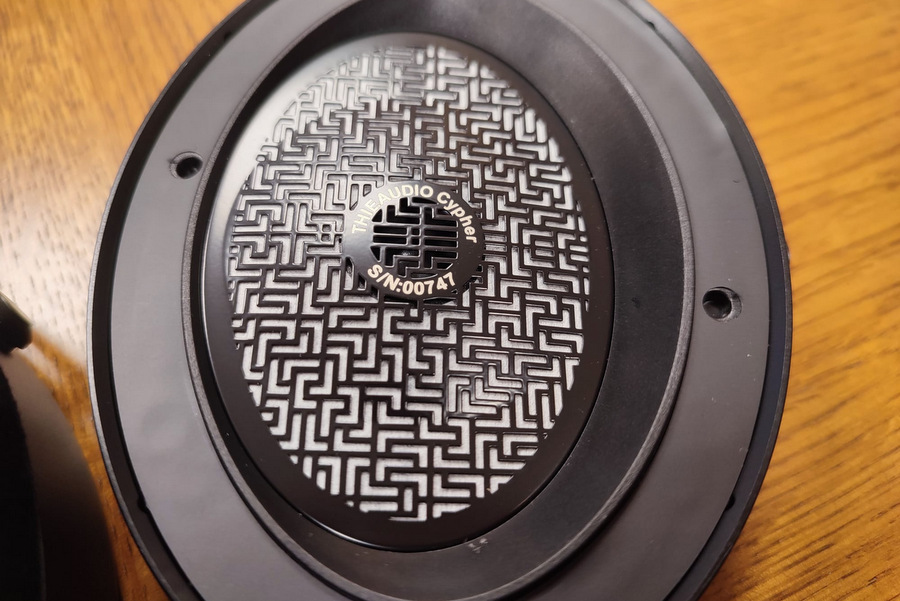
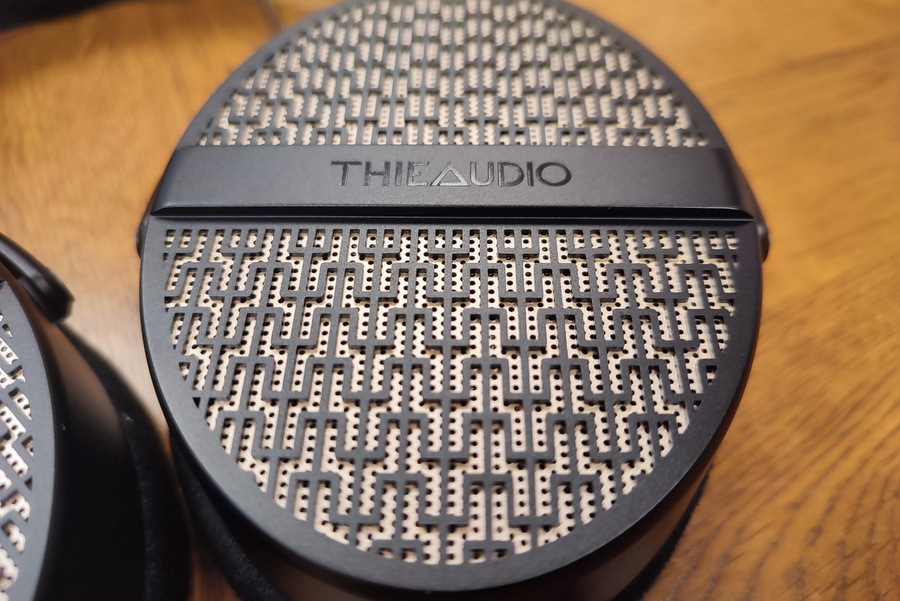
Its earcups are machined from aerospace-grade aluminum, giving the headphone a reassuringly solid feel without pushing the design into industrial-looking territory. THIEAUDIO has paid close attention to the visual details, and the result is a headphone that looks more expensive than its $399 price tag suggests.
The geometric tessellation pattern on both the outer grille and the driver baffle beneath the earpads is one of the Cypher’s most appealing design choices. It is a subtle flourish, but it gives the headphone a distinct identity in a category full of familiar black-and-gray circles.
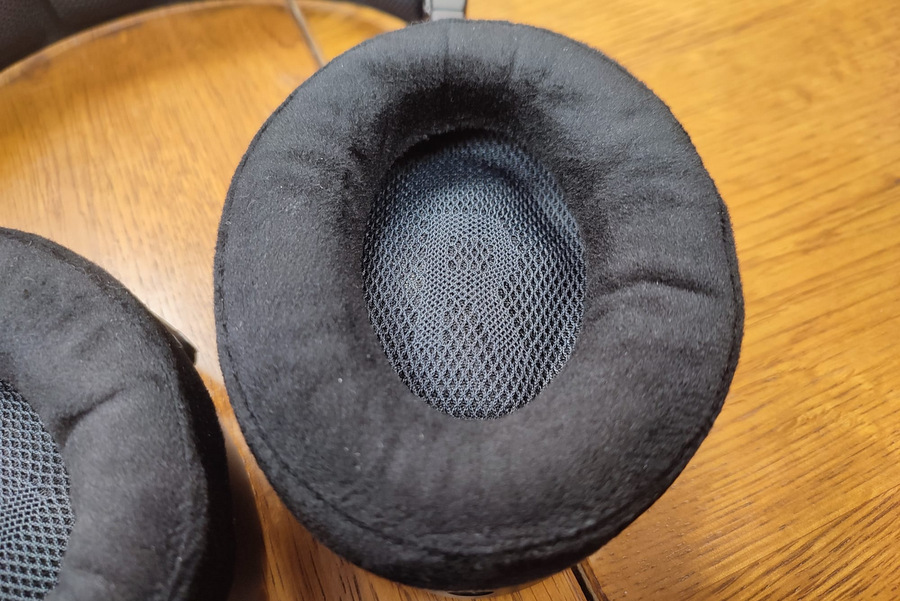
The magnetically attached earpads are another welcome touch. Swapping pads is quick and painless, while the mounting system feels more refined than the usual plastic clips. The trade-off is that the pads are proprietary, which could make replacements harder to source once the originals eventually wear out.
Overall, the Cypher’s build quality is among its strongest attributes. It feels well made, looks properly premium, and avoids the cheap shortcuts that still plague too many headphones at this price.
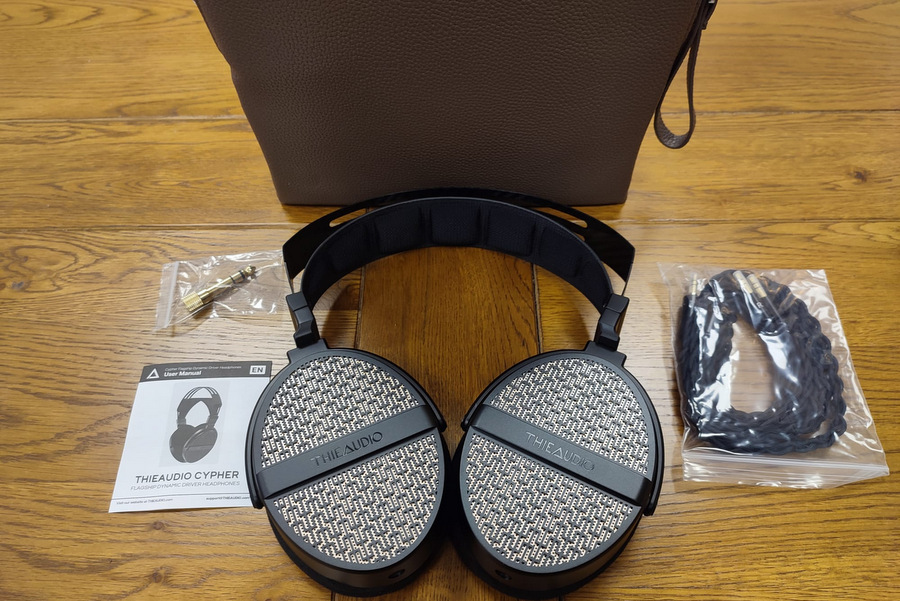
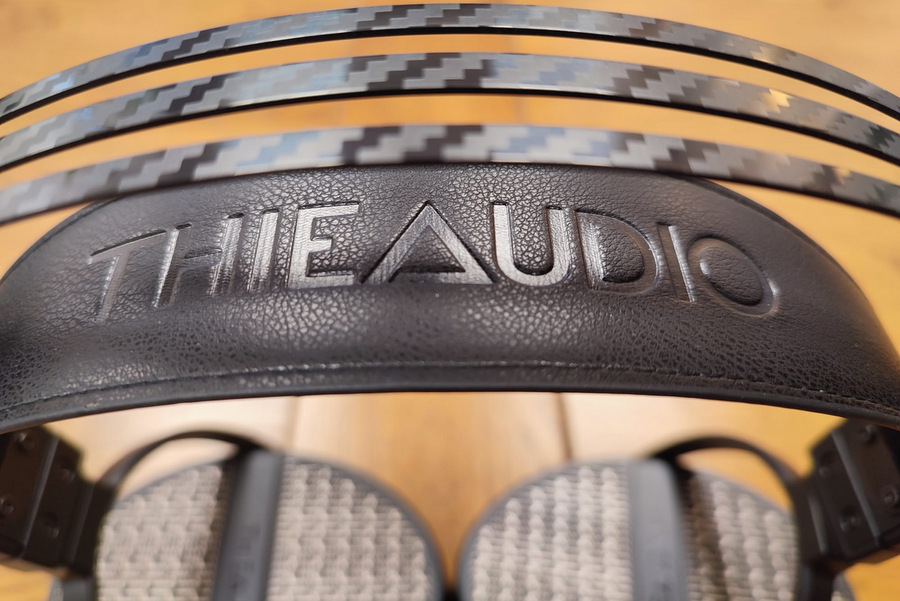
Comfort, on the other hand, is more of a mixed bag. At first glance, the generously padded headband looks as though it should be well suited to long listening sessions. In practice, I found the opposite. Its concentrated padding creates pressure hotspots that become increasingly noticeable over time, and after roughly two hours of continuous use, they can become genuinely uncomfortable.
Ironically, a simple suspension-strap design might have worked better by distributing the Cypher’s weight more evenly across the head.
The velour earpads are soft and breathable, and clamping force is generally reasonable. Still, despite a manageable 411-gram weight, the Cypher never quite disappears on the head the way the best long-session headphones can.
The yoke swivel mechanism is another issue. While the earcups provide sufficient range of movement, the yokes themselves are surprisingly stiff. Adjusting cup angle requires more force than expected, and they do not naturally conform to the sides of the head as readily as many competing designs.
One final observation: THIEAUDIO describes the Cypher as open-back, but it attenuates outside noise more effectively than expected. It is not a major issue either way, but “semi-open” may better describe its real-world behavior.
Listening
I’ll cut right to the chase: the Cypher’s tuning is exceptional.
It is one of the headphone’s most immediately impressive qualities and, arguably, its greatest strength. The comparison that kept coming to mind was the Sennheiser HD600. Like that long-standing reference, the Cypher favors neutrality, tonal accuracy, and natural timbre over artificial excitement.
Where THIEAUDIO’s headphone separates itself is in its ability to preserve many of those strengths while improving on several of the HD600’s familiar compromises, including bass extension, imaging, perceived soundstage width, and low-level detail retrieval.
As with all of our reviews, the Cypher was tested with a range of amplifiers and DACs to assess how it performed across sources of differing quality and output power. Listening included both Spotify streams and hi-res FLAC files, with the conclusions below drawn from tens of hours of use.
Bass
Bass extension is noticeably stronger than that of the Sennheiser HD600, a headphone long known for rolling off in the lowest audible octave.
The Cypher reaches deeper into the sub-bass with greater authority, yet it does so without upsetting its overall tonal balance. There is no obvious mid-bass lift or added warmth masquerading as impact; the extra extension simply gives recordings a more complete and convincing foundation.
Electronic music benefits from that added low-frequency reach, but the improvement is just as apparent with acoustic material, where the body, resonance, and scale of instruments come through more naturally. Hans Zimmer and James Newton Howard’s “Why So Serious?” was a particularly effective test. From roughly the 3:27 mark, its near-subsonic rumble was reproduced with convincing weight and control, without overwhelming the rest of the mix.
Midrange
The midrange is where the Cypher truly shines. Vocals, in particular, sound remarkably natural and believable, with impressive tonal density, presence, and realism.
Male and female voices emerge without obvious coloration, a quality that remains surprisingly difficult to find in headphones at any price. The Cypher may not grab attention on first listen with oversized bass or aggressively bright treble, but spend time with it and the quality of its midrange becomes increasingly difficult to ignore.
That even-handed presentation also pays dividends with instrumental timbre. Pianos carry convincing weight and harmonic complexity, while guitars have the kind of organic texture that makes strings, wood, and resonance feel properly connected rather than merely outlined.
There is an effortless quality to acoustic instruments that makes the Cypher deeply engaging over long listening sessions without becoming fatiguing.
Treble
The THIEAUDIO Cypher strikes a fine balance with its treble presentation. There is enough energy and extension to preserve detail and air without introducing fatigue or harshness. It never sounds artificially bright, but it also avoids the muted or overly relaxed character that can rob a headphone of life.
The result is a highly resolving presentation with excellent long-term listenability. On L’Impératrice’s “La lune,” the Cypher reproduced the faint triangle hits woven through the track with impressive clarity and delicacy, bringing them forward without allowing the treble to turn sharp or piercing.
Soundstaging & Imaging
The Cypher’s tuning may be its headline act, but good tonal balance does not automatically guarantee equally convincing technical performance. The Sennheiser HD600 remains a useful comparison: its midrange is rightly celebrated, yet its relatively intimate soundstage and center-focused imaging can make more complex recordings feel somewhat constrained.
The Cypher addresses both shortcomings. Its soundstage is appreciably wider, and its imaging is more precise, giving densely layered material such as TOOL’s “Chocolate Chip Trip” more room to breathe and making individual effects easier to follow.
I would not call it class-leading in this regard. Headphones such as the HiFiMAN Ananda series still create a more expansive and open-sounding presentation. But at $399, the Cypher delivers a notably more spacious and organized image than the HD600 while retaining much of that headphone’s tonal appeal.
Drivability
As noted earlier, the THIEAUDIO Cypher is rated at 32 ohms with a sensitivity of 96dB/mW.
That sensitivity figure is worth noting. It is neither especially demanding nor particularly efficient for an open-back wired headphone, and while the Cypher will play from a laptop or smartphone, I would not recommend relying on either if you want to hear what it can really do.
The good news is that it does not require an extravagant amplifier chain. Moving to pricier DACs and more powerful amplification did not produce a meaningful improvement in overall sound quality, so a capable dongle DAC, such as the Campfire Audio Relay we reviewed last year, should be more than sufficient.
For example, switching from the LAiV Crescendo VERSE DAC/amp to the considerably more powerful Aune S18 EVO and S17 Pro stack resulted in only a barely perceptible tightening of bass notes. It was not enough to justify the substantial price difference, or the additional real estate consumed on the desk.

The Bottom Line
The THIEAUDIO Cypher succeeds because it gets the fundamentals right. Its tuning is unusually accomplished for $399, combining the tonal accuracy and natural timbre that have kept the Sennheiser HD600 relevant for decades with deeper bass, stronger image placement, a wider soundstage, and more apparent low-level detail.
That combination is the Cypher’s real trick. Plenty of headphones in this price range can deliver bigger bass, more treble sparkle, or a wider presentation. Few manage to do so without sacrificing midrange realism in the process. The Cypher does not reinvent the neutral open-back headphone; it makes a strong case for updating the formula.
It is not without compromises. The stiff yokes are unnecessarily frustrating, the magnetically attached pads are proprietary, and the headband creates pressure hotspots during longer sessions. Build quality looks and feels premium, but comfort and long-term serviceability are not at the same level. That matters, especially when the HiFiMAN Sundara is lighter, and the beyerdynamic DT 900 Pro X offers a more practical, repair-friendly studio-oriented alternative.
But once the music starts, the Cypher’s shortcomings become easier to forgive. It does not need a costly amplifier chain, it handles a broad range of music with poise, and its midrange performance is good enough to make many more expensive headphones sound like they are trying a bit too hard.
The HD600 remains the safer choice for buyers who value proven long-term parts support and near-universal comfort. The Sundara remains compelling for listeners who want planar speed and a more expansive presentation. But for someone who wants a neutral, reference-oriented dynamic headphone with more sub-bass reach, better spatial performance, and very little tonal baggage, the Cypher is absolutely worth the money.
THIEAUDIO has made better IEMs than full-size headphones in the past. The Cypher is the first one that feels like a serious correction to that record.
Pros:
- Outstanding reference-oriented tuning
- Superb timbre and tonal realism
- Excellent imaging and detail retrieval
- Better bass extension than the HD600
- Premium metal construction
- Attractive industrial design
- Convenient magnetic earpad system
Cons:
- Headband creates pressure hotspots
- Stiff yoke articulation
- Proprietary earpads may be difficult to replace long-term
- Comfort lags behind the best competitors
Our Ratings
★★★★★★★★★★ Sound Quality
★★★★★★★★★★ Comfort
★★★★★★★★★★ Usability
★★★★★★★★★★ Build Quality
★★★★★★★★★★ Value
Where to buy:
Related Reading:
The Heavys H1H is a $274 over-ear headphone built specifically for rock and metal listeners, with an eight-driver design intended to recreate the feel of a live show. It is an unusual product in a crowded market, and it makes its case on a very specific promise.
Most headphones are designed to be broadly neutral, or to flatter whatever genre the buyer happens to favor. The Heavys H1H takes a different approach entirely.
It is built around the idea that rock and metal have specific sonic characteristics that standard headphone tuning does not serve well. The multi-driver configuration is designed to address that directly, spreading frequency reproduction across eight drivers per side rather than relying on a single unit.
The headphones were engineered by Axel Grell, formerly of Sennheiser, where he led development of the HD 800 and HD 600 series. So, it’s got good bona fides.
I’ve replaced my AirPods Max with them for six weeks.
Heavys H1H review: Specifications
| Specifications | Heavys H1H |
|---|---|
| Driver type | Dynamic |
| Drivers per side | 4 (2 low/mid range, 2 high frequency tweeters) |
| Frequency range | 5 Hz to 46 kHz (wired); 5 Hz to 24 kHz (Bluetooth) |
| Max SPL | Per IEC 62368-1 |
| Bluetooth version | 5.1 |
| Codecs | SBC, AAC, aptX Adaptive |
| Wired connection | 2.5mm to 3.5mm AUX cable (included); USB-C digital |
| Active noise cancellation | HellBlocker ANC (passive + active combined) |
| Microphones | 5 (2-mic end-fire array for calls) |
| Modes | Wired passive, Bluetooth passive, Bluetooth ANC, Bluetooth transparent |
| Transparency mode | Yes |
| App | Yes (EQ and firmware updates) |
| Battery life | Up to 50 hours |
| Charging | USB-C |
| Weight | 14.5 oz (410g) |
| Ear cup design | Full-size, around-the-ear |
| Customization | Interchangeable outer shells |
| Price | $274 (bundle with travel case) |
Heavys H1H review: Design and build
The H1H is a full-size over-ear headphone. At 14.5 oz, it is on the heavier side versus most headphones, but not the AirPods Max.
The headband and ear cups have a fairly conventional layout from the outside. The interchangeable outer shells are the most visually distinctive element, letting buyers swap in licensed artist designs from bands including Motorhead, Lamb of God, and Slayer, among others.
The ear cup shells are replaceable without tools and a wide range of official artist designs are available from Heavys separately. It is a smart system for a brand built around fan identity.

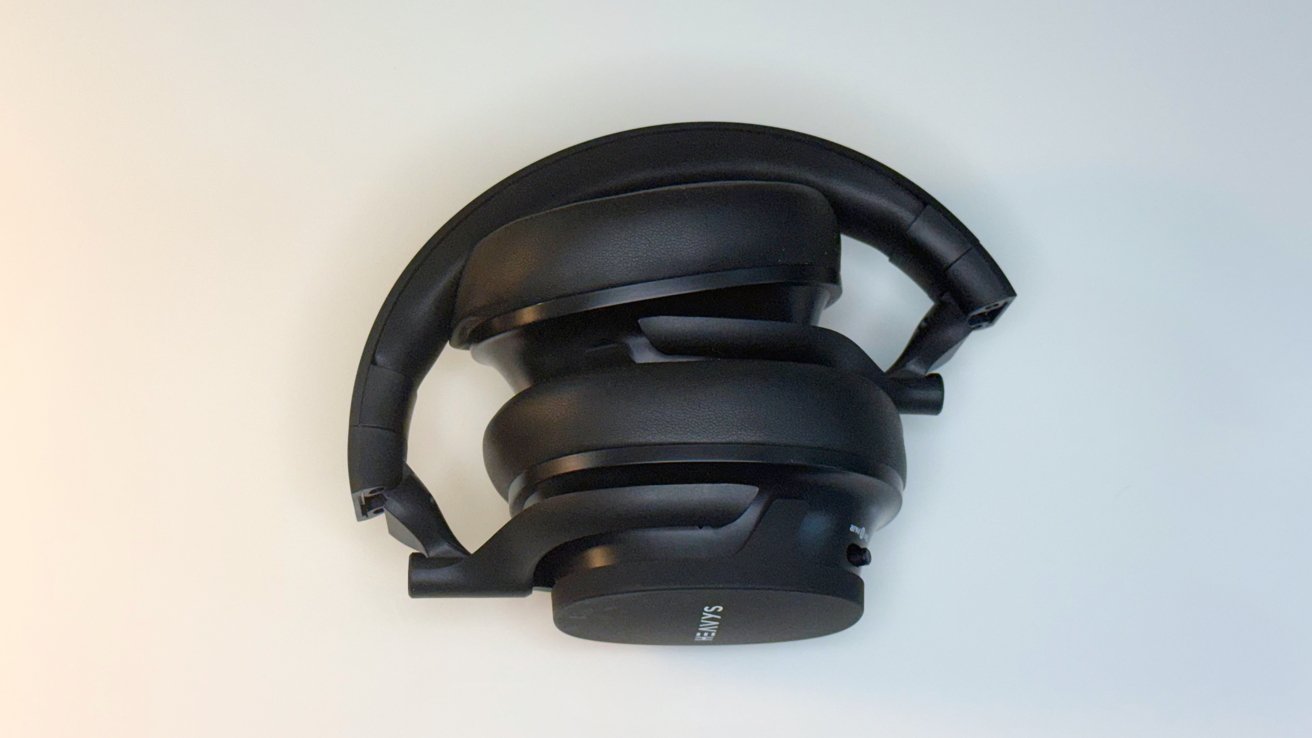
Heavys H1H review: Folded down
The headphones fold for travel and come bundled with a protective hard case in this configuration. USB-C handles both charging and digital audio input, and a 2.5mm to 3.5mm cable is included for wired passive use.
The balance is good on the headset. They are heavier than most as I’ve already said, but not so much that it’s a problem. The headset exaands to fit most heads, and I am fully aware that I have a big dome, so that was nice.
Build quality is excellent. This is not a headset shipped by a brand with too many adjacent consonants next to their name.
Heavys H1H review: The eight-driver system
The core technical claim of the H1H is its eight-driver configuration. Each side contains four drivers: two handling low and mid frequencies, and two high-frequency tweeters.
Most consumer headphones use a single dynamic driver per side. The multi-driver approach is more common in in-ear monitors used by musicians on stage, where separating frequencies across dedicated drivers can improve clarity and reduce distortion at high volumes.

Heavys H1H review: Extra directional speakers in the earcup.
Heavys claims the placement of the drivers is patented and specifically optimized for the way rock and metal are mixed, with an emphasis on guitar presence, drum impact, and the wide dynamic range those genres use.
The frequency range extends from 5 Hz to 46 kHz in wired mode, which is wider than most headphones at either end. Bluetooth operation narrows the upper limit to 24 kHz, which is still beyond the range of human hearing.
Let’s be clear, here. I am in the middle of the target market. I grew up on a steady diet of what is now called yacht rock, spent some time DJing at a rock station before my Navy stint when hair metal was popular, and just continued to listen.
These are the anti-Beats. They know what market they want, and shoot right at it.
And that Heavys claim about guitar and drums? Absolutely true.
Heavys H1H review: Noise cancellation and modes
The H1H uses what Heavys calls HellBlocker ANC, which it describes as a combination of passive noise cancellation and a mild active noise cancellation layer.
Passive noise cancellation (PNC) refers to the physical blocking of sound by the ear cup seal, while active noise cancellation (ANC) uses microphones and processing to cancel out remaining ambient noise electronically.

Heavys H1H review: Multiple physical switches and dials are in play here.
The result is four operating modes: wired passive, Bluetooth passive, Bluetooth with ANC active, and Bluetooth with transparency mode on. Transparency mode uses the microphones to let outside sound in, which is useful for conversations or navigating in public.
The five-microphone setup handles calls via a two-mic end-fire array. End-fire configuration means the mics face outward in the direction of the mouth for better voice pickup and background noise rejection.
AirPods used to be better across the board at noise reduction. It’s not terrible, but it’s not as good as it was.
The Heavys H1H is just about as good as the AirPods Max is at sound reduction. I tested the feature in a moving car, in a noisy crowd before a concert, in a plane, and on a train.
The AirPods Max and Heavys H1H were about the same. The Heavys H1H seemed to be a bit better in the car, and the AirPods Max on the train and plane, but the differences are minute.
Heavys H1H review: Connectivity and app
Bluetooth 5.1 handles wireless connection, with support for SBC, AAC, and aptX Adaptive codecs. AAC is the relevant codec for iPhone users, as it is Apple’s preferred Bluetooth audio format and is used by AirPods and most Apple devices.
AptX Adaptive is a higher-quality codec for Android and compatible devices, offering lower latency and better dynamic bitrate management. iPhone users will be limited to AAC, which is still a good-quality option.

Heavys H1H review: The case for the headphones
The companion app provides EQ customization and firmware updates. EQ access is a meaningful addition here, since the multi-driver tuning may benefit from adjustment depending on personal preference or the genre being played.
Having a built-in EQ in an app is nice. It’s so nice, in fact, that Apple is getting to it in iOS 27.
This is an incredibly personal experience. The app works pretty well, and it’s obvious to tell that there’s tuning going on in real-time as you move the sliders.
Heavys H1H review: Battery
Heavys claims up to 50 hours of battery life. That is a strong figure, comfortably above the 30-hour range that most competitors in this price bracket offer.
In my experience, I saw between 41 and 52 hours of battery life. There does not appear to be any noticeable idle drain.

Heavys H1H review: HomePod mini for scale.
This may be helped by an obvious on and off switch, that the AirPods Max do not have. You know when it’s off, and you have to guess with AirPods Max, for the most part.
I still don’t like that carrying case for the AirPods Max.
Heavys H1H review: A headphone with a very clear point of view
The H1H does not try to be for everyone. It is designed for a specific listener with a specific taste, and it is confident in that positioning.
The eight-driver system, Axel Grell’s involvement, and the genre-specific tuning are all genuine differentiators. There is no comparable product from the major headphone brands aimed this specifically at rock and metal fans.

Heavys H1H review: You can buy covers with your favorite band on them for the earcups.
At $274, it sits in a competitive price range. Sony’s WH-1000XM5 and Apple’s AirPods Max are both options a buyer in this bracket might also consider. Neither of those is tuned for this audience, and neither offers the customization ecosystem that the shell system provides.
For Apple users, the AAC codec support and USB-C connection mean it will work well with iPhone and Mac. It is not an Apple product, but it fits into the Apple ecosystem without friction.
The multi-driver system delivers on the company’s promises, and the ANC is strong enough to hold up against the competition at this price.
What’s not to like?
Heavys H1H Pros
- Eight-driver system designed for rock and metal
- 50-hour claimed battery life
- Interchangeable artist shells
Heavys H1H Cons
- Heavier than most wireless competitors
- iPhone users limited to AAC codec
- Genre focus may not suit all listeners, but that’s the case with Beats too
Rating: 4.5 out of 5
Where to buy the Heavys H1H
The Heavys H1H are available from Heavys directly, with a 10% discount at press time bringing the price down to $269.

Karen Derrico Faces Charges For Threats Against Ex Deon Derrico

A SECRET RIPPLE LETTER JUST NUKED XRP… (GAME CHANGER FOR US!!!!)

David Smith of York looks back at 50 years in brewing


-

 Fashion5 days ago
Weekend Open Thread: Miami – Corporette.com
-

 Entertainment4 days ago
Renter of Home in Anne Heche Crash Denies Settlement With Son
-
 Sports1 day ago
Two goals and an assist by sheer aura: Cristiano Ronaldo just entered the World Cup chat
-

 Tech3 days ago
Microsoft accidentally kills epic Outlook email threads
-

 Business4 days ago
Soccer-U.S. defends Iran World Cup travel restrictions, says discussions ongoing
-
Crypto World1 day ago
Bitcoin (BTC) Dips Below $62K, Ethereum (ETH) Plunges 6% Daily: Market Watch
-

 Politics5 days ago
Andy Burnham and the meaning of Makerfield
-

 Politics6 days ago
BBC Reporter Discusses Cross Party Criticism Of Trumps Iran Deal
-

 Crypto World23 hours ago
Securitize Wraps Roubini's SEC-Registered ETF as Dubai VARA Digital Security
-
Business1 day ago
Entergy settles forward sale agreements, raises $672 million in cash proceeds
-
 Business5 days ago
Wall Street Week Ahead: Investors see Micron earnings as pulse check of AI rally momentum
-

 NewsBeat6 days ago
Keir Starmer Allies Question His Chances For No 10
-

 Tech7 days ago
AWS enters the context layer race with a graph that learns from agents, not manual curation
-
 Crypto World5 days ago
Can Charles Hoskinson Really Rescue Cardano?
-

 Crypto World5 days ago
HIVE shares jump as $220M AI deal speeds Bitcoin mining pivot
-

 Crypto World5 days ago
Jake Chervinsky accuses CME of protecting derivatives monopoly
-
 Tech4 days ago
Signal’s Meredith Whittaker says AI chatbots ‘are not your friends’ and calls Copilot agents a backdoor
-

 Entertainment5 days ago
Jose Alvarado Wants Taylor Swift at More Knicks Games
-

 Tech2 days ago
Nearly 7,000 fake Amazon domains registered ahead of Prime Day 2026, researchers warn
-

 Business6 days ago
Brexit cost 6% of UK economy, Bank of England company data suggests
You must be logged in to post a comment Login