
Security teams log 54% of successful attacks and alert on just 14%. The rest move through your environment unseen.
The Picus whitepaper shows how breach and attack simulation tests your SIEM and EDR rules so threats stop slipping by detection.



Anthropic’s troubles with the US government do not seem to be easing. The company has now been ordered to suspend access to Fable 5 and Mythos 5 for all foreign nationals, including foreign national Anthropic employees working inside the United States.
Anthropic said it received the directive on June 12 and is disabling the two models for all customers to comply. Other Anthropic models are not affected. The government has not publicly explained the full national security concern, but Anthropic says it understands the order is linked to a reported method for bypassing, or jailbreaking, Fable 5’s safeguards.
This is not Anthropic’s first serious standoff with Washington. Earlier this year, the company was caught in a dispute with the Pentagon after it refused to remove restrictions preventing Claude from being used for fully autonomous weapons and mass domestic surveillance. That fight led to claims of blacklisting and legal action, putting Anthropic’s safety-first position directly at odds with parts of the US government.

The latest directive puts Anthropic back in a familiar position. Officials are worried about access to powerful AI systems, while Anthropic argues that its safeguards are being misunderstood or judged by an unrealistic standard.
The concern around Fable 5 is tied to Mythos 5’s advanced cybersecurity capabilities. Anthropic has said Mythos-class models can discover and exploit software vulnerabilities, and Mythos 5 was reportedly tested by the NSA and other government-linked evaluators before wider release. While those capabilities can help security teams identify and fix weaknesses, they also create national security concerns if they are used for offensive or malicious purposes.

Fable 5 was released only a few days ago as a public version of Mythos 5 with stricter guardrails. Anthropic said it was designed to block or redirect sensitive cybersecurity and biology-related queries to Opus 4.8.
Anthropic says the reported bypass only surfaced minor, already known vulnerabilities and that other public models can do similar things. Still, with a topic as sensitive as cybersecurity, caution is not unreasonable. If Mythos 5 is capable of identifying software vulnerabilities at a high level, then its guardrails cannot be merely good enough. They need to be airtight. Anthropic may argue that the reported jailbreak was narrow, but the government’s concern this time is easier to understand. In this case, “better safe than sorry” may be the government’s most defensible position.


Maine has taken its public data breach reporting portal offline after fraudulent breach disclosures were published on the state’s website, prompting a review of procedures to prevent abuse in the future.
Yesterday, BleepingComputer reported that fake data breach disclosures had been submitted to Maine’s official breach notification portal impersonating Discord and the multiplayer social virtual reality platform VRChat.
At the time, VRChat told BleepingComputer the filing was fraudulent and had been submitted using the name of a fictitious employee.

In a statement published Friday, the Maine Attorney General’s Office acknowledged that data breach “hoaxes” were submitted through the state’s reporting system.
“The Office of the Maine Attorney General has been made aware of an apparent abuse of our data breach reporting system,” the statement reads.
“After conversations with VRChat, one of two affected companies, it has become clear that the reported data breaches were hoaxes submitted by an unknown entity unrelated to either company. These false reports have been removed from the database. We have no knowledge of any recent legitimate data breach reports from either VRChat or Discord.”
The Attorney General’s Office says it has now temporarily disabled public access to the breach notification database while it reviews reporting procedures to reduce similar abuse in the future.
Prior to the shutdown, submitted breach notices were automatically published to the public database.
“We don’t have any independent knowledge of the breaches, the submitting entity fills out the information and it goes directly onto the site. We will review the one you’ve flagged, thank you,” Maine Attorney General’s Office told BleepingComputer.
The notice states that companies can continue to submit breach notifications through the reporting service, but members of the public seeking copies of disclosures must now contact the Attorney General’s Office directly.
Maine’s data breach portal is commonly used by journalists, researchers, and threat intelligence firms to monitor newly disclosed security incidents and determine whether organizations are reporting cyberattacks or data breaches affecting consumers.
The incident demonstrates how automatically published breach disclosures can be abused to spread misinformation and damage a company’s reputation.
The fraudulent VRChat filing claimed the company suffered a data breach impacting over 2.4 million people and included a fabricated employee contact name in the disclosure.
After BleepingComputer contacted VRChat about the filing, the company confirmed the disclosure was fake and stated it had not submitted the notice to Maine authorities.
BleepingComputer also contacted Discord about the fraudulent notice submitted to the site but did not receive a response.
It is unclear how many additional fraudulent breach notices may have been submitted through the portal before the state suspended public access to the database.

Security teams log 54% of successful attacks and alert on just 14%. The rest move through your environment unseen.
The Picus whitepaper shows how breach and attack simulation tests your SIEM and EDR rules so threats stop slipping by detection.

Just in time for America’s 250th anniversary, Disney Imagineers tapped Apple Vision Pro to help give one of their most iconic flight rides a patriotic makeover.
Disney has shared a brand-new behind-the-scenes video as part of the Disney Unscripted series on YouTube. This time, the company shows off what it takes to revamp one of its existing attractions.
The attraction in question is “Soarin’, at EPCOT, which has been rebranded to “Soarin’ Across America” for the 250th anniversary of the United States of America. Rather than focusing on wonders around the world, or in California for another version of the ride, Soarin’ Across America takes riders on an airborne adventure across the United States.

The reimagining requires a lot of work. From capturing all new aerial footage to crafting an all-new musical score, the project requires filmmakers, musicians, and Imagineers to work together.
In the video, we learn that Disney’s audio media designers donned the Apple Vision Pro to create a digital workspace during the music and sound effects mixing phase.
“So, usually for a Soarin’ attraction, we need to build scaffolding, but that was a ‘no-can-do’ for this project because we were on such an accelerated schedule,” Megan Duncan, one of Disney’s Senior Sound Editors, says in the video.
By using the Apple Vision Pro, a virtual digital workspace easily replaced that scaffolding and extra equipment. Most of the workflow only required an Apple Vision Pro, a custom desk attached to the flight simulator seats, and a small selection of audio mixing equipment.
While the Apple Vision Pro hasn’t exactly been a consumer-facing hit, it’s continued to prove itself in professional work settings. Recently, it was learned that the Apple Vision Pro has been used for hundreds of cataract surgeries in New York in about half a year.
“Soarin’ Across America” has already opened in EPCOT, at Walt Disney World in Florida. It is expected to open on July 2 in Disneyland, in California.

SpaceX rented Colossus 1 to Anthropic after hitting latency and chip mismatch issues trying to use it for Grok. The newer facilities use uniform Blackwell chips.
SpaceX rented its Colossus 1 data centre to Anthropic not because it had surplus capacity, but because it could not make the facility work for its own AI models. Bloomberg reported on Friday that SpaceX encountered latency issues when trying to connect the Memphis site to two other data centre campuses located more than 10 miles away, compounded by aging network infrastructure.
The company had planned to train its most cutting-edge Grok models using a cluster of three facilities working together. Training large AI models requires ultra-fast connections between sites. If the links are older or lower bandwidth, they create delays that slow the entire cluster. SpaceX determined the facility would be more valuable generating revenue than sitting underutilised.
The hardware mismatch made things worse. Colossus 1 contains a mix of Nvidia chip generations, including Hopper and Blackwell systems alongside older accelerators. Colossus 2 and 3 were built more uniformly around Nvidia’s Blackwell chips. In a distributed training cluster, the workload is spread across machines that need to stay synchronised. Older chips create bottlenecks by forcing faster accelerators to wait. The cluster ends up performing closer to its slowest hardware, not its fastest.

The 💜 of EU tech
The latest rumblings from the EU tech scene, a story from our wise ol’ founder Boris, and some questionable AI art. It’s free, every week, in your inbox. Sign up now!
The result is that Anthropic is now paying $1.25 billion per month to use a facility that SpaceX’s own engineers could not fully utilise. Combined with the $920 million monthly Google deal, SpaceX is collecting approximately $2.17 billion per month in compute revenue from infrastructure it originally built for itself.
The revelation complicates the narrative SpaceX presented during its IPO roadshow. Musk’s company repeatedly stressed that Colossus 1 was built in just 122 days, exceeding industry averages. Speed of construction was a selling point. Bloomberg’s reporting suggests speed came at a cost: the facility was not built uniformly enough to serve as part of a larger training cluster.
SpaceX CFO Bret Johnsen said the company has not given up on internal AI services, including Grok. Musk has described the Anthropic arrangement as a 180-day lease with a 90-day mutual cancellation right, preserving the option to reclaim the capacity. “If compute gets super tight I said we might need it back at some point,” he said.
But Grok’s trajectory makes reclaiming the compute less urgent. Downloads fell from 20 million in January to 8.3 million in April. Paid conversion is a fifth of ChatGPT’s. Federal adoption has stalled. The product that was supposed to justify the data centre investment is underperforming, while the rental income from Anthropic and Google is now a $26 billion annualised revenue line. SpaceX built a data centre for AI training and accidentally became an AI landlord instead.

Apple has finally brought Visual Intelligence to the Mac with macOS Golden Gate, and it is a boon when it works. Here’s how to get started.

I admit I have sometimes taken a photo of my Mac‘s screen and used Visual Intelligence on my iPhone to find out what I’m looking at. But as of macOS Golden Gate, I no longer need to do that because the Mac has Visual Intelligence built in.
Apple’s Sebastien Marineau-Mes, vice president of Intelligent System Experience Engineering, announced this during the WWDC 2026 keynote. But frustratingly, all he then said was that you could use it with “a dedicated keyboard shortcut.”
Continue Reading on AppleInsider | Discuss on our Forums


China has opened its first dedicated photonic computing lab in Shanghai, a joint venture between Shanghai Jiao Tong University and startup Lightelligence. The facility signals Beijing’s bet on light-based chips as a strategic workaround to US semiconductor export controls that have restricted access to conventional AI hardware.
TL;DR
China has launched its first dedicated photonic computing laboratory in Shanghai, signalling that Beijing sees light-based chips as a strategic route around Washington’s tightening grip on conventional semiconductor exports. The Shanghai Key Laboratory of Integrated Photonic Computing Chips and Systems opened on 11 June at Shanghai Jiao Tong University, the state-backed Jiefang Daily reported.
The lab is a joint effort between the university and Shanghai-based Lightelligence, one of the country’s leading photonic computing startups. Lightelligence listed on the Hong Kong stock exchange in April, surging roughly 380% on its first day of trading, and claims to be the first company in the world to achieve large-scale deployment of hybrid optical-electronic computing, though that assertion has not been independently verified.
Conventional AI chips push data through silicon circuits using electrons. Photonic chips swap electrons for photons, particles of light that travel faster and generate far less heat.
The theoretical payoff is significant. Photonic processors promise higher bandwidth, lower latency, and a fraction of the energy consumption, qualities that matter as training frontier AI models pushes data-centre power demands toward their limits.
Zou Weiwen, the lab’s director and a photonics professor at Shanghai Jiao Tong University, said optical computing was “an important pathway for achieving breakthroughs in computing power.” The facility will focus on photonic chip architectures, silicon-photonics integration, optical components, and the algorithms needed to make them commercially viable.
The lab’s launch coincides with Beijing’s broader drive for technological self-reliance. Washington has restricted China’s access to advanced semiconductors since 2022 and has widened the rules repeatedly, forcing Chinese firms to hunt for alternatives.
That search has already shifted China’s AI chip strategy away from general-purpose GPUs and toward custom silicon. Photonics represents a more radical pivot, one that could let Chinese engineers sidestep lithography bottlenecks entirely by building on the country’s existing strengths in fibre optics and laser technology.
Chinese authorities have flagged photonics and photonic-electronic hybrid accelerator chips as strategic national priorities. Shanghai officials said they had mobilised coordinated funding across multiple science and technology programmes to back the effort.
Beijing is already pouring money into AI infrastructure through other channels. A reported $295 billion blueprint would build a nationwide network of data centres running largely on domestic chips by 2028.
Photonic computing, however, remains far from production-ready. Zou acknowledged that the field faces “fundamental scientific challenges,” citing the absence of a mature software and algorithm ecosystem capable of efficiently harnessing photonic hardware.
The gap between laboratory promise and commercial reality is wide. But with conventional chips increasingly hard to source and AI workloads growing exponentially, China is clearly willing to bet on the physics of light.
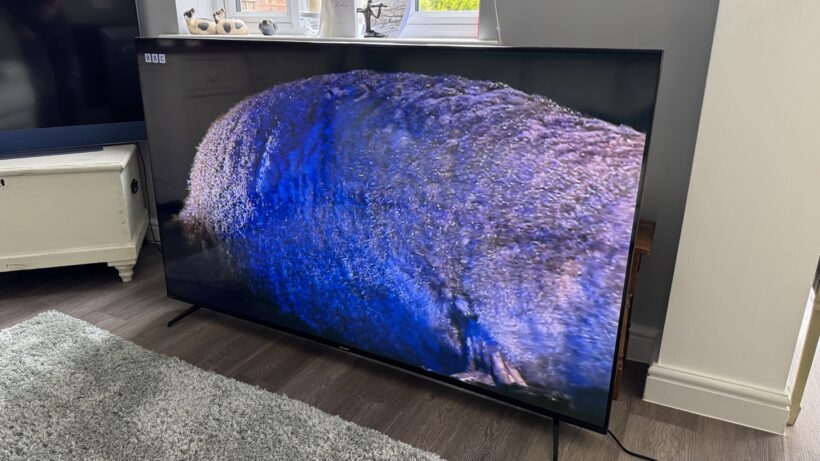
The 2026 World Cup is here, and if you’re still thinking about buying a new TV to watch the tournament in, we’d like it if you could take a beat and consider these five key features.
Big sports tournaments are usually when retailers bring out the big discounts, but before you snap up the cheapest deal you can find, we’ve laid out five features to give some thought to before you hit buy.
From size to HDR performance to motion processing, taking these five areas into consideration will help you in your search, and hopefully lead to you having the best AV experience to watch the tournament in.

Bigger is, genuinely, better. Unless you’re not able to fit a bigger screen in your living room, we’d always recommend that you go for a bigger size than you currently have.
The scale is the obvious benefit. Jumping from 55- to 65-inches reaps positives in terms of immersion. And of course, if you have multiple people around for a watch party, then having a bigger screen means you aren’t all cramming for space on the sofa and craning your necks to see what’s happening.
The last few years have seen a rise in the number of affordable, large-screen TVs. TCL’s 98-inch C7K is available for £1999, but for something considerably less expensive but still plenty big, Sharp’s 70GK4245K could be yours for less than £450.

George Lucas once said that sound is 50% of the experience. He was talking about films of course, but we’d say the same applies to anything, especially if we’re talking about sports.
Hearing the roar of the crow, feeling the intensity when something happens on (or off) the pitch, or the hush of the silence before a penalty is taken – sound matters and brings immersion to the experience of sports. So don’t buy a TV with tinny sound.
That’s easier said than done when even TVs that rack £3000 asking price have a sound that’s average. And a TV that has good sound might not have as good picture. As always, if you know (from reading our reviews, of course) that TV sound is on the weaker side, give it a boost with an external sound system.
We’d also avoid most of the built-in audio modes on TV, such as sports. Very rarely do they provide the kind of all-encompassing, immersive experiences they suggest they can.

While not every sports tournament is produced and broadcast in 4K, the last few football tournaments have been in available in HDR. For the 2026 World Cup, you can view the tournament in 4K HLG HDR on the BBC iPlayer.
More expensive TVs offer a better HDR experience because they can hit higher levels of brightness and produce a better colour experience. If you want to watch the World Cup in the best way possible, we’d suggest having a look at 4K TVs priced within the £1000 to £2000 price range for a better HDR experience. We have you covered with out best 4K TV list.

Leading on from the previous point is picture mode. Vivid (or Dynamic) is an option for some, but we find that too garish in terms of brightness and colours; and also brings in issues with the motion processing negatively affecting picture quality.
Film (or Movie) may offer the best, most accurate colours; but this mode is often for watching in the dark or when the curtains are drawn (considering some of the match times, this might be more useful).
The picture mode we’d suggest you watch the World Cup in, is Standard mode. Standard mode gives blues and greens a boost – helpful for bringing that rich green tone of the grass – and while it adds some processing to the mix, it’s less heavy on the picture than it would be with Vivid.
It’s also brighter than Film modes and will have more of impact if you’re watching during the day, but a lot of the matches at the World Cup will be on evening/night-time in the UK.

If you’re going to use Standard picture modes (or any mode other than Film/Cinema), your TV is going to automatically add some motion processing unless you dive into the settings and disable.
If you prefer motion processing for your sports, there are some TVs that do it better than others. Sony, Panasonic, LG are towards the top of the list; Samsung not far behind without tweaking the settings a little bit, with the likes of TCL and Hisense behind and a little less consistent.
Motion processing performance can vary depending on the price. Some cheaper TVs do away with it completely (Roku models tend not to have it), but sometimes it’s better to have an affordable TV that doesn’t do it, than one that does it poorly.


Congress failed to extend a key surveillance law on Thursday night, according to a report by Politico. This effectively means that Section 702 of the Foreign Intelligence Surveillance Act (FISA) will expire for the first time since 2008, as the House isn’t expected to vote again until June 23.
The House rejected a proposal that would’ve extended the law until July 2, on a 218-198 vote. The extension actually required a two-thirds majority, but didn’t even get a simple majority. Nearly 20 Republicans joined with Democrats to block the motion. A few hours later, Oregon Senator Ron Wyden blocked a couple of proposed extensions for the law in the Senate.
This law has been around nearly 20 years through multiple presidencies from both parties. So what’s the issue right now? There are some who don’t like it when the government engages in massive warrantless surveillance programs, sure, but that never stopped the law from being renewed before. Reporting indicates that Congress was close to a three-year extension, until President Trump announced he planned to install political ally Bill Pulte as director of national intelligence.
Democrats have raised concerns over Pulte’s appointment on the grounds that he has no intelligence experience and fears that he could use sensitive information gathered via Section 702 for political or personal purposes. Pulte regularly insinuated Fed board member Lisa Cook fired engaged in mortgage fraud, an allegation that has since been debunked; Cook was removed from her post by President Trump last August.
Trump has since nominated Jay Clayton, the top federal prosecutor in New York City, for the intelligence job. However, he has suggested that Pulte could take the job on an acting basis. “There needs to be a clear guarantee that Mr. Pulte will not serve as acting DNI,” Senator Mark Warner wrote in a statement.
As for Section 702, it lets the government conduct warrantless surveillance of foreign targets located outside of the United States. It also allows agencies like the NSA and the FBI to spy on Americans if the action is “reasonably likely” to collect information about foreign intelligence.
As one would expect, authorities have played fast and loose with that whole “reasonably likely” thing. Law enforcement agencies have been caught with their hands in the data cookie jar a lot since 2008. The surveillance-based FISA court found tens of thousands of improper database searches in 2017 and 2018 alone. A judge also ruled in 2019 that the FBI and NSA committed multiple violations of either the law or privacy-minded court orders when collecting data from phone and tech companies.
House Democrats are pushing for “meaningful reforms” of the law. “Section 702 is a critical foreign intelligence authority, but we cannot in good conscience vote for reauthorization without significant reforms to protect both national security and the constitutional privacy rights of Americans,” House Minority Leader Hakeem Jeffries and other leaders said in a joint statement.
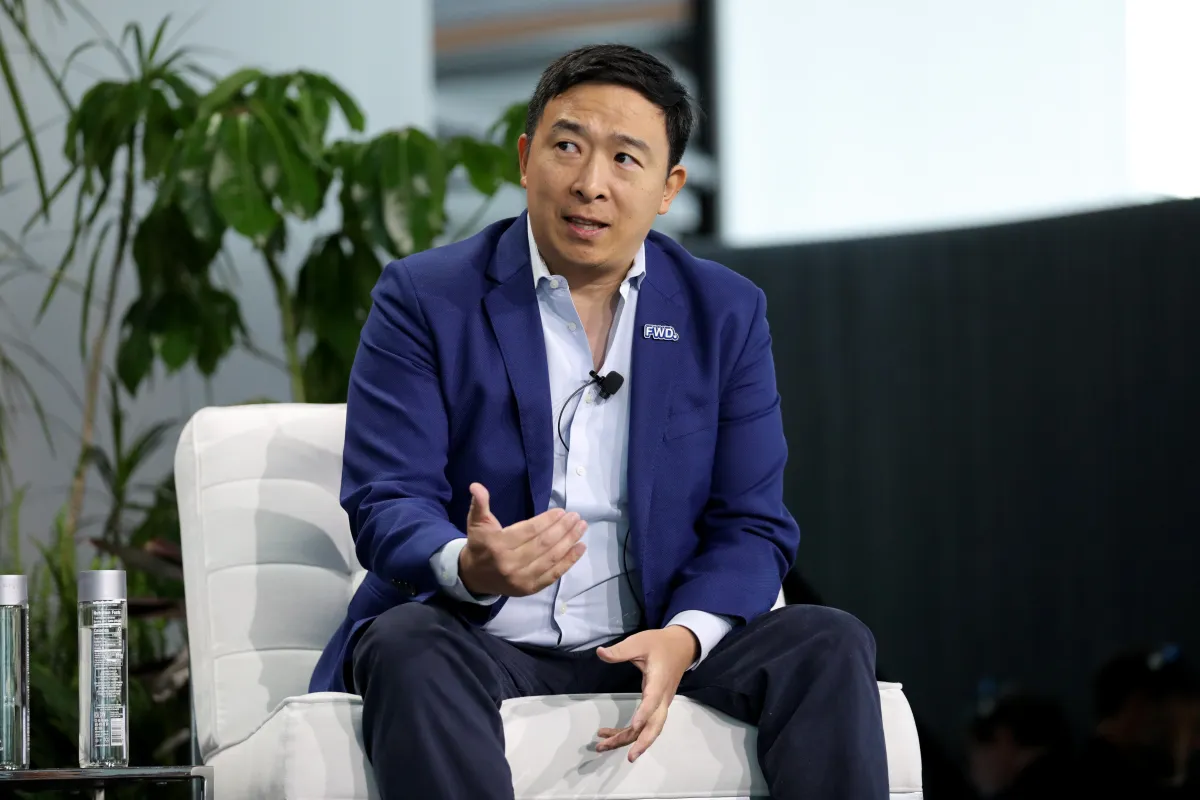
Entrepreneur and former presidential candidate Andrew Yang has a theory about where the next wave of startup opportunity lies, and it starts with a question most founders aren’t asking: what if the business model was giving money back instead of extracting it?
Yang was inspired by Mark Cuban. Not by his wealth, or his celebrity, but by Cost Plus Drugs — Cuban’s startup that sells pharmaceuticals at cost. Yang made a list.
“Housing, education, food, fuel, transportation, media, and wireless,” Yang told TechCrunch on a recent episode of Equity. “The things we all spend money on.”
He picked wireless and last September launched Nobile Mobile, a new mobile virtual network operator that provides cell service for a fraction of what traditional carriers charge and gives customers money back if they use less data.
As AI threatens to compress wages and displace workers, Yang sees a business opportunity in bringing down the cost of living. Cost Plus Drugs, Noble Mobile, dumb phone makers like Light Phone, and even online grocery store Misfits Markets are early examples of an emerging business category where the startup’s value proposition is the margin it gives back to the customer.
“AI is going to suck up a lot of the value and the jobs, and then Americans are going to look up and say, ‘How do I meet basic needs?’” Yang said. He believes meeting people’s needs “less expensively” is “a very rich vein of opportunity.”
That instinct didn’t emerge from nowhere. Yang first launched himself into the public eye during his 2020 presidential campaign, during which he advocated for Universal Basic Income as a means of combating AI-related workforce displacement and wealth concentration. The campaign didn’t succeed but the thesis has only grown more relevant.
Yang is still an advocate for UBI, arguing that the value generated by AI companies needs to be redistributed into the hands of the average American. But whether the government will be the vehicle for that redistribution, or whether it will just use any collected wealth to “plug a hole and do something not terribly productive,” Yang is less certain.
“There is room for a direct connection between the money and the people,” he said.
That’s where the market comes in. Where policy fails, Yang argues, market incentives can step in. Noble Mobile is his attempt to prove the point. Since its launch last September, the company has grown to “thousands and thousands” of customers and is bringing in “millions in revenue.”
“We’re unit profitable per customer, but we just share the profits with our subscribers with the idea that it’ll make you happy, you’ll stay around, and maybe you’ll tell your friends and family,” Yang said.
The pitch is simple. Yang noted that the average monthly savings of $50, invested and compounded over 40 years, could amount to $24,000 — enough for a retirement down payment. And in this economy, who isn’t thinking about little ways they can upgrade their personal finance?
Whether investors will share that enthusiasm is another question entirely. Even if the opportunity is real, capital is concentrated heavily in AI right now, while consumer-facing businesses with thin margins and a social mission are a hard sell.
“I had at least one investor say to me around Noble Mobile, ‘Love you, Andrew, want to work with you — if you could just make this an AI company, we’ll invest,’” Yang said.
The tide might be changing, though, simply because even the most wealthy, extractive companies need an economy in which consumers have enough buying power to purchase their products.
“The value being concentrated in the hands of a handful of folks and firms is just bad for everybody,” he said. “There are some folks I know in Silicon Valley who are open to that for a variety of reasons…[like] they just don’t want to have to hire private security.”
Yang encouraged founders and investors to take on problems they’re passionate about and find a way to build a valuable enterprise on top of it.
“Think bigger and more broadly about trying to tackle problems and don’t subscribe so much to groupthink, because there are some valuable opportunities out there,” he said.
When you purchase through links in our articles, we may earn a small commission. This doesn’t affect our editorial independence.


The list of potential buyers for the Seattle Seahawks is starting to look like an NFL Pro Bowl roster of billionaires, venture capitalists and global business leaders.
Billionaire financier Todd Boehly is the latest high-profile name linked to the franchise, according to a report from Semafor, joining a field of prospective bidders that reportedly includes venture capitalist Vinod Khosla, steel executive Aditya Mittal and former Boston Celtics majority owner Wyc Grousbeck.
Boehly, the chairman and CEO of Eldridge Industries, is best known in sports circles for ownership stakes in the Los Angeles Dodgers, Los Angeles Lakers, Chelsea FC and the Los Angeles Sparks. Before launching Eldridge, he helped build the credit-investing business at Guggenheim Partners.
The Seahawks could fetch as much as $9 billion, a price tag that would eclipse the $6 billion sale of the Washington Commanders in 2023 and set a new record for an NFL franchise.
The Seahawks are being sold by the estate of late Microsoft co-founder Paul Allen, following instructions in his estate plan directing that his sports holdings ultimately be sold and the proceeds used for philanthropic purposes. In February, Allen’s estate formally listed the Seahawks for sale, shortly after the franchise captured its second Super Bowl title.
Among the other reported bidders is Khosla, the Sun Microsystems co-founder, founder of Khosla Ventures and an early backer of OpenAI, DoorDash and Stripe. Khosla — who also owns a small slice of the San Francisco 49ers — reportedly submitted a letter of intent as part of the bidding process.
Khosla spoke in Seattle last year, saying at the time: “I have found that the person who learns faster is way better at building businesses than the person who is a deep expert.” His firm has backed Seattle-area startups including Loti, Mudstack, Viome and Lexion, which was acquired by Docusign in 2024. It is also an investor in Seattle’s AI2 Incubator.
The Seahawks sale is shaping up as one of the largest ownership transfers in professional sports history, attracting investors from Wall Street, Silicon Valley, international industry and private equity.
For Seattle’s technology community, the process marks the beginning of a new era.
Since purchasing the team in 1997, Allen helped transform the Seahawks into one of the NFL’s premier franchises.
Formal bids are expected in the coming weeks, according to Semafor.

School’s (almost) out for summer.
When it comes time to throw open campus doors for the new school year in the fall, research tells us one out of every seven teachers won’t be returning — either because they moved schools or left the profession entirely.
But when the going gets tough, teachers don’t necessarily want to leave. Even when they’re burned out, they still love what they do.
So, the concerning data throughout the country tells a story about how stark the conditions of the teacher workforce are. In Wisconsin, for instance, teachers say they are exiting the profession at the highest rate in 25 years thanks to a range of issues, from poor leadership to safety concerns like students bringing guns to school.
Worse, shrinking student populations and rising costs have forced school districts like Portland Public Schools to make staff cuts in the face of astronomically high budget gaps. Early career teachers are thinking hard about whether they even want to continue in their chosen field.
That’s why we at EdSurge want to hear from educators who have recently left or plan to leave their jobs for another sector: What was the deciding factor? What could your school (or district or state-level leaders) have done differently to change your mind?
Your responses will help shape our coverage, and we may be in contact for an interview.




Alexander Zverev wins the French Open to finally earn a 1st Grand Slam title

The Best Mystery Series of All Time Is Surging on Streaming 30 Years After It Ended


Anatomy of the June crypto crash: Fed, Iran, Saylor


Oppenheimer backs SpaceX as $70 billion retail frenzy builds


Markets Rally as SpaceX IPO Looms Amid Iran Tensions and Inflation Surge

Senator Cynthia Lummis Calls CLARITY Act the Most Consequential Financial Legislation of This Generation

Alexander Zverev conquers demons and outlasts Flavio Cobolli to win French Open for first major title


Microsoft unveils seven homegrown AI models in new bid for ‘long term self-sufficiency’


High Stakes for Wembanyama as New York Pushes for 3-0 Lead


Notion restores access to Anthropic after service disruption

The Pain Points Taking a Fragile Tech Rally Down a Notch

Eli Lilly (LLY) Stock Surges 4% Following Breakthrough Sleep Apnea Trial Results

The investment to transform historic St Helen’s ground in Swansea


Trump’s AI Ownership Plan Could Benefit Anthropic at OpenAI’s Expense


Forensic Expert Floats Handyman Theory in Disappearance of Savannah Guthrie’s Mother

Bangladesh beat Australia after 20 years in ODIs, register only their second win over six-time world champions | Cricket News


NanoClaw integrates JFrog registries to secure AI agent downloads


This Week In Security: Microsoft On Microsoft, Register Your Domains, Linux On ARM, And FreeBSD Joins The File Cache Club


Politics Home | Healey Resignation Is “Colossal Failure Of Government”, Says Former Labour Defence Secretary


First Time Since 1971: Australia Register Historic Low In ODI Cricket


You must be logged in to post a comment Login