We may receive a commission on purchases made from links.
Phrases like “special edition” and “limited edition” get thrown around a lot, mostly to get consumers to spend money on things that could be rare or jump in value down the line. In many cases, this is a marketing scheme that doesn’t amount to much, but in some cases, that aftermarket price leap occurs. Case in point, the Craftsman and Harley-Davidson limited edition toolboxes that released back in 2013 at Sears stores and through online retailers. Though just regular Craftsman toolboxes — some of the few toolboxes made in America — with black and orange coloring and Harley logos throughout, these special models go for a pretty penny over a decade later.
Advertisement
Back in 2013, the three-drawer tool chest retailed for $79.99, the nine-drawer heavy-duty combo set for $699.98, and the 18-drawer heavy-duty unit for $1,399.98. Now in the latter half of the 2020s, the three-drawer set has sold on auction sites like eBay in the neighborhood of $150 to $200, with some samples in mint condition climbing well into the $250 to $300 range. As for the larger units, they’re seldom seen for sale online, so if you want to hunt one down, you’ll have to seek out sources like Facebook Marketplace, local flea markets, and garage sales to find one and, ideally, score yourself a wallet-friendly deal.
Anything discontinued, especially in the tool world, is bound to accumulate some amount of interest from consumers and increase its value to some extent. With that said, what makes these specific Craftsman tool chests so desirable and therefore pricey these days?
Advertisement
What likely drives these Craftsman tool chests’ aftermarket value
A few aspects of these Craftsman and Harley-Davidson collaboration tool boxes likely lend to them fetching a pretty penny and being difficult to track down over a decade after their release. For one, there’s the simple matter of age and limited quantity. Labeling something “limited edition” and making a small amount is all but guaranteed to drive up demand and make aftermarket prices soar. The further we get from their initial release, the fewer there are floating around, so those who want them will be more willing to fork over some serious cash to add them to their garage.
On top of quantity and demand, these items appeal to two distinct fanbases. Among other valuable tools to look for at garage sales, Craftsman products appeal to a lot of tool-users and collectors, so it only makes sense a limited edition tool box drop associated with the brand would catch their eye. The same goes for those with a love for Harley-Davidson and motorcycle culture in general. The sleek black and orange color scheme, Harley logos, and existence as commemorative pieces for the brand’s 110th anniversary are enough to win many of those people over, prompting them to open up their wallets for toolboxes they may want more for their aesthetics than function.
All of this is to say, it makes sense why these toolboxes are so expensive at this point. Simultaneously, it calls into question if these are pieces necessary for your garage, or entirely worth passing on.
Advertisement
Should you seek out these rare toolboxes?
Ultimately, there’s a fair amount of nuance to whether these Craftsman-Harley-Davidson toolboxes are worth seeking out. If you need a toolbox in one or more of the aforementioned sizes, you support both brands, and don’t mind doing some searching for a good deal, there’s no shame in trying to get in on the limited-edition hype. Besides, these are products from Craftsman, the maker of several excellent toolboxes at the end of the day. As long as they’ve been taken care of throughout the years, you’re in for strong-quality toolboxes from a trusted brand. Not to mention, around those who are in-the-know about this collaboration, they make for great conversation pieces.
Advertisement
Simultaneously, these toolboxes might not be worth the hassle for everyone. As mentioned, they get expensive in their smallest form, they’re exceedingly hard to find, and the fact of the matter is, they’re just repainted Craftsman toolboxes. Yes, the Harley-Davidson coloring and branding is unique and might be visually appealing, but is it so worth spending a fortune and scouring the internet to get a complete set in good condition? If the status of having genuine pieces doesn’t matter to you, you could get crafty by buying regular Craftsman toolboxes, painting them up, and adding Harley logos, saving yourself plenty of time and money in the process.
Regardless of whether these Craftsman-Harley-Davidson collaboration toolboxes are worth the time and money to secure, it’s hard to argue that they’re aren’t cool pieces. The design and story behind their existence alone make them fascinating anomalies in the tool and toolbox collecting space.
Flash memory is fast, compact and everywhere, but its biggest drawbacks have never completely disappeared.
Frank Parker/Shutterstock
Though “flash memory” still brings to mind a USB stick swinging from a keychain, it’s had quite a promotional push since. NAND flash is used to store data in SSDs, smartphones, memory cards and many other gadgets because it retains data without power while packing a lot of storage into a small package.
It does have some baggage, though. Flash costs more per gigabyte than a hard drive, wears down as data is repeatedly written and erased and is nowhere near as fast as system RAM. Most of us don’t notice it too much, as modern storage does a lot of work behind the scenes to clean up after the technology that it’s built on.
Advertisement
Why flash memory became so popular
monte_a/Shutterstock
Most high-capacity flash storage is NAND, in which memory cells store electrical charge in an insulated storage layer, and the various voltage states are interpreted as data.
Modern NAND squeezes considerably more out of that basic idea. 3D NAND stacks cells vertically rather than arranging them only across a flat plane, and TLC and QLC designs store three or four bits per cell. Both pack more storage into roughly the same space and reduce the cost per gigabyte.
Those gains made flash particularly well suited to portable electronics. Unlike a hard drive, an SSD doesn’t have a spinning platter or mechanical read head, so it offers lower access latency, handles bumps better and fits ever-thinner devices. If you’ve upgraded an old PC to an SSD, you may remember the first boot afterward. All of a sudden, the computer doesn’t require a motivational speech before opening Chrome.
That still doesn’t make flash a replacement for RAM. System RAM is much faster and handles temporary working data, while NAND provides persistent storage. The term flash ROM is also misleading, as flash can be erased and rewritten.
Advertisement
The greatest drawback is that flash wears out
Screenshot by Husain Parvez (Samsung)
Each NAND cell supports a limited number of program-and-erase cycles. Storing more bits per cell increases density and lowers cost, but it also narrows the electrical margin between data states. That’s one reason QLC NAND typically offers lower endurance and performance than simpler designs.
Modern SSDs get around much of this with some clever housekeeping. Controllers distribute writes across available cells by wear leveling, correct errors, retire unreliable blocks and maintain spare capacity. TRIM and garbage collection also manage another NAND oddity: Data can be written in relatively small pages, but much larger blocks must be erased before they can be reused. This is a lot of housekeeping for “solid-state” storage.
All that work pushes the endurance problem largely into the background for most consumers. Samsung warrants its 1TB 990 Pro for five years or 600TB of writes. That doesn’t mean the drive stops working at 600TB, and Samsung doesn’t say when a particular SSD will die, but important files still need backups.
Advertisement
And while endurance can be managed, price is less cooperative. Hard drives still offer cheaper bulk storage for backups, large media libraries and other tasks where speed matters less. TrendForce forecast NAND contract prices to rise 70 to 75 percent quarter over quarter in Q2 2026 and expects another 10 to 15 percent increase in Q3, citing tight supply and AI and data-center demand.
What could replace flash memory?
Alberto Garcia Guillen/Shutterstock
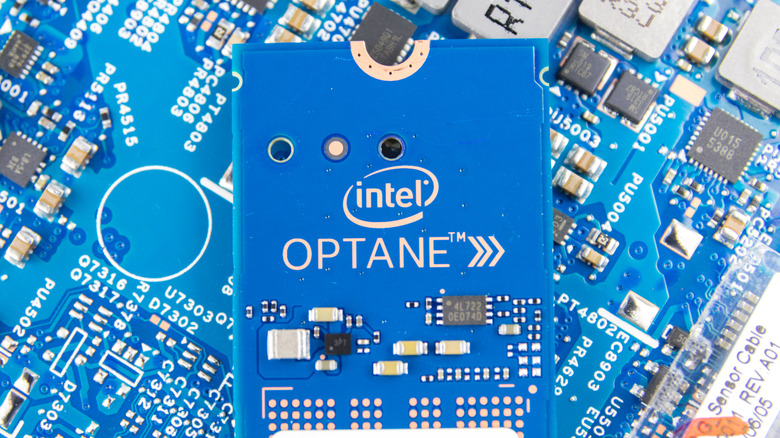
Flash’s shortcomings have naturally inspired plenty of would-be replacements. Phase-change memory was being touted as a possible flash replacement as far back as 2006, while Intel later positioned Optane between DRAM and NAND as faster and more durable than flash. Intel began winding down Optane in 2022.
Research continues into MRAM, ferroelectric memory and other alternatives, but no clear candidate has emerged to oust NAND from mainstream storage. NAND itself is still getting denser through taller 3D structures and more complex cell designs.
Advertisement
With commercial 3D NAND already exceeding 300 layers, the technology clearly isn’t done evolving.
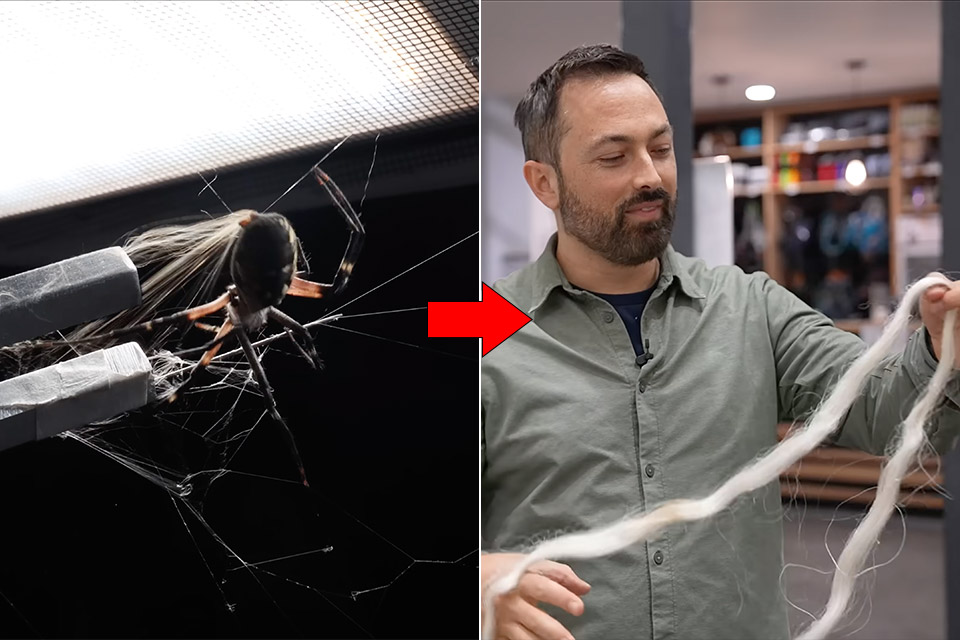
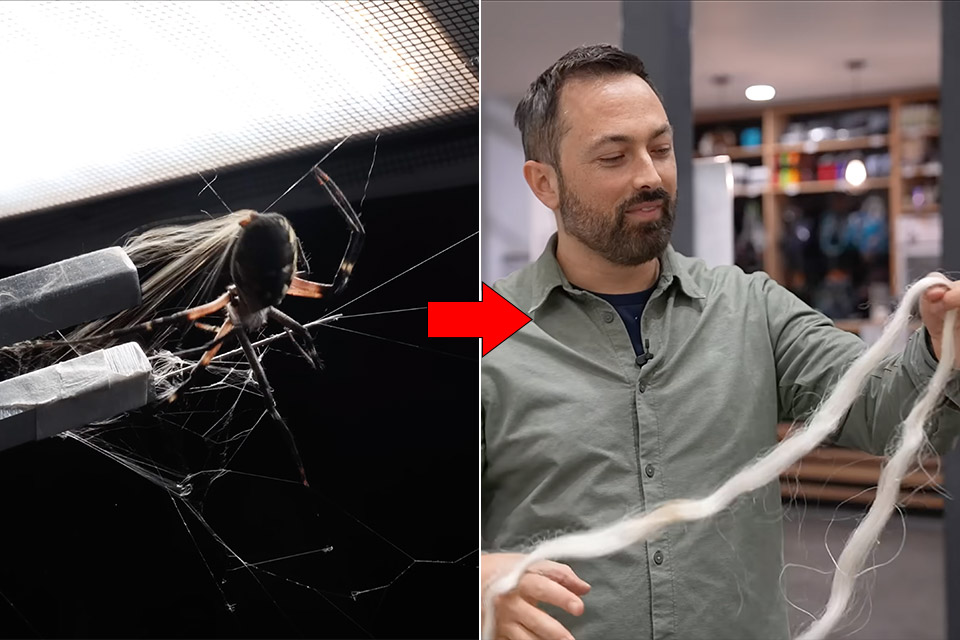
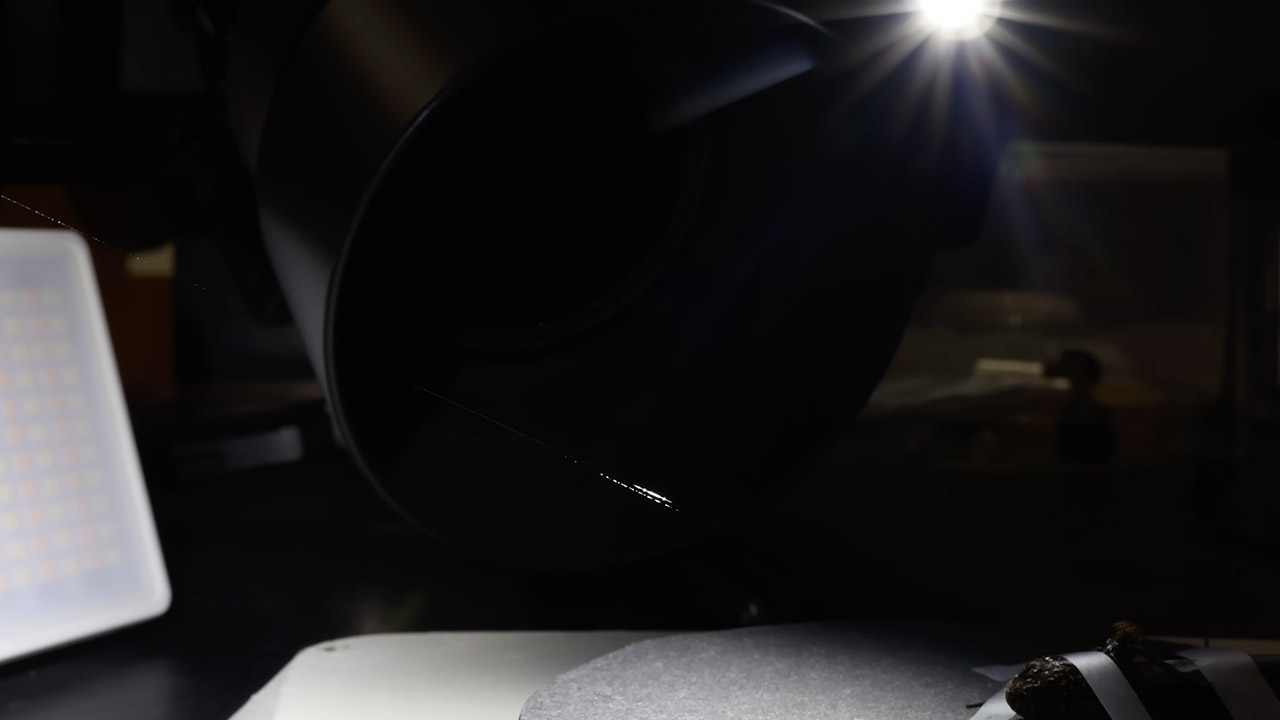
Henry van Dyck of Veritasium wanted a number, not a slogan. Classroom posters and superhero movies have spent years saying silk spider webbing beats steel. In a video he co-wrote and co-hosted with Derek Muller, he took that claim into Professor Todd Blackledge’s spider lab at the University of Akron and put live threads on a tensile tester, without harming the animals that made them.
Garden variety dragline silk, the cable a spider uses to keep from falling, and the framework of a web are all very impressive. When you put a 600 megapascal number on a rope, you get a sense of how strong it actually is. A silk thread with a cross section the size of a little finger can support around 60,000 newtons, which is comparable to the weight of an adult African elephant. Van Dyck was able to replicate that in the lab, but emphasized that this was simply an average occurrence.
DUAL 1/1.1″ SENSORS & TRIPLE AI CHIP SYSTEM: Custom-built dual 1/1.1″ square sensors deliver unprecedented 360 image quality. Combined with a triple…
FLAGSHIP 8K50FPS 360 VIDEO: Hit record on our 360 action camera and capture your world in stunning native 8K50fps video. Every view, every highlight…
IN-HOUSE AI MODEL FOR EFFORTLESS 360 EDITING: Insta360’s own AI model, built specifically for 360 editing. New AI Director edits your footage…
Darwin’s bark spiders in the wild, deep in Madagascar, weave some magnificent webs across rivers up to 25 meters wide to snare unsuspecting insects flying over the water. Their dragline silk has been measured at an incredible 1,600 megapascals, more than twice the strength of the average Akron sample, making it the toughest biological fiber we’ve ever measured, even beating out the strongest experimental ultra-high-strength steels that come in at around 3,000 megapascals, but as soon as two wires of equal thickness are matched, those steels break, whereas the spider’s silk holds up just fine.
The density of the materials tells a quite different story, as steel is around six times heavier than silk for the same volume. When the weights of two materials with the same mass and length are compared, the cross section of silk rope is six times bigger than that of steel. Six times the area, at nearly a third of the breaking tension, explains why silk can bear approximately twice the force before collapsing. Engineers refer to this as specific strength, and ordinary spider silk is already competing with fancy steel on this front.
Toughness is a whole other thing, and silk wins hands down. The area under a stress-strain curve indicates a fiber’s toughness, or how much energy it can withstand before breaking. Kevlar is reasonably effective at stopping bullets, with a maximum energy density of around 50 megajoules per cubic meter. The experimental ultra-high-strength steel weighs in at 170. Van Dyck’s garden silk measured around 205 megajoules, whereas Darwin’s bark spider silk measured up to 520 megajoules, which is roughly ten times more than Kevlar and three times more than experimental steel. Which is fantastic since silk is all about stretching. Kevlar, on the other hand, is stiff like a board. A stiff fiber will rise up the graph quickly and break early, whereas a flexible fiber will simply continue to take the strain as it lengthens, which is where all the extra energy comes from.
Spiders produce this extraordinarily strong fiber from a liquid protein sludge held in silk glands. As the liquid flows out of the spinnerets, long molecules known as spidroins begin to fold themselves into hard crystalline patches for strength and looser, flexible regions for… well, give. There are no explosives or high-pressure mills, only room temperature, a bug diet, and a healthy dose of natural chemistry. Each visible strand actually a bundle of even smaller strands, literally nanostrands, running in parallel, which is why a thread thinner than a hair may still function as a cable.
Farming animals to make spider silk isn’t a feasible solution. Spiders cannot simply be cultivated like cattle. They require plenty of space, and if kept in a tight environment, they will eat each other. Each spider produces only a few hundred feet of useful thread. Those high-end showpieces, such as 18th-century stockings or the iconic cape constructed from a million spiders in Madagascar, were always one-of-a-kind and never mass-produced. Pure natural silk costs millions of dollars per kilogram.
Kraig Biocraft Laboratories, on the other hand, decided to eliminate the spiders entirely in favor of genetically engineering silkworms to generate spider silk. They take silkworms, a super common moth that humans have farmed for thousands of years, and just add a tiny portion of spider DNA to the mix. Van Dyck spent the day at their lab, watching transgenic cocoons come off the line. Last year, they produced almost half a ton of hybrid silk. The good news is that mechanical testing have showed it performs at roughly 60% the level of real spider silk, which is excellent enough to pique the interest of those who manufacture super-tough ballistic panels and medical mesh.
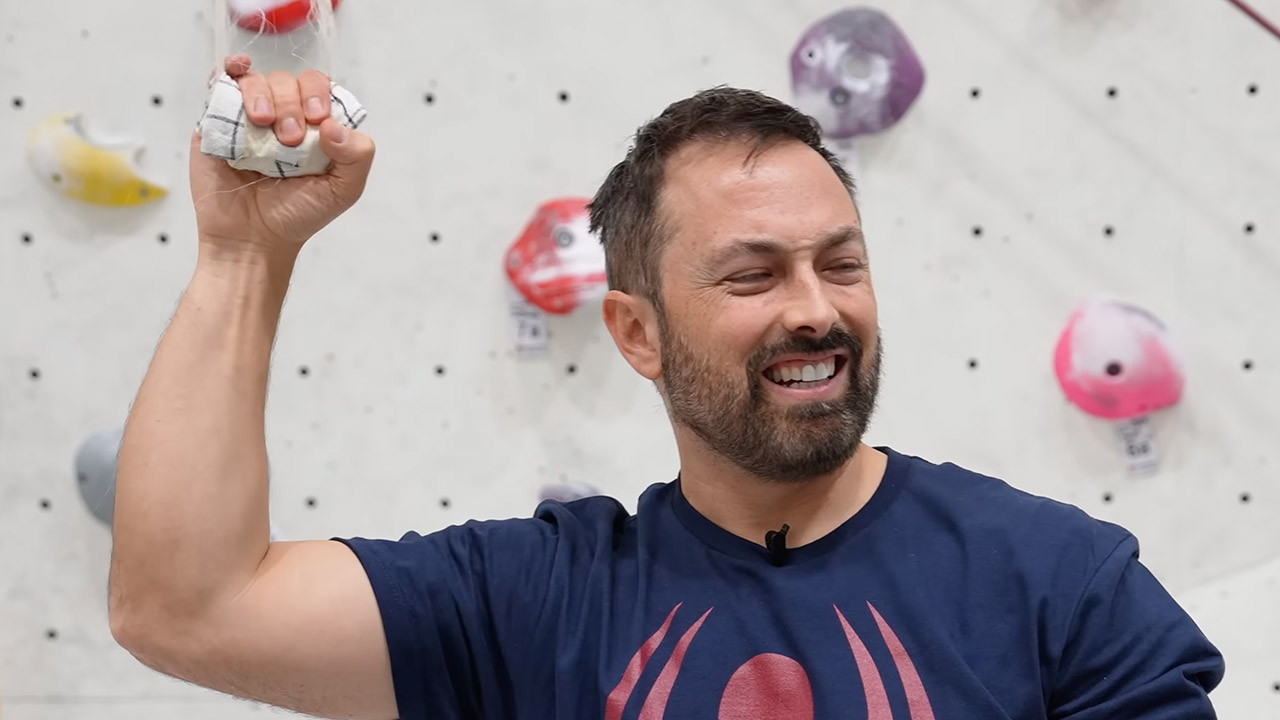
Then Van Dyck decided to pull off a publicity stunt of sorts. He took a bundle of synthetic silk, including ten threads all lined up, to the local climbing gym and requested Muller to try it. He asked Muller to hang from it and swing for a moment. The line held up nicely, although the skin was damaged. The fiber is so thin that the contact patch on a hand becomes a cutting edge. Muller’s palm paid for the demonstration. In materials language, the silk was no longer the weak link, the person holding it was. [Source]
Hasbro, one of the world’s largest toy and game companies, has disclosed that attackers have accessed the personal and financial information of an undisclosed number of employees.
Founded in 1923, Hasbro is a publicly traded American multinational entertainment conglomerate on the NASDAQ and owns many brands, including Monopoly, Clue, Nerf, Transformers, Play-Doh, Peppa Pig, Scrabble, Magic: The Gathering, Dungeons & Dragons, and many others.
The company has filed data breach notification letters with the Massachusetts Attorney General’s Office, but didn’t disclose the total number of affected individuals or when the incident was detected.
“The information involved varied by individual but may have included your name and one or more additional personal information elements such as email, address, phone number, national ID number, or financial information,” Hasbro said.
“Hasbro implemented containment and remediation measures, including disabling the compromised employee account, terminating unauthorized access, and deploying additional safeguards designed to help prevent a similar incident from occurring in the future.”
Advertisement
While the breach notification letters don’t detail the total number of affected people or the nature of the information exposed in the incident, the breach affected the Social Security numbers, financial account information, credit/debit card numbers, and driver’s license information of 436 Hasbro employees in Massachusetts, according to the Massachusetts Attorney General’s Office 2026 Data Breach Notification Report.
Hasbro breach listing on Mass AG site (BleepingComputer)
A Hasbro spokesperson was not immediately available for comment when BleepingComputer reached out to ask whether any customers were also affected by this breach and whether the attackers sent a ransom demand.
In early April, Hasbro also disclosed a cyberattack that hit its systems on March 28 and forced the company to take some of them offline while working to restore them.
In a filing with the U.S. Securities and Exchange Commission (SEC) at the time, Hasbro warned investors of “some delays,” and said that interim measures taken for business continuity “may continue for several weeks before the situation is fully resolved.”
Hasbro didn’t link the March incident with the data breach disclosed in notification letters filed with the Massachusetts attorney general’s office this week.
Overall prevention scores can hide what happens after initial access. Once attackers are using valid credentials, prevention drops sharply.
The Blue Report 2026 measures defenses technique by technique across 338 million simulations run in customer production environments.
Authorities in Australia said Wednesday that they arrested two men accused of participating in cybercrimes for TeamPCP, a prolific group of hackers that, over nine months, has carried out a relentless series of supply chain attacks that infected more than 1,000 organizations worldwide.
In a statement, the Australian Federal Police said the two men were arrested and charged with 14 offenses. The statement said the men were members of TeamPCP, which by the authorities’ count, compromised more than 1,000 organizations worldwide. The statement didn’t identify the men, except to say they lived in the Western Australian towns of Cottesloe and Mandurah. KrebsOnSecurity, citing a lengthy investigation, provided what it reports to be both defendants’ names, along with an extensive background of their lives and the mistakes that led to their downfall.
The hacks that keep on hacking
TeamPCP has vexed law enforcement officials and security personnel around the world since it emerged in December. The group is best known for a sustained series of supply chain attacks that laced open source software with malware that self-propagated from one package to another. The viral infections worked by targeting organizations’ CI/CD pipelines, which are used to rapidly develop, update, and deploy software.
Once a package or tool was compromised, Shai-Hulud, as the worm was dubbed, attached itself to future package updates. When developers downloaded the compromised packages and ran them through their own CI/CD platforms, their software was also compromised.
My mom was excited and confused when she opened her Apple Watch at Christmas a few years ago. “What a nice gift!” A pause. “What am I supposed to do with this?” We told her the truth: A smartwatch can do all kinds of useful things.
Fitness tracking became the thing my mom latched onto. She loved counting her steps and seeing how many miles she walked in a day. It motivated her to become more active, too. We didn’t tell her until much later that the Apple Watch’s fall detection feature was the real reason we got her the watch. The feature worked, too.
On the coldest day of the year, this past winter, my mom tripped on an uneven sidewalk and broke her wrist. The Apple Watch called 911 almost as soon as she hit the ground, and we took an ambulance to the hospital, where my sister, who was nearly a thousand miles away, texted and asked what was wrong. She’d been watching my mom’s location on Apple’s Find My app, a fact that we revealed to my mom for the first time when she was in the emergency room. We also had to confess that the Nest security cam we’d set up in her living room was indeed useful in spotting intruders but also let us check in on her from time to time.
My mom wasn’t thrilled about any of this. She realized that these handy gadgets doubled as surveillance devices, and we’d essentially be spying on her.
Advertisement
But at the same time, she recognized why we wanted to keep an eye on her. If she’d fallen alone at home alone, for instance, an easy way to call for help could’ve been a lifesaver.
Perhaps grappling with how to spy on your aging parents — ethically! — is something you’re grappling with, too. A growing number of people are weighing the privacy trade-off as boomers get older and their millennial children get more involved. Roughly 59 million Americans now help take care of an adult over 50, up from 34 million a decade ago. A third of those are sandwich-generation caregivers, meaning they’re looking after their parents and their own children at the same time. It can be an overwhelming task. So enlisting a home security system, like Nest, or a wearable, like an Apple Watch, to keep an eye on their parents seems like a time-saving way to gain some peace of mind. It certainly helped my sister and I feel better about our mom aging in place.
It turns out, a growing community of researchers and tech developers has thought a lot about this problem that many of us are now facing. There are labs focused on how technology can make growing older more humane, as well as federally funded research efforts and startup accelerators from groups like AARP working on solutions. All of the experts I spoke to for this story told me the same thing: Good communication is essential.
And there’s a whole cottage industry of tech for older adults, known as age-tech, that includes everything from healthcare gadgets, like the Hero Smart Pill Dispenser, and more futuristic devices, like the social robot ElliQ, that promise to help seniors combat loneliness. Many of these products and services are designed to help keep older adults safe and to help them age in place. Some, like the Haelo smart ring, are designed to do it all, everything from fall detection to health tracking to emergency alerts if something suddenly looks wrong. Others, like Life360, use software designed to track kids to keep an eye on their grandparents.
Advertisement
The big challenge with all of this, however, is finding a way to implement it in a way that respects the aging loved one’s privacy and independence. Boomers and Gen Xers didn’t grow up with as much tech in their lives as younger generations — much less gadgets that could double as monitoring devices — so introducing these tools stands to alienate them. And beyond that, it’s an ongoing challenge to ensure that technology reduces a caregiver’s mental load rather than add to it. After all, too much tech can create new problems rather than solve existing ones. If the overwhelm becomes too much to bear, everyone involved might just abandon the effort.
“Start with: What do they need support for and what is the best solution for that?” Wendy Rogers, director of the Human Factors and Aging Lab at the University of Illinois, told me. “Sometimes it’s technology, sometimes it’s not.”
You might be surprised by what technology can do, when it’s purposefully designed and properly introduced into an aging person’s life.
If you’re a caregiver — Rogers prefers the term “care partners” — you should think of this problem-solving project as a collaboration. Start the conversation with your parents or loved ones early and maintain an open dialogue about how it’s working out. Perhaps most importantly, keep updating the plan as time goes on and lives change. And this might go without saying, but try to avoid any big surprises.
Advertisement
Don’t wait until an emergency
It’s difficult to know when to offer an older adult help, even if that help is as simple as a smartwatch. On one hand, you don’t want to offend or infantilize them. On the other, if you wait too long, you might find yourself trying to set up a monitoring system when it’s no longer optional, like after a fall or other health scare. In these instances, you risk rushing to a solution before you identify the specific problem.
Waiting until an emergency to start thinking about this also necessarily means there’s less time to plan. That sets the younger person up for a situation in which they’re inundated with more information than they can manage. If you set up a smart camera, like a Nest, to notify you every time your parent wakes up and goes into the kitchen, you’re bound to face a huge stack of notifications every time you open your phone and no real strategy for separating the signal from the noise. Good planning helps you to avoid looking at all that raw data and instead look for deviations from the norm. Once I involved my mom in this process, we had the chance to clarify not only the details of her routine but also our goal in keeping tabs on her. In the end, she had no doubt this all came from a place of love.
“In those cases, the technology serves as a safety net, not to check every day what’s going on but to be notified when something doesn’t seem to be happening the way it was supposed to,” said George Demiris, a professor of informatics at the University of Pennsylvania’s medical school.
Advertisement
You can imagine the broader implications of this safety net concept. If your goal is to make sure your parent is going about their daily routine, you don’t actually need cameras at all. Motion sensors can do the job just as well, all while maintaining privacy. There are even camera-free systems, like Nomo Smart Care and Silvie, designed to spot worrisome deviations from an older person’s routine. Even still, the benefits of planning — at the very least, identifying a specific problem in need of a solution — will make it more likely that you’ll maximize the technology’s benefit.
Make privacy and empathy central to your approach
The first step in planning to use tech to monitor your parents is simply talking. You should have a conversation with them to find out what worries they have and consider those alongside your own. Ask what level of monitoring they’d be comfortable with. When the time comes, teach them how to use the tech you’re introducing into their life. Give them the agency to make changes and even turn off the tech when they want.
One way to go about this is to try reversing the roles. Consider how you’d feel if someone wanted to install a bunch of surveillance cameras in your home and track your every move. If you’re asking an older loved one to wear a health tracker, think about why a device like that might be useful to you. Heck, you could even buy matching Apple Watches and start sharing your step count in order to show that you’re trying to stay active and healthy together.
Advertisement
“Saying, ‘Okay, let me stop for a second. Let me imagine I’m their age and my kid wants to do this thing — what would that be like?’” said Amanda Lazar, an associate professor at the University of Maryland’s College of Information. “I think that can help you approach it more sensitively and in a more understanding way.”
The privacy question deserves extra attention. While motion sensor-based monitoring systems can offer extra privacy, there might be situations where you do want a camera. You should talk to your parent or loved one about where they’re comfortable with having a camera and what level of control they’d like to have over it. If you’re thinking about tracking someone with an AirTag or through an app, tell them you’re doing it and explain how it works. They won’t enjoy being surprised if you pull a Big Brother and start asking about specific whereabouts.
All that said, if the person you’re helping care for has dementia or other cognitive issues, these conversations are more complicated. You should talk to their doctor about their individual needs, potential tech solutions, and the possibility of involving professional caregivers.
Start simple and with tech people actually want to use
Advertisement
There’s a reason my sister and I bought my mom an Apple Watch and not a Life Alert pendant. We knew she’d like it, if not for the fitness tracking, then at least as a fashion accessory. And, as a direct result of liking it, she’d wear it. Indeed, we were nervous about her falling, so the fall detection feature was a selling point. But as someone who’s spent a lot of time thinking and writing about gadgets like these, I knew that some of the health tracking features could help be active and have fun doing so. Now, every other time I call, she tells me how many miles she walked that day.
If you’re considering a monitoring device for your parents or an older loved one, think about what they might actually want to use. For many people, smart speakers are a great way to introduce potentially lifesaving tech into the home. Your dad might like asking Alexa for recipe advice, and you might find comfort in the fact that he can also ask Alexa to call 911 if he falls. “Engaging people with technology tools early on and making it part of their everyday repertoire can be very helpful,” said Rogers, “and then as their needs change you can increase the support.”
Down the line, it’s relatively seamless to connect cameras, motion sensors, smart locks, or smoke alarms to systems like these. And because the older adult has been in the loop from the start, you can teach them how to use these devices, and they can remain aware of what you can see on your end. Again, the empathy-focused approach is more likely to win someone over.
Change your plan when life changes
Advertisement
Like anything related to tech, you’ll need to do some software updates along the way. And I don’t mean making sure your Nest camera firmware is up to date. You’ll want to revisit your conversation about monitoring with your parents or loved ones at least once a year. You might try doing it over the holidays when you’re all together or when there’s a need for some tech support. Regardless, it’s essential to communicate about what’s working and what’s not.
These conversations can also be opportunities to talk about other ways you might help. Beyond monitoring their physical space, some aging parents could benefit from some help in the digital world, especially as they’re being targeted by a growing number of AI-powered scams. Do they need help managing their finances or keeping track of login credentials? Do your parents know what a passcode is? They might not ask you for help with these things, and again, it’s better to get out in front of issues before an emergency happens.
“Everyone’s in denial,” said Amelia Hay, a vice president at AARP Innovation Labs. “Everyone’s thinking their parents are fine, whatever, and then something happens where you’re in a state of emergency.”
So don’t wait. And don’t be in denial. Aging, as much as some tech billionaires would like to deny it, is one of those things in life that’s inevitable. If everything seems fine now, that means it’s a great time to start planning for when things go sideways.
Blacknut cloud gaming is coming to TiVo OS, granting users access to more than 1,000 games directly through compatible smart TVs without needing a dedicated console or downloads.
The cloud gaming service has partnered with TiVo to bring its catalogue to Powered by TiVo devices, expanding its reach to brands that includes Sharp, Metz and Thomson.
The service is designed to sit alongside the movies, TV shows, sports and streaming apps already available through TiVo OS.
Blacknut says its library covers blockbuster adventures and action titles to family-friendly games and indie releases. Because the games are streamed from the cloud, users don’t need to install or buy additional gaming hardware, although a compatible controller is required.
Advertisement
The partnership is another sign that smart TVs are becoming more than just a way to watch video streaming services. Platforms such as TiVo OS are increasingly trying to bring different forms of entertainment in one place, with cloud gaming providing a way to move from watching content to playing games on the same screen.
Advertisement
Blacknut is already available on more than 100 million smart TVs through partnerships with manufacturers including Samsung, LG, Philips, Hisense, Toshiba, JVC, CHiQ and Medion.
The service is available in more than 65 countries and operates as an all-you-can-play subscription. Blacknut supports up to five player profiles and up to four controllers simultaneously, making it suitable for multiplayer sessions as well as solo gaming.
Advertisement
For TiVo users, the main appeal is convenience. Rather than switching to a console or another device, games can be accessed from the same television interface used for other entertainment. Blacknut is positioning this as a more seamless living-room experience, particularly for households that don’t already own dedicated gaming hardware.
Identity is the fundamental currency in any technology transaction so we need to treat nonhuman assets with the same care as we apply to people.
We’re outnumbered! Nonhuman identities (NHIs) outnumber human identities in the enterprise by a ratio of up to 50:1. This Non-Human Identity Management Group statistic from 2025 is likely already outdated, and in a year from now the ratio will be exponentially higher as rapid growth trends like AI/Machine Learning, the Internet of Things, digital assistants and the burgeoning API Economy continue to accelerate automation.
Simon Gooch
What are NHIs? Machines, processes, service principals and accounts, virtualized and other workloads, and applications that are granted digital credentials. Think, for an everyday example, of a helpdeskchatbot on your favorite website.
Latest Videos FromTechRadar
Managing NHIs is a challenge that CIOs, identity experts, and CISOs must accept. This in some ways is a re-run of what happened 40 years ago when identity access management was widely deployed. It’s just that now we are not only dealing with human beings. And I don’t know a single organization that has its collective head around the concept of who is, or should be, ‘the HR chief’ for NHIs.
Advertisement
Leaders today need to consider nonhuman identity in the way they consider human identity. When we hire, we onboard people by harnessing and securing the details we need to pay them and manage them, but we also work to imbue them with our organizational culture, systems, risks, security processes and so on.
We set and tweak permissions based on who needs access to what and when, depending on their roles, seniority, specific tasks they perform at a given time and so on. We need to have similar controls and contextual understanding of our nonhuman assets.
Advertisement
An urgent case where context is king
Without making that change CIOs and other leaders will have no foundational basis of understanding where risks are coming from or what measures they need to take. They need a central, visible platform to see what they have and what’s going on. Legacy IAM can’t offer that because it starts with a narrow focus on compliance and is a static model based on rigid criteria like six-month audits and the rote dispensing of permissions and privileges.
Sign up to the TechRadar Pro newsletter to get all the top news, opinion, features and guidance your business needs to succeed!
The old IAM is rooted in the early-21st-century age of Sarbanes-Oxley, reactions to governance scandals and corporate malfeasance. Moreover, it ignores what is happening in the wider digital world: namely, the explosion of identity types that are crying out for holistic oversight.
Control of the human and nonhuman estate means ensuring there is insight into nonhuman assets and what they’re doing.. context is king. So look at NHI constructs that can touch anything in the digital ecosystem and the underlying connectivity to apps and, most importantly, data. CIOs need to be able to recognize the truth of a contemporary mantra: identity is the fundamental currency in any technology transaction.
Advertisement
Everything must be covered: bots; service principals; IoT endpoints; abandoned trial workloads; autonomous agents and agents that speak to other agents. Start by asking an overarching question: do these NHIs leverage a human identity when they perform tasks on behalf of that person, and is that appropriate?
Then it is possible to drill into practical areas like guarding against credential misuse across agents, improving digital and identity hygiene by spotting risks relating to non-expiring tokens, and analyzing API access levels on a just-in-time basis.
ISPM (Identity Security Posture Management) is useful here because organizations need to have a handle on what they have, and must bring identity constructs together. However, this is not a ‘one and done’ discovery process so consider it as a CI/CD journey of continuous improvement.
Advertisement
In the AI era, holistic technology inventory can’t be CMDB-based but must be dynamic and based on CI/CD pipeline control frameworks that let us dynamically view and slice and dice data and assets by controlling who is using what and where.
Think of it as an opportunity…
It’s a complex task and we are all busy. But we need to pause and think about how this inflection point can be parlayed into a positive. This is an opportunity for the security and identity teams to start asking ourselves about the constructs we can apply to nonhuman identities.
They should be asking what needs to be added to legacy IAM frameworks to be successful. And usually the answer will be to replace them with systems that are coded for the current age, not the previous one.
Advertisement
By providing these new controls the identity team will become respected and sought out. Identity leaders will gain kudos by their ability to attribute risk ratings based on behavioral analytics and business function.
By demonstrating insights into where data sits, where it moves to and from, and how identity supports that, identity leaders can deliver qualitative and quantitative process analysis. In some cases of outperforming best practices and execution, they will even help to refine business process re-engineering through a platform that informs prioritization and budget management.
This article was produced as part of TechRadar Pro Perspectives, our channel to feature the best and brightest minds in the technology industry today.
Advertisement
The views expressed here are those of the author and are not necessarily those of TechRadarPro or Future plc. If you are interested in contributing find out more here: https://www.techradar.com/pro/perspectives-how-to-submit
We may receive a commission on purchases made from links.
For people who need a table saw they can take on the go, there’s the Hercules 15 Amp, 8-¼-inch Compact Table Saw that weighs just 49 pounds and a table that measures 21-3/4 inches by 17-1/2 inches. One of its most important features is the adjustable rack and pinion fence, which has been something of a trend in the industry of late (and for good reason). Using a small gear, it lets you slide the fence to the right position more precisely. If you’re planning to do a lot of repetitive cutting in the same length, like for trim pieces or cabinets, this makes it easier to stay consistent.
Advertisement
Made with 4 by 8 plywood in mind, it has a left rip capacity of 12 inches and right rip capacity of 24-½ inches. It can make bevel cuts that go from -2 degrees to 47 degrees and is capable of reaching up to 5,800 RPM. It has a maximum cutting depth of 2-9/16 inches at 90 degrees and 1-¾ inches at 45 degrees. Additionally, it includes a T-slot miter garage with 60-degree left and right adjustments.
Despite its compact size, it has onboard storage for its accessories, such as its fence, riving knife, and change wrenches. For additional safety features, it includes both anti-kickback pawls and blade guards. For easier clean up in your job site, you can make use of its 2-¼-inch dust port. This saw could be considered another cheap Harbor Freight alternative to DeWalt. It shares a lot of core features as the DeWalt DWE7485 8-1/4-inch Compact Portable Jobsite Table Saw that retails for $329 on Amazon. The Hercules 8-¼-inch Compact Table Saw is priced below that, but it’s the most compact option and has the smallest blade diameter.
Advertisement
What do users have to say about the Hercules 15 Amp, 8-¼-inch Compact Table Saw?
Since it’s a new product, the jury is still out on whether or not people think it fulfills its promises. However, there are some early indications that you’re likely not going to be disappointed. As of August 2026, it only has three Harbor Freight reviews, but all customers were satisfied enough to rate it 5 stars and recommend it. Among them, one user mentioned that “For quality, it’s just as good as my 10 inch DeWalt, and less noise.”
On the other hand, its slightly larger predecessor, the $379.99 Hercules 15 Amp, 10-inch Compact Jobsite Table Saw, which also comes with a rack and pinion fence also has a lot of fans. While it’s a lot more expensive, it has generated an impressive average rating of 4.7 stars from 980+ customers with 96% of users who recommend it. Apart from the price difference, the 10-inch model is also 4 lbs heavier, slightly larger by a few inches, and has a bigger blade. While the 8-¼-inch model has a higher RPM, the older 10-inch unit has a deeper cutting depth for both 45 and 90-degree angles. Either way, both compact table saws are in-store only exclusives, so you’ll need to go to your nearest Harbor Freight warehouse to take them home. If this doesn’t work for you, there are portable table saws from other reputable power tool brands like Craftsman, SawStop, and Milwaukee to consider.
Advertisement
Other alternatives
On Harbor Freight, the Warrior 15 Amp, 10-inch Table Saw is the most popular model available with more than 1,400 people who gave it 4.3 stars on average. It also has a pretty good 88% recommendation rate. In terms of size, it’s in the middle of both the Hercules models, but it is the lightest at 36 lbs. Compared to the 8-¼-inch Hercules option, it has a deeper maximum cutting depth of both 45 degrees and 90 degrees, but it only has a standard rip fence with a rip capacity of 9 inches. Priced at $149.99, it’s the cheapest model on Harbor Freight, but you will need to buy the blade separately. Unlike both Hercules Compact Table saws, it’s not an in-store exclusive so you can order it online.
But if you have more budget, the DeWalt 15 A, 8-1/4-inch Compact Portable Jobsite Table Saw (DWE7485) is another compact option that might be worth a look. Retailing for $429 on Amazon, the DeWalt model has been rated 4.8 stars on average by more than 5,800 people. It shares the same blade size and 5,800 RPM motor. While DeWalt’s offer has a rack and pinion fence with a telescoping fence rail design, it has same 24.5-inch rip capacity. However, some key advantages of the DeWalt Jobsite Table Saw include its lighter weight at 42 lbs, a marginally higher bevel capacity of up to 48 degrees, and safety features like a blade break and power-loss reset.
Imagine this: Two countries are at war. Country X sends a drone into a major industrial city in Country Y, aiming to take out two propane tanks. A routine sequence. But this time, the drone never reaches its targets. Instead, Country X’s drone accidentally strikes a wall nearby, explodes, and kills three young civilians.
When Country Y eventually retrieves the drone’s remnants for intel, it finds an AI supercomputer inside that reveals something unsettling. Instead of a human deciding what to strike — the AI did.
A Russian AI-enabled drone reportedly selected its own target in Ukraine, killing three civilians — an ominous case of machines making lethal choices without direct human intervention.
The global debate over autonomous weapons has narrowed to two competing frameworks: “meaningful human control,” which pushes for human intervention in lethal decisions, and the Pentagon’s more flexible “appropriate human judgment.”
OpenAI has adopted the Pentagon’s language, accepting a standard that does not require a person to decide every lethal action and leaves its practical limits to future, case-by-case military applications.
The truth is, you don’t have to imagine this scene — it just happened. For the first time in the Russia-Ukraine war, as reported recently in the New York Times, three Ukrainian civilians were killed by a Russian drone, developed, designed and released by humans, that, in the end, selected its target autonomously. And this new reality is shaping up to be the future of warfare.
That’s because a number of countries, including those with the world’s most consequential militaries, are rejecting the idea that human beings need always be in control of weapons in war.
Instead, as new autonomous weapons technologies become more capable and existing international legal frameworks struggle to keep up, some countries are embracing a more expansive view of human responsibility: that people can exercise enough control not by approving each strike, but by designing, testing, and setting the rules under which a given weapon operates.
Advertisement
This shift has produced one of the most consequential policy debates of today. And ultimately, human dominion over “killer robots” — as autonomous weapons are colloquially called — could come down to a battle between two three-word phrases: “meaningful human control” versus “appropriate human judgment.”
A high-stakes semantic battle
In the early 2010s, “meaningful human control” emerged as an initial framework in the first international discussions on regulating an acceptable level of human involvement (or lack thereof) in deploying autonomous weapons. While the term quickly became an initial organizing principle among many states within these debates, it also drew immediate opposition from several others, such as the US and Russia.
“The problem is what does [meaningful human control] mean?” said Lena Trabucco, an expert on AI and human control and a non-residential fellow at the Stockton Center for International Law at the Naval War College. “And what makes something meaningful versus not meaningful human control?” There was both a lack of consensus about what “meaningful” meant and what “control” meant, she said. But the problems went beyond simple semantic ambiguity. “Getting a whole bunch of countries to agree on a standard for what ‘meaningful control’ is,” Trabucco said, became “a near impossible task.”
Advertisement
Ultimately, while an exact definition of meaningful human control never totally solidified, the term became intelligible enough to facilitate continued international dialogue on how to police autonomous weapons. As Trabucco explained, “We all kind of understood what we were trying to grasp with the idea of meaningful human control, even if we didn’t agree on a kind of standard for what is ‘meaningful’ or what ‘control’ exactly means.”
Brad Boyd, retired colonel and senior military fellow at Stanford’s Center for International Security and Cooperation, said that in this international context, “meaningful control” came to be understood as human involvement at the exact moment a given weapon is fired. However, from the US perspective, that consensus definition still left a number of problems unresolved.
One of the most important holes in the definition was the issue of timing. “The release of a weapon could theoretically be minutes, hours, days, weeks ahead of when the weapon actually strikes the target,” Boyd explained. For example, a drone can be released to sweep a designated area and remain airborne for hours, searching for anything that matches its given target criteria. Seconds, minutes, or hours might pass between the moment a person launches the drone and when the machine finds and fires upon a target.
“This expansion of the timeline became very difficult for the construct of ‘meaningful human control’ to actually seem like it was doing what people wanted it to,” Boyd said. The tension between certain technical or engineering problems and the policy language preferred by international forums created, from the US perspective, insurmountable obstacles to making meaningful human control a truly practicable framework.
Advertisement
So, the US adopted its own alternative: “appropriate human judgment.”
“Autonomous and semi-autonomous weapon systems will be designed to allow commanders and operators to exercise appropriate levels of human judgment over the use of force,” a key Department of Defense directive reads. The new language effectively moved the required point of human intervention away from the moment that a weapon is fired toward oversight of a given system’s entire life cycle — from its design, to its development, to its deployment.
There are some contexts where a government might not need as much human control over a weapon to comply with international law, Trabucco said. That’s where the subtle preference of “appropriate” over “meaningful” matters. “If we’re on the high seas, maybe it’s not as necessary to meet a super high threshold of human control because there’s not much risk to civilians or civilian property in those contexts,” she said.
“Now, in a city, an urban environment,” where the risk of civilian harm and other collateral damage is much greater, Trabucco explained, “then that’s where that high threshold would become important.” The US sought flexibility to determine how much human involvement it deemed necessary, based on the battlefield context in question, as opposed to having a fixed, universal standard of “meaningfulness.”
Advertisement
And why the move from “control” to “judgment?” Well, Boyd explained that “anytime we automate anything, whether it’s automating a car or automating machinery, we are trying to make it go faster, more precise, et cetera.” So, instead of insisting that humans be involved in any given part of the process, which could slow combat operations down, the US simply aimed to ensure autonomous systems behaved according to legal and ethical standards, no matter what situation they were deployed in.
Who decides how much human judgment is appropriate?
“It’s not necessarily the control that we want. What we really want is the machine to reflect our values, our laws, and our regulations,” Boyd said. “When humans employ our values, laws, and regulations, we call that judgment.”
Though designed to avoid setting a universal standard of human involvement as demanded by meaningful human control, appropriate human judgment is not a totally empty phrase. According to the DoD directive, the framework requires testing systems, defining operational limits, assessing likely civilian harm, training operators, setting rules of engagement, and ensuring that a system remains within its authorized mission. And, in some contexts, those requirements may institute more thorough protections built into weapons than a simplistic condition that a human be the one to pull the trigger in the end.
Advertisement
But the framework is not without a core puzzle of its own — who decides how much human judgment is appropriate? And what happens when the private sector, as in the ones developing such technologies, adopts this language before we have an answer?
And now — the private sector is forced to pick a side
In July, the same month of Russia’s autonomous drone strike, OpenAI did something important not many noticed: it revised its relationship to military uses of its technology once more. Just three years ago, OpenAI maintained a total ban on “military and warfare” uses of its technology. Now, after a few quiet revisions since 2023, a new five-page policy document outlined the company’s provisions for just that. (Disclosure: Vox Media is one of several publishers that have signed partnership agreements with OpenAI. Our reporting remains editorially independent.)
Most significantly, in explaining its basic condition for employing its technology in military contexts, particularly those involving decisions over the use of lethal force, OpenAI borrows a familiar phrase: appropriate human judgment.
Advertisement
The timing was not subtle. The document arrived just months after the public showdown between OpenAI’s competitor Anthropic and the Pentagon over the former’s reservations about military applications of its technology. That fight ended with President Donald Trump demanding the immediate cessation of all Anthropic use within the government. Mere hours after Anthropic was booted, OpenAI CEO Sam Altman announced his company had struck its own deal with the government. (Disclosure: Future Perfect is funded in part by the BEMC Foundation, whose major funder was also an early investor in Anthropic; they don’t have any editorial input into our content.)
But OpenAI didn’t just earn a contract in the wake of the Anthropic-Pentagon showdown, it also took a lesson — aligning your policy with the government’s wins you favor. Or, worse, that opposing the government bears a steep price.
“Appropriate human judgment,” the policy document reads, “does not require a human decision on every discrete system action.” The framework, instead, requires that “humans make informed decisions about the conditions for deployment.”
As both Trabucco and Boyd noted, the “appropriate” level of human involvement can vary, depending on the operating environment, the type of target, a particular system’s technical prowess, the anticipated risk to civilians, and a number of other political, economic, and strategic considerations important to a military operation. That flexibility is operationally appealing to the military, of course. But it also has a cost — safeguards against handing over total control of lethal force to machines become hard to identify, harder to measure, and hardest to enforce.
Advertisement
When will we know when the human-machine balance of power in war becomes “inappropriate”? The truth is — there’s no clear answer.
By cosigning the Pentagon’s flexible framework, OpenAI accepts that this standard has no settled meaning, that its application will be decided case-by-case behind the walls of military bureaucracy, and that the government may need room to change its mind. It’s a choice that suggests the company is less interested in establishing clear red lines and is more receptive to the military’s own versatility about how AI and autonomy might be used in lethal operations.
“Human judgment over critical decisions must be meaningful in practice, not merely formal,” the company’s principles document reads. But, instead of drawing its own clear boundary around what its technology will and won’t do, OpenAI has accepted ambiguity as the price of partnership.
That undoubtedly makes the company a more useful ally to the Pentagon — while making it harder for the public to know where human judgment ends and machine-controlled violence begins.
Advertisement
That undoubtedly makes the company a more useful ally to the Pentagon — while making it harder for the public to know where human judgment ends and machine-controlled violence begins.
As the development and deployment of autonomous weapons rapidly accelerates, without many guardrails in place at all, one question is worth asking right now: before other AI labs and tech companies adopt the framework in an effort to align themselves with the US, what does appropriate human judgment truly mean? Ironically, what the phrase doesn’t mean may be what’s most consequential.
For the sake of humanity, the semantics of policing autonomous weapons is worth clarifying — or we risk totally losing control.
The unpopular Paramount Warner Brothers merger should have been a perfect opportunity for Democrats to demonstrate they are finally serious about stuff like media consolidation, right wing propaganda, media reform, and antitrust after decades of policy incoherence.
Instead, numerous prominent California Democrats have been buckling to Paramount demands aimed at settling a 12-state antitrust lawsuit aimed at protecting consumers, labor, and markets from the $111 billion deal’s obvious looming labor and competition harms.
That includes California Governor Gavin Newsom, who recently quietly leaked word that he’d prefer it if California AG Rob Bonta settle the lawsuit instead of taking it to court (which still has the very real potential to kill the terrible deal entirely). Same for gubernatorial nominee Xavier Becerra, who recently insisted “you get way more done in the conference room than you do in the courtroom.”
“While there are varying perspectives on the proposed transaction, today we are united around one clear message: It is time for all parties to come to the table. The continued uncertainty is not good for workers, not good for productions and not good for the future of this industry,” Bass said during a press conference.
She added, “Too many productions are at a standstill, which means Angelenos are out of a job and they’re not getting paid. As mayor, I cannot stand by as the job security of thousands of hardworking union members is being put at risk. That is why we are calling on Paramount, Attorney General Rob Bonta and all relevant parties to come together, engage directly and in good faith and work urgently to find common ground and keep our vital industry in Los Angeles.”
As somebody who has covered big telecom and media mergers for the better part of an adult life, such conditions (which sound like they could include a forced sale of some TV channels) generally aren’t well crafted, routinely aren’t meaningfully enforced (especially across states), and almost always have a short shelf-life in a way that does nothing to address long-term consolidative harm.
And the Paramount deal, to be clear, is an irredeemable turd. Data indicates it’s likely to result in endless price hikes, less competition, and untold thousands of layoffs as the massive debt load is offloaded (as always) onto the backs of labor, creatives, and consumers. So understandably, labor unions like WGA West were not impressed by Bass’ push for a settlement in a statement issued to the press:
“We are disappointed that Mayor Bass has chosen to join Paramount’s pressure campaign on public enforcers to push through a merger that is being rightfully challenged as illegal and will lead to job losses in the entertainment industry. Her statement comes on the heels of a county report estimating thousands of jobs will be lost if the merger proceeds.”
It’s also before you get to the fact that billionaire Paramount owner Larry Ellison is an overtly anti-democratic fan of Trump authoritarianism, and very clearly has ambitions to turn outlets like CBS and CNN into oligarch-friendly right-wing agitprop machines. Or, to be clear, even more overtly oligarch-friendly right wing agitprop machines.
The push for meaningless conditions and approval is a characteristic disappointment for Democrats, which haven’t had a functional media reform strategy in the last decade, part of the reason they spend so much time being dog-walked by right wing propaganda seeded across a shaky press.
Outside of spotty exception they’ve also routinely failed to be consistent on antitrust, resulting in Trump authoritarians being able to openly delude the electorate that they were the party of meaningful antitrust reform last election season.
California AG Bonta so far doesn’t seem inclined to settle, cancelling a planned meeting earlier this week after he claimed Paramount both leaked — and misrepresented the focus and intent of — the meetings to the press. But it’s clear the political pressure on him is mounting.
If Bonta does settle, 50 years of U.S. history generally suggests one consistent outcome: the deal moves forward, the conditions don’t really work, the new Paramount/CBS/Warner/CNN empire fires thousands of people, jacks up prices, and releases ever-shittier product in order to cut corners. The debt of the pointless deal strangles whatever’s left of Warner Brothers, resulting in yet more shitty acquisitions by somebody else later on (Netflix, Disney, Amazon).
And, like clockwork, all of the people involved in normalizing it (including the press and a bipartisan parade of politicians and pundits) will memory their role while ignoring the longer-term impact, immediately moving on to supporting the next giant terrible merger having been completely unwilling to learn anything meaningful from experience.






































































You must be logged in to post a comment Login